Sumo Experience in Tokyo Can You Try Sumo Wrestling in Japan?
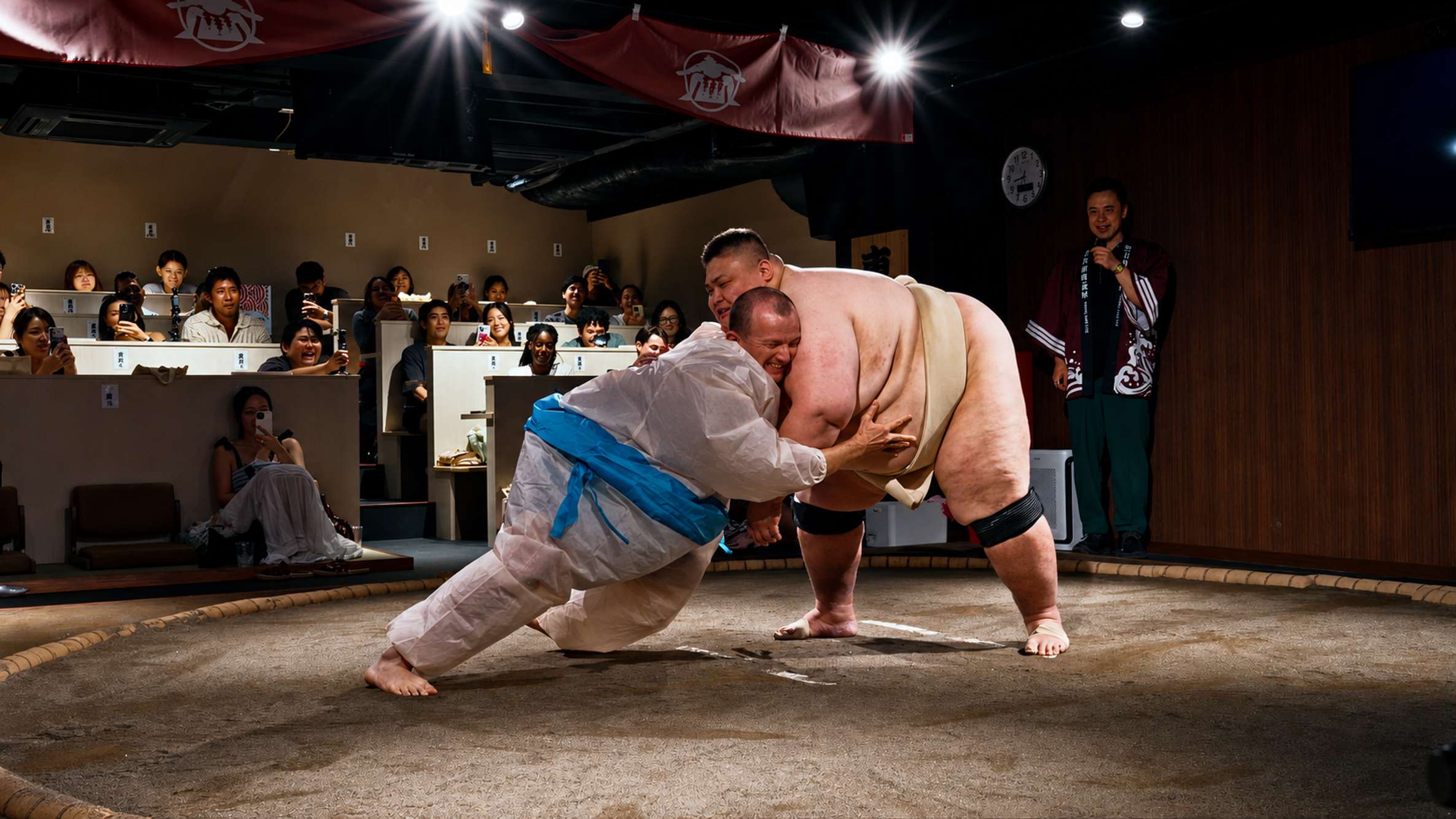
Step into the ring, not just the audience. Join travelers who suit up in a real sumo outfit, challenge a wrestler, and leave with a photo, at a Shinjuku show an English-speaking host explains moment by moment.
4.7★average rating25,752traveler reviews100%free cancellation51countries travelers came from
Sumo experience in Tokyo - which one to pick
Tokyo gives you a few ways to spend a couple of hours with sumo: a show where you might get pulled into the ring, a dinner show with a geisha dance, a lunch-and-masterclass in the sumo district, or a quick Shibuya outing with a photo at the end. The difference is mostly what you eat and how much you join in.
Age limitsThe Shinjuku and Shibuya shows welcome children alongside adults; at the Ginza show the hands-on option needs children to be at least 5 and with a guardian.
Challenge spotsRing challenges at the Shinjuku, Shibuya and Asakusa shows are limited and go by lottery when too many guests volunteer.
WheelchairsThe Shibuya and Ryogoku venues do not suit wheelchair users, and one Asakusa venue asks you to request limited accessible seating when you book.
Kids in lapsAt the Shibuya show infants sit on laps; at the Ryogoku chanko nabe experience box seats are the safe way to hold a child.
TimingTokyo's entertainment shows run daily, but the Ginza venue publishes a monthly calendar with a few dark days, so check your date before booking.
Food requestsVegetarian and vegan meals at the Ryogoku and Asakusa shows need at least two days' notice; halal meals are not provided at some venues, though you can bring your own food.
CashlessThe Shinjuku and Ginza venues take card payments only.
Arrive earlyShows follow a tight schedule, and the Shinjuku front desk may refuse late entry.
Joining inEverything on the dohyo is optional, designed for complete beginners at different fitness levels, so you can watch the whole show instead.
Tokyo Sumo experience cards
Six ways to spend an evening or afternoon around the ring in Tokyo. Pick by how close you want to sit, whether you want a meal, and who you are bringing.
On a budgetTop rated
1.5 hours·English
4.9(9,863)
Tokyo: Shinjuku Sumo Show & Experience with a Photo
The easy all-rounder: 90 minutes in Shinjuku with an English-speaking MC, a lottery ring challenge and pictures with the wrestlers at the end.
1.5-hour show with English-speaking MCLottery-selected ring challenge, six spotsPhotos with the wrestlers included
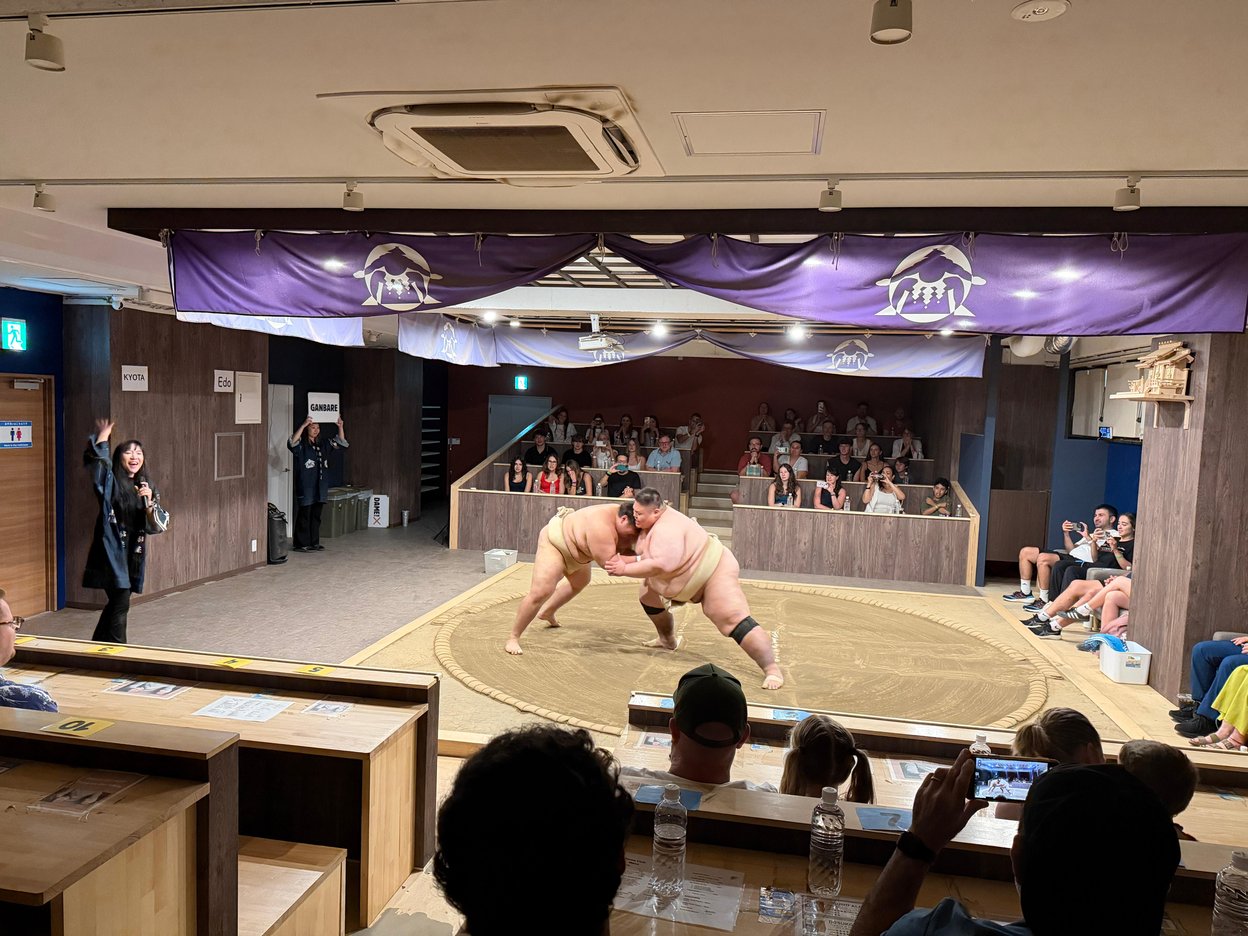
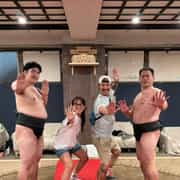
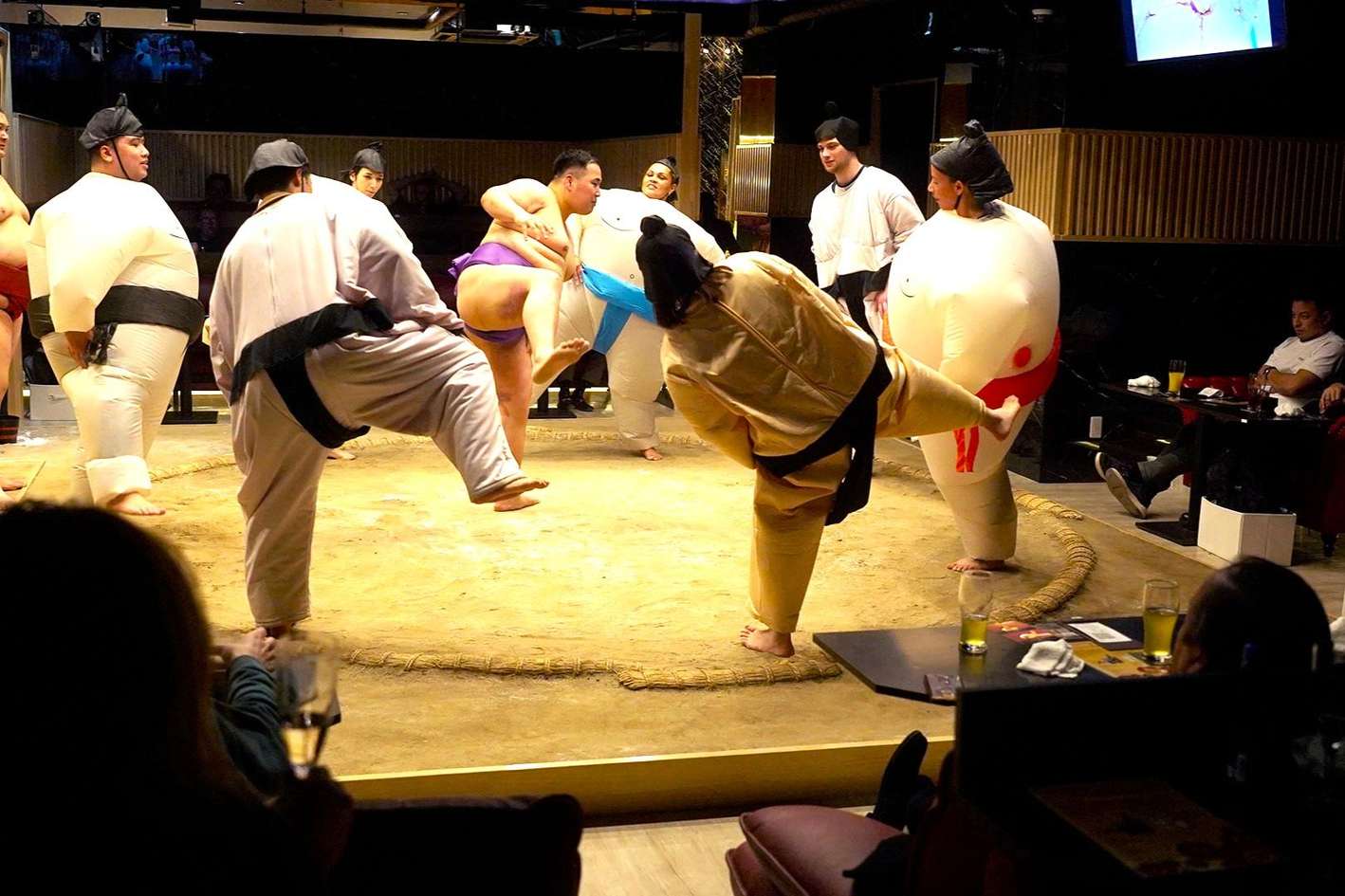
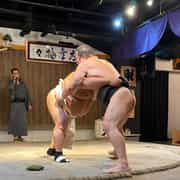
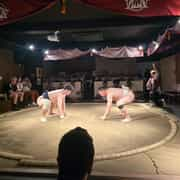
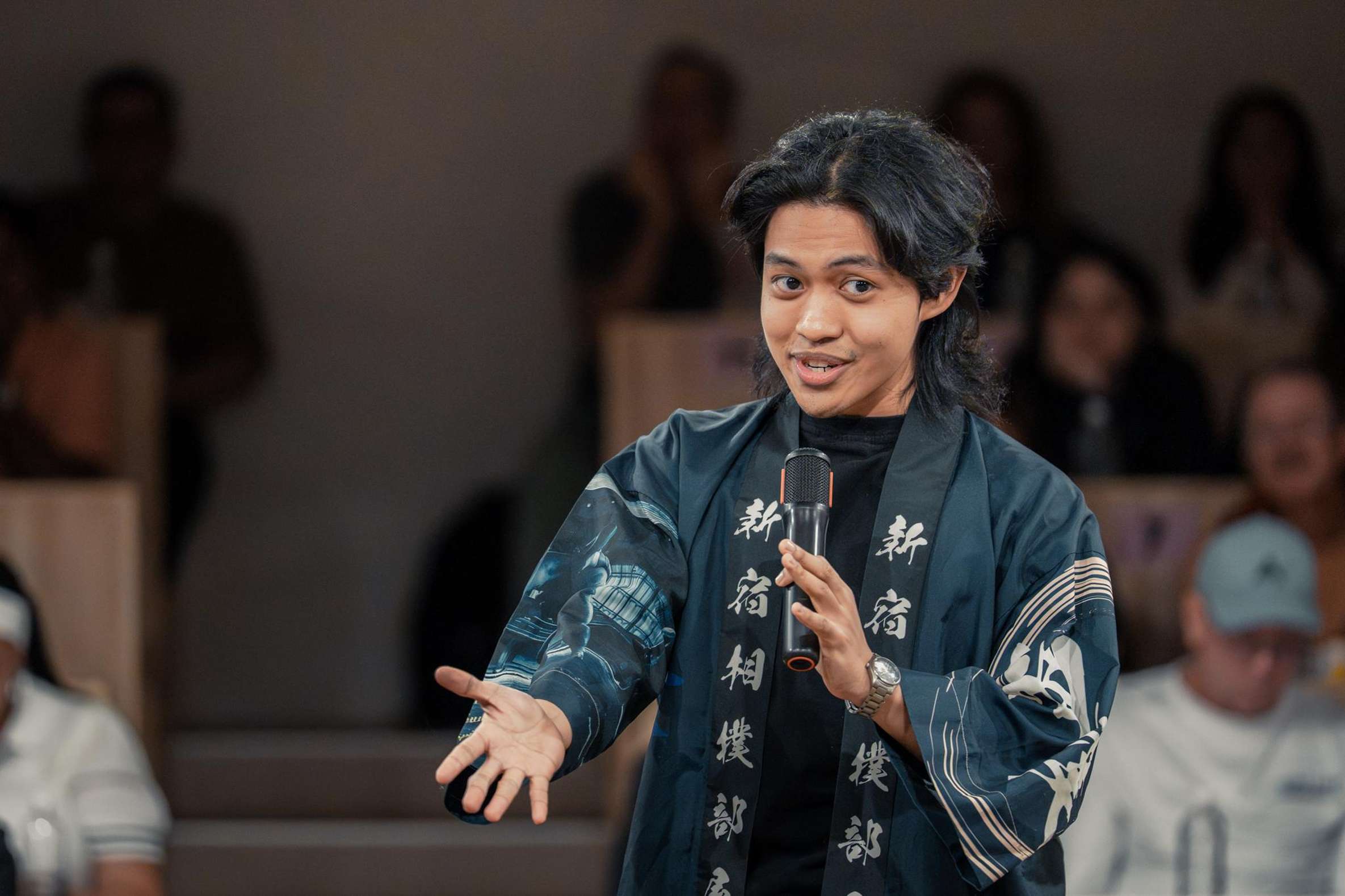
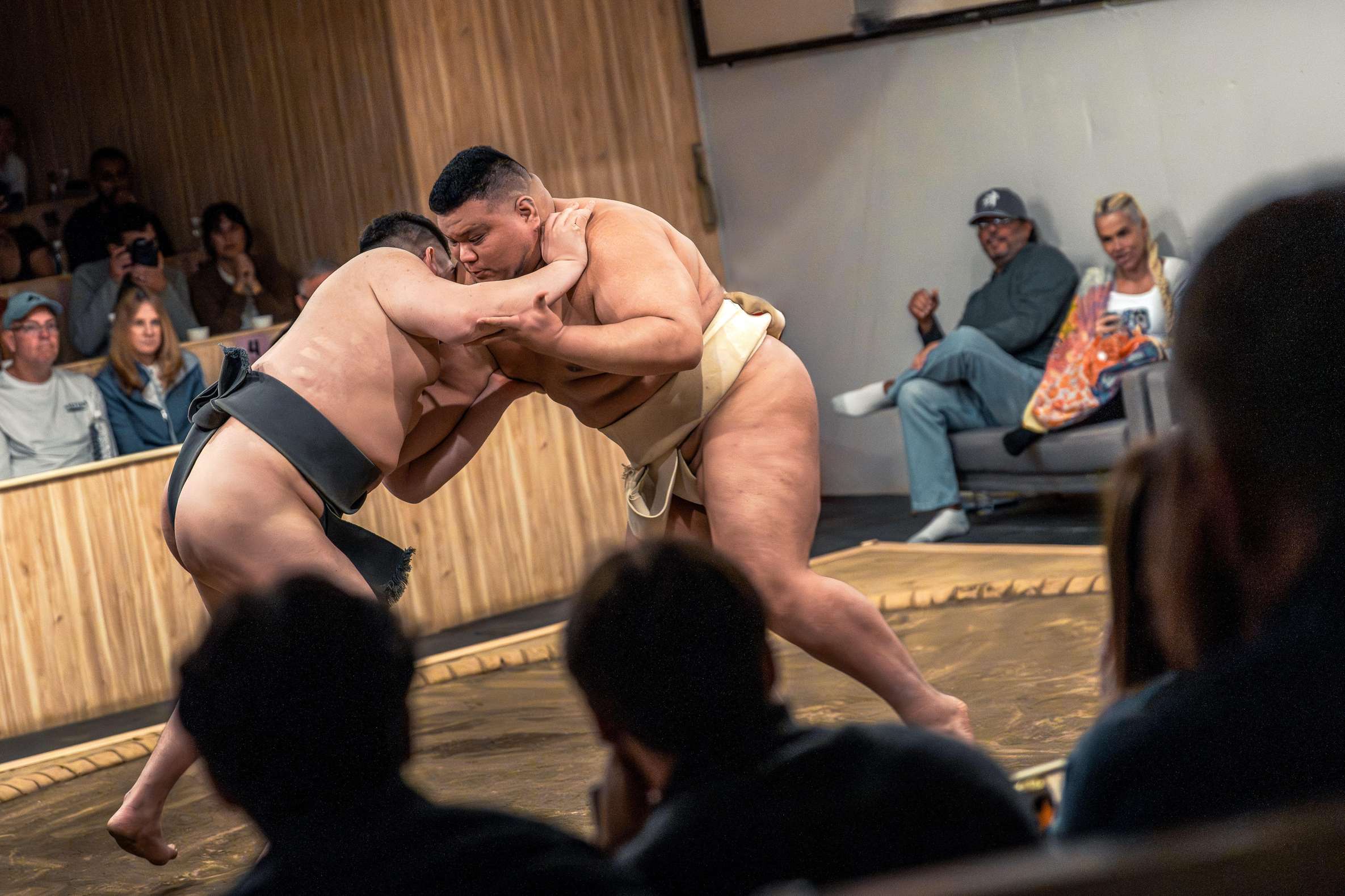
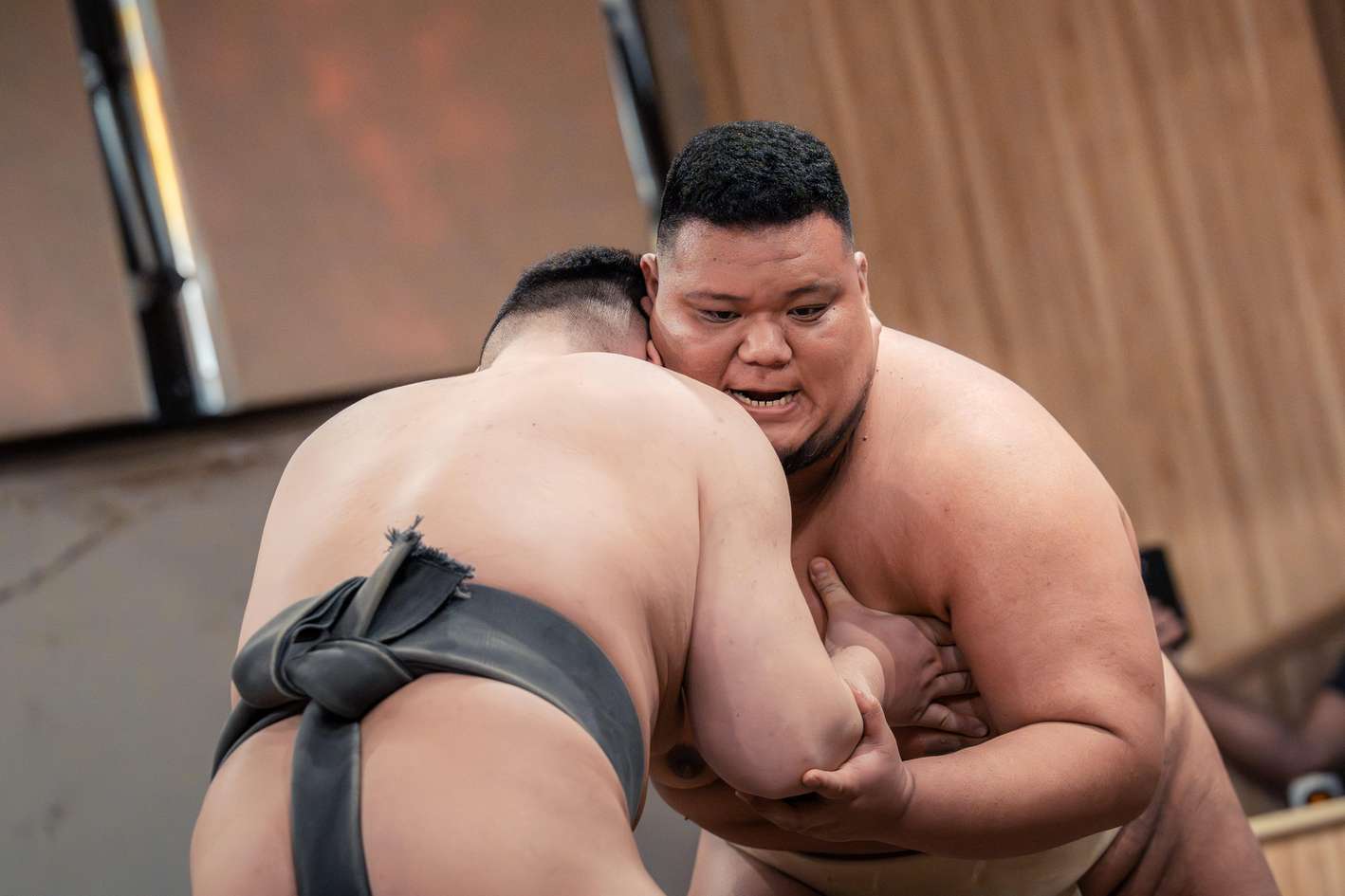
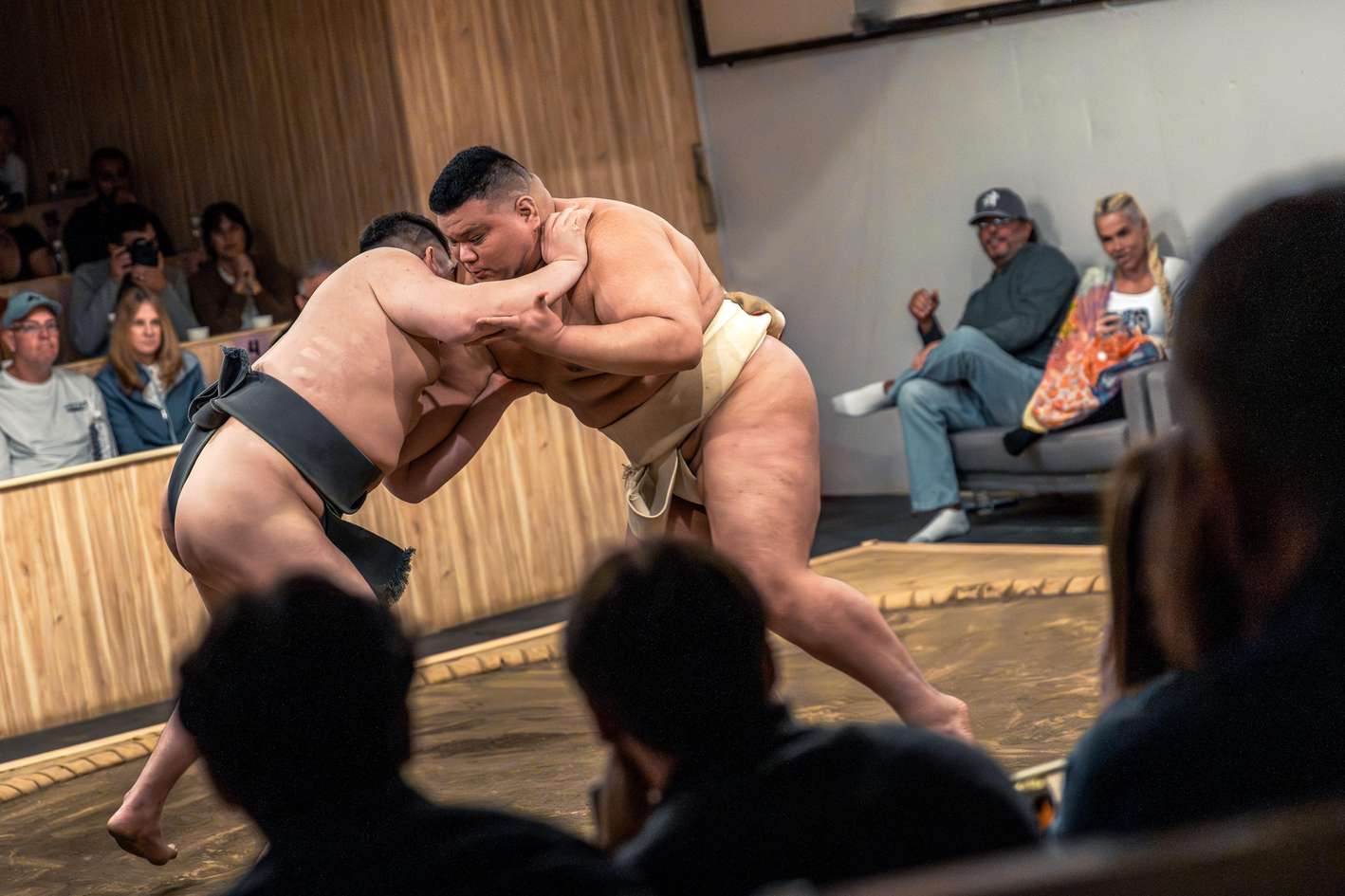
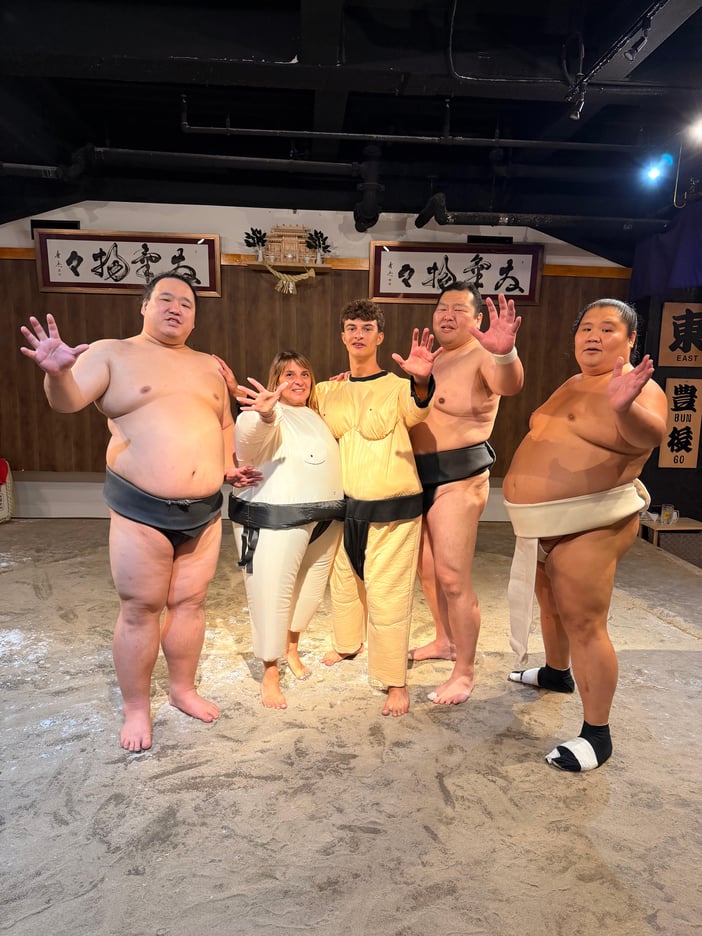
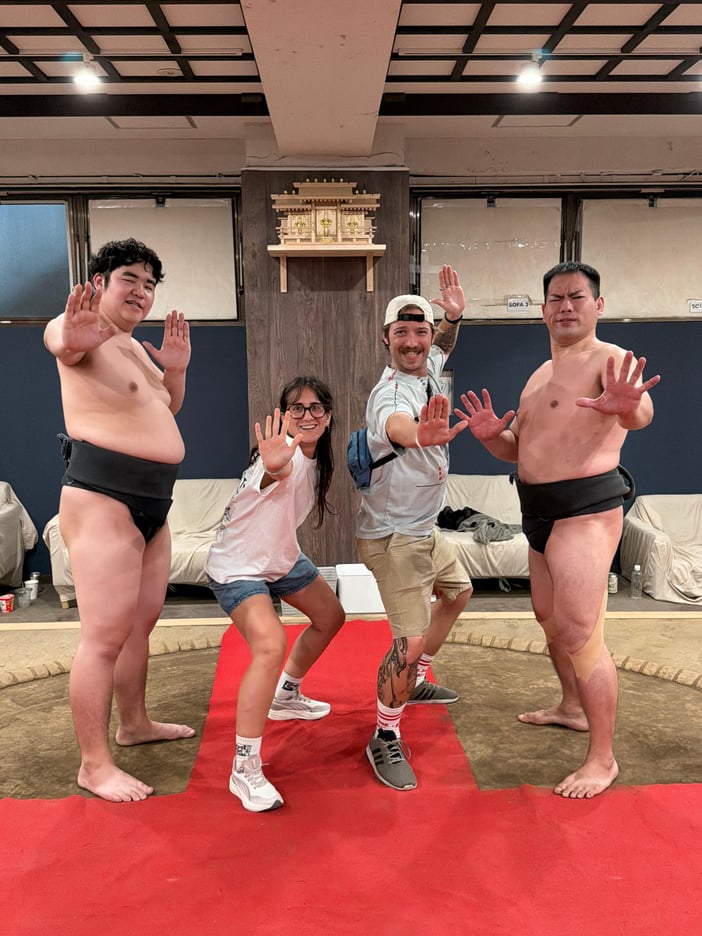
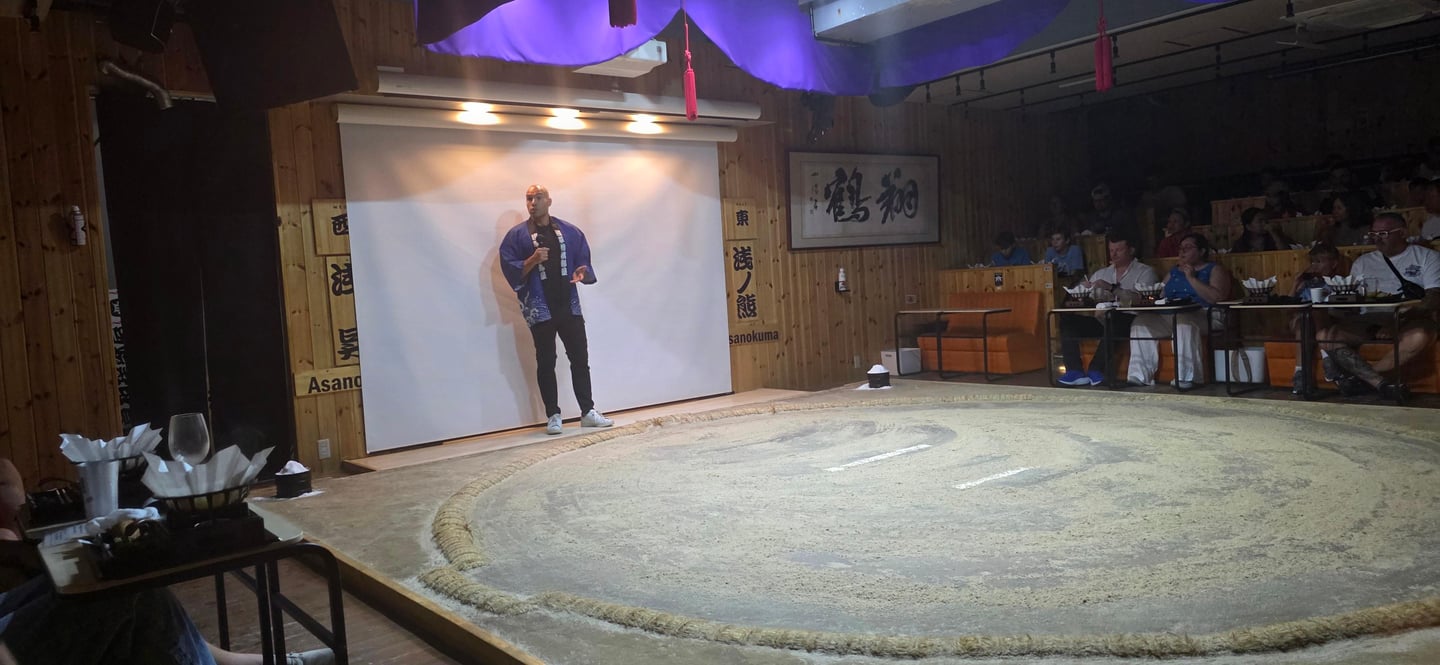
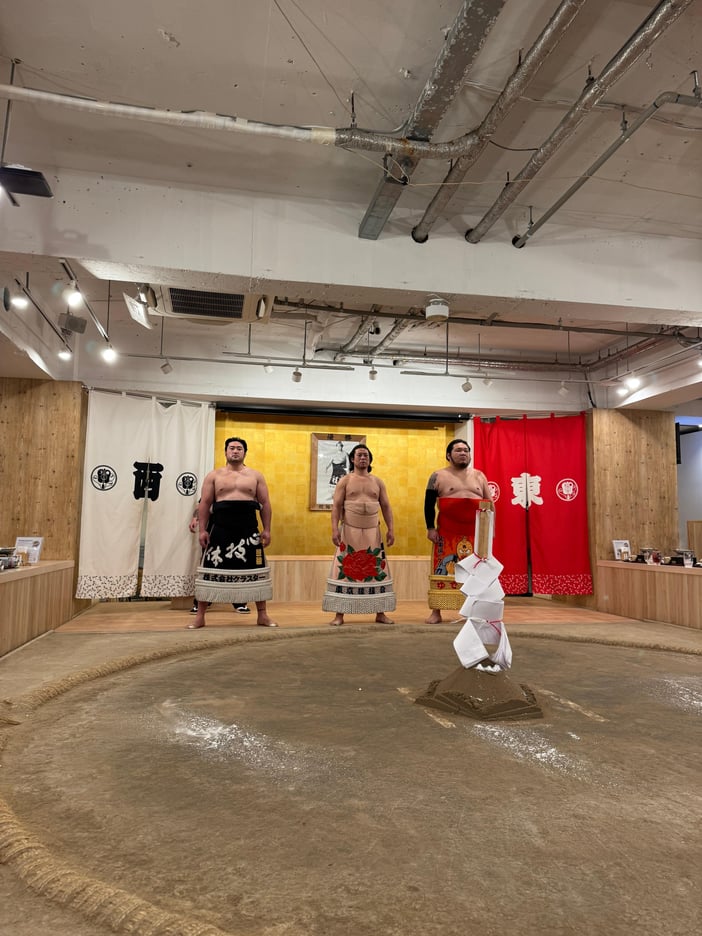
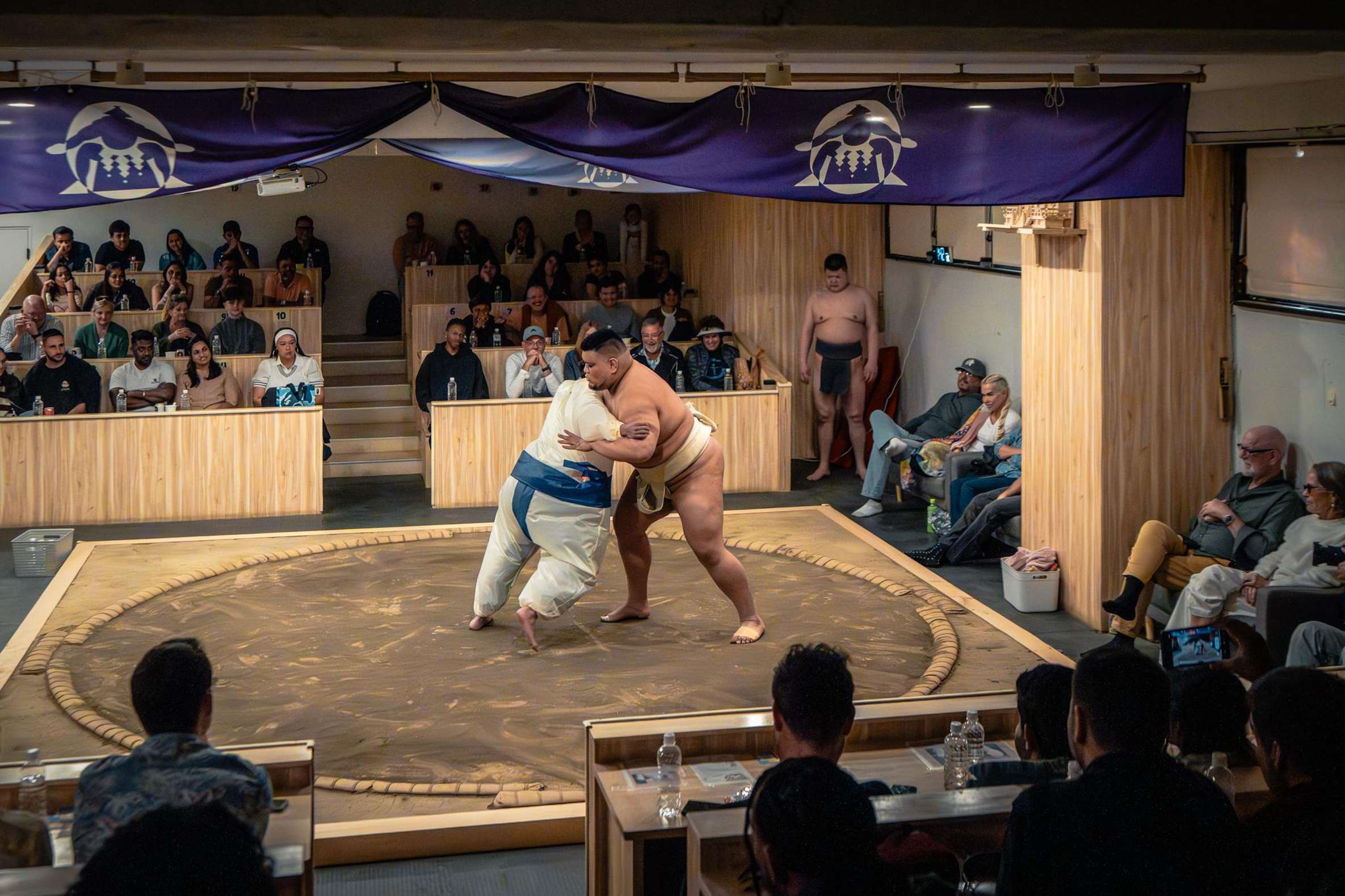
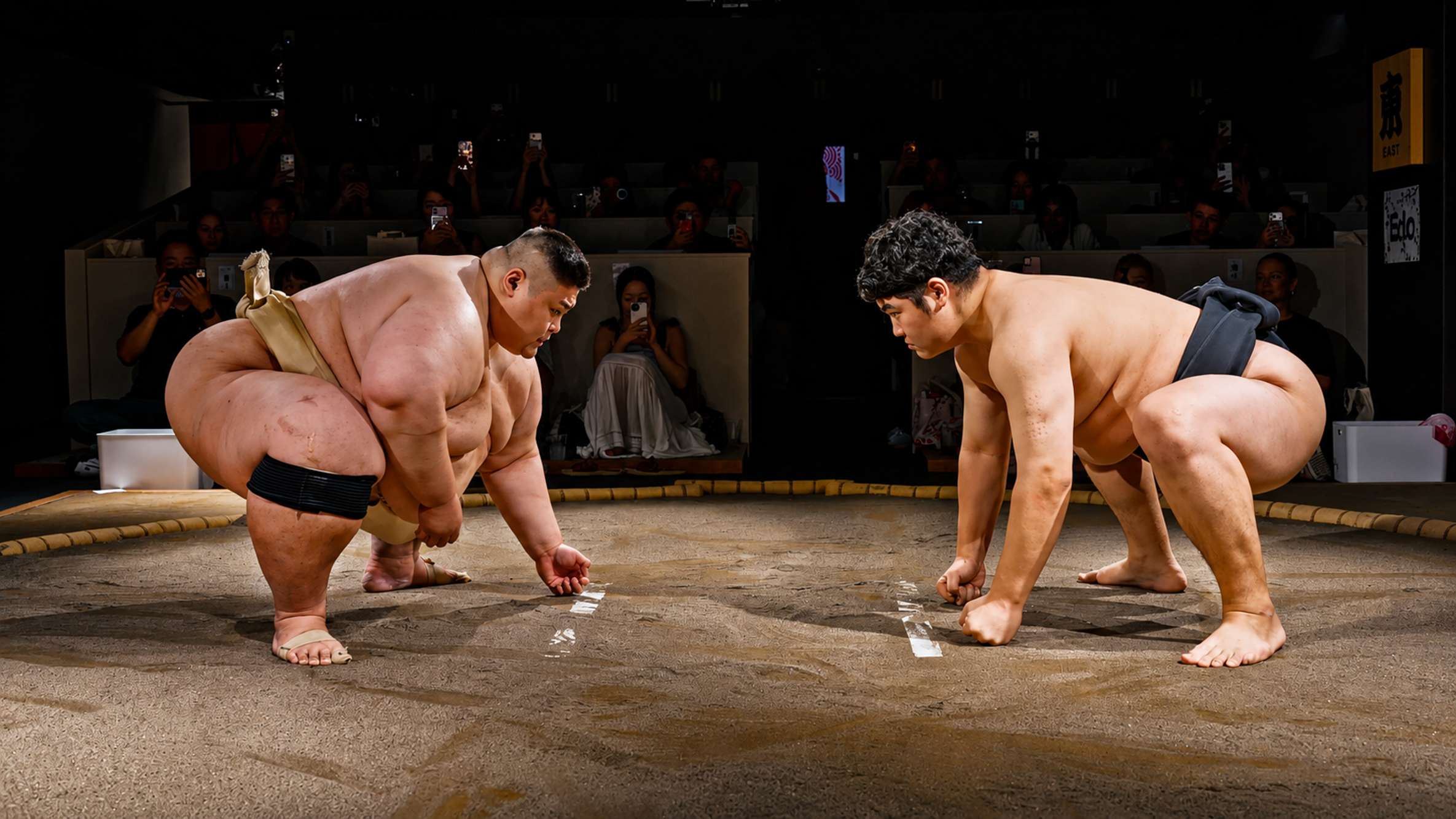
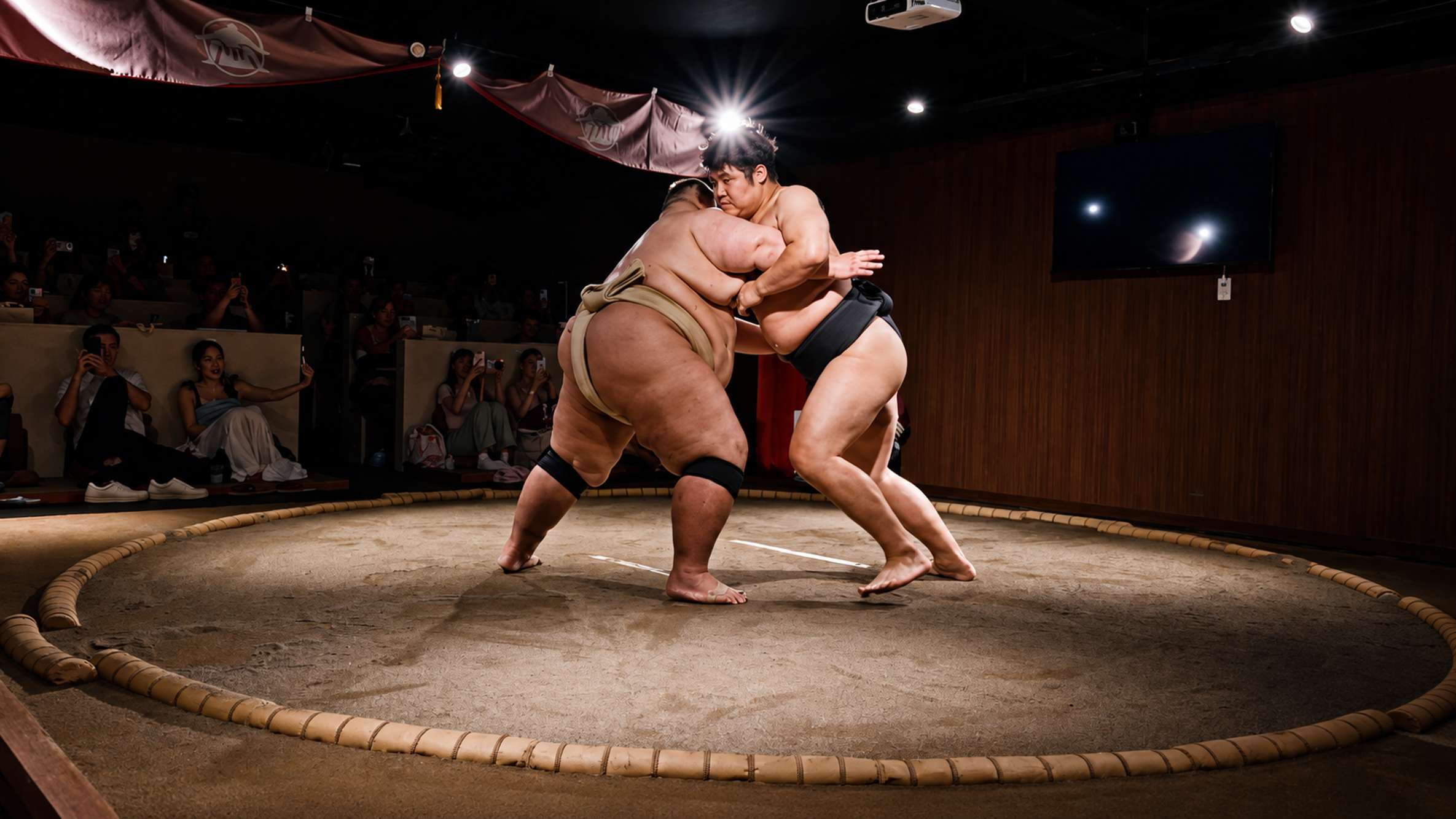
The Shinjuku sumo show packs a full introduction to the sport into 90 minutes: a welcome drink, an English-speaking MC walking you through the rituals, live bouts between professional wrestlers, and photos with them at the end.
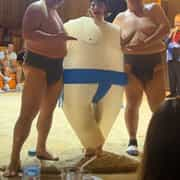
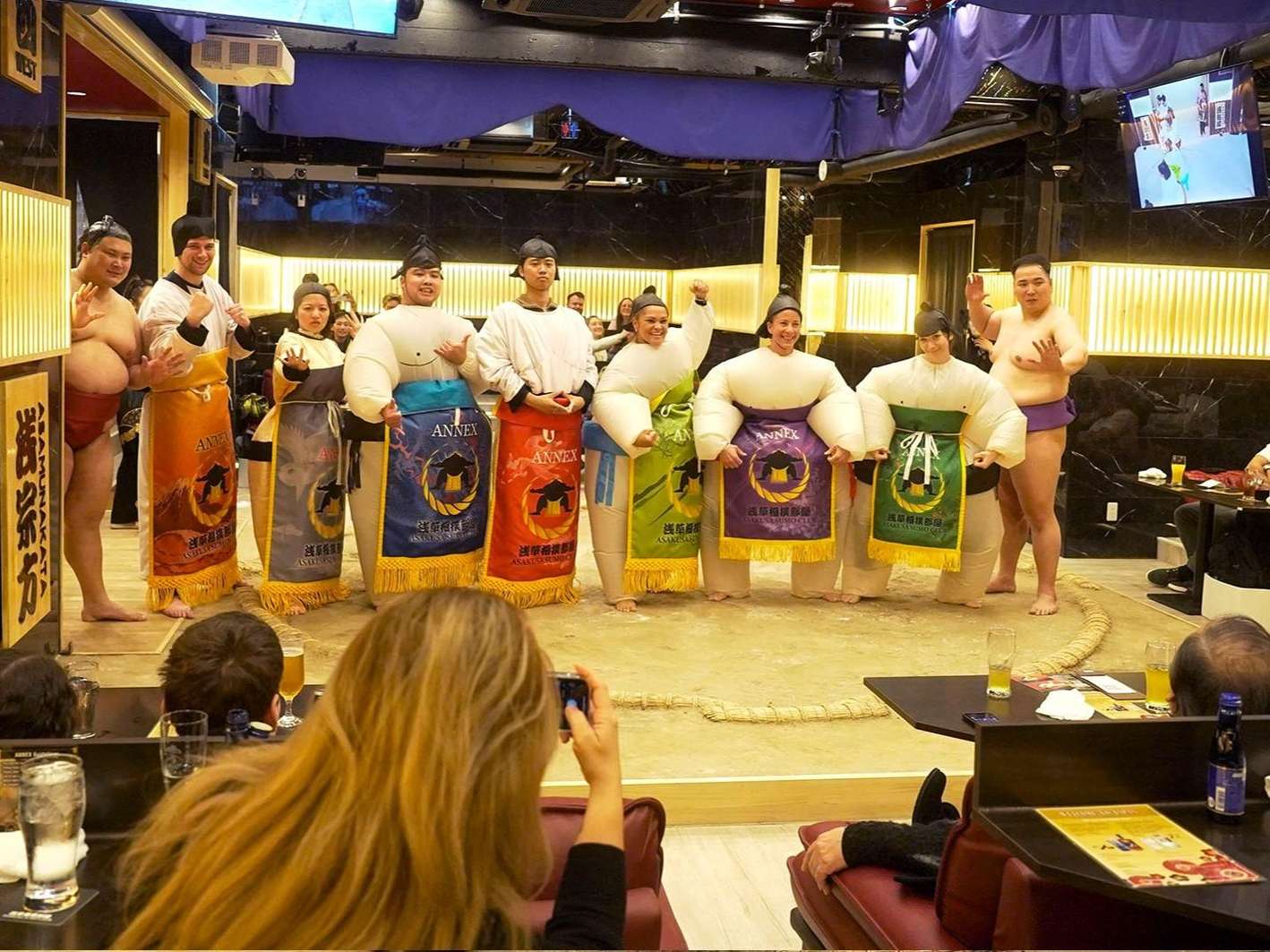
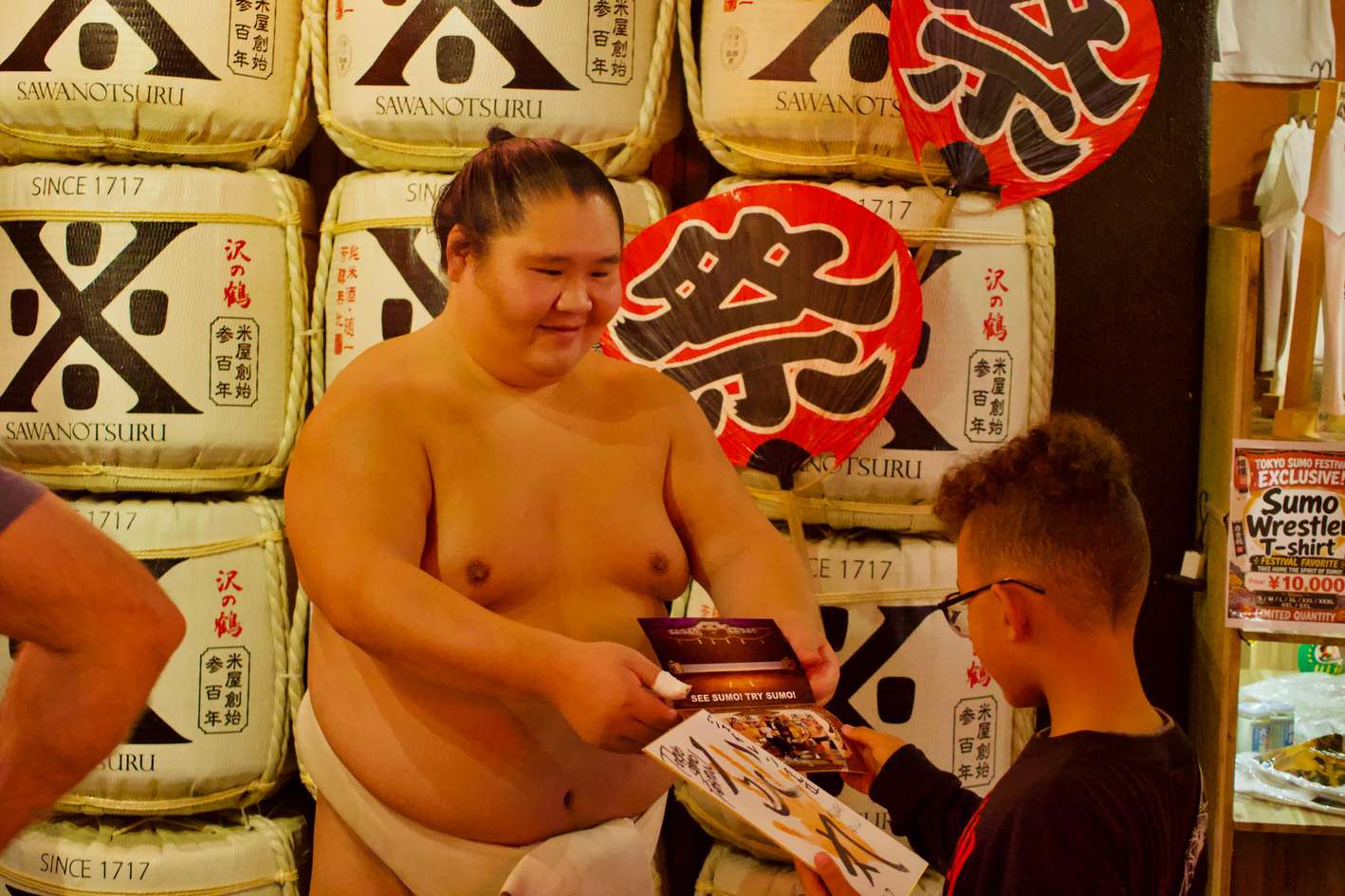
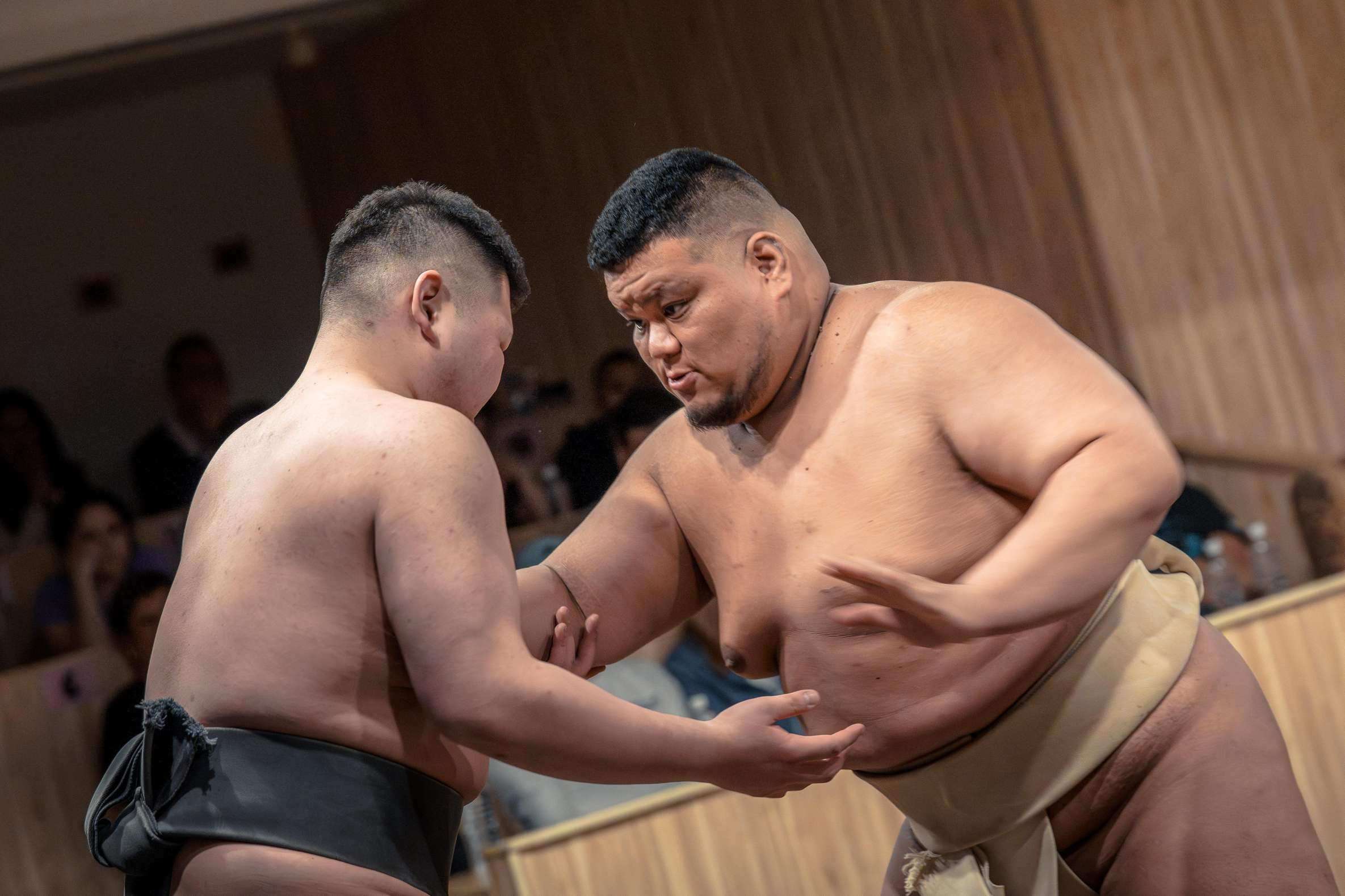
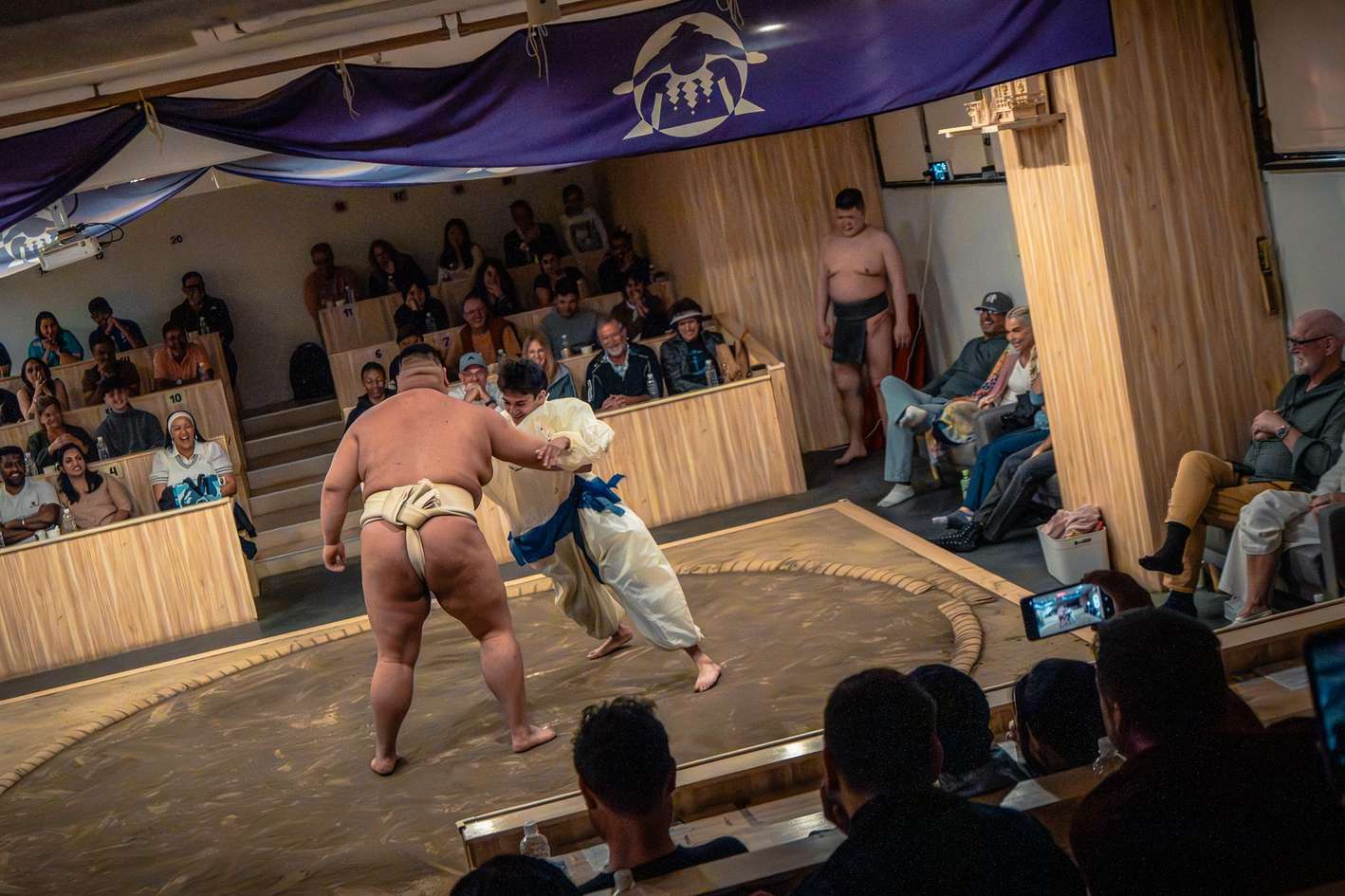
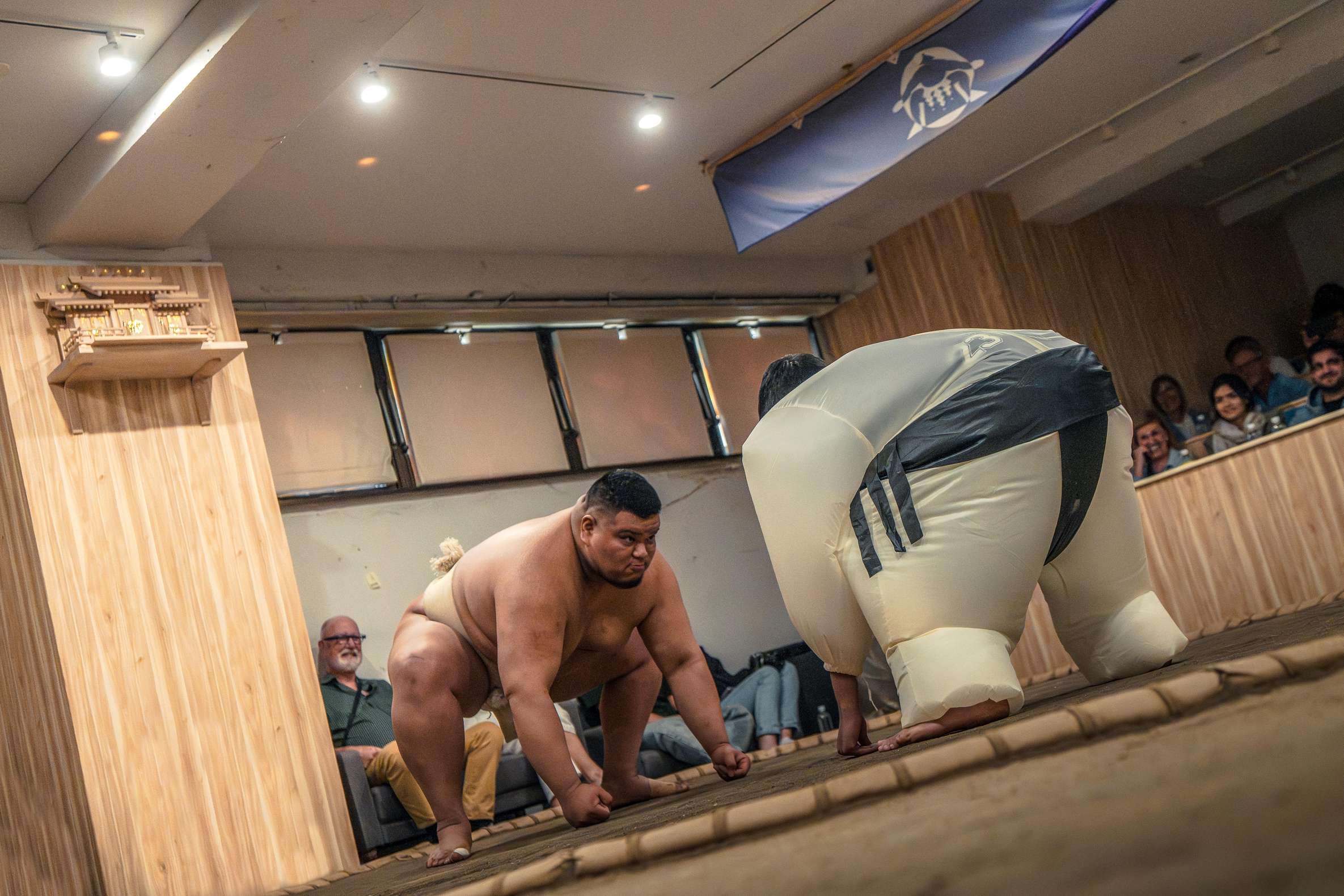
The best part is what you might get to do yourself. Six guests per show, drawn by lottery, suit up in a traditional sumo outfit and step into the ring to challenge a wrestler. If your name comes up, you get the match most visitors only watch.
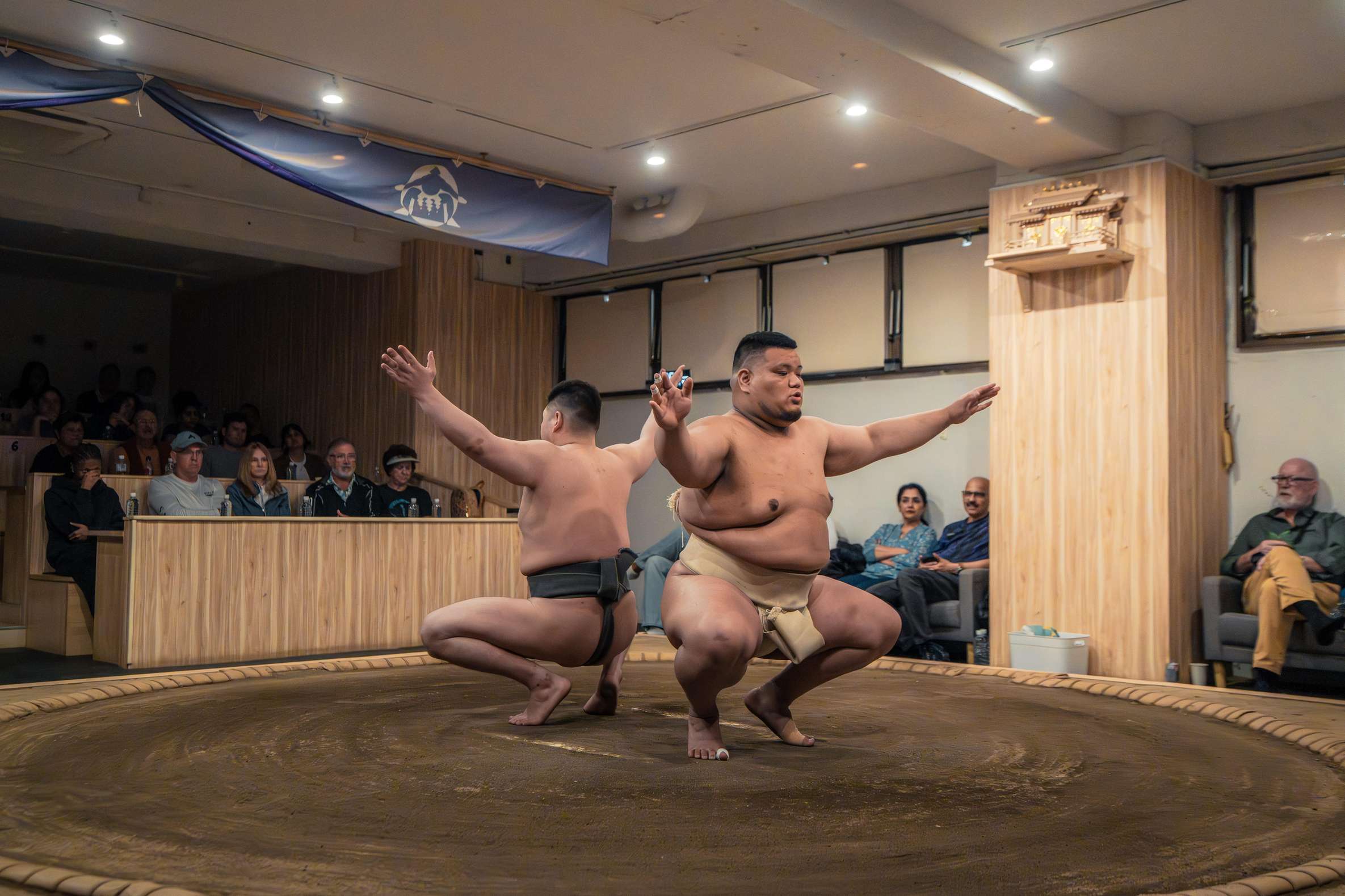
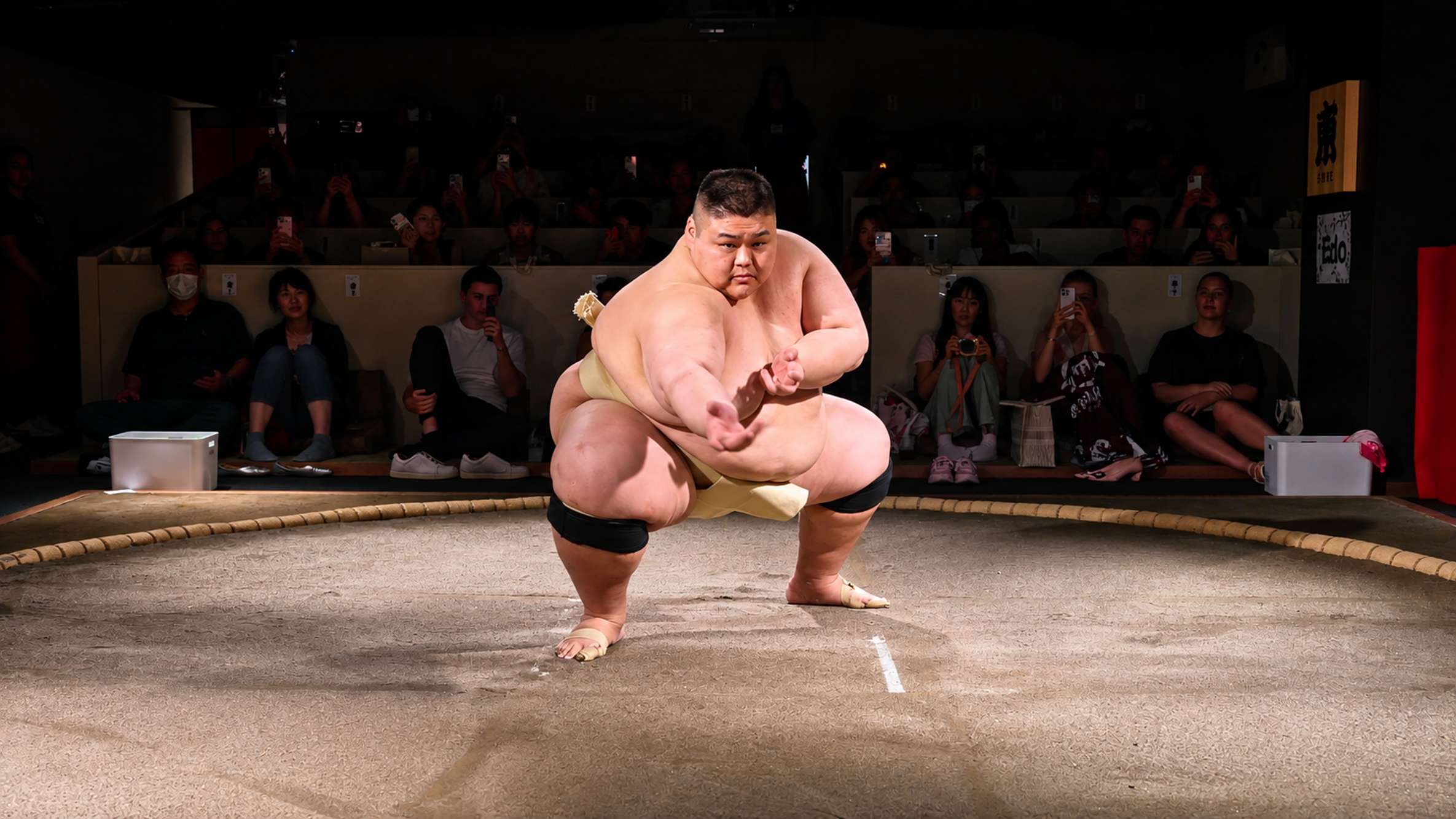
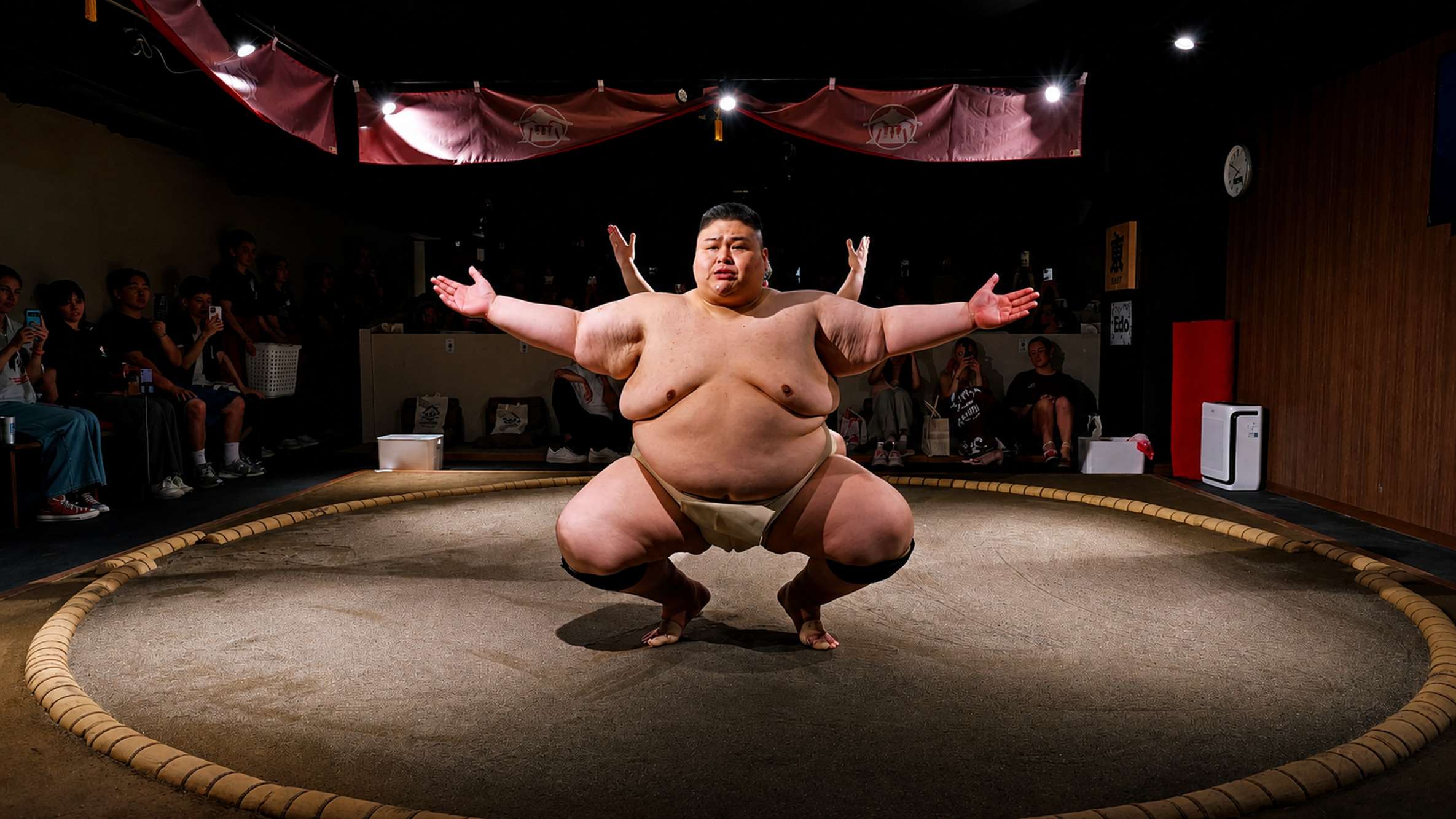
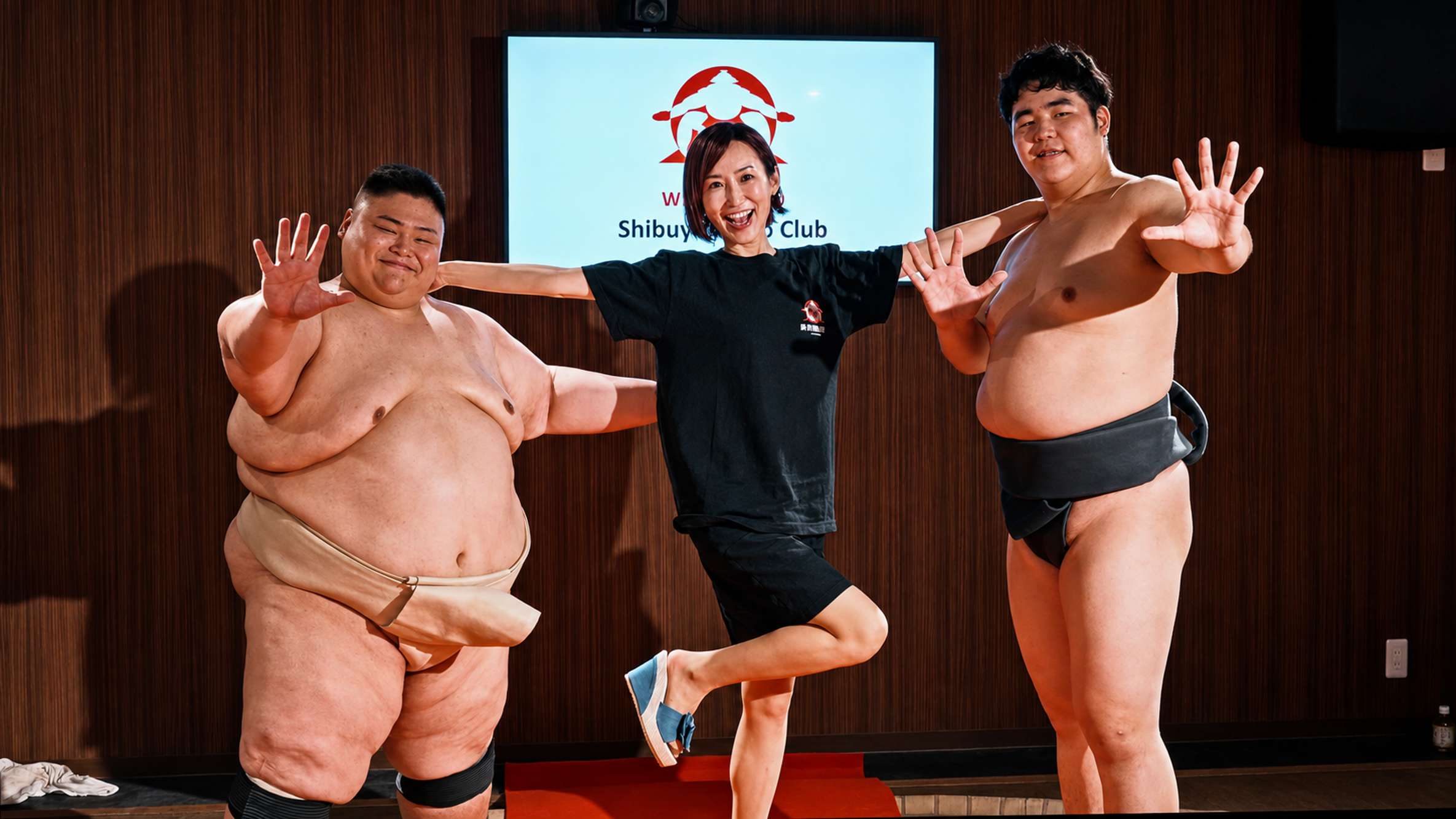
You leave with pictures with the wrestlers and a working knowledge of what the shiko stomps and salt throws mean.
1Welcome drink and seating· about 10 minYou arrive, collect your bottled water welcome drink, and settle in near the ring before the show begins.2History and demonstrations· about 40 minAn English-speaking MC explains sumo's background while the wrestlers demonstrate techniques, rituals, shiko foot stomps and salt throwing.3Live sparring matches· about 20 minProfessional wrestlers face off in live matches, so you see the techniques and the sheer power of the sport up close.4Sumo challenge lottery· about 15 minSix guests per show, drawn by lottery, suit up in a traditional sumo outfit and step into the ring to challenge a wrestler.5Photos with the wrestlers· about 5 minThe show closes with pictures with the wrestlers, the keepsake that comes included with your booking.
Where the other tours go
Ryogoku Kokugikan
Tokyo Sumo Culture Masterclass & Authentic Chanko Nabe Lunch
Professional sumo wrestling demonstrationHistory and Background information about SumoEnglish speaking MCWelcome drink (Bottled water)Opportunity to challenge a sumo wrestler (Limited participants; lottery if too many apply)Pictures with the wrestlers
How to book a sumo experience in Tokyo
01
Pick your date early
Book the moment your Tokyo days are fixed. Popular dates and evening slots sell out fast, especially in April, May and October, and rebooking closer to your trip often means the session you wanted is gone.
Pro tipEvening slots go first, so grab an early afternoon show if your dates land in a busy month.
RecommendedLock the date before you fix dinner plans, then build the rest of the day around it.
02
Choose the right option
Compare what changes between options: seating tier, meal and extras. The Shinjuku show runs about 90 minutes with a photo and a lottery chance to enter the ring, while dining shows add chanko nabe, sukiyaki or a geisha dance.
Common mistakeBooking the basic ticket when you wanted the meal, then finding the dining options are full for your date.
Pro tipIf taking part matters most, pick a show that guarantees a challenge or offers a hands-on training option, since ring spots are limited and chosen by lottery.
03
Check the fine print
Read the age bands, mobility notes and dietary rules before you pay. Requests for vegetarian or vegan meals usually need two days' notice, and some venues cannot provide gluten-free or halal food.
ImportantIf anyone in your group is pregnant, has a serious medical condition or uses a wheelchair, tell the operator when you book, because the hands-on plans and some venues have restrictions.
Common mistakeAdding a child under the listed minimum age for a venue, then losing the booking at the door.
04
Pay and get your voucher
Payment goes through the booking page, and your voucher arrives with the meeting point and start time. Most Tokyo shows let you cancel up to 24 hours before for a full refund, so you can hold a spot while your plans settle.
ImportantSome venues are cashless on site and take cards only, so carry the right card for any extra drinks or snacks.
Pro tipThe free cancellation window makes it safe to book your preferred show first and rearrange the rest of your Tokyo days around it.
05
Arrive at the meeting point
Every Tokyo show has a fixed address, such as a second-floor venue in Shinjuku, a basement space in Ginza or a front desk on the 5th floor of Tokyo Tower, so follow the voucher rather than the map pin. Aim to arrive 15 minutes early.
Common mistakeTurning up at the printed start time. Shows run on a fixed schedule, and late entry may not be accepted at the front desk.
RecommendedScreenshot the building details before you set off; several venues sit inside larger buildings where the entrance is easy to walk past.
The Tokyo sumo experience travelers rated and reviewed
A Tokyo Sumo experience with dinner, a geisha dance and your turn in the ring
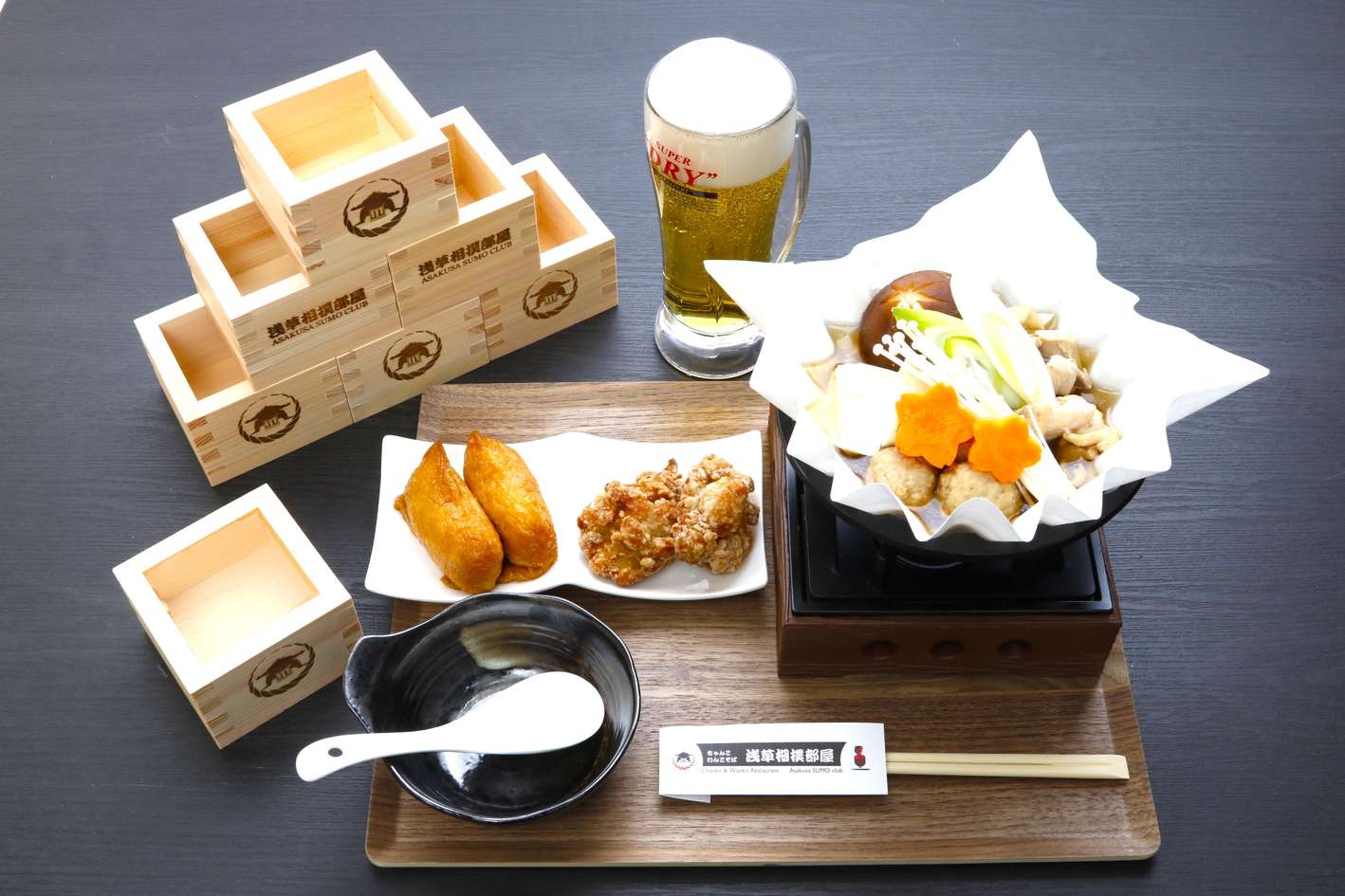
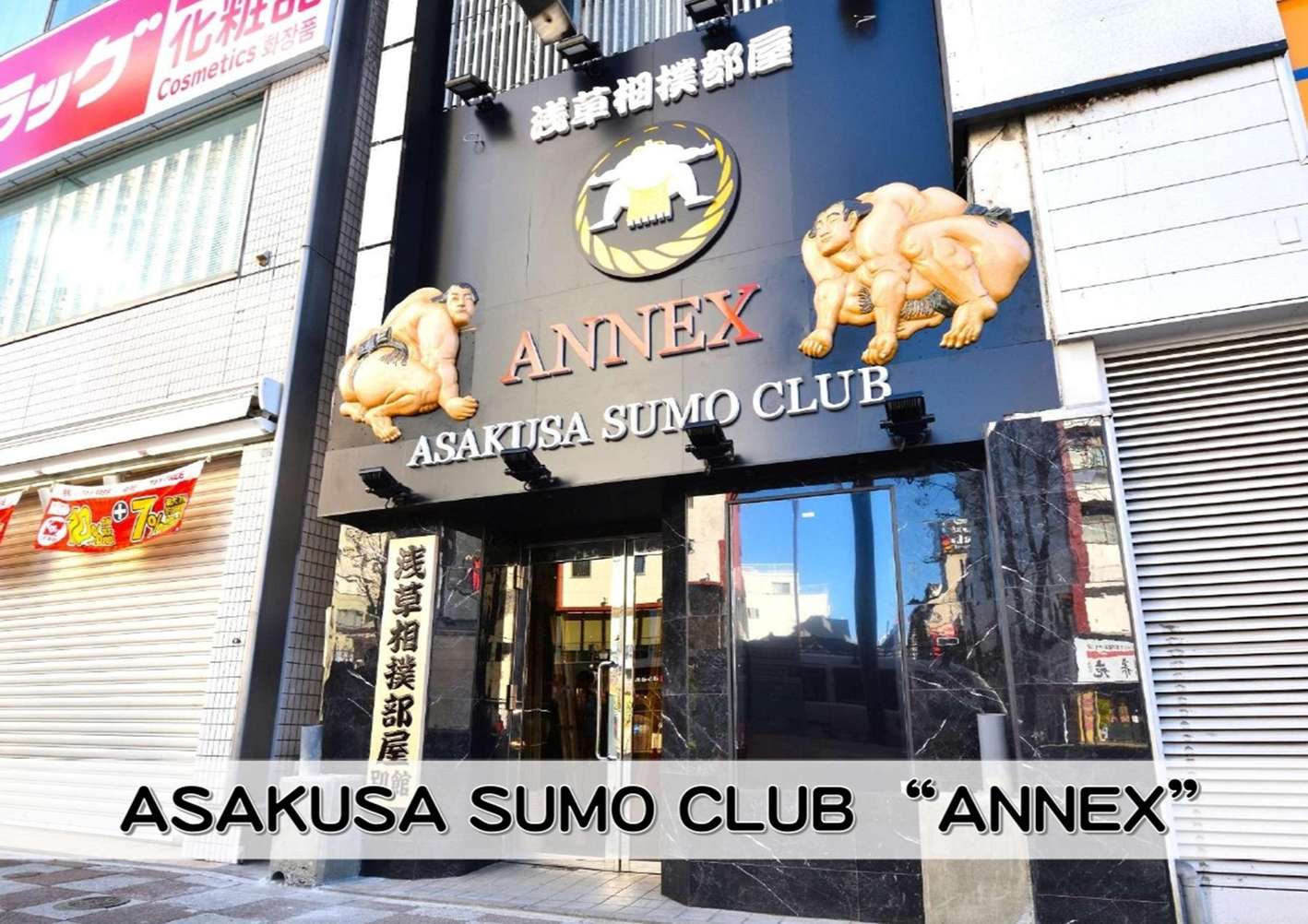
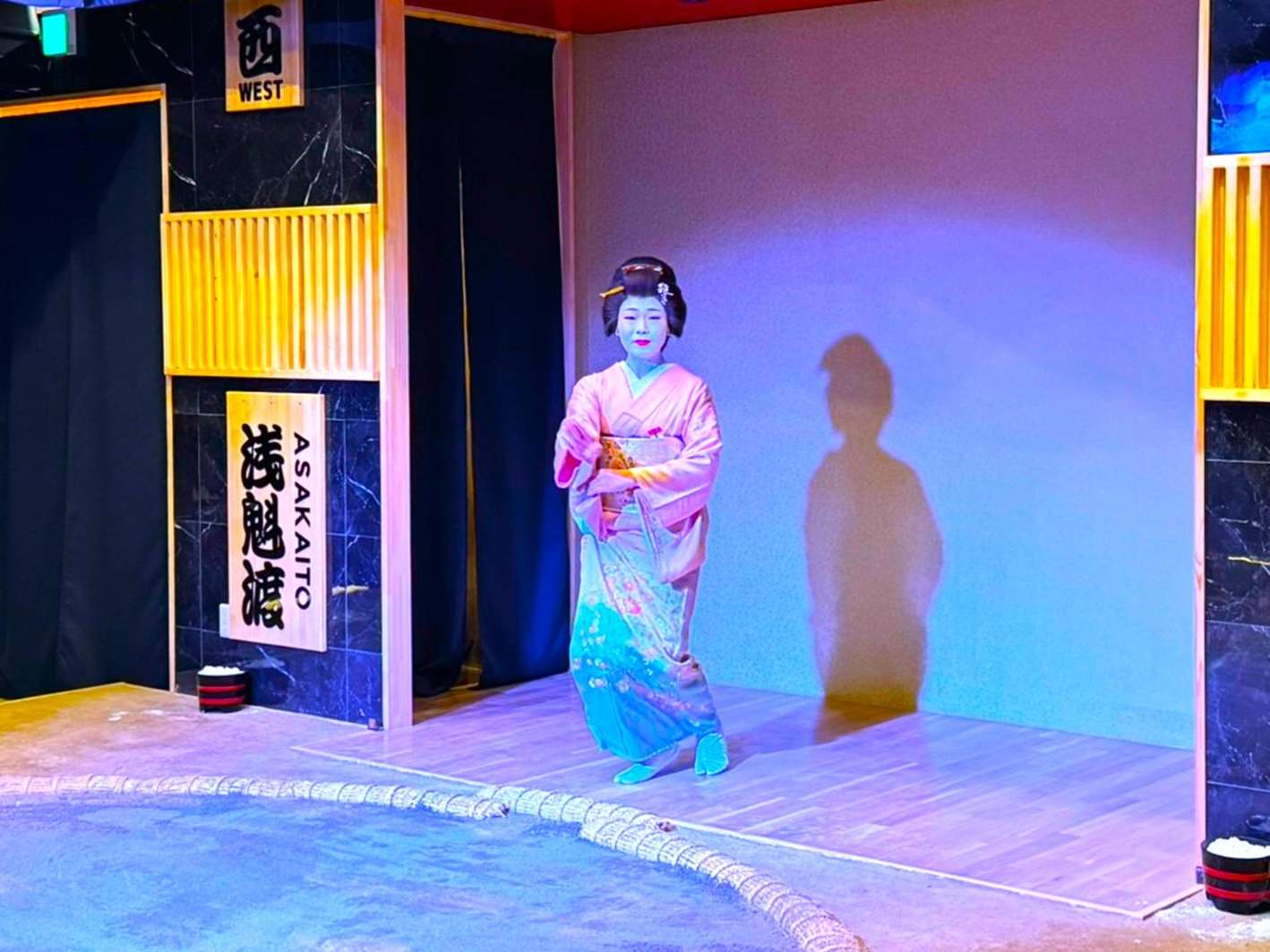
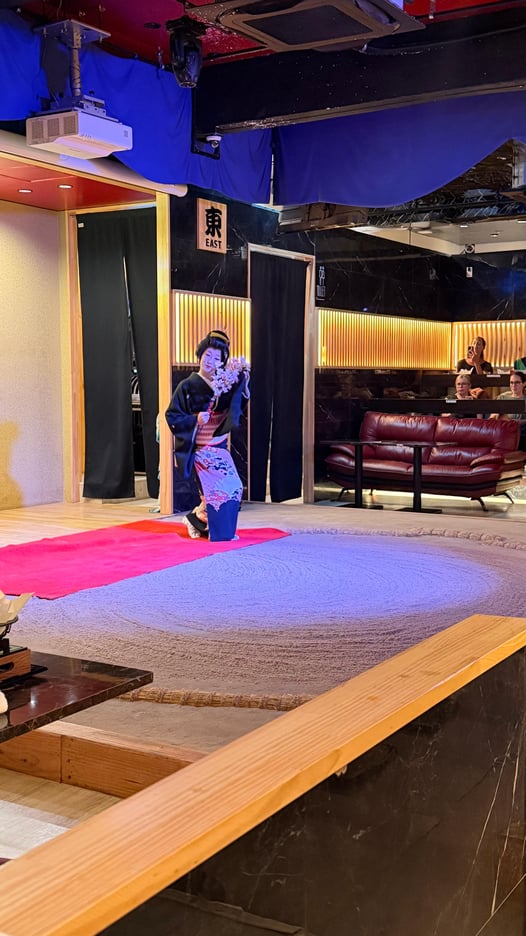
Where the Shinjuku show lasts 90 minutes, this one gives you a full evening: two hours in an Asakusa restaurant built around a real sumo ring, with a geisha dance to open the night. You eat all-you-can-eat chicken hot pot while retired professional wrestlers demonstrate techniques, then battle it out in a best-of-three match.
It suits anyone who wants sumo, dinner and a bit of theater in one outing, and families with kids who will love the humor as much as the matches.
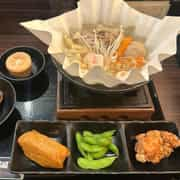
Dinner and a showAll-you-can-eat chicken hot pot and Japanese dishes plus one drink are part of the ticket, eaten while you watch.
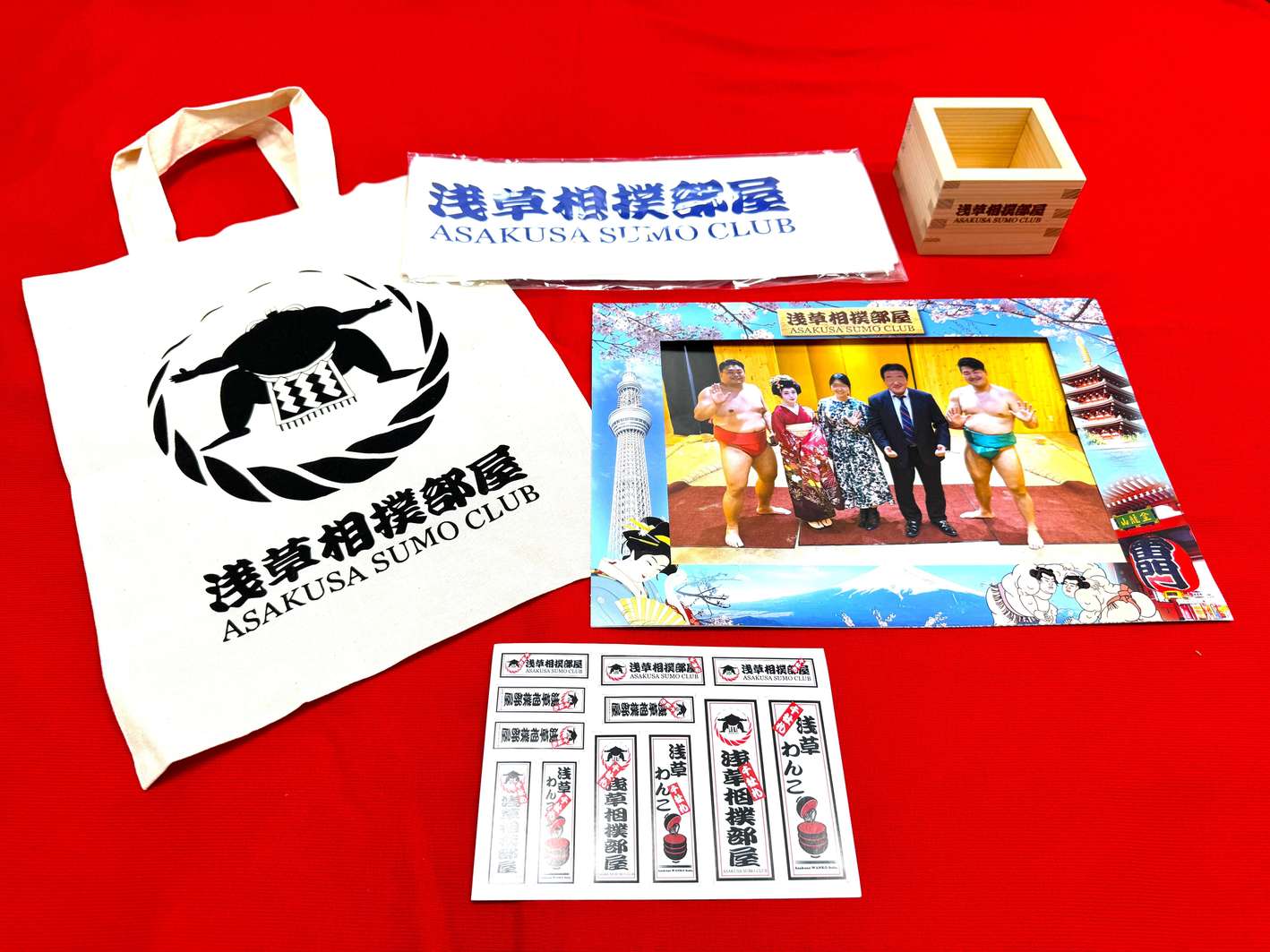
Crowd favoriteNearly 8,500 travelers rate it 4.8, and a printed souvenir photo with the wrestlers comes included.
Join in or sit backThe ring challenge is optional and chosen by lottery, so you never have to wrestle if you would rather watch.
Challenger spots and seats fill fast, and free cancellation up to 24 hours before lets you hold your date for now.
What to know before booking a sumo experience in Tokyo
Can stop the dayGood to knowGood news
01
ChoosingWhat it is, who it suits, when to go
3
Taking part
Participation is optional at every show, so you can watch the whole thing from your seat. If you want to wrestle, know that spots in the ring are limited and most venues select challengers by lottery when too many people apply. Joining in is free and often the funniest part of the show.
The lottery
At the Shinjuku show only six guests per show can take the ring challenge, chosen by lottery if demand is high. If your name comes up, you suit up in a traditional sumo outfit over your own clothes and step onto the dohyo with a wrestler guiding the bout.
What's included
Most shows include a welcome drink, live commentary, the demonstration bouts and photos with the wrestlers, some printed as souvenirs. Dining formats add meals and extras. What is served and what costs extra varies by seating category, so check your booking details before you go.
02
BookingHow far ahead, and what happens if plans change
1
Cancellation
Most of these tours can be cancelled up to 24 hours in advance for a full refund, which makes it easy to lock in a date early and adjust later. Within 24 hours there is no refund, though some venues let you move to another time slot if one is free.
03
Before you goPapers, health, what to bring
3
Meals
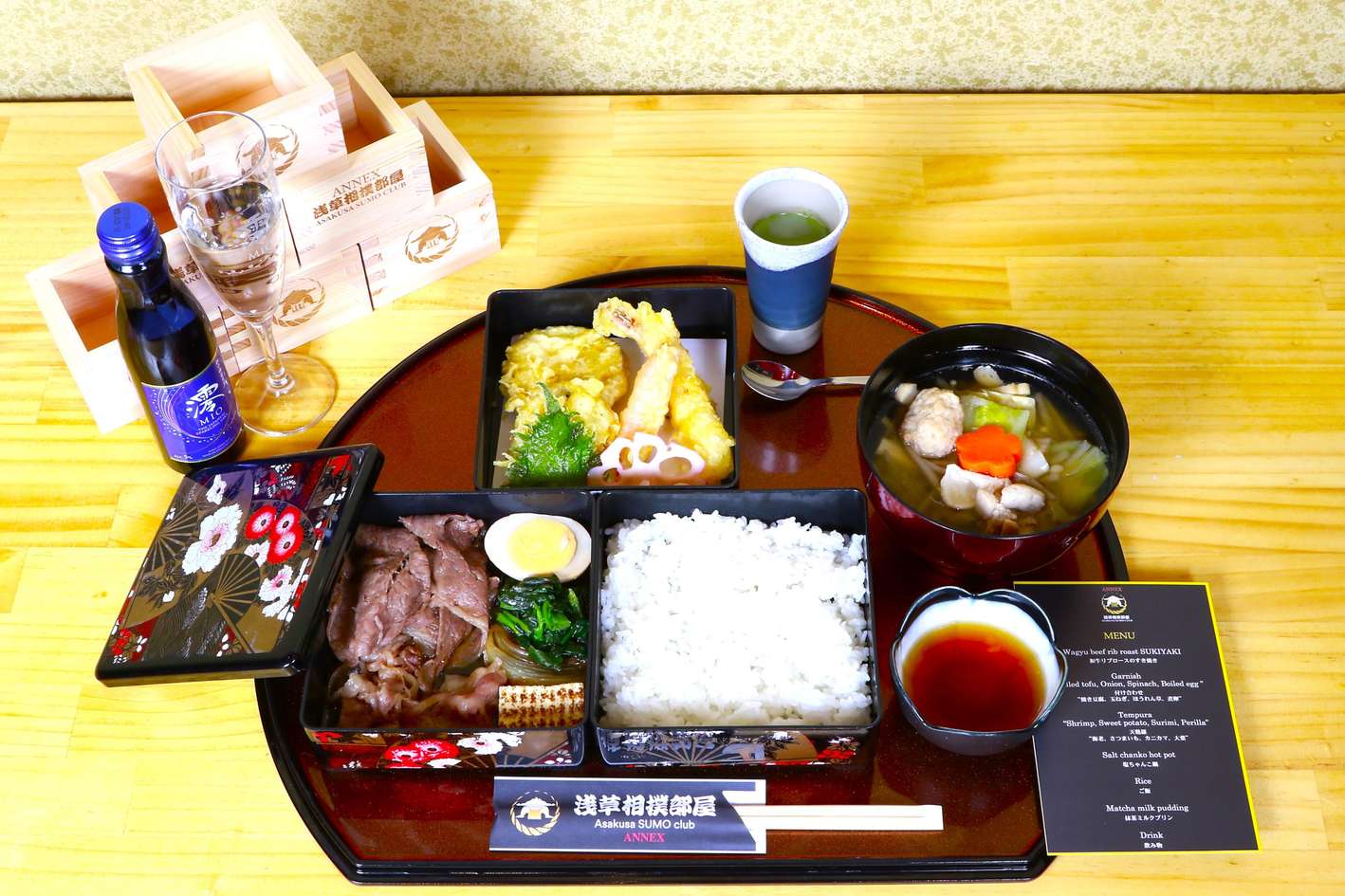
Several experiences pair sumo with food: chanko nabe hot pot in Ryogoku with mochi making, all-you-can-eat chicken hot pot in Asakusa, or wagyu sukiyaki with chanko-nabe and matcha dessert at the luxury show. Vegetarian and vegan meals are possible at some venues if you request them at least two days ahead.
What to wear
There is no dress code, but wear flexible clothing you can move in, since you may be challenged in the ring. The mawashi belt is provided and goes over your own clothes, so no changing rooms needed. Skip stiff jeans, and wear socks you do not mind on the floor.
Age limitsCan stop the day
The Shinjuku and Shibuya shows accept ages 12 and younger with infants on laps. At the Ginza show, the hands-on training option is not suitable for children under 5, pregnant guests or anyone with serious medical conditions, and children must be with a guardian. The Ryogoku venue asks that children not sit on laps in standard seats.
04
On the dayWhere to be, when, and how you get there
1
Timing
Shows run about 90 minutes to two hours, opening with explanations of wrestlers' lives and rituals before the bouts, with the actual wrestling and the audience challenge at the end. The Shinjuku show follows a strict schedule and late entry may not be accepted, so arrive with time to spare.
05
During the tourWhat is expected of you
2
Language
You do not need Japanese. The Shinjuku show runs with an English-speaking MC, the Ryogoku experience runs in English and Japanese, and the Ginza and Tokyo Tower shows support both languages. Between bouts an MC explains the rules, rituals and history, so newcomers can follow everything.
Etiquette
Keep your phone on silent, stay seated during bouts and follow the crowd's lead on when to cheer. Clapping is welcome, but flash photography distracts the wrestlers. Never enter or touch the dohyo unless you have been invited to, and leave your cushion where it is.
Sumo in Tokyo - how to watch it, try it and book it
Every night in Tokyo, retired professional wrestlers throw each other across a clay ring a few feet from paying guests, and some of those guests get pulled into the ring themselves. Which night, which venue and how much of it you do: that is what this guide settles.
Tokyo· 35.70° N, 139.79° E
If you only remember three things
1
Book spring and autumn evenings weeks ahead: April, May and October are the busiest months for sumo shows in Tokyo.
2
The wrestlers at a good show are former professionals, not actors, so check that the operator names its cast.
3
Arrive before showtime: at the Shinjuku venue, late entry may not be accepted at the front desk.
Is a sumo show in Tokyo actually worth your evening
The doubt is fair. A show built for tourists sounds like the weakest link in a city full of temples and tournaments, and plenty of visitors book one expecting a pantomime. What they report instead is a trip highlight, often when they arrived knowing nothing about the sport at all.
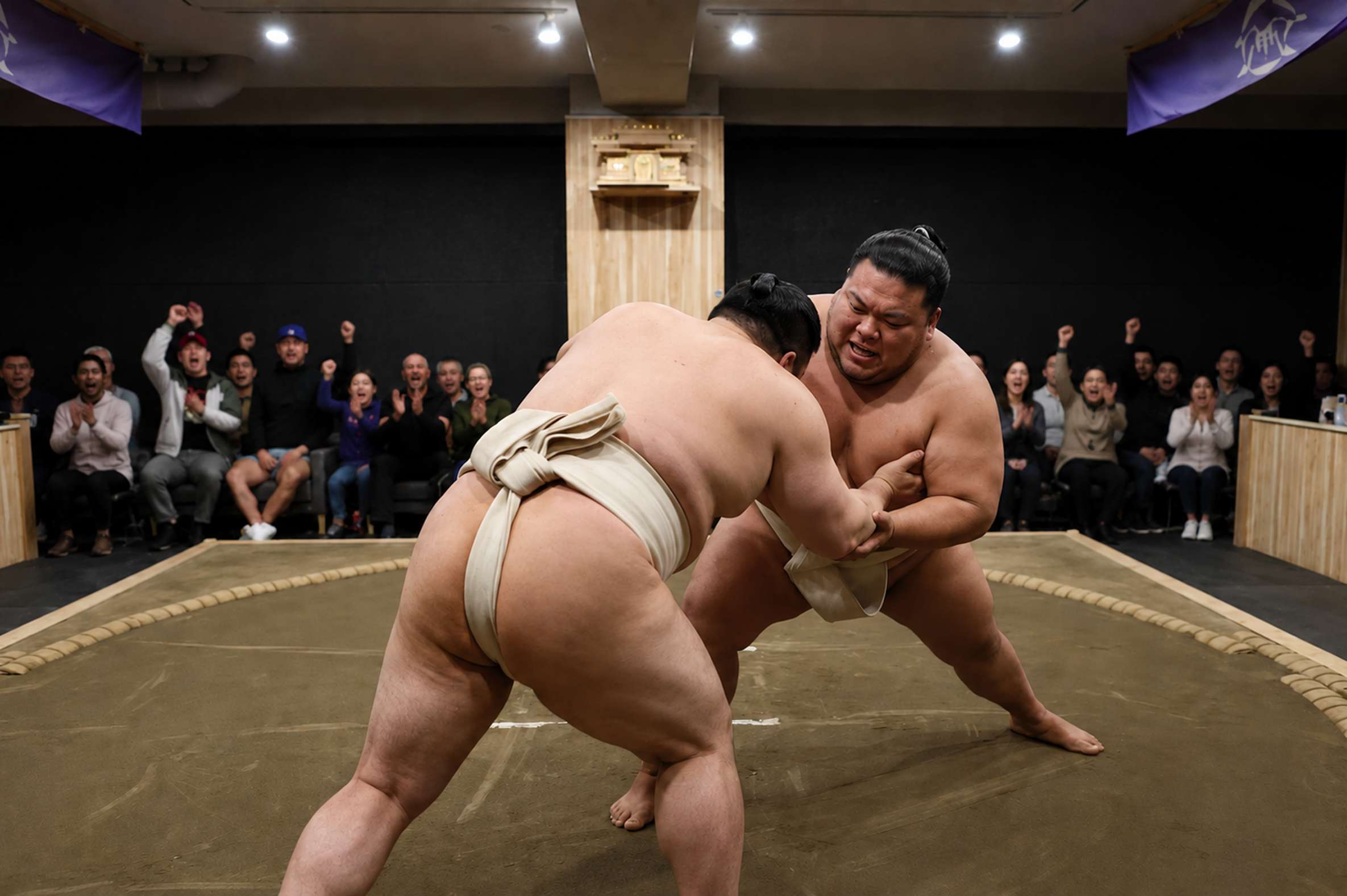
The wrestlers are usually retired professionals, men who spent years in the association ranks before hanging up their mawashi, so the throws you watch are genuine technique.
The format is lively and welcoming, built to pull children and adults in at the same time, which is why families consistently rate it their best sumo outing. A show is also the one option that runs year-round, while a real tournament only occupies a few weeks a year.
Two honest limits. If a grand tournament happens to fall during your trip, experienced travelers say go to the real thing; the competitive pressure and the roar of a full arena cannot be staged. And if you want a serious study of professional sumo, a show will feel light.
Myth vs reality
Myth"Tourist sumo shows are a staged trap for foreigners"
Reality
Exhibition sumo is a real part of sumo culture, the wrestlers are ex-professionals showing genuine technique, and for a first-timer a show explains more than a tournament ever will
Myth"You are just watching actors in costumes"
Reality
Genuine shows use retired professional rikishi and can name each performer's career; one toured professionally for 14 years before retiring through injury
Myth"A show replaces a real tournament"
Reality
It does not and does not try to: a honbasho carries competitive stakes a show has none of, but the show gets you close enough to touch the ring
Tour for this
Tokyo: Sumo Entertainment with Japanese Meal at Tokyo Tower4.9★ (90) · 1.5 hours · Free cancellation
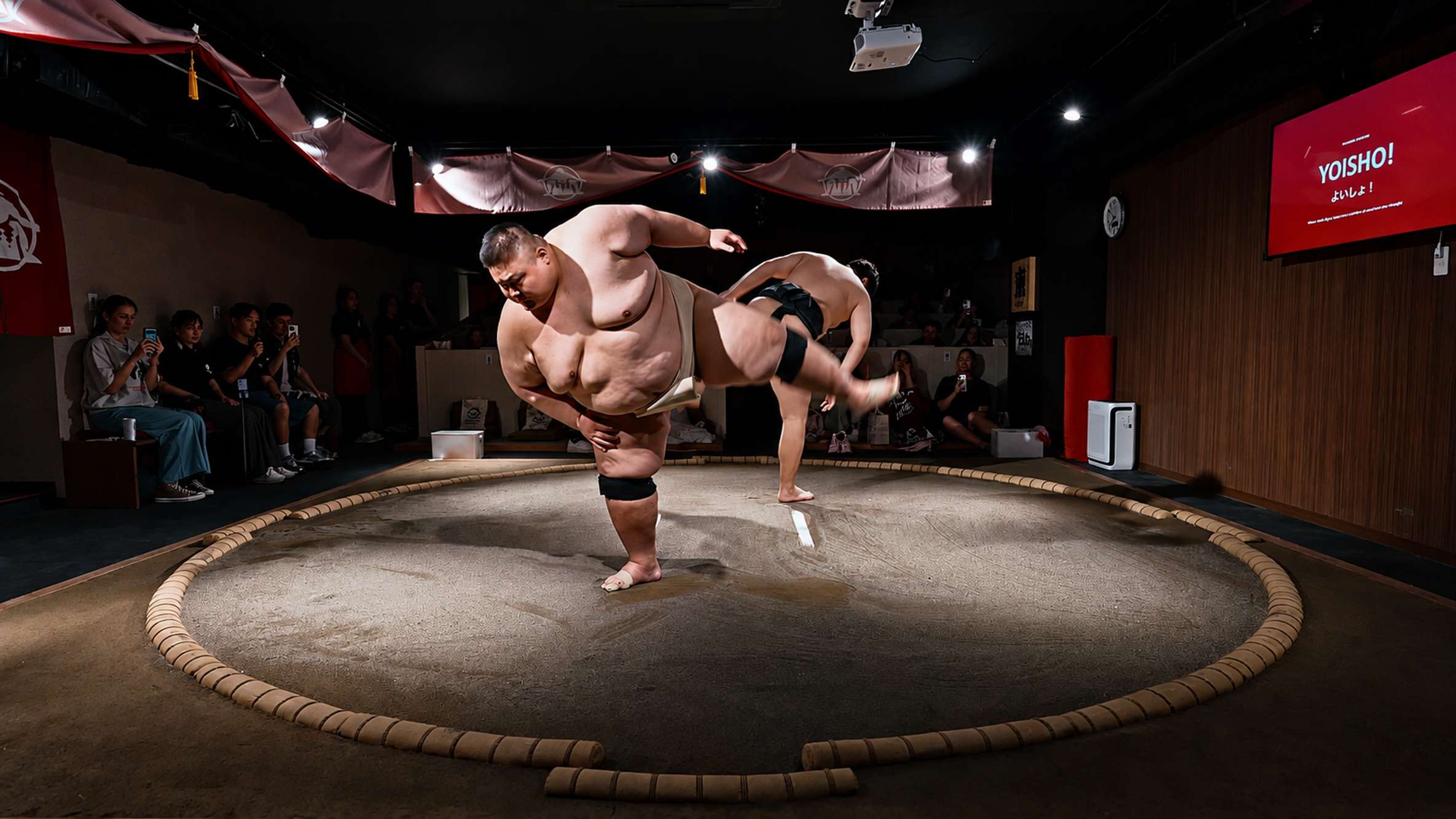
Walk in and the first stretch is talk, not fighting. A host walks you through wrestlers' lives, the stretches, the rules and the Shinto rituals still visible in the ring, like the salt thrown to purify the clay before anyone steps on it.
Sumo is Japan's national sport with roots well over 1,500 years deep, and the show exists to hand you that context in an hour.
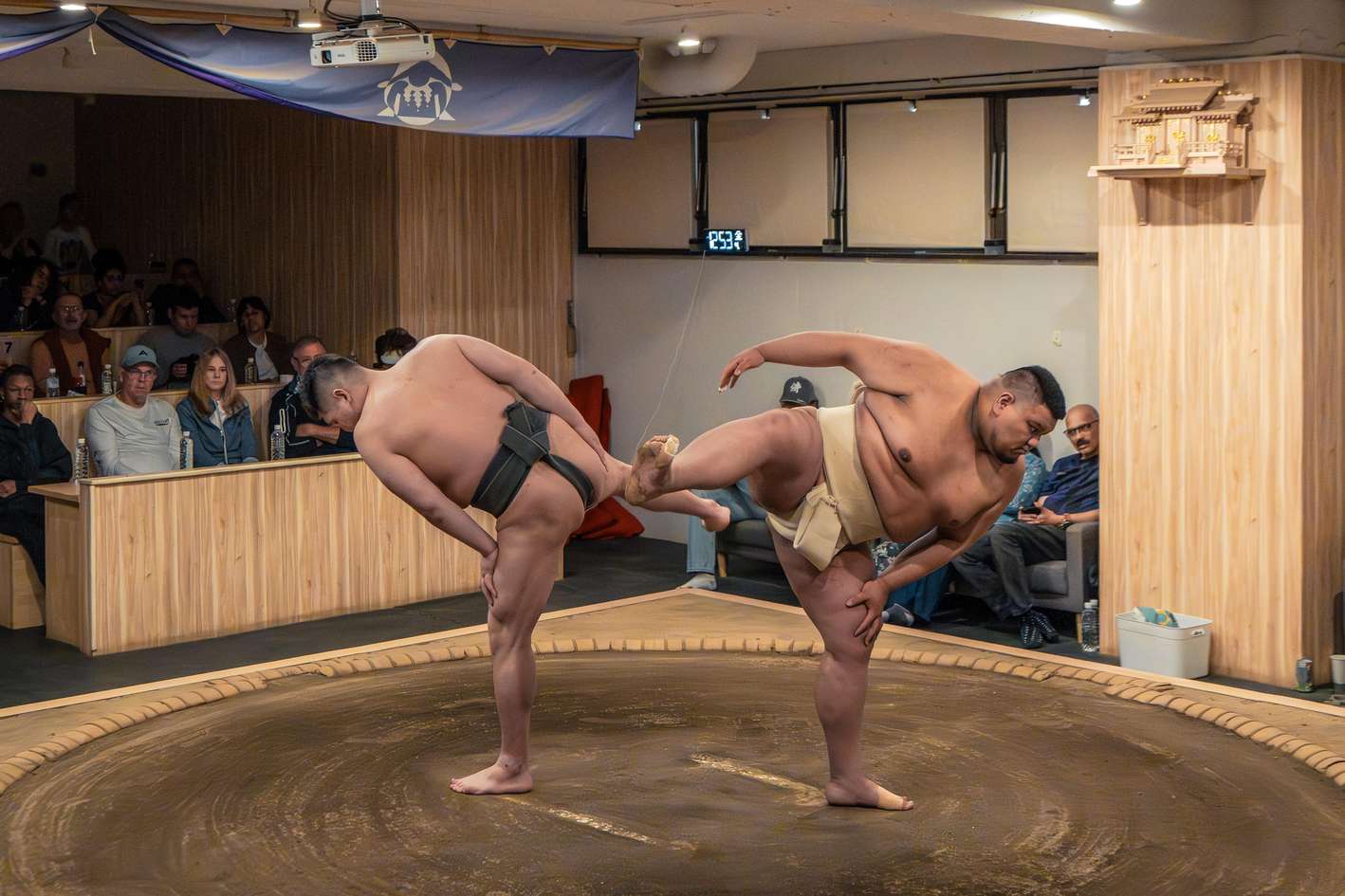
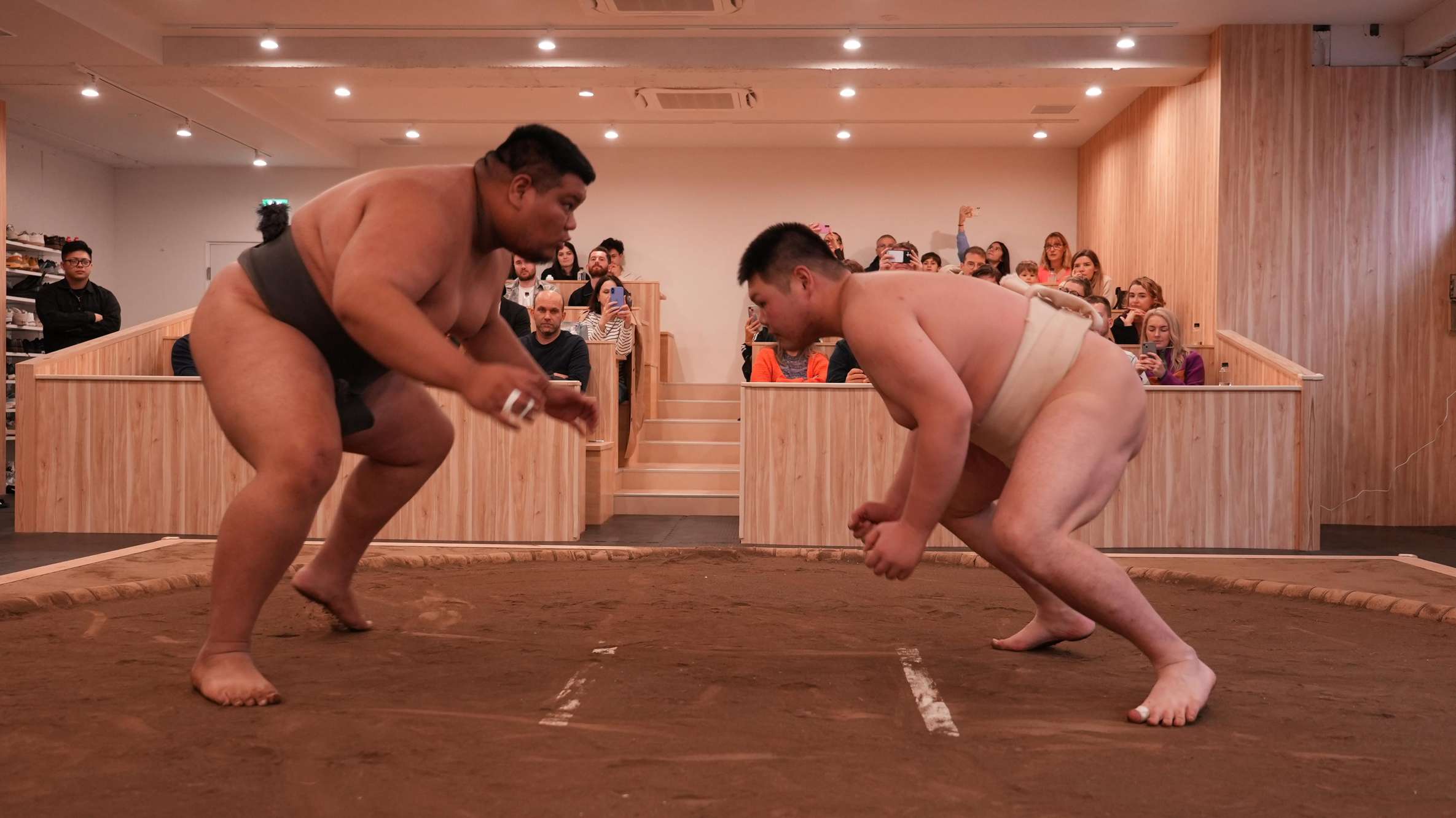
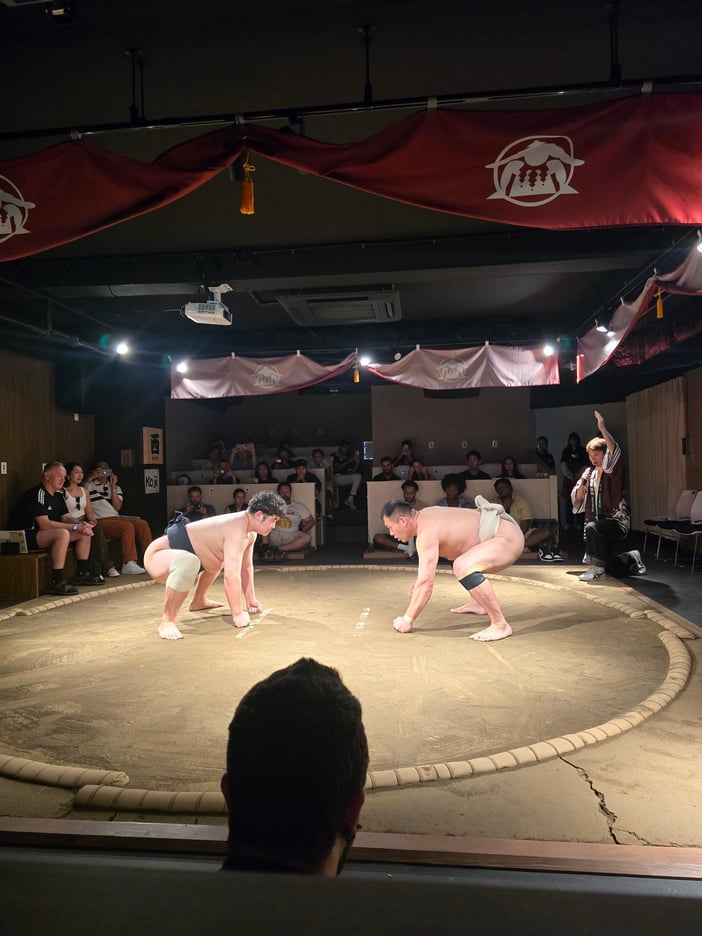
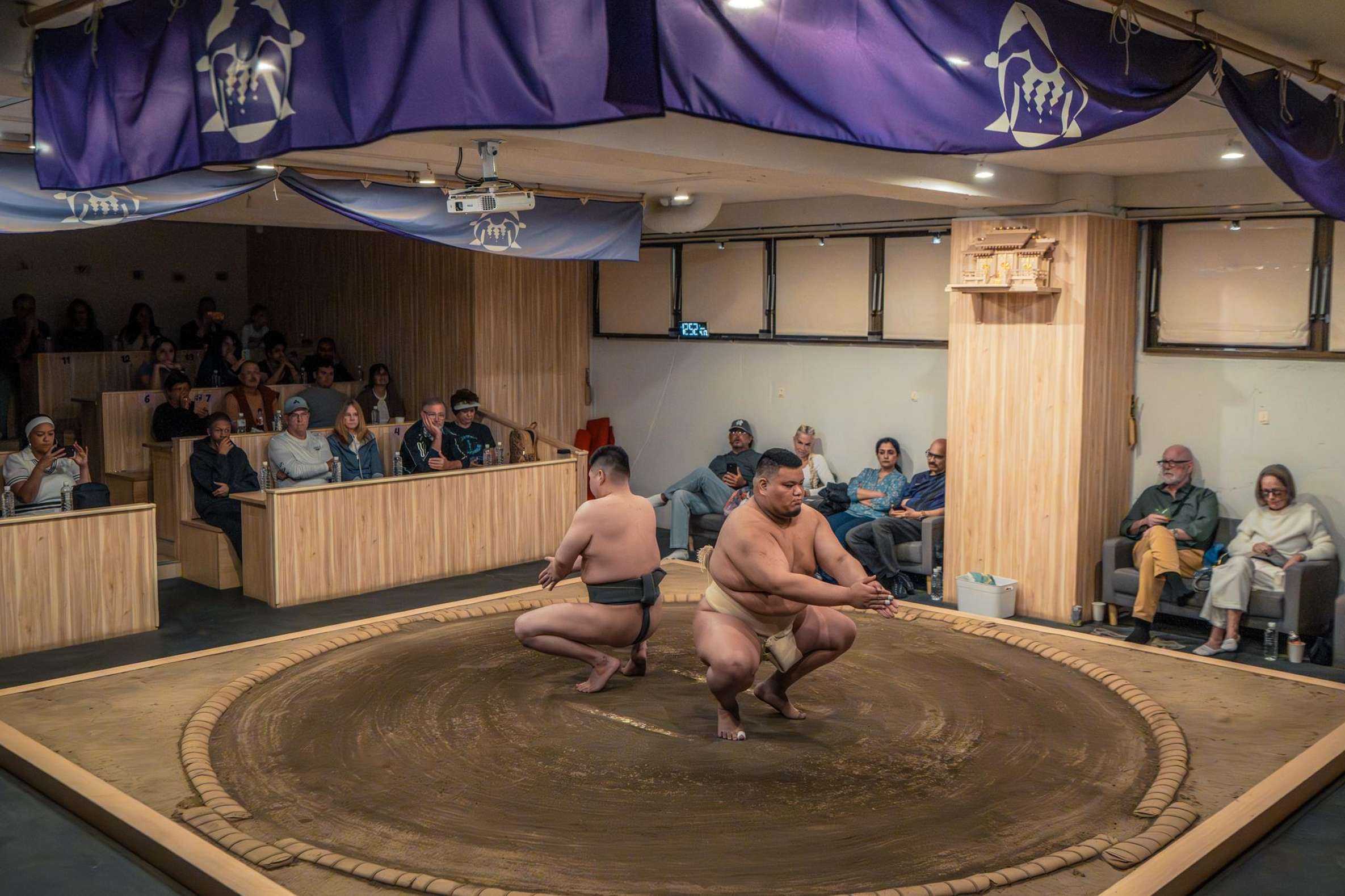
Then come the demonstrations, and the room changes. Foot stomps land like drums, the salt flies, and bouts start and end in seconds: a wrestler wins by pushing his opponent out of the ring or making any part of him besides his soles touch the ground.
The actual wrestling often fills only the last 15 to 30 minutes. It sounds little until you see how it works: each bout is over almost before you sit forward.
The audience challenge comes at the very end, when a handful of guests are invited into the ring. Joining in is always your choice; plenty of people stay in their seats and enjoy watching others try.
1
Opening section
An MC explains wrestlers' lives, training, rules and Shinto-rooted rituals
English-speaking, so no Japanese needed
2
Demonstrations
Retired wrestlers show techniques, stomps, salt throwing and warm-ups
Photography is allowed at most shows
3
The bouts
Live matches, usually in the final 15 to 30 minutes
Bouts end in seconds; watch the salt and the crouch
4
Audience challenge
Lottery-selected guests enter the ring at the end
Joining in is optional
5
Photo session
Pictures with the wrestlers to close the evening
Included at nearly every Tokyo show
Tour for this
Tokyo: Shinjuku Sumo Show & Experience with a Photo4.9★ (9,863) · 1.5 hours · Free cancellation
The three ways to do sumo in Tokyo - watch, try or eat
Before comparing venues, it helps to know the three shapes a sumo evening takes.
The entertainment show is the default: a live performance by retired wrestlers in Shinjuku, Shibuya, Ginza, Asakusa or at Tokyo Tower, with an English-speaking MC, audience games and a photo at the end. It runs year-round, whatever the tournament calendar is doing.
The dining shows fold dinner into the performance. One pairs the bouts with all-you-can-eat chicken hot pot and a geisha dance; another, the more upscale Asakusa evening, serves wagyu sukiyaki, chanko-nabe and matcha dessert while the wrestlers work. The food is part of the ritual rather than an intermission.
The hands-on class near Ryogoku goes further: you get on the dohyo yourself, pound mochi with the wrestlers and eat the chanko nabe their stables cook.
The fourth option, morning practice at a real stable, is a different animal entirely and gets its own chapter below. Silence instead of laughter, training instead of performance, and an early alarm. Most first visits belong to the first three.
Tour for this
Tokyo: Sumo Entertainment Show with Chicken Hot Pot & Geisha4.8★ (8,711) · 2 hours · Free cancellation
Five districts, five evenings, and the wrestling looks fairly similar across all of them. What separates the venues is language, keepsakes, who can join and how the night is dressed.
The Shinjuku show is the all-round pick for a first night: an hour and a half in English, a welcome drink, a lottery chance to suit up in a traditional sumo outfit and step into the ring, and pictures with the wrestlers afterwards.
Tokyo: Shinjuku Sumo Show & Experience with Photo fits anyone from age 12 to 99 and asks for no prior knowledge.
Families with small children lean toward the Asakusa hot pot show, built for adults and kids together and happy to seat a four-year-old. Ginza suits a dinner-and-show evening, with an optional hands-on training session that is not for children under 5, pregnant guests or anyone with a serious medical condition.
Shibuya runs five shows a day, one stop from Shibuya Station, though it does not suit wheelchair users. Wheelchair seating is limited at most venues, so say so when you book.
Shinjuku show
Asakusa chicken hot pot show
Ginza show
MC language
English
English and Japanese
English and Japanese
Photo included
Pictures with the wrestlers
Printed souvenir photo
Photo and video
Hands-on chance
Lottery challenge in a sumo outfit
Ring challenge by lottery
Optional hands-on Plan B
Kids
Ages 12 and younger welcome
Family-friendly, suits young children
Plan B not under 5
The evening
1.5 hours, casual
2 hours with meal and geisha dance
Dinner-and-show format
Shinjuku show
MC language
English
Photo included
Pictures with the wrestlers
Hands-on chance
Lottery challenge in a sumo outfit
Kids
Ages 12 and younger welcome
The evening
1.5 hours, casual
Asakusa chicken hot pot show
MC language
English and Japanese
Photo included
Printed souvenir photo
Hands-on chance
Ring challenge by lottery
Kids
Family-friendly, suits young children
The evening
2 hours with meal and geisha dance
Ginza show
MC language
English and Japanese
Photo included
Photo and video
Hands-on chance
Optional hands-on Plan B
Kids
Plan B not under 5
The evening
Dinner-and-show format
Tour for this
Tokyo Ginza Sumo Show: Live Performance & Photo Experience4.7★ (2,064) · 1.5 hours · Free cancellation
Sumo with dinner - what is chanko nabe and which shows serve it
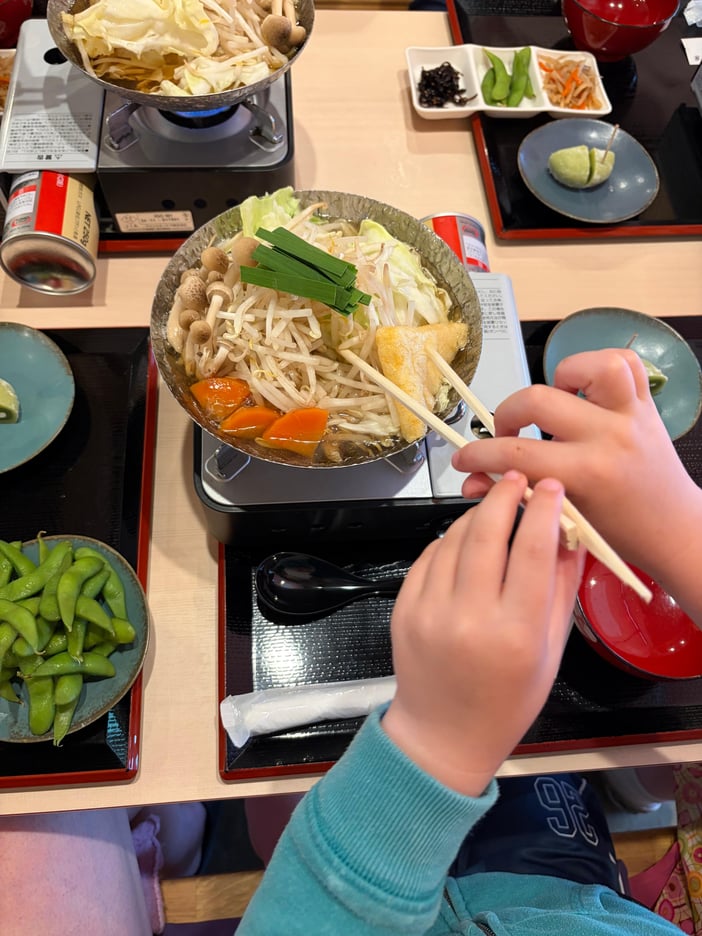
Chanko nabe is the hot pot that builds wrestlers. It started in the stables of Ryogoku in the late 1800s as a cheap way to feed a dozen growing men after training: chicken, napa cabbage, carrots, green onions and fried tofu simmered in a deep broth, eaten in vast quantities from one shared pot.
The chicken is not an accident. A chicken stands on two legs, like a fighting wrestler; a cow or pig stands on four, like a fallen one.
Three Tokyo experiences put it on your table. The Ryogoku class serves it with mochi making and a turn in the ring. The Asakusa show pairs all-you-can-eat chicken hot pot with a geisha dance, two hours of bouts and dishes. The luxury Asakusa evening adds wagyu sukiyaki and matcha dessert, served while the wrestlers perform.
The meal carries the meaning: in a stable the whole house eats the same pot together, seniors first, and sharing it is how the bond forms. Travelers talk about the food as warmly as the wrestling. Check your booking details for exactly which dishes and drinks are included before you arrive.
Tokyo: Sumo Entertainment Show with Chicken Hot Pot & Geisha
Tour for this
Tokyo: Luxury Sumo Show Experience & Japanese Cuisine & Drinks4.7★ (1,033) · 2 hours · Free cancellation
Yes, and it is harder than it looks on television. At several Tokyo venues the evening ends with guests in the ring, and at the Ryogoku experience the wrestling is the point: you get on the dohyo with the wrestlers themselves, no prior experience needed, with mochi pounding and hot pot around it.
Women and children are welcome on the dohyo at these venues, which surprises visitors who have read that professional sumo keeps women out of the ring. That rule governs the professional sport, not the tourist experience.
A bout follows a set sequence, and the instructor teaches it before anything starts: bow, make the chirichozu gesture showing you carry no hidden weapons, crouch with both fists on the clay, go, bow again. The forbidden moves come up too: no grabbing the front of the belt, no hair-pulling, no punching. Slapping is allowed.
Participation is optional throughout. These are entertainment programmes, lighter than real training and designed for complete beginners of all fitness levels, so nobody is thrown across the room. Watch from your seat if you would rather; nobody will press you.
Tokyo: Sumo Wrestling Experience with Chanko Nabe & Mochi
Tour for this
Tokyo: Sumo Wrestling Experience with Chanko Nabe & Mochi4.8★ (746) · 1 - 2 hours · Free cancellation
When to book a Tokyo Sumo Show, and why evenings vanish early
Shows run every day of the year in Tokyo, so the calendar question is really about crowds.
April and October are the heaviest months, with May close behind, and November draws the most search interest of any month even though the tour demand cools. Those are the weeks when evening slots disappear and rebooking closer to your trip rarely works.
Winter flips the picture. February, December and January are the quiet months, when seats are easiest to get and the evenings are cold but clear.
If weather matters to your walk to the venue, October and November sit around 14 to 23 degrees with mostly dry days; December is the driest of all but cold after dark.
Venues do have dark days even in busy seasons, published on monthly calendars, so glance at your date before locking anything in. Most tours let you cancel up to 24 hours ahead for a full refund, which makes an early booking low-risk.
The mistake is waiting for the trip itself: sessions sell out fast, and by the time you try again the good evening is gone.
Sumo Show Tour Busyness and Interest in Tokyo
April: 5 out of 5 for how busy it gets. This is one of the busiest months for tours, and public interest is moderate.
HighestMar to May, Oct
In betweenJun to Sep, Nov
LowestDec to Feb
Darker: a higher how busy it gets score, out of 5
Tap a month to read it.
November: sightings 50,798 readers a month. Tour availability is moderate, but public interest in sumo is at its highest.
HighestJan, May, Nov47,321 to 50,798 readers a month
In betweenMar, Oct40,219 to 41,862 readers a month
LowestFeb, Apr, Jun to Sep, Dec25,251 to 31,305 readers a month
Darker: more sightings, from 25,251 to 50,798 readers a month
Getting to the sumo venue from where you're staying
Every show sits a short walk from a station, so the evening fits whatever part of Tokyo you sleep in.
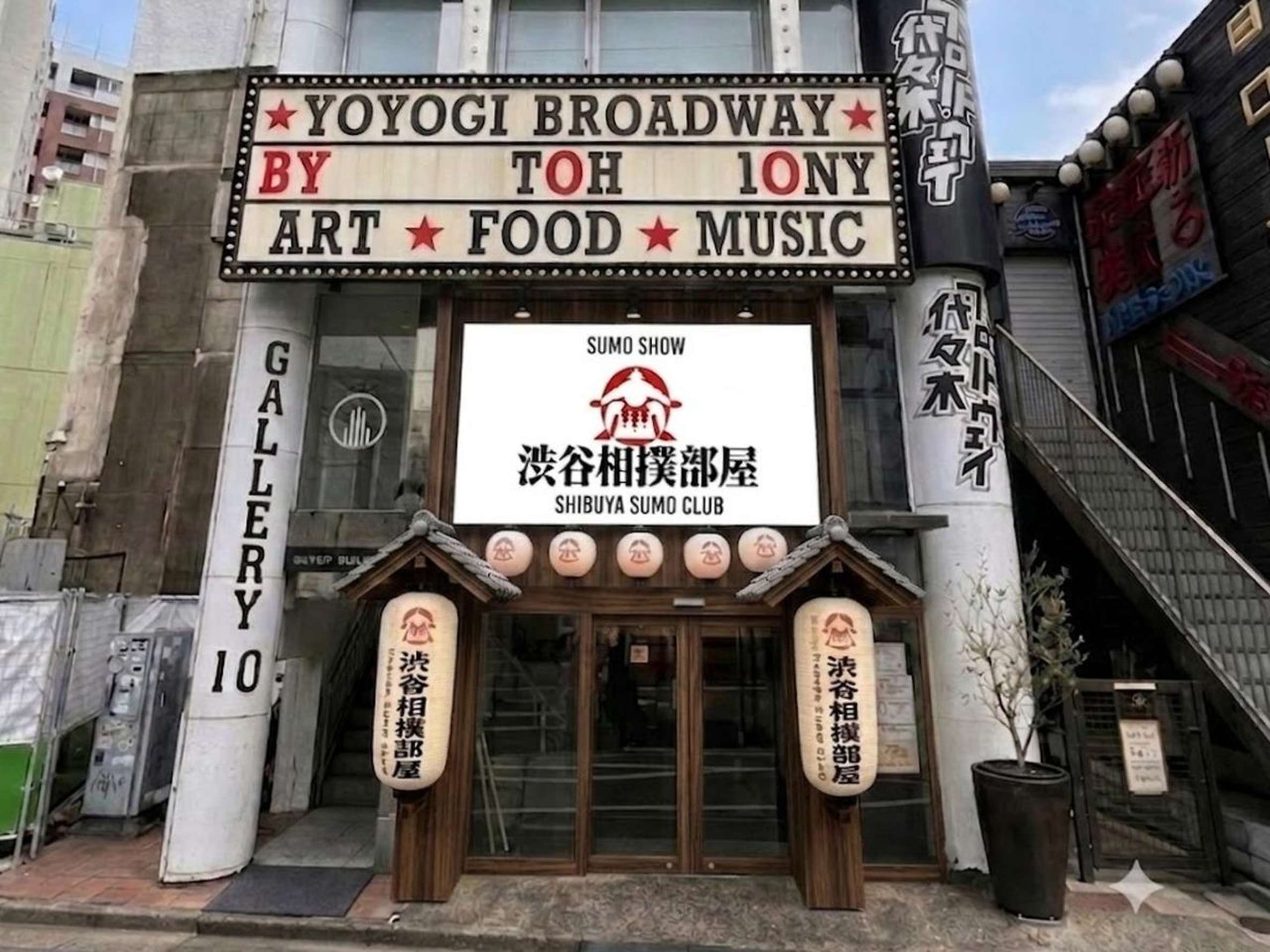
The Shinjuku venue is about two minutes on foot from Higashi-Shinjuku Station, one stop deep on the Fukutoshin and Oedo lines; from Tokyo Station the JR Chuo Line gets you to Shinjuku in roughly 14 minutes. The Shibuya hall is a minute from the East Exit of Yoyogi Station, one stop from Shibuya itself.
Ginza is the easiest of all: a minute from Ginza-itchome Station, close enough to Yurakucho and Tokyo Station to fold into a day of shopping and museums. The train beats the car almost everywhere; from Shinjuku, the Marunouchi Line to the Ginza show takes about 25 minutes while driving takes 35 without traffic.
Taxi works for the Tokyo Tower and Asakusa venues when you are dressed for the evening: from Tokyo Station, count on about 15 minutes to the tower and 19 to Asakusa in clear traffic. Budget a few extra minutes either way; arriving early matters more than arriving fast.
What to wear and bring if you might step into the ring
No dress code exists at any of these venues, and nobody will look at your shoes twice. What matters is movement. Wear flexible clothes you could do a casual gym class in, because the audience challenge pulls guests onto the clay, and stiff jeans make a squat look like a negotiation.
The mawashi, the thick sumo belt, is provided for the hands-on part and worn over your own clothes, so there is no changing room moment to plan for. Socks you do not mind being on the floor in earn their place; shoes come off in box seating.
The Ryogoku class, where wrestling is the main event, asks for more: a towel, a change of clothes and about 500 ml of drinking water.
Swap glasses for contact lenses before your bout if you wear them, since a throw tends to find them. A camera covers everything else, and the show itself hands you the souvenir photo.
Pro tipRecommended Bring a towel, a change of clothes and about 500 ml of water, and switch glasses for contact lenses; the mawashi belt is worn over your own clothes, so no special gear is needed
The quieter alternative - watching morning practice at a real stable
A stable is where rikishi live and train, and it is not a show. The guided visits meet at 7:45 am at Ryogoku Station and watch real training from 8 am for an hour and a half to two hours, from warm-ups and drills through to genuine bouts.
You sit still on the tatami, shoes off, and you do nothing that disturbs the practice: no talking, no whispering, no moving, no flash, not even a camera shutter sound.
It is the closest look at sumo a visitor can get, and the discipline is the spectacle. But it asks for a specific kind of traveler. Whole months offer no practice at all, because Tokyo stables close when the wrestlers travel to tournaments in Osaka, Nagoya and Fukuoka.
Sessions can be cancelled on short notice, even same-day, if a wrestler is injured. Book about two months ahead, and confirm the day before that practice is actually happening.
For families with young children, a show is the better fit; a stable suits teenagers and die-hard fans who can stay silent and still for two hours. Some stables, like Arashio-beya, let anyone watch through a street window from about 7 am with no booking at all, a soft first taste.
What nobody tells you
You may not talk, move, eat or let your camera shutter sound
Practice is the wrestlers' workplace, not a performance, and one disturbance ends your view of it
Questions come only at the end
Your guide translates after practice, and the wrestlers may chat and take selfies with visitors
Whole months offer no practice at all
Stables close to visitors when the wrestlers are away at tournaments, so check the month before you plan the morning
Book roughly two months ahead
Small-group capacity runs as few as six seats, and stables finalise schedules only about a month out
What else to do near the sumo venue before or after the show
The Shinjuku venue sits in a neighbourhood built for filling an afternoon. Shinjuku Central Park is four minutes away on foot, the Juniso Kumano Shrine six, the Sompo Museum of Art seven and the Japanese Sword Museum eleven.
Hanazono Shrine, Meiji Shrine and the Shinjuku Gyoen gardens all fall inside a 20-minute walk, which is enough to turn a 90-minute show into a full day.
Ginza does the same with museums and shrines: the Ad Museum Tokyo and Karasumori Shrine about eight minutes off, the Idemitsu Museum of Arts ten, Tokyo International Forum and the Hibiya park about ten to eleven.
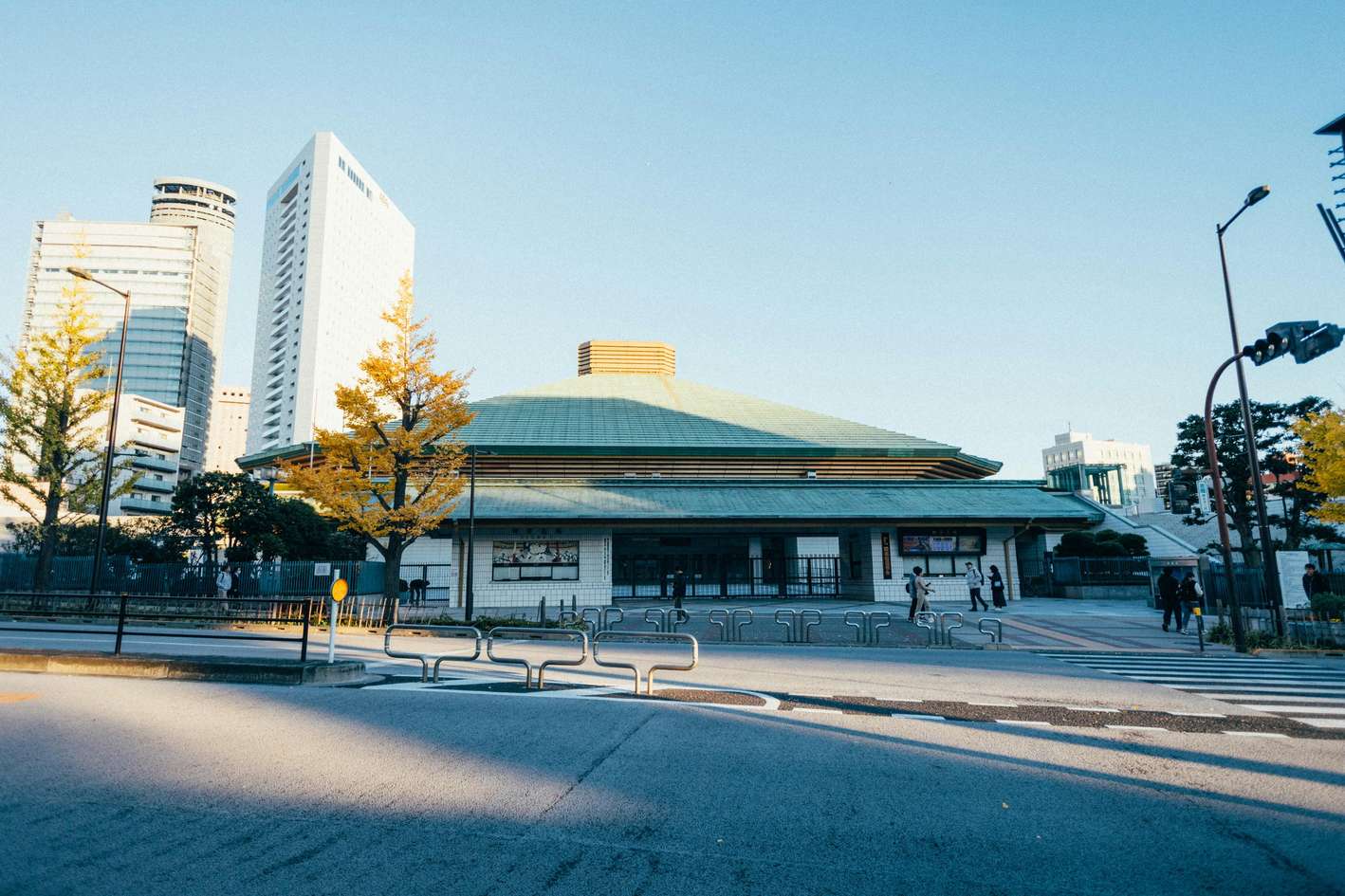
The companion day is Ryogoku, two stops from Akihabara by train. Tokyo's sumo district packs the Kokugikan arena, working stables and chanko restaurants into a few blocks, with the free Sumo Museum inside the arena on non-tournament days and bronze statues and yokozuna handprints along Kokugikan street.
A half-day course of museum, stroll and hot pot dinner pairs naturally with a show on another evening, or a guided walking tour with a chanko-nabe lunch does the legwork for you.
A 20-minute walk from the Shinjuku sumo show venue
How to behave at a sumo show so you enjoy it like a regular
The good news is that a show wants noise. Clapping is welcome, cheering your favorite is fine, and the audience games run on laughter.
The moments that ask for silence are specific: when the referee's fan points forward for the charge, the room goes quiet, and the tension on the ring is the best part of the night. Follow the crowd and you will never be wrong.
The rules that catch visitors are small ones. Keep your phone on silent and stay in your seat during a bout, even for a better angle. No flash during the action, because it startles the wrestlers, and no booing or noisemakers; respectful hand applause is the currency.
Leave the cushion where it sits, even if you have heard about crowds throwing them after a big upset, because at these venues the zabuton throw is banned.
Never touch the ring or a wrestler without an invitation, and never heckle. Do all that and the evening opens up: photos from your seat, a hearty meal, and, if the lottery calls your number, a bow and both fists on the clay.
A traveler's note
100% worth the money. Incredible, funny and entertaining. I loved that they taught us some traditional aspects of sumo before the show. Would definitely recommend to others traveling to Japan :)
A sumo show in Tokyo is a genuine night out, performed by retired professionals and friendly to anyone who knows nothing about the sport. Pick Shinjuku for a first evening, Asakusa for the hot pot and geisha, Ryogoku if you want the wrestling to be yours.
Book spring and autumn dates weeks ahead, arrive before showtime, and wear clothes you can squat in.
Go ifYou want to try sumo yourself, not only watch, and joining the ring challenge appealsYou are traveling with children who would struggle to sit silent for two hoursYour trip falls outside the tournament months and you still want sumo in the itinerary
Skip ifA grand tournament is on during your trip and you can get tickets to the real thingYou want a serious, unfiltered study of professional sumo rather than entertainmentYou cannot sit for 90 minutes to two hours without quiet room, and a stable visit is not an option either
Our pick to book
Tokyo: Shinjuku Sumo Show & Experience with a Photo4.9★ (9,863) · 1.5 hours · Free cancellation
Your questions about a sumo experience in Tokyo, answered
Short answers to what visitors ask before booking a sumo experience in Tokyo.
Can you try sumo wrestling in Japan as a visitor?
Yes. Tokyo shows like the Shinjuku and Shibuya ones let guests challenge a wrestler in the ring, and the Ryogoku experience includes actual wrestling on the dohyo. The participatory options are built for tourists, so they run lighter than real training, and taking part is always optional.
Which Tokyo sumo experiences let you step into the ring yourself?
The Shinjuku and Shibuya shows both offer a chance to challenge a wrestler, with spots limited and selected by lottery when demand is high. The Ryogoku experience includes sumo on the ring plus mochi making, and the Ginza show has an optional hands-on training plan.
Do Tokyo sumo shows include a photo with the wrestlers?
Most do. The Shinjuku, Shibuya, Ginza and Tokyo Tower shows all include pictures with the wrestlers, and the Asakusa and luxury Asakusa shows give you a printed souvenir photo to take home.
Which sumo experiences in Tokyo include a meal like chanko nabe?
Several pair the show with the wrestlers' hot pot. The Asakusa show includes all-you-can-eat chicken chanko nabe with a geisha dance, the luxury Asakusa show adds wagyu sukiyaki and matcha dessert, and the Ryogoku experience serves chanko nabe with mochi making.
Are sumo shows in Tokyo suitable for children?
The show format works well for kids, and the Asakusa and Ryogoku experiences are designed for adults and children together. The Shinjuku and Shibuya shows accept children aged 12 and under, with infants on laps at Shibuya. At the Ginza show, the hands-on plan is unsuitable for children under 5.
Do I need to understand Japanese to follow a sumo show?
No. The Shinjuku and Shibuya shows have an English-speaking MC, the Asakusa shows run bilingual commentary in English and Japanese, and the Ginza show provides English and Japanese support. Hosts explain the rules and rituals in a way newcomers can follow.
Are the wrestlers at Tokyo shows real sumo wrestlers?
Tokyo lunch and dinner shows usually feature retired professional wrestlers who competed in the association ranks before retiring. Genuine shows can name each performer and their career, so it is worth checking whether the operator publishes a cast list before you book.
What happens during a sumo show in Tokyo?
A show runs about 90 minutes to two hours. It opens with an educational section on wrestlers' lives, stretches and rules, then moves into demonstrations like shiko stomping and salt throwing, with the bouts and the audience ring challenge usually at the end. Photos with the wrestlers close the evening.
Can women join a sumo experience in Tokyo?
Yes. Women can join sumo experiences in Tokyo, and some venues welcome women onto the dohyo alongside men. Women's sumo is called onna-zumo in Japanese.
Step into the ring - your sumo experience in Tokyo
Watch live matches in Shinjuku, join the lottery to challenge a wrestler in the ring, and go home with pictures of it all, with free cancellation up to 24 hours before.