4.62,722 travelers cheered from the front row at Namba
Sumo Dining in Osaka Restaurants and Sumo-Themed Food
Book a sumo dinner in Osaka and turn one evening into the whole show - former professional wrestlers on a real ring, a bento or snack bag with your drink, and a lottery chance to step into the ring yourself. The venue sits on the 8th floor of Namba Parks, three minutes from Namba Station, so dinner and sumo are one booking. Pick your seat and lock in your night.
4.6★average rating2,722traveler reviews2 of 3free cancellation36countries travelers came from
Sumo Dining Osaka - quick start
Osaka's sumo evenings come in three shapes: a short show with a chance to wrestle, a two-hour dinner show in Namba, and a front-row sukiyaki night near the airport. The deciding difference is how much you want to eat and how close you want to sit. First-timers who missed the March tournament fit any of the three.
ChildrenAt Sumo Hall Hirakuza Osaka, ages 2 and younger are not permitted; families with kids around 10 to 12 are a core audience.
LanguageThe Hirakuza show is performed entirely in English, and the audience challenge show has an English-speaking MC.
TimingShows can start later than the printed time, so arrive 15 to 20 minutes early to settle into your seat.
Closed daysThe Namba venue closes every Tuesday plus 12/31 and 1/1, with a handful of extra dark days a month on its calendar.
Dietary needsHalal and vegan bentos exist but must be reserved by 10 am three days before the performance.
WheelchairsHirakuza has limited wheelchair spaces, contact the venue in advance; Sumo Studio Osaka is on the ground floor.
MealsThe sukiyaki show serves dinner from a shared pot, and you can also eat during the performance, though the lighting dims.
Getting thereThe Namba venue is a 3-minute walk from Nankai Namba and Osaka Metro Namba stations; train access is recommended for the sukiyaki show.
CancellationsMost of these tours can be cancelled up to 24 hours in advance for a full refund.
closureThe Sumo Hall Hirakuza show in Osaka runs all year but not every single day: the venue closes on irregular dates, including most Tuesdays outside busy periods and the year-end holidays.
Check the venue's monthly performance calendar for your exact date before you plan your evening, and if your night falls on a closed day, book the show for another evening or build your Namba dinner around one of the city's other sumo dining options.
Which sumo dining Osaka experience fits your evening
Cheapest way in
1 - 1.5 hours·English
4.9(2,124)
Osaka: Sumo Experience with Live Show & Audience Challenge
The lowest entry point for a live show in Osaka, with a retired-wrestler bout and your own shot at the ring in about 90 minutes.
Free cancellationAuthentic sumo demonstrationsEnglish-speaking MC
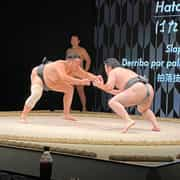
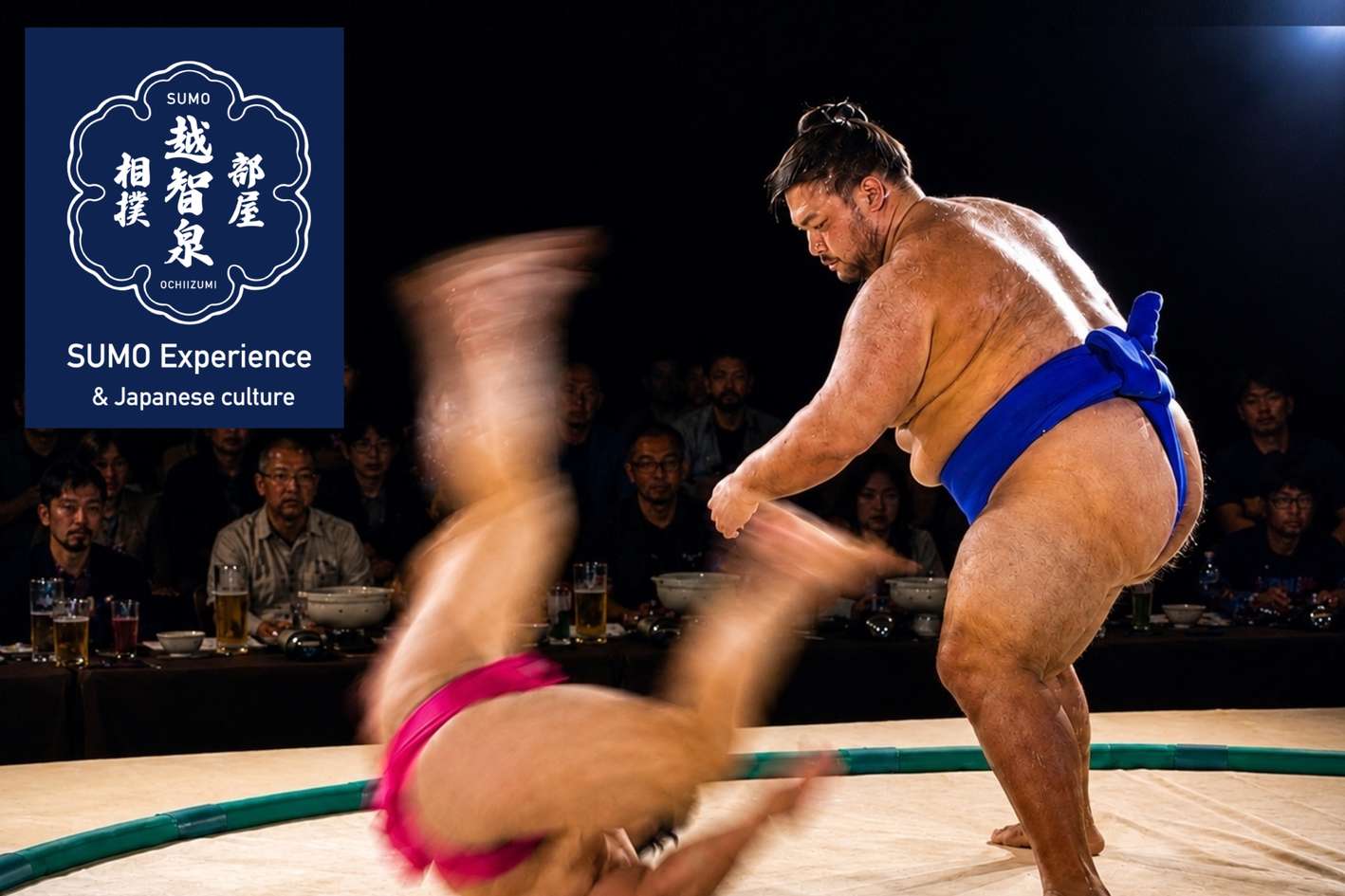
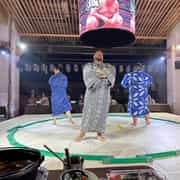
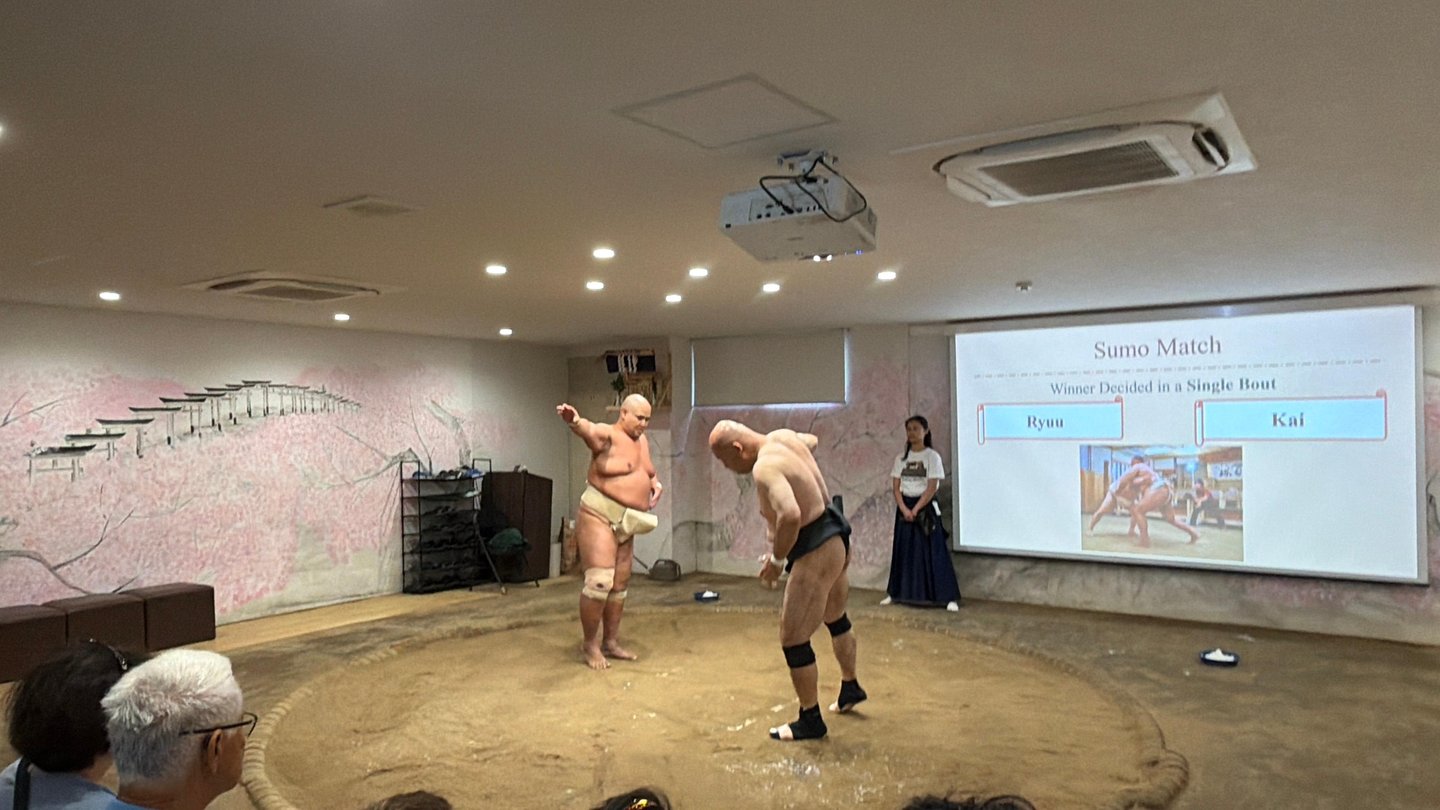
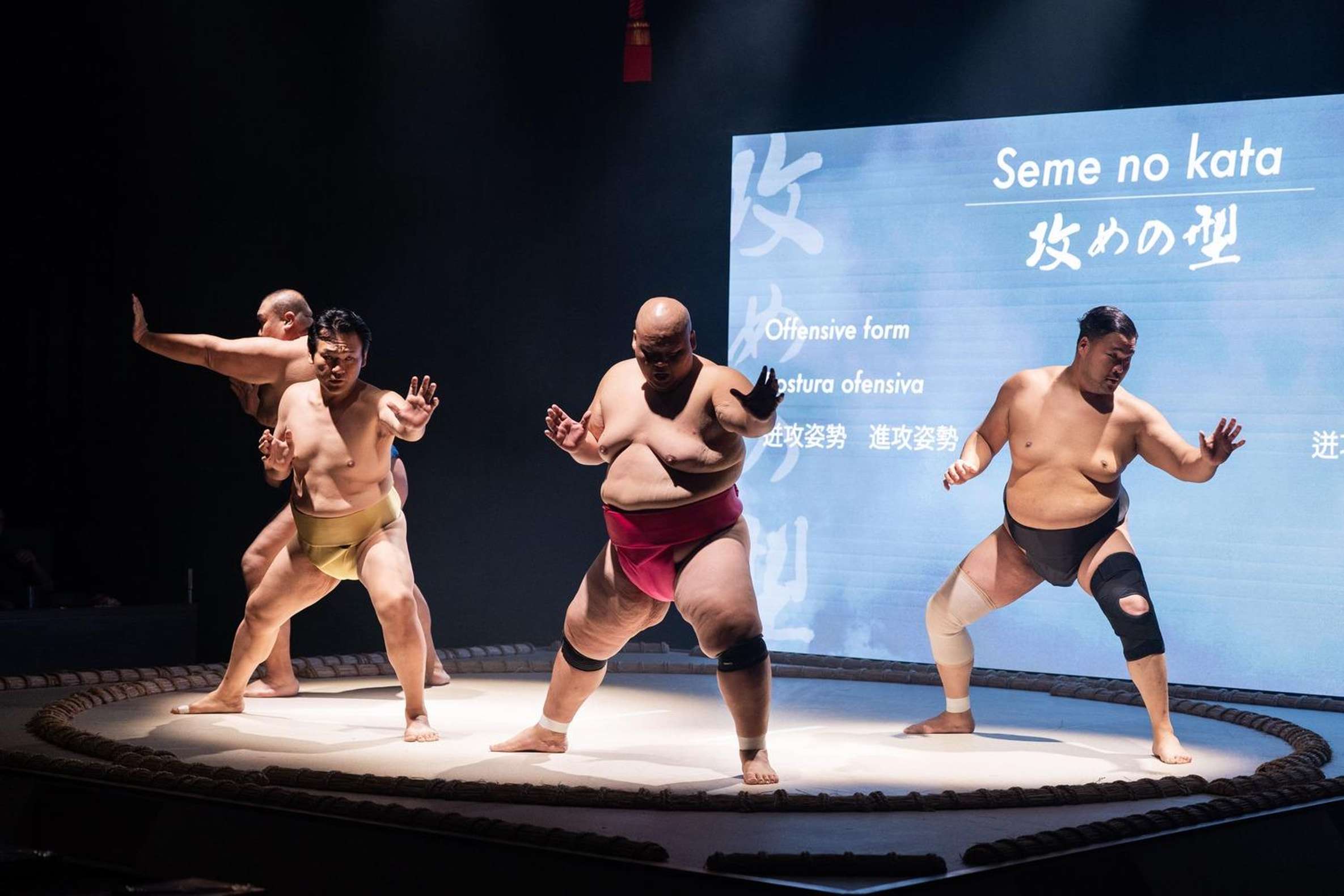
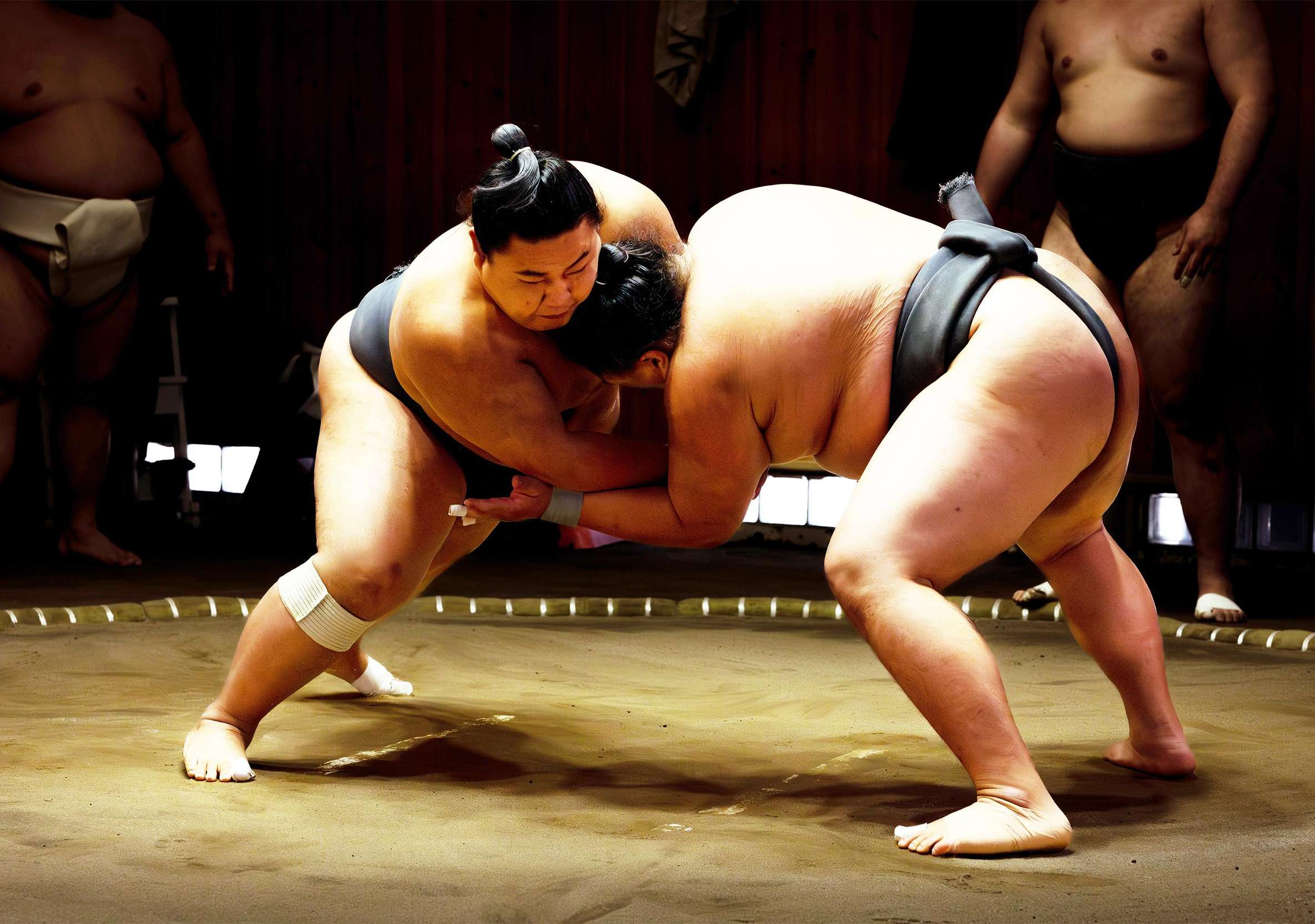
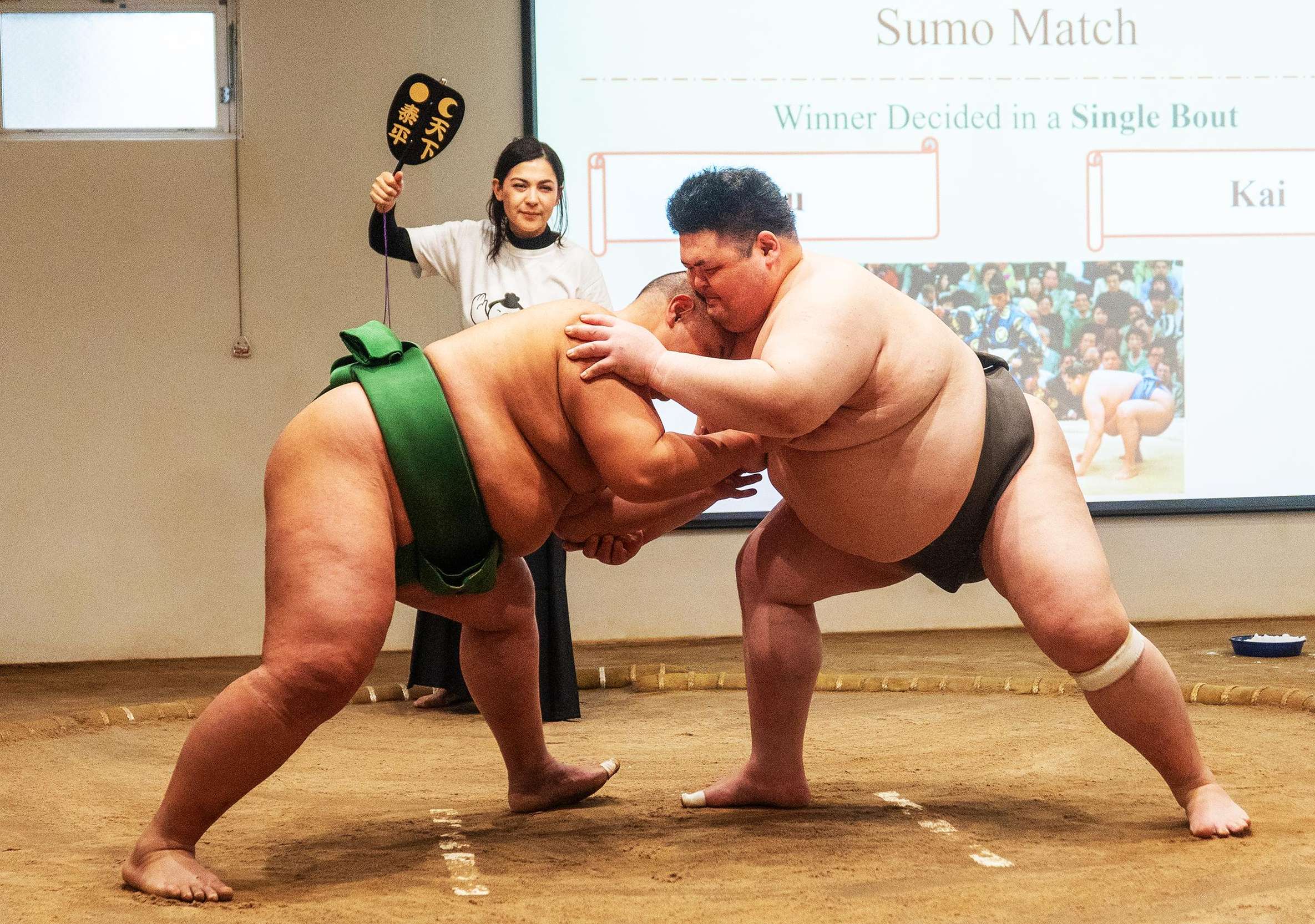
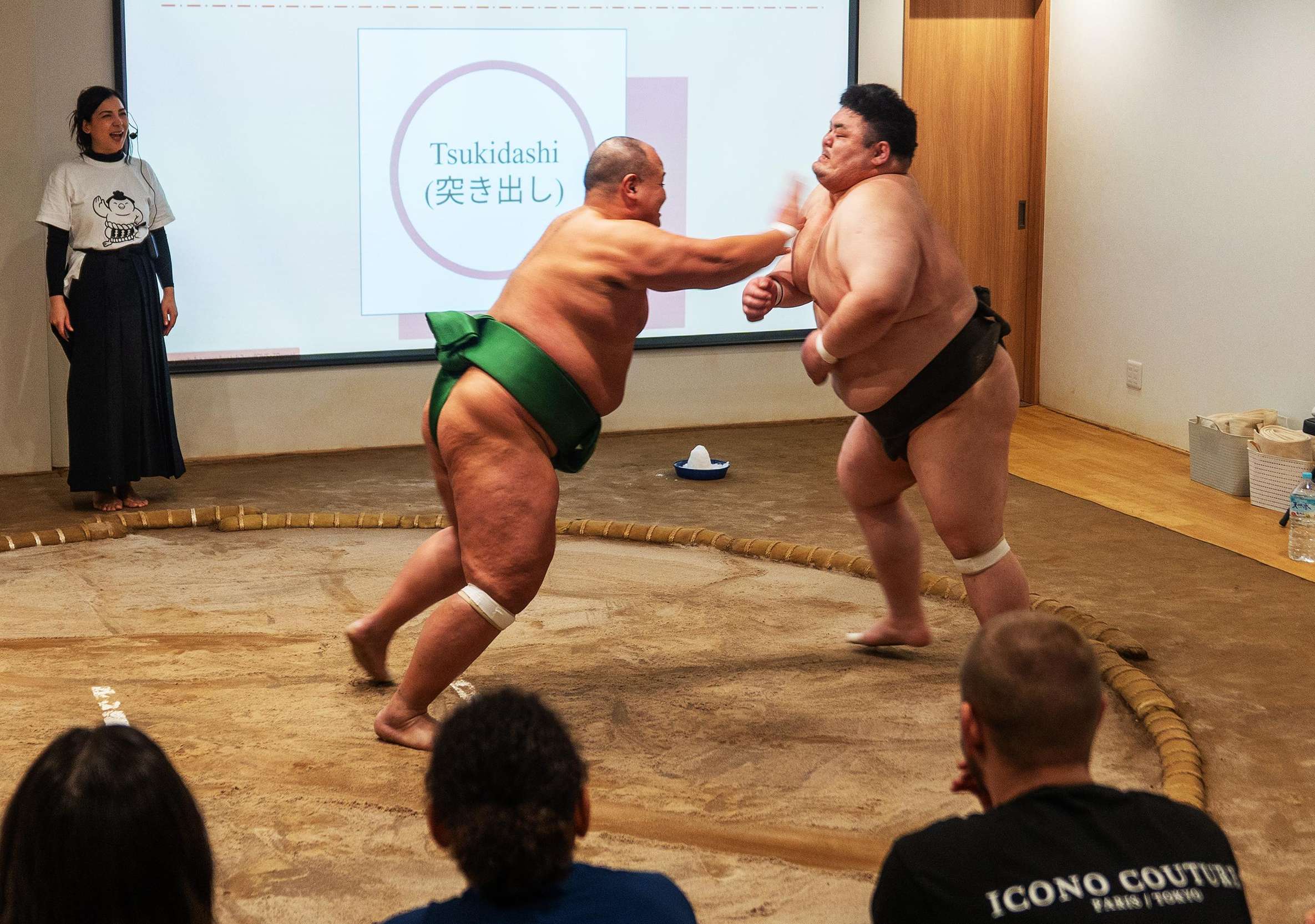
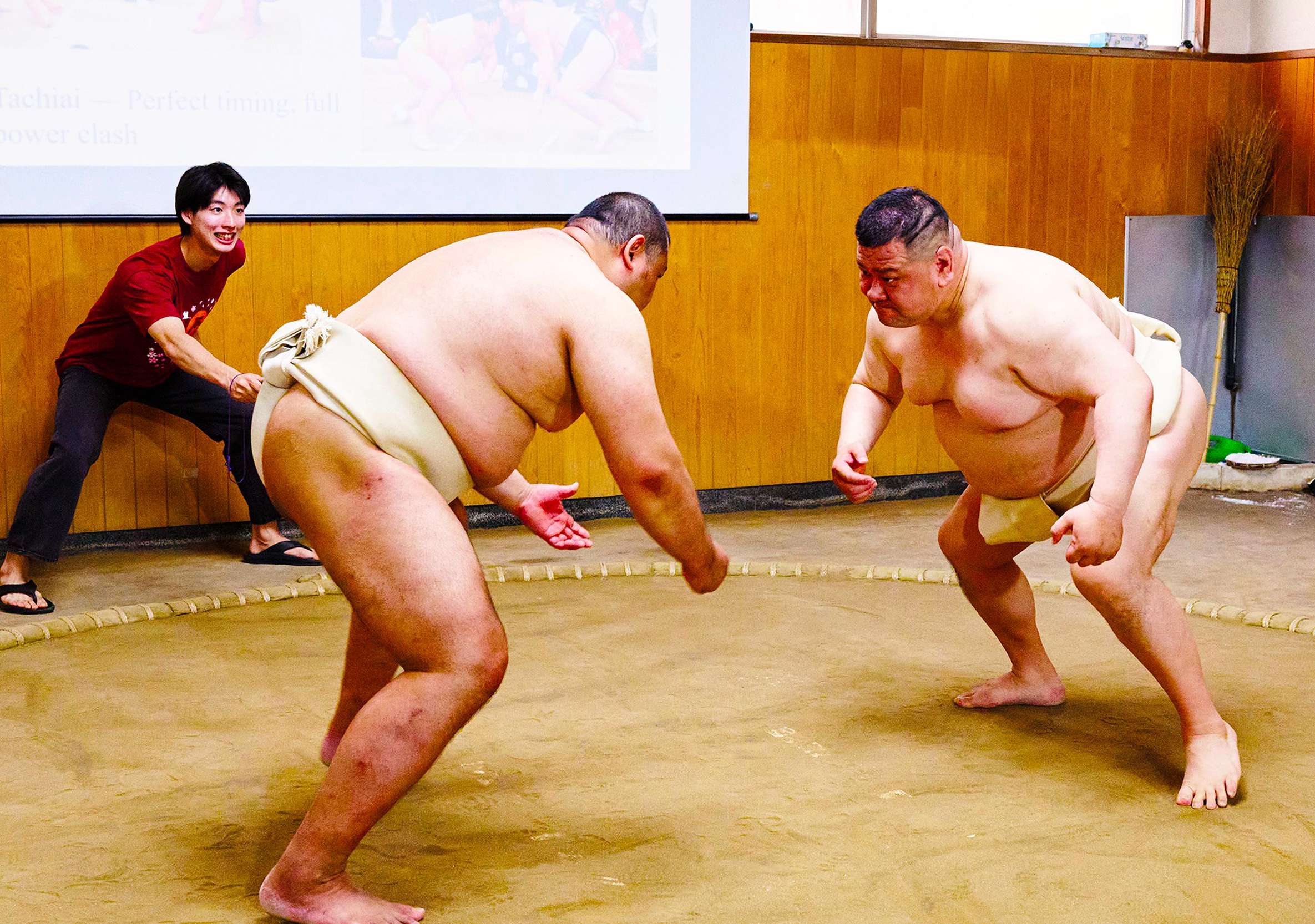
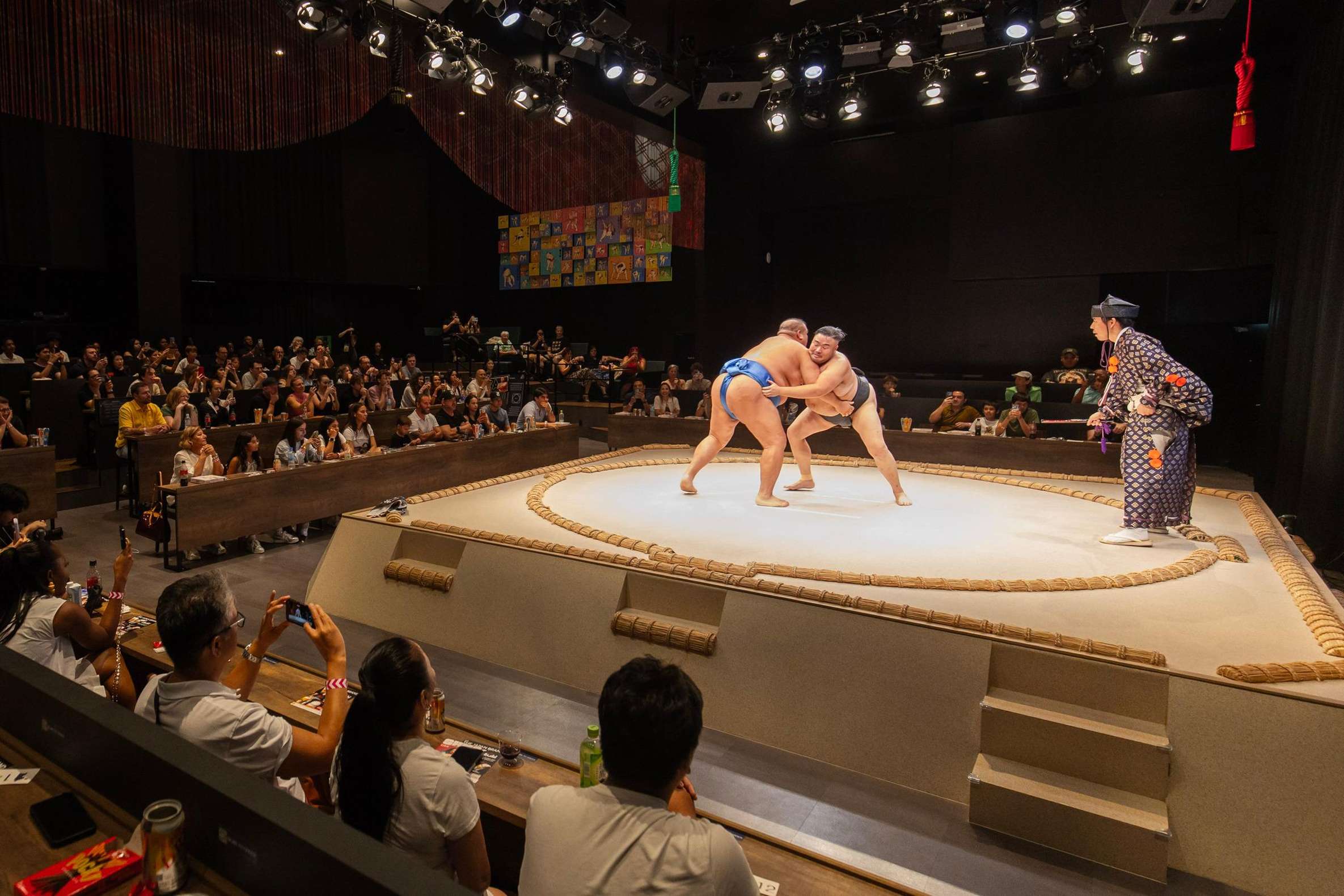
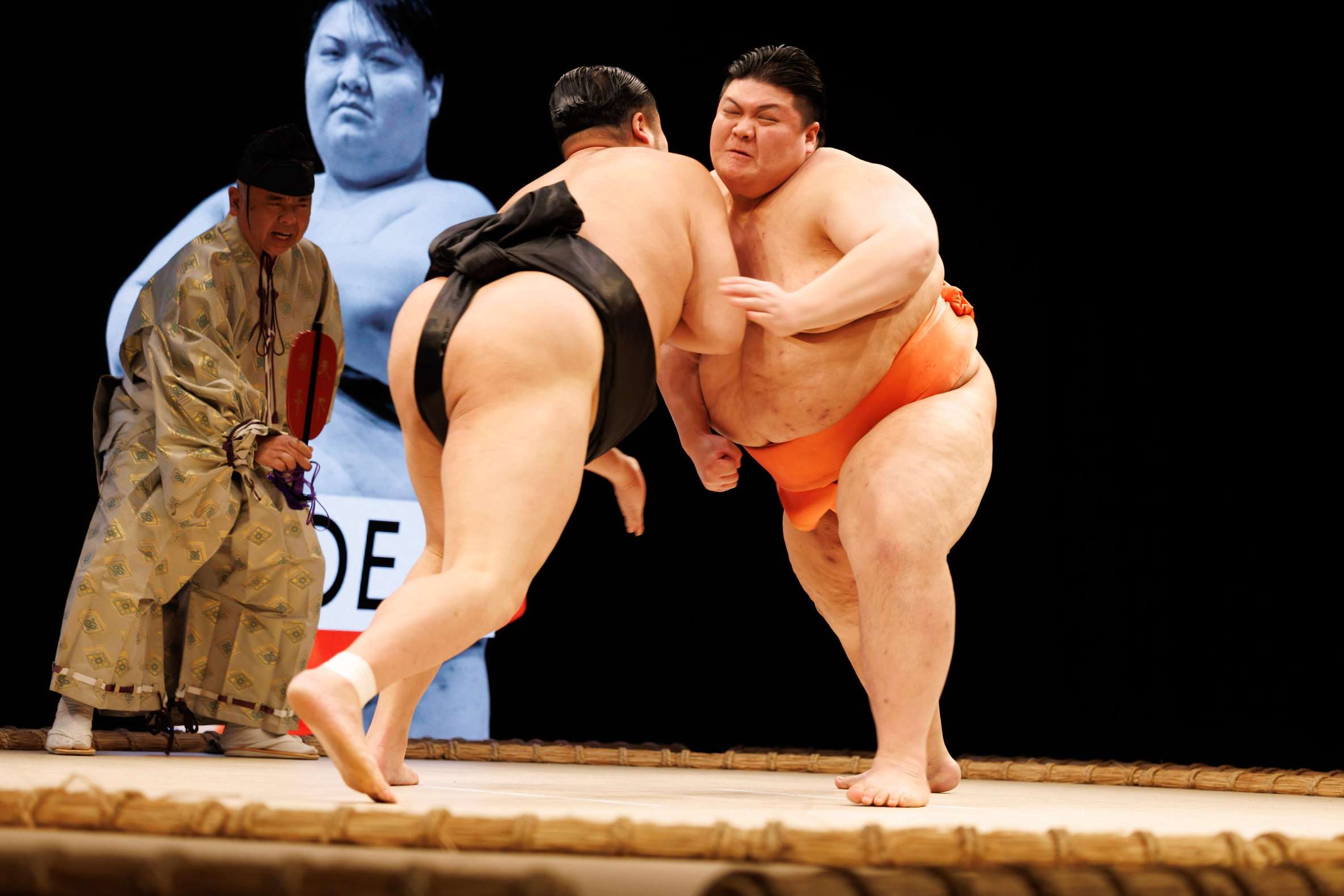
The evening starts with retired professional wrestlers on a full-size ring, close enough to hear the slap of the charge.
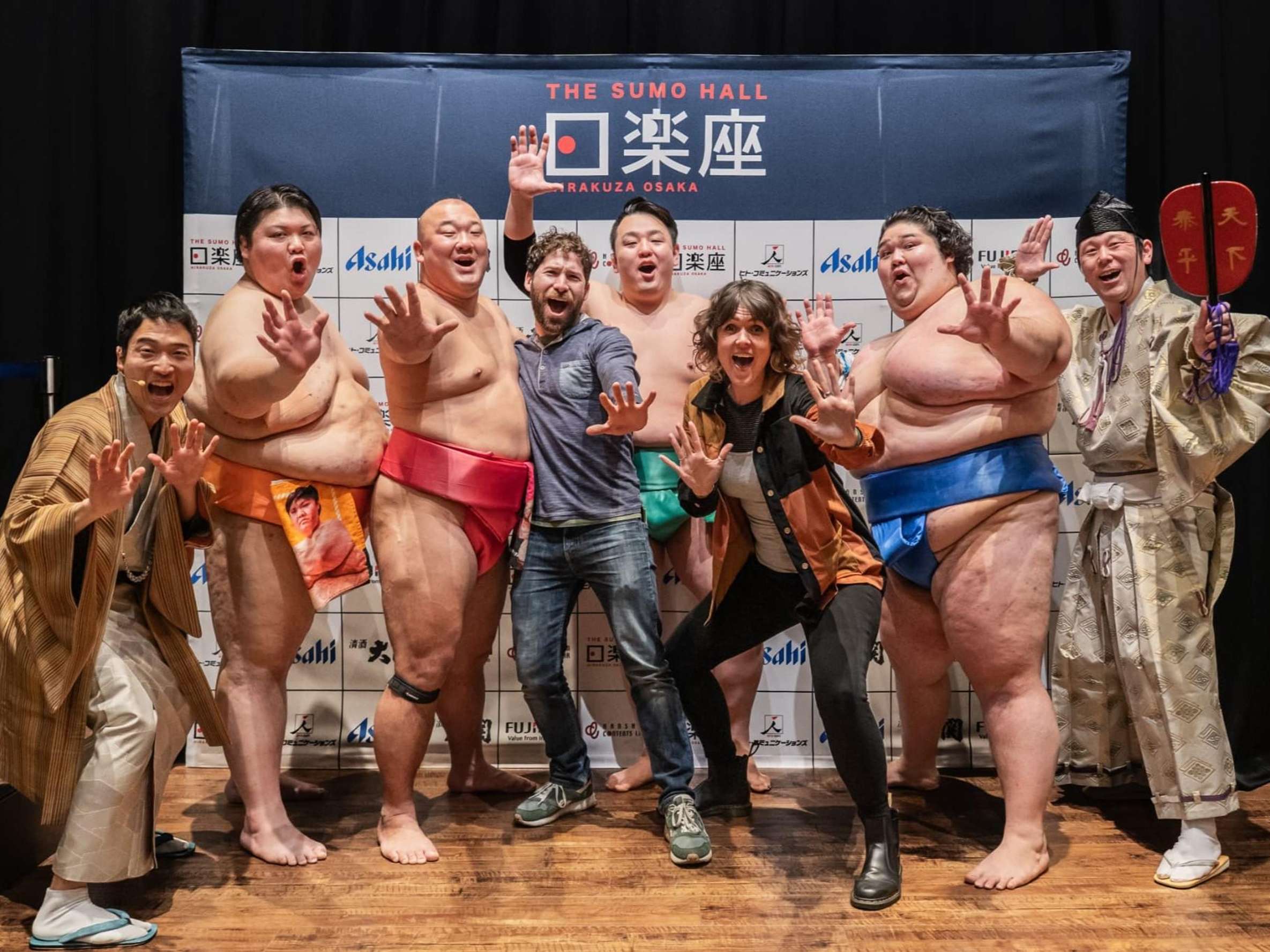
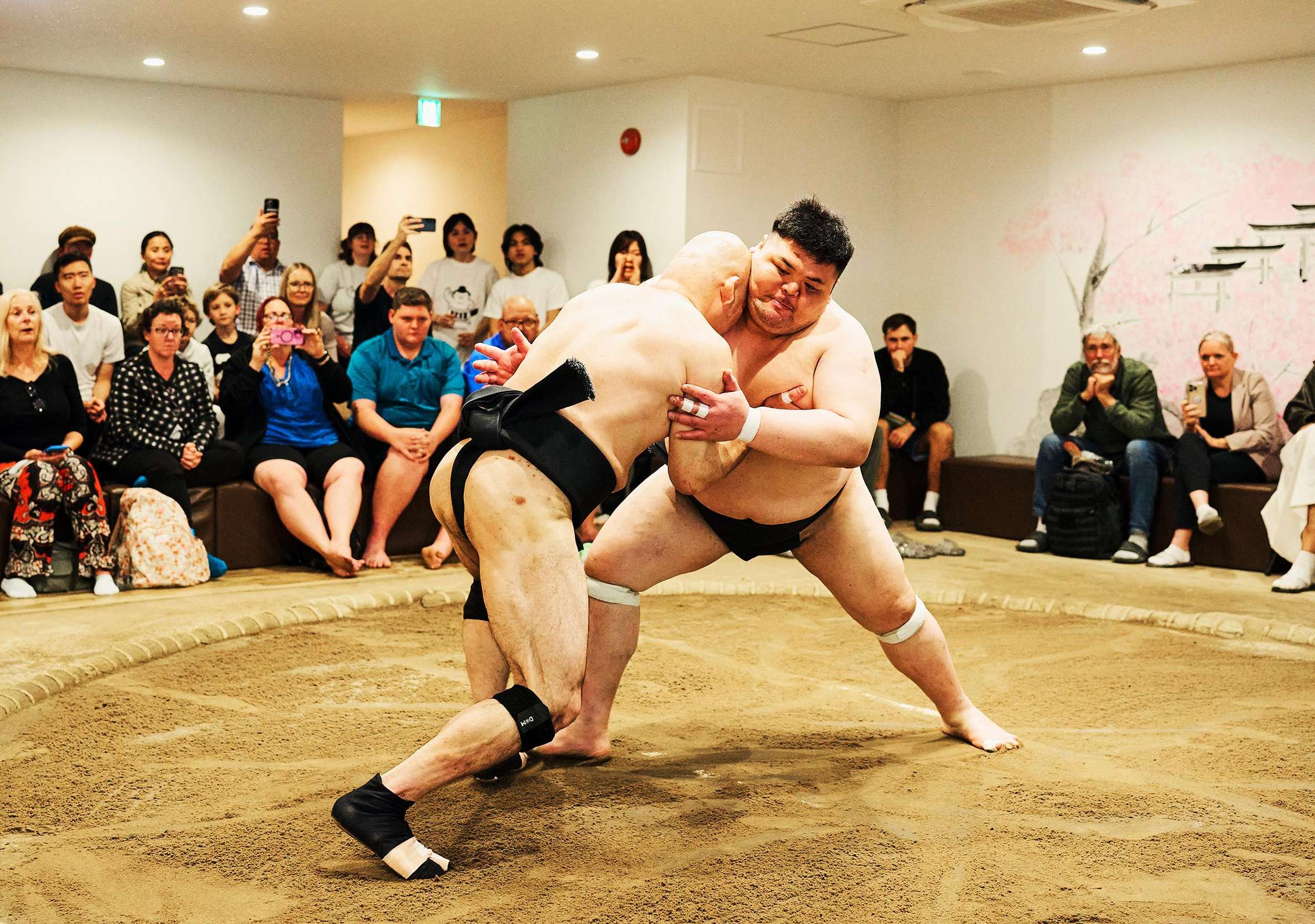
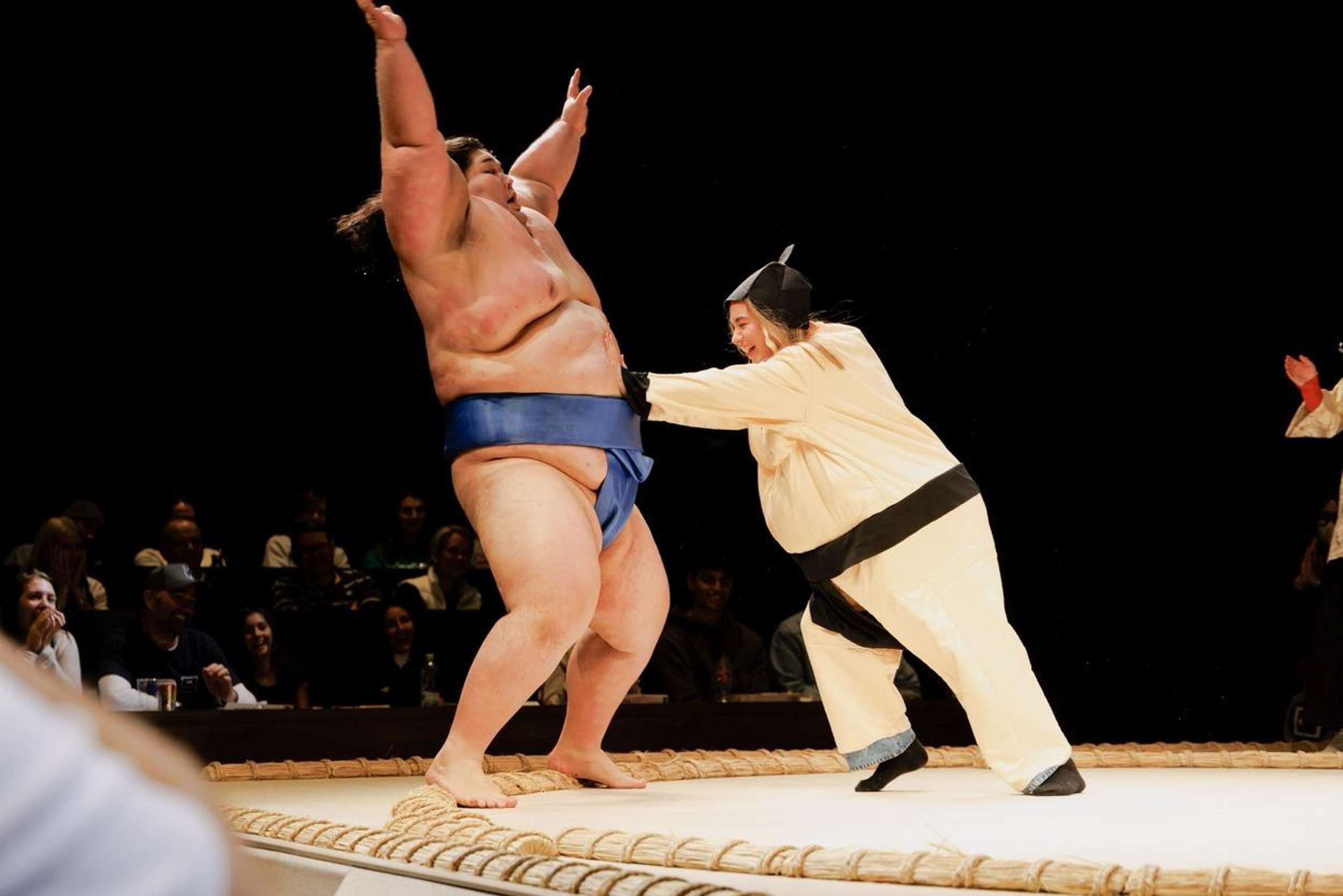
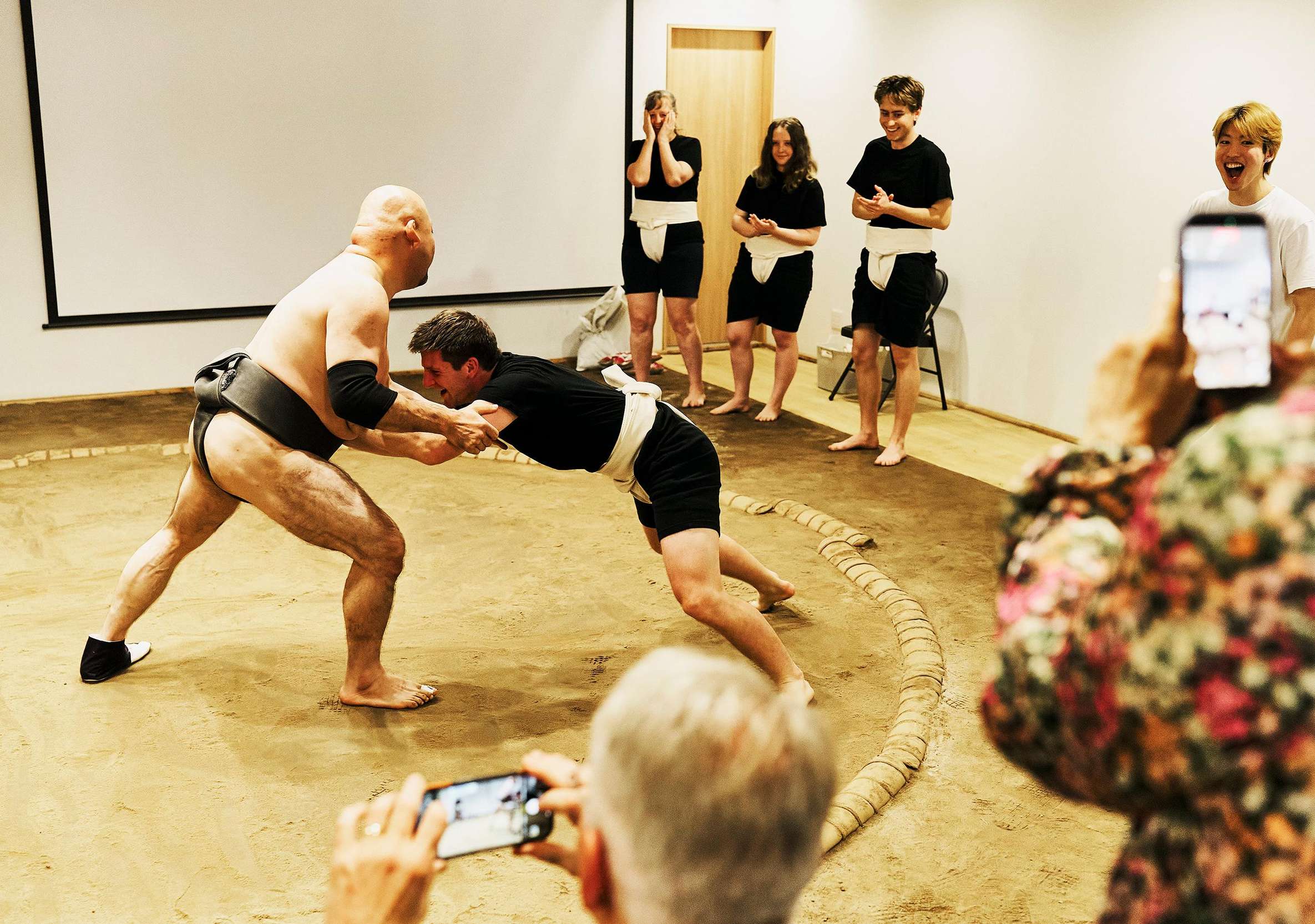
A host explains the rules, rituals and history in English while you eat, and the bouts build toward the part most people remember: lottery winners stepping into the ring to face a wrestler, then photos with the cast.
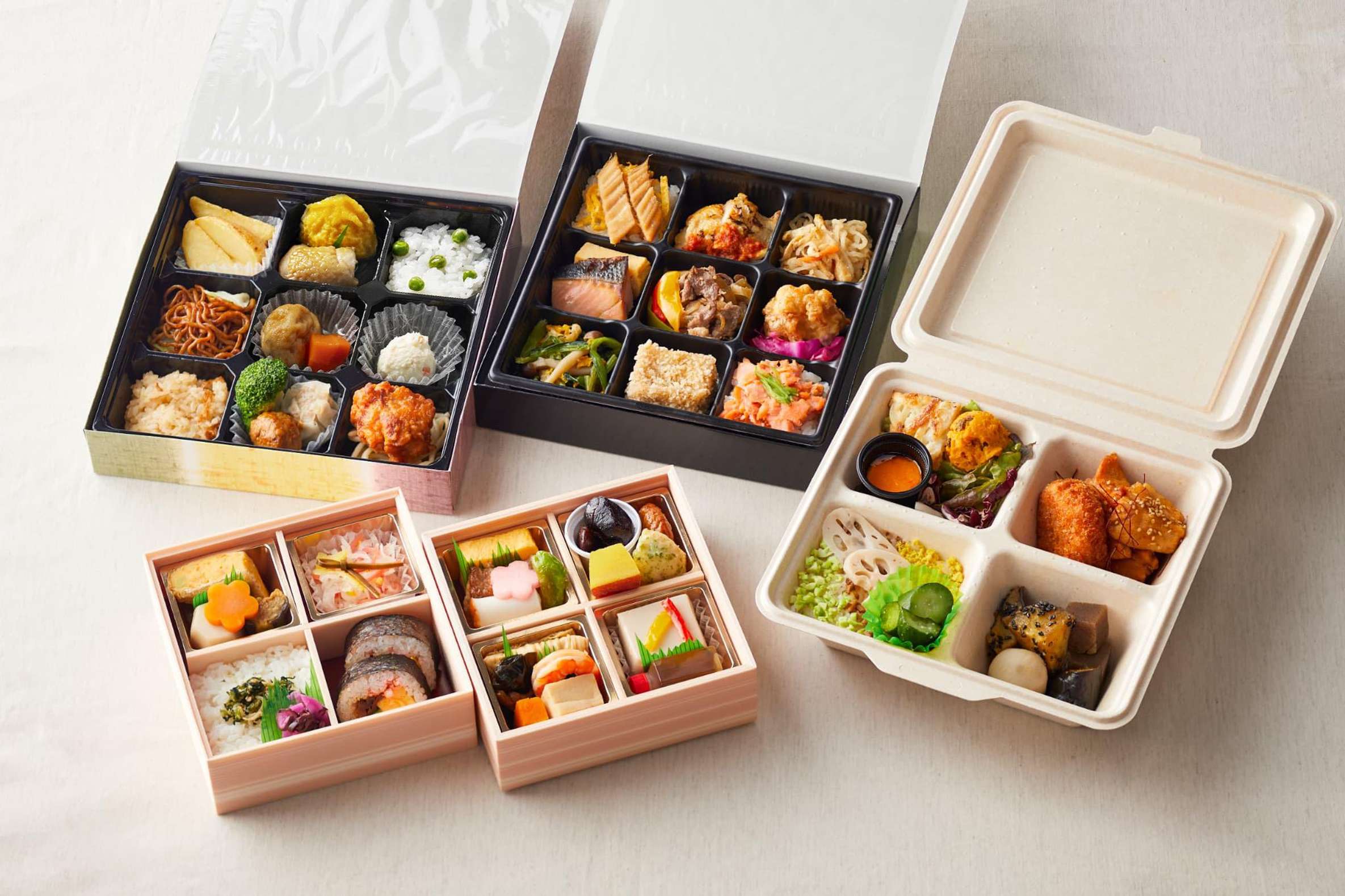
What lands on your table depends on the show you pick. One Osaka venue pairs its two-hour show with a bento or a snack bag and a drink, with halal and vegan bento available if you reserve ahead.
Another adds a Japanese Black Wagyu sukiyaki dinner, a kimono haori try-on and ring training drills. The wrestling is staged entertainment by former pros, and the food ranges from a simple box to a shared hot pot, so choose by how much of the night you want on your plate.
Included
Sumo show ticketStandard food box or snack bag and 1 drink for the Sumo show (if option selected)1 drink and 1 bowl of Chanko nabe for the Sumo workshop (if option selected)Commemorative pictureGuide
Choose a date first, then decide between the 1 pm lunch show and the 6 pm evening show. Busy evenings give the better atmosphere, since the crowd makes the interactive parts work.
Pro tipThe show runs about an hour with three short matches, so a full house matters more than the day of the week. Weekends and holidays fill the room.
RecommendedSame-day booking at the Namba hall stays open online until 3 pm on the day, and leftover seats sell at the door from 3 pm, so late plans are usually fine.
02
Choose the food and seating option
Compare the options on the tour card. At the Namba hall you pick between a bento or a snack bag with a drink, and between standard or premium front-row seating.
Pro tipStandard seats sit on a slope around the ring, so everyone gets a clear view. The front-row upgrade is worth it only if close detail matters to you.
Common mistakeBooking the cheapest option and assuming a full meal comes with it. Some tickets include only a snack bag, so read what each option lists before you pay.
03
Sort dietary needs early
If you need a halal or vegan bento, add it when you book. The Namba hall prepares both, but changes must be purchased by 10 am three days before the performance.
ImportantThe halal bento comes from a dedicated kitchen meeting Japan Halal Association standards, and the vegan one is fully plant-based. Neither can be arranged on the day.
Pro tipThe chanko nabe served with the workshop option cannot be made halal or vegan, so pick the bento route if that matters.
04
Check the cancellation terms
Read the cancellation line on the card before paying. The Namba hall show is non-refundable, while other Osaka shows let you cancel up to 24 hours ahead for a full refund.
ImportantBecause the Hirakuza ticket cannot be refunded, lock in your date only when you are sure. Same-day plans suit it better than a maybe.
Pro tipIf you want flexibility, the show with the audience challenge and the wagyu sukiyaki dinner both allow cancellation up to 24 hours in advance.
05
Arrive early on the day
Get there 15 to 20 minutes before the printed start time. Doors open 5:00 to 5:45 pm for the 6 pm evening show, and staff use that window to seat you and serve the meal.
ImportantAnyone who wants to enter the sumo challenge lottery must arrive by the starting time. Miss it and you watch that part from your seat.
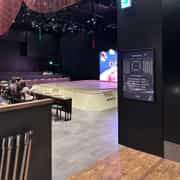
RecommendedUse the pre-show hour to eat while the lights are still up, try the self-dressing haori, and drop off luggage. The venue sits on the 8th floor of Namba Parks, a 3-minute walk from Namba Station.
What to know before you book an Osaka sumo dining experience
Can stop the dayGood to knowGood news
01
ChoosingWhat it is, who it suits, when to go
6
Location
The Namba show sits on the 8th floor of Namba Parks, a 3-minute walk from Nankai Namba and Osaka Metro Namba stations and 5 minutes from Osaka-Namba. Dotonbori's dining streets are around the corner, so the evening slots neatly into a night out.
Closed daysCan stop the day
The Namba venue closes every Tuesday, plus December 31 and January 1, though it opens on Tuesdays in busy periods. The hall's dark days can be irregular, so check the performance calendar for your date before you plan the evening around it.
What's included
Check your booking details for exactly which food and drink come with the ticket. At the Namba hall the show includes a food box or snack bag and one drink, while chanko nabe comes only with the workshop option. Drinks are extra at the sukiyaki show.
Food quality
The bento at the Namba show is served at room temperature and opinions vary; some guests found it delicious, others found it average. Treat it as a cultural extra, and if food matters to you, plan a meal before or after. The wagyu sukiyaki dinner gets warmer reviews.
Dietary needs
The Namba show offers halal and vegan bento options, but they must be reserved by 10 am three days before the performance. The chanko nabe in the workshop cannot be made halal or vegan. The sukiyaki show has a halal option.
Participation
Joining in is always your choice. Guests invited to try warm-ups or wrestling are free to decline, and at the audience-challenge show spots are limited, so you may simply watch. If you do step up, follow the MC's instructions.
02
On the dayWhere to be, when, and how you get there
1
Arrival time
Arrive 15 to 20 minutes before the printed start time. Shows can begin noticeably later than the ticket says and may end slightly late, and at the Namba hall you must be there by the starting time to enter the sumo challenge lottery.
03
During the tourWhat is expected of you
1
Photos
A commemorative picture with the wrestlers is included at the Namba show, and the sukiyaki show adds a photo session in the ring. Filming is permitted but videos over one minute are not, and flash photography is off during the bouts.
A guide to sumo Dining in Osaka
Osaka runs sumo shows with dinner on the table every night, no tournament ticket needed. The choice is a bento in Namba, a ring challenge or a wagyu sukiyaki pot, and the right one depends on the night you want.
Osaka
If you only remember three things
1
Same-day online booking stays open until 3 pm, but the front-row premium seats go first, so book early if the ring view matters.
2
Arrive by the starting time if you want a shot at the ring challenge lottery.
3
Halal and vegan bento switches must be bought by 10 am three days before the show.
Is sumo dining in Osaka worth an evening?
The ring is real, the wrestlers are real, and so is the power behind every throw. The bouts themselves are choreographed demonstrations by retired professionals, built for laughs and crowd work, with no ranking on the line.
People who booked expecting a genuine tournament walked out flat; people who booked expecting a good night out walked out happy.
First-timers call it a fun, worthwhile substitute when March tournament tickets don't happen, and the advice that comes back is consistent: do it once.
Families with children around 10 to 12 are the core audience, and some Osaka-area venues let kids under 12 in free. Adults who want a simple introduction to the sport, no prior knowledge needed, do well too.
Skip it if you have already sat through a full tournament and want more depth, or if a quiet, serious dinner matters more to you than a room that cheers, drinks and joins in. Couples who prefer their meals calm tend to find the format too light.
Shows run daily all year, so there is no bad month to book one.
The verdict from people who went fits in one line.
A traveler's note
If you're in Osaka, try this. The team was amazing throughout. History presentation, then a live demo, then you get to practice and have a match with the wrestlers. Thanks Shota and Yuki!
What an evening of sumo dining in Osaka looks like
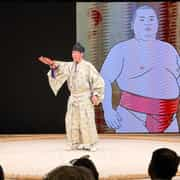
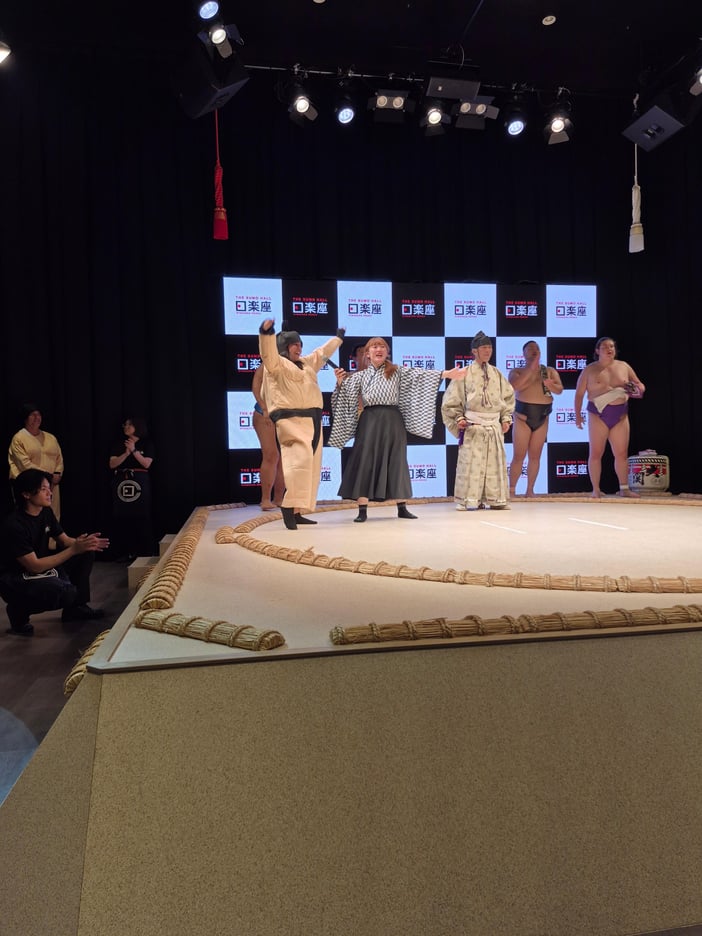
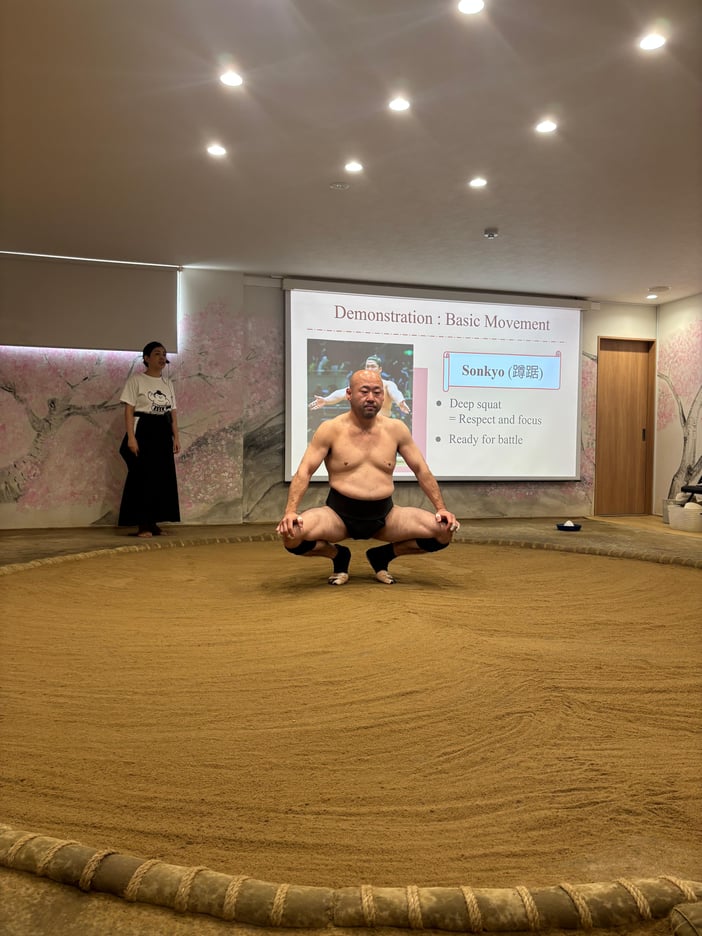
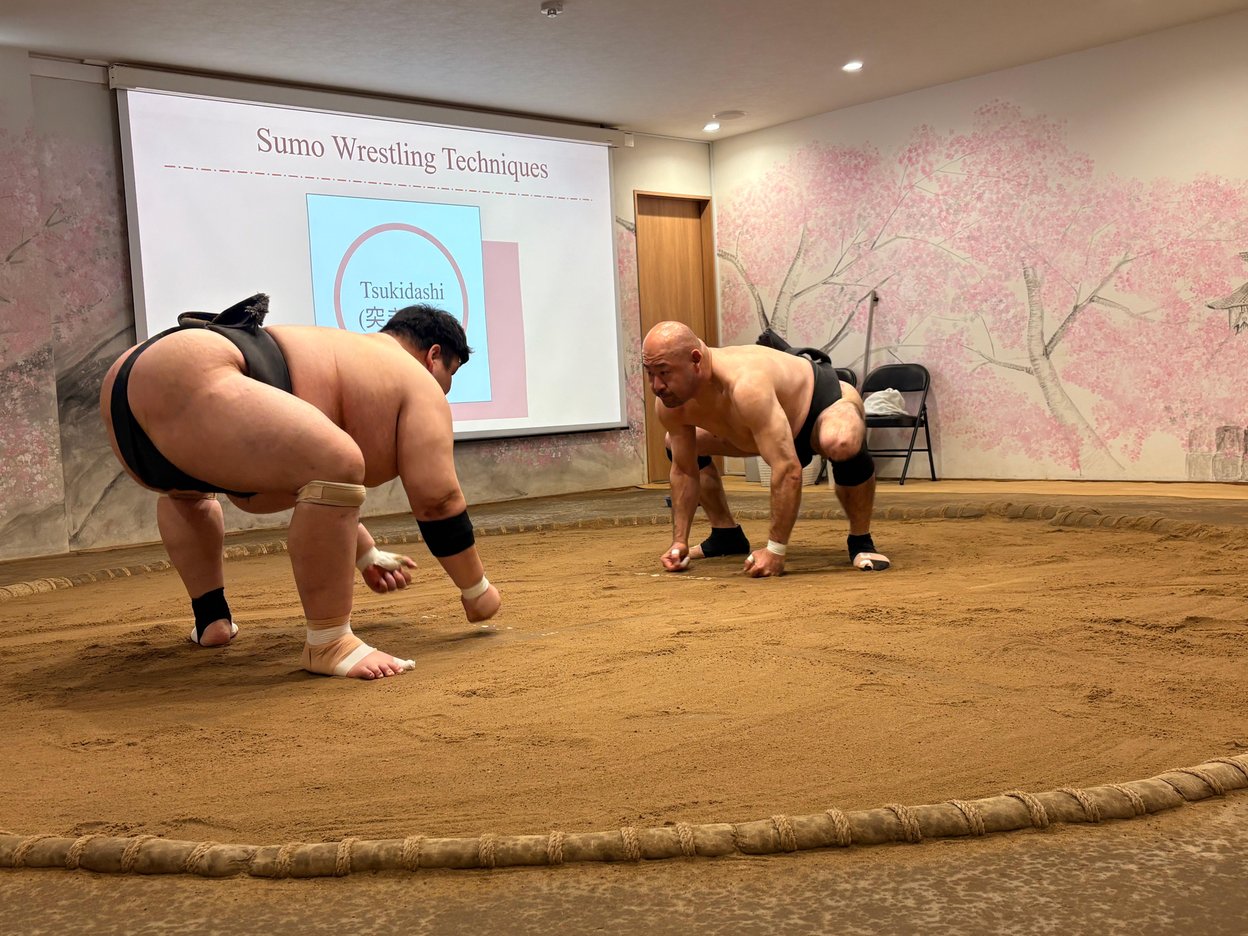
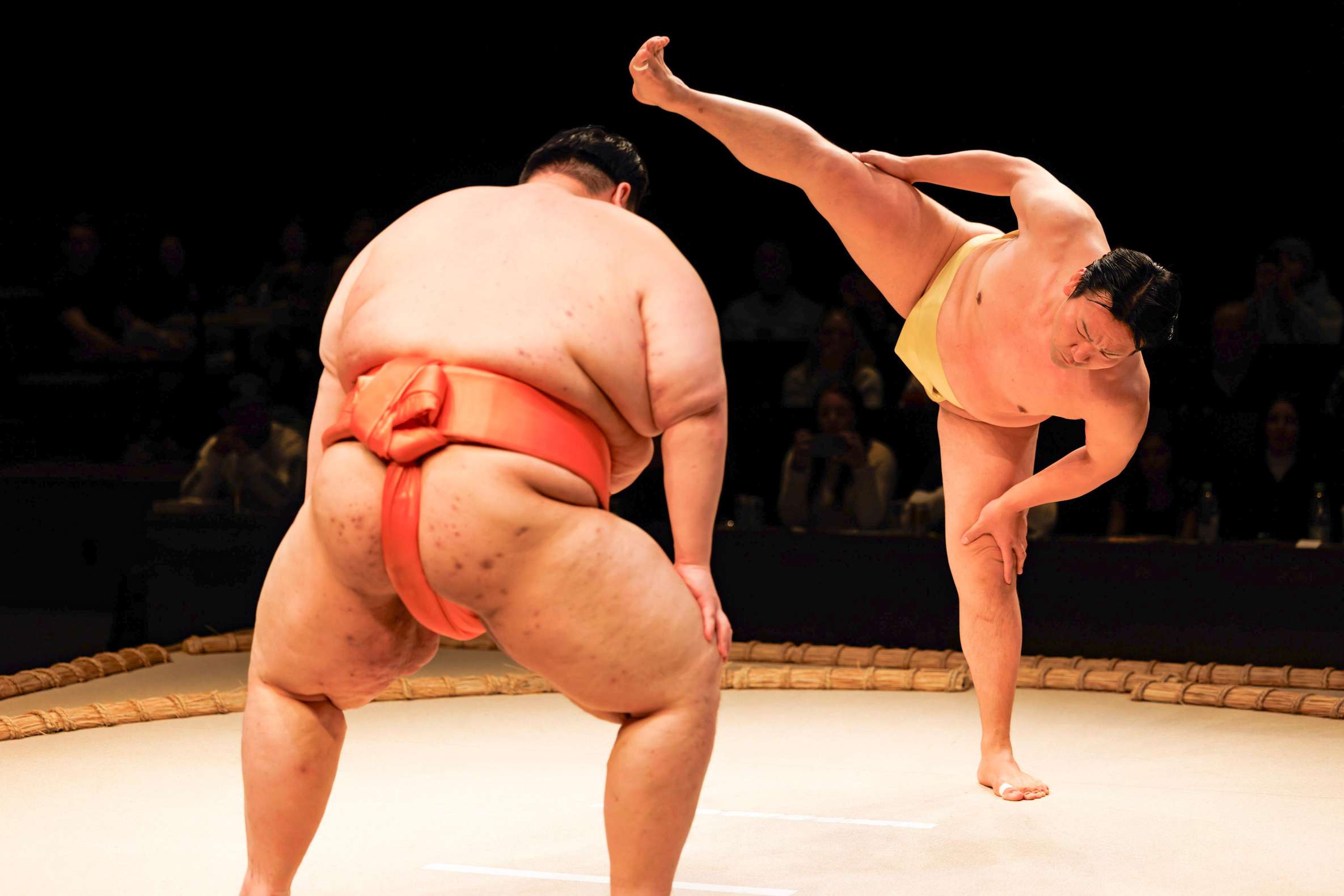
The show runs in two acts. It opens with a staged retelling of sumo's origins, done with sound, lighting and video, then moves into a training session, a rules breakdown and the tournament bouts. A professional rakugo storyteller acts as MC and turns up about 10 minutes before the start to set the comic tone.
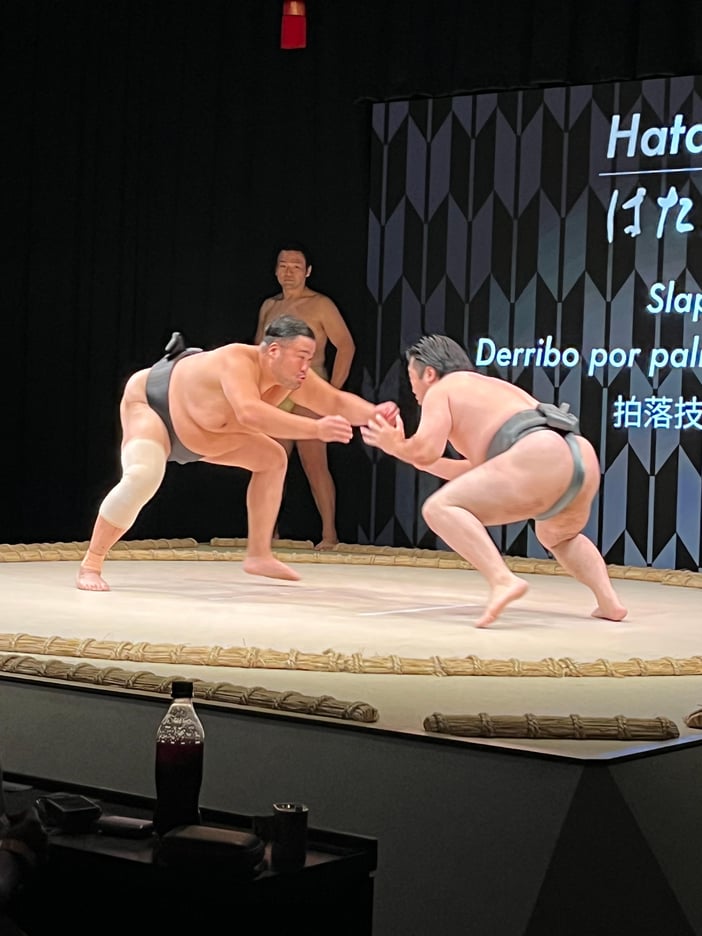
The wrestling itself comes late: at shows like these the bouts often fill only the last 15 to 30 minutes, three short matches in a tournament format.
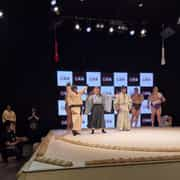
After that, three lottery winners step into the ring against a professional, and the evening closes with commemorative photos. You might get a high-five from a wrestler on the way past.
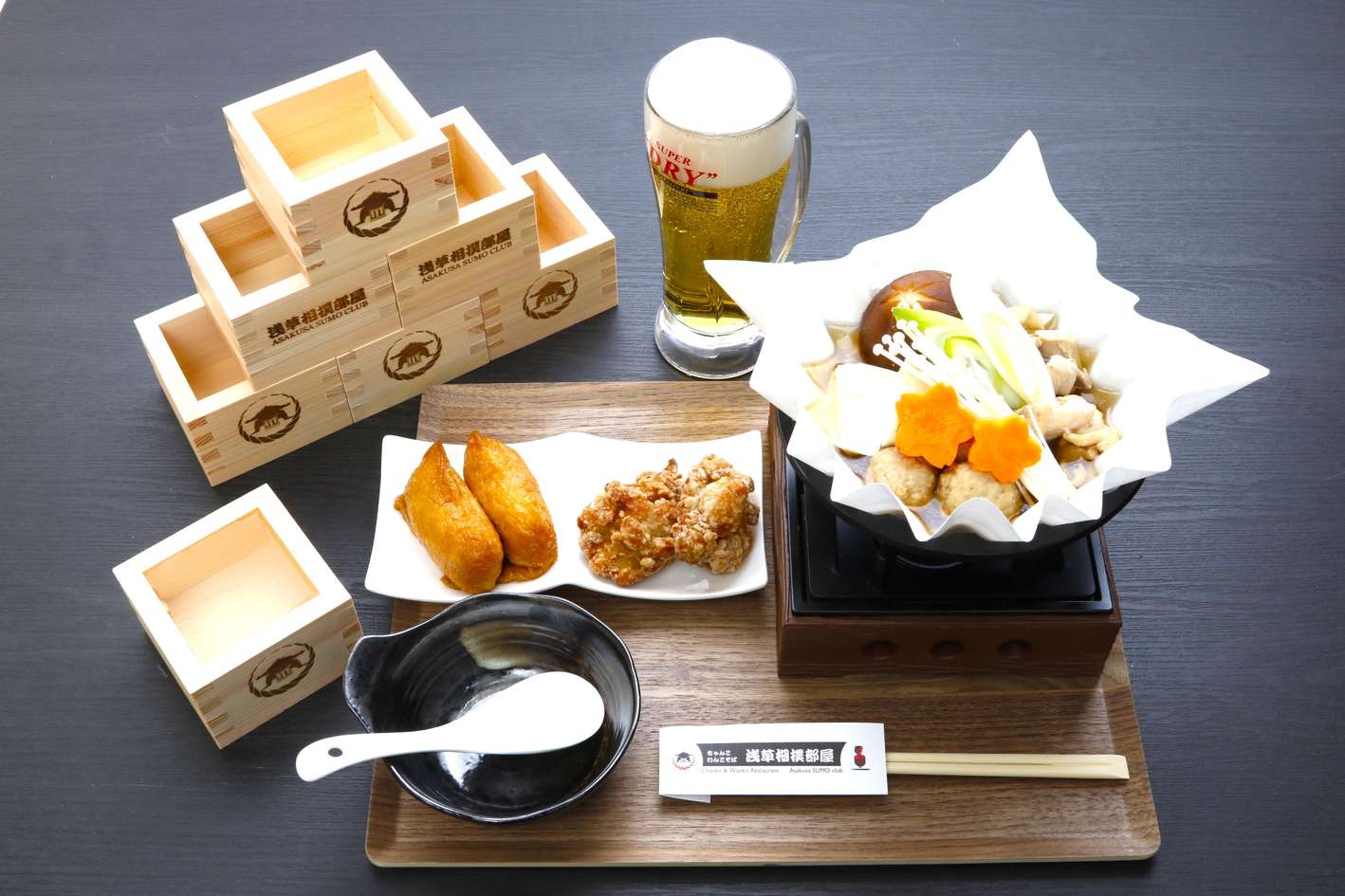
The food depends on the ticket. At the Namba hall, a standard food box or snack bag and one drink come with the show; the workshop ticket adds a bowl of chanko nabe.
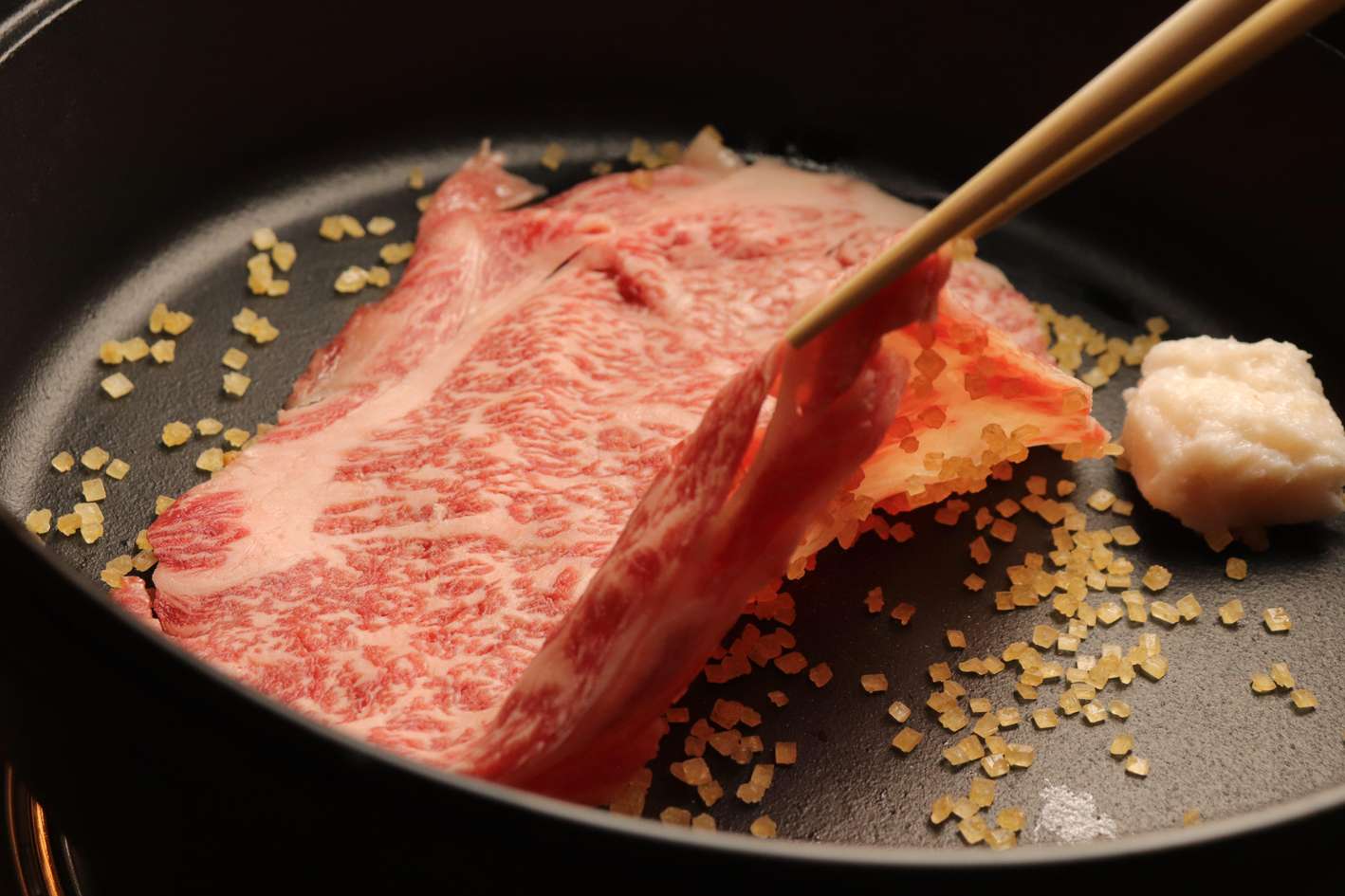
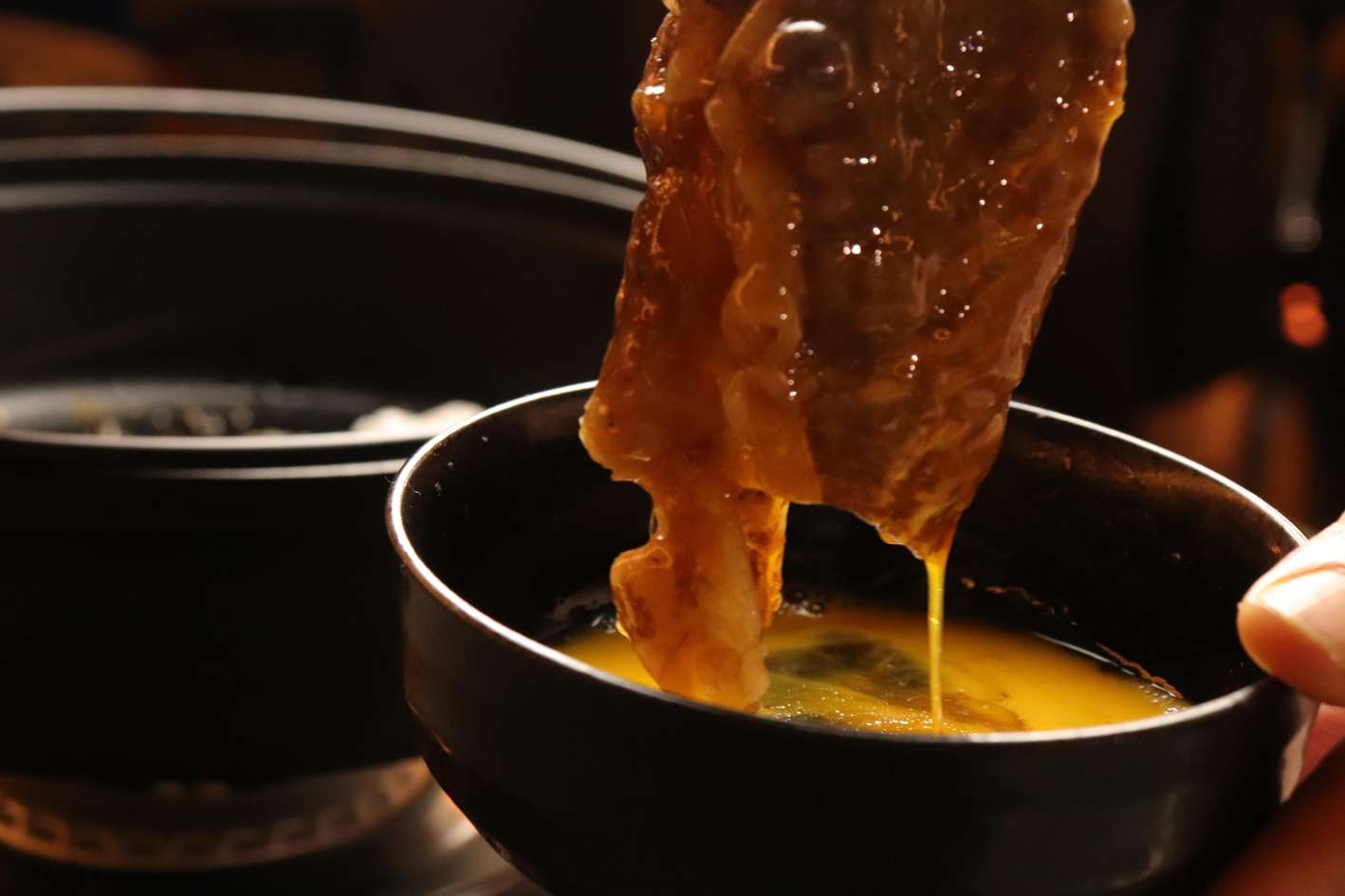
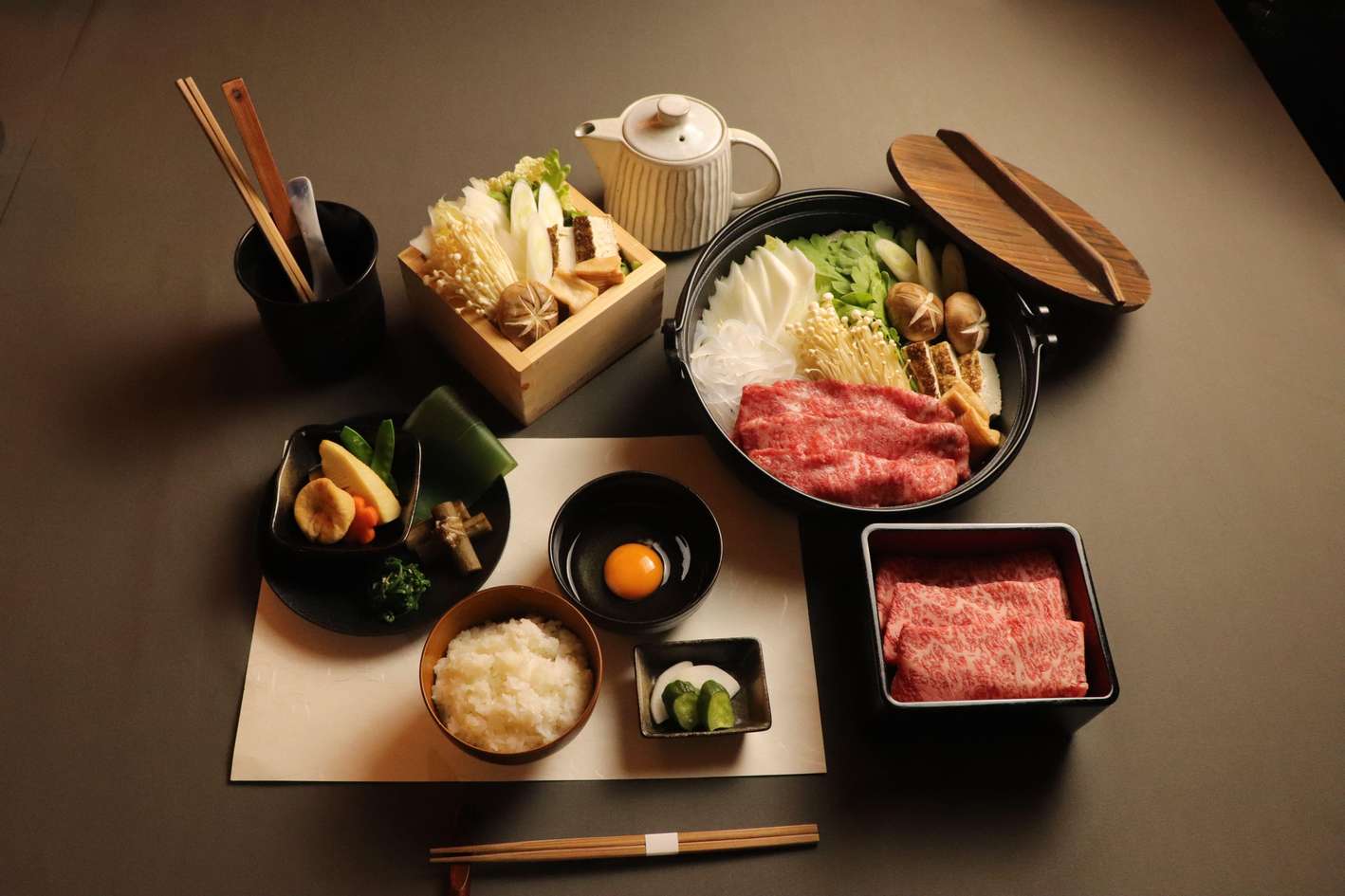
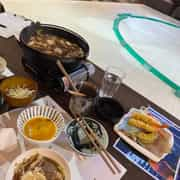
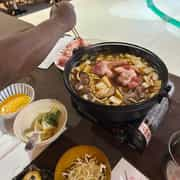
At the front-row venue, it is a Japanese Black Wagyu sukiyaki dinner, served from a shared pot at each table, with a halal option.
Treat the bento as a cultural extra, not the reason to book. It arrives at room temperature and opinions split: some guests loved it, others found it average or cold. If food matters to you, eat before or after.
A few things regulars wish they had known before booking:
What nobody tells you
The included bento is served at room temperature and quality varies
Treat it as a cultural extra and plan a real meal before or after if food matters to you
Chanko nabe comes only with a food plan
It is not part of the basic ticket, so check what your option includes before you book
The wrestlers are all former professionals
The ring and their power are real even when the competition is staged
None of these sink the evening. They just shape where you eat and what you expect from the meal.
Tour for this
Osaka: Sumo Show with Bento or Snack at Sumo Hall Hirakuza4.4★ (553) · 2 hours
Can you join the wrestling at an Osaka sumo dining show?
At some venues, yes, and it is the part people remember. The Osaka Sumo Experience puts guests in the ring to face off against a wrestler, though spots are limited.
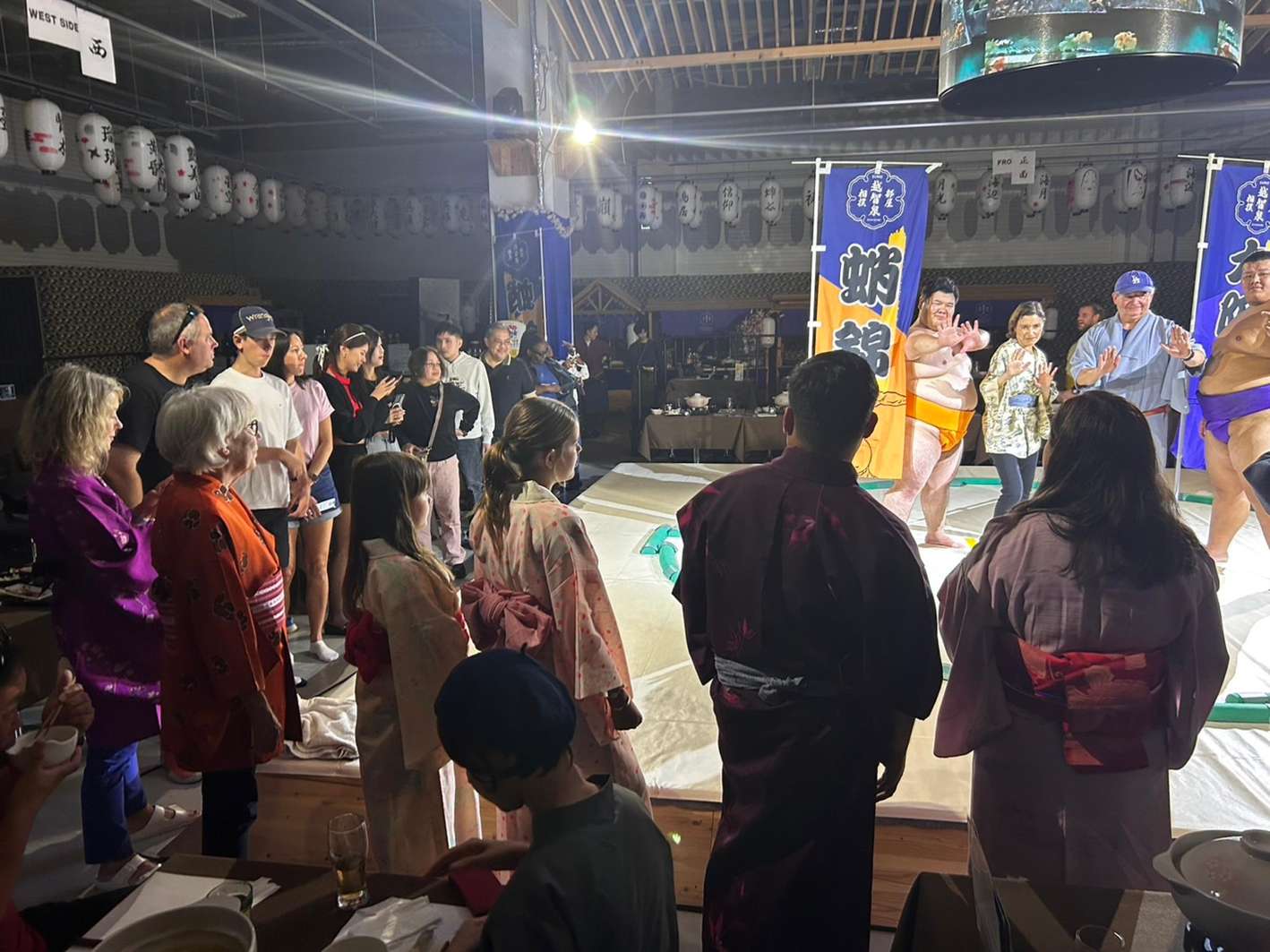
At the front-row show, ring training drills on the dohyo come with the ticket, and 1-on-1 bouts with a former rikishi may be assigned by random selection if more people want in than the ring allows.
Joining is always voluntary. Guests are free to choose whether to take part in the warm-ups, the games or the wrestling, and plenty stay in their seats and cheer instead. If you do go up, follow the MC's instructions; the bouts are shaped to be safe and mild for beginners.
Check your ticket tier before booking, because at some venues only premium tickets include the wrestling part. At the Namba hall, the Premium BL seat's official perk is that one person per seat can challenge a wrestler.
If getting in the ring is the whole point of the evening, that is the seat to look at.
The Osaka: Sumo Experience with Live Show & Audience Challenge is the straightforward pick here: a single-bout match between retired wrestlers, training routines, an English-speaking MC, and the chance to face a wrestler yourself if a spot is free.
Tour for this
Osaka Sumo Show with Front-Row Seating & Wagyu Sukiyaki4.7★ (45) · 2.5 hours · Free cancellation
There is no best day of the week. The main show runs daily from 5 pm to 7 pm, and on selected dates a second night show runs from 8 pm to 10 pm, mostly Thursday through Sunday.
If you want the latest slot, aim for those dates; otherwise the early evening show is the reliable default.
Closed days are irregular and announced on a monthly calendar. Some months have none at all, others a handful, so check the calendar for your exact date before you commit. There is no dark season: shows run every month of the year.
A busy night beats a quiet one. The show is only about an hour long with three short matches, and it is the crowd that makes it: cheering, drinking, laughing, joining in.
The lottery challenges, the high-fives and the photos all work better with a full house, so a Friday or Saturday evening gives you a livelier room than a half-empty Tuesday.
The month matters too. Some months draw far bigger crowds than others, and the pattern repeats every year.
How busy it gets, month by month
July: 5 out of 5 for how busy it gets.
HighestApr to May, Jul to Oct
In betweenMar, Nov
LowestJun, Dec to Feb
Darker: a higher how busy it gets score, out of 5
Tap a month to read it.
July and October come out busiest, so those months reward early booking. December and January are the quiet rooms, easier on tickets and calmer in the seats.
Choosing between bento, the ring challenge and wagyu sukiyaki
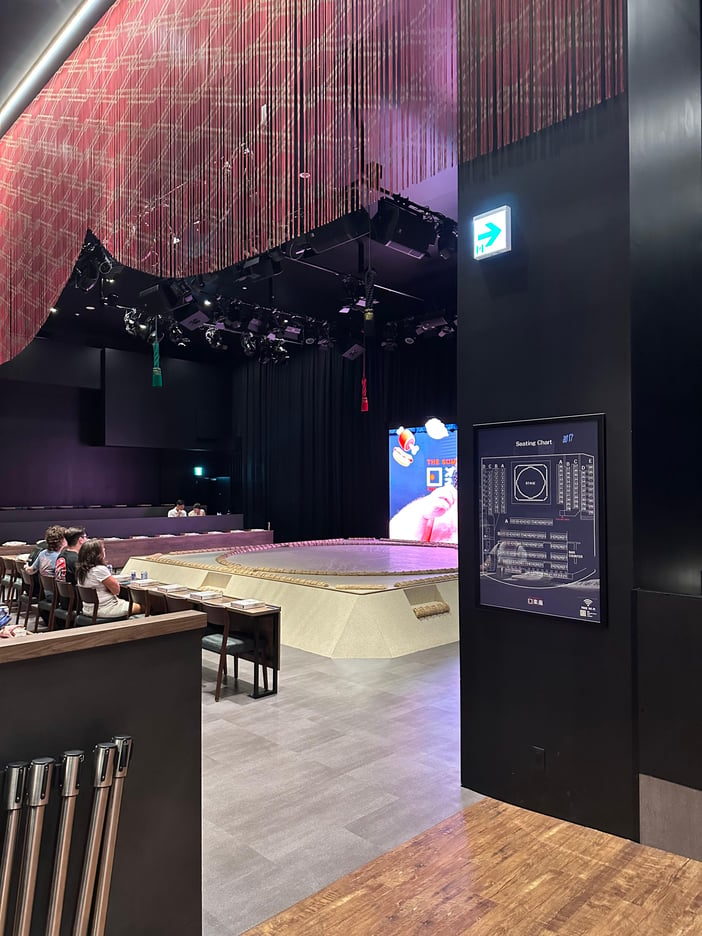
Three tickets, three different evenings. The Namba hall leans into theatre: an elevated stage, former professionals, sound and lighting, with a bento or snack bag and a drink folded into the ticket and about two hours door to door.
Standard seating is the sensible default; pay for the front row only if close-up detail matters to you.
The Sumo Experience is the shorter, more participatory option, an hour to an hour and a half, built around the audience challenge and a one-round match. Cheapest of the three, easiest to slot into a full day.
The front-row show near the airport is the food-lover's pick: guaranteed front-row seats, a wagyu sukiyaki dinner with a halal option, a kimono haori try-on and a photo session in the ring. It runs longest, about two and a half hours.
Same-day booking usually works: online sales stay open until 3 pm on the day, with leftover seats sold at the hall from 3 pm. Book early only if you want a premium seat. Use a booking platform when you book; an operator's email reservation can sit unanswered for days.
The differences are easiest to see side by side.
Namba bento show
Sumo Experience
Front-row sukiyaki show
Meal included
Bento or snack bag and a drink
Popcorn or snack plans
Wagyu sukiyaki, halal option
Can you wrestle
Lottery challenge
Limited spots, face a wrestler
Ring drills and selected 1-on-1 bouts
Show length
About 2 hours
1 to 1.5 hours
2.5 hours
Where
Namba Parks, central
Central Osaka
Near Kansai Airport
Namba bento show
Meal included
Bento or snack bag and a drink
Can you wrestle
Lottery challenge
Show length
About 2 hours
Where
Namba Parks, central
Sumo Experience
Meal included
Popcorn or snack plans
Can you wrestle
Limited spots, face a wrestler
Show length
1 to 1.5 hours
Where
Central Osaka
Front-row sukiyaki show
Meal included
Wagyu sukiyaki, halal option
Can you wrestle
Ring drills and selected 1-on-1 bouts
Show length
2.5 hours
Where
Near Kansai Airport
Read it by what you care about most: food points to the sukiyaki show, participation points to the Sumo Experience, and the classic dinner-and-show night points to Namba.
Tour for this
Osaka Sumo Show with Front-Row Seating & Wagyu Sukiyaki4.6★ (43) · 2.5 hours · Free cancellation
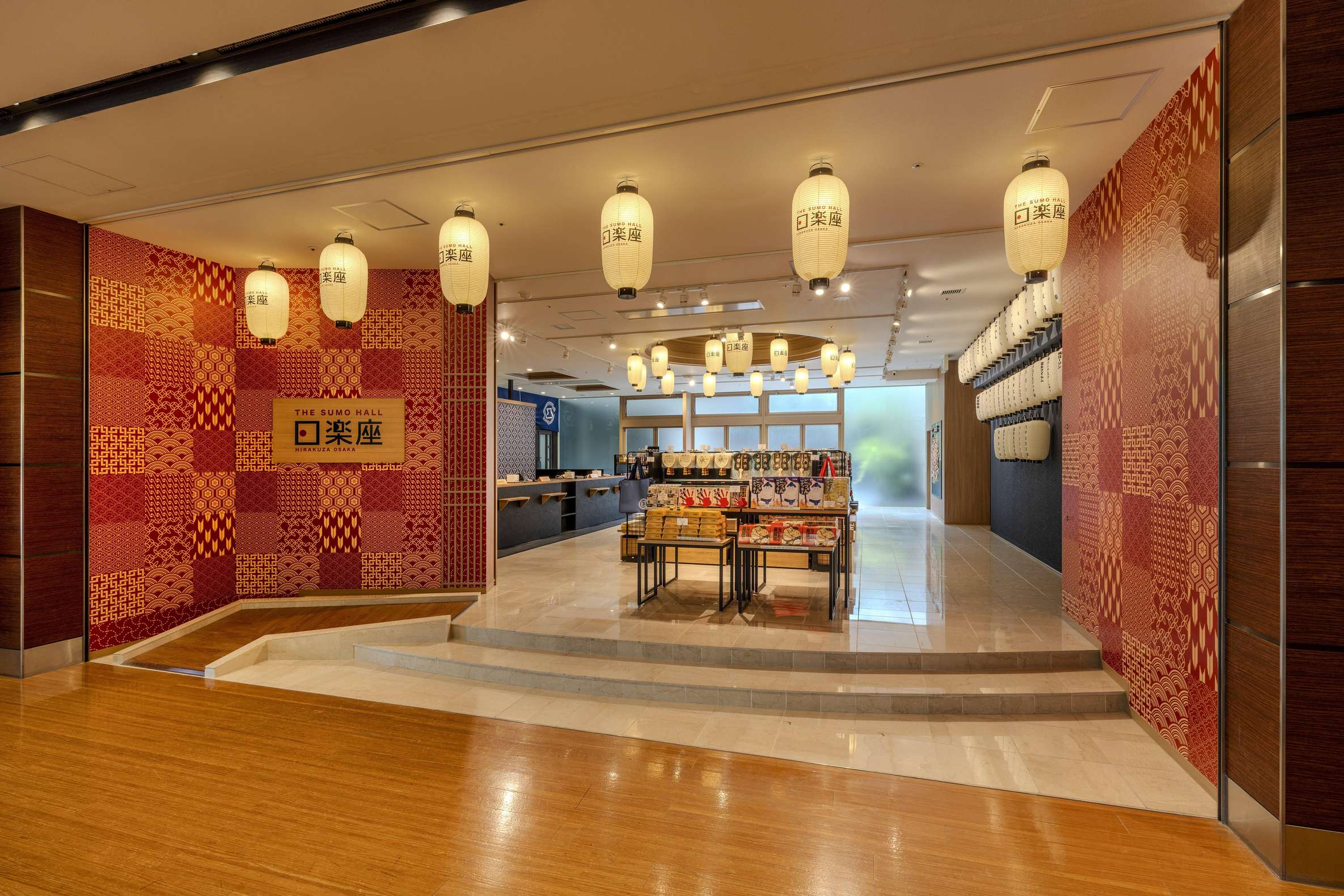
Every Osaka sumo evening ends in the same place: the 8th floor of Namba Parks, in the Naniwa-ku entertainment district. From the Nankai Namba Station gate it is a 3-minute walk; from the Osaka Metro Namba lines allow about 10 minutes. Inside Namba Parks, take elevator No. 3 up to the 8th floor.
Coming from Dotonbori, you simply walk north into Namba, about 10 minutes on flat ground. From Umeda, the Midosuji Line runs straight to Namba in about 8 minutes with no changes, then a 10-minute walk; a taxi covers the 7 km in about 15 minutes and is the easiest option with luggage.
Trains beat cars here, and one tour operator says so outright. Namba parking is a hassle you don't need before a two-hour show. The venue runs from 11 am to 11 pm, and with Dotonbori's dining streets around the corner, the show slots neatly into a Namba night out.
Doors open up to an hour before the show, and that pre-show hour is worth using. Staff guide you to your seat, you can eat your meal before the lights dim, try the self-dressing haori, and drop off luggage.
Dining during the performance is possible too, though the lighting drops and you will be eating in the dark.
Arrive by the starting time if you want the lottery. At the Namba hall, guests who want to enter the sumo challenge lottery must be there by the start, and arriving right on the printed time risks a rushed seat search anyway. Fifteen to twenty minutes early is the working rule.
The show itself runs about 60 minutes in two acts, with the bouts and the audience challenge in the second half, followed by the photo session. The full two-hour slot covers the meal, the show and the photos.
Here is how the two hours typically unfold.
1
Doors open
Up to an hour before the show
Seat you, take luggage, start the meal
2
Pre-show hour
Meal and haori try-on
Eat before the lights dim if you want to watch properly
3
Show start
Two acts, about 60 minutes
Origins story first, bouts and challenge second
4
After the bouts
Commemorative photos
Included in the show time
5
End time
Around two hours from doors
Can run slightly long
The one number to plan around is the two-hour slot. Anything booked straight after should have slack, because end times can slip slightly.
There is no dress code. Comfortable, casual clothes are the recommendation, mostly because you may be pulled up to wear a sumo suit over what you are wearing.
Shoes come off at some seats, so footwear you can slip out of easily helps. Swimwear and anything too revealing are out; hats that block the view behind you come off too.
Bring your ticket confirmation, a payment card and a camera or phone. Leave outside food and drinks at home, including bottles and cans, and weapons or sharp objects are not allowed in.
Phone on silent, flash off. Filming is permitted but videos over a minute are prohibited, and flash photography is not allowed during the bouts because it startles the wrestlers. Stay in your seat during a match, don't get up mid-bout, and don't touch the ring, the wrestlers or the referee.
Cheering a wrestler by name is fine; booing and thumbs-down gestures are not. Applause after a good throw is encouraged.
One booking detail catches people out.
Pro tipHalal and vegan bento switches must be purchased by 10 am three days before the performance, and the workshop chanko nabe cannot be made halal or vegan.
Miss that deadline and the standard bento is what arrives; the show itself is unaffected.
Families with children around 10 to 12 are the core audience for these shows, and it shows in the format: playful wrestling contests kids can join, photos with the wrestlers, and hosts who keep the room light.
Children who are new to sumo come away knowing the rules and the etiquette, and parents regularly report the evening as a trip highlight.
The age rules differ by venue. At Sumo Hall Hirakuza Osaka, ages 2 and younger are not permitted. Some Osaka-area venues let kids under 12 attend free, and one show near the city, about an hour out, runs a chanko nabe ticket with a kimono experience where children under 12 go free.
Check the age band for your specific venue before booking, since the limits are not uniform across the city. Unaccompanied minors are not allowed at the Namba hall, so an adult books alongside every child.
The Namba show is performed entirely in English. The Osaka tourism board confirms it, and so do travel writers who have sat through it: the etiquette, the rules and the techniques are all explained as the show goes, so a complete newcomer follows every bout without a word of Japanese.
That narration is the difference between this and a tournament seat, where you watch in silence and work things out from the crowd. Here the host tells you what the rituals mean, why the wrestlers throw salt, what a winning technique is called, and keeps the room laughing while doing it.
The Sumo Experience show runs with an English-speaking MC as well. No sumo knowledge and no Japanese are needed for either; the whole format is built for visitors. The wrestlers themselves interact with the audience between bouts, and the photos and high-fives at the end need no translation at all.
Sumo dining in Osaka when March brings the tournament
Osaka and sumo go back a long way. The city had its own sumo organization from the Edo period until it merged with Tokyo sumo in 1927, and it has hosted a grand tournamentevery March since 1953, at EDION Arena in the Namba district. Locals treat the March basho as a sign of spring.
If your trip falls in those two weeks, that is the real thing: ranked wrestlers, genuine stakes, and the hardest tickets to score in Japan, because the venue is the smallest in a huge city. Book the moment sales open or accept that you may miss it.
Outside March, the dinner shows are the realistic option, and they run daily year-round. Morning practice in Osaka is largely unavailable outside the tournament run-up, which is why the shows dominate the scene here. In July the wrestlers are all in Nagoya, so there is nothing real to watch in Osaka then at all.
So the month decides the plan: March, chase a tournament ticket if you can; any other month, book the show without hesitation.
Namba beyond the ring - around your Osaka sumo dining hall
The hall sits in central Osaka, so the hours on either side of the show fill themselves. Ikasuri Shrine is a 4-minute walk away, Utsubo Park's greenery about 9 minutes off.
Cross to the river at Nakanoshima Park, roughly 15 minutes on foot, and you have three museums clustered there: the Museum of Oriental Ceramics, the Osaka Science Museum and the National Museum of Art.
Afterwards, the thing to chase is chanko nabe, the hot pot that builds sumo wrestlers: chicken, napa cabbage, carrots and fried tofu simmered in a rich broth, eaten communally from one big pot.
It became popular at the end of the Meiji era as a cheap way to feed a stable after training, and during tournaments it is made with chicken only, for luck.
Most chanko nabe restaurants around the arenas need no reservation. Search for them in the area and pick one that looks good; sumo YouTubers name their favorites in their videos if you want a shortlist.
Worth one evening, booked with the right expectations
A sumo dining evening in Osaka delivers exactly what it promises: retired professionals, real technique, a staged show and a meal, in a room that laughs. Go once, pick the ticket that matches your appetite, and arrive before the start if the ring challenge is why you came.
Go ifGo if your trip misses the March tournament and you want sumo plus dinner in one eveningGo if you are traveling with children around 10 to 12Go if you want a first, friendly introduction to sumo with no prior knowledge
Skip ifSkip if you have already attended a full tournament and want deeper competitionSkip if a quiet, serious dinner matters more than a lively interactive room
Our pick to book
Osaka: Sumo Show with Bento or Snack at Sumo Hall Hirakuza4.4★ (553) · 2 hours
Questions to ask before booking your sumo dining night in Osaka
Short answers to the questions people ask before booking a sumo dinner show in Osaka.
Is there a sumo show in Osaka?
Yes. Osaka has several, including Sumo Hall Hirakuza in Namba, a theatrical show by former professional wrestlers, and smaller venues with live demonstrations and an English-speaking MC. Outside the March tournament, when morning practice is largely unavailable, these dinner shows are the main way to see sumo in the city.
What do you actually eat at a sumo dinner show in Osaka?
It depends on the ticket. Sumo Hall Hirakuza includes a bento or snack bag plus a drink, and the workshop option adds a bowl of chanko nabe.
The show near Rinku Town serves Japanese Black Wagyu sukiyaki from a shared pot, with a halal option. Check your booking details so you know which food and drinks come with your seat.
How much of the show is actual wrestling?
Less than you might expect. Shows open with an educational section about wrestlers' lives, stretches and rules, and the bouts often fill only the last 15 to 30 minutes. At Hirakuza the performance runs about an hour, with three matches in a tournament format, then the audience challenge and photos.
Is the show performed in English or Japanese?
The Hirakuza show in Namba is performed entirely in English, with rules, etiquette and techniques explained for first-timers. The Sumo Studio show uses an English-speaking MC. You can follow either one without speaking any Japanese.
Are Osaka sumo dinner shows suitable for children?
Very much so. Families with children around 10 to 12 are a core audience, and the playful contests and photos keep kids engaged. At Sumo Hall Hirakuza, ages 2 and younger are not permitted. Some Osaka-area venues let kids under 12 attend free.
Can dietary needs like halal or vegan meals be accommodated?
At Hirakuza you can switch to a halal or vegan bento, prepared in dedicated kitchens, by reserving by 10 am three days before the performance. The chanko nabe in the workshop program cannot be made halal or vegan. The wagyu sukiyaki show offers a halal option.
How far ahead do Osaka sumo shows fill up?
Usually not far. Hirakuza keeps same-day booking open online until 3 pm on the day of the performance, then sells remaining seats at the hall. Early booking mainly matters for the premium front-row seats rather than for getting in at all.
Where do the shows take place, and how do you get there?
Sumo Hall Hirakuza sits on the 8th floor of Namba Parks, right above Namba station: a 3-minute walk from Nankai Namba, about 10 minutes from Osaka Metro Namba. Take elevator No. 3 inside Namba Parks. The venue closes on Tuesdays, so plan around that.
Sumo Dining in Osaka - bento, snacks and a front-row show
Two hours of former pro wrestlers, a bento or snack bag with a drink and a commemorative photo at Namba Parks, and seats are limited, so reserve yours today.