- 1
Shows run three times daily at 11 am, 1 pm and 3 pm, and the venue closes every Sunday and Monday.
- 2
Mornings give you the best odds of seeing all of Mount Fuji; by early afternoon cloud often hides the summit.
- 3
Allow about an hour: a 50-minute show, arriving at least 15 minutes before your time slot.
Why Travelers rate this Mt Fuji Sumo show
Every reviewer calls it one of the most fun things they did in Japan, loving the mix of music, learning and laughs.
Several didn't expect to end up in the ring themselves; one guest volunteered for a fight and found it hilarious.
Many reviewers wished they could do it all over again, with one saying she would repeat the show a hundred times.
 ★★★★★
The humor and cheerfulness! We learned a bit more about sumo wrestling.
TIM · United Kingdom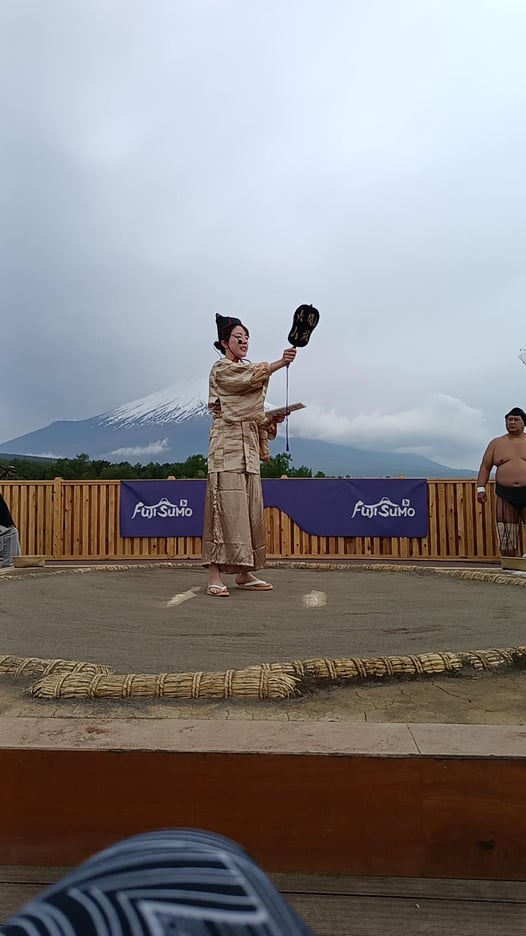 ★★★★★
Wonderful, the hosts got everyone involved a lot. Plus the Mt Fuji view while enjoying a show like this... what more could you want? I'd do it 100 more times.
A traveler · Italy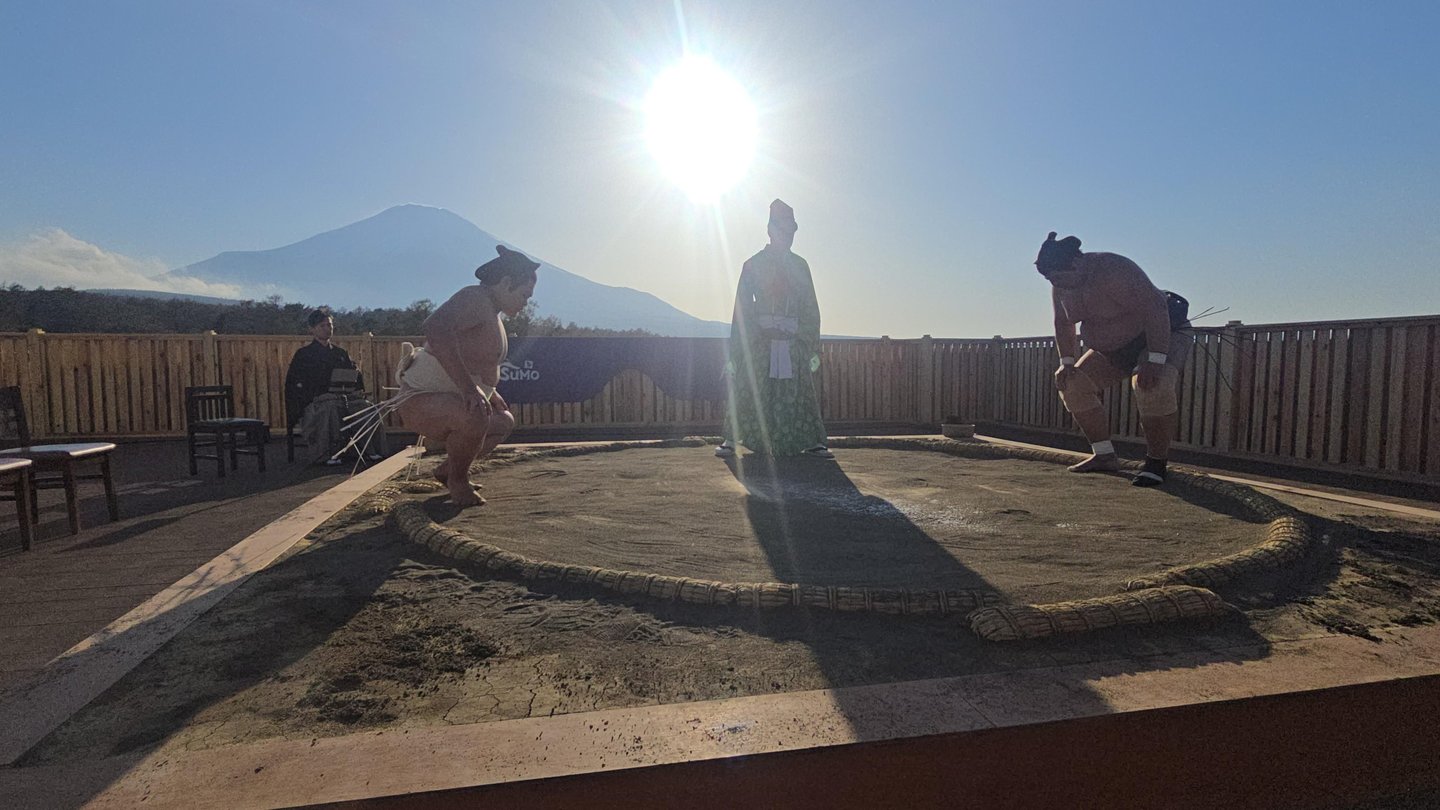 ★★★★★
One of the most fun things we did in Japan. Learned about sumo culture while being lighthearted entertainment, not a formal match but an educational show, with a stunning Mt Fuji view.
Katie · United States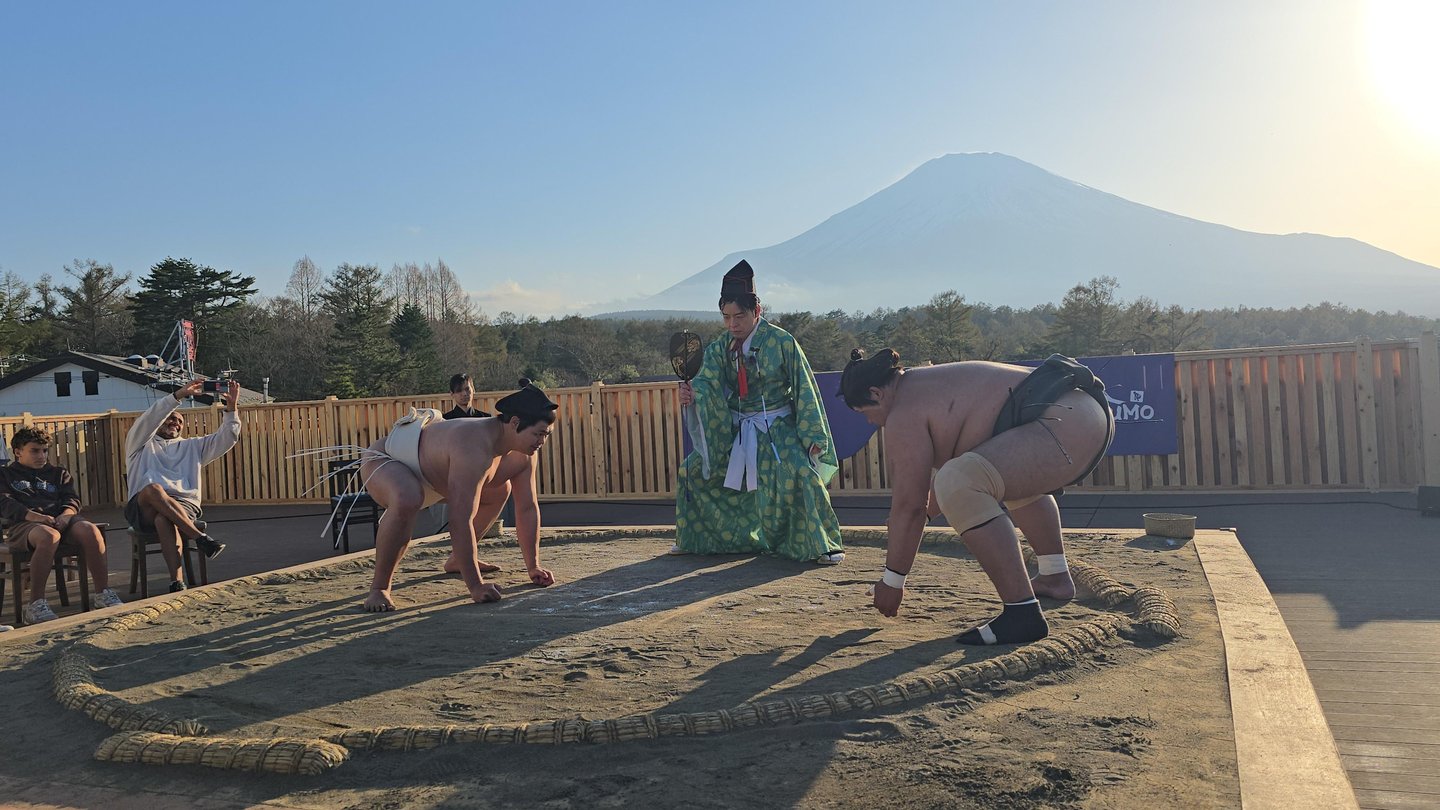 ★★★★★
The humor and cheerfulness! We learned a bit more about sumo wrestling. Joining in was really fun. And of course, don't forget the fantastic view! 😍
A traveler · Netherlands
Why a sumo show at Lake Yamanaka is worth your Mt Fuji day
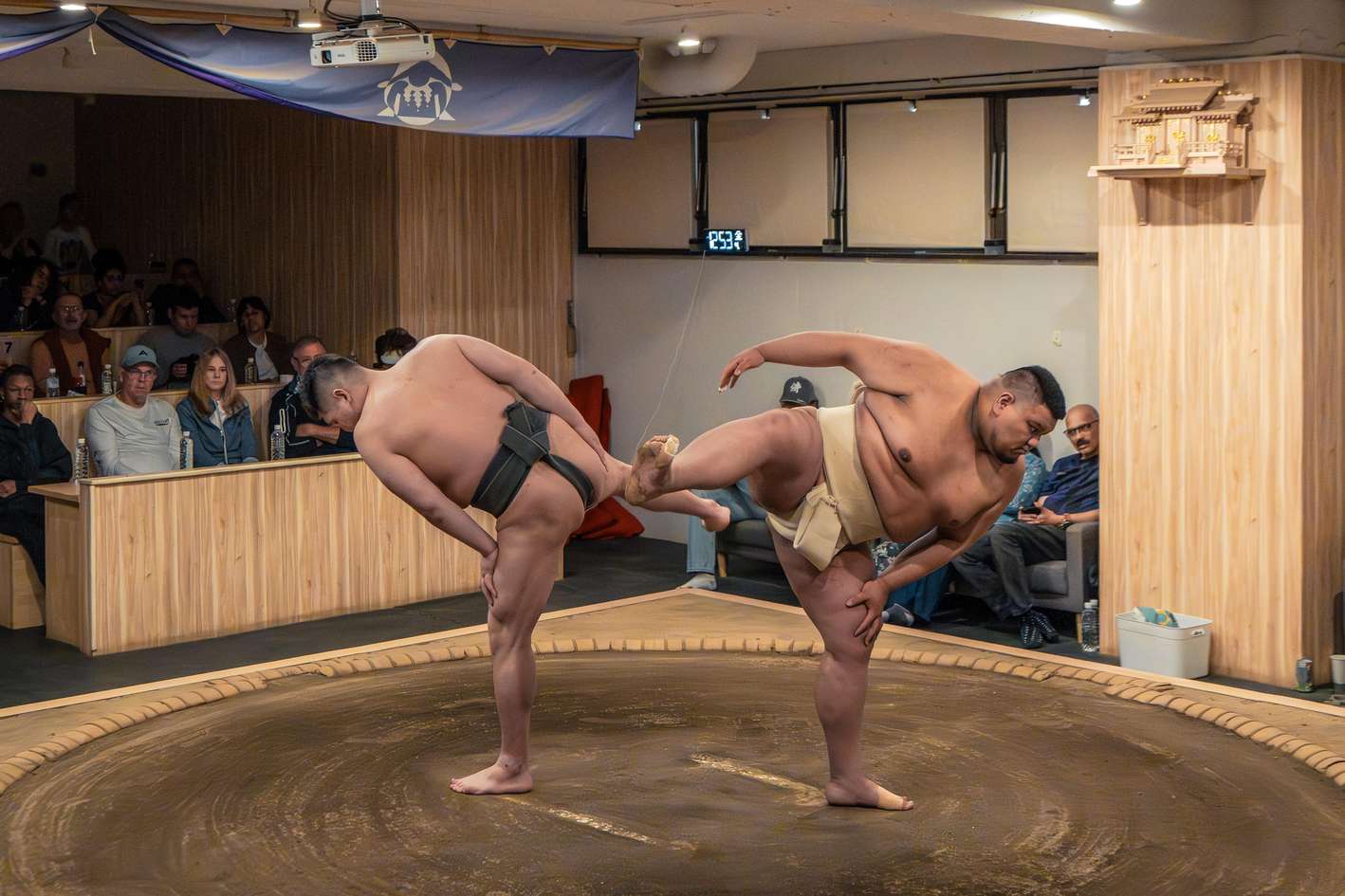
The doubt is fair: a sumo show pitched at tourists near a lake sounds like a gimmick. What happens on this rooftop is retired professional wrestlers, men who spent years in the Japan Sumo Association ranks, running rituals and bouts with real technique behind every throw.
The format is built for visitors. Live English commentary explains each ritual and bout, children pay a reduced rate, infants under six go free, and nobody needs a word of Japanese. The whole thing runs about 50 minutes, tight enough to slot between a lake cruise and dinner.
Travelers who knew little about sumo going in often call it the thing they remember most. ::quote What a family's teens said Number one thing they did in Japan | Three teenagers in one family ranked this sumo show above everything else on their trip

Seeing Mount Fuji from the sumo venue at Lake Yamanaka
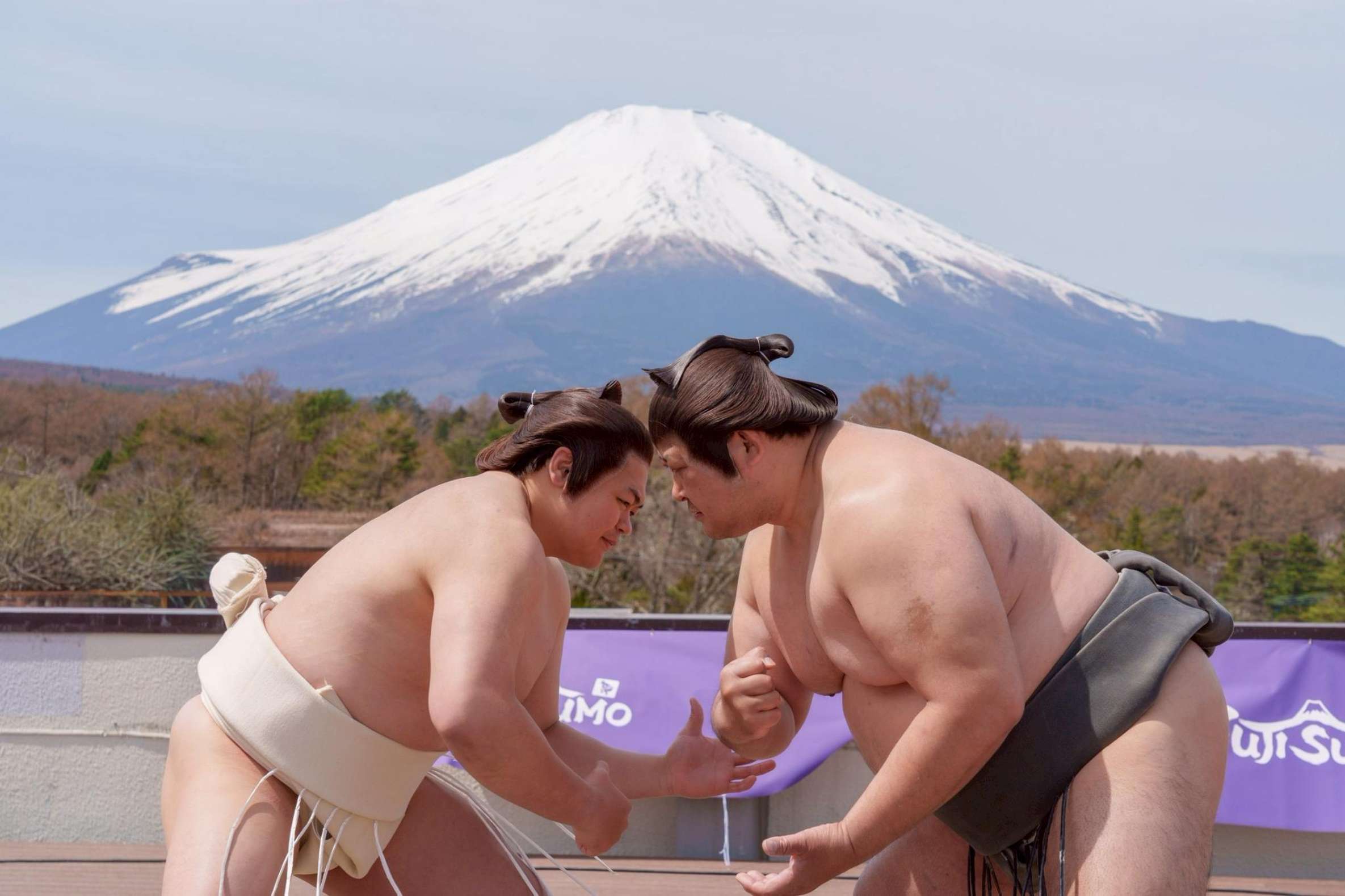
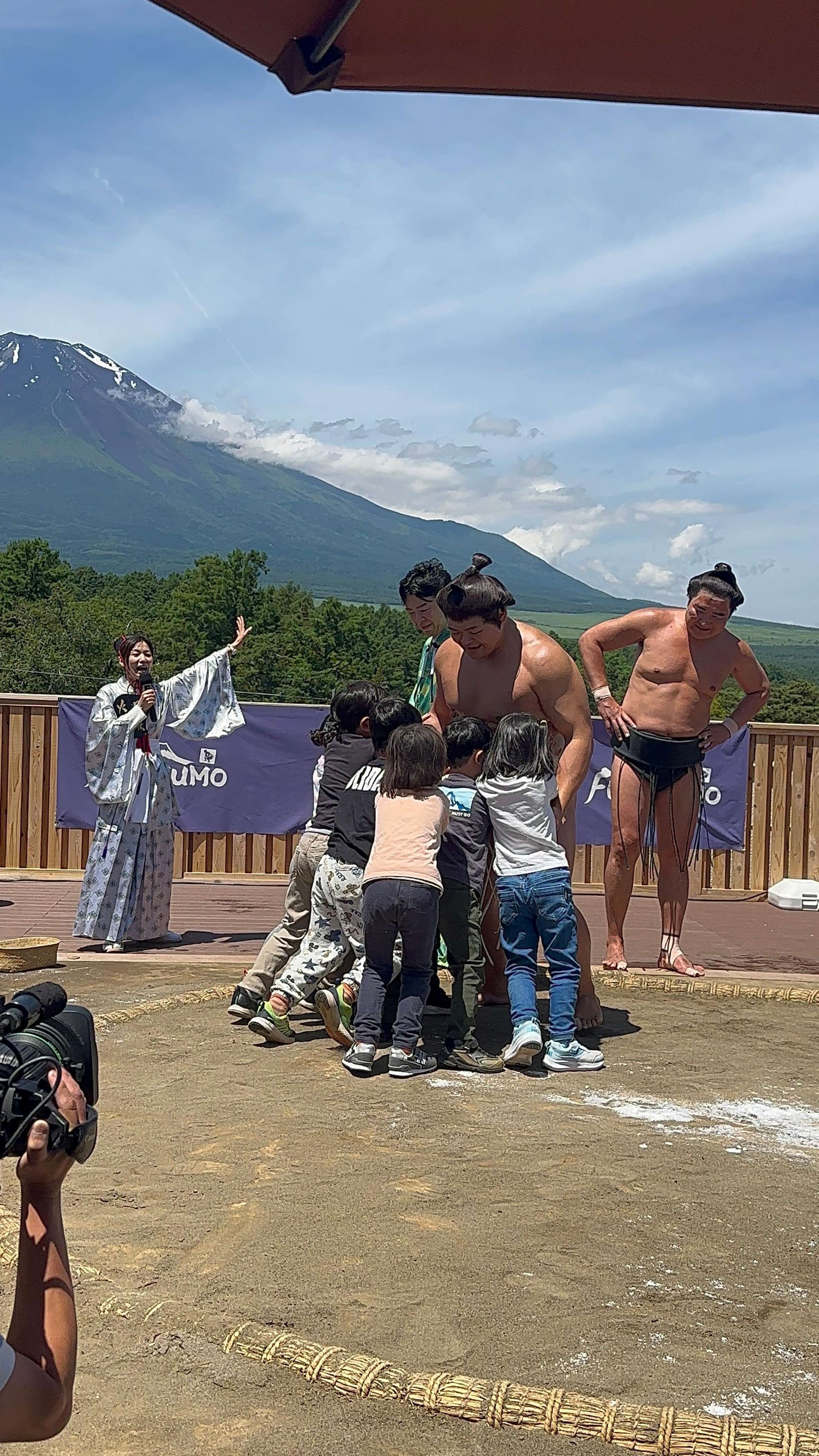
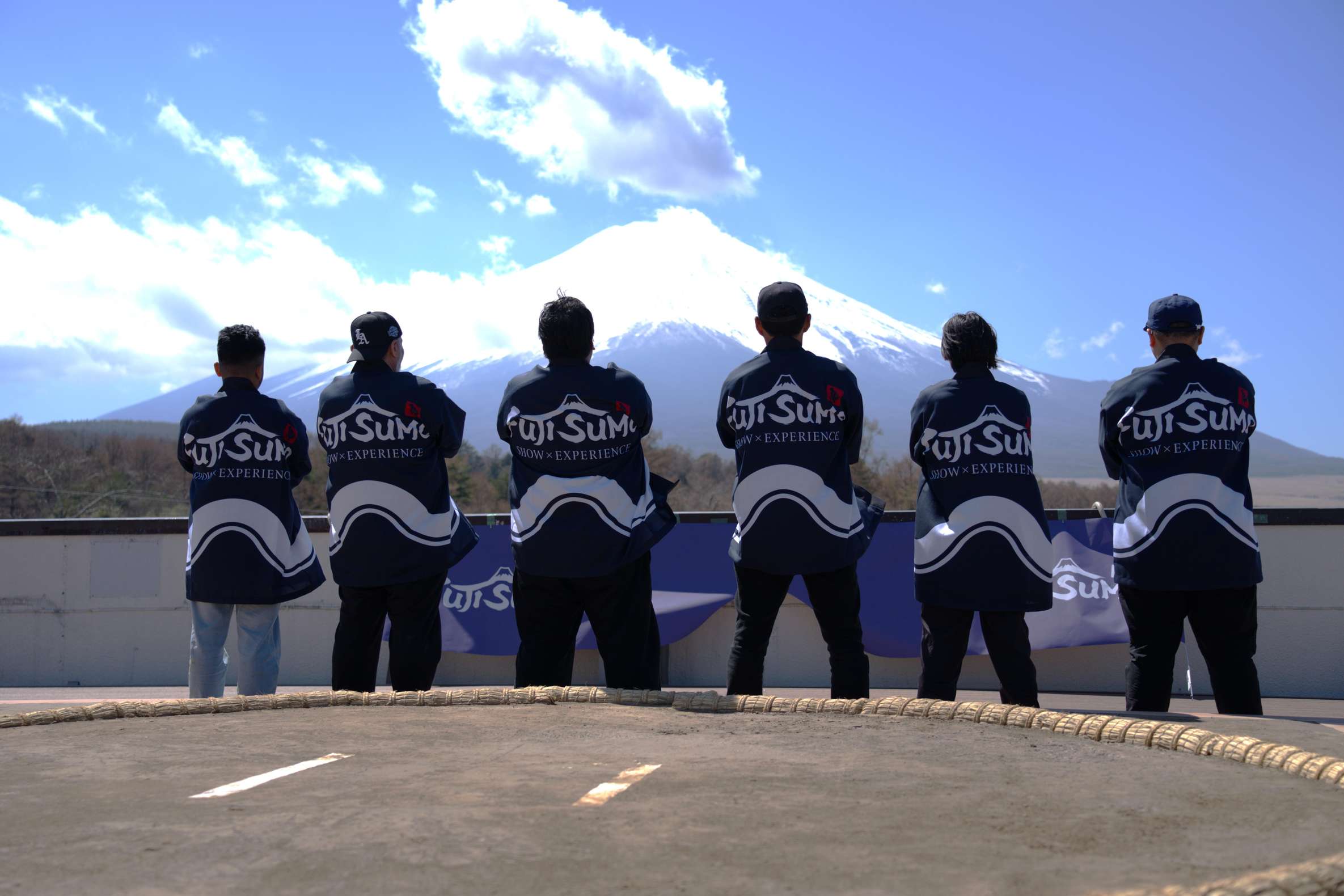
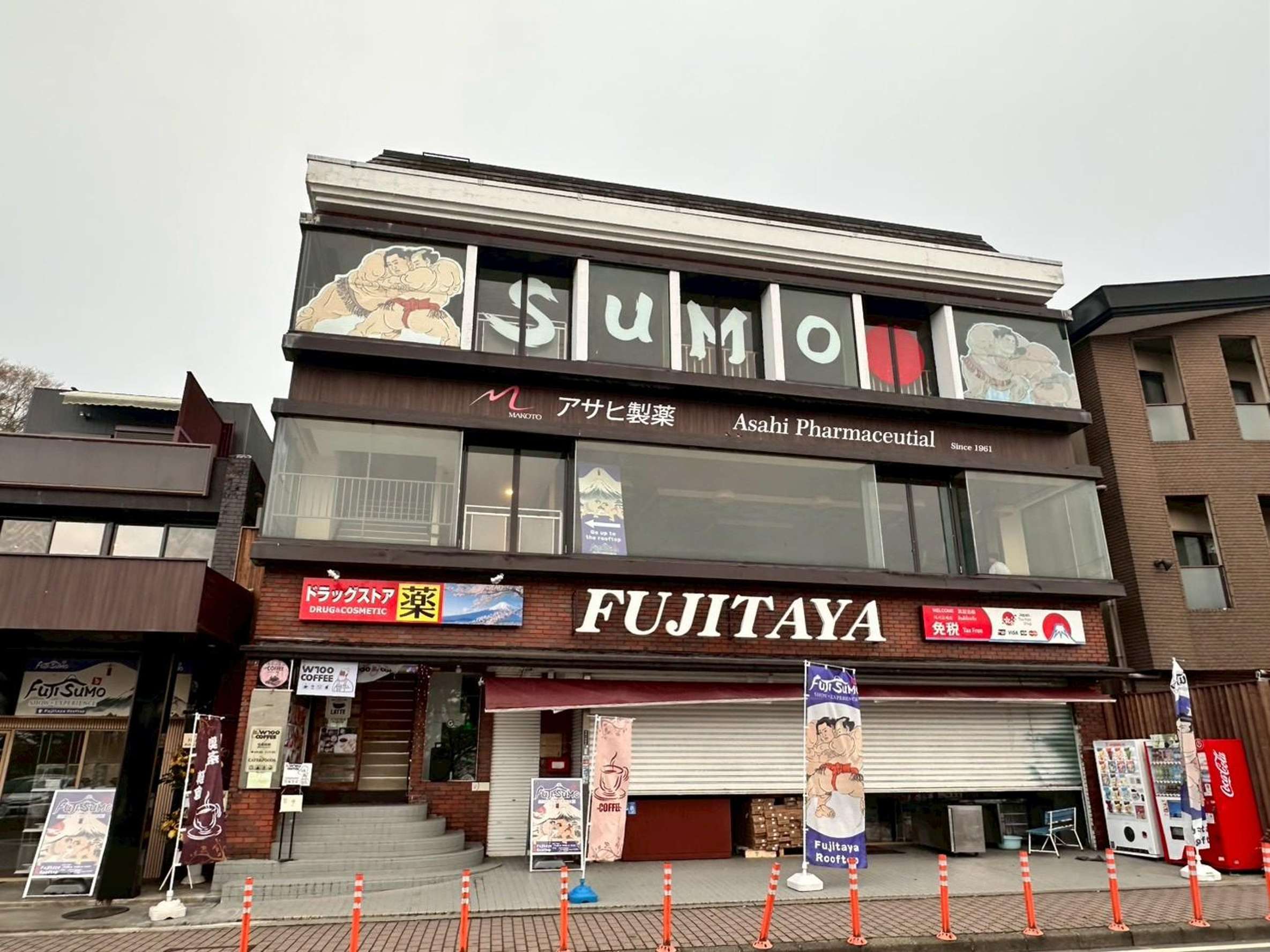
The venue is the rooftop of the FUJITAYA Building near Asahigaoka Pier. The ring sits directly in front of the seating, and on a clear day Mount Fuji fills the space behind it. No other sumo show in Japan has this backdrop.
The mountain, though, keeps its own schedule. Full views happen on roughly 138 mornings a year, about 20 clear mornings in December but only a handful in July.
Cloud builds up the slopes as the day warms, so by early afternoon the summit is often partly or fully hidden. Locals treat Fuji as a morning sight.
That shapes your choice of show time: the 11 am sitting beats the 3 pm one for the view. In winter, from November to February, clear days come far more often.
A rainy day moves the show indoors and takes the Fuji backdrop with it, so treat the view as a bonus the mountain grants when it feels like it.
April: 5 out of 5 for how busy it gets. The busiest month for the show, yet haze and cloud hide Fuji more often than not, so check the morning camera first.
Tap a month to read it.
December: 22.8 dry days. The best odds of the year for a clear Fuji and a quiet rooftop, with about 20 clear mornings on average.
Tap a month to read it.
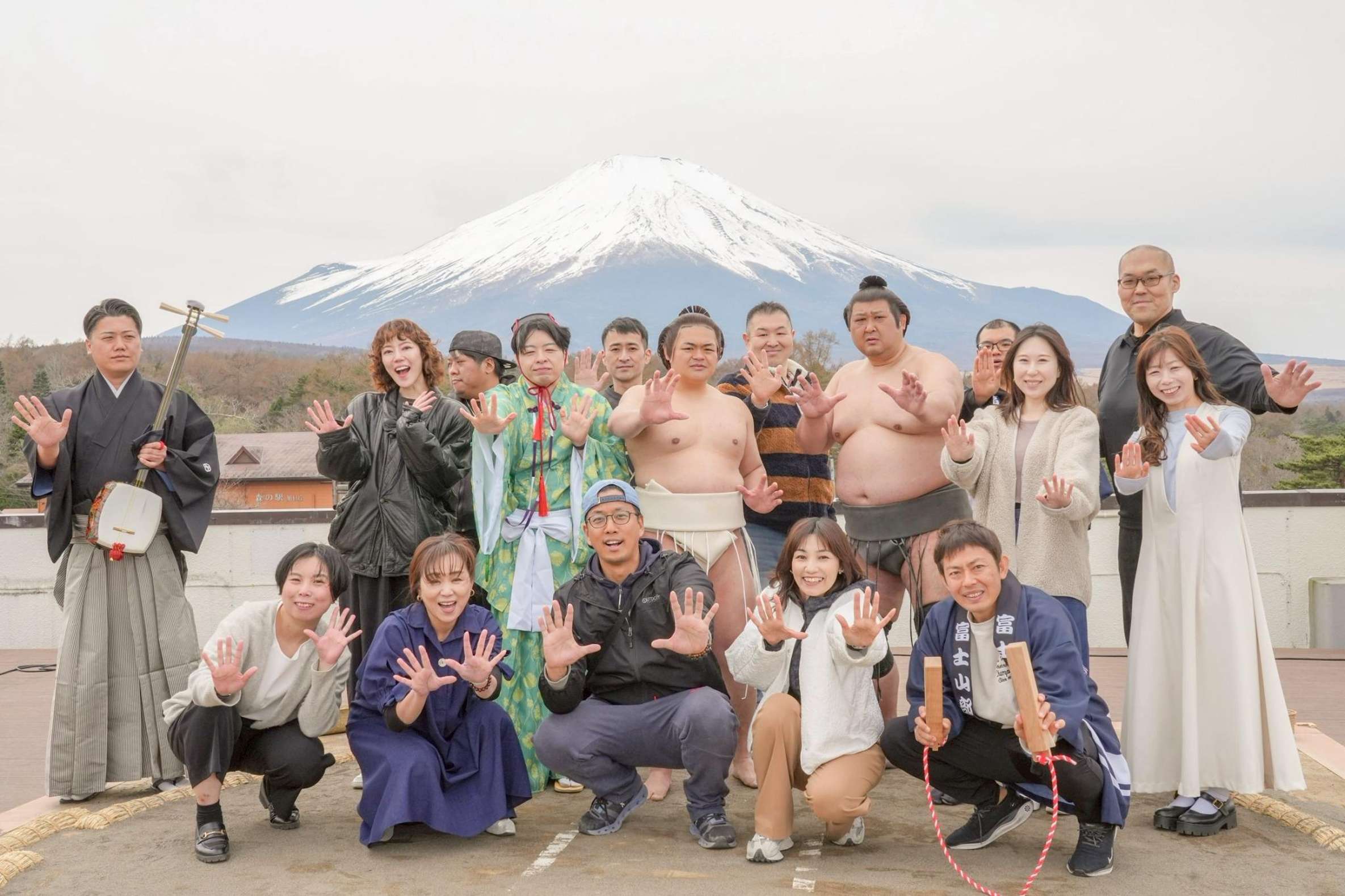
Best time to go - days, months and show times
Picking a date here is simpler than it looks once you know three things. First, the week: the venue closes Sundays and Mondays, so Tuesday to Saturday is your window.
Second, the day's shape: three 50-minute sittings, listed at 11 am, 1 pm and 3 pm on some calendars and 11:30 am, 2 pm and 4:30 pm on others.
Third, the season: February, December and January are the quietest months, while April, October and May run more than one and a half times an ordinary month.
The venue closes every Sunday and Monday Build your Fuji-area days around a Tuesday-to-Saturday visit
Weather matters less than you would expect. The show runs rain or shine: clear days use the open-air rooftop, rainy days shift to a covered indoor floor.
The venue seats up to 80 people per sitting, and no sell-out pattern is recorded, but the peak months mean you should not leave booking to the day before.
Getting to Lake Yamanaka from Tokyo without a car
A car-free day trip works here, and the highway bus is the reason. Fujikyu buses run direct from Tokyo Station's Yaesu South Exit and from Shinjuku's Busta terminal to Yamanakako stops such as Yamanakako Asahigaoka, right where the show is. The ride takes about two hours.
Reserve a seat in advance. Seats on the Shinjuku to Fuji Five Lakes line sell out on weekdays as well as weekends, which is the part day-trippers keep getting wrong. Booking online from one month ahead also costs less than paying on the day.
The bus drops you close enough to the FUJITAYA Building to walk, which means the 11 am show pairs naturally with a mid-morning departure from Shinjuku. Give yourself buffer on the return: buses fill, and you do not want your Fuji day ending at a full bus stop.
One route detail settles the day's shape: with a two-hour ride each way, an early bus out of Shinjuku leaves room for the show, lunch and a slow afternoon by the water before the trip back.
What happens at the Lake Yamanaka sumo show, step by step
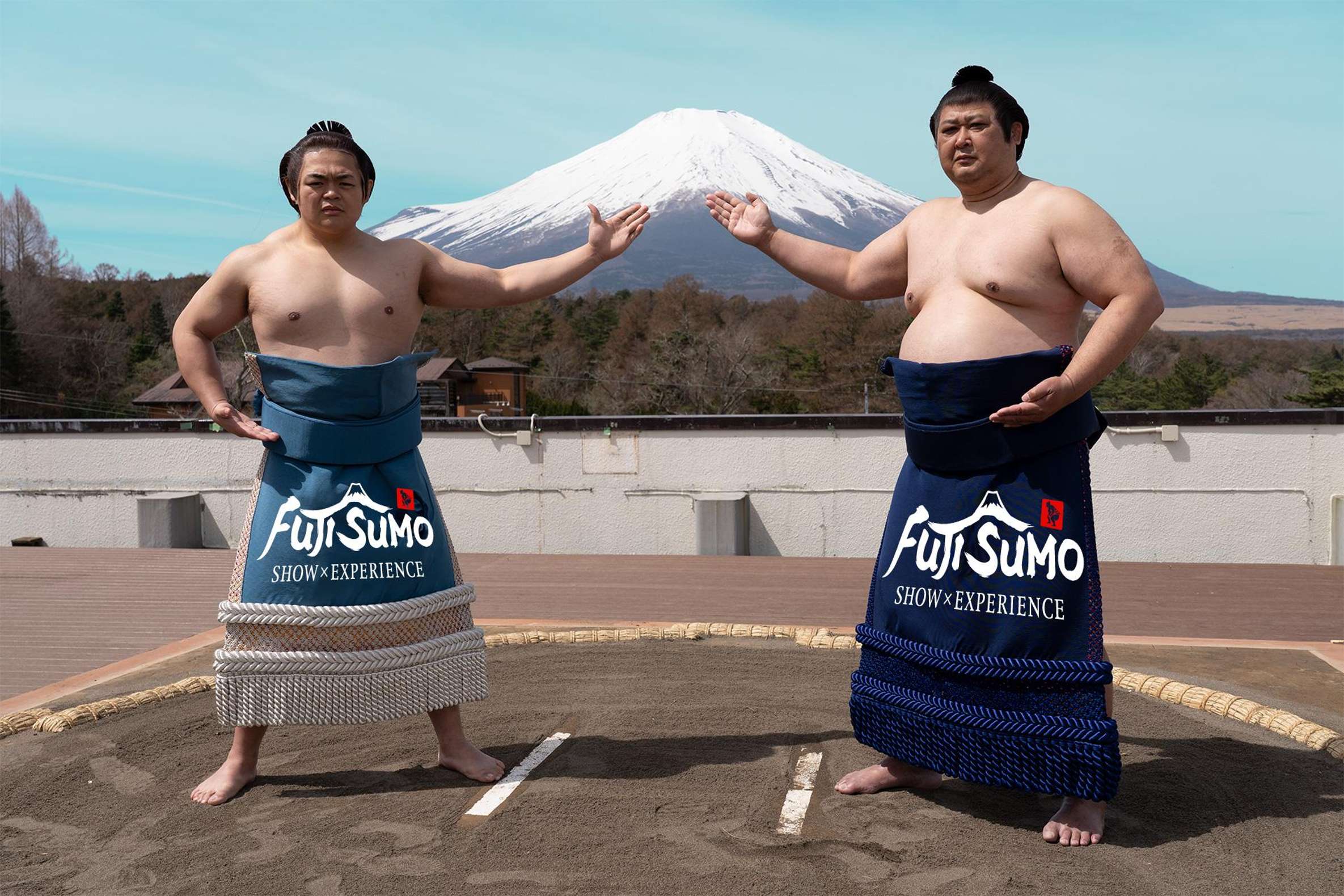
Arrive 15 to 30 minutes early and the hour runs like this. First the opening ceremony with traditional instruments, then the dohyo-iri, the ring-entering ritual where wrestlers clap and raise their hands, gestures that go back to samurai days to show no one carries a weapon.
Then the story. This is a staged performance about a boy's journey to becoming a Yokozuna, the grand champion rank, told through matches and explained in English as it goes. Live shamisen music plays under it.
The bouts themselves are the real thing in miniature: a match ends when a wrestler is pushed from the inner circle, touches the ground with anything but his soles, or steps over the straw bales, and many bouts last well under a minute.
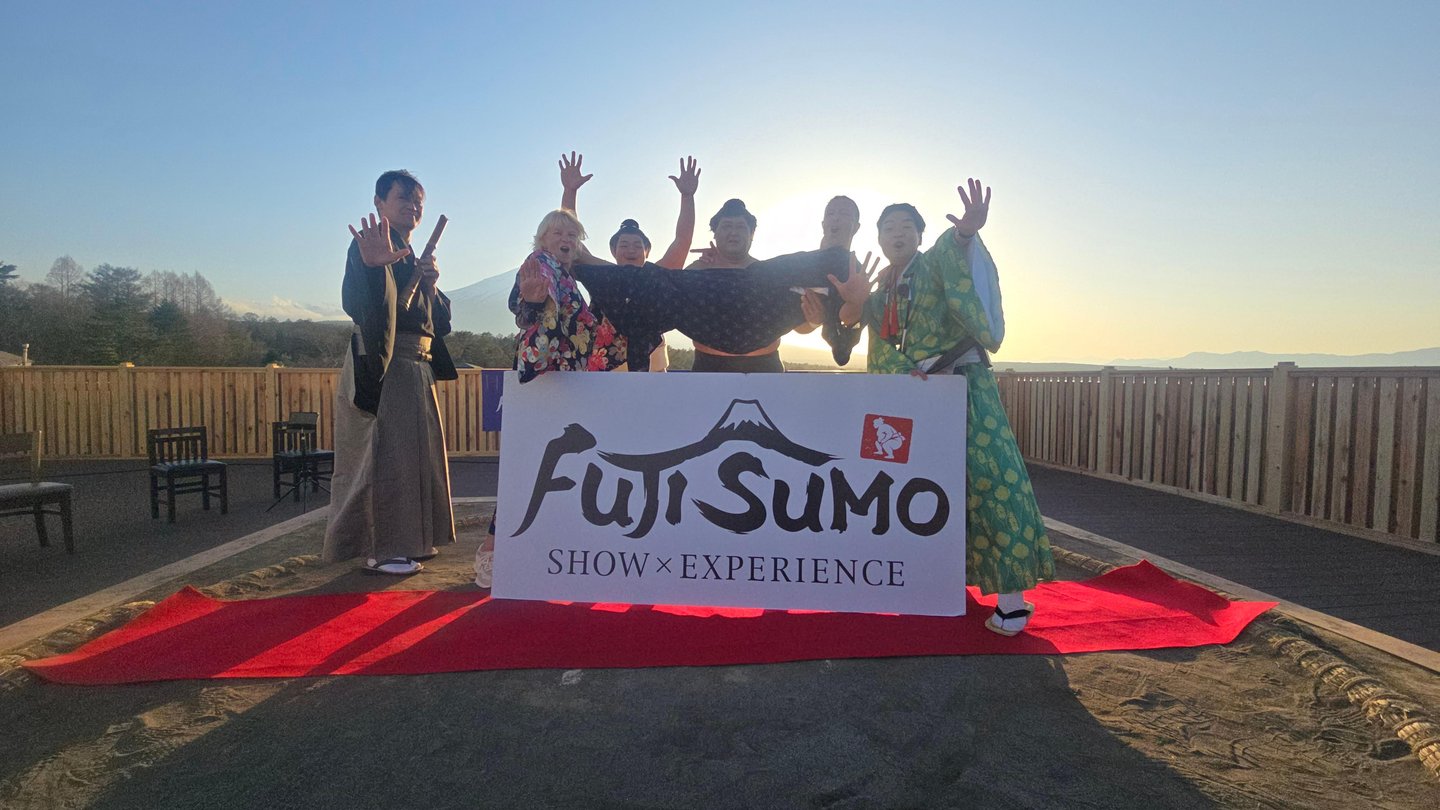
The last stretch is the one people talk about afterwards. The wrestlers come off the ring for commemorative photos and a Q&A, in the final minutes of the show.
- 1Doors openAdmission starts 30 minutes before each show
Arrive at least 15 minutes before your booked time
- 2Opening and dohyo-iriTraditional instruments, then the ring-entering ritual
The claps and raised hands go back to samurai days
- 3The story performanceA boy's path to Yokozuna, told through matches
Live shamisen, explained in English
- 4The boutsFormer professionals wrestle for real
Bouts often last under a minute
- 5Photos and Q&AThe wrestlers meet the audience
The final minutes of the 50-minute show
Read the timeline against your own watch and one thing stands out: the closing photo session is built into every show, so there is no extra segment to chase.
Can you step into the ring and wrestle a sumo wrestler
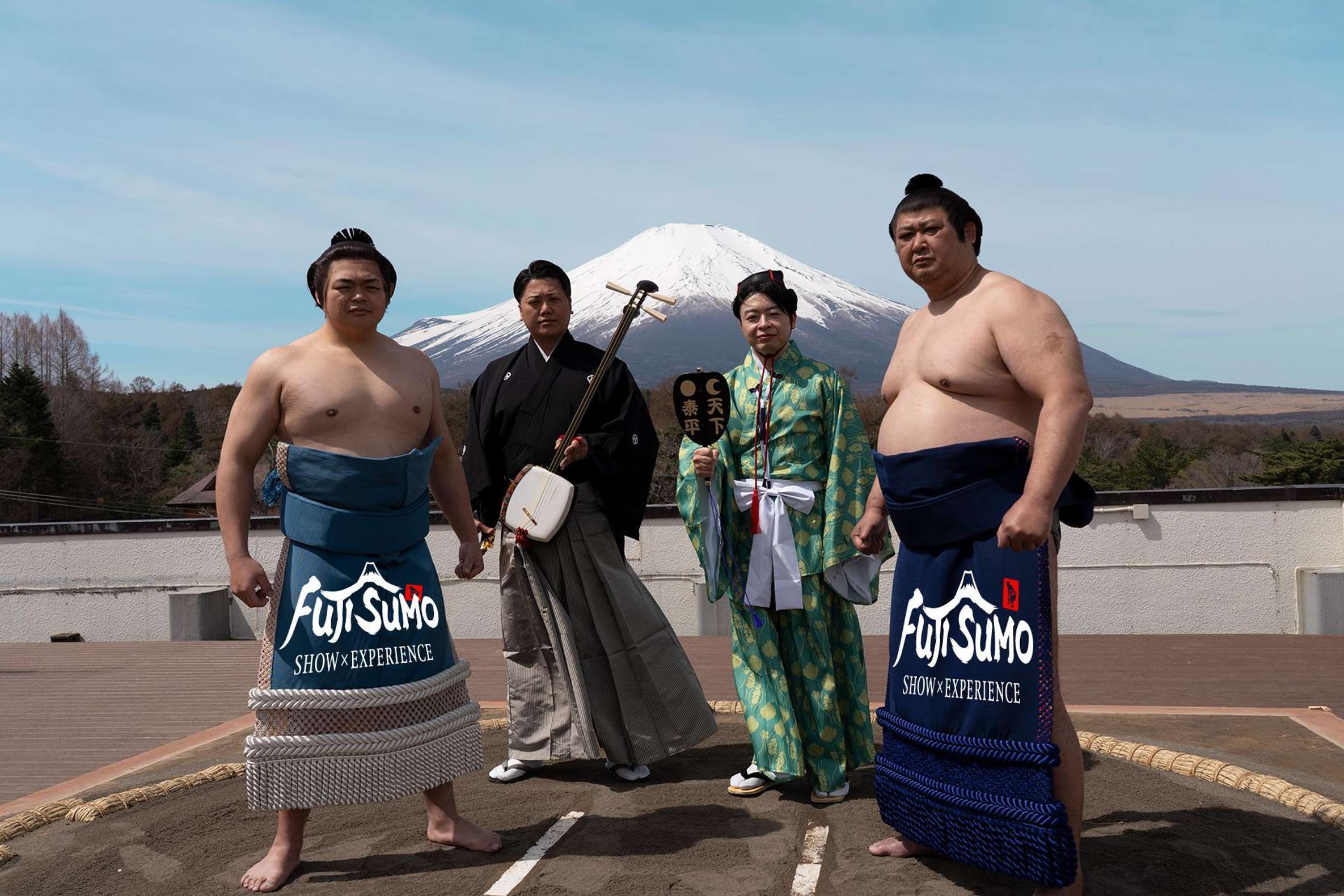
At the start of the experience, guests draw omikuji, the paper fortune slips you may know from shrines. Six slips bring their holders into the ring for the Sumo Challenge, face to face with a former professional wrestler on the dohyo.
Everyone else simply watches, and that is the point: joining is optional, and nobody who prefers to stay seated is pressed into anything. Only selected guests go up, so the ring never fills with volunteers.
A word on respect, since the ring is sacred ground in sumo. At this show the challenge is a supervised, entertainment-format invitation, so stepping up when chosen is entirely proper.
The way to go wrong is improvising: touch nothing and nobody unless invited, follow the wrestler's and host's lead, and clap during the bouts the way the room does.
Sumo show at Lake Yamanaka or sumo in Tokyo
Tokyo offers three kinds of sumo, and each one costs you something. Grand tournaments run only three times a year there, in January, May and September, and tickets sell out within minutes of going on sale.
Morning practice at a stable is the deep end: you sit silently on the floor for up to two hours, no talking, no moving, no flash photos, which is honest but hard-going for anyone who is not a die-hard fan.
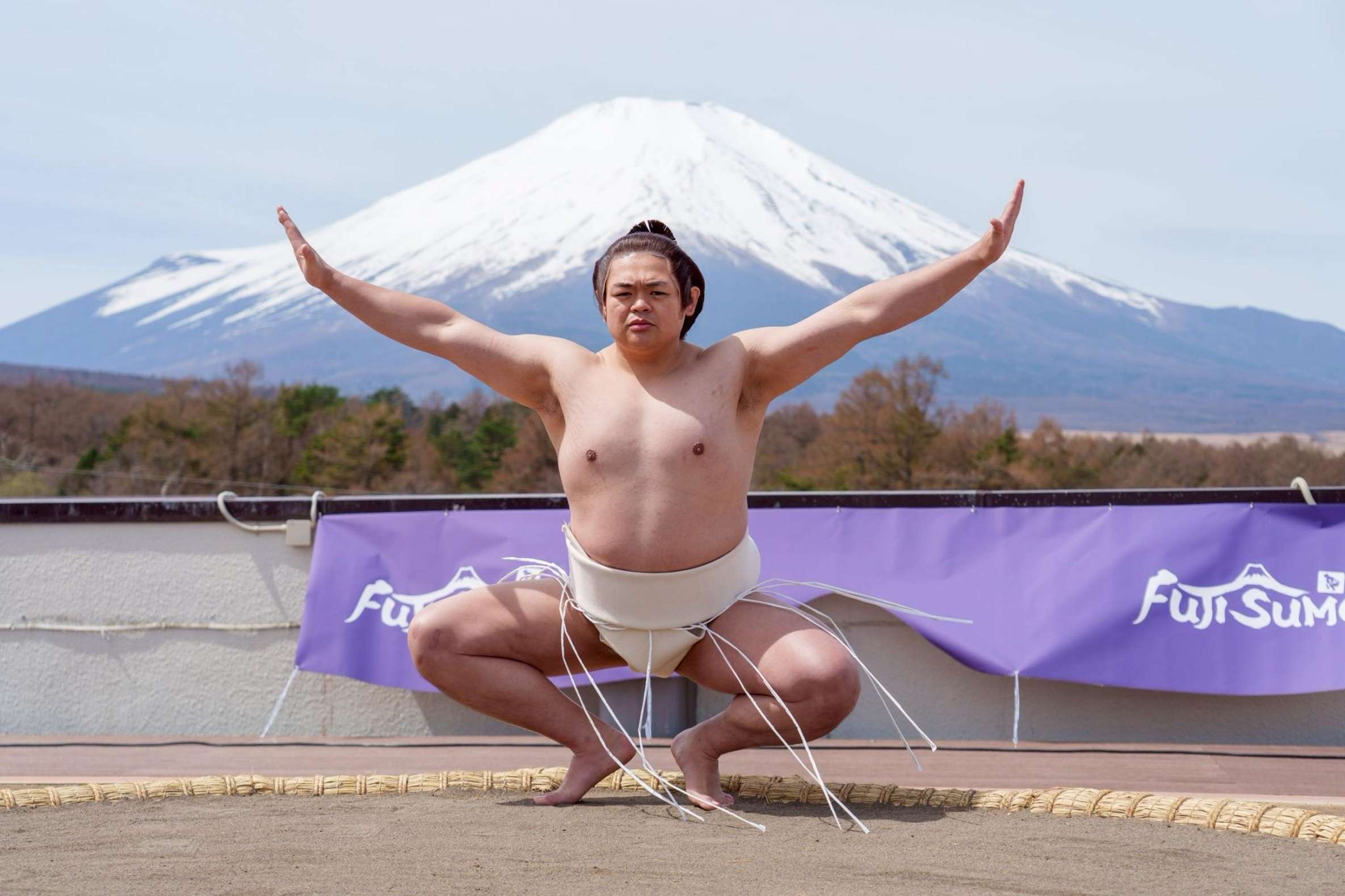
This show sits apart from Tokyo's indoor dinner shows in one clear way: you get retired professionals, ritual and bouts, commentary that assumes you know nothing, and an audience challenge you might actually join, all in 50 minutes with a mountain behind the ring.
So the honest comparison: if your dates hit a Tokyo tournament and you hold a ticket, go. If your dates miss one, and sumo is one stop on a Fuji day instead of an evening in a Tokyo basement, the rooftop at Lake Yamanaka gives you more to remember for far less planning.
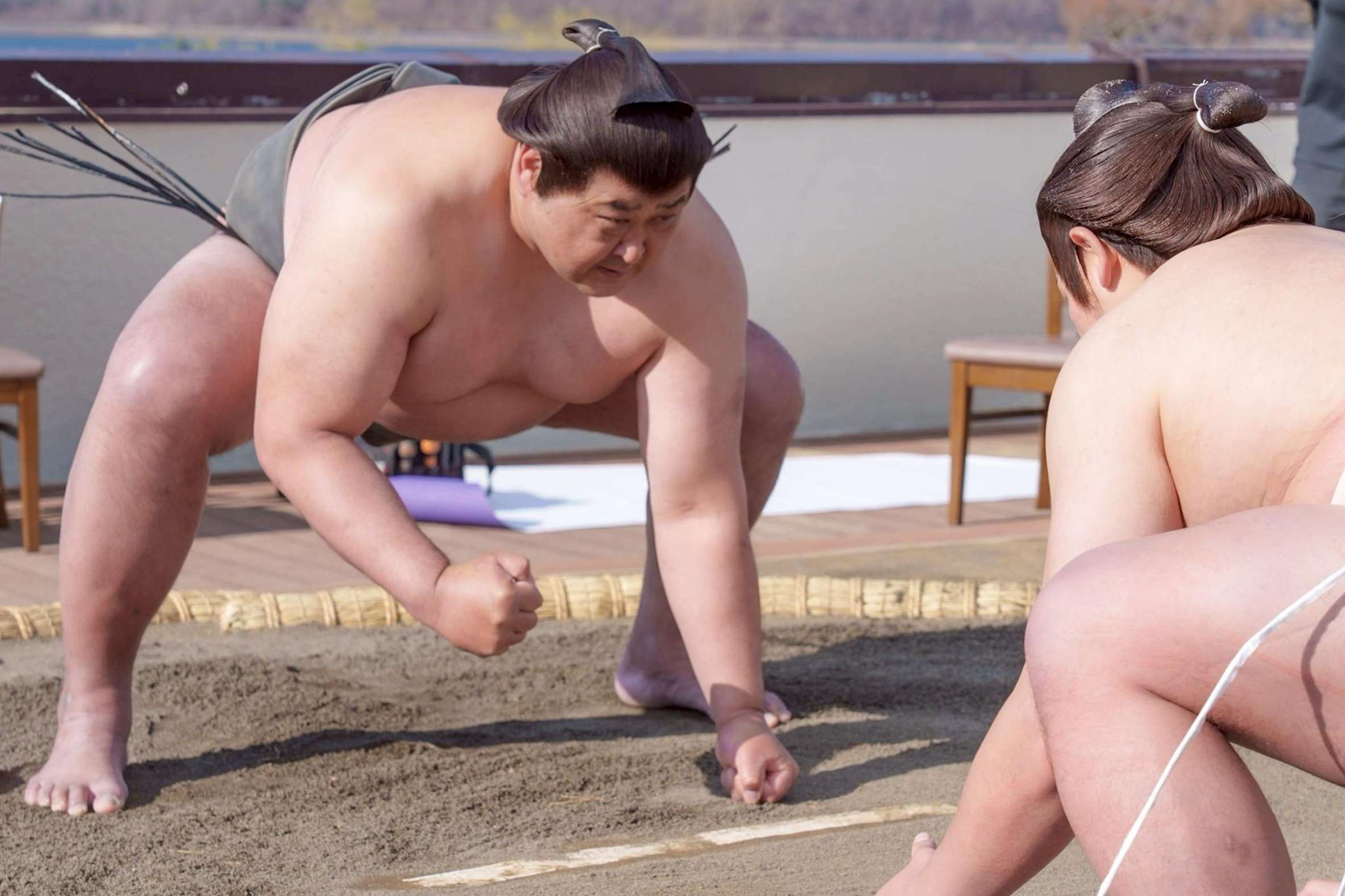
What to look for in a Mount Fuji area sumo tour
Booking this kind of experience comes down to a short list of things that separate a smooth afternoon from a stressful one. A live guide who handles the language.
Free cancellation that forgives a changed plan. The option to reserve now and pay closer to the date. Commentary in a language you understand. And knowing where you actually meet.
The tour titled Mt Fuji Sumo | Photo with Wrestlers, Family & VIP, Yamanaka scores well on that list: the live show, the interactive challenge, English commentary and the photo session come as standard, and you can cancel up to 24 hours ahead for a full refund.
There is no hotel pickup; you meet at the venue, which suits the lake's bus connections.
- A guide with youLive tour guide
- Free cancellationCancel up to 24 hours in advance for a full refund
- Book now, pay laterReserve your place and pay closer to the date
- Hotel pickupNo, you meet at the start
- Your languageJapanese, English
Score any tour you compare against those five points, and weight the meeting point here: the venue sits by the lake's bus stops, so a guide you can understand matters more than a pickup you will barely miss.
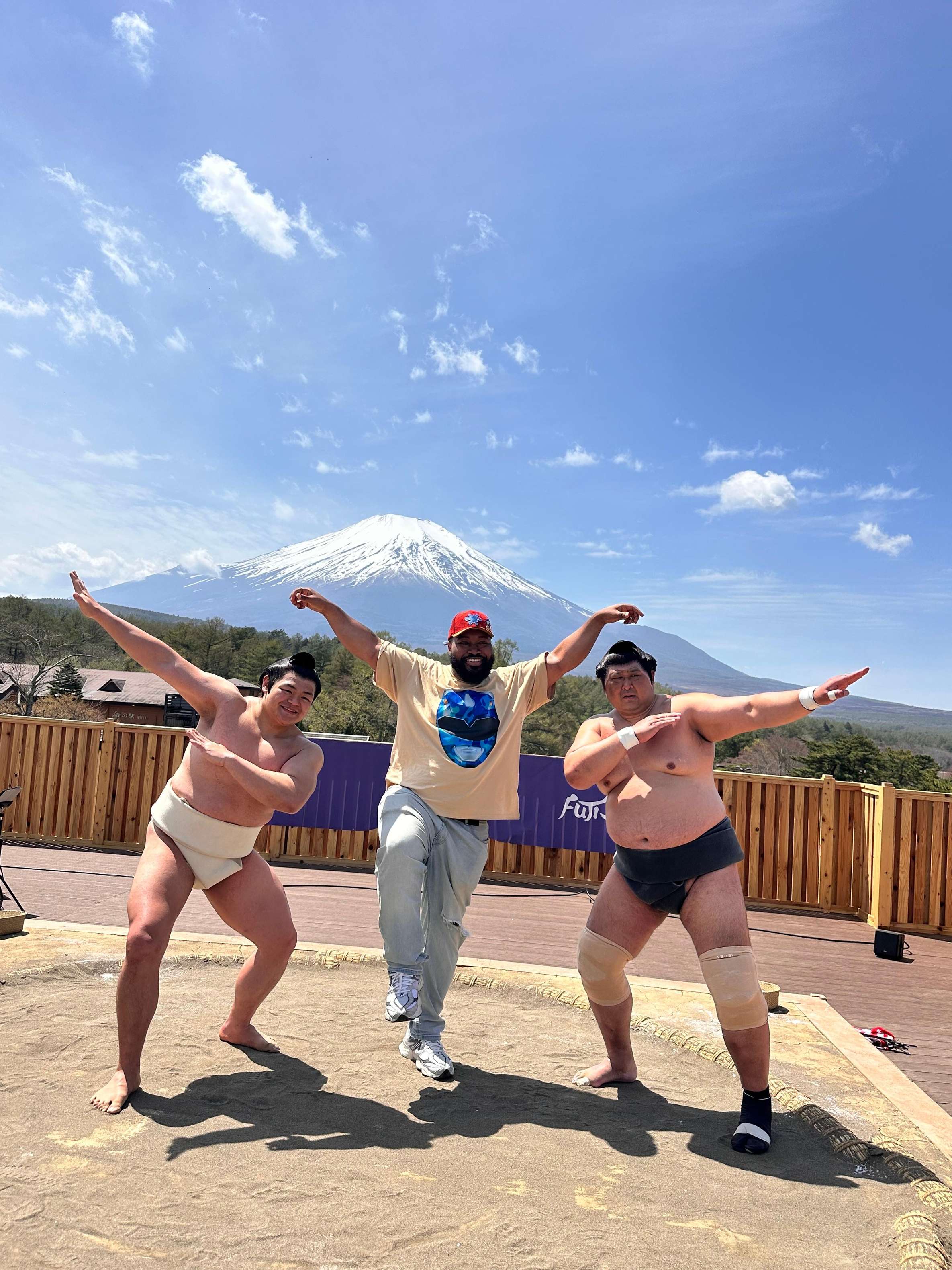
Standard or VIP seating at the Lake Yamanaka sumo show
Two tickets, one difference that matters more than it sounds. General admission gets you general seating and a place in the photo session with the wrestlers. VIP moves you to the front row, hands you an exclusive souvenir, and gives you priority access at the photo session.
Which one you want depends on why you came. If photos with the wrestlers are the point of the visit, VIP is the straightforward answer: front-row view of the bouts and first in line when the photo session starts in the show's final minutes.
Multi-generational families of six to eight get built for them with VIP seating.
If you are happy watching from anywhere and taking your photo turn in the general queue, general admission covers the full experience: the rituals, the bouts, the challenge, the photos. ::compare Standard versus VIP | General admission | VIP Seating | General seating | Front row Souvenir | None | Exclusive souvenir gift Photo session | Included | Priority access Best for | Travelers happy with any seat | Families of 6-8 and photo-first visitors
Whichever seat you pick, the show itself stays the same; the difference is how close you sit and how early you meet the wrestlers.
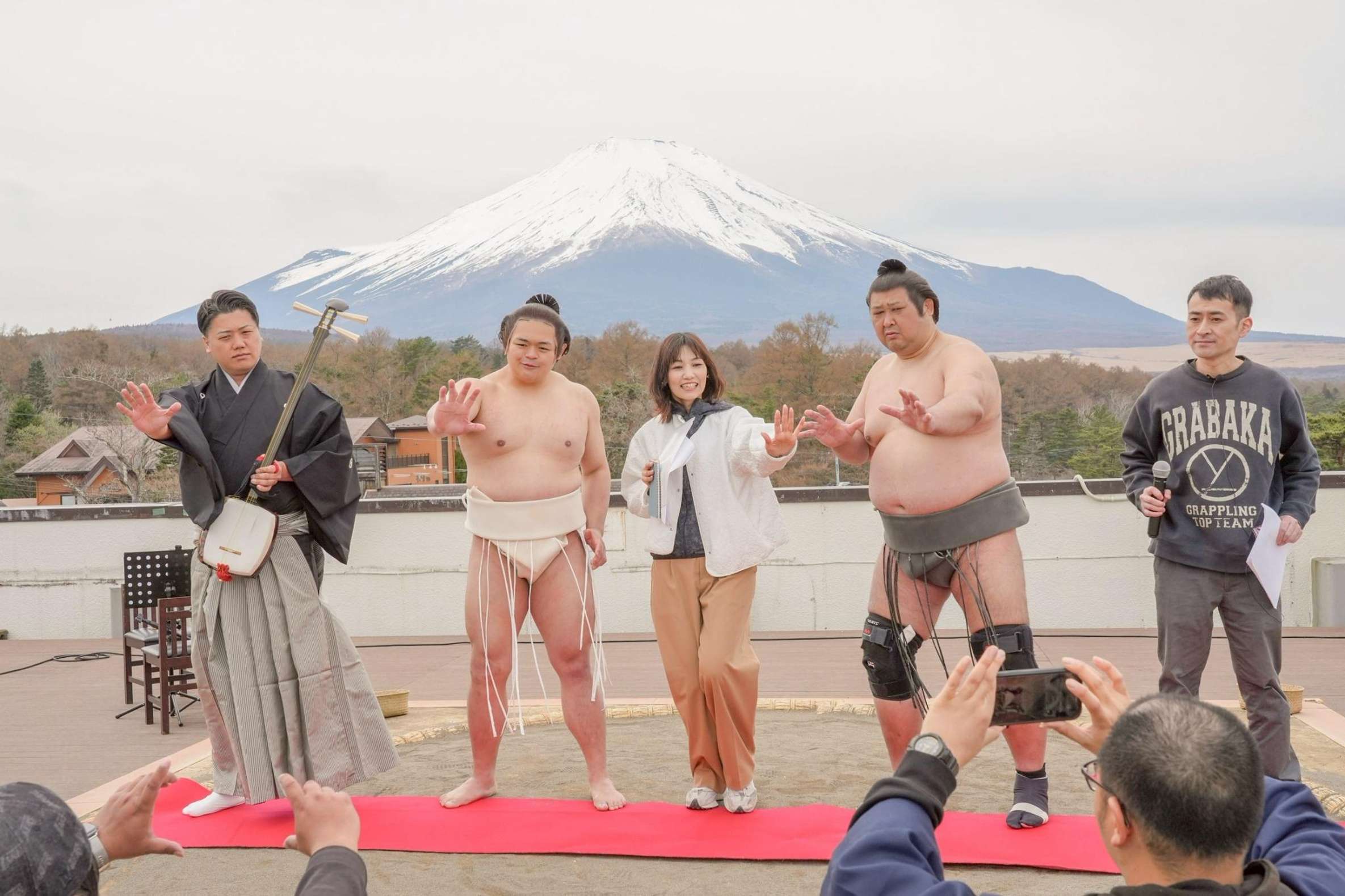
What to wear and bring to the sumo show
The operator asks for one thing: your e-ticket. Everything else is season-dependent, because the rooftop is open-air.
Winter is the surprise. Daytime highs around Lake Yamanaka run about 4 to 5 degrees from December through February, while nights drop several degrees below freezing, and the area averages a few snow days a month.
A warm layer for a 50-minute outdoor show is not optional. Summer is the opposite problem: mild temperatures but the wettest months of the year, so a rain jacket or small umbrella earns its place, especially for the walk to and from the venue.
Wear clothes you can move in regardless of season. If your omikuji slip comes up in the challenge lottery, you put a uniform and belt over what you are wearing before going onto the ring. Comfortable shoes help too, since the venue is a rooftop reached inside the FUJITAYA Building.
- E-ticketThe operator's listing asks you to bring it; admission opens 30 minutes before each show, so arrive at least 15 minutes before your booked time.
- Comfortable clothes you can move inChallenge spots are limited and drawn by lottery, and participants put on a uniform and belt over their clothes before going into the ring.
- Warm layer, Nov to MarThe rooftop is open-air and winters are cold: average highs around 4-7°C and nights below freezing from December to February.
- Light clothes, Jun to SepSummer days reach about 21-26°C but it is the wettest stretch, with roughly 270-390 mm of rain a month.
- Rain jacket or small umbrellaThe show runs rain or shine, moving to a covered indoor floor on rainy days, and you may still walk to and from the venue in the rain.
- Camera or phoneA photo session with the wrestlers is part of every show, and commemorative photos are included.
Pack for the season you travel in and the day takes care of itself; the operator runs the show in any weather, rain included.
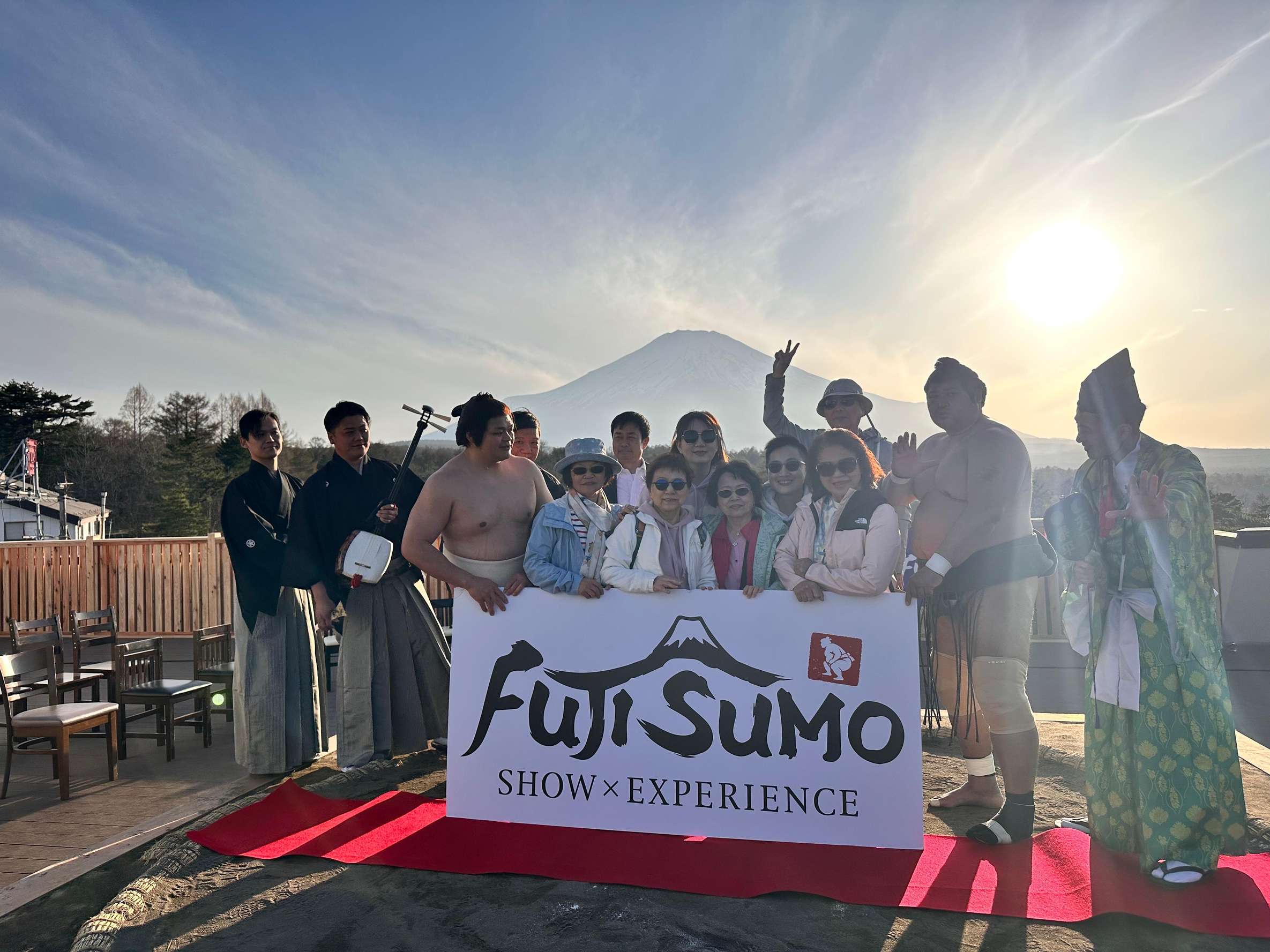
If your plans change - rain, cancellations and refunds
Rain is the easiest problem on this page. The show runs rain or shine, and a rainy day simply moves it from the rooftop to a covered indoor floor on the 3rd floor.
You keep the sumo and lose the Fuji view; if you decide the indoor show is not for you, a full refund for the affected booking is available.
Severe weather is handled more firmly. If something like a typhoon is forecast, the operator first offers a free date change, and a full refund stands if you would rather not reschedule. Shows can also be cancelled at short notice for weather, events or operational reasons.
When the day shifts
| If this happens | What happens then |
|---|---|
| Light rain forecast | The show moves to the covered indoor 3rd-floor venue, with a full refund if you prefer not to attend |
| Severe weather such as a typhoon | Free date change first, or a full refund if you would rather not reschedule |
| Your own change of plan | Cancel up to 24 hours in advance for a full refund |
Book with the 24-hour cancellation window in mind and the weather risk costs you nothing but the view.
What else to do around Lake Yamanaka before or after the show
The show slots into a full lake day without effort. On the water, the swan-shaped Swan Lake boat runs year-round from piers at Asahigaoka and Yamanaka, a 25-minute round trip from 9 am to 4:30 pm.
The amphibious Yamanakako KABA bus does something better: it cruises the lake and then splashes straight into the water, with departures roughly hourly depending on the month, closed Thursdays.
On shore, a 13.6 km cycling path circles the lake, and Hana no Miyako Flower Park sits about 1.9 km away, its tulips, sunflowers and cosmos planted with Mount Fuji behind them.
- 1Fuji-Q Highlandpark or garden19 min driveDirections
- 2Lake Kawaguchisight24 min driveDirections
- 3Arakurayama Sengen Parkpark or garden30 min driveDirections
That list points outward, and the drive times are short: an amusement park in under twenty minutes, Lake Kawaguchi in about twenty-five.
A workable shape for the day: a morning arrival for the view, the 11 am show, lunch, then the swan boat or the flower park while the afternoon cloud does what it does to the summit.
What to know before you book the Mt Fuji sumo experience
Admission opens 30 minutes before each show, and you should arrive at least 15 minutes before your booked time. The venue is the rooftop of the FUJITAYA Building at Lake Yamanaka.
Three shows run daily at 11 am, 1 pm and 3 pm, and the venue is closed on Sundays and Mondays. Plan around a Tuesday-to-Saturday visit so the day does not fall apart.
The show runs rain or shine. On rainy days it moves to a covered floor on the 3rd floor, so nothing is cancelled for rain, but the open-air Fuji view is lost. If a typhoon is forecast you get a free date change or a full refund.
This is an open-air rooftop, so dress for it. Winter daytime highs sit around 4 to 7 degrees Celsius with nights below freezing; June to September brings heavy rain. Bring a warm layer in the cold months and rain gear the rest of the year.
Allow about an hour. The show itself runs roughly 50 minutes, including the opening ceremony with traditional instruments, a story performance, the sumo bouts, and a closing photo session and Q&A.
Six guests are picked at the start by drawing omikuji, a Japanese fortune slip, to face a wrestler in the ring. Taking part is optional, and anyone not chosen simply watches the challenge.
Every show ends with a photo session, so the wrestlers meet you in the final minutes of the performance. General admission includes the group photo; VIP guests get priority access and a private, individual photo.
General admission gets you standard seating with the same show and photo session. The VIP option adds front-row seats, priority photos and an exclusive souvenir, and suits large families of 6 to 8 who want to sit together.
Children aged 6 to 12 pay a child rate and infants under 6 enter free, so the show works well for kids. The booking is marked as unsuitable for pregnant women and people with high blood pressure, so check before you book.
Worth it, if you time it right
A genuine sumo show in the best setting in Japan, and the only one with the mountain behind the ring. It suits families and first-timers who want sumo as part of a Fuji day. Pick a Tuesday-to-Saturday date, an 11 am show, and choose VIP by how much the photos matter to you.
Questions about the sumo experience at Mt Fuji
What happens at the Mt Fuji sumo experience at Lake Yamanaka?+
The show runs about 50 minutes on an open-air rooftop, with former professional wrestlers staging bouts and rituals while live traditional music, including shamisen, plays.
A story about a boy on his way to becoming a Yokozuna ties it together, and English commentary explains each ritual. It ends with photos and a Q&A with the wrestlers.
Can you see Mount Fuji from the venue, and how often is it hidden?+
On clear days the whole mountain sits directly in front of the seating area. Visibility swings with the season: records show the full mountain on about 138 mornings a year, roughly 20 clear mornings in December but only 3 in July. On rainy days the show moves indoors and you lose the view.
Can I step into the ring and wrestle a sumo wrestler?+
Yes, six guests are chosen by drawing omikuji, a traditional fortune slip, at the start of the show. The chosen ones go onto the ring to face a wrestler. It is optional, so if you would rather watch, nobody pulls you in.
Will I be pulled out of the audience if I don't want to wrestle?+
No. Only selected guests are invited to join the Sumo Challenge, and taking part is up to you. Guests who are not chosen simply watch the challenge from their seats.
Do you get a photo with the wrestlers?+
Every show ends with a photo session with the wrestlers, the last segment of the 50 minutes. After the opening ceremony, the story performance and the bouts, the wrestlers meet you for commemorative photos and answer questions. VIP guests get priority access to the session.
When do the shows run, and what days should I plan for?+
There are three shows a day, at 11 am, 1 pm and 3 pm, each about 50 minutes long. The venue closes Sundays and Mondays, so aim for a Tuesday to Saturday visit. Arrival at least 15 minutes before your show time works well.
How does standard seating compare with VIP?+
General admission gets you general seating plus the group photo session with the wrestlers. VIP upgrades you to front-row seats, adds an exclusive souvenir gift and gives you priority access to the photo session, which matters when you want a clear shot with the wrestlers.
Is the show held indoors or outdoors, and what about rain or winter?+
It runs rain or shine. Clear days use the open-air rooftop with Mount Fuji in front of you, and rainy days move the show to a covered indoor floor, so you never lose the show to weather, only the view.
Winter rooftops run cold, with daytime highs around 4 to 5 degrees from December to February, so bring a warm layer.
Is the Mt Fuji sumo experience suitable for kids?+
Yes. Children from 6 to 12 pay a discounted rate and infants under 6 enter free. The lively format keeps children engaged, and no one has to stay silent, which makes it an easier family outing than a quiet stable visit.
Do I need Japanese to follow the show?+
No. The entire show is guided in English, and visitors of any language or nationality are welcome. The commentary explains the rituals and the rules behind each bout as they happen.
When is the best time of year to go, and how busy does it get?+
December, January and February are the quietest months, while April, May and October are the busiest on the tours here. Weekdays between Tuesday and Saturday see the three daily shows, and the venue seats up to 80 people per sitting, so book ahead in the peak months.