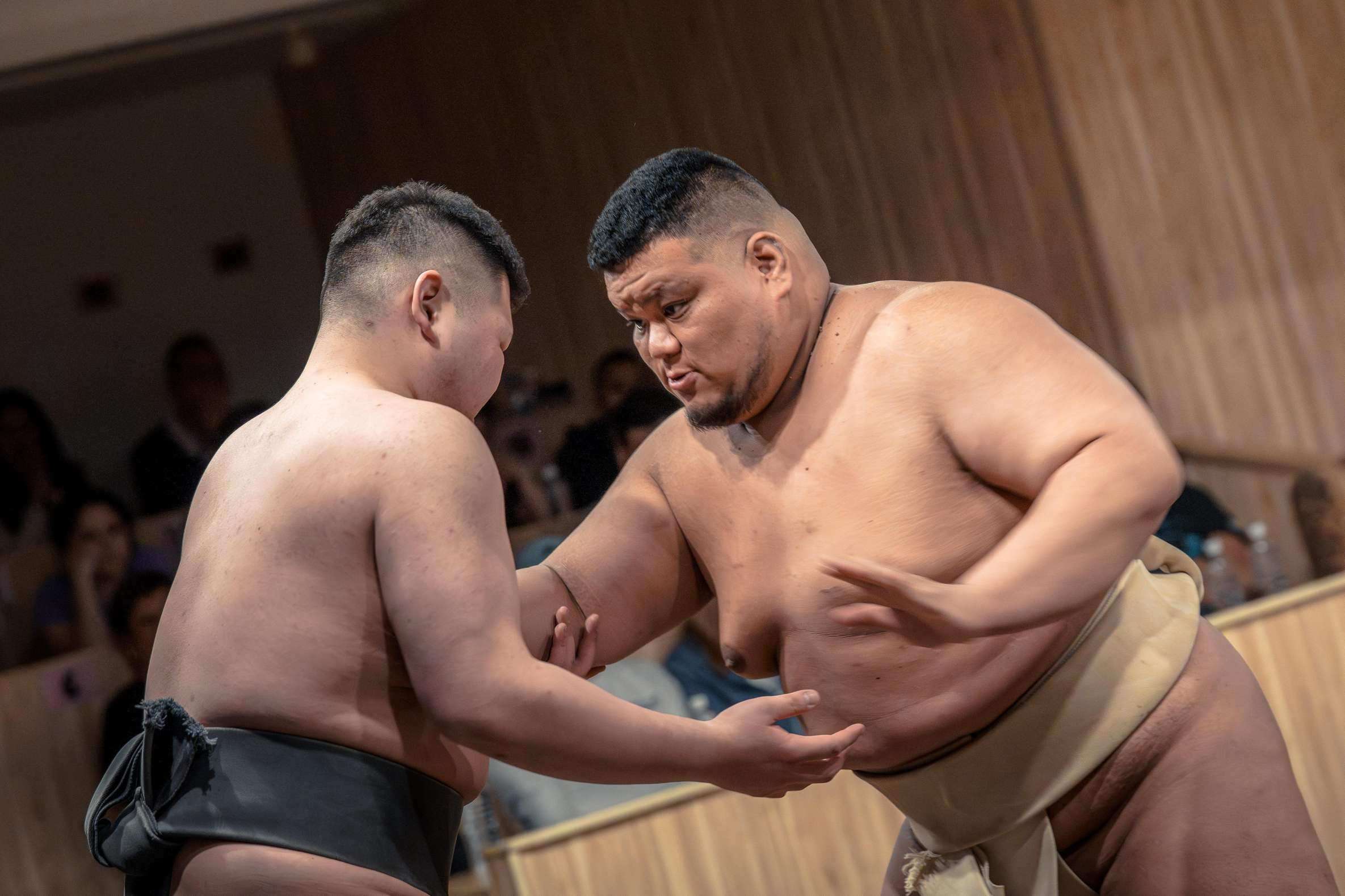
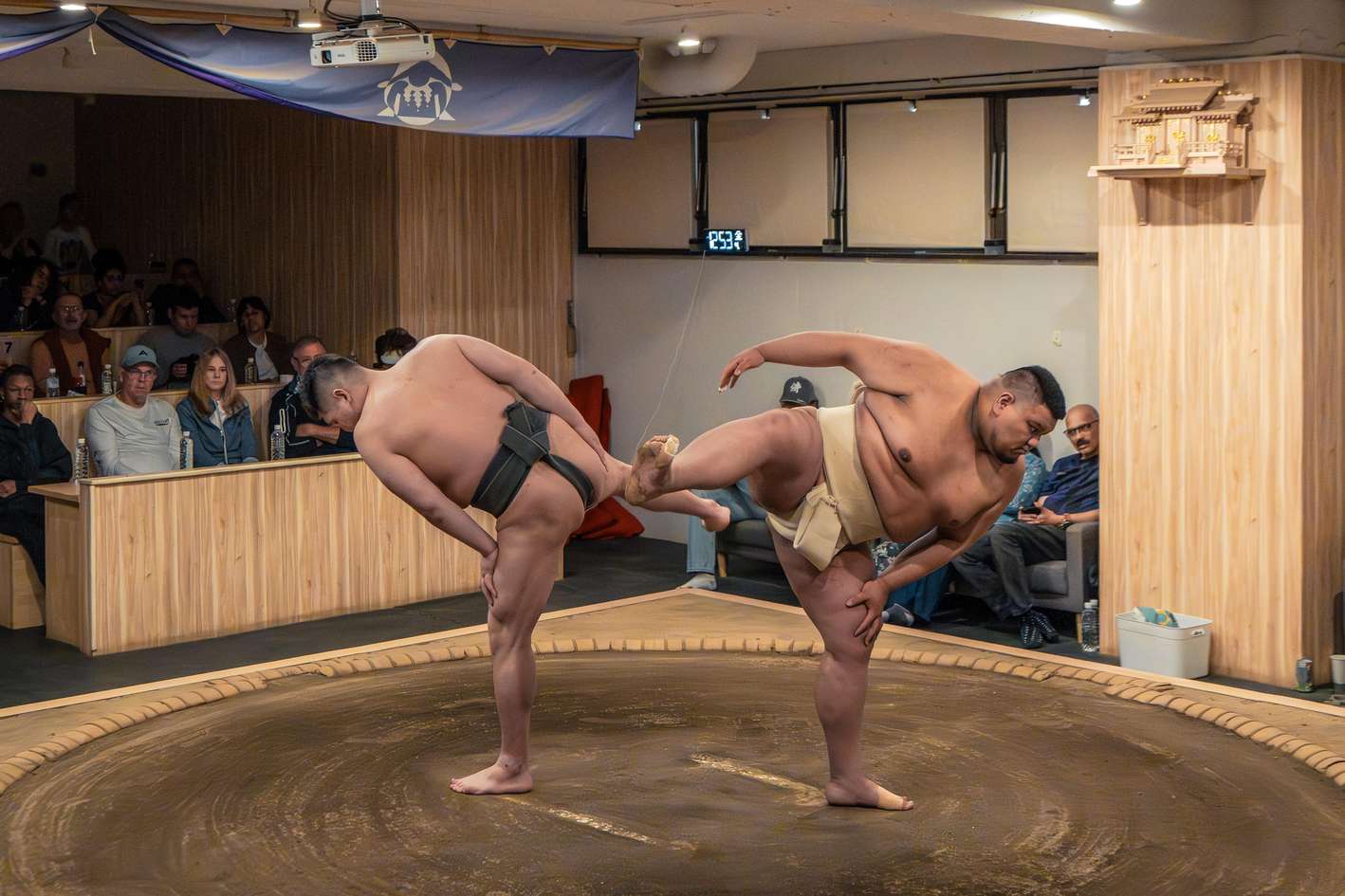
Wear a sumo outfit and step into the ring at a live Tokyo show. At the Shinjuku sumo show, wrestlers demonstrate real technique while an English-speaking MC explains the rituals, six lottery-picked guests suit up to wrestle, and everyone gets pictures with the wrestlers. Book your seat and pack your photo pose.
There is no sumo suit rental in Tokyo that you can book on its own. Dressing up happens inside a sumo show, where you put on the attire, step into the ring and get your photos.
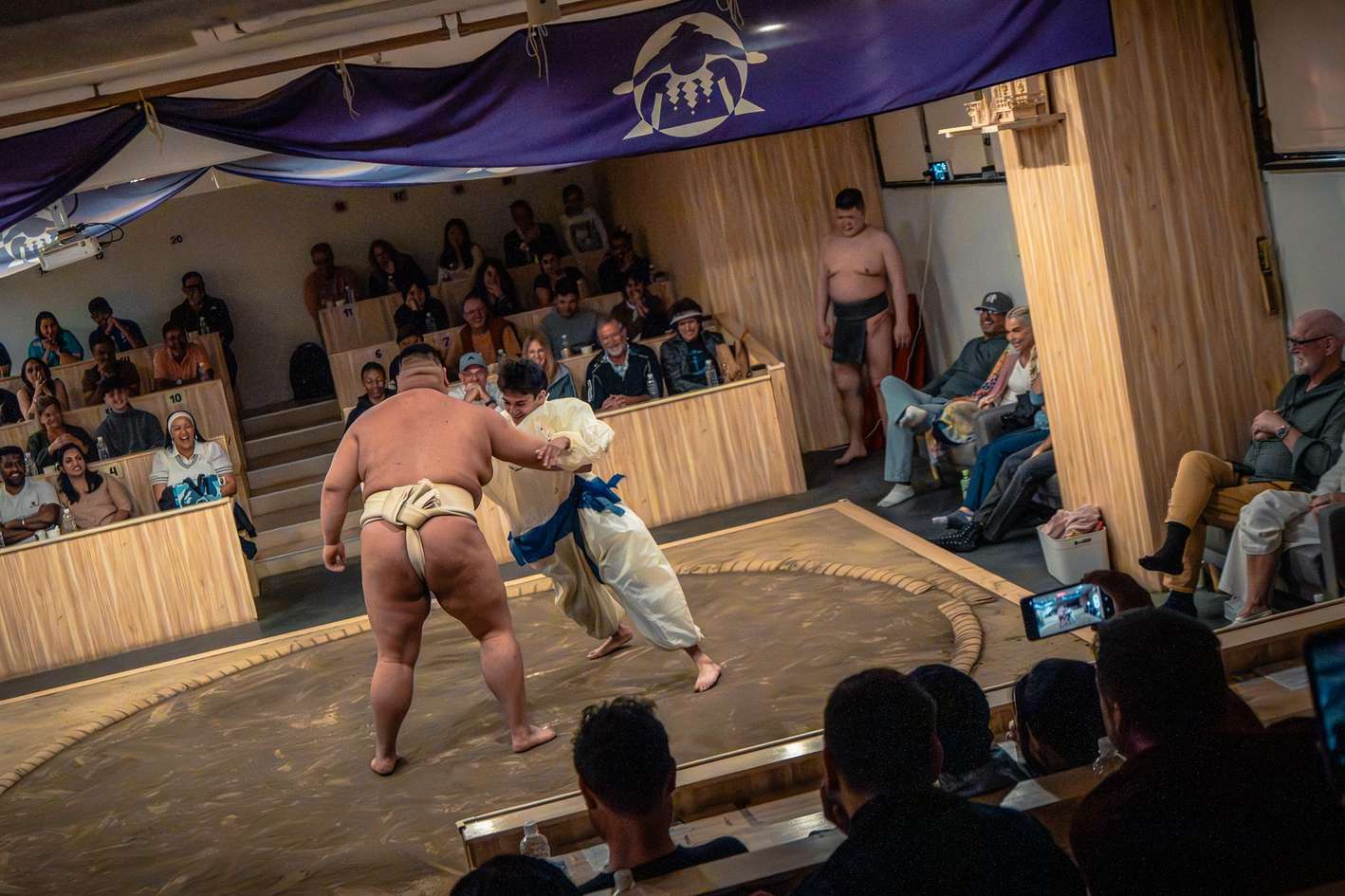
Six guests per show, chosen by lottery, suit up in a traditional sumo outfit and challenge a wrestler in the ring. So the dress-up part depends on luck, and it comes wrapped around a full show.
Our pickLikely to sell out
1.5 hours·English
4.9(9,863)
Tokyo: Shinjuku Sumo Show & Experience with a Photo
Free cancellationProfessional sumo wrestling demonstrationHistory and Background information about Sumo
Sumo dress up in Tokyo - the Shinjuku show with photo
You searched for sumo dress up in Tokyo, and here is the honest answer: the city has no standalone suit rental where the outfit is the whole activity. Dressing up always happens inside a show. The closest match on this site is the Shinjuku sumo show, and it comes closer than you might expect.
Six spots per show go to a lottery, so the outfit chance is real but limited. Even if you watch instead, pictures with the wrestlers are included, so a keepsake photo is guaranteed either way.
The show runs 1.5 hours, an English-speaking MC explains the rituals, and a welcome drink is part of the ticket. Families work well here too, with children aged 12 and younger accepted.
It suits anyone who wants to feel part of the action and walk away with photos. Worth knowing before booking: six guests per show is the cap for the ring challenge, so treat the outfit as a possible bonus rather than a promise.
At a glance
Duration 1.5 hours4.9 from 9,863 reviewsFree cancellation
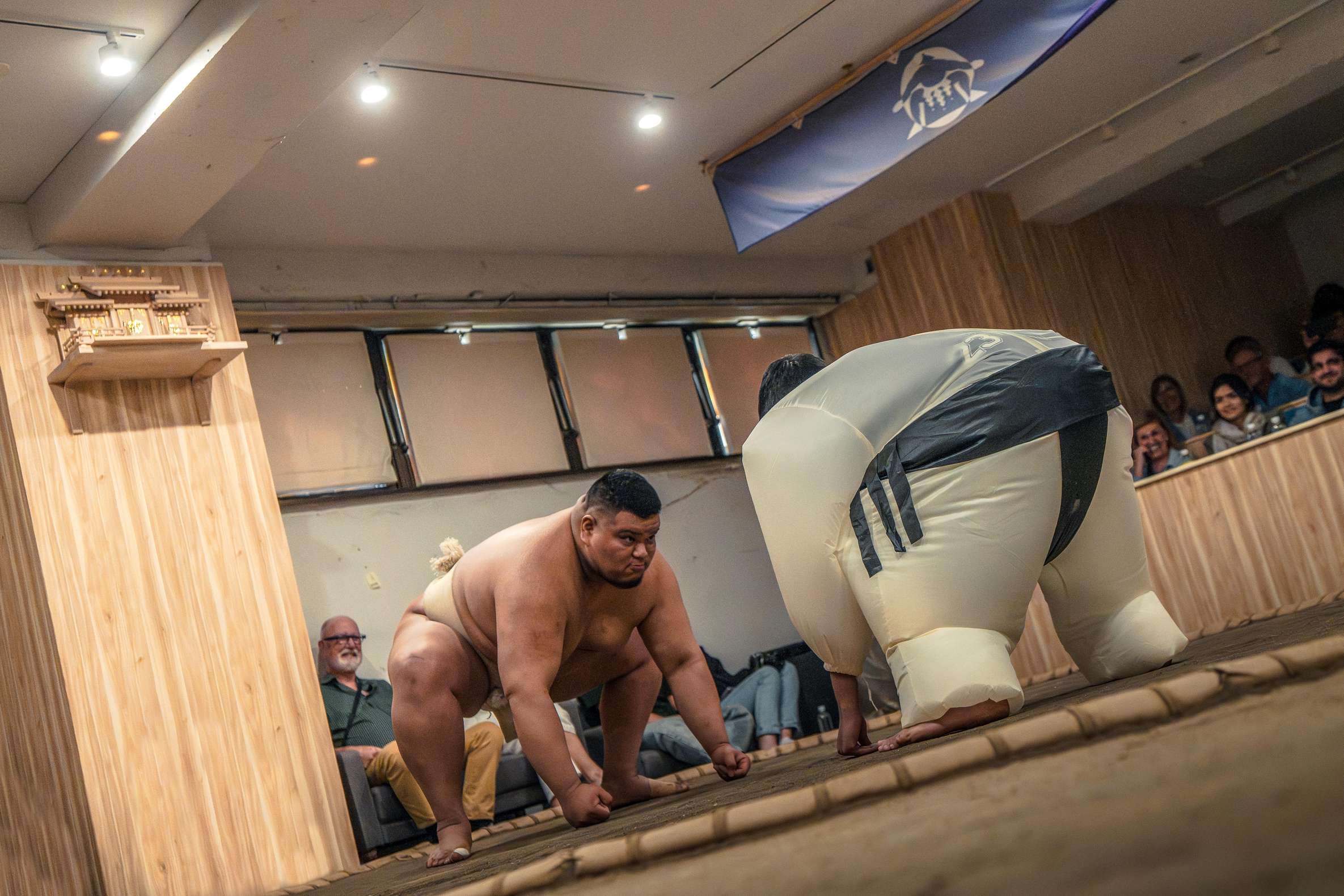
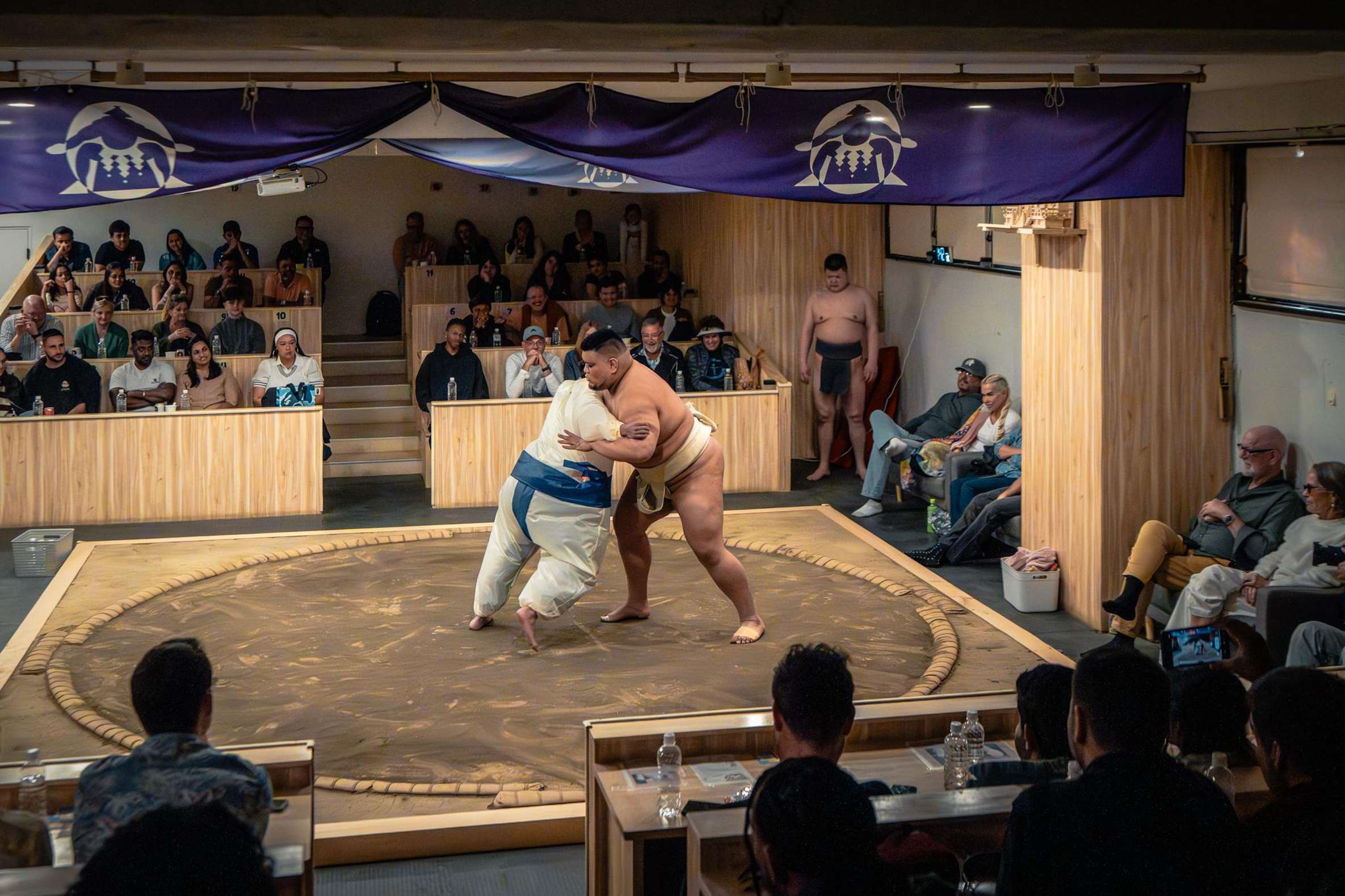
The first thing worth booking this show for is the suit-up itself. If the lottery picks you, and six guests per show get picked, you step into a traditional sumo outfit and face a professional wrestler in the ring.
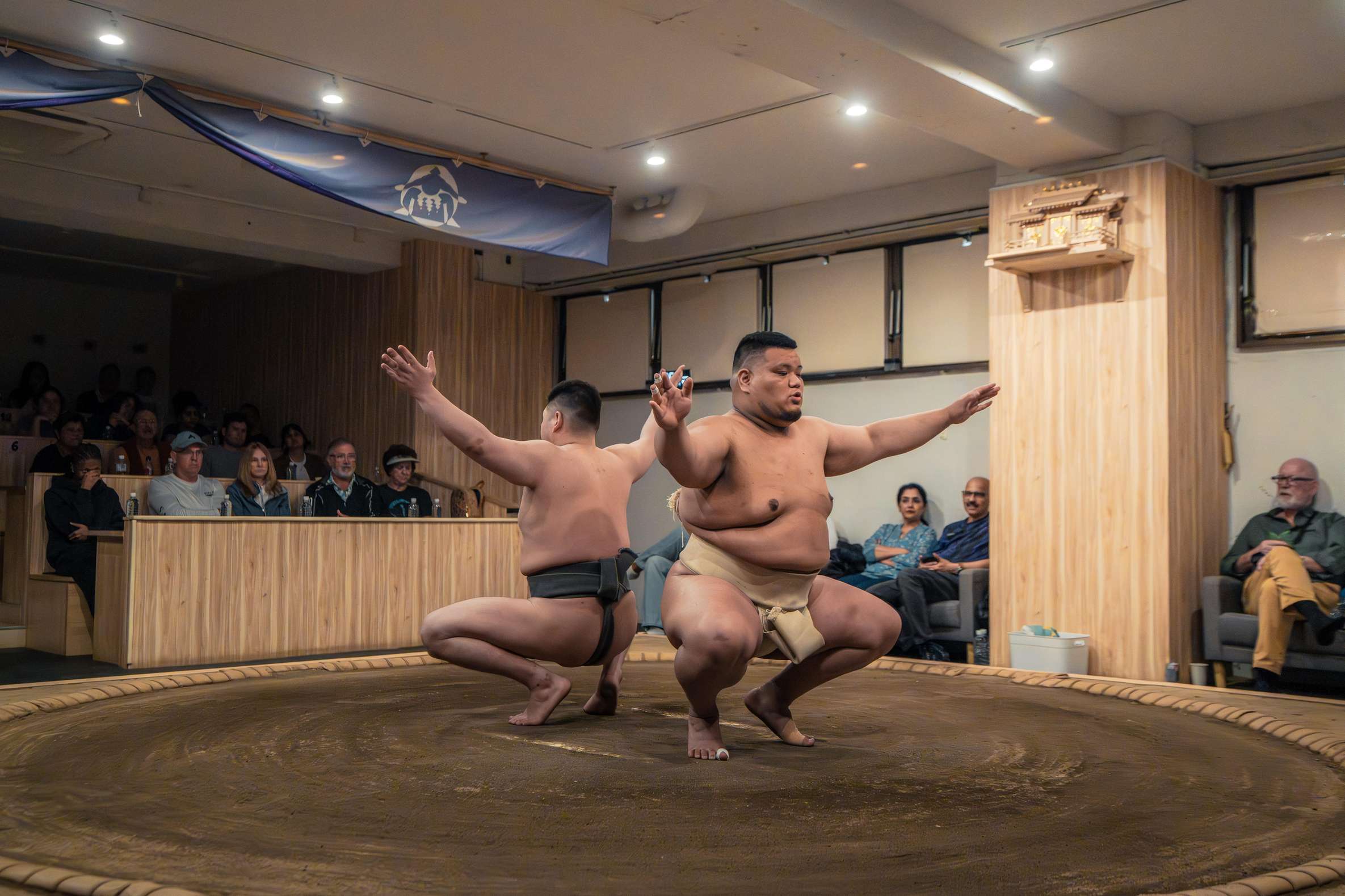
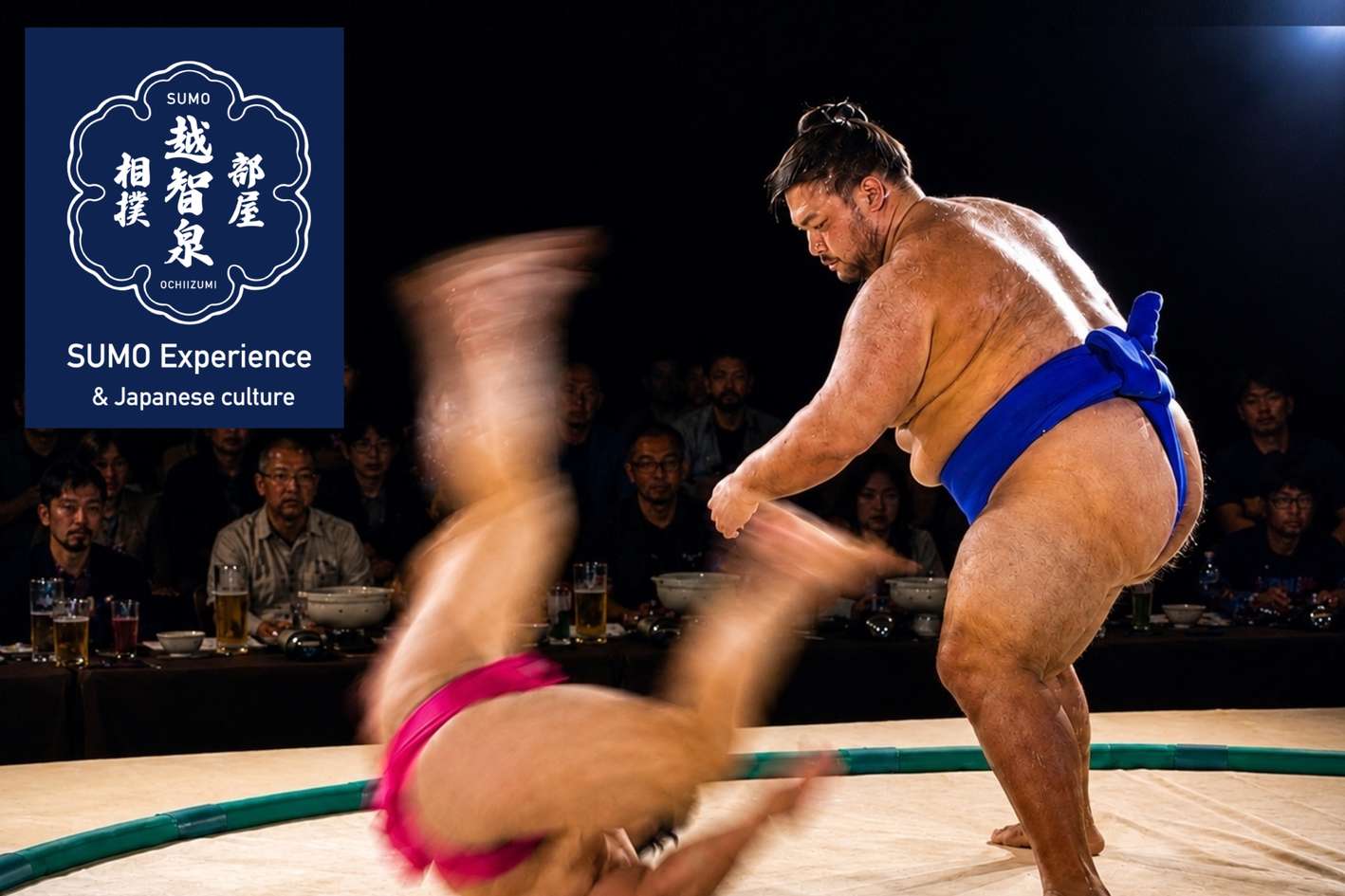
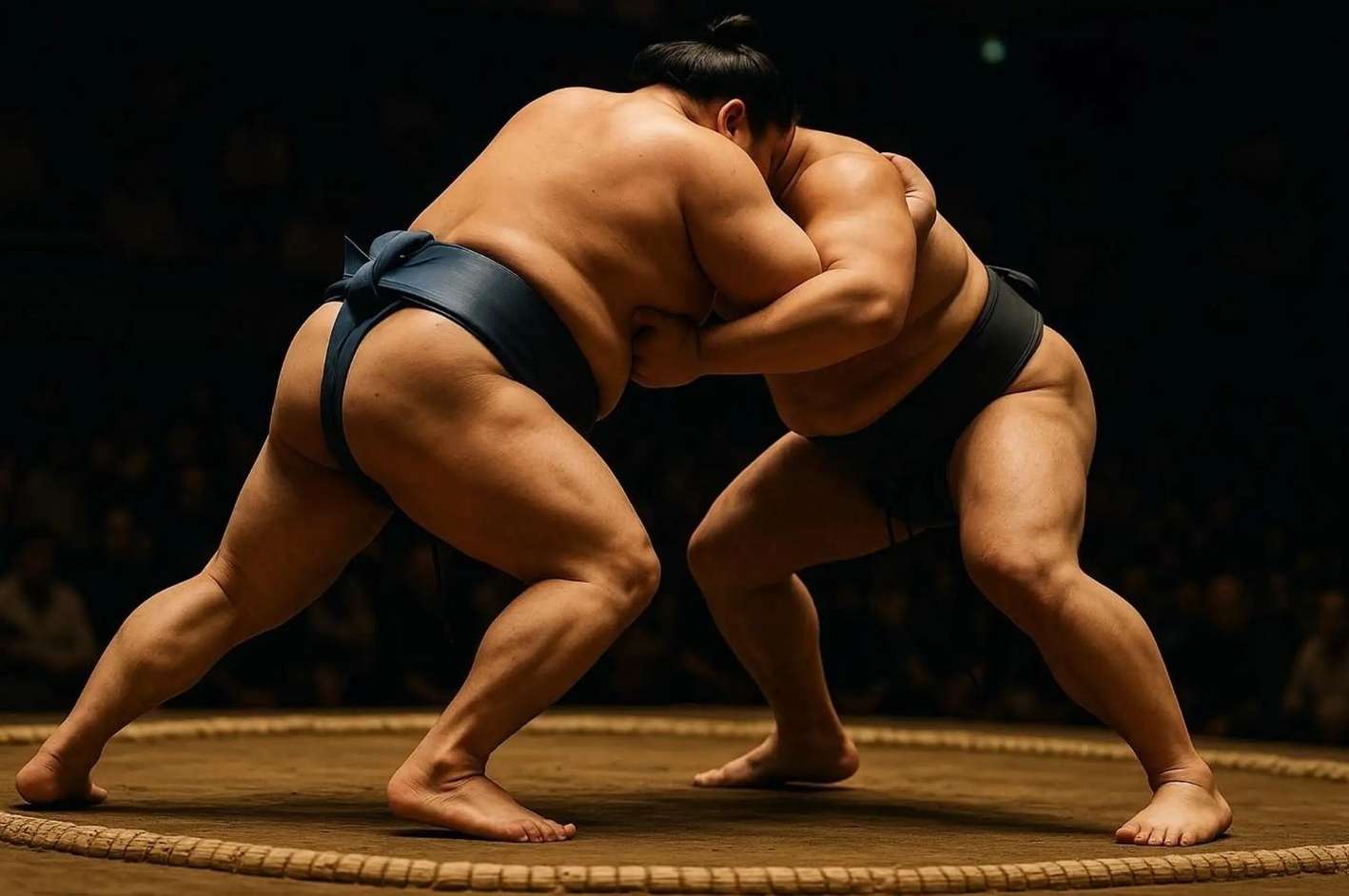
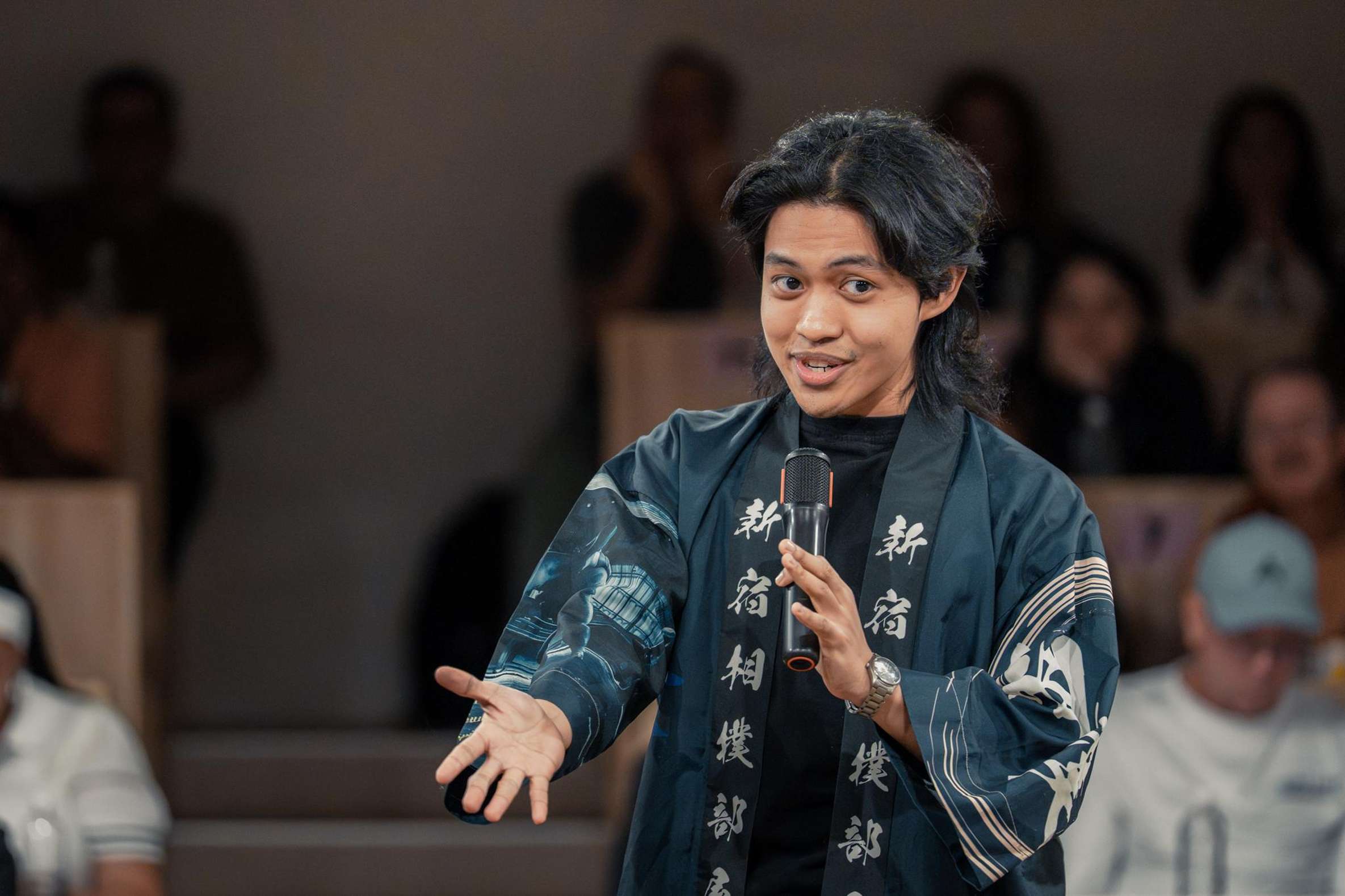
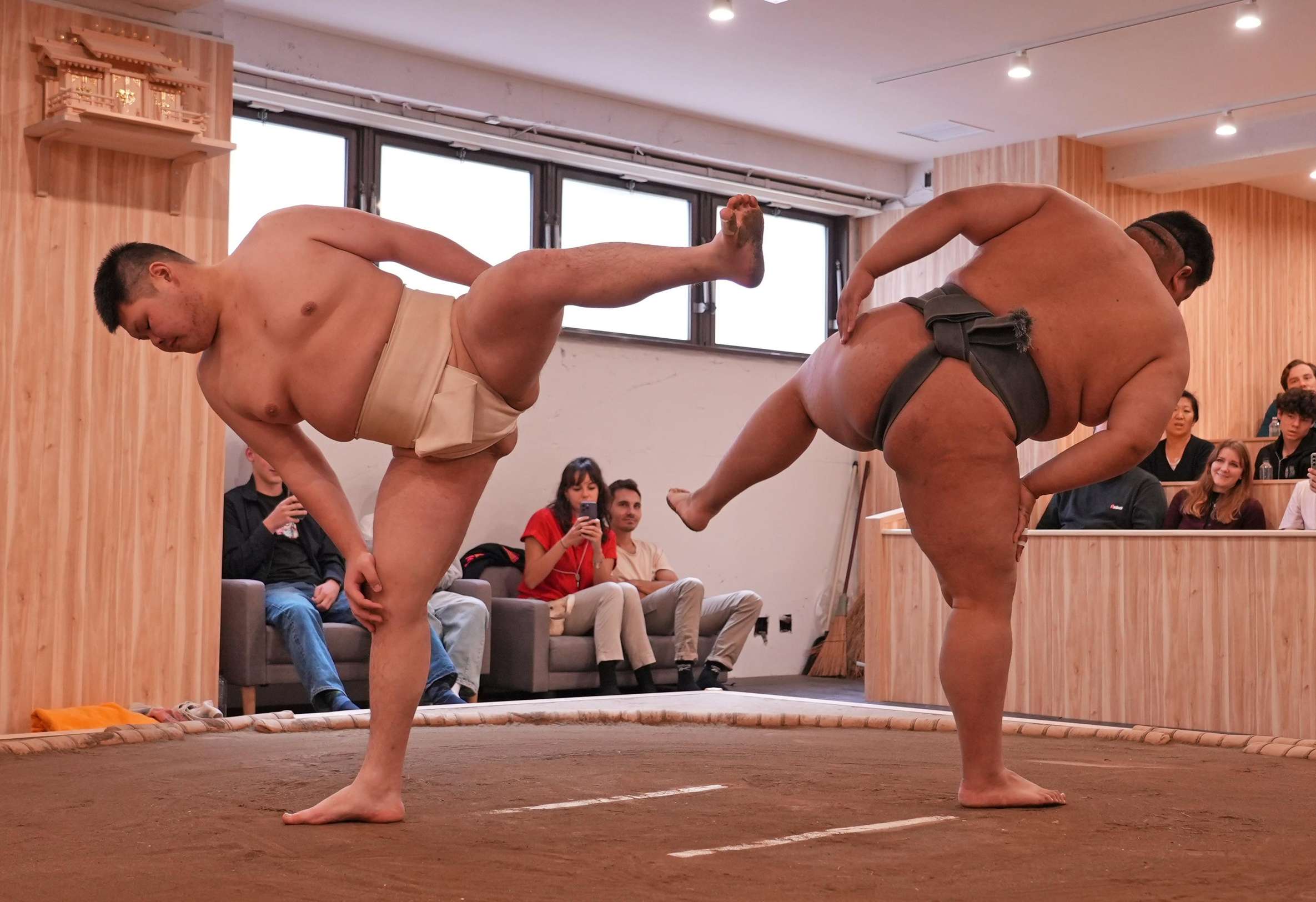
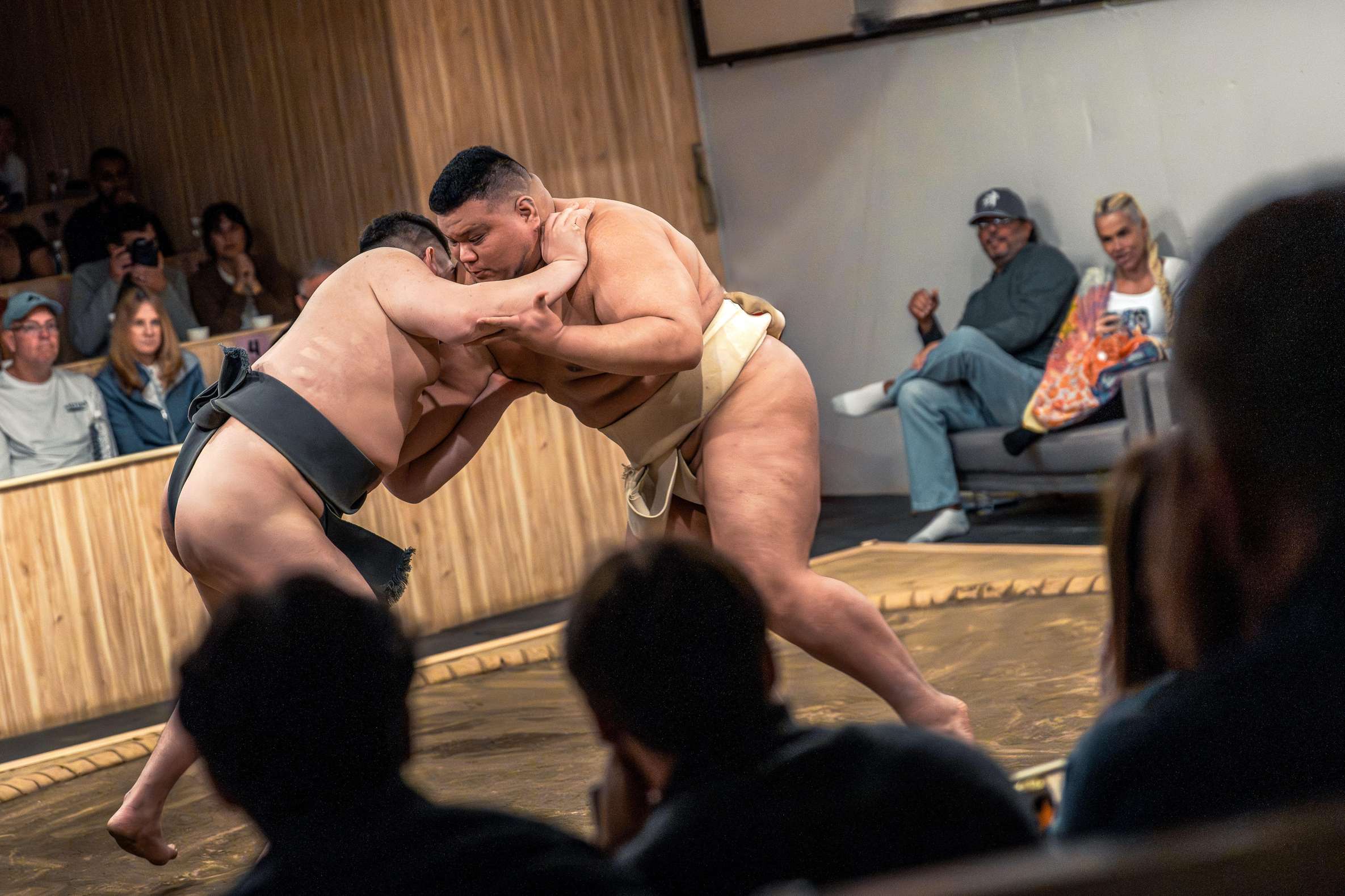
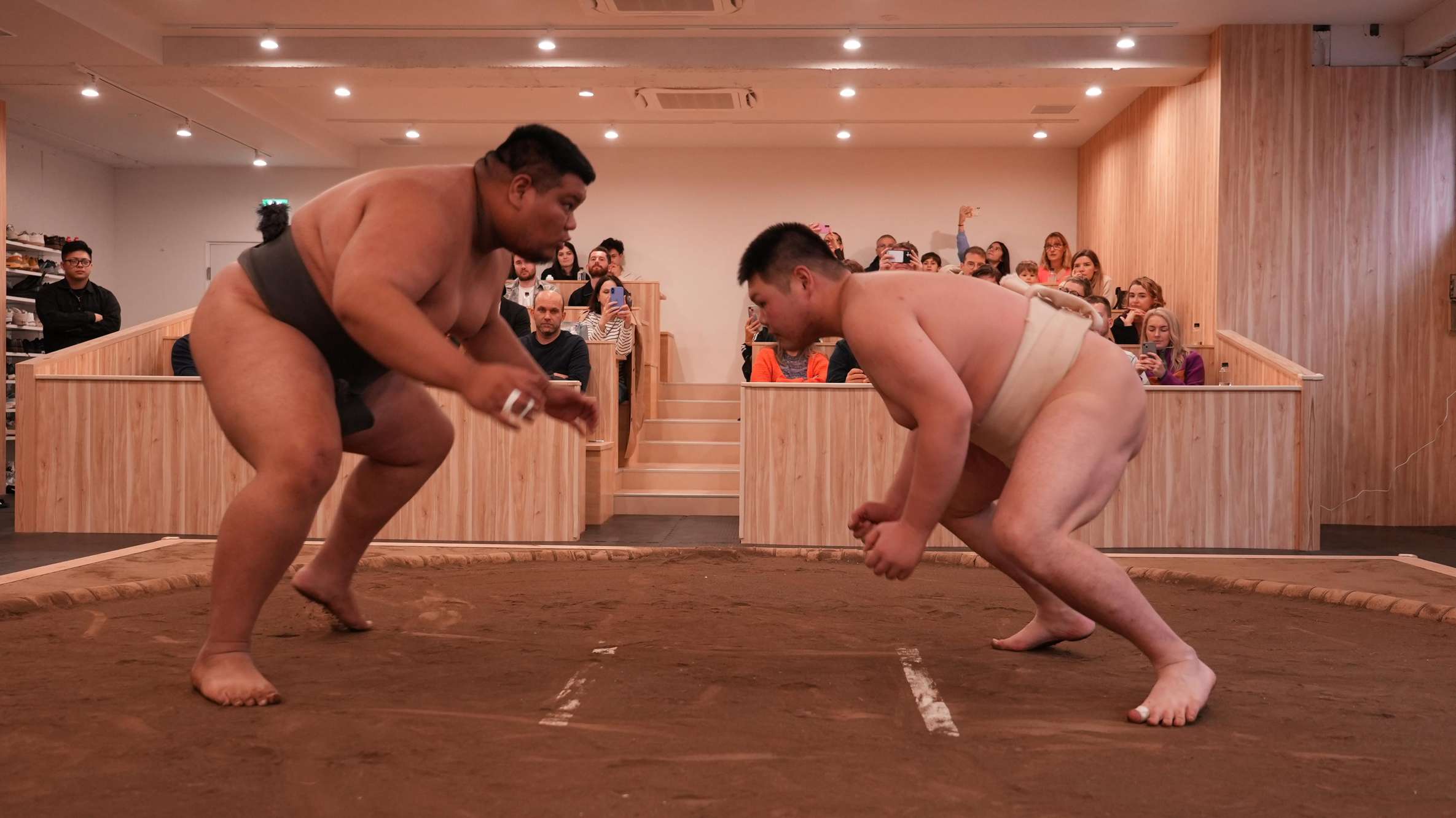
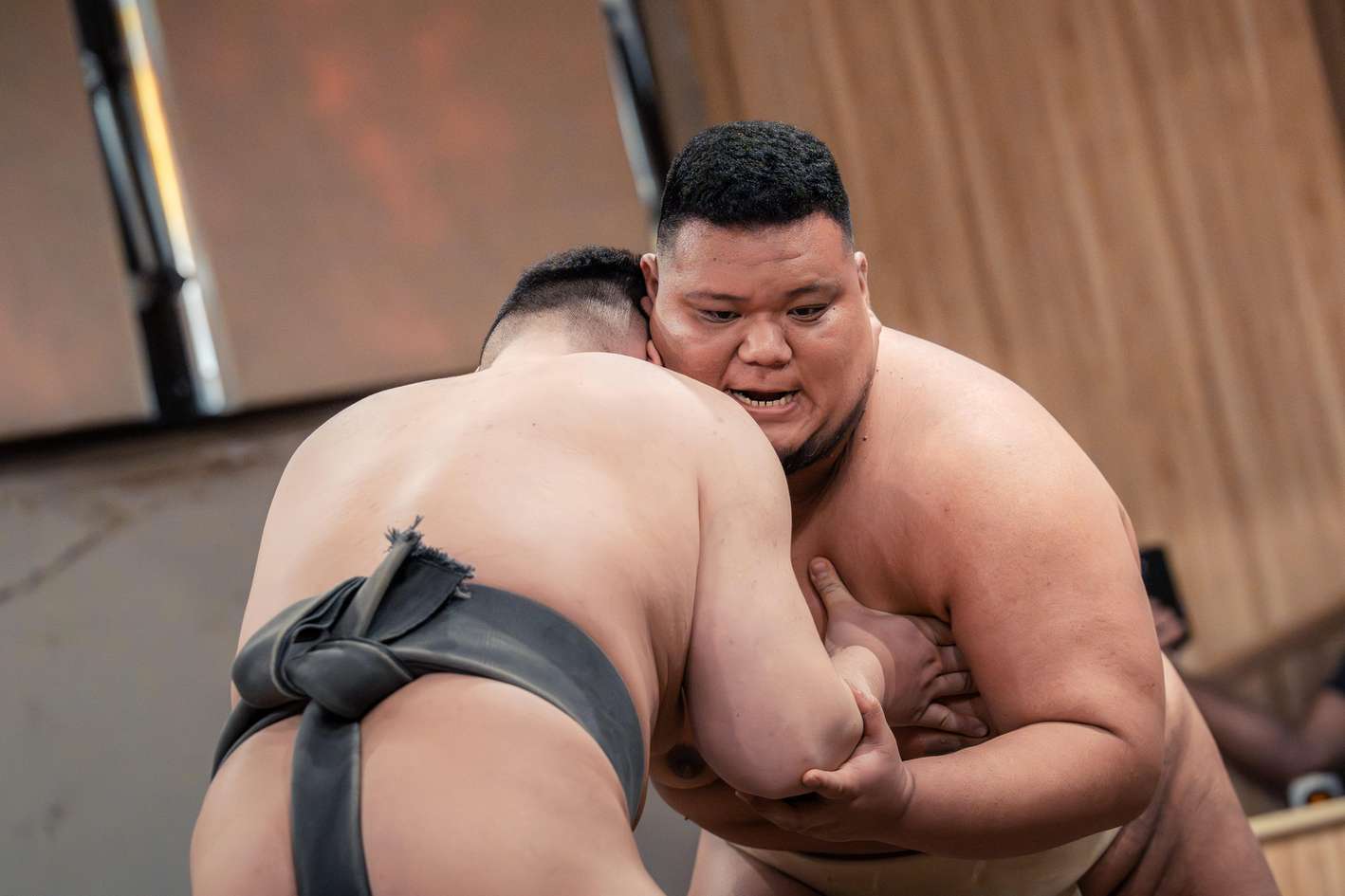
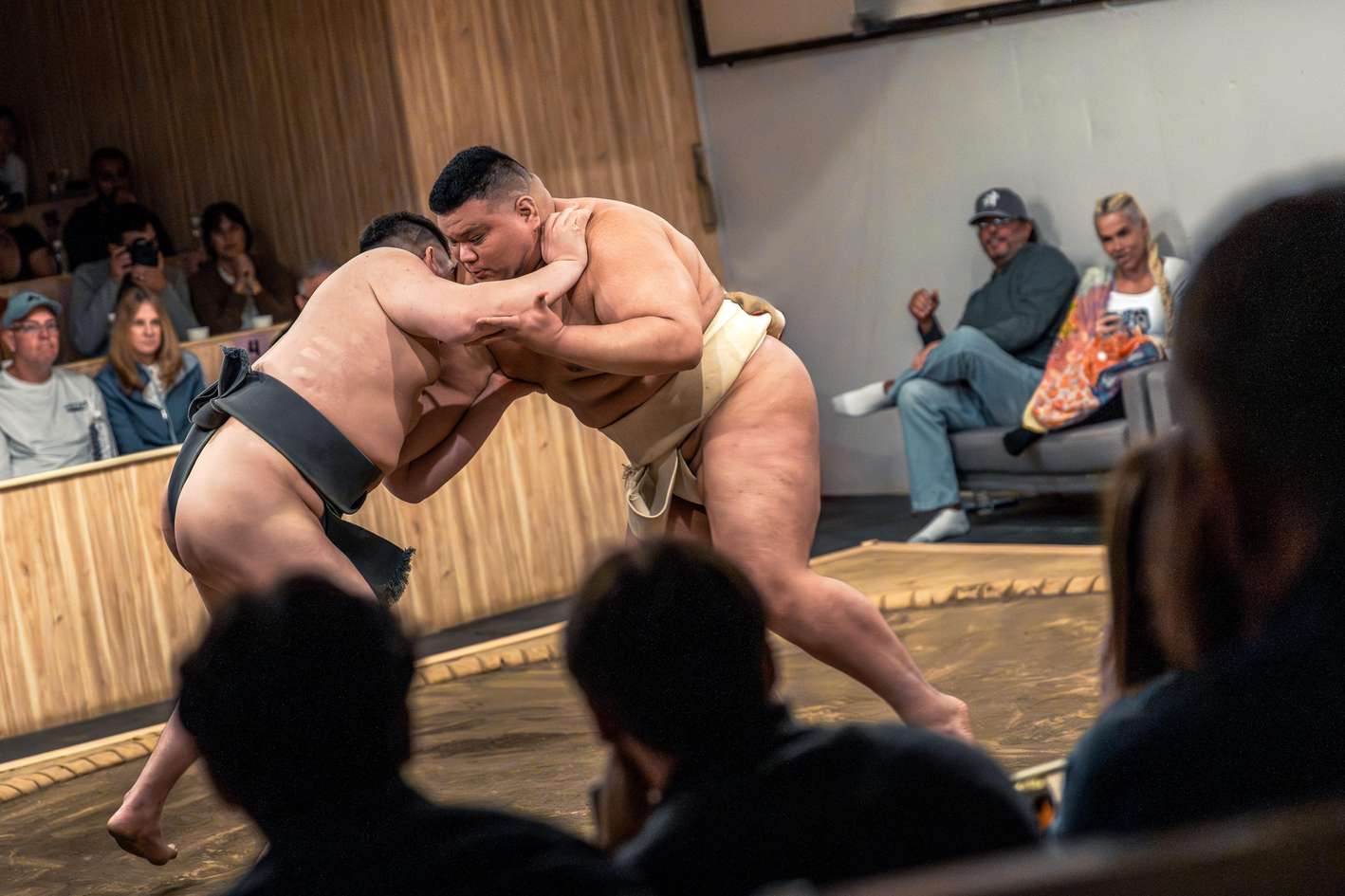
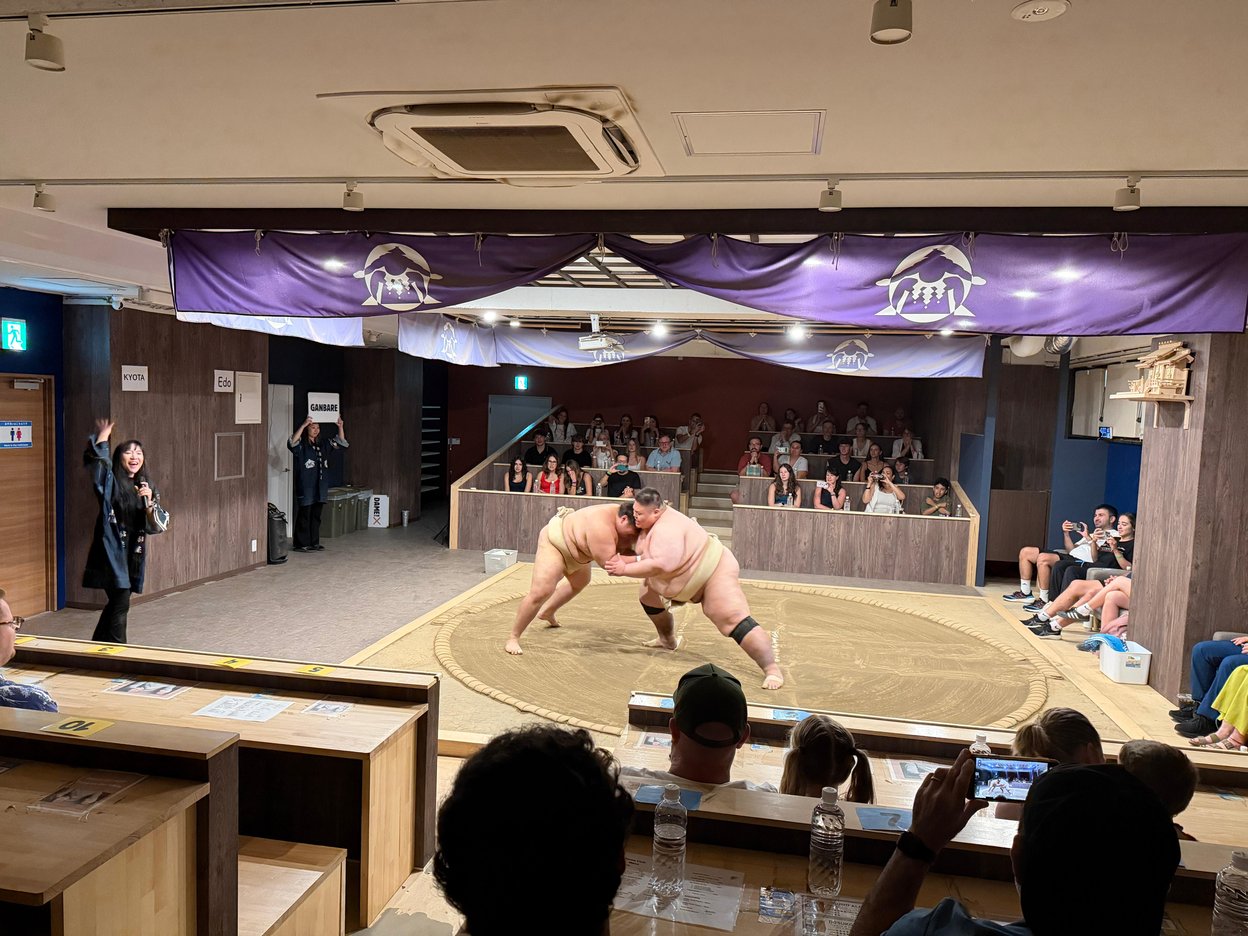
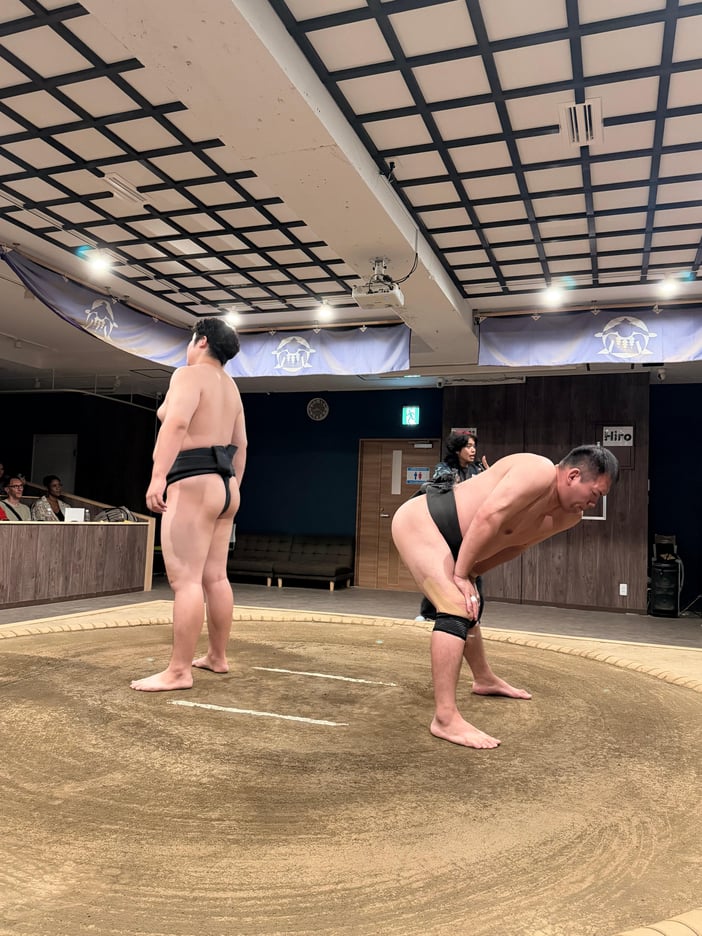
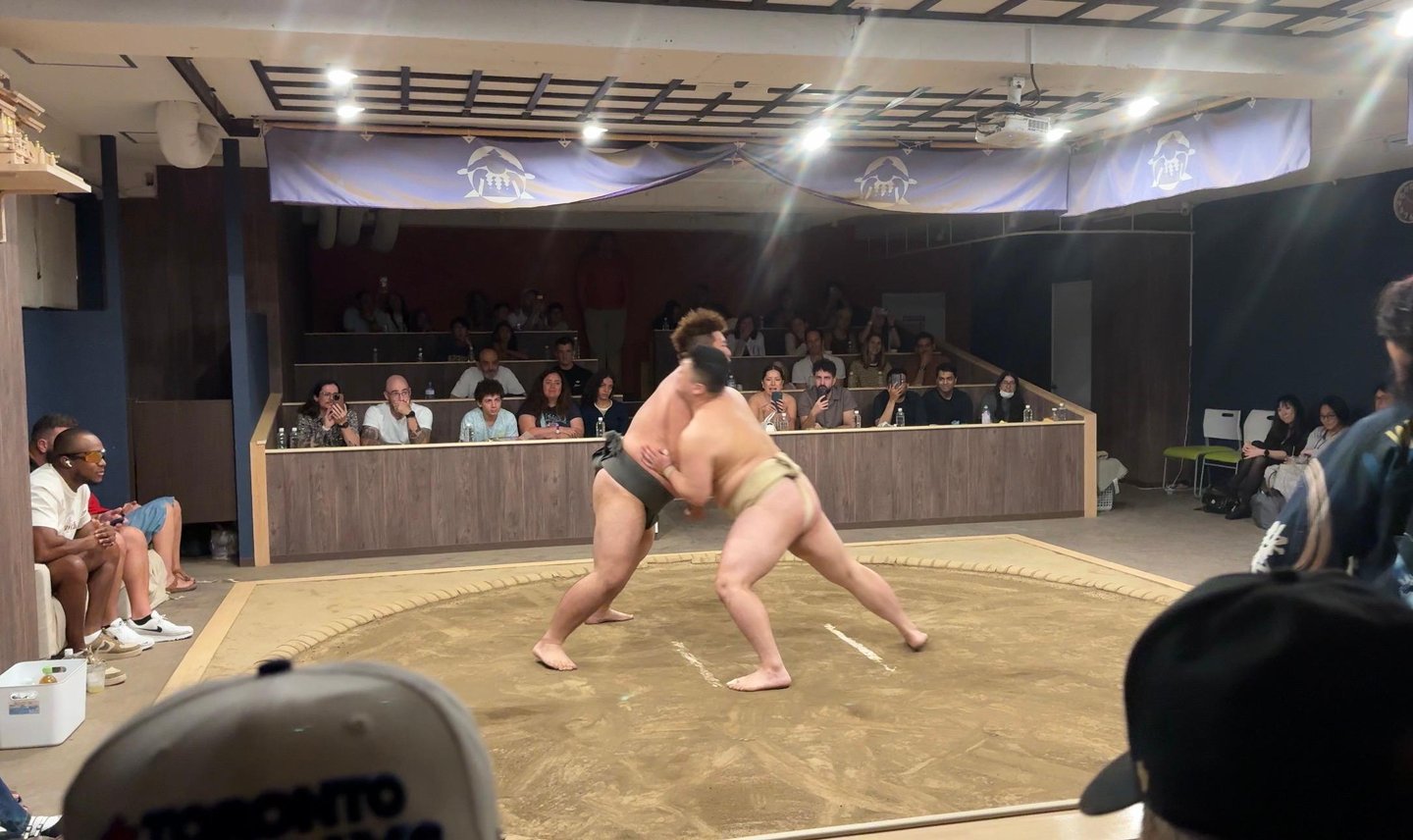
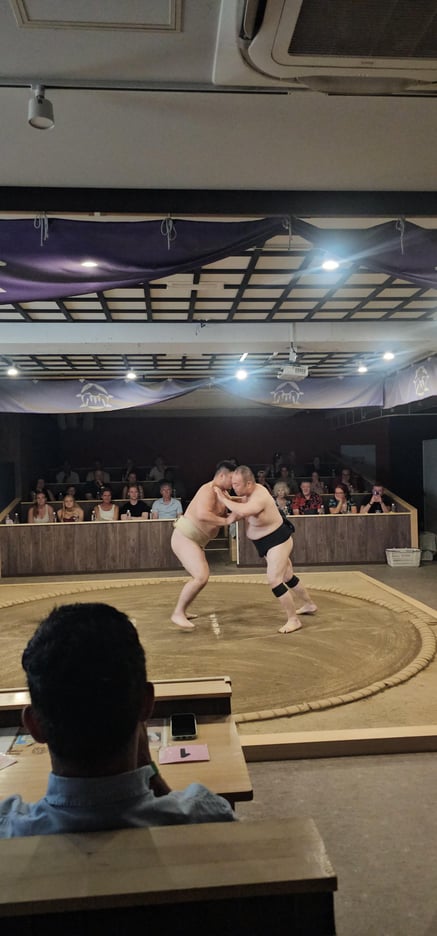
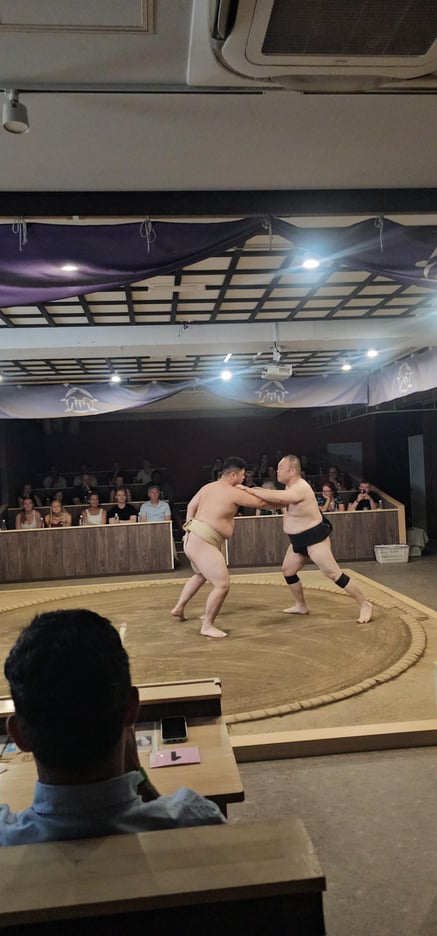
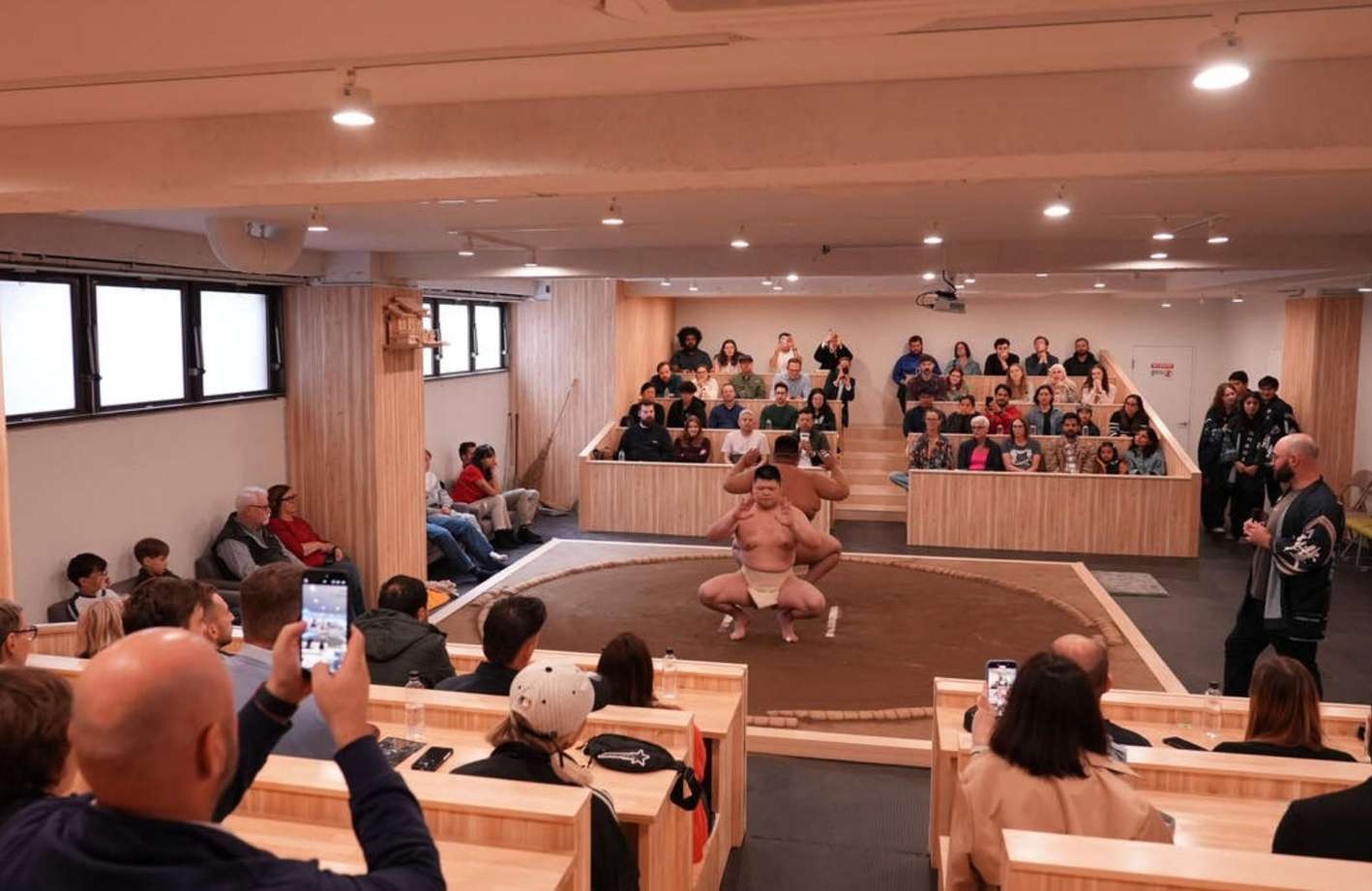
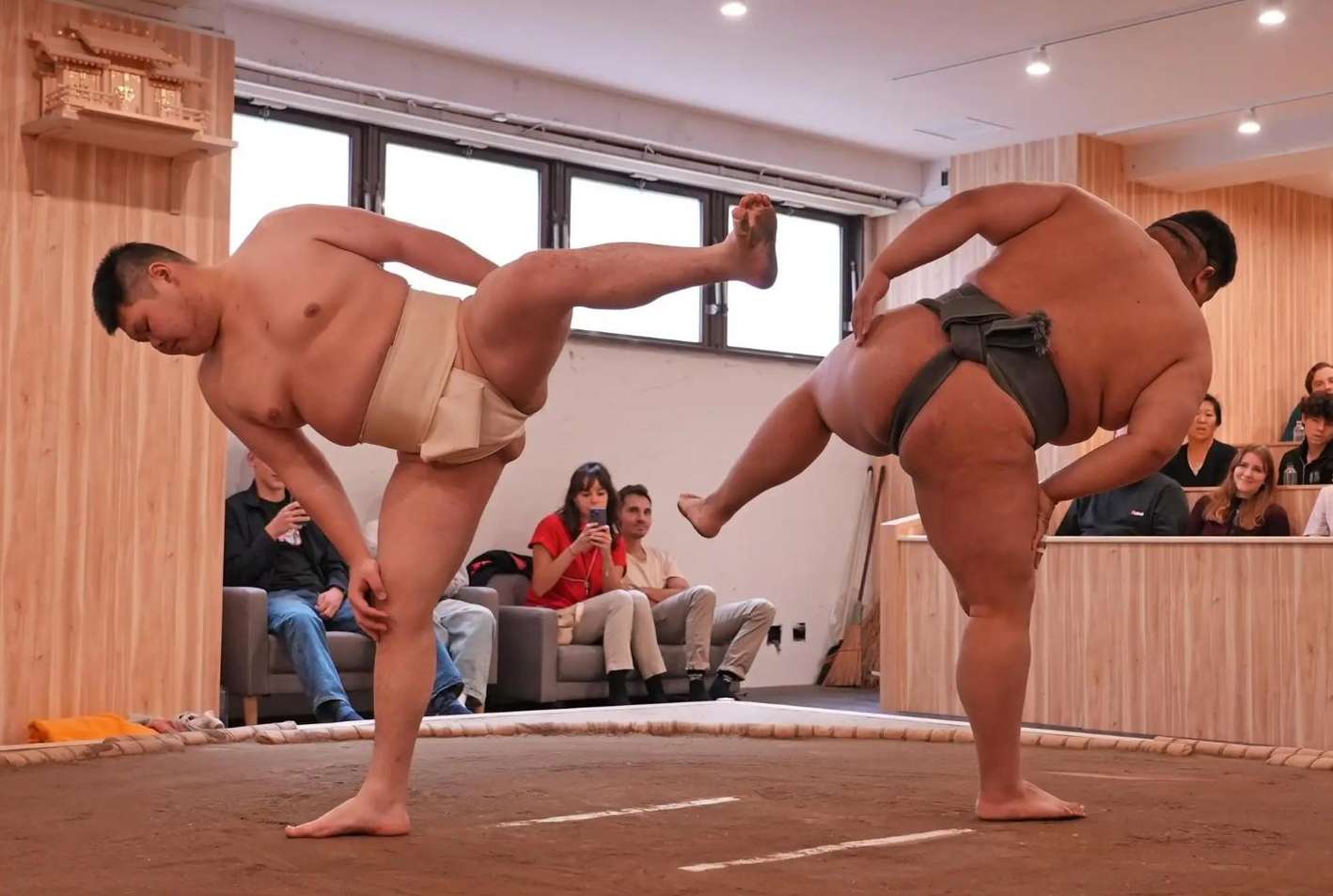
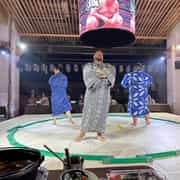
The evening in Shinjuku runs about 90 minutes. An English-speaking MC walks you through the history and rituals while the wrestlers demonstrate, from thunderous shiko foot stomps to salt throwing and live sparring matches.
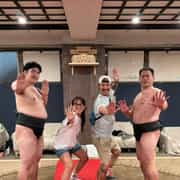
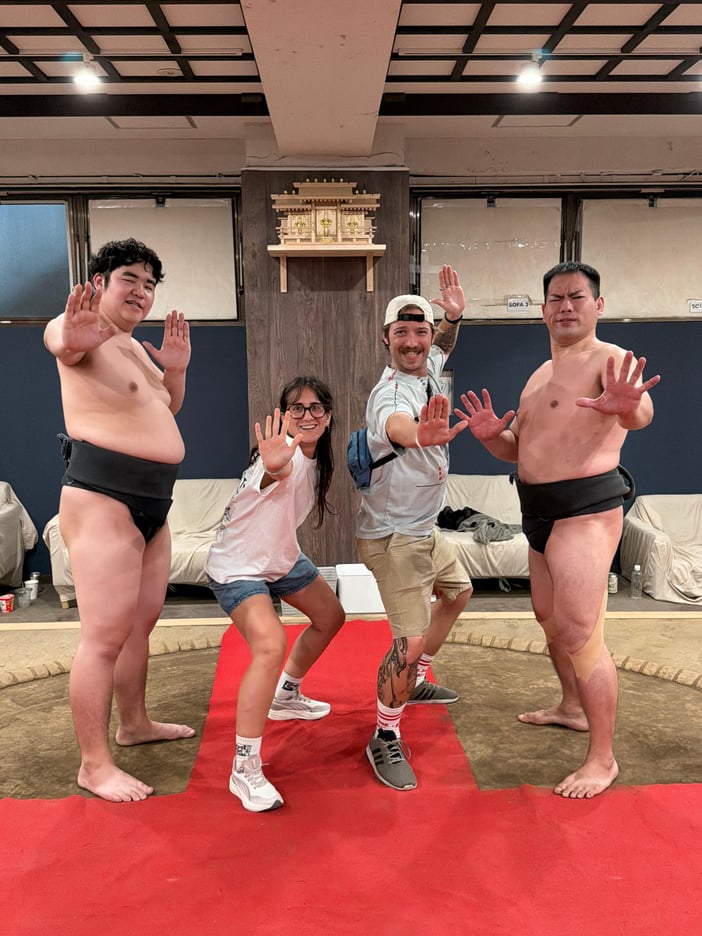
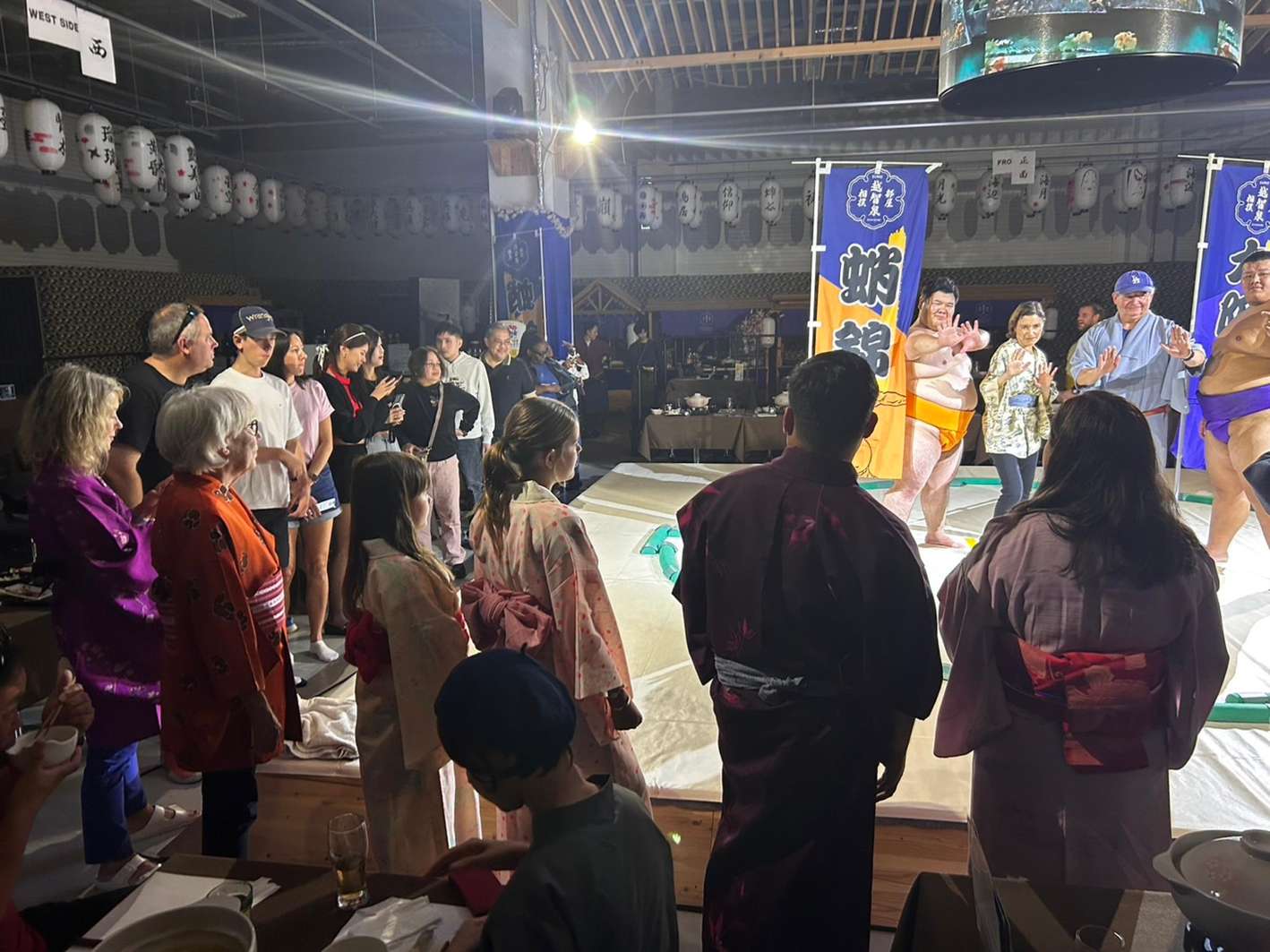
You get a welcome drink on arrival, pictures with the wrestlers at the end, and a keepsake photo of yourself in the outfit if you take the challenge. Participation stays optional, so watchers can enjoy the show and still join the group photo on the ring.
1Welcome drink and introduction· about 20 minYou settle in with a bottled water while the English-speaking MC opens the show with sumo's history and background.2Rituals and techniques· about 25 minThe wrestlers demonstrate shiko foot stomping, salt throwing and the ceremonial moves, explained as they go.3Live matches· about 25 minThe demonstration turns into intense live sparring between professional sumo wrestlers, up close in a small room.4Lottery for the challenge· about 10 minA lottery about 30 minutes in picks six guests, who suit up in a traditional sumo outfit and enter the ring. You can decline.5Photos with the wrestlers· about 10 minThe show closes with pictures with the wrestlers, included for every guest, watchers and challengers alike.6Welcome drink and introduction· about 20 minYou settle in with a bottled water while the English-speaking MC opens the show with sumo's history and background.
Included
Professional sumo wrestling demonstrationHistory and Background information about SumoEnglish speaking MCWelcome drink (Bottled water)Opportunity to challenge a sumo wrestler (Limited participants; lottery if too many apply)Pictures with the wrestlers
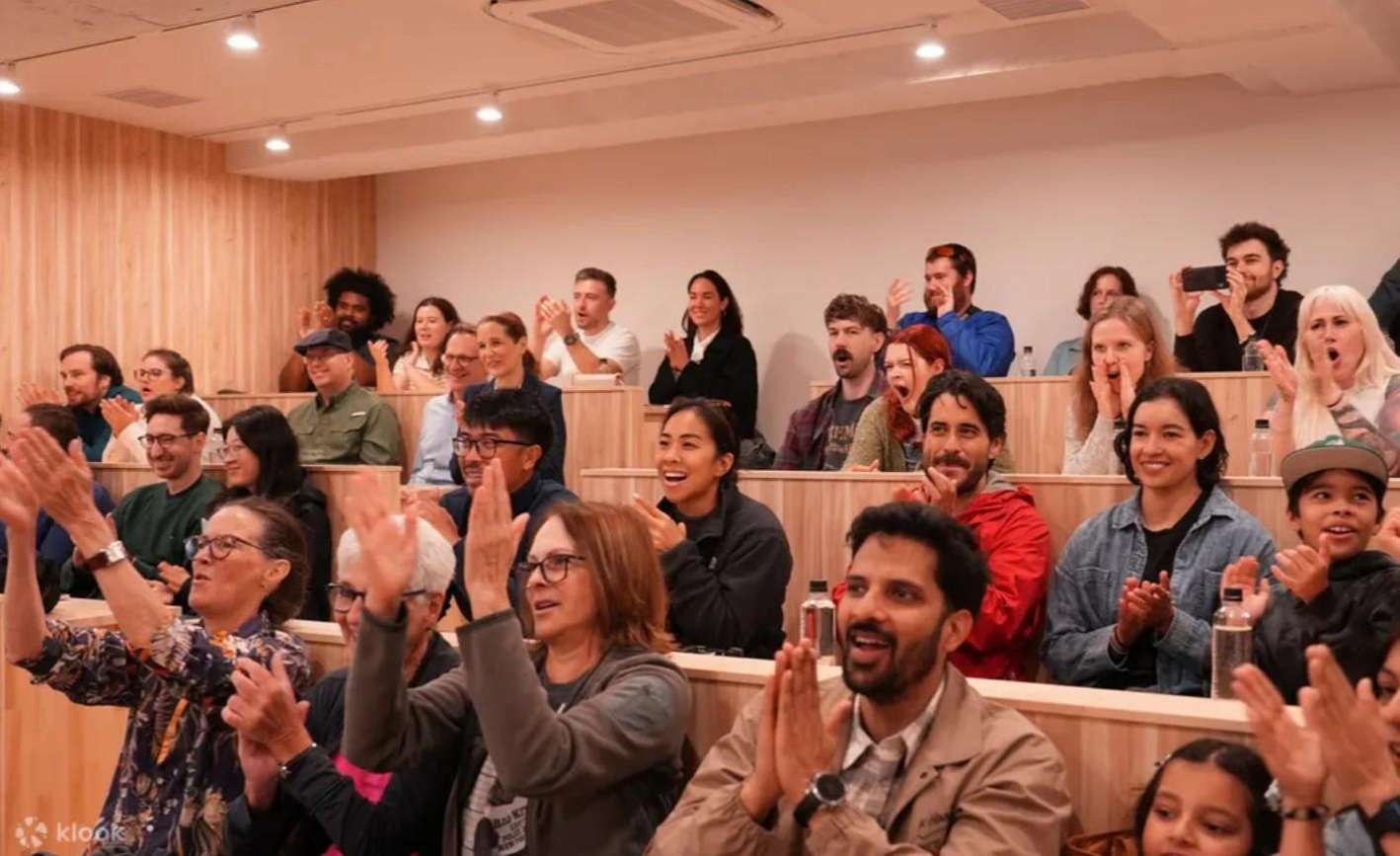
Most reviewers call the show fun and funny, praising the wrestlers' humor and how easily the audience gets pulled in.
Best surprise
Several travelers did not expect to learn so much, saying the history and training explanations made every bout easy to follow.
Most common wish
A few reviewers wished for a clear view of the ring, asking the host to step aside and the photo backdrop to be tidied.
How to book a sumo dress up show in Tokyo
01
Pick your date early
Choose your date as soon as your Tokyo plans are set. Sumo shows sell out fast, and evening slots go first, so popular dates can be gone weeks before you arrive.
Pro tipApril, May and October are the busiest months, so those dates need the most lead time.
Common mistakeWaiting until the week of your trip, when availability often disappears and rebooking gets hard.
02
Choose the standard option
The Shinjuku show runs one 1.5-hour format, so the only real choice is how many seats you need. Reserve every guest, including children aged 12 and under.
Pro tipBook for the exact number of people in your group, so everyone can be counted for the lottery.
ImportantYou can cancel up to 24 hours in advance for a full refund, so an early booking is not a risk.
03
Read your confirmation
After payment you get a voucher by email, and the operator may send follow-up messages with the venue details. Check them before you leave your hotel.
ImportantThe show is cashless, so bring a card such as Visa, Mastercard or JCB for anything on site.
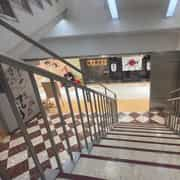
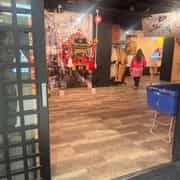
Pro tipThe entrance is at the front of the building, the door next to Daiso.
04
Arrive early on the day
Get to the venue with time to spare, since the show runs to a fixed schedule and late entry may not be accepted. Have your voucher ready on your phone.
RecommendedIf you want to dress up, take the lottery card handed out about 30 minutes in; declining it means you will never be picked.
Common mistakeCutting it close on arrival, because a late seat search can cost you the opening of the show.
What to know before you book a sumo dress up show in Tokyo
Can stop the dayGood to knowGood news
01
ChoosingWhat it is, who it suits, when to go
2
The lottery
Only six guests per show get to suit up in the traditional outfit and step into the ring, and they are chosen by lottery. The draw applies to everyone, so a better seat does not improve your odds.
Suit rental
There is no standalone sumo suit rental in Tokyo. Dressing up happens inside a booked show, where you suit up, challenge a wrestler and take photos as part of the same event.
02
BookingHow far ahead, and what happens if plans change
1
Cancellation
You can cancel up to 24 hours in advance for a full refund, so booking early costs you nothing if plans shift. The show runs in English with an MC, and pictures with the wrestlers are included.
03
Before you goPapers, health, what to bring
3
What to wear
The outfit goes on over your own clothes, so ordinary street clothes are fine. Choose something flexible you can move in, like gym wear, and skip stiff jeans. Bring socks you don't mind having on the floor.
Age limitsCan stop the day
The Shinjuku show uses age bands of 13 to 99 and 12 and younger, so children can attend with a booking in the right band. Ages sit on the booking page, so match your group to the correct band before you reserve.
Payment
The event is cashless, so there is nothing to sort out at the door. Visa, Mastercard, American Express, JCB, Diners Club and Discover are all accepted on site.
04
On the dayWhere to be, when, and how you get there
1
Late arrivalCan stop the day
The show runs to a fixed schedule and entry is only through the front door next to Daiso. The front desk may refuse late entry, and arriving late means joining partway through and missing sections of the program.
05
During the tourWhat is expected of you
1
Volunteering
To enter the draw, take the lottery card handed out about 30 minutes after the show starts. If you would rather just watch, decline the card and you will never be picked. No one is pulled into the ring uninvited.
More sumo dress up Experiences in Tokyo and Japan
3 hours·English, Urdu
2.7(6)
Tokyo: Live Sumo Show Entertainment in Tokyo with Photos
Free cancellationHotel pickup includedLive professional sumo wrestling show
A real wrestler's belt weighs about 4 to 5 kg, and at one Tokyo show you can be wound into one and sent against a former pro. This guide walks through where the outfit goes on, who gets picked, and which bookable show comes closest to the rental you had in mind.
Tokyo· 35.68° N, 139.65° E
If you only remember three things
1
Book a show, not a rental: no standalone sumo suit rental is sold here, so dressing up happens inside a 1.5 to 2-hour show.
2
Six guests per show get to suit up, picked by lottery, and your seat type does not change your odds.
3
Allow about 3 hours door to door, and book early for April, October and May.
Dressing up as a sumo wrestler in Tokyo - what you can book
A padded suit with a rubber topknot is one thing. A traditional sumo outfit wound tight around your body is another, and the Shinjuku show is the bookable Tokyo experience that comes closest to what you searched for.
There is no standalone suit rental on sale here; every chance to dress is folded into a scheduled show where you suit up and step into the ring.
So the criteria become the test. Do you get to wear the attire? Yes, if the lottery picks you. Do you feel like a wrestler? The Ginza show leans playful, with salt throwing and photo moments.
Do you get the keepsake photo? The Shinjuku show includes pictures with the wrestlers. A true rental is the one wish no tour here answers.
The Shinjuku show runs 1.5 hours, with a professional demonstration, history from an English-speaking MC, a welcome drink and the lottery chance to challenge a wrestler.
The demonstration comes from professional wrestlers, so the technique behind it is real even while the mood stays light. If you accept that, it delivers most of the dress-up day you imagined.
Tour for this
Tokyo: Shinjuku Sumo Show & Experience with a Photo4.9★ (9,863) · 1.5 hours · Free cancellation
Two kinds of outfit turn up at Tokyo shows, and they feel nothing alike. Some venues wind you into a real mawashi, the stiff belt worn over your own clothes, with a private changing area so nothing is exposed. Others hand out a padded costume, loose and comical, more fancy dress than sport.
At the Shinjuku show the outfit comes with the sumo challenge, and the challenge is limited to six guests per show, chosen by lottery. Some operators dress only selected participants, and you cannot reserve a ring spot in advance at most venues; you raise your hand or accept the draw.
The crowd makes it easy. Audience participation is the part people remember, often the funniest part, and nobody is pushed into it. Adults cheer as volunteers discover how little leverage they have against a trained wrestler, and the wrestler plays along.
A traveler's note
Learned lots about sumo. The wrestlers were funny and the audience loved their antics. They included everyone, and anyone who wanted to participate could.
That is the atmosphere to expect: the room laughs with you, the wrestler plays to it, and the whole thing stays voluntary from the lottery card to the last bout. Nobody in the audience is judging the outfit. They are waiting for their turn to cheer.
Tour for this
Mt Fuji Sumo | Photo with Wrestlers, Family & VIP, Yamanaka4.9★ (15) · 50 minutes · Free cancellation
The belt comes first, and it surprises everyone. A real mawashi is a long band of stiff canvas wound around the body again and again, with a length passing between the legs and tucked in at the back.
It feels rough, hard and unforgiving, like wearing fire hose, and the tightening can lift you off the ground. On a slim visitor it bunches up like a thick tutu.
Then the charge. You walk, push and shove against a former pro who barely moves, and one visitor described the effort as sending their heart racing. A padded novelty suit gives a gentler version: the wrestler lets you win, everyone laughs, and you get the photo.
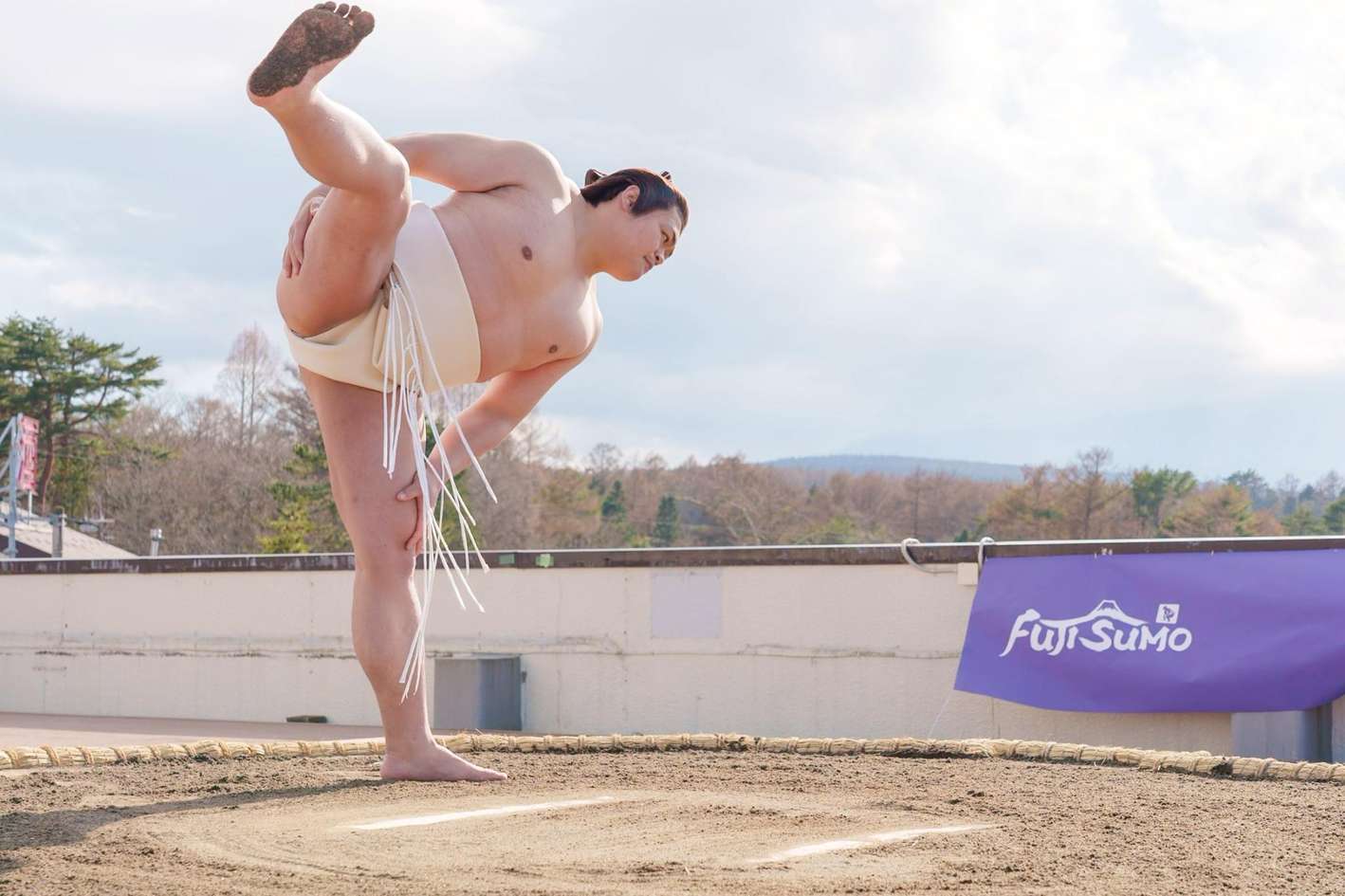
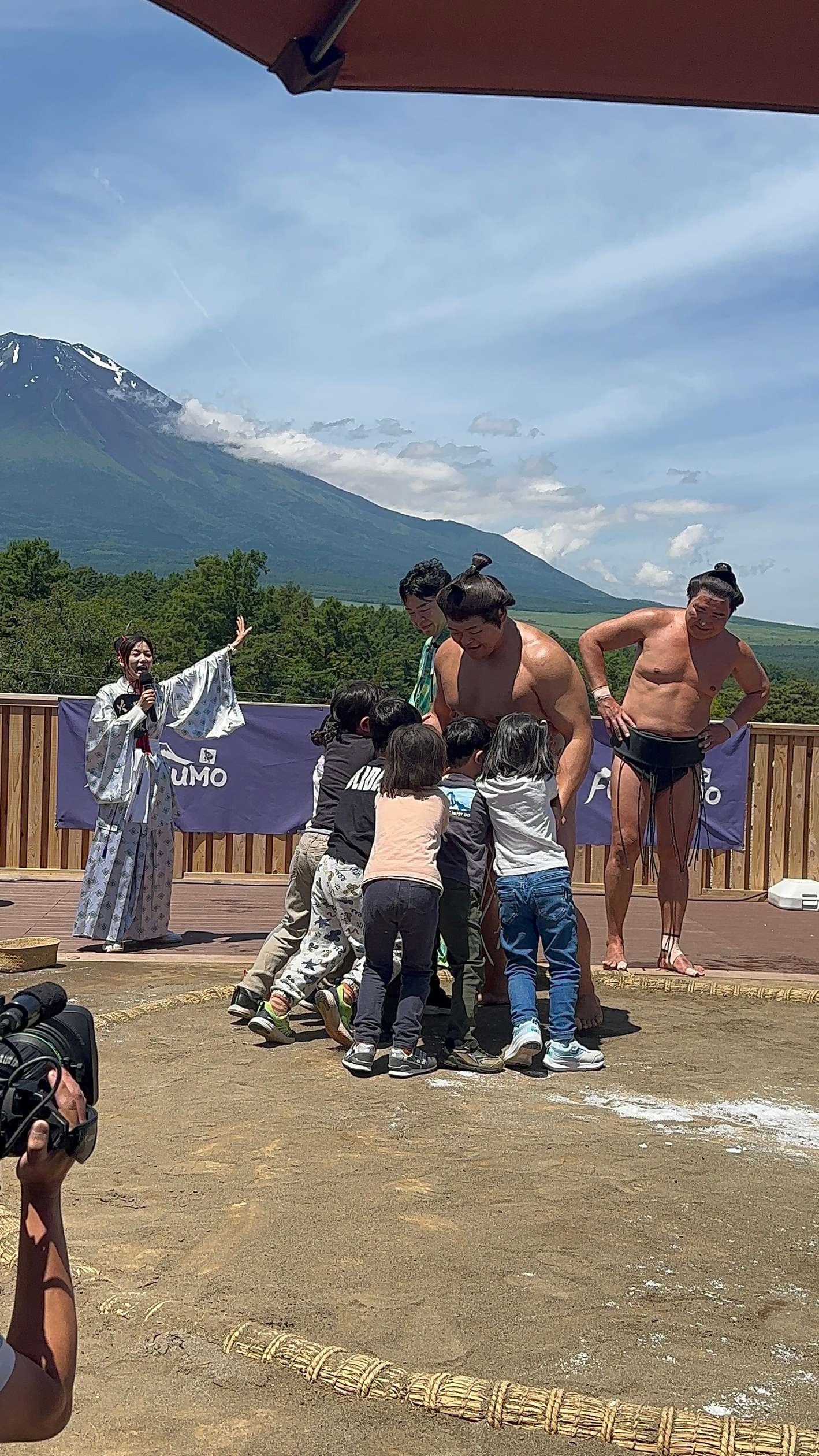
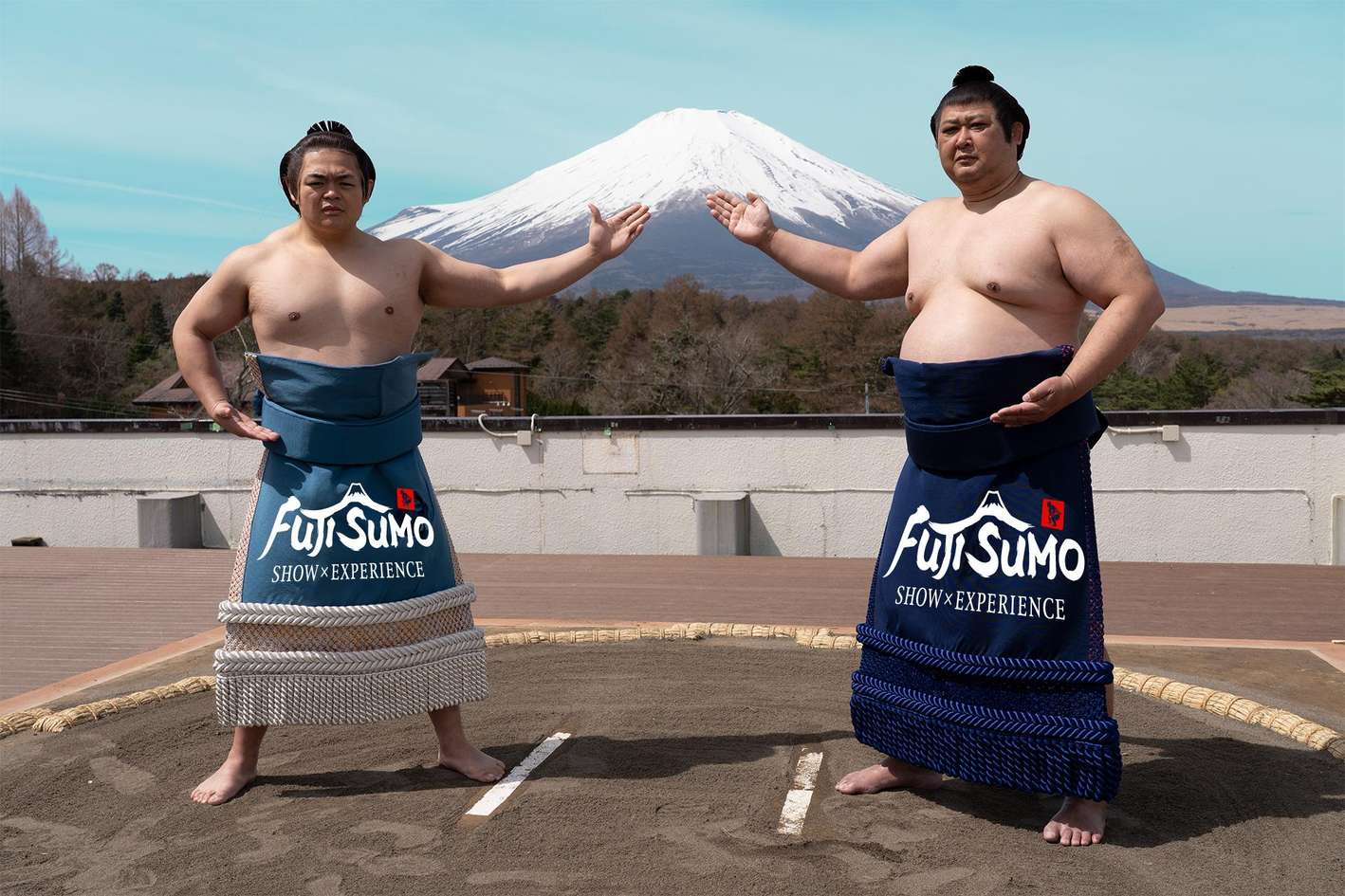
For the fullest version of that feeling, the Mt Fuji show at Lake Yamanaka invites selected guests into the sacred ring for its Sumo Challenge, with Mt Fuji behind you and English commentary through the 50-minute show.
The venue sits at Lake Yamanaka, so it takes a day trip from Tokyo and planning of its own.
Both formats land. The Shinjuku show puts the real outfit on six lucky guests; the mountain show puts the ring itself under an open sky.
Tour for this
Tokyo: Live Sumo Show Entertainment in Tokyo with Photos2.7★ (6) · 3 hours · Hotel pickup · Free cancellation
For most people searching for a dress-up experience, the photo is the real prize, and this is where the Shinjuku show earns its keep: pictures with the wrestlers are included in the booking.
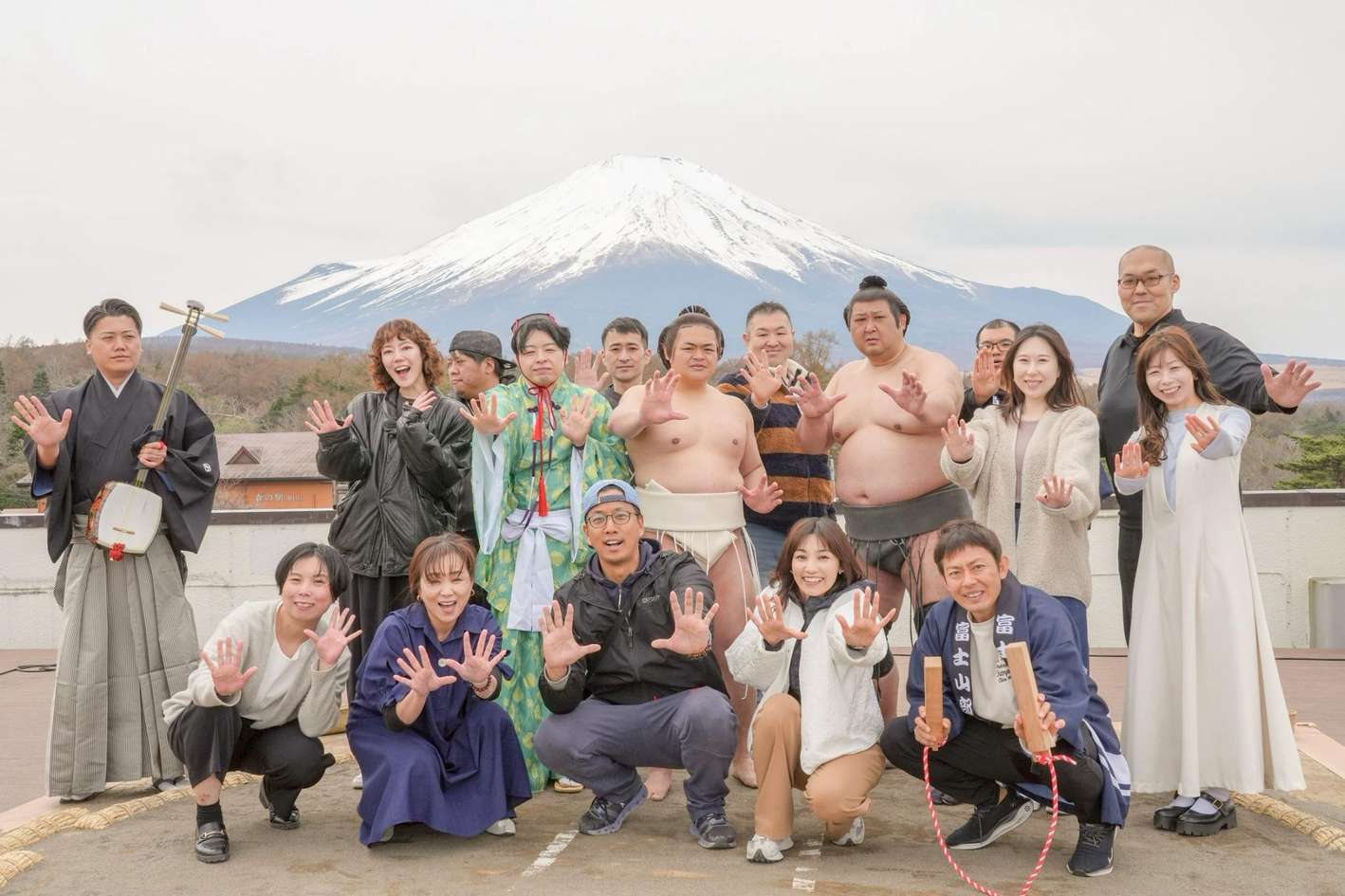
The better news is that the wrestling part is optional. The session ends with commemorative photos together on the ring, so even a guest who never touches the outfit still comes away with the shot.
Photo opportunities with the wrestlers, including in the ring, stay open to everyone, and photography with them is encouraged through the show.
So the lottery decides who wrestles, but it does not decide who gets the picture. If the draw passes you by, you stand on the clay with a wrestler at the end of the session anyway.
Book the Shinjuku show for that guarantee, and treat the ring challenge as a bonus if the lottery goes your way.
Tour for this
Osaka Sumo Show with Front-Row Seating & Wagyu Sukiyaki4.7★ (45) · 2.5 hours · Free cancellation
The honest answer: no. No operator on this page rents a sumo suit as an activity on its own. Every chance to dress is folded into a scheduled show, where you suit up and step into the ring as part of the programme.
Even the venues that lean hardest into the costume treat it the same way. At one Tokyo lunch show, guests wear a sumo suit and challenge a former wrestler during the show's own run; the costume never leaves the programme.
That leaves you a decision. If the show format sounds fun anyway, the Shinjuku experience gives you the outfit, the ring and the photo in one 1.5-hour visit, and it is the closest match on sale here.
If you truly wanted the suit as the whole afternoon, with no show attached, that wish has no bookable answer here, and the shows are the nearest thing to it.
What happens at a Tokyo dress-up show, start to photo
The opening is talk: wrestlers' lives, stretches and rules, with an English-speaking MC carrying the explanation, and the actual bouts often fill only the last 15 to 30 minutes.
Then the demonstration: shiko stomps, salt throws and live matches, performed by retired professionals. About 30 minutes in, a lottery card is handed out, and that small slip of paper decides everything.
Six guests per show get picked to suit up and challenge a wrestler in the ring, and the audience challenge lands at the very end.
Do not want to wrestle? Decline the card. Guests without one are never chosen, and you can still join the closing photos on the ring. Nobody is pulled in against their will; joining is always your call.
How a dress-up show unfolds
1
Arrival and check-in
The front desk runs to a fixed schedule
Arrive before your slot, since late entry may be refused
2
Opening segment
Wrestlers' lives, stretches and rules
The English-speaking MC carries the explanation
3
Demonstration matches
Shiko stomps, salt throws and live bouts
The wrestling fills roughly the last 15 to 30 minutes
4
Mid-show lottery
A lottery card is handed out about 30 minutes in
Six guests per show get picked to challenge the wrestler
5
Closing photos
Commemorative photos on the ring with the wrestlers
Open to everyone, including guests who stayed in their seats
Read the timeline as a plan for the evening: the outfit moment lands near the end, so the first half of the show is the warm-up for it. If the lottery is the part you came for, pick a slot you can stay for to the last minute.
When to book a sumo dress-up show, and best time of day
Shows sell out quickly, and evening slots go first, so booking well ahead matters more than choosing the perfect hour. The busiest months are April, October and May, with November drawing the most reader interest even though the rooms are calmer.
Sumo Show Tour Busyness and Interest in Tokyo
April: 5 out of 5 for how busy it gets. This is one of the busiest months for tours, and public interest is moderate.
HighestMar to May, Oct
In betweenJun to Sep, Nov
LowestDec to Feb
Darker: a higher how busy it gets score, out of 5
Tap a month to read it.
November: sightings 50,798 readers a month. Tour availability is moderate, but public interest in sumo is at its highest.
HighestJan, May, Nov47,321 to 50,798 readers a month
In betweenMar, Oct40,219 to 41,862 readers a month
LowestFeb, Apr, Jun to Sep, Dec25,251 to 31,305 readers a month
Darker: more sightings, from 25,251 to 50,798 readers a month
Tap a month to read it.
Peak months mean peak competition for the popular times. If your dates fall in those weeks, book the moment you know your travel days rather than hoping for a rebooking closer to the trip.
Time of day is the easier call. Tokyo shows run from late morning through late evening, so one slots around almost any sightseeing plan.
When sumo shows run in Tokyo and Osaka
Morning practice7:30 am to 10 am
Real stable practice starts early in the morning, so it takes the first hours of your day.
Midday show10:30 am to 1 pm
Daytime shows start late morning or around noon, an easy fit before an afternoon of sightseeing.
Afternoon show1 pm to 4:30 pm
Early afternoon slots at 1 am and 3:30 pm work well as a break in the middle of a sightseeing day.
Early evening show Peak5:30 pm to 7:30 pm
The most popular slot: shows at 5:30 am, 6 am or 7 pm let you sightsee all day and end with sumo and dinner.
Late evening show8 pm to 10 pm
Late shows at 8 pm and later suit a full day out, and Osaka adds a 8 pm to 10 pm second show on some dates.
QuietBusyThe busiest
Whichever slot you pick, allow about 3 hours door to door once travel is added. The shows themselves run 90 to 120 minutes, and venues ask you to arrive 15 minutes before your time, so a 7:30 pm show still ends late enough to plan dinner around.
Who can dress up - children, women and less mobile guests
Children fit comfortably into the Shinjuku and Shibuya shows, which use age bands of 13 to 99 and 12 and younger, and the lively, humorous format keeps kids engaged across ages.
Women are welcome throughout. Some venues invite women and children onto the dohyo itself, and women's sumo even has its own name in Japanese, onna-zumo. The old restriction that catches visitors out applies to professional tournaments, where women cannot enter the ring; it does not apply to these experience shows.
The limits concentrate on the hands-on parts. At the Ginza show, the training-style plan is not suitable for children under 5, pregnant guests or anyone with serious medical conditions, and children must be with a guardian.
Wheelchair access varies by venue: some shows are not suitable for wheelchair users at all, and where seating exists it is limited, so it needs to be requested at the time of booking. Watching instead of wrestling is always open to everyone.
Where the dress-up shows are and how to reach each venue
The venues sit in five walkable Tokyo districts, each a short hop from a station. The Shinjuku show runs at Shinjuku Sumo Club Kabukicho, 2 minutes on foot from Higashi-Shinjuku Station on the Fukutoshin and Oedo lines, Exit A1.
From Tokyo Station, the JR Chuo Line gets you to Shinjuku in about 14 minutes. The Shibuya show hides in the Daiichi Silver Building, a 1-minute walk from the East Exit of JR Yoyogi Station, one stop from Shibuya itself.
The practical takeaway: no venue needs a taxi unless you are loaded with luggage. Trains are the fastest route from Tokyo Station, at about 10 minutes to the Ginza show, and from Shinjuku the train-and-walk combo still beats a car at 25 minutes versus 35.
Pick your show first, then let the nearest station shape the rest of your day.
What to wear and bring for your dress-up mawashi
The mawashi, once you know what it is, explains everything about what to bring. It is a belt about 9 metres long and 80 centimetres wide, made of heavy silk for competition, folded and wound around the waist four to seven times, tied in a large knot at the back.
You do not change clothes for it. The provided mawashi goes on over your own clothes, so the outfit underneath is what you will be seen in and wrestled in.
Wear comfortable, flexible clothing you can move in, the sort you would choose for a casual gym class, and skip stiff jeans or anything restrictive. Socks you do not mind having on the floor matter more than you would think.
In your bag: a towel, a change of clothes and about 500 ml of drinking water. If you wear glasses, take them off or switch to contact lenses before the hands-on part. A camera is worth packing too, since the photos are the point.
Pro tipSkip stiff jeans and restrictive outfits, wear socks you don't mind being on the floor in, and take glasses off or switch to contacts before the hands-on part
The tip saves the moment that goes wrong most often: a visitor arrives in rigid denim, fidgets on the tatami in bare feet, or fumbles for glasses mid-charge. Dress for the floor and the belt goes on in a minute.
What happens if your dress-up day plans change
The safety net is simple. Cancel more than 24 hours ahead for a full refund. Within 24 hours of the start time, the refund disappears, though you may be able to move the booking to another slot or day if there is availability.
The clock that matters most is the one on the door. At the Shinjuku show, late entry may not be accepted by the front desk, because the programme runs to a fixed schedule. Arrive late and you may join partway through, but the show cannot be extended, so you simply miss the sections already done.
If the venue itself cancels or postpones a performance, refund handling depends on how you bought the ticket, so the confirmation you keep on your phone is worth a second look. Book with the 24-hour rule in mind and any change in your Tokyo plans costs you nothing but a rebooking.
If your plans change
If this happens
What happens then
Cancel more than 24 hours before the start
Full refund
Cancel within 24 hours of the start
No refund, but you may move to another time slot or day if there is availability
Arrive late at the Shinjuku show
Late entry may be refused; if admitted, you join partway and the show is not extended
The organizer cancels or postpones the performance
Refund procedures depend on how the ticket was obtained
Set a phone reminder for the 24-hour mark and the terms work in your favour. The only change that costs you is the one made after the window closes, and even then a rebooking is often possible.
What else to do near the Tokyo dress-up venues
Both main show venues sit in neighbourhoods worth an hour either side. Around Shinjuku, Shinjuku Central Park is 4 minutes on foot, the Juniso Kumano Shrine 6, the Sompo Museum of Art 7 and the Japanese Sword Museum 11, with Hanazono Shrine, Meiji Shrine and the Shinjuku Gyoen gardens all inside a 20-minute walk.
A 20-minute walk from the Shinjuku sumo show venue
Ginza stacks up just as well, with the Ad Museum Tokyo and Karasumori Shrine about 8 minutes away, the Idemitsu Museum of Arts about 10, and Tokyo International Forum and the Hibiya park close behind.
The pairing worth planning around is Ryogoku, Tokyo's sumo district, two stops from Akihabara.
The Kokugikan arena, working stables, chanko-nabe restaurants and the Sumo Museum all sit within a short walk, and a show in the district runs five sessions a day from 10 am to 8 pm, so a costume match in Ryogoku and an afternoon in the sumo quarter fit into one day without hurrying.
More to book around Tokyo
Live dates and prices
Close to a rental, and better for it
The suit rental you searched for is not on sale, but the Shinjuku show gets you into a traditional outfit, a ring and a photo with the wrestlers inside 90 minutes. Go if you accept the lottery and the show format. Skip it only if dressing up has to be the entire activity.
Go ifYou want to suit up, wrestle a former pro and keep the photo in one visitYour trip falls outside the busiest months and you can book aheadYou are happy for the outfit to be one part of a show rather than the whole afternoon
Skip ifYou want a standalone costume rental with no show attachedYou cannot arrive on time, since late entry may be refusedYou need guaranteed wheelchair access, which some venues cannot provide
Our pick to book
Tokyo: Shinjuku Sumo Show & Experience with a Photo4.9★ (9,863) · 1.5 hours · Free cancellation
Short answers to what readers ask before booking a Tokyo sumo dress up experience.
Tokyo2026
Picture the moment: canvas mawashi wound tight, six lottery winners squaring off against a former pro, then photos on the ring. Enter the draw when the card comes round.
Can you rent a sumo suit in Tokyo as an activity on its own?
There is no standalone suit rental. Dressing up happens inside a scheduled show: you suit up in the outfit, step into the ring for a mock match, and get your photo. If wearing the attire is your main goal, a show with a ring challenge is the closest way to book it.
Is the outfit a real wrestler's mawashi or a padded costume?
Both exist in Tokyo. A real mawashi is a long, stiff canvas cloth wound several times around your body, worn over provided clothing so you stay covered. Some venues use a padded novelty suit instead, loose and comical, with a plastic topknot hat.
Does everyone get to dress up, or only selected participants?
At the Shinjuku show the ring challenge is limited to six guests per show, chosen by lottery. Elsewhere in Tokyo you may raise your hand during the show, or one person per group may be picked. Signing up is never guaranteed, so treat it as a chance rather than a promise.
How do you improve your chances of being picked?
You mostly cannot. At the Shinjuku show the lottery applies to every guest, so your seat type makes no difference. What you can do is take the lottery card handed out during the show and keep your fingers crossed.
Is dressing up as a sumo wrestler seen as respectful fun?
Reactions are mixed. Many people see sumo costumes as lighthearted fun, while some consider sumo an honored tradition and view costume joking as mocking it. Inside a structured show, where the wrestlers invite guests in and keep the mood good-humored, the fun reads as participation rather than parody.
Is a sumo dress up experience good for kids and families?
Yes. The Shinjuku show accepts children aged 12 and younger, and the lively, humorous format keeps children engaged across ages. Kids can suit up like the adults, and the whole family gets photos with the wrestlers at the end.
Can women join a sumo dress up experience in Tokyo?
Yes. Women can join sumo experiences in Tokyo, and some venues welcome women onto the dohyo. Taking part in the wrestling is always optional, so women in the group can watch and still join the commemorative photos on the ring.
What if you're picked for the ring and change your mind?
Simply decline. At the Shinjuku show a lottery card goes out about 30 minutes after the start, and guests without a card are never picked. Hand it back and you stay in your seat; the session still ends with photos on the ring.