

Likely to sell out
2 hours
4.4(553)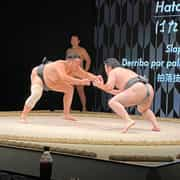

Osaka: Sumo Show with Bento or Snack at Sumo Hall Hirakuza
Sumo show ticketCommemorative pictureGuide
From
$92 /person
Plan a sumo night in Osaka. Find out where the venue you searched for really is, then book a show with retired pro wrestlers, a bento or chanko nabe in hand, and a lottery chance to step into the ring at Namba Parks.
"Watching the pro sumo wrestlers was super fun and amazing. The staff were really kind too."




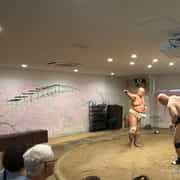
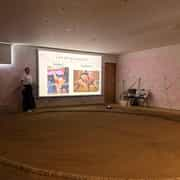
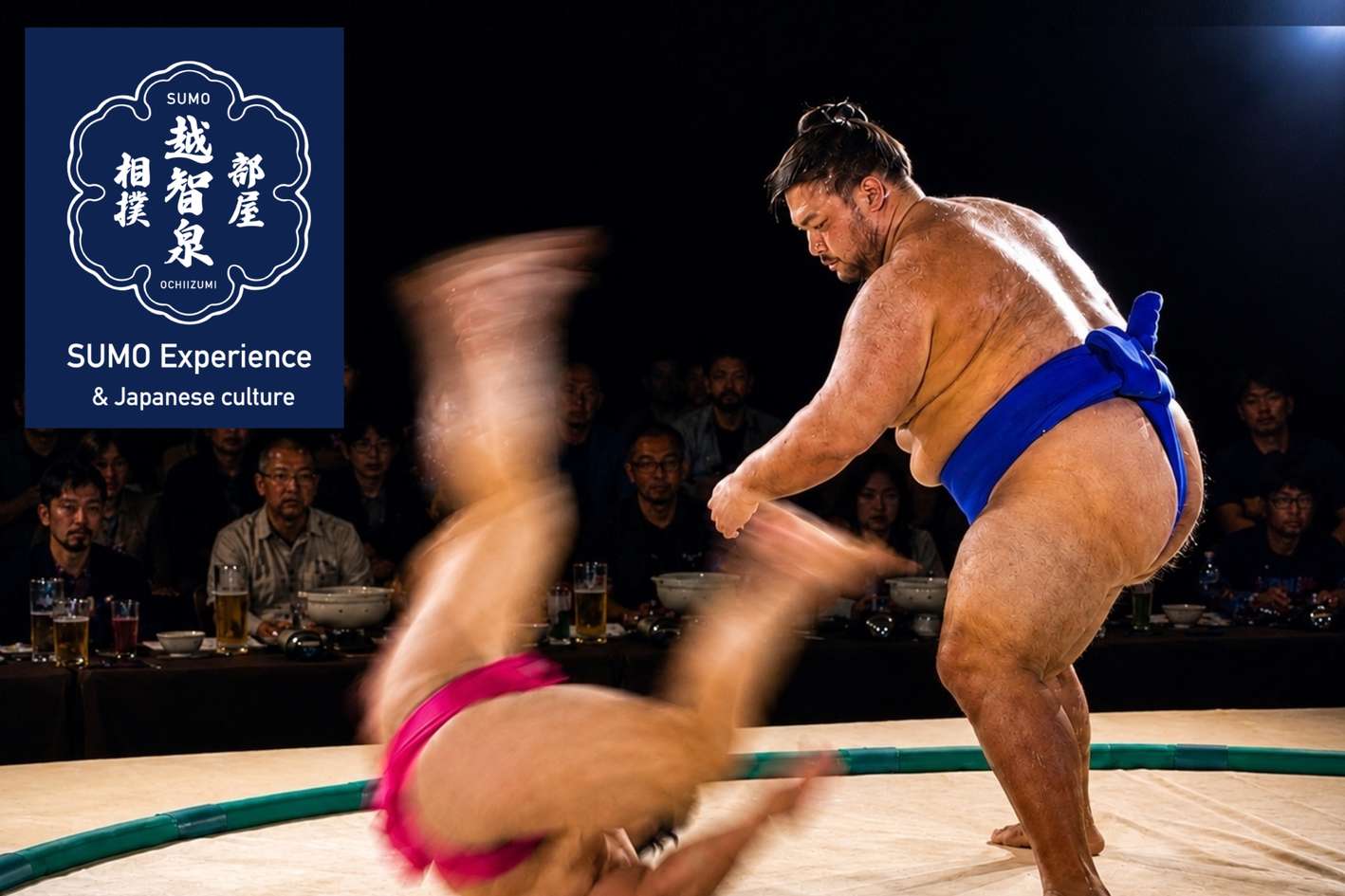
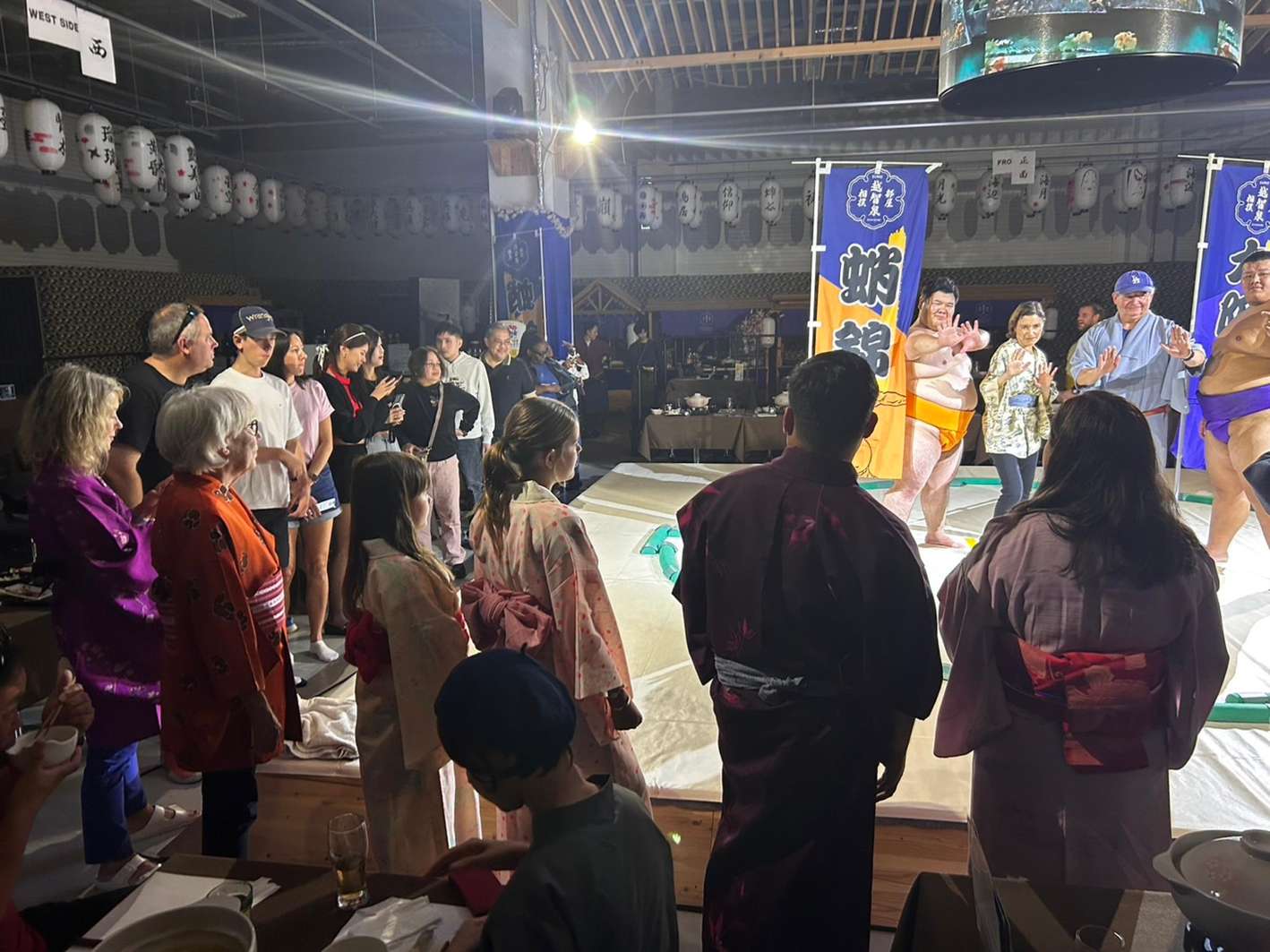
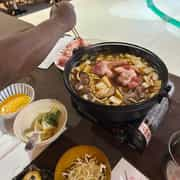
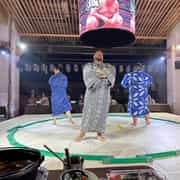
Sumo Land carries a Tokyo address, and Osaka stages its own sumo evenings in the meantime. Where the name lives, what this city really offers, and which evening fits a trip: those are the questions the chapters below settle.
Sumo Land stands in Ryogoku, Tokyo, three minutes from JR Ryogoku Station; no Sumo Land exists in Osaka.
Osaka's year-round option is an entertainment show by retired professionals, staged bouts included, at Namba Parks.
The main show runs 5 to 7 pm, with an 8 pm sitting on some dates, and online booking closes at 3 pm that day.
Children aged 2 and younger are not admitted at Hirakuza, and kids around 10 to 12 are the core audience.
In March the real grand tournament comes to Edion Arena, and its tickets sell out within minutes of going on sale.
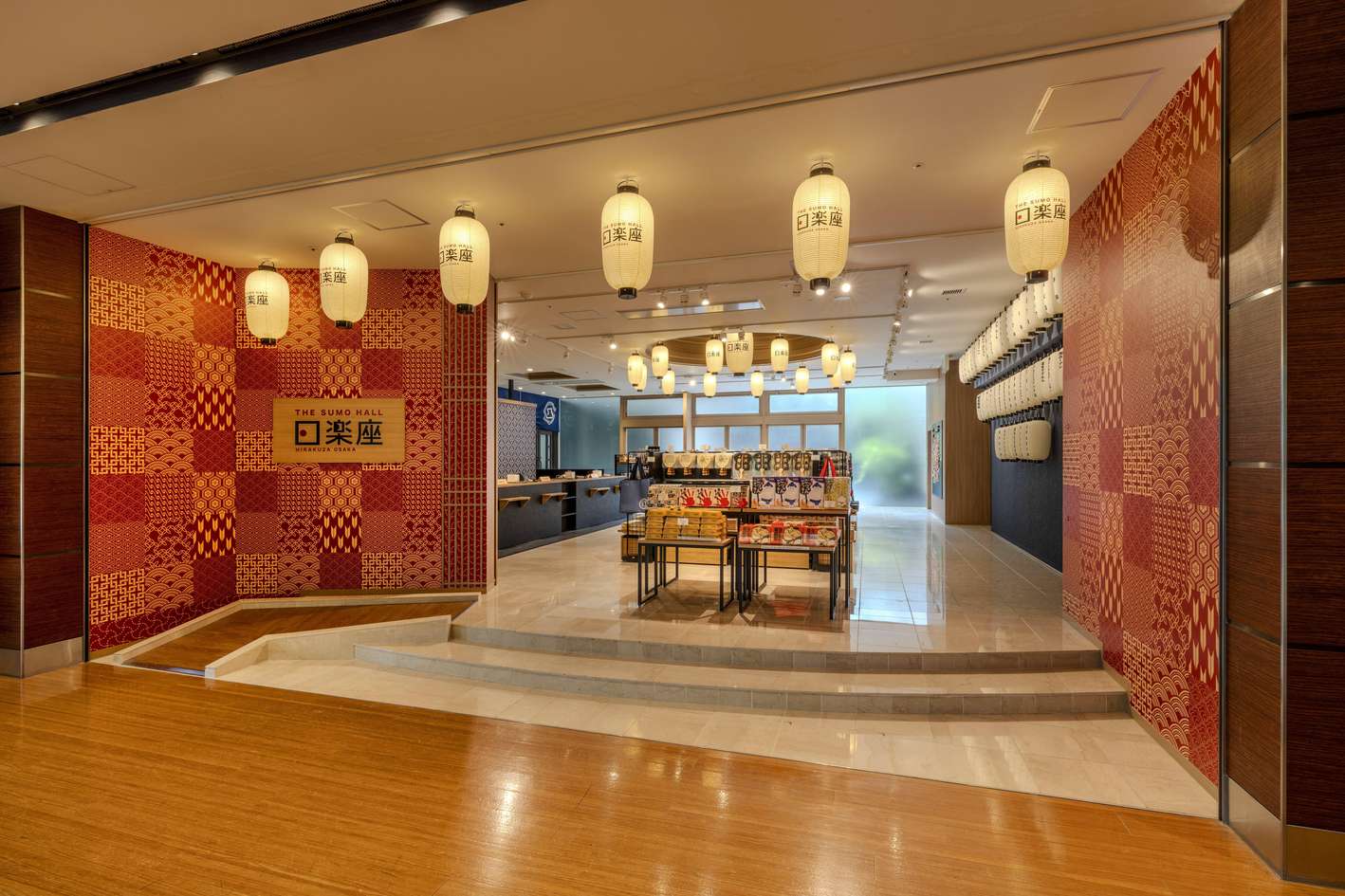
For a sumo show in Osaka itself, head to THE SUMO HALL HIRAKUZA OSAKA on the 8th floor of Namba Parks in Namba. It closes every Tuesday and over the New Year holidays (12/31 and 1/1), so check the performance calendar for your date before you plan the stop.
Sumo Land does not sit in Osaka. The name belongs to a sumo entertainment venue in Ryogoku, Sumida-ku in Tokyo, about a three-minute walk from JR Ryogoku Station East Exit and four minutes from the subway station. If the name itself was the point of your search, that is the place you were looking for.
The mix-up is easy to make, because Osaka has plenty of sumo of its own. The sumo entertainment hall in this city is called THE SUMO HALL HIRAKUZA OSAKA, on the 8th floor of Namba Parks in Namba.
It runs two programs: a two-hour Sumo Show with a meal, and a shorter workshop that includes a bowl of chanko hot pot.
So the choice is simple. Keep the Tokyo venue in your plans if your route passes through the capital, or pick one of the Osaka shows and keep sumo inside this city's itinerary.
Three kinds of sumo exist in this city, and they rarely overlap on the calendar. The entertainment show runs all year at Namba Parks, in English, with retired professionals.
The grand tournament is fifteen days of real competition in March at Edion Arena, five minutes from Namba Station, and its tickets are the hardest in the country to score.
Real stable practice sits between the two: only in the weeks around the March basho, when wrestlers move into temporary stables set up in temples and shrines.
Outside those weeks, morning practice in Osaka is largely unavailable. In July the wrestlers are all in Nagoya. That is why dinner shows dominate the Osaka sumo scene.
| Location and access | Kind of sumo | How real it is | Booking ahead | |
|---|---|---|---|---|
| Sumo Land | Not Osaka, Ryogoku, Tokyo, 3 min from JR Ryogoku | Hands-on sumo experience with former wrestlers | Real former wrestlers, not a tournament | Open daily, no closed days |
| Sumo Hall Hirakuza show | Namba Parks 8F, above Namba station | Interactive entertainment show, in English | Staged bouts by former pros, not competition | Same-day online booking until 3 pm |
| Grand Sumo Tournament | Edion Arena, 5-min walk from Namba Station | Real competitive tournament, March only | Real stakes and rankings | Sell out within minutes of going on sale |
| Morning practice | Temples and shrines near Osaka, tournament run-up | Real stable training, not a show | Authentic training by active wrestlers | not known |
Timing decides more than taste here.
If your trip falls in March, the tournament beats any staged version. The rest of the year, the shows are what Osaka has, and they are good ones.
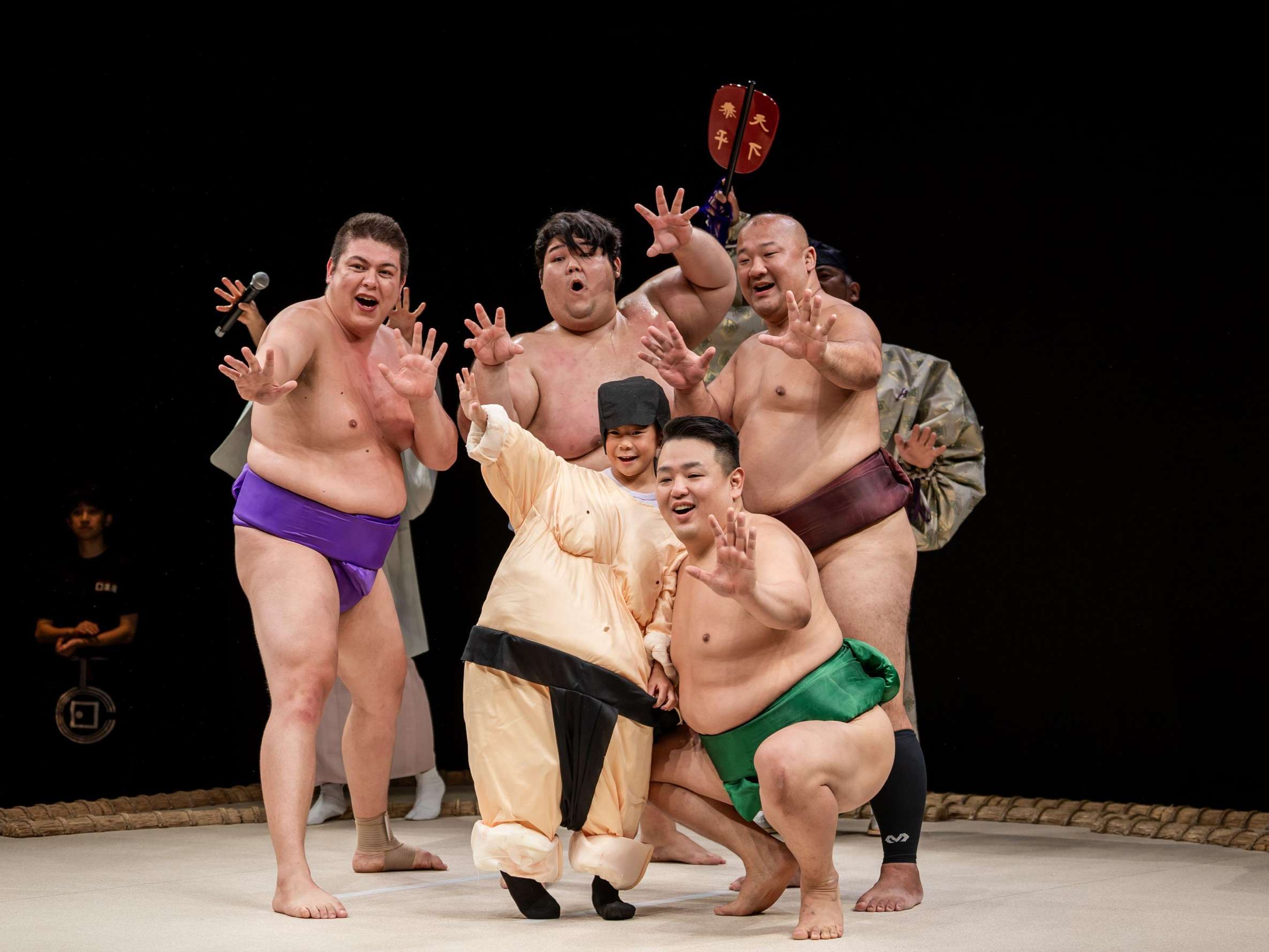
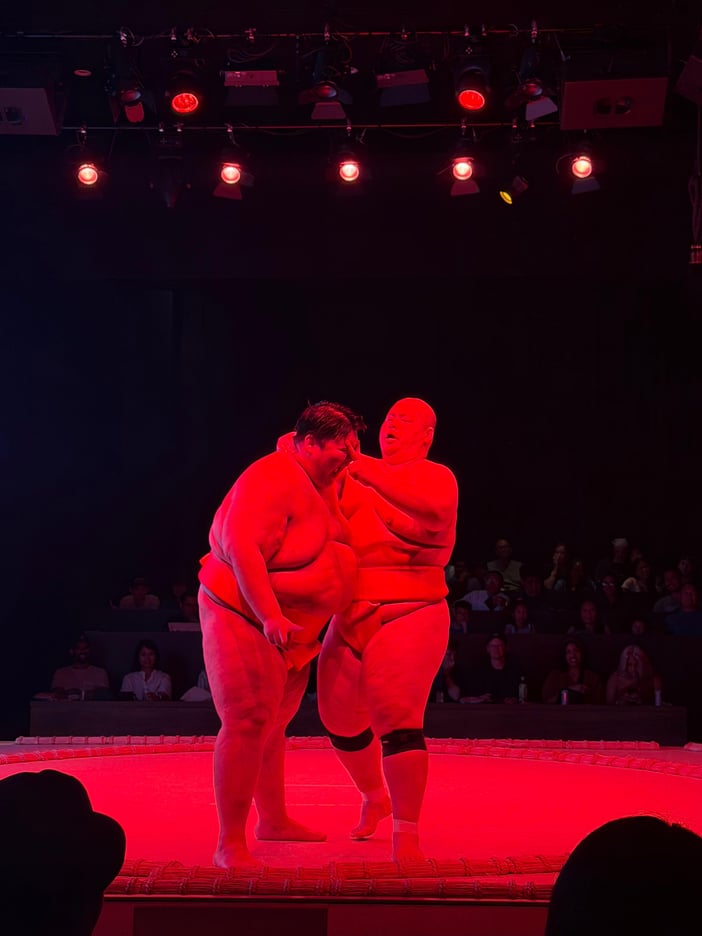
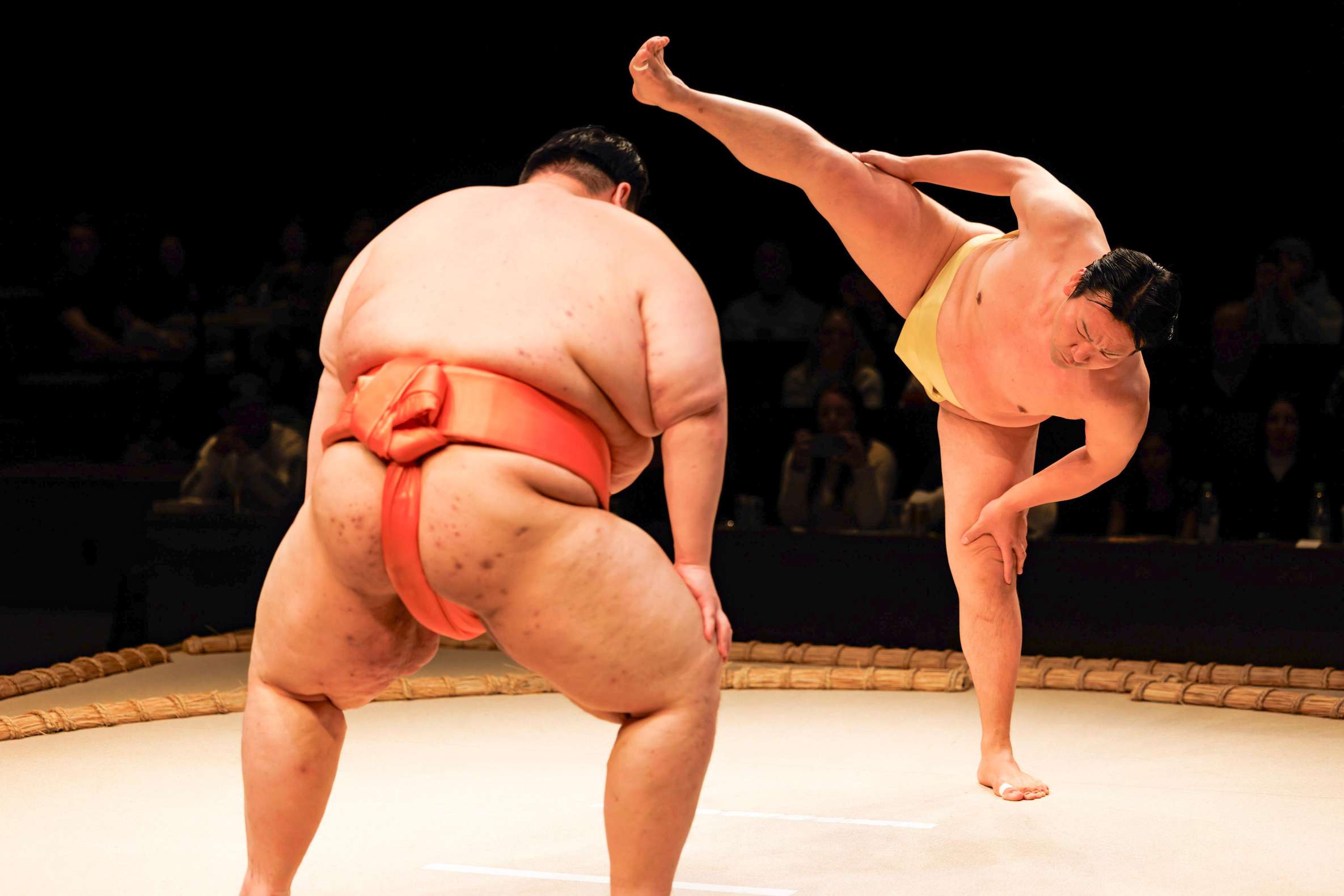
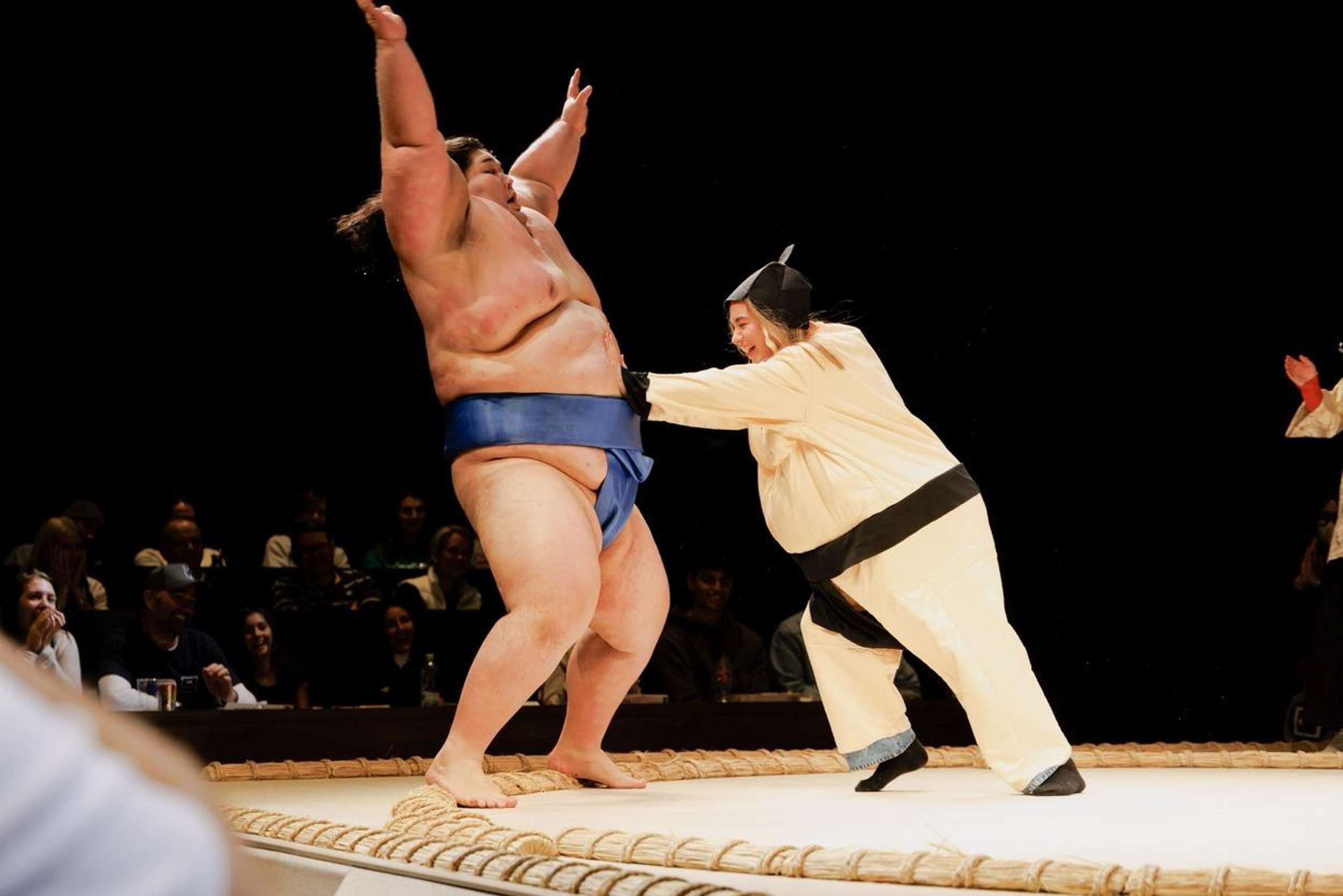
Here is the honesty part, said plainly: the bouts are staged. The wrestlers are former professionals, some with top-division careers, and the initial face-off, the tachiai, is performed exactly as at a real tournament. What is staged is the result. Outcomes are arranged, and the wrestlers are not going all out.
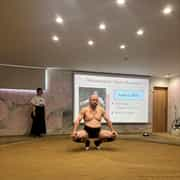
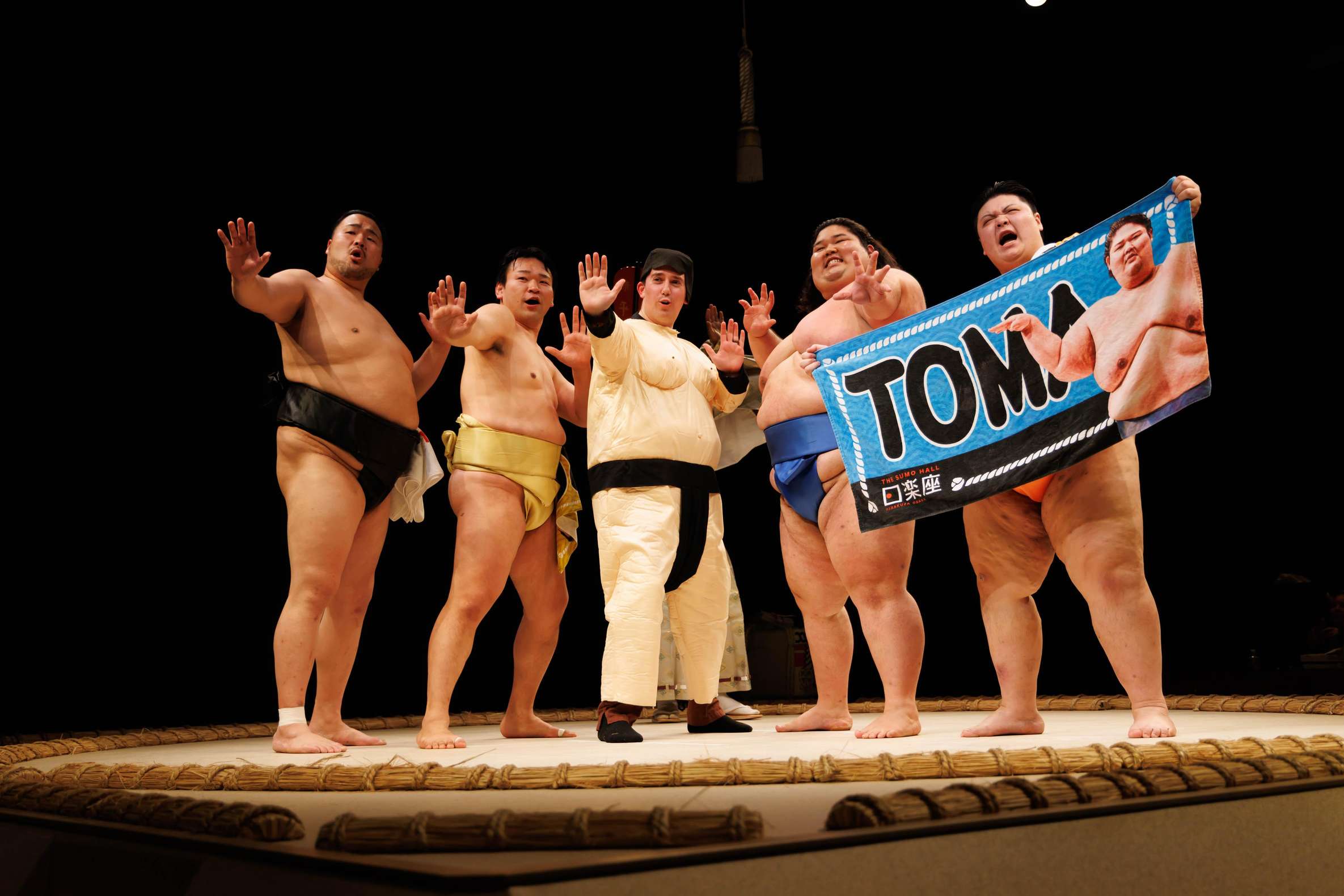
The evening has a shape. It opens with an act on the legend of sumo's origins, moves through training routines and a rules breakdown with the forbidden moves acted out for laughs, then closes with a mini tournament of three bouts. The actual wrestling takes up the last stretch, often only the final half hour.
Knowing this before you book sets you up to enjoy the evening on its own terms
The wrestlers hit exactly as they did in their professional careers
In a two-hour evening, the actual bouts fill only the final stretch
Visitors chosen by lottery put on a sumo suit and challenge a wrestler in the ring, and the show ends with photos and high-fives.
For the clearest version of the format, the Osaka: Sumo Experience with Live Show & Audience Challenge runs a shorter program: demonstrations, training routines, one single-bout match between retired wrestlers and an English-speaking host. The gap is the same as everywhere: entertainment by retired wrestlers, and limited spots to face one yourself.
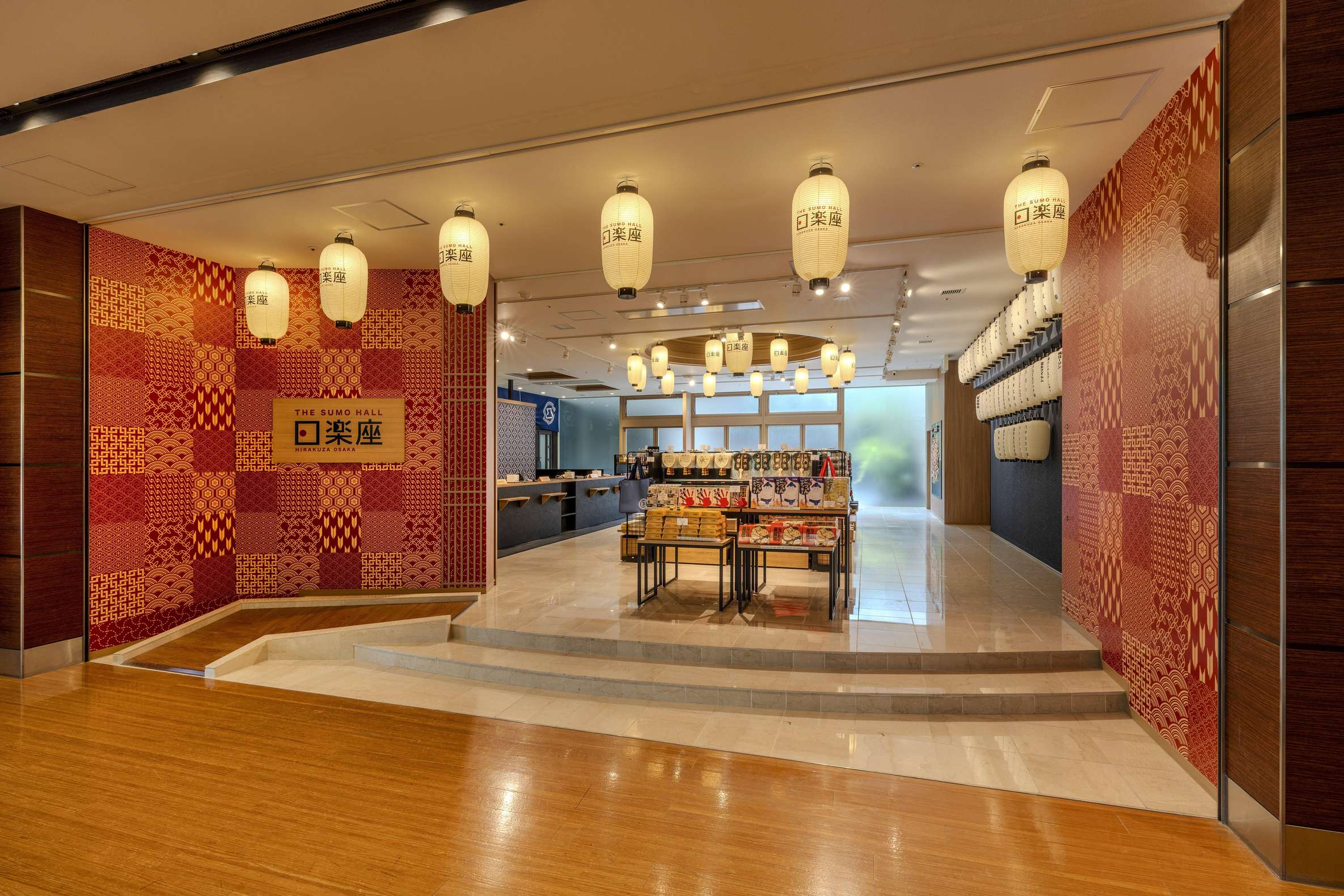
For anyone whose Osaka plans are already full, this is among the easiest sumo in Japan to fit a city trip around.
The main sitting runs from 5 pm to about 7 pm, meal and photo included, and on certain dates a second sitting follows from 8 pm to 10 pm Online booking stays open until 3 pm on the day itself; after that, any remaining seats are sold at the hall first come, first served.
After this, seats are sold at the door only
15 to 20 minutes before the printed time
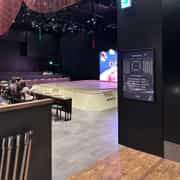
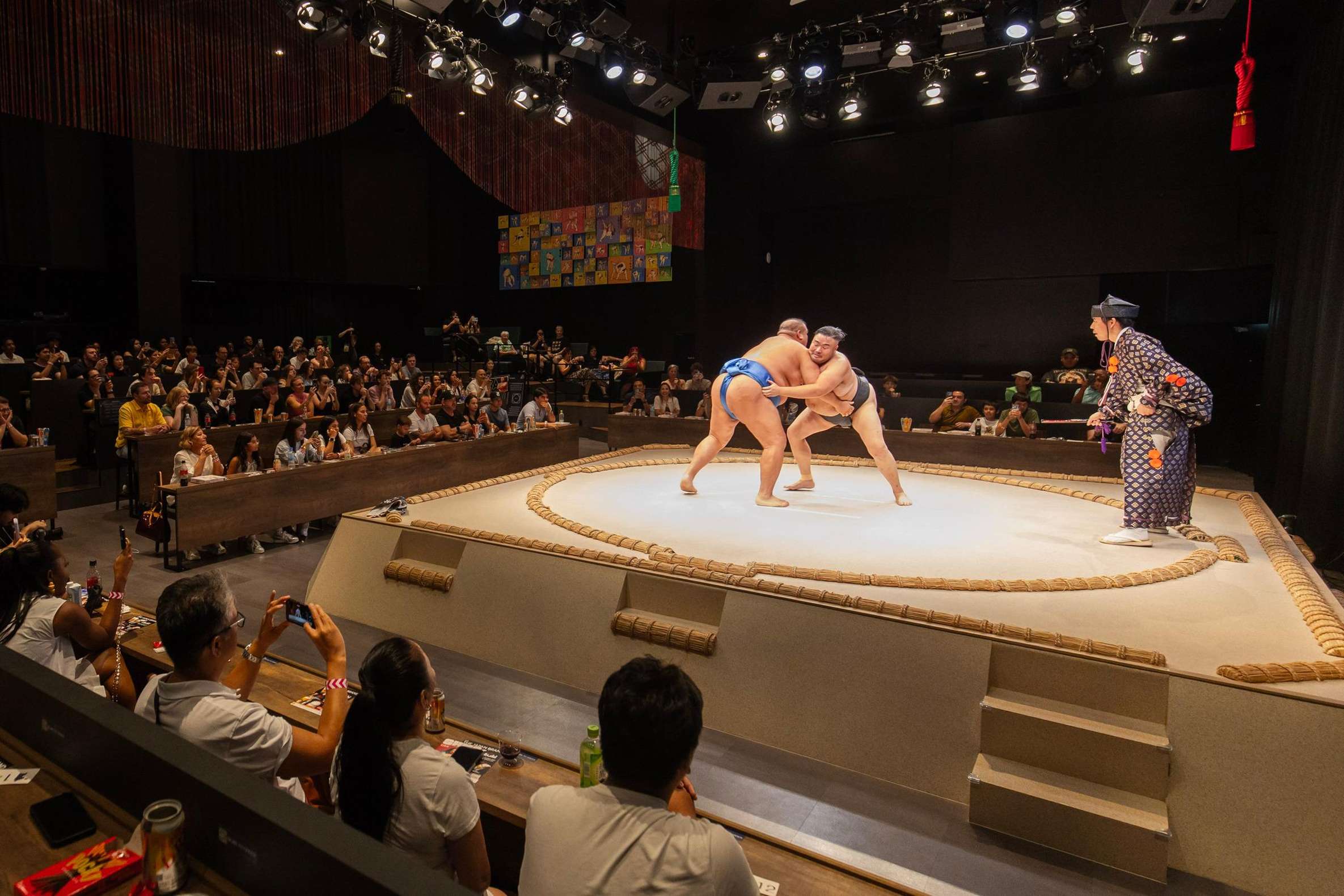
Reserved seating, about 180 seats
A second 8 to 10 pm sitting runs on selected dates
The show can end slightly later than scheduled, and arriving right at the ticket time risks a rushed hunt for your seat. The Osaka: Sumo Show with Bento or Snack at Sumo Hall Hirakuza covers this exact evening: a two-hour sitting with a bento or snack bag, a drink and a commemorative picture built in.
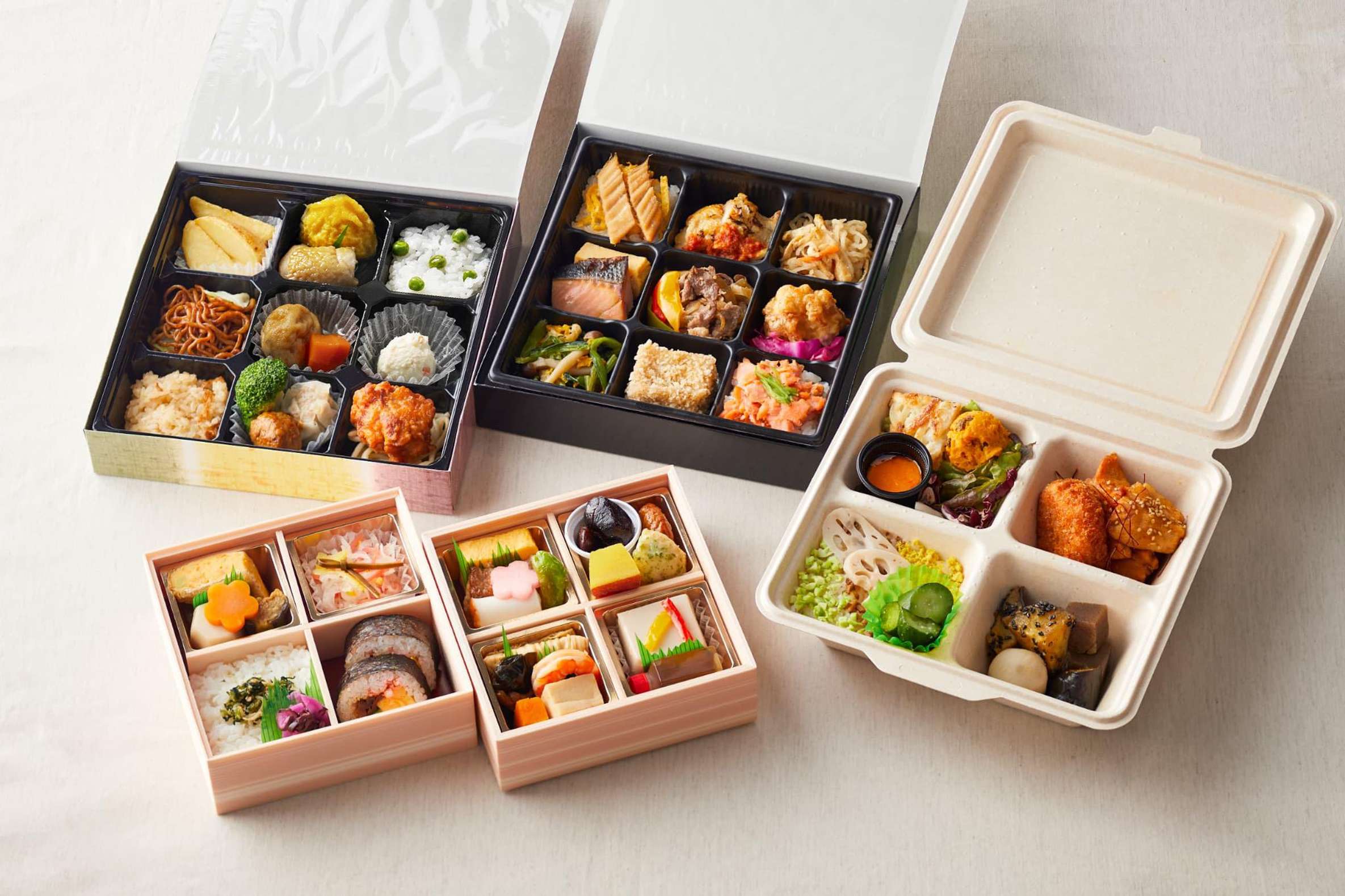
Shows here rarely fill far ahead. The hall keeps same-day online booking open until 3 pm, reservations open about three months before each performance month, and one traveler booked a slot the day before without any trouble.
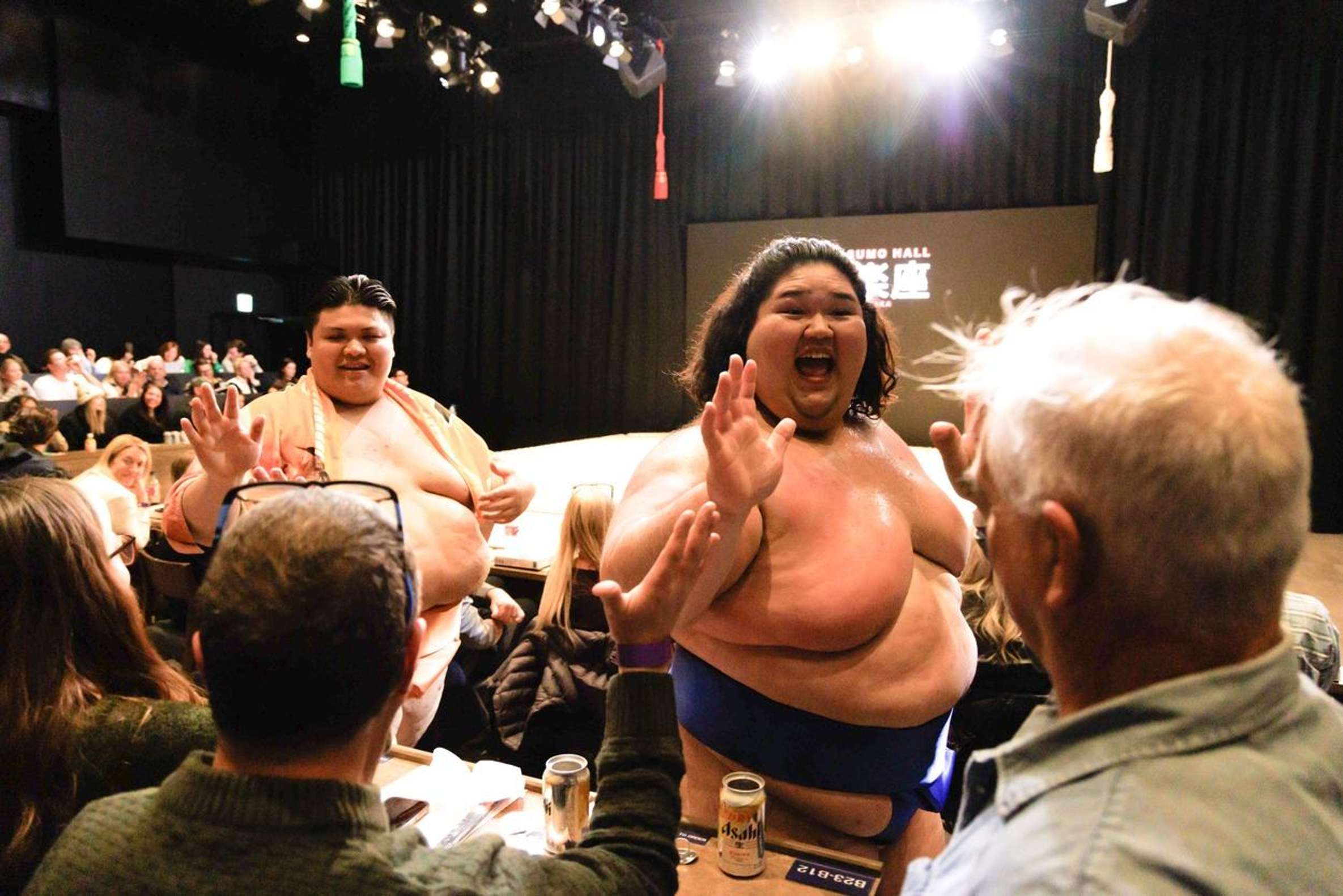
Early planning matters mainly for the Premium front-row seats, the ones directly against the ring, close enough that guests high-five the wrestlers as they pass. Standard seats sit behind them on an elevated incline, which gives every seat a clear view of the whole stage.
Crowds swell at certain times of year, and the pattern is worth a glance before you fix your date.
July: 5 out of 5 for how busy it gets.
Tap a month to read it.
Peak months reward an early booking, while the quiet winter months leave room for walk-in plans.
The opposite extreme is March. Tournament tickets at Edion Arena go on sale about a month before the basho, and popular seats vanish within minutes of the 10 am sale opening.
March tournament tickets sell out within minutes of the 10 am sale opening Decide your ticket route before you arrive in Japan, or plan on a show instead
Whichever route you take, the sale date is the thing to fix first: a show can be booked late, a tournament seat cannot.
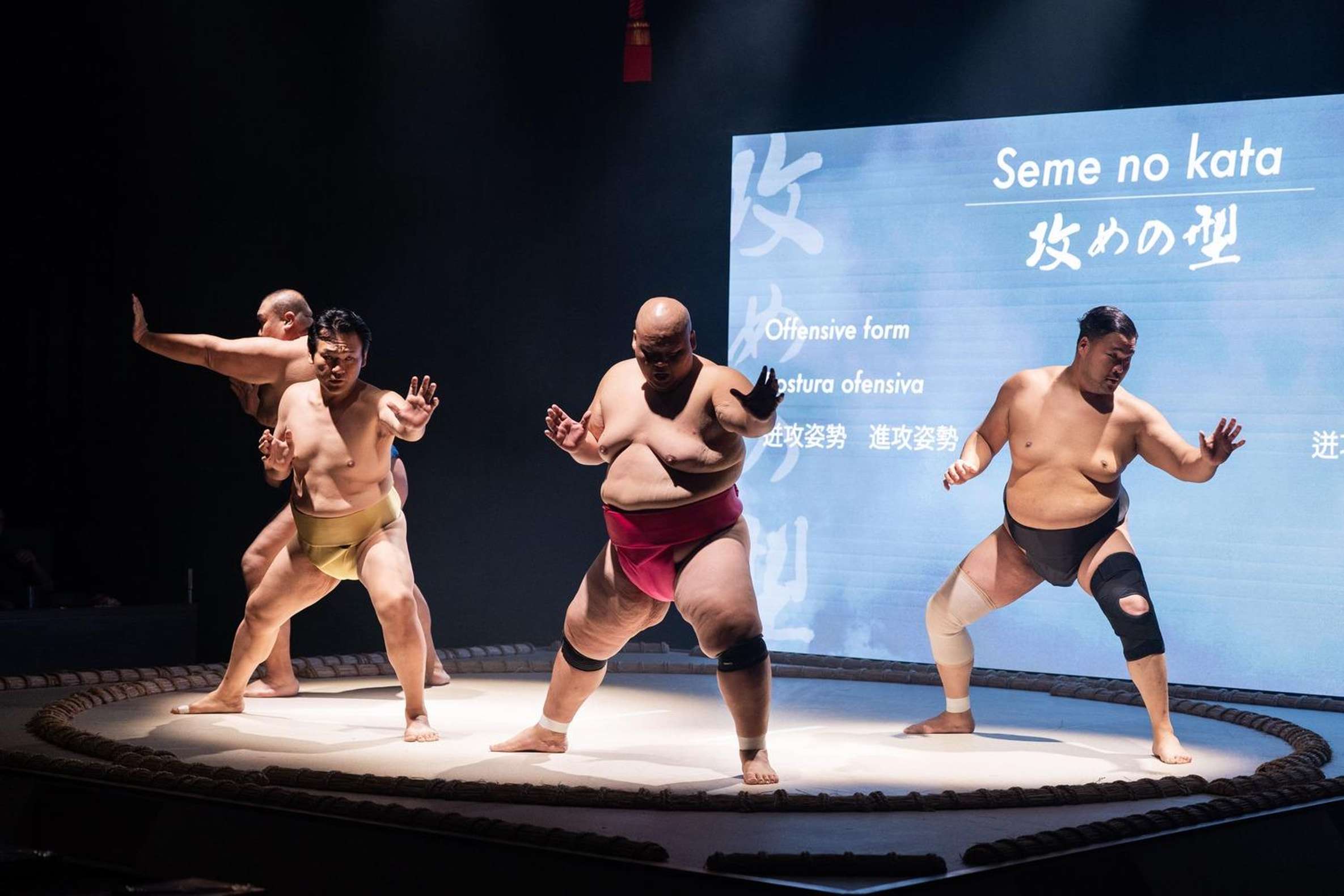
Families book these shows in numbers, and the format explains why: comedy, a lottery, and children in sumo suits challenging a wrestler. Kids around 10 to 12 are the core audience, the lively format keeps younger children engaged, and some Osaka-area venues let children under 12 attend free.
One rule catches families out. At Hirakuza, children aged 2 and younger are not permitted, so a toddler means a different plan, a different evening or a different city.
Once the age question is settled, the rest of the evening asks nothing special of a family: reserved seats, food at the table and a format built to hold a child's attention from the first act to the photo at the end.
Every show road ends at Namba, and the hall sits above the station itself, on the 8th floor of Namba Parks. From the Nankai Namba gate it is a three-minute walk.
From the Osaka Metro lines, the Midosuji, Yotsubashi or Sennichimae, count on about ten minutes on foot, and from Dotonbori you simply walk north into Namba.
Coming from Umeda, the Midosuji Line runs straight to Namba in about eight minutes with no changes, then a ten-minute walk.
A taxi covers the roughly 7 km in about a quarter of an hour without traffic. One tour operator recommends coming by train, and parking near Namba is rarely the easy part of anyone's evening.
Inside Namba Parks, take elevator No. 3 up to the 8th floor.
No dress code exists at the Osaka shows, and comfortable clothes you would wear to any indoor theater are right. Comfort matters for a reason: you may be challenged by a wrestler, and some seating means taking your shoes off, so footwear that slips off easily helps.
December changes the packing slightly. Osaka's winter month runs from about 3 to 12 degrees, so warm layers earn their place in the bag.
The door rules are few and easy. Phones go on silent during bouts, flash photography stays off while the wrestlers are in action, outside food and drink stay at home, and booing is out.
Cheering a wrestler is fine; cheering against his opponent is discouraged. If the lottery pulls you into the ring, follow the host's instructions and enjoy it.
The hall sits in central Osaka, so the show slots into an evening rather than taking one over. Ikasuri Shrine stands about 353 m away, a four-minute walk, and the greenery of Utsubo Park is about nine minutes off.
Walk fifteen minutes and you reach Nakanoshima Park by the river, where the Museum of Oriental Ceramics, the Osaka Science Museum and the National Museum of Art all sit within the same stroll.
A shape that works: shrine or park in the late afternoon, show at 5 pm, then dinner afterwards around Namba, since the meal at the show is the early-evening one rather than the late one. Trains home from Namba run late.
Read the list as a menu for the hours on either side of the show: the closest stops fill a spare half hour, the river walk fills a whole afternoon if you add the museums.
Based in Kyoto, take the JR Special Rapid on the Kyoto Line: direct from Kyoto Station to Osaka in about half an hour, frequent departures, no changes, and covered by the Japan Rail Pass.
The shinkansen is quicker at about fifteen minutes but stops at Shin-Osaka, which usually still means a transfer. Driving takes about an hour without traffic.
One operator notes that train access is recommended for reaching its sumo venue, and the Namba hall gives a practical reason: the walk from the station is short and signed.
Door to door from central Kyoto, count on roughly an hour and a half before you are seated with your meal.
Book the Hirakuza evening if your trip falls outside March: it runs year-round, takes same-day bookings until 3 pm and fits a city itinerary. Choose the Sumo Experience instead if you want the format stripped down to demonstrations and one bout.
In March, chase tournament tickets first, because the real thing beats any staged version. And if the name Sumo Land itself is what you came for, that venue stands in Tokyo.
A sumo hall on the 8th floor of Namba Parks runs shows every evening with a meal and a photo included.
Read the guideThe March basho brings genuine grand sumo to Namba for two weeks, with a crowd livelier than Tokyo's.
Read the guide
Wrestlers move to Osaka in late February, and some stables open morning practice to quiet visitors.
Read the guide
The venue behind the name stands in Ryogoku, Tokyo, a three-minute walk from JR Ryogoku Station, open every day of the year.
Read the guideAll four give you sumo in or around your trip; they differ in what you actually watch and how much planning each one asks of you.
Retired professionals, an English host, dinner beside the ring
The show starts with the legend of sumo's origins, moves through training and rules with comedy worked in, and ends with a mini tournament of three bouts and a lottery that puts audience members in a sumo suit against a wrestler.
The wrestlers are former professionals, some with top-division careers, and the face-off at the start of each bout is performed exactly as at a real tournament.
Doors matter here. The main show runs from 5 pm to about 7 pm, with a later 8 pm sitting on certain dates, and about 180 reserved seats around a life-sized ring stage. Front-row guests high-five the wrestlers as they pass. Arrive 15 to 20 minutes early, since latecomers get a rushed seat search.
Fifteen days of real bouts every March, in the smallest arena on the circuit
March is the only month Osaka hosts the grand tournament, fifteen days at Edion Arena in Namba. The crowd is the liveliest in tournament sumo; cushions fly through the air after a big upset. Locals come late, so the morning seats have room to breathe and the arena fills from about 3 pm.
The hard part is the ticket. Sales open about a month before the tournament, around 10 am, and popular seats vanish within minutes. Plan around the sale date or use a guided route.
Once inside, your ticket covers the whole day, and top-division bouts run from roughly 2 pm to a 6 pm finish with the bow-twirling ceremony.
Real morning training, open to visitors only in the weeks before the March basho

For a few weeks a year, sumo stables set up in temples and shrines around Osaka to prepare for the March tournament, and some let visitors watch.
During the tournament period, viewing typically runs from about 6:30 am to 10 am, and roughly 7 am to 11 am the week before. Stables include ones in Neyagawa, Matsubara, Suita and Tennoji-ku.
This is the part people remember: the power and discipline, the sounds of practice from a few steps away. It asks something of you in return.
You sit still on the floor, silent, no flash photos, and you stay until the wrestlers finish. Contact a stable in advance to confirm practice is on, because viewing is first come, first served and days vary.
The venue you searched for, sitting three minutes from JR Ryogoku Station in Tokyo

If the name on your search is the point, the venue stands in Ryogoku, Tokyo's sumo district, about a three-minute walk from JR Ryogoku Station East Exit and a four-minute walk from the subway station.
It opened in June 2025 as a hands-on entertainment space with a purpose-built ring, where former professional wrestlers, including top-division ones, perform and guests join in.
A full visit runs one and a half to two hours and can stretch to three, with chanko hot pot, the stew wrestlers eat, on the table.
The doors open every day with no closed days, yet demand spikes around the big tournament months, so book early for April, May and September. Ryogoku itself is half the appeal: sumo shops, the Kokugikan and sumo banners on every corner.
The named sumo venue has pages for each city; here is how to find the one you actually mean.
The Ryogoku location in Tokyo, with train access and visitor details, for planning a stop there.

A map of where sumo happens across Japan, so you can fit a match or show into your route.

Tokyo's live sumo options laid out side by side, from shows to stable visits, to help you pick.
How the Osaka sumo options differ, so you can turn a vague wish into one clear evening plan.
Where to watch sumo in Kyoto and what each experience there involves, from shows to practice.
Fukuoka sumo turned into a local plan, including the morning practice window in November.

What the Sapporo sumo show involves and when it runs, so you can check it against your dates.

The differences between sumo shows, classes and tours, so you choose the kind you actually want.

What a sumo outing near Mount Fuji involves, from rituals and bouts to a chance to wrestle.

Sumo classes in Tokyo and Osaka where you drill and take on a wrestler yourself, compared.

How to visit a Tokyo sumo stable with a guide, and what a real morning practice asks of you.

Where in Tokyo you can dress up in sumo attire, and how that fits into a show outing.

A Tokyo class that explains sumo's traditions in depth, for visitors who want more context.
The yearly grand tournament schedule and host cities, so you can aim your trip at one.

Tokyo tournament dates, the Ryogoku venue and how tickets work, in one practical guide.
The Osaka grand tournament's venue and March schedule, plus how tickets sell there.
Fukuoka's November tournament: the venue, the dates and what a day there looks like.

How to get tickets and a seat for the Nagoya tournament in July, without the guesswork.
What the Minoh Expo tournament is and how to watch sumo in Osaka while it runs.
Guided tournament viewing explained city by city, for visitors who want a seat sorted for them.

Whether a Nagoya tournament tour fits your plan, answered before you spend an evening on it.

What an Osaka tournament tour with tickets includes, and whether it matches your expectations.

A clear account of Tokyo tournament tours around the Ryogoku arena, so you know before booking.

Where real morning training can be watched in Japan, and how to choose a visit with confidence.

Tokyo morning practice options, with meeting times and what a stable visit expects of you.

Real training versus staged shows in Osaka, and when in the year stable visits are possible.

Kyoto practice visit options, so you can tell real training from a performance before booking.

What a sumo show includes and where they run, to help you pick the right one for your trip.

Tokyo sumo outings with premium dining and drinks, compared on what makes each worth choosing.

Tokyo shows in Ginza, Shinjuku and beyond, weighed on seating, food and location.
Osaka's sumo shows and restaurant options, so your evening in the city has a clear pick.

Whether Kyoto has a sumo show, what each one includes, and how to choose between them.

The Sapporo show with Japanese food, its daily times, and its closure status for your dates.

Tokyo sumo halls compared on venue, seating and show format, for choosing a specific night.
The Ryogoku sumo show's venue details and format, for confirming it suits what you want to do.

The Tokyo Tower show's bouts, cultural performances and meal, and why it fits a city evening.

Tokyo outings that pair a live show with chanko nabe lunch, matched to what you want to eat.
Osaka sumo dining turned into a bookable evening, with the food options laid out plainly.

The best ways to watch and try sumo in Japan, compared across cities so you spend time well.

Practical answers on match length, daily schedules and rules for fitting sumo into Tokyo days.

The Tokyo sumo museum's hours plus museum options elsewhere, planned around your visit.

What makes Tokyo's sumo district worth a walk, and how to experience it with some context.
Short answers to the questions visitors ask about Sumo Land in Osaka and sumo shows in the city.
 Osaka2026
Sumo Land has no Osaka location. The name belongs to venues in Ryogoku, Tokyo. If you searched for sumo land osaka, the sumo attraction you most likely have in mind in Osaka is Sumo Hall Hirakuza in Namba.
Sumo Land sits in Ryogoku, Sumida-ku, in Tokyo. JR Ryogoku Station East Exit is about a 3-minute walk away, and the Toei Oedo Line's Ryogoku Subway Station is about 4 minutes on foot.
THE SUMO HALL HIRAKUZA OSAKA sits on the 8th floor of Namba Parks in Naniwa-ku. Nearby stations include Osaka-Namba on the Hanshin and Kintetsu lines, Namba on the Nankai line, and Namba on three Osaka Metro lines.
It is a hands-on sumo experience with shows, training and match sessions with former wrestlers, run by one operator in Tokyo. No grand sumo tournament takes place at any of the venues.
The wrestlers are former professionals, and the initial charge at Hirakuza looks like the real thing because it follows tournament form. The bouts themselves are staged for entertainment, so no result is at stake.
The Osaka venue, Sumo Hall Hirakuza, closes every Tuesday and on the year-end and New Year holidays, though busy periods bring Tuesday openings. Closed days can be irregular, so check the monthly performance calendar for your date before you plan.
Sumo Hall Hirakuza runs a 2-hour show from 5 pm to 7 pm, which covers the meal, the performance and the photo session. On selected dates a second show runs from 8 pm to 10 pm. The wrestling portion of most exhibition shows takes up the last 15 to 30 minutes.
Shows can start noticeably later than the printed time, and the ending can vary a little too. Arrive 15 to 20 minutes early so you are seated calmly rather than rushing to find a seat at the last moment.
Same-day plans usually work: Sumo Hall Hirakuza keeps online booking open until 3 pm on performance days and sells leftover seats at the hall from 3 pm. Early booking mainly matters for the premium front-row seats.
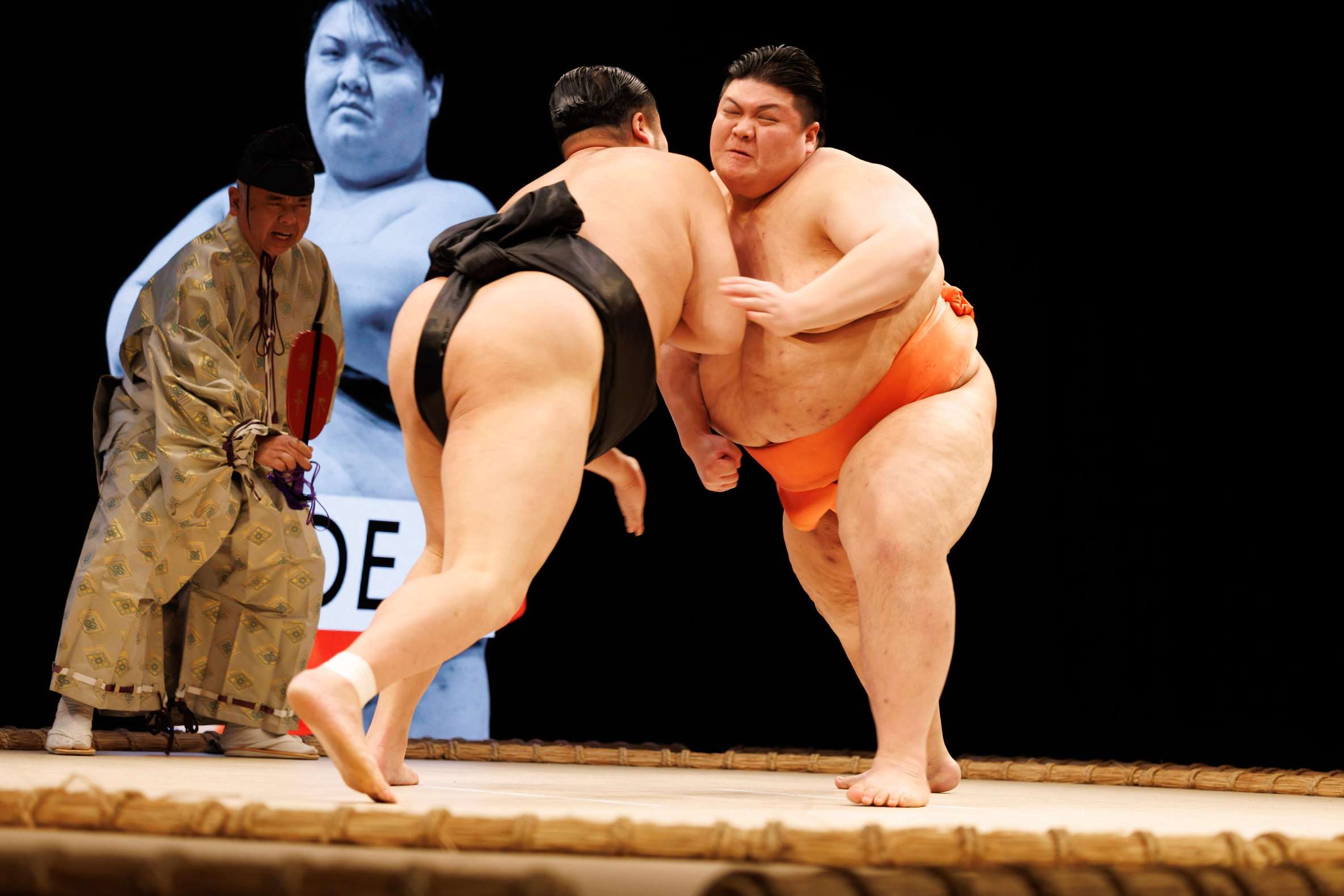
Two hours with former pro wrestlers at Namba Parks, with a bento or snack bag and a drink included, all indoors on the 8th floor, rain or shine.