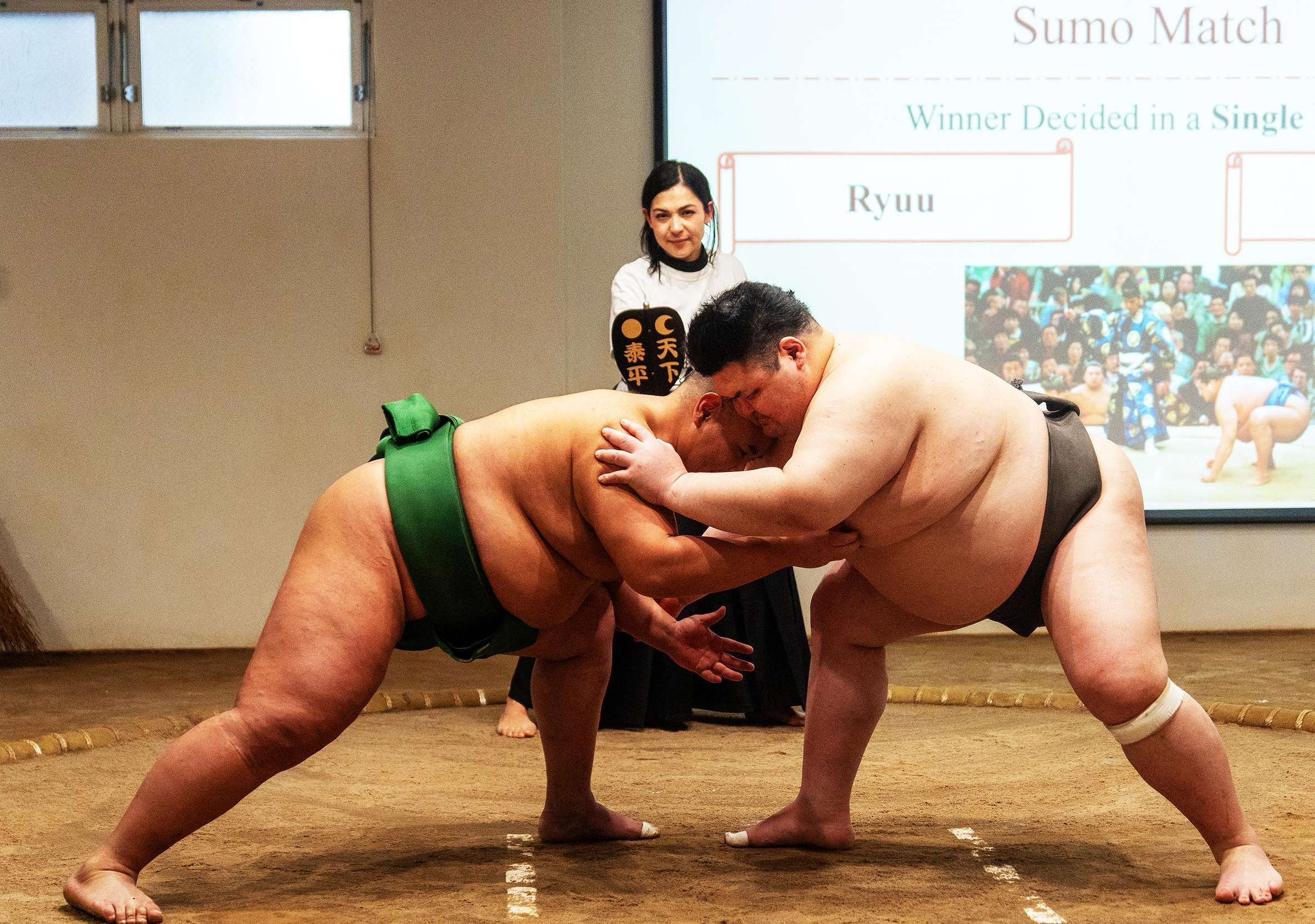
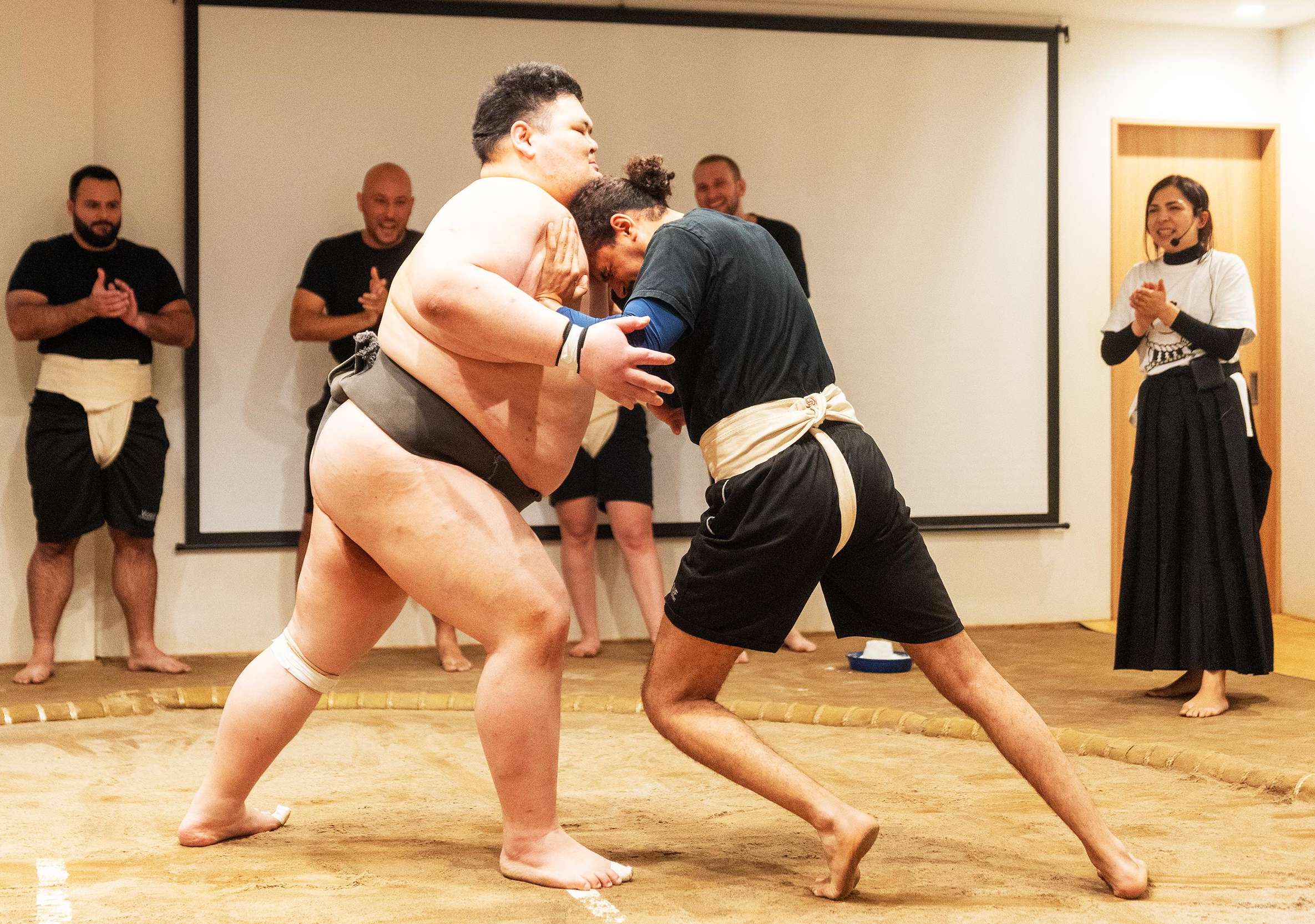
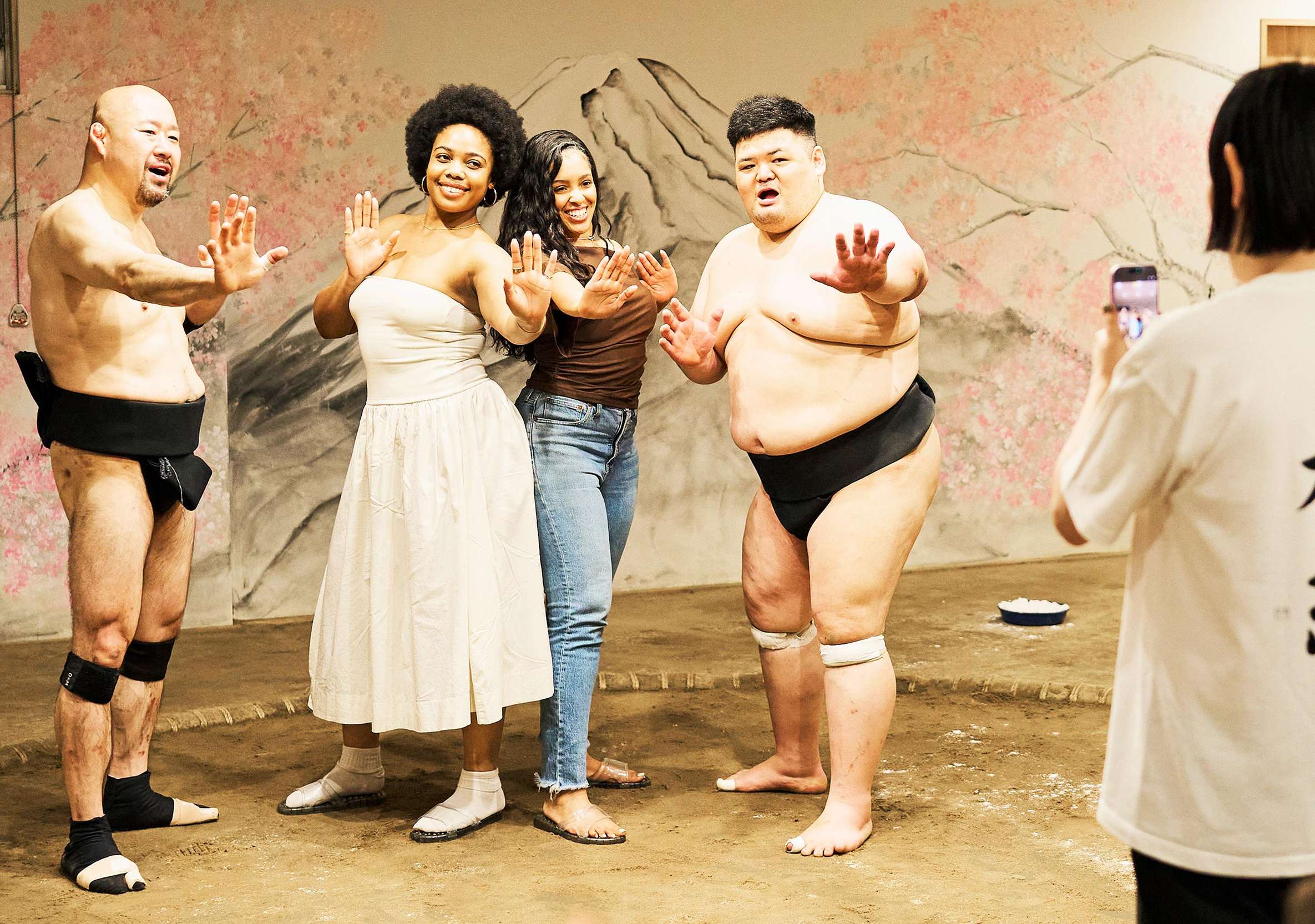
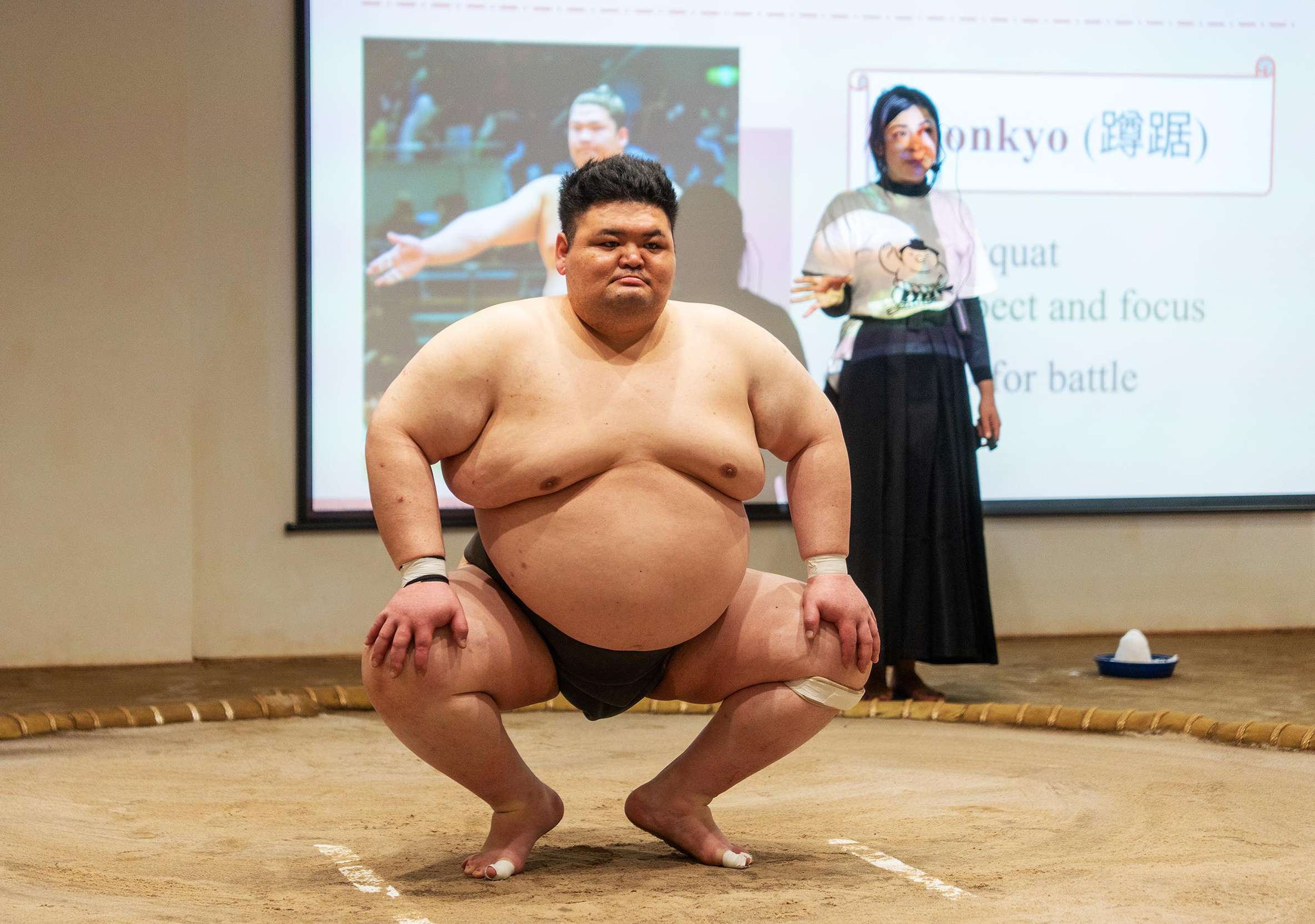
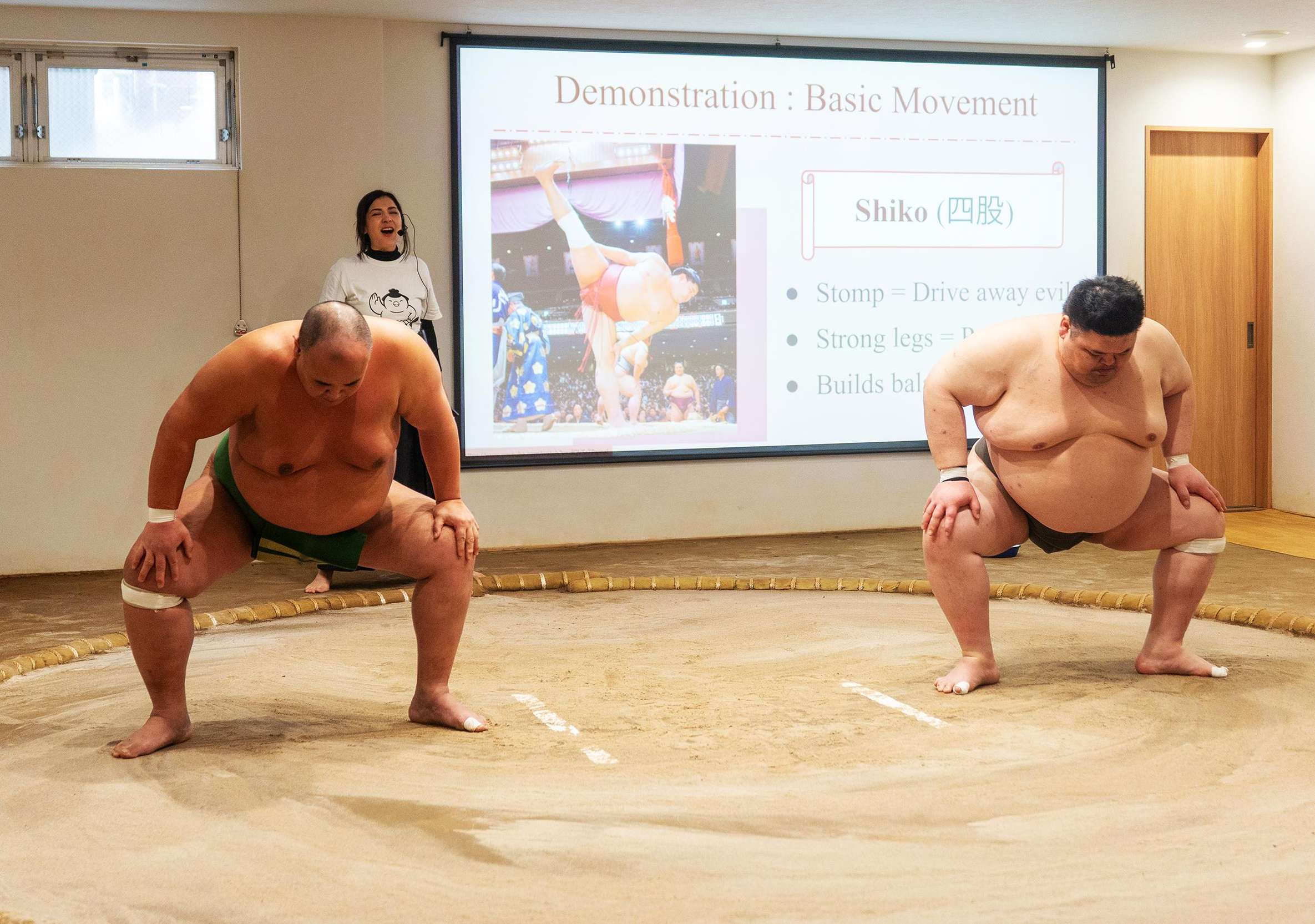
4.62,722 challenged a retired wrestler in the ring
Sumo Wrestling Show in Osaka Live Shows and Restaurant Options
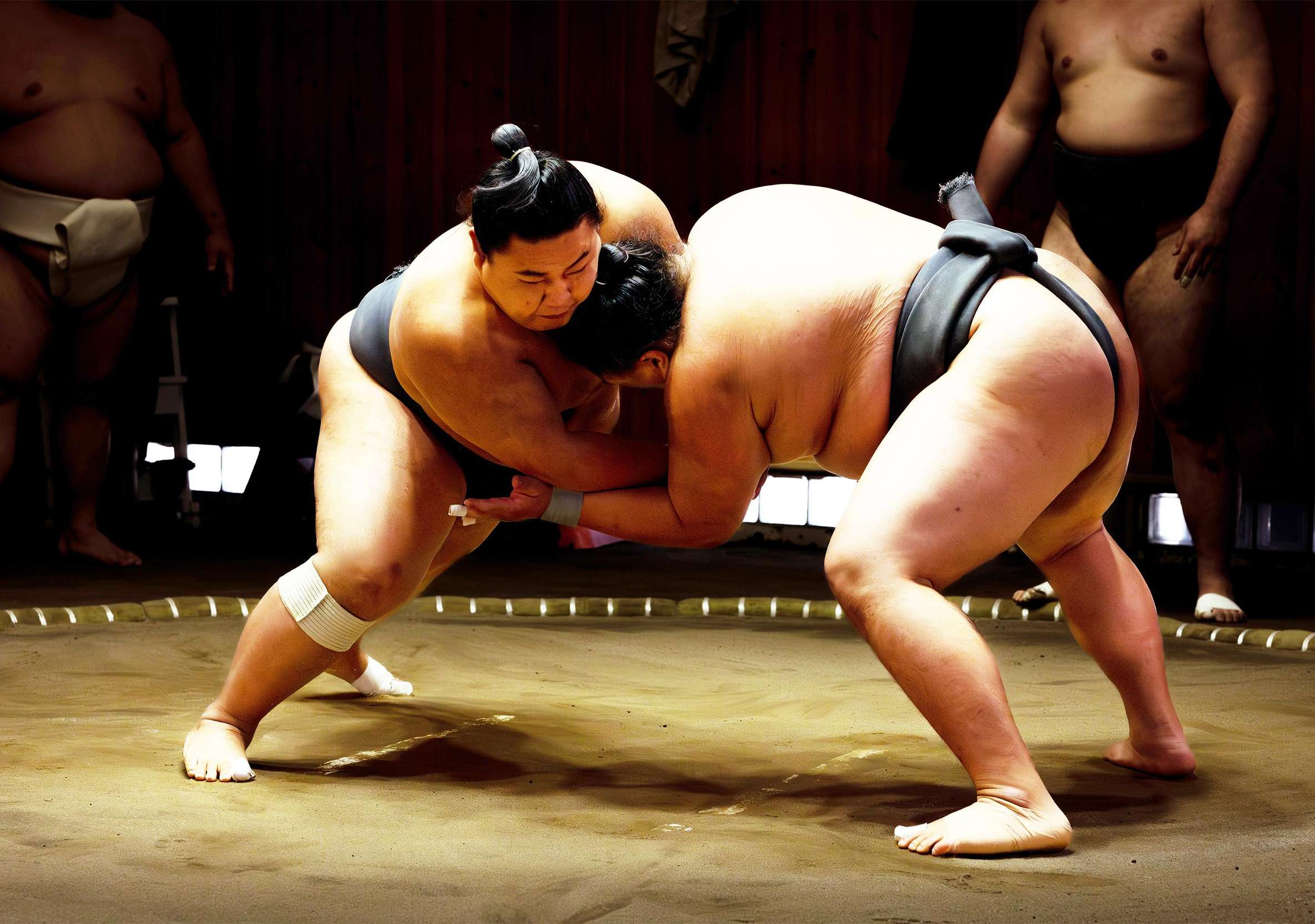
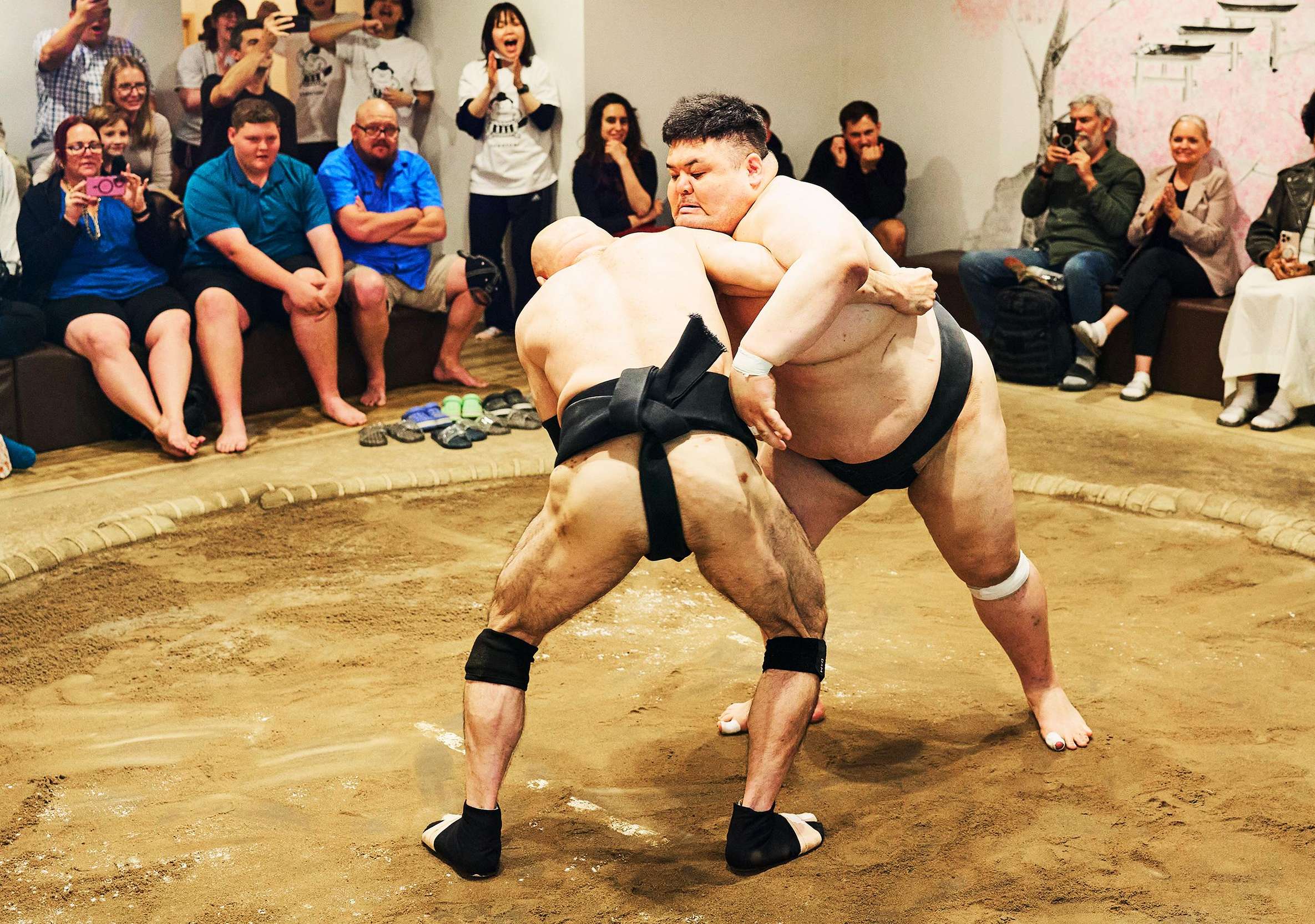
Book a live sumo wrestling show in Osaka and step into the ring yourself. Thousands of travelers have faced off against retired wrestlers while an English-speaking MC explains the rituals and techniques. Pick your show and reserve a seat close to the clay ring.
"As a solo traveler from Spain, I had a great time, entertaining and fun. The explanation of the sport and the wrestlers' lives was really informative."
4.6★average rating2,722traveler reviews2 of 3free cancellation36countries travelers came from
Sumo wrestling show Osaka - which one to book
Osaka has three ways to see a live sumo wrestling show, and the difference that decides between them is how close you sit and how much you join in. One puts you in the ring, one adds a bento dinner, one gives you front-row seats with sukiyaki.
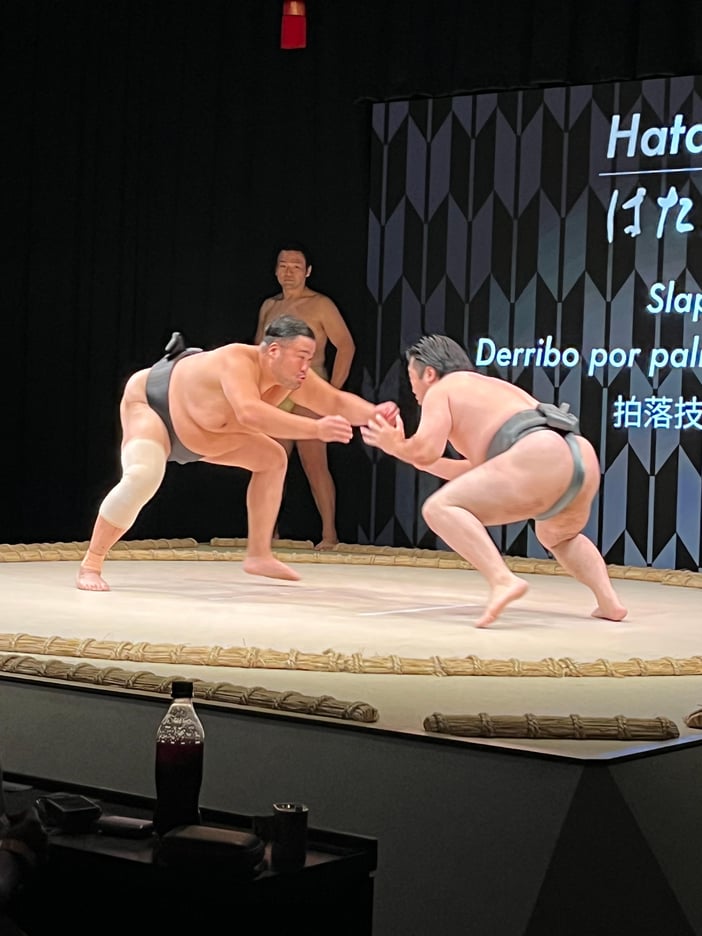
PerformersAll three shows are entertainment programs performed by retired professional wrestlers, so the technique is genuine even though the bout outcomes are staged.
BookingSumo Hall Hirakuza keeps same-day online booking open until 3 pm on the day of the performance, and sells remaining seats at the hall from 3 pm.
CalendarThe Hirakuza show runs every month of the year but closes on a handful of irregular days, so check the monthly calendar for your exact date.
AgesAt Sumo Hall Hirakuza, children aged 2 and younger are not permitted, and families with children around 10 to 12 are a core audience.
Show timesThe front-row sukiyaki show runs a lunch performance at 1 pm and an evening one at 6 pm, with doors opening 45 minutes to an hour before each.
ArrivalAt Hirakuza, guests who want to enter the sumo challenge lottery should arrive by the starting time, and shows can end slightly later than scheduled.
FoodAt the sukiyaki show, the meal is served in a large shared pot per table, and dining during the performance is possible though the lighting is dimmed.
Challenge spotsAt the audience-challenge show, spots for facing a wrestler are limited, and one-on-one matches may be assigned by random selection.
AccessSumo Hall Hirakuza has wheelchair spaces, but they are limited, so wheelchair users should contact the venue as soon as possible.
Getting thereThe front-row sukiyaki venue recommends train access, and Hirakuza sits on the 8th floor of the Namba Parks complex.
importantEvening shows at Sumo Hall Hirakuza in Osaka often start well after the time printed on the ticket, with visitors reporting starts 40 to 60 minutes late at the 8 pm slot.
Arrive 15 to 20 minutes before the ticket time and treat the printed start as a rough guide, since late entry is allowed and the show runs about two hours once it begins.
How to pick the right wrestling show in Osaka
Cheapest way in
1 - 1.5 hours·English
4.9(2,124)
Osaka: Sumo Experience with Live Show & Audience Challenge
The lowest price on the page, and it still gives you a live match between retired wrestlers plus a shot at the ring challenge.
Free cancellationAuthentic sumo demonstrationsEnglish-speaking MC
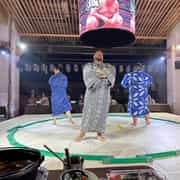
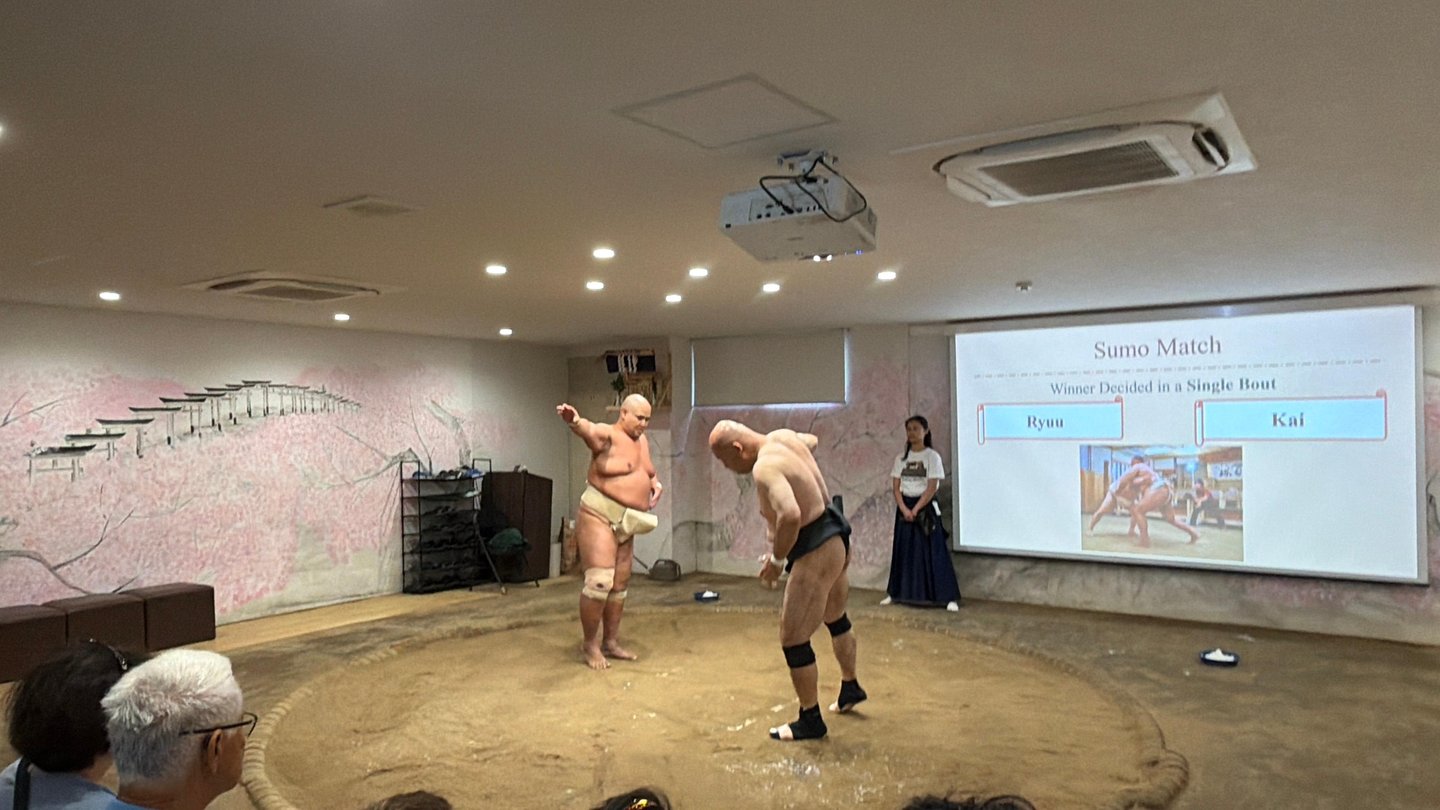
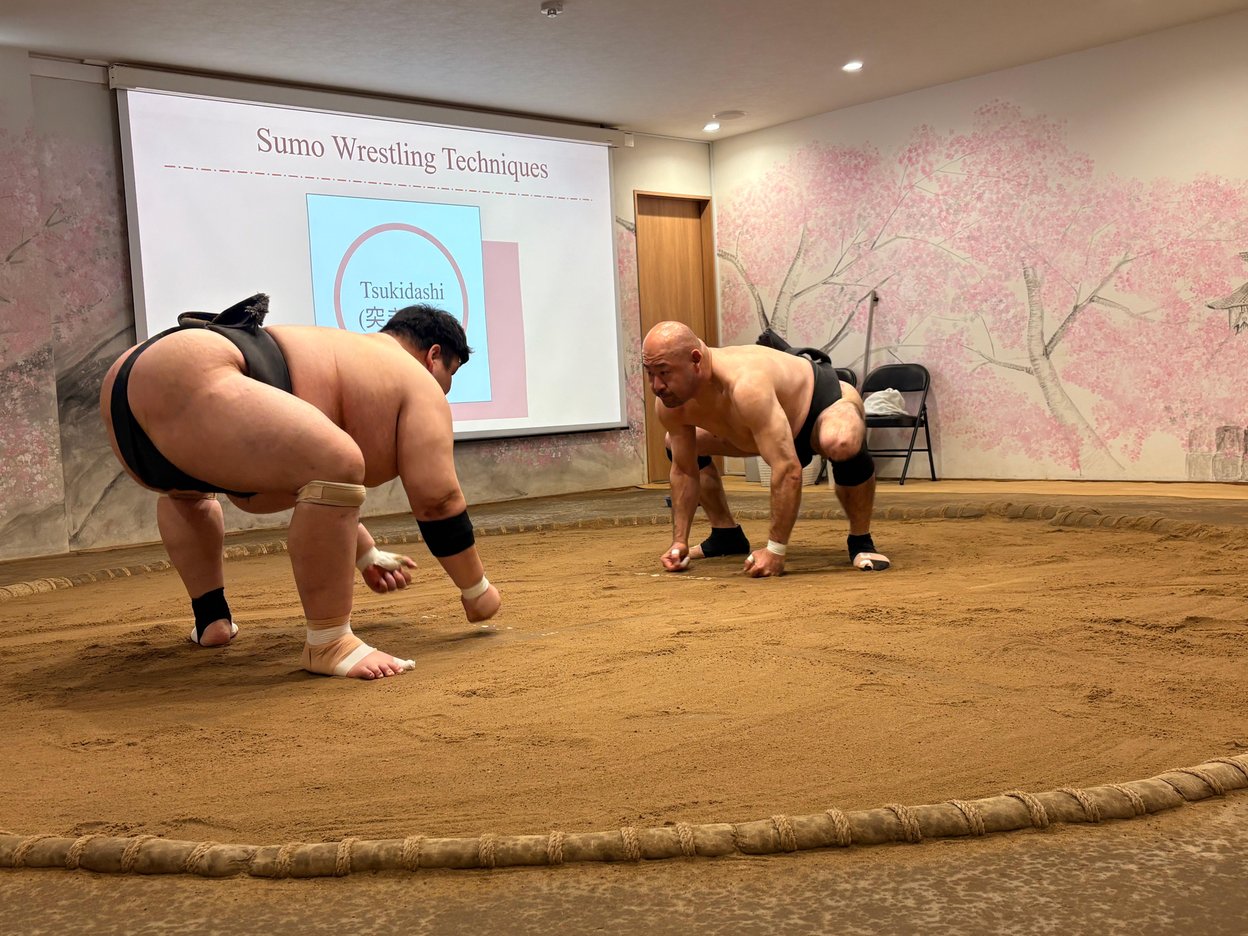
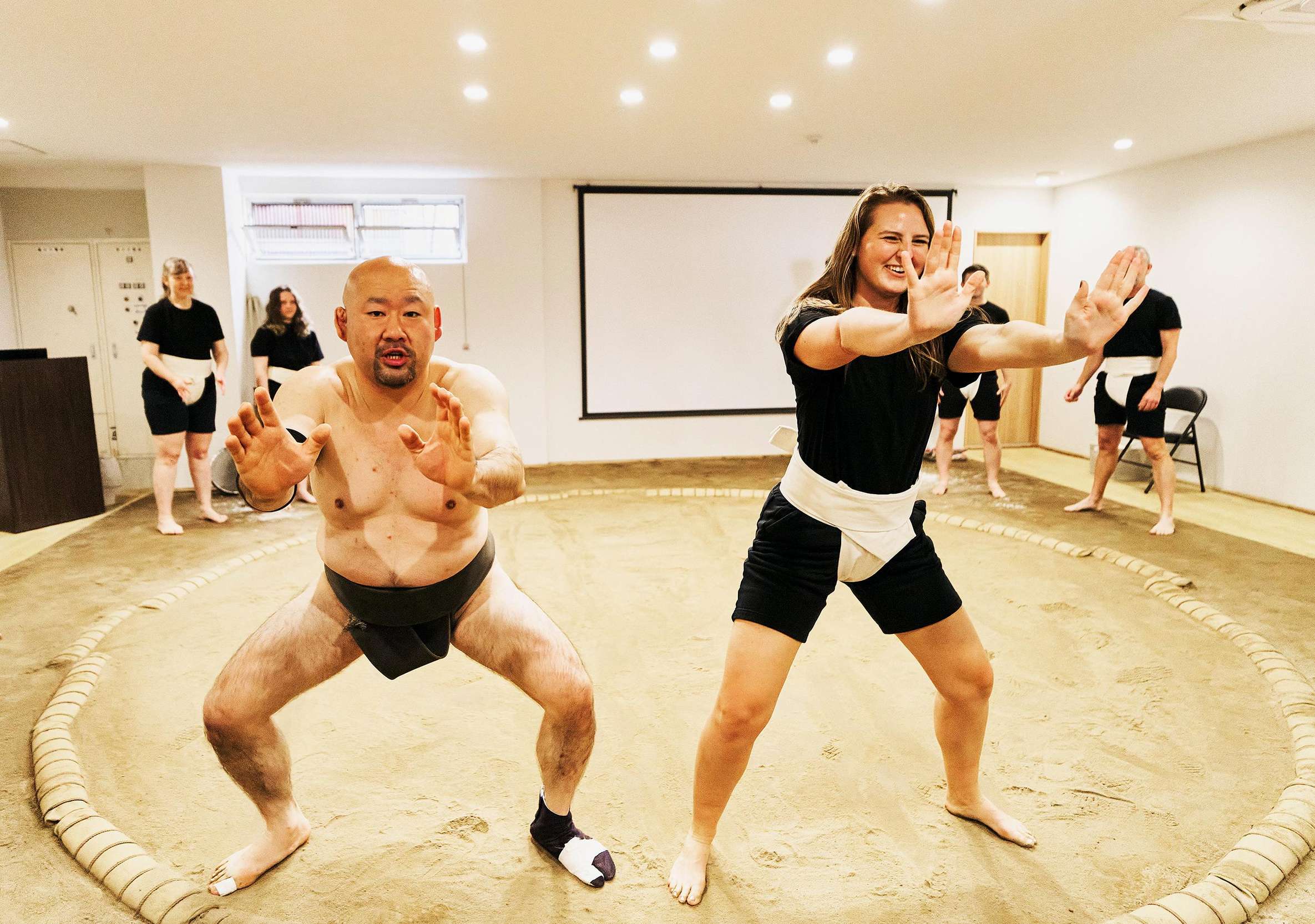
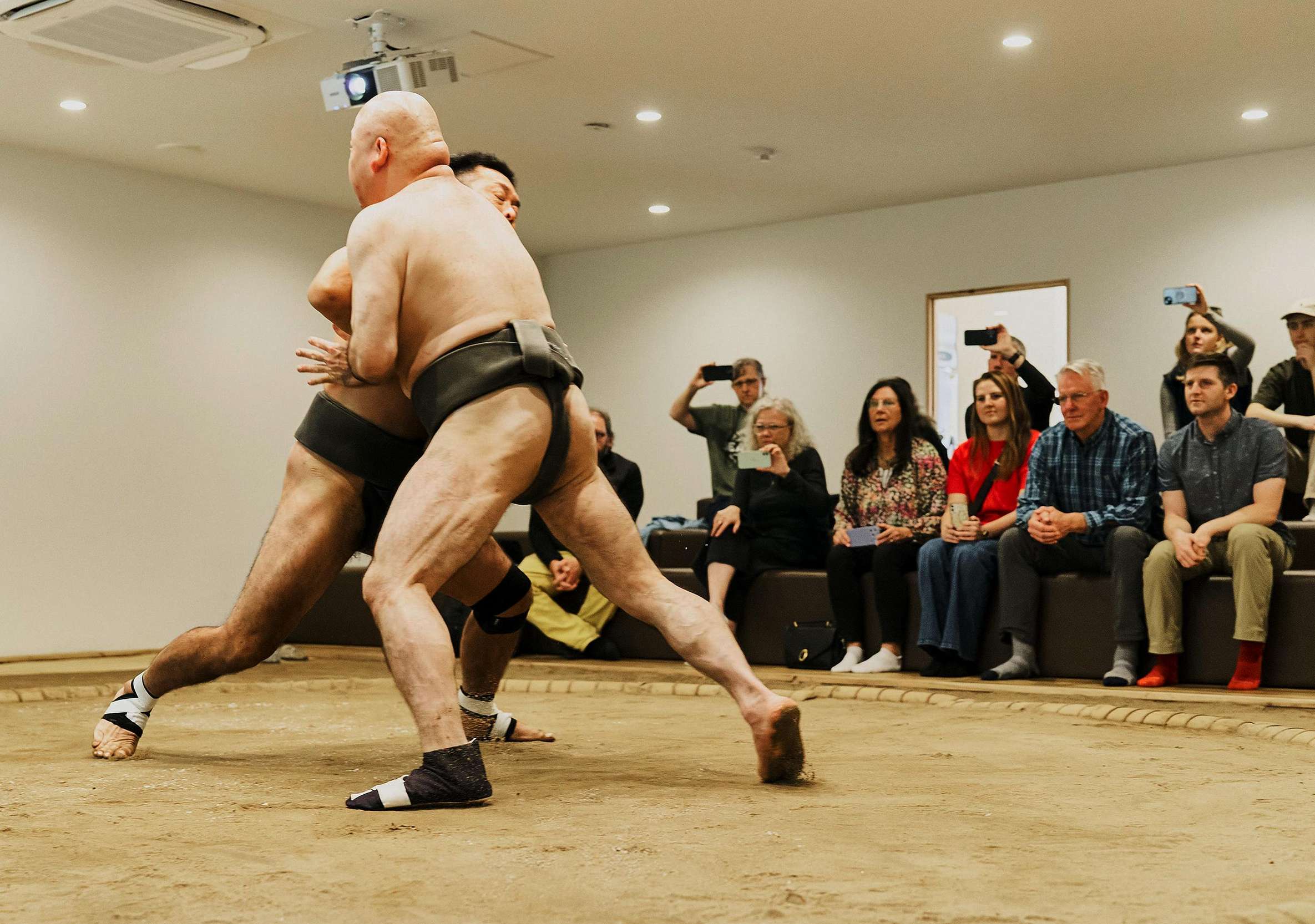
Three Osaka-area wrestling shows, three different evenings. The first is a compact experience near Hanazonochō Station: retired wrestlers demonstrate training routines and signature techniques, then fight a one-round match, and a handful of guests get to face a wrestler in the ring.
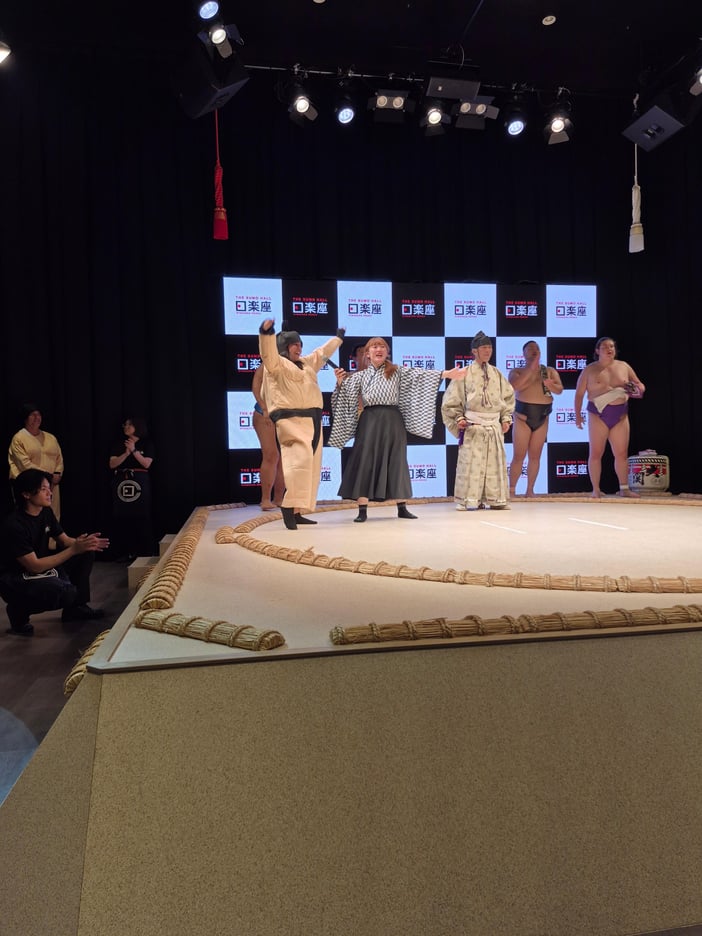
The second runs on the 8th floor of Namba Parks, where former professionals perform on a purpose-built stage with sound and lighting, and your ticket comes with a bento or snack bag and a drink.
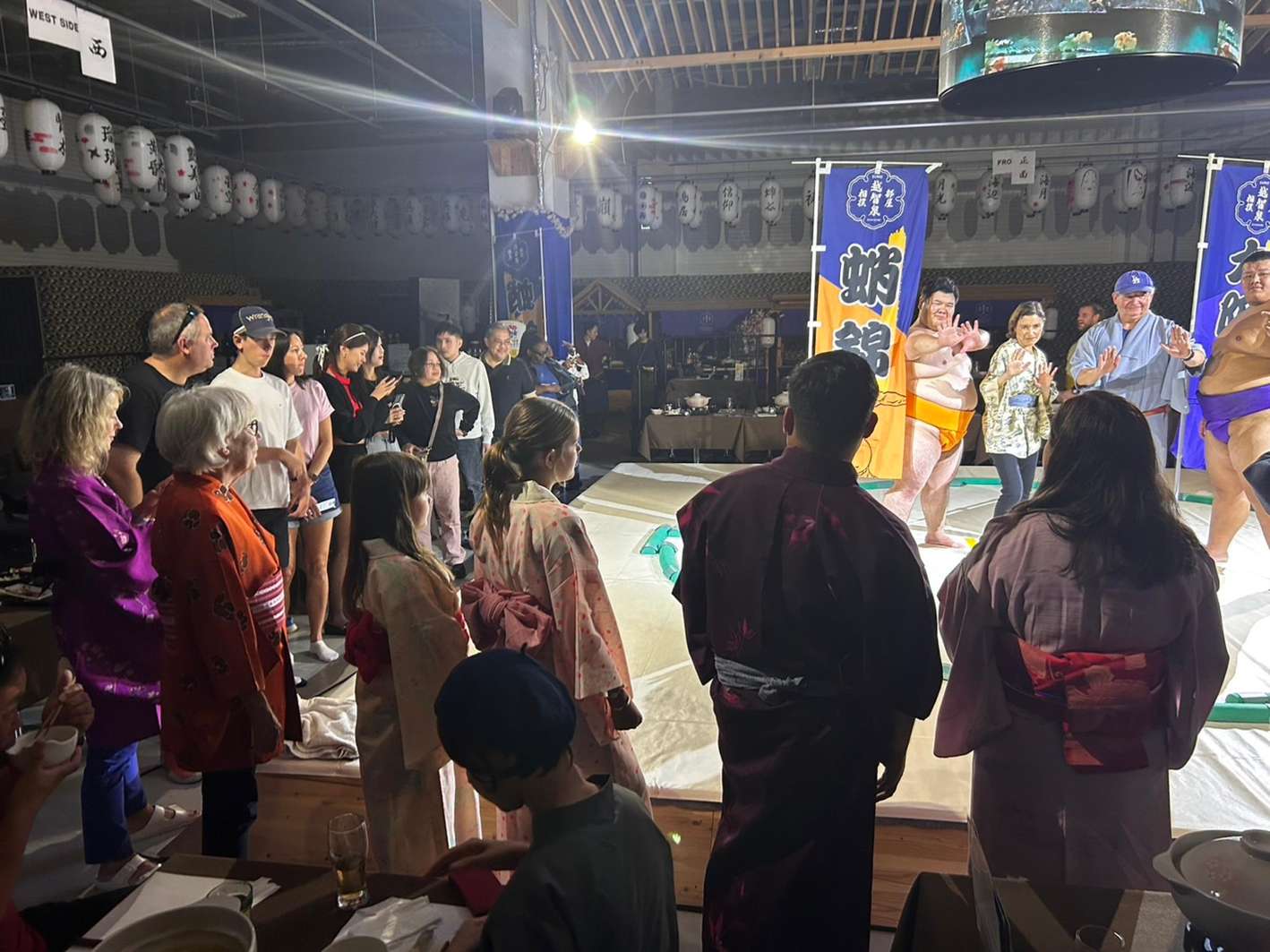
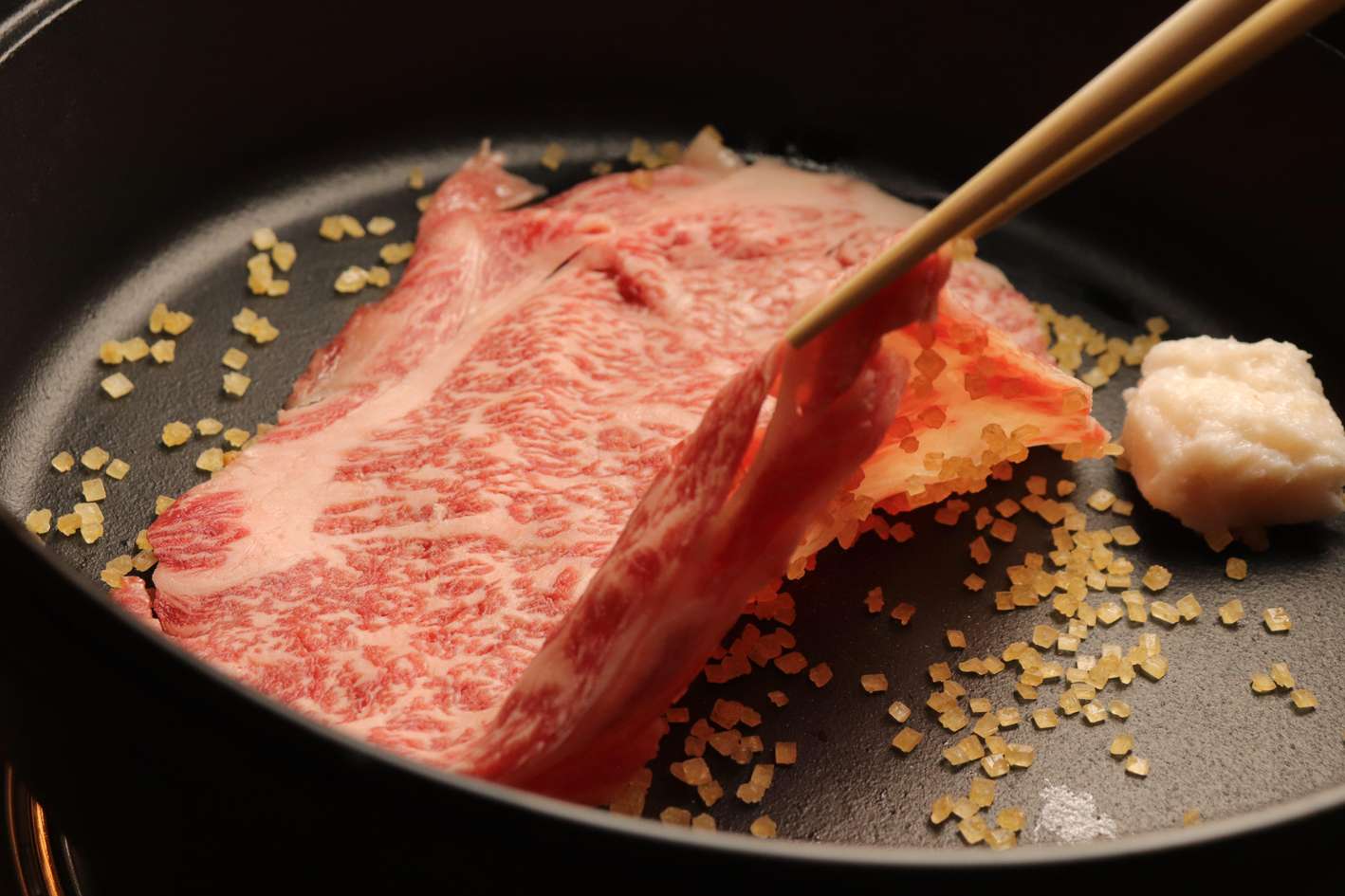
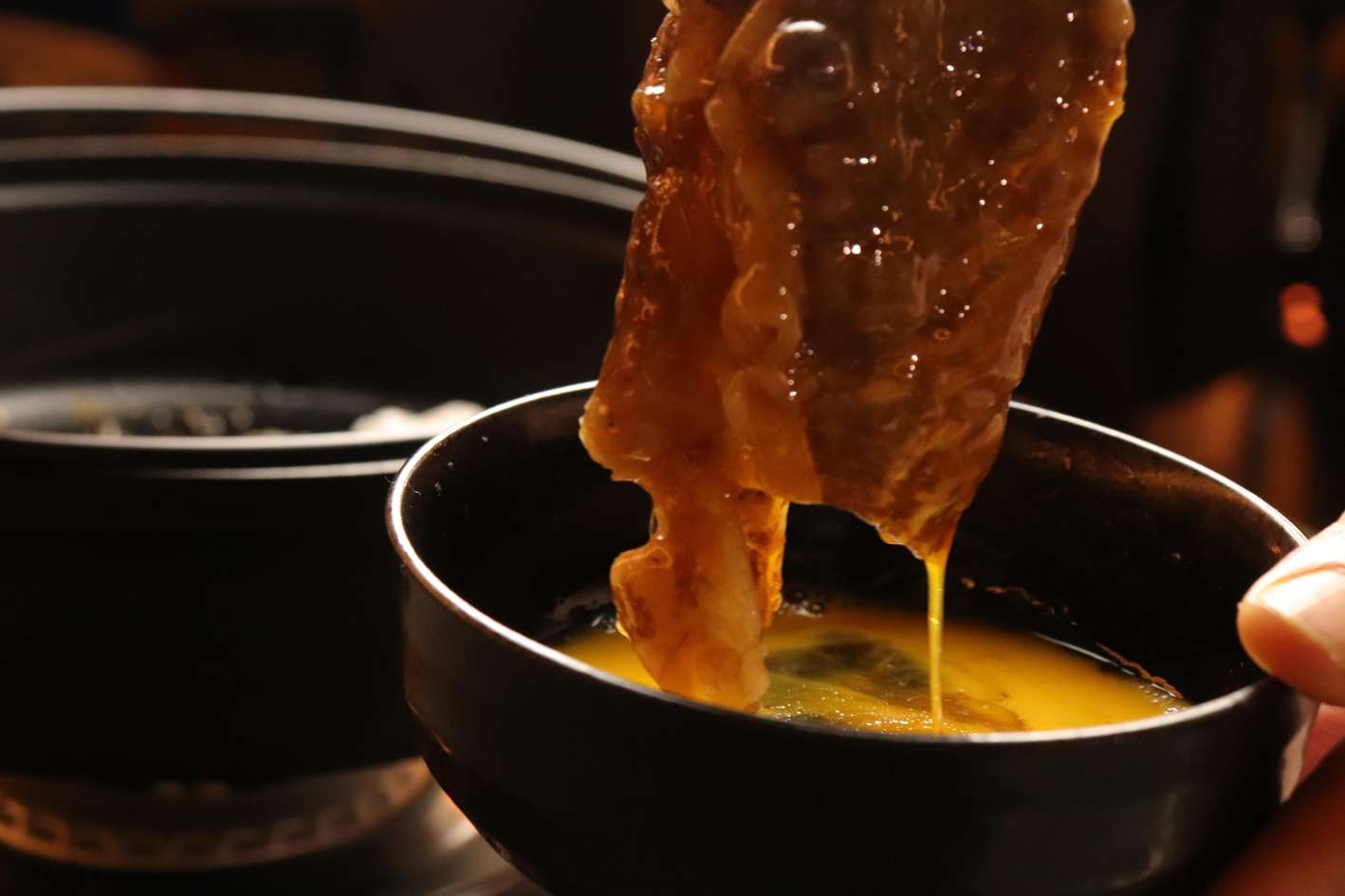
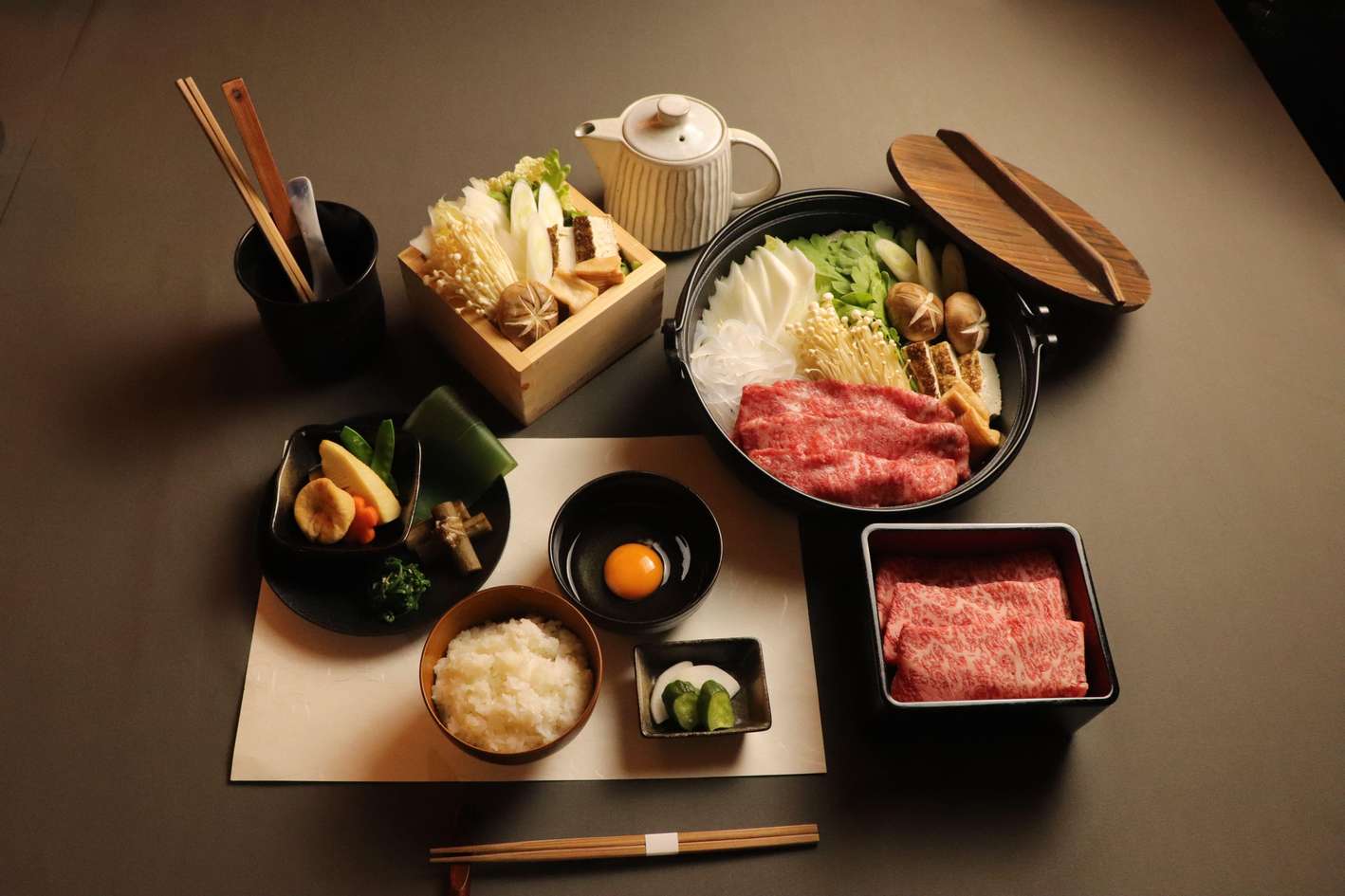
The third, in Tajiri, pairs a 40-minute show with a Wagyu sukiyaki dinner, a kimono try-on, and ring drills you can join yourself. All three are performed by retired professionals, with the rules and rituals explained in English.
Included
Authentic sumo demonstrationsEnglish-speaking MCSingle bout sumo matchTraining routinesOpportunity to face off against a sumo wrestler
What travelers loved about their wrestling show in Osaka
Booking a sumo wrestling show in Osaka - dates, seats and steps
01
Pick your date and time slot
Choose a date, then a slot. Sumo Hall Hirakuza normally runs one show a day from 5 pm to 7 pm, with a 8 pm second performance only on certain dates, so the 5 pm slot is usually the one you book.
Pro tipSame-day booking stays open online until 3 pm on the day of the show, and the hall sells leftover seats at the door from 3 pm, so a last-minute plan usually works.
RecommendedOn days when a 8 pm show exists, take the earlier slot if you want the full meal and commemorative photo format.
02
Choose your seating option
At Hirakuza you pick Standard or Premium seating, each with a bento or a snack bag included. The other Osaka show offers a basic ticket or versions with popcorn, snacks and a souvenir added.
Pro tipPremium seats sit directly against the ring stage, close enough to high-five the wrestlers as they pass, and that is the tier where the bento box is typically included instead of a snack.
Common mistakeBooking the cheapest option assuming food is included anyway. The snack bag and bento differ between tiers, so check what your seat comes with before paying.
03
Pay and check your confirmation
After payment you get a booking confirmation with your reserved seat and show time. Read the cancellation line before you commit: one Osaka show allows free cancellation up to 24 hours ahead, while the Hirakuza show is non-refundable.
ImportantThe Hirakuza booking is non-refundable, so if your Osaka plans might shift, the show with 24-hour cancellation is the safer ticket.
Pro tipReservations open about three months ahead of each performance month, and early booking mainly matters for the front-row premium seats, not for getting in at all.
04
Arrive early on the day
Hirakuza sits on the 8th floor of the Namba Parks complex, and the show runs about two hours including the meal and photo. Arrive by the starting time if you want to enter the sumo challenge lottery.
Common mistakeTurning up right at show time. Osaka shows can start noticeably later than the printed time, and arriving at the ticket time risks a rushed seat search, so aim for 15 to 20 minutes early.
RecommendedWear comfortable clothes, since you may be chosen to challenge a wrestler, and leave coats and large luggage with the staff on arrival.
What to know before you book an Osaka sumo wrestling show
Can stop the dayGood to knowGood news
01
ChoosingWhat it is, who it suits, when to go
3
Show times
The main show at Sumo Hall Hirakuza runs 5 pm to 7 pm, with a 8 pm slot added only on certain dates. Visitors at the later slot report the start running 40 to 60 minutes behind the ticket, so the 5 pm show is the safer pick.
Taking part
Joining the ring is optional at every show. The audience-challenge show has limited spots, and at the front-row venue one-on-one bouts are assigned by random selection when more guests want in than the ring allows.
Food
Hirakuza tickets include a bento or snack bag with a drink, and you can order takoyaki, yakisoba or chanko nabe during the show by QR code or at the bar. At the sukiyaki venue, dining happens during the performance in a shared pot per table.
02
BookingHow far ahead, and what happens if plans change
2
Booking
You rarely need to plan far ahead. The hall keeps same-day booking open online until 3 pm and sells leftover seats at the door from 3 pm, so last-minute plans usually work. Book early only if you want a front-row seat.
Cancellation
The rules differ between venues, so read the terms on the card before you pay. The audience-challenge show allows cancellation up to 24 hours in advance for a full refund, while the Hirakuza show ticket is non-refundable.
03
Before you goPapers, health, what to bring
2
Age limitsCan stop the day
At Sumo Hall Hirakuza, children aged 2 and younger are not permitted. Families with children around 10 to 12 are a core audience, and some Osaka-area venues let kids under 12 attend free.
What to wear
There is no dress code, but wear comfortable clothes and easy-to-remove shoes, since some seating has you take shoes off and you may be chosen to wear a sumo suit over your clothes. Keep your phone on silent during the bouts.
04
During the tourWhat is expected of you
1
Photos
Photos are welcome, and the shows end with a commemorative picture with the wrestlers. Flash is not allowed during the bouts, videos longer than one minute are prohibited, and staff may ask you to stop filming at their discretion.
The sumo wrestling show in Osaka, explained
Osaka hosts real grand sumo for two weeks in March. For the other ten months, the wrestling show in Osaka is the way in, and the slot you book decides how the evening runs.
Osaka
If you only remember three things
1
1. Book the 5 pm show; the 8 pm performance on selected dates can start 40 to 60 minutes behind the ticket.
2
2. Arrive 15 to 20 minutes before the printed time so the seat search is not rushed.
3
3. Wear clothes you can move in, because the lottery may put you in the ring in a sumo suit.
Why a wrestling show in Osaka fills the gap between tournaments
Grand sumo happens six times a year, and Osaka gets one of those six: the March basho, two weeks of real competition in the smallest venue of any tournament city. If your trip lands in any other month, the options narrow fast.
Morning practice in Osaka is largely unavailable outside the tournament run-up, so the wrestling show in Osaka is what most visitors see, and the dinner shows dominate the scene for good reason.
That works out better than it sounds. The wrestlers at these shows are former professionals, the techniques and rituals are the real ones, and the whole program is built for people who arrive knowing nothing.
You get an English-speaking host, a seat close to the ring, a meal, and a chance to step onto the clay yourself.
A traveler's note
A must in Osaka. The team was amazing throughout: sumo history presentation, live demo, then you can practice and wrestle the wrestlers. Thanks Shota and Yuki for the energy!
The one thing to plan around is the calendar. Shows run every month of the year, but each venue publishes its own schedule, and a handful of days a month go dark. Check before you fix the rest of your evening.
Tour for this
Osaka: Sumo Experience with Live Show & Audience Challenge4.9★ (2,124) · 1 - 1.5 hours · Free cancellation
What happens during the two hours of the wrestling show in Osaka
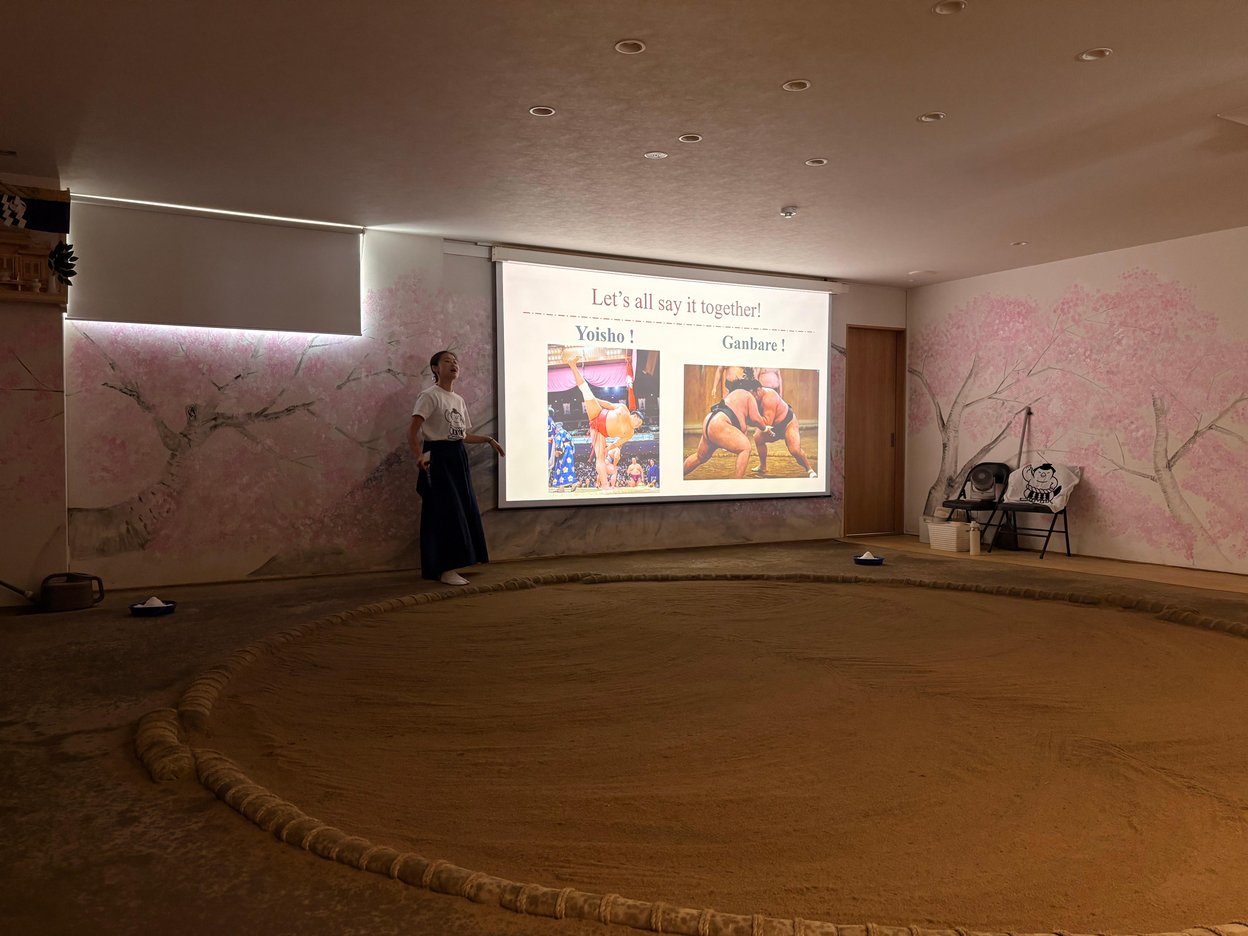
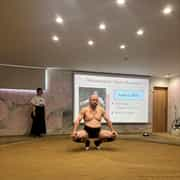
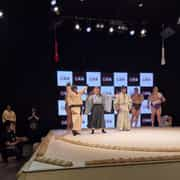
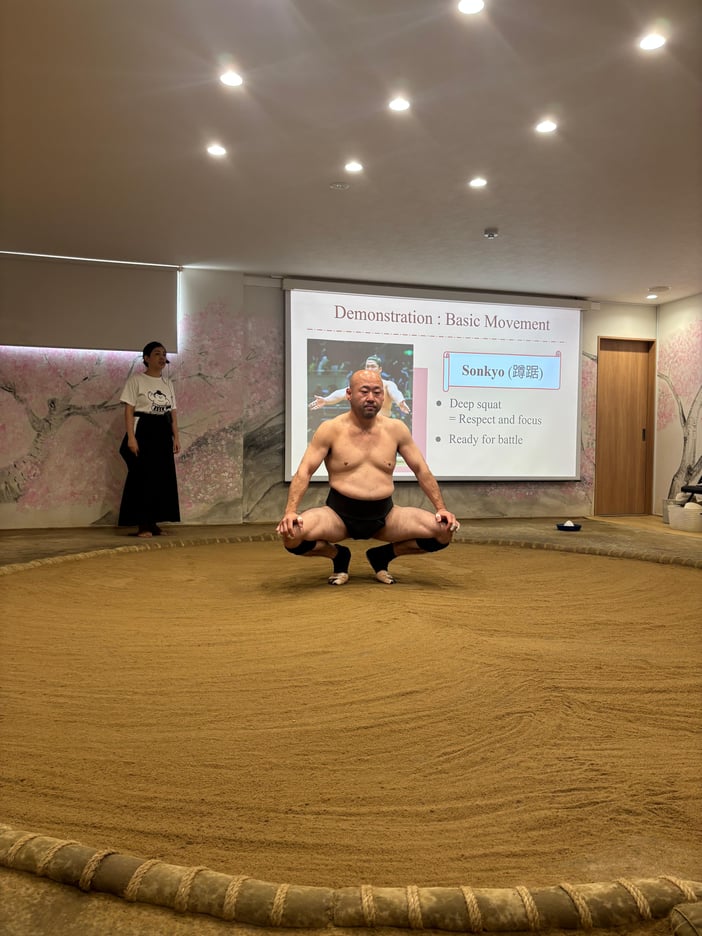
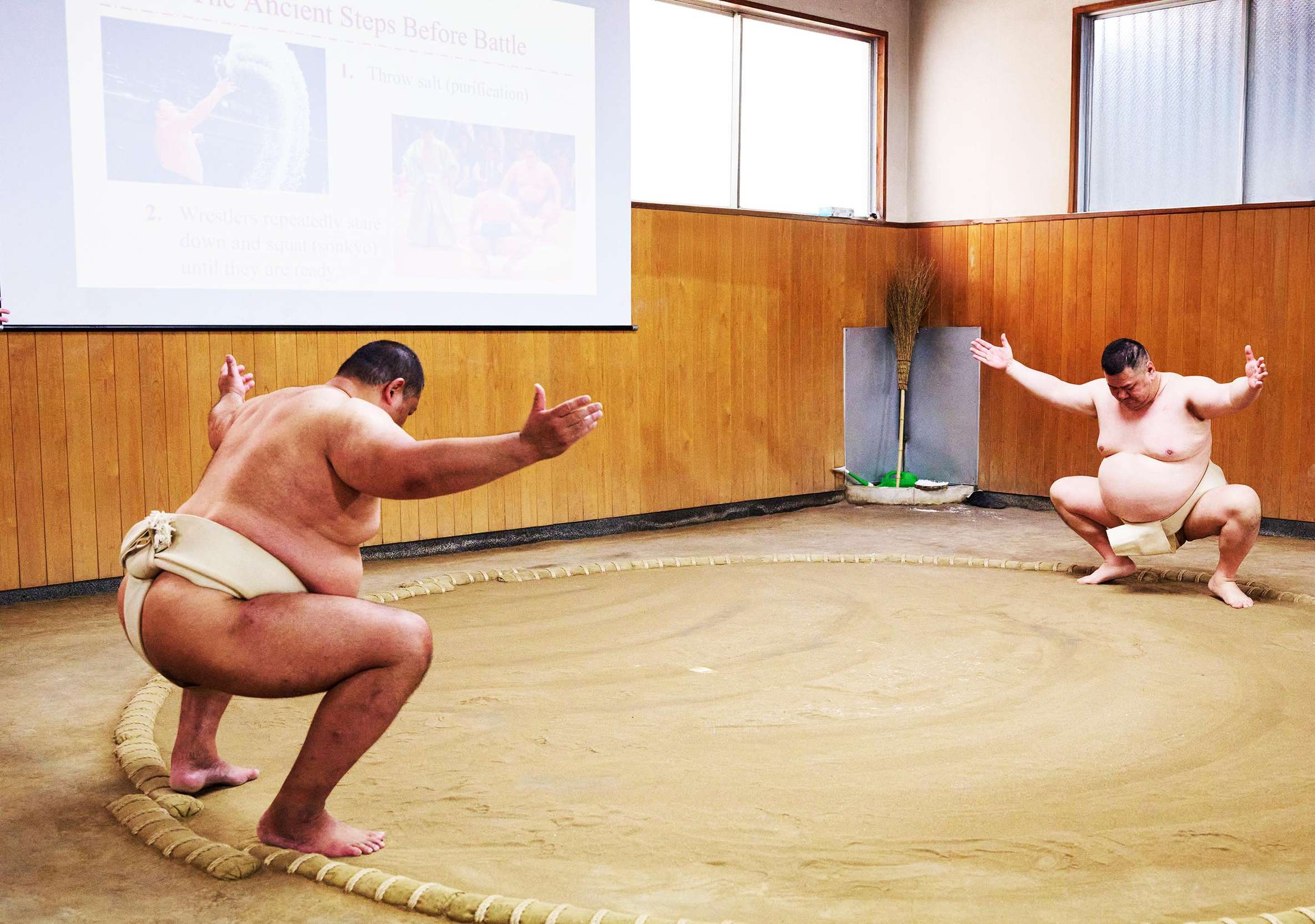
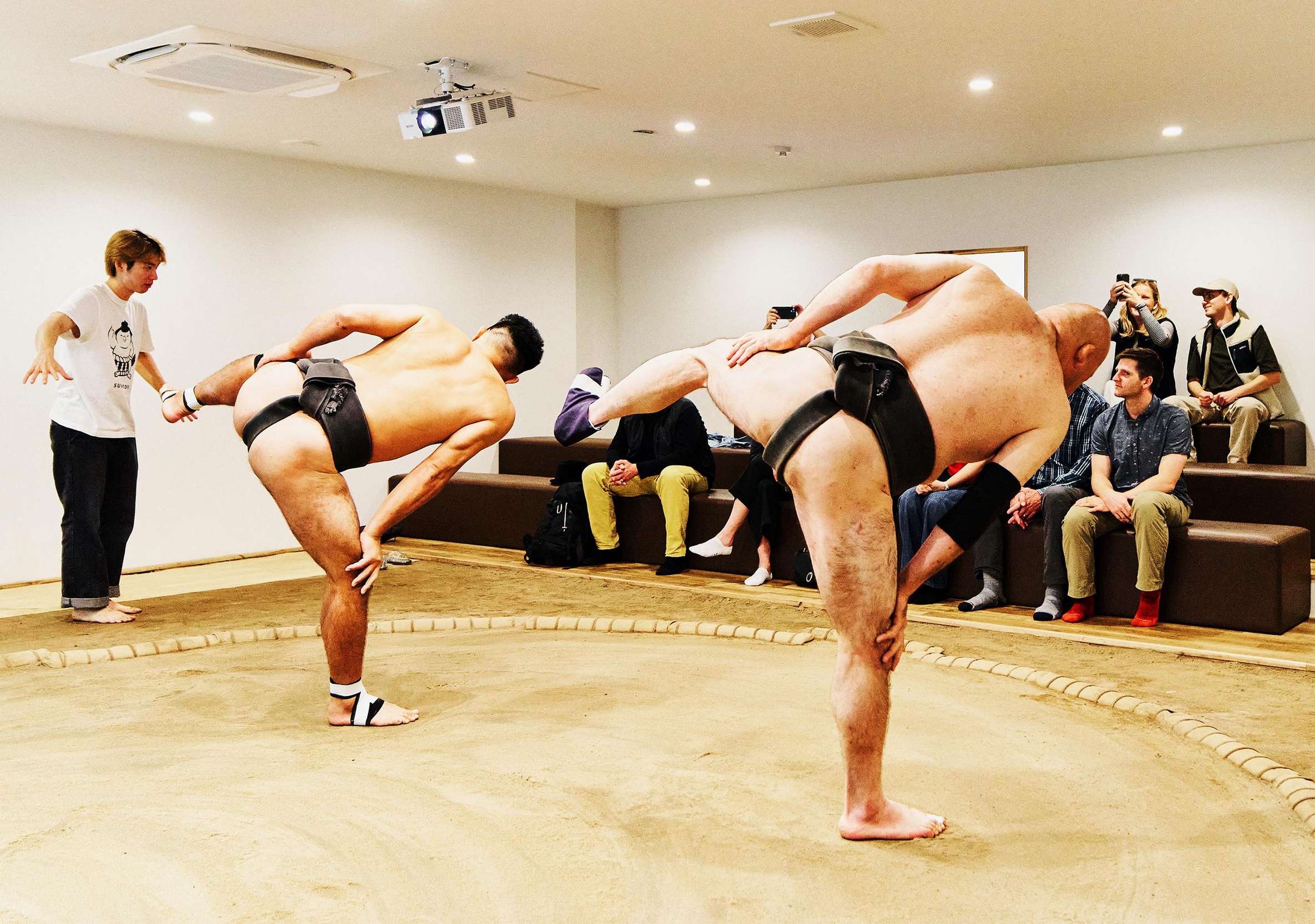
The evening runs about two hours, and the wrestling itself is only part of it. An English-speaking host opens with the educational section: the lives of the wrestlers, the stretches, the sacred rituals, the rules and the signature techniques called kimarite. Retired professionals then demonstrate what all of that looks like at full power.
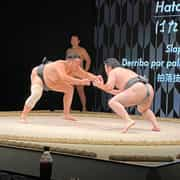
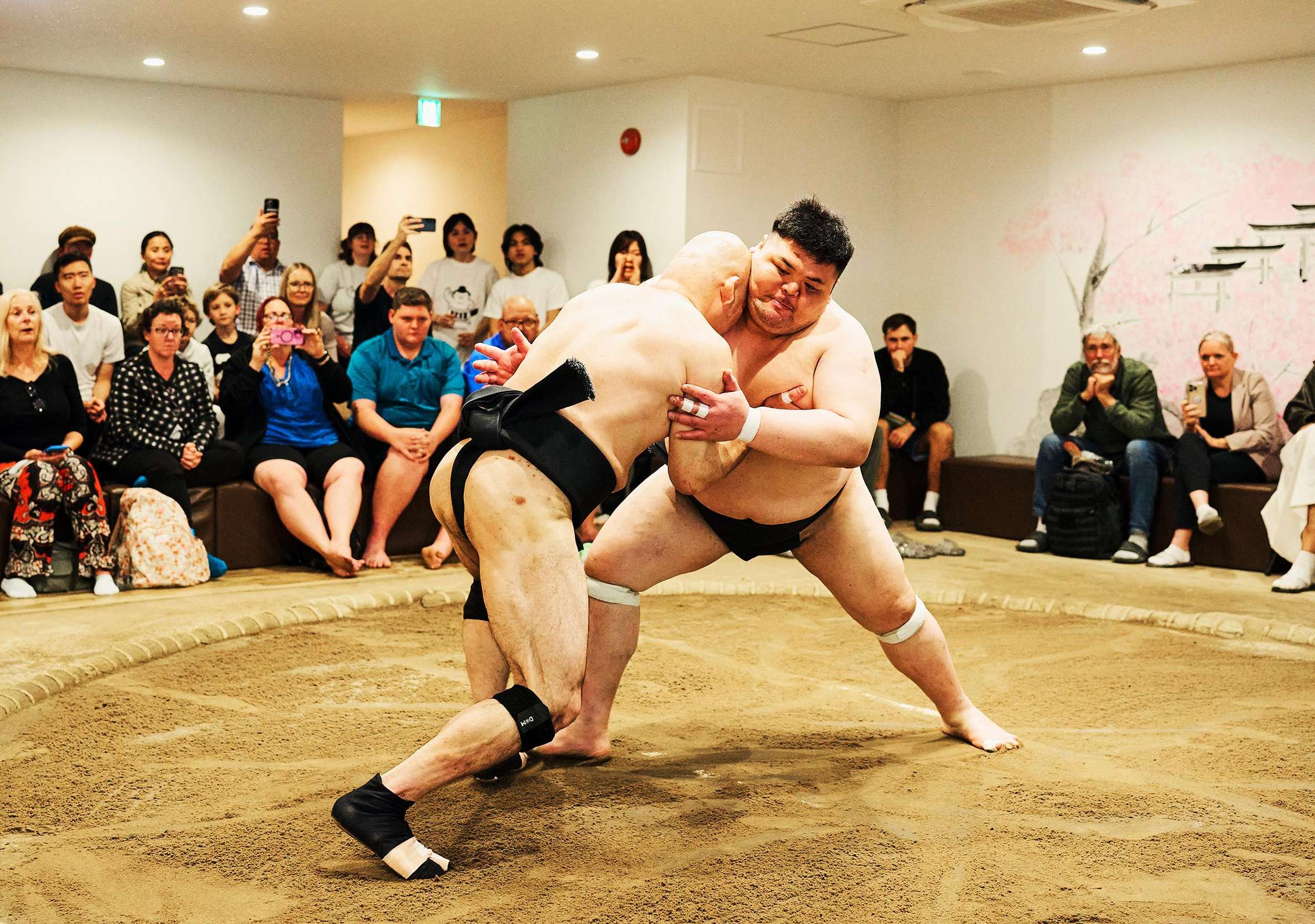
The second half lasts about 40 minutes and holds the bouts. Three matches run in a tournament format between the wrestlers, and the audience sumo challenge sits in this part too.
At sumo exhibition shows generally, the wrestling often fills only the last 15 to 30 minutes, so expect a full program with the bouts arriving near the end.
The show at Sumo Hall Hirakuza runs in the 5 pm to 7 pm slot, which covers the meal and the optional commemorative photo session as well as the performance, which itself runs about 60 minutes.
The whole thing is performed in English, with the etiquette and rules explained as they happen, so no Japanese is needed to follow a single bout.
That structure is why the meal and the photo fit inside the ticket: the program is built around them, and the bouts arrive late enough that you are settled in your seat when the ring action starts.
Arrival and seating Educational opening: history, rituals, rules and techniques Tournament bouts and the audience challenge Commemorative photo session
Tour for this
Osaka: Sumo Show with Bento or Snack at Sumo Hall Hirakuza4.4★ (553) · 2 hours
Can you get in the ring at a wrestling show in Osaka?
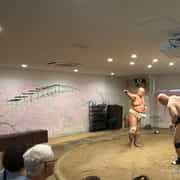
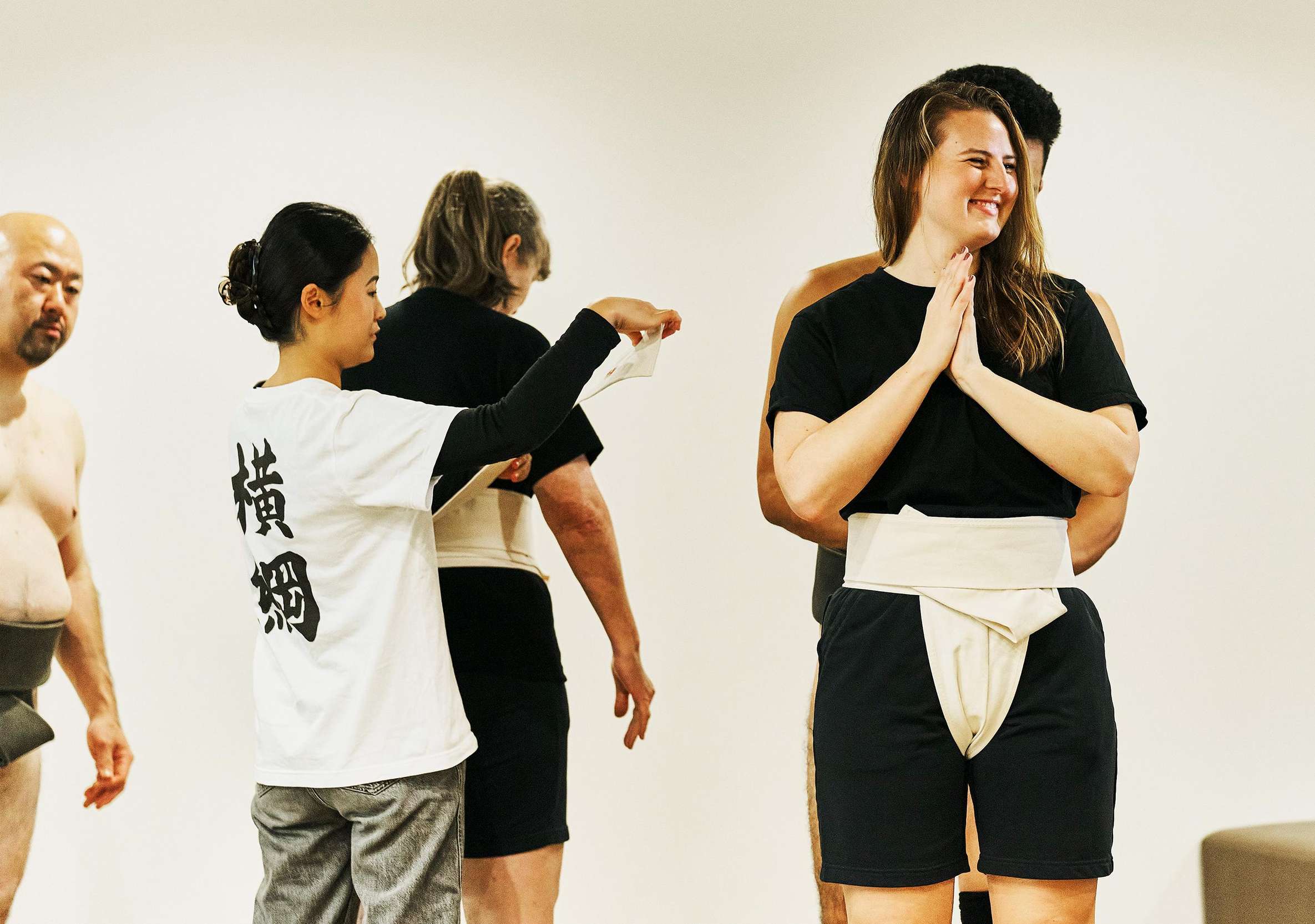
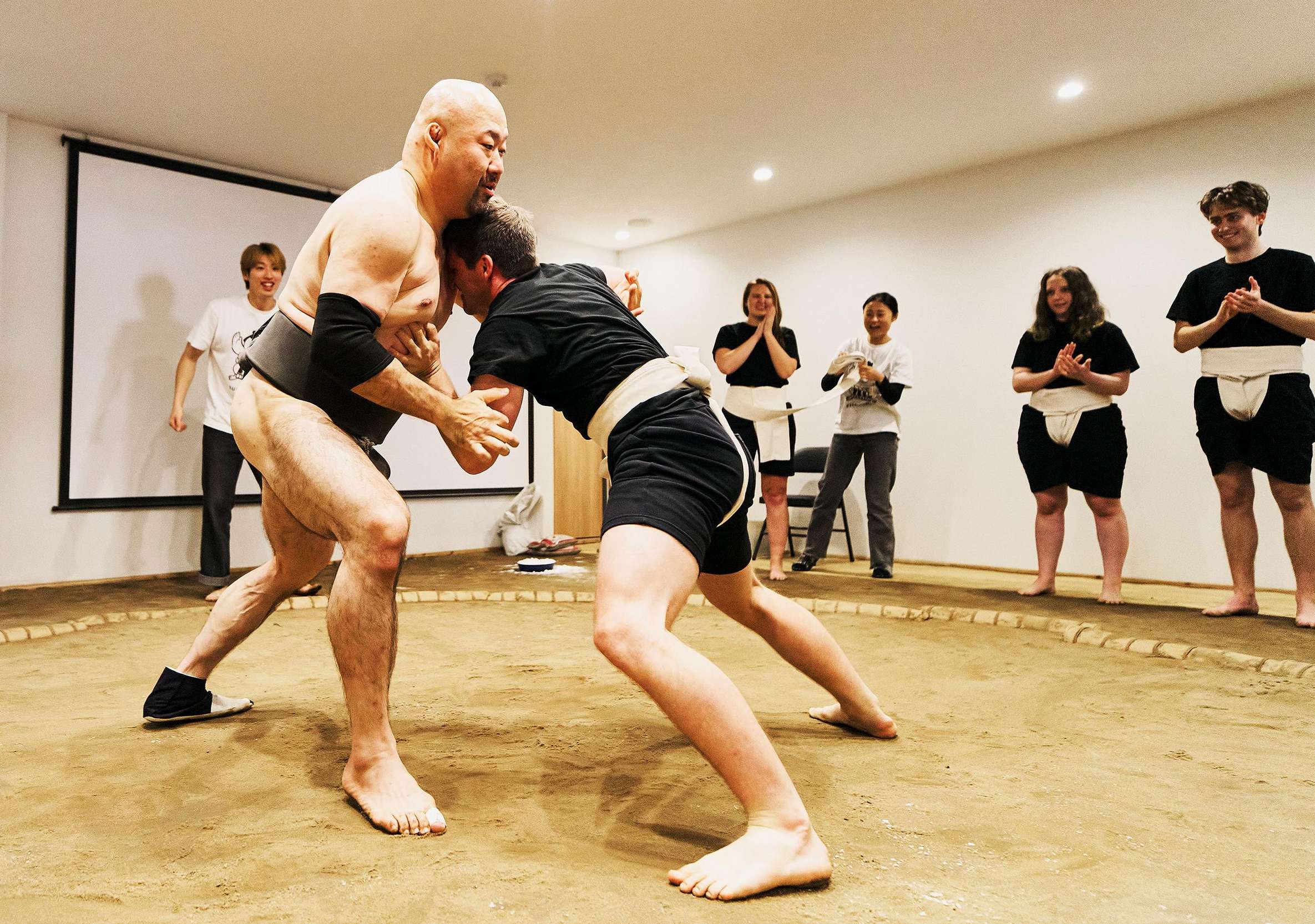
Yes, and it is the part people talk about afterwards. At the shows, a lottery picks guests from the audience to face a wrestler in the ring, usually wearing a sumo suit over their own clothes.
Spots are limited, so being chosen comes down to luck, and taking part is always optional. If you would rather watch, nobody pushes you onto the clay.
One Osaka venue goes further. At Ochiizumibeya you can do ring training drills and one-on-one bouts with a former rikishi, with selection applied if more guests want to participate than the ring can hold. That is the closest a visitor gets to real training in the city.
Know what you are signing up for. Physical activity in a ring naturally carries a small risk of injury, and guests joining ring training or matches there acknowledge and accept that at their own discretion.
These shows are built as entertainment, so set your expectations at fun. Wear something you can move in either way, since the suit goes on over your own clothes.
Tour for this
Osaka Sumo Show with Front-Row Seating & Wagyu Sukiyaki4.7★ (45) · 2.5 hours · Free cancellation
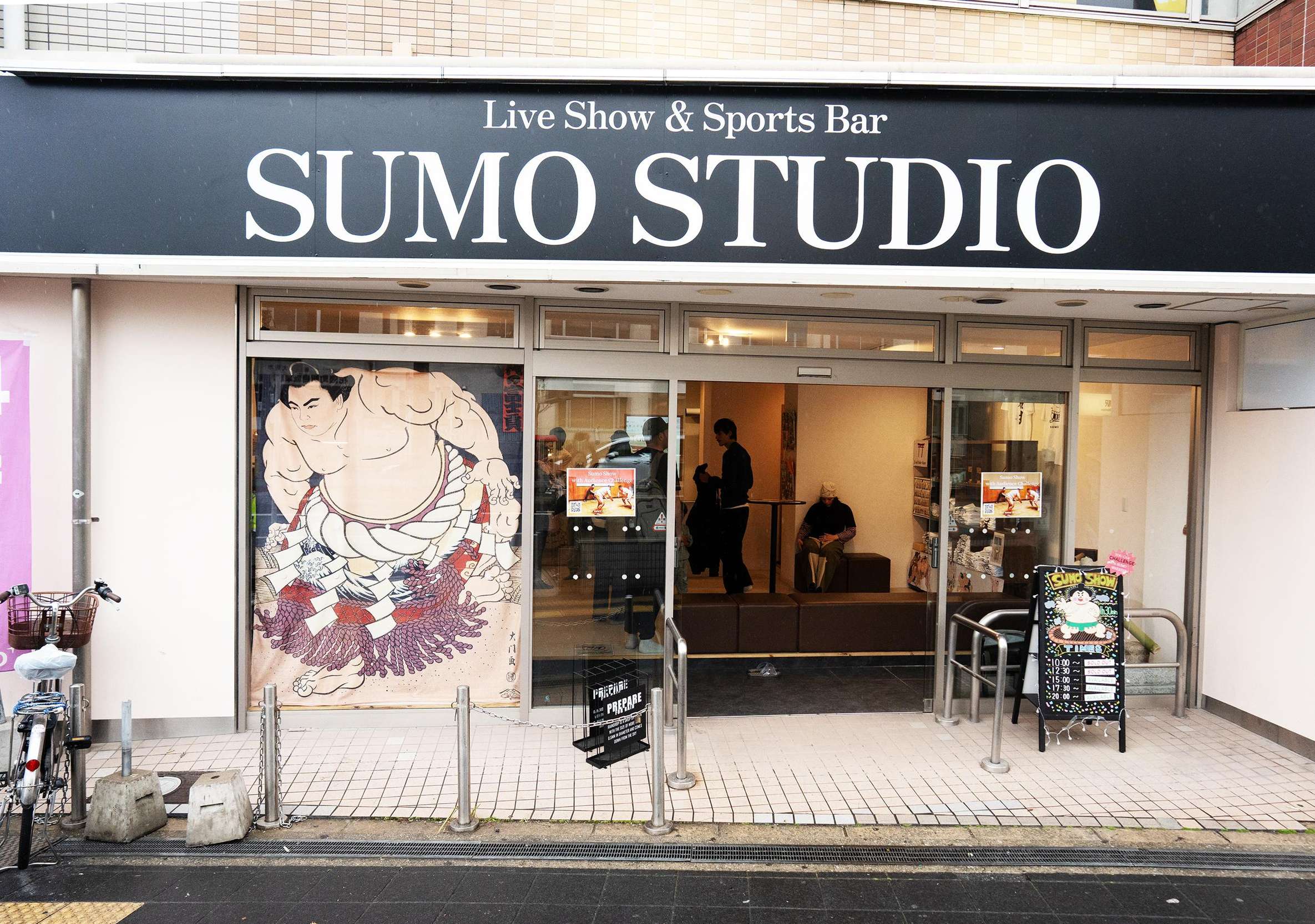
Three formats run in the Osaka area, and they suit different evenings. Sumo Studio Osaka sits directly in front of Exit 4 of Hanazonochō Station and runs a live show performed by retired wrestlers, with the chance to face one in the ring.
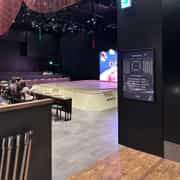
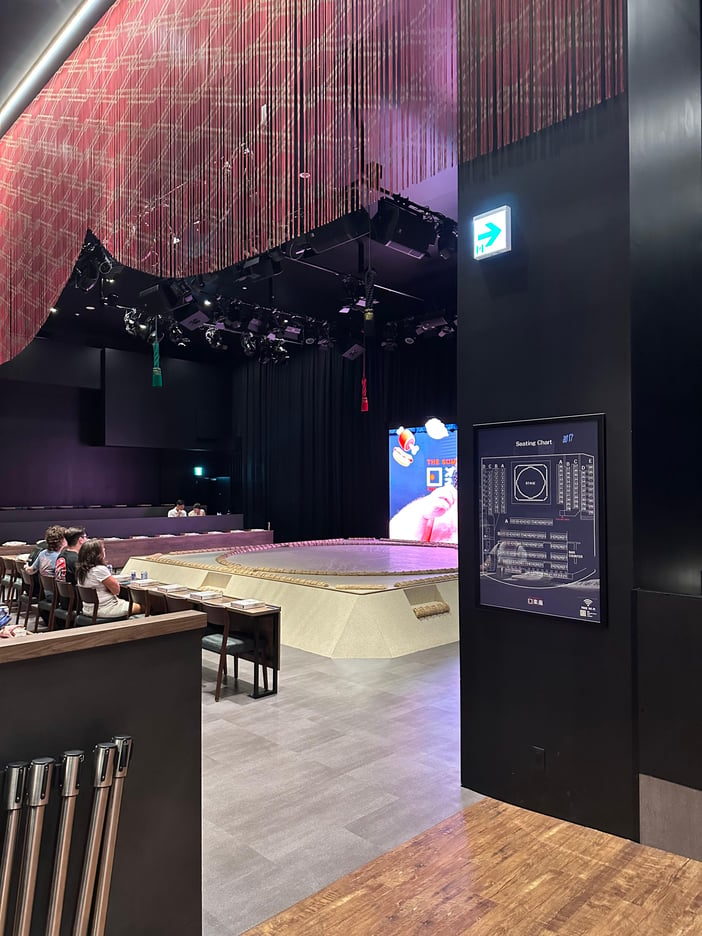
Sumo Hall Hirakuza in Namba is a theatrical production that uses sound, light and imagery around a life-sized ring, and it is one of the closest sumo dining options to central Osaka.
Ochiizumibeya hosts a live show of about 40 minutes with wagyu sukiyaki, out at Rinku Town, one stop from Kansai Airport.
The Hirakuza show is the one built for families, couples and a night out, with a bento or snack bag and a drink included. The Studio show leans interactive, with limited challenge spots. Ochiizumibeya is the pick if you want dinner and the shortest performance, or if you are staying near the airport.
Hanazonochō Station, Exit 4
live show by retired wrestlers, limited challenge spots
Sumo Hall Hirakuza
8th floor, Namba Parks
theatrical show with bento or snack bag, lottery challenge, commemorative photo
Ochiizumibeya
Rinku Town, one stop from Kansai Airport
40-minute show with wagyu sukiyaki, ring training and one-on-one bouts
Hanazonochō Station, Exit 4
Sumo Hall Hirakuza
8th floor, Namba Parks
Ochiizumibeya
Rinku Town, one stop from Kansai Airport
live show by retired wrestlers, limited challenge spots
Sumo Hall Hirakuza
theatrical show with bento or snack bag, lottery challenge, commemorative photo
Ochiizumibeya
40-minute show with wagyu sukiyaki, ring training and one-on-one bouts
None of them is a real grand sumo bout with stakes on the line. If that is what you want, the March tournament is the answer.
Tour for this
Osaka Sumo Show with Front-Row Seating & Wagyu Sukiyaki4.6★ (43) · 2.5 hours · Free cancellation
When to see the wrestling show in Osaka, and how late it runs
Shows run all year, every month, with no dark season. What you need is the venue's monthly calendar, because a handful of days a month close.
August 2026 had five closed days, January 2027 has five, and October 2026 had none at all. The closures follow no fixed weekly day off, so check your exact date.
The 5 pm to 7 pm slot is the standard choice and runs daily. A second show at 8 pm to 10 pm is added only on selected dates, so on most days the early show is the only option.
On the dates a late show exists, the 5 pm slot is still the safer pick if you want the full meal-and-photo format.
Now the honest part about timing. The printed start time is not the real one at the late show.
Visitors at the 8 pm slot in late May 2026 reported people still walking in at 8:50 pm with the show starting at 9 pm, a full hour behind the ticket, and another in April 2026 reported a start 40 minutes late.
Plan for the 8 pm show to begin roughly 40 to 60 minutes after the ticket time. Wherever you sit, arrive 15 to 20 minutes early. Performances are cancelled with refunds when performers fall ill or get injured.
How busy it gets, month by month
July: 5 out of 5 for how busy it gets.
HighestApr to May, Jul to Oct
In betweenMar, Nov
LowestJun, Dec to Feb
Darker: a higher how busy it gets score, out of 5
Tap a month to read it.
How busy it gets, month by month How busy it gets (out of 5): Jan 1, Feb 1, Mar 3, Apr 4, May 4, Jun 2, Jul 5, Aug 4, Sep 4, Oct 5, Nov 3, Dec 1
The quiet months are January, February and December, and the peaks are July and October. In the busy months, book earlier and treat the monthly calendar as essential reading before you lock in the rest of your evening.
Front row or standard at the wrestling show in Osaka
The hall holds about 180 reserved seats arranged around a life-sized sumo ring stage, and the seat you pick changes the evening more than you might expect. Premium seats are the front row, about 30 of them, 12 directly in front of the stage and 18 to the sides.
They sit against the ring itself, close enough that guests high-five the wrestlers as they pass. Premium BL seats are box-style sofas for up to four people, and each one comes with a guaranteed Sumo Challenge spot for one person.
About 140 standard seats sit behind them on an elevated incline. The venue states that thanks to that slope every seat gets a clear view of the whole show, so the cheaper tier loses nothing in visibility.
Front row changes the feeling from watching to being part of the action, while the incline keeps the view equal across every tier.
Practical details worth knowing: there is no dress code, you cannot bring your own food or drinks in, coats and large luggage go with the staff on arrival, and the toilets are outside the entrance to the right. Wheelchair spaces exist but are limited, so contact the venue as soon as you can.
What first-timers don't know: even cheap seats see the whole show thanks to the incline, Premium is where the bento comes with the ticket, and wheelchair spaces are limited so contact the venue early
So the seat choice comes down to atmosphere and the meal. Premium puts the wrestlers within high-five range and pairs with the bento, Standard keeps the same clear view for less, and a BL box gives a group of up to four a guaranteed challenge spot.
Getting to the wrestling show in Osaka's Namba hall
The hall sits on the 8th floor of Namba Parks, at 2-10-70 Namba-naka in Naniwa-ku, right above Namba station. From the Nankai Namba station gate it is a 3-minute walk along a signed path to Namba Parks.
From the Osaka Metro Namba station, allow about 10 minutes on foot. Walking across Namba as a whole takes about 26 minutes, roughly 2 km.
Coming from Umeda, the fastest route is the Midosuji Line to Namba, about 8 minutes, then a 10-minute walk, about 18 minutes door to door with one change.
You can also walk the whole way in about 30 minutes, 2.5 km, if the weather is kind. By car it is about 12 minutes from Namba Station without traffic, or 15 minutes from Umeda.
One detail saves confusion inside the complex: take elevator No. 3 to the 8th floor. Namba Parks is a large shopping building, and the wrong elevator leaves you a floor or two short with a maze of shops between you and the ring.
Getting to Sumo Hall Hirakuza from Namba and Umeda
Getting to Sumo Hall Hirakuza from Namba and Umeda
Whichever route you choose, the last step is the same: elevator No. 3 to the 8th floor. Allow the extra walk if you come from the Metro side, and you will reach the hall with time to spare before the printed start.
There is no dress code. Comfortable, casual clothing is what the venue recommends, and the reason is specific: if the lottery picks you for the Sumo Challenge, you may need to pull a sumo suit over your own clothes.
A stiff jacket or a tight skirt makes that awkward. Dress as you would for any indoor theater, and skip swimwear or anything too revealing.
Footwear matters more than people expect. Some seating areas have you remove shoes, so easy-to-slip-off shoes save fumbling in a dark room while the show is running.
Bring three things with you: your ticket confirmation, a payment card, and a camera or smartphone.
The card matters because extra food and drinks are ordered by QR code at your seat or bought at the bar counter, and the camera matters because photos are welcome and the night ends with a commemorative photo session with the wrestlers.
Leave outside food and drink at the hotel, including bottles and cans, since neither is permitted in the hall. Coats and large luggage can go with the staff on arrival, so you do not need to wrestle a suitcase into a reserved seat.
Pro tipWear something you can move in, since you may need to pull a sumo suit over your clothes if the lottery picks you
Eating at the wrestling show in Osaka, from bento to chanko nabe
The meal is built into the ticket. A standard ticket at Hirakuza includes either a Hirakuza Bento or a Hirakuza Snack Bag, along with one drink. The workshop option swaps that for a bowl of chanko nabe and a drink.
If that is not enough, more is on sale inside: light meals such as special chicken chanko nabe, takoyaki and yakisoba, plus alcoholic and soft drinks, ordered by QR code at your seat or bought at the bar counter. Outside food and drinks, bottles and cans included, are not permitted.
The chanko nabe is worth ordering at least once, because it is the wrestlers' own food.
It is a hearty one-pot stew, typically chicken simmered with napa cabbage, carrots, green onions and fried tofu in a dashi or chicken-stock broth, created to build wrestlers' bodies and eaten communally after training, senior wrestlers first.
During tournaments it is made only with chicken, for a reason the shows will happily explain: a wrestler should stay on two legs like a chicken, because falling onto all fours like a four-legged animal means losing, and in the old days four-legged meat was avoided for luck.
At Ochiizumibeya, dining during the performance is possible too, though the lighting may be dimmed and the sukiyaki arrives in a large shared pot per table.
Cheering and photos at the wrestling show in Osaka
The room has unwritten rules, and they are easy once you know them. Cheering for a specific wrestler is fine, and applause after a strong throw or a decisive win is encouraged.
Cheering against an opponent is discouraged, as are shouting, booing and thumbs-down gestures. Keep the atmosphere civil and follow the MC's instructions if you are chosen for the ring challenge.
Phones go on silent during the bouts, and calls happen outside the seating area. Photography is allowed, but flash is prohibited during the show because it startles the wrestlers and disturbs the performance.
Videos longer than one minute are prohibited, and staff may ask you to stop filming at their discretion. Live streaming and drones are out too.
During a bout, stay in your seat; standing up for a better angle is not allowed, and neither is getting up for the bathroom mid-bout. Never touch the dohyo, the wrestlers or the referee. Hats that block the view of people behind you come off.
On the question women ask most: women watch freely, in the arena and at these shows alike. The traditional restriction in professional sumo applies only to entering or touching the ring, and spectating has never been restricted, so it does not stop anyone from enjoying the evening from a reserved seat.
Families are a core audience for these shows, with children around 10 to 12 at the center of it, and some Osaka-area venues let kids under 12 attend free.
The format explains why: a host explaining everything in English, comedy worked into the program, and a lottery that puts audience members in the ring, all of which keeps children engaged through the full two hours.
The age rules are clear at each venue. At Sumo Hall Hirakuza Osaka, ages 2 and younger are not permitted. Sumo Studio Osaka uses age bands covering 13 to 99, 2 to 12, and 1 and younger, so check which band your child falls into when you book.
Set this beside the alternative. At a real stable practice, children must be silent, still observers, no talking, no fidgeting, no moving around, and families with young children who cannot manage that are pointed toward a show or a tournament instead.
A wrestling show in Osaka asks none of that. Kids can react, laugh and cheer within the room's rules, and if the lottery lands on them, they get a story from the ring that outlasts the trip.
Near the wrestling show in Osaka, before and after
The show venues sit in central Osaka, so the evening does not have to start and end at the hall. A short walk takes you to Ikasuri Shrine, 353 m away, a quiet stop before the crowds file in.
Utsubo Park, about 750 m off, gives you greenery and space to walk off a bento.
Nakanoshima Park by the river is roughly 1.2 km away, and it doubles as a museum cluster: the Museum of Oriental Ceramics, the Osaka Science Museum and the National Museum of Art all sit within about a 15-minute walk.
That geography matters with the 5 pm to 7 pm slot. You can spend the afternoon at Nakanoshima, walk to the hall, take the early show with the meal included, and still have a full evening ahead of you in Namba afterwards.
If you take the late 8 pm show instead, remember it can start up to an hour behind the ticket, so build the earlier hours loosely, since the finish time can slip.
A wrestling show in Osaka is real technique staged as entertainment, performed by retired professionals and explained in English from start to finish. It works best as a full evening: meal, show, photo.
Book the 5 pm slot, arrive 15 to 20 minutes early, and check the venue's monthly calendar for the handful of dark days. If your trip hits March, buy tournament tickets instead.
Go ifYou are traveling with children around 10 to 12, the core audience for these showsYour trip falls outside March, when Osaka hosts the grand tournamentYou want sumo explained in English from a seat close to the ring
Skip ifYou want competitive bouts with real stakes; the March Grand Sumo Tournament is the real thingYou cannot sit through a two-hour evening that may start 40 to 60 minutes late
Our pick to book
Osaka: Sumo Experience with Live Show & Audience Challenge4.9★ (2,124) · 1 - 1.5 hours · Free cancellation
Sumo wrestling show Osaka - your questions answered
Short answers to what visitors ask before booking a sumo show in Osaka.
Is there a sumo wrestling show in Osaka?
Yes. Osaka has several: a show with an audience challenge near Hanazonochō Station, Sumo Hall Hirakuza in Namba with a bento or snack included, and a wagyu sukiyaki dinner show with a live bout. All are performed by retired professional wrestlers.
Are the wrestlers real sumo wrestlers or actors?
They are retired professionals who competed in the Japan Sumo Association ranks. The demonstrations and techniques are genuine. The bouts themselves are staged for entertainment, so the outcome is decided in advance rather than fought for ranking points.
Can I step into the ring and challenge a wrestler?
At the Sumo Studio show you can face off against a wrestler, though spots are limited. At Hirakuza, guests chosen by lottery wear a sumo suit and take on a wrestler in the ring. At the sukiyaki dinner show, one-on-one bouts are assigned by selection when more people want to fight than the ring allows.
Is the Osaka sumo show in English?
The Hirakuza show is performed entirely in English, with etiquette, rules and techniques explained as it goes. The Sumo Studio show has an English-speaking MC. You need no Japanese to follow either one.
Can you eat during the show?
Yes. Hirakuza tickets include a bento or snack bag with a drink, and you can order takoyaki, yakisoba or chanko nabe from the bar or by QR code at your seat. At the sukiyaki dinner show, wagyu sukiyaki is served in a shared pot at each table while you watch.
How close do you sit to the ring?
Hirakuza holds about 180 reserved seats around a life-sized ring stage. Premium front-row seats sit right against the stage, close enough to high-five the wrestlers as they pass. Standard seats sit behind on a raised slope, so every seat has a clear view.
How long does a sumo show in Osaka last?
The Hirakuza show runs about two hours from 5 pm to 7 pm, including the meal and a commemorative photo. The performance itself is roughly an hour, with the wrestling matches and audience challenge in the second half. The sukiyaki dinner show runs about two and a half hours.
Do the shows run every day, and how far ahead should I book?
Hirakuza runs all year with no dark season, but it closes on a handful of irregular days each month, so check the calendar for your date. Same-day booking usually works: online sales stay open until 3 pm on the day. Book early mainly if you want a front-row seat.
Is a sumo show worth it if I can't get tournament tickets?
Travelers who miss the March tournament say the dinner show is a fun substitute. You see real technique from former professionals and can enter the ring yourself, which a tournament never allows. If your dates do overlap the March basho, the real tournament is the stronger pick.
More on the wrestling show in Osaka, and where to go next