




3 hours·English, German
4.9(6)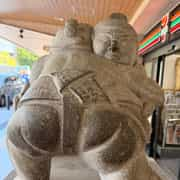
Tokyo: Discover the World of Sumo History & Lunch
Free cancellationIn English and German
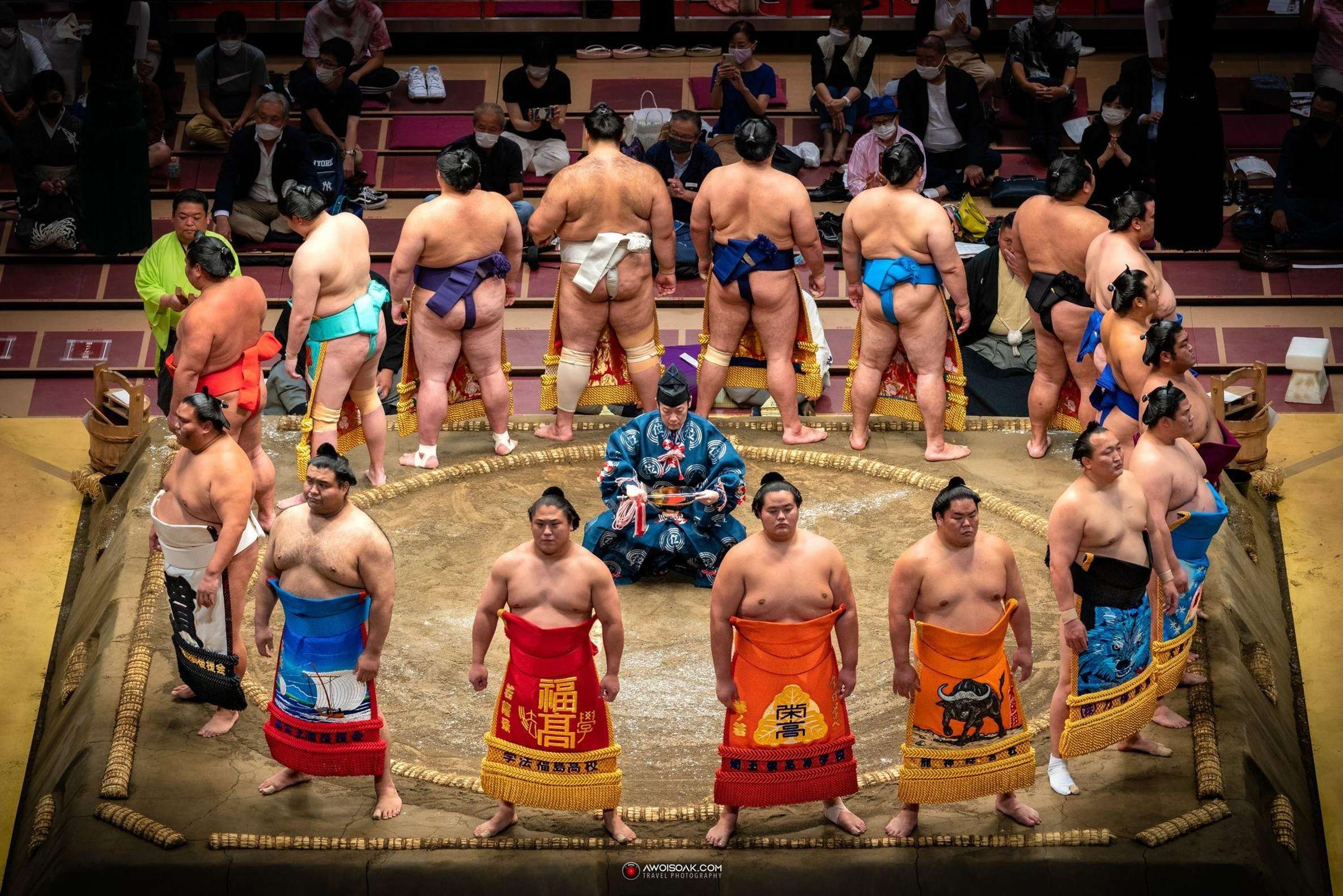
Find Tokyo's sumo district and explore it with someone who knows every corner. Walk Ryogoku with an expert English-speaking guide, visit Ekō-in Temple where tournaments began, see the Kokugikan and finish with chanko nabe, the same hot pot wrestlers eat. Many visitors call it a highlight of their trip, even if they knew little about sumo before.
"Exactly as promised, nothing to add. As a French speaker I worried the explanations would be hard to follow, but Mike's English was clear and simple. I'd even recommend it to non-fluent speakers."

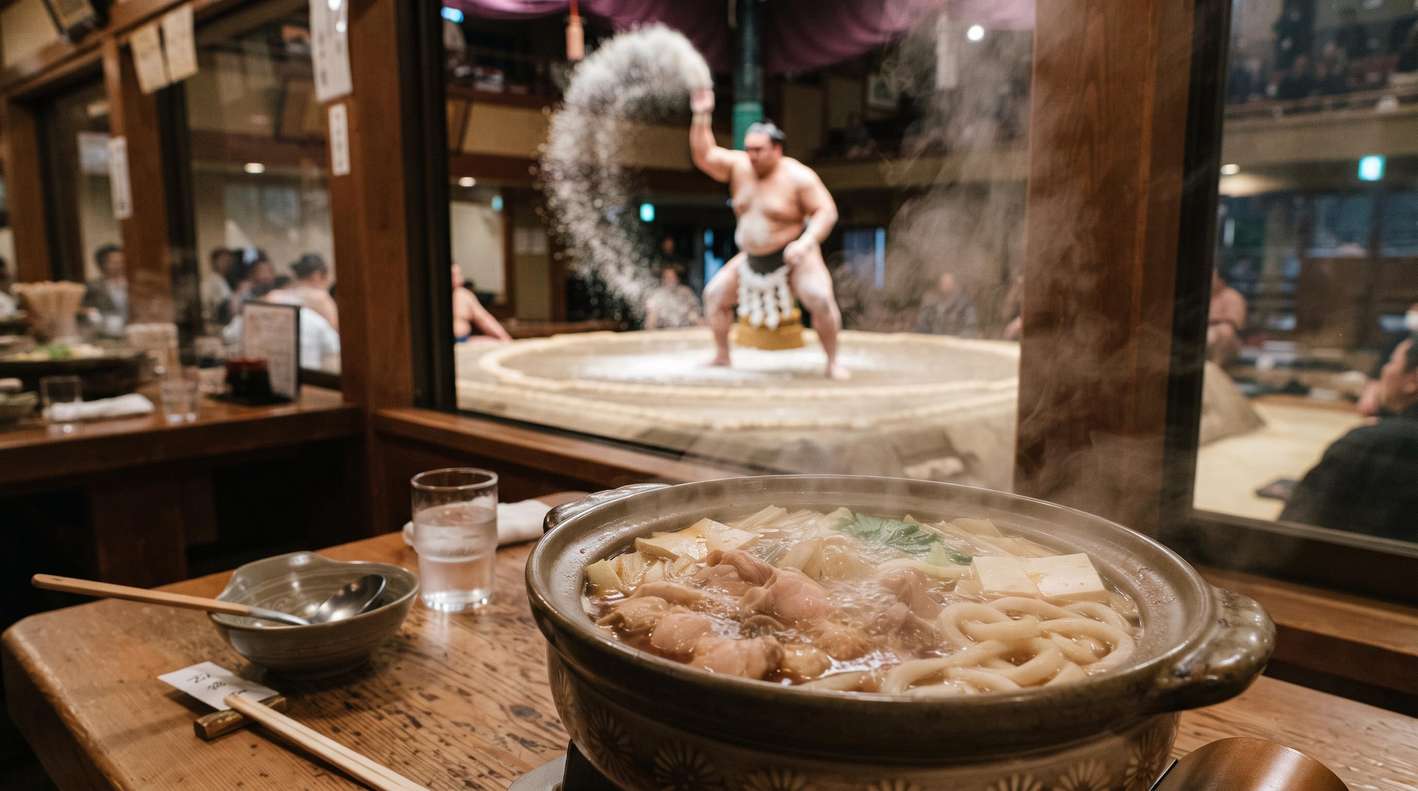
Ryogoku, two stops from Akihabara, is where sumo has lived for 250 years. This guide walks you through the neighborhood, its history, and the three best ways to experience it.
Tokyo's sumo district is Ryogoku in Sumida ward, about 13 minutes from Tokyo Station on the JR Sobu Line with a change at Akihabara.
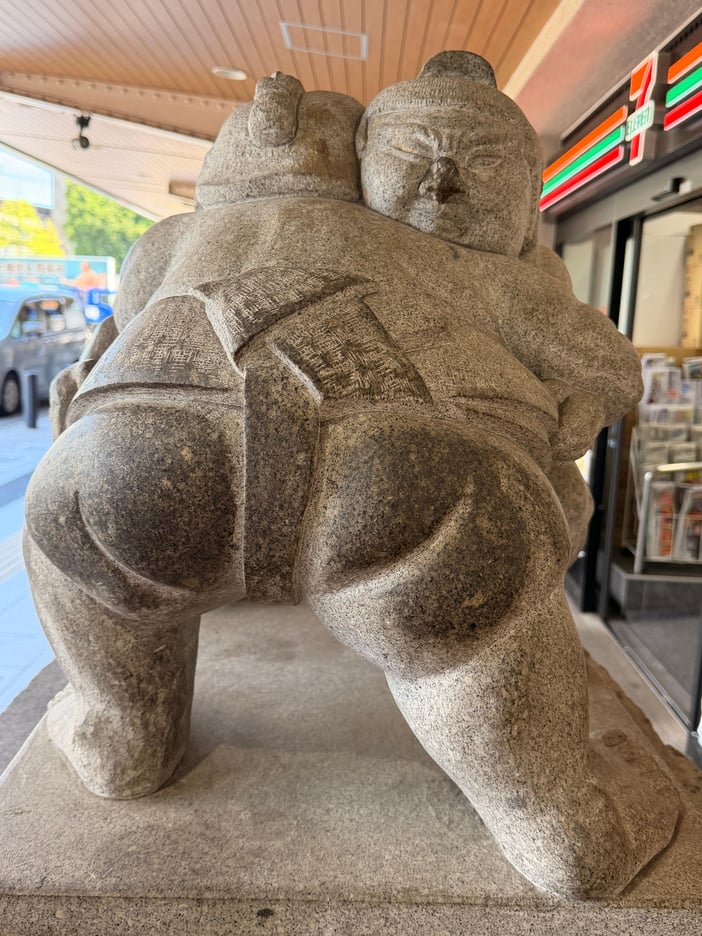
Kokugikan-dori Street runs from the station to the Kokugikan arena, past yokozuna statues and handprints.
Ekō-in Temple hosted the first Ryogoku tournament in 1768 and regular tournaments from 1833; the first Kokugikan opened in 1909.
Book a stable practice visit about two months ahead, and avoid tournament months when stables close to visitors.
A self-guided walk covers the free sights in two to three hours; guided history walks, stable visits and lunch shows each add something different.
Book a stable visit about two months ahead, and if your dates fall in January, May or September, plan on the Sumo Museum, Ekō-in Temple and a chanko nabe lunch instead of watching practice.
The district has a name, and it is Ryogoku. It sits in Sumida ward on the east bank of the Sumida River, a compact old downtown neighborhood a few minutes' walk from Ryogoku Station, served by both the JR Sobu Line and the Toei Oedo subway.
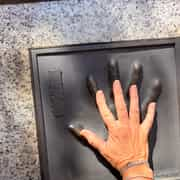
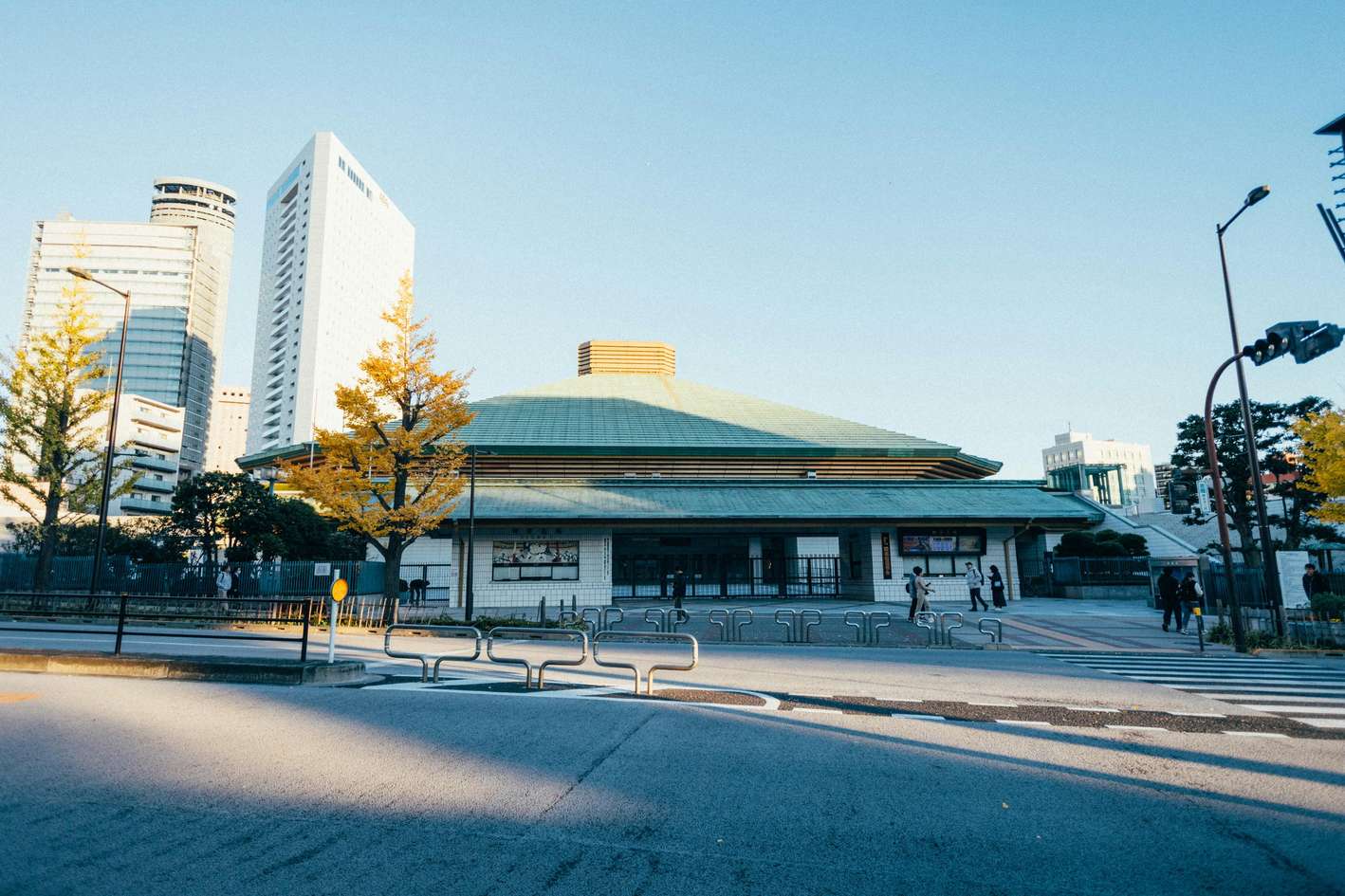
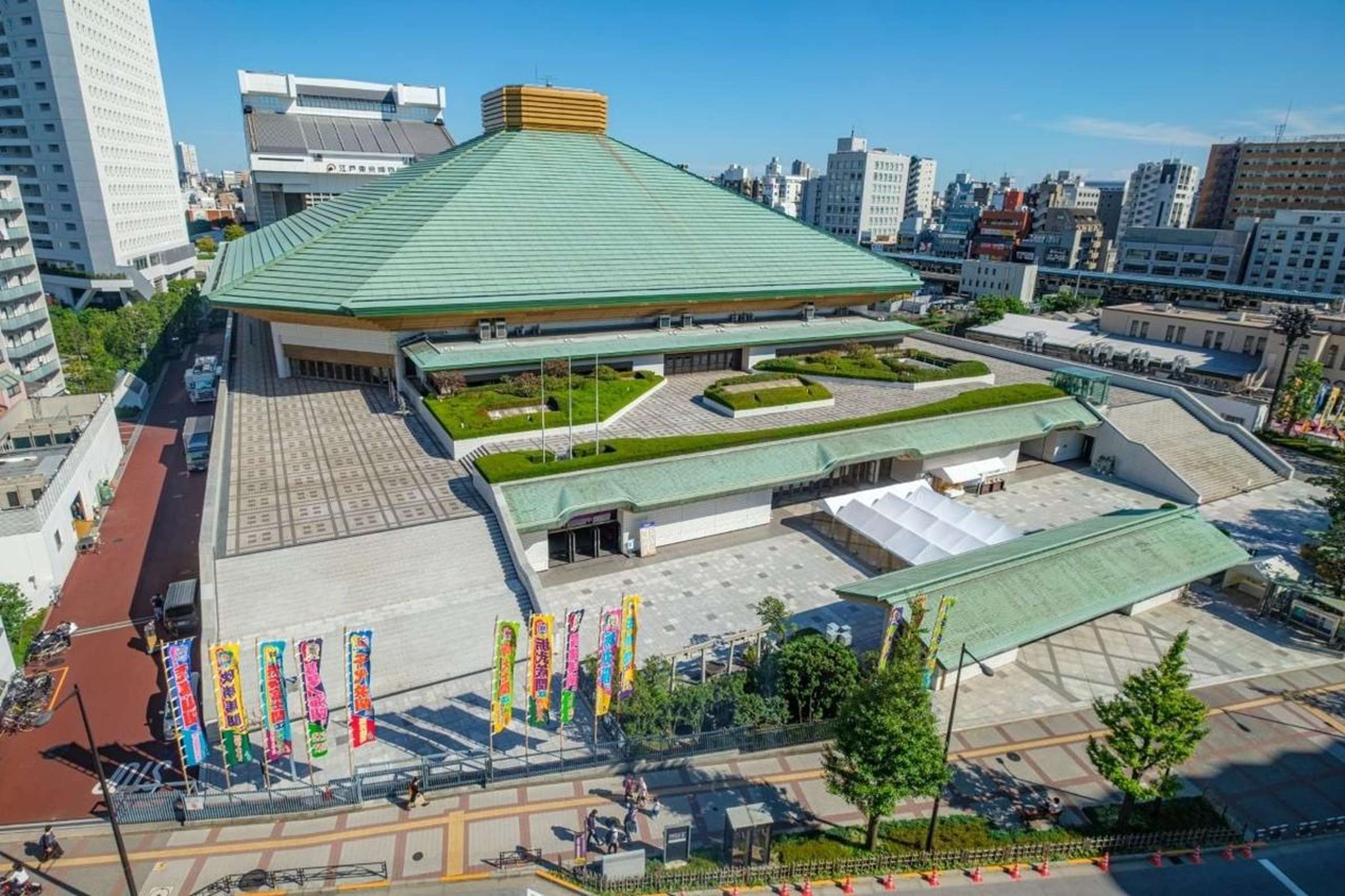
Kokugikan-dori Street is its spine, running from the station straight to the Ryogoku Kokugikan sumo hall. Walk it and you pass statues of famous yokozuna wrestlers, their handprints set into both sides of the street. Basha-dori, Kuramaebashi-dori and Hokusai-dori are the other streets that cross the district.
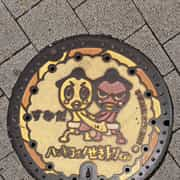
Ryogoku is the heartland of professional sumo: the Kokugikan hosts three of the six annual grand tournaments, and the streets around it hold training stables, chanko-nabe restaurants and sumo statues. The station itself is sumo-themed, which most visitors walk straight past.
From Tokyo Station the trip takes about 13 minutes. Two stops from Akihabara, and you are in sumo country.
Ekō-in Temple sits two minutes from the station, the temple where wrestlers pray before tournaments. The Sumo Museum waits inside the Kokugikan, free on non-tournament days, though during a tournament it is reserved for ticket holders. The Edo-Tokyo Museum is about five minutes away, and the Sumida Hokusai Museum a short walk beyond that.
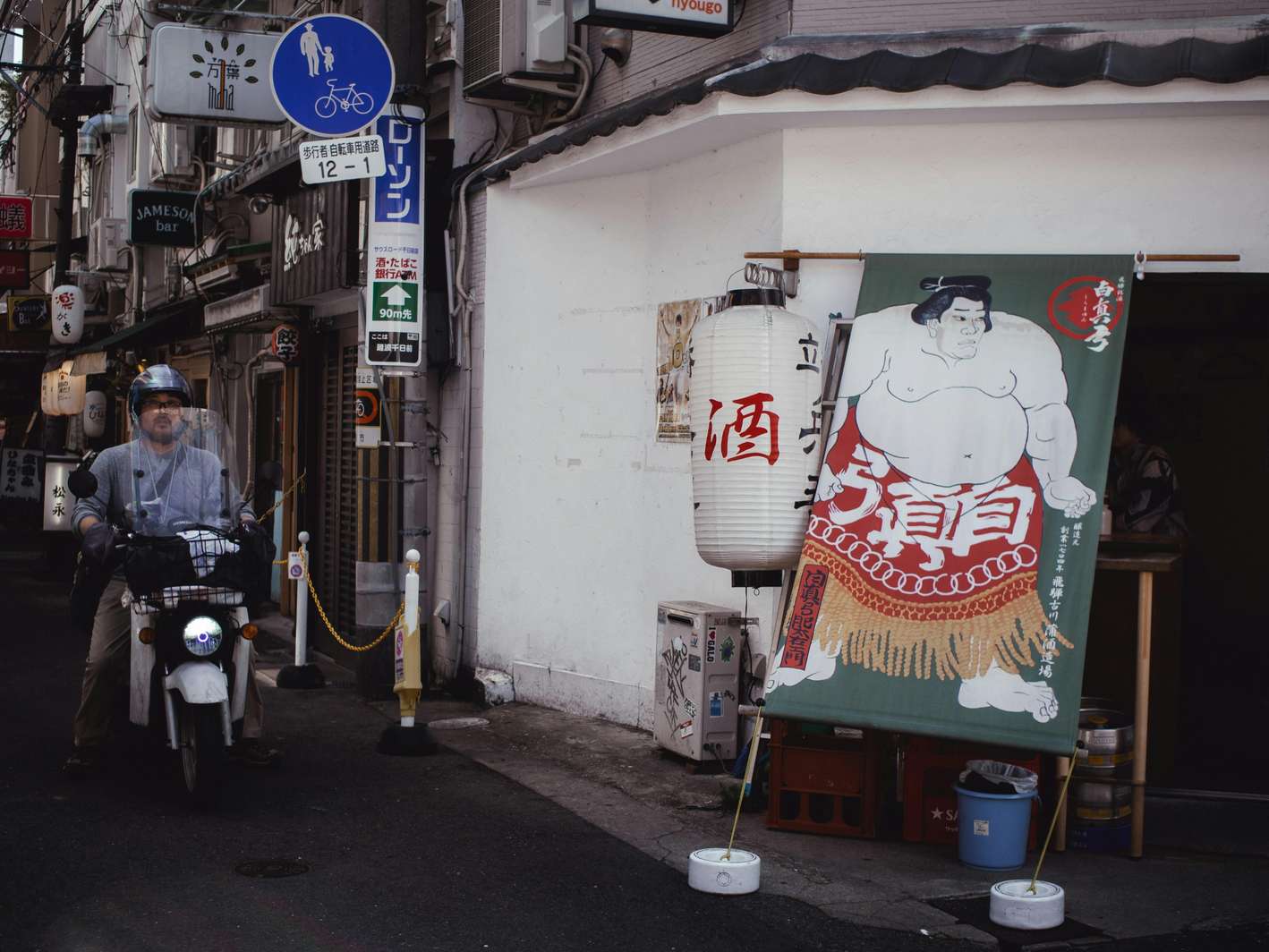
Then there is the layer most people never notice. The small sights are the ones visitors miss: washed mawashi belts drying from stable rooftops, chanko nabe restaurants run by retired wrestlers, the sumo-themed train station next door to the arena. They are what make the neighborhood feel lived in.
Set aside about two hours to do the district justice, longer if you add a guided walk or a chanko lunch. Kiyosumi Garden and the Fukagawa Edo Museum sit at the edge of a 20-minute stroll if you want to stretch it further.
This is a two-to-three-hour neighborhood, not a full day, and that is part of its charm: you can pair it with half a day elsewhere in Tokyo.
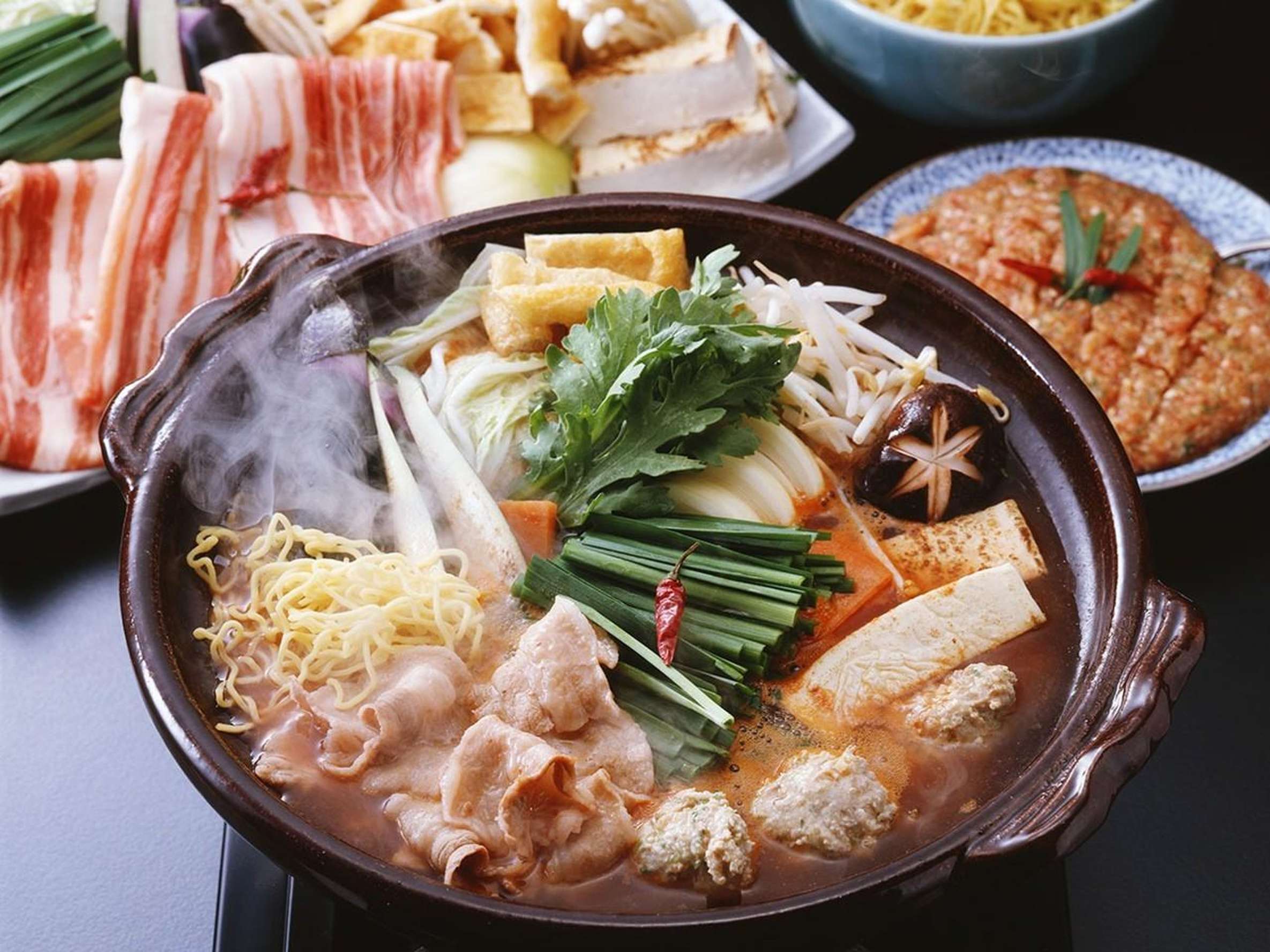
It starts with a fire. The Great Fire of Meireki destroyed Edo in 1657, and Ekō-in Temple was built afterwards to mourn the unnamed dead. Ryogoku Bridge went up nearby, and the riverbank became one of Edo's leading entertainment districts.
Sumo found a home there. The first fundraising tournament on the temple grounds in 1768 began a tradition that ran for over a century. From 1833 Ekō-in hosted two regular tournaments a year.
Until the early 20th century, tournaments were held outdoors at shrines and temples; in 1909 the first permanent sumo hall rose on the temple's own grounds. The current Kokugikan has stood in neighboring Yokoami since 1985.
Ryogoku has been sumo's tournament home for well over two centuries, and it is still where most training stables are based. The Chikara-zuka Monument in the temple grounds, built in 1936, honors past sumo elders. Chanko stew itself was born at the Dewanoumi-beya stable in the late 1800s.
Inside the Kokugikan, the Sumo Museum shows nishiki-e woodblock prints of old champions and embroidered ceremonial aprons, and its collection changes six times a year.
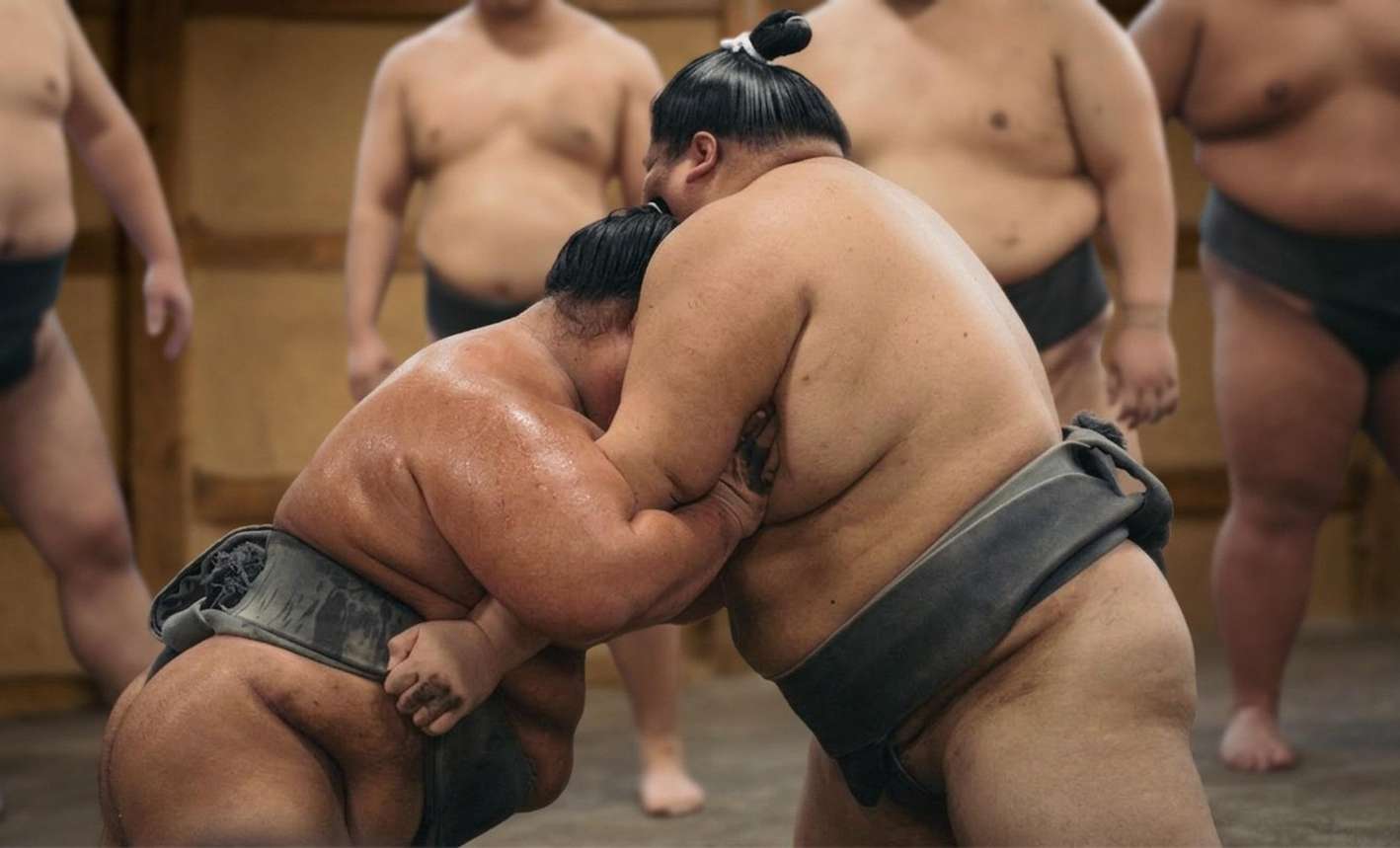
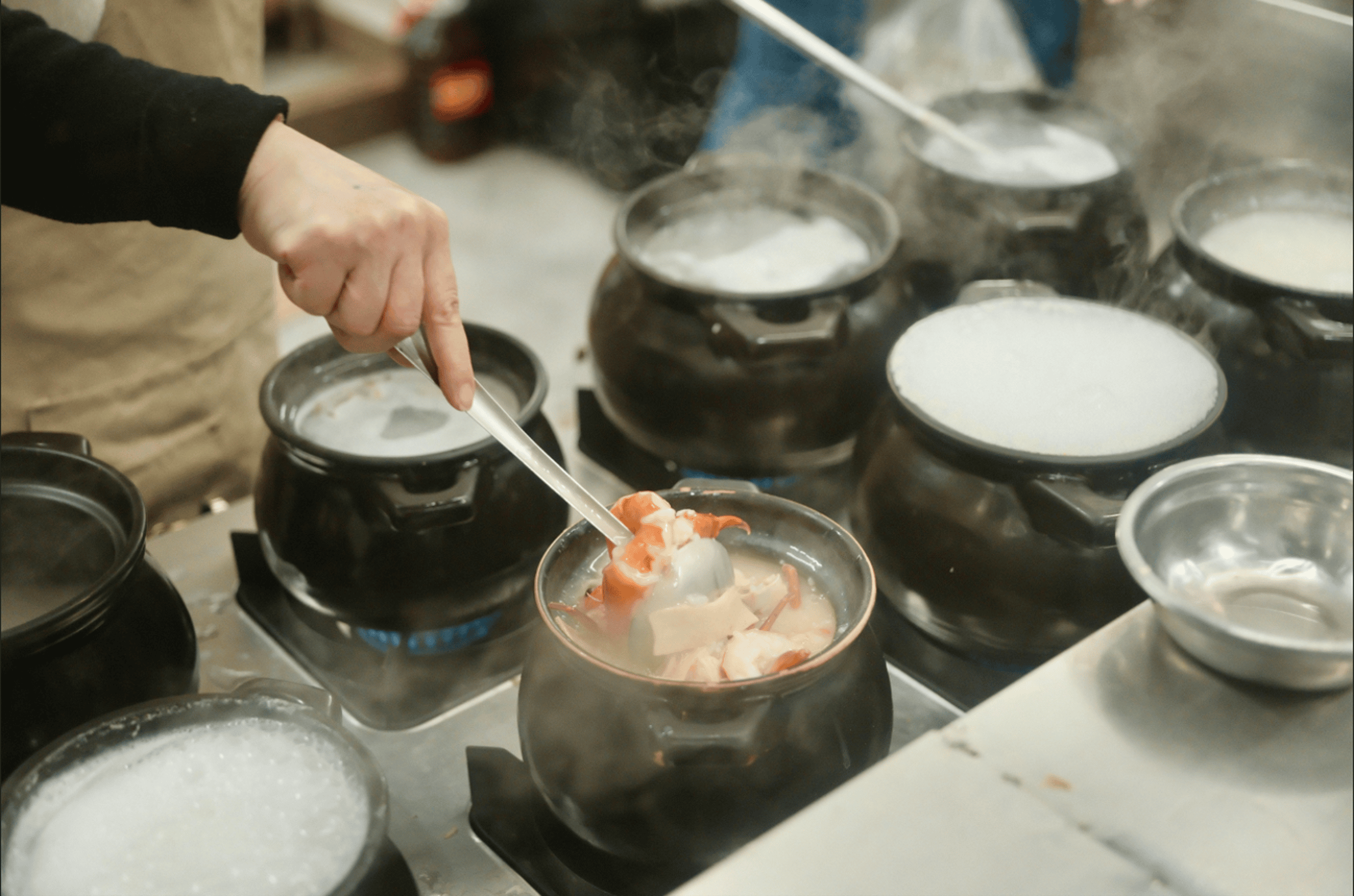
You can wander Ryogoku alone. A self-guided route of about a dozen sumo sights near the station needs no tickets or reservations and takes two to three hours, covering the free sights. A free volunteer-guided walk of sumo town exists too.
The three paid ways each suit a different traveler. A history walking tour explains how the temple, arena, stables and shrines fit together, and ends over chanko nabe; it runs year-round.
A morning practice visit puts you inside a real stable, silent, close to the ring; it is the authentic choice, but it runs on weekday mornings only and stables close during tournament months.
A sumo show with lunch is the friendly introduction: retired wrestlers, bilingual commentary, a chance to step into the ring, and it runs daily all year.
| What a guide adds | When it runs | Time needed | Food included | |
|---|---|---|---|---|
| History walking tour | Explains history, links sights | Year-round; museum closed in tournaments | 90-120 minutes | Chanko-nabe lunch included |
| Morning practice viewing | Whispers explanations during practice | Weekday mornings; closed tournament months | 90-120 minutes | None |
| Sumo show with lunch | Bilingual host narrates rituals | Year-round, daily sessions | About 90 minutes | Chanko nabe lunch included |
Experienced travelers put it simply: morning practice for die-hard fans, a show for casual first-timers. If you are new to sumo, the show is the easier door in. If you want the wrestlers' real working morning, and you can sit still and quiet on the floor for two hours, the stable wins.
Whichever you pick, book ahead. Stable visits and shows fill up, and walking in is rarely an option.
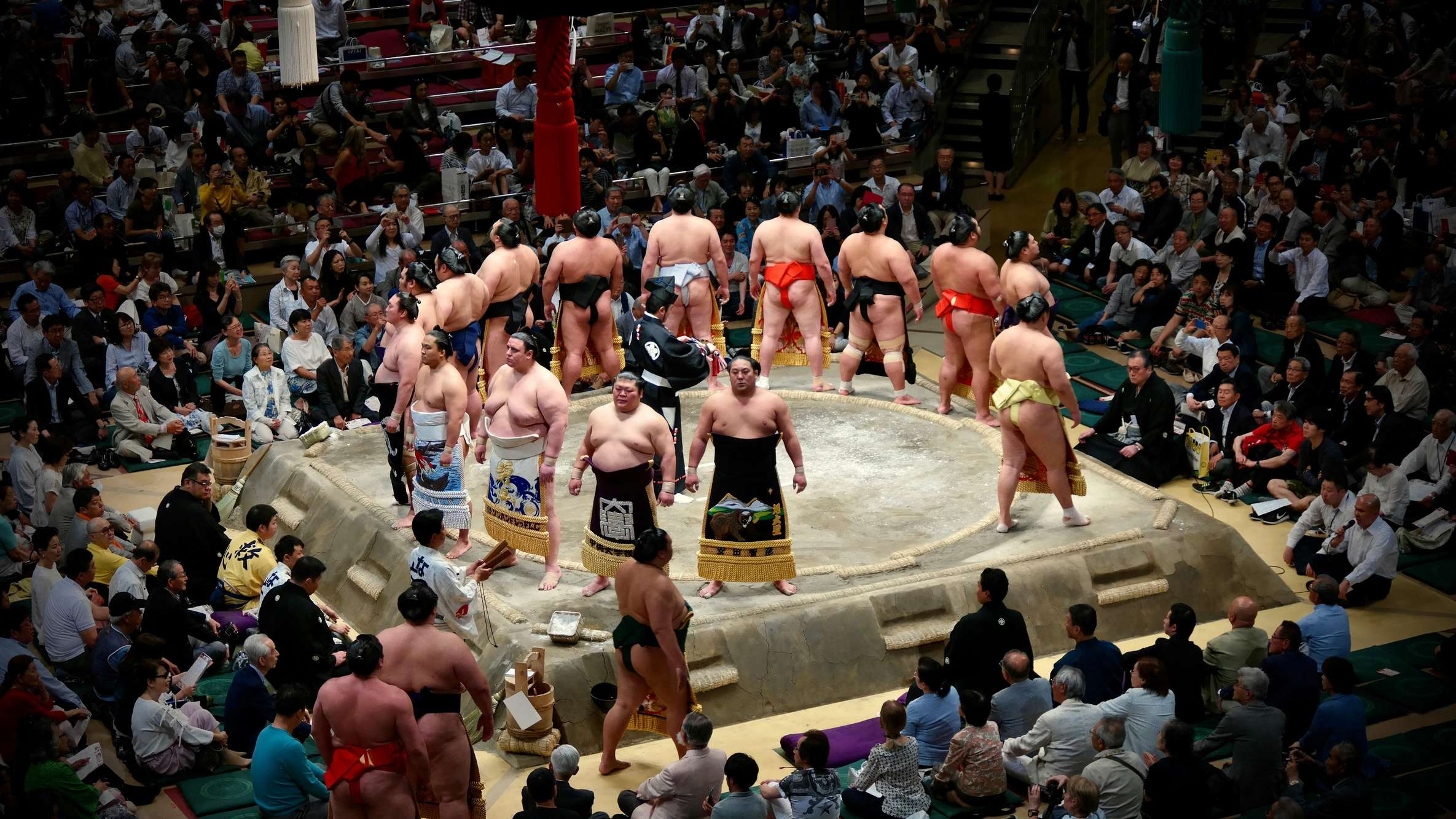
Tokyo: Discover the World of Sumo History & Lunch is the three-hour walk with an expert English-speaking guide. It covers the ground a wanderer crosses, and it connects it.
The route runs outdoors through the streets: Ekō-in Temple, the Chikara-zuka Monument, and the Kokugikan area, at a relaxed pace over 90 to 120 minutes of walking.
A guide explains how sumo shaped Ryogoku, how the shrines, arena, temples and stables fit together, and how the tournaments slot into the yearly calendar. You hear the story of sumo's founder at Nominosukune Shrine and how the rules changed over time.
The guide points out what you would walk past: the washed mawashi belts drying from rooftops, the sumo-themed station, the temple where wrestlers pray before tournaments.
On non-tournament days the tour includes entry to the Sumo Museum inside the Kokugikan; on tournament days the museum is reserved for ticket holders, so the tour follows the atmosphere outside the arena instead.
It ends the right way, over chanko-nabe lunch in Ryogoku, the stew wrestlers eat. Bring comfortable shoes; the rest is walking and eating.
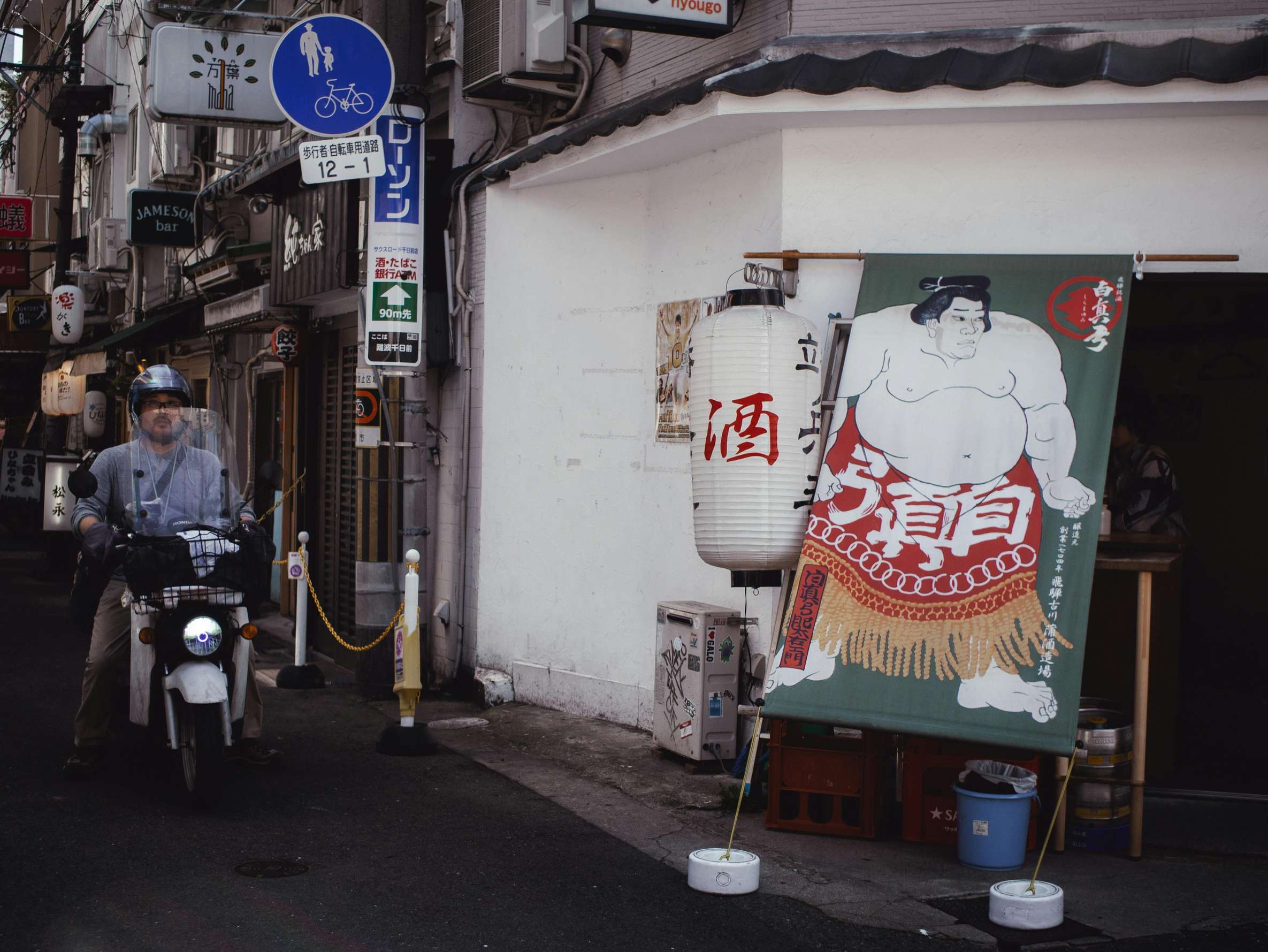
Practice starts early. Morning training at a Tokyo stable runs roughly from 7 am to 10 am, and the guided visit to Takasago-beya meets at 7:45 am at Ryogoku Station, then walks ten minutes to the stable.
What follows is not a show. You sit to the side of the practice ring and watch warm-up drills first, then roughly an hour of full-intensity sparring, 90 to 120 minutes in all, usually done by about 9 am.
The wrestlers' power and the sounds of practice land differently from a few meters away. The guide whispers explanations as it happens, because talking is not allowed, and saves questions for the end, when the wrestlers may chat and pose for photos.
Two honest caveats. Stables can cancel on the day, if a wrestler is injured or the schedule shifts; you are notified immediately and get a full refund or an alternate experience. And in tournament months, especially when the wrestlers travel to Osaka, Nagoya or Fukuoka, most Tokyo stables close to visitors entirely.
Book about two months ahead. Places are few, confirmations can take days, and waiting until the week of your trip is the classic error. Tokyo: Sumo Watching with journalist and walks adds a national newspaper journalist as your guide, with special permission from the stable.
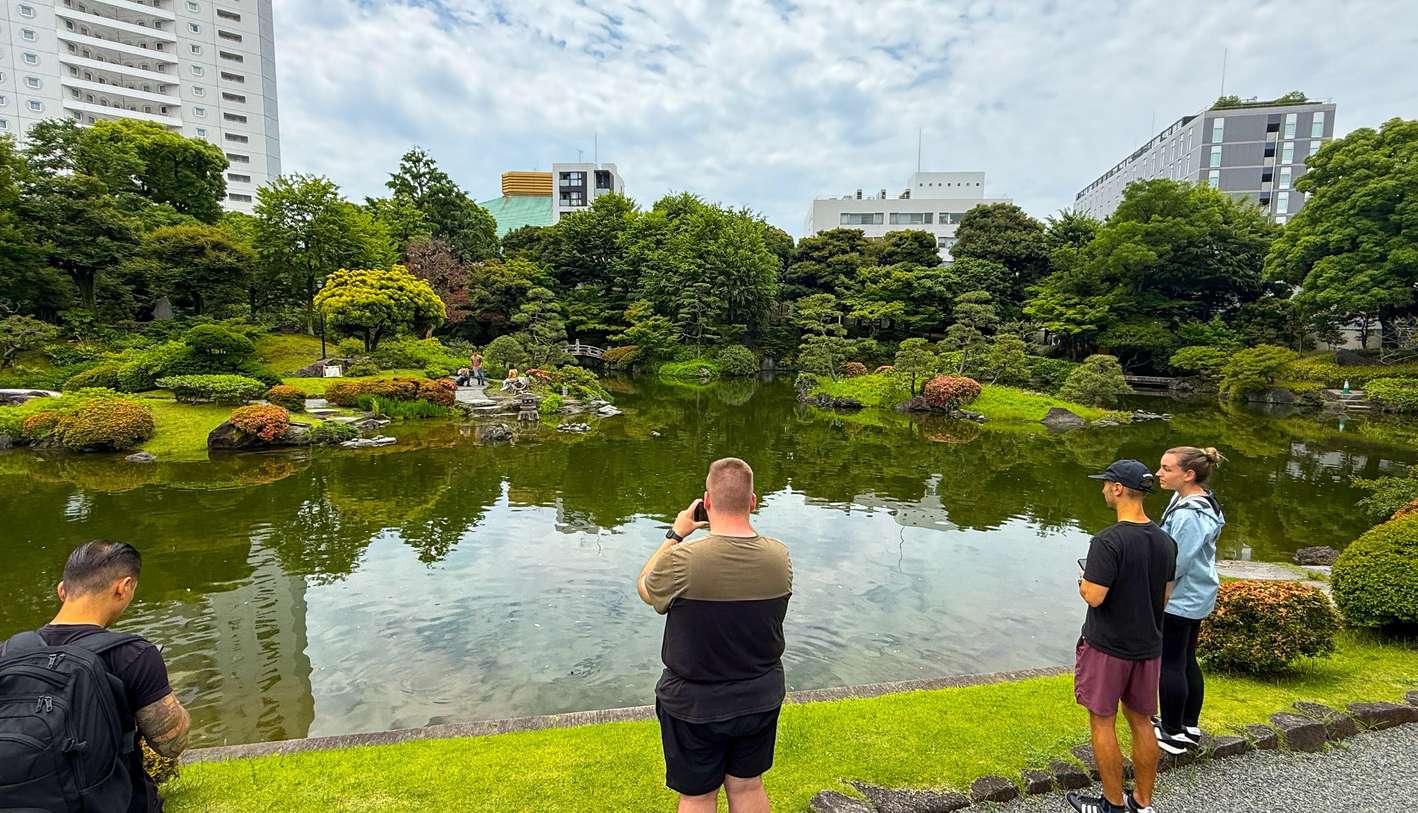
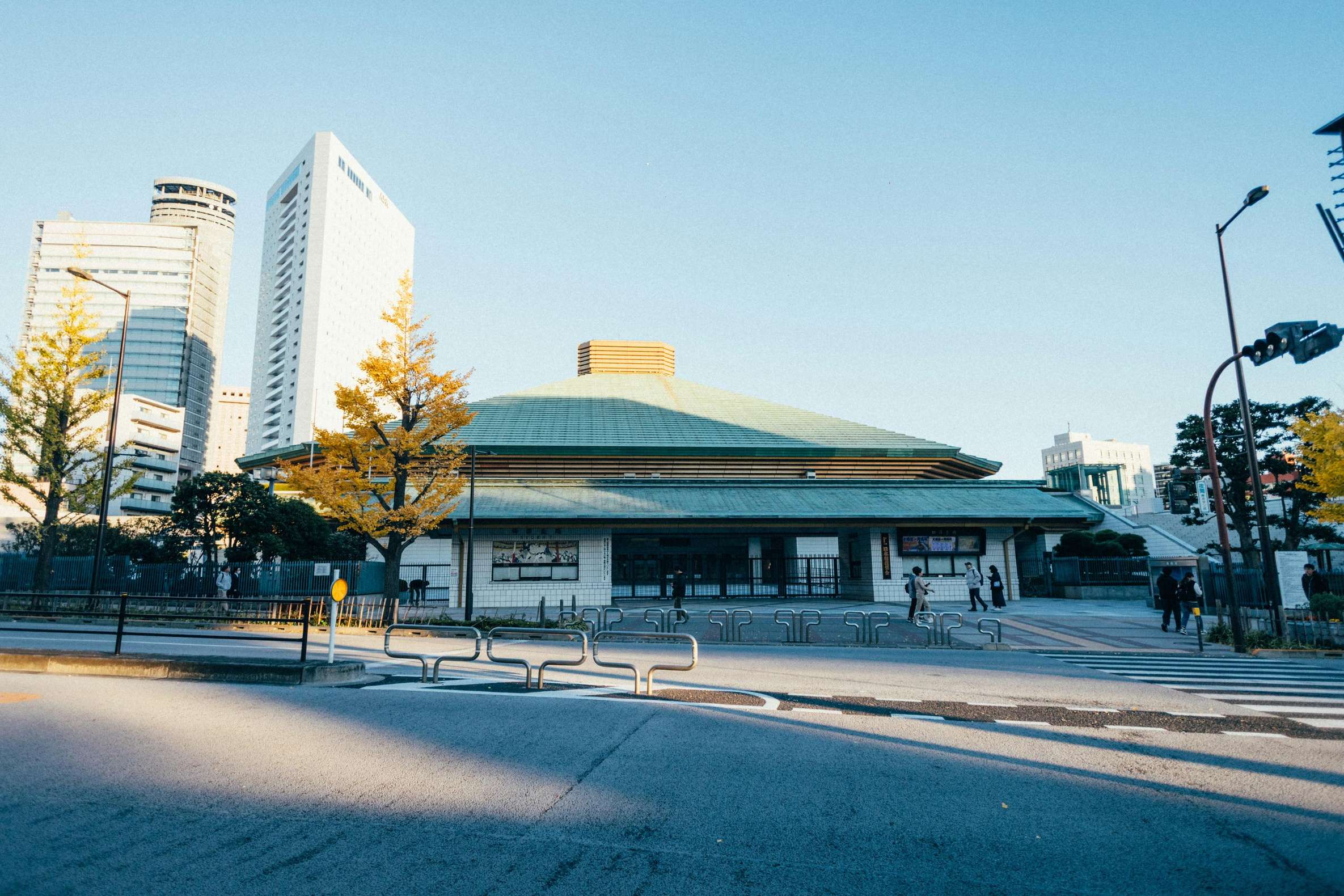
Not everyone wants a 7:45 am alarm. The lunch show is the other way in, and Ryogoku hosts it well: the Tokyo Sumo Culture Masterclass & Authentic Chanko Nabe Lunch meets at Ryogoku Station, with the venue a four-minute, 300-meter walk away, and runs at a relaxed pace with no early start.
A show runs about 90 minutes, built around three beats: learn, watch and participate, then eat. Retired professionals, mostly recently retired, demonstrate stances, splits and finishing moves. A host narrates the rituals and rules in Japanese and English.
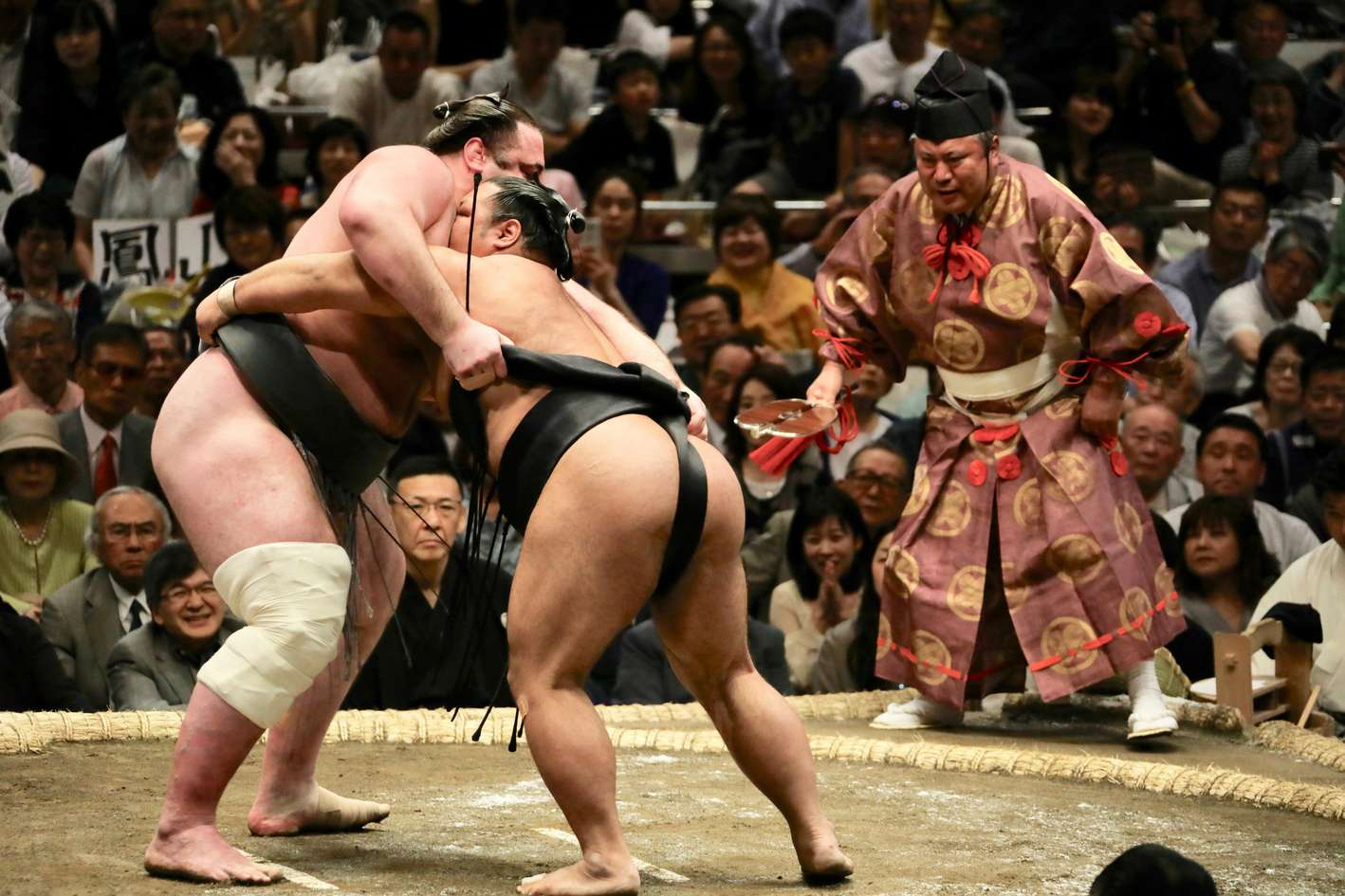
The bouts are real wrestling, choreographed for time and safety, and the grand finale is a genuinely competitive match. Audience members, children included, can be called into the ring for a friendly bout against a wrestler, and joining is always your choice.
The wrestlers are real former professionals, not actors, which is worth checking wherever you book a show. The wrestling itself often takes only the last 15 to 30 minutes; the demonstrations and stories carry the rest.
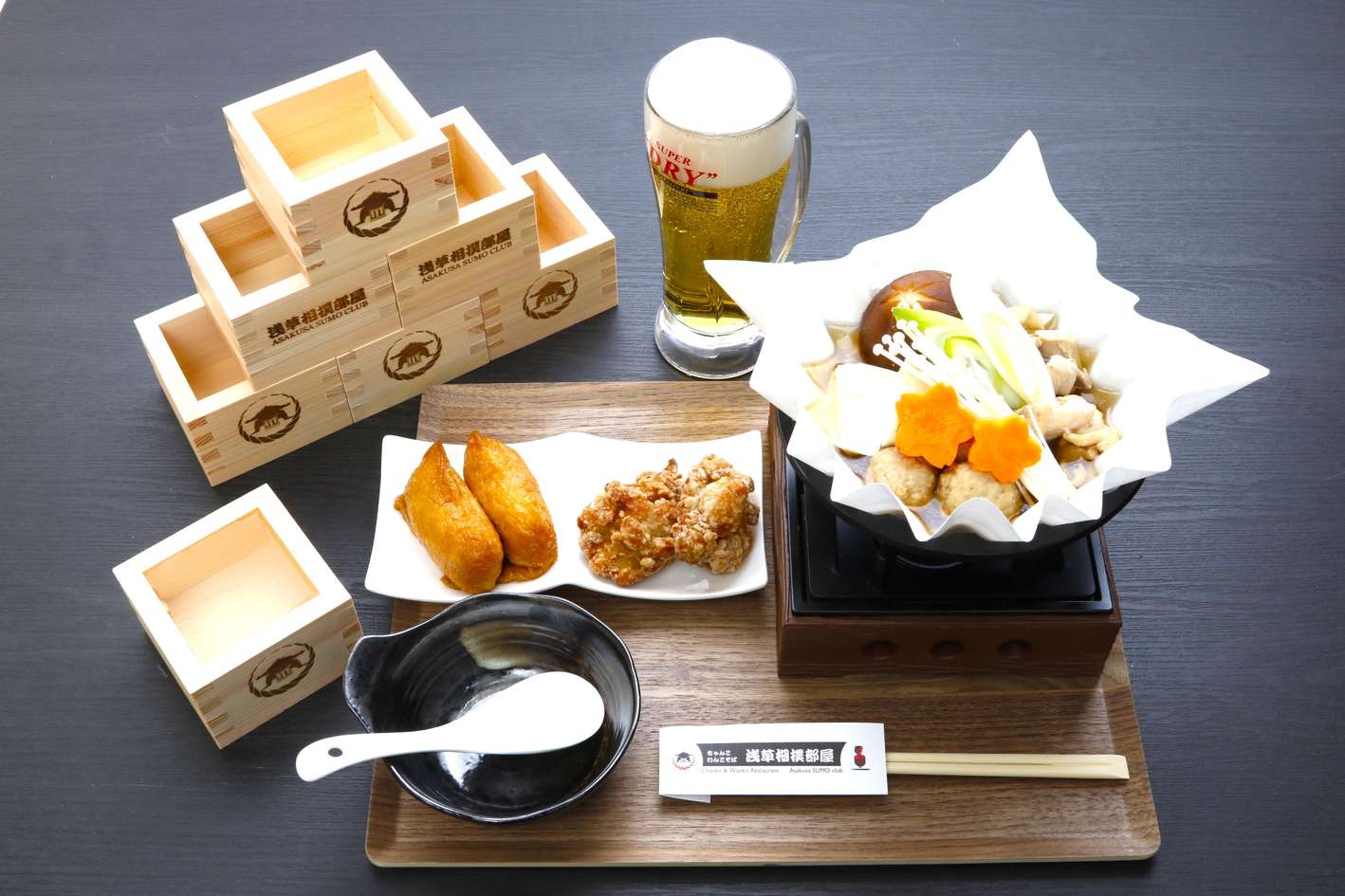
Then comes the meal. Chanko nabe, the hot pot wrestlers eat, is served as part of the experience, and travelers consistently praise how hearty and generous it is. Check your booking details for exactly which food and drinks are included.
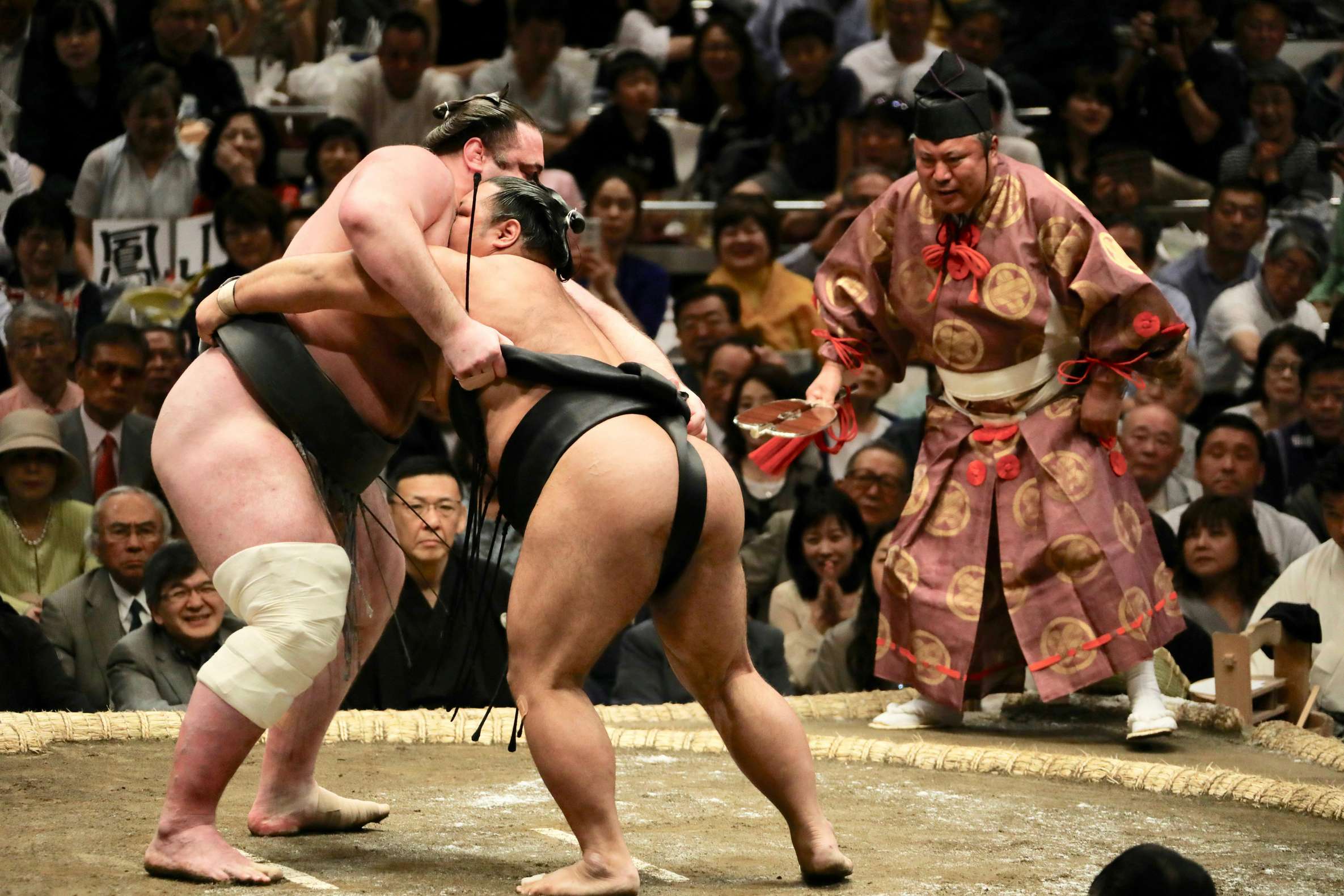
Ryogoku is easy from almost anywhere you are likely to stay. Two lines serve it: the JR Sobu Line and the Toei Oedo subway.
From Tokyo Station, ride the Yamanote Line one stop to Akihabara and change to the Sobu local; about 13 minutes in total, then a one-minute walk to the Kokugikan.
From Shinjuku, the Chuo-Sobu local takes about 22 to 25 minutes; take the local, because rapid trains bypass Ryogoku. From Ginza, a direct subway toward Asakusabashi runs about 15 minutes with a short hop after.
Taxis work too: roughly 15 minutes from Tokyo Station, 14 from Ginza, 30 from Shinjuku without traffic. Walking is possible but long, 44 minutes from Tokyo Station and 53 from Ginza, so save your legs for the district itself.
The train wins in practice: it is fast, frequent and drops you a minute from the arena. Whichever option you chose, a history walk, a stable morning or a lunch show, every tour here starts within a short walk of Ryogoku Station.
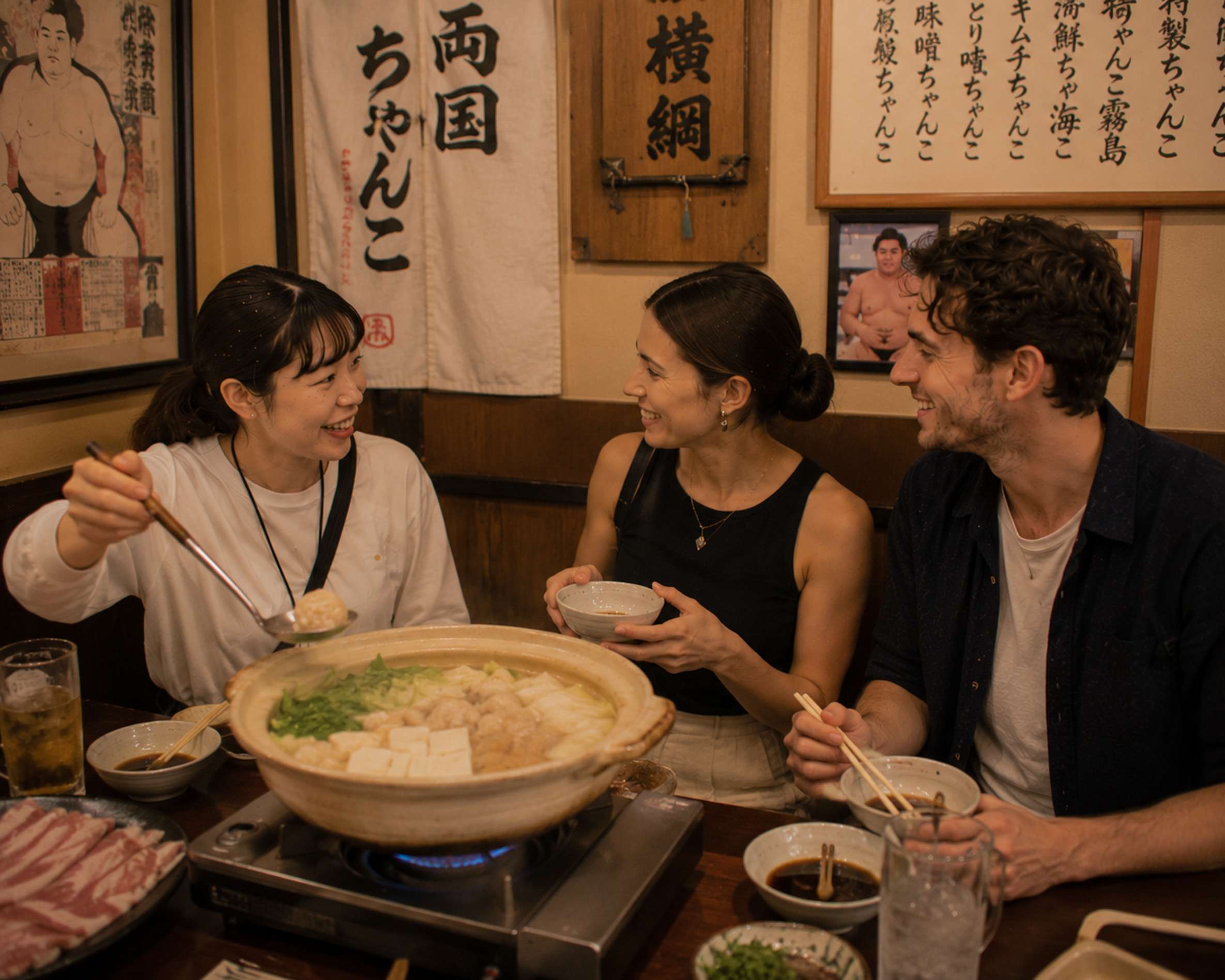
The sumo year shapes everything in Ryogoku. Tokyo hosts three of the six grand tournaments, each running 15 days: 11 to 25 January, 10 to 24 May and 13 to 27 September in 2026, all at the Kokugikan.
Those tournament months change the neighborhood. During a Tokyo basho the wrestlers are competing, so morning practice is closed or drastically simplified, and stables stay dark to visitors for the tournament plus about a week after.
When the tournaments move to Osaka in March, Nagoya in July and Fukuoka in November, most Tokyo stables pause public viewing because the wrestlers are travelling.
The even-numbered months are the sweet spot: February, June through August, and October through December bring full, intense practice sessions at the stables. Morning practice runs most weekday mornings, starting between 7:30 and 8 am and finishing around 9:30 to 10 am
April: 5 out of 5 for how busy it gets. The busiest sumo month on this page's tours, with full morning practice available.
Tap a month to read it.
April: 5 out of 5 for tournaments and practice. A strong month for morning practice visits with no tournament on, and it is also the busiest month on this page's sumo tours.
Tap a month to read it.
Shows and history walks run year-round regardless, so no month leaves you empty-handed. Book several weeks ahead, earlier still in tournament months, when April, October and May draw the biggest crowds.
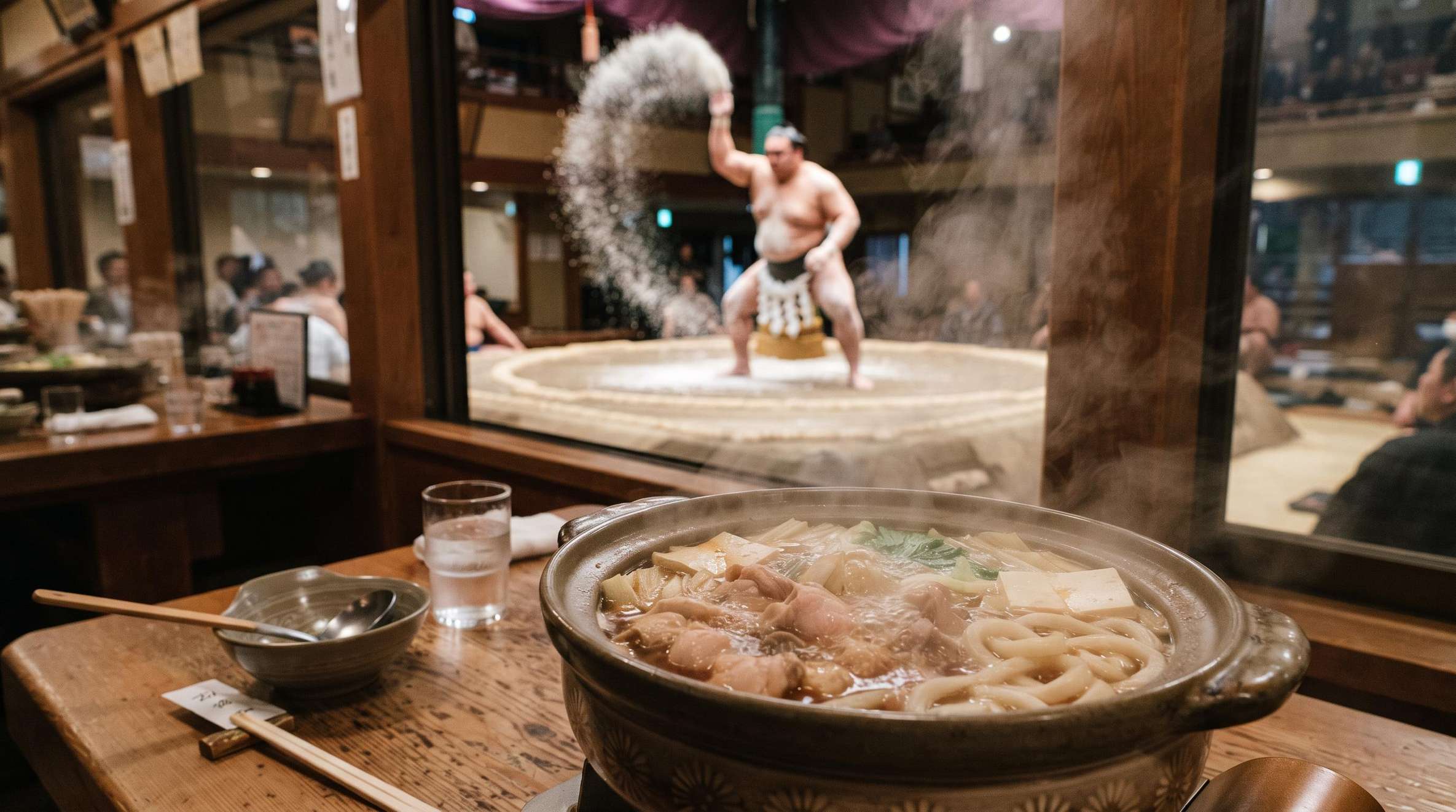
A stable is a workplace and a home, not a tourist facility, and the rules follow from that. Inside, you are a silent, still observer: no talking, not even a whisper, no moving around, no flash photos, no eating or drinking, phone off.
Shoes come off at the entrance, and you sit on the tatami floor without a chair, cross-legged, never stretching your legs toward the ring or showing the soles of your feet to the wrestlers.
The ring itself is sacred. Never stand on it or the sandy ground around it. Photos are allowed during practice as long as they do not disturb anyone, so no flash and no loud shutter sounds. Hats and sunglasses come off inside. Stay until the wrestlers finish; leaving mid-practice is poor form.
Save your questions for the end, when your guide can translate and the wrestlers may chat and take selfies with visitors.
On the street, the same respect applies. Give wrestlers space, and ask before taking a portrait. Do not open stable doors, photograph through windows, or wait in narrow alleys for wrestlers to pass.
Women watch freely from the seating areas. The tradition that bars women covers entering or touching the ring; spectating has always been open.
- Stables are walk-in attractions | Visits are by appointment only, and many stables never open to the public at all - Whispering is fine inside a stable | No talking at all, even in a whisper, while practice is running - Women are not allowed to watch sumo | Women watch freely from the seats; only entering or touching the ring is barred - A wrestler in the street is a photo opportunity | Ask first, and give them space; stables are private workplaces
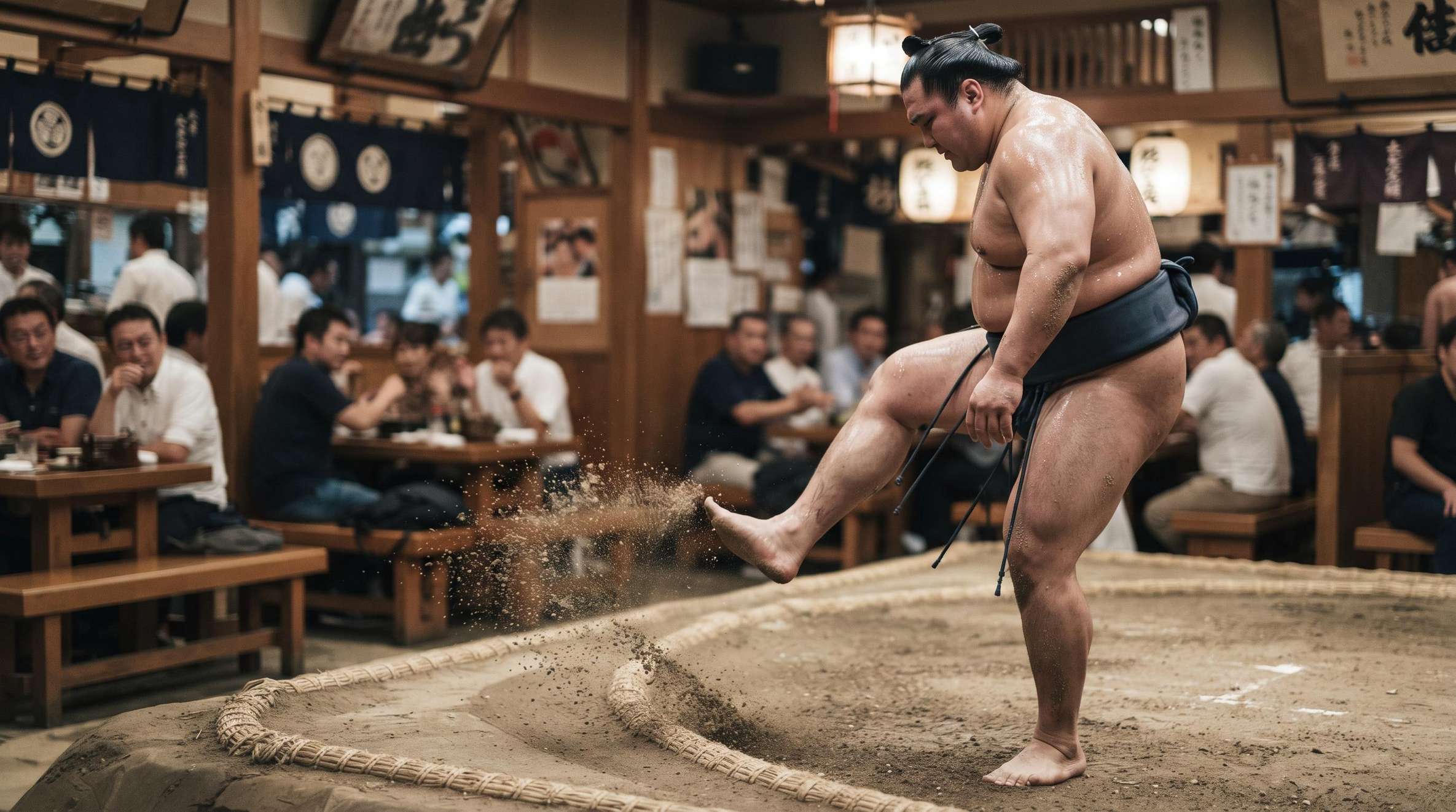
Ryogoku rewards the visitor who comes with a plan. Pick your format first: the history walk if you want the district explained, the stable morning if you want the real training room, the lunch show if you want sumo without the alarm clock.
Then check the calendar, because tournament months close the stables and change what the neighborhood feels like.
Book early, arrive comfortable, and leave time for chanko nabe.

Work out where sumo fits into your Japan trip, city by city, from tournaments to shows and practice visits.

Compare every way to watch live sumo in Tokyo, from guided practice visits to shows and tournament days.

Heading to Osaka? See which sumo shows and venues there suit your dates and your group.
Find out what sumo experiences Kyoto offers and how to pick one that fits your visit.

Plan a Fukuoka sumo outing, including morning practice during the November tournament season.

Check what the Sapporo sumo show involves and when its three daily performances run.

Unsure whether you want a show, a class or a stable visit? This page lays out the differences.

Picture a sumo outing at Lake Yamanaka, with Mt Fuji behind the ring and family seating options.

See how sumo classes in Tokyo and Osaka work, from basic drills to a chance to wrestle a former pro.

Choose a guided way into a Tokyo sumo stable and understand what a morning practice visit involves.

Want to dress as a wrestler? Find the Tokyo show where trying on sumo attire is part of the fun.
Go deeper into sumo's traditions and rituals with a Tokyo masterclass built around culture, not spectacle.
Searching for SumoLand by name? Work out whether the Osaka or Tokyo venue is the one you mean.

Get the location and visitor details for Sumo Land in Osaka before you slot it into your trip.

Check the Ryogoku venue details for SumoLand in Tokyo and decide whether it fits your day.

Turn a wish to see grand sumo into a plan, with the annual schedule and host cities in one place.

Pin down the Tokyo tournament's dates, venue and ticket options before seats sell out.

Judge how the March tournament in Osaka fits your trip, from venue to ticket availability.

Get the venue and schedule details for Fukuoka's November grand tournament before you commit.

Understand how tickets and the venue work for the July tournament in Nagoya.

Learn what the Grand Sumo Minoh Expo Tournament is and how to watch sumo in Osaka there.
Decide whether a guided tournament visit suits you better than buying seats on your own.

See how a guided Nagoya tournament visit works and whether it matches your July plan.

Check whether an Osaka tournament experience with tickets included matches what you pictured.

See what a guided visit to the Ryogoku arena during a Tokyo tournament actually includes.

Find where you can watch real morning training in Japan and what a stable visit asks of you.

Turn an interest in Tokyo sumo practice into a real visit, with guided options compared.

Weigh real morning training in Osaka against a staged show before you book either.

Decide between real training and a performance when watching sumo practice in Kyoto.

Work out what a sumo show includes and which city's performance suits your trip.

Find a Tokyo sumo outing that feels worth it for the food, drinks and photos as much as the bouts.

Compare Tokyo's sumo shows in Ginza, Shinjuku and elsewhere and get ready to book one.
Settle on an Osaka sumo show, from theater-style venues to restaurant settings.

Get a straight answer on whether Kyoto has a sumo show and which one to choose.

Plan a sumo-and-food evening in Sapporo, with the show's schedule and food explained.

Compare sumo shows at Tokyo halls by venue details, seating and what each includes.

Confirm what a sumo show in Ryogoku offers and whether it matches what you want to see.

See why a sumo show at Tokyo Tower, with a meal and cultural performances, might fit your evening.
Find a Tokyo outing that combines sumo with a chanko nabe lunch, and compare the options.
Turn a sumo-themed dinner idea in Osaka into a specific evening you feel good about booking.

Compare every way to watch and try sumo across Japan before deciding what is worth your time.
Get practical answers on sumo timing, match length and rules for your Tokyo visit.
Plan around the Tokyo sumo museum's hours and see what other cities offer museum fans.
Find a ticketed geisha show in Tokyo and pick one that suits your evening.
Short answers on where the district is, how to reach it, and what you can see there.
Ryogoku, in Sumida ward on the east bank of the Sumida River. The Ryogoku Kokugikan arena sits next to the station, and the streets around it hold stables, chanko nabe restaurants and sumo statues.
About 13 minutes from Tokyo Station on the JR Sobu Line with a change at Akihabara, or 22 to 25 minutes from Shinjuku. From Ginza, a direct subway toward Asakusabashi takes about 8 minutes, then a short hop to Ryogoku.
Tokyo hosts three tournaments a year, in January, May and September, each running 15 consecutive days. Tickets go on sale well in advance and sell out fast, so plan around the sale dates.
Yes. A self-guided walking route of about a dozen sumo sights near Ryogoku Station takes two to three hours and needs no bookings. The Sumo Museum is free on non-tournament days.
Ekō-in Temple, where tournaments were held from 1768, the Chikara-zuka Monument, the Sumo Museum inside the Kokugikan, and chanko nabe restaurants run by retired wrestlers. All sit within a short walk of the station.
Active stables are not walk-in attractions, so morning practice visits need advance permission through an organised tour. Arashio-beya lets anyone watch practice for free through its street-facing windows.
A guide connects the shrine, arena, temple and stables into one story, points out details like mawashi belts drying on rooftops, and explains the rituals and rankings you would otherwise walk past.
It is the hot pot wrestlers eat, traditionally chicken-based because four-legged animals were considered unlucky in sumo. Many Ryogoku restaurants are run by retired wrestlers serving their old stable's recipe.
The small Sumo Museum at the Kokugikan, the sumo-themed train station, the temple where wrestlers pray before tournaments, and the washed mawashi belts hung out to dry from the rooftops.
Three hours through Tokyo's sumo district, from Ekō-in Temple to the Kokugikan, finishing with a chanko-nabe lunch. Cancel up to 24 hours ahead for a full refund.