Grand Sumo Tournament: Annual Schedule and Host Cities
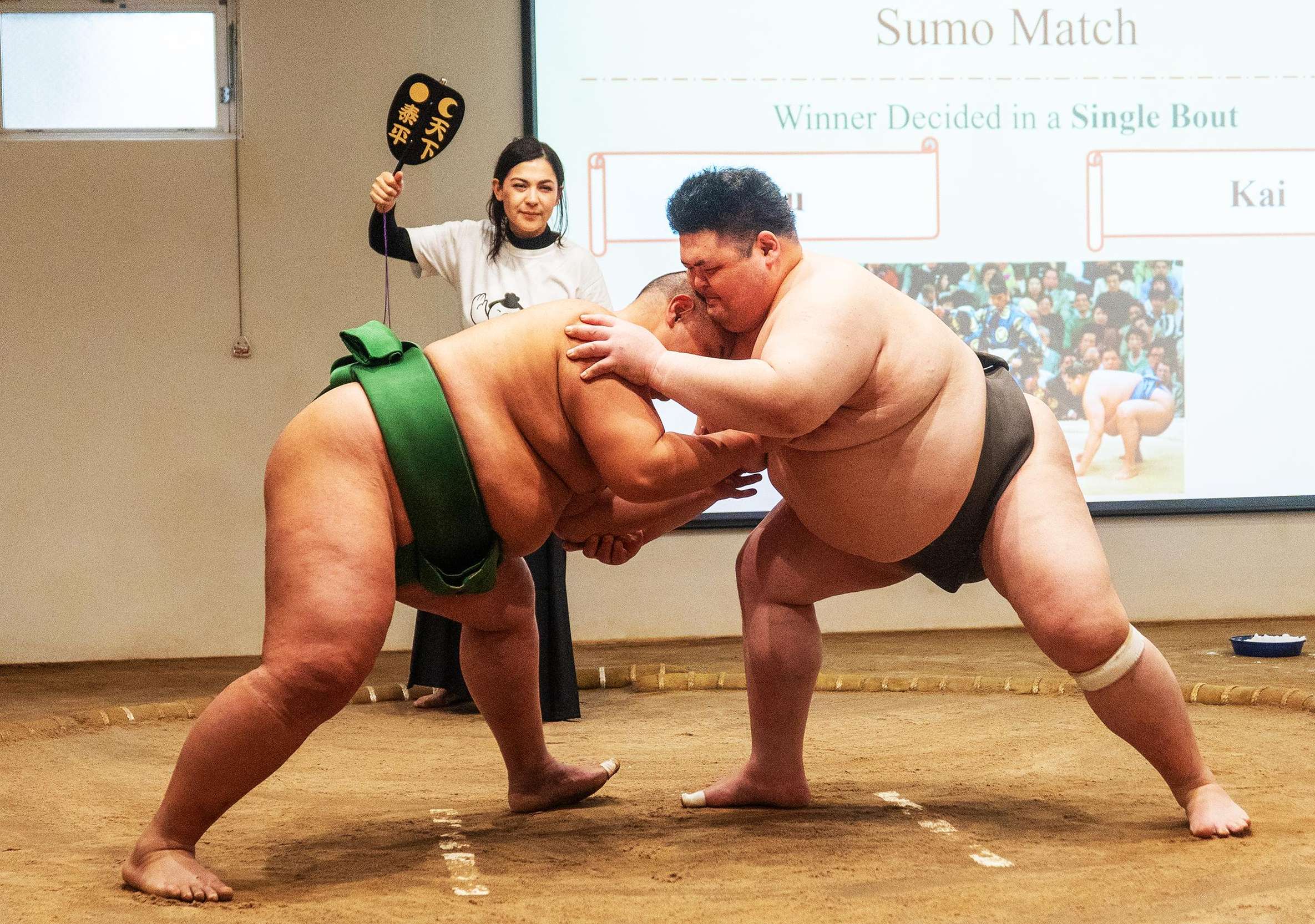
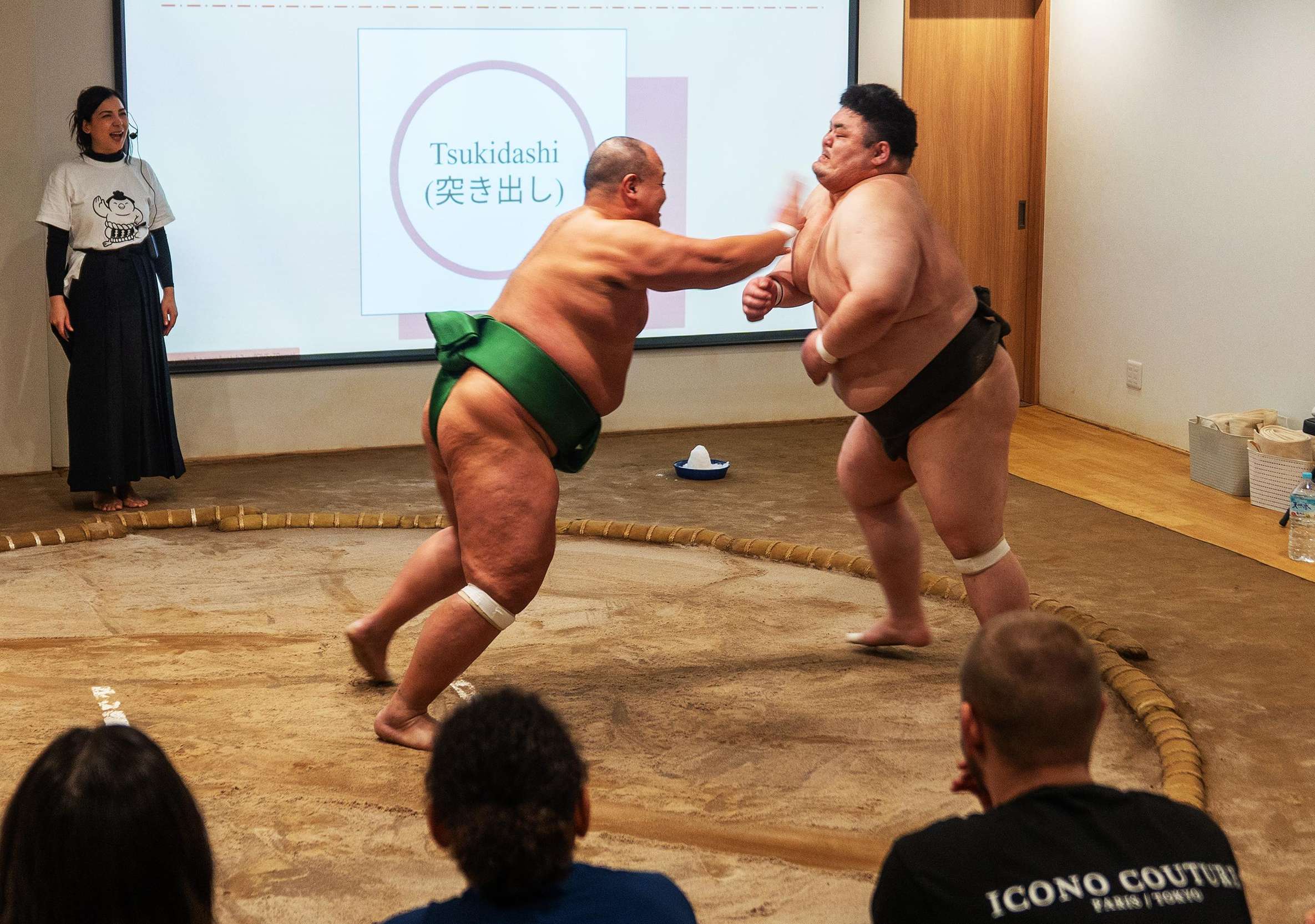
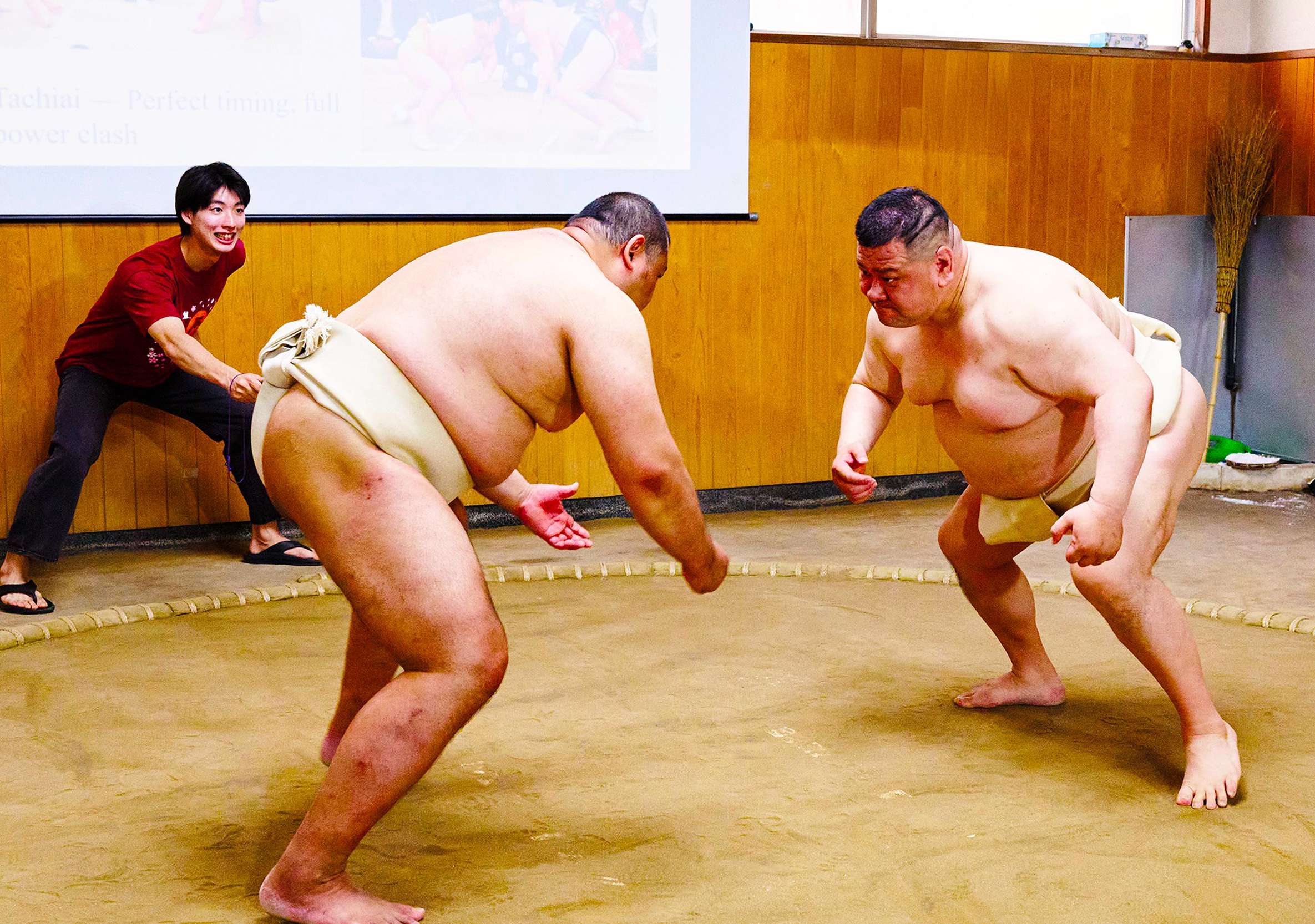
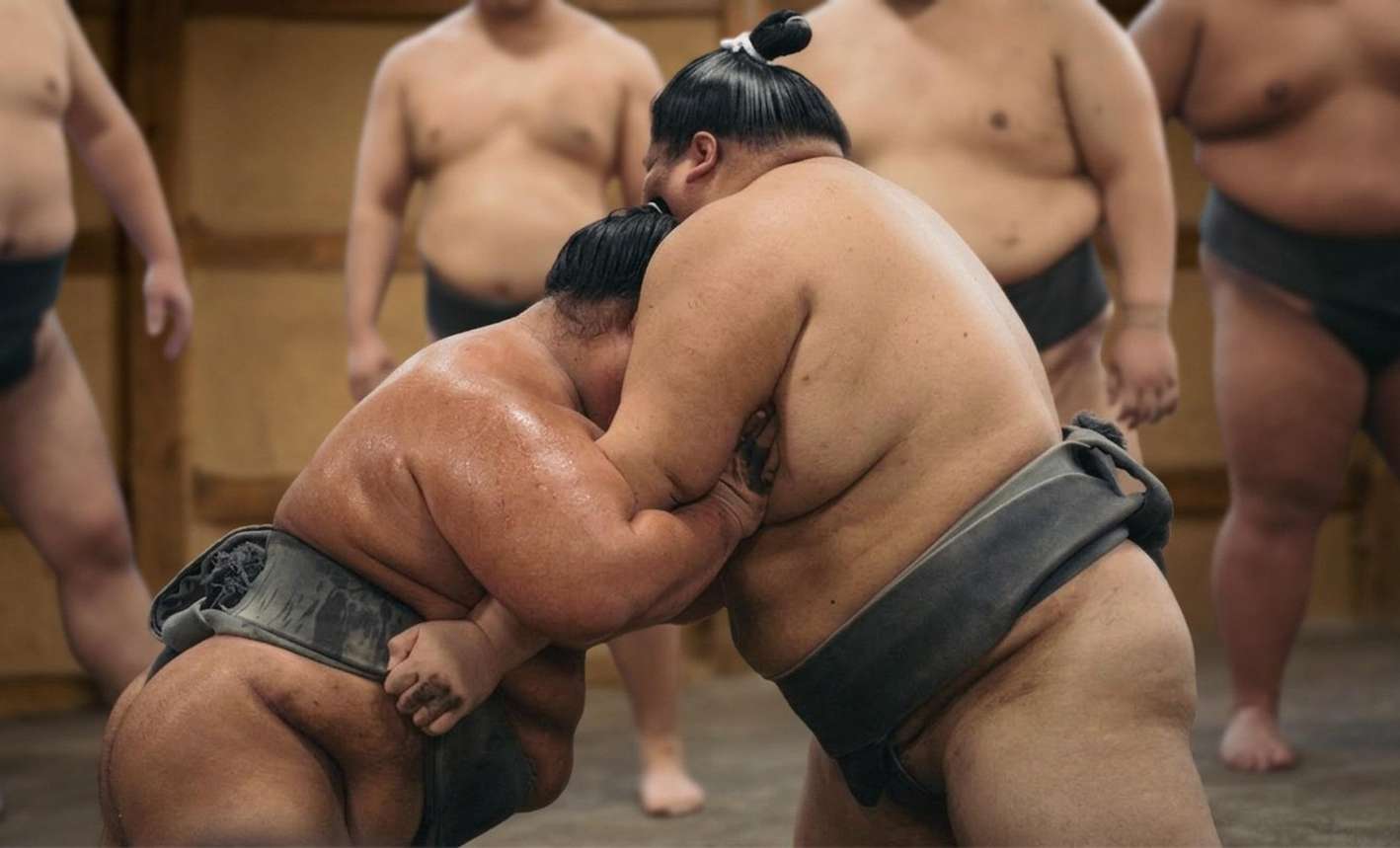
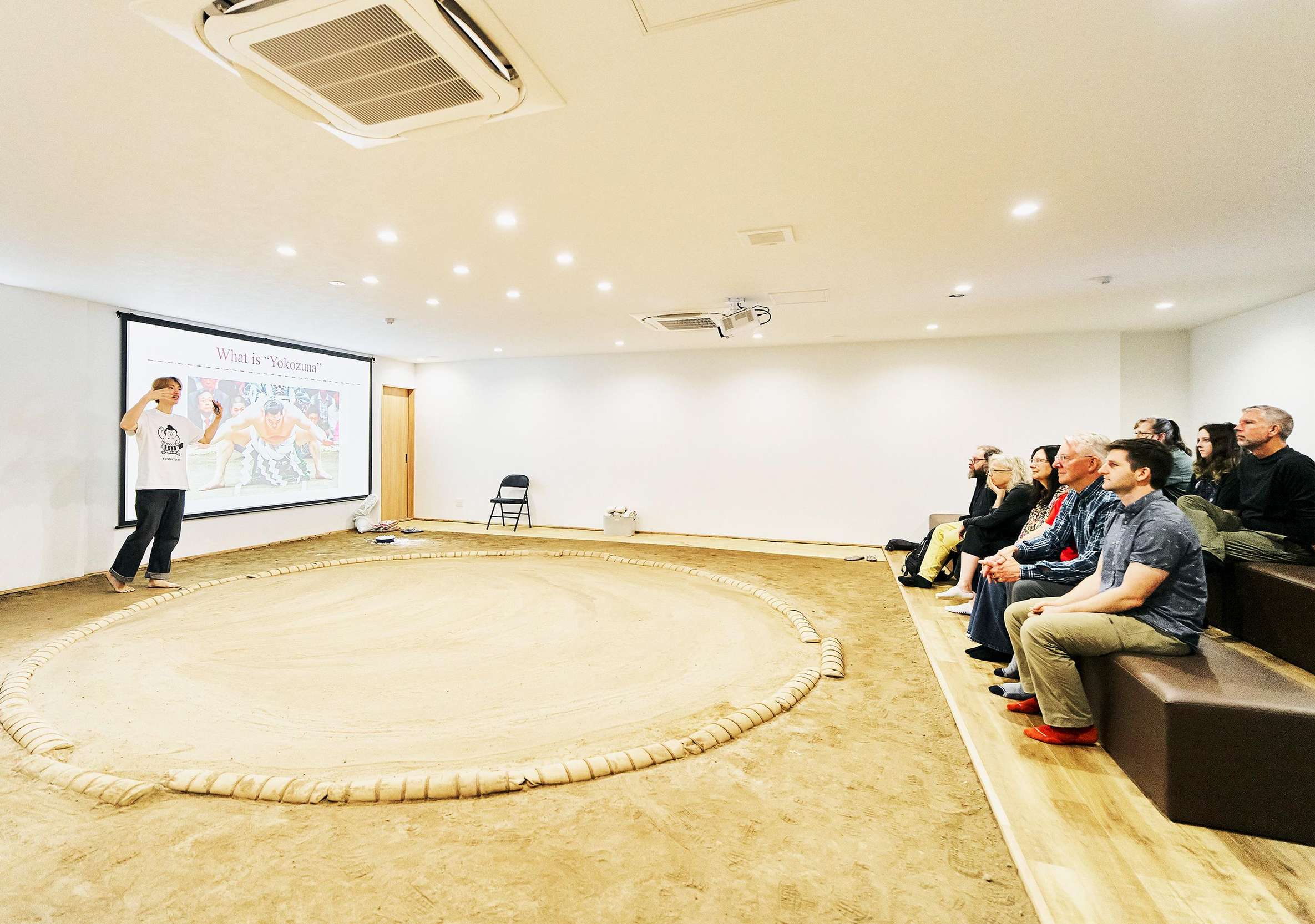
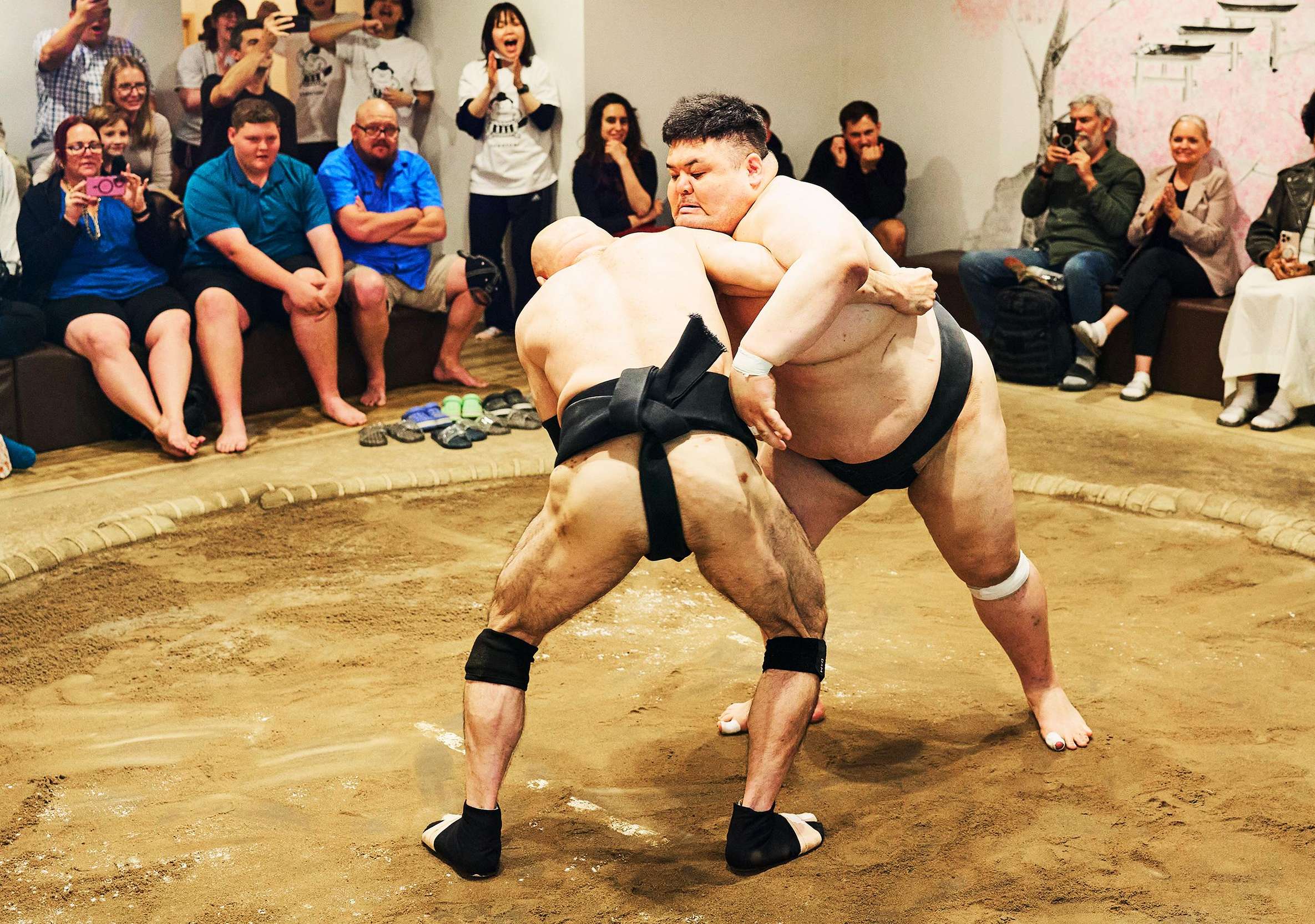
Get close to live sumo in Japan, not just a themed performance. In Osaka, watch retired professional wrestlers trade real one-round bouts, hear every ritual explained in English, and step into the ring yourself if the mood takes you. Book your seat ringside and see why travelers call it a highlight of the trip.
The grand sumo tournament guide, chapter by chapter
Each tournament city has its own calendar, venue and quirks. These chapters compare them so your trip dates decide, then the ticket and rules guides finish the plan.
Host cityTokyo, Ryogoku
Tokyo Tournament
Three basho a year at the sport's home arena, two minutes from a JR station
Tokyo gives you three shots a year at a honbasho, more than any other city.
The 2026 runs sit January 11 to 25, May 10 to 24 and September 13 to 27, all at Ryogoku Kokugikan, a two-minute walk from the JR station's West Exit. The arena is small enough that even the back rows see the ring clearly.
The plan is simple. Buy the moment sales open at 10 am Japan time, because decent seats can vanish within minutes. Take an upstairs chair seat if you have never been, and arrive mid-afternoon for the top division, which runs to about 6 pm.
The liveliest crowd in tournament sumo and the hardest tickets to score
March is Osaka's only tournament month, 15 days at Edion Arena near Namba Exit 5. The crowd is livelier than Tokyo's: after a big upset, cushions fly through the air. Wrestlers walk to the arena in yukata, and the venue sits a five-minute walk from Namba Station.
The ticket hunt is the price. Sales open about a month out, and travelers report popular seats gone within minutes of the 10 am opening, weekends and the final days first.
Leave Kyoto on the Keihan Line to Yodoyabashi, then the Midosuji subway to Namba. If your trip misses March, Osaka's sumo shows are what you can still book.
July heat, a new arena and tickets that sell out weeks before opening day
Nagoya hosts the only grand tournament of July, at IG Arena near Nagoyajo Station, a five-minute walk from Nagoya Castle grounds. In 2026 the run went July 12 to 26, and the Japan Sumo Association confirmed every day sold out well before opening. The arena's air conditioning runs cold, so bring a light layer.
Arrive around 2:30 or 3 pm and you catch the ring-entering ceremonies and the top bouts that end near 6 pm. The venue's cafeteria sits along the wrestlers' walkway, where you can sometimes watch them eat after their bouts. Sales open in mid-May, earlier than the other cities.
The year's final basho in a small arena wrapped in a sumo-mad city
November brings the last grand tournament of the year to Fukuoka Kokusai Center, from the second Sunday of the month. The arena is small, so even the cheapest seats give a clear view of the ring.
Stables move to town for the month, wrestlers appear in yukata on buses and at bathhouses, and bouts finish near 6 pm, right at the start of the yatai street-stall evening.
Tickets sell out within minutes of going on sale in early September, so buy the moment they drop. If you miss out, a guided morning practice visit at a real stable, running only during the tournament window, is the closest sumo you can still book in Fukuoka.
An Expo 2025 festival of sumo with 200 wrestlers including the Yokozuna
The Minoh Expo Grand Sumo Tournament belonged to Expo 2025 and its theme of bringing the world together through sumo. Two hundred Japan Sumo Association wrestlers, Yokozuna included, wrestled at the Sky Arena in Minoh, about half an hour from central Osaka on the Hankyu line.
It sits outside the six official honbasho, so its results never touch a wrestler's ranking. If you are hunting it for a future date, check what is actually scheduled for your month. Year-round, Osaka's bookable live sumo is the shows by retired wrestlers in Namba and Nishinari, which run on ordinary days.
How to buy, which seat to pick and what the day costs
Getting in is the hard part of a grand tournament, and this is the page that settles it. Sales open at 10 am Japan time, roughly a month or two ahead, and a whole 15-day run can sell out within minutes.
The official English service takes credit cards, adds a per-ticket fee and issues tickets only at Seven-Eleven stores in Japan.
It also covers seats: ringside boxes sell by lottery by phone and are nearly impossible for foreign visitors, floor boxes mean cushions on the tatami for four hours, and upstairs chair seats are the comfortable first-timer pick. When every ticket is gone, it lists what remains realistic.
Sale opening10 am Japan time
Abroad routeOfficial English service, Seven-Eleven pickup
First-timer seatUpstairs chair seat
Same-day optionCheapest seats at the box office
How it scoresvs. the other tournaments
Chances to attendVery good
Ticket pressureBest
Ease for first-timersVery good
Traveler extrasFair
Choose it ifYou are ready to buy and need the exact methodYou are choosing between seat categories and prices
Skip it ifYou are still deciding which city to visitYou want to understand the bouts themselves rather than the buying
How a bout is won, how the ten-hour day is built and where to sit
The rules decide what you actually watch, and they are simpler than they look: a wrestler wins by pushing his opponent from the ring or making any part of him but his soles touch the ground. Bouts run in order of rank all day, so the morning belongs to lower divisions in a half-empty arena.
The same page settles timing and seating. The top division enters the ring in the late afternoon and the climax bouts run to about 6 pm, followed by the bow-twirling ceremony that true fans stay for. Cheer when the crowd cheers, keep your phone silent, and never throw your cushion, whatever you may see.
Six honbasho a year, four cities, and popular seats vanish minutes after sales open at 10 am Japan time. Match your travel month against the calendar first; everything after depends on what that month allows.
If you only remember five things
1
Six official tournaments a year, in odd months: Tokyo in January, May and September, Osaka in March, Nagoya in July, Fukuoka in November.
2
Only these six honbasho change a wrestler's rank, which is where the arena's tension comes from.
3
The belief to correct: sumo is not on everywhere all year; two months in three have no official competition at all.
4
What can stop the visit: popular days sell out within minutes of tickets opening at 10 am Japan time.
5
What decides the day: arrive mid-afternoon, stay to about 6 pm, and never leave before the main event.
sell-outGrand sumo tournament tickets go on sale about a month before each 15-day tournament, and the most popular days can sell out within minutes of that moment.
Buy at 10 am. Japan time on the day sales open, and if the dates are gone, the sumo shows and morning practice visits sold on this page run year-round and give you live sumo close up.
Six tournaments a year, four cities - the calendar that decides everything
The drums start outside Ryogoku Kokugikan in the morning, and by midday the wrestlers are arriving under their colourful banners. That is the clearest sign a basho is on. Grand sumo stages only six honbasho a year, in odd months, and each runs fifteen days in one city.
Common mistakeAssuming sumo runs somewhere all year. Official competition exists only in six months, in four cities.
Tokyo takes three of them, in January, May and September. Osaka gets March, Nagoya July and Fukuoka November. Outside those weeks there is no official competition anywhere in Japan.
Run your travel month against that table. If it lands on an odd month in a host city, a real basho can sit inside your trip. If it lands on April, June, August, October or December, the competition simply is not running.
Four cities, then. Which one you chase depends on where your itinerary already goes, and that is the next thing to settle.
The six official events are the only ones where a bout changes anything. Win enough of your fifteen bouts and a career moves up; lose too many and a wrestler drops a division. Only a honbasho touches the rankings, which is exactly why the arena sits on the edge of its seat.
Pro tipA show's pages that never say its wrestlers held association ranks are telling you they were retired men; book it as entertainment.
A wrestler needs two straight titles at ozeki to reach yokozuna, the top rank, roughly thirty wins across two tournaments plus a council's blessing. Every ranking was earned at one of these fifteen-day runs.
Everything else billed as sumo runs on a different engine. At a show the wrestlers are retired professionals, the bouts are choreographed, and the performers are entertainers. A morning practice visit sits closer to the real thing, but it is still training, without the pageantry.
The bookable outings here are the ways to still meet sumo when your dates miss a honbasho.
Tour for this
Osaka: Sumo Experience with Live Show & Audience Challenge4.9★ (2,124) · 1 - 1.5 hours · Free cancellation
Start with where you already sleep. Tokyo gives you three shots a year, more than any host city, at a small arena two minutes from a JR station's West Exit; the Tokyo tournament page holds the dates and the seat guide. First trips to Japan fit Tokyo easiest.
Pro tipFrom Kyoto, take the Keihan Line to Yodoyabashi and change to the Midosuji subway for Namba, the closest exit to the March arena.
Osaka's March basho suits travellers already in Kansai, and the crowd is the liveliest in tournament sumo, but the tickets are the hardest to score in Japan. The Osaka tournament page covers the arena near Namba.
Nagoya owns July at IG Arena beside Nagoya Castle, and Fukuoka closes the year in November in a small hall where even the cheapest seats see the ring; the Nagoya page and the Fukuoka page settle each one.
Which months each tournament runs
JJanFFebMMarAAprMMayJJunJJulAAugSSepOOctNNovDDec
Tokyo (Jan, May, Sep) →Three tournaments a year: January, May and September at Ryogoku Kokugikan
Osaka (March) →One March basho; smallest venue, hardest tickets in Japan
Nagoya (July) →One July basho at IG Arena; hot, humid, most taxing
Kyoto hosts nothing, with no venue and no active stables, so a Kyoto itinerary books shows instead.
And if Kyushu in November is your window, the Fukuoka: Real Morning Sumo Practice & Hakata Old Town Tour runs only across those three weeks and puts you at a genuine stable, since tournament seating is never part of it.
Tour for this
Fukuoka: Morning Sumo Practice and Hakata Old Town4.2★ (24) · 2 - 3 hours · Free cancellation
Live bouts in front of you, even without a tournament ticket
Four seconds of collision, and the crowd reacts before you have worked out what happened. At a live basho the noise builds all day until the top division, yells rise for favourites and towels fly after a big upset. Short bouts, real stakes, careers moving with each result: no recording gives you that.
Common mistakeCalling a ring challenge at a show a tournament bout. The wrestlers are retired and the match is arranged.
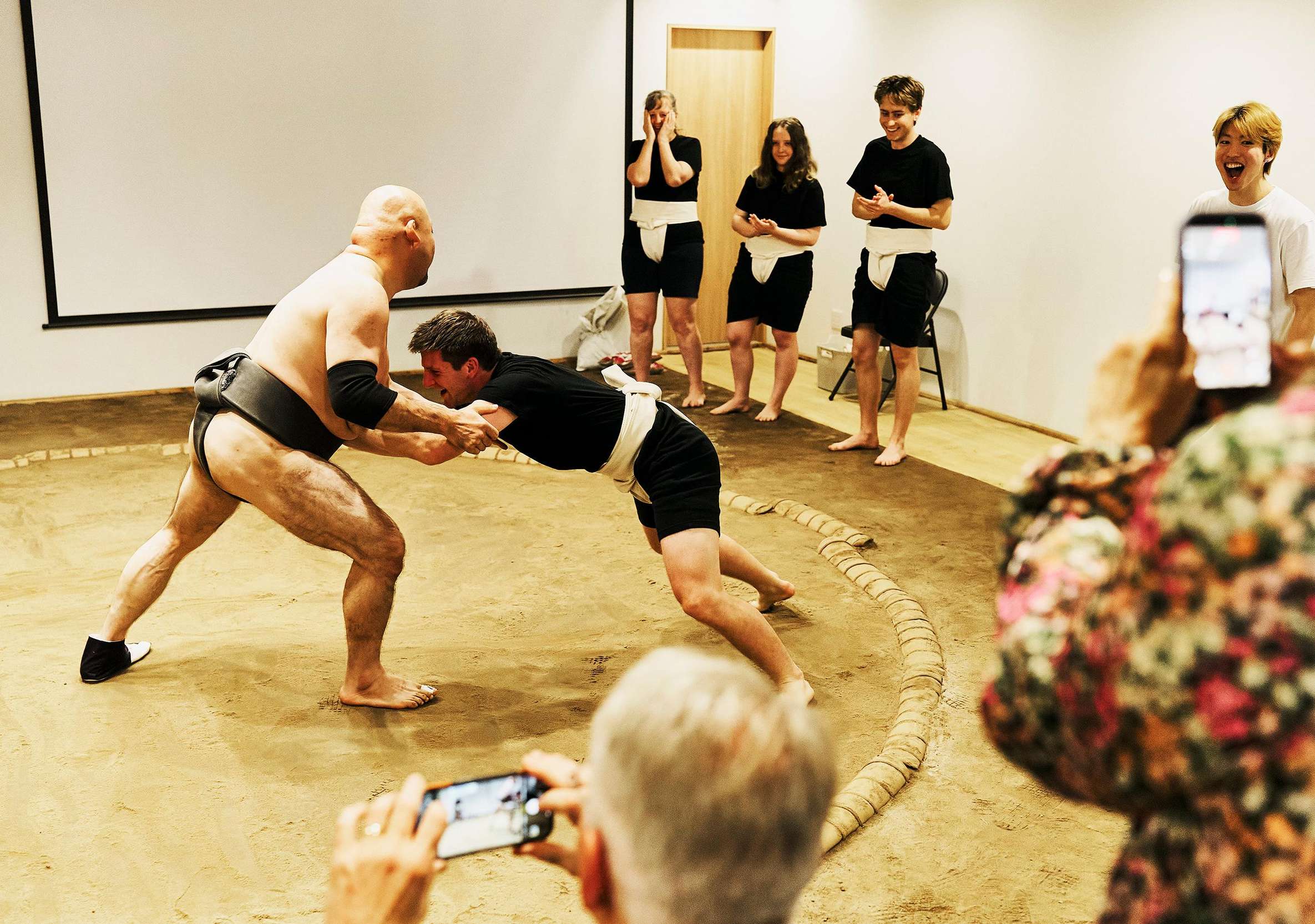
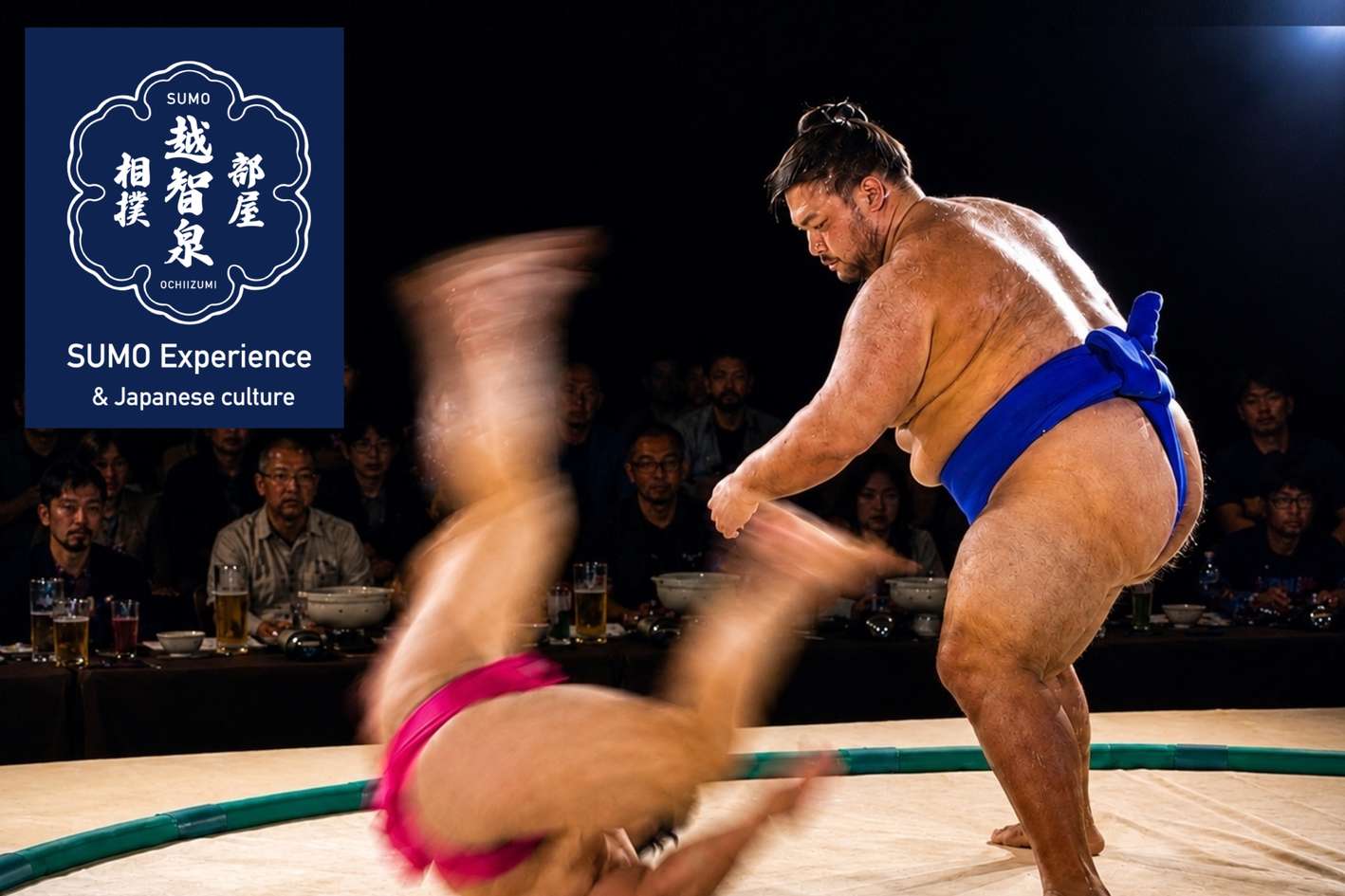
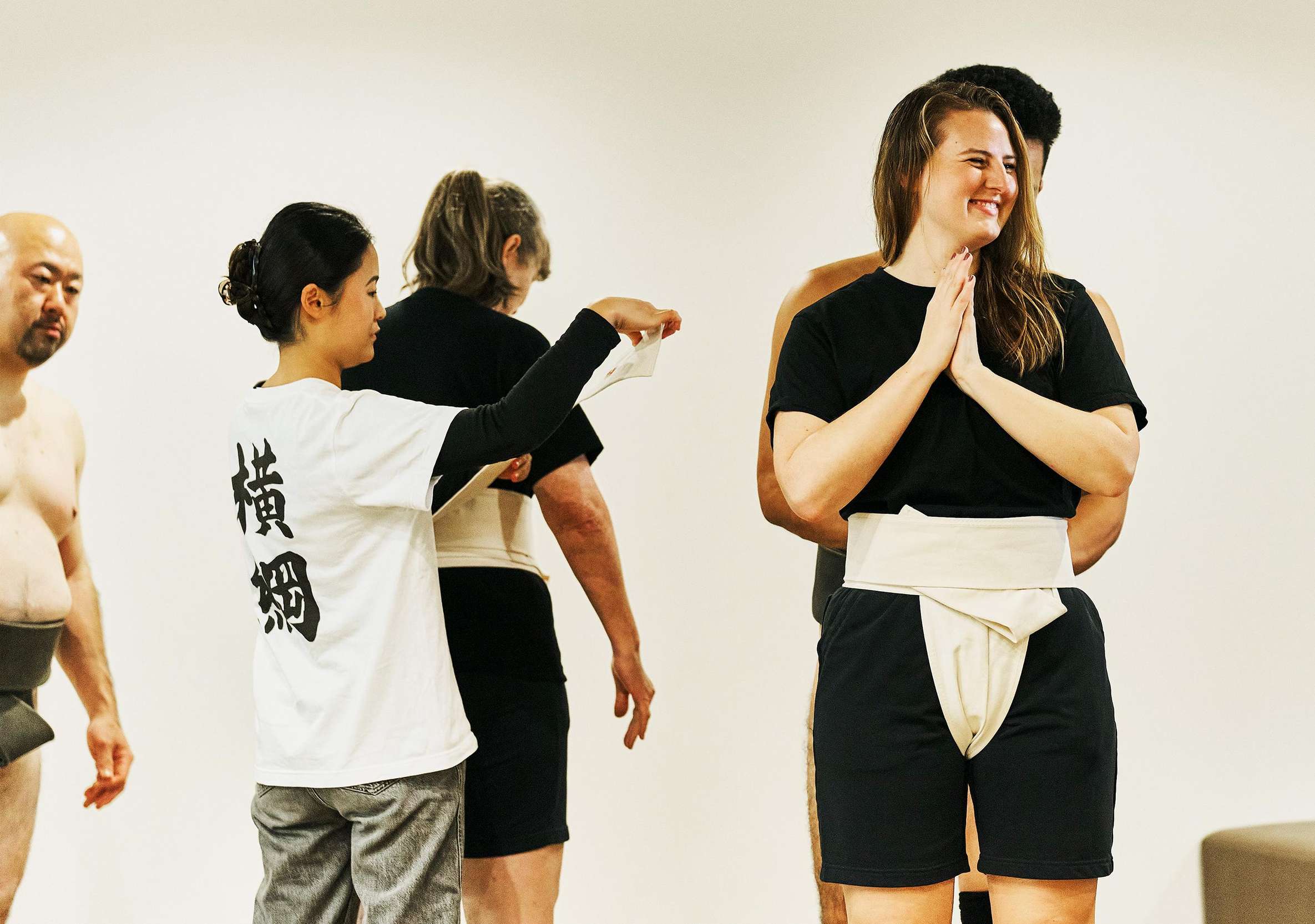
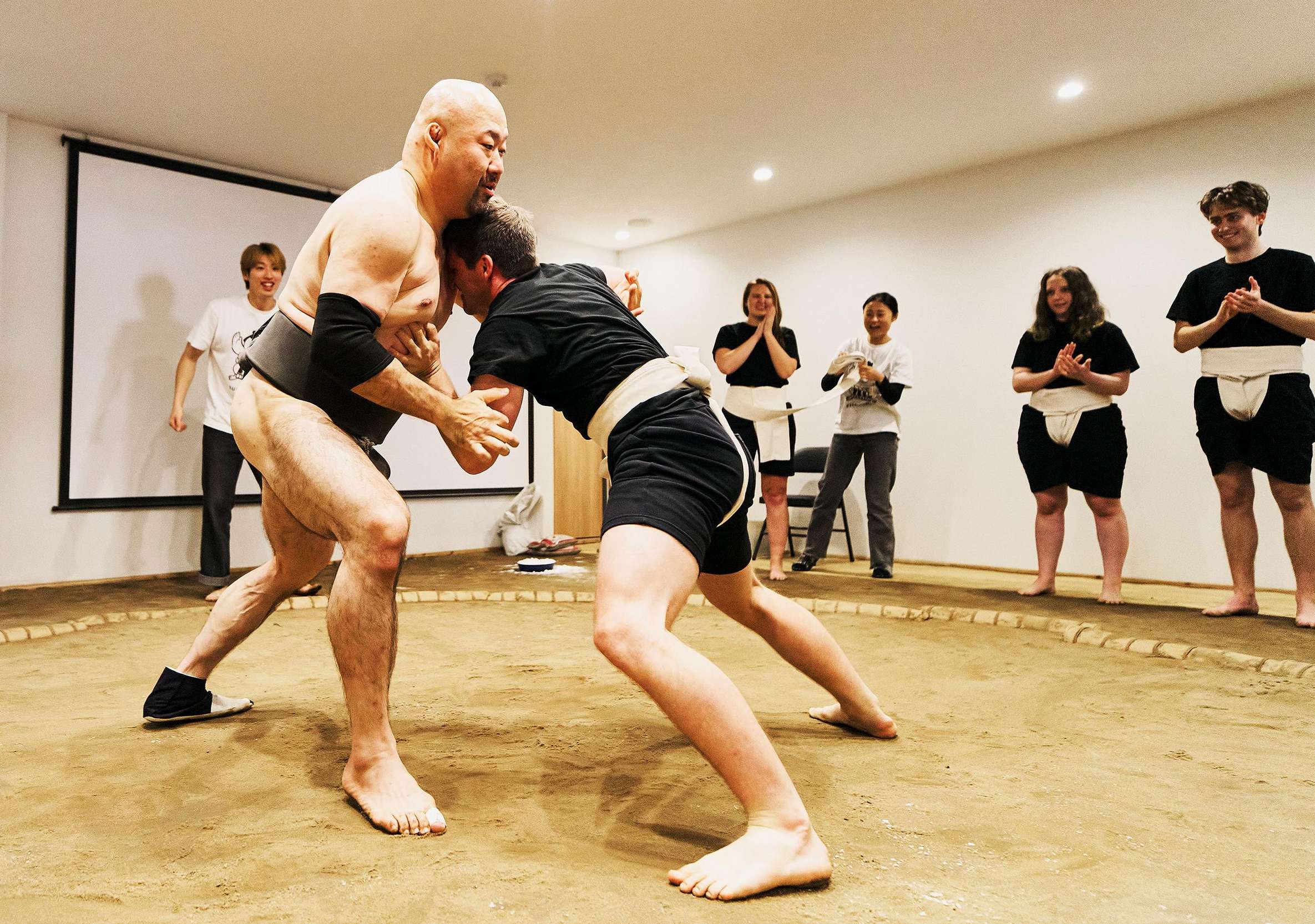
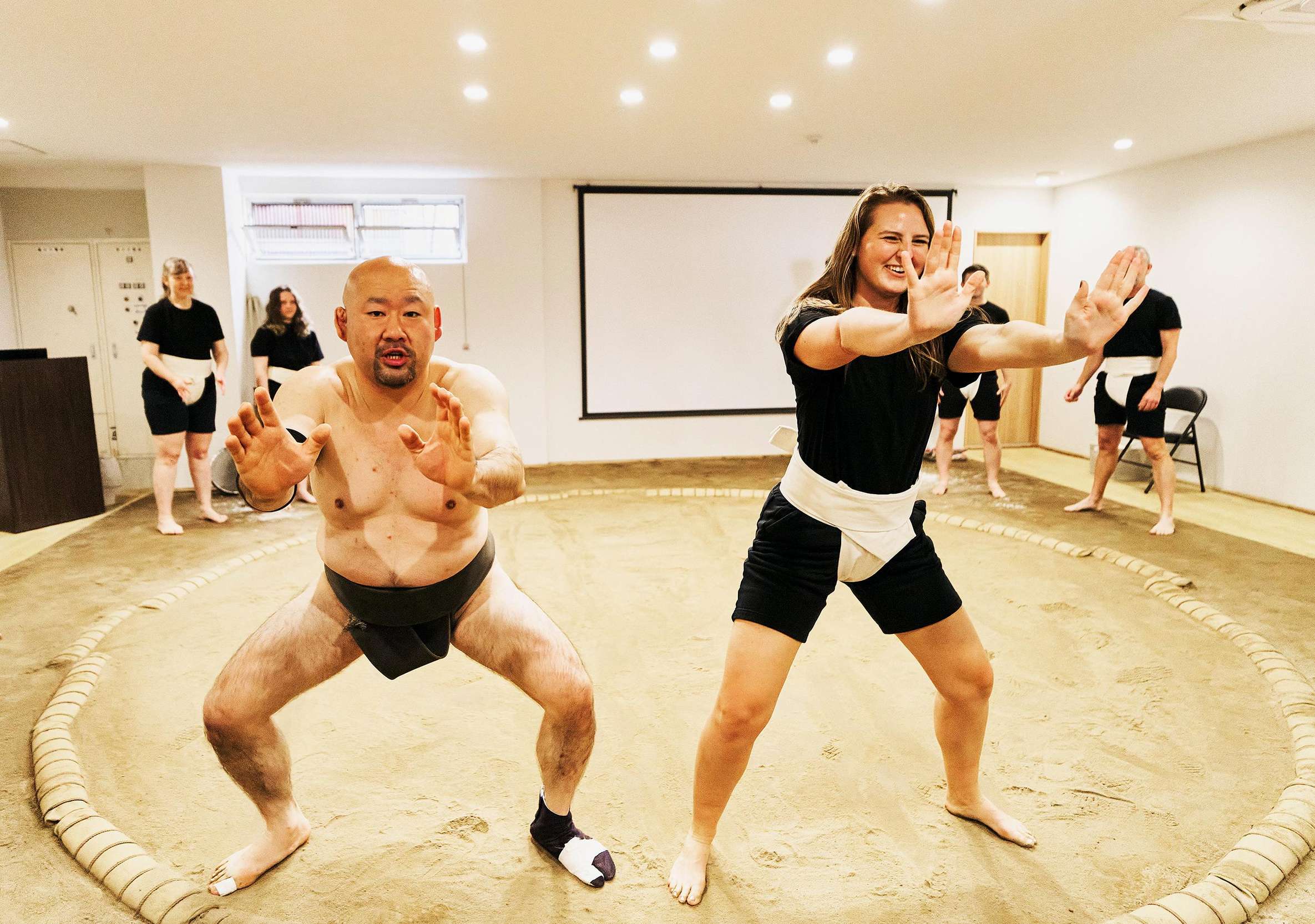
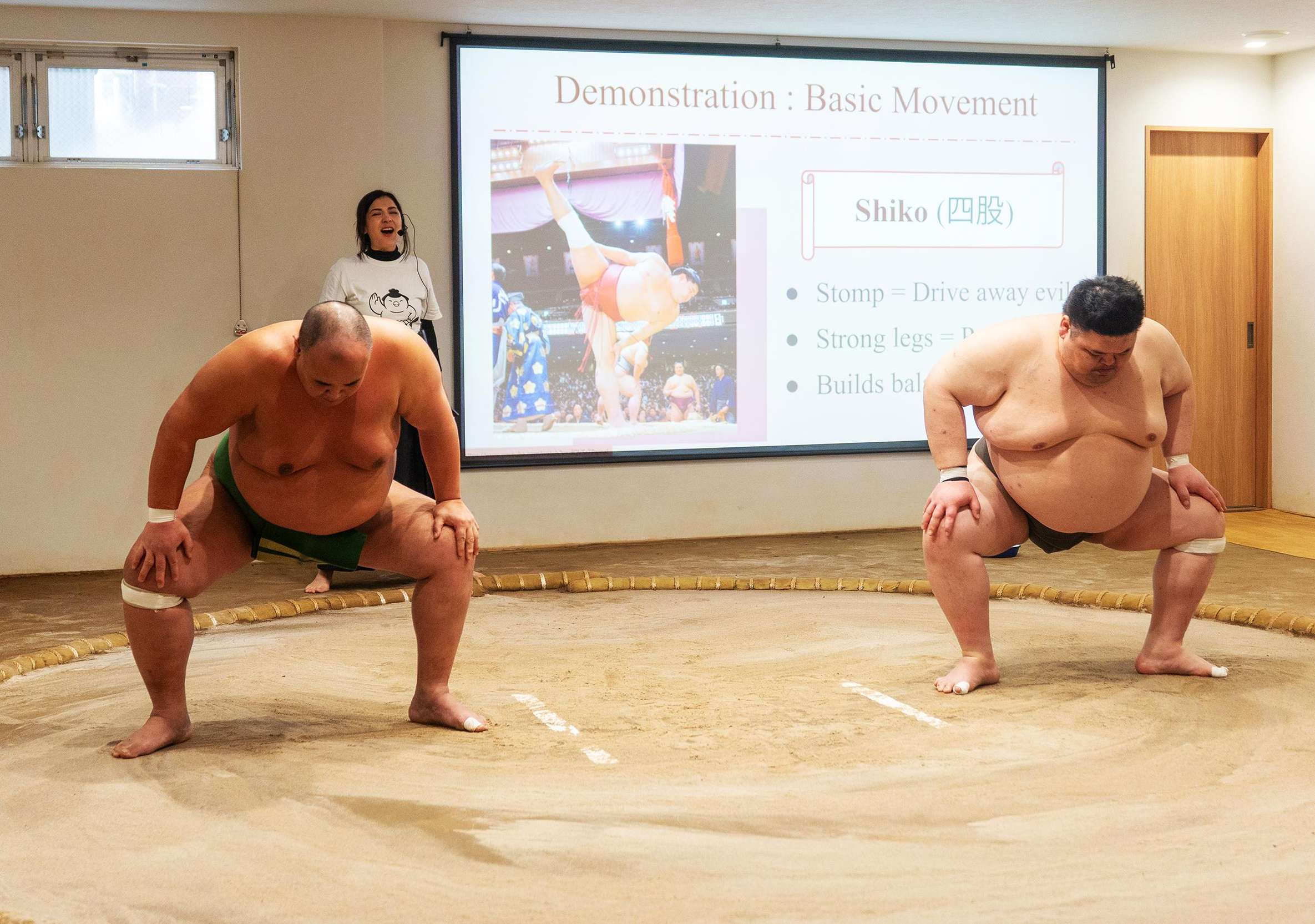
Osaka comes closest on ordinary days. The Osaka: Sumo Experience with Live Show & Audience Challenge stages an actual one-round bout between retired wrestlers with the crowd at ringside, plus a chance for a few guests to step into the ring themselves.
The gap is honest and simple: those men are entertainers, no rank moves either way. The sound and the bodies are real, the contest is not.
Tour for this
Osaka: Sumo Show with Bento or Snack at Sumo Hall Hirakuza4.4★ (553) · 2 hours
Sales open about a month before each tournament, at 10 am Japan time, and the popular days can be gone within minutes.
Common mistakeWaiting for sales to reach you overseas; popular days are gone within minutes of the 10 am Japan time opening.
The pattern repeats in every city: the whole July 2026 Nagoya run sold out about seven weeks before opening, September 2026 Tokyo went in full, and Fukuoka's November dates sold out on the first day of sales two years running.
When and where the grand sumo tournaments run
January: 5 out of 5 for tournament months. Tokyo hosts the January tournament at the Kokugikan, running about two weeks in the middle of the month.
HighestJan, Mar, May, Jul, Sep, Nov
LowestFeb, Apr, Aug, Oct, Dec
Darker: a higher tournament months score, out of 5
Tap a month to read it.
The months say it plainly: only odd months carry a basho. If your trip sits on an even month, no purchase plan can fix that, and the alternatives in the last chapter are your sumo.
If the basho itself falls through
Tournaments are almost never cancelled; it takes something exceptional, like the 2011 scandal or the 2020 pandemic, and one wrestler's withdrawal never stops the day, his opponent wins by default Book with normal confidence; the calendar is sturdier than it looks
On buying from abroad, do not wait for general sale to reach you. By then the seats are gone or held, and people who waited even a few hours past the 10 am opening found the popular days empty.
Tour for this
Tokyo: Sumo Watching with journalist and walks4.9★ (309) · 3 hours · Free cancellation
Two routes cover nearly everyone. The Japan Sumo Association's official English site takes credit cards and issues tickets as physical slips at any Seven-Eleven in Japan, usually from the day before the event. An overseas ticket agent buys on your behalf and can ship before you leave, though availability has grown less reliable.
Pro tipPick an upstairs chair seat. Even the farthest rows in these small arenas see the ring clearly.
What nobody tells you
Ringside boxes are sold by phone lottery before general sale and are effectively closed to foreign visitors
Aim for an upstairs chair seat instead
Tickets bought on the official English site come out as physical slips at a Seven-Eleven, usually from the day before
Plan a stop on your route into town
Some Japanese ticketing sites ask for a Japanese phone number to register
Buy through the official English site or one overseas ticket agent
On seats, take an upstairs chair first. The arena is small enough that even the back rows see the ring clearly, and chairs beat sitting cross-legged on cushions for four hours. Ringside is a phone lottery and best treated as closed.
Tour for this
Osaka Sumo Show with Front-Row Seating & Wagyu Sukiyaki4.7★ (45) · 2.5 hours · Free cancellation
Each basho runs fifteen days, and the shape matters. Shonichi, the opening day, is the tensest session of the run. Day eight, nakabi, is the halfway mark. Senshuraku, the final day, settles championships, presents the Emperor's Cup and shifts the whole schedule thirty minutes early for the ceremony.
Common mistakeChasing the final day first. It is the best session and the hardest ticket; early weekdays sell last.
The last day is the most spectacular and the hardest ticket in the tournament. Weekdays early in the run sell last, and they are the late booker's chance.
Which tournament days sell out first
Sat: the busiest. Saturdays and the final weekend go first, often within minutes of tickets going on sale.
Bar height: how busy each day is, from very quiet to the busiestThe busiest: Sat
Tap a day to read it.
Any day of the run shows real ranked bouts; the final two simply carry more urgency in the air.
Tour for this
Tokyo: Discover the World of Sumo History & Lunch4.9★ (6) · 3 hours · Free cancellation
What a tournament day is actually like, from empty morning to packed finale
Doors open around 8:45 am to a nearly empty arena, and the morning belongs to lower-ranked wrestlers. That is the classic first-timer error: arriving at opening and expecting the stars. The top division enters around 3:45 pm, and the marquee bouts run to about 6 pm
Common mistakeLeaving before the main event. Many foreign visitors walk out in the afternoon and miss the whole point.
The shape of a basho day
1
Around 8:45 am
Doors open and the lowest divisions fight in a half-empty arena
The quietest hours, good for a first look at the ring
2
Early afternoon
Juryo bouts start and the crowd begins to build
The sweet spot for food and merchandise, before the queues
3
Around 3:45 pm
The top division enters the ring in ceremony
The arena fills for the salaried wrestlers
4
Around 5:30 to 6 pm
The top-ranked bouts and the final match
Everyone is in their seat now
5
After the last bout
The bow-twirling ceremony, then the crowd files out together
Build in exit time; the station gets packed
Between bouts, food is part of the day. Bento and hot chanko nabe get ordered at your seat, beer costs about convenience-store prices, and the early afternoon is the quiet sweet spot: short queues and drinks carried back to your chair.
You can leave and re-enter once, so a midday walk for convenience-store snacks is normal. Stay for the bow-twirling ceremony at the end; the crowd files out together, and so should you.
Follow the crowd's lead and the etiquette takes care of itself. The arena falls strikingly quiet right before each bout, and first-timers feel it. Cheer when the crowd cheers, keep your phone silent, and take photos quietly from your seat without flash.
Common mistakeThrowing a cushion after an upset because the local crowd does. It is banned, and yours can cause injury.
The cushion is the big one. After a big upset in Osaka, cushions fly, and it looks irresistible. Never throw yours: the throw is officially banned because cushions cause injuries. Leave it where it sits.
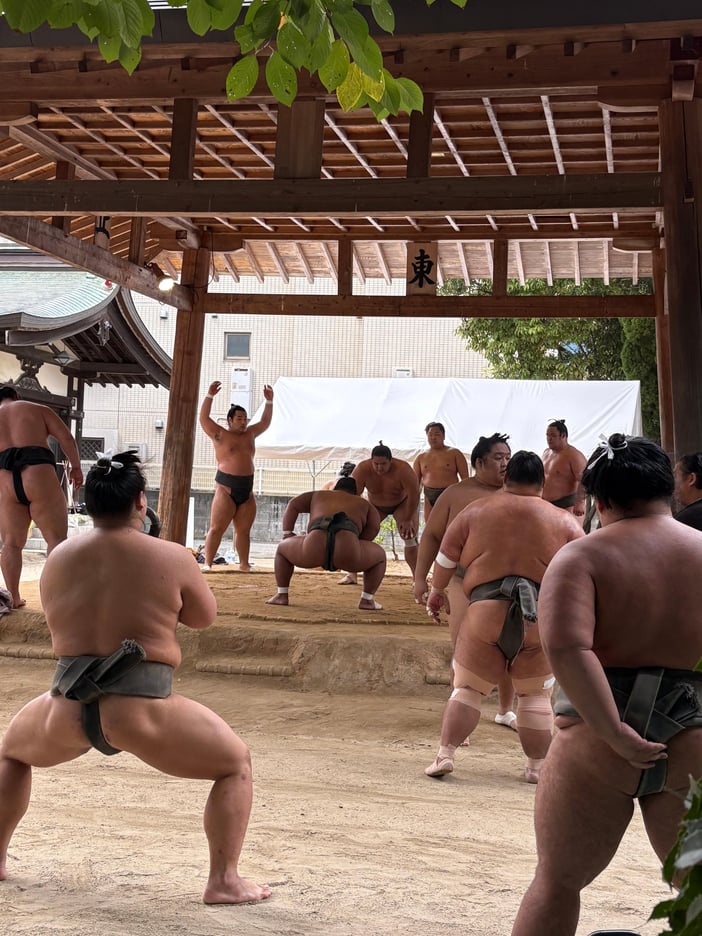
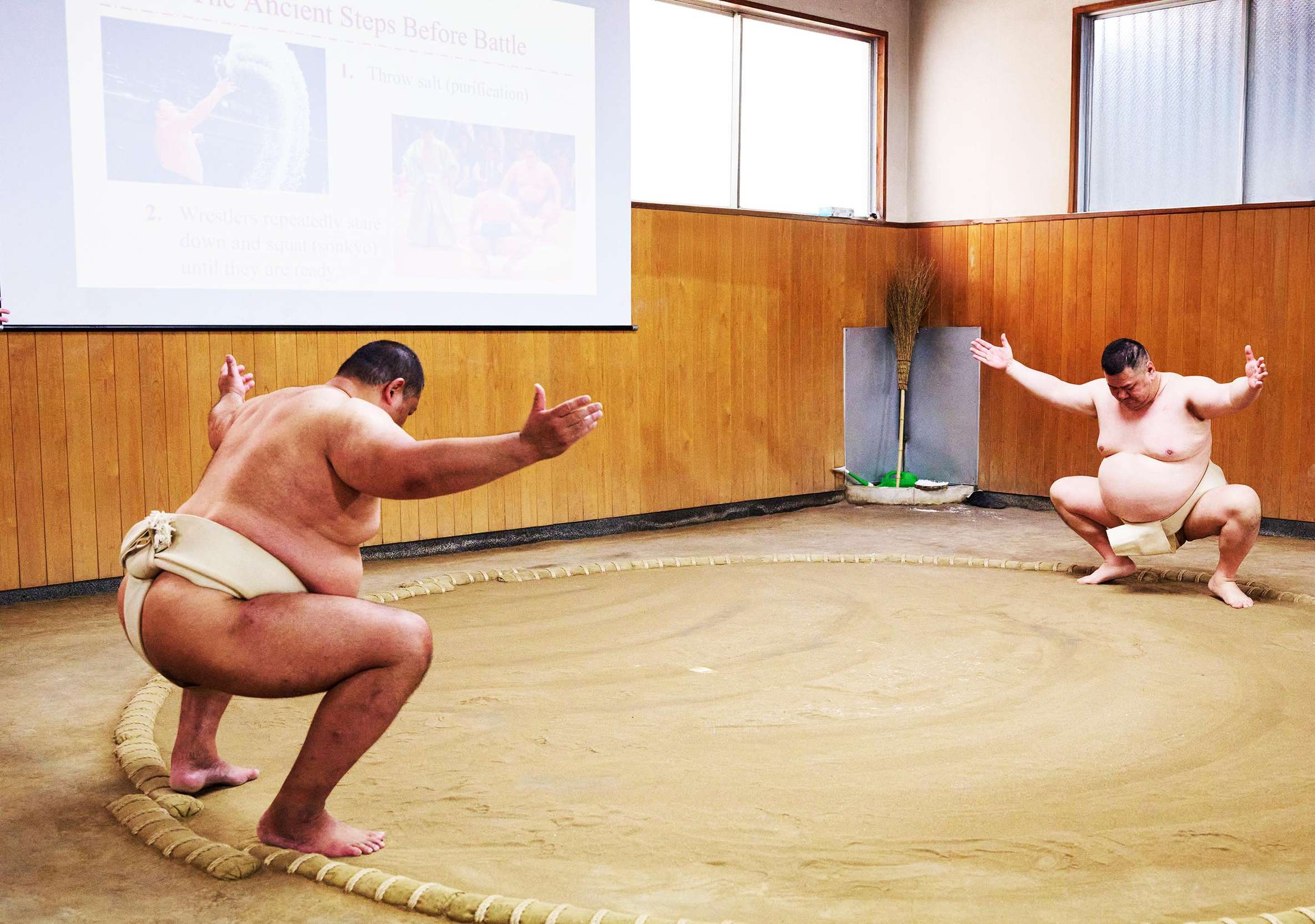
Before each bout the wrestlers throw salt into the ring. It is a Shinto purification, cleansing the sacred dohyo and praying for safety. It also dries the clay and helps keep their hands clean.
What else to do around the arenas on a tournament day
The museum on the arena's main floor closes in the late afternoon, so most ticket-holders walk straight past it. Go in the morning or at lunch instead. At Ryogoku you also get a sumo-themed station, chanko restaurants run by retired wrestlers and the temple where wrestlers pray before a basho.
Pro tipThe sumo museum closes in the late afternoon, so see it before the top division starts.
Even without a ticket, a basho gives you something. The wrestlers arrive at the venue under colourful banners, with drums sounding morning and evening, and most ticket-holders never see it.
In Fukuoka the day ends neatly. Bouts finish near 6 pm, just as the city's yatai food stalls light their lanterns, and wrestlers in yukata head out to dinner around town.
Miss every basho and sumo does not vanish. Between tournaments the Japan Sumo Association runs jungyo, one-day exhibition tours that bring the top wrestlers to smaller cities. A morning practice visit puts you at a real stable, silent and still. A dinner show is a fun substitute, best done once.
Common mistakeBooking a show and calling it a honbasho. Only six events a year change a wrestler's rank.
What people wrongly assume
MythExhibition bouts and one-day events are staged
Reality
The wrestlers really compete for pride and prize money; the bouts just never touch a ranking
MythA dinner show is the same thing as a honbasho, cheaper
Reality
Show wrestlers are entertainers, often retired; only six official events a year change anyone's rank
In Tokyo, the Tokyo Sumo Culture Masterclass & Authentic Chanko Nabe Lunch covers the sumo district and the wrestler's hot pot at a relaxed pace, with no ultra-early start. In Osaka the shows by retired wrestlers are what remain, since morning practice there is largely unavailable.
What none of these is: a honbasho. Enjoy each for what it does, and save the real thing for a month it actually runs.
A honbasho is one of the best days you can buy in Japan, if your trip lands on January, May, September, March, July or November and you buy the hour sales open.
Miss those windows and the honest fallbacks on this page, a practice visit or a show by retired wrestlers, still get you close to real sumo. Book whichever fits your city, and know what it is.
Go ifYour trip overlaps an odd month in Tokyo, Osaka, Nagoya or FukuokaYou can be at your screen at 10 am Japan time the day sales openYou want the full arena day and will stay for the bow-twirling ceremony
Skip ifYour trip sits on April, June, August, October or DecemberYou will not buy tickets until you arrive in JapanFour hours on a floor cushion sounds worse than a far back chair seat to you
Our pick to book
Osaka: Sumo Experience with Live Show & Audience Challenge4.9★ (2,124) · 1 - 1.5 hours · Free cancellation
Short answers on when and where to watch live honbasho, how fast tickets vanish, and what to book when your dates miss the action.
When are grand sumo tournaments held in Japan each year?
They run in the odd months: Tokyo in January, May and September, Osaka in March, Nagoya in July and Fukuoka in November, each over 15 days. If your dates miss them, sumo shows in Tokyo, Osaka and Kyoto run year-round, and the Fukuoka practice tour operates each November.
How quickly do tickets sell out?
Sales open about a month before each tournament at 10 am Japan time, and popular days can go within minutes; recent events sold out every date within days. The outings here work differently: they are guided bookings for practice visits and shows, not ticket rushes.
What can I watch if my trip falls between tournaments?
Morning practice at the stables runs as normal between basho, and the Fukuoka tour pairs real training with a walk through Hakata Old Town. Sumo shows in Tokyo, Osaka and Kyoto fill the rest of the calendar.
How can I tell a real honbasho from a sumo show for tourists?
Only the official honbasho affect the wrestlers' rankings, and those bouts are real contests. Show matches are choreographed entertainment by retired wrestlers. If genuine training is what you want, the Fukuoka practice tour puts you at a real stable; shows add food and a chance to step into the ring.
How long does a tournament last, and which day should I pick?
Each honbasho runs 15 days, with the top division fighting from about 4 pm. The final day settles championships but is the hardest to get tickets for. In between, the Osaka show stages a live one-round bout between retired wrestlers, so you still see a match in person.
Is a sumo show worth it if I can't get tournament tickets?
First-timers who miss out on honbasho tickets call a sumo dinner show a fun substitute, best done once. Retired professionals perform, an English-speaking MC explains the action, and families with children around 10 to 12 are a core audience.
Which seats have the best view at a tournament?
Chair seats on the upper floor are the safe first-timer choice; the arena is small enough that you can see the ring from anywhere.
Floor box seats mean cushions and hours sitting on the floor, and same-day tickets put you far back on the second floor. The shows here seat you close to the ring instead.
Why is there no grand tournament in Kyoto?
The host cities are Tokyo, Osaka, Nagoya and Fukuoka, and Kyoto has no dedicated sumo venue or professional stables. Instead, Kyoto runs sumo shows year-round, including one with a geisha dance, chicken hot pot and a chance to enter the ring.
Are grand tournaments ever cancelled or moved?
Rarely; it takes exceptional circumstances, and a single wrestler's withdrawal changes nothing. The bookable outings are steadier: the Osaka show runs daily, and most of these tours can be cancelled up to 24 hours ahead for a full refund.
Feel grand sumo's tournament thrill live in Osaka
Watch retired wrestlers battle in a real one-round match, then take your own shot in the ring, with free cancellation up to 24 hours ahead.