


Likely to sell out
1 - 2 hours·English, Japanese
4.8(746)
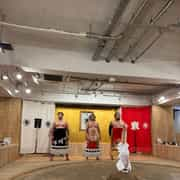
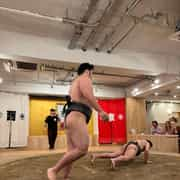
Tokyo: Sumo Wrestling Experience with Chanko Nabe & Mochi
Free cancellationDynamic sumo experienceChanko nabe meal
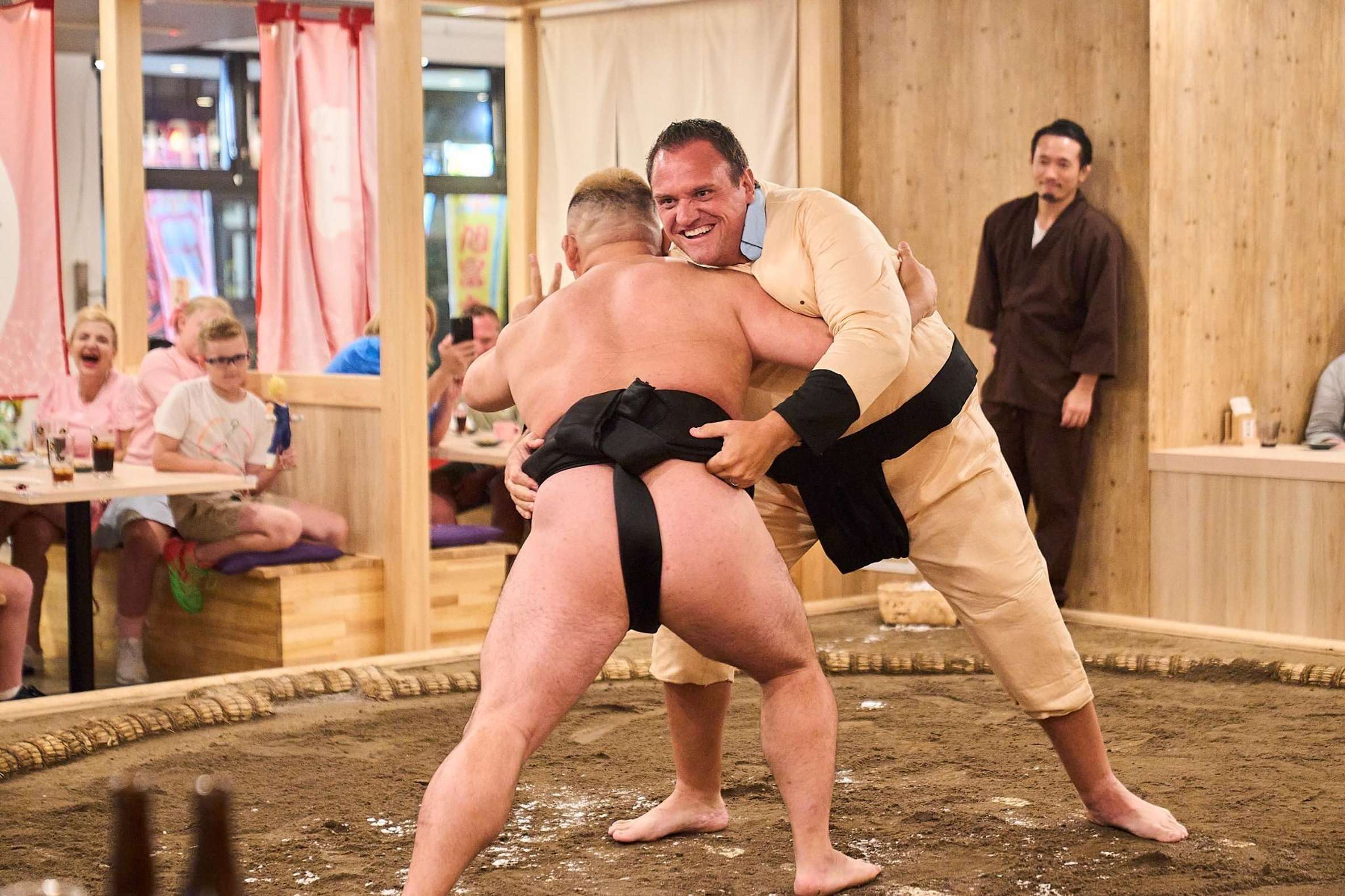
Looking for SumoLand Tokyo? Start with the sumo experience closest to it, right in Ryogoku - watch former professional wrestlers at ringside, eat chanko nabe made to a real stable recipe, pound mochi with the wrestlers and step onto the dohyo to try sumo yourself. See if it fits your Tokyo plans and book a seat today.
"Such a fun time! Entertaining and informative with lots of audience participation, and the food was great. They happily accommodated our vegetarian request."




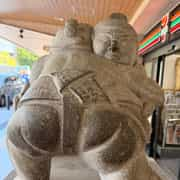
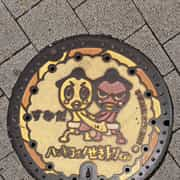
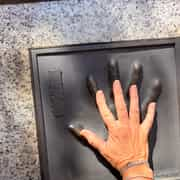
A hands-on sumo venue opened in Ryogoku in June 2025, with former professional wrestlers in the ring and chanko hot pot on the table. Visits run about two hours, the rooms open every day, and the closest bookable alternative sits in the same district.
The venue is an entertainment space with a purpose-built ring, run by former professional wrestlers including top-division ones; no tournaments are held there.
It has two venues in Ryogoku, one about 3 minutes and one about 1 minute from JR Ryogoku Station's East Exit.
The Tokyo venues run every day of the year with no closed days, but demand peaks around the big tournament months of April, May and October.
A full visit runs about 1.5 to 2 hours, sometimes stretching to 3, and the short 60-minute format skips the chanko hot pot.
The tours sold here are close alternatives in the same neighborhood; none crosses the venue's own threshold.
If you need accessible seating or step-free access, choose the Asakusa sumo entertainment show instead, and book box seats with a reservation for the exact number of guests in your group.
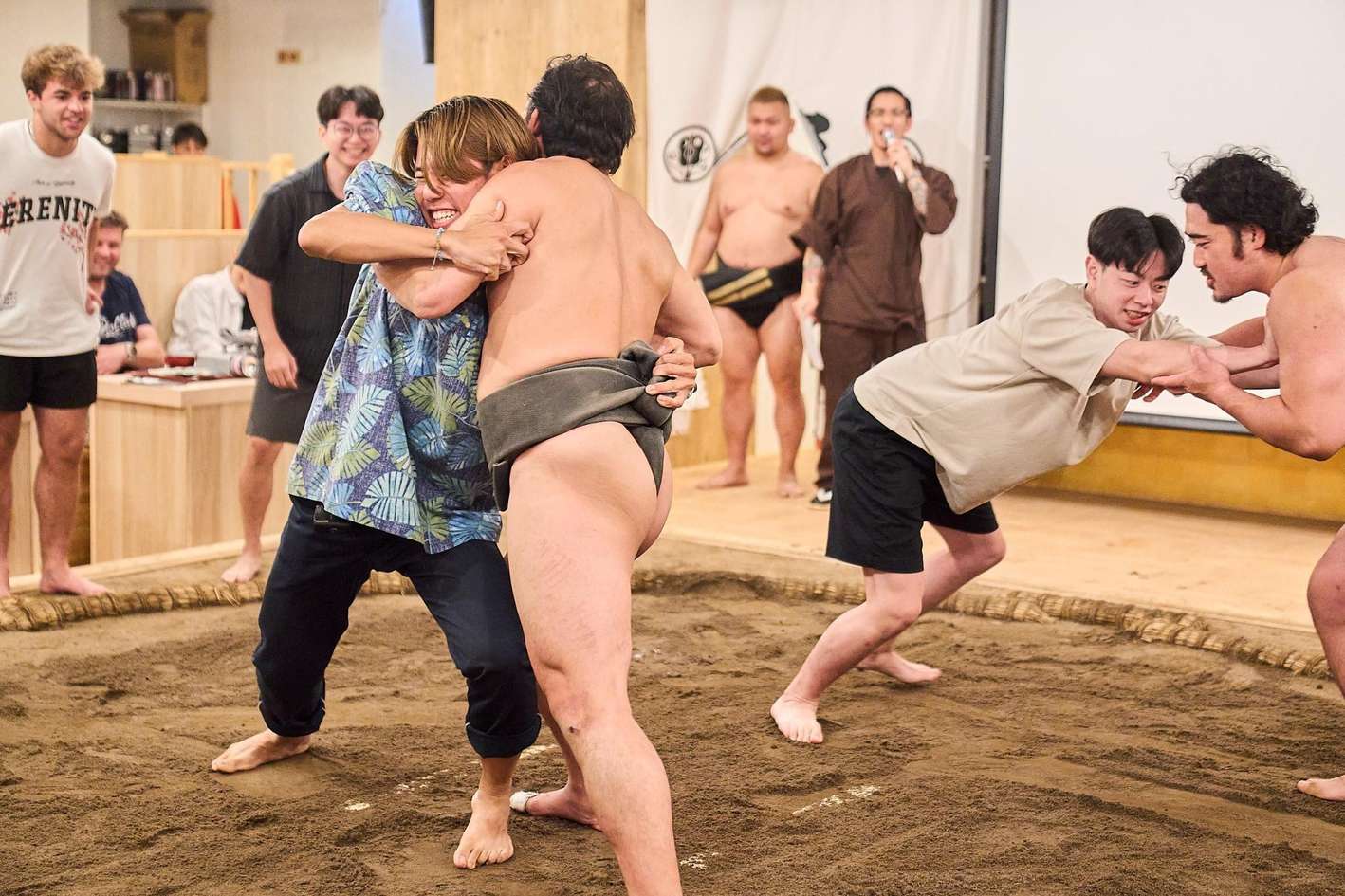
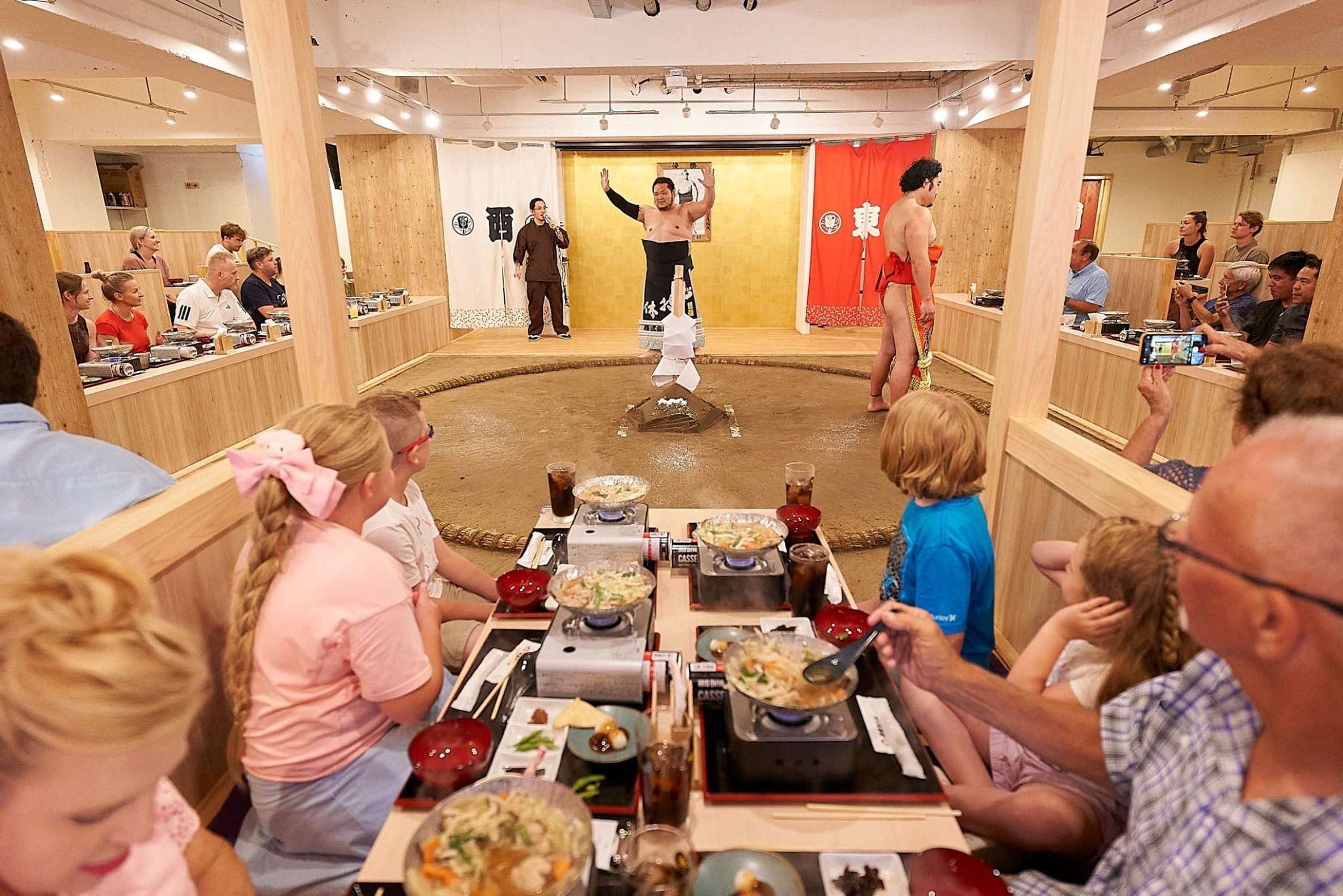
The first thing to get straight is the kind of sumo this is. The place is a hands-on experience venue: guests watch a show performed by former professional sumo wrestlers, then step into a purpose-built ring themselves and try a match.
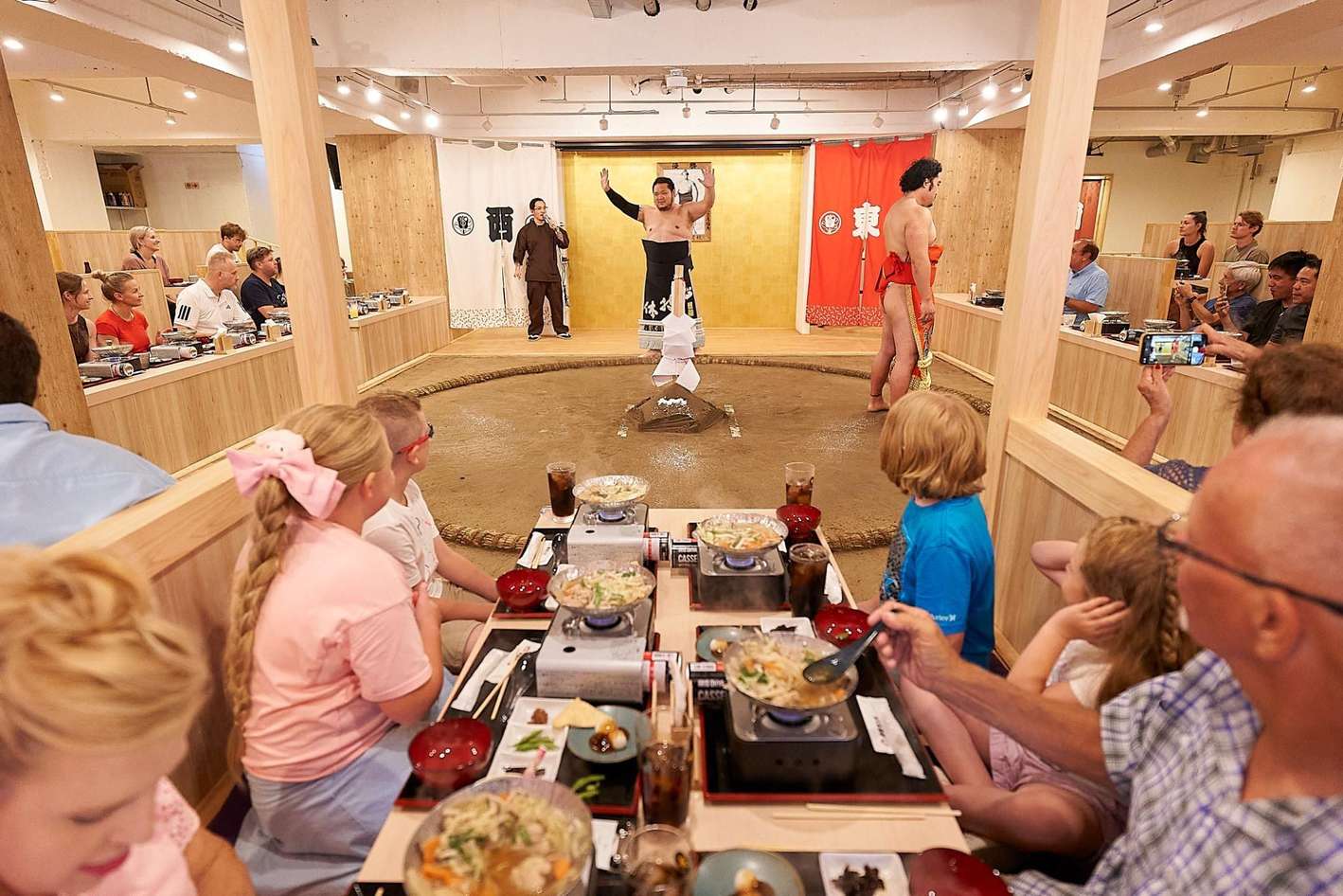
It opened on June 11, 2025 as an entertainment restaurant, the kind of place where you eat chanko hot pot while the wrestlers work.
The performers are the real article. The cast includes ex-top-division wrestlers, and the whole thing is supervised by the 63rd Yokozuna, Asahifuji. What you will not find here is a grand tournament: no ranking points, no championship, no hall of the Japan Sumo Association.
It sits closer to a dinner theater built around sumo tradition, with the wrestling done by men who spent their careers doing it for real.
That distinction decides your expectations before you plan anything else. If you want staged spectacle plus your own turn on the dohyo, this is exactly it.
If you want competitive sumo, the Kokugikan hosts the real thing in January, May and September; the district itself sits two stops from Akihabara by train, which is why the two facts travel together.
Closures are the easy part. The Tokyo venues run every single day, with no closed days and no seasonal blackout periods, so a calendar conflict is unlikely. Demand is the part that needs planning.
April: 5 out of 5 for how busy it gets.
Tap a month to read it.
The pattern in those numbers is tournament-shaped. April, May and October sit at the top of the scale, and September is not far behind, because that is when the Tokyo tournaments pull every sumo-curious visitor into the same weeks.
November, March and July are the quiet stretches, when the wrestlers have left town for Osaka, Nagoya or Fukuoka.
The practical read: book early for a spring or autumn trip, when practice visits across the city regularly sell out and people get turned away at the door.
Even in quieter months travelers report advance bookings filling up. Around a tournament the squeeze tightens further, with seats gone within minutes of release. The venue's open-door policy helps, but its busiest seasons are everyone else's too.
The Osaka picture is different, and the page on Sumo Land in Osaka covers its Tuesday closures and booking windows.
Here is the honest part, before you fall in love with the plan. The tours you can book here run close to it without crossing its threshold; none enters either of the venue's two Ryogoku rooms. What they give you instead are alternatives in the same neighborhood.
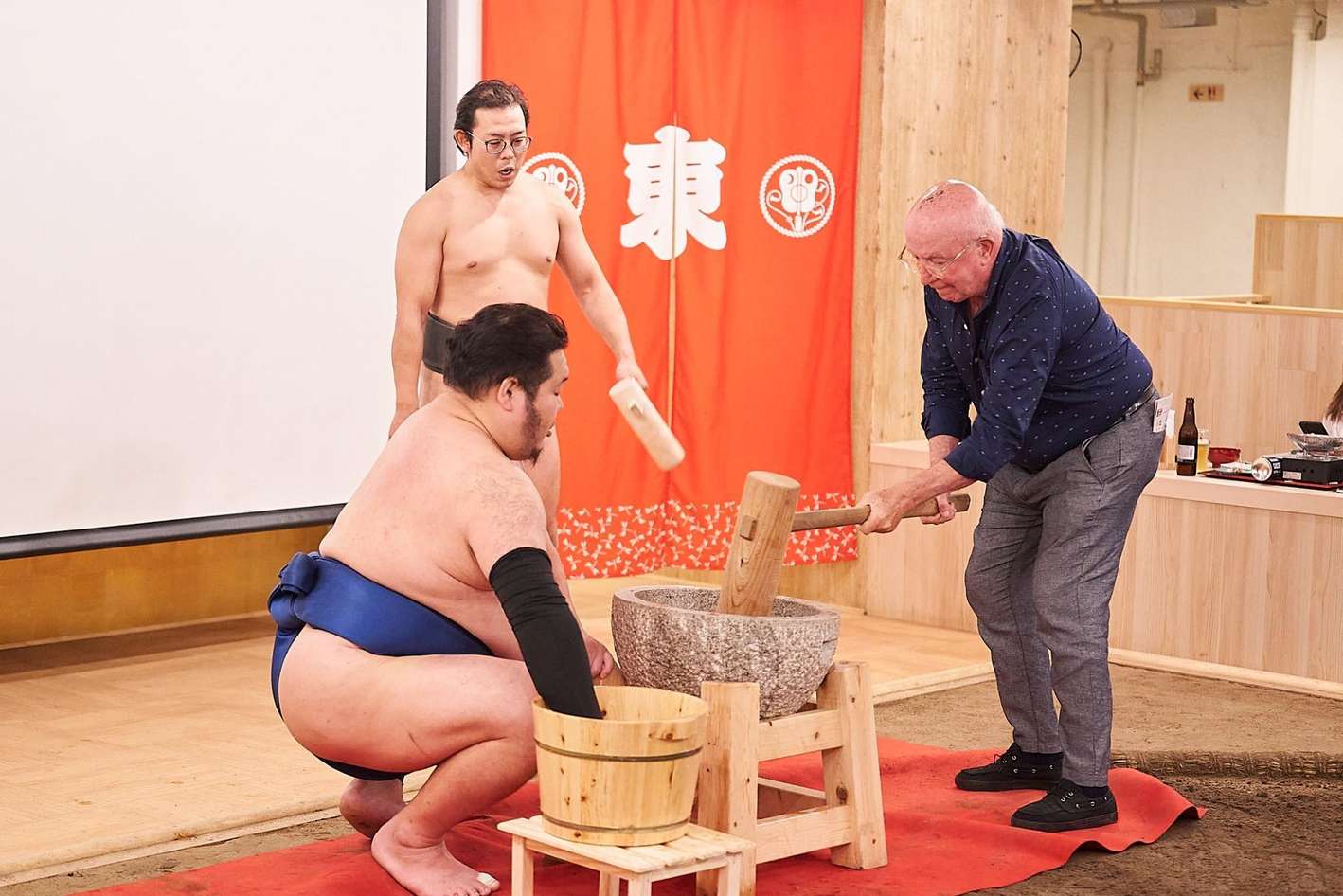
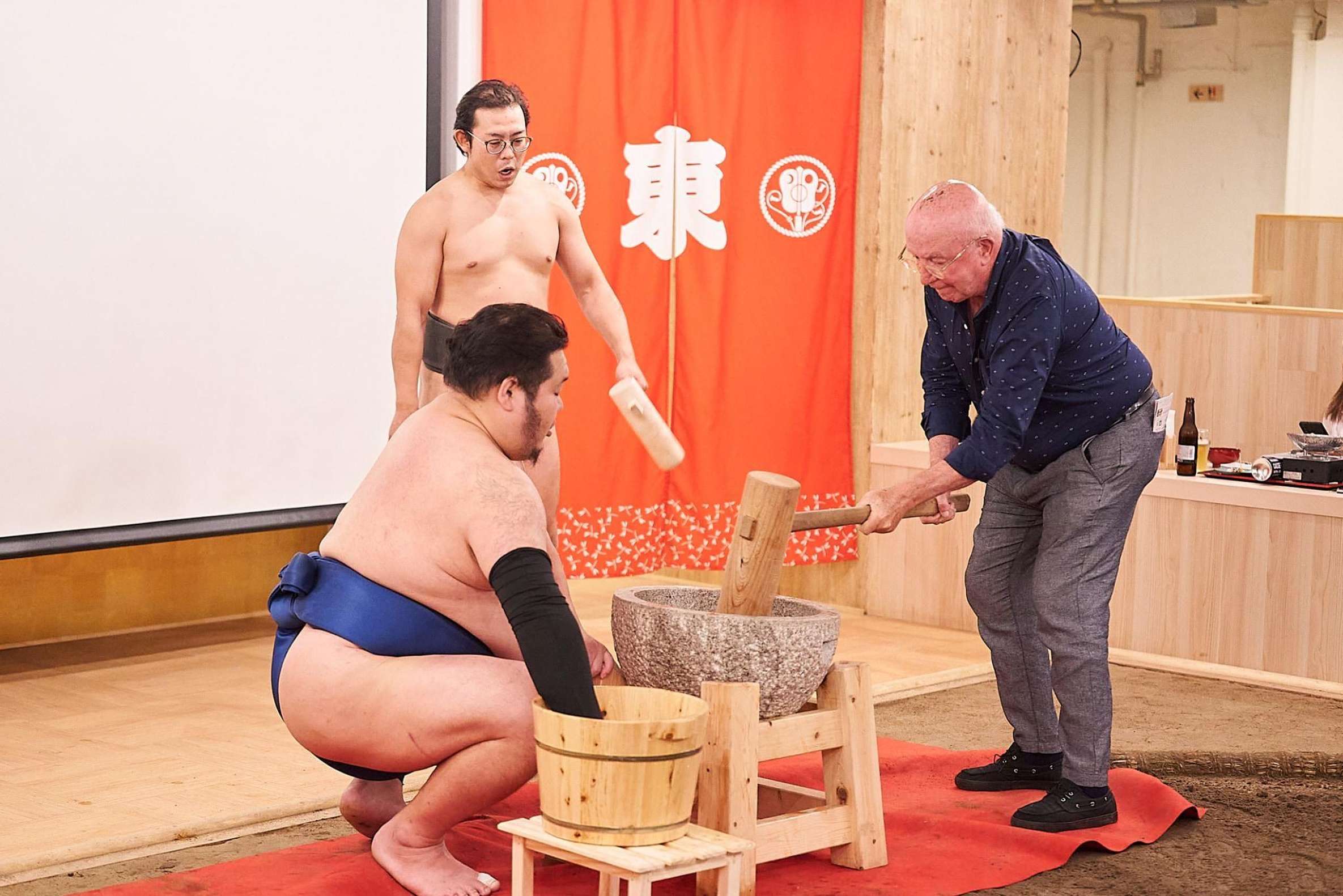
The closest match is the Tokyo: Sumo Wrestling Experience with Chanko Nabe & Mochi, which runs in Ryogoku itself and follows the same formula: former wrestlers performing around a dohyo, chanko nabe on the table, and your own turn in the ring.
It adds mochi pounding with the wrestlers, which the searched-for venue also does, and it runs 1 to 2 hours.
How do you know the wrestlers are real? Tokyo's tourist shows usually feature retired professionals, and a genuine operator names its cast and their careers.
One performer on such shows competed as a rikishi under the ring name Itadaki Sennosuke for 14 years before injury retired him. That is the level of proof to look for, and it holds for the Ryogoku experience here.
Many visitors call an experience like this the highlight of their Japan trip, even knowing nothing about sumo beforehand. The gap is real, though: it is a different venue from the one you searched for.
The venue keeps two addresses a block apart. One sits at Takashima Ryogoku Mansion 1F, 4-32-19 Ryogoku in Sumida-ku, a 3-minute walk from JR Ryogoku Station's East Exit on the Sobu Line, or 4 minutes from Exit A5 of the Ryogoku subway station on the Toei Oedo Line.
The other, in the Eiko Building at 3-25-8 Ryogoku, is 1 minute from the same JR exit.
Getting there from central Tokyo is simple. The station is served by the JR Chuo-Sobu Line and the Toei Oedo Line: about 13 minutes from Tokyo Station with a change at Akihabara, and Asakusa, Ueno, Akihabara and Shinjuku all sit within 15 minutes by train.
From Senso-ji Temple it is roughly 15 minutes by rail, from Ueno Park about 10, and from Ginza about 10 by taxi.
For readers who want to know the streets before committing to a venue, the Tokyo: Discover the World of Sumo History & Lunch is the right pick.
This 3-hour walk starts at Ryogoku Station's West Exit, moves through sumo town past the Kokugikan and Ekoin Temple with its Chikara-zuka Monument, and ends with chanko-nabe lunch at a local restaurant. It is a walking tour of the district, and it teaches you the neighborhood those two doors sit in.
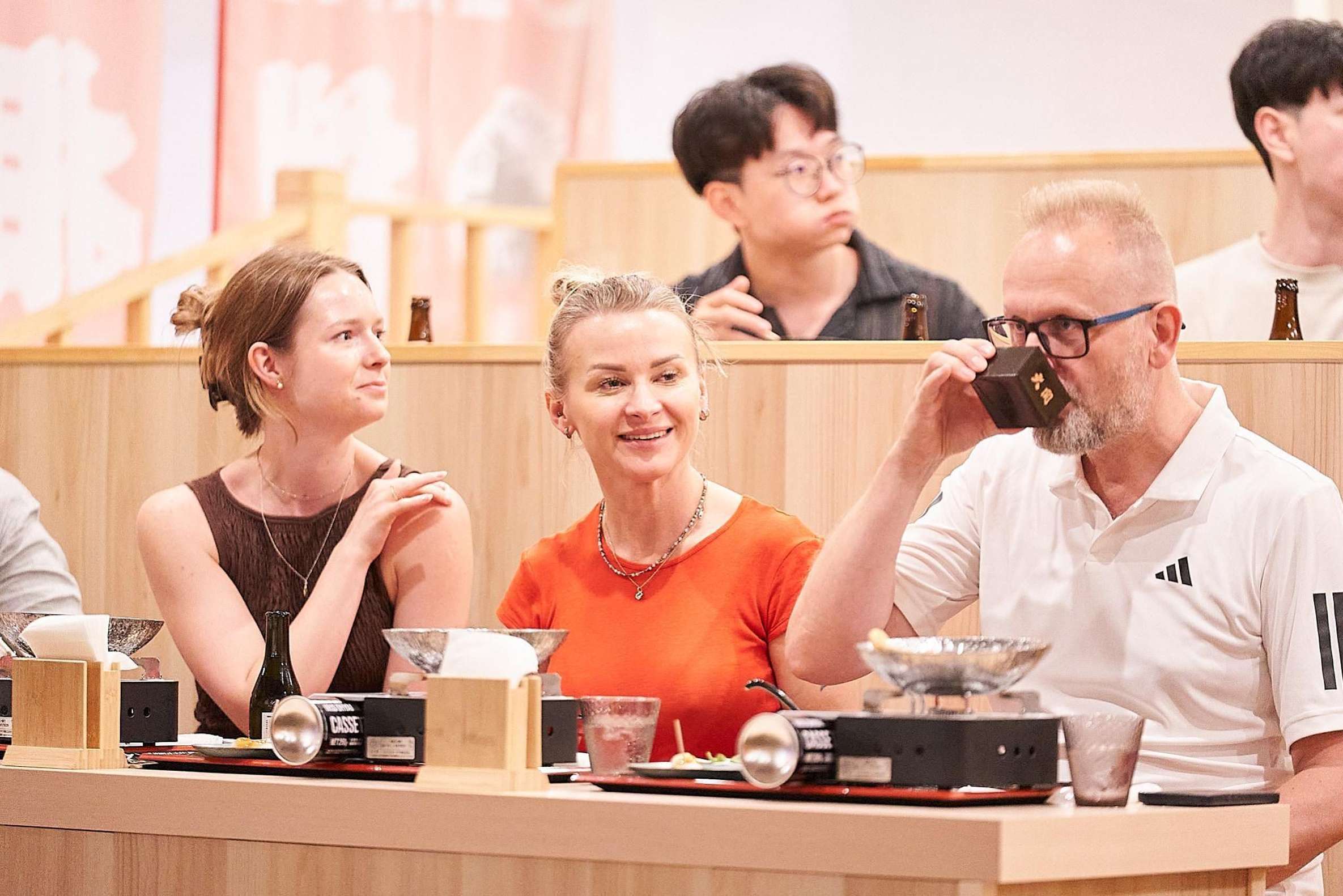
Plan for 1.5 to 2 hours as the normal span of a visit, with the full session sometimes running to 3 hours depending on the wrestlers' schedule that day. Set aside an afternoon or evening block for it; it will not fit between two sights.
runs the bulk of the 1.5 to 2 hours
included in the longer formats
cooked wrestler-style before your eyes
eat separately if you booked the express
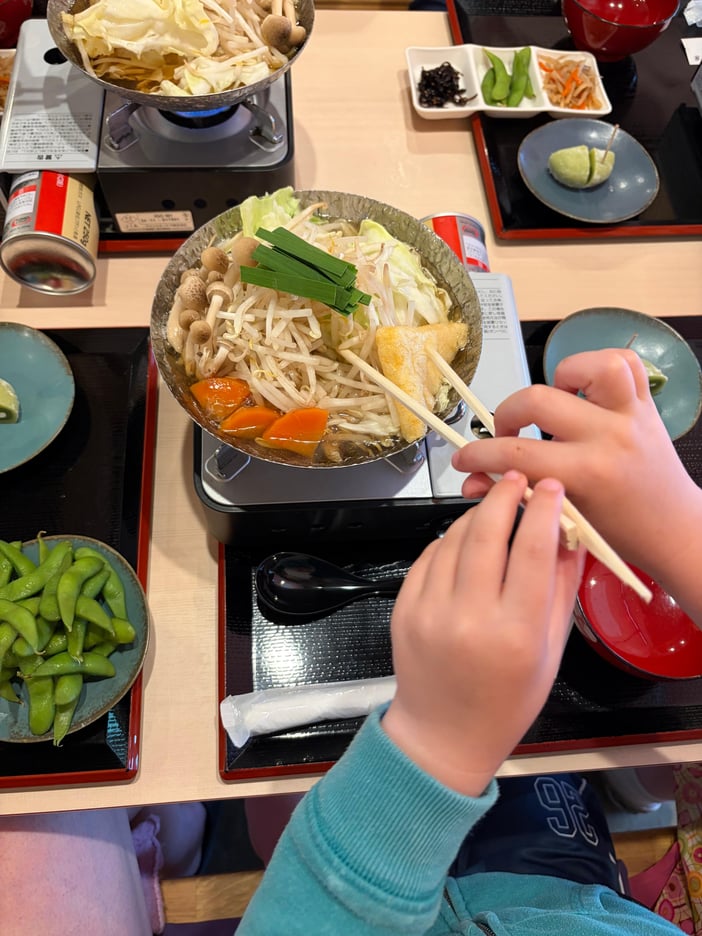
The food splits the formats. The Signature experience includes the chanko hot pot, made in front of you to a traditional stable recipe. The Express 60-minute version leaves the table out, which matters if you arrive hungry.
Ryogoku has the densest cluster of chanko nabe restaurants in Tokyo, so nobody goes unfed. Sumo Chaya Terao sits 2 minutes from Ryogoku Station, and many of the kitchens are run by retired wrestlers.
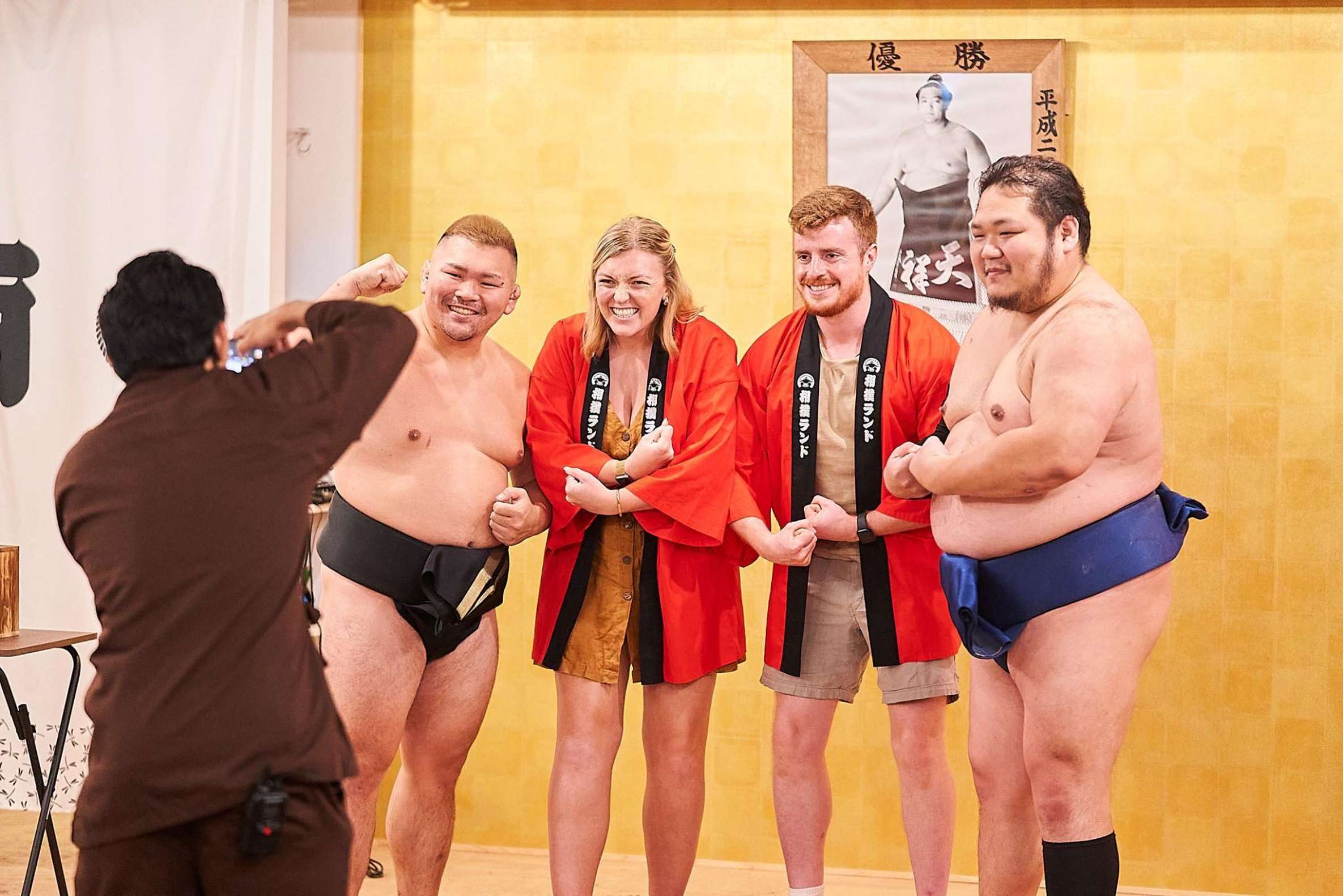
The venue aims at adults and children alike, and kids are welcome to join the sumo and mochi-pounding. Language is no barrier: Tokyo's Ryogoku experiences run in English and Japanese, and the hosts explain rules, rituals and history in a way newcomers follow easily.
It is an entertainment venue with a purpose-built ring; the wrestling is genuine technique without competitive stakes
The format is built for adults and children together, not as a children's show
Commentary and hosting run in English and Japanese
The honest comparison is with the alternatives. At a sumo show you watch retired wrestlers and can join the participation; at a stable practice you must sit silent and still, with no talking, no moving and no flash photos; at a tournament the crowd roars and towels fly.
Participatory experiences like this are lighter than real training by design.
So the fit depends on the fan you are. Casual first-timers and families get the most here. Die-hard sumo fans who want the authentic, austere version of the sport should point themselves at morning practice instead.
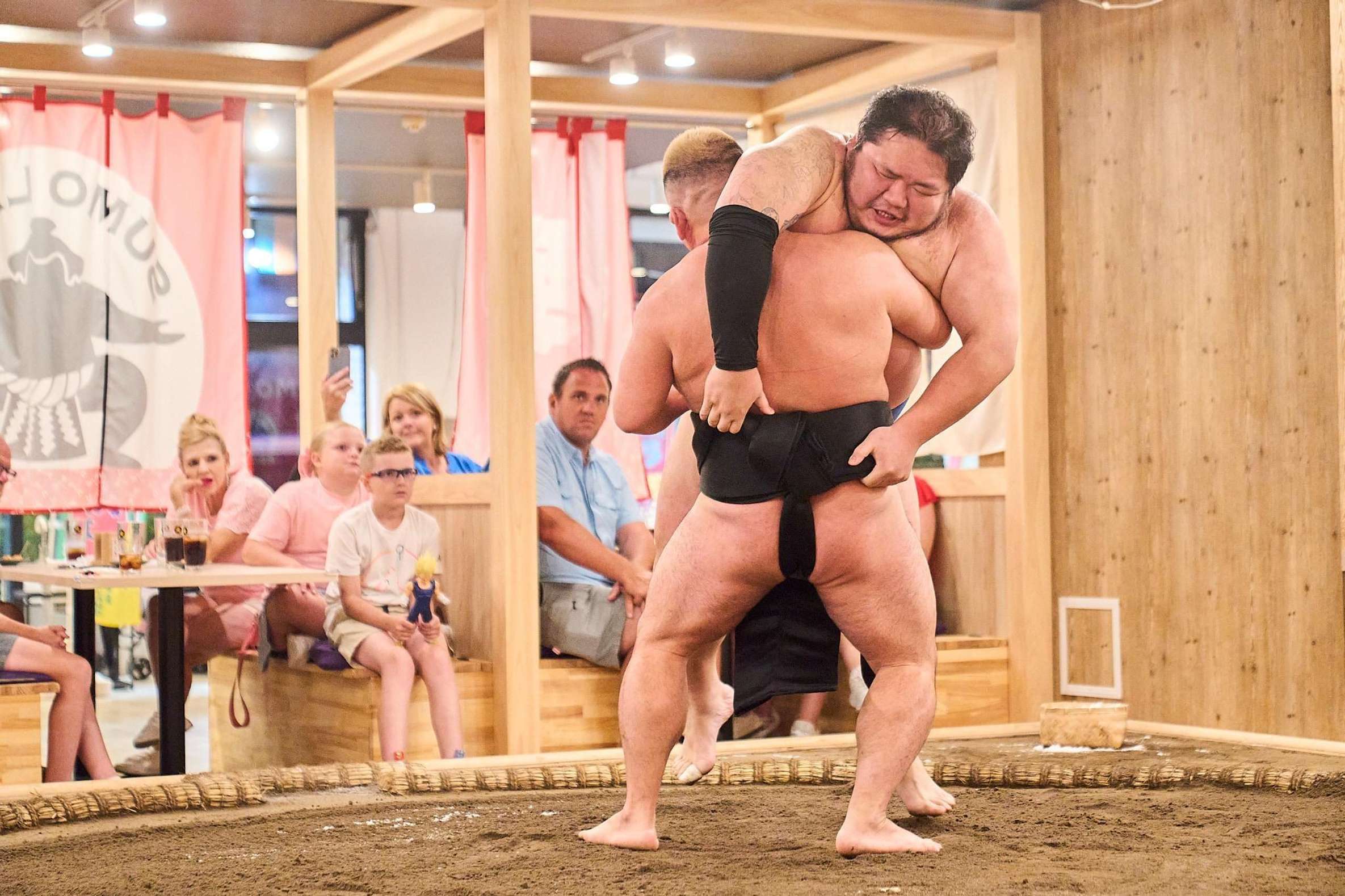
Dates or taste sometimes rule the venue out, and Ryogoku still has answers. The year-round option is the sumo show with chanko lunch, the half-day version with retired wrestlers a short walk from Ryogoku Station. Guided morning practice visits to Takasago-beya stable also leave from Ryogoku Station.
you sit silent and still for hours; casual visitors get far more from a show or tournament
you cannot walk in without an appointment, and many never open to the public at all
when the wrestlers travel, whole months offer nothing to watch
If you go the stable route, know the rules before you commit: visits are by appointment, most stables want a Japanese speaker along so the house rules get explained, and you should telephone the day before to confirm practice is actually happening.
Practice never runs when a tournament is on, especially when it is held outside Tokyo.
The third path is the 3-hour Ryogoku tour covering sumo history, the Kokugikan area, the Sumo Museum when open, and a chanko-nabe lunch. Nakamura-beya, the stable closest to the Kokugikan, sits 3 minutes from the station for anyone scouting on their own.
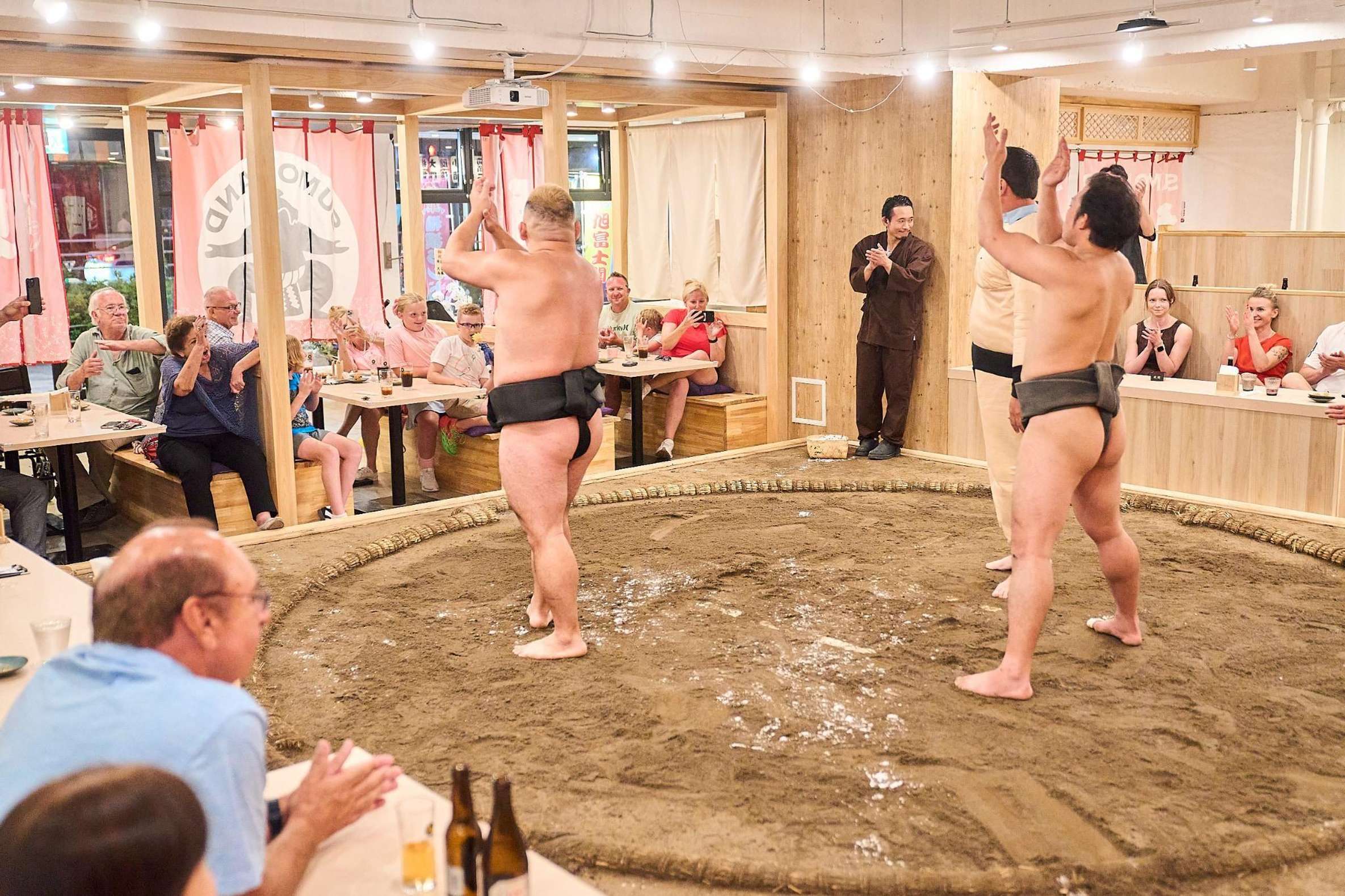
Three details catch visitors out. First, seating: at the Ryogoku experience venue, seat locations are assigned by the venue, and guests cannot choose or request specific seats. Book early if being near the ring matters, because early bookers tend to land the better spots.
Second, timing. Sumo shows can start noticeably after the ticketed time, and the wrestling itself often occupies only the last 15 to 30 minutes of an exhibition show, with history and demonstrations first. Arrive 15 to 20 minutes early so a late start doesn't cost you your seat search.
Third, behavior. Follow the local crowd on when to cheer and when to stay quiet: the room falls strikingly still right before each bout, which surprises first-timers.
Never enter or touch the dohyo without being invited, keep your phone on silent, and stay to the end, because leaving before the main event is the mistake many visitors make.
Ryogoku rewards the whole day. Most visitors walk straight past the small Sumo Museum inside the Kokugikan, the sumo-themed train station next door, the chanko nabe kitchens run by retired wrestlers, and Ekoin Temple, where wrestlers pray before tournaments.
The district sits two stops from Akihabara, with Asakusa and Tokyo Skytree close enough for the afternoon.
The museum's hours have a catch worth knowing. On non-tournament days you can walk in; on tournament days it is reserved for ticket holders, and the arena itself closes outside tournaments, with the museum and souvenir shop open on weekdays only. It also shuts between exhibitions and over New Year.
If you want the district with a guide, the Tokyo: Discover the World of Sumo History & Lunch strings Ekoin Temple, the Chikara-zuka Monument and the Kokugikan area together and finishes with chanko-nabe lunch, with museum entry on non-tournament days.
Pair it with the Ryogoku hands-on experience earlier or later the same day and you leave knowing the district, the sport and the stew.
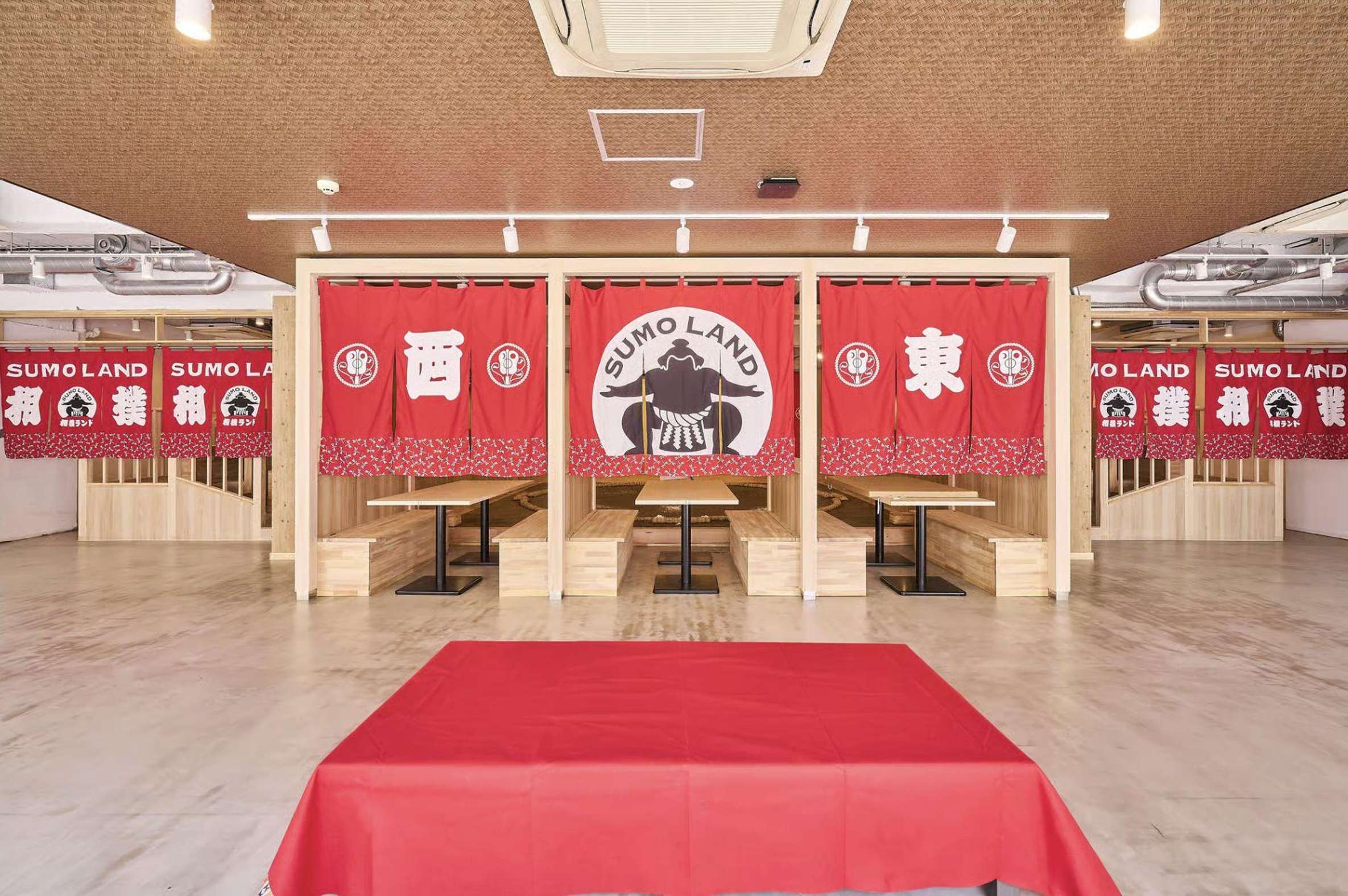
This hands-on venue is a well-made way to meet sumo up close: former professionals, a ring you can enter, hot pot on the table, open every day of the year. No tournaments run here, and the tours sold on this page are close alternatives in the same district.
Go if the show-plus-chanko format is what you want, in Ryogoku or with the guided sumo walk beside it. Skip if you need the named venue specifically, or if silent, authentic morning practice is what you came for.
Both pages cover a named venue hunt; one ends in Ryogoku, the other in Namba.
A two-hour theater show with bento or snacks, up on the 8th floor of a shopping center

The first thing you meet is the stage: a sumo ring lifted up on it, sound and light working the room, retired professional wrestlers charging for real technique.
The show runs about two hours, usually from 5 pm to 7 pm, and a bento or snack bag with a drink sits in the price. Guests drawn by lottery can pull on a sumo suit and take on a wrestler in the ring.
Booking is forgiving. The hall keeps same-day reservations open online until 3 pm, then sells leftover seats at the door from 3 pm, so last-minute plans usually work.
It runs all year but closes on a handful of irregular days a month, mostly midweek, so glance at the performance calendar for your date. Arrive 15 or 20 minutes early; shows can start a little after the printed time.
Sorting out which sumo venue you meant? This page lists both locations and what each visit involves.
Headed to Osaka instead? This page pins down the Namba venue's location and its visitor details.

Working sumo into a wider Japan trip? This page maps tournaments, stables and shows city by city.

Staying in Tokyo? This page walks through the live viewing choices, from practice visits to shows.

For Osaka, this page compares the local shows and helps you pick one that fits your evening.
In Kyoto? This page rounds up the sumo shows there, including the ones with geisha dance and hot pot.

For Fukuoka, this page explains the November tournament season and the morning practice visits around it.

For Sapporo, this page covers the year-round show, its three daily sittings and current availability.

Unsure whether to watch, wrestle or dress up? This page lays out the kinds of sumo experience.

Adding a Fuji day trip? This page shows what the Lake Yamanaka sumo experience involves.

Want to actually try sumo? This page compares the hands-on classes in Tokyo and Osaka.

Drawn to real training? This page explains how a guided stable visit in Tokyo works.

Fancy the costume photos? This page shows how a dress-up session fits into a Tokyo sumo day.

Want the history and traditions explained? This page details the Tokyo masterclass and its chanko lunch.

Set on a real tournament? This page lists the six annual events and their host cities.

Planning around a Tokyo basho? This page covers the arena, the dates and how tickets sell.

Chasing the March tournament? This page gives the Osaka venue and schedule details.

For the November tournament, this page sets out the Fukuoka venue and dates.

For Nagoya in July, this page explains tickets, sales dates and the venue.

Curious about the Minoh Expo event? This page explains what it is and how to watch.
Prefer a guide at a tournament? This page covers the guided viewing options by city.

Set on Nagoya with a guide? This page tells you whether the available options match that plan.

Picturing Osaka matches with tickets sorted? This page helps you judge the available tours.

For a guided day at the Ryogoku arena, this page weighs the Tokyo tournament tours.

Want to see real training? This page maps where morning practice can be watched across Japan.

For Tokyo mornings, this page lists the guided stable visits and how early they start.

In Osaka? This page explains when real morning training is possible and when a show is the answer.

For Kyoto, this page separates real training visits from performances and helps you choose.

Set on a show? This page explains what a sumo show includes and where they run.

After something special in Tokyo? This page compares the shows with premium meals and drinks.

Choosing a Tokyo show? This page compares the Ginza, Shinjuku and other venues side by side.
For Osaka evenings, this page compares the live shows and the restaurant-style options.

Wondering if Kyoto has shows? This page answers that and helps you pick one.

For a food-and-show night in Sapporo, this page explains the local offering and its status.

Searching for a sumo hall in Tokyo? This page gives venue details and compares the shows.
Staying near Ryogoku? This page details the sumo show options right in the sumo district.

Pairing sumo with a landmark? This page covers the Tokyo Tower show, meal and performances.
Want sumo with lunch? This page lines up the Tokyo experiences that pair bouts with chanko nabe.
For a sumo-themed meal in Osaka, this page turns the idea into a bookable evening.

Still comparing everything? This page ranks the ways to watch and try sumo across Japan.
Need the basics? This page answers questions on rules, schedules and how long matches run.
Like a museum stop? This page covers the Tokyo museum's hours and options in other cities.
Want to explore the neighborhood properly? This page guides you through Tokyo's sumo district.
Short answers on the Ryogoku venue people search for, and on the sumo experiences on sale here when the venue itself is not among them.
 Tokyo2026
It is a hands-on experience venue where former professional wrestlers perform and guests can join them in the ring. No booking on this page puts you inside it.
The closest experience sold here is the Ryogoku sumo experience with chanko nabe and mochi, which runs the same formula: watch the wrestlers, eat hot pot, step onto the dohyo.
Ryogoku itself is easy: about 13 minutes by train from Tokyo Station and two stops from Akihabara. No tour here delivers you to the venue's door.
If you want to learn the district on foot, the guided sumo history and lunch tour starts at Ryogoku Station and walks you past the Kokugikan, Ekō-in Temple and the sumo streets before lunch.
Whether the venue is open on your date is something to settle with it directly.
For planning on this page, what matters is what you can book: the Ryogoku experience runs a 1-hour session without a meal or a 2-hour session with chanko nabe and mochi, so it slots into most days in the sumo district.
Yes. Sumo practice visits in Tokyo sell out regularly and visitors get turned away, and demand spikes around the big tournaments. Both Ryogoku tours here can be cancelled up to 24 hours in advance for a full refund, so reserving early costs you nothing if your plans shift.
At a show you hear the rules, rituals and history explained in English, cheer freely and can join the ring challenge. At a stable you are a silent, still observer: no talking, no flash photos, no moving, sometimes for two hours on a cushion. First-timers and families get more from the show.
At the Ryogoku experience it is: the hot pot is supervised by wrestlers from an actual stable and served while you watch. The history and lunch tour ends with chanko-nabe lunch in the district. Ryogoku has the densest cluster of chanko nabe restaurants in Tokyo, so you can always arrange a bowl separately.
The Ryogoku experience is designed as entertaining sumo for adults and children. Box seats take up to six people and allow a child on a lap, which standard seats do not, so reserve the exact number of guests. Wheelchair users should note the venue does not suit them.
Tournament tickets sell out within minutes, so most visitors face this choice. First-timers who miss the basho say a sumo show is a fun, worthwhile substitute, best done once. Many count the experience a highlight of their Japan trip even when they arrived knowing little about the sport.
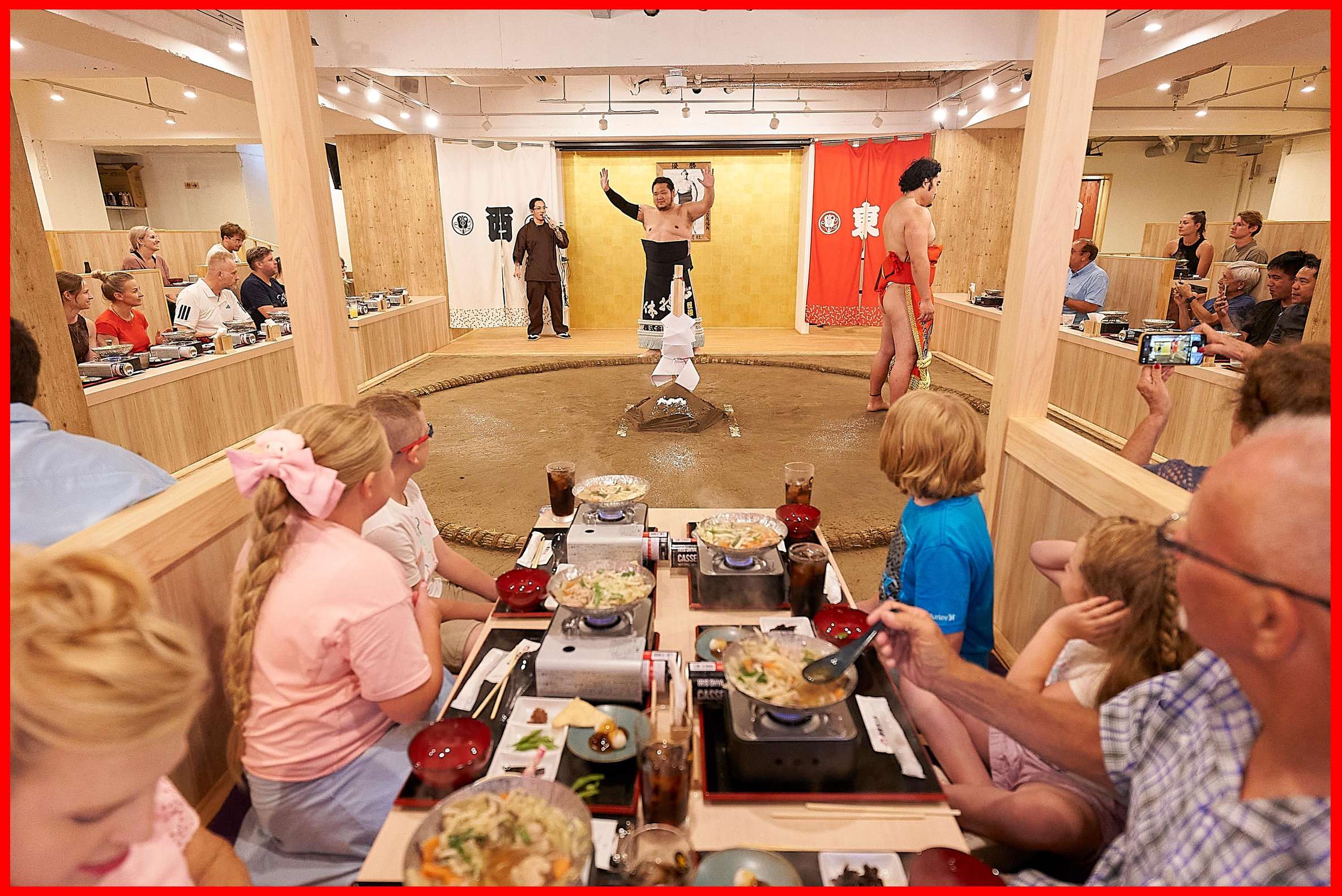
Book the sumo experience with chanko nabe and mochi making, free to cancel up to 24 hours ahead for a full refund.