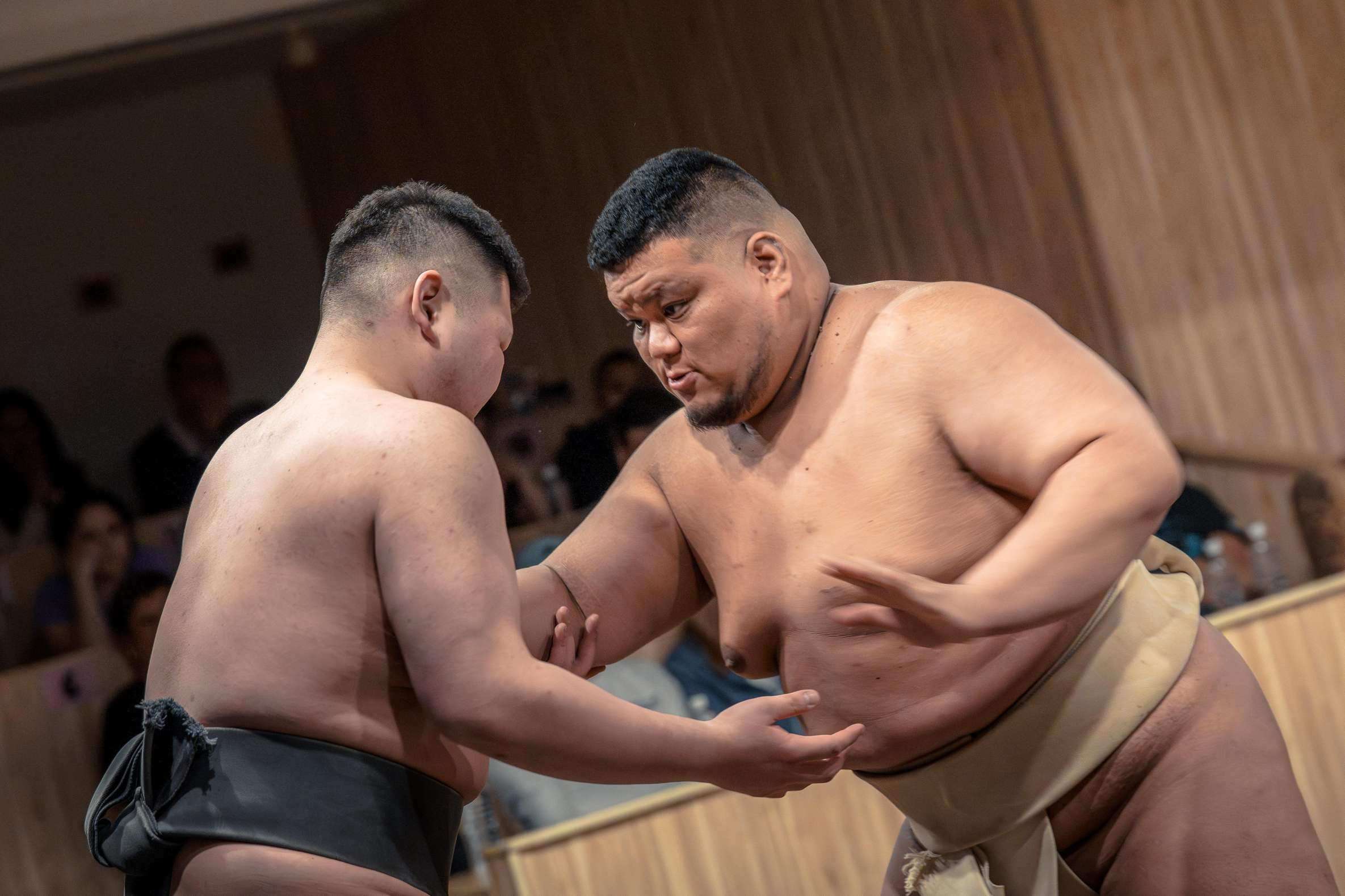
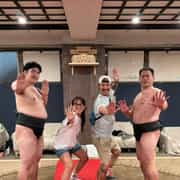
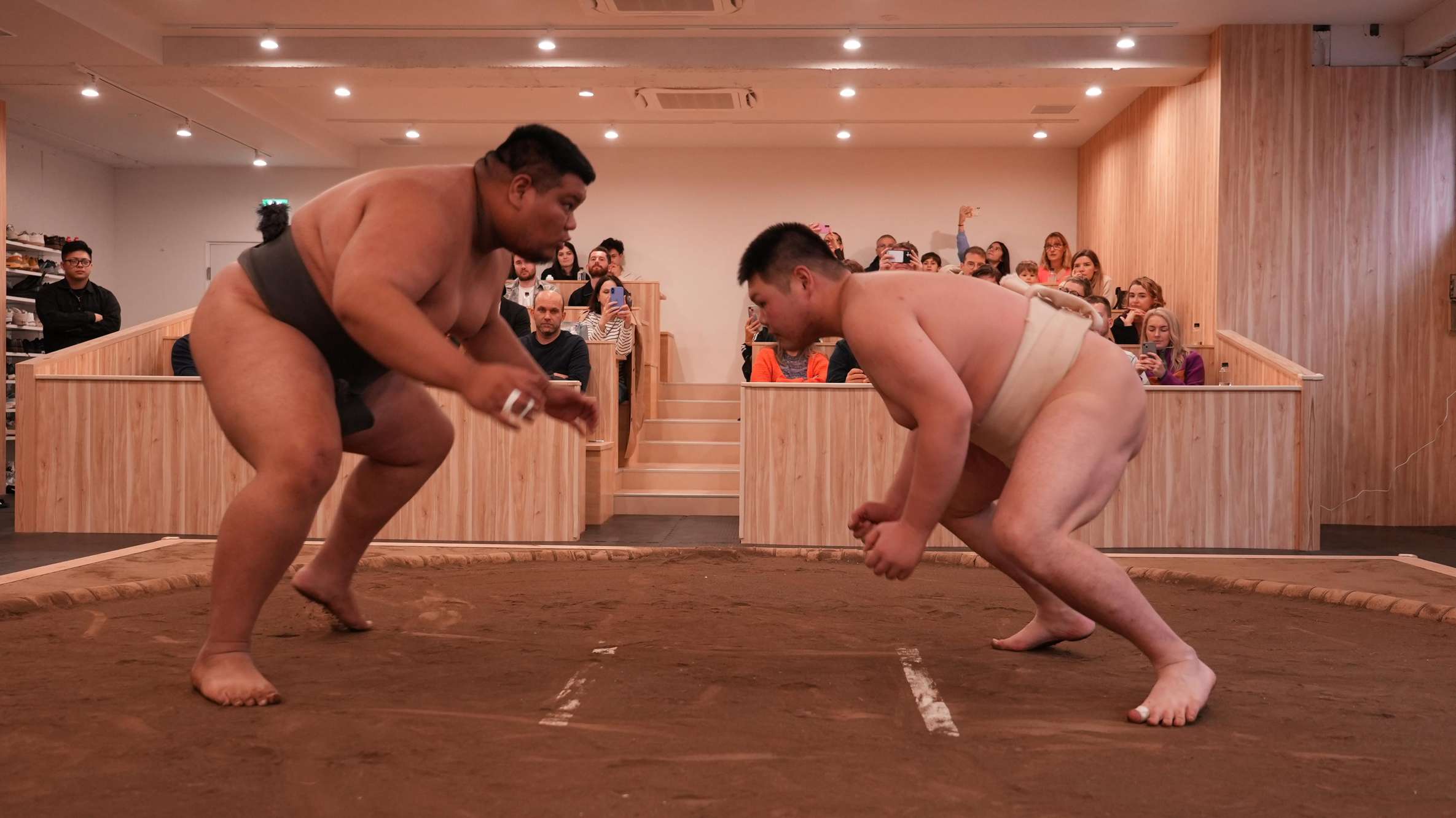
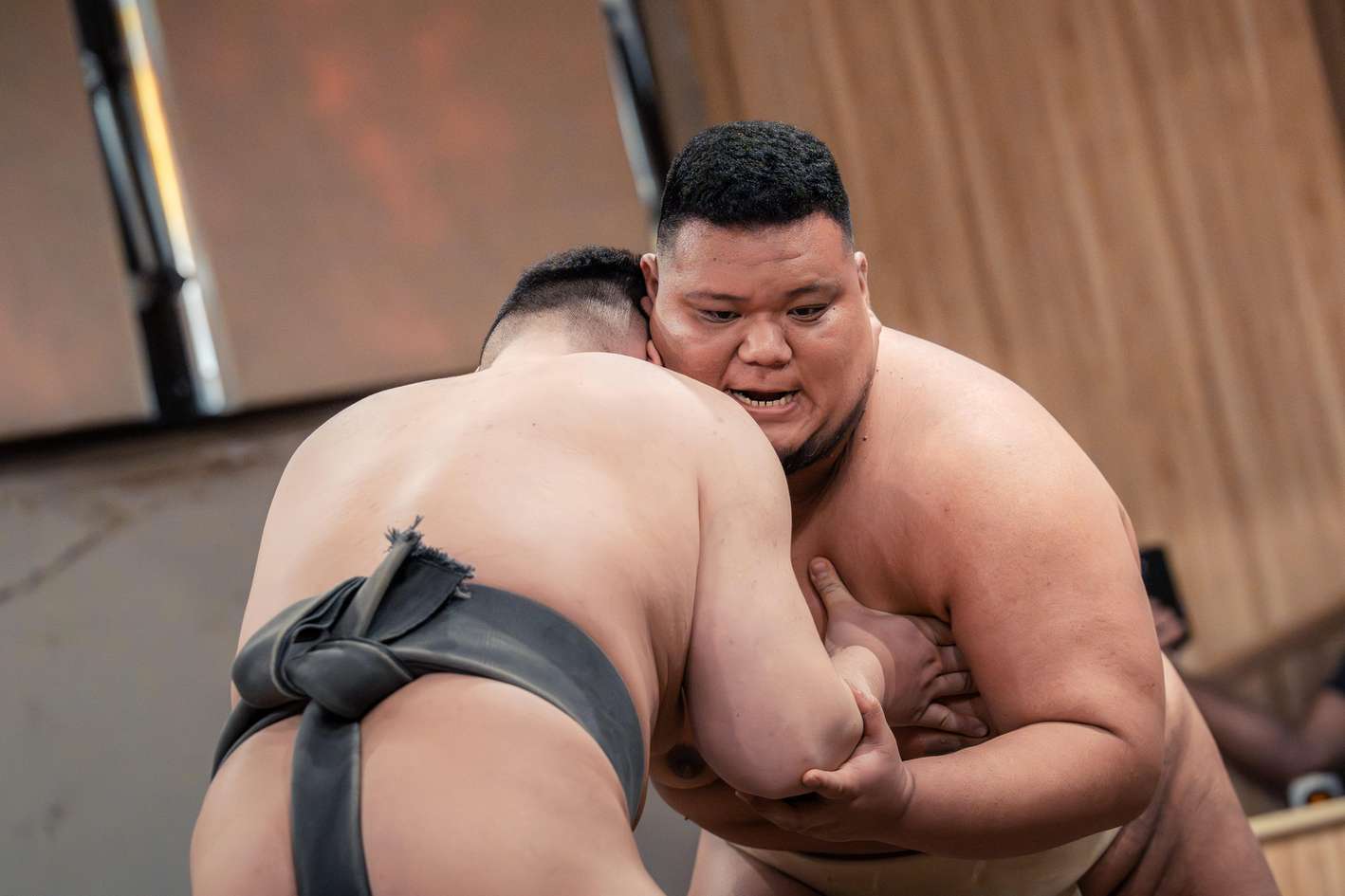
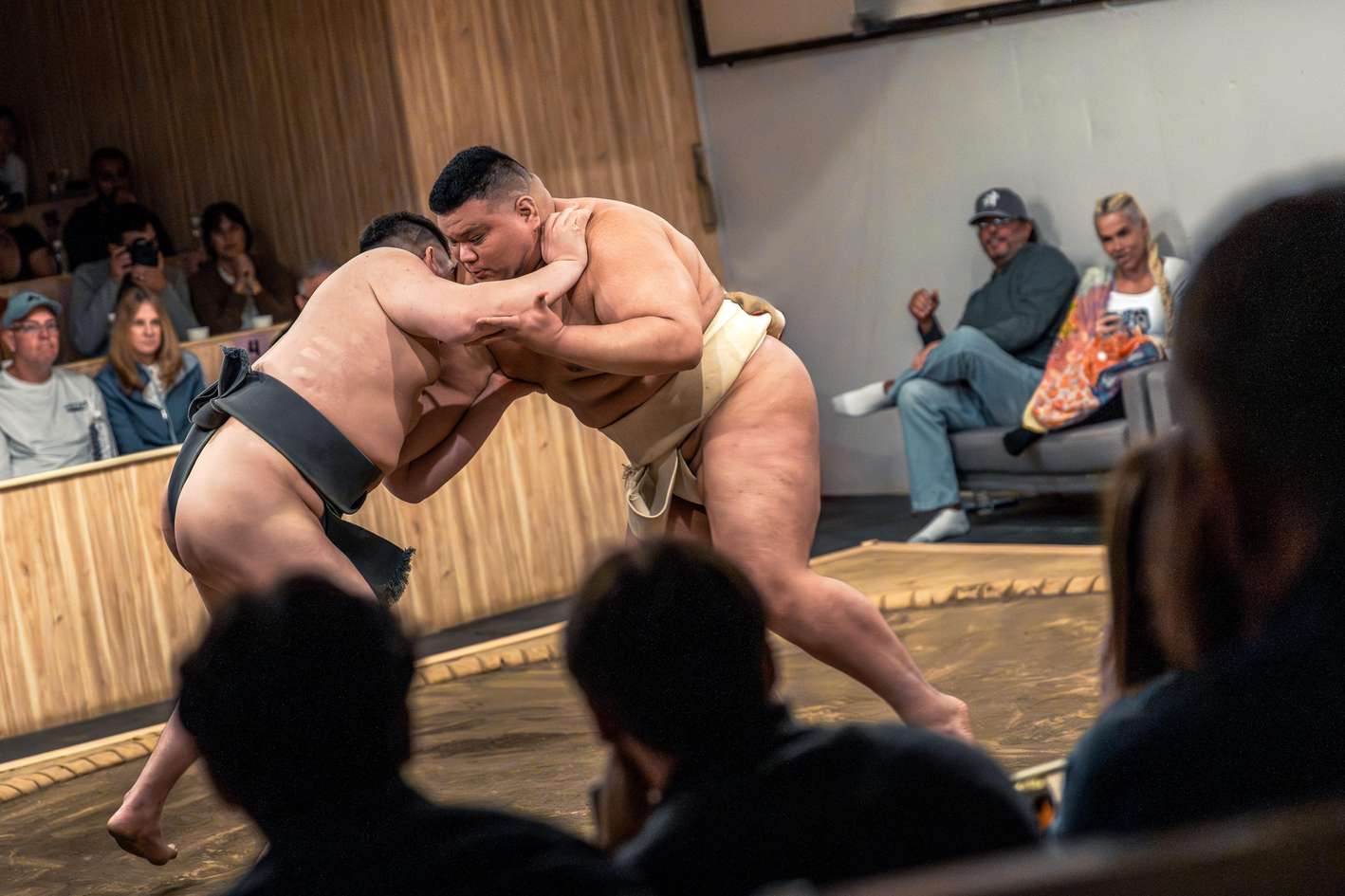
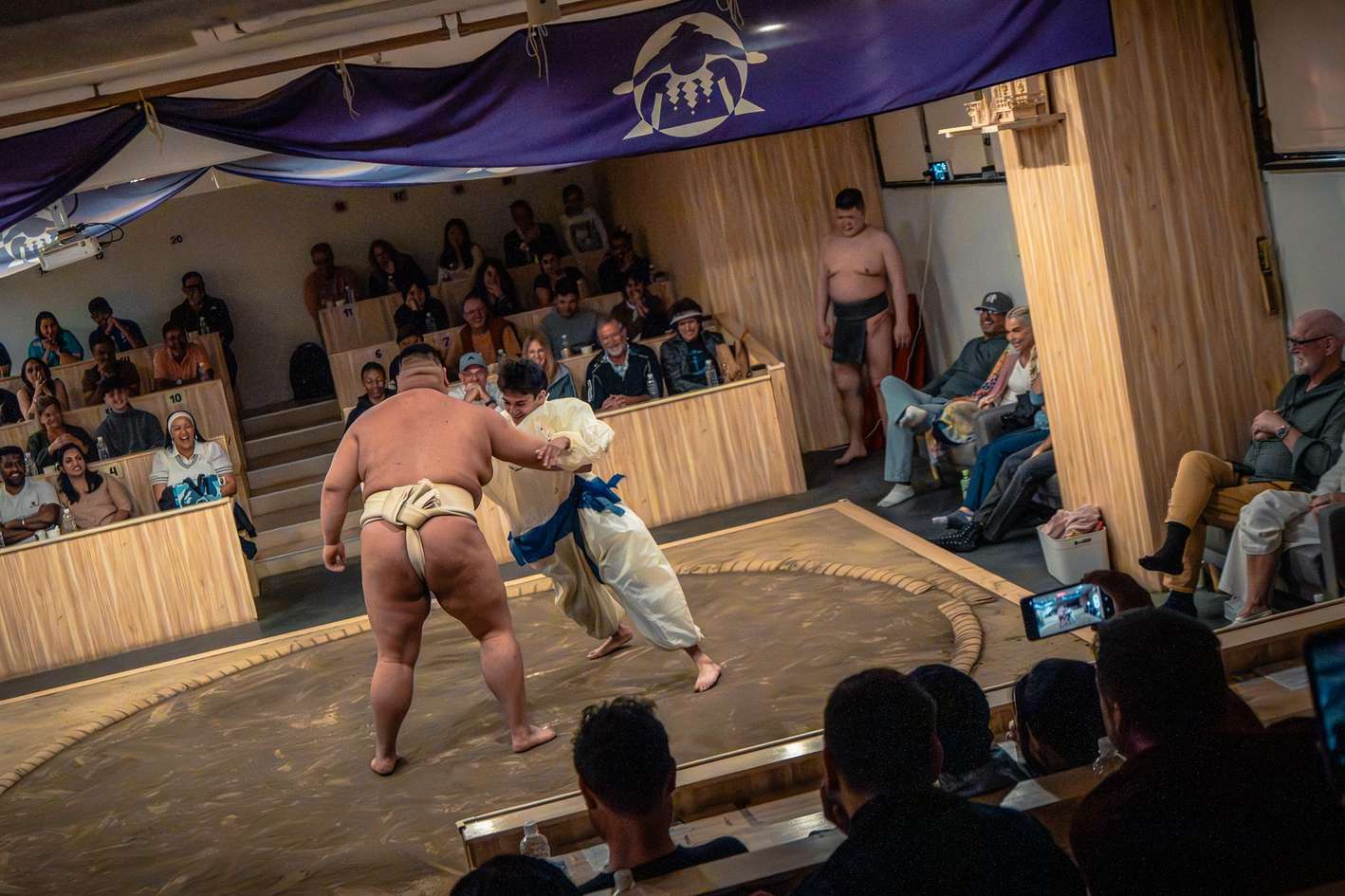
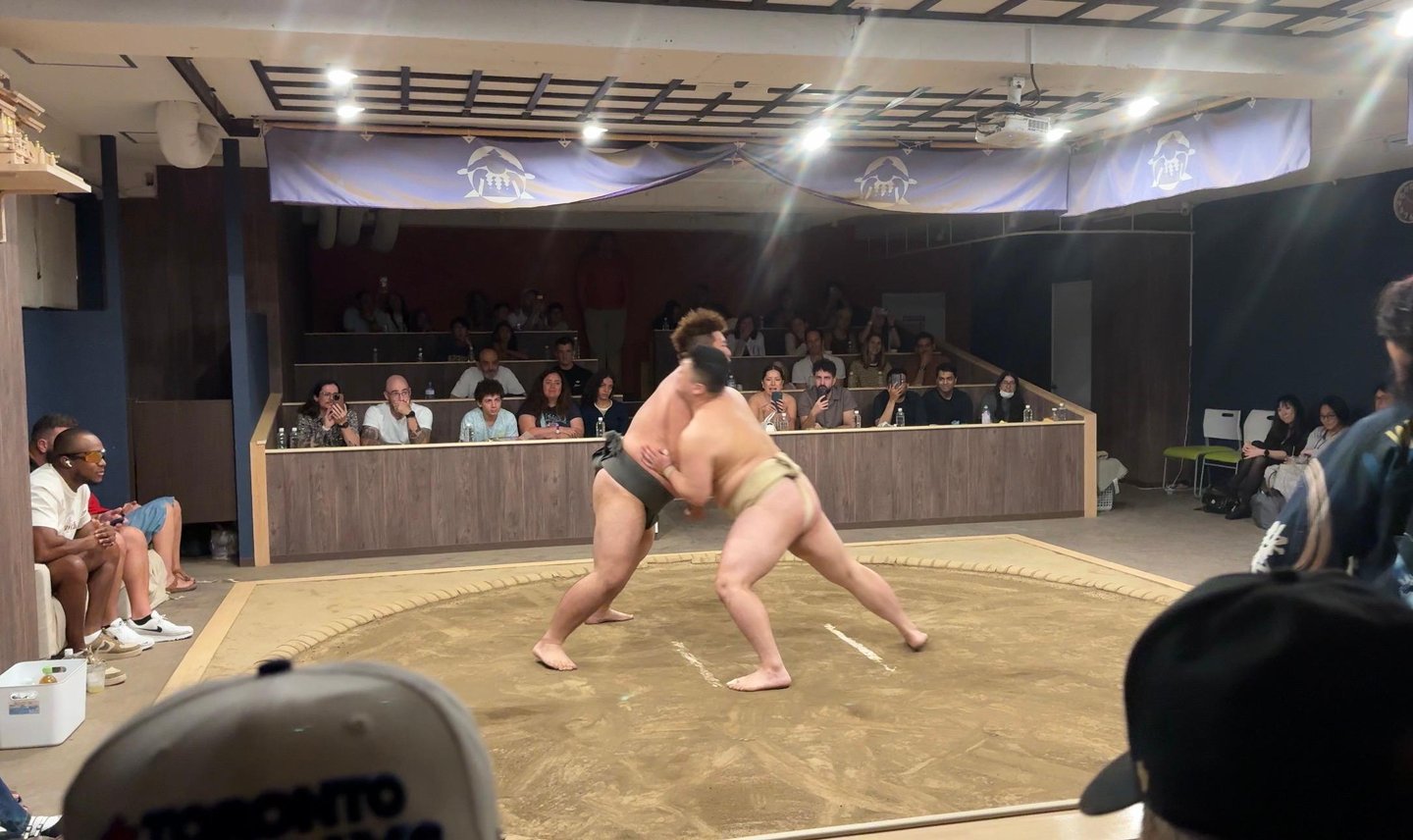
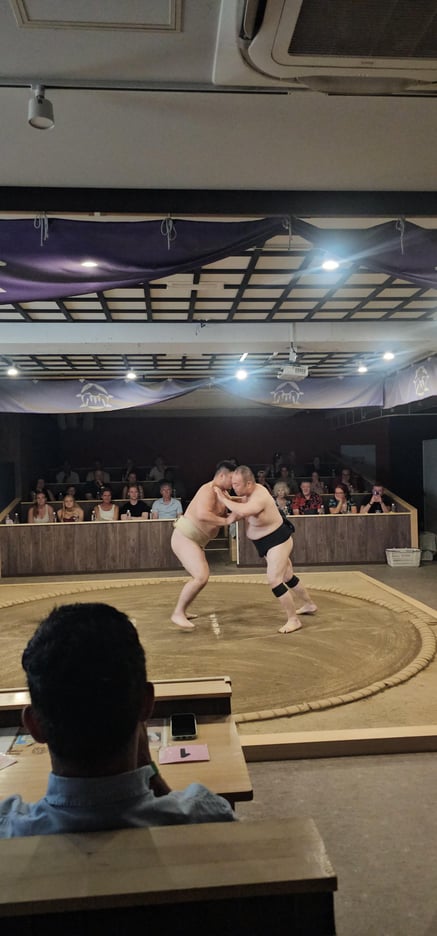
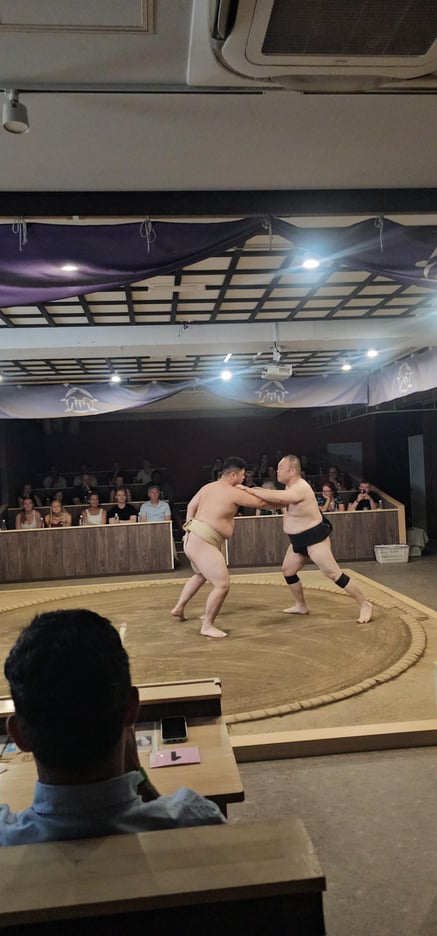
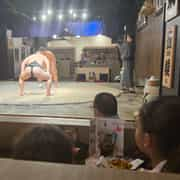
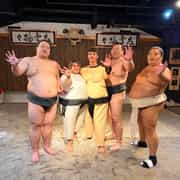
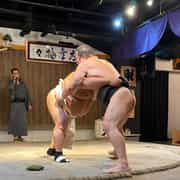
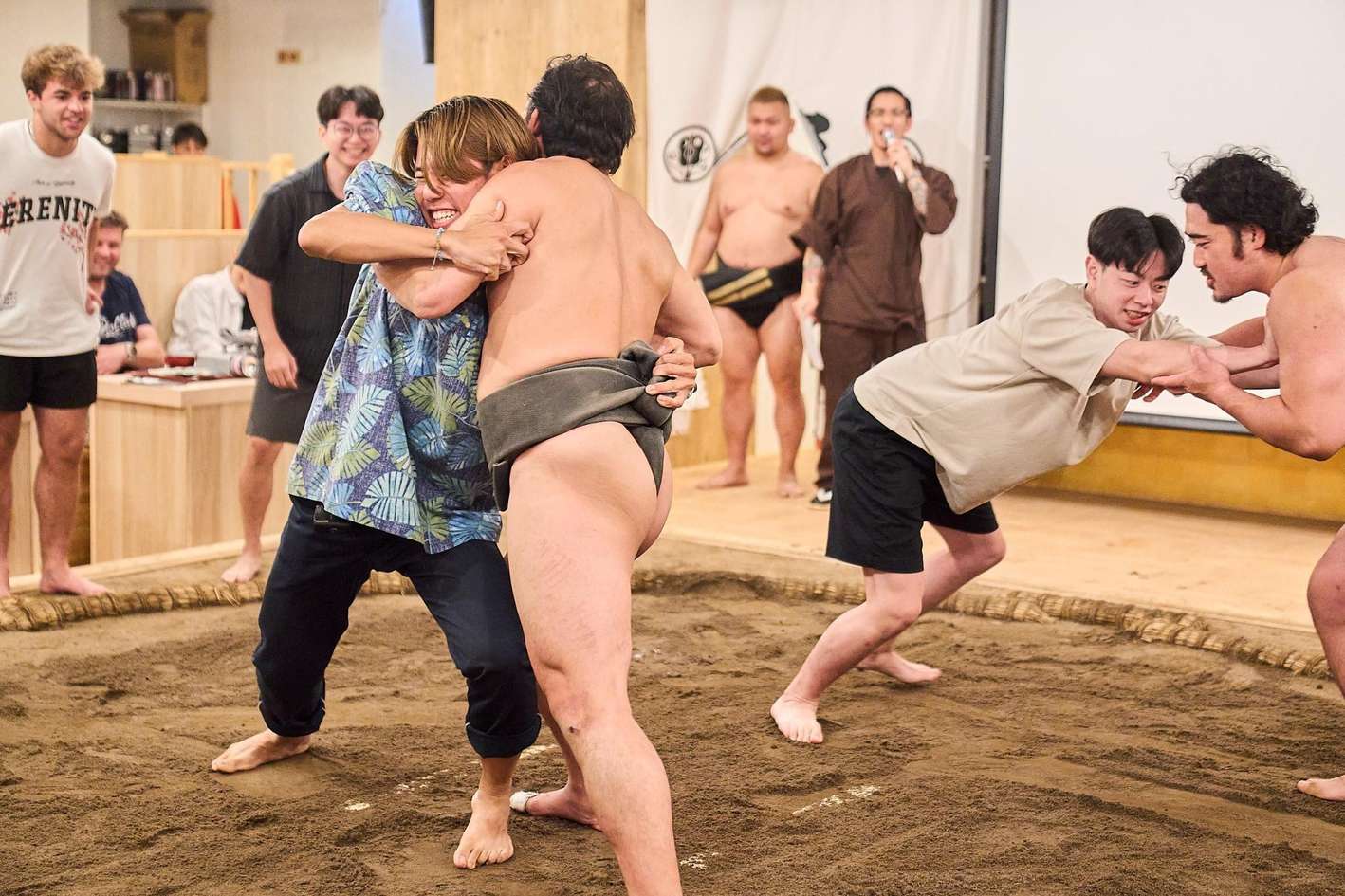
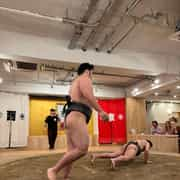
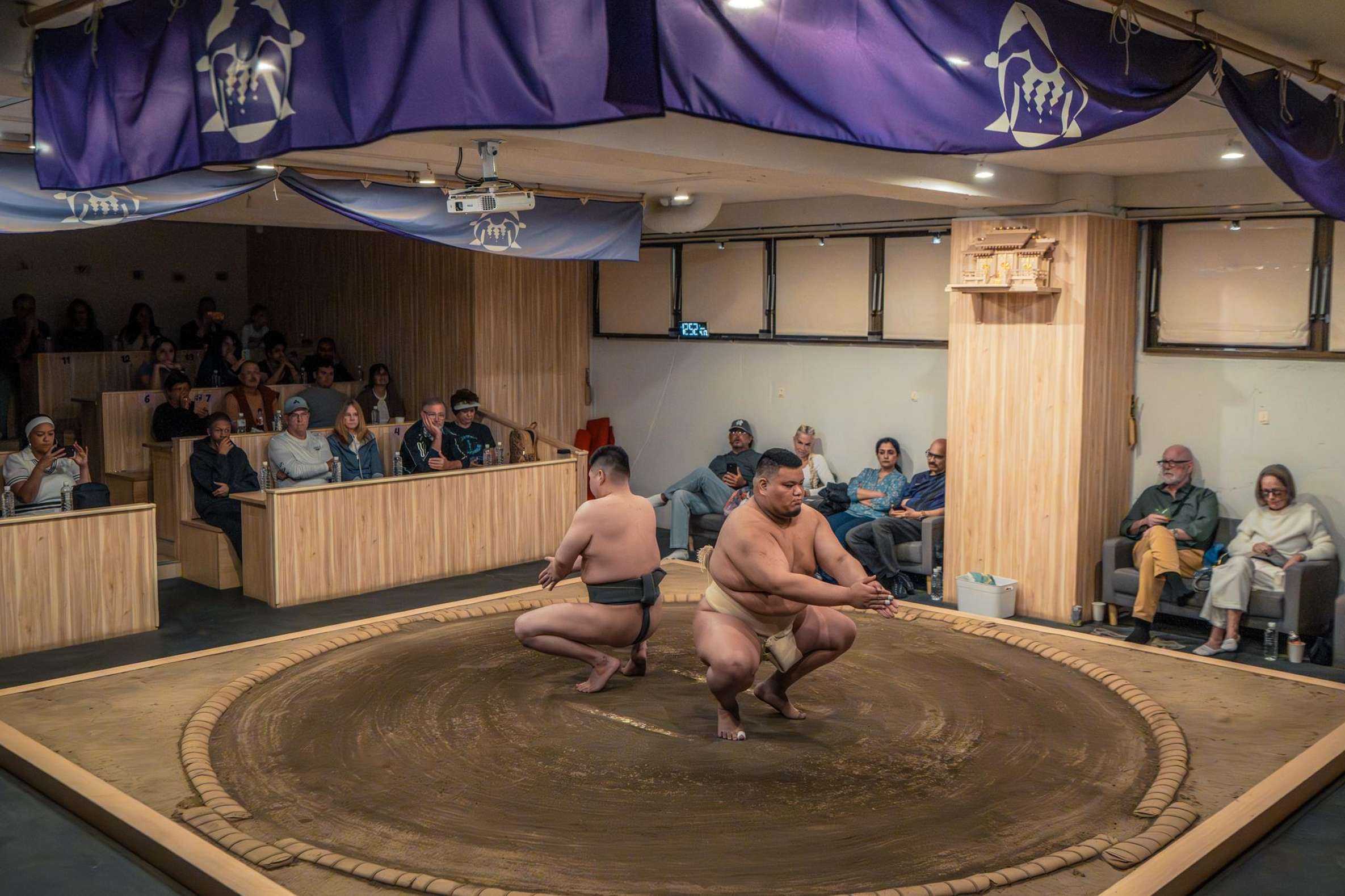
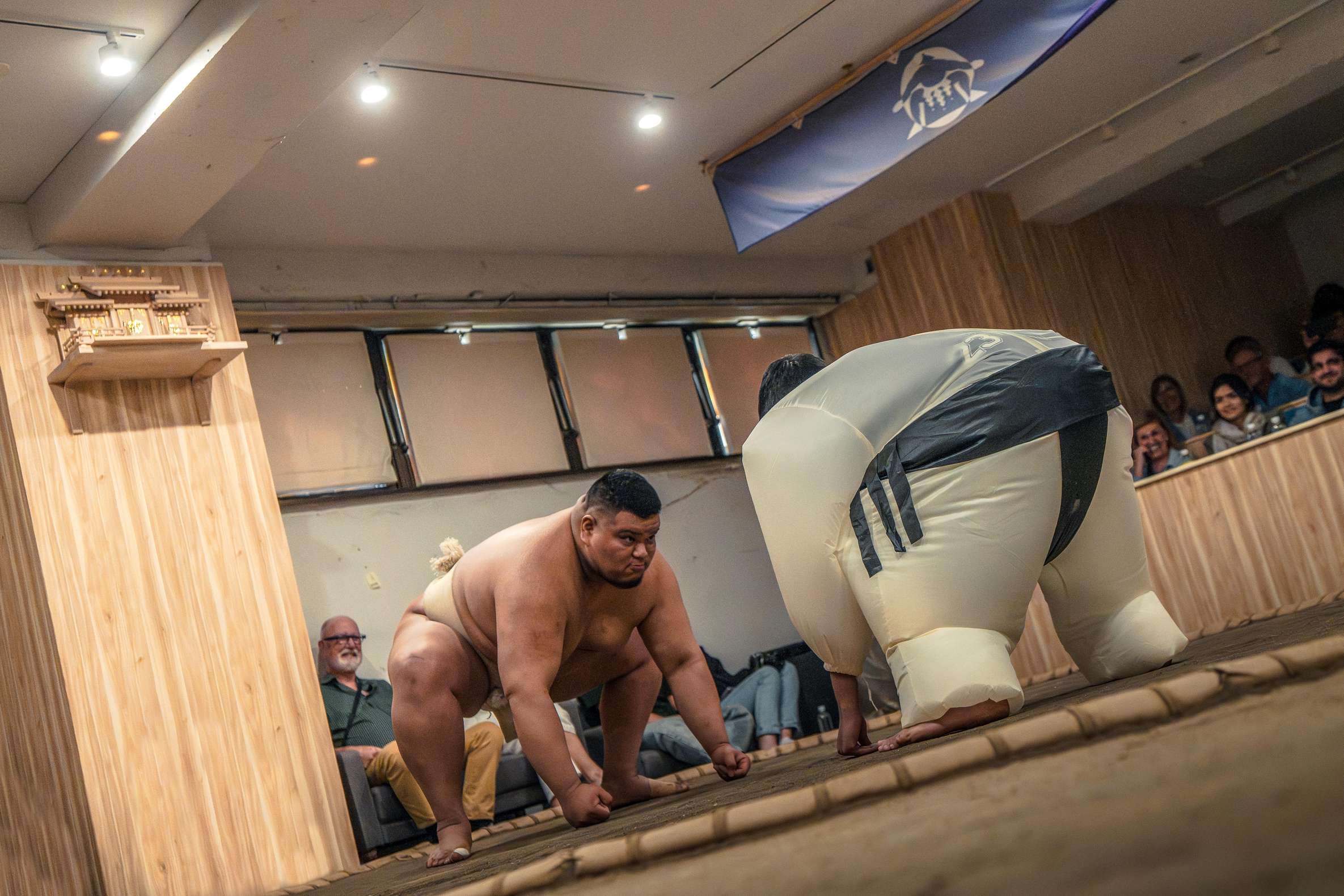
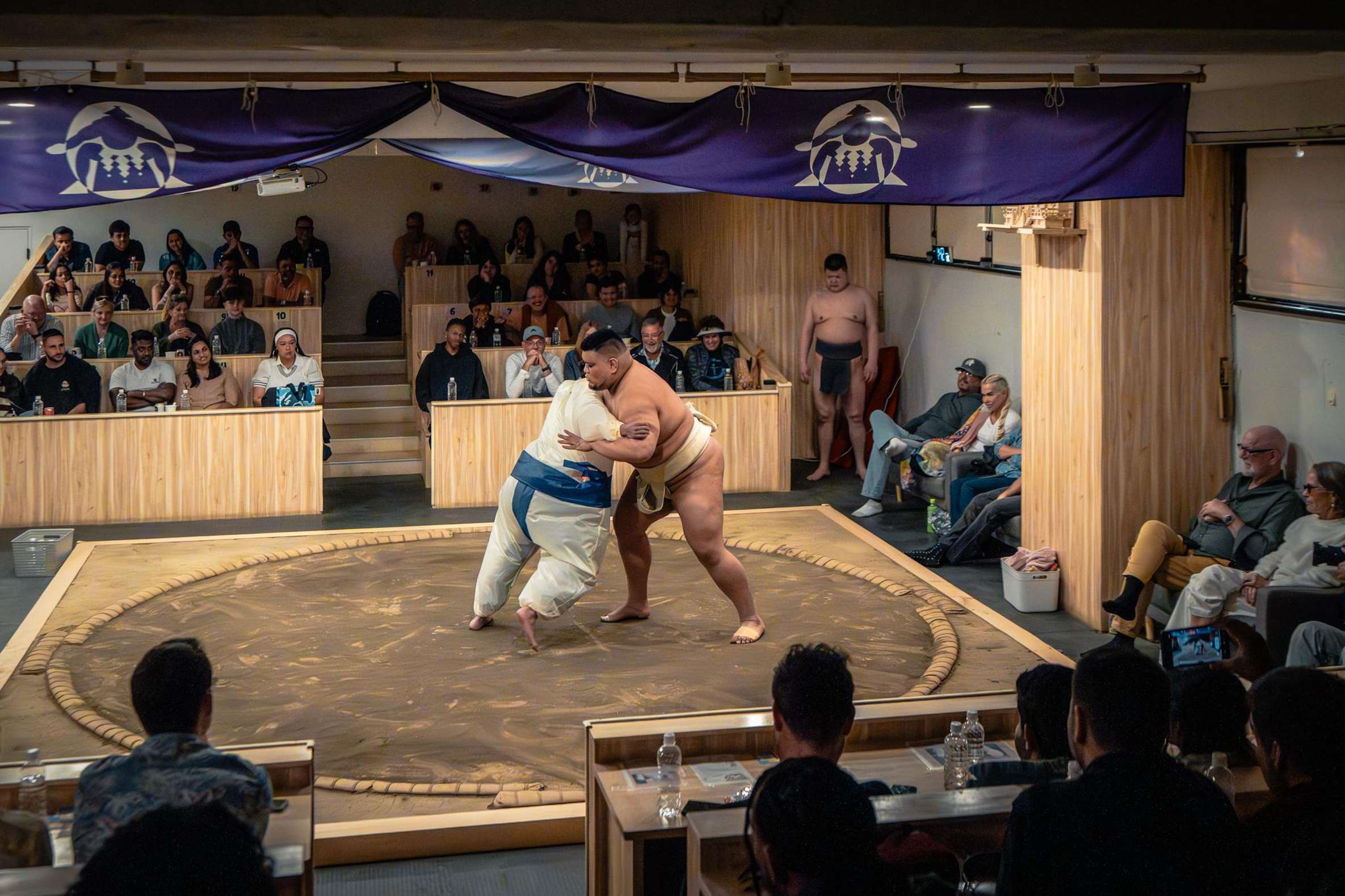
Step into the ring for your turn against a real sumo wrestler. At this Shinjuku show, guests drawn by lottery suit up in a traditional sumo outfit and face the wrestlers on the ring, after 90 minutes of live matches, salt throwing and an English-speaking MC. Nearly 9,000 travelers have booked their spot.
Sumo suit wrestling as a standalone activity in Tokyo is not something you can book here. What you can book is a live sumo show where taking part is part of the programme.
At the Shinjuku Sumo Show & Experience with Photo, six guests per show get picked by lottery to suit up in a traditional sumo outfit and step into the ring against the wrestlers.
It is a short challenge segment inside a 1.5-hour show, and the lottery means a turn is never certain. If that suits you, book below.
Our pickLikely to sell out
1.5 hours·English
4.9(9,863)
Tokyo: Shinjuku Sumo Show & Experience with a Photo
Free cancellationProfessional sumo wrestling demonstrationHistory and Background information about Sumo
What a sumo suit wrestling Tokyo search leads to instead
If you came looking for sumo suit wrestling in Tokyo, this Shinjuku show is the booking here that comes closest.
You suit up in a traditional sumo outfit and step into the ring to challenge a wrestler, which is the playful, hands-on moment you were after, wrapped around a full 1.5-hour show with live demonstrations, an English-speaking MC and photos with the wrestlers.
The catch worth knowing before you book: participation in the sumo challenge is limited to six guests per show, picked by lottery, so a turn in the ring is not guaranteed. Even watching from your seat, you get the salt throwing, the bouts up close and the history behind each ritual.
This one suits the novelty seeker who wants the outfit and the story more than a guaranteed match. It runs in central Shinjuku, you can cancel up to 24 hours ahead for a full refund, and the venue is cashless, so bring a card.
Suit wrestling show details in Shinjuku, instead of sumo in Tokyo
about 1.5 h
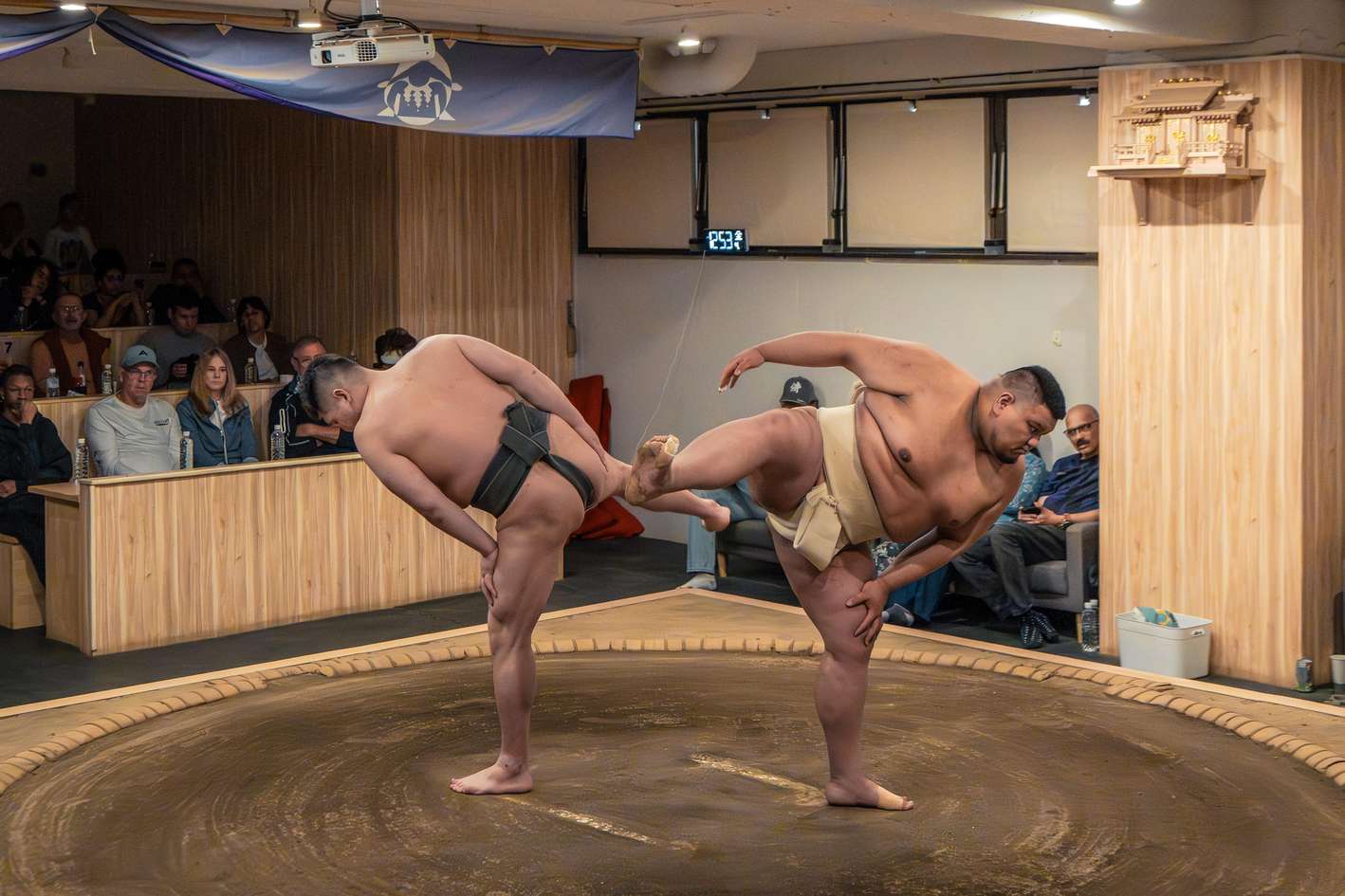
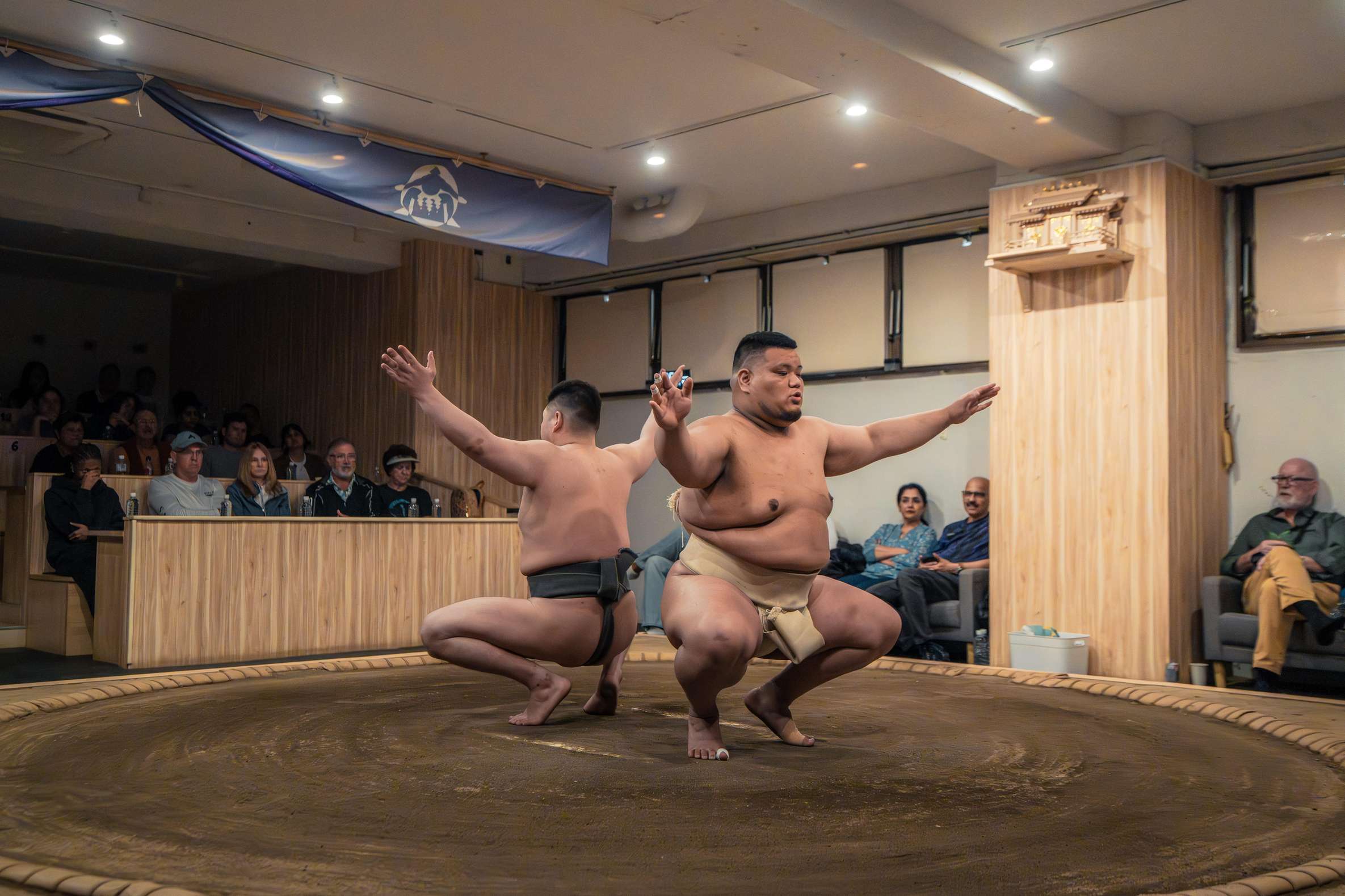
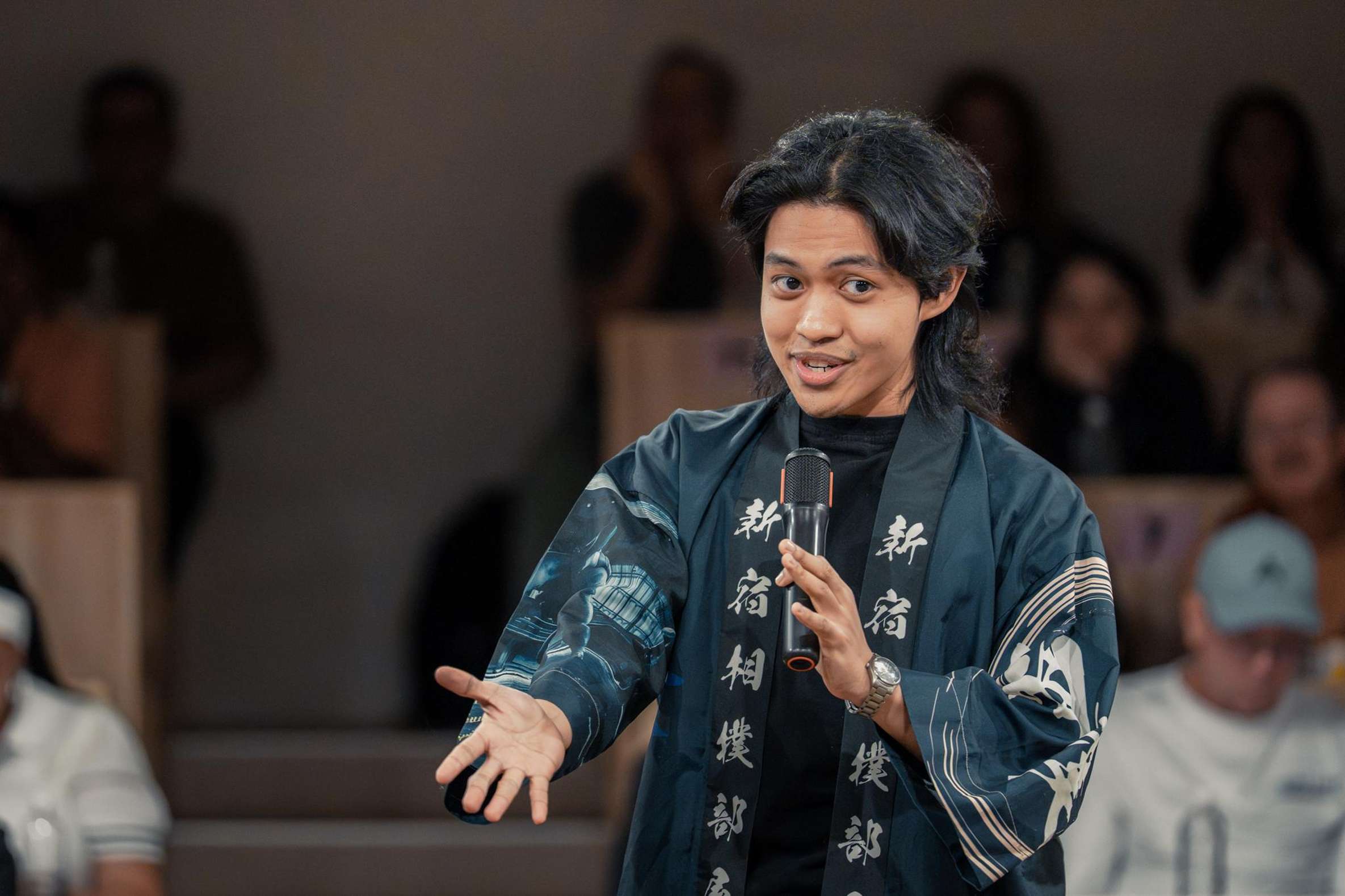
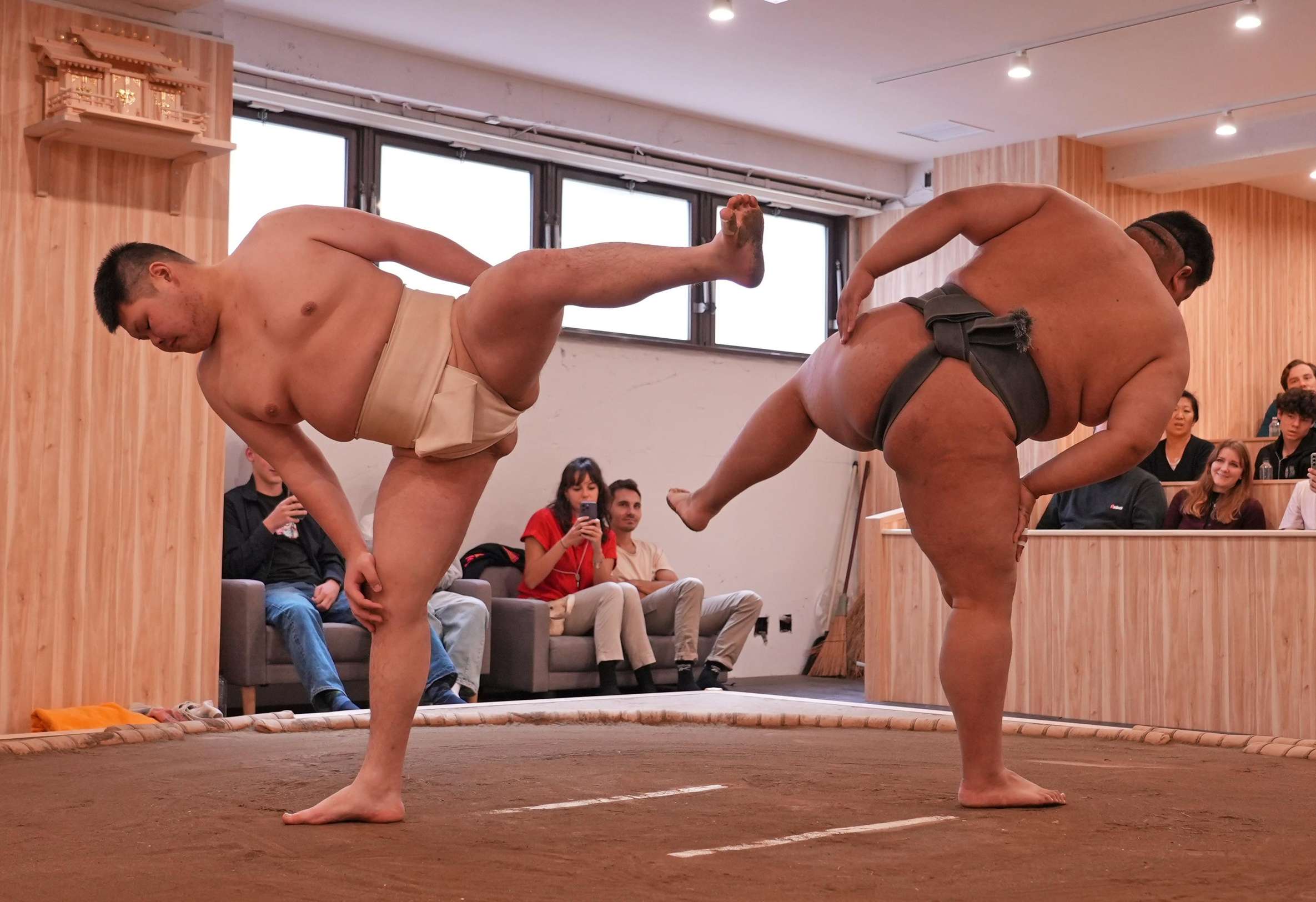
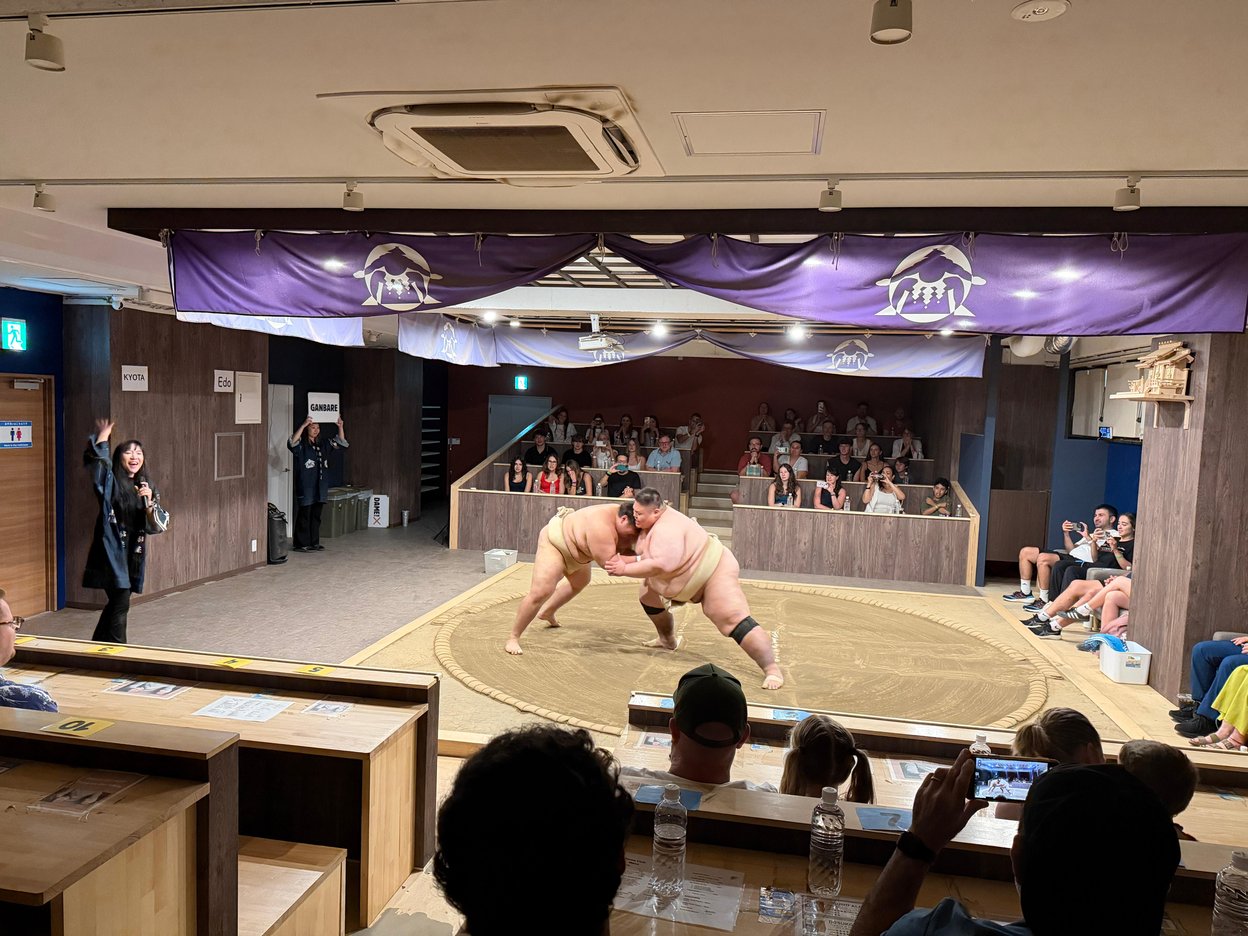
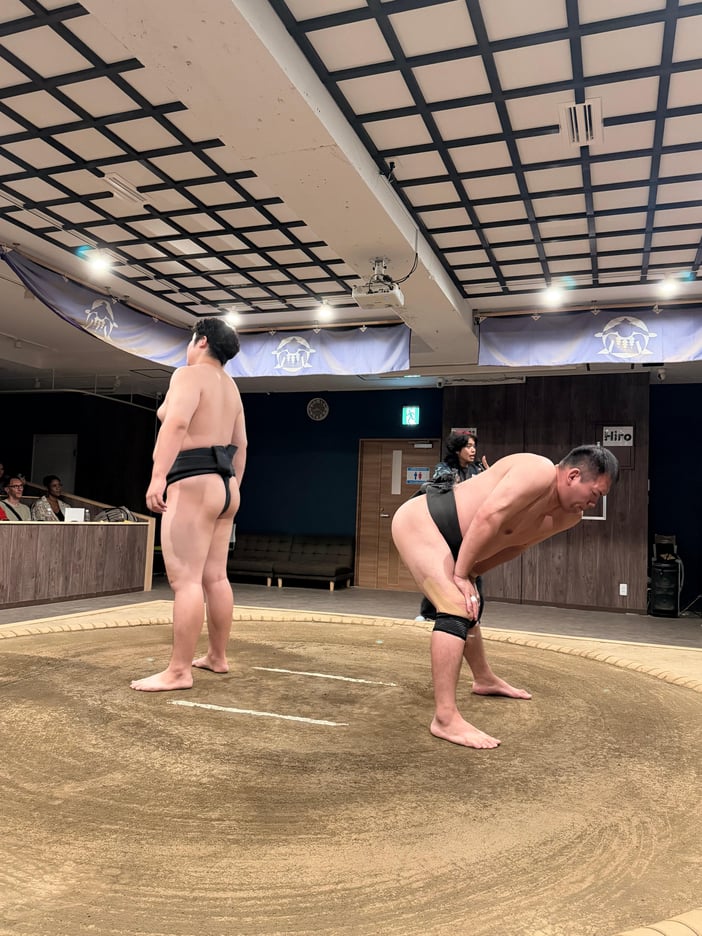
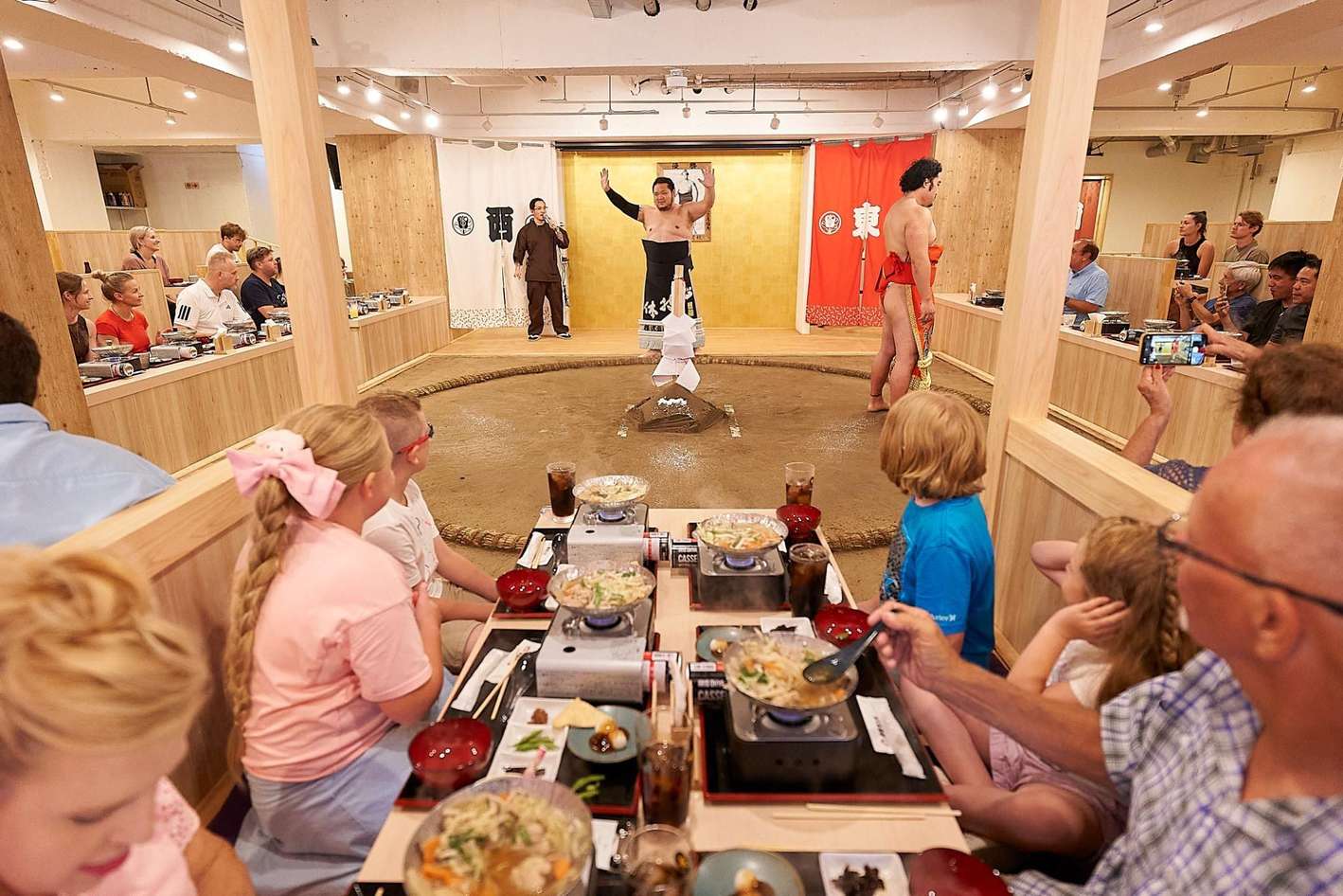
The Shinjuku sumo show runs about 90 minutes in a small venue in Shinjuku, with retired professional wrestlers performing a few feet from your seat. An English-speaking MC walks you through every ritual, from the salt thrown to purify the ring to the thunderous shiko foot stomps and live sparring matches.
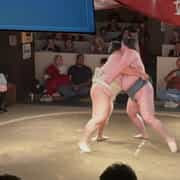
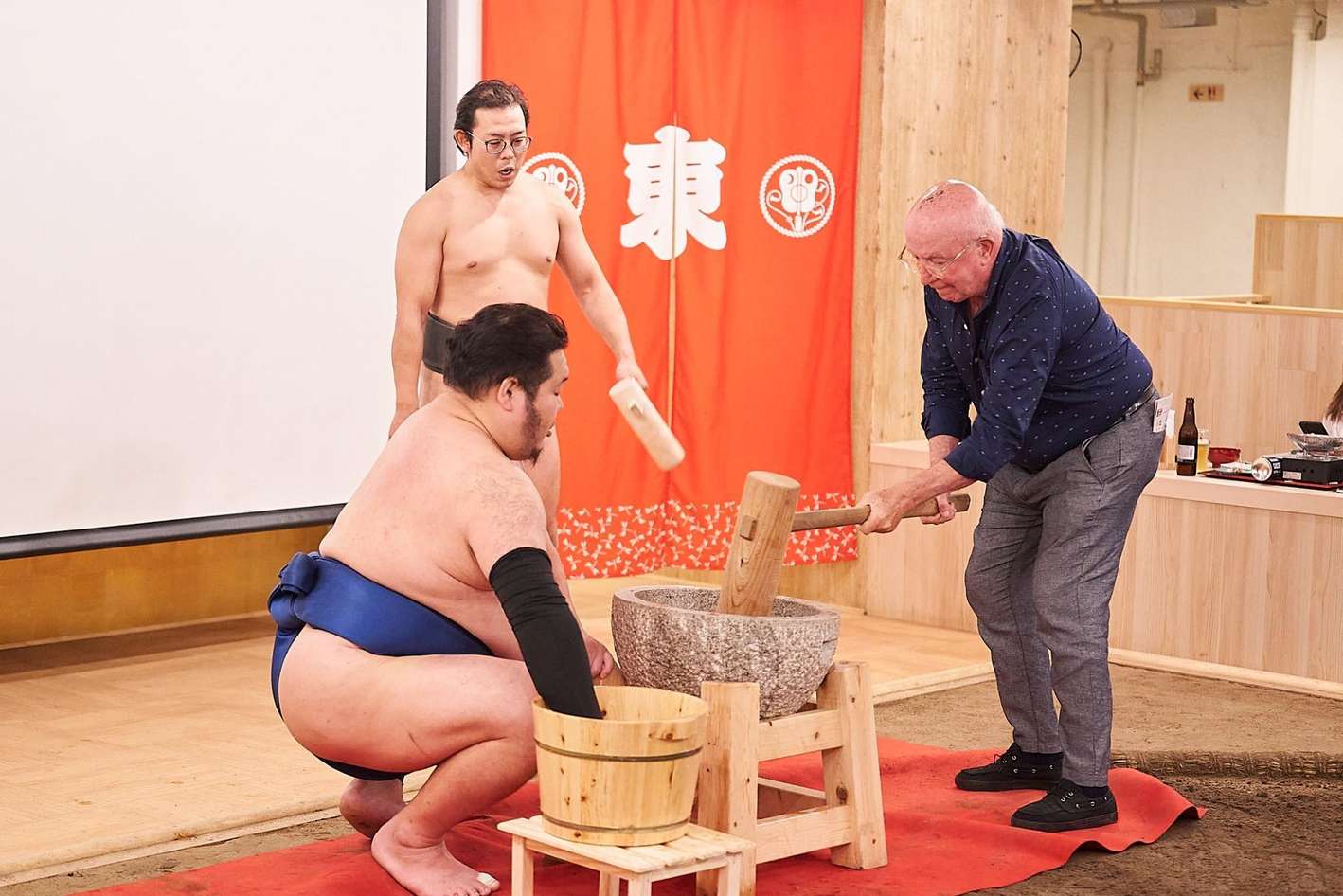
The part you came for comes near the end: a lottery picks up to six guests, and the winners put on a traditional sumo outfit and step into the ring to challenge a wrestler.
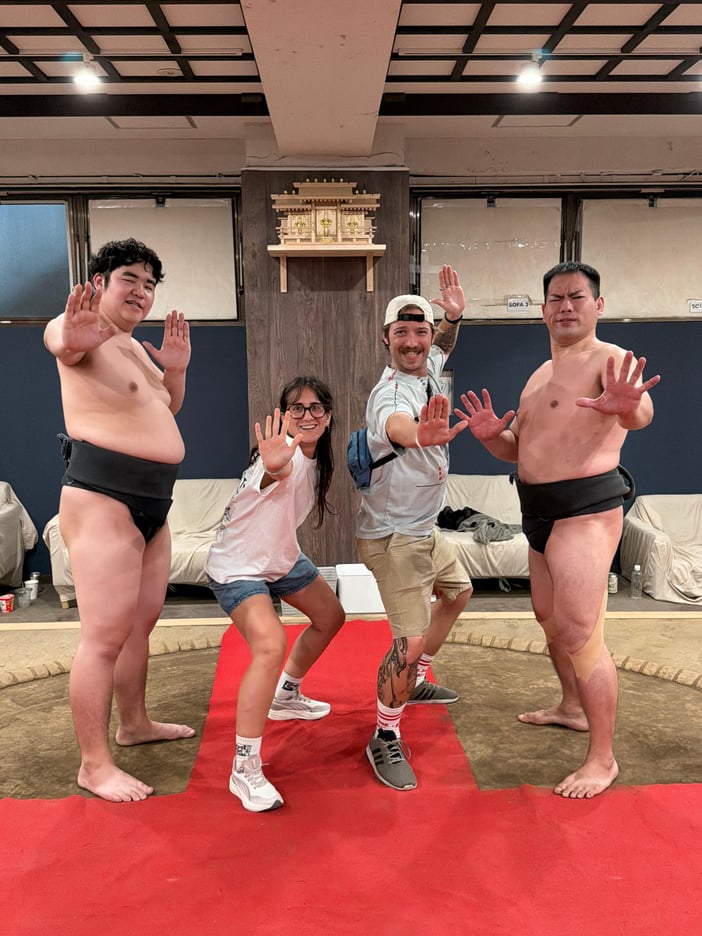
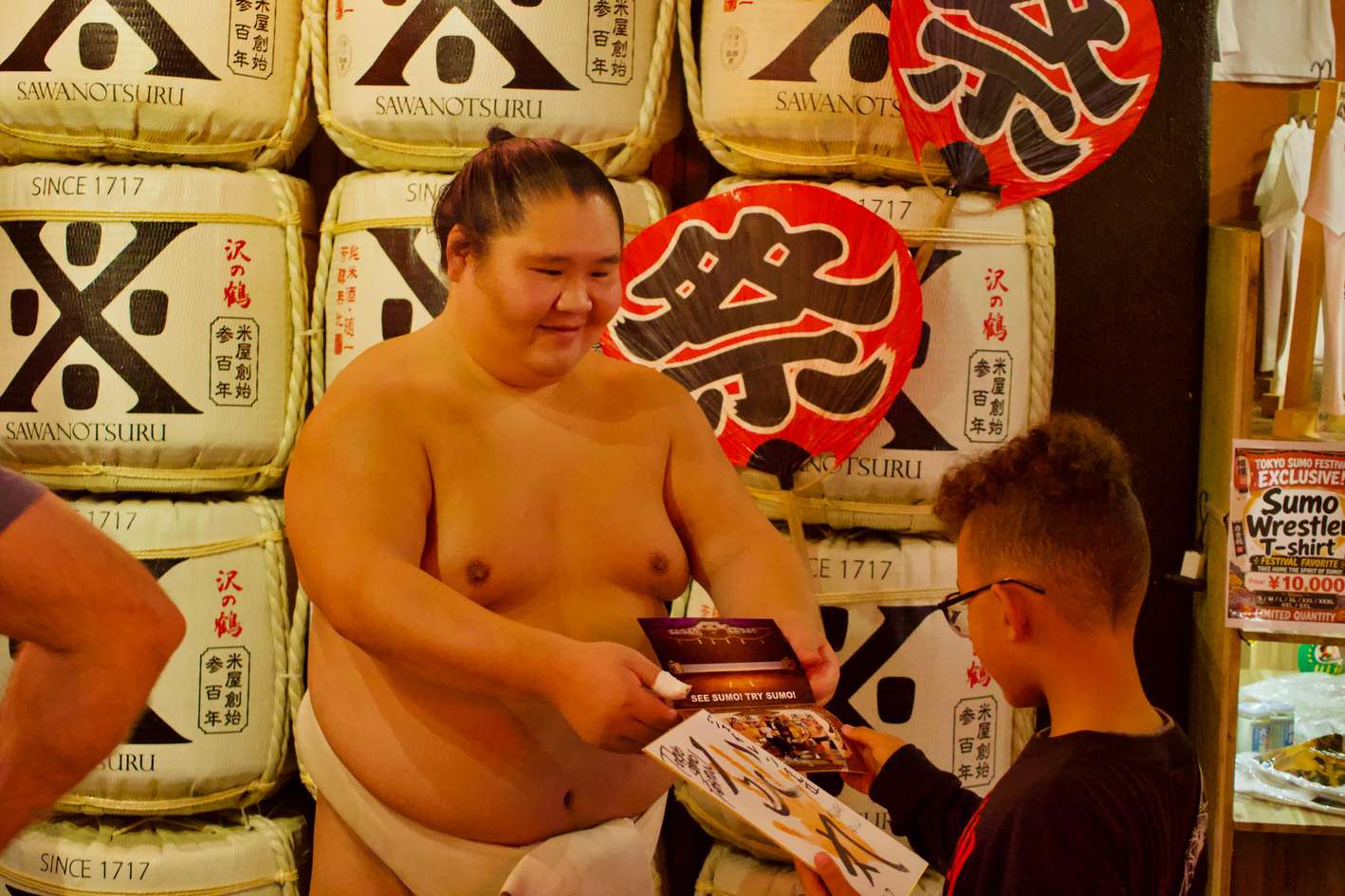
Everyone gets pictures with the wrestlers, and a printed souvenir photo gives you proof of the night. Here is how it unfolds.
1Welcome drink and intro· about 10 minTake a seat close to the ring with a bottled water, and listen as the MC opens with sumo's history, rules and background.2Rituals and demonstrations· about 25 minWatch the wrestlers perform dramatic salt throwing and thunderous shiko foot stomps, then run through techniques and ceremonial movements.3Live sparring matches· about 25 minSee intense live bouts up close as the wrestlers face off in the ring, with the MC explaining each move as it happens.4Sumo challenge· about 20 minSix guests per show, drawn by lottery, suit up in a traditional sumo outfit and step into the ring to challenge the wrestlers.5Photos with the wrestlers· about 10 minGet pictures with the wrestlers to take home, then head back out into Shinjuku with the rest of your evening.
Included
Professional sumo wrestling demonstrationHistory and Background information about SumoEnglish speaking MCWelcome drink (Bottled water)Opportunity to challenge a sumo wrestler (Limited participants; lottery if too many apply)Pictures with the wrestlers
What guests get instead of sumo suit wrestling in Tokyo
How to book an alternative to suit wrestling in Tokyo
01
Pick your date and session
Choose a date first, then a time slot. The Shinjuku show runs daytime slots around 10:00, 12:30 pm and 3 pm and evening slots around 5:30 pm, 8 pm and 9:30 pm, each about 75 to 90 minutes. April, May and October are the busiest months, so book those early.
Pro tipEvening slots go fastest, so if your trip falls in a peak month, take a daytime session instead of gambling on a late one.
Common mistakeWaiting until you arrive in Tokyo to book. Availability on popular dates can disappear, and rebooking closer to your date is far harder.
02
Choose the right option
Read what each option bundles before you pay. The Shinjuku show is a single 1.5-hour package with a welcome drink, wrestler photos and the lottery challenge. At Tokyo Tower, Standard, VIP and V-VIP sofa seats differ in view and meal, with wagyu sukiyaki on the top tier.
Pro tipIf your main goal is time in the ring, the Shinjuku show is the match: six guests per show suit up in a traditional sumo outfit for the challenge.
ImportantAt the Ginza show, the hands-on Plan B is not suitable for children under 5, pregnant guests, or guests with serious medical conditions, and children must be accompanied by a guardian.
03
Pay and get your confirmation
Book online and you will receive confirmation and any operator messages by email. Every tour on this page lets you cancel up to 24 hours in advance for a full refund, so a plan change the day before costs you nothing.
Pro tipBook with a refundable slot when your Tokyo schedule is still loose; you can always cancel and rebook inside the 24-hour window.
ImportantThe Shinjuku venue is cashless. Visa, Mastercard, American Express, JCB, Diners Club and Discover are accepted, so bring a card even for extras.
04
Plan your arrival on the day
Aim to arrive 15 to 20 minutes before your session so you are seated calmly before the show. At Shinjuku, entry is only through the front of the building facing the main door next to Daiso, about a 2-minute walk from Higashi-Shinjuku Station.
Common mistakeCutting it close. The show follows a strict time schedule and late entry may not be accepted at the front desk, with no extension if you join partway through.
RecommendedFit the show around sightseeing, not the other way round. The venues sit in Shinjuku, Shibuya, Ginza, Asakusa and at Tokyo Tower, all a short walk from a station.
What to know before choosing an alternative to suit wrestling in Tokyo
Can stop the dayGood to knowGood news
01
ChoosingWhat it is, who it suits, when to go
2
The lotteryCan stop the day
At the Shinjuku show only six guests per show get into the ring, and they are picked by lottery. The same applies at Shibuya and Tokyo Tower when demand is high. If a guaranteed turn is the main goal, look at the hands-on options instead.
Payment
The Shinjuku venue is cashless and takes Visa, Mastercard, American Express, JCB, Diners Club and Discover. The Ginza venue is cashless too, so a card covers everything. No yen needed at either.
02
BookingHow far ahead, and what happens if plans change
2
WheelchairsCan stop the day
The Shibuya show is not suitable for wheelchair users. At the Ginza show, wheelchair users should contact the staff in advance for assistance, since accessible seating is limited and must be requested when you reserve.
Cancellation
Every show on this page can be cancelled up to 24 hours in advance for a full refund. Inside 24 hours there is no refund, though you may be able to move your booking to another time slot if one is free.
03
Before you goPapers, health, what to bring
1
Health limits
The hands-on plan at the Ginza show is not suitable for children under 5, pregnant guests, or guests with serious medical conditions. Children there must be accompanied by a guardian. Taking part is always optional; you can watch from your seat instead.
04
On the dayWhere to be, when, and how you get there
1
Arriving on time
Shows follow a tight schedule, and at the Shinjuku venue late entry may not be accepted at the front desk. Plan to arrive 15 to 20 minutes before the start so you have time to find your seat and settle in.
05
During the tourWhat is expected of you
2
What to wear
Come in comfortable, flexible clothes you can move in, and socks you don't mind being on the floor in. You don't fully change: the mawashi is worn over your own clothes and provided at the venue. Skip stiff jeans and remove glasses if you can.
Photos
The photo session comes at the end, after the ring part of the show, and pictures with the wrestlers are included at Shinjuku. Photography is allowed at Shibuya, and you can take your own shots with your phone during the session.
Tokyo tour alternatives to sumo suit wrestling, with a chance to step into the ring
1.5 hours·English
4.9(3,242)
Tokyo: Shibuya Sumo Show with Experience & Photo
Free cancellationSumo show and live demonstrationsWelcome drink (bottled water)
Sumo suit wrestling in Tokyo - what you can choose instead
At every Tokyo show on sale, time in the suit is a short, lottery-drawn challenge inside a longer show. The choice is which show gives you the best shot at the ring.
Tokyo
If you only remember three things
1
Only six guests per show take the ring at Shinjuku, chosen by lottery, so book ahead and arrive on time.
2
Shows fill first in April, May and October, so lock your date well before the trip.
3
Wear flexible clothes and socks you don't mind on the floor: the mawashi goes over what you're wearing.
Suit wrestling alternatives in Tokyo - what you can actually book
A clay ring, an English-speaking MC, and a retired professional wrestler waiting at the edge. That is the scene at the Tokyo shows built around sumo suit wrestling, where the suit-and-wrestle moment is one segment inside a roughly 90-minute entertainment show.
What decides between them is what you came for. Wearing the suit points to Shinjuku. A real match on the dohyo points to Ryogoku. Doing it in the middle of your Tokyo day points to whichever district your itinerary already crosses.
What nobody tells you
On every Tokyo show on sale, wearing a sumo suit and wrestling is a short challenge segment chosen by lottery, and it takes up only minutes of the session
Book knowing the suit time is brief, and plan the rest of the day around the show
At the Shinjuku show only six guests per show get into the ring
Participation is never guaranteed, so choose by what else the show gives you
The Shinjuku show is the nearest fit, and its suit challenge is the reason most people book it. Everything that follows hangs on that one fact: the ring turn is drawn by lottery.
Tour for this
Tokyo Ginza Sumo Show: Live Performance & Photo Experience4.7★ (2,064) · 1.5 hours · Free cancellation
Which Tokyo show offers an alternative to a suit wrestling match
The suit itself is the novelty you came for, and Tokyo: Shinjuku Sumo Show & Experience with Photo answers it most directly. If the lottery pulls your name, you suit up in a traditional sumo outfit and step into the ring to challenge a wrestler in front of the whole room.
The numbers to know: the show runs 1.5 hours, and the sumo challenge is limited to six guests per show, selected by lottery when more people apply. Everyone gets pictures with the wrestlers afterwards, and a welcome drink and English-speaking MC come as standard.
The venue is cashless, so bring a card. One practical note: the show follows a strict time schedule and late entry may be refused at the front desk, so arrive with room to spare.
If the lottery goes against you, the demonstration, the rituals and the photos still make the hour and a half. Go in knowing the suit turn depends on the draw.
Tour for this
Tokyo: Shinjuku Sumo Show & Experience with a Photo4.9★ (9,863) · 1.5 hours · Free cancellation
How to get in the ring with an alternative to a suit wrestling match
A suit is one thing. Getting on the dohyo and pushing a wrestler gives you the story you came for, and Tokyo: Sumo Wrestling Experience with Chanko Nabe & Mochi makes that the centrepiece, open to kids and adults alike instead of a handful of lottery winners.
The session runs 1 to 2 hours in Ryogoku, and the ring time sits inside a fuller program: you watch the wrestlers up close, eat chanko nabe, the hot pot the wrestlers themselves live on, and pound mochi with them before eating it for dessert.
People who go often call the audience participation the part they remember, often for how funny it is. Guests are invited to try warm-ups or wrestling and free to join in or stay seated.
This is entertainment, built around fun where a serious training session would wear you out. That is exactly the point: you get the match without the morning regimen.
Tour for this
Tokyo: Sumo Wrestling Experience with Chanko Nabe & Mochi4.8★ (746) · 1 - 2 hours · Free cancellation
Ryogoku's sport heritage and alternatives to suit wrestling in Tokyo
Location shapes the day more than most people expect. The Ryogoku experience sits a short walk from Ryogoku Station, in Tokyo's historic sumo district around the Kokugikan arena, and slots neatly into a half-day that also takes in Asakusa and Tokyo Skytree.
The other shows trade setting for convenience. The Shinjuku show meets at the Sekisaku Building in Okubo, easy to fold into a Shinjuku evening. The Shibuya show is in Yoyogi Broadway, one minute from JR Yoyogi Station.
The Ginza show runs on the basement floor of Ginza INZ 1, steps from Ginza and Yurakucho stations, and the Tokyo Tower show sits on the fifth floor of Foot Town.
Ryogoku deepens the experience; Shinjuku and Shibuya cost you the least travel time. The ring action looks much the same wherever you book, and the district decides the rest of your day.
Tour for this
Tokyo: Shibuya Sumo Show with Experience & Photo4.9★ (3,242) · 1.5 hours · Free cancellation
How suit wrestling in Tokyo differs from real sumo and comedy acts
Both, and that is the honest answer. The wrestlers at these shows are retired professionals showing genuine technique; the frame around them is theatre. There is a comedy segment called shokkiri where wrestlers act out banned moves, and the suit challenge leans deliberately silly: all the visual bulk, none of the competitive help.
You still learn the sport. Hosts explain rules, rituals, history and technique in a way newcomers follow, down to facts like what losing your mawashi mid-bout means. People who knew little about sumo going in regularly call the experience a highlight of their trip.
What people wrongly assume
MythA show with suits and jokes isn't real sumo
Reality
The wrestlers are retired professionals, and the demonstrations are genuine skill
MythYou won't learn anything at a comedy show
Reality
The show teaches real rules, rituals and history while it makes you laugh
If a real grand tournament falls during your trip, experienced travelers say go to the real thing. For everyone else, a show is the friendly way in.
Tour for this
Tokyo: Luxury Sumo Show Experience & Japanese Cuisine & Drinks4.7★ (1,033) · 2 hours · Free cancellation
Comparing Shinjuku, Shibuya and Ginza alternatives to suit wrestling in Tokyo
Three shows, each about 90 minutes, each with retired wrestlers, and each pulling in a different direction. Shibuya is the cheapest of the three and includes no meal, with photography allowed throughout.
Shinjuku includes a photo with the wrestlers but no meal, and it is the most-booked sumo experience in Japan. Ginza runs an entertainment show with an optional hands-on training-style plan you can add.
None of the three guarantees you the ring. At Shinjuku and Shibuya the challenge goes to lottery winners, and at Shinjuku only six guests get in. Where the price differs, it reflects what is bundled, such as meals and drinks; the wrestling looks similar across all three.
Shinjuku, Shibuya and Ginza suit wrestling shows side by side
Shinjuku
Shibuya
Ginza
Length
1.5 hours
1.5 hours
1.5 hours
Ring challenge
6 guests, by lottery
Lottery if needed
Optional hands-on plan
Meal
None
None
Not included in the main show
Photos
With the wrestlers
Allowed, take your own
Photo and video opportunities
Age notes
12 and younger welcome
12 and younger, infants on laps
Hands-on plan not for under 5s
Shinjuku
Length
1.5 hours
Ring challenge
6 guests, by lottery
Meal
None
Photos
With the wrestlers
Age notes
12 and younger welcome
Shibuya
Length
1.5 hours
Ring challenge
Lottery if needed
Meal
None
Photos
Allowed, take your own
Age notes
12 and younger, infants on laps
Ginza
Length
1.5 hours
Ring challenge
Optional hands-on plan
Meal
Not included in the main show
Photos
Photo and video opportunities
Age notes
Hands-on plan not for under 5s
Book Shinjuku for the suit and the photos, Shibuya for the budget, Ginza if you want the training-style add-on.
Tour for this
Tokyo: Sumo Entertainment with Japanese Meal at Tokyo Tower4.9★ (90) · 1.5 hours · Free cancellation
When to book an alternative to a suit wrestling show in Tokyo
Sumo shows sell out quickly, and evening slots go first. People who try to rebook closer to their trip date often find availability gone, so the date belongs on the calendar at the same time as your flights.
The pattern through the year is clear: April, May and October are the busiest months, and November shows the highest public interest in sumo even though the crowds thin. February and December sit at the other end. If your trip falls in a peak month, book weeks out rather than days.
Sumo Show Tour Busyness and Interest in Tokyo
April: 5 out of 5 for how busy it gets. This is one of the busiest months for tours, and public interest is moderate.
HighestMar to May, Oct
In betweenJun to Sep, Nov
LowestDec to Feb
Darker: a higher how busy it gets score, out of 5
Tap a month to read it.
November: sightings 50,798 readers a month. Tour availability is moderate, but public interest in sumo is at its highest.
HighestJan, May, Nov47,321 to 50,798 readers a month
In betweenMar, Oct40,219 to 41,862 readers a month
LowestFeb, Apr, Jun to Sep, Dec25,251 to 31,305 readers a month
Darker: more sightings, from 25,251 to 50,798 readers a month
Tap a month to read it.
One more reason to be early rather than late on the day itself: at the Shinjuku show the schedule is strict and late entry may be refused at the front desk. A missed slot is a wasted booking, so build in the train ride with room to spare.
Getting by train to Tokyo's alternatives to a suit wrestling venue
Every show venue sits minutes from a station, which is why train and walk wins nearly every time. From Tokyo Station, the Marunouchi Line puts you at the Ginza venue in about 10 minutes including a short walk, beating a taxi stuck in surface traffic. The JR Chuo Line reaches Shinjuku in about 14 minutes.
From Shinjuku, a direct Marunouchi Line train covers the Ginza show in about 25 minutes. From Shibuya, the Yamanote Line to Shinjuku and a change at Higashi-Shinjuku takes about 6 minutes for the Shinjuku show.
Taxis make sense in two cases: the direct run to the Tokyo Tower show, about 15 minutes from Tokyo Station, and late evenings when you want the door-to-door simplicity. Otherwise the train is faster, cheaper and drops you closer to the entrance.
What to wear for an alternative to suit wrestling in Tokyo
Dress as you would for a casual gym class. The rule that matters: the mawashi goes over your own clothes, so there is no changing-room logistics to plan around, just clothing you can move and charge in.
Skip stiff jeans and anything restrictive. Wear socks you don't mind having on the floor, and if you wear glasses, switch to contacts for the session; the belt gets strapped tight and the wrestling is physical. A towel, a change of clothes and about 500 ml of water round out the sensible kit.
Curious what you're strapping on? A real professional mawashi unwraps to about 9 metres of silk, 60 cm wide, and weighs roughly 4 to 5 kg. Ordinary visitors move in one just fine: walking, charging and pushing against a former pro, with effort to match.
Pro tipWear flexible clothes and socks you don't mind on the floor, switch glasses for contacts, and remember the mawashi is provided and worn over your outfit, so there is nothing to change into
There is no dress code at the venue beyond comfort. Bring a camera; you will want it.
Can your whole group join an alternative to suit wrestling in Tokyo?
Most groups can, with a few checks before booking. At Shinjuku and Shibuya the age bands run from 12 and younger up to 99, and at Shibuya infants sit on laps.
At the Ginza show, the hands-on training plan is not suitable for children under 5, pregnant guests or anyone with a serious medical condition, and children must be with a guardian.
Participation is optional everywhere: guests can watch, or join adapted activities instead of physical contact. Access needs shape the choice more than age does. The Shibuya show and the Ryogoku experience are not suitable for wheelchair users, while at Ginza wheelchair users should contact the staff in advance for assistance.
Wheelchair-accessible seating at Tokyo shows is limited and must be requested at the time of reservation, so flag it when you book rather than at the door. Prior injuries and mobility can affect what a guest should try, and sharing those details in advance gets everyone the right version of the session.
How a Tokyo alternative to suit wrestling unfolds, with a photo at the end
The 90 minutes have a shape, and knowing it helps you plan the rest of your day. Shows open with an educational section: the wrestlers' lives, stretches, the rules and rituals. Then come the bouts and demonstrations, salt throwing included, real technique from retired professionals.
The wrestling and the ring challenge land in the last half hour, and the photos close the session after the ring time. At the Shinjuku show the schedule runs about 40 minutes of explanation, about 20 minutes of bouts, then about 30 minutes for the challenge and pictures.
How the suit wrestling session unfolds
1
First 40 minutes
Explanations: wrestlers' lives, stretches, rules and rituals
An English-speaking MC walks you through it
2
Next 20 minutes
Live bouts and demonstrations
Salt throwing and genuine technique from retired pros
3
Final 30 minutes
The ring challenge, then photos
Lottery winners suit up and wrestle, everyone gets pictures
Photography is welcome: the Shibuya show allows it throughout, Shinjuku includes pictures with the wrestlers, and you can shoot your own photos and videos during the photo session. The printed commemorative photo is yours to take home.
What to do near a Tokyo alternative to your suit wrestling venue
The Shinjuku venue sits in a walkable pocket worth an hour either side of the show.
Shinjuku Central Park is about 4 minutes on foot, the Juniso Kumano Shrine about 6, the Sompo Museum of Art about 7 and the Japanese Sword Museum about 11. Hanazono Shrine, Meiji Shrine and the Shinjuku Gyo-en gardens all fall within a 20-minute walk.
A 20-minute walk from the Shinjuku sumo show venue
Then there is the meal that belongs to any sumo day. Chanko nabe is the hot pot sumo wrestlers eat, hearty and generous, and travelers praise it wherever it is served.
Some shows include it; if yours does not, a chanko restaurant run by a former wrestler is an authentic add-on, doubling as an izakaya in the evenings where you might hear stories about the wrestlers.
Check your booking details for exactly which food and drinks are included, since that varies by option and date. Around Ginza, museums and shrines sit within a similar radius if that is your venue.
More to book around Tokyo
Live dates and prices
A traveler's note
Fun and informative show. Terrific staff and very entertaining wrestlers. Highly recommend learning about sumo wrestling here.
For the suit-and-wrestle moment you searched for, the Shinjuku show is the closest booking on this site: a traditional sumo outfit, a ring, a retired pro, and a photo to prove it.
Book it knowing only six guests per show get in by lottery, so the ring turn is a chance. If ring time matters more than the costume, the Ryogoku experience puts everyone on the dohyo.
Go ifGo if you want the playful suit challenge and a photo with the wrestlersGo if your trip falls in a quiet month and evening slots are still openGo if you are a first-timer who wants sumo explained while being entertained
Skip ifSkip the lottery shows if a guaranteed turn in the ring is your main goalSkip if anyone in your group needs wheelchair access and you have not confirmed seating in advanceSkip if a real grand tournament runs during your trip; go to that instead
Our pick to book
Tokyo: Shinjuku Sumo Show & Experience with a Photo4.9★ (9,863) · 1.5 hours · Free cancellation
Sumo suit wrestling in Tokyo - questions about what to do instead
Short answers on suits, lotteries, photos and taking part in a Tokyo sumo challenge.
Can you wrestle in a sumo suit in Tokyo?
On the Tokyo entertainment shows sold here, the chance comes as a sumo challenge segment. At the Shinjuku Sumo Show, guests selected by lottery suit up in a traditional sumo outfit and step into the ring against the wrestlers.
The Shibuya, Ginza, Tokyo Tower and Ryogoku shows carry the same kind of challenge in their programs.
How much of the session do you spend in the suit?
Plan on a few minutes in the ring out of a session that runs 90 minutes or more. The suit-up challenge sits near the end of the show, after the demonstrations, explanations and live bouts. The rest of the time you watch, cheer and learn the rituals from your seat.
How do you get picked for the ring challenge?
Spots are limited and drawn by lottery. At the Shinjuku show only six guests per show can take the challenge, so a turn in the ring is never guaranteed.
If many guests want in at the Tokyo Tower or Shibuya shows, the same lottery applies. Joining the ring is always your choice; you can stay in the audience and still enjoy the show.
Is the sumo suit challenge real sumo or a comedy act?
It leans comic on purpose. The suit gives you the look of bulk with no real competitive help, and the format is deliberately funny, with a shokkiri segment where wrestlers act out banned moves.
You still pick up genuine facts along the way, like the length and weight of the mawashi and the rule that losing your mawashi loses the bout.
Are the wrestlers at these Tokyo shows real?
Tokyo sumo shows usually feature retired professional wrestlers, so the demonstrations show genuine technique with no acting or exaggeration.
The Shinjuku and Shibuya shows list professional wrestlers, the Ginza show performs with retired professionals, and the Tokyo Tower venue is run by genuine former pros. Real shows state their performers' competitive careers, so the tour descriptions here name that for you.
Do I get photos of my own sumo match to take home?
Yes. The Shinjuku show includes pictures with the wrestlers, and the Tokyo Tower and Ryogoku shows give you a printed commemorative photo. Photography is allowed at the Shibuya show, and you can take your own pictures with your phone during the photo session at the end of the experience.
Is trying sumo in Tokyo safe for complete beginners?
The experiences sold here are built for beginners with no prior knowledge, and the program accommodates different fitness levels and ages. Any participatory show is lighter and more entertainment-focused than real training. If you would rather skip the physical part, watching the demonstrations and joining the warm-ups instead is always on the table.
Can children take part in the sumo challenge?
At the Shinjuku and Shibuya shows, children aged 12 and under are welcome, and infants sit on laps at Shibuya. A lottery-based show cannot promise a child a turn in the ring, since only six guests per show get picked at Shinjuku.
For a guaranteed turn, a hands-on experience like the Ryogoku show with chanko nabe and mochi gives kids a session on the dohyo.
Will I follow the show if I speak no Japanese?
Yes. The Shinjuku and Shibuya shows run with an English-speaking MC, the Ginza show provides English and Japanese support, and the Asakusa and Ryogoku shows use live bilingual commentary. The hosts explain the rules, rituals, history and techniques in a way newcomers can follow without any Japanese.
Could dressing in a sumo suit offend fans of the sport?
Reactions are mixed. Many people see sumo costumes as lighthearted fun, while some Japanese people consider sumo an honored tradition and find joke suits disrespectful.
Inside a booked experience, the wrestlers themselves invite you into the suit and the ring, which keeps the mood respectful. Leave the costume gags for the venue and stay mindful on the street.
More suit wrestling alternatives and sumo ideas for your Japan trip