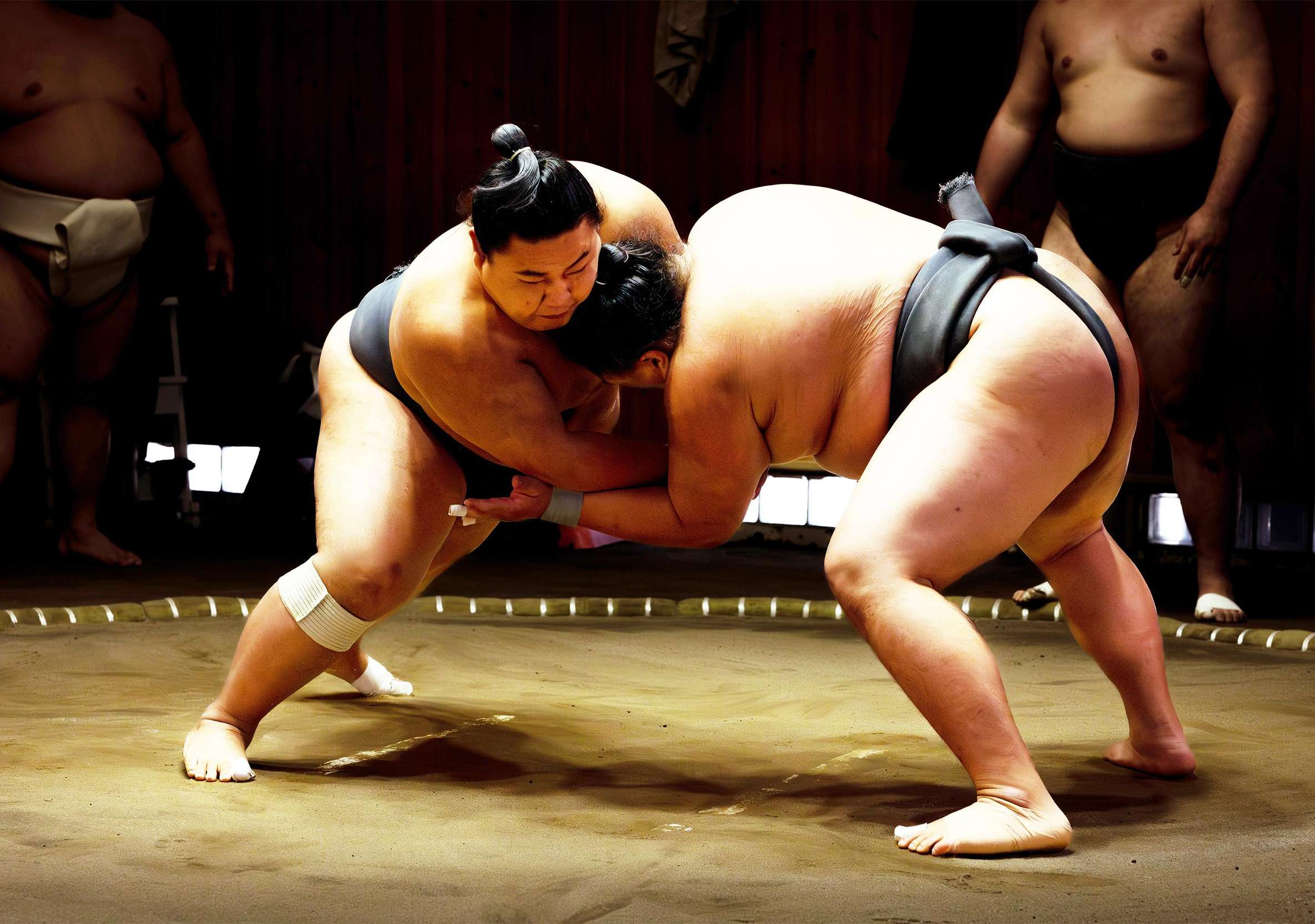
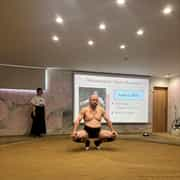
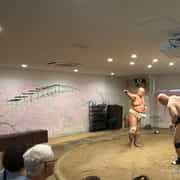
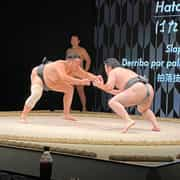
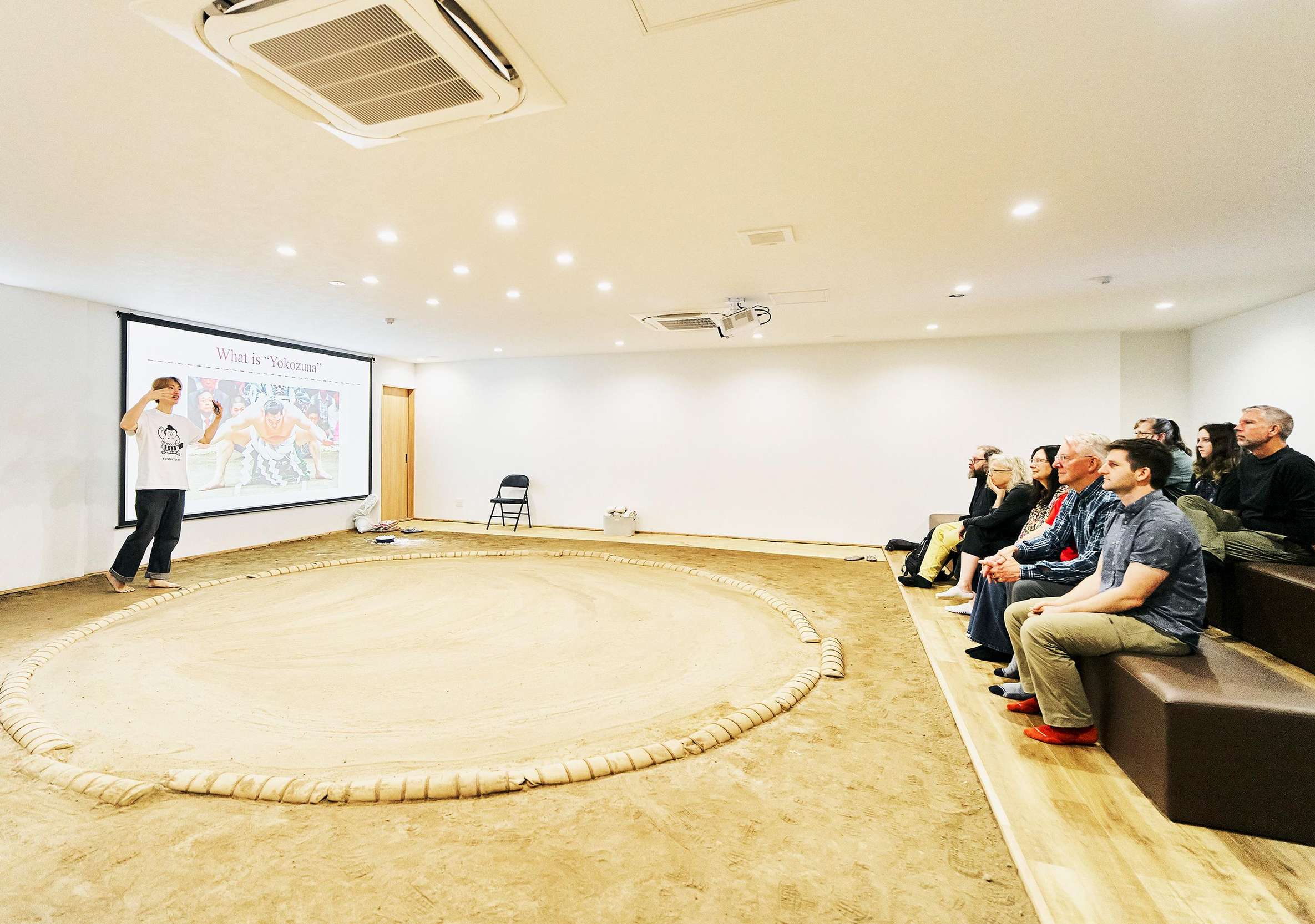
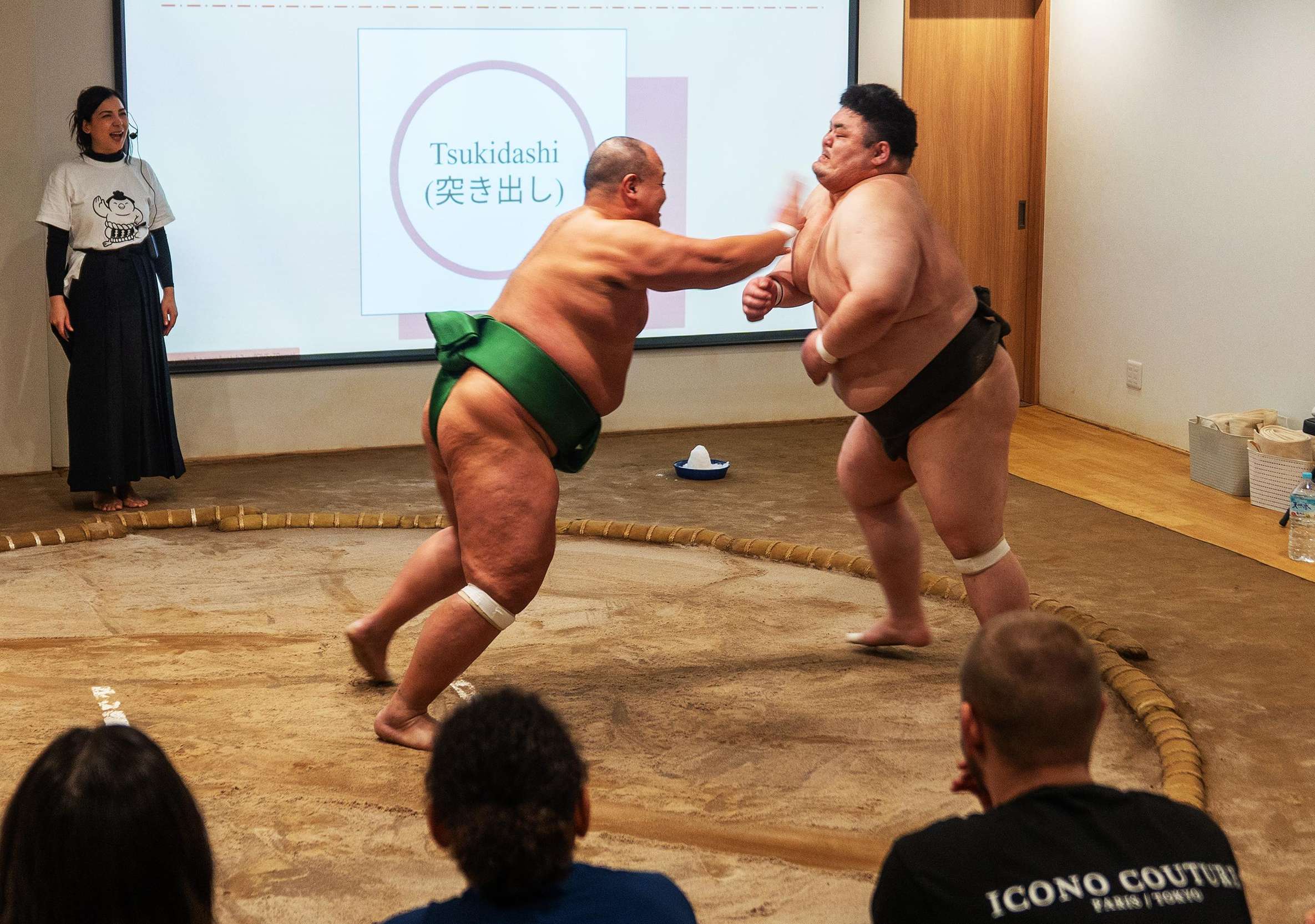
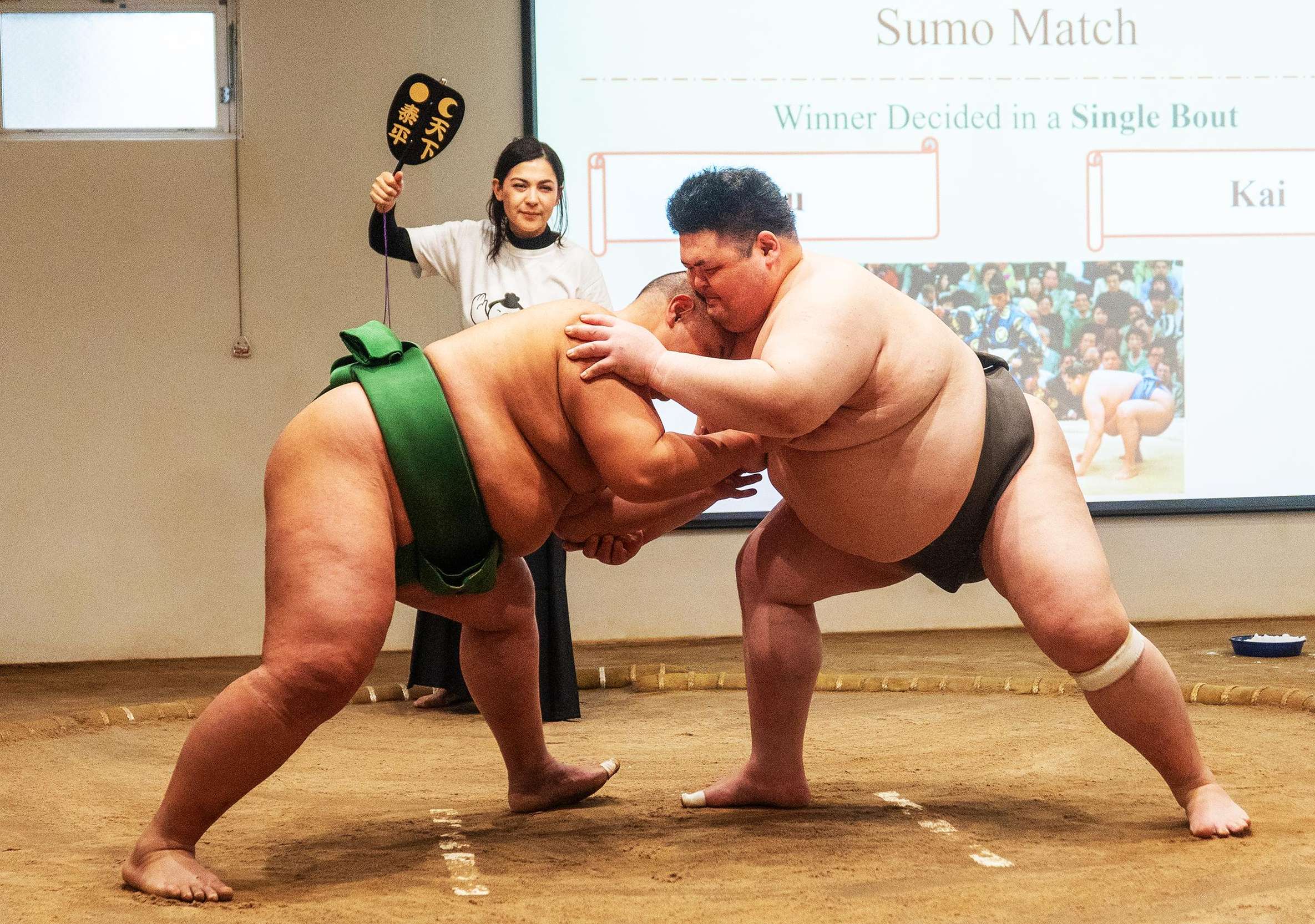
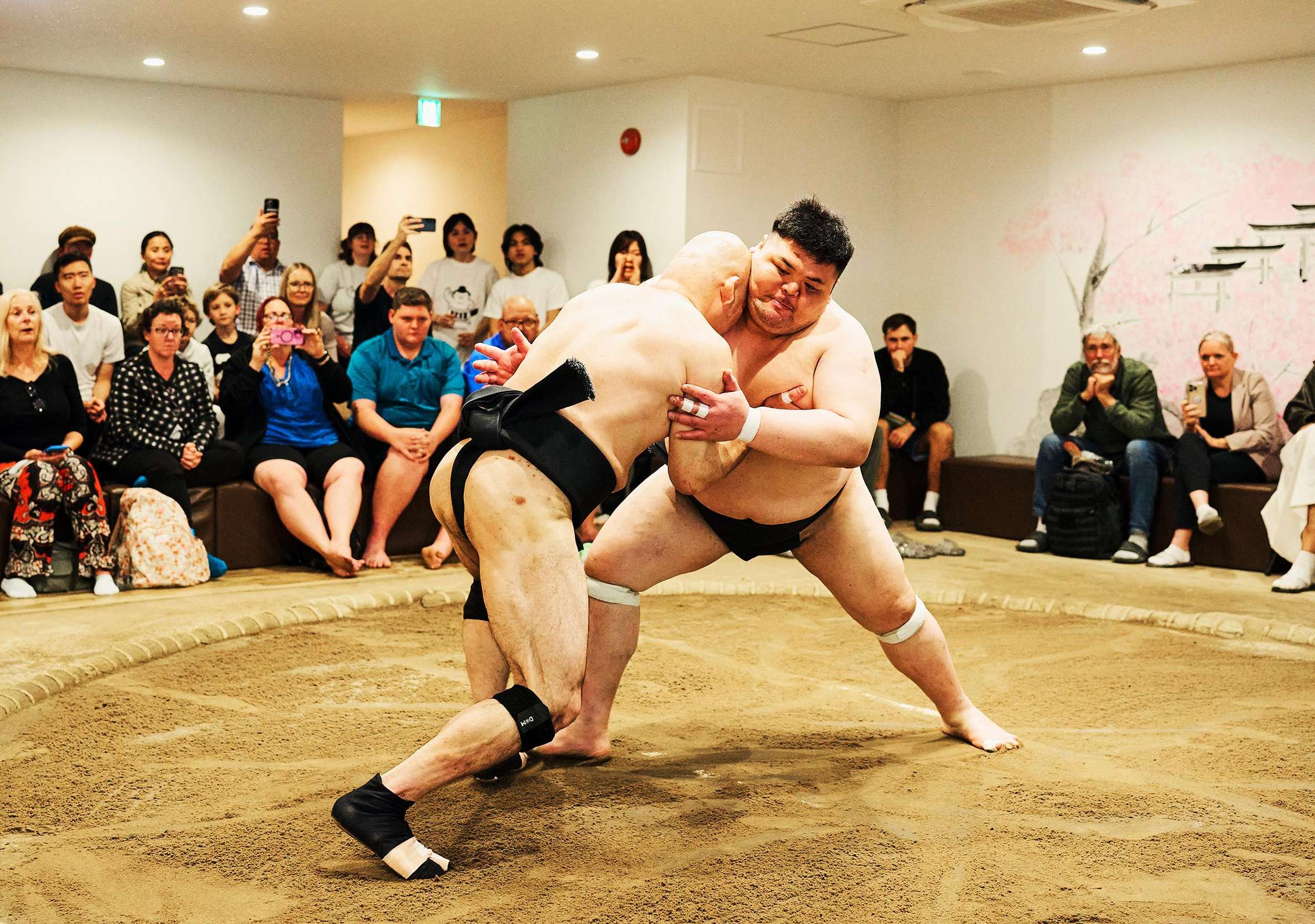
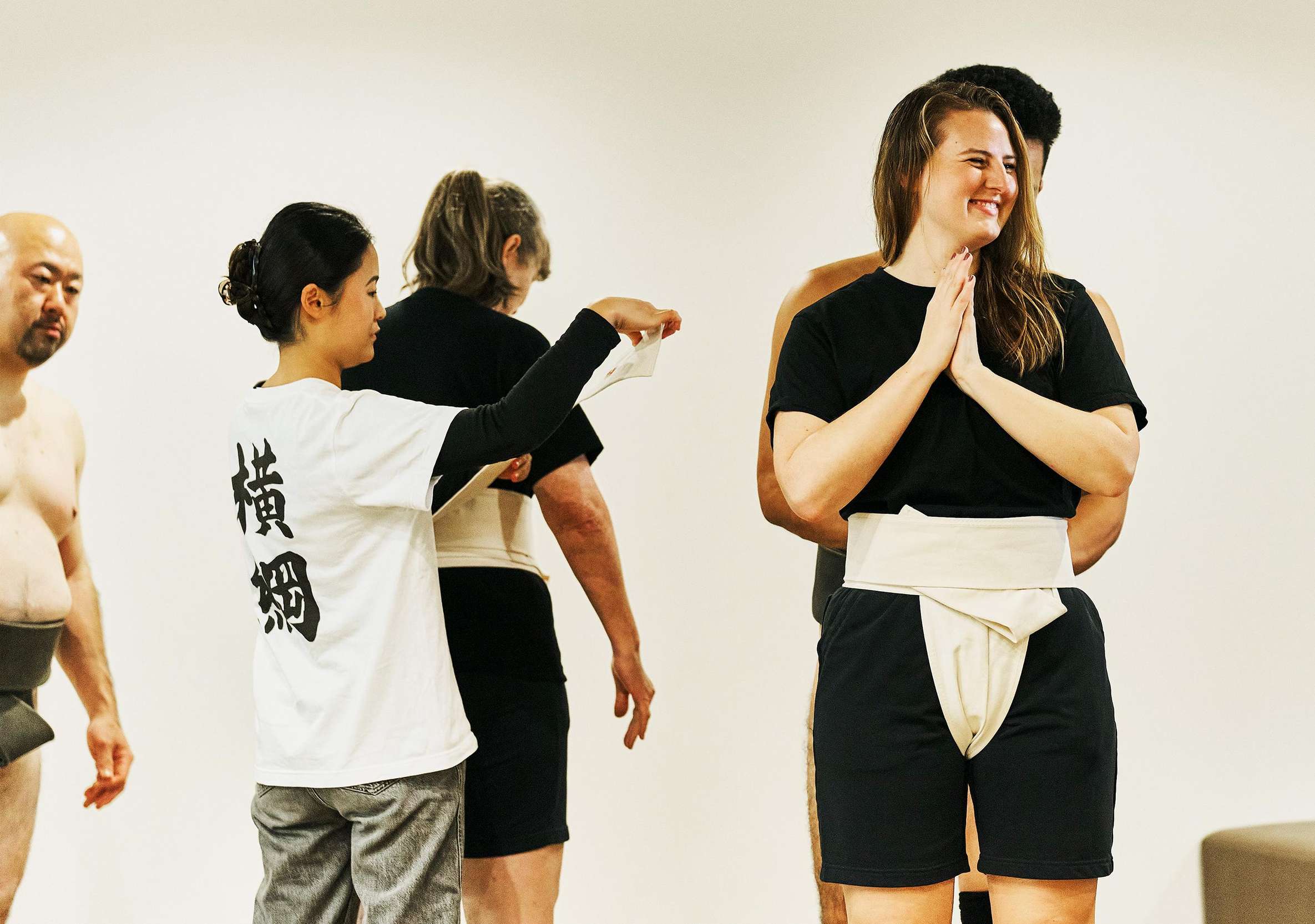
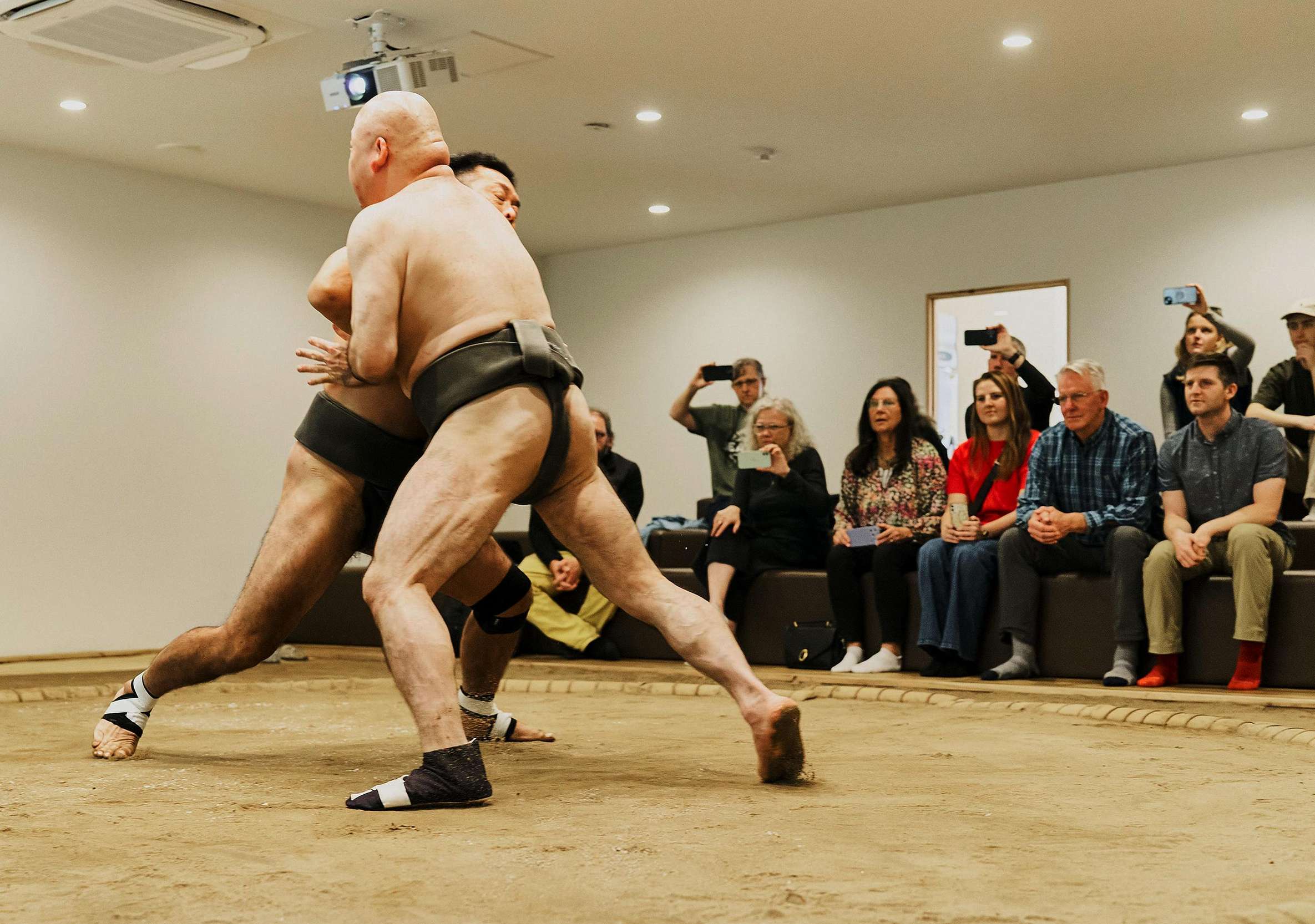
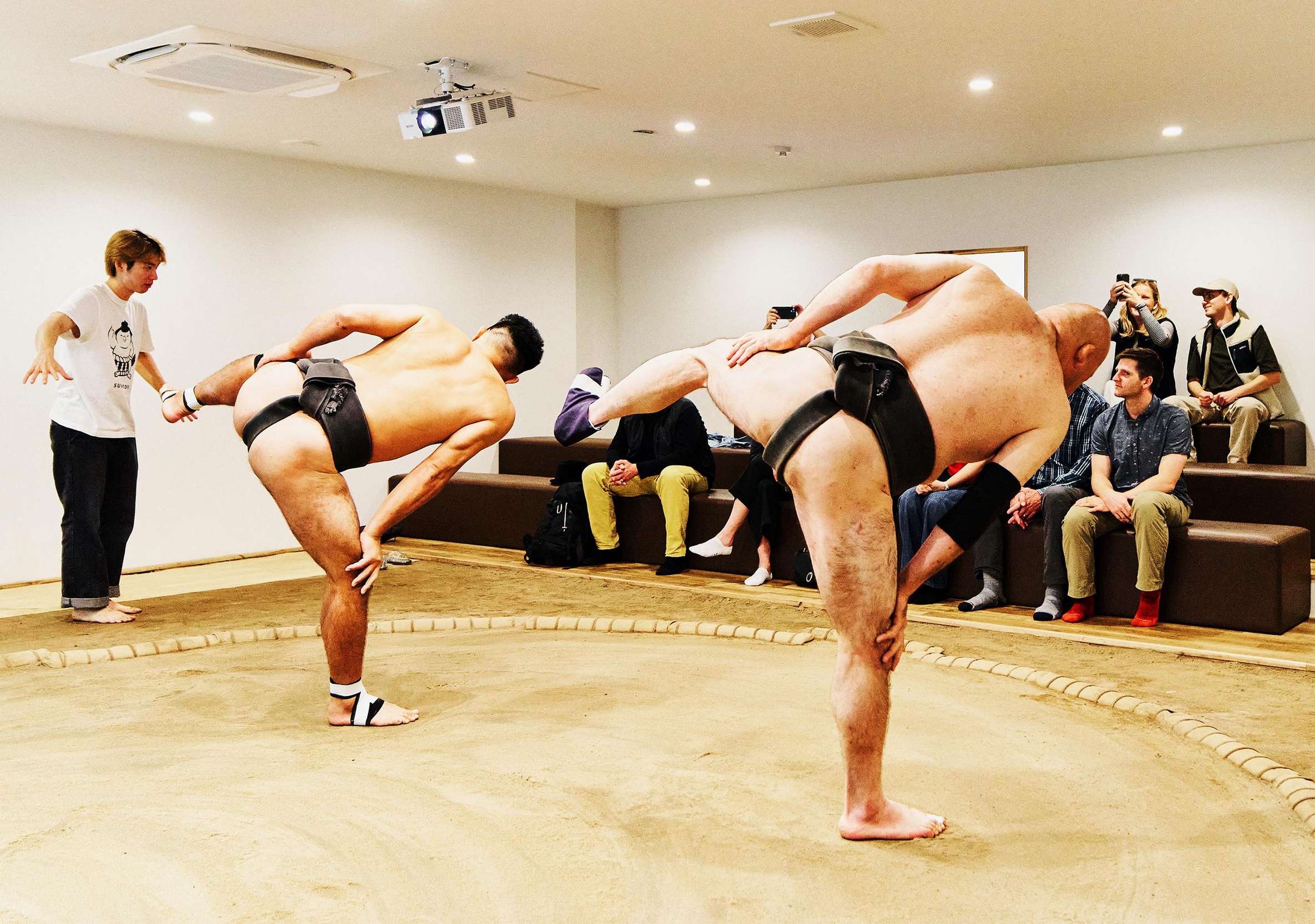
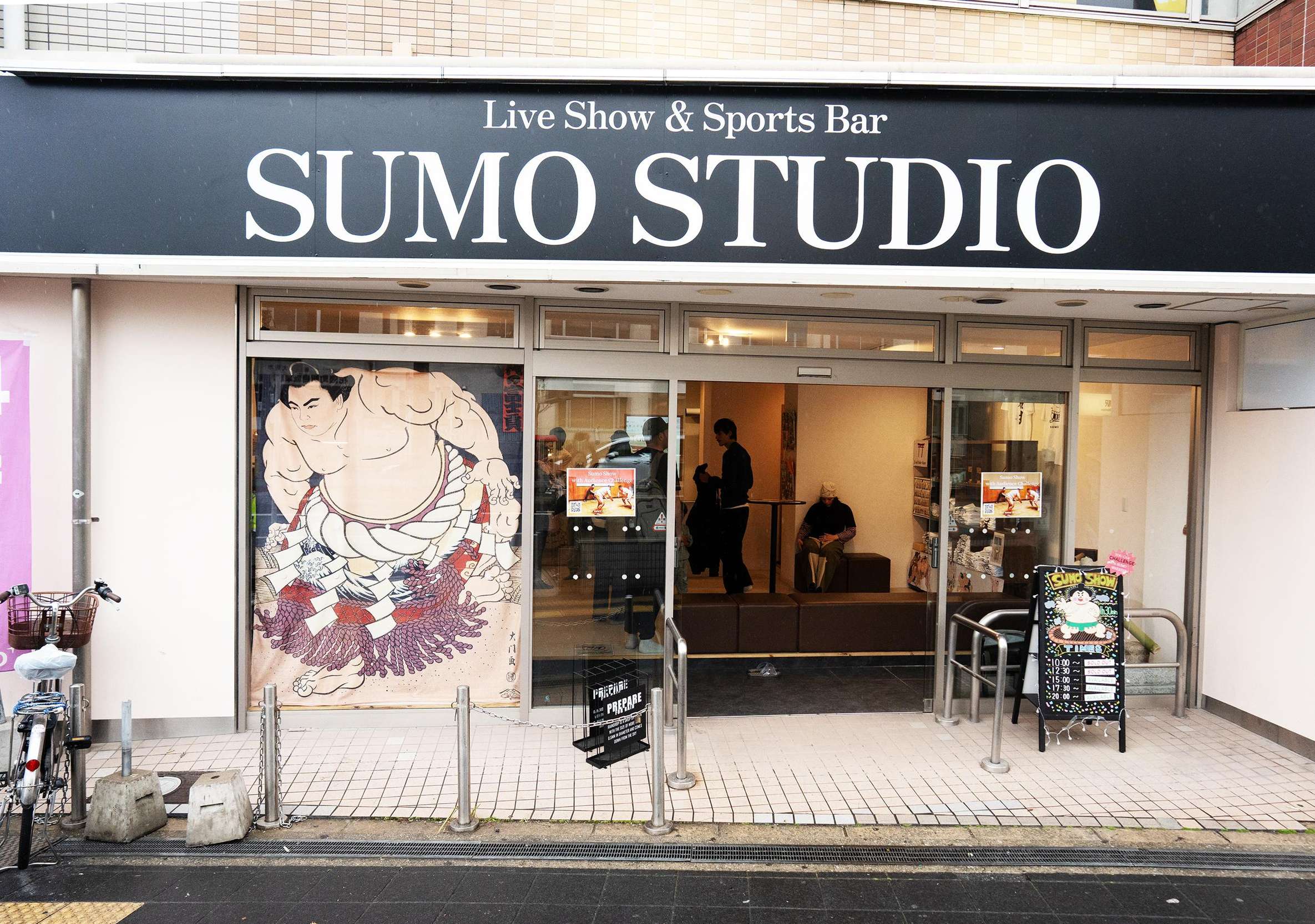
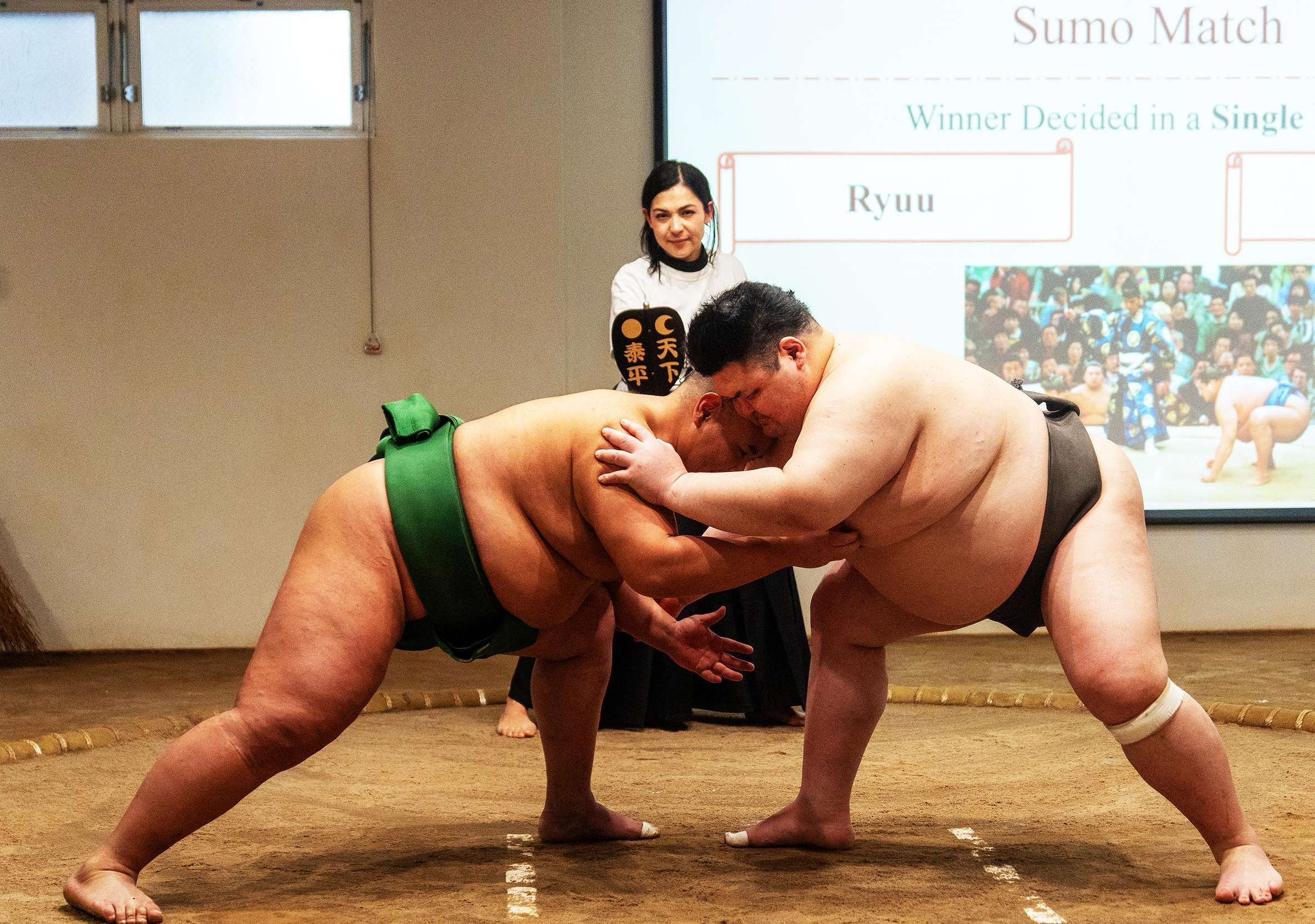
See live sumo in Osaka without waiting for the March tournament. Sit close to the ring, watch retired professional wrestlers in real matches, and take your own spot in the ring if you want a challenge. Pick a show, book your seat, and spend an evening with Japan's national sport.
"As a solo traveler from Spain, I had a great time, entertaining and fun. The explanations about the sport and the wrestlers' lives were really informative."
4.6★average rating2,722traveler reviews2 of 3free cancellation36countries travelers came from
Sumo in Osaka - which show fits your trip
Live sumo in Osaka comes in three shapes: a short show with an audience challenge, a two-hour dinner show at a purpose-built hall in Namba, and a front-row evening with wagyu sukiyaki just outside the city. All are entertainment shows by retired professional wrestlers. The March grand tournament is the real thing, but its tickets are the hardest to score in Japan.
NoteEntertainment, not a contest: These are shows by retired wrestlers with choreographed matches, so expect laughs and real technique rather than a ranked tournament bout.
Tournament ticketsOsaka hosts the grand sumo tournament in March, and its seats sell out fastest of any host city, so book the moment sales open if that is your plan.
Hirakuza age limitChildren aged 2 and younger are not permitted at Sumo Hall Hirakuza.
Arrival timeArrive 15 to 20 minutes before the printed start time, since Osaka shows can start late and latecomers get a rushed seat search.
Booking aheadHirakuza keeps same-day booking open online until 3 pm, so last-minute plans usually work; only the premium front-row seats really need early booking.
Dark daysHirakuza runs every month of the year but closes a handful of irregular days, so check the calendar for your exact date.
Show timesThe wagyu sukiyaki show runs a 1 pm lunch and a 6 pm evening performance; the Hirakuza show runs 5 pm to 7 pm.
Joining inThe ring challenge is optional, and spots are limited or drawn by lottery when more guests want to wrestle than the ring can hold.
EtiquetteFollow the crowd on when to cheer, keep your phone on silent, and leave your cushion where it is even after a big upset.
Getting thereSumo Hall Hirakuza sits on the 8th floor of Namba Parks, a short walk from Namba Station.
ClosureSumo Hall Hirakuza Osaka closes every Tuesday and over the New Year holidays, so a show on your date is not guaranteed.
Check the venue's monthly performance calendar before you plan your evening, and if you land on a closed day, book one of the other Osaka sumo shows that run year-round instead.
Sumo in Osaka - the live shows you can book
Join the ring
1 - 1.5 hours·English
4.9(2,124)
Osaka: Sumo Experience with Live Show & Audience Challenge
The shortest, most hands-on Osaka show: you can face off against a retired wrestler yourself, with an English MC running the whole thing.
Free cancellationAuthentic sumo demonstrationsEnglish-speaking MC
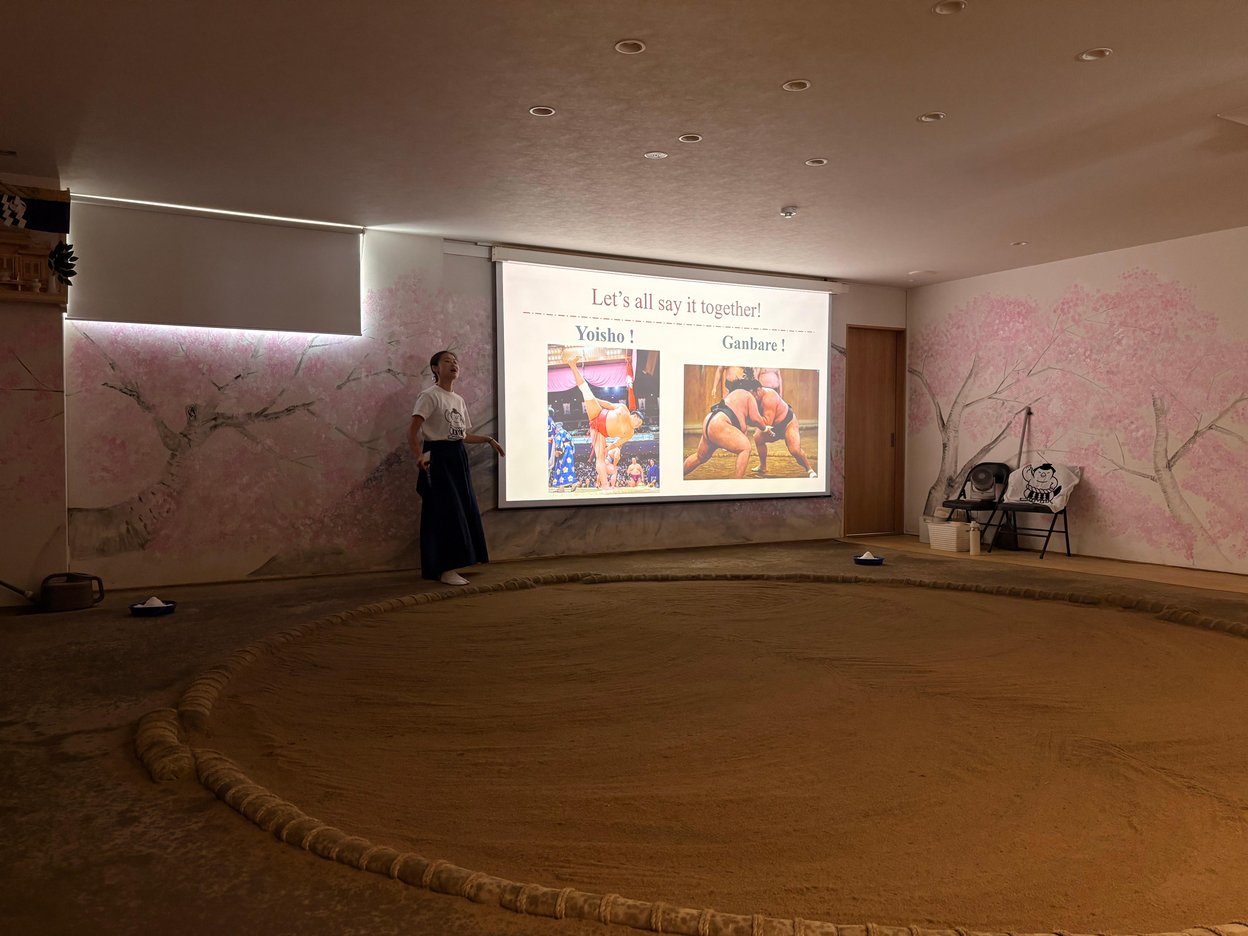
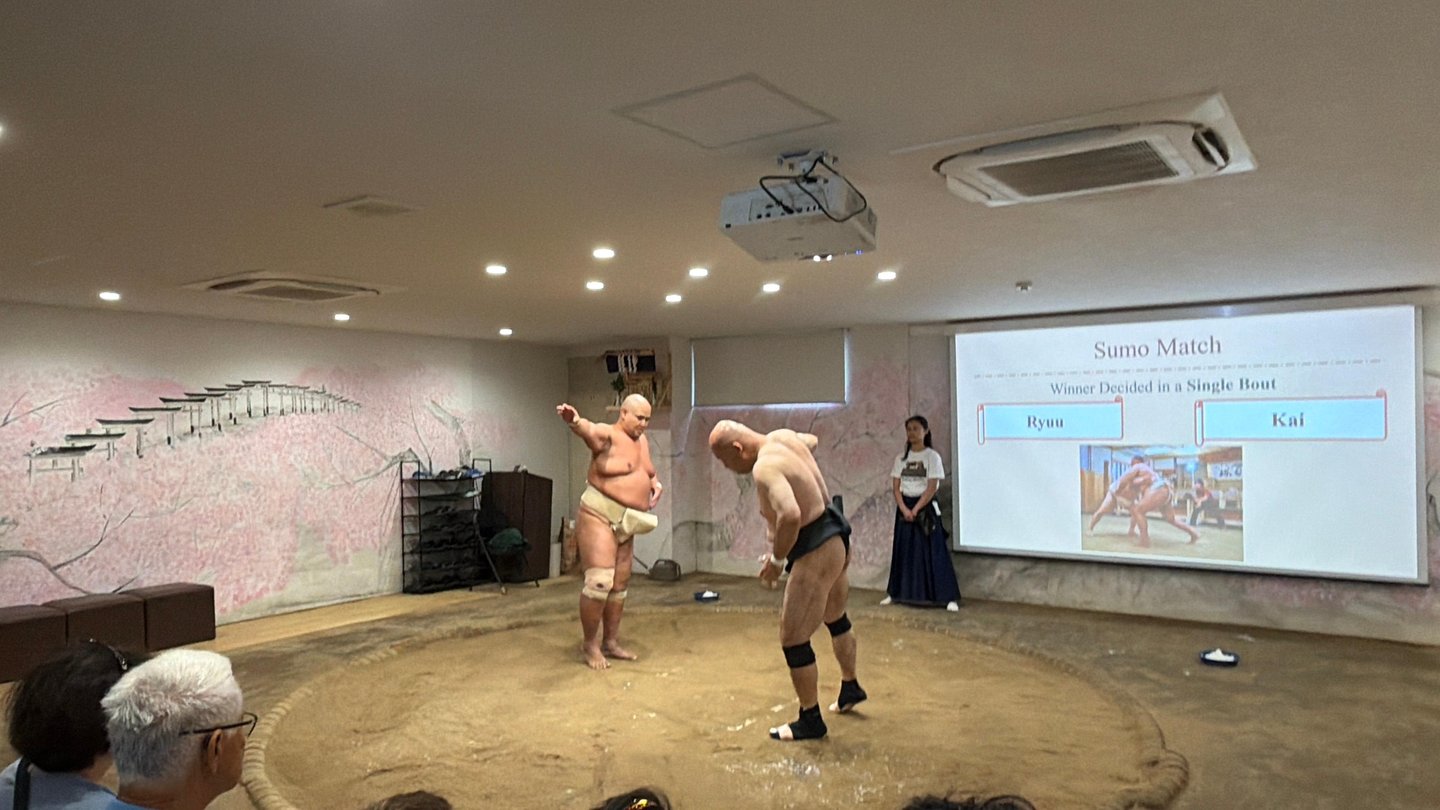
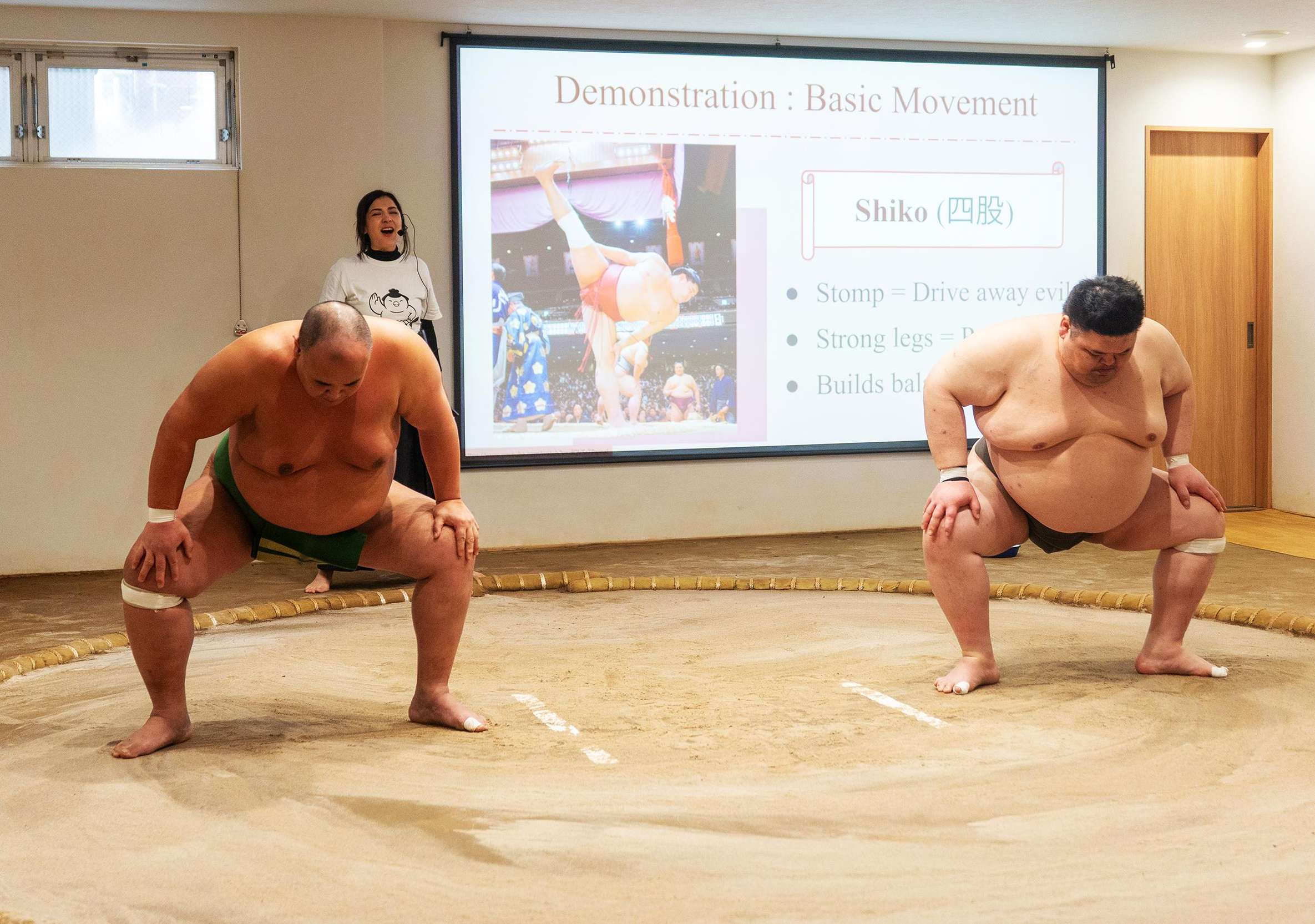
The show runs about 90 minutes in Osaka, and retired professional wrestlers are the ones on the ring. An English-speaking MC explains the history, rituals and signature techniques, so you follow every bout without any Japanese.
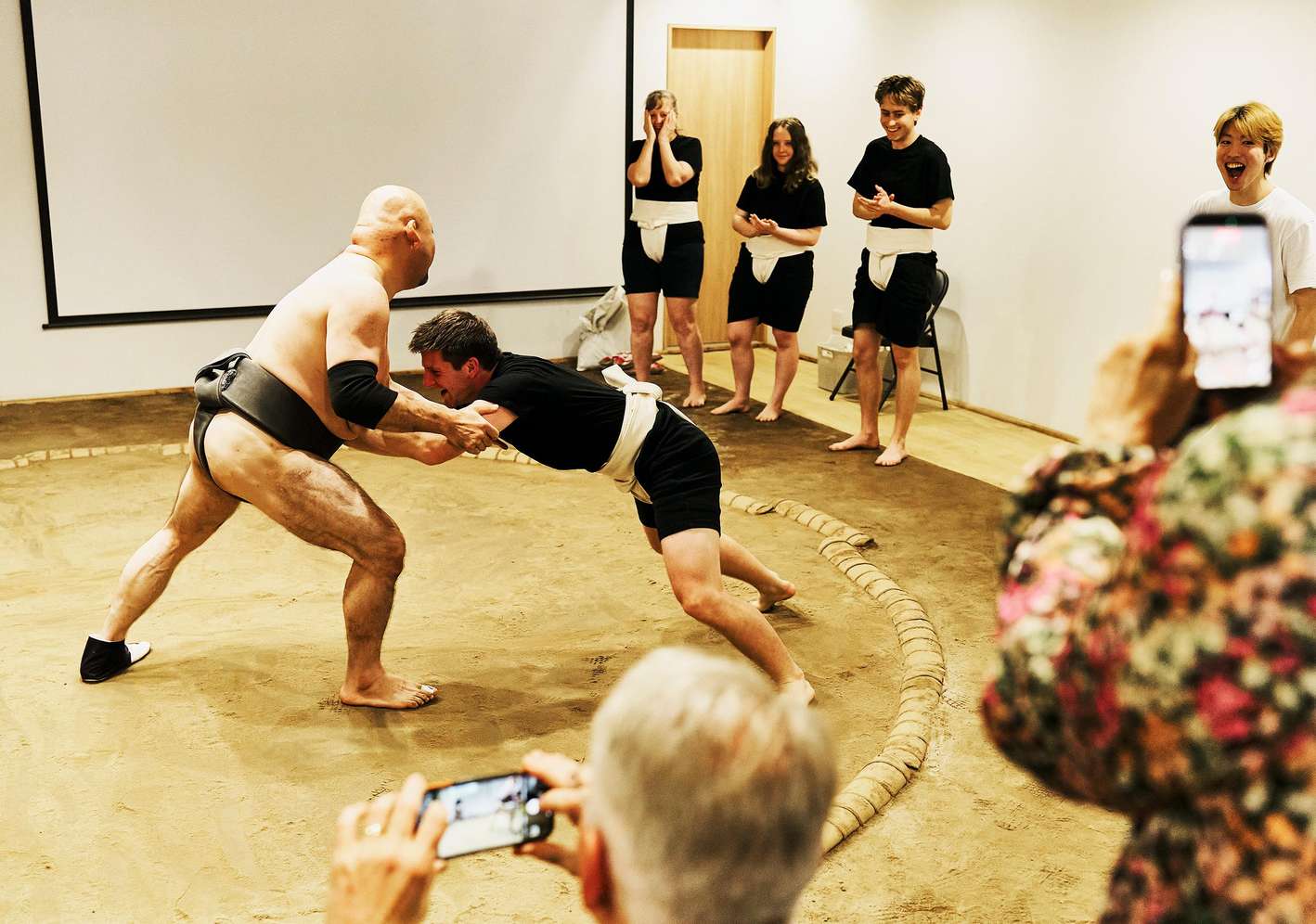
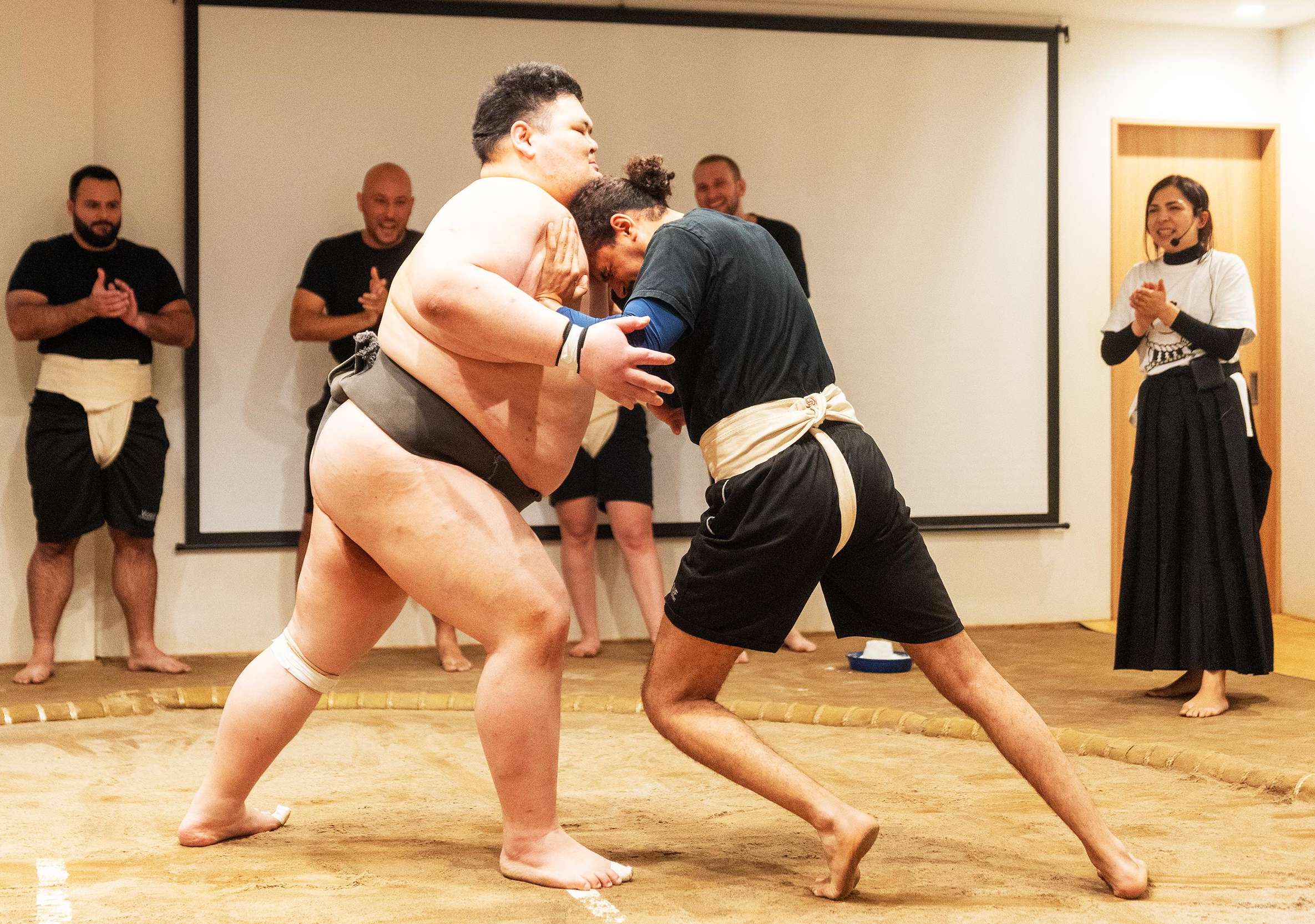
It builds to a single one-round match between two of those wrestlers, and then the part people talk about afterwards: a limited number of audience spots to step in and face a wrestler yourself. You can also add popcorn, or a welcome drink, snacks and a souvenir set, depending on which option you book.
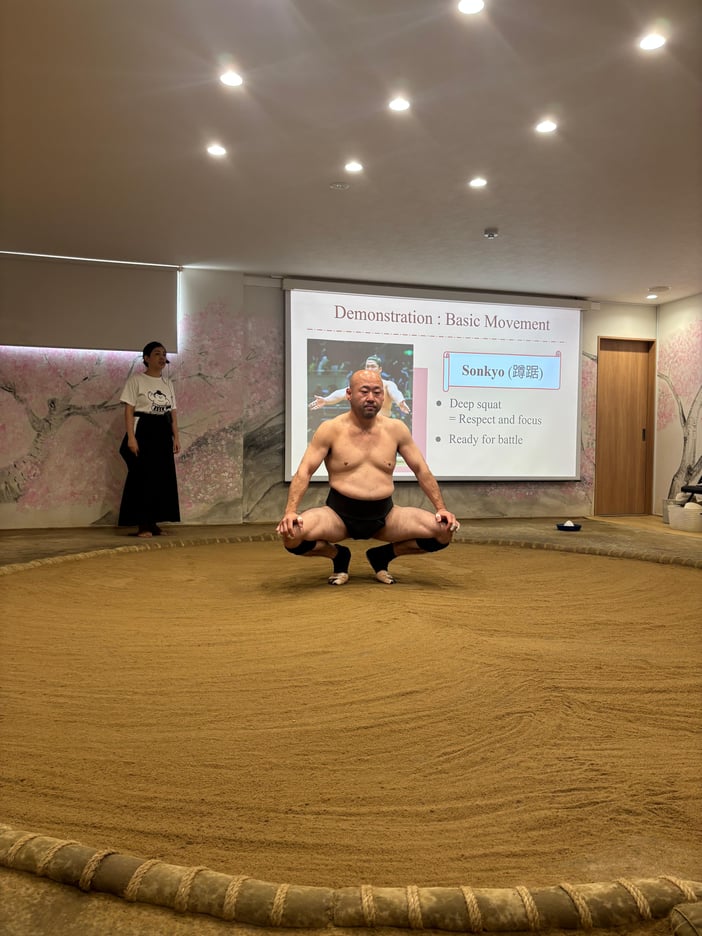
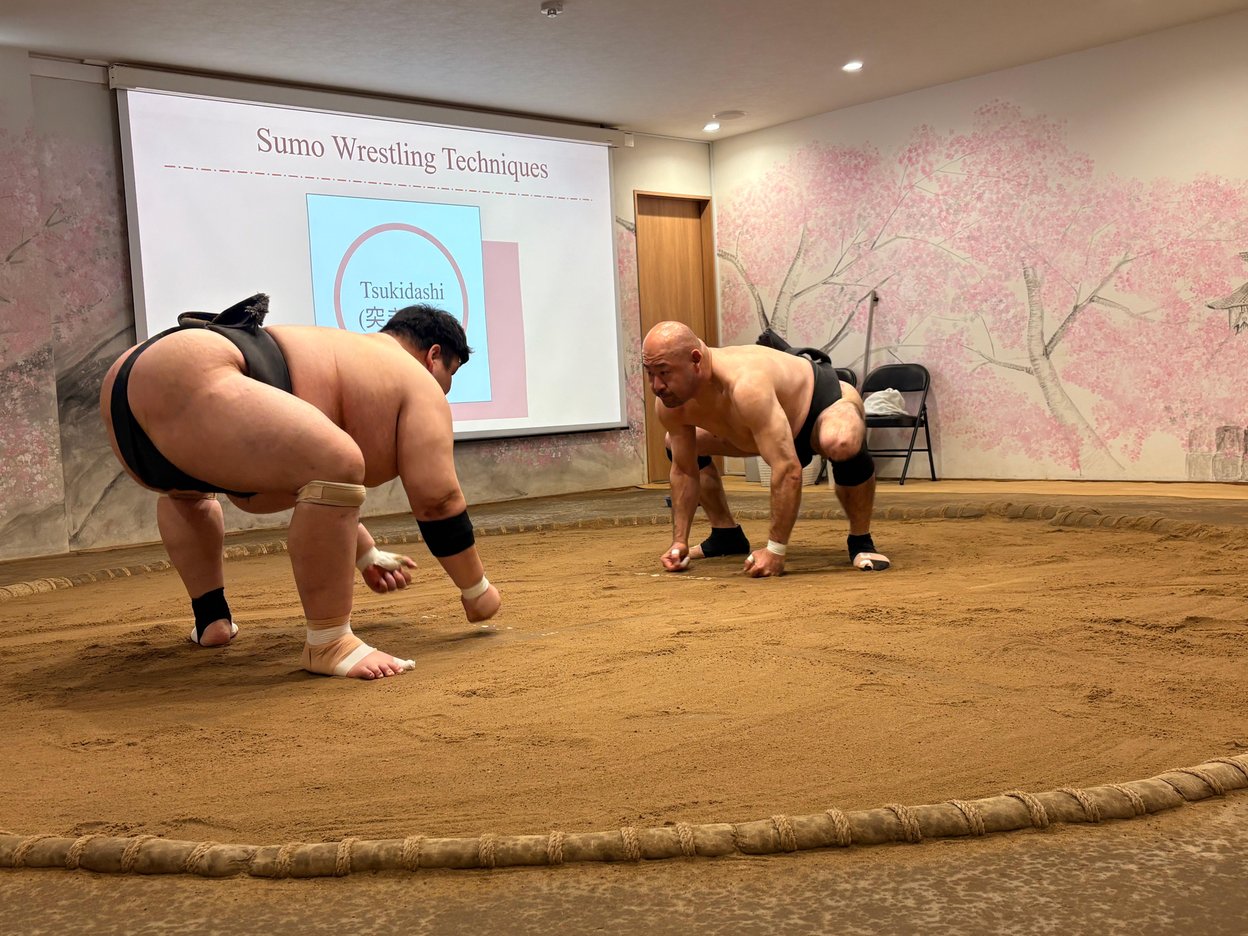
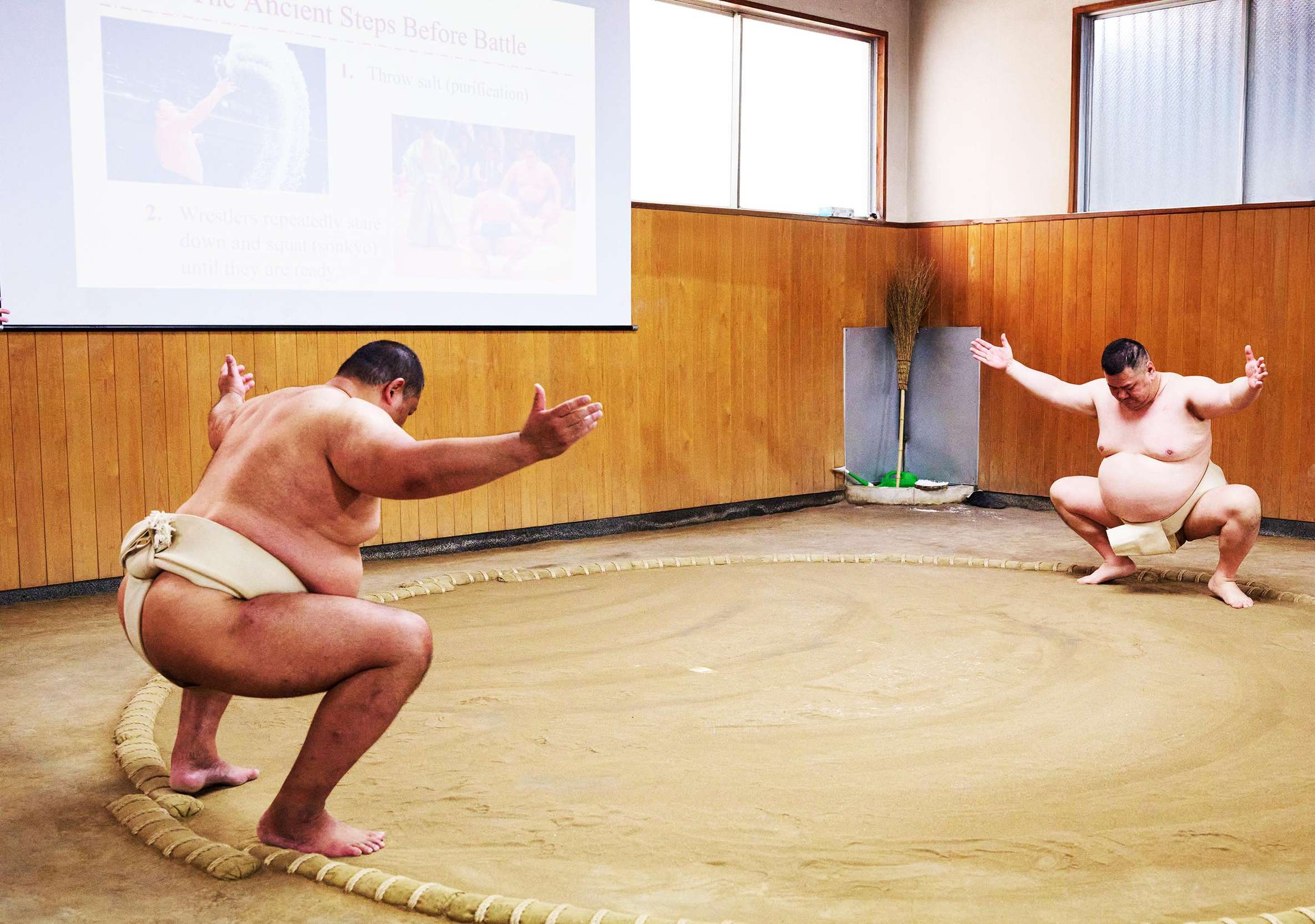
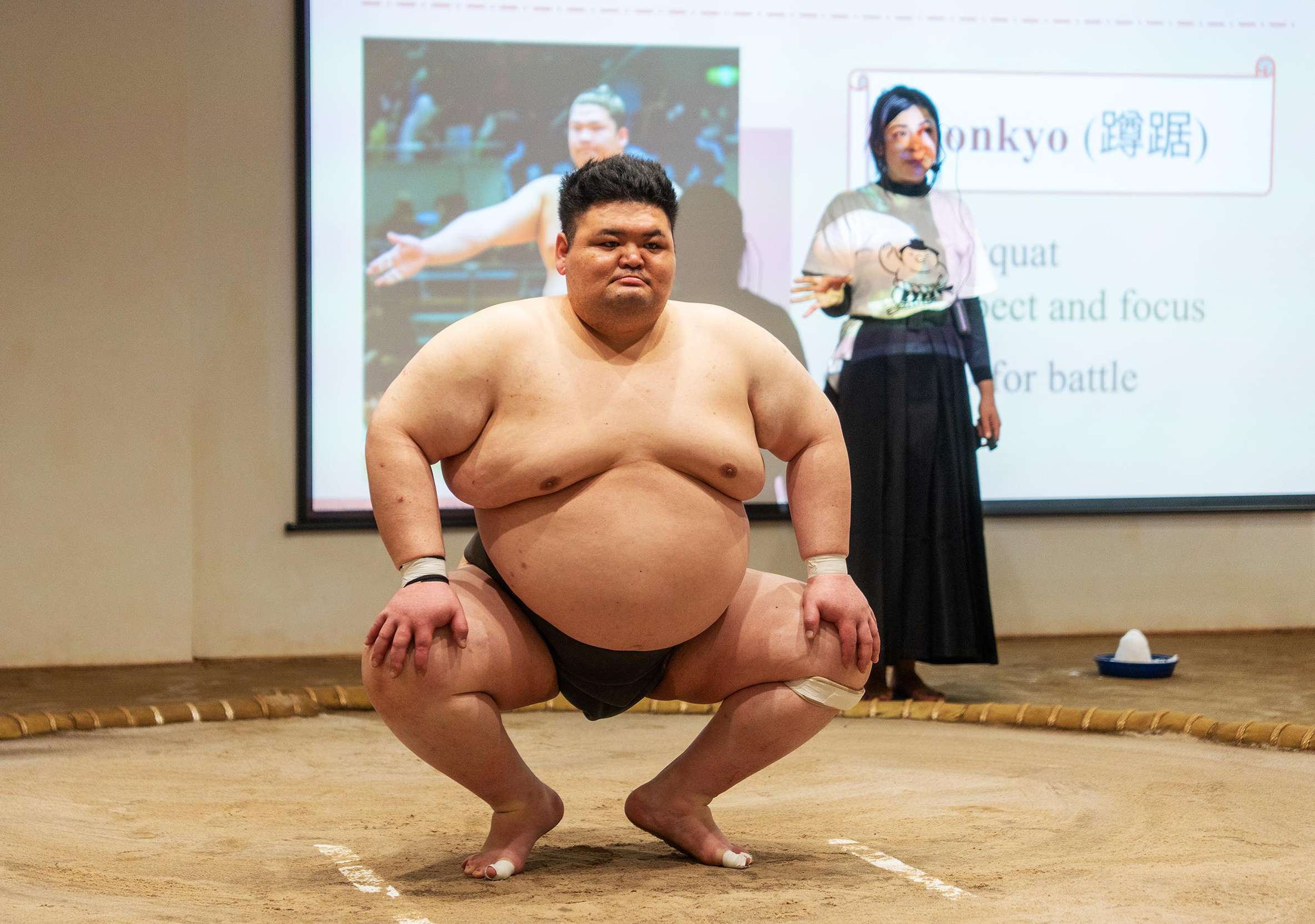
1MC and sumo background· about 30 minA warm-up of sorts: the English-speaking MC explains sumo's history, rituals and rules, including the salt thrown before each bout to purify the ring.2Training demonstration· about 20 minThe retired wrestlers show authentic training routines and demonstrate famous techniques (kimarite) up close, at a pace made easy for newcomers to follow.3The one-round match· about 15 minTwo retired wrestlers meet for a single bout. The speed and force come across clearly from the close-up seats this show uses.4Audience challenge· about 15 minSpots are limited, and you can opt out if you prefer to watch. Chosen guests step into the ring and try to push a wrestler, which usually draws the biggest laughs.
Included
Authentic sumo demonstrationsEnglish-speaking MCSingle bout sumo matchTraining routinesOpportunity to face off against a sumo wrestler
Most reviewers praise the hosts and MCs, who explain sumo's history and rules with real energy.
Best surprise
Many travelers didn't expect to laugh so much at the audience challenge, even when they weren't chosen.
Most common wish
Several reviewers wished the actual wrestling lasted longer than the short demonstration bouts.
Booking a sumo show in Osaka, step by step
01
Pick your date and slot
Choose the day first, then the time. Shows run year-round, and Sumo Hall Hirakuza keeps same-day online booking open until 3 pm, selling leftover seats at the door after that. Reservations open about three months ahead.
Pro tipThe show usually fills early only for the front-row seats, so if you are happy in standard seating you can often book the day before and still get in
RecommendedAim for an evening slot after sightseeing, then plan a short stroll around Nakanoshima or Hōzen-ji before you head in
02
Choose the right option
Read what each option includes before you click. Some plans are show only, some add a bento or snack bag and a drink, and the front-row seats put you about 30 chairs from the ring, close enough to high-five the wrestlers.
Pro tipStandard seating sits on a slope with a clear view over the whole ring, and many travelers find it the sensible pick; pay extra only if sitting right at the clay matters to you
ImportantIf you want to face a wrestler in the ring, know that challenge spots are limited and at some venues guests are drawn by lottery, so arrive by the printed start time to enter
03
Check the cancellation terms
Look at the cancellation line on the card before paying. Many Osaka sumo tours allow a full refund up to 24 hours in advance, while others are non-refundable from the moment you book, so pick the one that fits a loose itinerary.
Common mistakeFirst-timers book a non-refundable plan on the first day of a trip where plans could still shift; the 24-hour refund tours forgive a change of mind
Pro tipAfter payment your confirmation and voucher arrive by email, so skim the operator's notes there, because arrival instructions and door-opening times hide in them
04
Get there early on the day
Plan to arrive 15 to 20 minutes before the printed time. Sumo Hall Hirakuza sits on the 8th floor of Namba Parks above Namba station, a 3-minute walk from the Nankai Namba gate; inside, take elevator No. 3 to the 8th floor.
Common mistakeWalking in at the exact start time leaves you hunting for seats while the lights go down, and Osaka shows can start a little after the printed time anyway
RecommendedLeave bulky bags at home or use the luggage storage some venues offer, and wear shoes you can slip off, since some seat types ask for it
What to know before you book a sumo show in Osaka
Can stop the dayGood to knowGood news
01
ChoosingWhat it is, who it suits, when to go
3
What it is
Osaka's year-round sumo shows are entertainment performed by retired professional wrestlers. The matches are choreographed, so nobody fights for a ranking, and the atmosphere stays light. Go in expecting a fun family outing with real technique on display and you will leave happy.
Seating
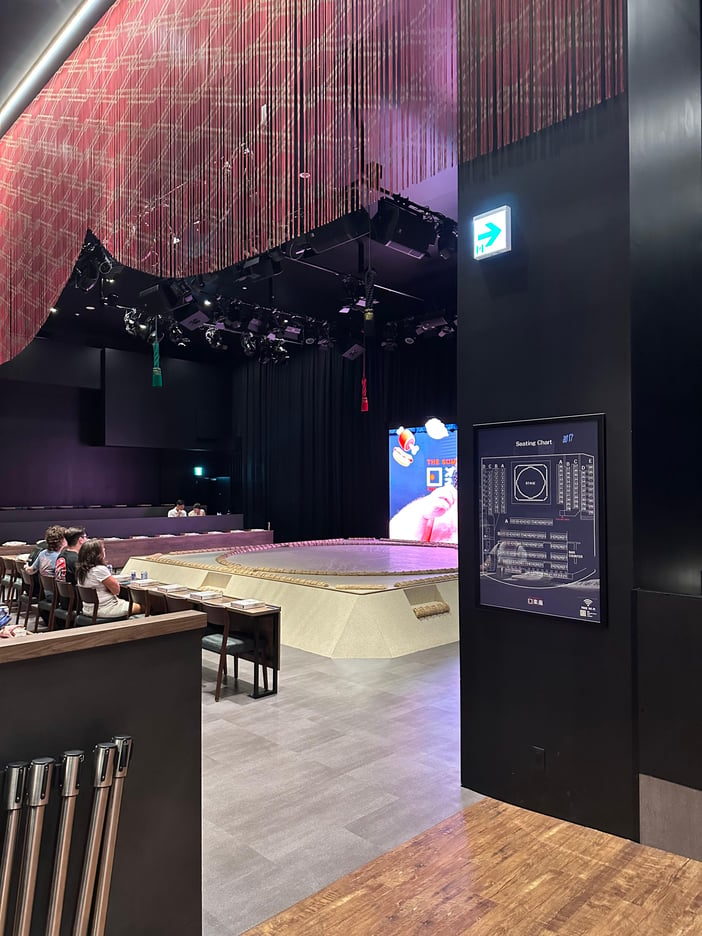
Seats close to the ring give the best view. At Sumo Hall Hirakuza, premium front-row seating is about 30 seats around a life-sized ring, close enough to high-five the wrestlers as they pass. Standard seats sit on a slope with a clear view of the whole hall.
Food and drink
Meals depend on the show. Sumo Hall Hirakuza includes a food box or snack bag and a drink, while the wagyu sukiyaki show near the city serves dinner with a halal option. Eat beforehand if you want to watch every bout, since lighting dims during the performance.
02
BookingHow far ahead, and what happens if plans change
1
Cancellation
Most of these shows can be cancelled up to 24 hours in advance for a full refund, which leaves room to change your Osaka plans. Check the booking terms before you pay, since a few venues sell non-refundable tickets.
03
Before you goPapers, health, what to bring
1
What to wear
There is no dress code. Comfortable, casual clothes work best, especially if you might put on a sumo suit over them for the challenge, and easy-to-remove shoes help at venues that take footwear at the door.
04
During the tourWhat is expected of you
3
English
The commentary runs in English. An MC explains the rules, rituals and history in plain language, and the ring challenge and high-fives need no Japanese at all, so you miss nothing if you speak none.
Taking part
The audience challenge is optional, and guests are free to stay in their seats. Spots are limited, and where too many people want to wrestle, participants may be picked by random draw, so joining is never guaranteed.
Etiquette
Keep your phone on silent during bouts, stay in your seat and never touch the ring, the wrestlers or the referee. Flash photography startles the wrestlers, so keep it off, and leave throwing cushions to nobody. Applause is welcome.
How to watch sumo in Osaka - a visitor's guide
Grand sumo touches Osaka for two weeks in March, and live shows with retired wrestlers fill every other month of the year. Which one your dates allow, and how to book the seat that suits it, is what this evening is about.
Osaka
If you only remember three things
1
Sumo shows run every month in Osaka, but a handful of days each month are dark, so check the venue calendar before fixing your evening.
2
Arrive 15 to 20 minutes before the printed start time, because a rushed seat search is the one thing that can sour the night.
3
Book same-day without stress: online booking stays open until 3 pm, with leftover seats sold at the hall from 3 pm.
Is a sumo show in Osaka actually worth your evening?
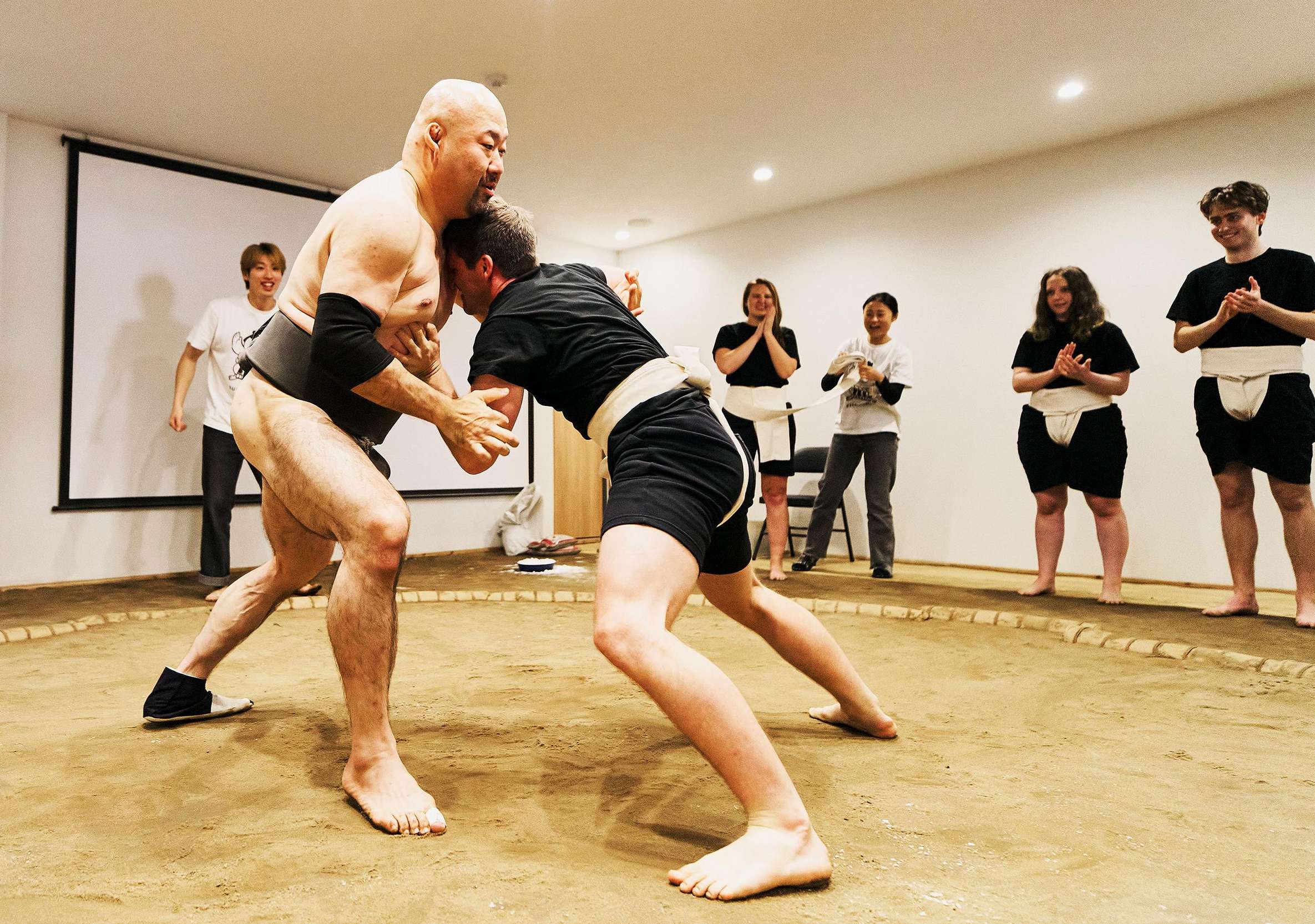
Six hundred pounds of former professional wrestler stands in the clay ring, claps twice, and invites someone from the audience to try their luck. That is the finale most Osaka shows build toward, and it is why people who booked casually end up calling the evening a highlight of the trip.
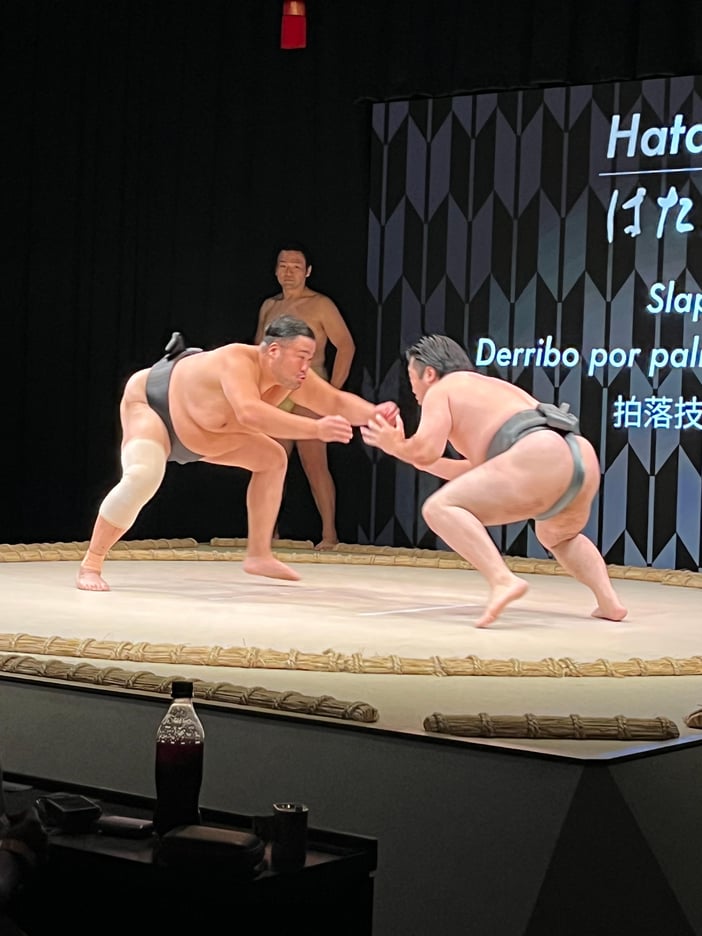
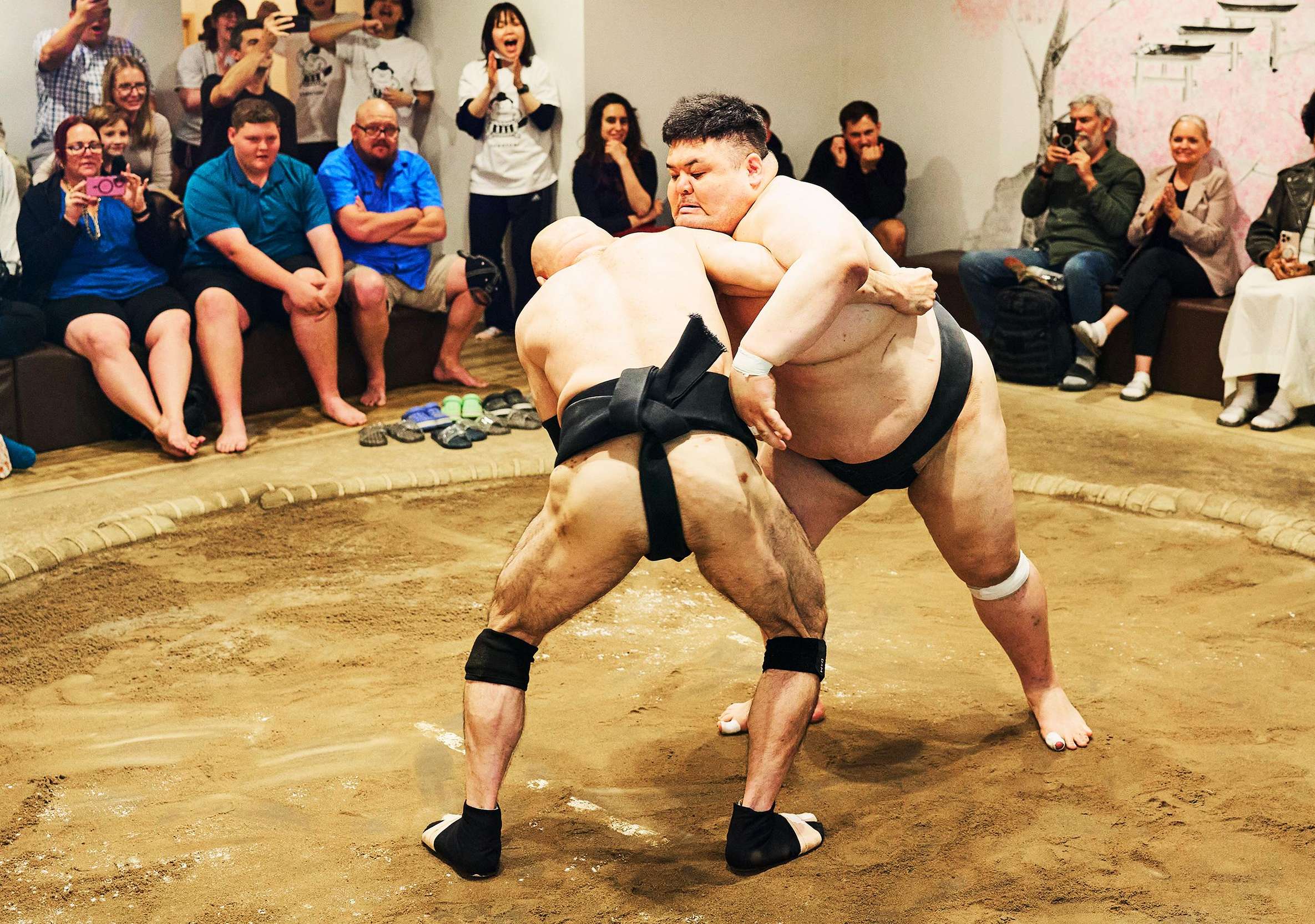
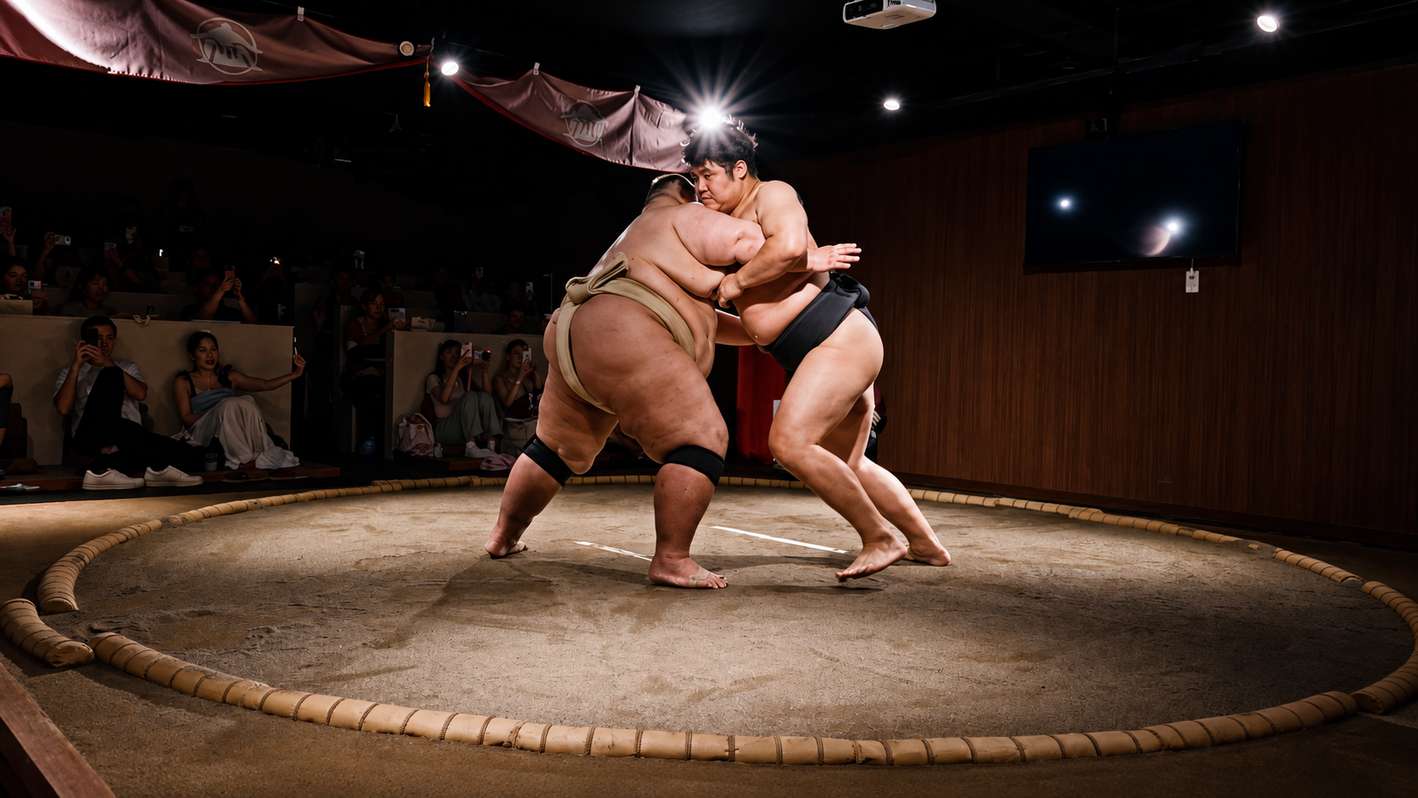
Know what you are buying before you pay. These shows are entertainment performed by retired wrestlers, and the matches are choreographed demonstrations. No rank is on the line. What you get is genuine technique from men who competed professionally, explained in plain English, from seats closer than any arena would ever put you.
Know who it suits. Families with school-age children, roughly the 10-to-12 crowd, are the core audience, and solo travelers are very welcome. First-timers who couldn't get tournament tickets call it a fun substitute, best done once.
If you already know sumo well, the long educational opening can drag, and you'll be waiting for the wrestling that fills only the last stretch of the show.
What people wrongly assume
MythA sumo show is a real contest with stakes
Reality
The matches are choreographed demonstrations by retired wrestlers, so no result is at stake
MythIt's a watered-down tourist trap not worth paying for
Reality
Former professionals show genuine technique up close, and most visitors leave impressed by the physicality
MythYou need to know sumo already to enjoy it
Reality
The host explains rules and history in plain English before any wrestling starts
Set the expectation once and the evening rewards it: laughs, learning, and a wrestler standing an arm's length away.
Tour for this
Osaka: Sumo Experience with Live Show & Audience Challenge4.9★ (2,124) · 1 - 1.5 hours · Free cancellation
The venue is the smallest of the tournament cities in a huge city, which makes the March basho the most competitive ticket hunt in the country. Travelers who have chased those seats compare the demand to Ghibli park tickets.
A tournament day runs long: lower-division matches from 8:30 am, second-division bouts from 3 pm, and the top-division wrestlers only just before 6 pm.
The Osaka crowd is famously livelier than Tokyo's, with cushions flying after a big upset. But a result that matters is the only thing a tournament sells, and the seats go in minutes.
Sumo practice and tournaments through the year
April: 5 out of 5 for how busy it gets. Very busy with travelers, and hard pre-tournament training is on show until practice tours wind down.
HighestMar to May, Oct
In betweenJun to Sep, Nov
LowestDec to Feb
Darker: a higher how busy it gets score, out of 5
Tap a month to read it.
February: 5 out of 5 for tournament or practice season. With no tournament, February is one of the best months for full, intense morning practice, and it is also the quietest month on the tours.
HighestFeb, Jun, Oct
In betweenApr, Nov to Dec
LowestJan, Mar, May, Jul, Sep
Darker: a higher tournament or practice season score, out of 5
Tap a month to read it.
Outside the March run-up, morning practice in Osaka is largely unavailable, which is why dinner shows dominate the local sumo scene year-round.
The show at Sumo Hall Hirakuza runs in the evening, roughly 5 to 7 pm, with a bento or snack and a drink built in, and a lottery where guests in sumo suits can challenge a wrestler in the ring.
Read the year this way: February, May and most odd-numbered months leave you shows and exhibitions, March brings the real thing if you can get in, and either way sumo in Osaka is watchable.
Tour for this
Osaka: Sumo Show with Bento or Snack at Sumo Hall Hirakuza4.4★ (553) · 2 hours
What happens at an Osaka Sumo Show, from salt to final bout
The show opens quietly, with the host walking you through wrestlers' lives, the stretches they do, the rules and the rituals. This is the part first-timers actually thank the show for: you learn enough to read the ring before anyone throws a thing.
It runs long, roughly half the performance, and it is why you leave knowing more about sumo than you arrived with.
Then the ritual. A wrestler takes a fistful of salt and hurls it across the clay, an act of purification borrowed from Shinto practice, meant to drive ill fortune and injury from the sacred ring. It also does the ordinary work of disinfecting scrapes.
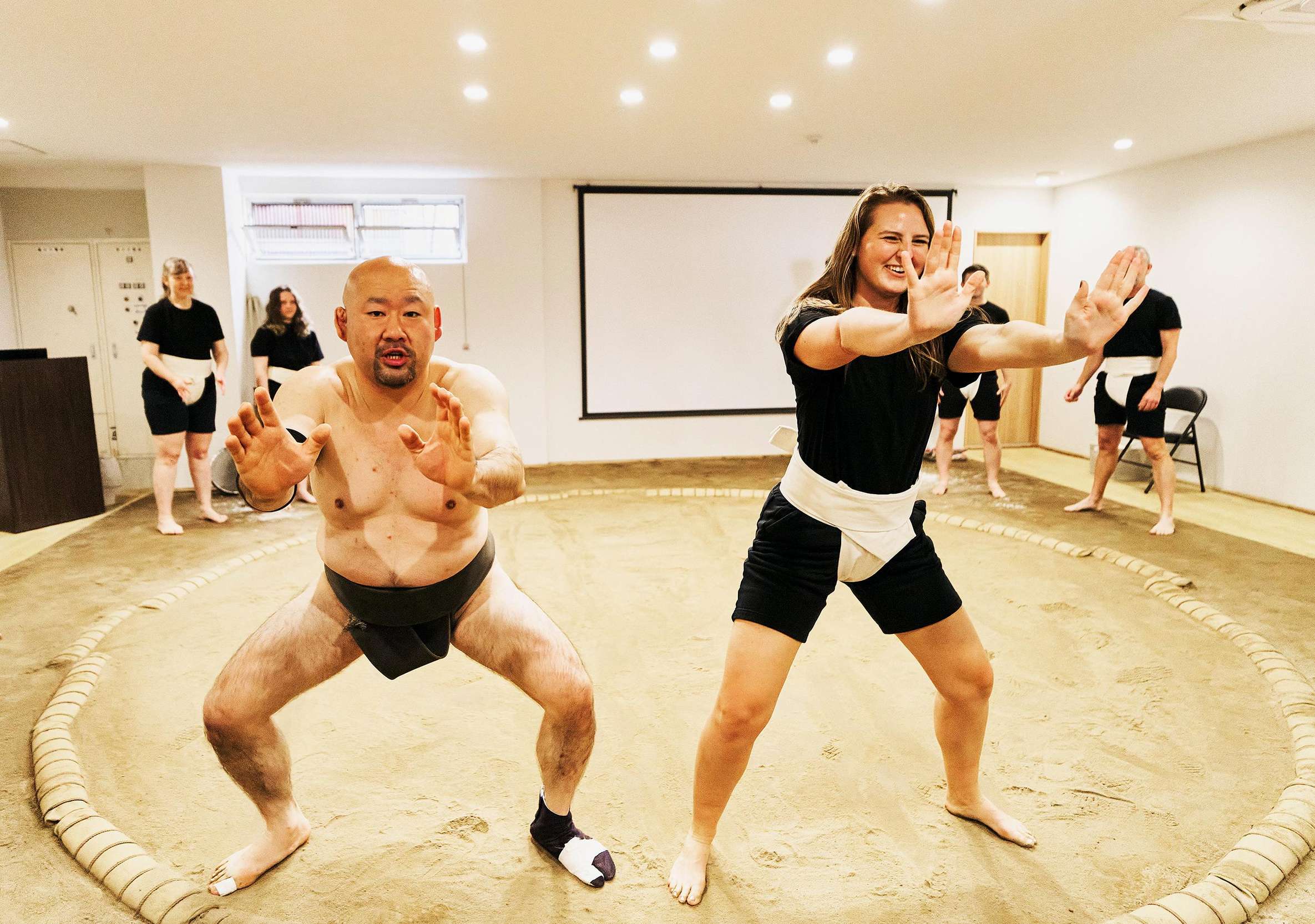
Training demonstrations follow, with stances and winning techniques shown up close. Only then come the matches, usually filling the last 15 to 30 minutes. If you came purely for wrestling, hold on; everything before it is the build.
How the show unfolds
1
Opening section
Wrestlers' lives, stretches and rules explained
Usually the longest part of the performance
2
Rituals and demonstrations
Salt thrown to purify the ring, techniques shown
Salt keeps a Shinto custom of purification
3
Live matches
The bouts you came for
Often only the last 15 to 30 minutes
4
Finale
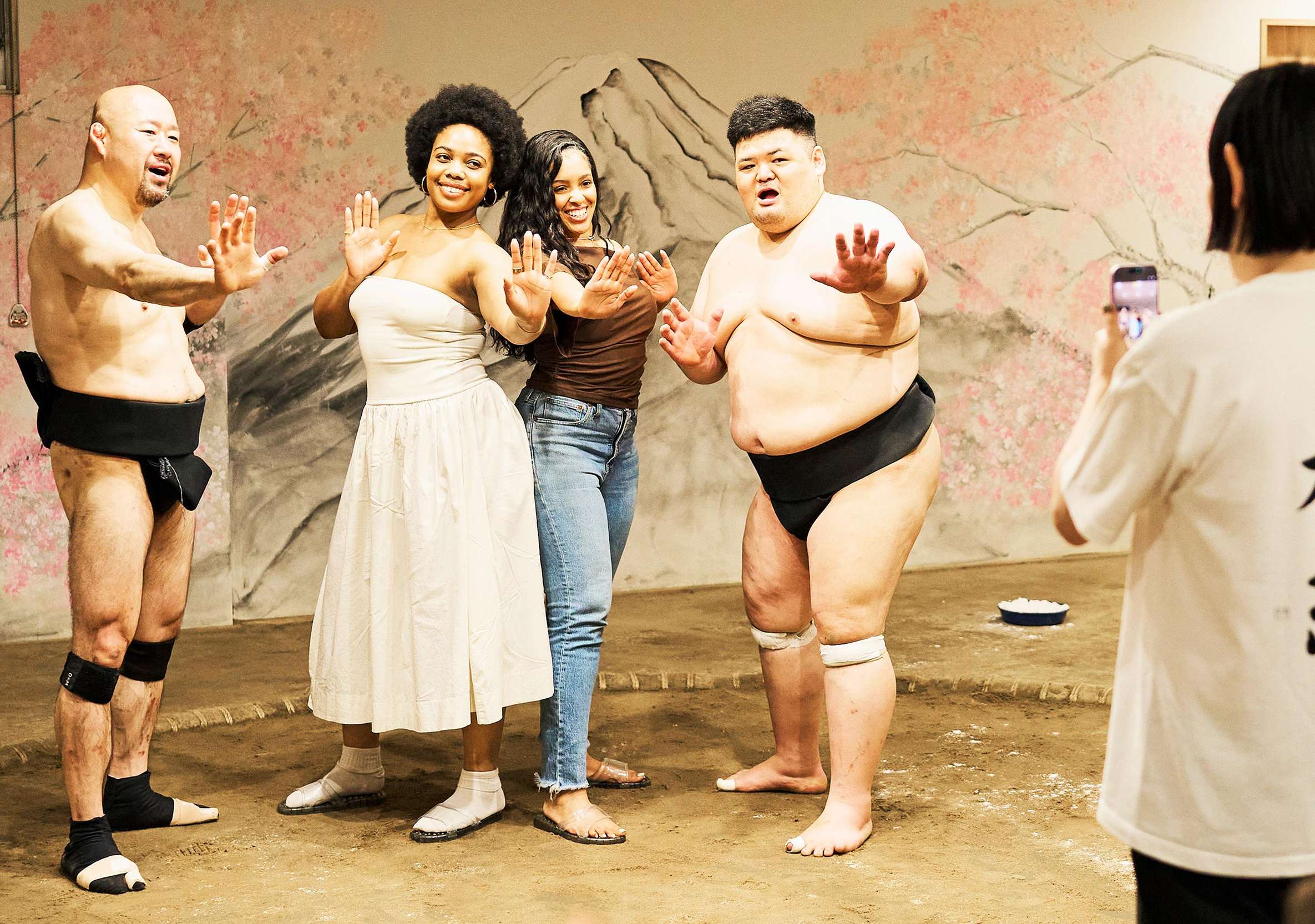
Audience challenge and photos
The part people remember
Nothing depends on Japanese. The Hirakuza show runs entirely in English, other Osaka shows use an English-speaking MC, and you can high-five wrestlers as they pass without a word.
Tour for this
Osaka Sumo Show with Front-Row Seating & Wagyu Sukiyaki4.7★ (45) · 2.5 hours · Free cancellation
Joining in is always optional. Guests are free to choose whether to try warm-ups or wrestling, and plenty stay seated and cheer. But understand what you're weighing, because the challenge is the part most likely to produce laughs and lasting memories, even for those who only watch.
How it works depends on the show. At the Osaka Sumo Experience, you can face off against a wrestler, with limited spots available.
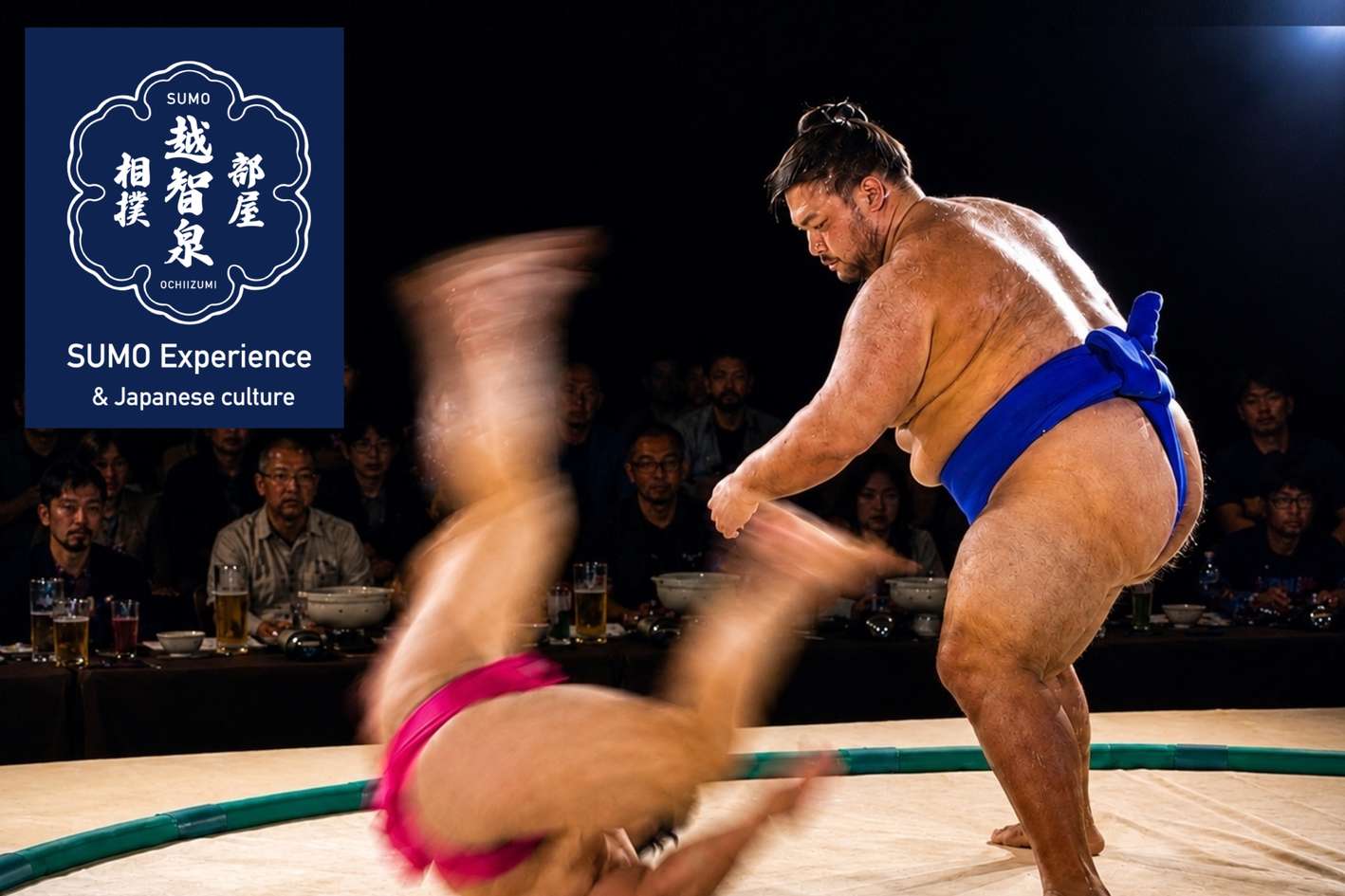
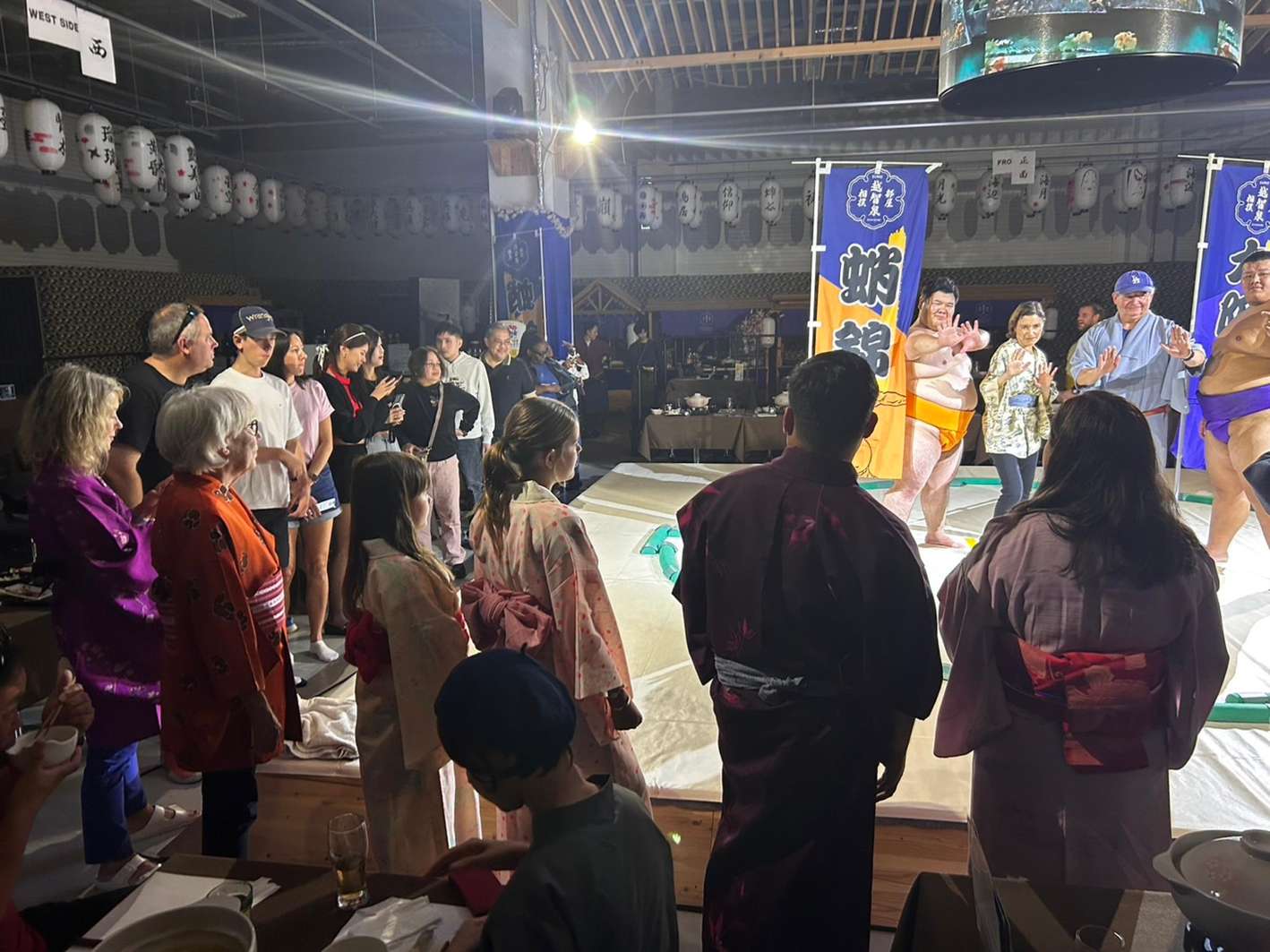
At Ochiizumibeya, guests do ring training drills and one-on-one bouts with a former rikishi, assigned by random selection when more people want to fight than the ring allows. At Hirakuza, a lottery picks challengers, who put on a sumo suit first.
What nobody tells you
The challenge is the funniest part even for spectators
Watching someone push a wrestler who won't budge gets the loudest laughs of the night
Challengers can't actually move the wrestler
Being invited into the ring for the finale is memorable anyway
Nothing depends on speaking Japanese
The host explains everything in English, and high-fives need no words
Volunteering is worth it even though the odds of budging a professional are zero, because the fun is in trying. One caution from the people who run it: physical activity carries a small risk of injury, so join at a level that suits you.
The alternative is a front-row seat where wrestlers high-five you as they pass, which costs you nothing but sitting close.
Tour for this
Osaka: Sumo Experience with Live Show & Audience Challenge4.9★ (1,793) · 1 - 1.5 hours · Free cancellation
Osaka Sumo shows with food, from snacks to wagyu dinner
Food decides the shape of your evening, so pick the format before the seat.
At Sumo Hall Hirakuza, the show ticket comes with a standard food box or a snack bag and one drink; the workshop option swaps in a bowl of chanko nabe, the hot pot wrestlers eat to build their bodies.
Chicken simmered with napa cabbage, carrots and fried tofu in a rich broth, it became sumo's staple because a big pot feeds many hungry men after training. In tournament season it is made with chicken only, for luck: a wrestler should stay on two legs.
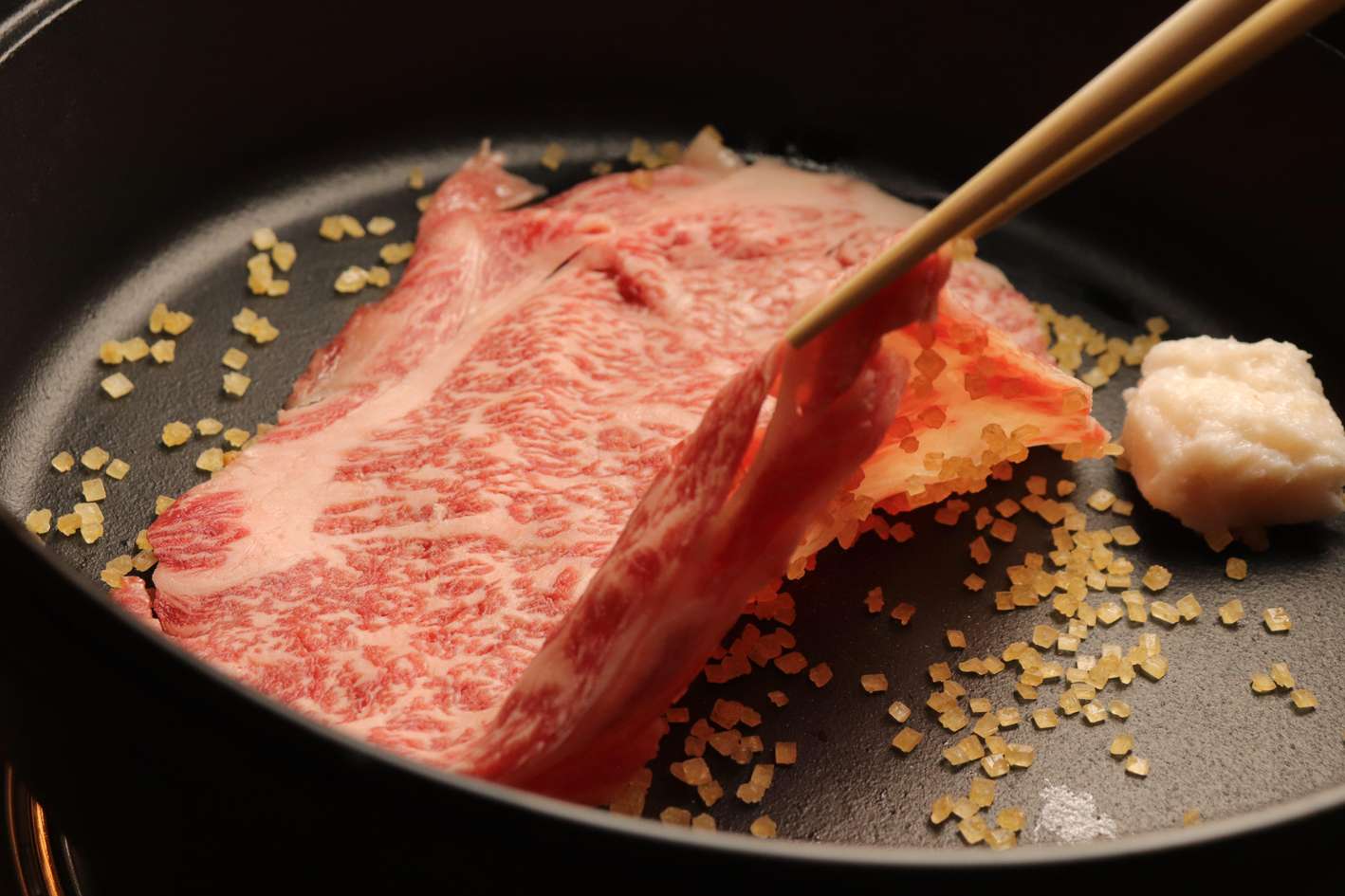
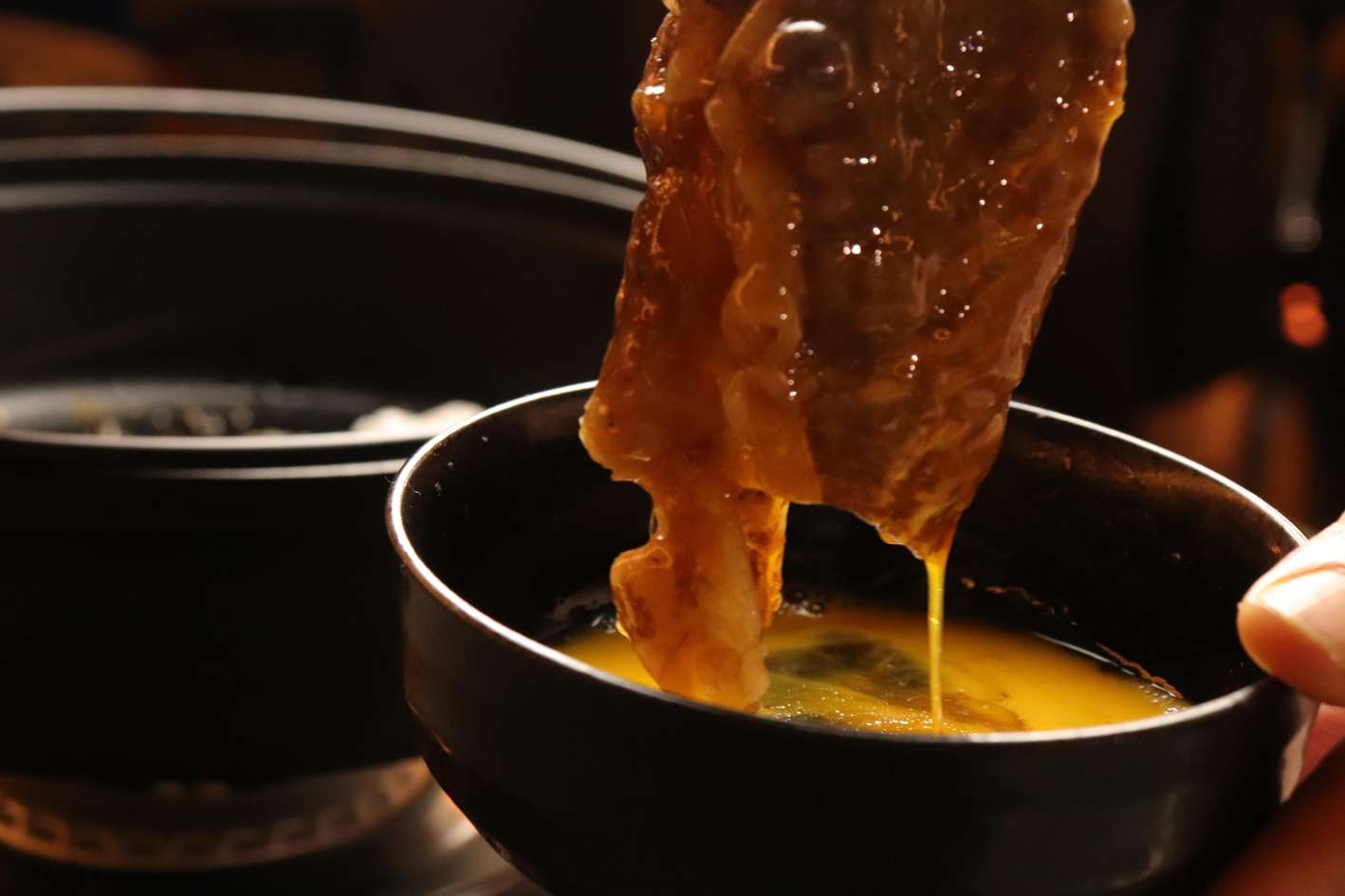
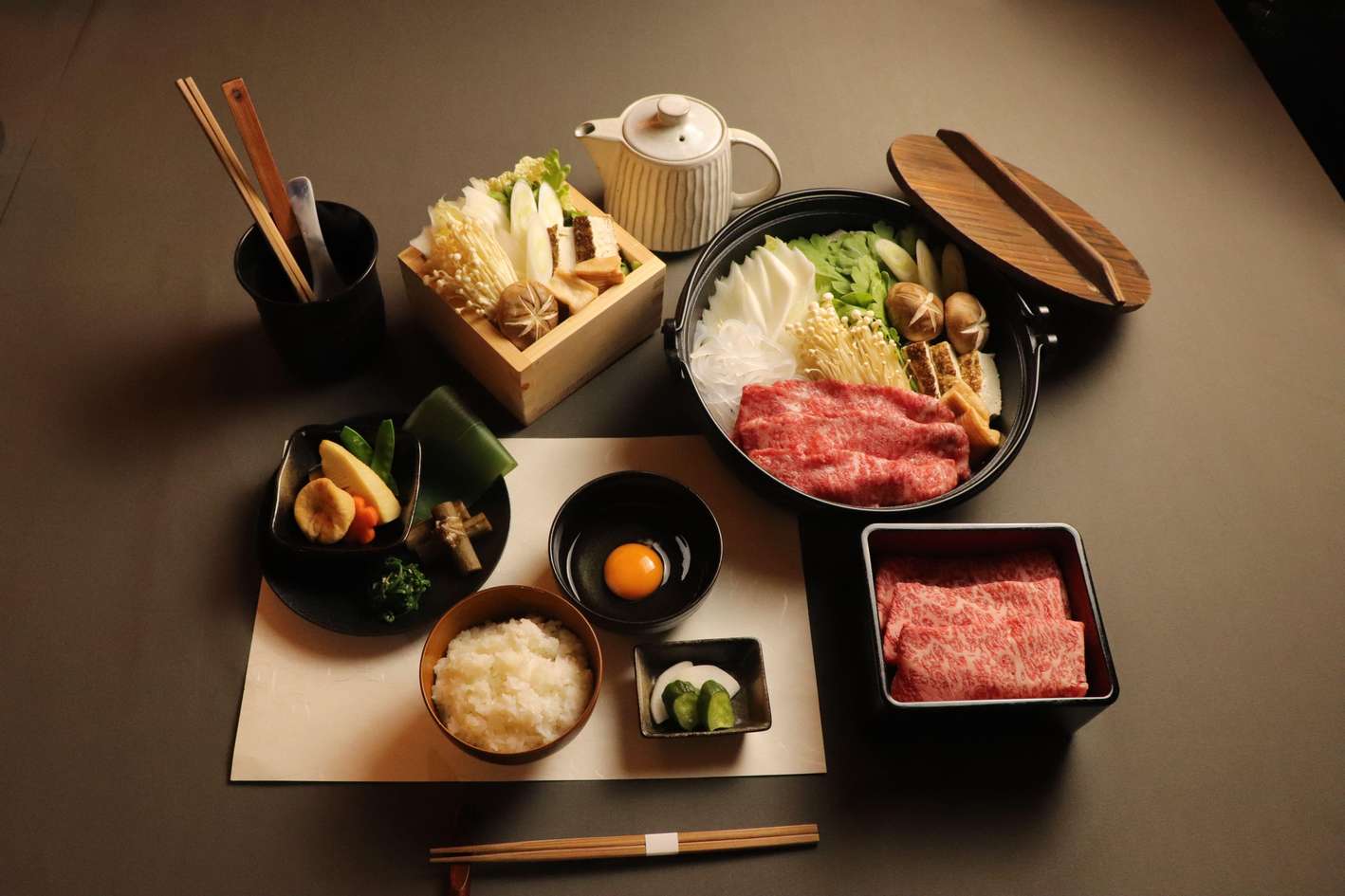
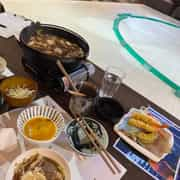
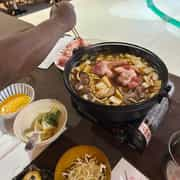
The other format is dinner as the show. At Ochiizumibeya, the included meal is a Japanese Black Wagyu sukiyaki dinner, with a halal option available.
You can eat during the performance, though the lighting dims and eating beforehand is recommended if you want to watch without divided attention. Sukiyaki arrives as a shared pot per table, and you serve yourself into your own bowl.
Which food format suits you
Check
Why it matters
Our pick
Meal or snack
A snack keeps the outing light; a dinner makes it the evening
Full wagyu sukiyaki dinner, halal option available
Eating while watching
Dim lighting makes dining during bouts awkward
Arrive at door-open time to eat before the show
Drinks
Not always included
Sold on the day or as add-ons
Both formats work. The snack version suits an evening with dinner planned after; the sukiyaki version turns the whole 2.5 hours into the night out.
Tour for this
Osaka: Sumo Show with Bento or Snack at Sumo Hall Hirakuza4.4★ (534) · 2 hours
When to watch sumo in Osaka, and which days are dark
Shows in Osaka run every month of the year, so there is no wrong season, whether you land in April, February or October. What changes is the handful of dark days each month.
Hirakuza publishes a monthly calendar: October 2026 had none at all, while August 2026 had five and January 2027 has five, mostly Wednesdays. The dark days scatter through the month with no fixed weekly pattern, so the monthly calendar decides your evening.
Time the show against your dinner plans. Hirakuza runs a two-hour show, typically 5 to 7 pm. The other Osaka shows run shorter: one operator's live sumo portion is about 40 minutes inside a 1 to 1.5 hour visit, with a day show at 1 pm and an evening show at 6 pm.
The actual wrestling comes late in the running order, so plan for the full stretch of the show and give the hour after some slack.
One thing to confirm before you build the evening
The venue closes on irregular dark days each month Check the official performance calendar for your exact date, since some months have none and some have several
Add one buffer to the timing: shows can start noticeably later than the printed time, and the end can drift too. Arriving 15 to 20 minutes early protects your seat; padding the hour after protects your dinner reservation.
Best seats at an Osaka Sumo Show, and whether the front row pays
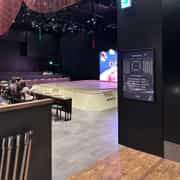
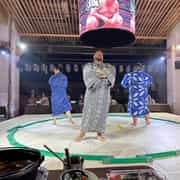
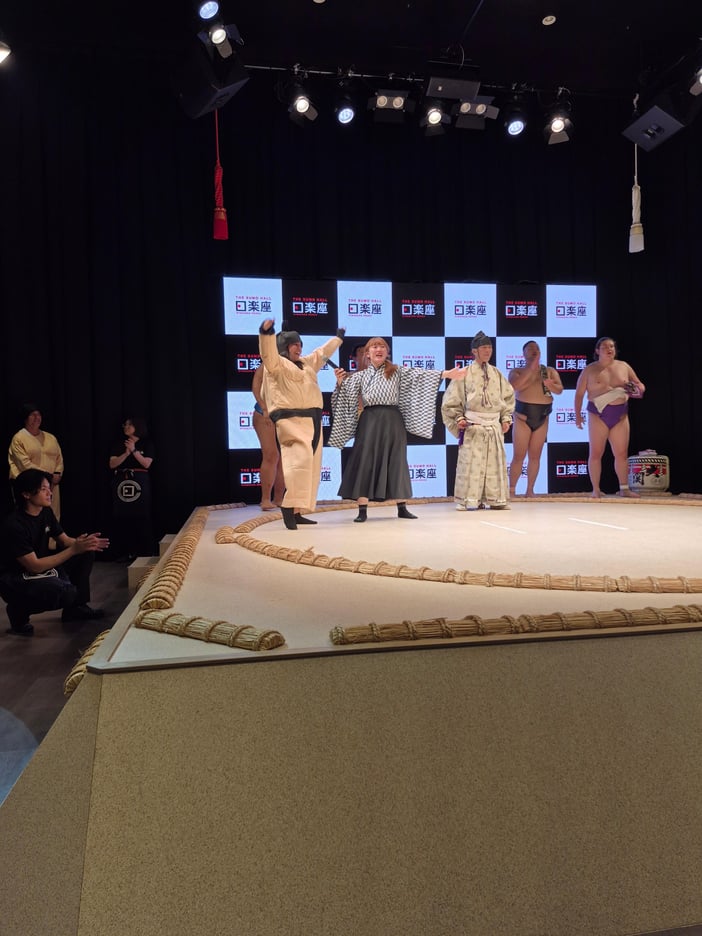
The hall is built around a life-sized ring stage, with about 180 seats arranged on a slope so every seat has a clear view. Knowing that changes the question: what you are choosing is how close the wrestlers get to you.
Seat types at Sumo Hall Hirakuza
Premium
Standard
Premium BL
Price logic
The upgrade
The rational default
Mid-tier box option
Seats
About 30, front row
About 140 seats, raised for a clear view
Sofa boxes for up to four
View
Close enough to high-five wrestlers
Clear view of the whole hall
Good view, roomier
Challenge perk
Standard participation
Standard participation
One person per seat can challenge
Premium
Price logic
The upgrade
Seats
About 30, front row
View
Close enough to high-five wrestlers
Challenge perk
Standard participation
Standard
Price logic
The rational default
Seats
About 140 seats, raised for a clear view
View
Clear view of the whole hall
Challenge perk
Standard participation
Premium BL
Price logic
Mid-tier box option
Seats
Sofa boxes for up to four
View
Good view, roomier
Challenge perk
One person per seat can challenge
The venue's own arithmetic says it plainly: standard seating is the sensible choice, and the premium upgrade earns its keep only if close-up detail matters strongly to you.
What the front row buys is the moment wrestlers slap your hand as they pass, and 12 of those 30 seats sit directly in front of the ring.
If you want the guaranteed close seat with dinner attached, the Osaka Sumo Show with Front-Row Seating & Wagyu Sukiyaki books every guest into the front row, about an hour from the city, with a roughly 40-minute live show and ring training drills included.
One practical note from regulars: box-style seating means cushions on the floor, so wear shoes you can slip off.
Tour for this
Osaka Sumo Show with Front-Row Seating & Wagyu Sukiyaki4.6★ (43) · 2.5 hours · Free cancellation
What to wear and how to behave at a sumo show in Osaka
Dress as you would for any indoor theater. There is no dress code, just comfortable casual clothes, because you may be pulled into a sumo suit over your outfit if you volunteer.
Swimwear and anything too revealing are out, and a hat that blocks the row behind is best left off. Some seating means removing shoes, so slip-on footwear earns its place.
RecommendedArrive 15 to 20 minutes before the printed time Shows can start slightly late and the end can drift; walking in at ticket time means a rushed seat search
In the hall, the rules are simple and mostly obvious. Phones on silent during bouts, no flash photography because it startles the wrestlers, filming allowed but videos capped at one minute, no live streaming.
Applause after a strong throw is encouraged; booing and thumbs-down gestures are not, and cheering against an opponent is discouraged. Stay in your seat during a bout, and if you are chosen for the challenge, follow the MC's instructions.
Bring your ticket confirmation, a payment card and your camera or phone. Outside food and drink, including bottles and cans, stay outside. The ring itself is sacred: never touch the dohyo, the wrestlers or the referee.
And women watch freely everywhere; in professional sumo only entering the ring is off limits, and at a show the challenge is open to whoever is picked.
The venue sits on the 8th floor of Namba Parks, 2-10-70 Namba-naka in Naniwa-ku, purpose-built with its lighting and sound systems wrapped around the ring. The signed path matters more than the map: inside Namba Parks, take elevator No. 3 to the 8th floor.
Getting to Sumo Hall Hirakuza from Namba and Umeda
From the Nankai Namba station gate it is about a 3-minute walk, the easiest arrival if you come from the airport side. From the Osaka Metro Namba station, allow 10 minutes on foot, because the station complex is vast and the 2 km figure you sometimes see across all Namba exits understates the signed route.
Coming from Umeda, the Midosuji Line gets you to Namba in about 8 minutes, then walk about 10 more. Driving the whole way runs about 15 minutes without traffic, and train access is the recommended option at the venue itself.
Two small practicalities once you're up there. The souvenir shop sits by the entrance, with a bar counter selling takoyaki and yakisoba if you want a pre-show snack.
And there are no toilets inside the hall; they are located outside the entrance to the right, so factor a minute for that before the lights go down.
Osaka is in western Japan on the main island of Honshu, about 500 km west of Tokyo, and all three of this page's sumo experiences take place in and around the city. The distance decides how much of your trip the sumo evening costs in travel.
Getting to the Osaka sumo venues from Tokyo and Kyoto
The train wins by hours. The Nozomi Shinkansen covers Tokyo to Shin-Osaka in 2 hours 21 minutes, with trains running from early morning to late evening, against a drive of more than six hours without traffic.
From Kyoto it is a short hop, 12 to 14 minutes on the same Tokaido line, so a Kyoto-based traveler can watch an Osaka sumo show without changing hotels.
Driving only makes sense for the short hops: about an hour from Kyoto without traffic, or just over an hour within the region for the venue near Tajiri. For anyone coming from Tokyo, take the train and use the saved hours on the Namba side of the evening.
The shinkansen's long operating window makes even a same-day round trip from Tokyo workable, though the shows run in the evening, so most visitors stay for an Osaka night. Book the train seat you want and let the show anchor the day.
Booking an Osaka Sumo Show ahead, or deciding at 2 pm
Same-day works more often than you'd expect. Hirakuza keeps online booking open until 3 pm on the day of the performance, then sells any remaining seats at the hall from 3 pm, so a walk-in plan is usually possible.
One traveler booked the day before and it worked out fine, and the hall runs many time slots, which keeps planning flexible.
Where early commitment matters is the premium front row. Reservations open about three months ahead of each performance month, and with only around 30 front-row seats in the hall, those are the ones that go first.
Book the close seats with dinner attached as soon as your dates are fixed. Standard seating can wait until the afternoon itself.
When your plans change
If this happens
What happens then
Cancel outside 24 hours
Full refund on most tours
Cancel inside 24 hours
No refund, but you may move to another slot or day if there is availability
Arrive late
You may join partway through but the show cannot be extended
Venue cancels a performance
Admission tickets are refunded
Accessibility needs need a longer lead: the hall has wheelchair spaces but few of them, so contact the venue as soon as you know you're coming, and expect some parts of the workshop program to be off limits. Everything else can wait until the day itself.
Filling the hours before and after a sumo show in Namba
A 5 pm show start leaves a whole afternoon, and the hall's address puts most of it within a short walk. Ikasuri Shrine is 5 minutes away, a quiet stop that costs almost no time. Utsubo Park is 10 minutes, green and unremarkable in the best way.
Walk 15 minutes and you reach Nakanoshima Park, where the riverfront makes a good stroll before the show, and three museums sit clustered on the island: the Museum of Oriental Ceramics, the Osaka Science Museum and the National Museum of Art, each about 15 minutes from the hall.
For something more traditional, Osaka Tenmangu shrine and Hozen-ji temple both sit within easy reach on the Namba side.
The practical shape of the evening looks like this. Day show at 1 pm? Museums and parks fill the evening instead. Evening show at 5? Shrine in the late afternoon, back to Namba Parks by elevator, then the riverfront or the arcade streets after 7 pm, when the show ends and dinner crowds are gathering.
Don't overplan the post-show hour, because the end time can drift slightly. Keep the after-dinner options close to the hall, and the whole evening holds together without a timetable.
A sumo show in Osaka is worth it if you want real technique from former professionals, explained in English and watched from meters away. Book the format first, food or no food, then decide between standard seats and the front row, and keep the calendar open for the odd dark day.
Go ifYou are in Osaka any month outside March, or you couldn't get tournament ticketsYou are traveling with school-age children or as a solo travelerYou want a front-row seat, wagyu sukiyaki and ring drills in one evening
Skip ifYou want ranked wrestlers fighting for a result that counts
Our pick to book
Osaka: Sumo Experience with Live Show & Audience Challenge4.9★ (2,124) · 1 - 1.5 hours · Free cancellation
Short answers to what visitors ask before booking a live sumo show in Osaka.
Is there sumo in Osaka, and can I watch it live?
Yes, sumo runs in Osaka all year. Year-round shows with retired professional wrestlers book in any month, and every March the city hosts one of the six Grand Sumo tournaments.
Outside March, a show is usually the only way to see live sumo wrestling in the city, since morning practice at Osaka stables is rarely open to visitors.
When is the Osaka grand sumo tournament?
Osaka hosts its tournament in March, over 15 days. It is also the toughest ticket in Japan, because the venue is the smallest in a large city and seats sell out fast. If your trip falls outside March, a sumo show is the practical way to watch sumo in Osaka.
Is the Osaka sumo show real wrestling?
The wrestlers are retired professionals, so the technique and throws are genuine. The matches themselves are choreographed demonstrations with no tournament result riding on them, and the shows open with explanations of sumo rules, rituals and history. Visitors who arrive knowing this come away impressed rather than disappointed.
Can I step into the ring and challenge a wrestler?
Yes, several Osaka shows let audience members face a wrestler in the ring, and guests are always free to stay seated instead. Spots are limited, and at some shows challengers are picked by lottery or random draw. The segment is often the funniest part of the evening and the one people remember.
Do the Osaka sumo shows come with food?
They do, and the spread varies by venue. At Sumo Hall Hirakuza you choose a bento or a snack bag with a drink; one operator nearby serves a wagyu sukiyaki dinner with your seat, with a halal option available. Check which food and drinks your booking includes before you go.
How long is a sumo show in Osaka?
Most run about two hours including the meal, while some performances last around 90 minutes. The wrestling itself usually takes up the final stretch of the show, after the history and demonstrations. Arrive 15 to 20 minutes early, because shows can start later than the time printed on your ticket.
Can children attend a sumo show in Osaka?
Families with children around 10 to 12 are a core audience, and the format keeps kids engaged. A few limits apply: Sumo Hall Hirakuza does not admit children aged 2 and under, and some venues give free entry to kids under 12. Check the age rules for the show you pick.
Do I need Japanese to follow an Osaka sumo show?
No. The shows run in English, with an MC explaining the rules, etiquette and history in plain language, and some venues also offer Japanese commentary. You miss nothing without Japanese, and the ring challenge and photos with the wrestlers work without a word.