- 1
The show runs about 2 hours with the meal, and the wrestling itself comes at the end, so arrive hungry and stay to the finish.
- 2
Cancel up to 24 hours ahead for a full refund; inside 24 hours you get no refund, only a possible move to another slot.
- 3
Vegetarian and vegan meals need reserving at least 2 days in advance; there are no gluten-free or halal meals, though you can bring your own food.
Why the chicken hot pot steals the show
Most reviewers call the show hilarious and engaging, with the wrestlers' humor and the lively crowd singling out night after night.
Many families did not expect to learn real sumo rules and moves, and several said their kids loved the ring challenge best.
A few reviewers wished there was more actual wrestling, since the bouts themselves last only minutes of the two hours.
 ★★★★★
Totally worth the money. Entertaining show, and I loved learning sumo traditions first.
Kelsea · Australia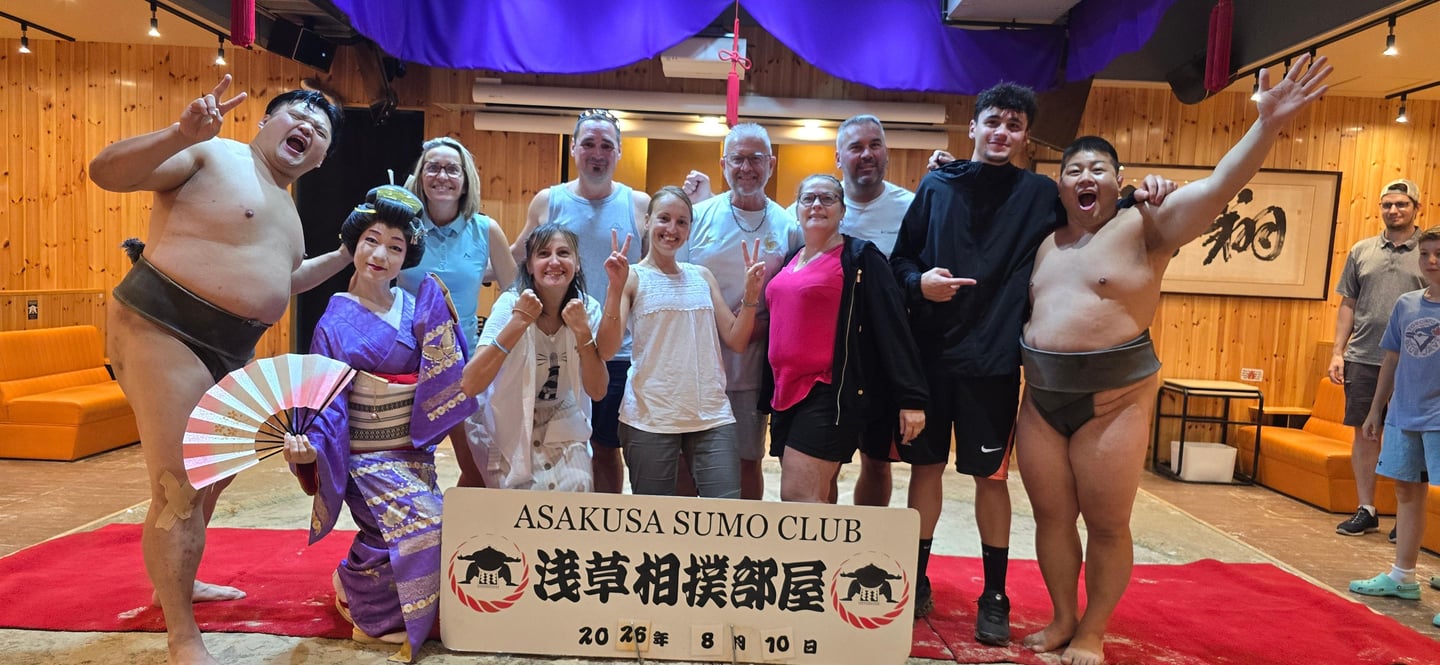 ★★★★★
Had a great time! The show was entertaining and engaging, mixing comedy with really interesting info about sumo wrestling.
Kaylee · United States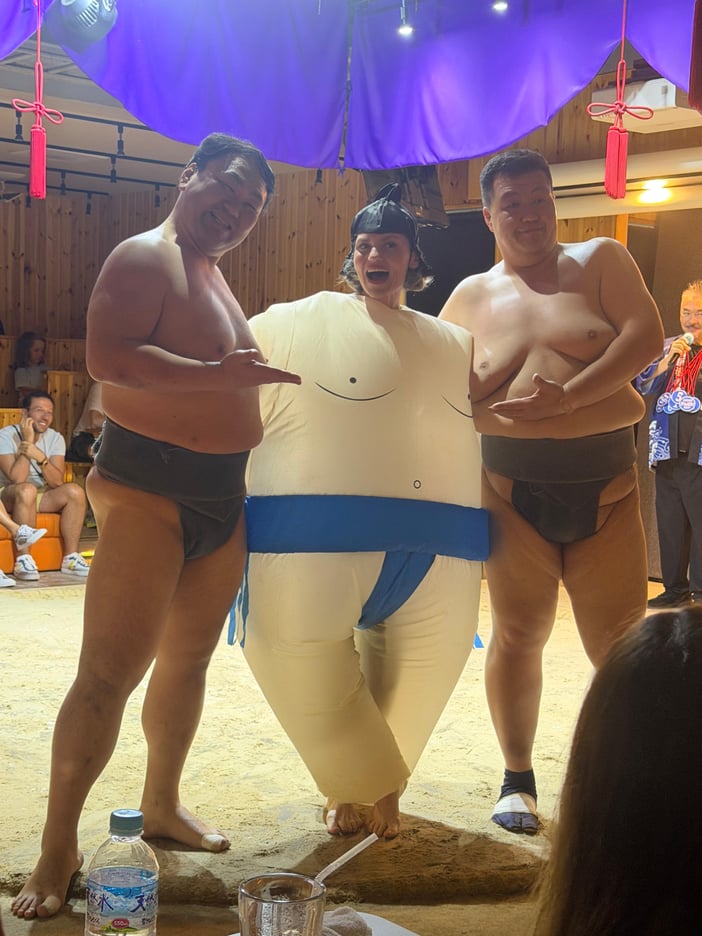 ★★★★★
Sooo much fun! Highly recommend if you're in Tokyo and want a fun night. Loved the all you can eat hotpot too!
Millie · United Kingdom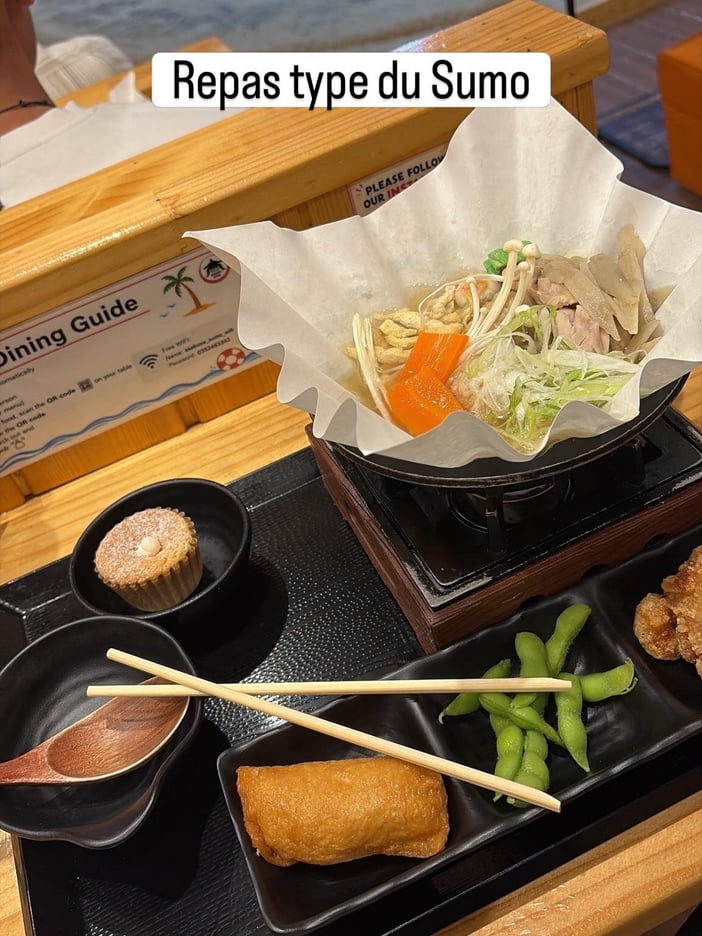 ★★★★★
Definitely a must do if you can't make it to a professional match! Great show with audience participation. Highly recommend.
A traveler · Australia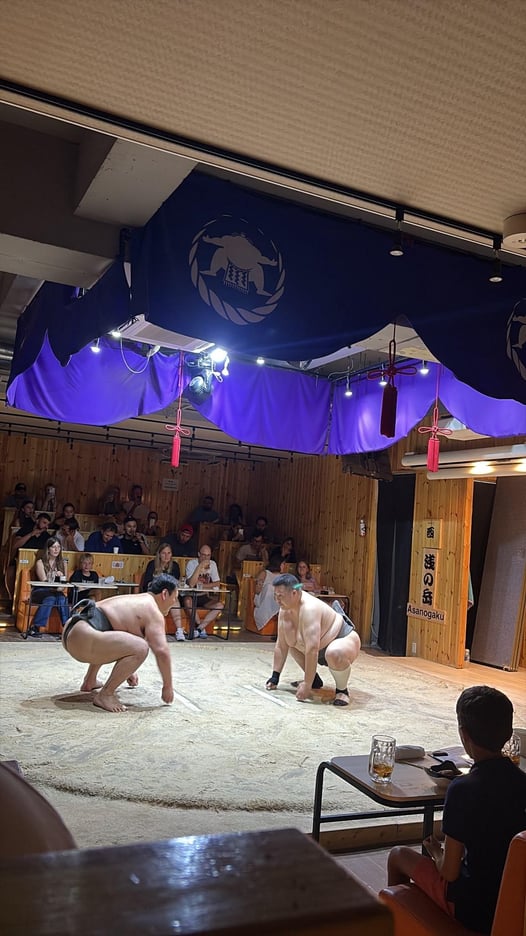 ★★★★★
Amazing interactive experience! Loads of laughs and good vibes all round. Arigato, we'll be back!
Mackenzie · United States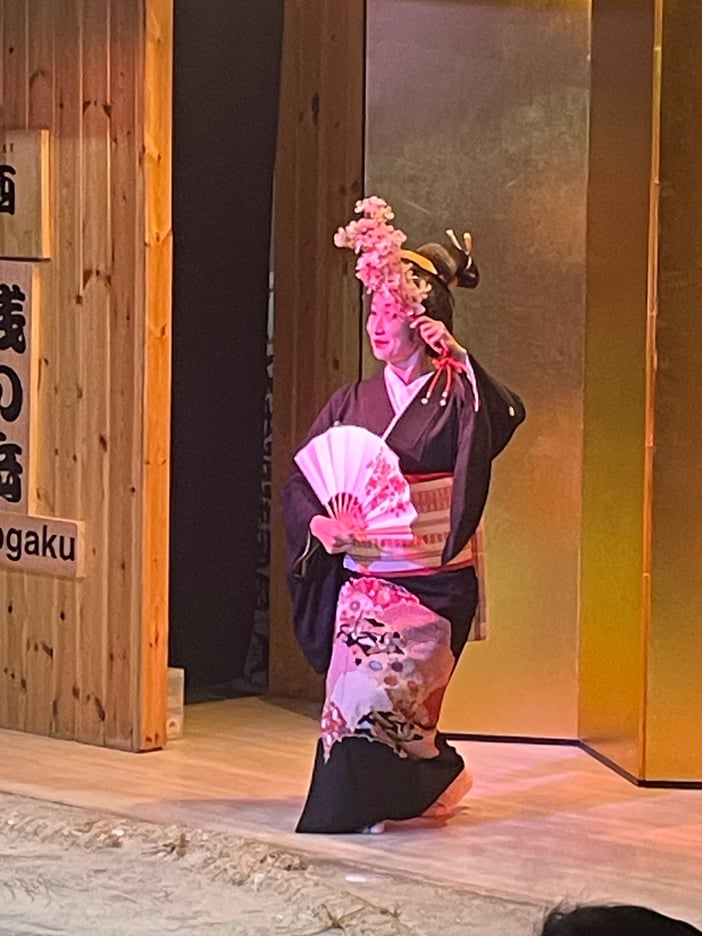 ★★★★★
Fantastic! A must! Super entertaining, and we learned loads about sumo rules, moves and traditions. Great demos, bouts, chance to wrestle, food and first drink included, plus a souvenir photo!
Leanne · United Kingdom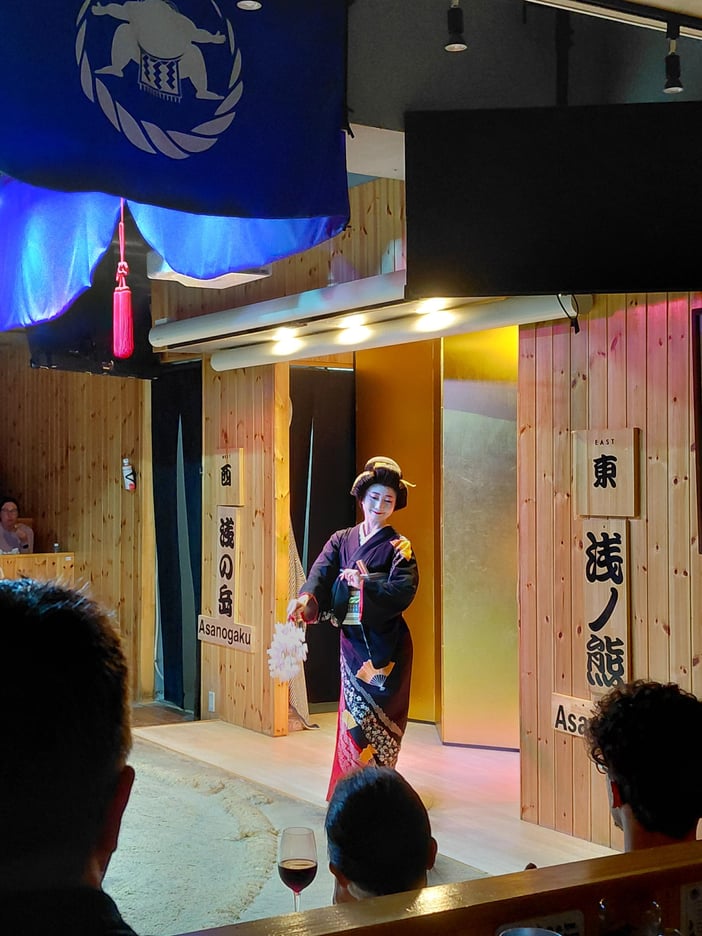 ★★★★★
Really fun experience if you want a sumo taste while in Japan and can't see a real tournament or morning practice. More show than fight. Trying the wrestling was the best part. Good drinks!
A traveler · Norway
Why a Tokyo sumo show is worth your evening
The doubt hits everyone who starts googling this: is a sumo show a tourist trap, a pantomime with men in diapers? Sit down at one of Tokyo's dinner shows and the answer is no.
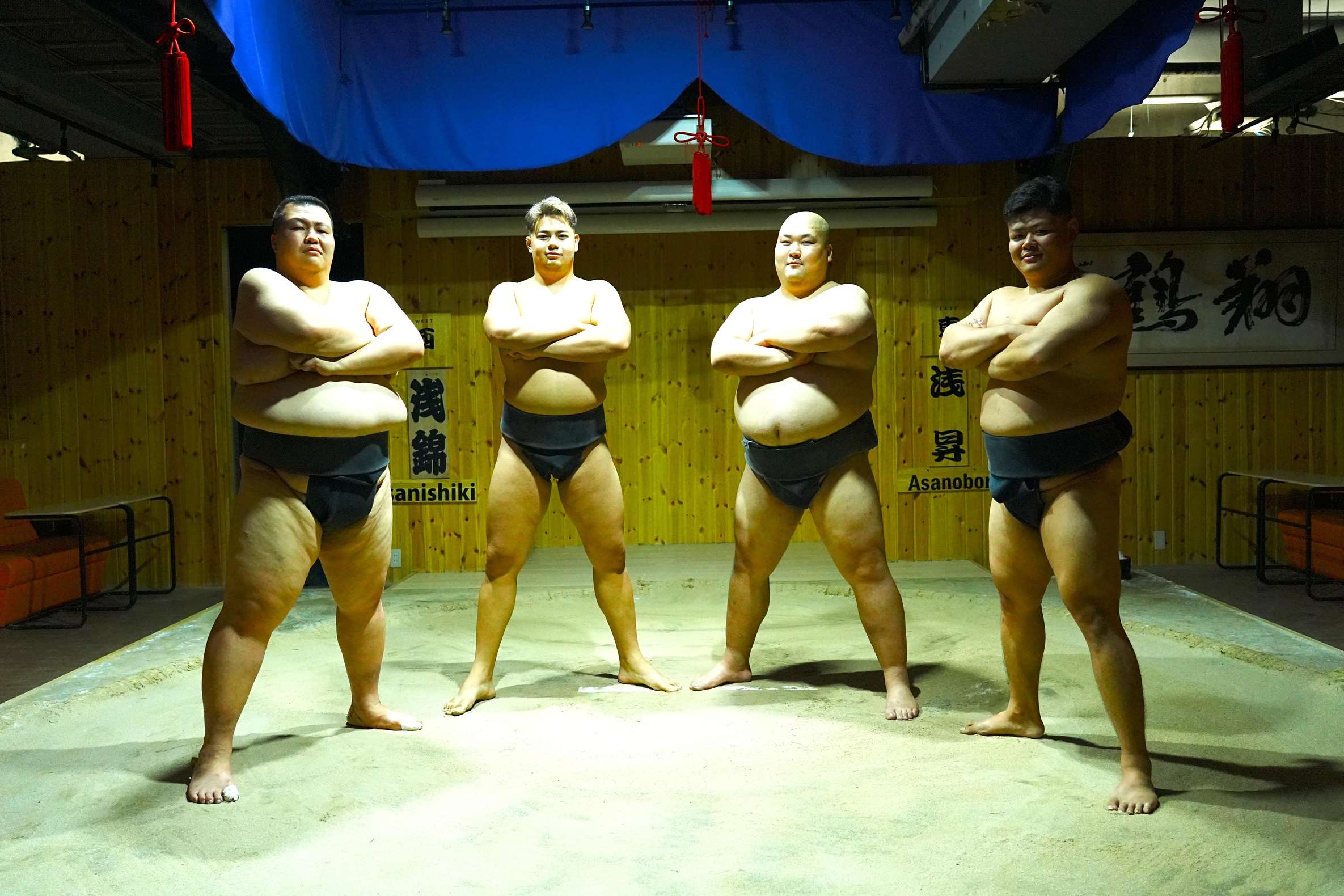
The wrestlers on the ring are retired professionals who competed in the Japan Sumo Association ranks, sometimes for well over a decade, and the technique they demonstrate is the same technique they trained with for a living.
What a show is not is a tournament. There is no ranking at stake, no tension of a honbasho, and the bout is often a best-of-three between two retired men who know the crowd.
Exhibition sumo is a genuine part of the sport's culture, and the format does something no tournament can: it puts wrestlers, explanation in English, a chance to step into the ring yourself and a hot pot dinner in a single evening.
If a real grand tournament happens to be on during your trip, experienced travelers say go to that. Tokyo hosts one only in January, May and September. Every other week of the year, a show is the option, and it runs year-round.
One evening that covers all of it is the Tokyo: Sumo Entertainment Show with Chicken Hot Pot & Geisha, which pairs the bouts with all-you-can-eat chanko nabe and a geisha dance.
Fantastic! A must! Super entertaining, and we learned loads about sumo rules, moves and traditions. Great demos, bouts, chance to wrestle, food and first drink included, plus a souvenir photo!
You can eat chanko nabe on your own in Ryogoku without booking anything. You get the food and nothing else. The dinner show is the only format that adds the wrestlers, the match and the history in English.

When to book a sumo show in Tokyo and how far ahead it sells out
Sumo shows in Tokyo run every day of the week, which makes the timing problem sound easier than it is.
The evening slots, especially around dinner hours, sell out first, and travelers who try to rebook closer to their trip date often find availability gone. Book well in advance for evening shows, particularly if your dates fall in the busy seasons.
The pattern across the year is clear. April and October are the busiest months for tours, with May close behind, and November shows the highest public interest in sumo even though Tokyo's own tournament ended in September. February and December are the quiet stretches, when a last-minute seat is a realistic ask.
April: 5 out of 5 for how busy it gets. This is one of the busiest months for tours, and public interest is moderate.
Tap a month to read it.
November: sightings 50,798 readers a month. Tour availability is moderate, but public interest in sumo is at its highest.
Tap a month to read it.
Same-day chances do exist, but they depend on which venue you pick. One operator sells same-day tickets online up until 30 minutes before the show, if seats remain, and another accepts same-day reservations made at least 3 hours ahead.
The Ginza venue takes online bookings on the day until 3 pm. None of that helps you if the evening slot is full, so same-day booking is the bonus and an early booking is the plan.
Individual venues also keep dark days. Some publish a monthly calendar with a handful of one-off closures while running daily the rest of the month, so glance at the calendar for your date before you build the evening around the show.
Showtimes shift between venues too: some run four sittings a day from late morning to 7:30 pm, others only lunch and evening.

Where the show takes place and how to get there
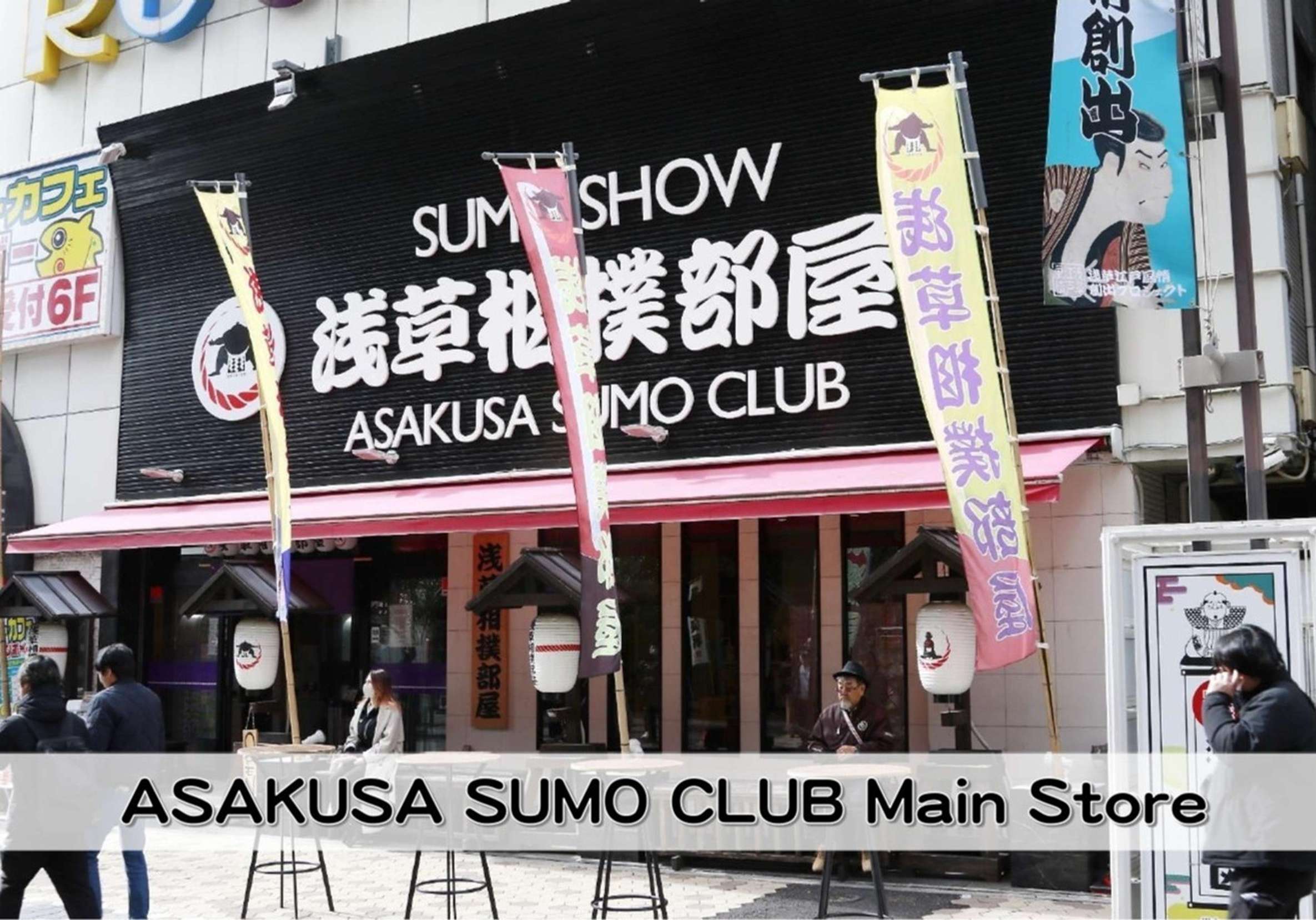
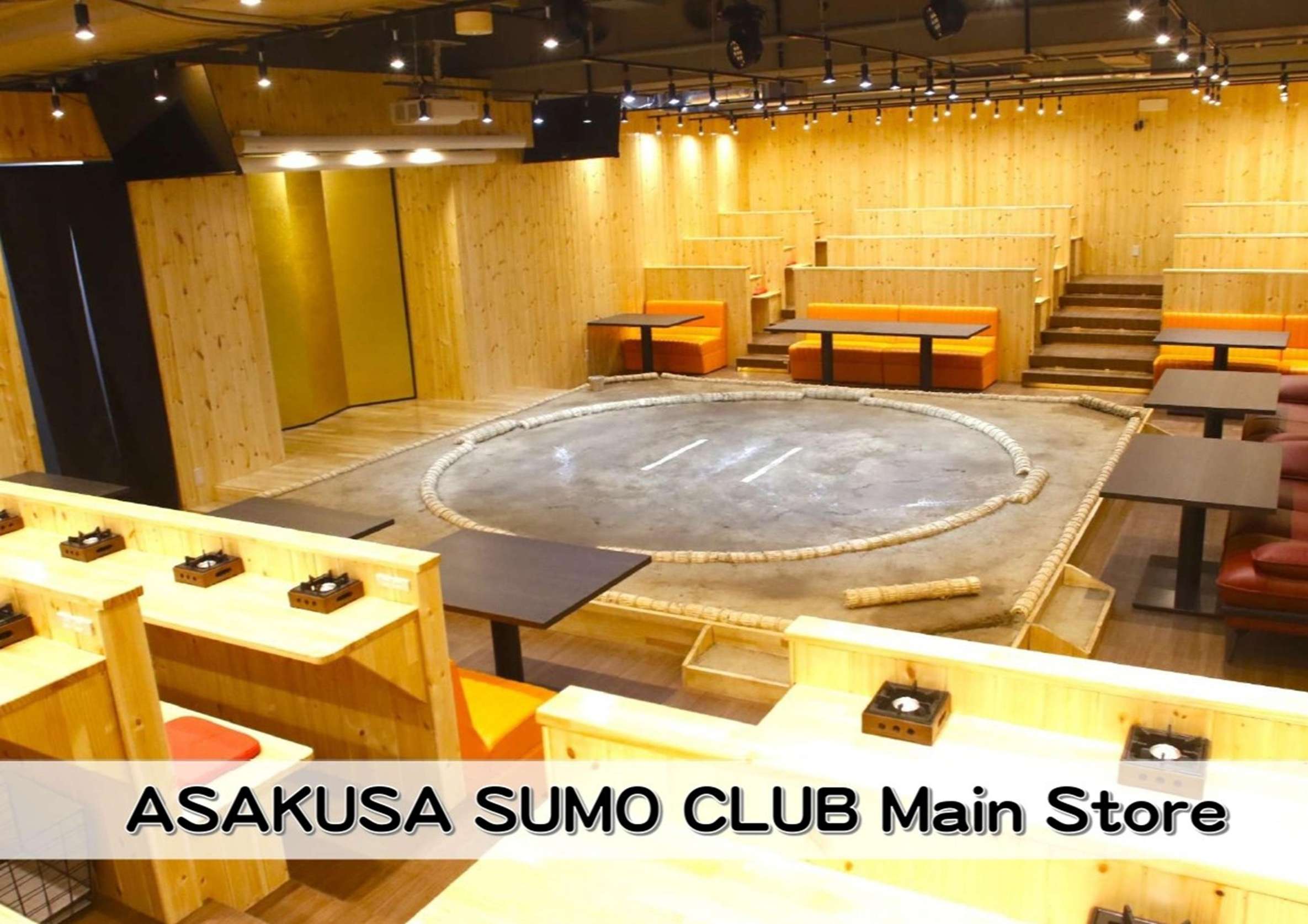
Tokyo's sumo shows cluster in a handful of neighbourhoods, and your hotel decides which one is sensible. The chicken hot pot and geisha show runs at the Asakusa Sumo Club on the ground floor of the ROCKZA Building at 2-10-12 Asakusa, with four shows a day including evening slots at 6 pm and 8:30 pm.
Asakusa puts you in the old east of the city, walking distance from Senso-ji's lanterns, and the evening slot slides neatly in front of dinner or in place of it.
Other venues sit in Shinjuku, Shibuya, Ginza and near Tokyo Tower. The Shinjuku show is the easiest to reach from the main hotel districts: it sits in Shinjuku itself, roughly 19 minutes by car from Shibuya, with other measures of the same trip giving 17, and about 39 minutes from Asakusa.
The spread comes from route and whether the figure counts a car or the train, so count on the trip taking somewhere between the two either way.
If you are staying in Asakusa, a Ryogoku venue is only about 8 minutes away by car.
The rule of thumb: pick a Shinjuku show if you sleep in Shinjuku or Shibuya, and a Ryogoku or Asakusa show if Asakusa is your base.
The Asakusa Sumo Club's 8:30 pm sitting is the latest of its four, which matters if you are squeezing the show in after a day trip. From Shibuya or Ginza, both sides of the city sit about 17 to 18 minutes away by car, so the train map usually decides.

What happens at the show, from arrival to the last bout
The full evening runs about 120 minutes including the meal, and it follows a shape once you know it. It does not open with wrestling.
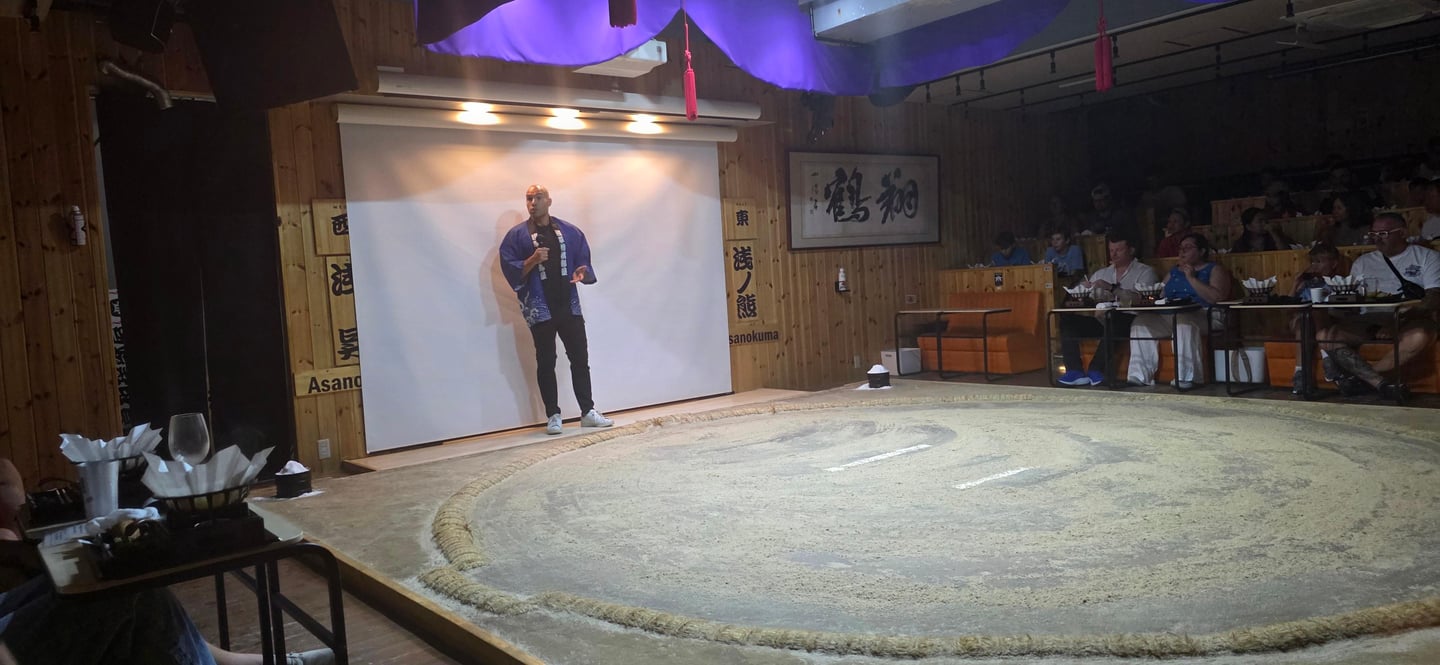
Shows usually begin with an educational stretch: the wrestlers' lives, the stretches they do, the rules and rituals of the ring, delivered by a host who keeps newcomers with no Japanese following every bit of it.
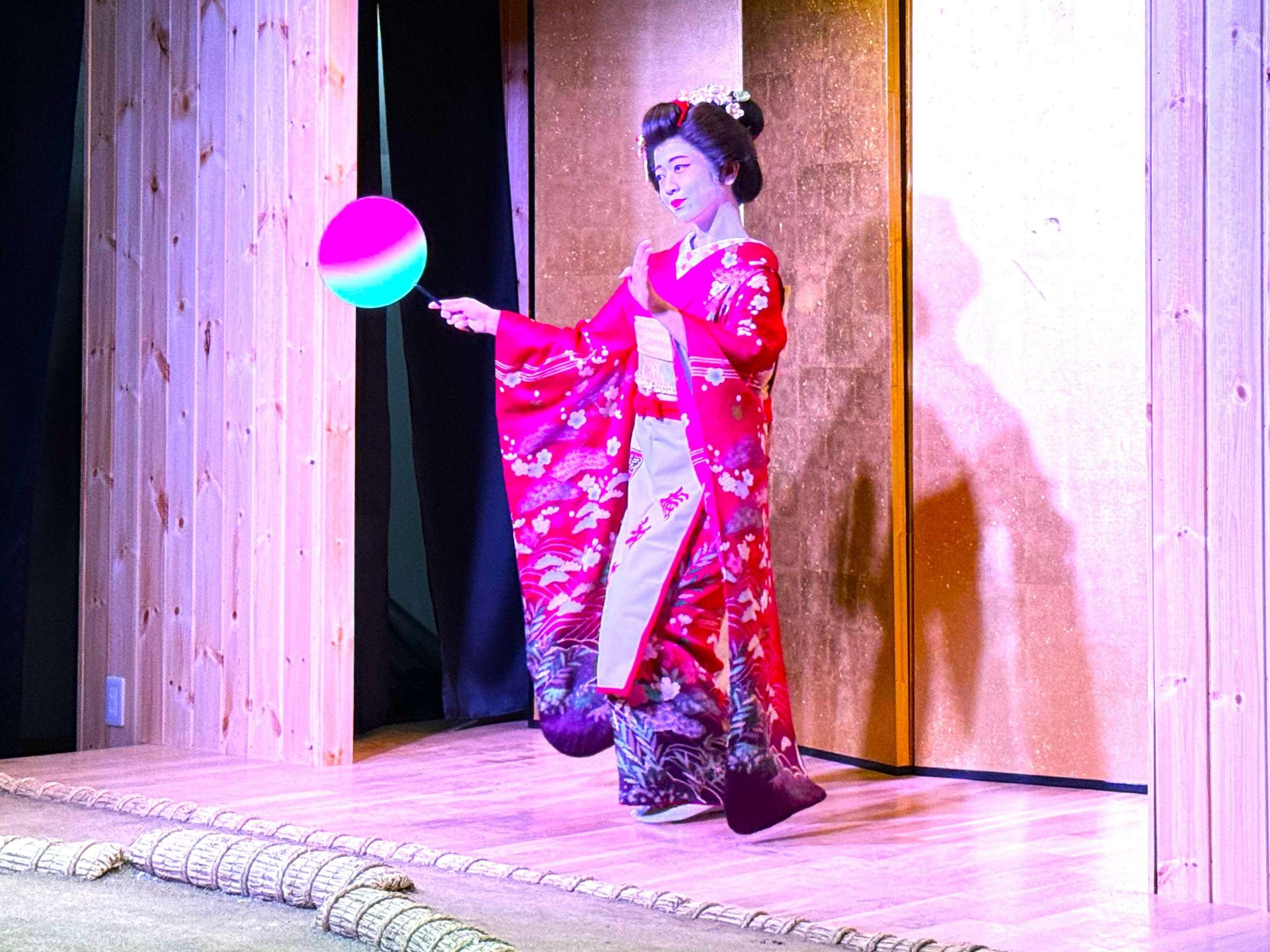
At this show a geisha dance comes before the main event, a traditional Japanese performance in kimono that sets the tone while you settle in with the first of the food.
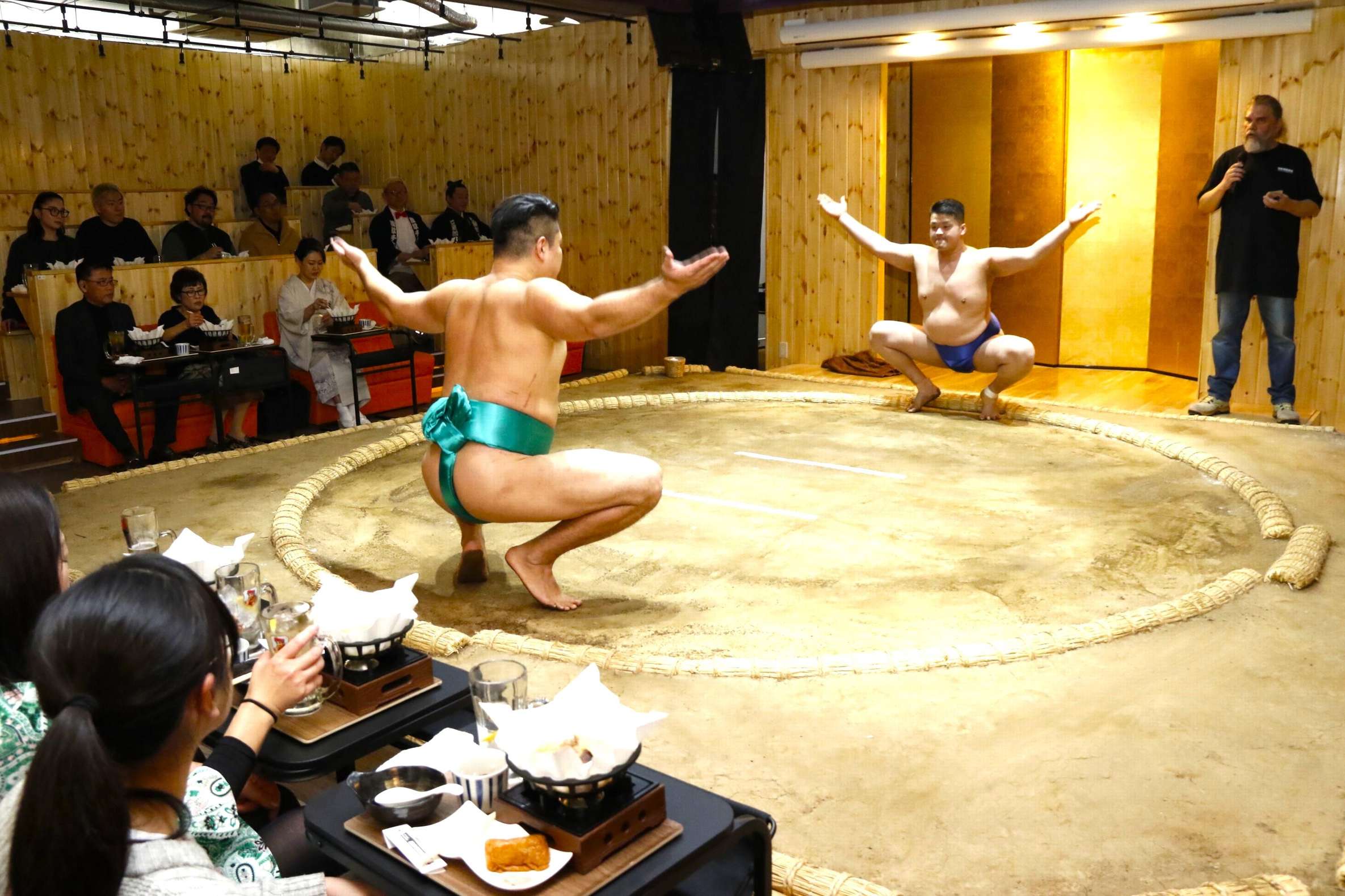
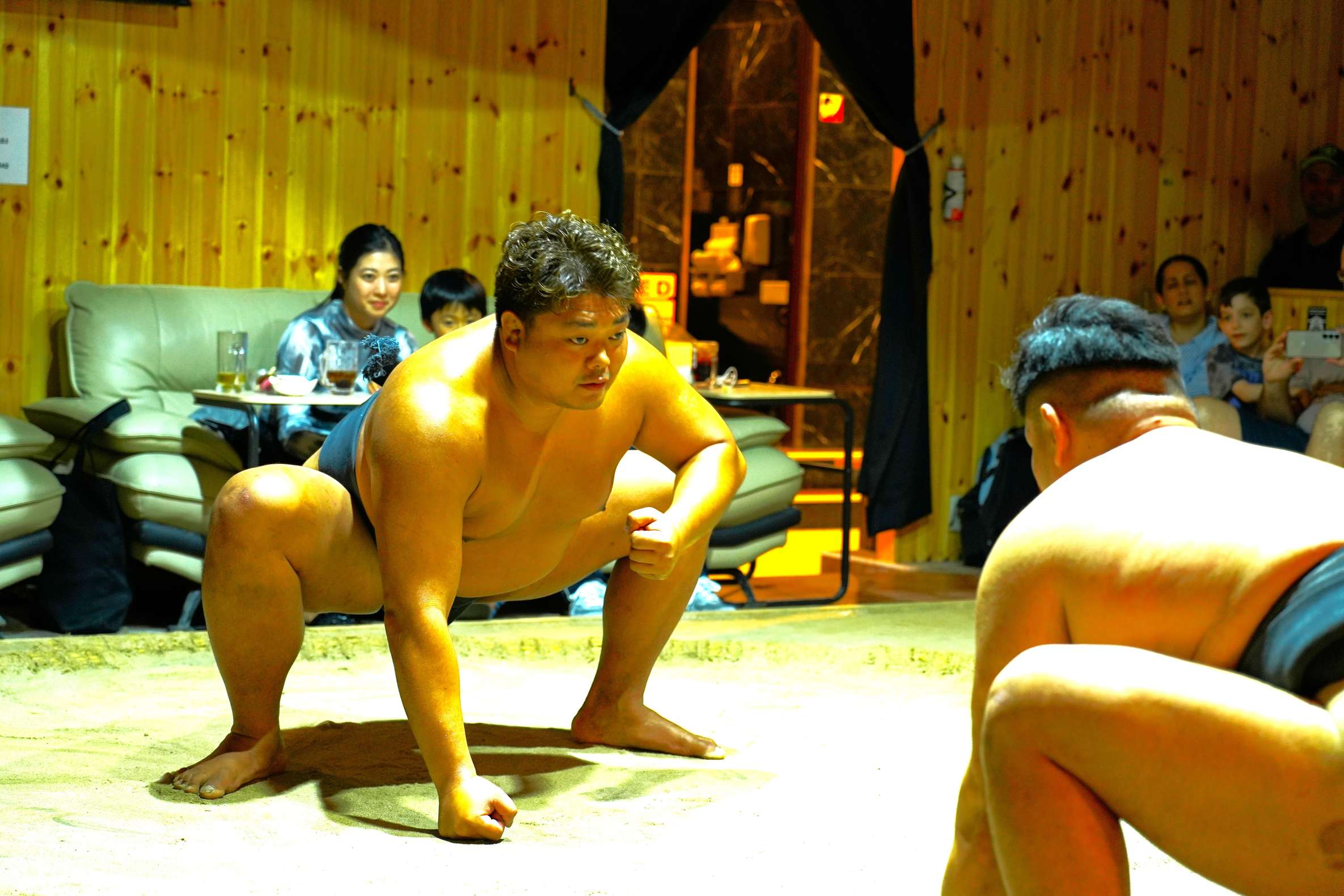
The bouts and demonstrations build through the middle of the program, former professionals showing throws and charges around the real clay ring at the center of the room.
- 1OpeningHistory, rules and techniques explained
Live commentary in English and Japanese
- 2Geisha danceA traditional Japanese performance before the main event
A photo with the geisha may follow
- 3Bouts and demonstrationsA best-of-three match between retired professionals
The actual wrestling often fills the last 15 to 30 minutes
- 4Ring challengeGuests try sumo against a wrestler
Chosen by lottery when demand is high
- 5PhotosPictures with the wrestlers
Taken at the end, after the final bout
The part people talk about afterwards is the participation. Paying guests wrestle the wrestlers, and it typically comes at the very end of the show.
Joining is optional, and at many shows spots are limited, so if lots of people volunteer, names go into a lottery. The warm-ups alone, the stomps and shuffles, are funny enough to be worth raising your hand for.
Stay to the end even if you are tired. The photo with the wrestlers happens last, and leaving early means going home without it.
The chicken hot pot dinner, the geisha and the commemorative photo
Chanko nabe is the food sumo wrestlers eat, a hearty hot pot built around chicken, vegetables and broth, and it carries real history: wrestlers eat it in bulk because it packs protein and calories into one pot.
At this show it is all-you-can-eat chicken hot pot alongside Japanese dishes, served while the show runs, with one drink included and more available for purchase. Travelers praise the food at these shows as hearty and generous, which is exactly what a hot pot should be on a Tokyo evening.
The geisha performance is the second thread of the night. A traditional Japanese dance in kimono opens the show, and at some venues you can photograph the dancer after she performs. It is the detail that turns a sumo dinner into a broader evening of Japanese culture.
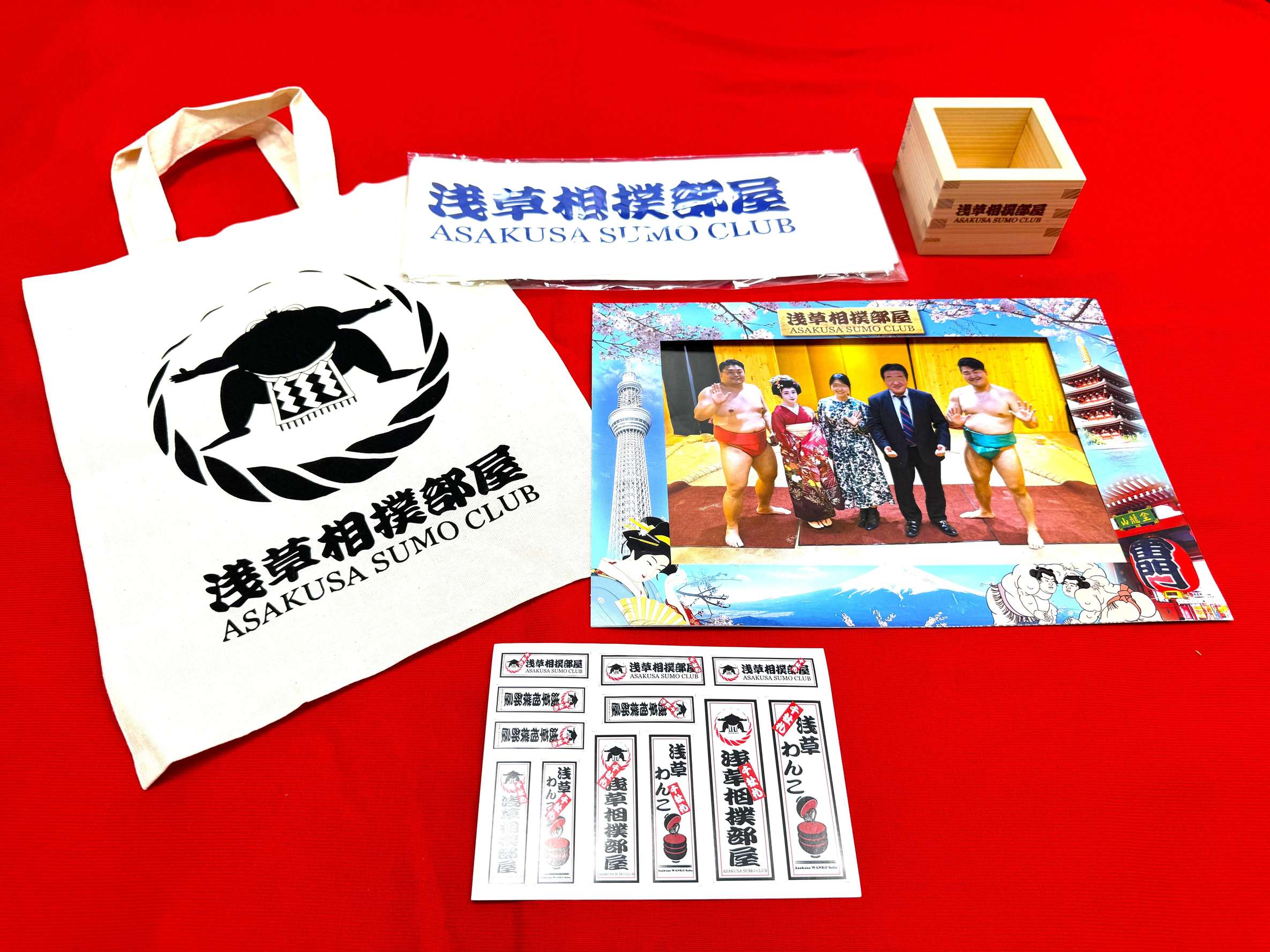
The photo comes last. A printed souvenir picture with the wrestlers, taken after the final bout, is part of the package, and travelers count it among the most common highlights of the whole evening. Some shows frame it; this one prints it and adds a souvenir set.
One practical note on the food. Vegetarian and vegan meals are available on request but must be reserved at least 2 days in advance. There are no gluten-free or halal meals, though guests are welcome to bring their own food to cover that gap.
Seating is shared too: you may find yourself at a table with other guests, which most people find part of the fun of a hot pot.
What to wear and bring to a sumo show with dinner
Come straight from sightseeing; nobody will look twice at what you are wearing. There is no formal dress code, and smart casual clothes you can sit and eat a full meal in cover it.
The one thing worth thinking about is movement: guests get invited into the ring for the sumo challenge, and bending down in tight jeans is a smaller evening than the one in loose trousers.
Shoes are the real detail. They come off at the entrance for tatami seating, and the low seats and shared tables are easier without laces, so slip-ons earn their place. Whole socks beat holes, because you go barefoot or in socks on the tatami.
- Smart casual clothesNo formal dress code: something comfortable you can sit and eat a full meal in is all the evening asks for.
- Clothes you can move inGuests may be picked for the sumo challenge in the ring, so pick something you can bend and step in easily.
- Slip-on shoesShoes come off at the entrance for tatami seating, and slip-ons make low seating and shared tables simple.
- Clean socksYou go barefoot or in socks on the tatami once your shoes come off, so whole socks beat holes.
- Light layersThe dining room with the hot pot can be warm while the walk back is cool, so a thin layer covers both.
- Small bagA small bag on your lap beats a big daypack in the close seating around the ring.
Layers matter more than style. The dining room around a bubbling hot pot runs warm while the walk back to the station is cool, and a thin layer covers both.
Keep your things in a small bag on your lap; the seating around the ring is close, and a big daypack has nowhere sensible to go.
Your camera or phone is the last item. Photography is allowed at the shows from your own seat, without flash, and the printed souvenir photo is taken for you at the end. Bring comfortable clothes, as the tours themselves suggest, and you are set.
Arrival times, lateness and what happens if plans change
Lateness is the one thing that can spoil the evening. The show follows a strict time schedule, and at some venues late entry may not be accepted at the front desk at all.
Where entry is allowed, the show cannot be extended for you, so a late arrival means walking in partway through and missing sections of the program. Give yourself a margin on the trains.
Arriving early buys you more than safety. Travelers report that getting there ahead of the crowd is what secures the front-row seats, and the seat you want at a sumo show is close to the ring, where the stamps of the warm-ups shake the floor.
When the announcer stands at the side of the ring during a bout, the best view is from the wall side away from the audience.
If plans change
| If this happens | What happens then |
|---|---|
| Cancel more than 24 hours ahead | Full refund |
| Cancel within 24 hours of the start time | No refund, but you may be able to move to another time slot or day if seats are available |
| Arrive late | You may join partway through and miss some sections; the show is not extended |
The cancellation terms are simple enough to plan around. Most of these tours can be cancelled up to 24 hours in advance for a full refund, which makes booking early low-risk.
Inside 24 hours you get nothing back, though a move to another slot or day is possible when availability allows. Book the date you are confident about, then arrive with 15 to 20 minutes to spare.
Sumo show etiquette - when to cheer, when to be quiet, when to shoot
A sumo show is a relaxed evening, but a few small rules separate the welcome guests from the ones the wrestlers remember for the wrong reasons. Cheering is encouraged, and clapping after a strong throw or a decisive win is exactly right.
The moment for silence is the initial charge: when the referee's fan points forward, the room goes quiet, and the tension before the charge is where the real drama lives. Follow the crowd's lead everywhere else.
Photography is fine from your own seat, without flash, which distracts and startles the wrestlers. No tripods, no standing up for a better angle, no filming from the aisles.
Keep your phone on silent, and never enter or touch the ring or touch a wrestler without permission, even after the show has ended and the photos are being taken.
What nobody tells you
It looks like a beloved tradition, but throwing your zabuton is officially banned because cushions cause injuries; leave yours where it is
The room falls strikingly silent when the referee's fan points forward, and that stillness is the moment to watch, before you reach for your camera
Applause is welcome, thumbs-down and heckling are not; keep the atmosphere civil even when a bout goes badly
Banners, trumpets, drums and noisemakers are out, as are shouting and finger whistling, though ordinary cheering is fine. The whole venue is non-smoking.
One more thing travelers learn the hard way: shoes come off in box and tatami seating, and you carry your own trash out with you. Small courtesies, all of them, and all of them noticed.
Is the show family-friendly and who can join the wrestling
This is one of the easier family evenings in Tokyo. The show is designed for both adults and children, with a lively, humorous format that keeps kids engaged, and the Asakusa Sumo Club is considered suitable for a child as young as four.
The only hard line at the door is babies under 1 year, who are not permitted.
Wrestling the wrestlers is a different question from watching. The ring challenge is limited to a few guests per show, selected by lottery when demand is high, and joining in is always optional.
Kids from about the age of five can take part in ring challenges at shows like these, and no sumo experience is needed; everyone is there for the fun of the attempt.
Age bands vary between venues, which matters if you are booking for a mixed group. The Shinjuku and Shibuya shows cover ages 12 and younger alongside 13 to 99.
The hands-on training plan at the Ginza show is not suitable for children under 5, pregnant guests or anyone with a serious medical condition, and children there must be accompanied by a guardian.
Mobility deserves a word too. Participation in the wrestling is optional at every one of these shows, and guests can watch or do adapted activities instead.
Wheelchair-accessible seating is limited at some venues and must be requested at the time of reservation, and a couple of venues, including Shibuya, are not suitable for wheelchair users at all. Share any access needs when you book and the operator can tell you what the evening can look like for your group.
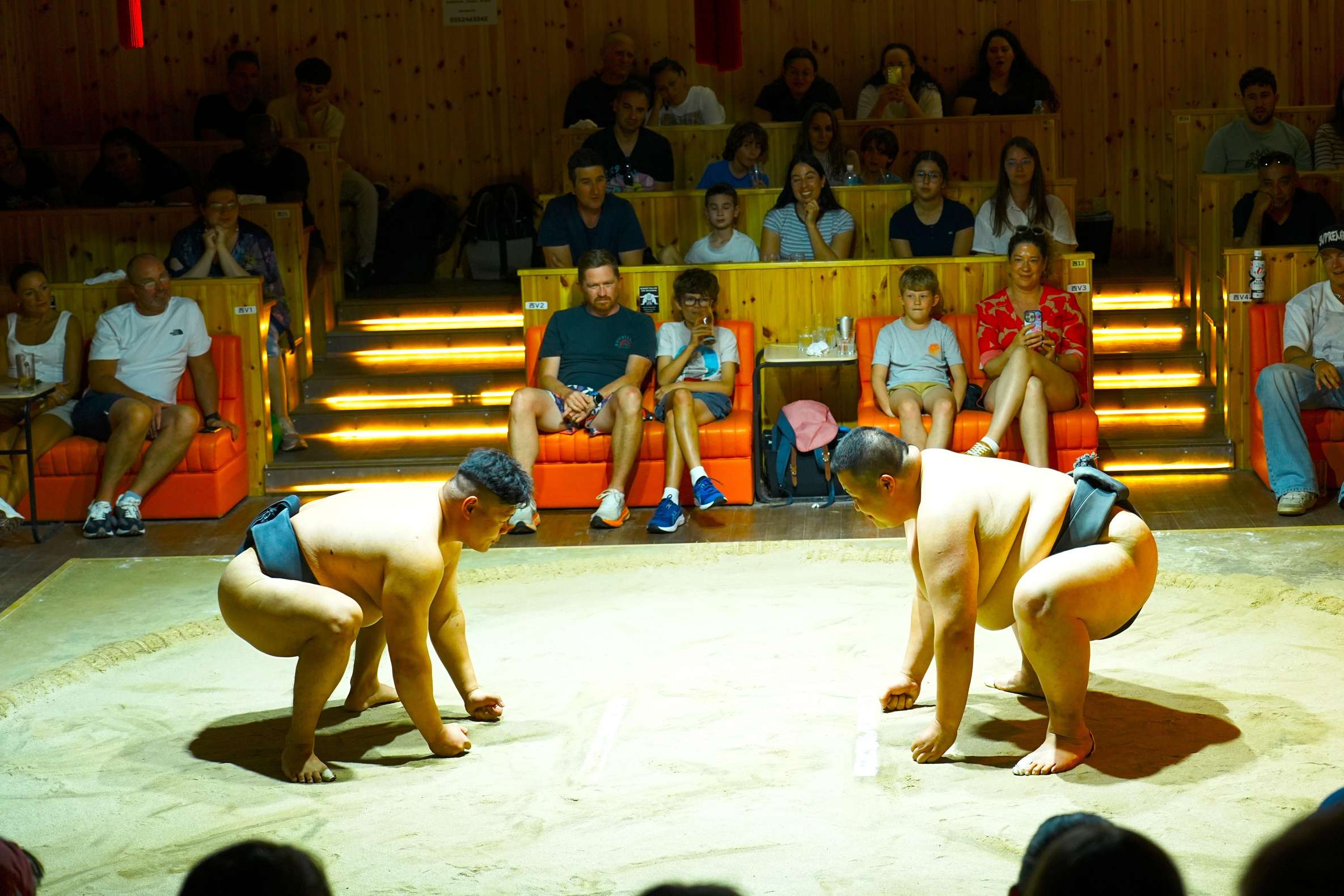
Booking a show or arranging your own sumo evening
You could assemble a sumo evening yourself in Tokyo. Ryogoku, the sport's home district, has chanko restaurants where you can eat the hot pot without booking a thing, and on non-tournament weekdays the small Sumo Museum inside the Kokugikan arena is open to walk-ins.
What you cannot arrange piecemeal is the combination: wrestlers performing a match, a lottery chance to step into the ring yourself, the history explained in English, a geisha dance and dinner, all in one room and one booking.
The dinner show format is the only way to get the full set in one night.
Three of the site's Tokyo shows cover the ground in different ways, and the right one depends on which part of the evening matters most to you.
Three ways to spend the evening
| Chicken hot pot show with geisha | Luxury sukiyaki and chanko show | Chanko nabe and mochi experience | |
|---|---|---|---|
| Food | All-you-can-eat chicken hot pot and Japanese dishes, one drink included | Wagyu sukiyaki bento, chanko-nabe hot pot and matcha dessert | Chanko nabe meal supervised by wrestlers from a real stable |
| Performance | Bouts, geisha dance and bilingual commentary | Sumo performance with a geisha dance and photo after | Sumo demonstrations around the dohyo |
| Participation | Ring challenge by lottery | Ring challenge in the ring | Try sumo with the wrestlers and pound mochi |
| Keepsake | Printed souvenir photo and souvenir set | Printed commemorative photo and gifts by seating class | Photos of your own evening |
| Setting | Asakusa, ground-floor restaurant around a real ring | Asakusa Annex, a smaller premium room | Ryogoku, the sumo district |
- Food
- All-you-can-eat chicken hot pot and Japanese dishes, one drink included
- Performance
- Bouts, geisha dance and bilingual commentary
- Participation
- Ring challenge by lottery
- Keepsake
- Printed souvenir photo and souvenir set
- Setting
- Asakusa, ground-floor restaurant around a real ring
- Food
- Wagyu sukiyaki bento, chanko-nabe hot pot and matcha dessert
- Performance
- Sumo performance with a geisha dance and photo after
- Participation
- Ring challenge in the ring
- Keepsake
- Printed commemorative photo and gifts by seating class
- Setting
- Asakusa Annex, a smaller premium room
- Food
- Chanko nabe meal supervised by wrestlers from a real stable
- Performance
- Sumo demonstrations around the dohyo
- Participation
- Try sumo with the wrestlers and pound mochi
- Keepsake
- Photos of your own evening
- Setting
- Ryogoku, the sumo district
If the hot pot and the geisha are what drew you here, the first column is your evening. The luxury show suits a dress-up night with drinks, and the Ryogoku option suits families who want mochi pounding with the wrestlers.
All three cancel up to 24 hours ahead for a full refund, so booking early costs you nothing but a click.
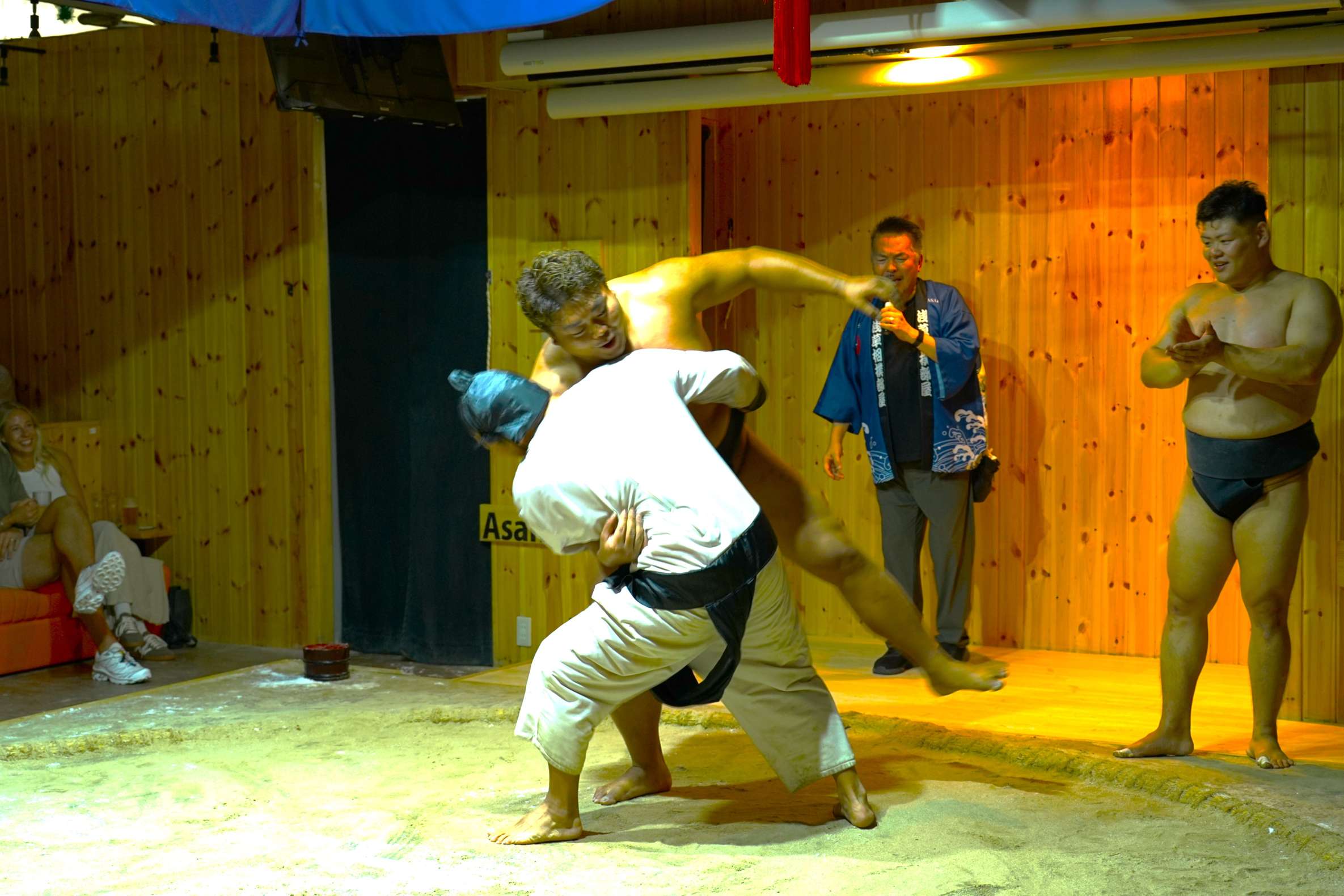
What to look for in a Tokyo sumo show and how this one measures up
A few checks separate a good sumo evening from a forgettable one, and they are quick to run.
Look for a meal that is included in the booking, commentary you can actually follow, a photo with the wrestlers rather than a photo you take from your seat, and cancellation terms that let you change your mind a day out.
The Tokyo: Sumo Entertainment Show with Chicken Hot Pot & Geisha scores well on all of them. The live commentary runs in English and Japanese throughout, so no Japanese is needed to follow what the wrestlers are doing or why.
The all-you-can-eat chicken hot pot, the geisha dance, the printed souvenir photo and the souvenir set are all part of the booking, and cancellation up to 24 hours ahead brings a full refund.
- Free cancellationCancel up to 24 hours in advance for a full refund
- Book now, pay laterReserve your place and pay closer to the date
- A small groupSmall group
- Hotel pickupNo, you meet at the start
- Wheelchair accessibleYes
Two gaps are worth knowing before you book. There is no hotel pickup; you make your own way to the Asakusa venue, which is straightforward from most of the city but is worth timing against the trains.
And the ring challenge is a lottery, limited to a few guests per show, so the chance to wrestle is a bonus on top of the show.
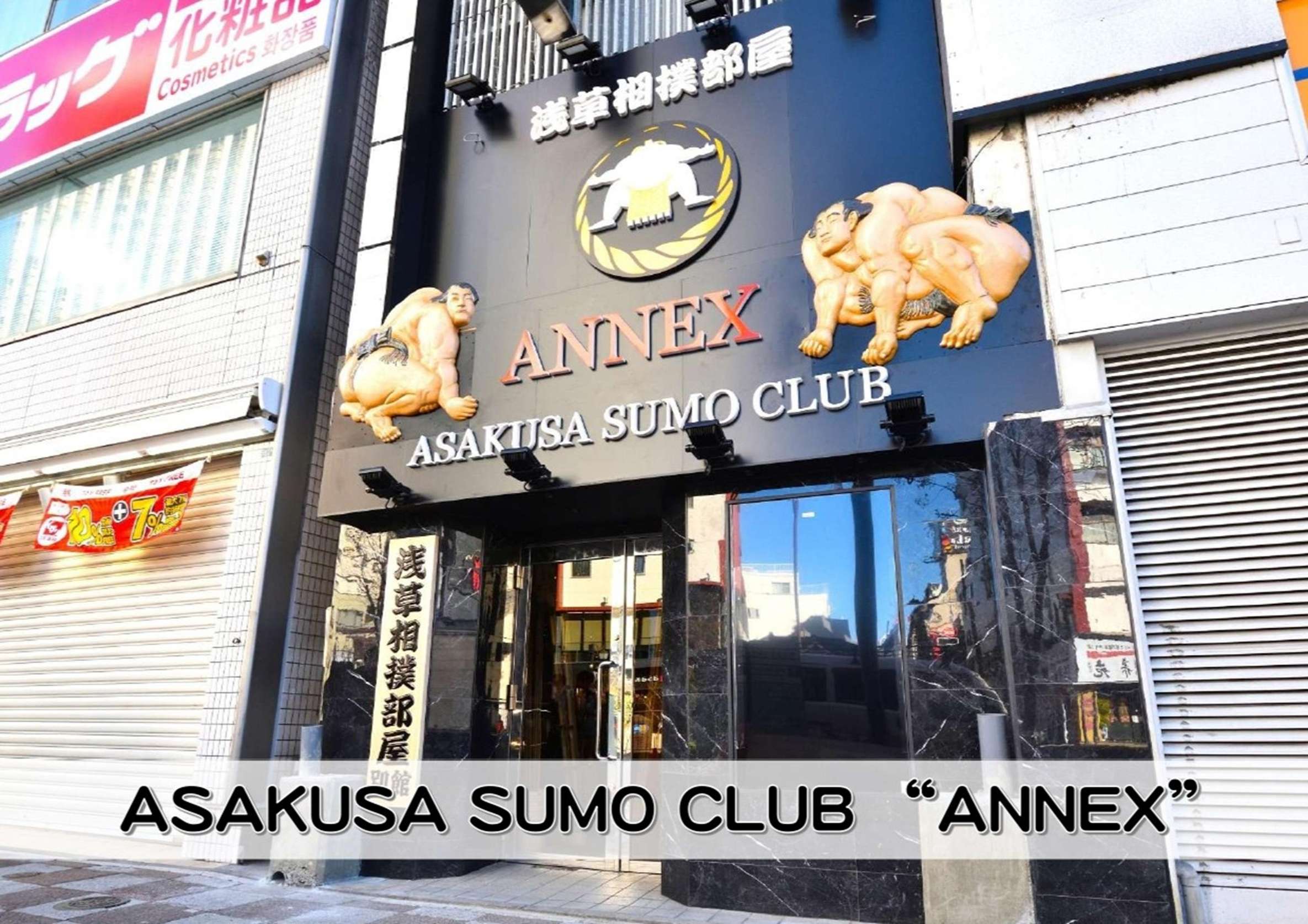
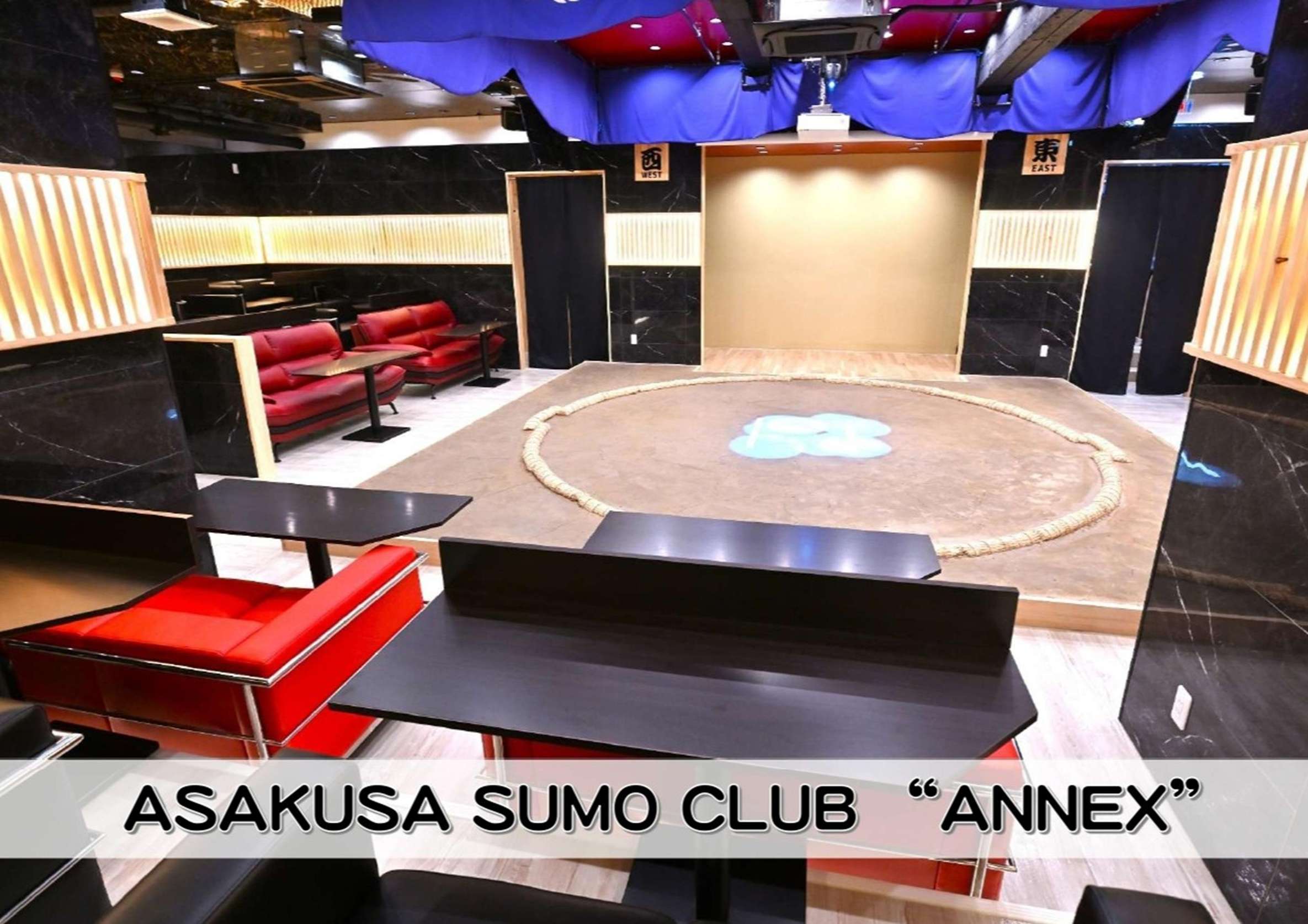
Both venues used for standard seating, the main store and the ANNEX behind it, offer the same service, and wheelchair-accessible seating is limited, so mention it at booking if you need it. With those two things settled, the rest of the checklist comes back yes.
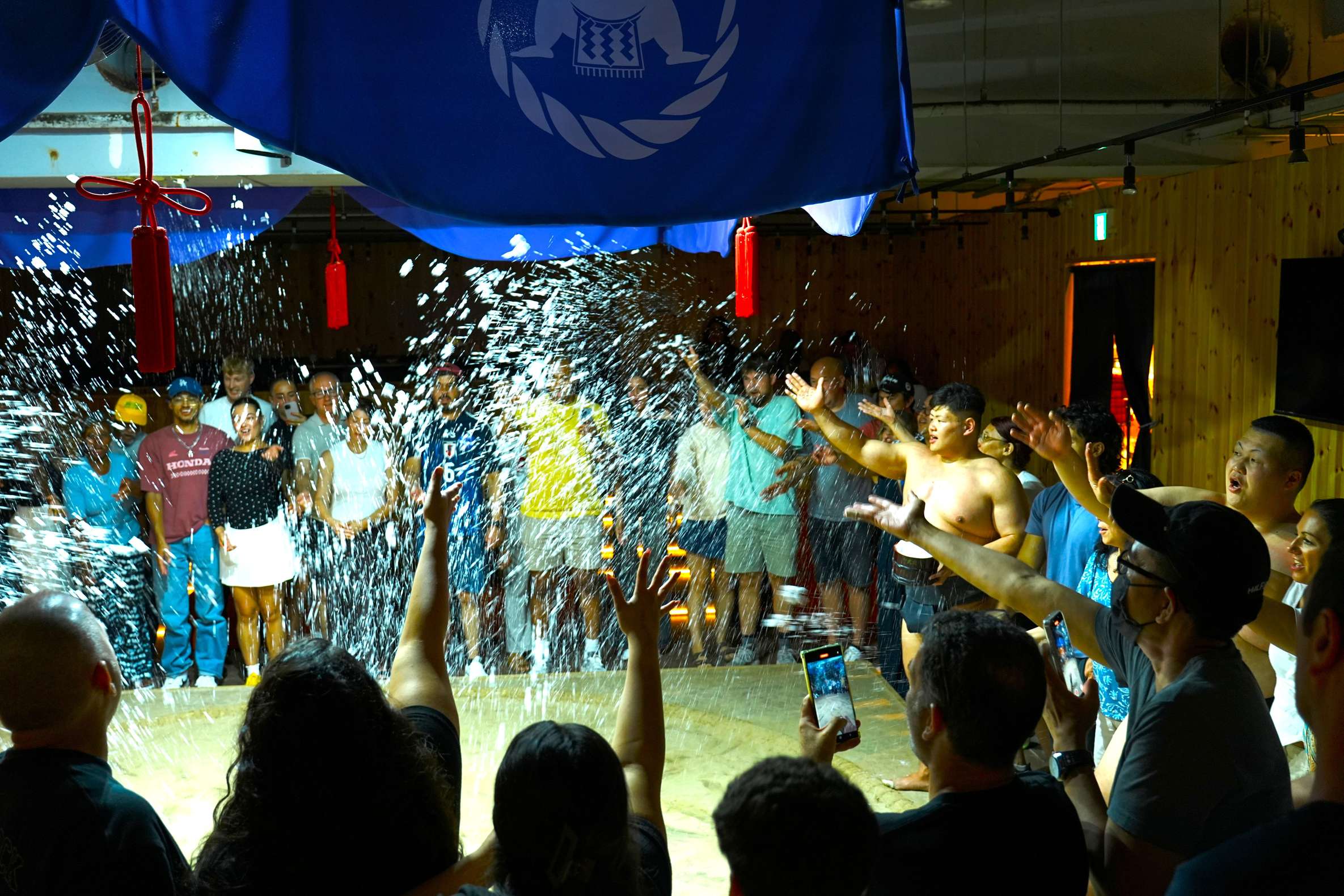
What else to do near the sumo show before and after
The show anchors an evening, and the neighbourhood fills the hours around it. Around the Shinjuku venue, Shinjuku Central Park sits about 4 minutes on foot, the Juniso Kumano Shrine about 6, the Sompo Museum of Art about 7 and the Japanese Sword Museum about 11.
Hanazono Shrine, Meiji Shrine and the Shinjuku Gyo-en gardens all fall within a 20-minute walk, which is enough to fill an afternoon before a 6 pm sitting.
- 1Shinjuku Central Parkpark or garden4 min walkDirections
- 2Juniso Kumano Shrinetemple, shrine or church6 min walkDirections
- 3Sompo Museum of Artmuseum7 min walkDirections
Show all 7 places
- 4Japanese Sword Museummuseum11 min walkDirections
- 5Hanazono Shrinetemple, shrine or church15 min walkDirections
- 6Meiji Shrinetemple, shrine or church19 min walkDirections
- 7Shinjuku Gyo-enpark or garden20 min walkDirections
- 1Aoyama Kumano Shrinetemple, shrine or church9 min driveDirections
- 2Watari Museum of Contemporary Artmuseum9 min driveDirections
- 3Lifehouse International Churchtemple, shrine or church10 min driveDirections
- 4Meiji Shrine Outer Gardenpark or garden10 min driveDirections
- 5Ukiyo-e Ōta Memorial Museum of Artmuseum12 min driveDirections
- 6Yoyogi National Stadiumpark or garden14 min driveDirections
Around the Ginza venues the walk is shorter and more gallery-led: the Ad Museum Tokyo and Karasumori Shrine about 8 minutes away, the Idemitsu Museum of Arts about 10, and Tokyo International Forum with its open-air park spaces 10 to 11 minutes off.
Tsukiji Hongan-ji temple is close by too, worth a stop for the building alone.
Asakusa, home of the chicken hot pot show, needs no filling in: Senso-ji, Nakamise's snack stalls and the Sumida river walks are all within the same few blocks, and the 6 pm or 8:30 pm sitting drops neatly at the end of a day there.
If you book the 8:30 pm sitting, eat lightly first, because the hot pot is all you can eat and you will want the appetite. The printed photo at the end makes a natural last stop before the walk back to the station.
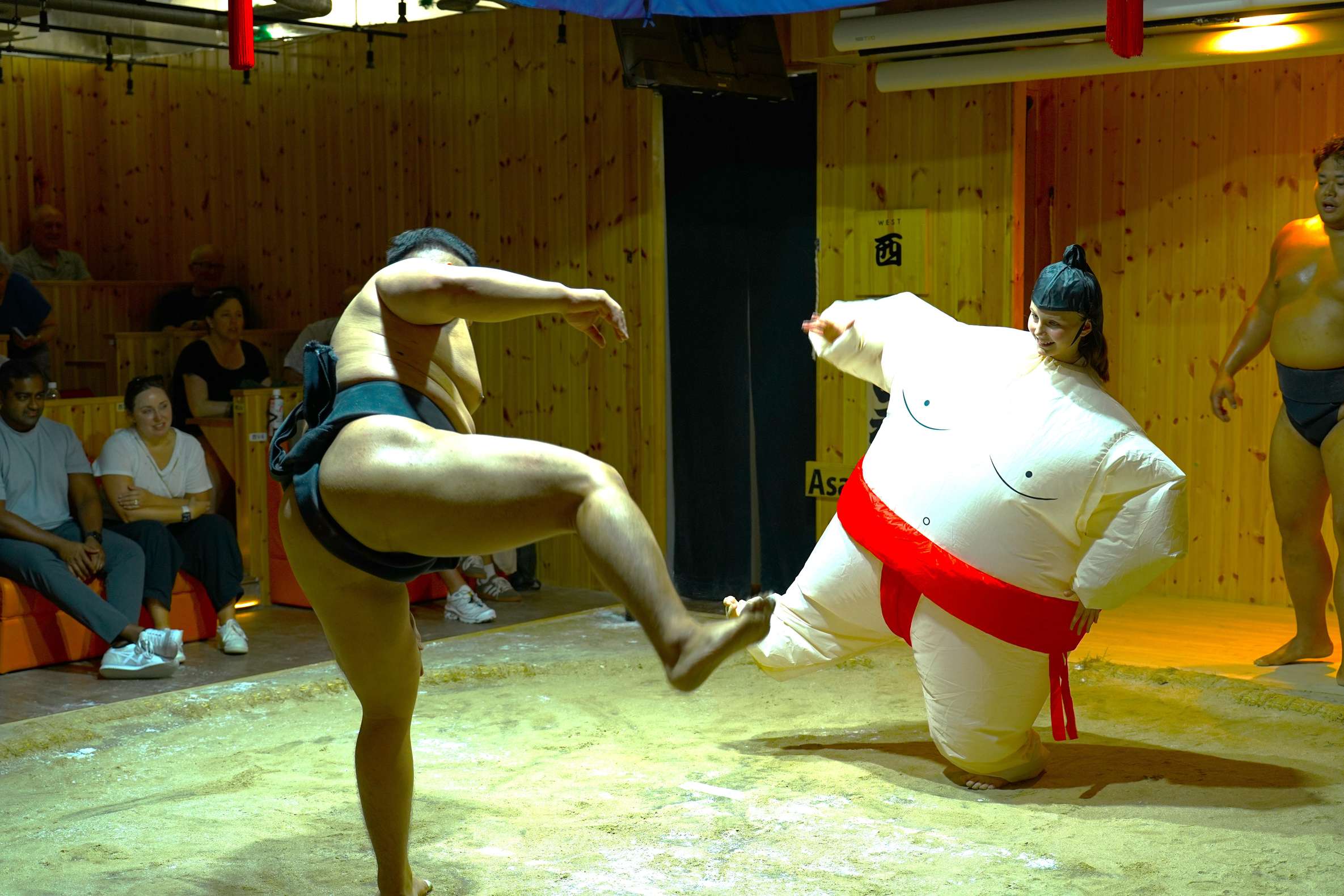
What to know before you book a Tokyo sumo show with chicken hot pot
One booking covers the show, live commentary in English and Japanese, the geisha dance, all-you-can-eat chicken hot pot with Japanese dishes, one drink, a printed photo with the wrestlers and a souvenir set. Extra drinks are bought on the night. Souvenir contents change with the season.
Stepping into the ring against a wrestler is part of the evening, and joining is your choice. Only a few guests can challenge per show, so when demand is high the participants are drawn by lottery. Wear something you can move in if you want a spot.
Meals can be adapted, but only with advance notice:
- Vegetarian and vegan meals: reserve at least 2 days ahead
- Gluten-free and halal: not provided, you may bring your own food
- Infants: no meal, seating or souvenir included
The show follows a set schedule and runs about two hours, meal and photo session included. Turning up late can cost you part of the program, so aim to arrive early. Early arrival also gets you a seat closer to the ring.
Standard seats sit at two venues, the main store and the ANNEX behind it, with the same service at both. A front-row option puts you right at the ring. You may be seated together with other guests, so book the whole party at once.
There is no dress code; smart casual clothes you can eat a full hot pot meal in are fine. Wear slip-on shoes with clean socks, since shoes come off at the entrance, and bring a light layer for the walk back.
Keep your phone on silent and take photos from your own seat without flash. Stay seated during bouts, save loud cheering for when the crowd does, and never step into or touch the ring outside the challenge. Leave your cushion where it is.
Cancel up to 24 hours before the show for a full refund, so you can hold a seat while your Tokyo plans settle. The show is built for adults and children alike; babies under 1 year are the only ones it does not suit.
Worth it for the full sumo evening
This is the right evening for anyone who wants sumo, dinner and a second performance in a single booking, especially with children old enough to enjoy the ring challenge or a group celebrating something. Book it early for an April, May or October trip.
If a grand tournament is on during your dates, go to the real thing instead, and if you would rather watch training than comedy, a morning practice visit at a stable fits better. Anyone needing wheelchair access should ask about seating before booking.
Sumo show and chicken hot pot questions, answered
Are there age or health limits for wrestling a sumo wrestler at a Tokyo show?+
Taking part is optional at every show, so you can watch instead and still enjoy the evening.
The hands-on training option at the Ginza show is not suitable for children under 5, pregnant guests, or guests with serious medical conditions, and children need a guardian with them. The Shinjuku and Shibuya shows use age bands of 13 to 99 and 12 and younger.
Is a Tokyo sumo show explained in English, or do you need Japanese?+
No Japanese is needed. The chicken hot pot show has live bilingual commentary in English and Japanese by a moderator, and the Shinjuku, Shibuya and Ginza shows all run with an English-speaking MC.
Can vegetarians or picky eaters get something other than chicken hot pot?+
Yes. The Tokyo chicken hot pot show offers vegetarian and vegan meals on request, but you must reserve at least 2 days in advance. There are no gluten-free or halal meals, though you are welcome to bring your own food.
Which Tokyo sumo shows include chicken hot pot with the meal?+
The Asakusa chicken hot pot show serves all-you-can-eat chicken hot pot and Japanese dishes during the performance.
The luxury Asakusa show pairs chanko nabe with a wagyu sukiyaki bento and matcha dessert, and the Ryogoku experience includes a chanko nabe meal too. Additional drinks are available for purchase, and you may be seated together with other guests.
Do any Tokyo sumo shows include a geisha performance?+
The chicken hot pot show opens with a traditional Japanese dance performed by geisha in kimono, before the sumo part begins. The luxury Asakusa show also includes a geisha dance, with a photo opportunity after the performance.
Which Tokyo sumo show experiences include a photo with the wrestlers?+
Most of them do, including the chicken hot pot show, which gives you a printed photo with the wrestlers and geisha after the performance. The Shinjuku, Shibuya, Ginza, Tokyo Tower and luxury Asakusa shows all include a commemorative photo as well. In every case the photo is taken at the end of the show.
Where in Tokyo do the sumo shows take place, and how do I fit one into an evening?+
The chicken hot pot show runs at Asakusa Sumo Club at 2-10-12 Asakusa, Taito City, on the ground floor of the ROCKZA Building, with four shows a day including evening slots at 6 pm and 8:30 pm.
Other venues sit in Shinjuku, Shibuya, Ginza and at Tokyo Tower. Evening slots make it easy to pair a show with a day of sightseeing.
Is a Tokyo sumo show worth it compared with a real tournament or morning practice?+
If a grand tournament is on during your trip, experienced travelers say go to the real thing. A show is a different experience: former professionals perform close to your seat, a host explains the rules and rituals in English, and you can join in. Unlike tournaments, shows run year-round.
Is a sumo show in Tokyo suitable for kids?+
The chicken hot pot show is designed for both adults and children, and the lively, humorous format keeps children engaged. Babies under 1 year are not admitted. The Asakusa Sumo Club suits a four-year-old, and the Ryogoku show with chanko nabe and mochi making is family-friendly too.
How long is a Tokyo sumo show, and how much of it is actual wrestling?+
Tokyo shows run 1.5 to 2 hours, and the chicken hot pot show lasts about 2 hours including the meal. The wrestling itself often takes up only the last 15 to 30 minutes, with the opening given to history, stretches and rules before the bouts.
Are the wrestlers at a Tokyo sumo show real or actors?+
Tokyo lunch and dinner shows usually feature retired professional wrestlers, not actors. The demonstrations show genuine technique even without competitive stakes, and real shows can name each performer and their career. One Asakusa performer competed as a rikishi for 14 years before retiring through injury.