




Likely to sell out
1 - 1.5 hours·English
4.9(2,124)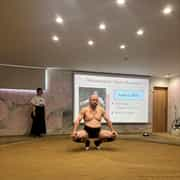
Osaka: Sumo Experience with Live Show & Audience Challenge
Free cancellationAuthentic sumo demonstrationsEnglish-speaking MC
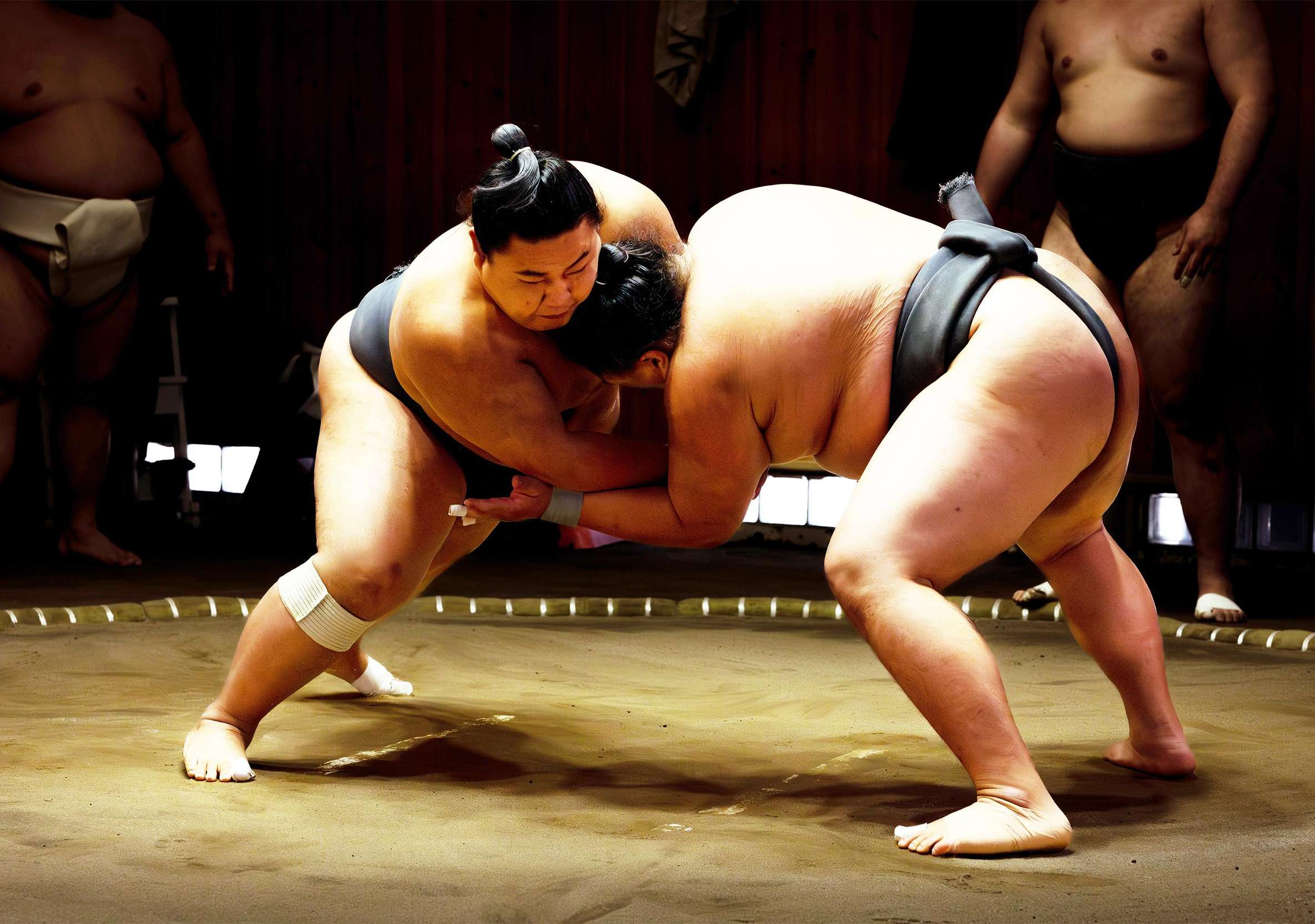
Plan your sumo match in Osaka around the March basho, and fill the rest of your stay with a live show. Retired professional wrestlers demonstrate the training, rituals and bouts up close, then you can step into the ring yourself. Book the Osaka show with an English-speaking MC and see why travelers call it a highlight of their trip.
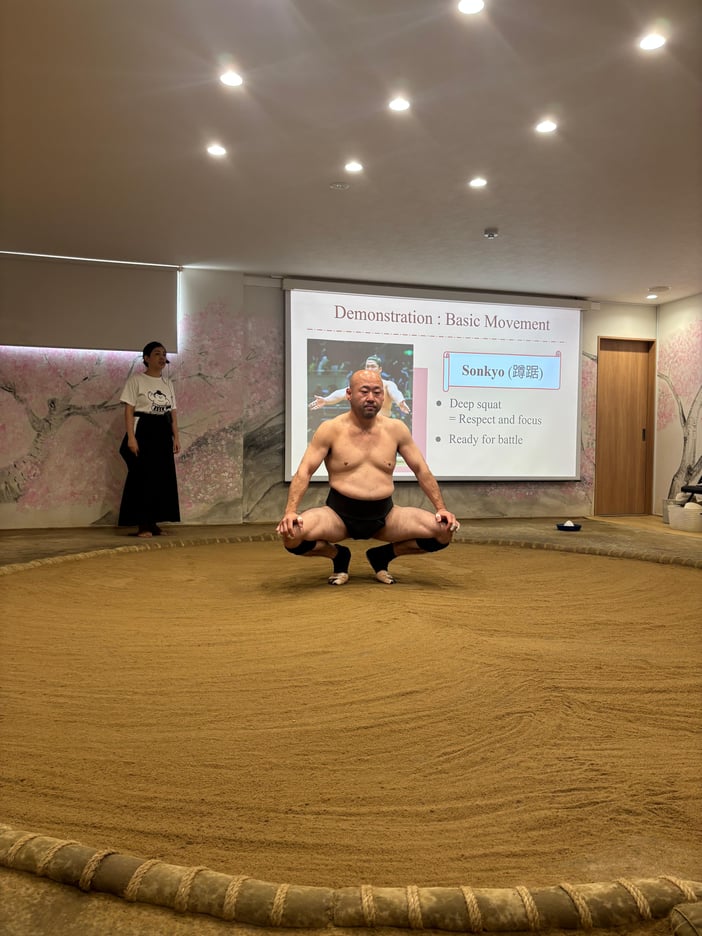
"Such a fun night! I was nervous at first but tried the sumo warm-ups and even a wrestle. Our guide, a young Japanese-American girl (sorry, forgot her name!), got everyone involved."


Osaka hosts the spring basho for fifteen March days at Edion Arena in Namba, and its tickets are the hardest to score in Japan. The rest of the year, sumo here means shows by retired wrestlers, and picking the right one decides your evening.
Plan an Osaka trip around March if you want ranked bouts: **fifteen days at Edion Arena**, a 5-minute walk from Namba Station Exit 5.
Ticket sales open at 10 am Japan time about a month out, and decent seats are gone within minutes, weekends first.
Tickets are issued once and treated like cash: lose yours and the association honours nothing.
Your tournament ticket covers the whole day; the top division enters around 3:45 pm and the bouts end near 6 pm, so an arrival about 3 pm catches the real event.
Outside March, the sumo you can book in Osaka is entertainment: retired wrestlers performing for the crowd, with ranked bouts reserved for the spring weeks.
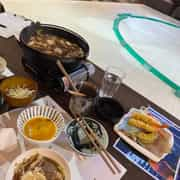
If no ticket is left for your dates, the sumo shows on this page give you live wrestling in Osaka instead: retired professional wrestlers, front-row seating at the wagyu sukiyaki show, and a chance to step into the ring yourself, bookable year-round.
March in Namba belongs to sumo. Edion Arena Osaka, the old Osaka Prefectural Gymnasium, hosts one of the six annual grand tournaments, and it runs fifteen straight days.
The arena seats roughly 8,000 to 10,000 people, which in a city this size makes it the smallest venue on the tour and the hardest basho to get into.
The schedule-and-venue picture is simple to hold in your head: the March grand sumo tournament in Osaka, fifteen days at Edion Arena in Namba, one of six honbasho a year.
The others rotate to Tokyo three times, then Nagoya in July and Fukuoka in November. When your trip misses the March weeks, the live sumo in town changes shape, and the shows covered later are what runs instead.
The city earns its place on the calendar. Osaka has its own sumo culture stretching back centuries, and during the tournament the streets around the arena turn into a sumo festival. The crowd is famously loud, especially toward Kansai wrestlers.
Dates shift a little from year to year, so anchor everything else you book to the announced run once it is published.
Here is the honest part up front: nothing bookable in Osaka is a grand tournament. The tours on sale are entertainment shows.
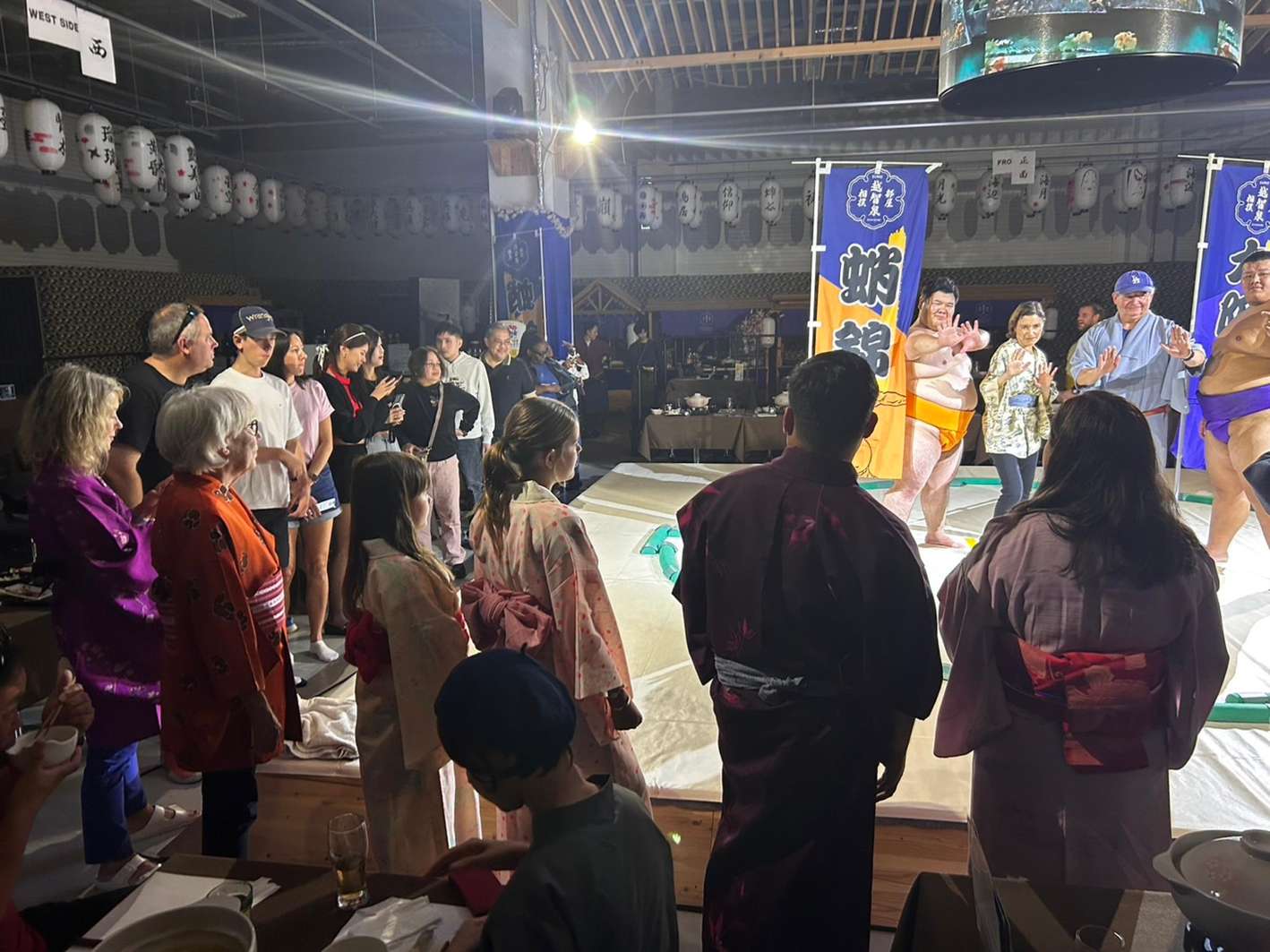
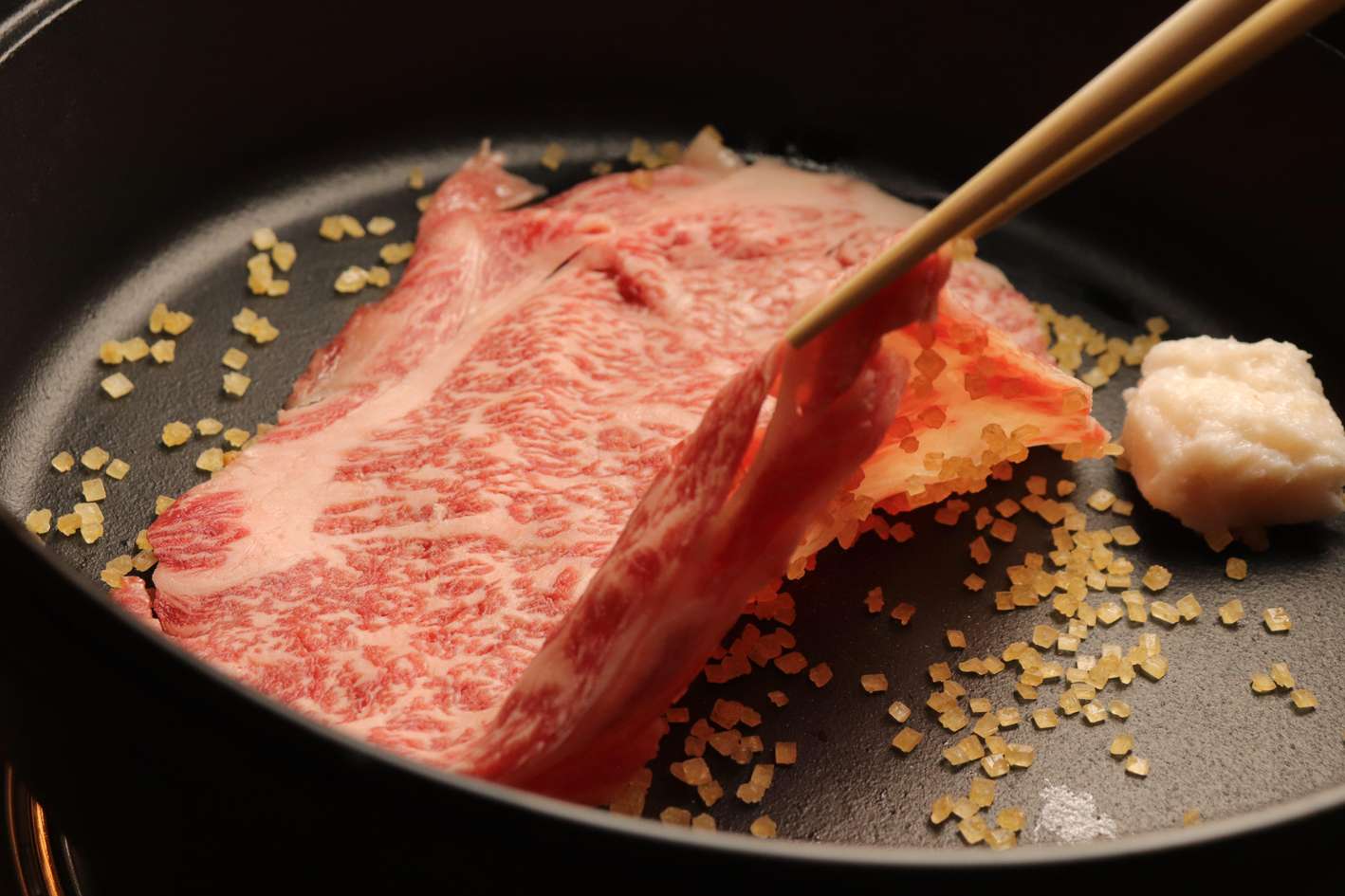
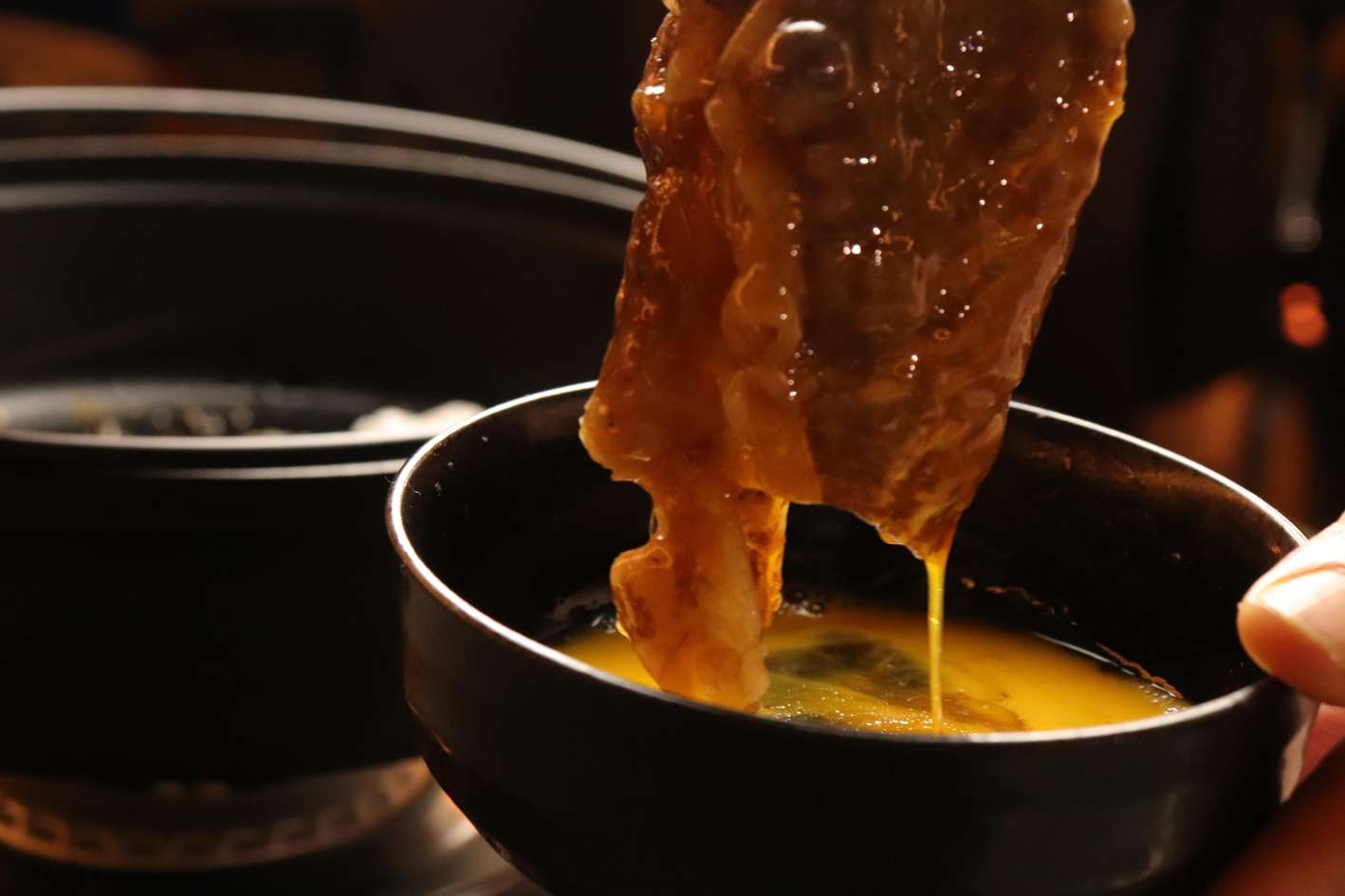
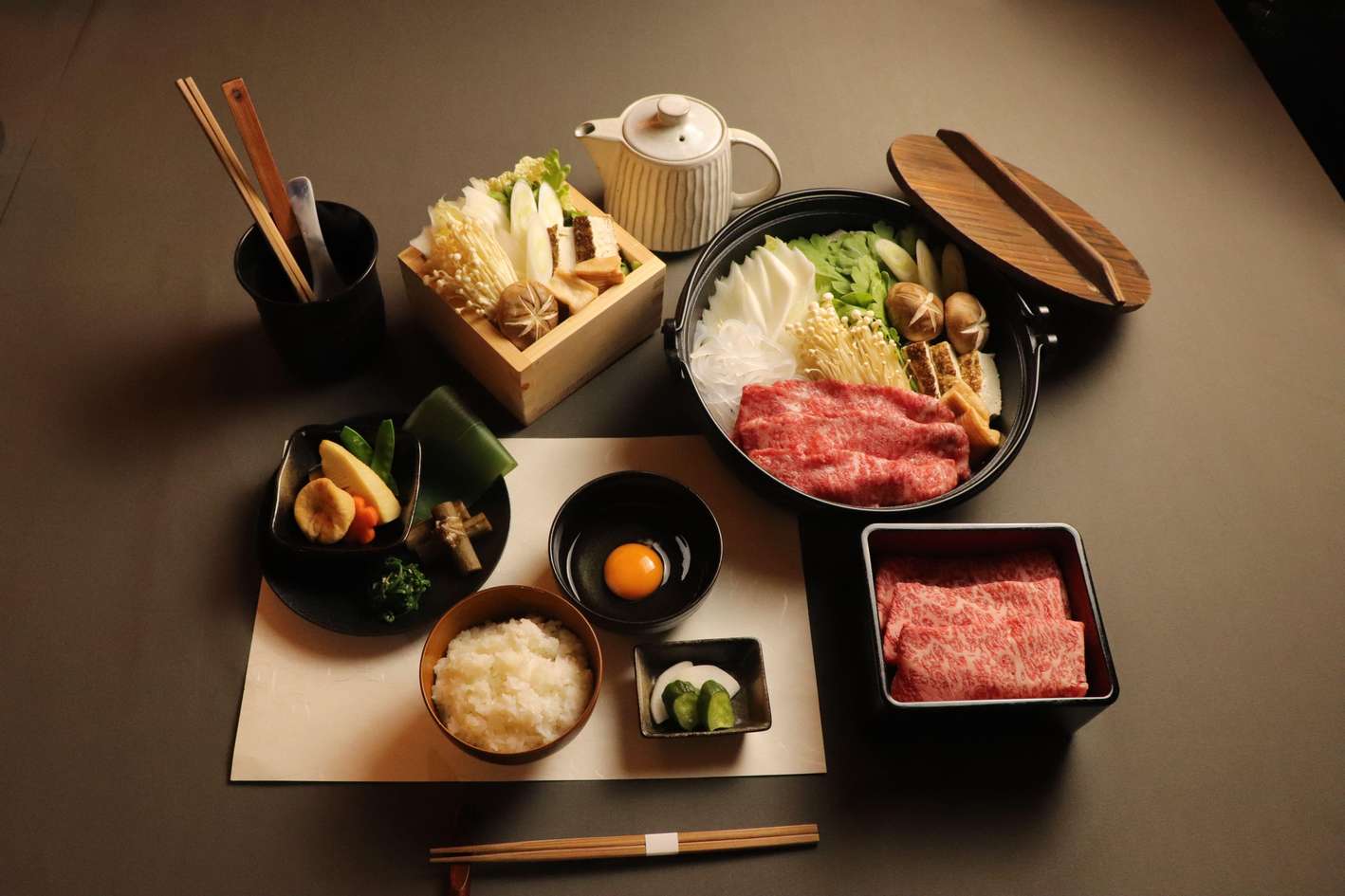
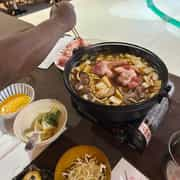
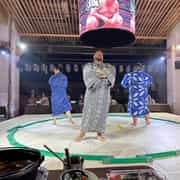
The closest of them is the Osaka Sumo Show with Front-Row Seating & Wagyu Sukiyaki, a 2.5-hour evening built around a live sumo show of about 40 minutes performed by former professional wrestlers, watched from guaranteed front-row seats right beside the ring.
The wrestling is genuine skill from people who competed for a living, and the show adds English commentary on rules, history and etiquette, a try-on of a formal kimono haori and a wagyu sukiyaki dinner.
A photo session in the ring with a former rikishi closes it. You can even join ring training drills or a 1-on-1 bout if you are picked.
The bouts are staged and the outcome decided, which the operator says plainly: a cultural entertainment program that sits outside the grand tournaments.
Whether that scratches the itch or only sharpens it depends on what you came for. If you want to sit one metre from men the size of doorways while eating your dinner, this is your night.
One check before booking any show: the operator should publish a cast of ex-rikishi with real careers. Actors do not get ring names.
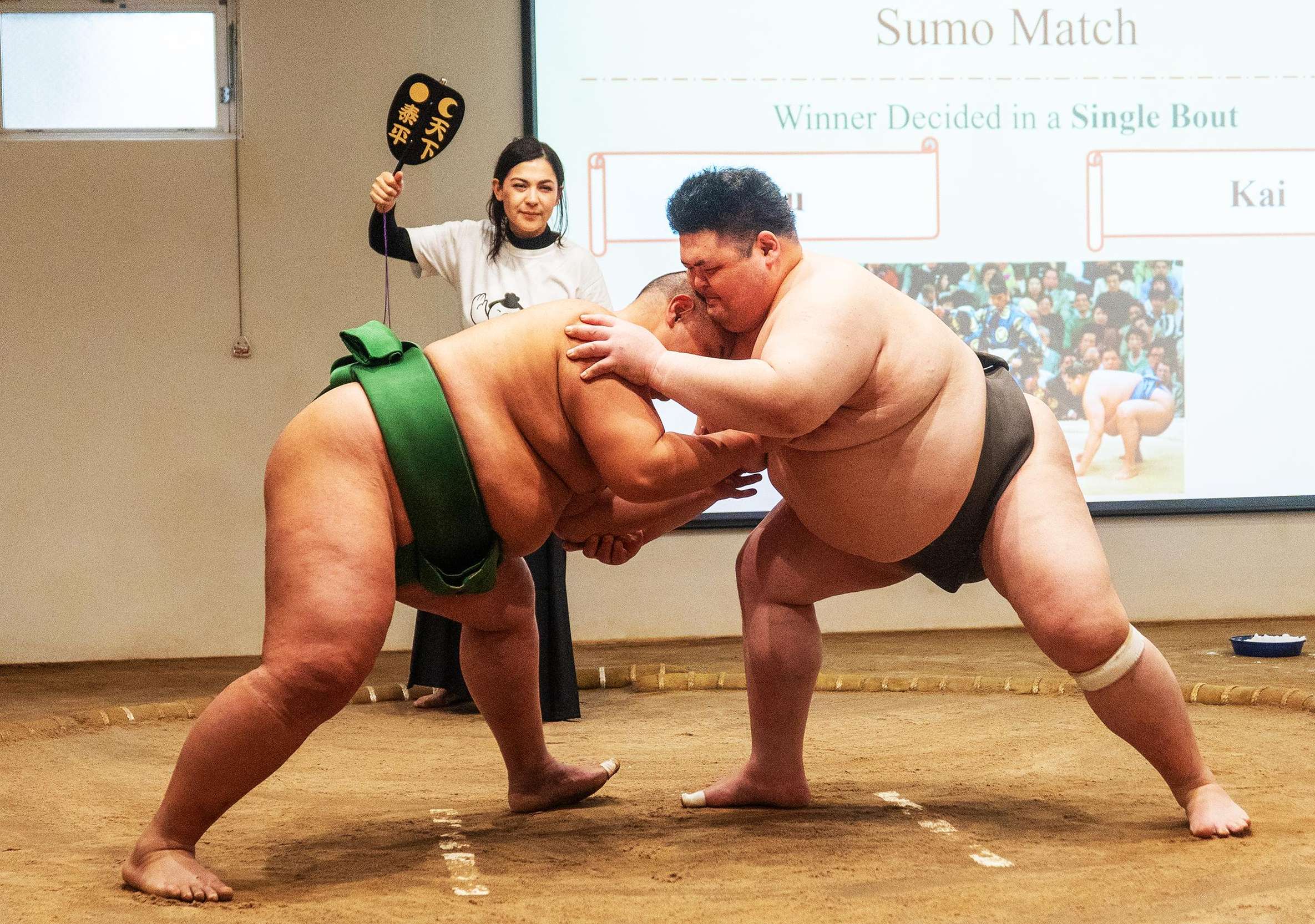
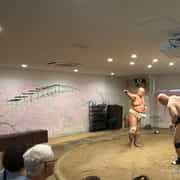
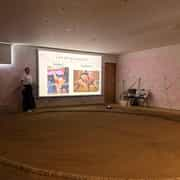
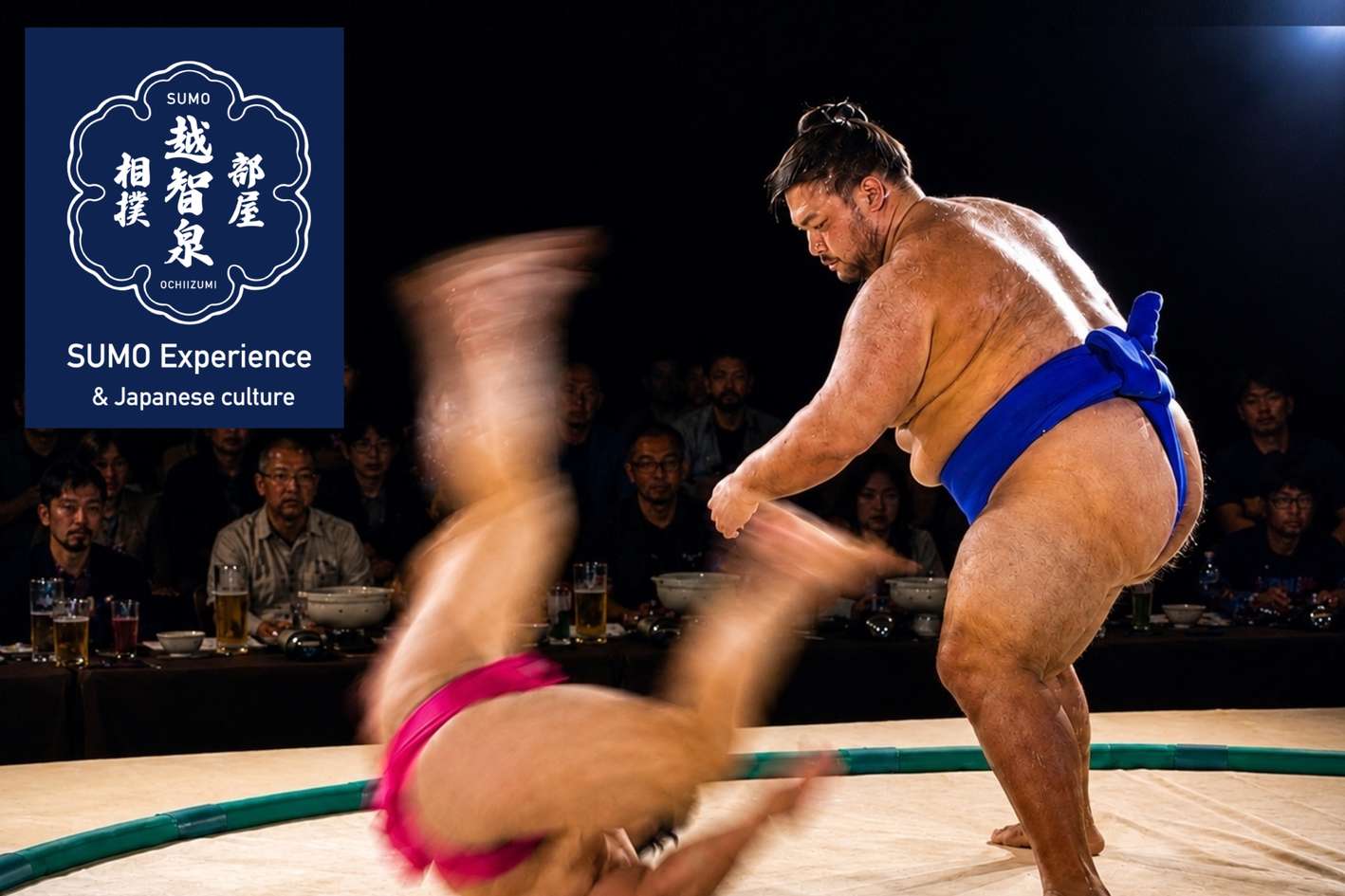
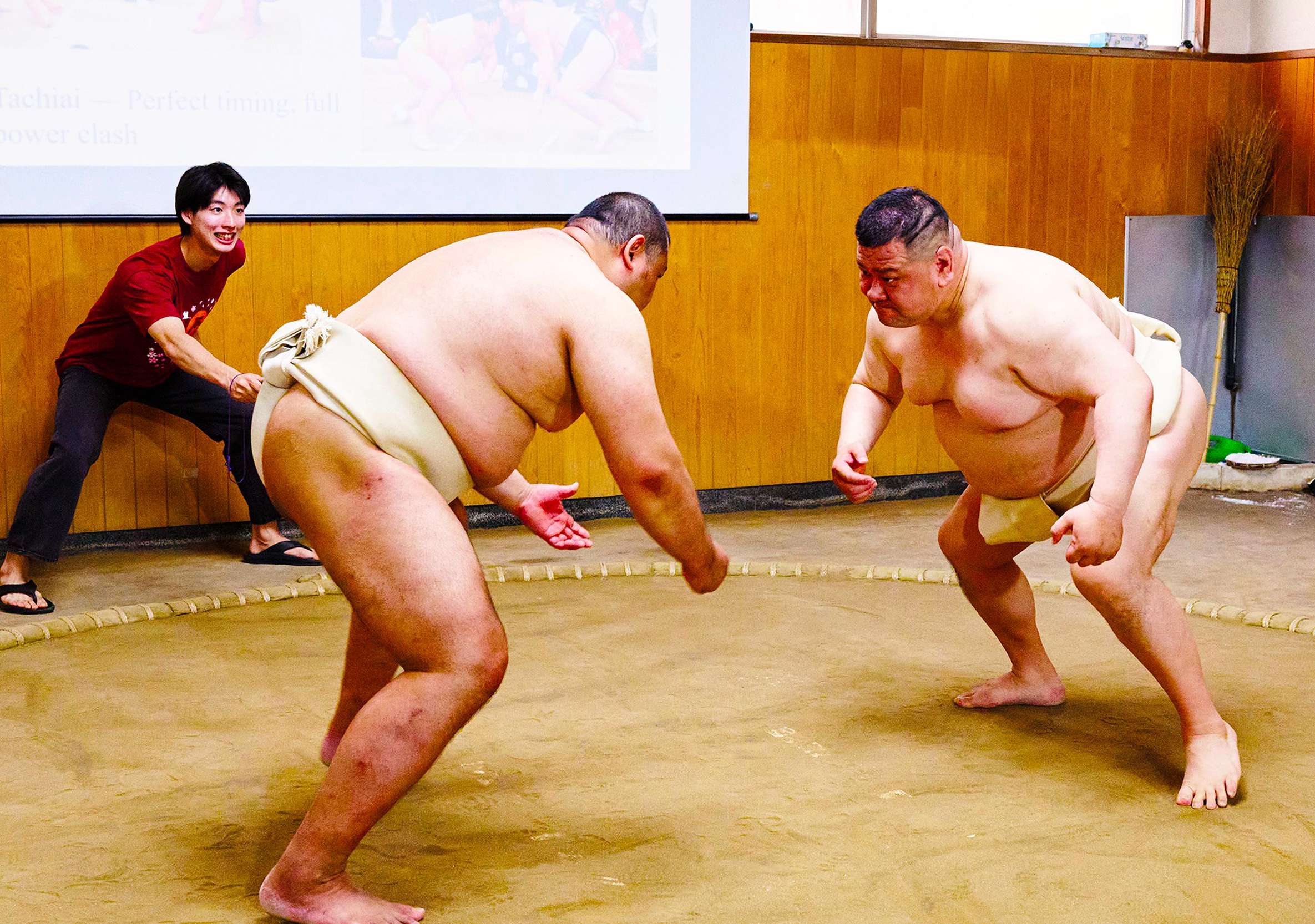
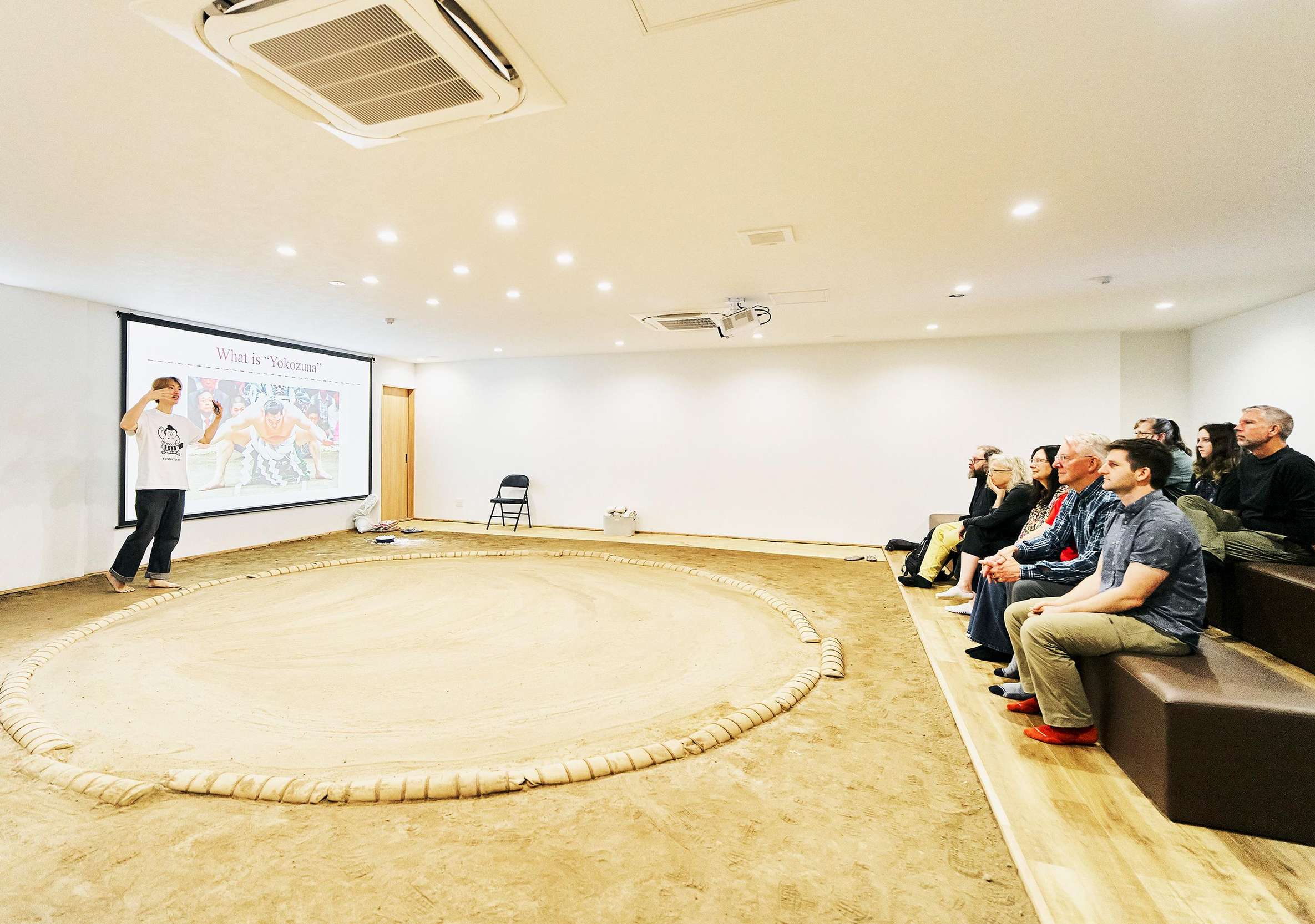
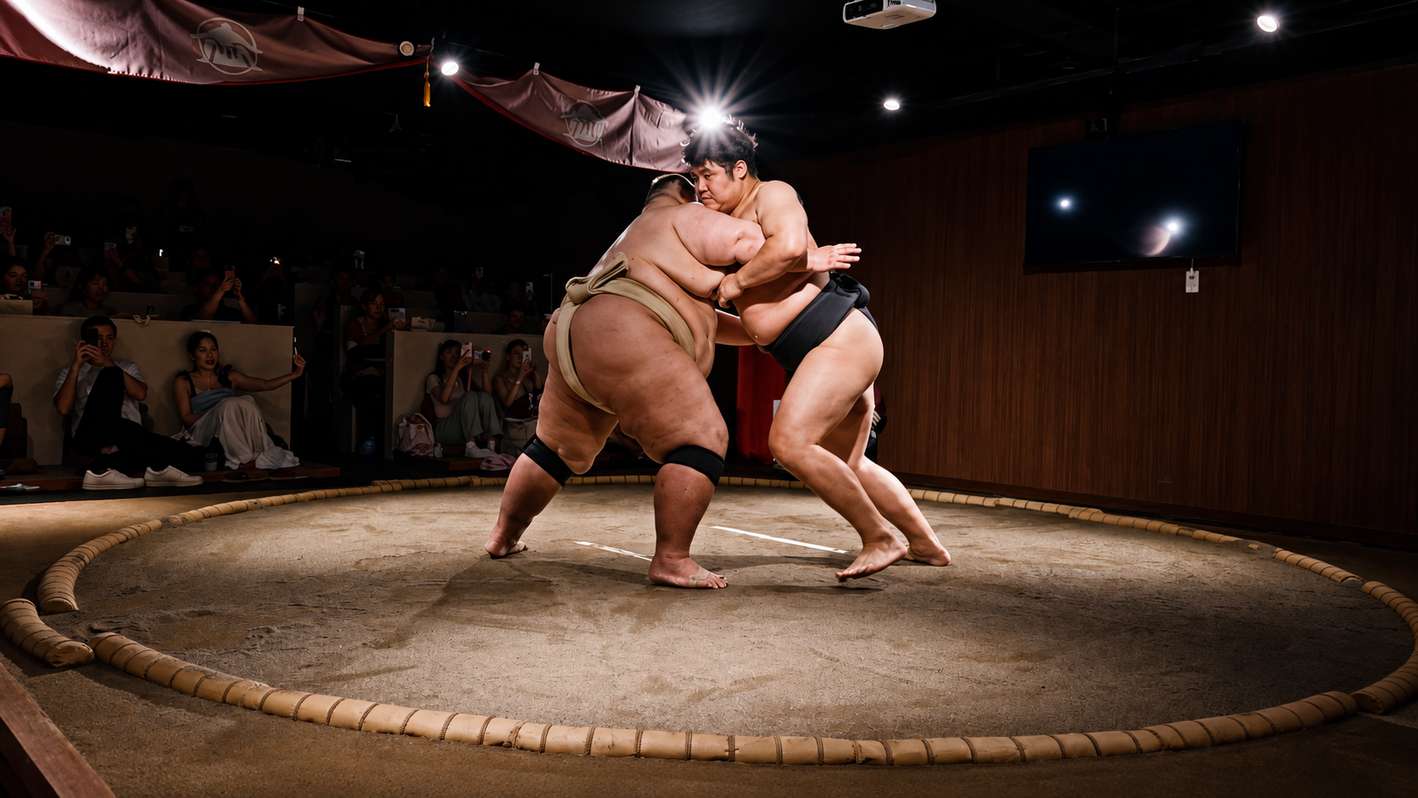
The other way to fit sumo into Osaka itself is shorter and rowdier. The Osaka: Sumo Experience with Live Show & Audience Challenge runs 1 to 1.5 hours, with demonstrations of authentic training routines, famous winning techniques called kimarite, and a one-round match between retired wrestlers, all narrated by an English-speaking MC.
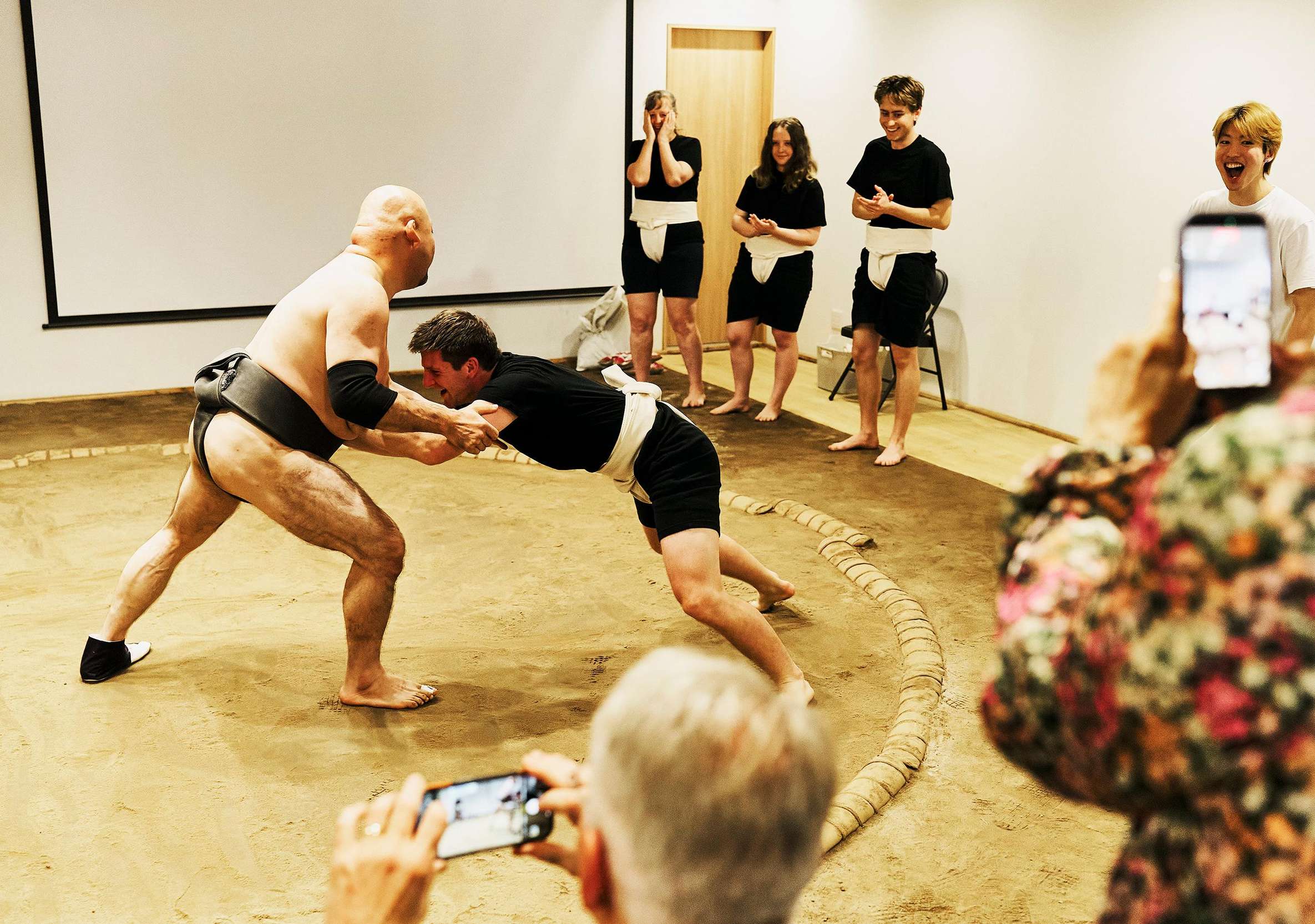
Then comes the part people remember. Guests can step into the ring and face a retired sumo wrestler, picked from the audience. The spots are limited, so raise your hand early if you want one, and joining is always optional; plenty of visitors stay in their seats and cheer.
Anyone who does take the ring should know it is physical activity with a small risk of knocks and scrapes, accepted at your own discretion.
Because it runs inside the city and lasts barely an evening, this is the easiest show to slot between dinner plans and a Namba night out.
Many visitors who arrived knowing nothing about sumo call it a highlight of the trip. The format is built for newcomers: the host explains the rituals before anything happens, so the bouts make sense when they come.
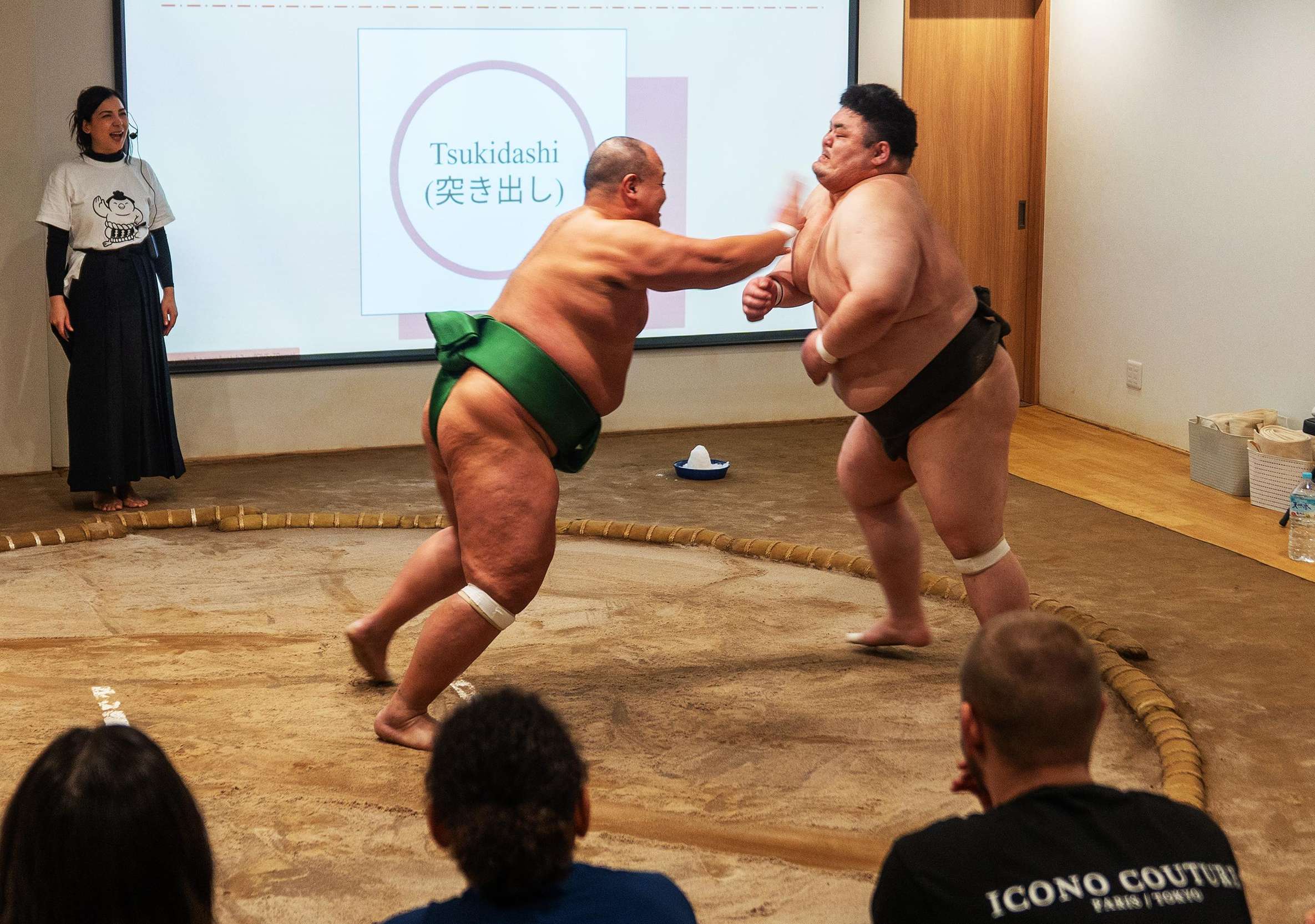
Unlike the tournament, the shows run on their own daily calendar, so they bend around a trip instead of dictating one.
The third option is the Osaka: Sumo Show with Bento or Snack at Sumo Hall Hirakuza, a two-hour theatrical show on the 8th floor of Namba Parks that fuses sumo with sound, lighting and visuals, with a bento or snack bag and a drink included.
This is the show for last-minute plans: the venue keeps same-day booking open online until 3 pm on performance days and sells remaining seats at the hall from 3 pm, so walk-ins usually work.
It is closed most Tuesdays and over the New Year holidays, but opens on Tuesdays in busy periods, so check the month's calendar for your date.
Whatever you book, arrive 15 to 20 minutes early. Shows can start noticeably later than the ticket says, but arriving right on time risks a rushed seat search, and the ending can drift too.
| If this happens | What happens then |
|---|---|
| Cancel 24 hours or more ahead | Full refund |
| Cancel on the day | No refund, but you may move to another slot if one is open |
| Arrive late or miss part of it | The show is not extended, you join partway through |
| A performer falls ill | The venue cancels the show and refunds admission |
Read that list against your own itinerary and the choice gets easy: flexible travelers can leave the show until the day before, while anyone with a fixed dinner slot should lock an earlier booking and arrive early.
If you want the real basho, the ticket clock decides everything. Sales open at 10 am Japan time about a month before the tournament, on a Saturday: February 6 for the March 2027 run.
Decent seats are gone within minutes, and on the first sales day for the 2026 tournament tickets were already nearly sold out. Weekend days and the final Sunday go first, so a weekday is no safe bet either.
Osaka is the most competitive basho in the country because the arena is the smallest in a huge city.
Buying from abroad means the Japan Sumo Association's English service, which takes credit cards only, adds a per-ticket fee, and hands you the physical ticket at a Seven-Eleven in Japan. Plan the pickup into your arrival day.
July: 5 out of 5 for how busy it gets. The busiest stretch of summer for the shows, so lock in your date early.
Tap a month to read it.
October: interest in the tournament 37 readers a month. The single busiest month for the shows and the peak of tournament interest, so book well ahead.
Tap a month to read it.
Two rules worth tattooing on your phone: be online at 10 am on opening day, no exceptions. And tickets are issued once, treated like cash; lose yours and the association will not honour a receipt, so photograph the barcode and keep the paper safe.
Seat-by-seat advice, from chair seats to the floor boxes that need hours of cross-legged sitting, lives on the site's ticket-buying page.
Sumo day needs no car and almost no planning. Edion Arena Osaka sits at 3-4-36 Nambanaka in Naniwa-ku, about a 5-minute walk from Exit 5 of Namba Station, where the Midosuji, Yotsubashi and Sennichimae lines meet, and about 250 metres from the south exit of Nankai Namba Station.
Nankai runs straight from Kansai Airport in 40 to 50 minutes, so you can land, drop your bag and walk into a basho the same afternoon.
Trains carry most visitors, and they are the sane choice on tournament days when the streets around the arena fill up. From Kyoto, the quickest route is the Keihan Line to Yodoyabashi, then a transfer to the Midosuji subway down to Namba Exit 5.
A taxi makes sense mainly for the short hops from Osaka Station or Shin-Osaka when you have luggage, and the airport run only if you would rather pay for comfort than ride the Nankai with everyone else.
A basho day is a whole-day affair, but your ticket covers every bout from morning to evening, so you can shape it. Doors open at 8:45 am, the lowest-ranked wrestlers begin around 9 am in a half-empty arena, and the day builds slowly through the midday divisions.
The event is the top division, the makuuchi. They enter for the ring ceremony around 3:45 pm, bouts run from about 4:15 pm, the top-ranked matches including the Yokozuna close out from 5:30 pm, and the day ends near 6 pm with the bow-twirling ceremony.
Since re-entry is allowed once, many visitors arrive around 3 pm, skip the quiet morning entirely, and lose nothing that matters.
The arena is half empty
Its bouts run from about 2:40 pm
Top-division bouts from about 4:15 pm
The crowd is at full voice
Stay for it
One wrinkle: the schedule is not identical every day. From day 13 the bouts start earlier, at 10 am for the lower divisions, and on the final Sunday everything shifts forward half an hour to fit the victory ceremony.
When a wrestler withdraws, the next day's pairings are rearranged too. If you hold tickets for the last week, check that day's card before you plan the morning. For how a bout is actually won, the site's format and rules guide walks through it.
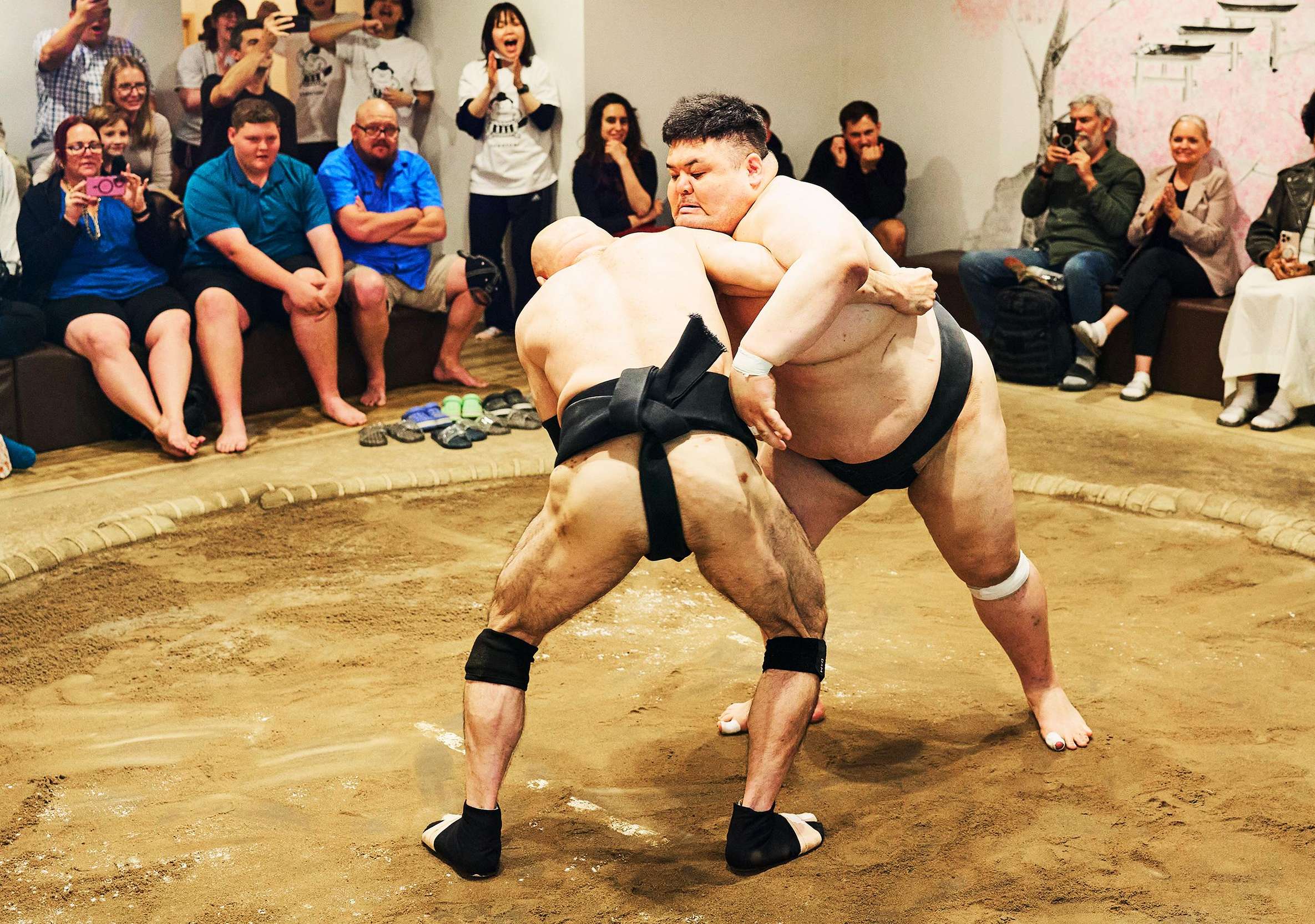
The arena sits nearly silent in the morning. Locals arrive late, and from about 3 pm the seats fill and the noise builds. Before each bout comes the shikiri, the tense face-off, and the whole hall goes quiet, quieter than you expect from eight thousand people.
Then the charge. When the fists come down the crowd erupts, names are shouted, and after a big upset cushions fly through the air, a ritual Osaka is known for and one that is livelier than Tokyo.
Bento boxes, yakitori and beer pass down the rows; eating at your seat is allowed, and yakitori is considered good luck because chickens never end up on their backs.
Pick up lunch or gifts outside and you spend it
Gift and lunch pickups eat into that single re-entry
Eat a big breakfast and bring snacks in
S and SS are the best upper-tier seats
Stay to the very end. Many foreign visitors leave before the main event, which is the single easiest way to waste a ticket; the bow-twirling ceremony that closes the day is what real fans stay for.
Follow the crowd's lead on when to cheer and when to hold your breath, and keep your phone off during the build-up.
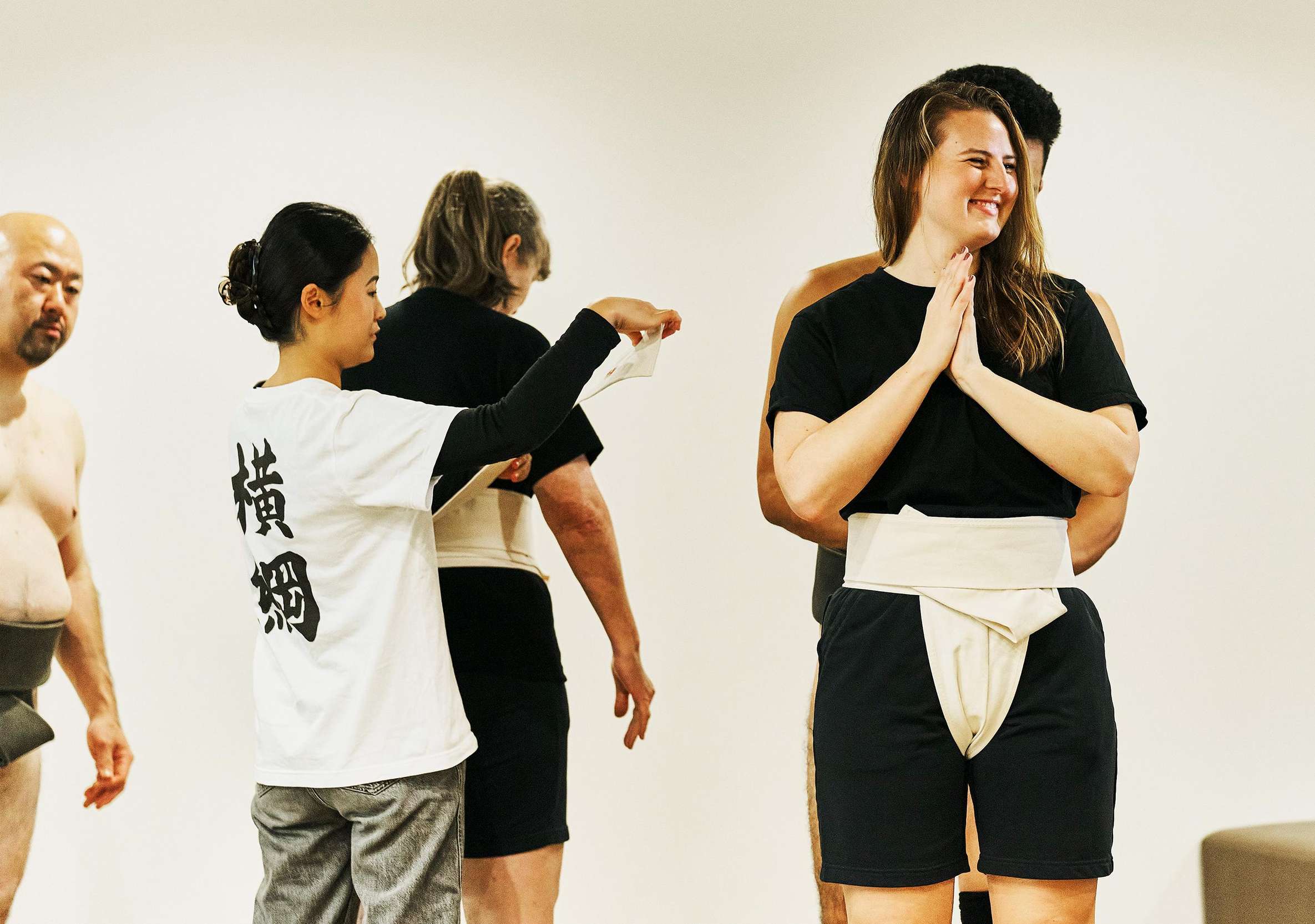
Both are worth your money, but they are different products. A show is scripted, comedy-leaning entertainment by retired wrestlers: demonstrations and training routines first, explanations of rules and rituals, often a lottery-picked chance to challenge a wrestler, and photos at the end.
How much wrestling you get depends on the show. The front-row wagyu show's own notes put its live sumo segment at about 40 minutes, the longest stretch of ring time on sale in Osaka.
Across exhibition shows generally, travelers report the bouts filling only the last 15 to 30 minutes, because the demos and explanations come first. The 40 minutes counts that one show's whole live segment; the shorter figure is the typical pattern across shows. Either way the bouts are choreographed, and the winner is decided in advance.
A tournament is the real thing: ranked bouts with careers on the line, a crowd that matters, and the roar that goes with it. The trade is access. Tickets sell out in minutes; shows book the same day.
| March tournament at Edion Arena | Front-row wagyu show | Sumo Studio challenge | |
|---|---|---|---|
| What the bouts are | Ranked, with real results | Staged, by retired wrestlers | Staged, one-round match |
| Ring time | Bouts all day, top division from about 4:15 pm | About 40 minutes of live sumo | Often only the last 15 to 30 minutes |
| Food | Bento and beer at your seat | Wagyu sukiyaki dinner | Snack or drink plans |
| Booking | Gone within minutes of sales opening | Book ahead, two daily slots | Same-day usually fine |
Watch the wording when you book. 'Authentic sumo experience' in a tour title usually means retired wrestlers and audience participation; a genuine show names its performers and their professional careers. Set your expectations to entertainment and the shows are excellent evenings; expect a real contest and you will leave disappointed.
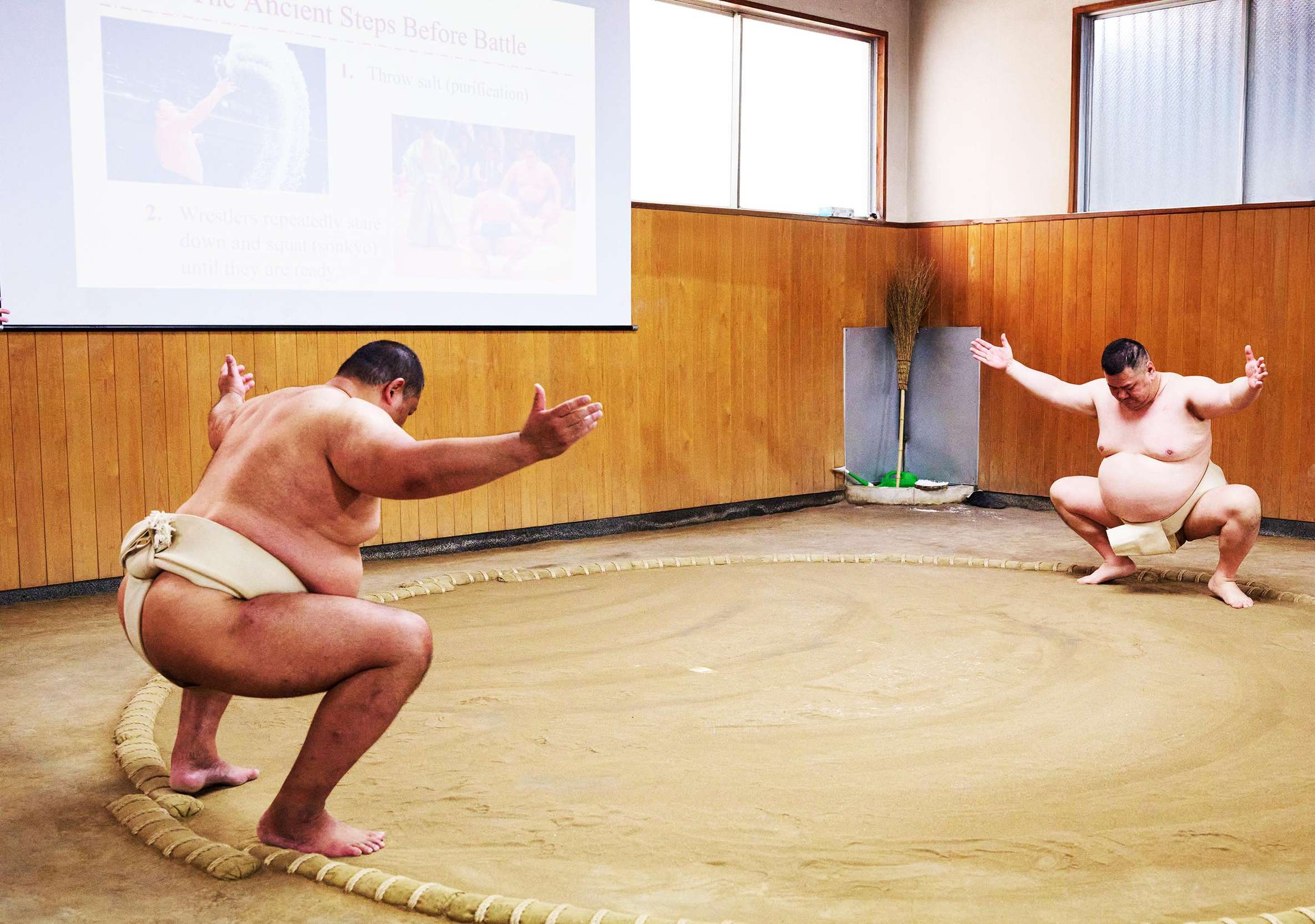
March is gone from your dates, and morning sumo practice in Osaka is largely unavailable, because the professionals travel to whichever city hosts the basho. In July they are all in Nagoya.
That is why the dinner and entertainment shows dominate the Osaka scene for most of the year, and it is why the shows above are the live sumo Osaka actually has until the spring.
The alternative is to follow the sport to its own calendar. Tokyo hosts in January, May and September at Ryogoku Kokugikan, Nagoya takes July at a new arena beside Nagoya Castle, and Fukuoka closes the year in November. Each has its own ticket rhythm and a full guide on this site.
Tournaments are almost never cancelled; it takes something exceptional. A single wrestler's withdrawal does not stop a basho either, it reshuffles the next day's bouts. Shows can be cancelled if a performer falls ill, with admission refunded.
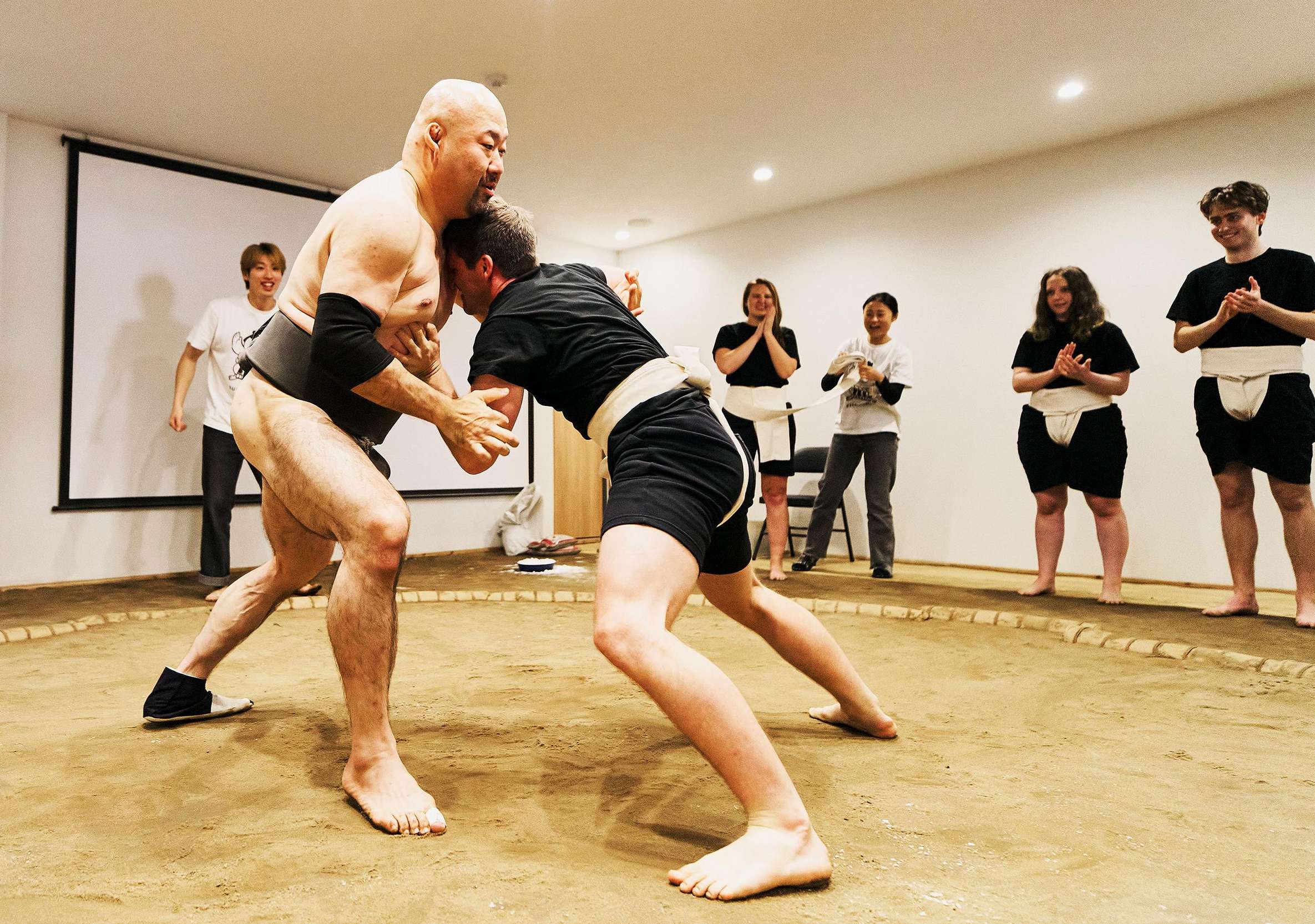
March in Osaka is the best-kept secret in sumo and the worst-kept secret in ticketing: a small, loud arena where cushions fly, but seats vanish in minutes.
If you are there in the tournament weeks, buy at 10 am on sales day and arrive around 3 pm. If not, book a show the same week you plan your evenings and enjoy retired wrestlers at arm's length.
Tokyo hosts the January, May and September tournaments at Ryogoku Kokugikan, the arena most visitors picture first.
Read the guide
Fukuoka stages the November tournament at Fukuoka Kokusai Center, a small hall where even cheap seats see the ring.
Read the guideNagoya moved its July tournament to IG Arena in 2025, a short walk from Nagoyajo Station.
Read the guideThe Minoh Expo tournament was a one-off Expo 2025 festival event, not one of the six official ranking tournaments.
Read the guideSales open at 10 am Japan time and the good seats go within minutes, so the buying method decides your tournament.
Read the guide
A bout ends when a wrestler is pushed out or anything but his soles touches the ground; the rules decide everything you watch.
Read the guideOsaka hosts one of the six annual basho; the other pages cover the rival cities and everything you need once a ticket is in hand.
Three basho a year at the most famous arena in the sport
Ryogoku Kokugikan is the home ground: three of the six annual tournaments run here, fifteen straight days each. The hall is small enough that even the last chair seat on the upper floor sees the ring clearly, which makes it the friendliest arena for a first basho.
The plan is simple. Arrive for the afternoon, because the top division enters the ring around 3:45 pm and the climax bouts run to about 6 pm, followed by the bow-twirling ceremony. Buy the moment sales open at 10 am Japan time; decent seats can be gone within minutes.
The year's last basho, in a small arena wrapped in street-food culture

Fukuoka Kokusai Center fills with sumo for fifteen November days, the final tournament of the sumo year. The arena is small, so no seat feels far off, and wrestlers walk the nearby streets in yukata during the run.
Matches finish around 6 pm, which hands you straight to Fukuoka's famous yatai food stalls in Nakasu and Tenjin for the evening. The catch is the ticket window: the whole run sells out within minutes of sales opening, so you buy early in September or not at all.
The July basho in a new arena beside Nagoya Castle
The July basho is the only tournament Nagoya gets, and since 2025 it runs at IG Arena beside Meijo Park, minutes from Nagoya Castle. Top-division bouts start around 2 pm and the day ends near 6 pm.
Plan around the ticket clock: sales open at 10 am Japan time five to eight weeks out, and in 2026 every one of the fifteen days was sold out roughly seven weeks before the first bout.
Morning practice viewing in Nagoya exists only in June and July, so the tournament month doubles as your practice window.
Expo 2025's sumo festival, with 200 wrestlers including the Yokozuna
The Minoh Expo Grand Sumo Tournament belonged to Expo 2025: a festival event at the Sky Arena in Minoh that brought 200 wrestlers from the Japan Sumo Association, Yokozuna included, to a ring north of Osaka.
It sits outside the honbasho system, so unlike a March bout at Edion Arena, nothing there touched a wrestler's rank.
If you came looking for it, the honest move is to check whether your dates line up with Osaka's real March tournament, or book one of the Osaka sumo shows instead. Those run year-round with retired wrestlers, food and audience participation.
How tickets are sold, which seat to pick and what to expect paying
Tournament tickets go on sale about a month or two ahead, at 10 am Japan time, and decent seats vanish in minutes. Buying from abroad usually means the official English service, which takes credit cards only, adds a per-ticket fee, and hands you the ticket at a Seven-Eleven in Japan.
The seat advice carries across every city: pick an upper-floor chair seat for your first basho and skip the floor boxes unless you can sit cross-legged for hours. Ringside seats are sold by phone lottery and are nearly impossible for foreign visitors, so save yourself the wait.
How a bout is won, how the day runs and where to sit

Two things decide every bout: a wrestler loses when he is pushed out of the ring, or when any part of him other than the soles of his feet touches the clay. The charge itself starts when both fists come down together, with no whistle to warn you.
The daily rhythm matters as much as the rules. Lower-ranked wrestlers fight from mid-morning to a quiet arena, the top division enters in the late afternoon, and the marquee bouts run to about 6 pm before the bow-twirling ceremony. Arrive for the last two to three hours and you get the roar with it.
Compare the six annual tournaments and their host cities to see which one lines up with your trip dates.

Work out whether a Tokyo tournament visit suits your dates, and what tickets and seating look like there.
Going to Kyushu? Find out where and when the Fukuoka tournament takes place in November.

Heading for the July basho in Nagoya? Find out how its tickets work and where the wrestlers fight.
Look into the Osaka-area exhibition tournament and how it fits alongside the March basho.

Turn the ticket hunt into a plan, with seats, prices and how fast the good ones disappear.

Map out where sumo happens around Japan, from tournaments to shows, and pick your spot.

Weigh Tokyo's live viewing options, from stable practice to shows, against your itinerary.
Decide how to see live sumo in Osaka when no tournament is running, show by show.
See what Kyoto offers for watching sumo, from participatory shows to dinner venues.
Find out where to watch sumo in Fukuoka, including morning practice during tournament season.

Check what the Sapporo sumo show involves and when its daily performances run.

Sort the kinds of sumo experience: watching a show, joining a class or visiting a stable.

Picture a sumo outing at Lake Yamanaka, with bouts, rituals and Mt Fuji as the backdrop.

Find a class where you can try sumo moves yourself in Tokyo or Osaka.

Plan a guided visit to a Tokyo sumo stable and watch real morning training.

Add a chance to wear sumo attire to your Tokyo trip and step into the ring for fun.

Go deeper into sumo's traditions with a Tokyo class and a chanko nabe lunch.
See how a guided tournament visit works and whether it suits your city and dates.

Judge whether a guided option matches your plan for the July tournament in Nagoya.
Weigh whether an Osaka tournament experience with tickets matches what you pictured.

Compare guided ways to watch a Tokyo tournament at Ryogoku and pick one.

Find where real morning training is open to visitors across Japan.

Turn a wish to watch Tokyo training into a stable visit with a guide.

Understand why real morning training in Osaka is scarce and what to do instead.

Tell real Kyoto training apart from performances before you book a visit.

Work out what a sumo show includes and which city's show fits you best.

Pick a Tokyo sumo evening with premium dining, drinks and front-row seats.

Compare Tokyo's sumo shows by venue, food and seating to find yours.

Choose an Osaka sumo show, with or without a meal, that fits your evening.

See what a Kyoto sumo show involves and whether it suits your trip.
Look at the Sapporo sumo show with food and check its current availability.
Plan a Tokyo outing with a live show and a chanko nabe lunch in one.
Turn a sumo-themed dinner in Osaka into a booking, food options compared.

Compare every way to watch or try sumo across Japan and choose the best fit.
Get quick answers on rules, timing and match length before watching in Tokyo.

Plan a visit to the Tokyo sumo museum and look at other cities' options.

Explore Ryogoku, Tokyo's sumo district, and see it with some context.
Quick answers on seeing sumo in Osaka: what the shows are, when they run, and how they compare with the March basho itself.
Yes. Sumo shows run in Osaka through the year, with live bouts, commentary and a chance to step into the ring. Morning practice is largely unavailable outside the run-up to the March basho, so these shows are what the city's sumo scene runs on.
They are entertainment shows performed by retired professional wrestlers, and the exhibition matches are choreographed. The skill is genuine and the demonstrations are real; what is missing is the competitive stakes of ranked tournament bouts.
The Osaka Sumo Show with Front-Row Seating & Wagyu Sukiyaki. Every guest sits in the front row beside the ring for a live show of about 40 minutes by former professional wrestlers, plus commentary and a photo session in the ring.
The front-row sukiyaki show runs a lunch show at 1 pm and an evening show at 6 pm. Sumo Hall Hirakuza runs show slots from 5 pm. Whatever the venue, arrive 15 to 20 minutes early so the seat search is not rushed.
Hirakuza keeps same-day online booking open until 3 pm and sells leftover seats at the hall from then, so last-minute plans usually work. Book about three months ahead mainly for the premium front-row seats, which go first.
Mostly no. Morning practice in Osaka is largely available only in the run-up to the March tournament, and the wrestlers leave the city when tournaments run elsewhere. The shows are the reliable way to see live sumo here.
It depends on the venue: the Sumo Studio experience runs 1 to 1.5 hours, Hirakuza's show runs 2 hours with food, and the front-row show with wagyu sukiyaki takes 2.5 hours. At exhibition shows the actual wrestling often fills only the last 15 to 30 minutes.
Yes, at several venues. The Sumo Studio show has a ring challenge with limited spots, Hirakuza picks challengers by lottery, and the front-row show runs ring drills with one-on-one bouts that may be drawn by lot. Joining is optional; watching is fine too.
Most shows sit in the Namba area. Hirakuza is on the 8th floor of Namba Parks shopping center, indoors whatever the weather, and the March tournament venue is about a five-minute walk from Nankai Namba station. Train access is recommended for all of them.
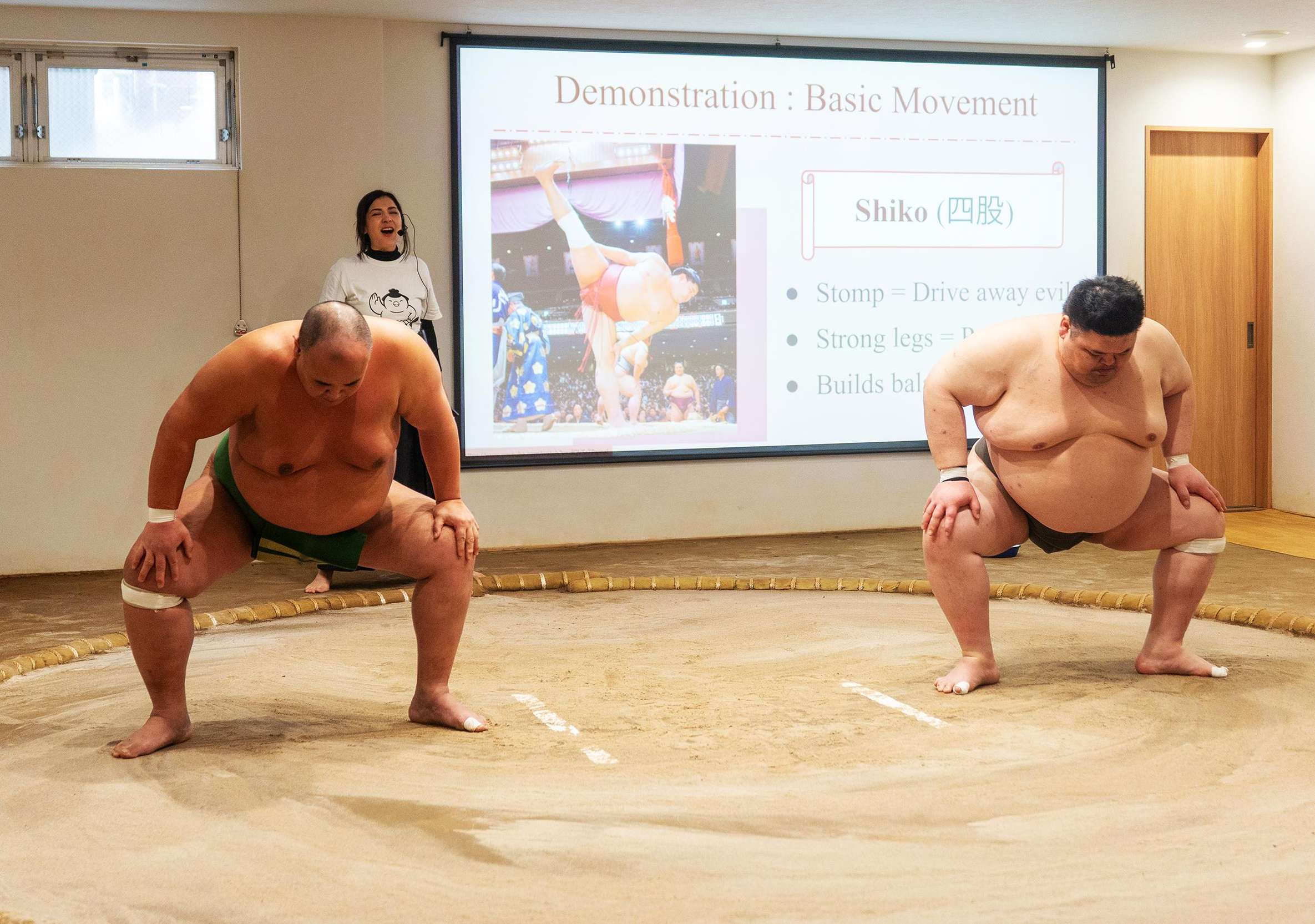
Book the Osaka show with a live match between retired wrestlers, training routines and your own chance to face one in the ring, and cancel free up to 24 hours ahead.



