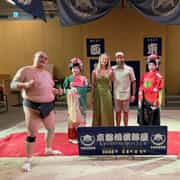
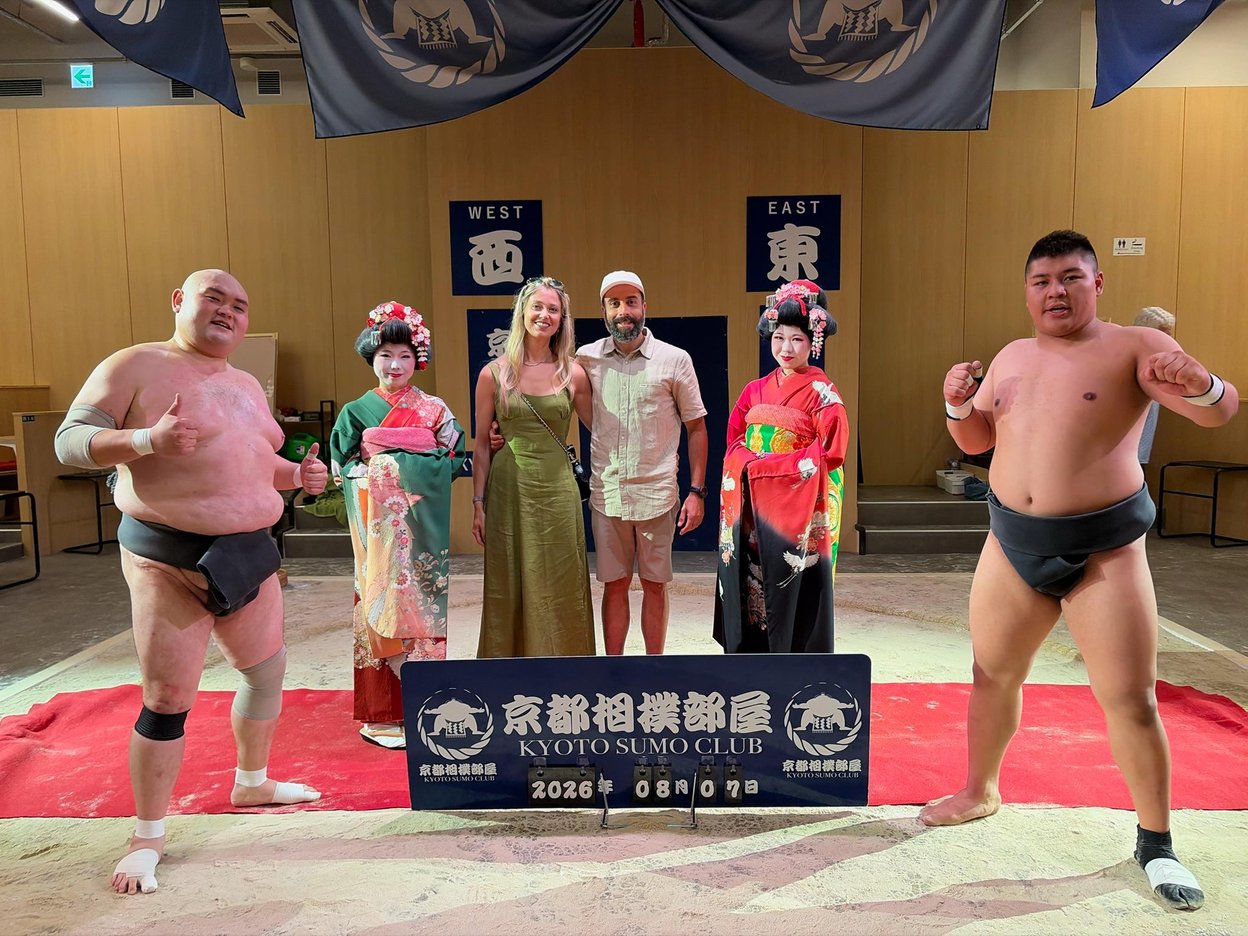
Watch sumo in Kyoto without planning a tournament trip. Sit close enough to feel the power and intensity of real sumo wrestlers, eat chanko nabe hot pot as former top-division wrestlers clash, then step into the ring and challenge one yourself. Book a seat and Kyoto gives you the sport, the meal and the memory in one evening.
4.8★average rating2,652traveler reviews100%free cancellation26countries travelers came from
Kyoto sumo wrestling - which experience fits your evening
Two sumo shows run in Kyoto, and they split on one question: do you watch from the table or step onto the ring yourself? The dinner show pairs the matches with a geisha dance and unlimited chanko hot pot. The participative experience is smaller and puts every willing guest into the ring.
Show typeBoth experiences are family-friendly entertainment staged by retired professional wrestlers, and neither is a formal tournament or training session.
ArrivalThe dinner show asks guests to arrive at least 20 minutes before the start, which also gives you time to settle a good seat.
BookingBoth venues run shows daily with several sessions, but showtimes can vary by date, so check the day's calendar and book a few days ahead.
KidsBoth shows welcome children; the dinner show is not suitable for babies under 1, and children 12 or under at the participative experience need a private booking with a supervising adult.
DietVegetarian, vegan and gluten-free meals are available on request at the dinner show, reserved at least 2 days in advance.
PhotosBoth shows welcome photos and videos with the wrestlers, though live streaming or posting the whole show online is not permitted.
Ring challengeSpots to wrestle a wrestler are limited, and at the dinner show participants are picked by lottery when many apply.
WheelchairsStrollers and wheelchairs cannot sit in the dinner show's viewing area, so contact the operator in advance to arrange storage and help.
Getting thereThe participative venue is a 7-minute subway ride from Kyoto Station and a 1-minute walk from Marutamachi Exit 6.
importantKyoto's sumo shows run daily, but showtimes can vary by date and venues list occasional irregular holidays, so a booking for one time does not guarantee that slot exists.
Check the calendar for your date before booking the kyoto sumo wrestling show you want, and pick the session time that matches your plans, since some sessions, such as the late night show, skip the meal.
See Kyoto wrestling up close - two shows to pick between
Most hands-on
1.5 hours
4.8(837)
Kyoto: Participative Sumo Experience, Traditional Meal, Pic
The only Kyoto venue that guarantees everyone who wants a ring match gets one, in an authentic mawashi, 7 minutes from Kyoto Station.
Free cancellationSumo showLive MC with English explanations
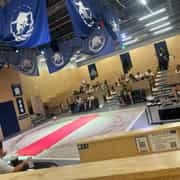
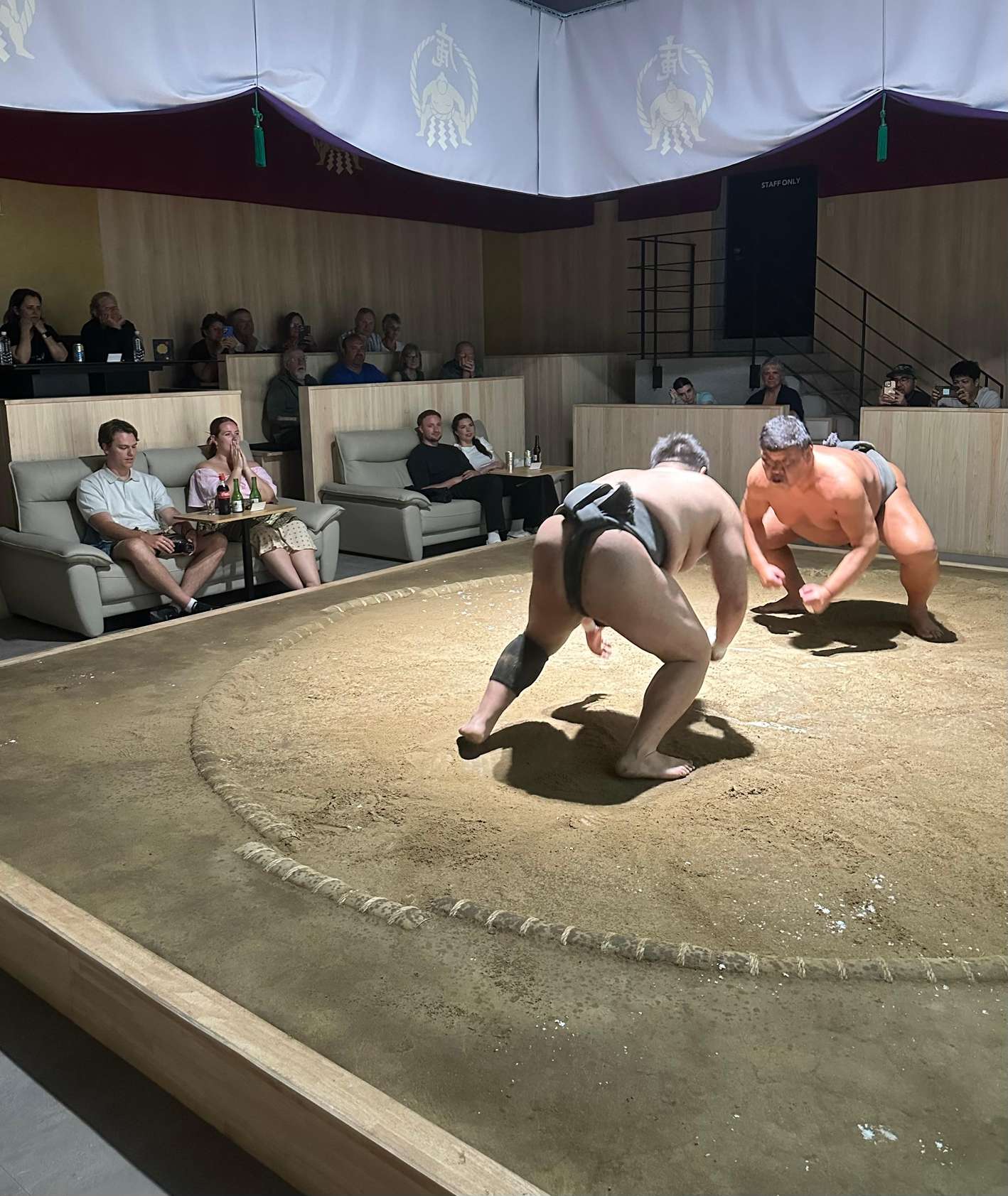
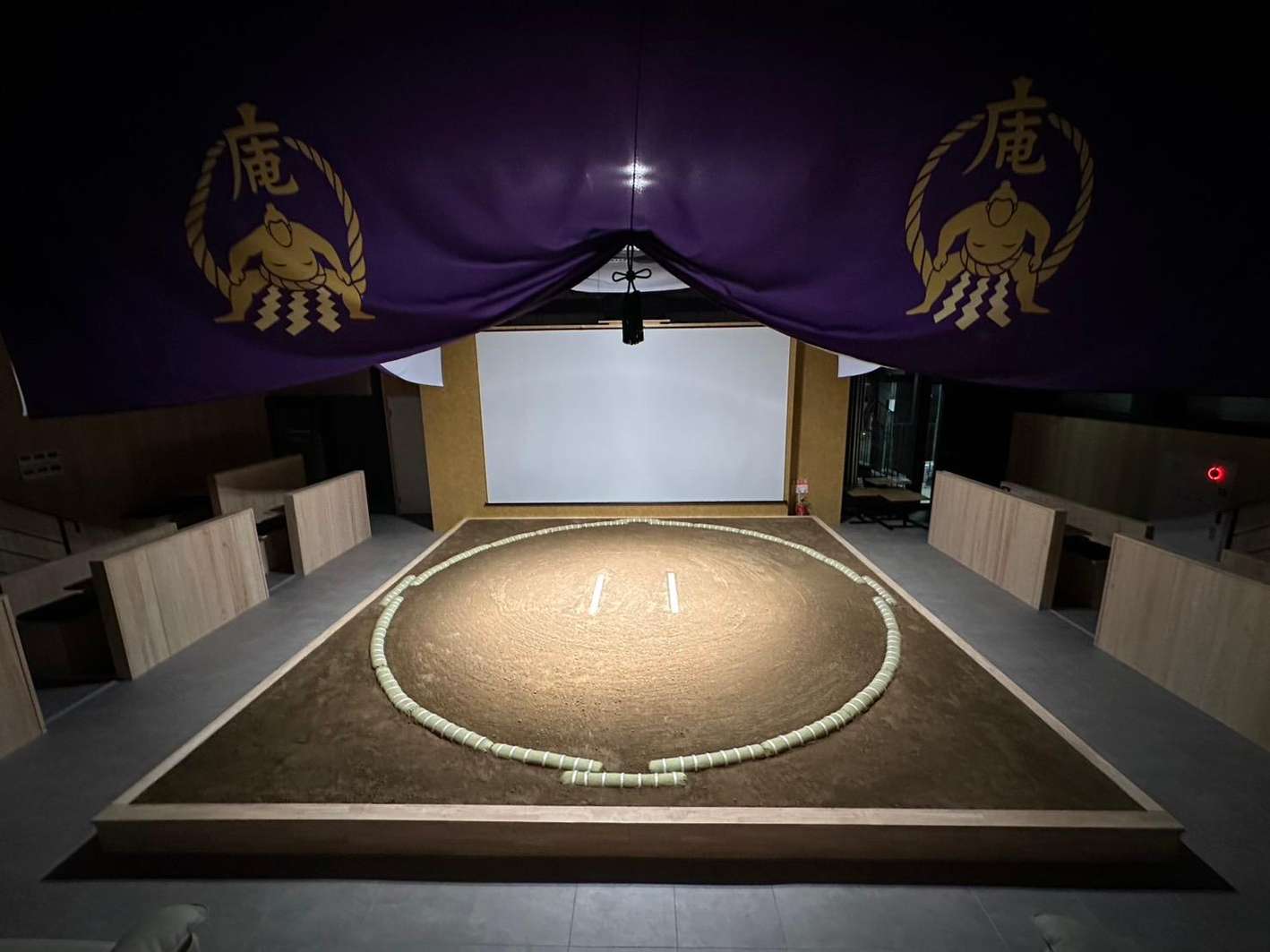
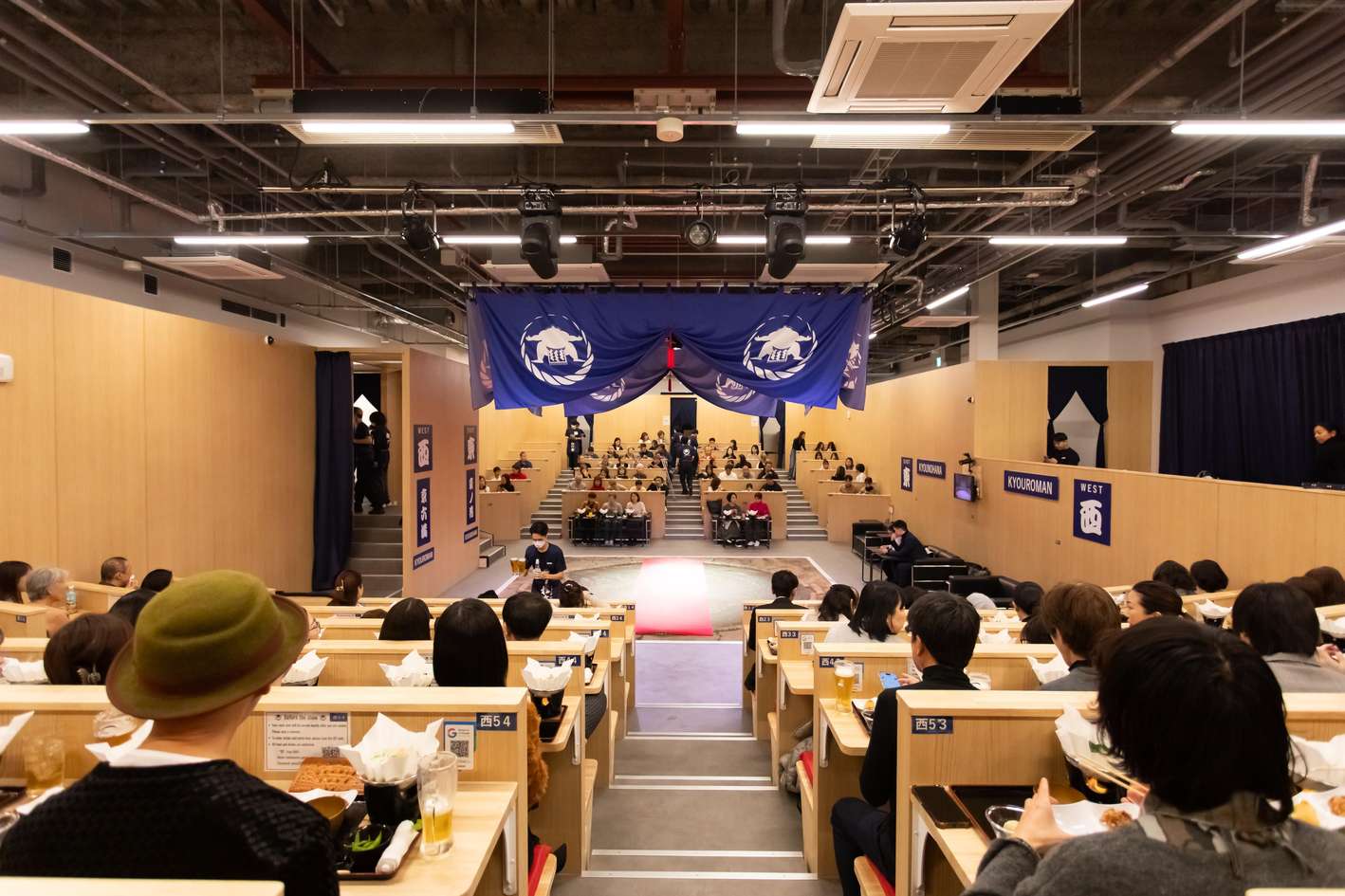
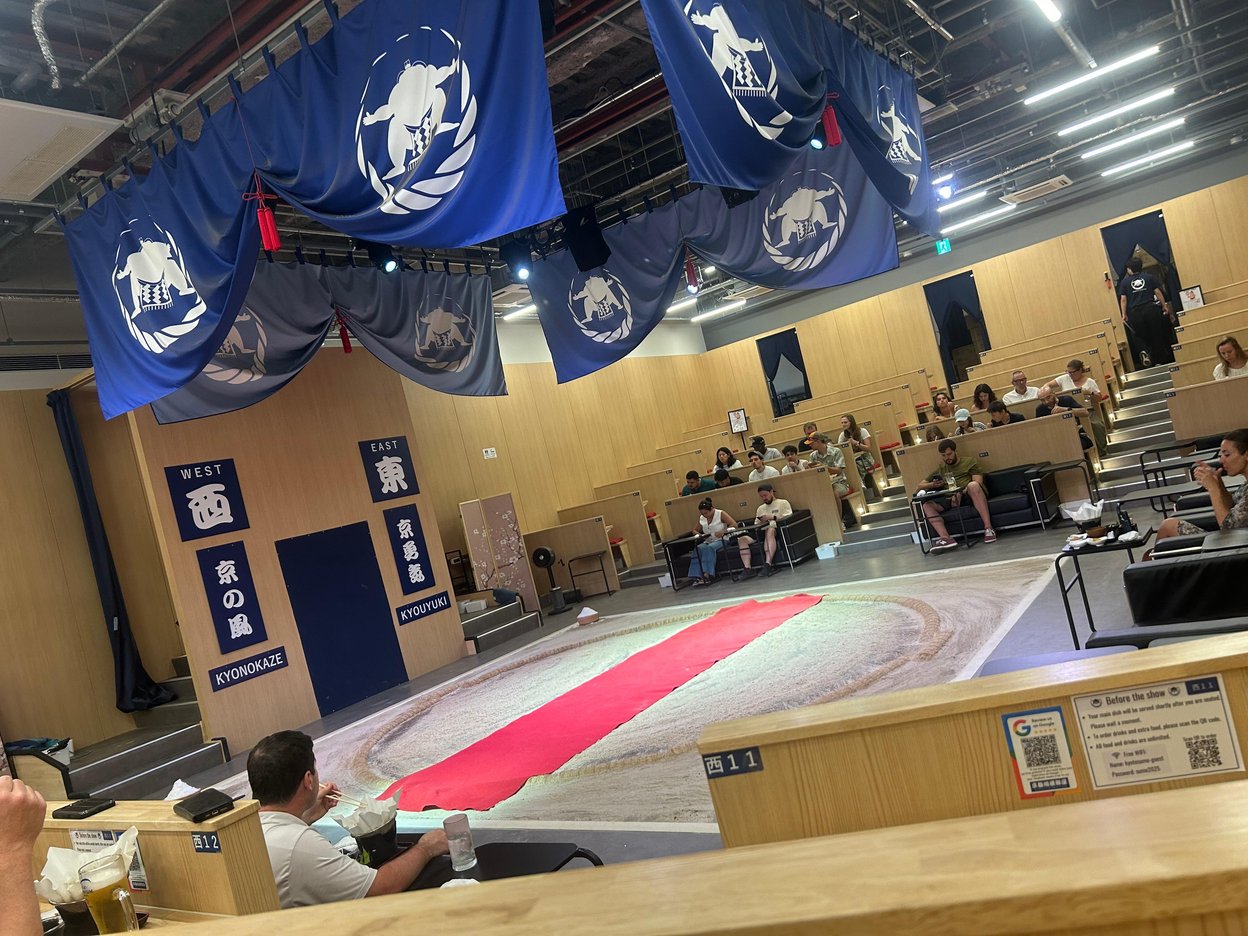
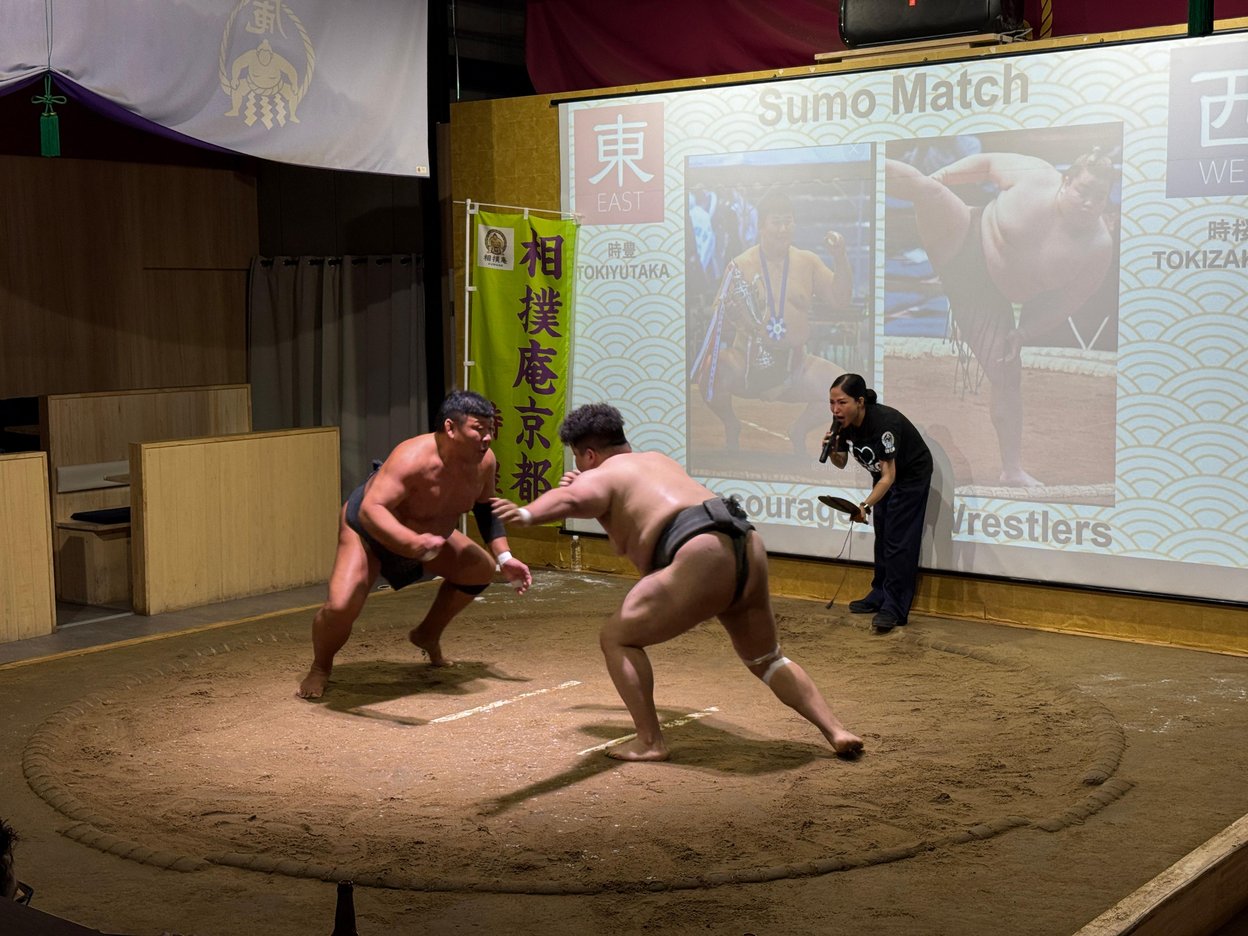
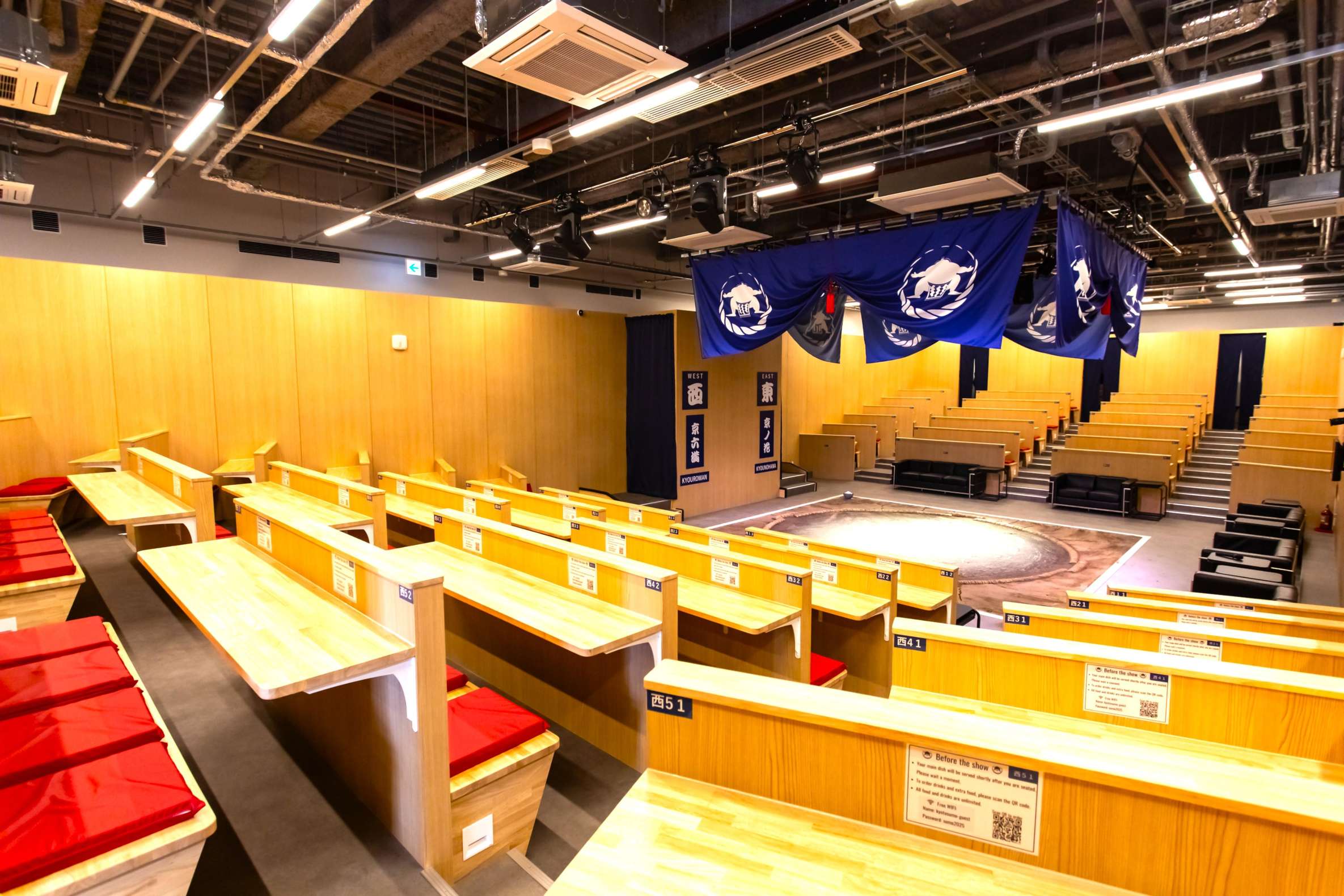
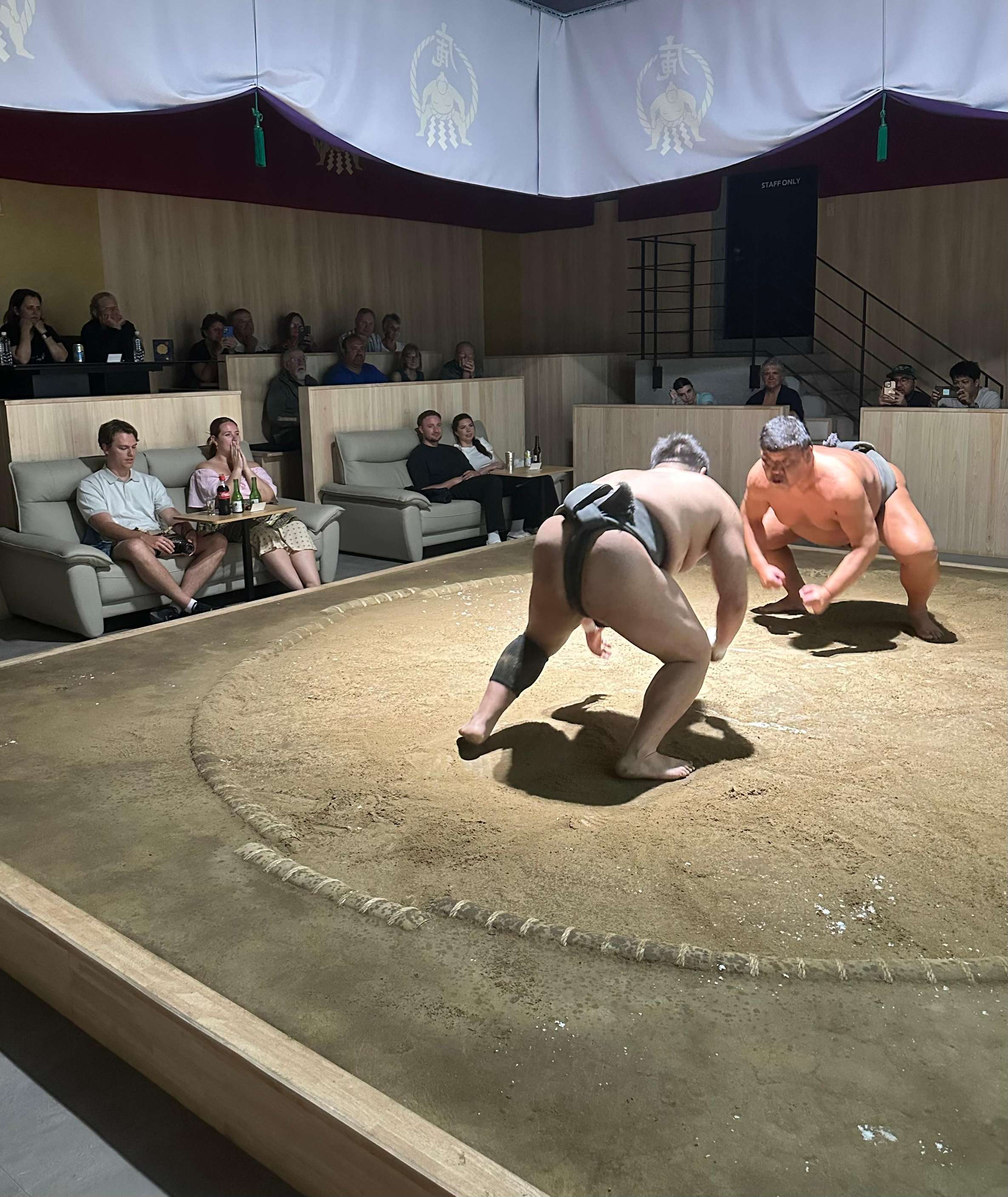
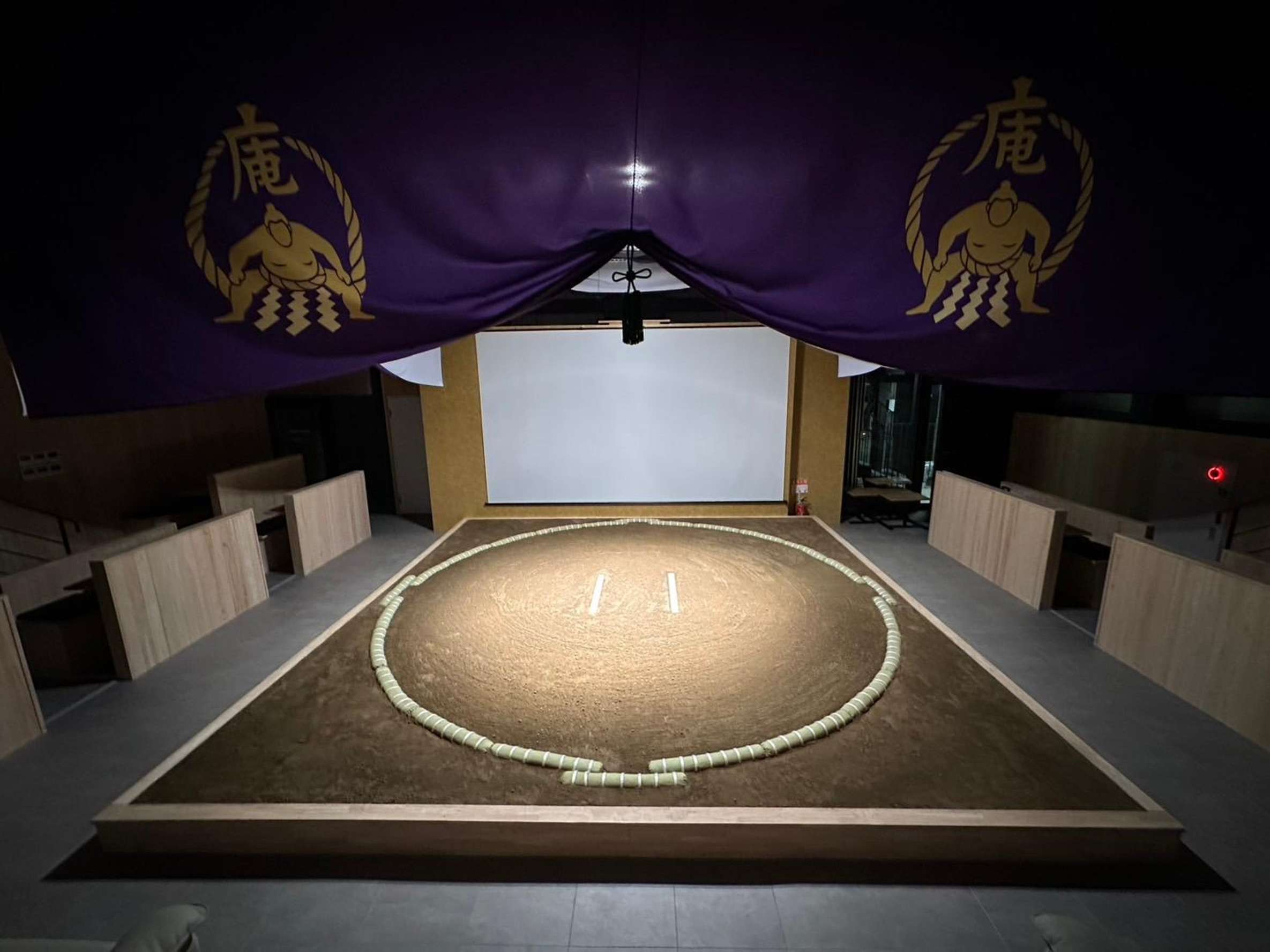
The show runs about two hours in a small room with a real clay ring, a dohyo, at the center. Every seat sits close to it.
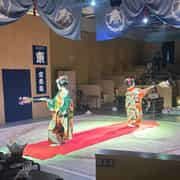
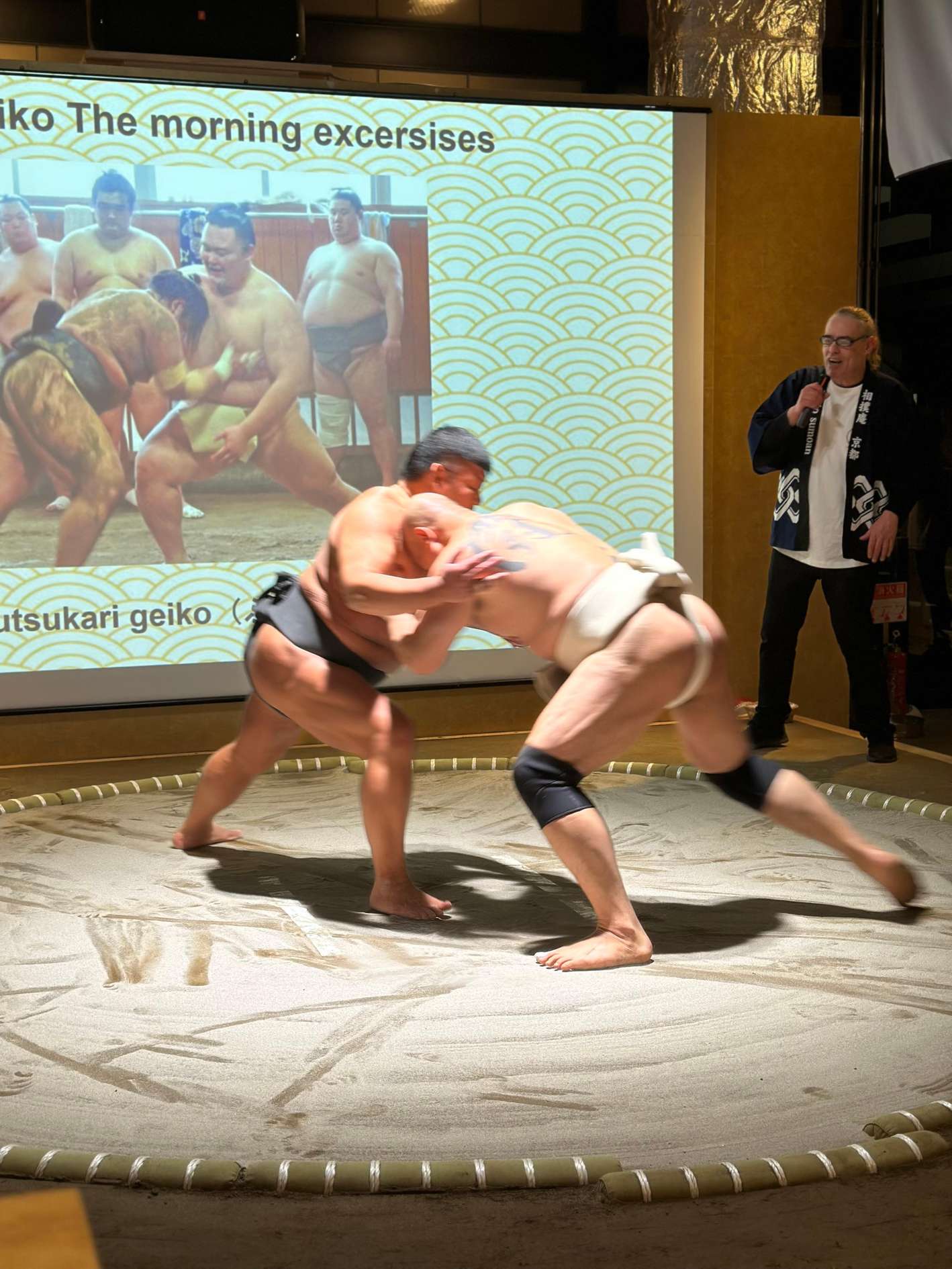
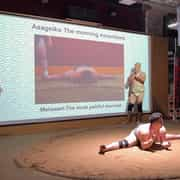
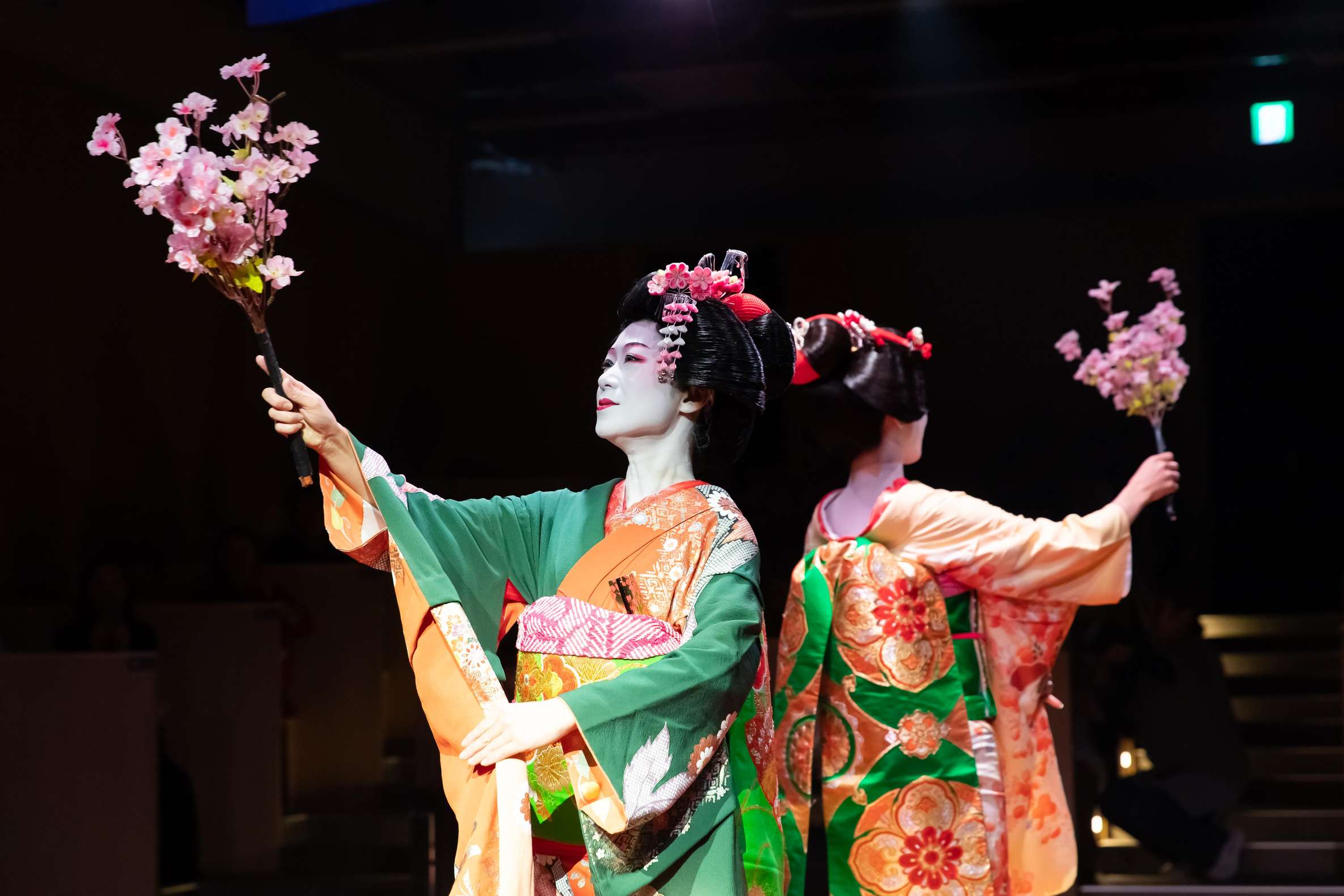
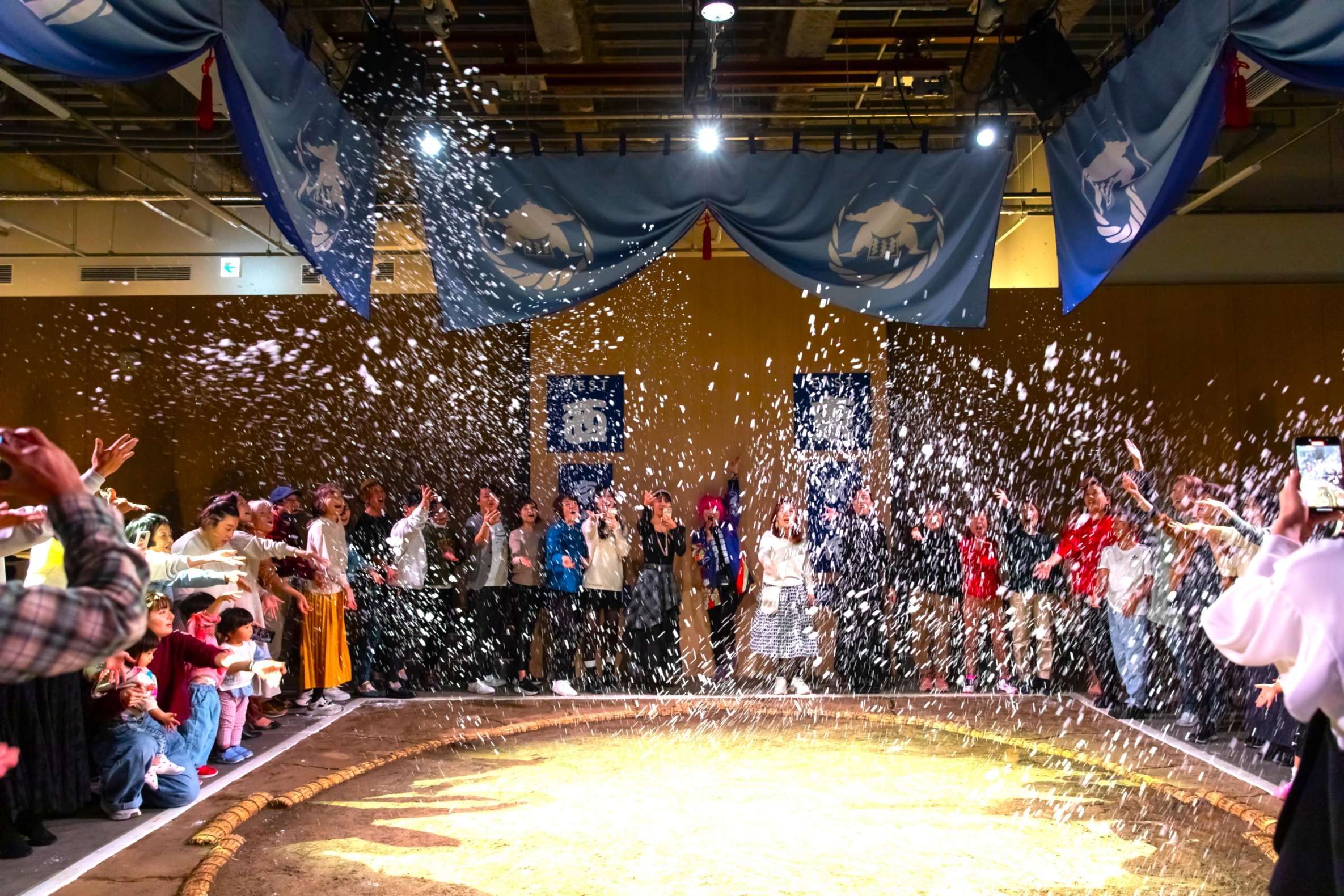
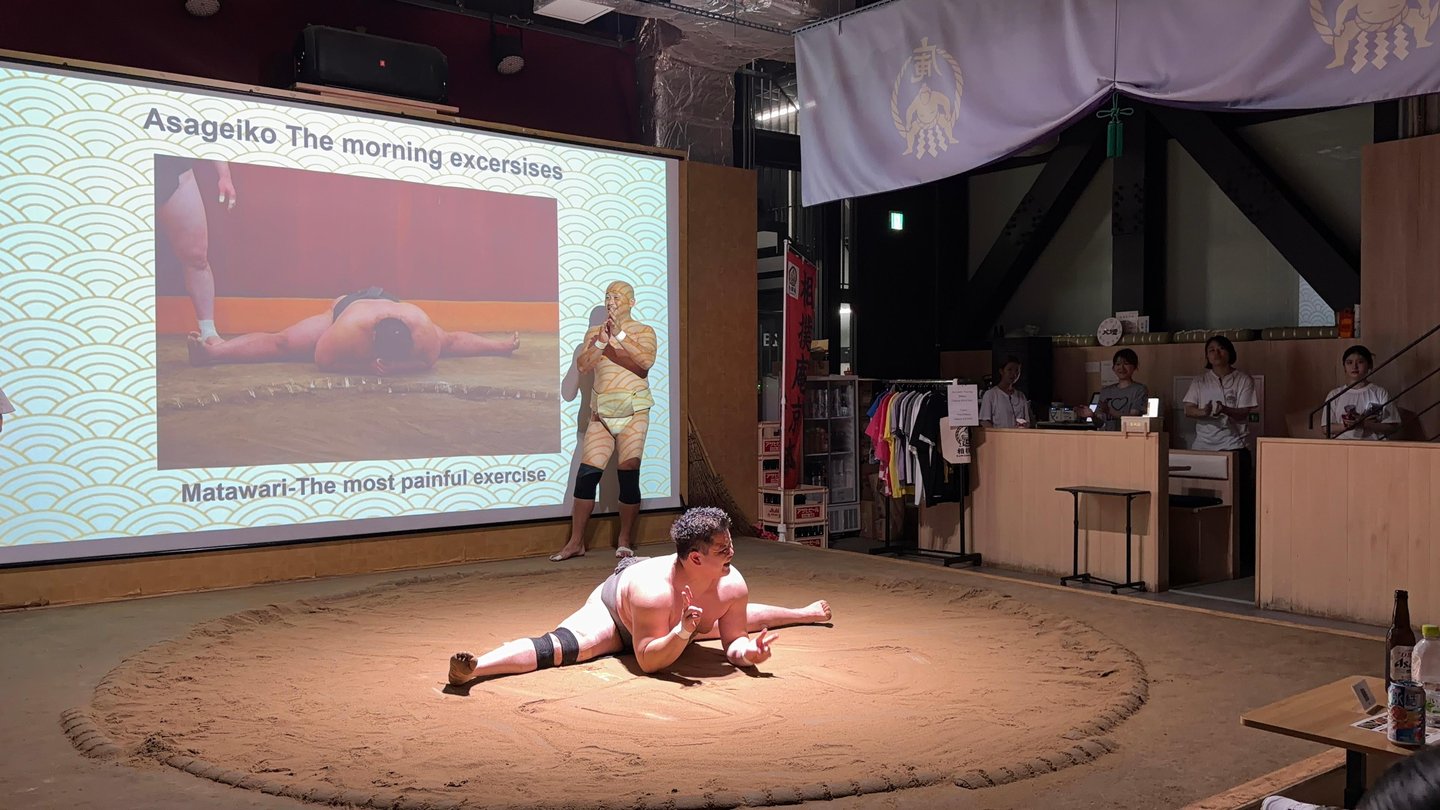
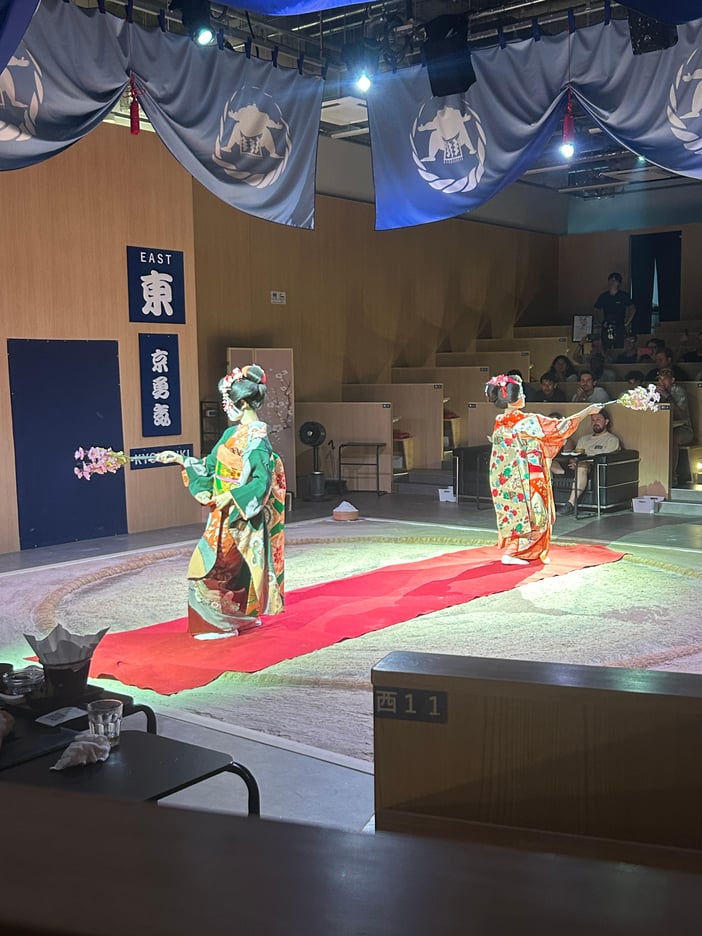
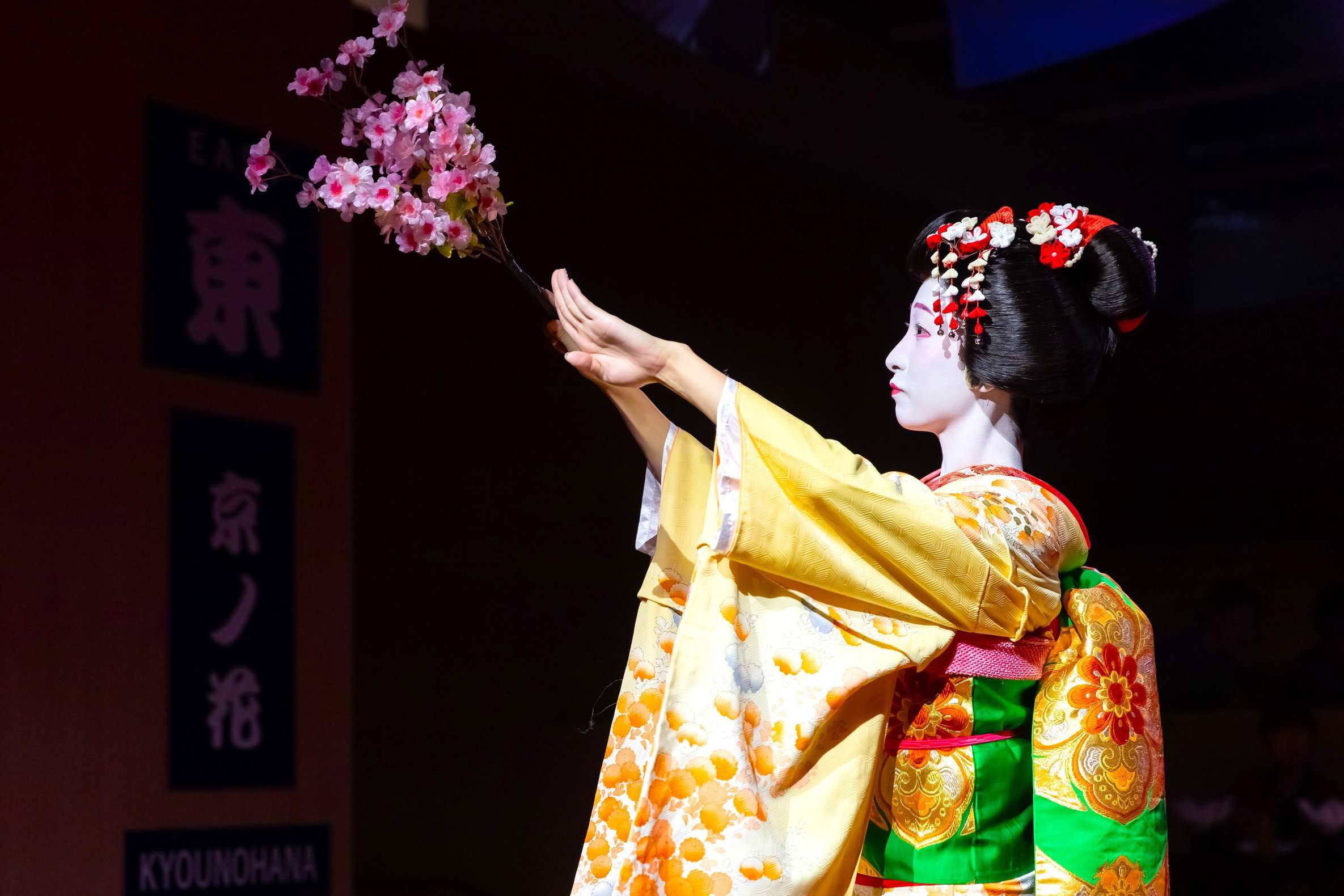
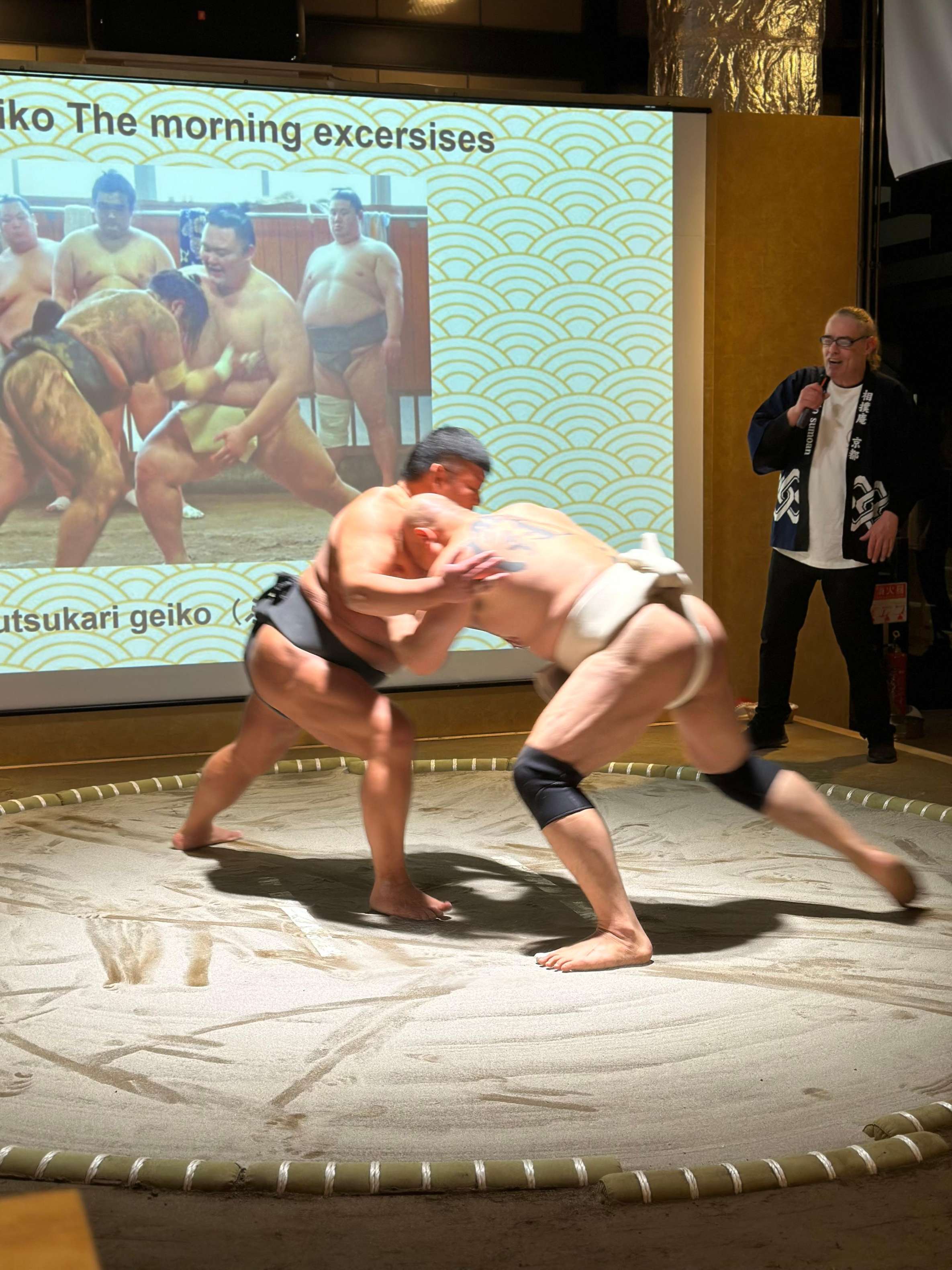
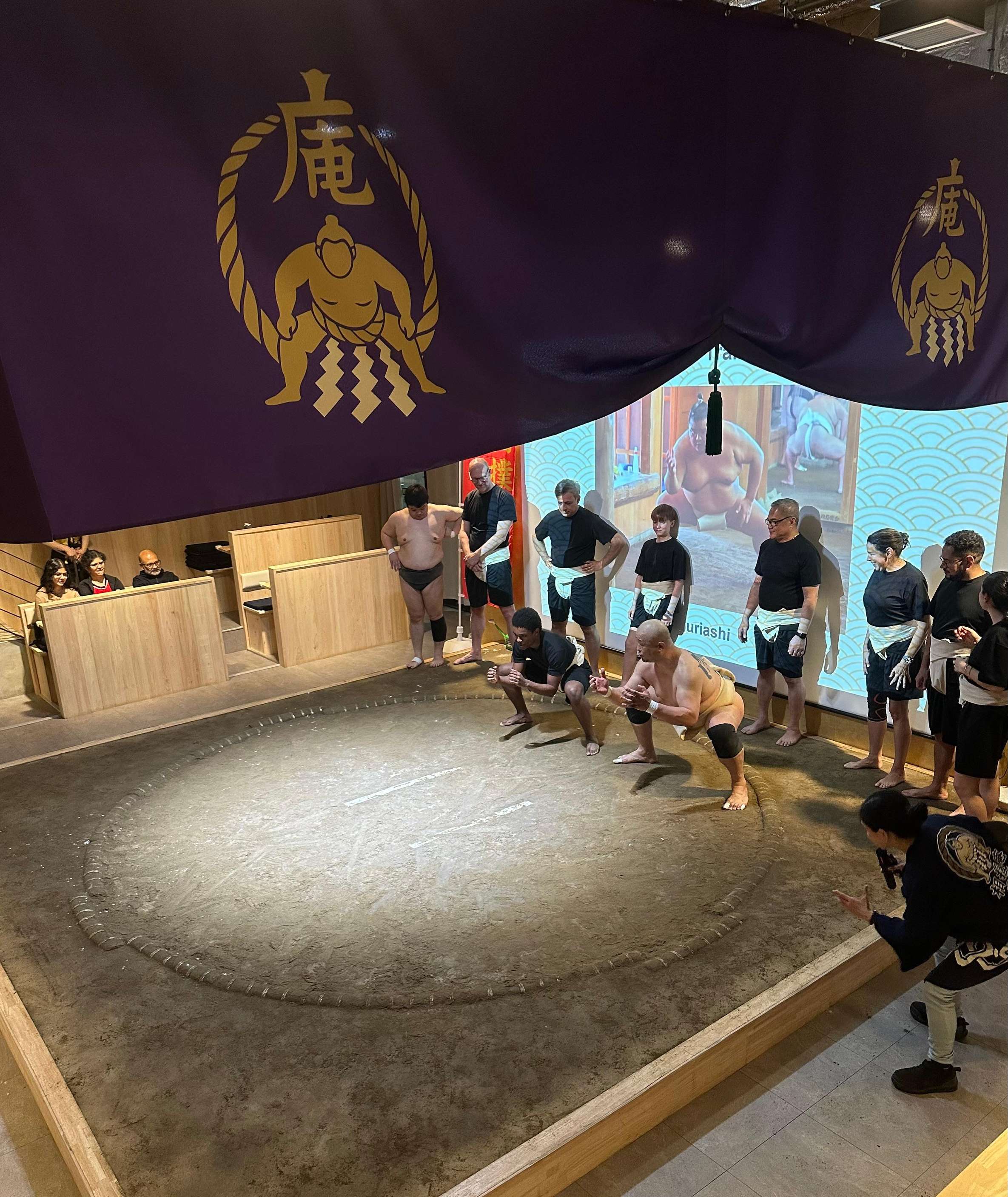
A geisha dance opens the evening, then retired wrestlers demonstrate the exercises, techniques and salt-throwing rituals you would see at a professional tournament, with an English-speaking MC explaining the rules as they go.
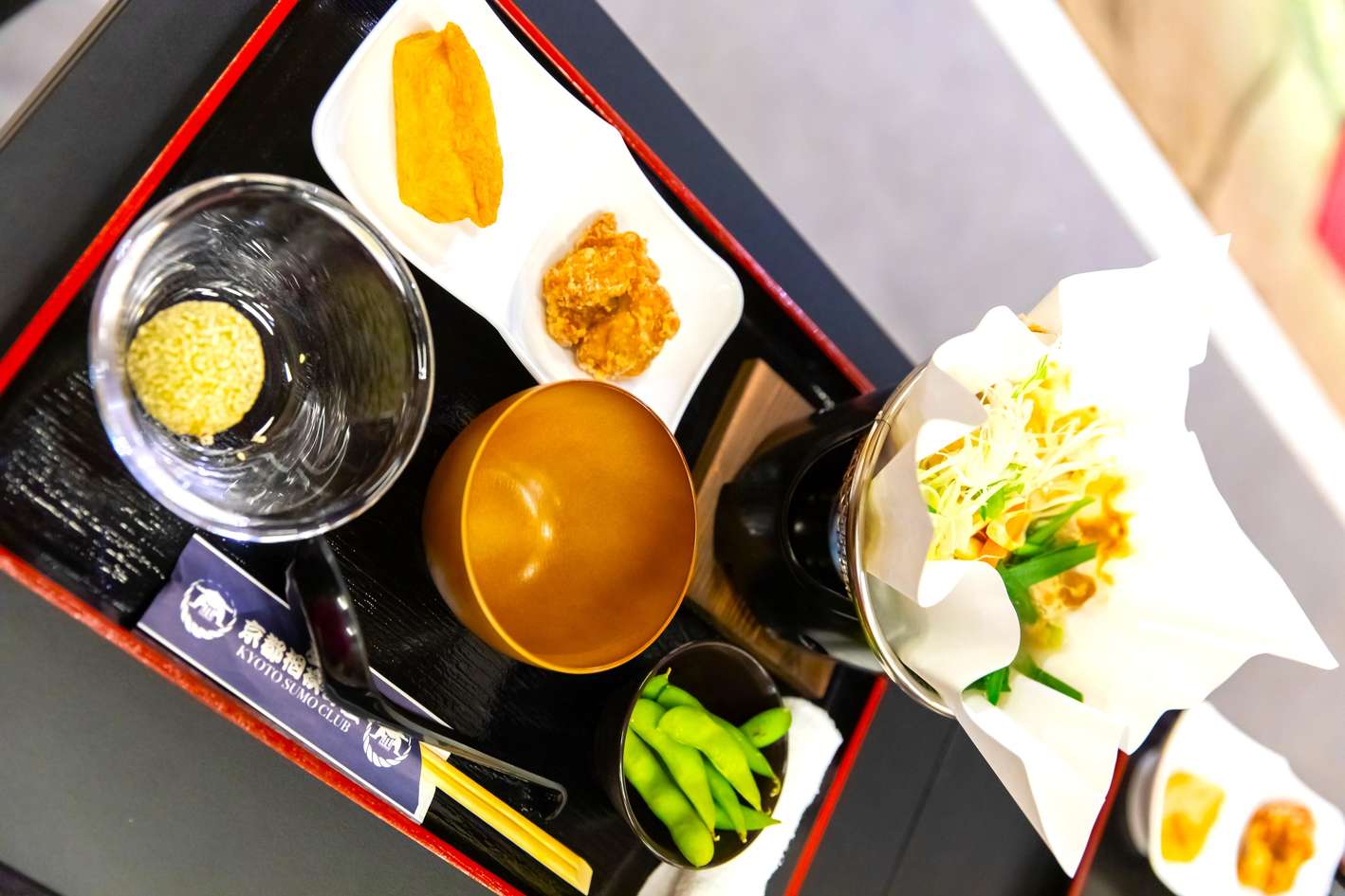
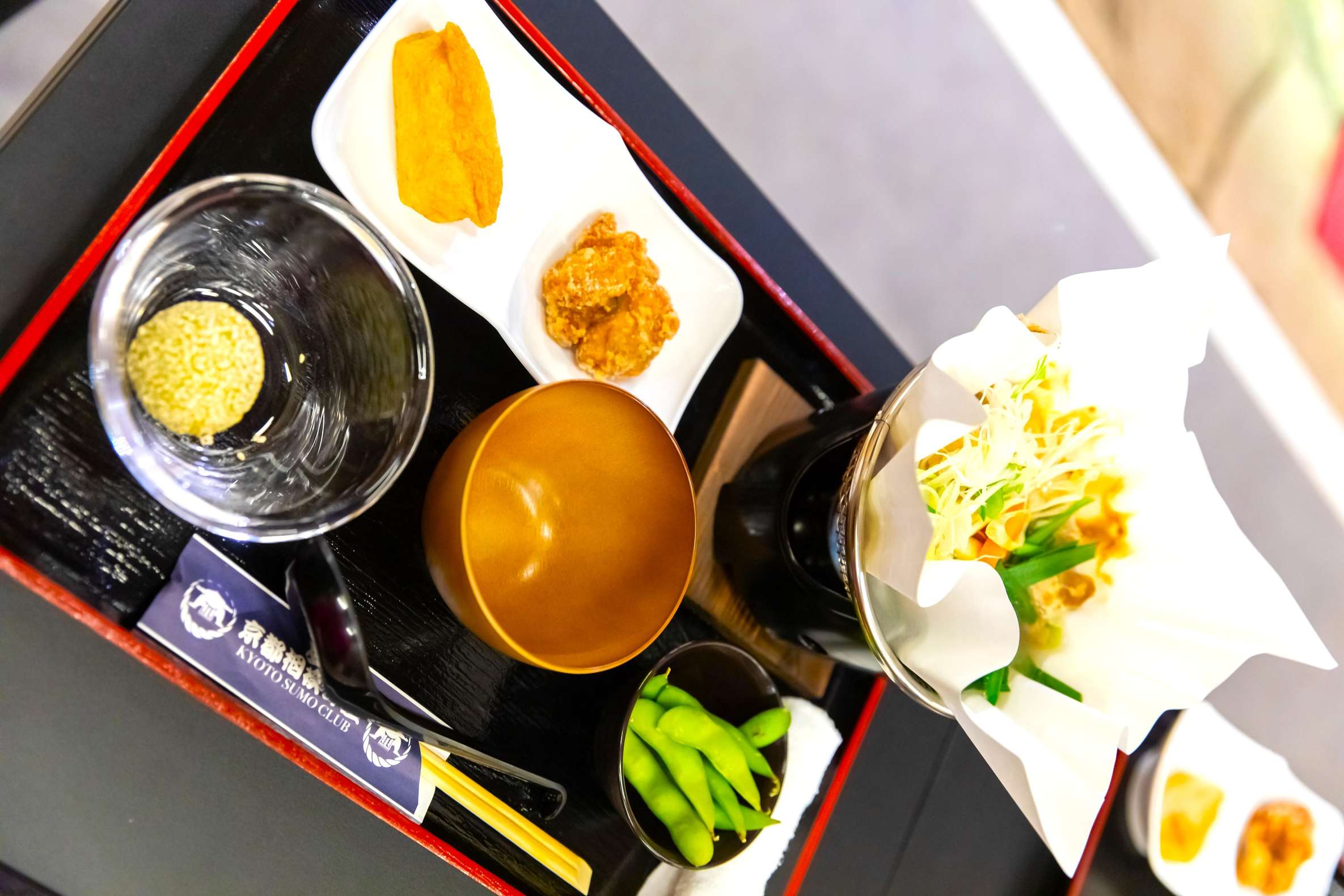
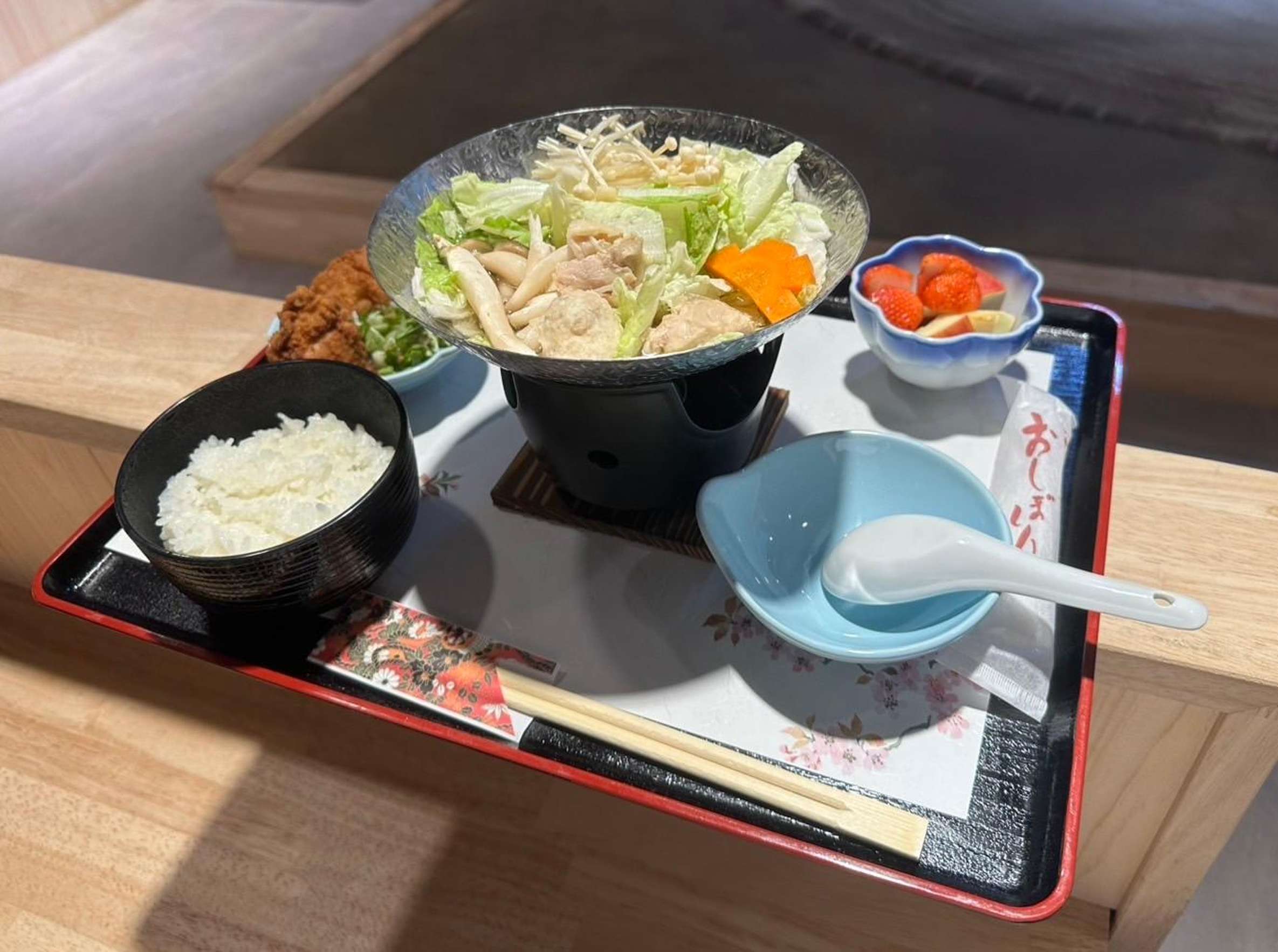
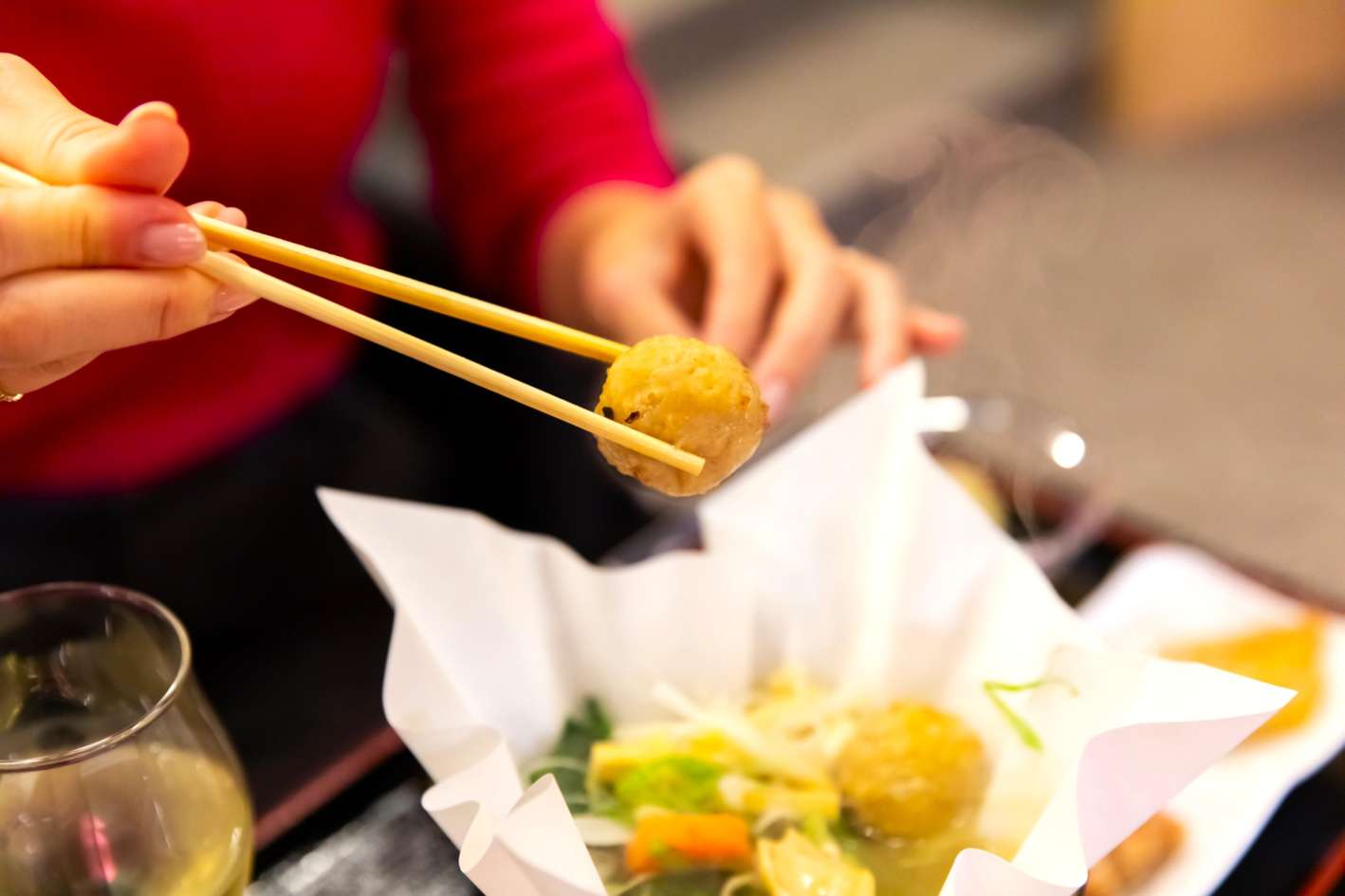
Food runs through the whole thing. You eat and drink as much as you like, and the signature dish is chanko nabe, the hot pot stew wrestlers eat to build their bodies.
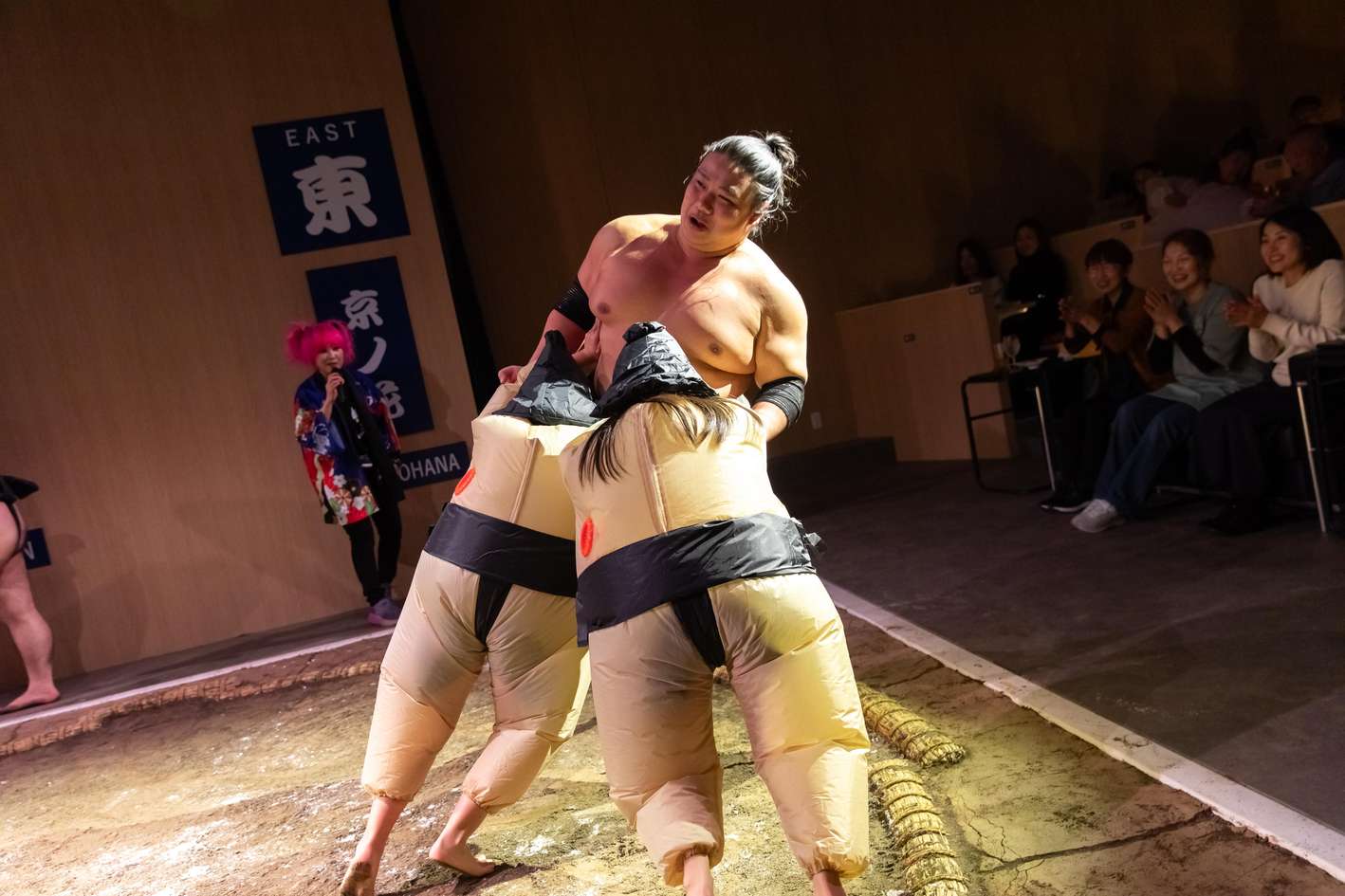
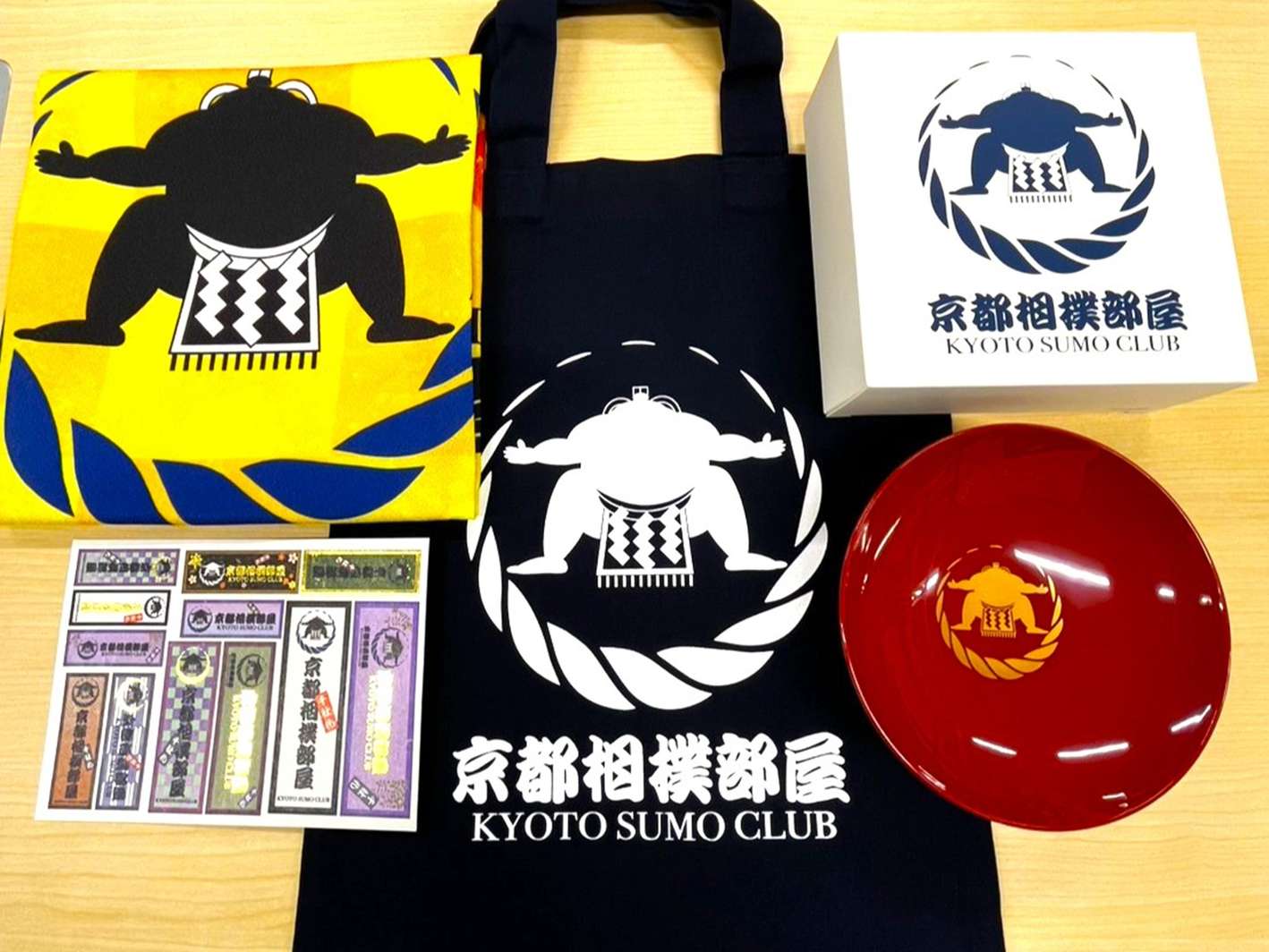
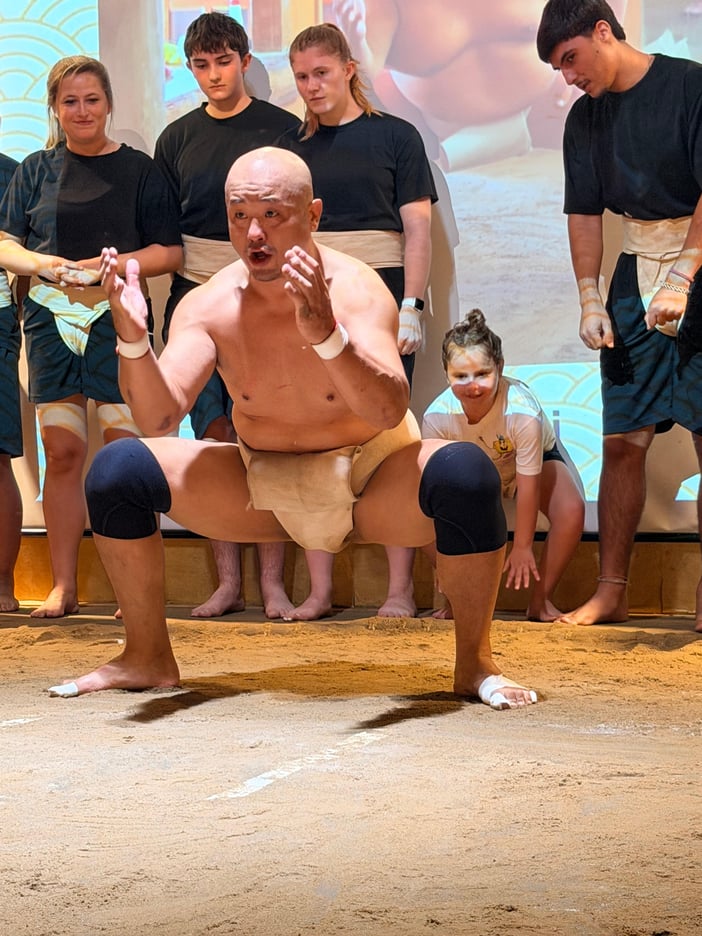
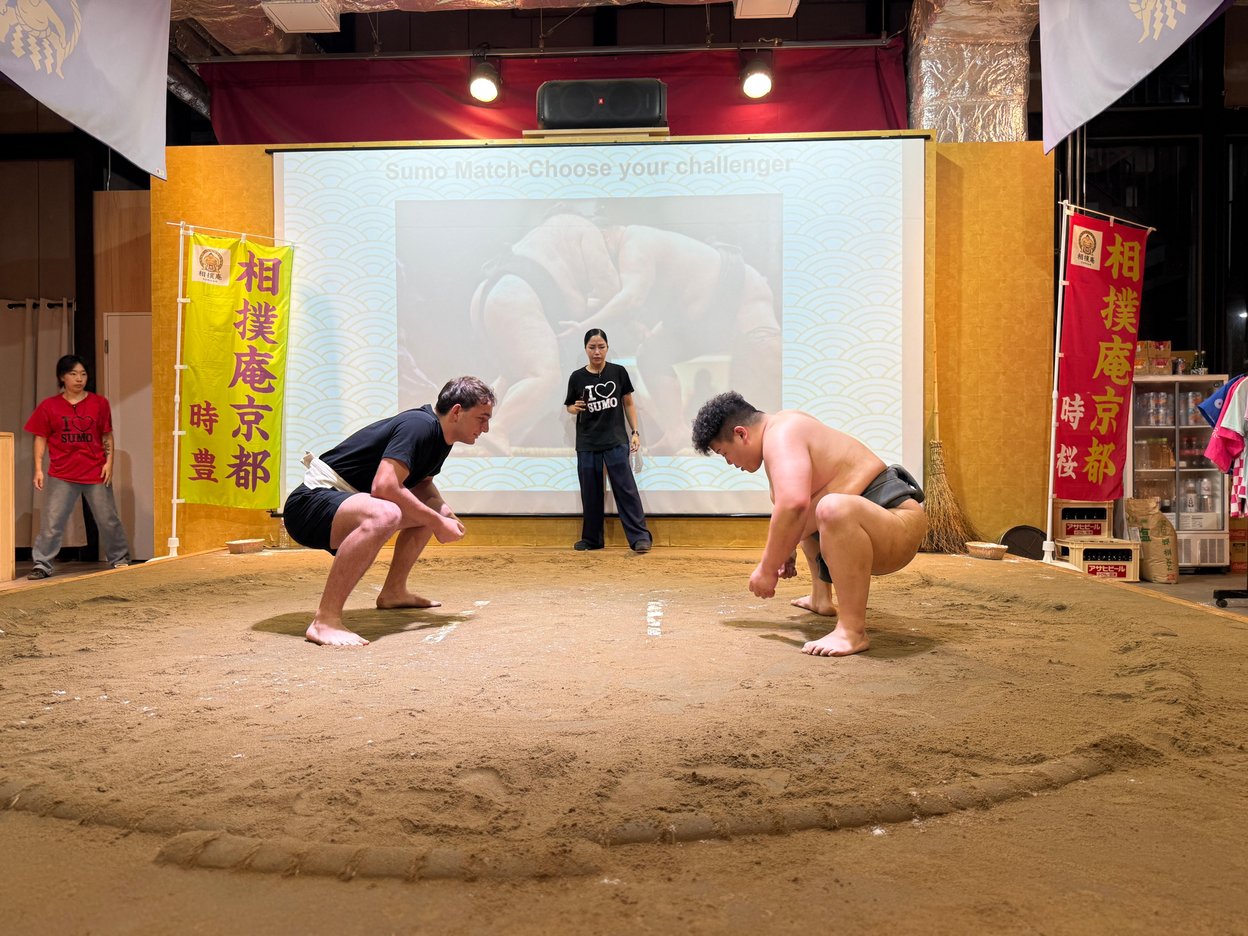
Between bouts you can try moves yourself, and a few guests per show step into the ring to challenge a wrestler. You leave with photos and a souvenir gift set.
1Geisha dance opening· about 10 minThe evening starts with a traditional Japanese dance performed by geisha in kimono, before any sumo begins.2Exercises and techniques· about 25 minWrestlers demonstrate the morning training exercises and classic sumo techniques while the MC explains the rules, history and etiquette in English.3Salt and ritual on the ring· about 10 minWatch the ring-purifying salt throwing up close. The salt cleanses the sacred dohyo and is believed to guard the wrestlers from injury.4Chanko nabe, all you can eat· about 25 minEat and drink freely throughout the show. The signature chanko nabe is the chicken-and-vegetable hot pot that wrestlers eat to build strength, and sake and beer are included.5The ring challenge· about 25 minA few guests step onto the dohyo to challenge a wrestler. Spots are limited and chosen by lottery when many apply; joining is optional.
Included
Entertaining sumo show with English commentaryTraditional Japanese dance performance by geishaAll-You-Can-Drink service (included in all plans)All-You-Can-Eat dining featuring signature Chanko-nabe and a wide range of dishes (included in Standard Plan with Meal and VIP Plan only)Chance to step into the ring and challenge a sumo wrestler (limited to a few guests per show; participants selected by lottery if demand is high; participation is not guaranteed)Souvenir gift set (included in Standard Plan with Meal and VIP Plan only)
Not included
Meals, seating, and souvenirs for infants
Reviews of the Kyoto wrestling shows travelers rated
Most reviewers call the show a highlight of their Kyoto trip, laughing through the whole two hours.
Best surprise
Many couples say the geisha dance surprised them, a beautiful opening they had not expected at a sumo night.
Most common wish
Several reviewers wish they had arrived earlier for a front-row seat, since the room fills from the front.
How to book your seat at a Kyoto wrestling show
01
Pick your date and time slot
Choose a day, then pick one of three daily shows: noon to 2 pm, 3:30 pm to 5:30 pm, or 7 pm to 9 pm. Kyoto has no dark season, but occasional one-off holidays close the venue, so glance at the calendar for your date.
Pro tipThe lunchtime show fits temple-heavy mornings and frees your evening for Gion
RecommendedBook two weeks ahead if you can, as the small rooms sell out
02
Choose your seat option
Pick Standard Seats for a good view from anywhere, or VIP Front-Row Seating right at the ring with a printed memory photo frame per guest. Because the ring sits at the center of a small room, every seat stays close to the action.
Pro tipFront row is worth it if you want the clearest view of the salt-throwing and the challenge bouts
Common mistakeBooking seats for the whole group in one go; if friends or family booked separately, add their name or booking number in the comments so you sit together
03
Enter dietary needs before you pay
The show includes all-you-can-eat chanko hot pot, so note any diet when you book. Vegetarian, vegan and gluten-free meals are available on request, but the kitchen needs at least 2 days' notice to prepare a different menu.
Common mistakeAsking for a special meal at the door; late requests leave you with the standard hot pot only
ImportantBabies under 1 year old are not admitted, and infant meals and souvenirs are not included
04
Check the confirmation and messages
After payment you get a booking confirmation with your seat option and show time. The operator uses messages for updates, so keep notifications on in case anything about your slot changes before the day.
Pro tipPlans can be cancelled up to 24 hours in advance for a full refund, so locking in early costs you nothing if the itinerary shifts
05
Arrive 20 minutes before the show
Get there at least 20 minutes early to find your seats and settle in before the geisha dance opens the show. Wheelchairs and strollers cannot go in the show area; there is a storage spot, and wheelchair users should contact the operator in advance.
Pro tipArriving early lets you sit anywhere free on your floor until the seat holder turns up
Common mistakeCutting it close; late arrival is sometimes allowed but you risk missing the opening dance and the best seats
What to check before you book a Kyoto wrestling night
Can stop the dayGood to knowGood news
01
BookingHow far ahead, and what happens if plans change
1
Cancellation
Both Kyoto tours let you cancel up to 24 hours in advance for a full refund, so you can book early and change your mind if plans shift.
02
Before you goPapers, health, what to bring
4
Show times
The hot pot show runs three daily sittings at noon, 3:30 pm and 7 pm. The participative venue runs sessions at noon and 6 pm with a full meal, at 3 pm with light snacks, and a late show at 9:30 pm without dinner.
What's included
Both bookings cover the show with an English-speaking MC, food and a first drink, plus a photo session with the wrestlers. The hot pot show adds unlimited food and drink, a geisha dance and a souvenir gift; the late show at the other venue skips the meal.
Sumo show with live English commentary
Chanko hot pot meal (all-you-can-eat and drink at the hot pot show, a set meal at the participative venue)
A first drink on the house at the participative venue
Free photo session with the wrestlers
A souvenir gift set at the hot pot show
Ring challenge
Joining the ring is optional at both venues, so you can simply watch. At the hot pot show the number of challengers is limited, and when many guests apply, participants are picked by lottery.
Kids and agesCan stop the day
Both shows are family-friendly entertainment for adults and children. Babies under 1 year old are not suitable at the hot pot show, and children under 12 at the participative venue need a private booking with a supervising adult.
03
On the dayWhere to be, when, and how you get there
2
Getting there
Both venues sit in central Kyoto. The participative experience is a 7-minute subway ride from Kyoto Station, then a 1-minute walk from Marutamachi Exit 6, and the chicken hot pot show venue is in the Kawaramachi area near Nishiki Tenmangū shrine.
Arriving early
The hot pot show asks guests to arrive at least 20 minutes before the start. Late arrival is usually possible, but you may join partway through and the show does not run longer to make up for it.
04
During the tourWhat is expected of you
2
Languages
You need no Japanese. The hot pot show runs with English commentary throughout, and the participative experience has an English-speaking MC who explains the rules, history and etiquette and takes questions.
Photos
Taking photos and videos is welcome at the Kyoto shows. The one limit: no live streaming and no posting the entire show online, so keep recordings short.
Where to watch sumo wrestling in Kyoto - the venues and nights
Kyoto hosts no grand tournament, yet sumo happens here every day: retired professionals, a real ring, chicken hot pot and geisha. One of the two shows will fit your trip.
Kyoto
If you only remember three things
1
Book Kyoto's sumo shows a few weeks ahead; the rooms are small and sell out, though same-day booking was possible when checked.
2
Arrive at least **20 minutes** before the start; the show cannot be extended, and early guests pick the best seats on their floor.
3
Pick the Shinkyogoku show for all-you-can-eat hot pot and geisha, the participative venue a subway stop away for **guaranteed ring entry**.
Inside the ring - what a Kyoto sumo match looks like
A Kyoto sumo wrestling show is entertainment built around a real ring, and the room proves it.
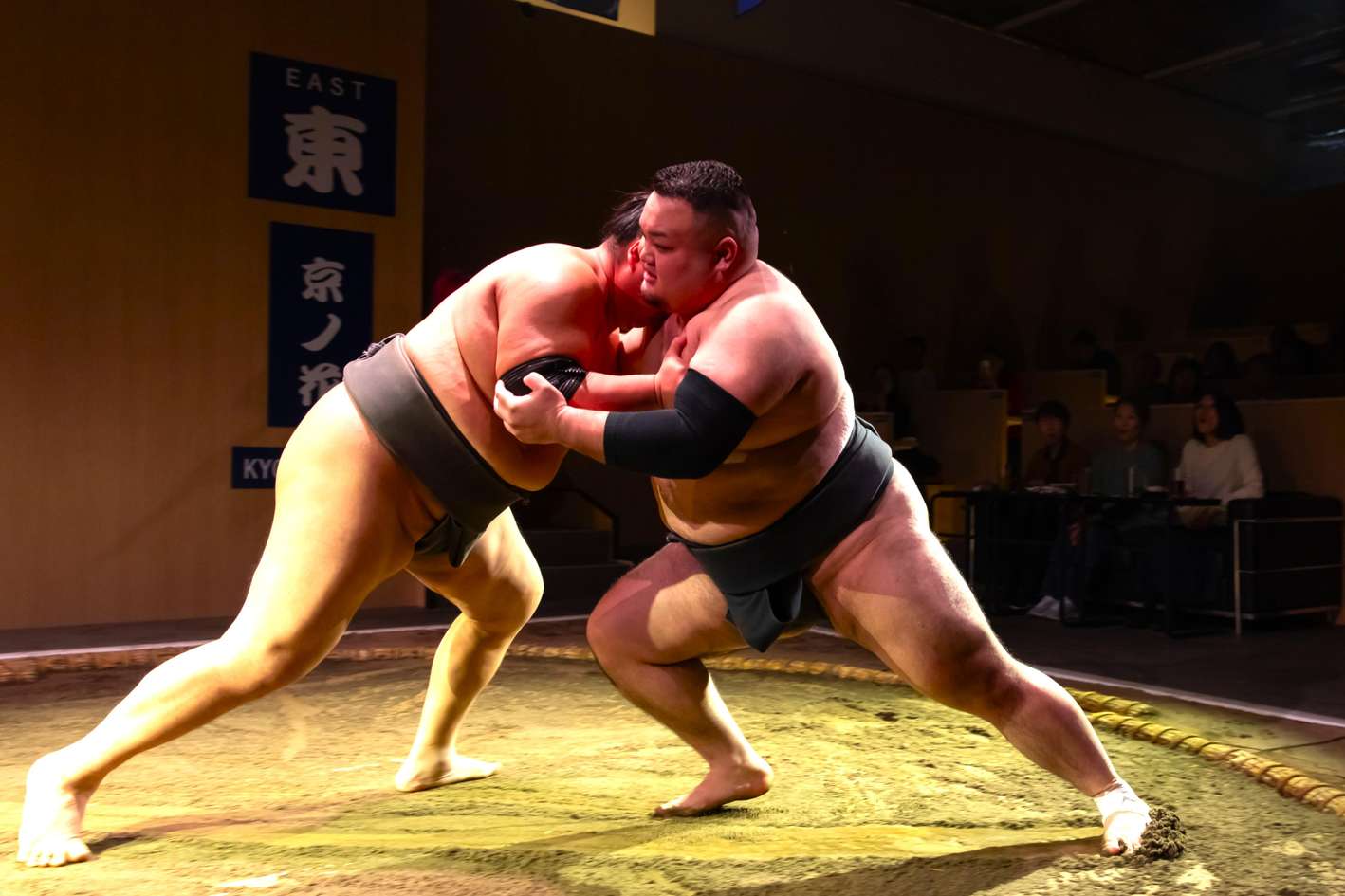
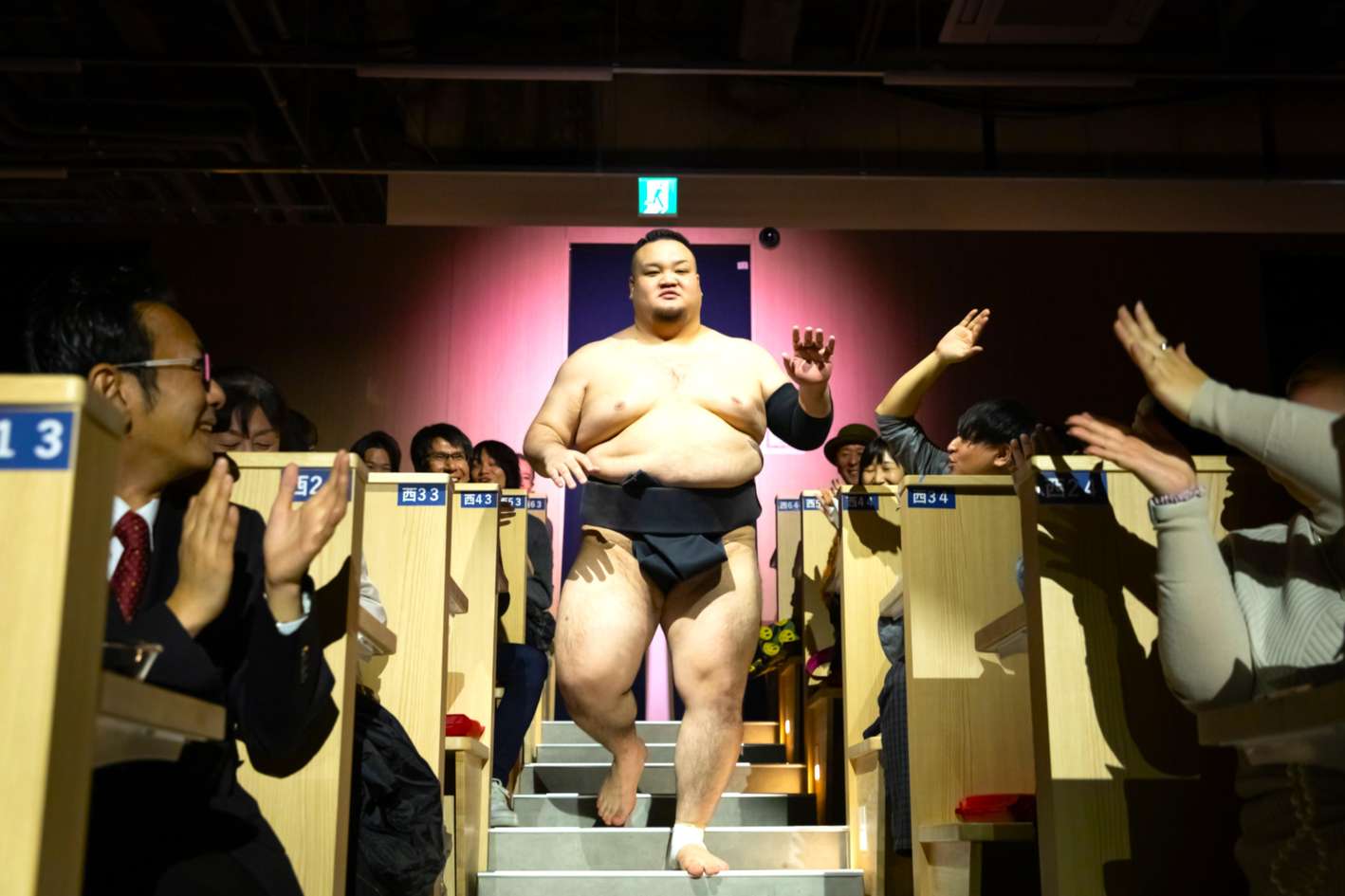
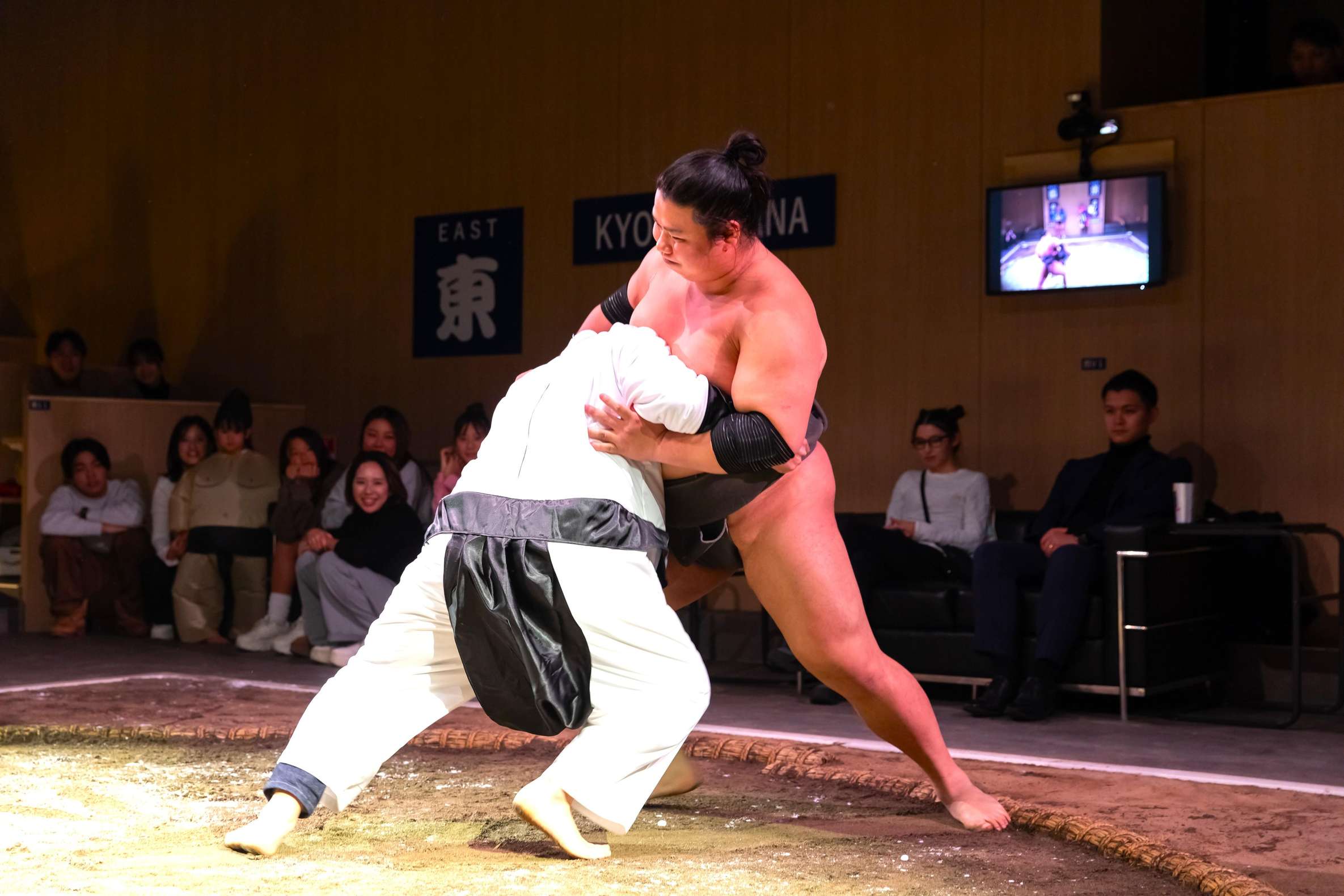
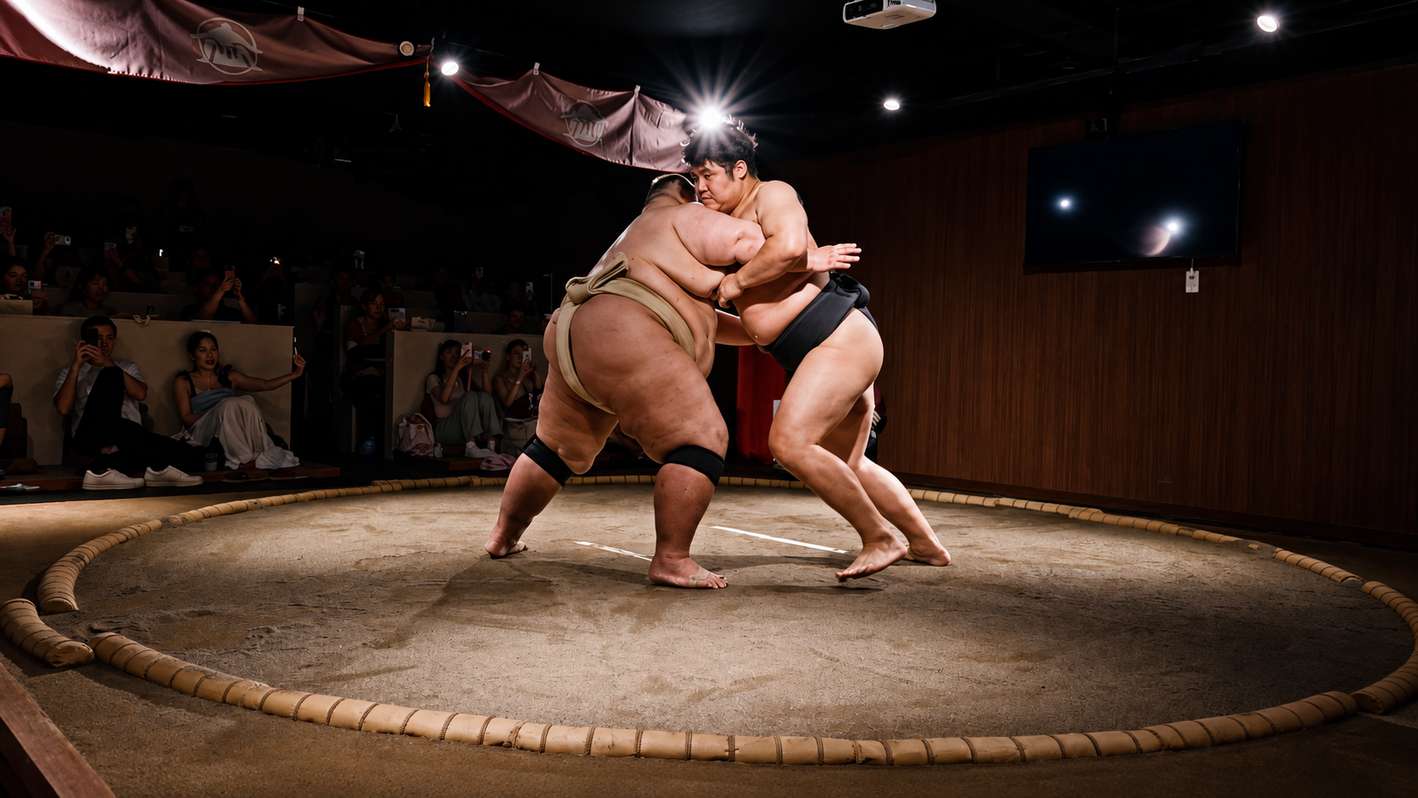
The venue is a small room with a sumo ring at the center, so every seat is near the action; people who go often say there is no bad seat in the house. The wrestlers are real retired professionals, the salt is real, and so is the sweat.
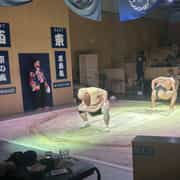
The evening runs like this. You arrive 20 minutes early, take your seat, and the show opens with the salt-throwing ritual that purifies the ring before every match in professional sumo. An English-speaking MC explains the rules, history and techniques while retired wrestlers demonstrate morning exercises and throws.
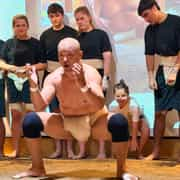
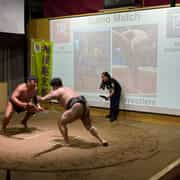
A geisha dance breaks the wrestling up. The centerpiece is one best-of-three bout between the retired pros, and individual bouts last between 5 and 30 seconds, so pay attention. Then comes the Sumo Challenge: volunteers are called into the ring to try training moves and wrestle the wrestlers.
Spots are limited and drawn by lottery when many guests apply, and joining is optional. Food runs alongside all of it, and photos with the wrestlers close the night.
Keep expectations where they belong: this is a fun, family-friendly show, and the wrestlers ham it up between the serious demonstrations. The wrestling itself is a few minutes of the two hours at the Shinkyogoku show; the rest is commentary, demonstrations, dinner and dance.
The participative venue books a shorter hour and a half. Travelers who wanted more bouts say so, and most still call the ring challenge the highlight of their night.
Arrive 20 minutes before the start Salt-throwing ritual to purify the ring Demonstrations of morning exercises and techniques Geisha dance Best-of-three bout between retired professionals Sumo Challenge lottery and ring challenge Photos with the wrestlers, hot pot throughout
The sequence above holds for both venues, just with the shorter running time at the participative one. Whichever you book, the evening ends with the same thing: photos with men who once fought for a living.
Tour for this
Kyoto: Sumo Entertainment Show with Chicken Hot Pot & Geisha4.8★ (1,815) · 2 hours · Free cancellation
Kyoto has two shows, and they suit different evenings. The show in the Shinkyogoku arcade runs like a festival: three daily sittings, an all-you-can-eat chanko nabe buffet with a wide range of dishes, unlimited drinks including sake and beer, a geisha dance and a ring challenge drawn by lottery.
Front-row seating is available for guests who want the ring at eye level, and one operator throws in a printed photo frame for each guest in the front row.
The participative experience near Marutamachi is the intimate one.
It is run by former top-division wrestlers, takes about 40 guests, lasts an hour and a half, and includes an authentic chankonabe set meal at the noon and 6 pm sittings; the 3 pm session has light snacks only, and the 9:30 pm late show serves only a Japanese à la carte menu.
Ring entry is guaranteed for anyone interested, and it is the only place where you wear an authentic sumo mawashi. You ride seven minutes by subway from Kyoto Station to reach it.
So match the show to the evening. Choose Shinkyogoku for a big festive dinner, geisha and a crowd. Choose the participative experience if stepping into the ring is the point, or if your schedule only allows a shorter session. Both explain the rules in English.
"The two Kyoto shows, side by side"
Closeness
Both rooms put you at the ring; the participative venue is the smaller, with roughly 40 guests
Food
All-you-can-eat chanko buffet and drinks at Shinkyogoku; a chankonabe set meal at the midday and 6 pm participative sittings
Atmosphere
Festival-like with a geisha dance at Shinkyogoku; small and wrestler-led at the participative venue
Taking part
Lottery ring challenge at Shinkyogoku; guaranteed ring entry in the mawashi at the participative venue
Best for
Big groups and food lovers; anyone who wants to wrestle a former pro
Closeness
Food
All-you-can-eat chanko buffet and drinks at Shinkyogoku; a chankonabe set meal at the midday and 6 pm participative sittings
Atmosphere
Festival-like with a geisha dance at Shinkyogoku; small and wrestler-led at the participative venue
Taking part
Lottery ring challenge at Shinkyogoku; guaranteed ring entry in the mawashi at the participative venue
Best for
Big groups and food lovers; anyone who wants to wrestle a former pro
Both rooms put you at the ring; the participative venue is the smaller, with roughly 40 guests
The table above settles the main tradeoff: food and festivity at Shinkyogoku, or the ring itself at the participative venue. Most visitors pick the first one, and the wrestlers at the second one come from the top division.
Kyoto wrestling shows run daily, independent of the tournament calendar, and there is a lunchtime sitting as well as evening ones.
The Shinkyogoku venue holds three shows a day: noon to 2 pm, 3:30 pm to 5:30 pm and 7 pm to 9 pm, with a limited late show from 10 pm to 11 pm between March 1 and April 30, 2026.
The participative venue runs noon and 6 pm with the full meal, 3 pm with afternoon tea, and a 9:30 pm late show without dinner.
Kyoto Sumo Shows
Sumo venues and nearby sightsKyoto Sumo ClubNishiki Tenmangū ShrineHonnō-jiKennin-ji
The table shows the two schedules side by side, and the lunchtime slot is the one that rescues a packed itinerary: you can watch wrestling, eat chanko nabe and still have the whole afternoon for temples. Evening visitors get the geisha dance under lights and can walk on into Gion afterwards.
Both venues stay open almost every day; the closures listed are occasional one-off dark days, so there is no fixed weekly day off. Start times can vary by date, so check the day's calendar before booking.
Sumo shows in Japan sometimes begin later than the printed time, so arrive early: Kyoto's show asks for at least 20 minutes, which also puts you in the room when the Sumo Challenge lottery is drawn.
Kyoto hosts no grand sumo tournament today, and that surprises visitors who assume every old capital has one. The six official tournaments a year rotate: Tokyo in January, May and September, Osaka in March, Nagoya in July and Fukuoka in November, each running two weeks in a single city. Kyoto sits out all six.
The city's wrestling pedigree is older than most. Kanjin sumo was held in Kyoto from around 1645, and through the Edo period Kyoto ranked with Edo and Osaka as one of Japan's three sumo capitals, hosting its own tournaments, twice a year by 1740. That organization lasted into the Taisho era.
The practical takeaway: if your trip matches a tournament city and month, go to the tournament; decent seats sell out within minutes of going on sale at 10 am, so buy the moment tickets drop.
For every other date, Kyoto's shows are the answer, and they run all year regardless of the tournament calendar. Between tournaments, the stables carry on with normal morning practice and the shows fill the evenings, so there is no sumo-free season in Kyoto.
"Assumptions worth dropping"
MythKyoto has no sumo history
Reality
Kyoto held kanjin sumo from around 1645 and was one of Japan's three sumo capitals in the Edo period
MythNothing happens outside tournament months
Reality
Kyoto's shows run daily all year, and stables hold normal morning practice between tournaments
MythA show cannot substitute for a basho
Reality
A tournament runs only six times a year for two weeks; a show puts you at the ring with retired pros any day you book
Each of these assumptions is common, and each one is wrong in a useful way. The tournament calendar decides where the big six go, but it has no say over what Kyoto puts on stage.
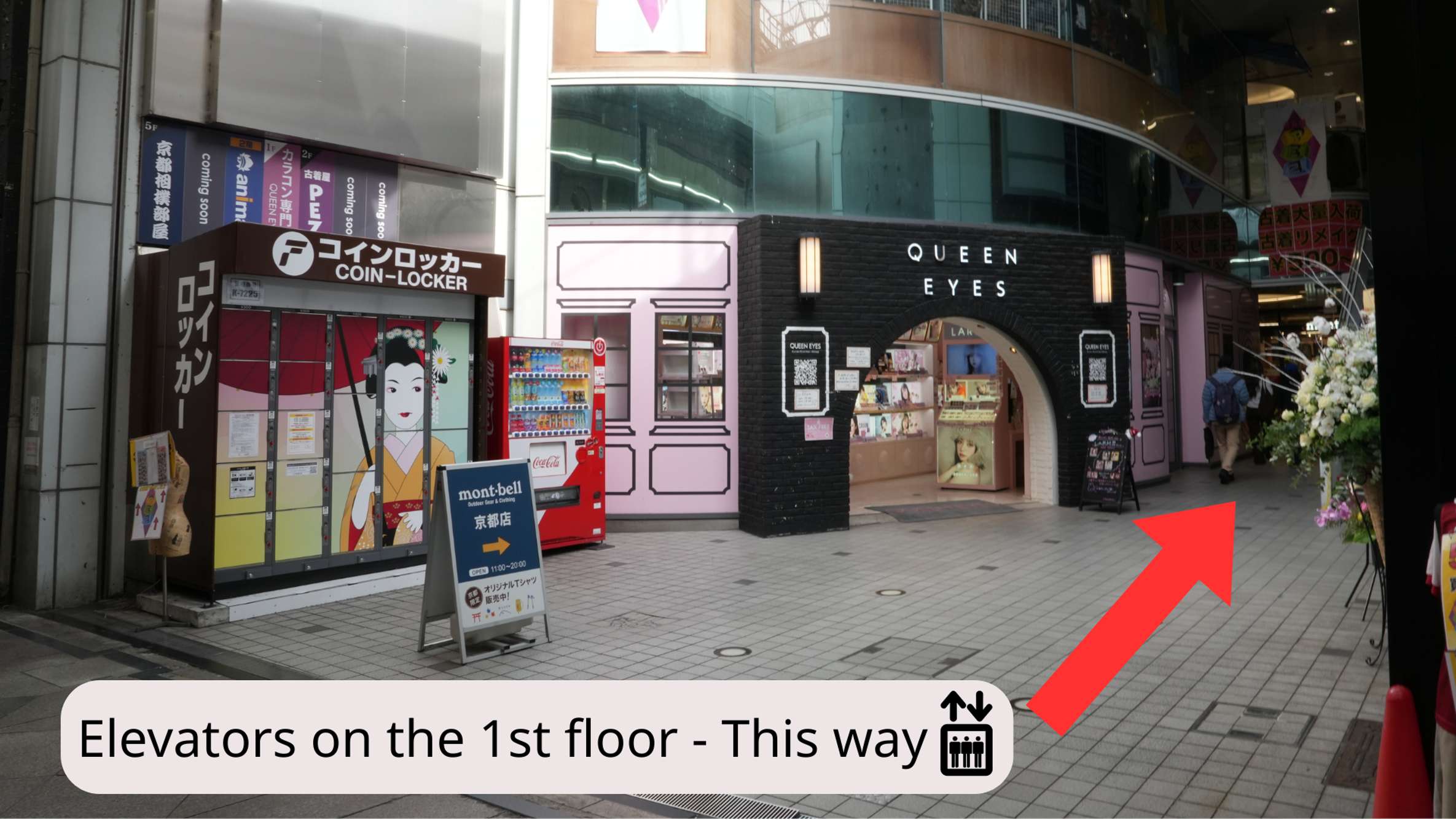
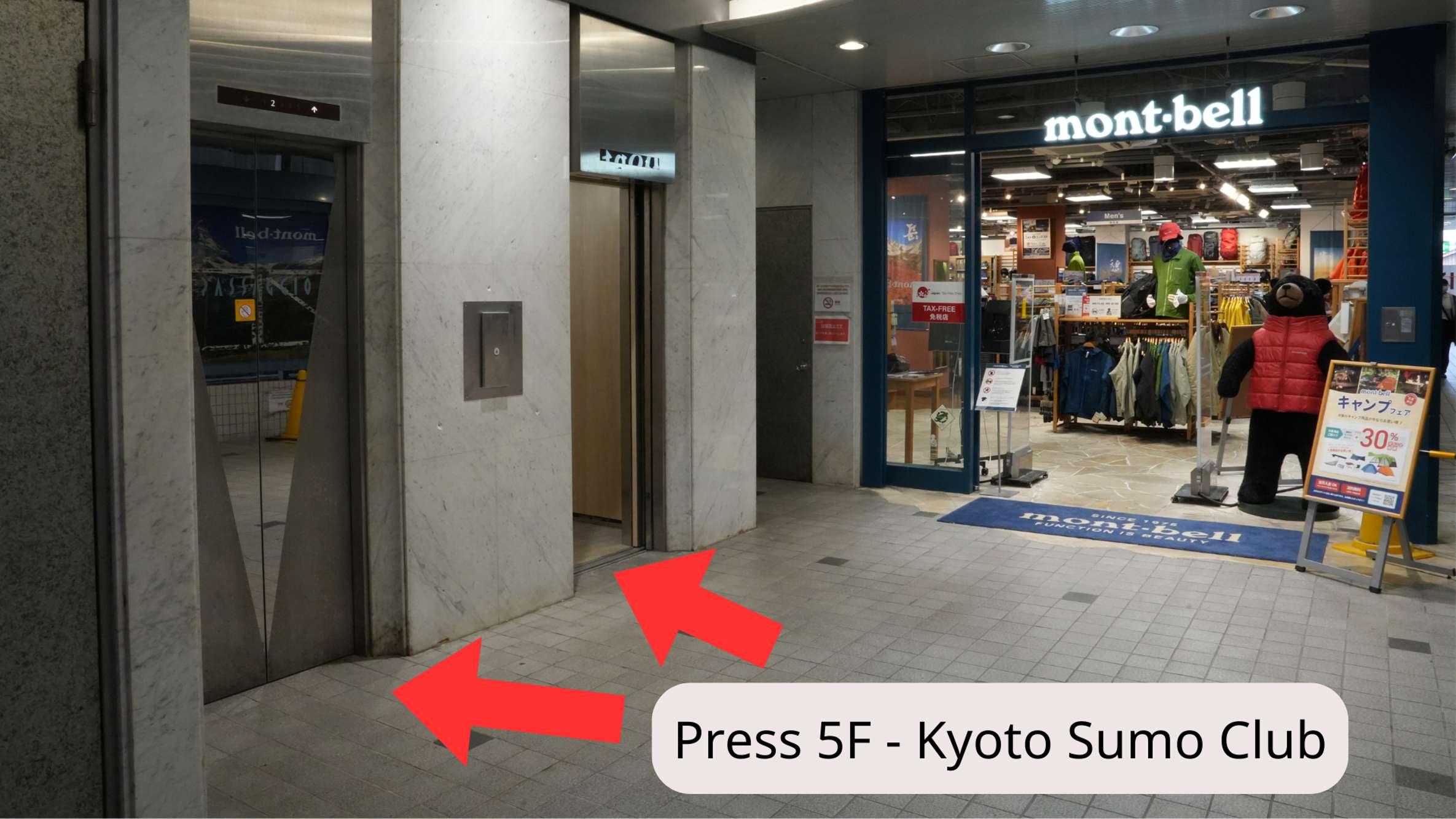
Leave the train at Kyoto Station and you are minutes from the venue. The show sits on the fifth floor of a building in the Shinkyogoku arcade, about a 4-minute walk (0.3 km) from the station, so no taxi is needed.
From the downtown Gion and Kawaramachi side it is easier still: a 3-minute walk from Hankyu Kyoto-Kawaramachi Station, or about 8 minutes on foot (0.6 km) from Gion-Shijo Station on the Keihan Line. If you are already around Shijo, you need no train at all.
Getting to the Kyoto sumo show venue
To Kyoto Sumo Club (Passaggio building… · Nakagyo Ward
The chart above reads the distances out, and they are small enough that walking wins every time. The participative venue is a separate trip: seven minutes by subway from Kyoto Station, then a one-minute walk from Marutamachi Exit 6. It sits in a basement on Marutamachi Street, reached by stairs or elevator.
One note on driving: the Shinkyogoku venue has no parking, so plan to arrive on foot or by train. Central Kyoto is compact, and the arcade puts you a short walk from dinner, bars or the Gion streets afterwards.
No dress code applies at either Kyoto wrestling venue. Wear comfortable clothes you can move in, especially if you plan to take the ring challenge, and the venue provides the authentic sumo mawashi belt, so you bring no gear of your own.
A colourful top is the one insider tip: if you step into the ring in the provided belt, it makes a striking photo, and photos and videos are welcome at the show, with live streaming the only thing not allowed.
The season decides the rest. Winter nights drop below freezing with days of 8 to 11°C, so wear a warm coat and layers for the walk to the venue.
March to May brings mild days of 14 to 23°C and the wettest stretch of the year, up to 223 mm of rain in May, so carry a compact umbrella.
July and August turn hot and humid at 27 to 33°C, and light breathable clothes make the indoor show far more comfortable. October and November are the kindest months of the year at 17 to 23°C and mostly dry, when ordinary clothes are all you need.
What to wear and bring to a Kyoto sumo show
Dec to FebNights drop below freezing and days reach only 8-11°C, so wear a warm coat and layers for the walk to the venue.
Mar to MayMild days of 14-23°C but the wettest stretch of the year, up to 223 mm of rain in May, so carry a compact umbrella.
Jun to SepHot and humid, with highs of 27-33°C in July and August; wear light, breathable clothes for the indoor show.
Oct to NovThe kindest weather of the year, 17-23°C and mostly dry, so ordinary comfortable clothes are all you need.
Comfortable clothesThere is no dress code, and loose, easy-to-move-in clothes matter most if you take the ring challenge.
A colourful topOptional, but it makes a striking photo if you step into the ring in the provided mawashi belt.
Nothing special to bringThe venue provides the authentic sumo mawashi belt for participants, so you need no gear of your own.
Arrive 20 minutes earlyThe show asks guests to arrive at least 20 minutes before it starts, and challenge spots are drawn by lottery.
The checklist above is the whole packing question, and it comes down to one line: arrive at least 20 minutes before the show starts. That is the venue's own request, and it matters for another reason: Sumo Challenge spots are limited and drawn by lottery when many guests apply.
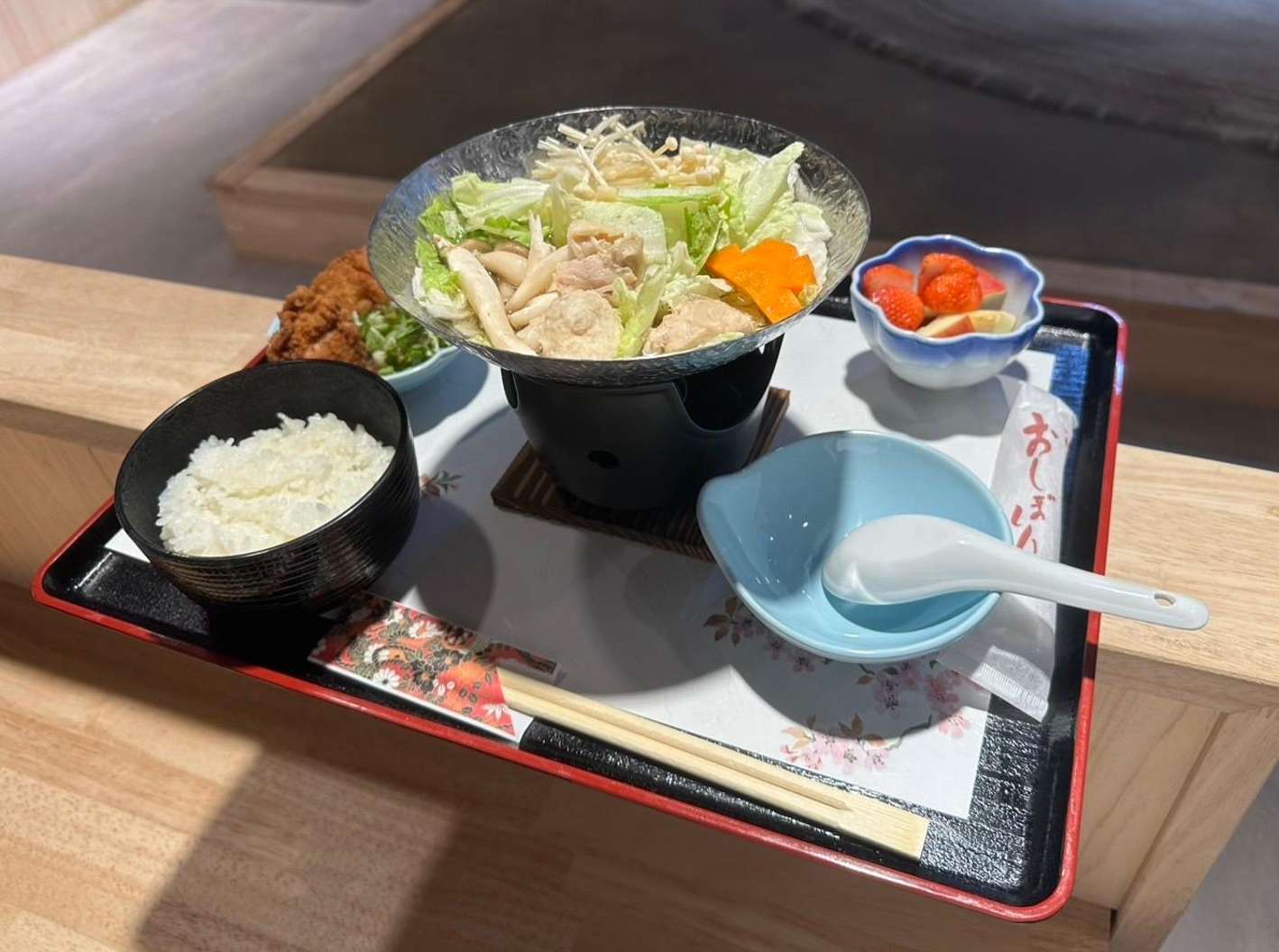
Chanko nabe is the reason dinner at a Kyoto sumo show tastes like sumo. It is the hot pot wrestlers eat to build their bodies: chicken simmered with napa cabbage, carrots, green onions and fried tofu in a dashi or chicken-stock broth, seasoned with soy sauce or miso.
It became popular around the end of the Meiji era as a cheap, effective way to feed a stable, and stables still serve it communally after morning training, senior wrestlers eating first.
The chicken carries a rule. During tournaments, stables make chanko nabe only with chicken, because a wrestler should stay on two legs like a chicken, and falling onto all fours like a four-legged animal would mean losing. Beef and pork were avoided for luck.
At the Kyoto show the pot is a proper meal. The Shinkyogoku show includes all-you-can-eat chanko nabe alongside a wide range of dishes, with all-you-can-drink beverages including alcohol such as sake and beer.
The participative experience serves an authentic chankonabe set meal, though the 9:30 pm late show does not include dinner, so eat before or after if you book that slot. Vegetarians and vegans can reserve a meal at least 2 days in advance, and a gluten-free menu is available on the same notice, though limited.
Book early. The rooms are small and intimate, which keeps seats scarce, and travelers who took similar shows report they sold out weeks in advance; one tour operator warns that spots are limited and to reserve as soon as possible.
Kyoto's venues require advance booking, and a few days ahead is recommended. Same-day booking was possible when checked, with instant confirmation, but a spontaneous evening depends on luck.
How busy it gets, month by month
April: 5 out of 5 for how busy it gets.
HighestMar to May, Oct
In betweenJun to Sep, Nov
LowestDec to Feb
Darker: a higher how busy it gets score, out of 5
Tap a month to read it.
The chart above shows the pressure across the year, with April and October the peak months and February the quietest, which is why the booking advice shifts with the season.
The rooms themselves are small, so a peak month can fill a week or two out while a quiet February still leaves room for a later decision.
Arrive at least 20 minutes before the show. Arriving early has a bonus: you can sit anywhere you want on your assigned floor until the actual seat holder shows up, which is how early guests end up at the ring.
Late entry usually works; one guest was welcomed in 15 minutes late. The show cannot be extended, so a late entry means missing part of the program.
If the day goes wrong, cancel up to 24 hours in advance for a full refund. Inside 24 hours there is no refund, but you may be able to move your booking to another time slot or day when there is availability.
"If the evening goes sideways"
If this happens
What happens then
You arrive late
Entry is usually still possible; one guest was let in 15 minutes late, but the show cannot be extended, so you miss part of the program
You cancel more than 24 hours ahead
Full refund
You cancel inside 24 hours
No refund, but you can often move the booking to another slot or day when there is availability
Both Kyoto wrestling shows are built for families, and children are part of the design. The Shinkyogoku show is a fun, family-friendly entertainment experience for adults and children, with age bands of 12 to 99 and 11 and younger; babies under 1 year old are the one exclusion.
Kids can shout along, and at the ring challenge children from about age five can take part, with no minimum age published for the challenge itself.
The participative experience is described as suitable for all ages and backgrounds. Children may participate from age two, with age four and above recommended.
Children aged twelve or under need a private booking with a parent or supervising adult, so plan that ahead if you are bringing a young child. Older guests are welcome too, and a gentler, lower-activity programme is available on request.
Participation stays optional and at your own level. Nobody is pushed into the ring, and guests can watch instead of wrestling. The only expected cost is minor scrapes or bruises, which the venue mentions openly. No prior sumo experience is needed for the challenge; the wrestlers adapt to whoever is in front of them.
Etiquette at a Kyoto show is the relaxed end of sumo. Photos and videos are welcome, so bring your camera and take pictures with the wrestlers afterwards. Two things stay off the table: live streaming, and posting the entire show online.
Cheer and call out as the mood takes you; at a show, audience participation is part of the design, from the demonstrations to the ring challenge. Skip the flash, which startles the wrestlers at close range and spoils everyone's photos.
The contrast with other sumo settings is worth knowing. At a real stable practice you must be a silent, still observer: no talking, no moving, no flash photos, no eating or drinking, and never a step on the dirt practice surface.
At a tournament, flash photography is banned outright during bouts and phones go on silent. The Kyoto show asks for none of that discipline, because it is an entertainment show built for a crowd.
Silence your phone during the bouts, stay seated once the wrestling starts, and let the wrestlers come to you for photos instead of blocking their path.
"What first-timers don't know"
Show etiquette is loose
Cheer, film and call out; the show is built for it
Flash is the real enemy
It spoils photos and startles wrestlers at close range, even where it is allowed
Stable rules do not apply here
A stable visit demands silence and stillness; a show is the opposite
Live streaming is the line
Photos and videos welcome, but streaming the show is not permitted
The show anchors a Kyoto evening easily, because everything worth walking to is within 20 minutes. Nishiki Tenmangū shrine sits next door, 207 m away, and Honnō-ji (466 m) and Kennin-ji temple (706 m) are minutes further; Kennin-ji marks the southern edge of Gion.
Head east from there and you are in the lantern-lit streets of Gion: lights along Hanamikoji-dori come on around 5 pm, the streets stay lively until about 9 pm, and Yasaka Shrine's grounds are open 24 hours with its gate and stage lit up after dark.
Maruyama Park, about 1.2 km away, makes a pleasant evening stroll.
The list above gives you the raw material for the rest of the night, and the shrine next door is the easiest first stop. The geisha in the show are the real article of this district.
Gion is Kyoto's most famous geisha district, where geiko, Kyoto's word for geisha, and maiko apprentices entertain at teahouses, and the dance on the show's bill is that tradition staged next to their own streets.
To see geiko perform in their own theatres, Gion Kobu stages the Miyako Odori in spring with about 80 geisha and maiko, and Gion Higashi holds the Gion Odori in early November.
One note for the walk: Gion's residents have asked visitors to keep to the public streets, and the private alleys are best left alone.
A Kyoto wrestling show fits a Tokyo day trip, but only on the tightest of schedules, so plan the day backwards from the show.
The Nozomi Shinkansen covers the 513.6 km in about 2 hours 8 minutes each way. Leave Tokyo at 6 am and you reach Kyoto at 8:08 am, leaving the whole day for temples, Gion and lunch.
The evening show at the Shinkyogoku venue runs 6 pm to 8 pm in the day-trip itinerary, with doors opening 30 minutes before and the venue asking guests to arrive at least 20 minutes early.
The venue's own daily schedule lists the same evening sitting at 7 pm to 9 pm, and times can vary by date, so confirm the day's calendar when you book the trains.
Heading back, Nozomi trains leave Kyoto for Tokyo at 8:09 pm (arriving 10:21 pm), 8:15 pm (10:24 pm), 8:21 pm (10:33 pm), 8:30 pm (10:42 pm), 8:47 pm (10:57 pm) and 9:02 pm (11:12 pm). You can walk out of the show and be on a platform within minutes.
Two train legs of over two hours each plus a show leaves room for one or two sightseeing stops, and nothing more. If you want temples and wrestling both, stay overnight and take the morning train back.
Far exceeded expectations, a highlight of our Japan trip! Comfortable seating, delicious food, learned tons of sumo history, watched wrestlers demonstrate skills, and even got to participate. Highly recommend!
If you want a festive evening with dinner and a geisha dance, book the Shinkyogoku show. If stepping into the ring with a former top-division wrestler is the point, book the participative experience.
Both shows run daily all year, the wrestlers are real, and the room puts you close to the ring. Book a few days ahead and arrive 20 minutes early.
Go ifYou are visiting outside the six tournament months and want real wrestlers up closeYou want to step into the ring yourself; the participative venue guarantees itYou are traveling with kids who cannot sit through a silent stable practice
Skip ifYou are in Tokyo in January, May or September and can still get tournament ticketsYou expect two hours of continuous bouts; the wrestling is a few minutes of the show
Our pick to book
Kyoto: Sumo Entertainment Show with Chicken Hot Pot & Geisha4.8★ (1,815) · 2 hours · Free cancellation
Kyoto wrestling questions, answered before you book
Short answers to the questions travelers ask before booking a sumo experience in Kyoto.
Kyoto2026
The wrestler gave me a look I will not forget, then threw me across the ring. Book a few days ahead, the small shows fill fast.
Can you watch sumo wrestling in Kyoto?
Yes. Kyoto has two sumo experiences that run year-round: an entertainment show with a chicken hot pot and a geisha dance, and a smaller participative experience where you can step into the ring yourself.
Does Kyoto have sumo wrestling?
It does, in the form of shows performed by retired wrestlers. Both venues sit in central Kyoto, one near Kawaramachi and one on Marutamachi Street, and both run daily.
Are the Kyoto sumo shows real wrestling matches?
They are entertainment performed by real, retired wrestlers. You see a genuine bout, demonstrations of techniques and morning exercises, and English commentary on the sport's history and rules.
How long does a Kyoto sumo show last?
The show with the hot pot and geisha dance runs two hours, with the meal served throughout. The participative experience lasts about 1.5 hours, and a 9:30 pm late session skips the dinner.
Where in Kyoto can you watch sumo?
One venue sits in the Kawaramachi area, close to Nishiki Tenmangū shrine and the Gion district. The other, Sumoan Kyoto, is on Marutamachi Street, a seven-minute subway ride from Kyoto Station and one minute from Exit 6.
Can you take part in the wrestling yourself?
Yes, and it is optional. Guests can try training moves and step into the ring against a wrestler. At the hot pot show, challenger spots are limited and chosen by lottery when demand is high; the participative experience guarantees a match for anyone who wants one.
How close do you sit to the ring?
Very close. Both shows take place in small rooms with a real clay ring at the center, so every seat is near the action. Front-row VIP seating is available at both if you want to be right beside the dohyo.
Is the food a full dinner, or should you eat beforehand?
It is a full meal. The hot pot show includes all-you-can-eat and all-you-can-drink centered on chanko nabe, the hot pot wrestlers eat. The participative experience serves a set chankonabe meal, though the 9:30 pm late session comes without dinner.
Are the Kyoto sumo shows suitable for children?
Yes. The shows are family-friendly entertainment with English commentary, and children often call them a trip highlight. Babies under one year cannot attend the hot pot show, so check that if you travel with an infant.
When should you arrive, and can you walk in late?
Plan to arrive at least 20 minutes before the start. Arriving early helps you sit in a good spot on your floor, and one show accepts late arrivals, though you may join partway through.
Does Kyoto ever host grand sumo tournaments?
No. The six annual tournaments rotate between Tokyo in January, May and September, Osaka in March, Nagoya in July and Fukuoka in November. Kyoto did host tournaments in the Edo period, but today the city's sumo lives in the year-round shows.