




3 hours·English, German
4.9(6)
Tokyo: Discover the World of Sumo History & Lunch
Free cancellationIn English and German
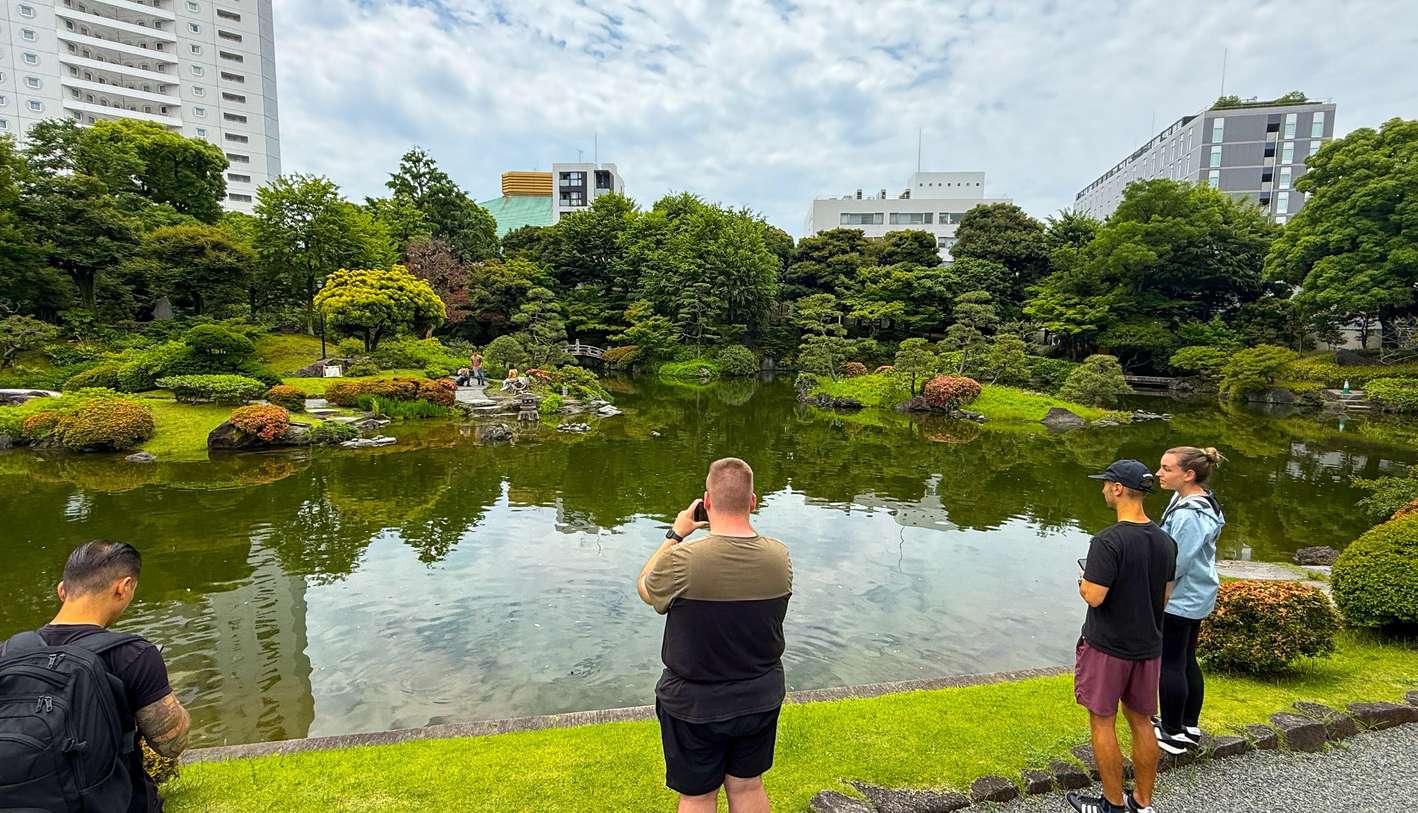
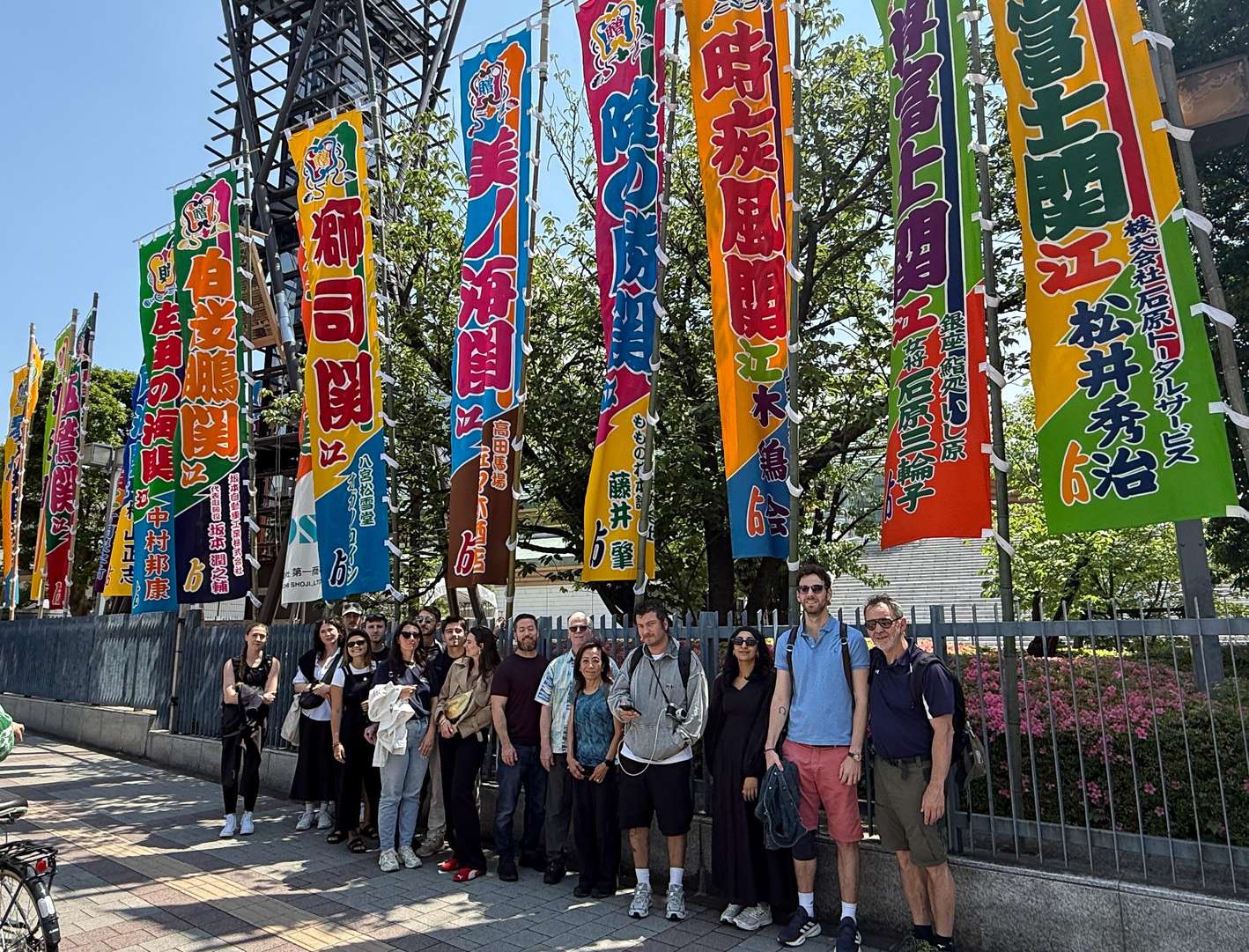
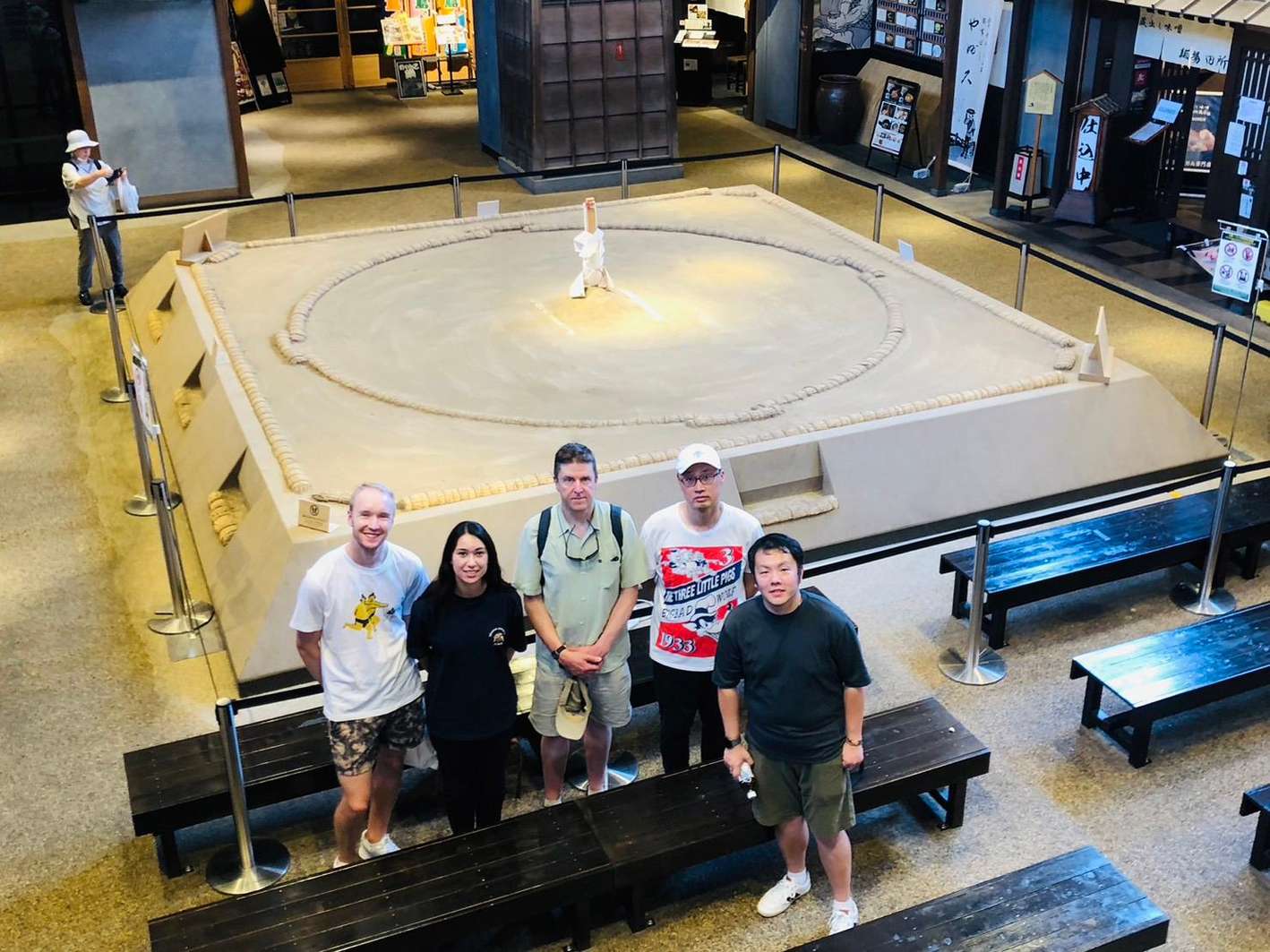
Watch sumo in Tokyo without guessing the times or the rules. A guided walk through Ryogoku, the city's sumo district, shows you the Kokugikan arena, the Sumo Museum and the temples where it all began, then ends over chanko nabe, the hot pot wrestlers eat. Book the Tokyo - Discover the World of Sumo History & Lunch tour and see the sport where it lives.
"Exactly as advertised, nothing to add. As a French speaker, I worried the English explanations would be hard to follow, but Mike was very clear. I'd even recommend it to non-fluent English speakers."






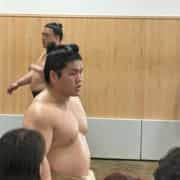
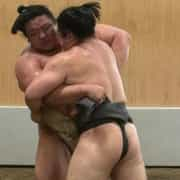
Bouts last seconds; the event takes hours. Here is how long each sumo option in Tokyo really takes, what the rules mean in the ring, and which one fits your trip.
A single bout lasts 5 to 30 seconds, so plan around the whole event, never one match.
Tokyo hosts the grand tournament in January, May and September; shows and stable practice fill the other months.
A bout ends when a wrestler is forced out or any part of him but his soles touches the clay.
Tournaments and stable practice are real; show bouts are choreographed by retired professionals.
Women can watch everywhere but not enter the ring, and kids are welcome at shows and tournaments but need to sit still at a stable.
Plan a stable visit for a month without a tournament, and confirm with the tour operator that practice is running on your date before you book.
A single bout is over in 5 to 30 seconds. Even at the top level, expect a match to run one to two minutes at most, and that includes the pre-bout rituals.
The mistake first-timers make is planning around a match. A tournament ticket covers the whole day, and shows run 90 minutes to two hours.
At the exhibition shows, the wrestling itself often fills only the last 15 to 30 minutes. The first part explains wrestlers' lives, stretches and rules before any bouts happen.
One Shinjuku show splits its 90 minutes into roughly 40 minutes of explanation, 20 minutes of bouts and demonstrations, and 30 minutes for the ring challenge and photos.
Budget the full slot, arrive early, and treat the bouts as the climax of a longer event.
A grand tournament in Tokyo lasts 15 days, and the city hosts three a year at Ryogoku Kokugikan: January, May and September. The 2026 dates are January 11 to 25, May 10 to 24 and September 13 to 27.
A tournament day runs from morning to early evening, and the schedule builds from the bottom up. Here is how a full day unfolds at the Kokugikan:
From day 13 of a tournament, everything shifts earlier, with bouts starting at 10 am instead of 8:30. The sumo museum on the arena's main floor closes in the late afternoon, so see it before the top division bouts.
The same calendar tells you when every other option runs. Each way of watching sumo has its own season, and they fit together without gaps:
Read that table against your travel dates and you will know within a minute which options are open to you. If your trip misses a tournament month, the shows and practice visits carry the whole calendar.

A bout has one simple goal: force the opponent out of the inner circle or throw him down in the ring.
A wrestler also loses if any part of his body other than the soles of his feet touches the clay, even a fingertip or a topknot. Stepping a toe or heel over the straw bales marking the ring loses the match too.
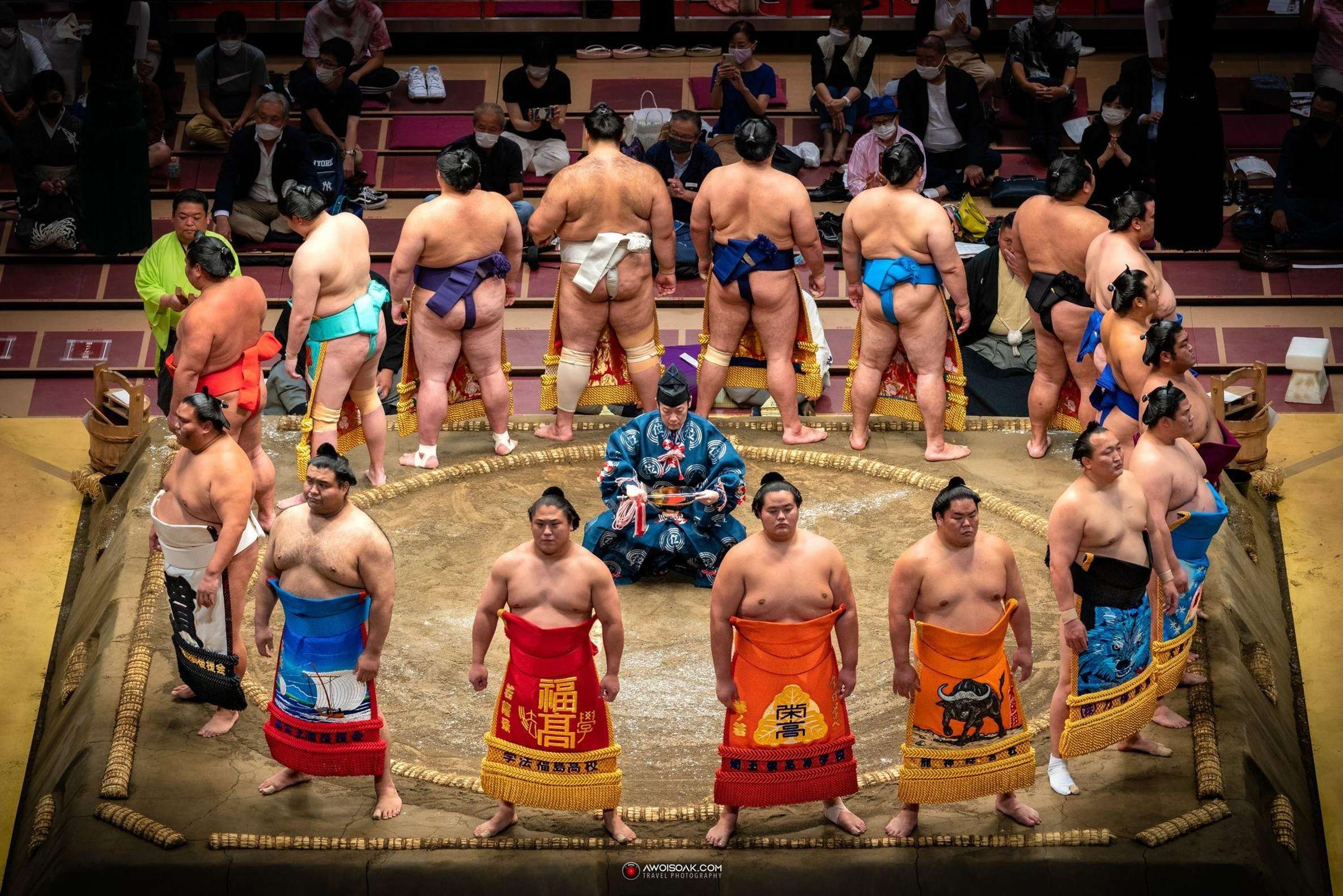
Before the bout comes shikiri, a preparation ritual allowed up to four minutes in the top division.
Wrestlers scatter salt to purify the ring, though only those in the top two divisions may do it, so salt is also a sign of rank. The bout begins when both wrestlers sync their breathing, rise and charge from a crouch.
A referee in a traditional outfit calls every bout and points his fan toward the winner. Five judges around the ring can challenge his call, which triggers a conference that can confirm it, reverse it or order a rematch. The Japan Sumo Association defines 82 official winning techniques, and there are no weight classes.
Watch the wrestlers' feet at the ring's edge, since half of all bouts end there, and read the sponsor banners paraded before a match to know how hyped it is. More banners means a bigger match.
Those two details turn a confusing blur into a sport you can follow. Once you watch the feet and the banners, the result of most bouts stops surprising you.
Tournaments and stable practice are real. Only the six official tournaments a year affect the wrestlers' rankings, and at a live event the crowd yells for favorites, towels fly, and tension builds as each short bout unfolds.
The shows work on a different logic, and it helps to know it before you book. The bouts at exhibition shows are choreographed for time and safety, though the performers are usually retired professionals, so the skill on display is genuine.
A genuine show can name each performer and their career; one Tokyo performer competed as a rikishi for 14 years before retiring through injury. Websites do not always make this clear, so check whether the operator publishes a cast list of ex-professional wrestlers.
Many tours marketed this way are entertainment shows with retired wrestlers, photo opportunities and audience participation
At genuine shows they are former professional rikishi who competed in the Japan Sumo Association ranks before retiring
The matches at exhibition shows are choreographed, with no competitive stakes
Regulars see the dinner show as the better pick for casual first-timers, and morning practice as the choice for hardcore fans. Knowing which one you are booking saves the disappointment of expecting one and getting the other.
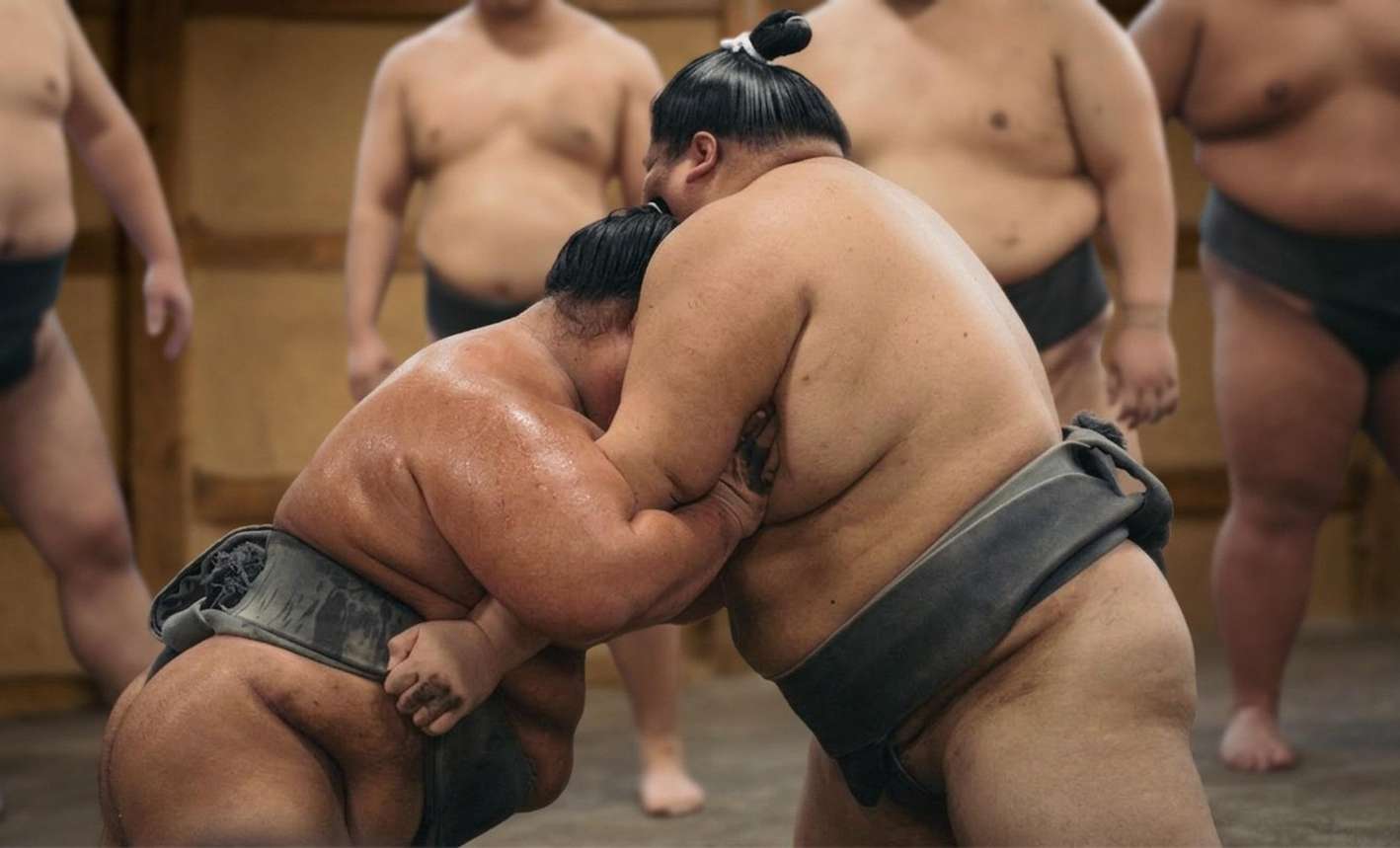
A stable is a workplace where rikishi live and train, so expect a sparse, silent viewing. The guided practice tours meet at 7:45 am at Ryogoku Station and observe training from 8 am for 90 to 120 minutes. Morning practice at a Tokyo stable runs roughly from 7 am to 10 am.
The rules are strict because this is a workplace. The rule is to stay silent and still: no talking, no whispering, no moving around, no flash photos, no eating or drinking, not even camera shutter sounds.
Never step on the dirt practice surface. Save your questions for the end, when the guide can translate and the wrestlers may chat and take selfies with visitors.
Tokyo stables close to visitors when the wrestlers are away at tournaments in other cities, so whole months offer no morning practice. Book about two months ahead, and telephone the stable the day before to confirm practice is actually taking place.
One Tokyo option needs no booking at all: Arashio-beya lets anyone watch training through its street-facing window from about 7 am to a little after 10 am.
Women can watch sumo everywhere in Tokyo. The ban covers entering the ring only; spectating is welcome, so women sit in the arena seats at tournaments, join stable tours, and attend shows. At some stables women watch from designated seating areas, since professional sumo forbids women from entering or touching the dohyo.
Children are welcome at tournaments and shows. At a tournament day, kids can shout along with the crowd, and the mid-day break features comedy and chances for children to dress up in the ring.
The Shinjuku and Shibuya shows accept ages 12 and younger alongside 13 to 99, and at the Shibuya show infants sit on laps. At the Ginza show, the hands-on training plan is not suitable for children under 5, and children must be accompanied by a guardian.
Stable practice is the one option that asks a lot of young visitors. Children can observe quietly if they can stay silent and still, with the same fee as adults. For families with young children who cannot manage that, a show or a tournament is a far better fit.
There is no dress code at any of the options. Modest, comfortable clothes are enough, and for a show where you might step into the ring, wear something you can move in.
Slip-on shoes with clean socks help, because shoes come off at the entrance for tatami seating. Bring light layers: the arena air conditioning runs cold, and dining rooms can be warm.
The manners are few but firm. The arena falls strikingly quiet right before each match, so stay seated and quiet during the initial charge.
Never use flash, keep your phone on silent, and take photos quietly from your own seat. Never throw your seat cushion, even when the crowd does it after a big upset; it is officially banned because cushions can cause injury.
Take off your shoes in box seats, stay out of other boxes, and carry your trash out with you. Do not heckle the wrestlers, and never touch one without permission.
The ringside tamari seats have their own rules: no eating, drinking or photography, no loud cheering, and entry limited to people aged 16 and over.
Tokyo gives you four ways in, and they suit different trips. The grand tournament at Ryogoku Kokugikan, an arena of about 11,000 seats, is the spectacle, with pageantry, food at your seat and a crowd that reacts to every bout.
Morning practice at a Ryogoku stable is the close, authentic look at real training, from warm-ups and drills to bouts, with none of the pageantry.
Entertainment shows run in Ginza, Shinjuku, Shibuya and at Tokyo Tower, hosted by retired wrestlers with commentary in English, audience challenges and photos. Lunch shows add chanko hot pot to the same format.
The atmosphere differs completely between them. Real wrestlers take practice seriously because results affect their careers, while show performers are entertainers. Set the four side by side and the right pick for your day becomes obvious:
| When it runs | How long | Real or staged | Kids allowed | Where in Tokyo | |
|---|---|---|---|---|---|
| Grand tournament | January, May, September | Full day, about 10 hours | Real competition | Yes, family-friendly | Ryogoku Kokugikan |
| Morning practice | Even months; closed in tournament months | 90-120 minutes | Real training | Quiet children only | Ryogoku stables |
| Sumo show | Year-round, some dark days | 1.5-2 hours | Choreographed, retired wrestlers | Yes, very kid-friendly | Shinjuku, Ginza, Shibuya, Tokyo Tower |
| Sumo lunch show | Year-round | About 90 minutes with meal | Staged show, retired wrestlers | Yes, family-friendly | Ryogoku, Tokyo Tower, Shinjuku |
Each row is a different kind of day: a full arena day, a hushed early morning, or a relaxed evening with a meal. Once you know which day you want, the map below shows where each one lives:
Location rarely decides the choice, since every venue sits near a station. It matters more for stacking two options into one day, which Ryogoku makes easiest.
Ryogoku Kokugikan sits right next to Ryogoku Station. The JR Sobu Line platform is about a one-minute walk from the West Exit, and the Toei Oedo Line exits of the same station are about five minutes away. From Tokyo Station it takes about 13 minutes by train with one change at Akihabara.
The show halls are even easier. The Shinjuku show sits about a two-minute walk from Higashi-Shinjuku Station, the Shibuya show about a minute from the East Exit of JR Yoyogi Station, one stop from Shibuya, and the Ginza hall about a minute from Ginza-itchome Station. You can fold any of these into a normal evening.
Stable practice is the one that demands planning. Training starts early, around 6 am for lower-ranked wrestlers and around 8 am for the top ones, and wraps up by 10 to 11 am, so plan to reach Ryogoku Station between about 5:30 and 6 am. Here is how the three journeys compare:
Only the stable visit changes how you plan the rest of your day. The arena and the show halls slot into an ordinary itinerary, while a morning at a stable means an early night and a clear schedule until lunch.
Ryogoku fills a day on its own. The Sumo Museum sits on the arena's main floor, and Ekō-in Temple nearby is the birthplace of professional sumo tournaments.
The Edo-Tokyo Museum is a two-minute walk from where the tours start, and chanko restaurants steps from Ryogoku Station close the theme; one is directly operated by a former sumo wrestler and doubles as an izakaya in the evenings, where you might hear stories about the wrestlers.
If you want to build a full sumo day, these are the places within easy reach of the tours' starting point:
Worth the drive: Sensō-ji | 9 min drive | temple, shrine or church Kameido Tenjin Shrine | 10 min drive | temple, shrine or church Museum of Contemporary Art Tokyo | 12 min drive | museum Hanayashiki | 12 min drive | park or garden Kiba Park | 13 min drive | park or garden Currency Museum of the Bank of Japan | 13 min drive | museum
A morning practice, the Edo-Tokyo Museum and a chanko lunch already make a full day without leaving the neighbourhood. The drive list is there if you have a second day or want Sensō-ji on the way back to your hotel.
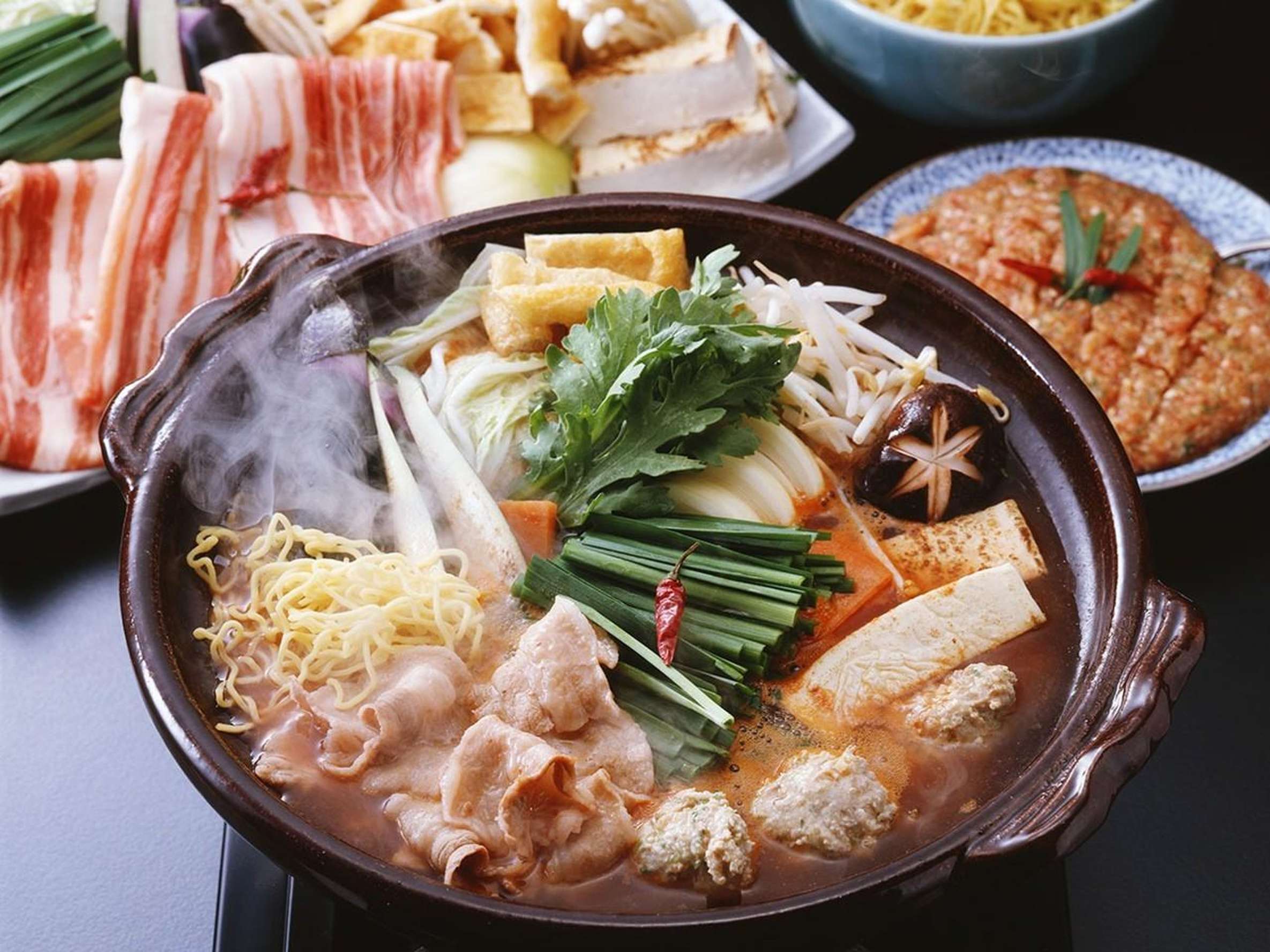
Chanko nabe is the hot pot sumo wrestlers eat, and it is woven through every option. At the Kokugikan, chanko nabe at the arena is a cheap and good lunch, and food and merchandise inside are surprisingly affordable by sporting-event standards.
Look out for the wrestler-themed bento at the concessions, some built around a named rikishi's favorite items. You can bring your own food into a tournament, and beer costs about convenience-store prices.
Many shows build the meal in. One Tokyo show includes all-you-can-eat chicken hot pot and Japanese dishes, a luxury show serves chanko nabe with wagyu sukiyaki and matcha dessert, and the Ryogoku experience pairs the sumo session with a chanko nabe meal.
Travelers praise the hearty, generous food, but check your booking details to confirm which food and drinks are included.
If you have dietary needs, request them at least two days ahead. Vegetarian, vegan and gluten-free chanko nabe can be arranged by several operators, but halal meals are not provided.
Match the option to your dates and your group. If your trip falls in January, May or September and you can buy tickets the moment they go on sale, the tournament is the full spectacle, and it is worth a whole day.
If your dates miss the tournament, a show gives you retired professionals, English commentary, a ring challenge and a meal in 90 minutes to two hours, year-round.
Morning practice suits travelers who want the unfiltered look at a wrestler's daily life and can hold a 5:30 am start and two hours of silence. Families with young children do better at a show or a tournament, where noise is part of the fun.
A lunch show in Ryogoku combines the two pleasures neatly: chanko hot pot, a demonstration of techniques, and a friendly challenge bout against a former wrestler.
Crowds follow the same calendar as the events themselves. Tournament months pull the biggest numbers, and the quiet months are when everything else opens up:
April: 5 out of 5 for how busy it gets.
Tap a month to read it.
Whatever you pick, budget the whole event; the bouts are the shortest part of the day, and the rituals around them are what you will remember.
Sumo rewards planning more than any other Tokyo activity. The bouts are seconds long, so the value sits in the rituals, the crowd and the food around them.
Time a tournament if your dates allow, book a show if they do not, and save stable practice for the morning you are willing to lose to silence.
Work out which city can give you live sumo on your dates, from tournament months to year-round shows.
Compare Tokyo's guided viewing, stable visits and shows to find the live sumo that fits your trip.

See how Osaka's sumo options differ, from dinner shows to the March tournament, and pick your evening.
Find out what sumo you can actually watch in Kyoto, including shows where you can step into the ring.

Plan a Fukuoka sumo morning, from real stable practice to the November tournament at the Kokusai Center.

Get the current picture on Sapporo's sumo show, its daily times and when the venue reopens.

Sort the kinds of sumo experience by what you do, whether you watch, join in or sit down to eat.

Picture a sumo show with Mount Fuji behind the ring, and see what the Lake Yamanaka visit involves.

Turn an interest in trying sumo into a booking, with the class and challenge options in Tokyo and Osaka.
Choose a guided way into a Tokyo stable, with meeting times, etiquette and what the morning looks like.

See how dressing up in sumo attire fits into a Tokyo show, and which evening makes it easy to do.
Go deeper than a glimpse, with a Tokyo class that explains sumo's traditions before you watch a bout.
Identify the SumoLand venue you mean, in Osaka or Tokyo, and move on to the details that matter.

Find the Osaka Sumo Land venue and the practical details that decide whether it fits your day.

Check the Ryogoku location and visitor details for SumoLand in Tokyo before you commit an evening.

Turn a wish to see grand sumo into a plan, with the six tournaments a year and their host cities.

Get the Tokyo tournament dates, the Kokugikan venue and the ticket choices on one clear page.

Pin down the Osaka tournament's venue and March schedule, and judge how it fits your trip.

Settle the venue and November dates for Fukuoka's grand tournament before you build days around it.

Make the Nagoya ticket and venue question simple, so a July tournament plan becomes a real step.

Understand what the Minoh Expo tournament is and how it fits into watching sumo in Osaka.
See whether a guided tournament visit suits you, and find the city-specific page to book from.

Get a clear answer on how a Nagoya tournament tour works and whether it matches your July plan.

Check whether an Osaka tournament experience with tickets matches the day you have pictured.

Read what a Ryogoku arena visit on a tournament tour gives you, and decide if it fits Tokyo days.
Find where real morning training is open to visitors and choose a practice visit with confidence.
Turn an interest in Tokyo morning training into a real visit, with guided options and timings.

Weigh real morning training in Osaka against a staged show, and pick the visit that suits you.

Tell real Kyoto training apart from a performance, then decide which visit is worth your morning.

Work out where sumo shows happen and which kind of performance suits your evening or lunch.

Find a Tokyo show that feels worth choosing for the food, drinks and seating as well as the bouts.

Compare Ginza, Shinjuku and other Tokyo shows by time, format and what you get to take part in.
Settle on an Osaka sumo show, with the live performances and restaurant options laid out.

Answer whether Kyoto has a sumo show, and choose between the daily sessions on offer.

See what Sapporo's sumo-and-food show involves and check its availability before you plan.

Compare Tokyo sumo halls by venue and show, so you can pick one and book it with ease.

Confirm what a Ryogoku sumo show includes, from the ring to the meal, before you book.

See why a Tokyo Tower evening works, with bouts, cultural performances, a meal and photos.
Find a Tokyo outing that pairs a live show with chanko nabe, and match it to your lunch plans.
Turn a sumo-themed dinner in Osaka into a specific evening you feel good about booking.

Compare every way to watch and try sumo across Japan, and find the experience worth your time.
Plan around the Tokyo sumo museum's hours and see what other cities offer museum-minded visitors.
Explore Tokyo's sumo district and see how to experience Ryogoku with some context behind it.
Find a ticketed geisha show in Tokyo that suits your visit, with the options set out clearly.
Quick answers to the questions visitors ask most before booking a sumo day in Tokyo.
Yes. Women can watch tournaments from the arena seats and join guided stable visits. The tradition bars women from entering or touching the ring itself, and at some stables women watch from designated seating areas.
Children can watch tournaments and shows, and on stable practice tours they can observe quietly as long as it stays that way. For families with young children who find it hard to sit still and silent, a sumo show or a tournament is a far better fit than a real morning practice.
Tokyo hosts grand tournaments in January, May and September, each lasting 15 days at Ryogoku Kokugikan. If your trip falls between tournaments, morning practice at the stables should be running as normal, and sumo shows run year-round.
Individual bouts last only a few seconds, up to about 30 seconds even at the top level. Plan the visit around the whole event, since a tournament ticket covers the entire day and shows build the wrestling into a longer program.
A wrestler wins by forcing his opponent out of the inner circle or throwing him down. He loses if any body part other than the soles of his feet touches the clay. There are no weight classes, and the Japan Sumo Association defines 82 official winning techniques.
Tournament bouts are real contests that affect the wrestlers' official rankings. The bouts at tourist shows are choreographed for time and safety, though the performers are usually former professionals showing genuine skill.
There is no formal dress code, but modest clothing helps, especially at a stable. Wear comfortable clothes you can sit on the floor in, remove your shoes at the entrance, and take off hats and sunglasses inside.
It gives you a close look at real training, from warm-up drills to about an hour of full-intensity sparring, and the wrestlers' power and the sounds of practice hit hardest from nearby. It suits travelers who want the training room; casual first-timers often enjoy a show more.
Follow the crowd's lead on cheering, keep your phone silent, and stay seated during the initial charge. Clapping is welcome, but noisemakers and heckling are poor form. Never throw your cushion after an upset, even if others do, and never enter or touch the ring.
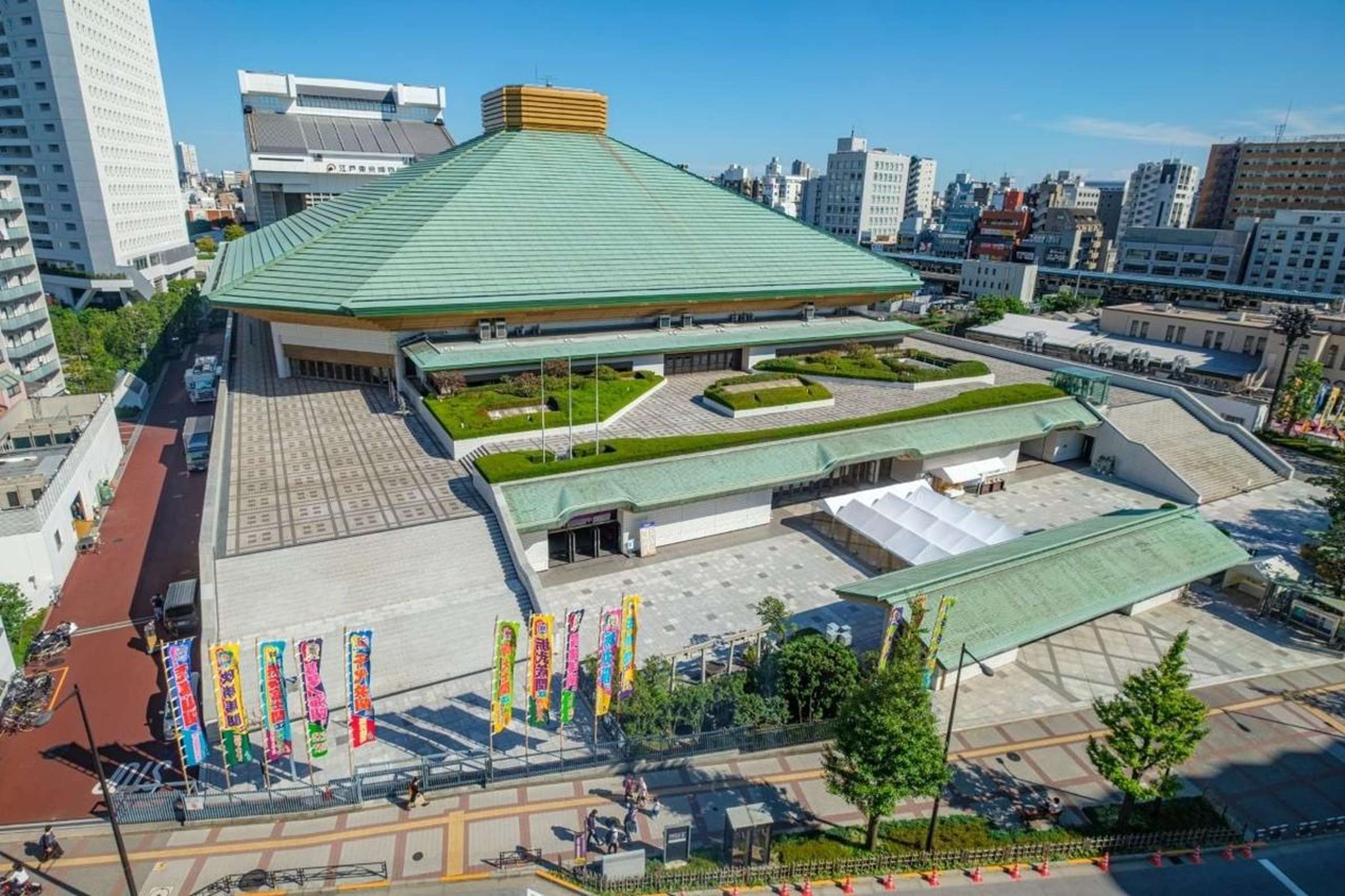
Join an expert English-speaking guide through Ryogoku, the Kokugikan area, the Sumo Museum and Ekō-in Temple, then finish with chanko-nabe lunch, and cancel free up to 24 hours ahead.