- 1
Allow about 3 hours for the masterclass plus time to find the meeting point at Ryogoku Station.
- 2
Book outside tournament months if you also want stable practice; Tokyo stables close to visitors in January, May and September.
- 3
Wear flexible clothes and socks you don't mind being on the floor in; the mawashi belt is provided.
Why a sumo culture masterclass in Tokyo is worth it
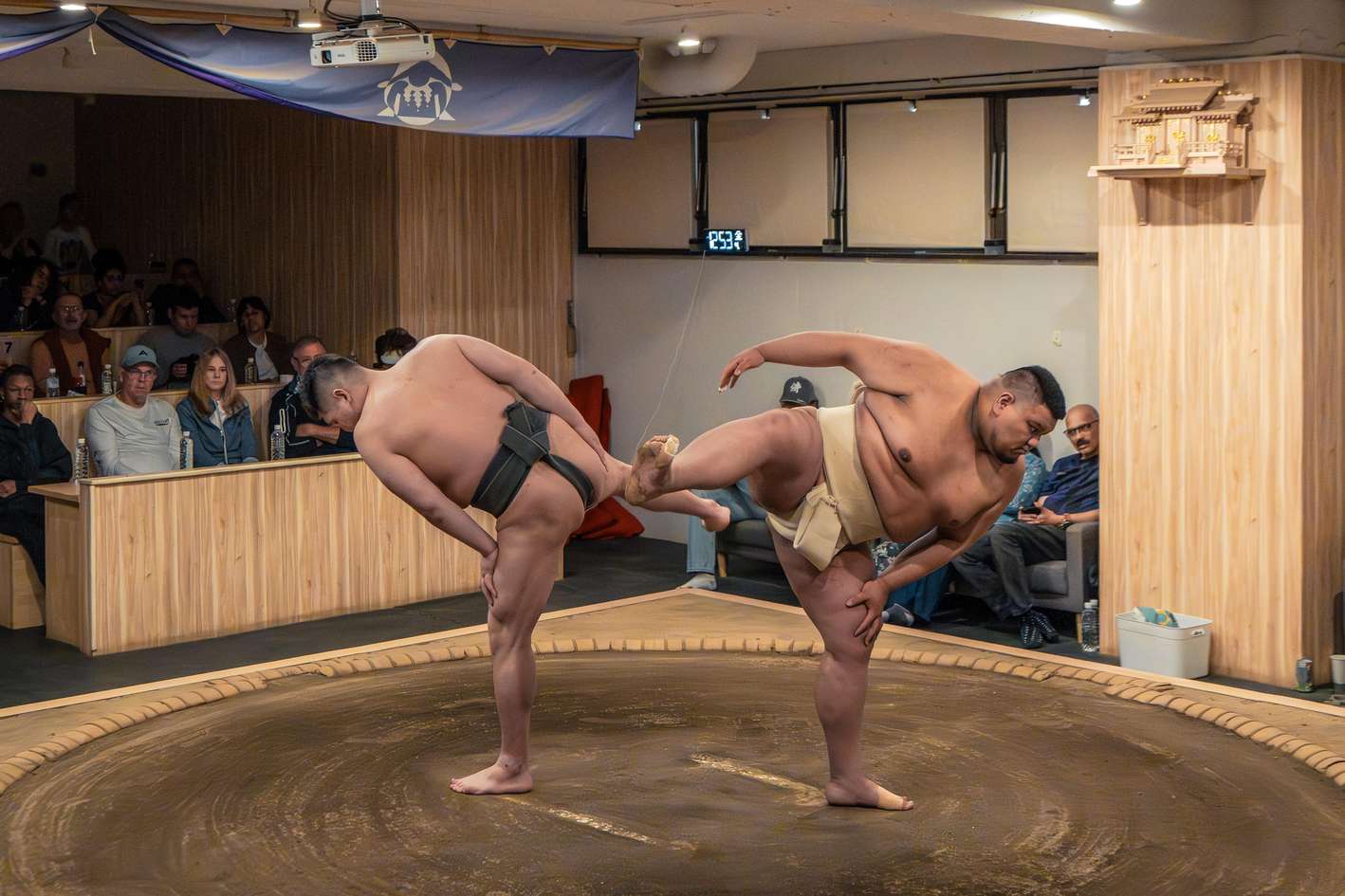
The clay ring sits a few meters away, a former top-division wrestler plants his feet, and the room goes quiet before the charge. That is the moment a masterclass buys you: a wrestler who lived the sport, explaining why every gesture matters.
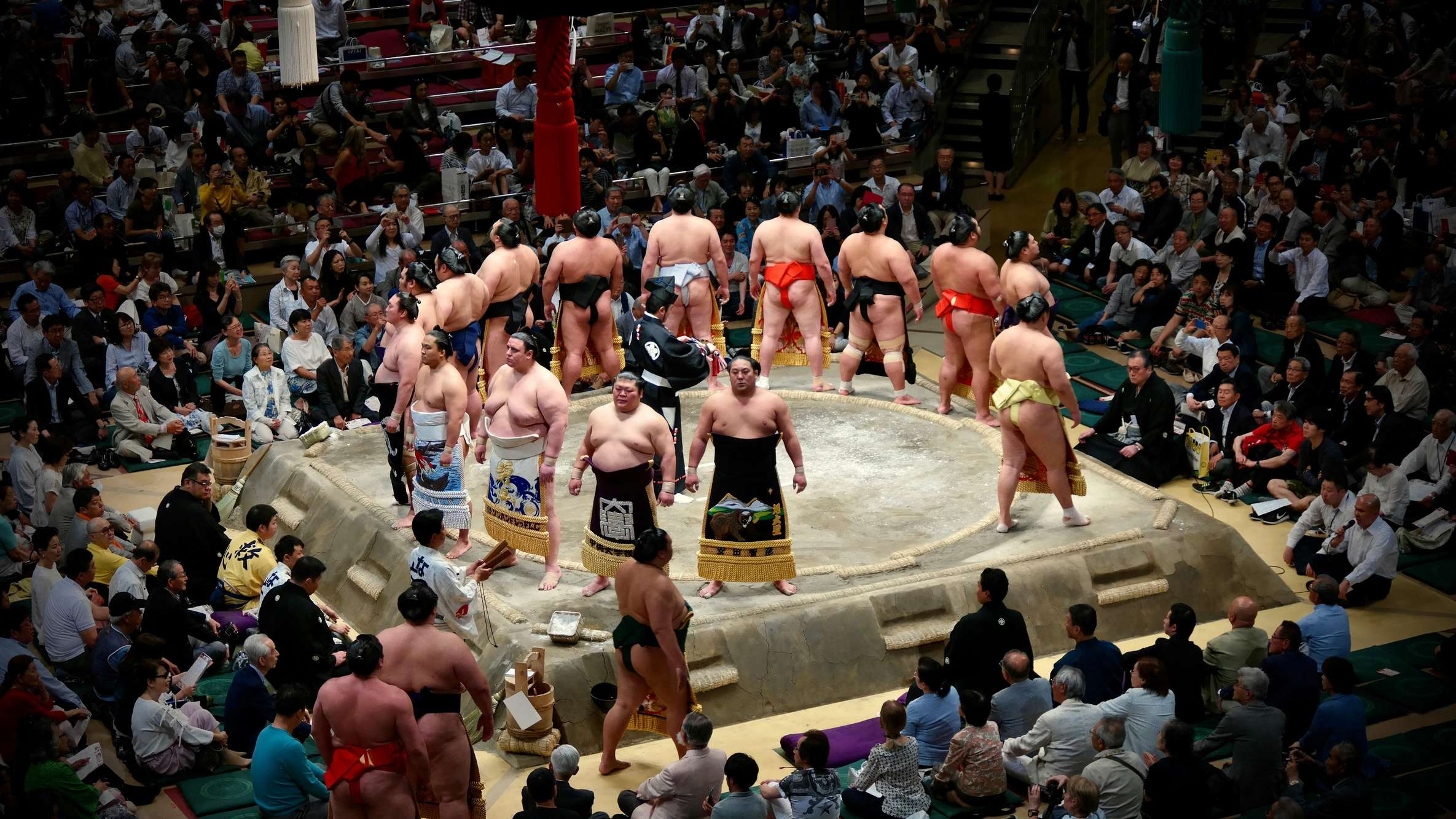
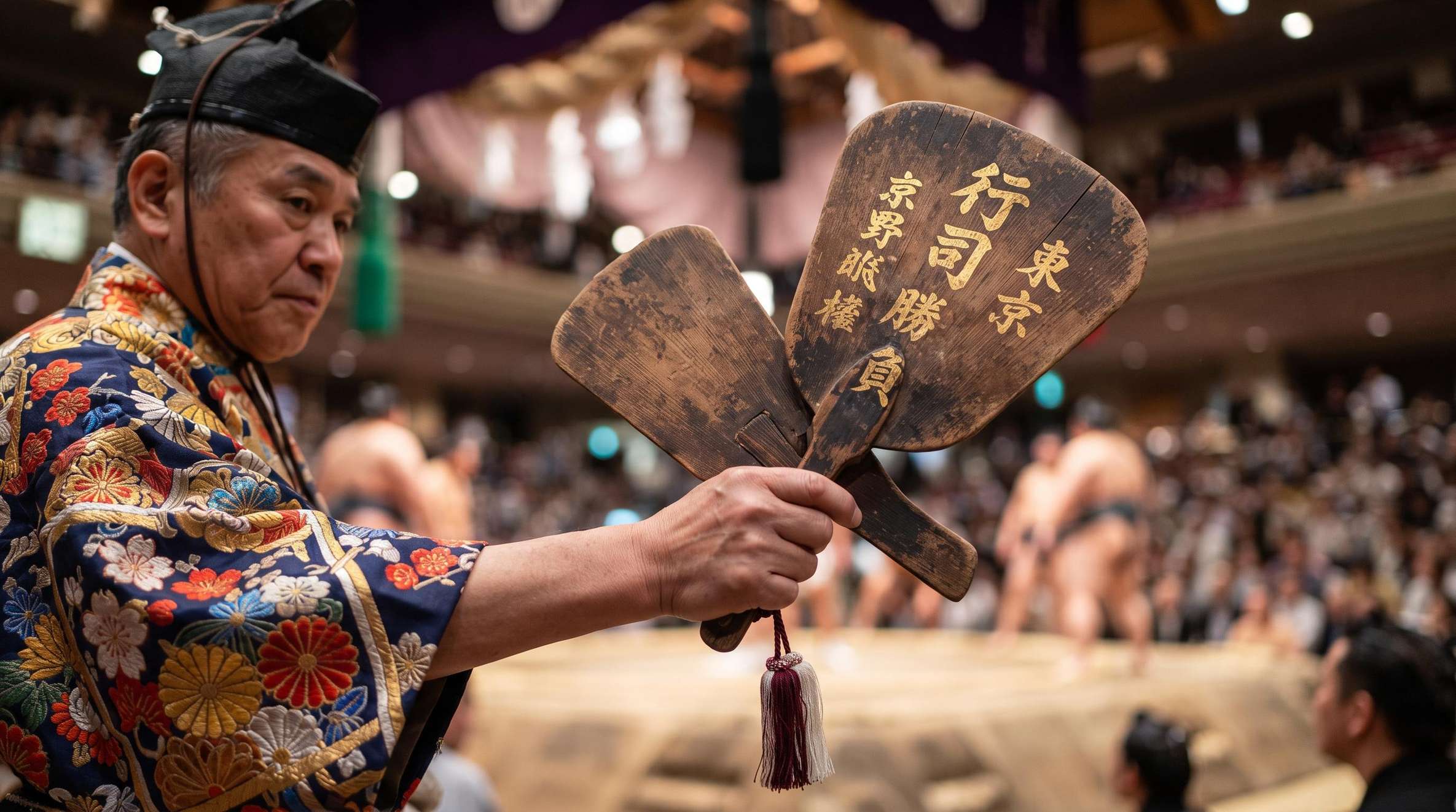
A tournament lets you watch. A show entertains. A masterclass explains. You learn why the salt flies, why the ring is sacred ground, how the banzuke rankings work, and what a winning technique like yorikiri actually requires.
Then you try the moves yourself, from the shiko leg stomp to the initial charge, with a retired professional correcting your footwork.
Understanding is what separates the three, and it is what most visitors leave a show without. People who take a class say they watch every bout afterwards with better eyes, noticing balance and timing instead of just size.
Shows are entertainment performances by retired wrestlers; the bouts are staged and count toward no rankings
Show performers are usually retired wrestlers, no longer in the association's ranks
Without the rituals, rules and techniques explained, most of what you see stays a mystery
The myths above catch most first-timers. If you have already booked a show believing it was real training, a masterclass is the honest way to fill the gap.

When to book - tournament months and quiet seasons
Tokyo hosts grand sumo three times a year, in January, May and September, each running about two weeks at Ryogoku Kokugikan. Those weeks belong to the tournament: the arena fills, and the stables around the district do only light practice or close their doors to visitors entirely.
Between tournaments, the masterclass runs as normal. The wrestlers are back at their stables, the district settles into its working rhythm, and morning practice tours run on their usual schedule. If your trip falls in February, June or October, you get the calm version of Ryogoku.
The masterclass itself runs year round, so your dates only decide what you add around it. Spring and autumn draw the biggest crowds to Tokyo in general; midwinter and midsummer are the quiet stretches.
April: 5 out of 5 for how busy it gets.
Tap a month to read it.
One practical note: if you want both a masterclass and a stable visit on the same trip, aim for a month without a tournament in Tokyo or elsewhere, since Tokyo stables pause when the wrestlers travel to the Osaka basho in March.
Getting to Ryogoku, Tokyo's sumo district
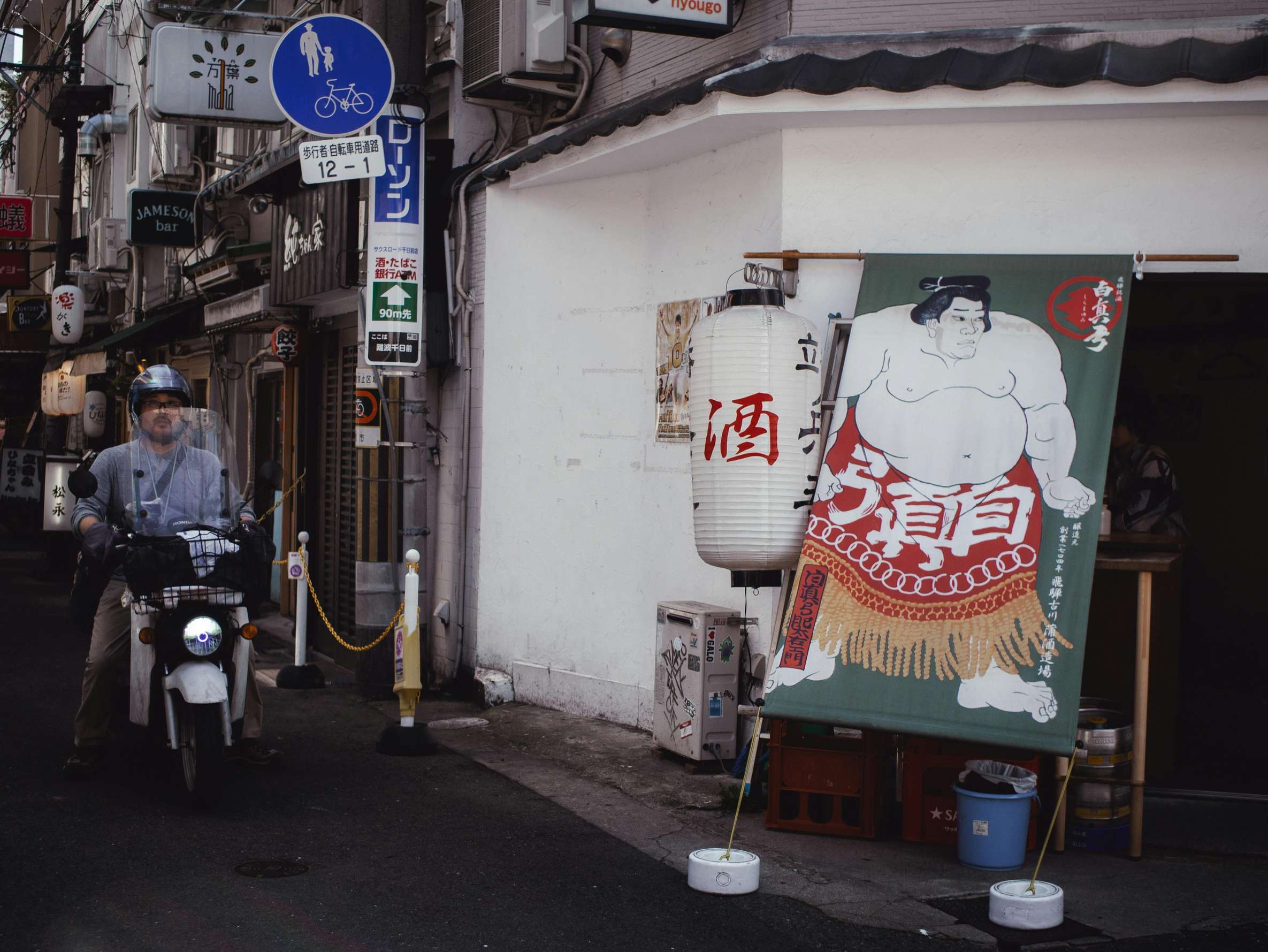
Ryogoku sits east of the Sumida River, and the train beats every other way in. From Tokyo Station, the JR Sobu Line with a change at Akihabara takes about 13 minutes, with trains running every few minutes. From Shinjuku, the Chuo-Sobu Line goes direct in roughly 22 minutes.
From Ginza, a direct subway toward Asakusabashi takes about 8 minutes, then a short hop to Ryogoku. Taxis win on door-to-door time, about 15 minutes from Tokyo Station without traffic, but central Tokyo traffic rarely cooperates and the train removes the guesswork.
Walking is possible but long: about 44 minutes from Tokyo Station and 53 from Ginza, on flat ground the whole way. Save your legs for the shiko stomps.
The meeting point is Ryogoku Station itself, which makes the train the obvious default. Arrive a few minutes early to find your guide and settle in before the walk begins.
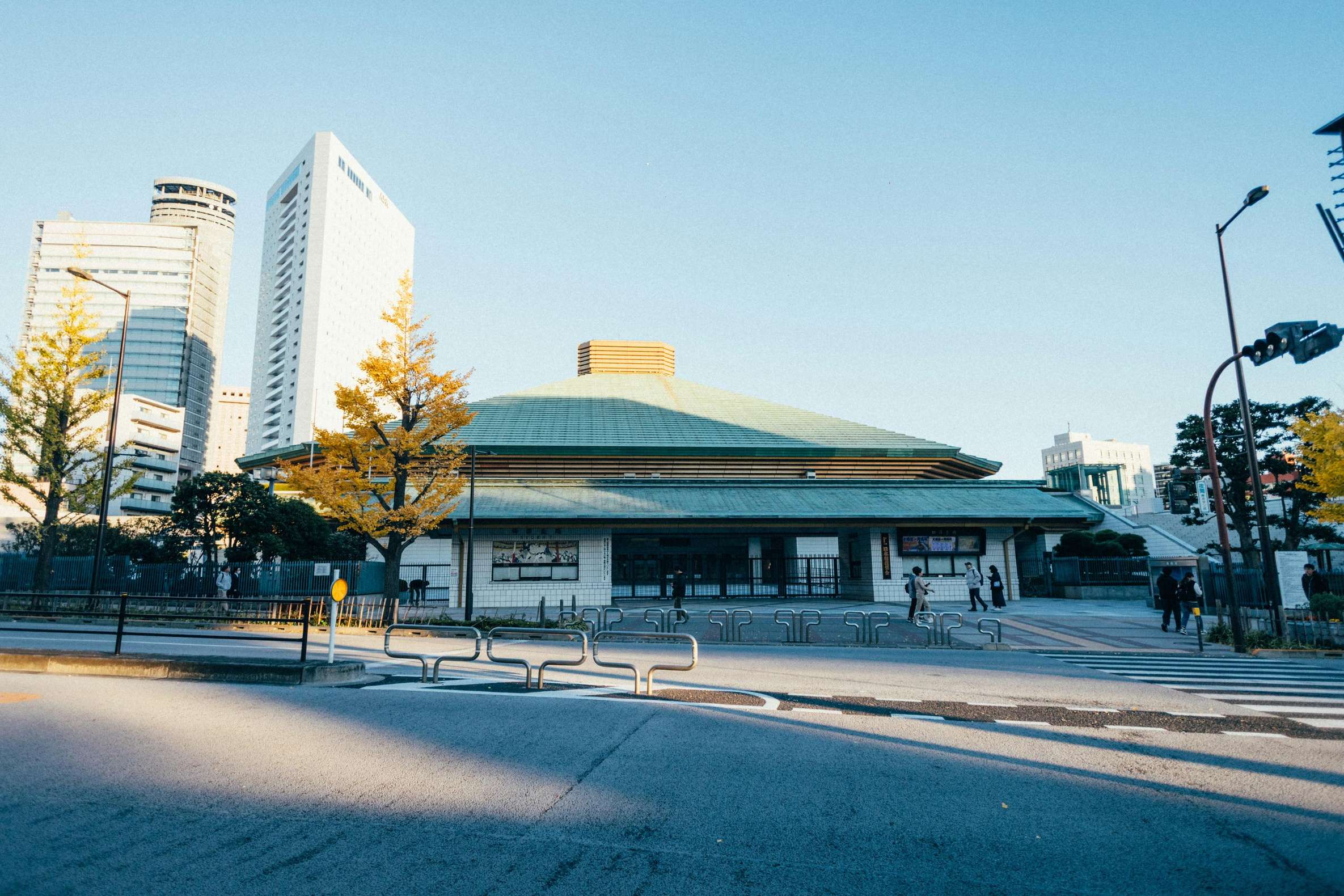
The masterclass step by step, from meeting point to chanko nabe lunch
The Tokyo Sumo Culture Masterclass & Authentic Chanko Nabe Lunch runs about 3 hours, and it unfolds in three movements. It starts at Ryogoku Station, then moves to a 45-minute guided visit inside the Kokugikan, the grand sumo arena, before a walk through the district where real wrestlers live and train.
The session itself is led by former top-division wrestlers under the 63rd Yokozuna Asahifuji. It opens with a Sumo Guide Show on the sacred connection between sumo and Shinto ritual, then live matches and training from a few meters away.
You try the training routines yourself, wear a sumo costume, and can take a mock match against an actual wrestler, followed by photos in the ring and a mochi-pounding session.
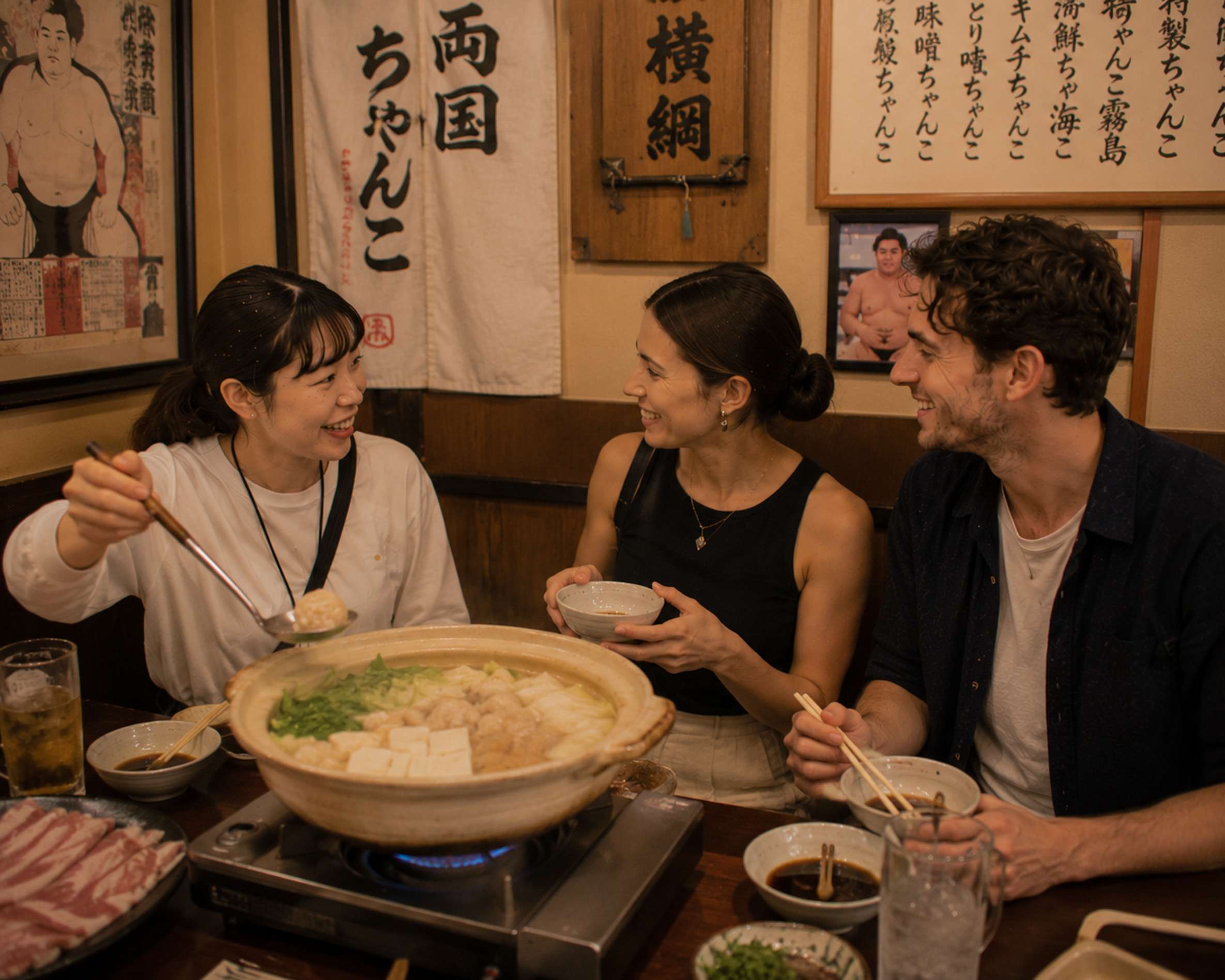
The lunch is the finish line: chicken chanko hot pot supervised by Isegahama Stable and prepared by sumo wrestlers, the dish the sport runs on.
Those numbers add up to roughly half a day door to door, so pick your session with the rest of your itinerary in mind.
The walk between the arena and the restaurant is part of the lesson. Your guide points out the stables tucked between ordinary houses, and you start to see how a wrestler's whole life fits inside a few streets.
- 1StartMeeting point
- 245 minRyogoku Kokugikan
Photo stop, Visit, Guided tour
- 345 minRyogoku
Photo stop, Visit, Guided tour
- 41 hourLocal restaurant
Photo stop, Visit, Guided tour
Sessions run 11 am to 1 pm, 2:30 pm to 4:30 pm, and 6 pm to 8 pm, so the morning slot leaves your afternoon free.
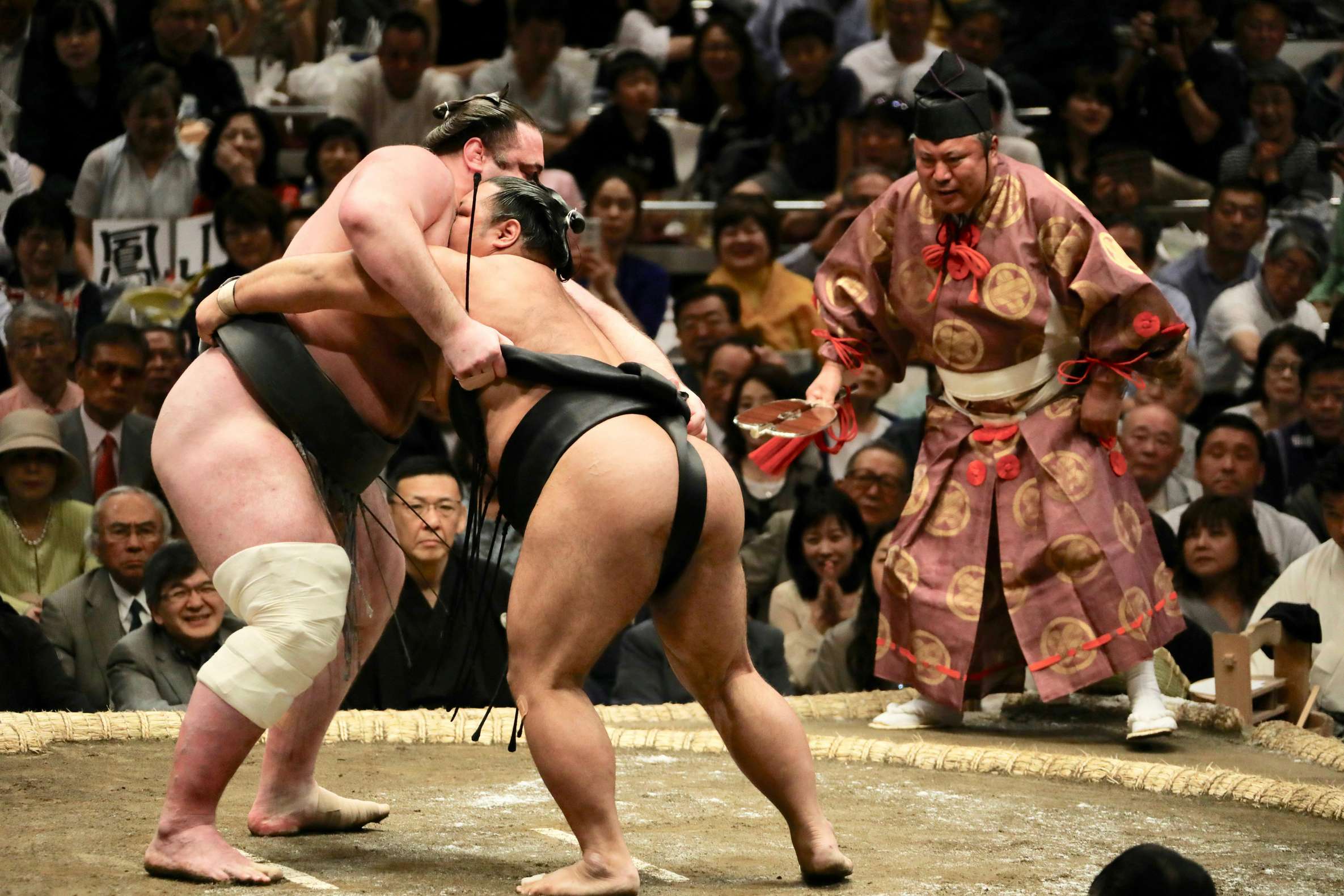
Masterclass, stable practice or show - which sumo experience suits you
Three ways in, three different days. At a real stable practice you are a silent, still observer: no talking, no moving, no flash photos, no eating or drinking, sitting on the tatami floor while the wrestlers work.
It is the most authentic view of sumo there is, and it suits people who already love the sport.
A show is the opposite: retired wrestlers performing, commentary in English, food and drink, and a chance to challenge someone in the ring. Fun, social, and built for a first evening encounter.
The masterclass sits between them and gives you both halves: real explanation and real contact, with wrestlers who competed at the top level and time to ask everything. It runs at a comfortable hour, without the dawn start a stable visit demands.
What nobody tells you
Stables are private workplaces and homes; visits need an appointment, and many never open to the public
Turn up early, except during tournaments, and dress warm in winter since you stay outside
Silence, no flash photos, and never step on the ring
Arranging a stable visit alone is hard for foreign visitors; a guided tour is the realistic route.
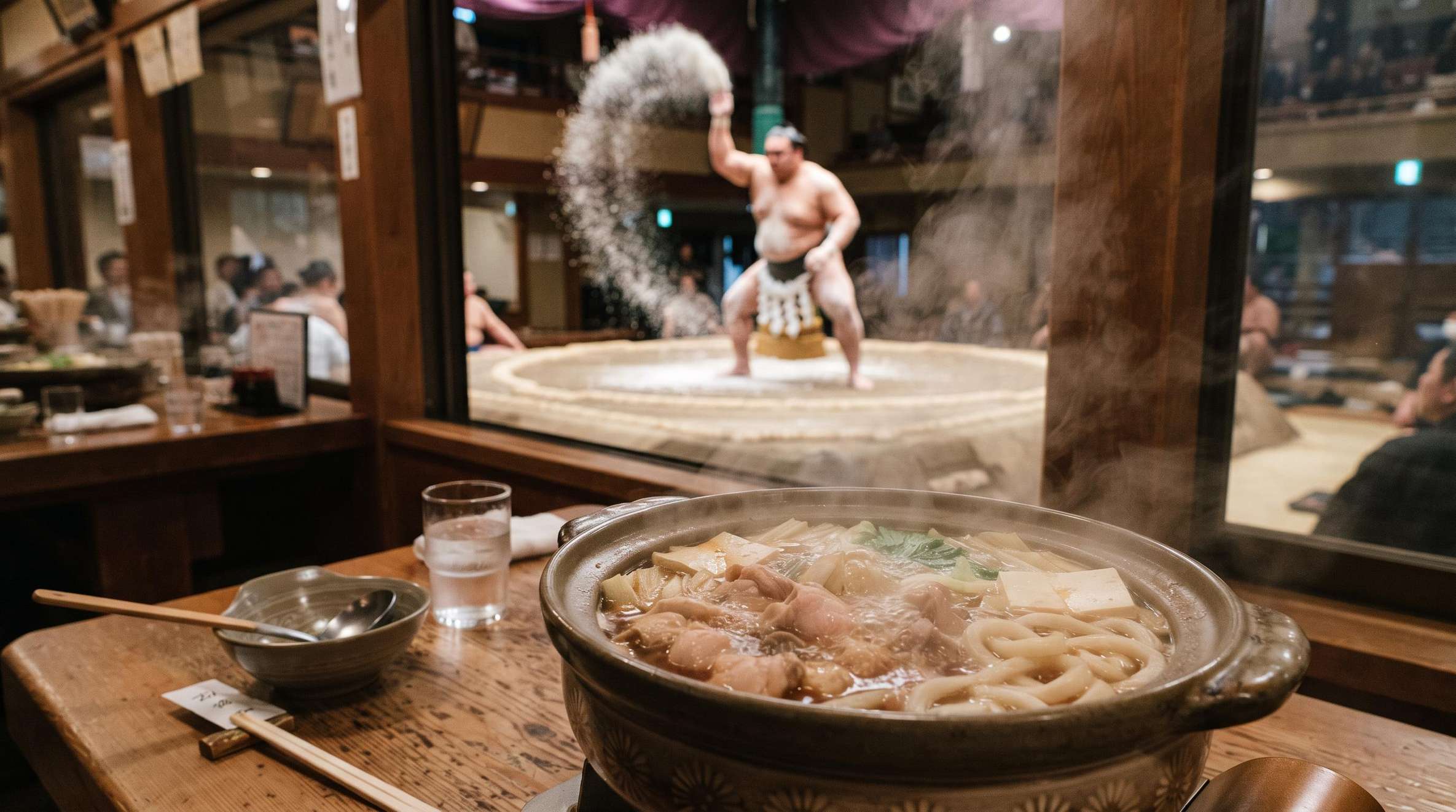
What to look for in a sumo culture tour
The markers are simple. A guide with you the whole way, a small group, cancellation that does not punish a changed plan, and a language you can actually follow.
The masterclass checks each one: it is private, runs in English and Japanese, and you can cancel up to 24 hours in advance for a full refund.
It also skips the ultra-early wakeups that stable tours demand, starting at a comfortable pace from Ryogoku Station. Travelers describe it as a full morning that still leaves the afternoon free.
Compare it with the walking alternative in the same district before you book. The Discover the World of Sumo History & Lunch tour covers Ekō-in Temple, the Chikara-zuka Monument and the Kokugikan area with Sumo Museum entry on non-tournament days, ending in a chanko-nabe lunch.
It is a history walk; the masterclass adds live matches and hands-on training.
- A guide with youLive tour guide
- Free cancellationCancel up to 24 hours in advance for a full refund
- Book now, pay laterReserve your place and pay closer to the date
- A small groupSmall group
- Hotel pickupNo, you meet at the start
- Your languageEnglish, Japanese
Both tours end in a chanko-nabe lunch. The masterclass is the one that puts you on the dohyo yourself.
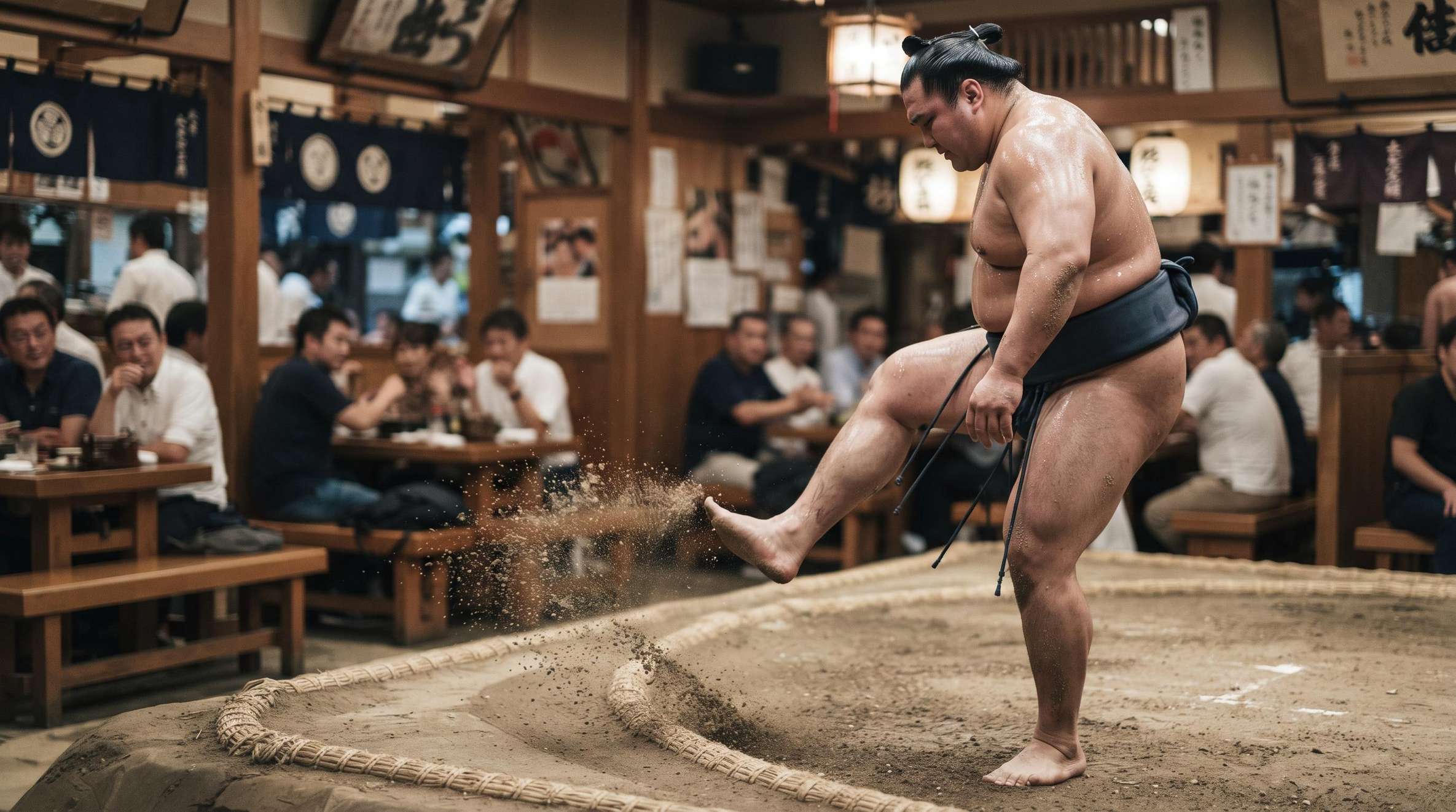
Who can take part - ages, fitness, diets and access
The age bands run from 3 and younger through 4-17 up to 18-99, so families, teenagers and grandparents all fit.
The physical demands are moderate, and instructors adjust the intensity to each person: a gentler, modified programme exists for seniors or anyone worried about fitness, and many guests in their 60s and beyond have taken part.
Taking part in a bout is optional. Guests with knee or back concerns should tell staff beforehand so modifications can be made, and anyone with mobility questions can ask the venue in advance about seating and floor-level access.
One limit decides a booking: the Ryogoku experience is not suitable for wheelchair users. On food, the Ryogoku venue provides vegetarian, vegan and gluten-free meals on request at least two days before; halal meals cannot be provided, though guests may bring their own food.
The Ryogoku experience is not suitable for wheelchair users, and halal meals cannot be provided Contact the operator before booking to discuss access needs, or bring your own food
Women watch and join freely at experiences like this; the professional ban on entering the dohyo applies to the sport itself, not to tourist sessions, and some Tokyo venues welcome women onto the ring.
What to wear and bring to your sumo class
Dress for a casual gym class and you have it right. Flexible clothing you can move in, nothing stiff or restrictive, and socks you don't mind being on the floor in. There is no dress code beyond comfort.
You do not fully change clothes. The mawashi, the sumo belt, is provided for the hands-on part and worn over your own clothes, so no special gear is needed. If you plan to wrestle, switch your glasses for contact lenses, since a bout is a bad place to lose them.
Bring a towel, a change of clothes and about 500 ml of drinking water. A camera or phone for the photo session in the ring goes without saying; the commemorative pictures are half the memory.
That is the whole list. The heaviest thing in your bag should be the appetite you save for the hot pot.
What else to see around Ryogoku's sumo district
A morning masterclass ends by early afternoon, and Ryogoku rewards the leftover hours. Ekō-in, the temple tied to sumo's origins, sits two minutes away. The Edo-Tokyo Museum is four minutes off, and the Sumida Hokusai Museum six, both worth an hour or two.
Farther afield, the Fukagawa Edo Museum and Kiyosumi Garden take about 20 minutes on foot each, a pleasant walk along the water if the weather holds.
Mind the Sumo Museum's clock: it sits on the arena's main floor and closes in the late afternoon, so go before the day runs out. On tournament days it is reserved for ticket holders, and it also closes between exhibitions and over the New Year period.
- 1Ekō-intemple, shrine or church2 min walkDirections
- 2Edo-Tokyo Museummuseum4 min walkDirections
- 3Sumida Hokusai Museummuseum6 min walkDirections
Show all 5 places
- 4Fukagawa Edo Museummuseum20 min walkDirections
- 5Kiyosumi Gardenpark or garden21 min walkDirections
- 1Currency Museum of the Bank of Japanmuseum10 min driveDirections
- 2Yushima Seidōtemple, shrine or church10 min driveDirections
- 3Kume no Heinai-dōtemple, shrine or church11 min driveDirections
- 4Hōzōmonhistoric place11 min driveDirections
- 5Hanayashikipark or garden12 min driveDirections
- 6Artizon Museummuseum12 min driveDirections
Chanko nabe needs no tour to find, either. Restaurants around Ryogoku, many run by former wrestlers, serve it without a reservation outside tournament periods, and some double as izakaya in the evenings where the stories about the wrestlers flow freely.
What to know before you book a sumo culture masterclass in Tokyo
The masterclass starts at Ryogoku Station, in the middle of Tokyo's historic sumo district. There is no hotel pickup, so allow a few extra minutes to find the meeting point before the walk through the neighborhood begins.
Plan on about three hours for the whole experience, plus a little time to settle in at the station. Travelers describe it as a full morning, and it leaves the afternoon free for the rest of your Tokyo plans.
Sessions run 11 am to 1 pm, 2:30 pm to 4:30 pm, and 6 pm to 8 pm. Unlike stable-practice tours that start near dawn, this one begins at a comfortable pace, so no ultra-early alarm.
Your booking covers the local guide and an authentic chanko nabe lunch, the hot pot wrestlers eat, prepared by sumo wrestlers and supervised by a stable. Transportation and any admission fees beyond the listed stops come out of your pocket.
The masterclass runs in English and Japanese, so you can follow the history, the rituals and the rules without any Japanese. Your guide explains what each movement means before you try it.
You can try shiko stomps, pushing drills and a mock bout against a wrestler, but every physical part is optional and adapted to your fitness. Guests in their 60s and beyond have joined, and a gentler programme is available if you prefer to watch and learn.
Worth it for anyone who wants to understand sumo
This is the pick for travelers who want sumo explained as well as performed: three hours with former top-division wrestlers, a guided look inside the Kokugikan, and a chanko nabe lunch that closes the loop.
Hardcore fans who want the raw, silent reality of training will be happier on a stable practice tour, and casual first-timers after a fun evening may prefer a show with dinner. Everyone else, book it.
Book outside tournament months if you plan to add a stable visit, and choose the morning session to keep your afternoon free.
Sumo culture masterclass in Tokyo - FAQ
What do you actually learn in a sumo culture masterclass in Tokyo?+
The session opens with sumo's history and its Shinto roots, then covers the salt-throwing purification, the shiko stomps, the banzuke ranking system and winning techniques like yorikiri.
You also pick up the core rules: a wrestler loses by stepping out of the ring or letting any body part other than the soles of the feet touch the ground.
Who teaches the masterclass, and are they real wrestlers?+
The team includes former professional wrestlers, some of whom competed in divisions such as makushita or sandanme. The masterclass itself is guided by former top-division wrestlers under the 63rd Yokozuna Asahifuji, so the demonstrations come from people who competed in Japan Sumo Association tournaments.
Do you take part yourself, or only watch and learn?+
You do warm-ups modeled on real training, including shiko leg stomps and matawari splits, then practise techniques like the initial charge in pairs. The session ends with bouts on the dohyo called by a referee. Taking part is optional and adapted to each guest, so you can watch instead if you prefer.
Where does it take place and how does it fit into a day?+
It meets at Ryogoku Station in Tokyo's sumo district and includes a guided visit to the Ryogoku Kokugikan arena before the chanko nabe lunch. The whole thing runs about 3 hours, so it fills the first half of a day and leaves your afternoon free. It starts at a comfortable hour, with no dawn wake-up.
How is a culture masterclass different from a sumo show or morning practice?+
A show is entertainment by retired wrestlers; morning practice is a silent, still observation of working training. The masterclass sits in between: a retired wrestler explains the culture, you see demonstrations up close, you can ask questions and try moves yourself, and lunch is included.
Is it suitable for children and for visitors who don't speak Japanese?+
The masterclass runs in English and Japanese, so no Japanese is needed. Age bands cover ages 18-99, 4-17, and 3 and younger, so children can join with an adult.
Is it physically demanding, and can older visitors take part?+
The demands are moderate, and instructors adjust the intensity to each person's fitness. A gentler programme is available, and guests in their 60s and beyond have taken part. If you have knee or back concerns, tell staff beforehand so they can modify the activities.
What is chanko nabe, and what's for lunch?+
Chanko nabe is the hot pot sumo wrestlers eat, and in the sumo world chanko covers everything wrestlers cook, from stew to curry rice. At the masterclass the chicken chanko is supervised by Isegahama Stable and prepared by sumo wrestlers, served after the session.