Sumo Wrestling Classes: Learn and Try Sumo Tokyo And Osaka Challenges
Step into the ring and learn sumo from former wrestlers. Book a participative sumo wrestling class in Tokyo, Osaka or Kyoto, with ring drills, a challenge against a real rikishi and photos to take home. Spots fill fast on weekends, so pick your city and lock in a time.
"So glad we booked! Learnt loads and came away with a real appreciation for sumo. Brilliant performances, fun audience participation, great for all ages, tasty food too. Highly recommend."
4.8★average rating16,247traveler reviews7 of 8free cancellation50countries travelers came from
Choosing your sumo wrestling classes and challenges
Most sumo experiences in Japan are shows where taking part is optional, and a few go further with hands-on training or a guaranteed turn in the ring. The one difference that decides between them is how active you want to be: watching with a chance to join in, or stepping onto the dohyo yourself.
BookingParticipatory shows in Tokyo and Osaka rarely need more than a few days' notice outside peak months, but weekend and evening slots fill first, and in April, May and October you should book weeks ahead.
Age limitsAt the Ginza show the hands-on training plan is not suitable for children under 5, pregnant guests or guests with serious medical conditions; the Kyoto experience welcomes children from about age two, and kids from about five can join the ring challenge.
SelectionAt the Shinjuku show the sumo challenge is limited to six guests per show, chosen by lottery, and at the Osaka show the spots for challenging a wrestler are limited, so joining the ring is never certain.
Opting outAudience participation is always free to choose; you can watch the warm-ups and bouts and stay in your seat if you would rather not wrestle.
TimingShows can start noticeably later than the time printed on the ticket, and at the Shinjuku show late entry may not be accepted, so arrive with time to spare.
Getting thereThe Kyoto venue is a 7-minute subway ride from Kyoto Station and a 1-minute walk from Marutamachi Exit 6; the Mt Fuji show sits at Lake Yamanaka in the Fuji Five Lakes area.
WeatherThe Mt Fuji show runs rain or shine and moves indoors to a covered third-floor venue in light rain; if a typhoon is forecast you get a free date change or a full refund.
PaymentsThe Shinjuku show is cashless, taking Visa, Mastercard, American Express, JCB, Diners Club and Discover.
FormatThese are entertainment shows performed by retired professional wrestlers, not official tournaments, and the demonstrations are genuine technique all the same.
accessThe hands-on sumo training option at the Ginza show in Tokyo is not suitable for children under 5, pregnant guests, or anyone with a serious medical condition.
Choose the live show plan instead, which anyone can watch, and tell the venue about wheelchair or mobility needs when you book so staff can arrange assistance in advance.
Wrestling classes and challenges worth booking
Best ring guarantee
1.5 hours
4.8(837)
Kyoto: Participative Sumo Experience, Traditional Meal, Pic
The only one where everyone who wants a bout gets one, wearing a real mawashi, with a 4.8 rating from 773 visitors.
Free cancellationSumo showLive MC with English explanations
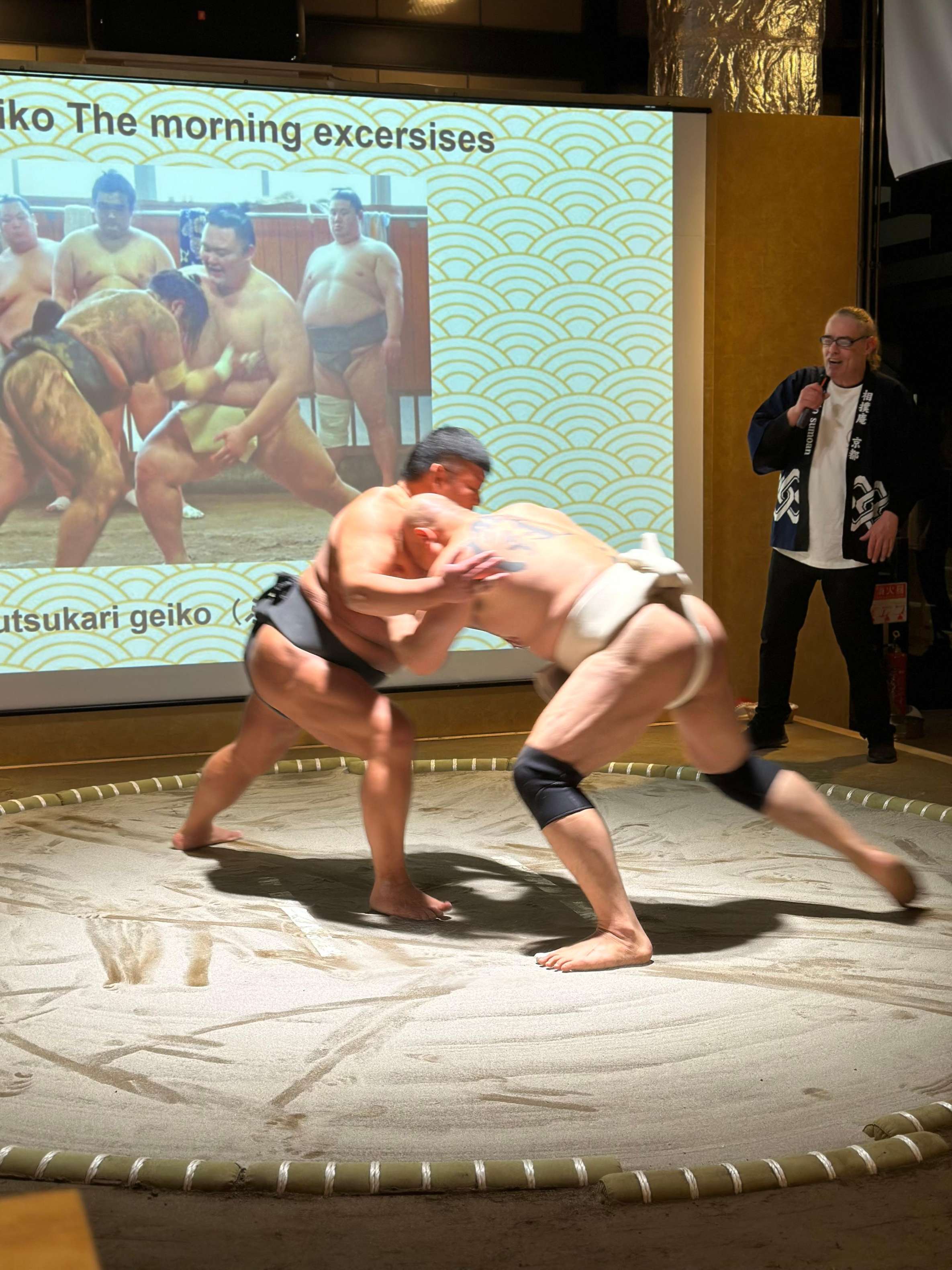
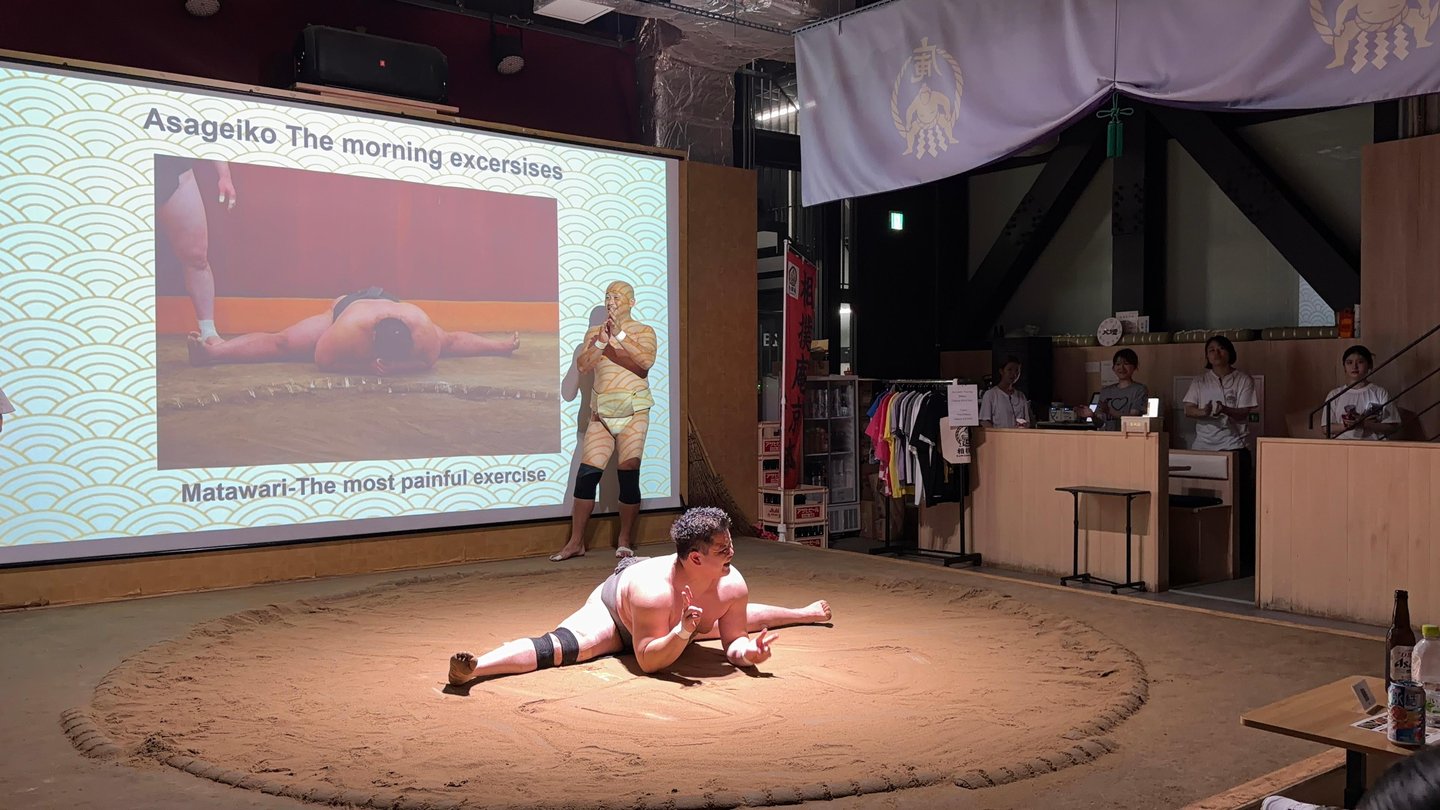
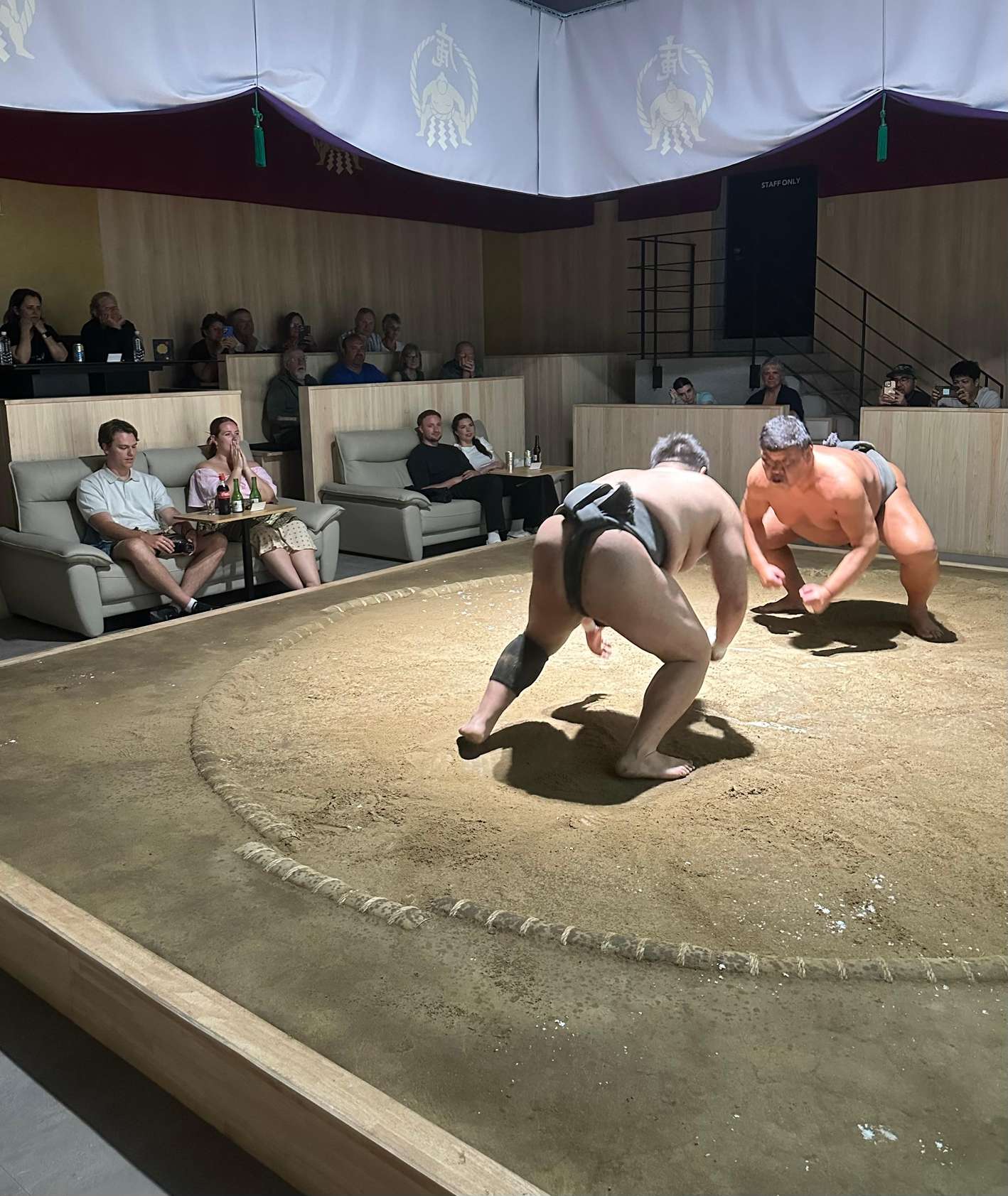
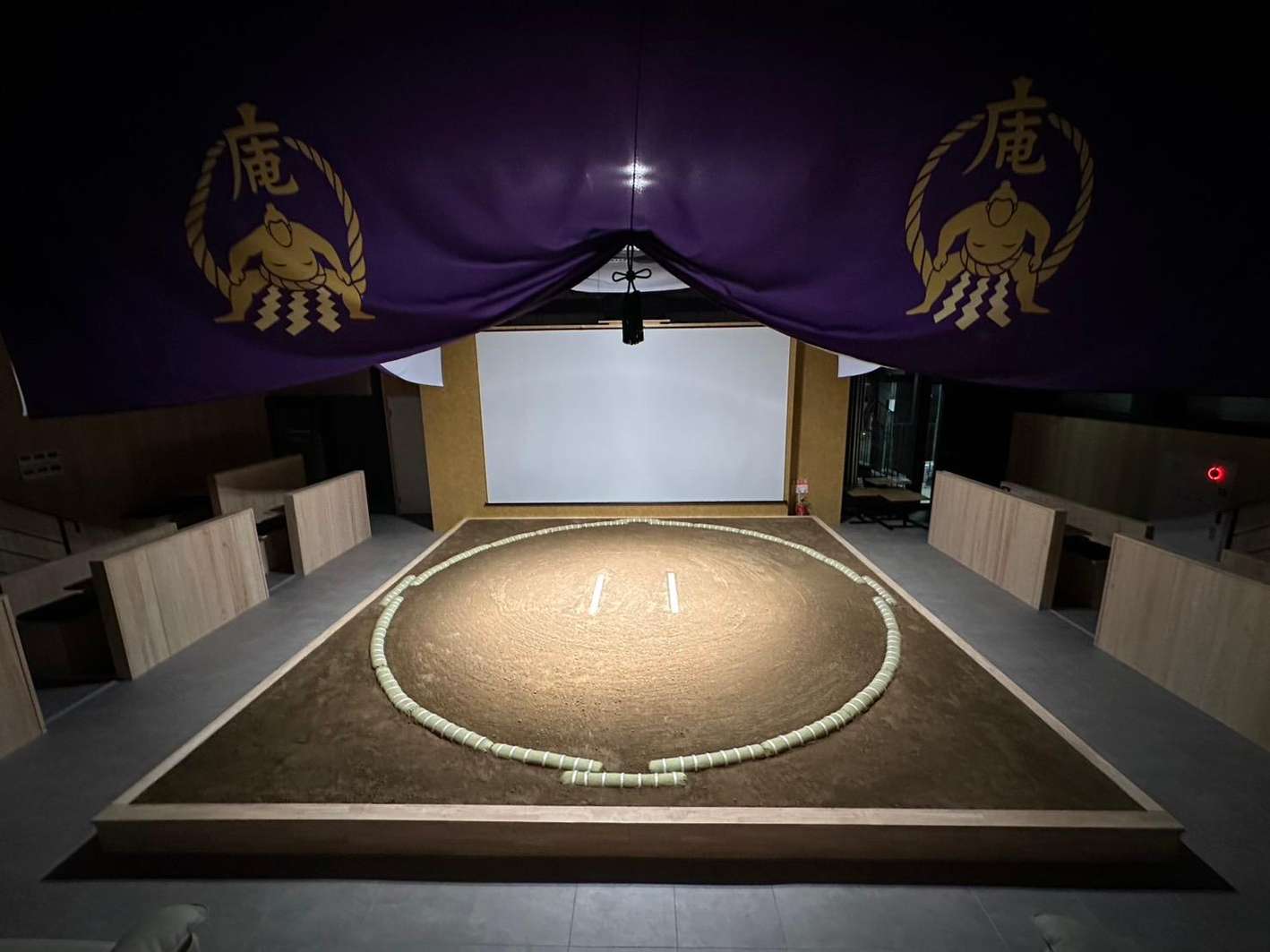
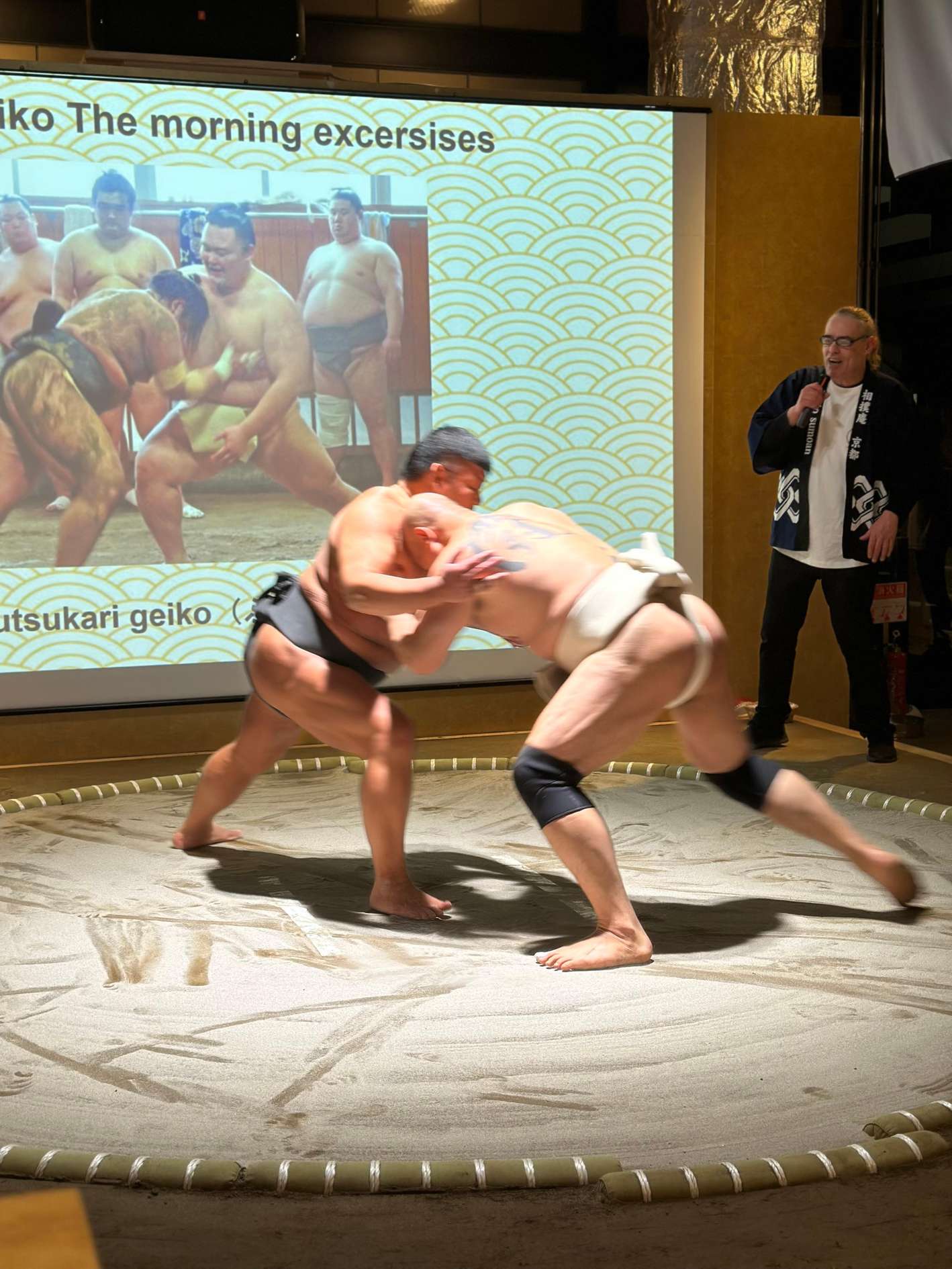
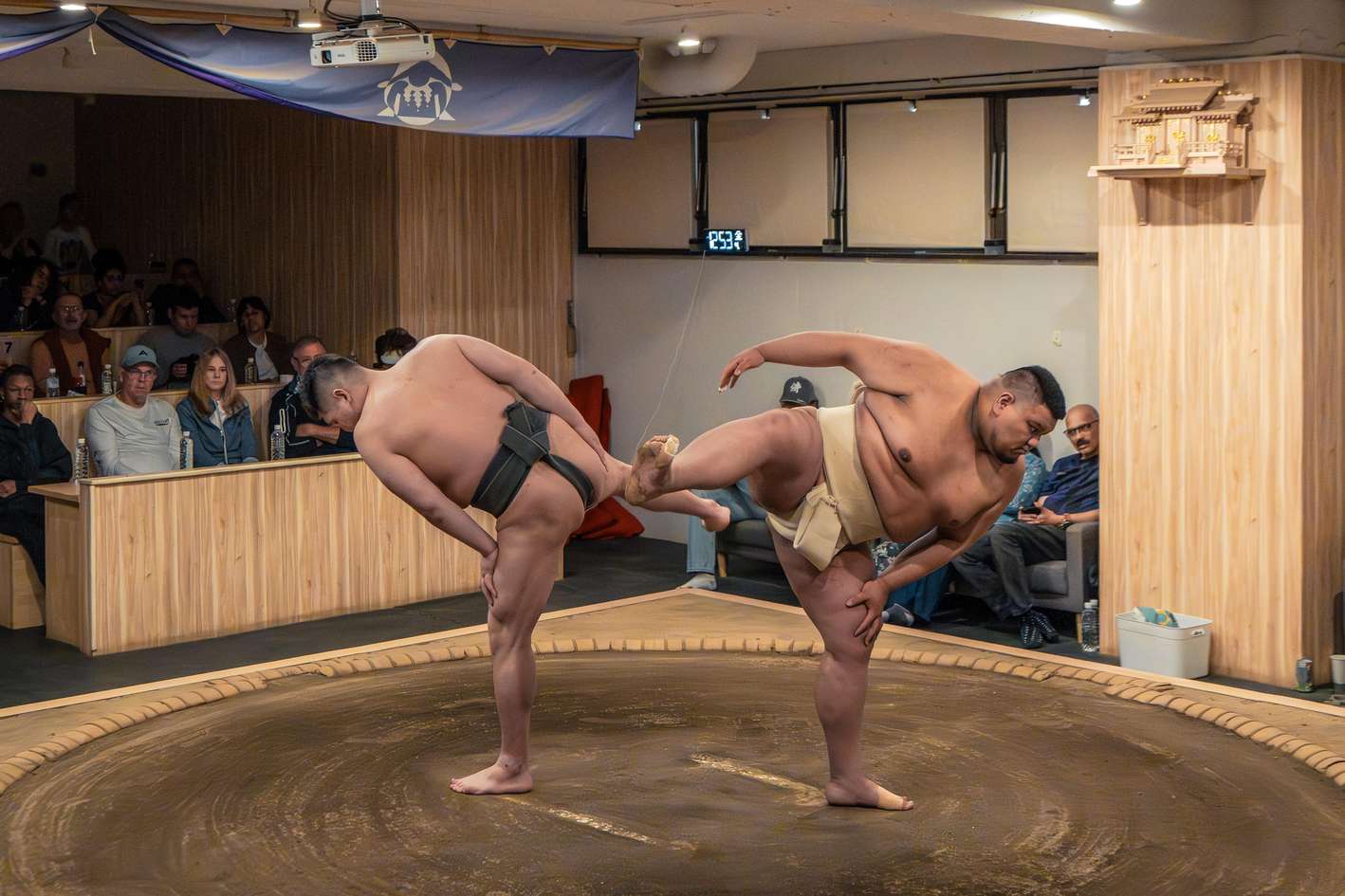
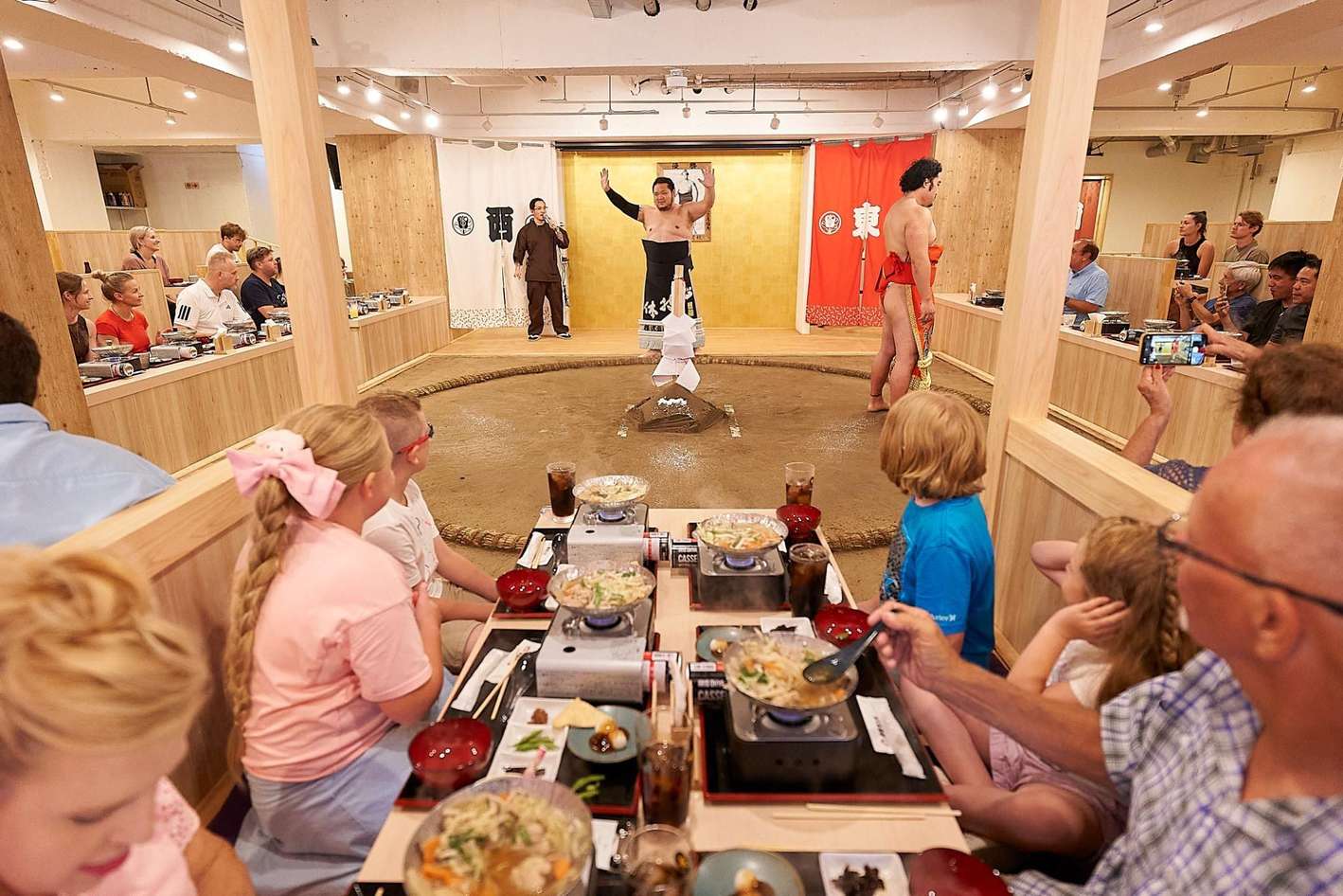
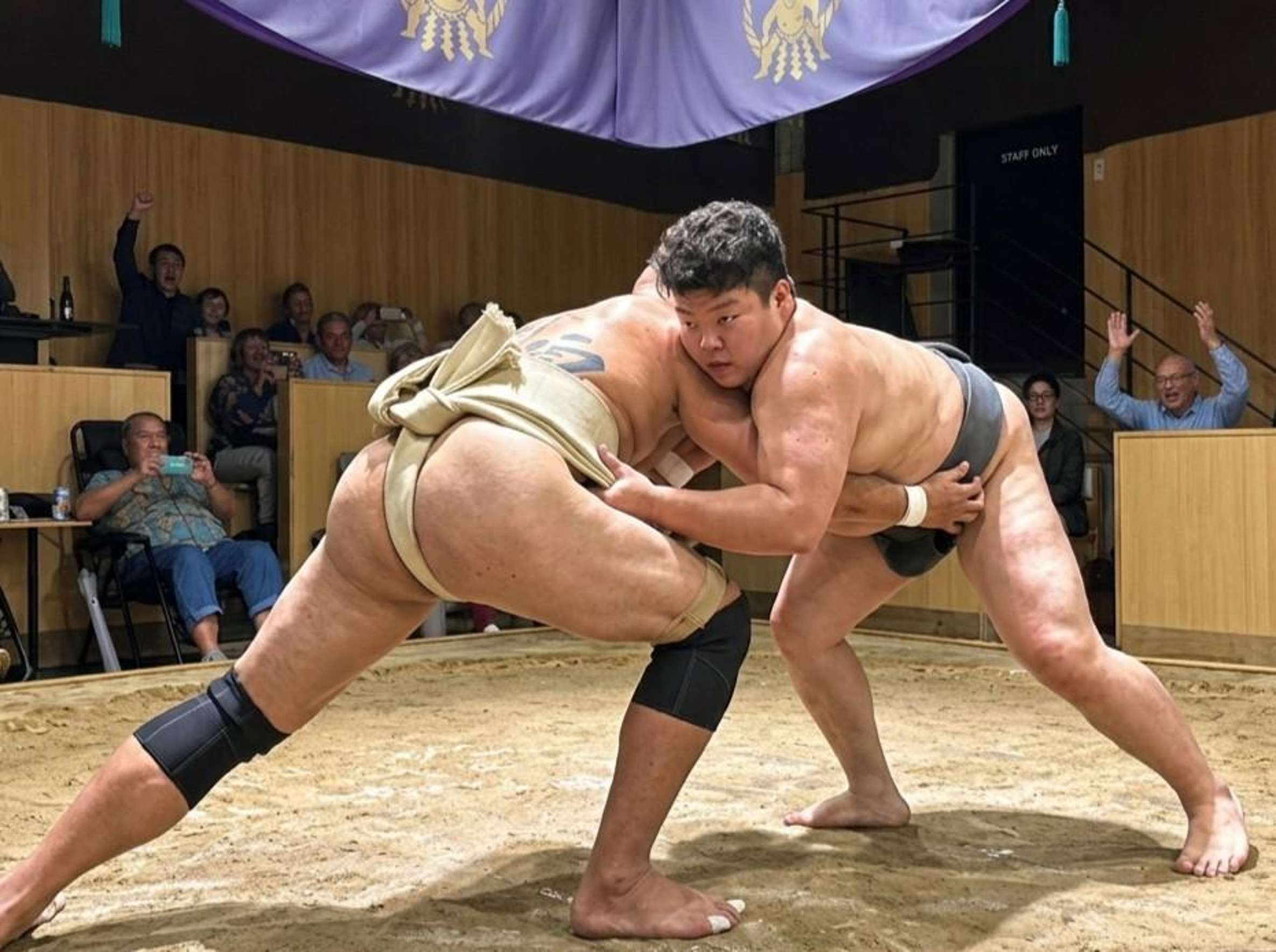
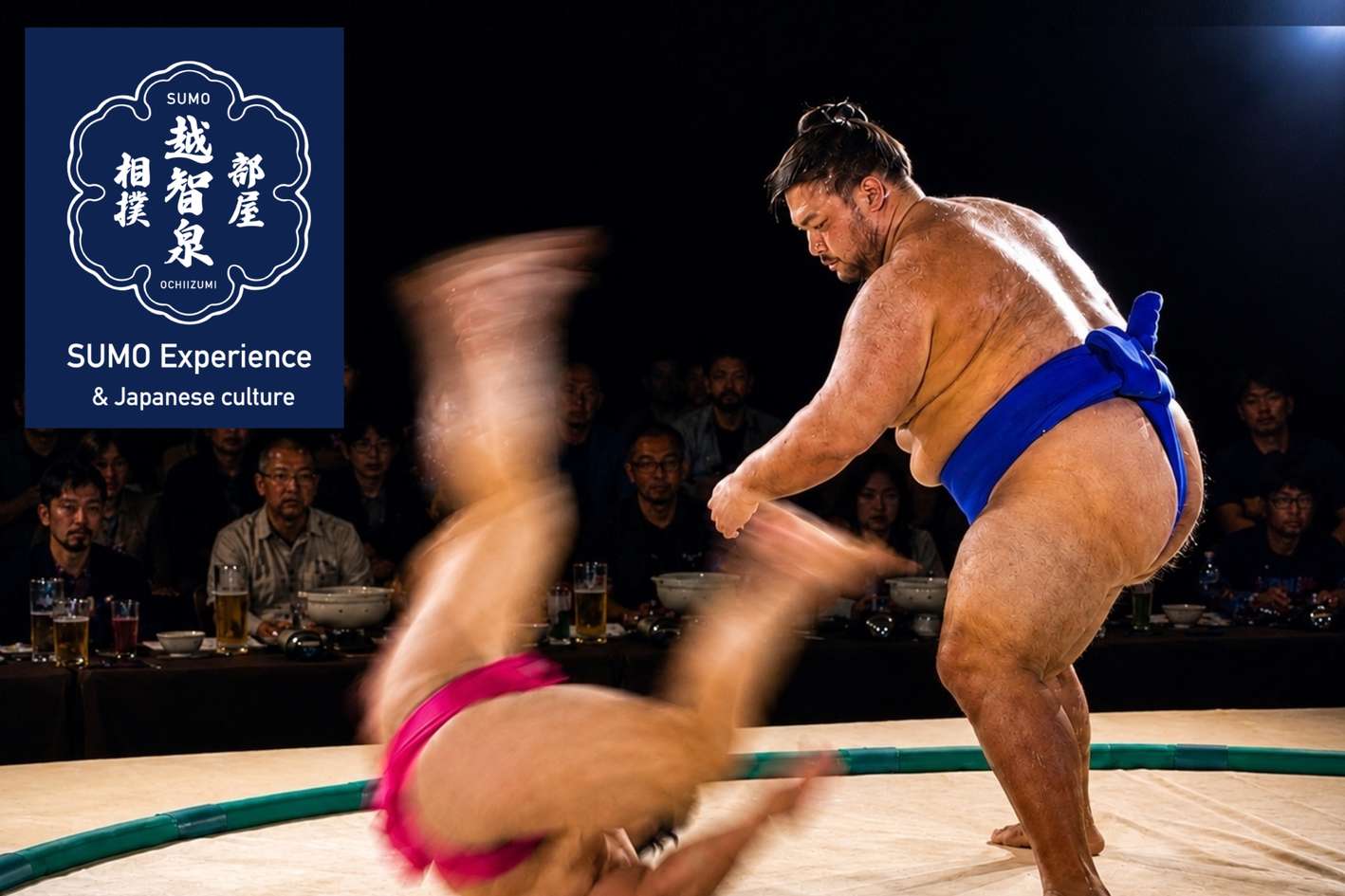
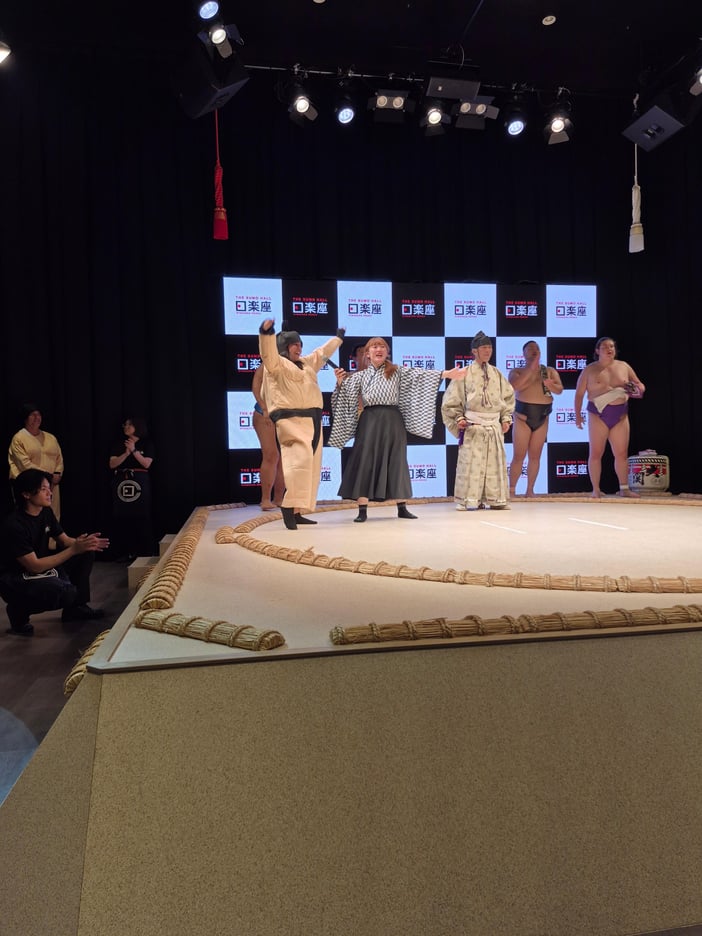
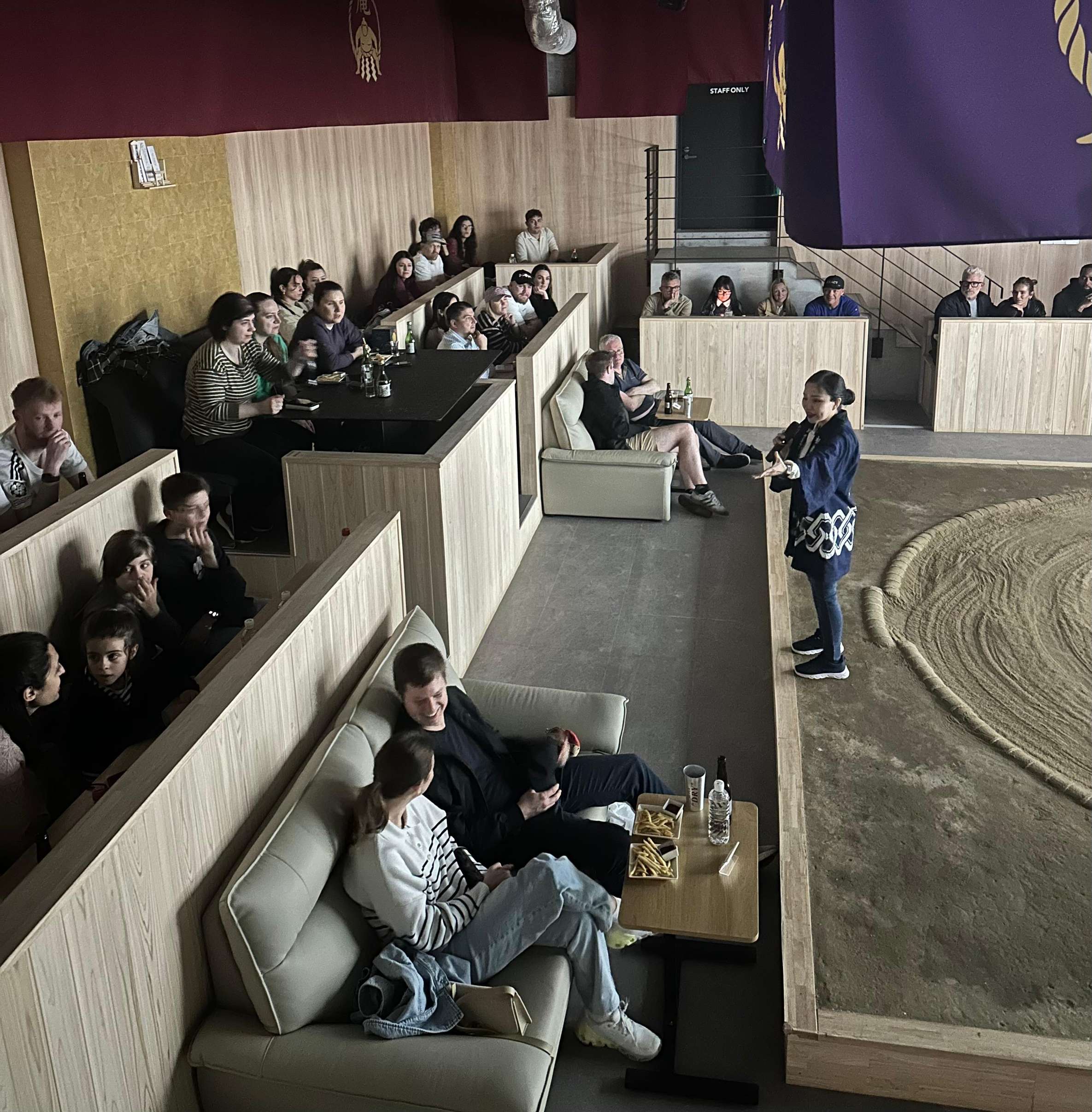
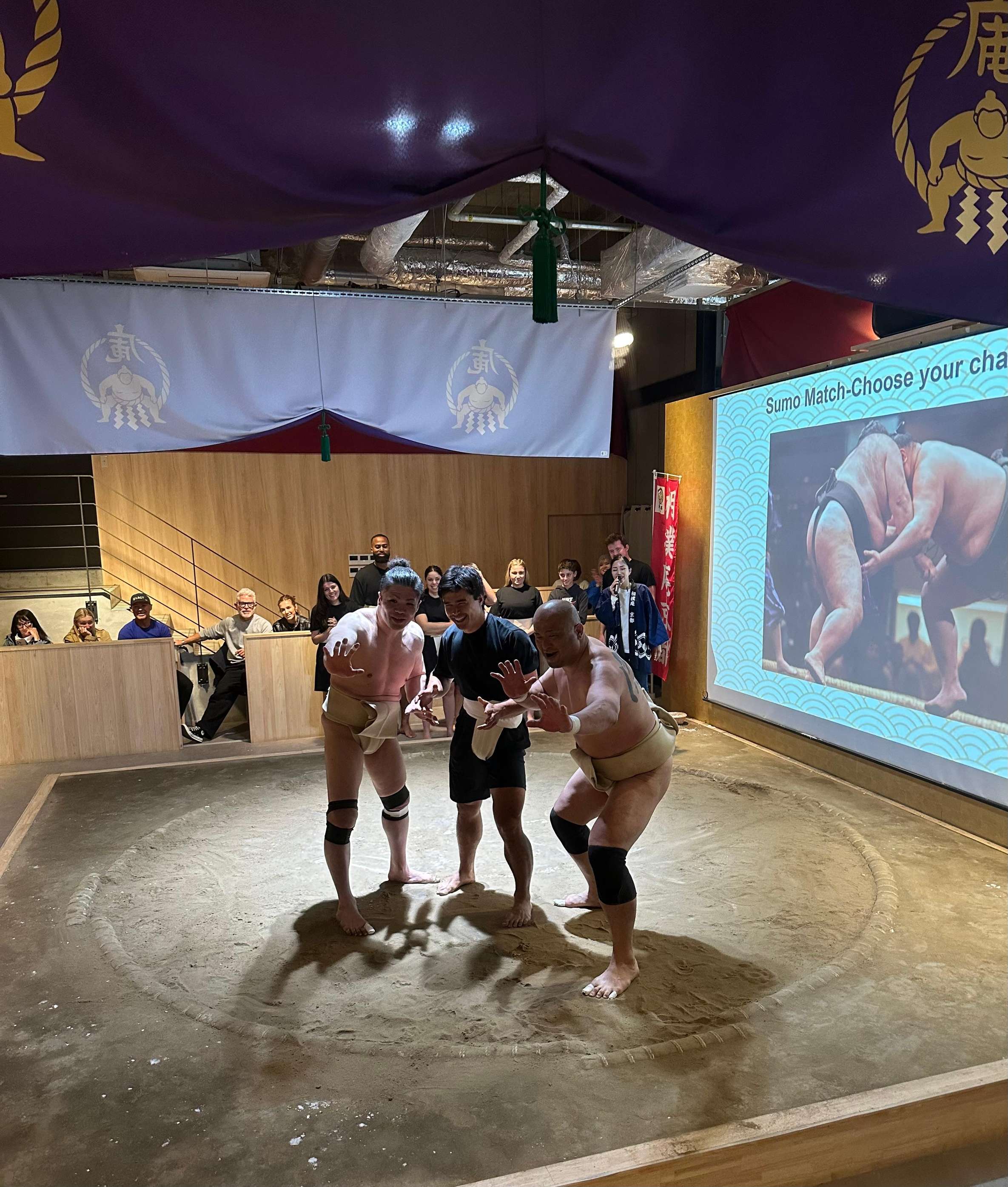
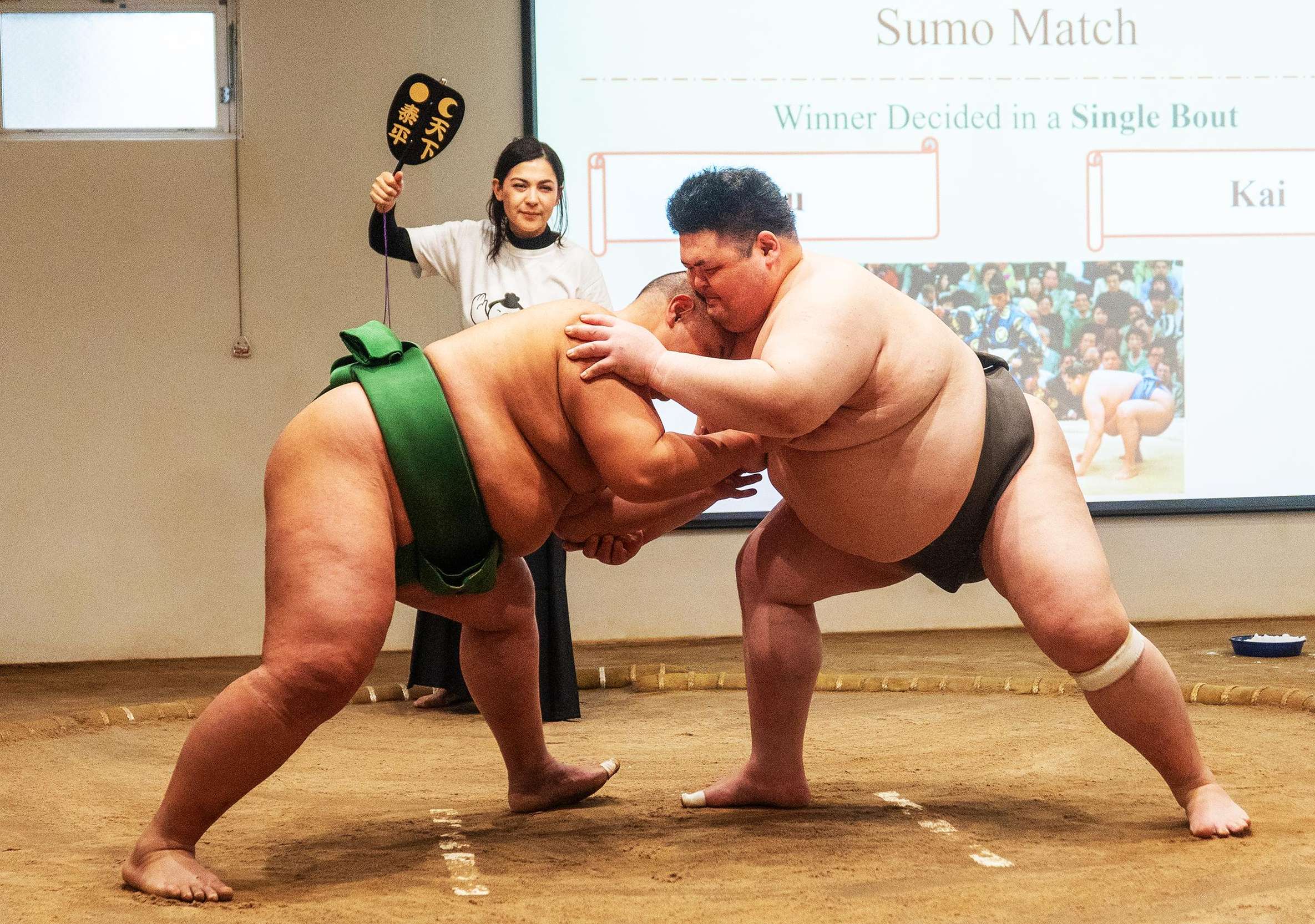
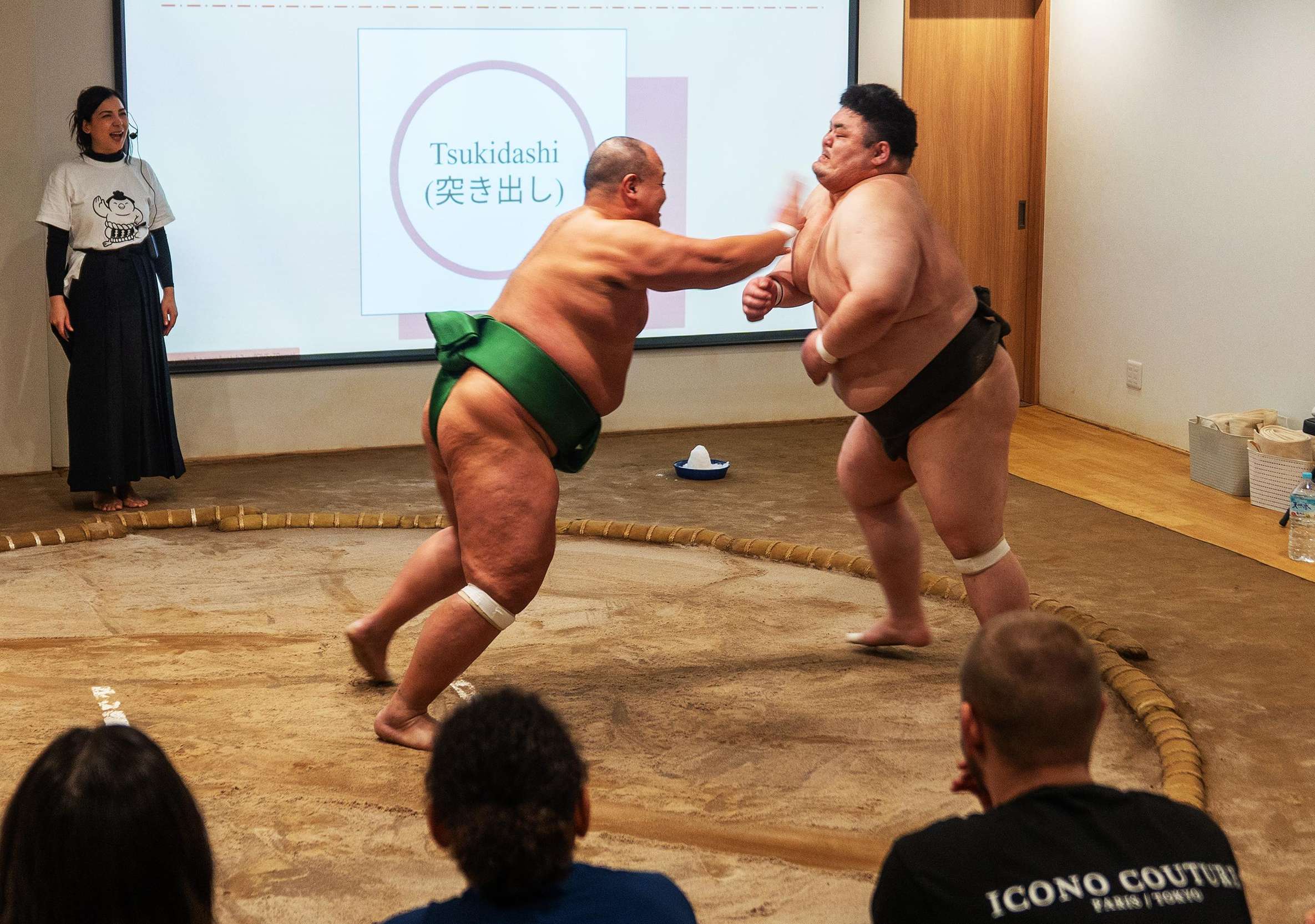
At these experiences you sit close to a real dohyo, watch retired professional wrestlers demonstrate the salt-throwing purification, the high shiko stomps and the techniques behind a bout, then get your own turn: a ring challenge against a wrestler, a photo session, and in some cases hands-on drills on the clay itself.
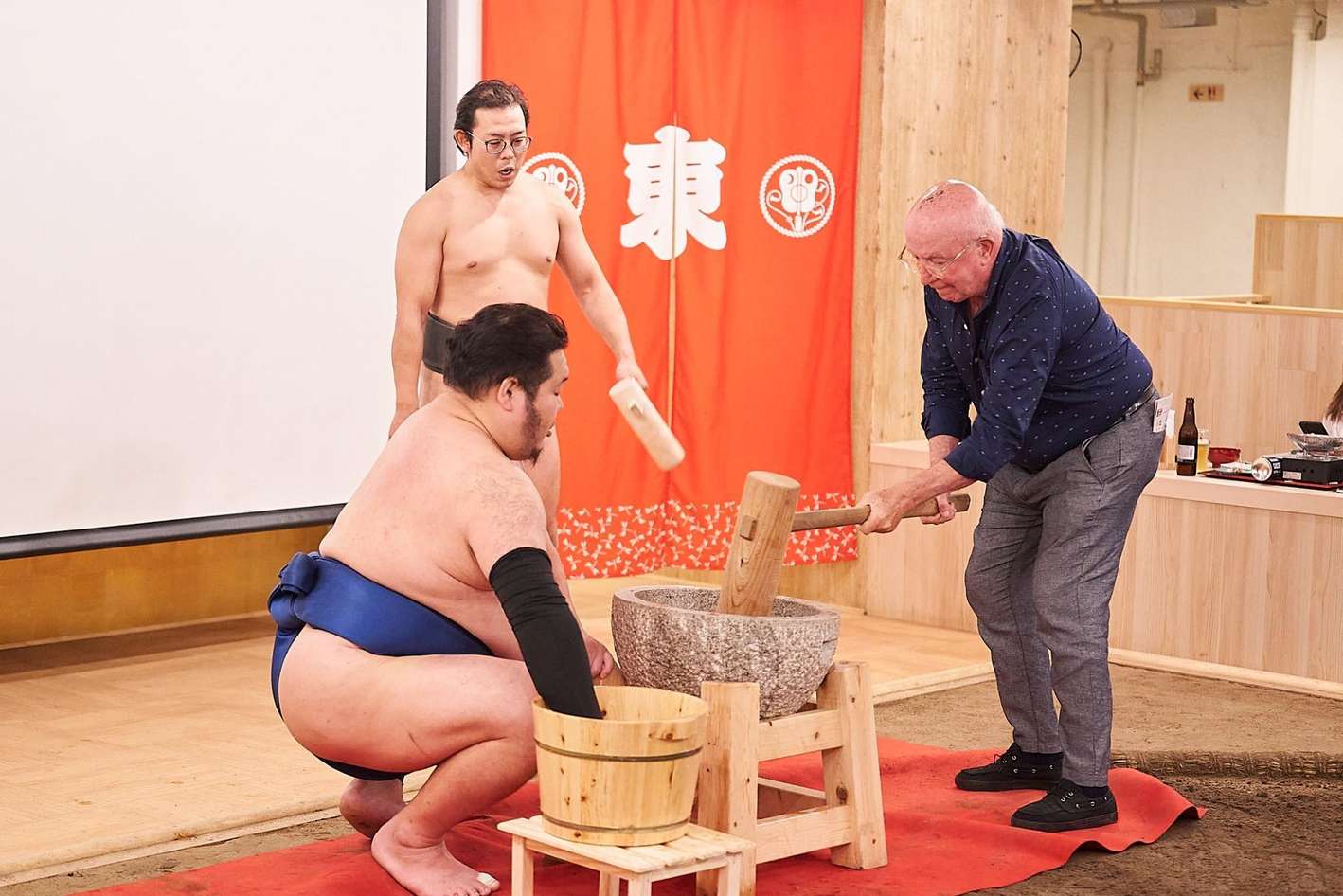
How much you take part depends on the format. Some shows pick challenge volunteers by lottery, others guarantee a bout for anyone who wants one, and one Tokyo option is a dedicated training session with warm-ups, footwork and striking drills. Meals often run alongside, from chanko nabe hot pot to mochi you pound yourself.
Included
Sumo showAuthentic set sumo meal (chankonabe)【Only Japanese à la carte menu is available at 9:30 pm show】Live MC with English explanationsStep into the ring with a sumo wrestlerFree photo session with wrestlersThe 9:30 pm Late Night Show does not include dinnerBreakfast Plan does not include a sumo show or wrestler meet-and-greet
Which wrestling classes fit your trip? Compare the options
Green marks the lowest price. Each price says whether it is per person or per group.
Tour
Price
Duration
Languages
Best for
Our pick
Kyoto: Participative Sumo Experience, Traditional Meal, Pic
How to book wrestling classes and challenges in Japan
01
Pick your city and date
Decide between Tokyo, Osaka and Kyoto first, then open the calendar. Kyoto's participative show runs daily with sessions around midday, late afternoon and evening, so most dates work. In Osaka, the Namba hall takes irregular midweek dark days, so check the monthly calendar before you commit.
Pro tipFebruary, December and January are the quiet months, and one traveler booked a Tokyo slot the day before and it worked out. In April, May and October, book weeks ahead.
Common mistakeLeaving the weekend and evening slots until the last minute. Those are the ones that fill first, even in a slow month.
02
Choose the right option
Read what each option actually includes. At the Ginza show, the hands-on training session is a separate plan from the main show. In Kyoto, meals are served at the noon and 6 pm sessions, the 3 pm session has light snacks only, and the 9:30 pm late show has no dinner at all.
Common mistakeBooking the show when you wanted the class. If stepping onto the dohyo is the point, pick the option that names training or a ring challenge, and check the age rules: the Ginza hands-on plan is not suitable for children under 5 or pregnant guests.
03
Pay and check the terms
Most of these experiences let you cancel up to 24 hours in advance for a full refund, so a flexible plan is easy to hold. One exception: the Osaka show at Namba is non-refundable, so be sure of your date before you confirm that one.
ImportantThe Ginza venue is cashless, so bring a card for anything you buy on site. Kyoto guests aged twelve or under need a private booking with a supervising adult.
04
Save the voucher and meeting point
Confirmation arrives by email after payment, with the voucher and the venue address. The Kyoto venue is a seven-minute subway ride from Kyoto Station and a one-minute walk from Marutamachi Exit 6. The Osaka hall sits on the 8th floor of Namba Parks, indoors, so rain is no problem.
RecommendedAim to arrive 15 to 20 minutes before the start time. Shows can begin a little after the printed time, and a late arrival means a rushed seat search or missed sections.
RecommendedAt Hirakuza Osaka, guests who want to enter the ring challenge lottery must arrive by the starting time, so build in the extra minutes.
05
Plan the day itself
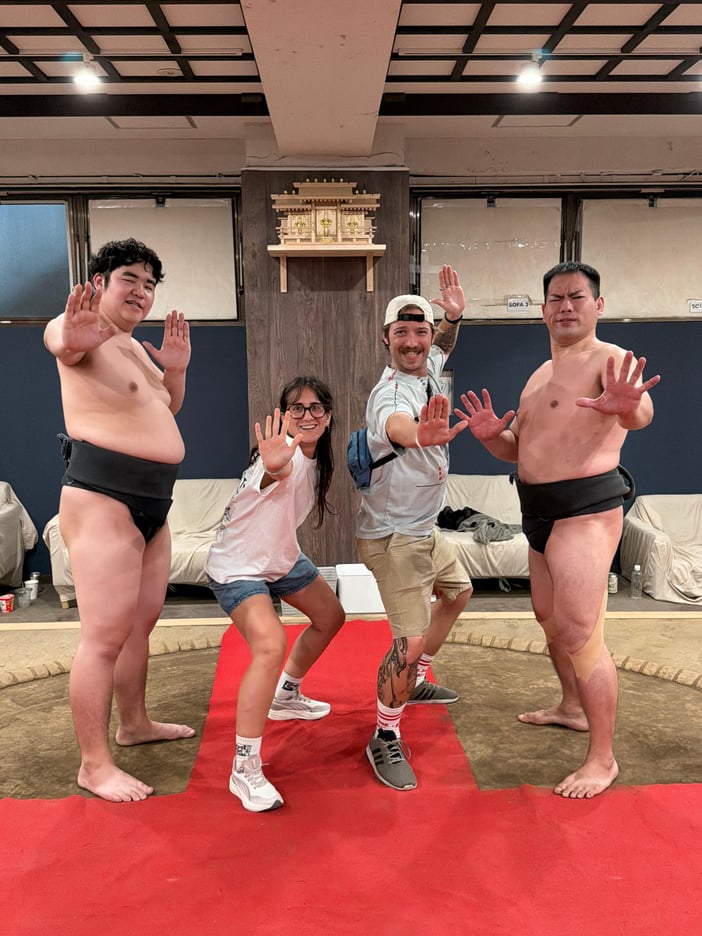
Wear comfortable clothes you can move in, since you may be invited onto the dohyo. Ring spots are limited and often chosen by lottery, so volunteer early if you want a match. Photography is welcome at the shows, and Kyoto includes a free photo session with the wrestlers.
Pro tipParticipation is always your choice. If you would rather watch, nobody pulls you into the ring, and the warm-ups and demonstrations are worth the ticket on their own.
Common mistakeTurning up in shoes you struggle to remove. Some venues seat you on tatami or in box seats, so slip-on footwear saves awkward minutes.
What to know before your wrestling classes and challenges in Japan
Can stop the dayGood to knowGood news
01
ChoosingWhat it is, who it suits, when to go
4
Taking part
Joining in is always your choice. Guests are invited to try warm-ups or wrestling and can stay in their seat instead, so nobody gets pulled into the ring against their will.
Lottery
Ring challenges are usually limited to a handful of guests per show, chosen by lottery when lots of people volunteer. At one Shinjuku show it is six guests per show. If stepping into the ring matters to you, volunteer early.
Booking
Outside peak months, a few days' notice is often enough, and some travelers have booked a Tokyo slot the day before. Weekend and evening slots fill first, and in the busiest months of April, October and May you should book weeks ahead.
Expectations
Book these shows as entertainment with retired wrestlers, not as real competition. The bouts are choreographed demonstrations, and the wrestling often takes up only the last 15 to 30 minutes. Visitors who expected a genuine tournament are the ones who feel let down.
02
BookingHow far ahead, and what happens if plans change
2
HealthCan stop the day
Ring training and bouts involve light physical contact, and minor scrapes or bruises can happen. Guests with back problems or limited mobility should share their needs in advance; taking part is optional and watching is always fine.
Cancellation
Most of these experiences can be cancelled up to 24 hours in advance for a full refund, which makes it easy to hold a slot while your itinerary settles. One Osaka show at Sumo Hall Hirakuza is the exception and is non-refundable.
03
Before you goPapers, health, what to bring
1
Age limitsCan stop the day
The hands-on training option at the Ginza show is not suitable for children under 5, pregnant guests, or guests with serious medical conditions, and children must be with a guardian. The show itself welcomes a wide range of ages.
04
During the tourWhat is expected of you
2
What to wear
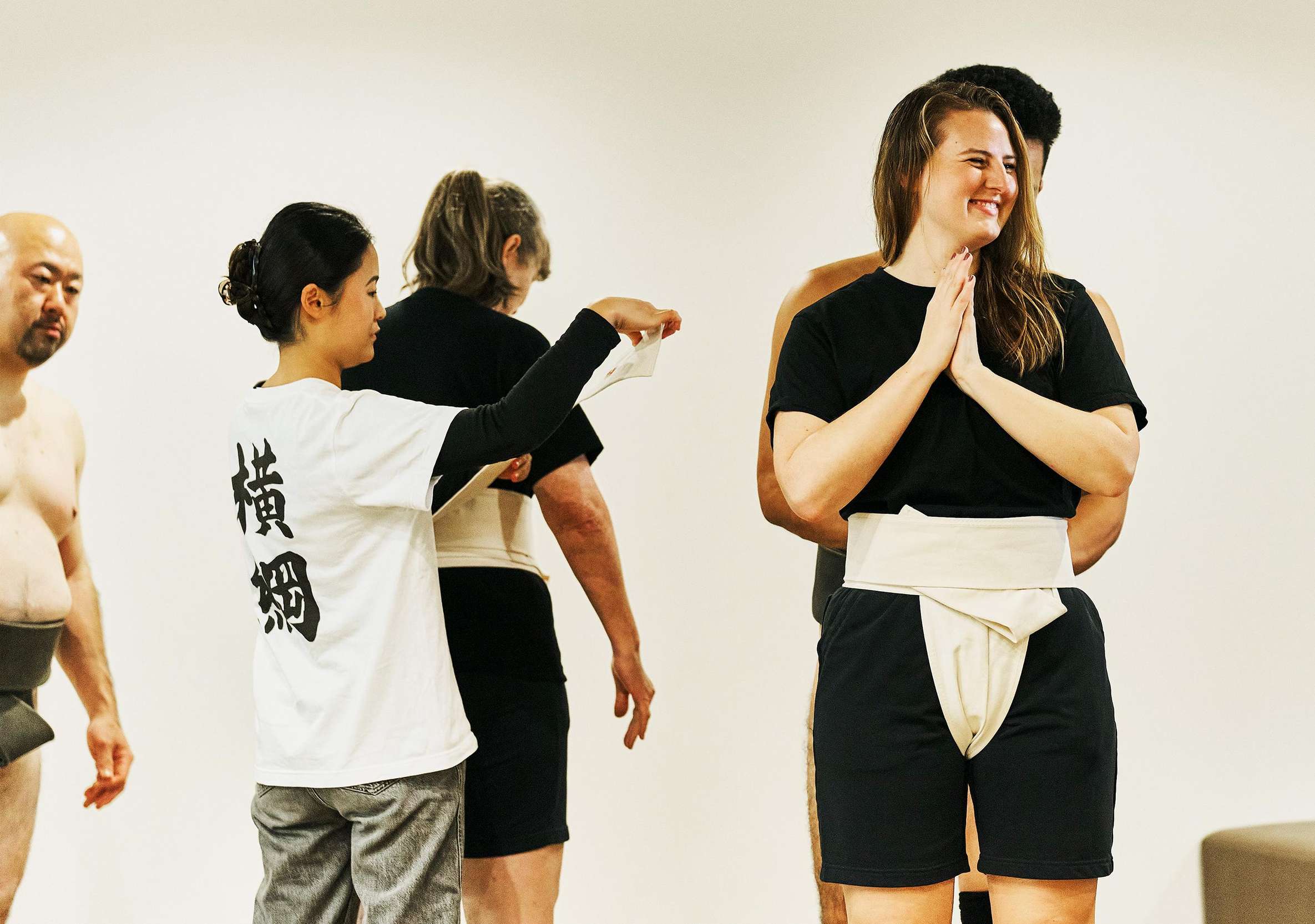
Come in comfortable, flexible clothing you could move in at a casual gym class, and socks you don't mind being on the floor in. You don't fully change clothes: the mawashi, the sumo belt, is provided and worn over your own outfit. Skip stiff jeans.
Ring etiquette
Before any bout the instructor explains the ring etiquette and the forbidden moves. A bout follows a set sequence: bow, make the chirichozu gesture, touch both fists to the ground, begin, and bow again. Slapping is allowed; grabbing the belt from the front or punching is not.
A visitor's guide to wrestling classes across Japan
You can put on a mawashi and face a former professional wrestler in Tokyo, Osaka or Kyoto, and it is harder than it looks. The class, city and slot you pick decide whether the day ends with a bout or just photos.
Kyoto
If you only remember three things
1
Book weeks ahead in April, May and October; in February or December a day before often works.
2
Arrive 15 to 20 minutes early, because late entry may be refused once the show starts.
3
Wear gym-comfortable clothes and bring a towel; the mawashi is provided and worn over your own clothes.
Can you really try wrestling classes in Japan as a visitor?
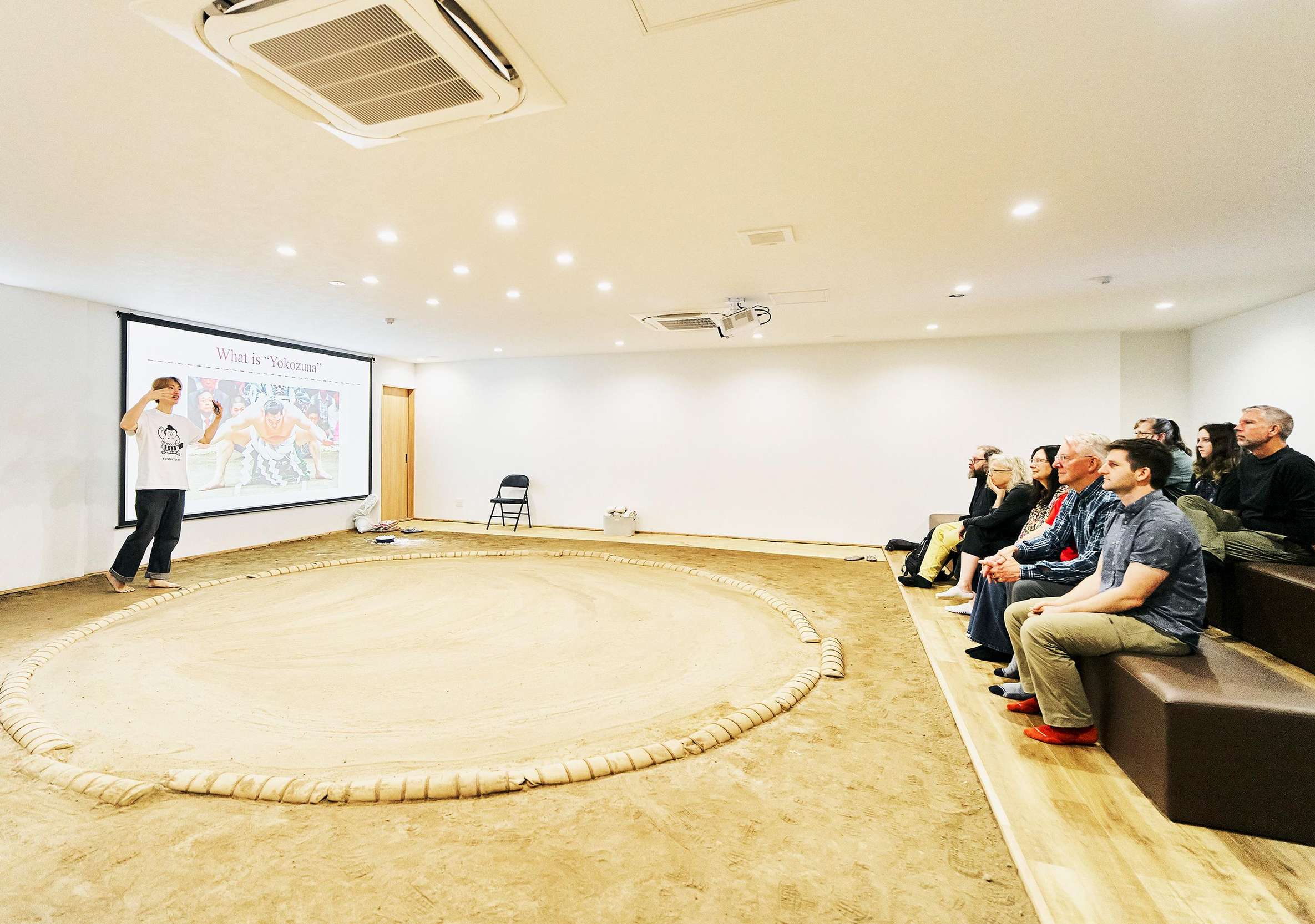
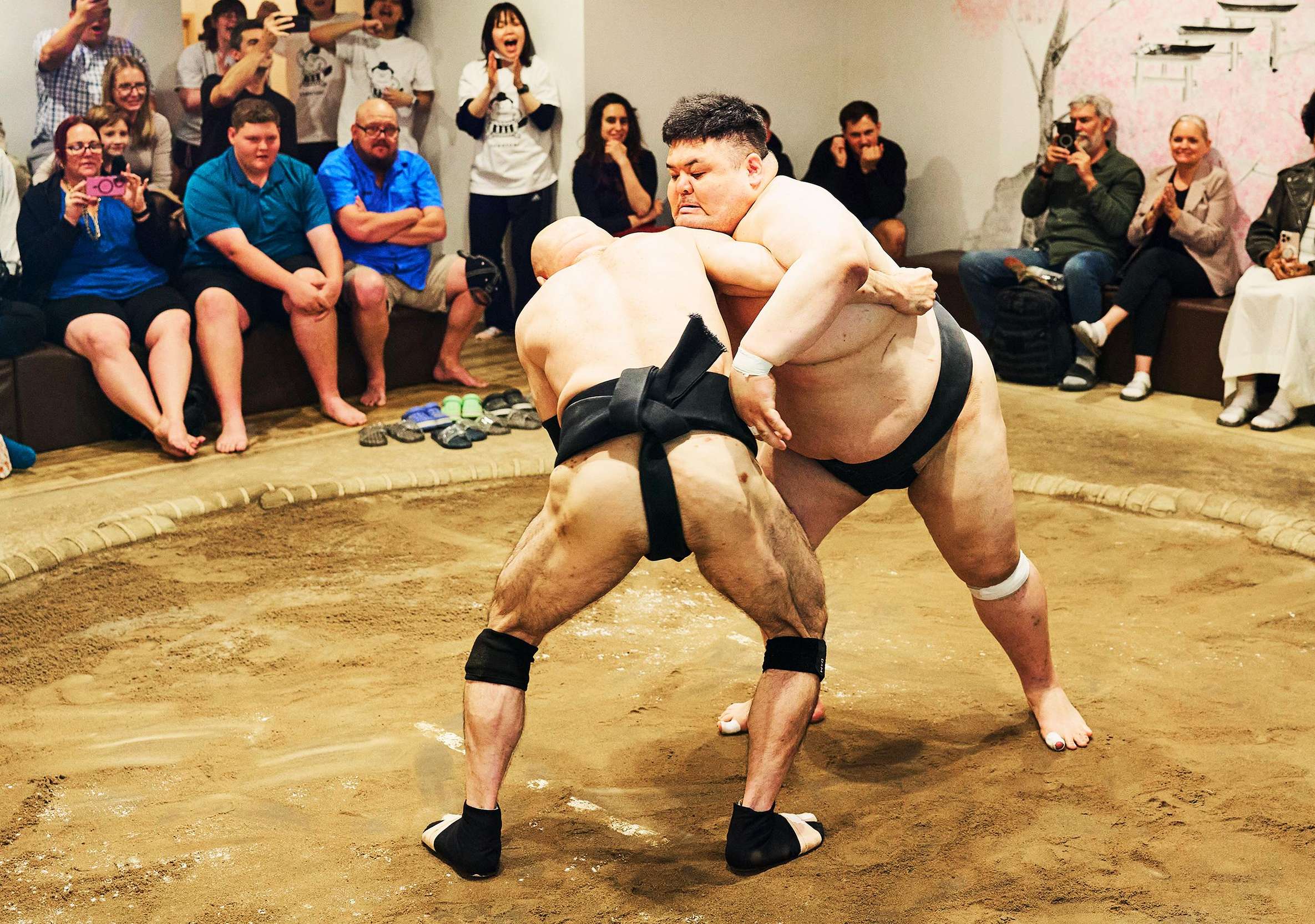
The salt hits the clay and the room goes quiet. A man the size of a doorway crouches, and a tourist in a borrowed mawashi crouches opposite him. This happens every afternoon in Tokyo, Osaka and Kyoto, and yes, visitors really do step in.
You cannot walk into a professional stable and join training. Stables are private workplaces where wrestlers train for their careers, and turning up uninvited ends in disappointment. The realistic first taste of participation is a booked tourist experience, and it is genuinely hard work: stomps, footwork drills, then a bout.
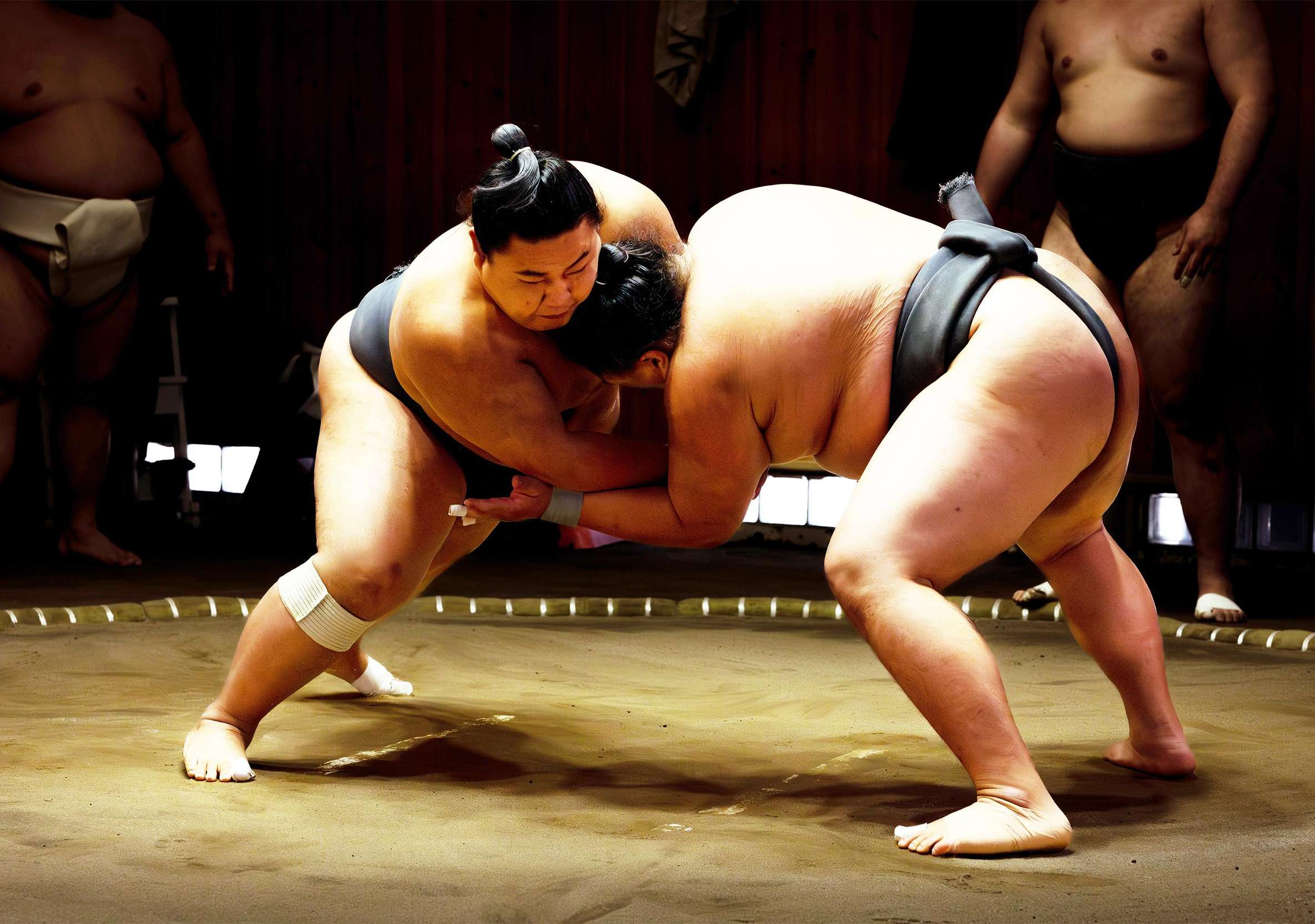
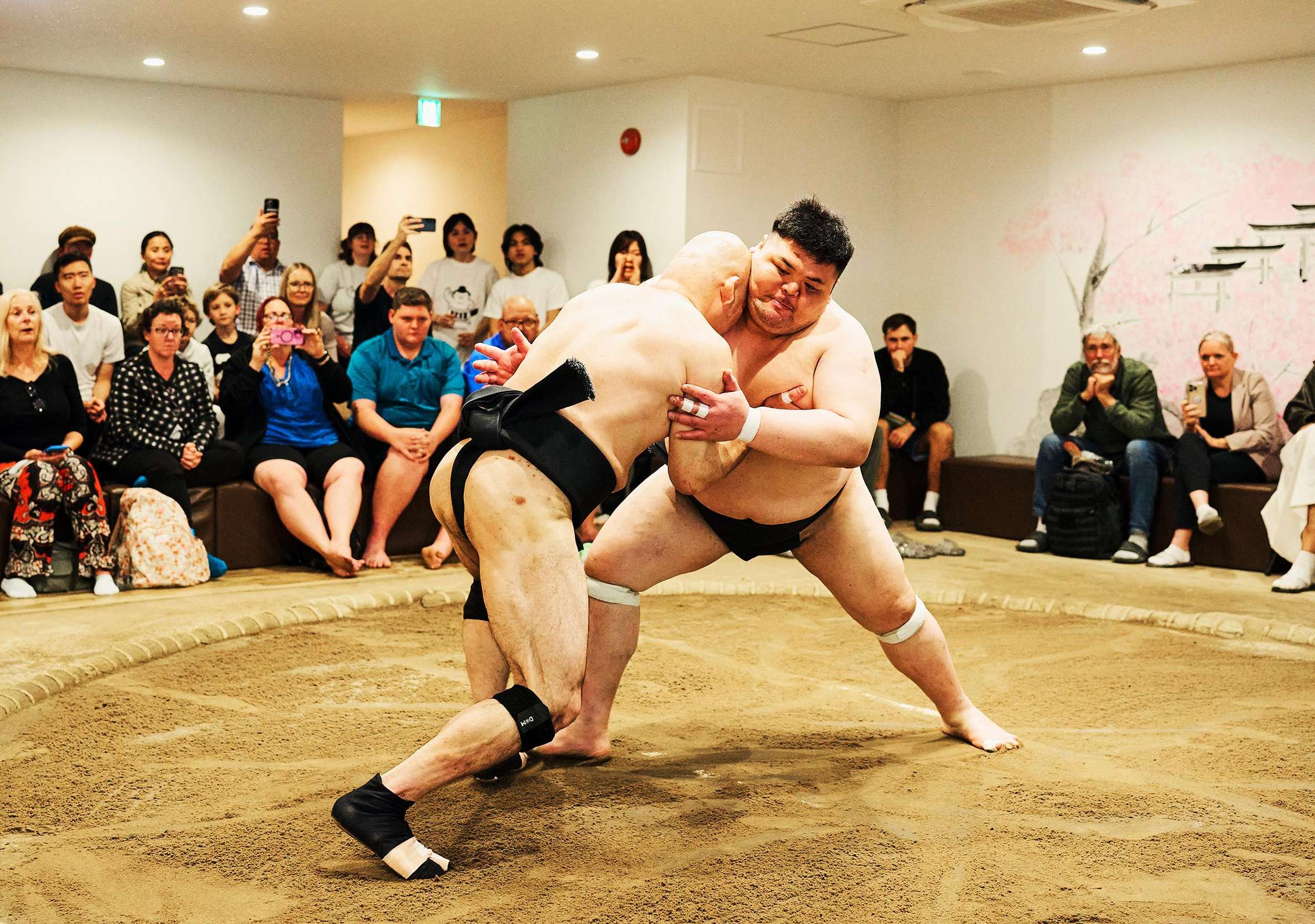
Set your expectations before you book. Any experience you can reserve as a tourist stays lighter and more entertainment-focused than real stable training, and the matches at exhibition shows are choreographed.
Visitors who arrive expecting a genuine tournament feel let down; those who come for the fun of it tend to call it a highlight of the trip.
Myth vs reality
MythA sumo dinner show is real competitive sumo
Reality
It is entertainment performed by retired wrestlers, with demonstrations and exhibition bouts
MythThe exhibition matches are genuine contests
Reality
The bouts are choreographed, though the wrestlers show real technique
MythYou can join a professional stable's training as a casual visitor
Reality
Stables are private and closed; a booked tourist experience is the realistic route in
Sessions run between one and three hours depending on the format, so a class fits into a sightseeing day without taking it over.
Tour for this
Osaka: Sumo Experience with Live Show & Audience Challenge4.9★ (2,124) · 1 - 1.5 hours · Free cancellation
Inside the classes - each step of sumo wrestling explained
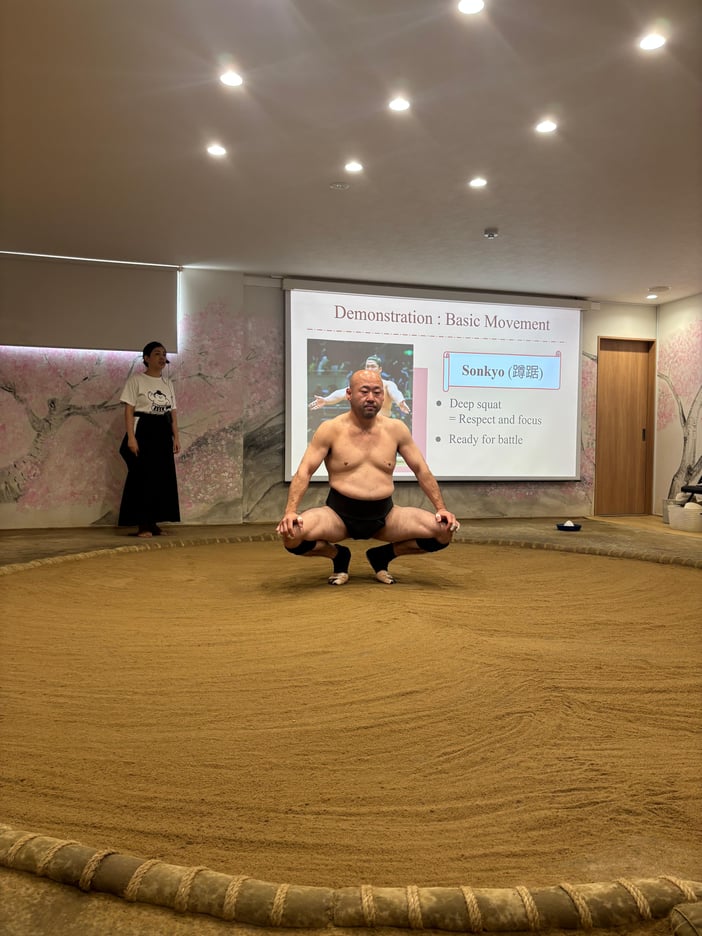
The mawashi goes on first, over your own clothes, before anything else happens. Then warm-ups and stretching, usually led by the instructor, and the room learns its first word of sumo vocabulary.
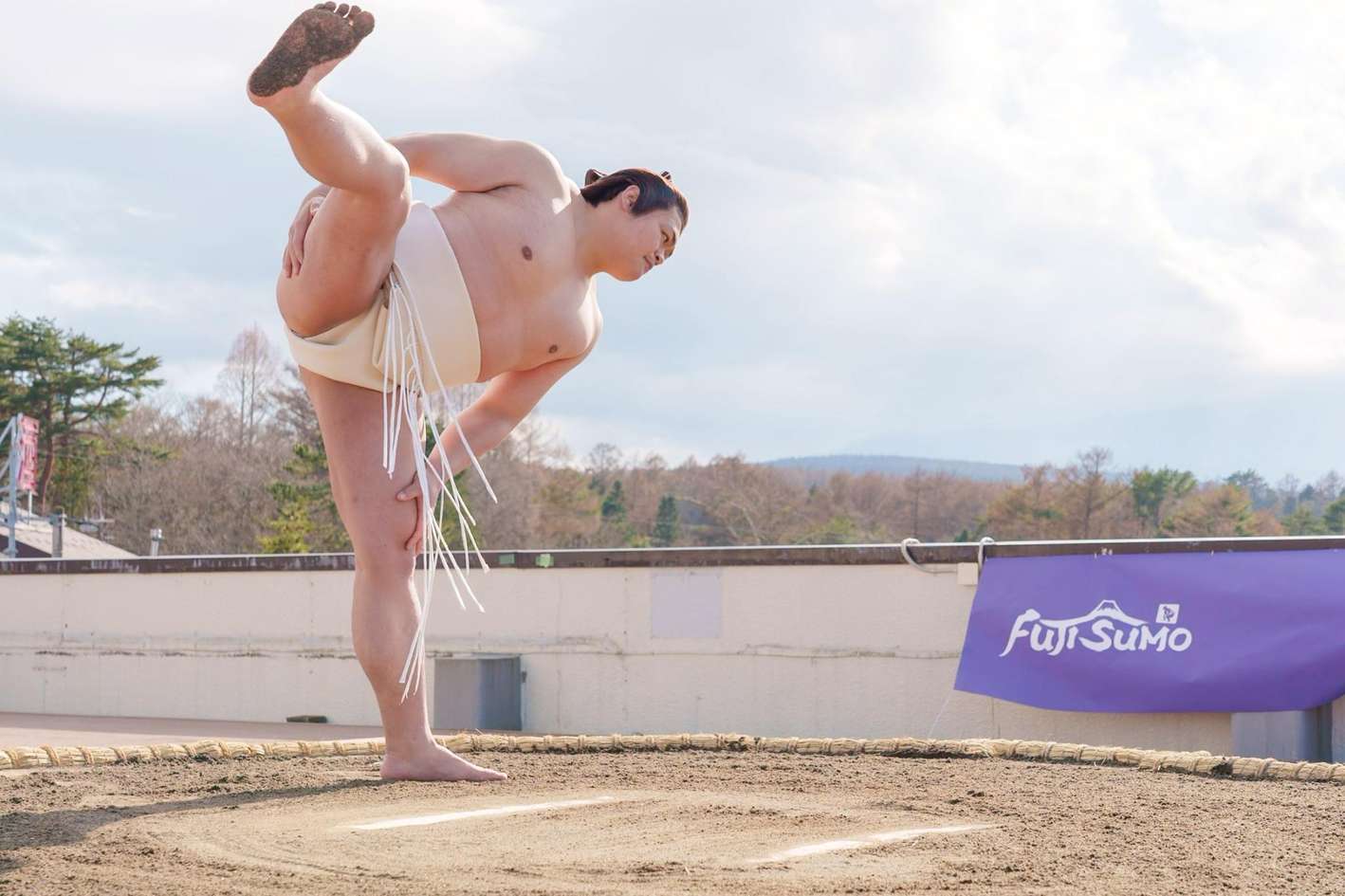
The drills are the heart of it. Shiko, the high leg stomp, is done in high repetitions, sometimes a hundred of them, and it doubles as a ritual: the stomp is believed to drive evil spirits into the ground.
Suriashi is sliding footwork with a low centre of gravity, and teppo means striking a wooden pillar again and again to train the hands and arms.
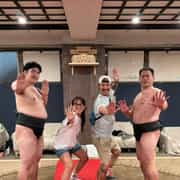
After the drills come bouts, two people at a time, and in real training the winner stays on to face the next challenger. The session winds down with a warm-up walk around the ring, then commemorative photos with the wrestlers.
1
Start
Mawashi on, then warm-ups and stretching
The instructor leads
2
Main drills
Shiko stomps, suriashi footwork, teppo strikes
The basic moves of sumo training
3
Bouts
Practice matches, two at a time
Supervised throughout
4
Close
Warm-down, then photos with the wrestlers
Included in most experiences
The Osaka Sumo Experience with Live Show & Audience Challenge follows this arc in 1 to 1.5 hours: culture commentary, ring training drills on the dohyo, a one-round match between retired wrestlers, and a chance to face one yourself.
Tour for this
Tokyo Ginza Sumo Show: Live Performance & Photo Experience4.7★ (2,064) · 1.5 hours · Free cancellation
Show, class or challenge - which sumo wrestling class suits you
Three formats share the same clay ring, and the difference is how much sweat is yours.
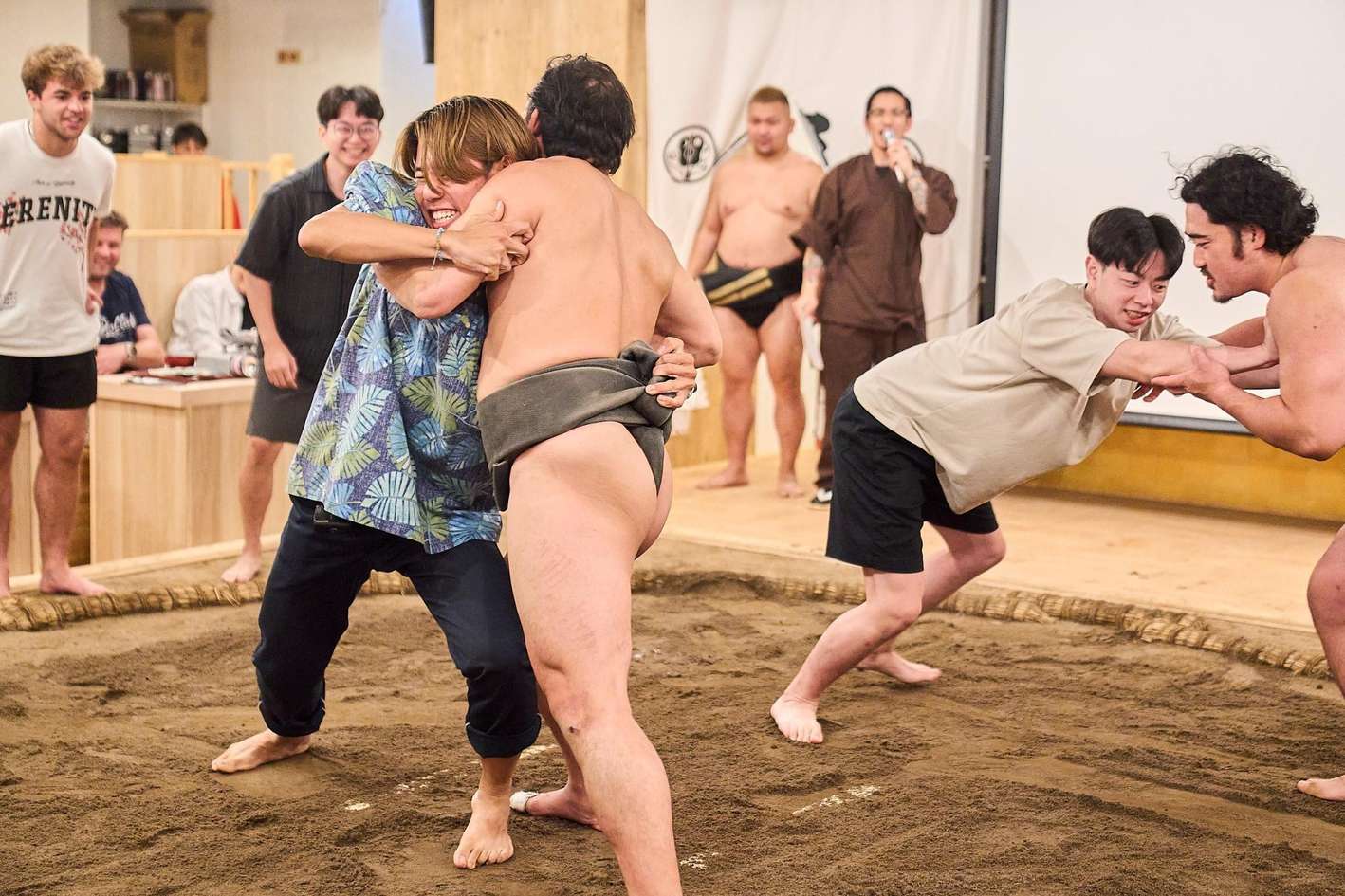
The live show with an audience challenge is the easiest entry. At the Shinjuku show, the sumo challenge is capped at six guests per show, chosen by lottery, so you enter your name and hope.
The Tokyo chicken hot pot show works the same way, with a few ring spots drawn by lottery when demand is high. Watching carries the evening; wrestling is the bonus.
A hands-on training class goes further. At the Ginza show, Plan B is a separate optional session with a former professional wrestler, working through shiko, suriashi and simple drills. It suits anyone who wants to learn the movements, and photo-only visitors can skip it.
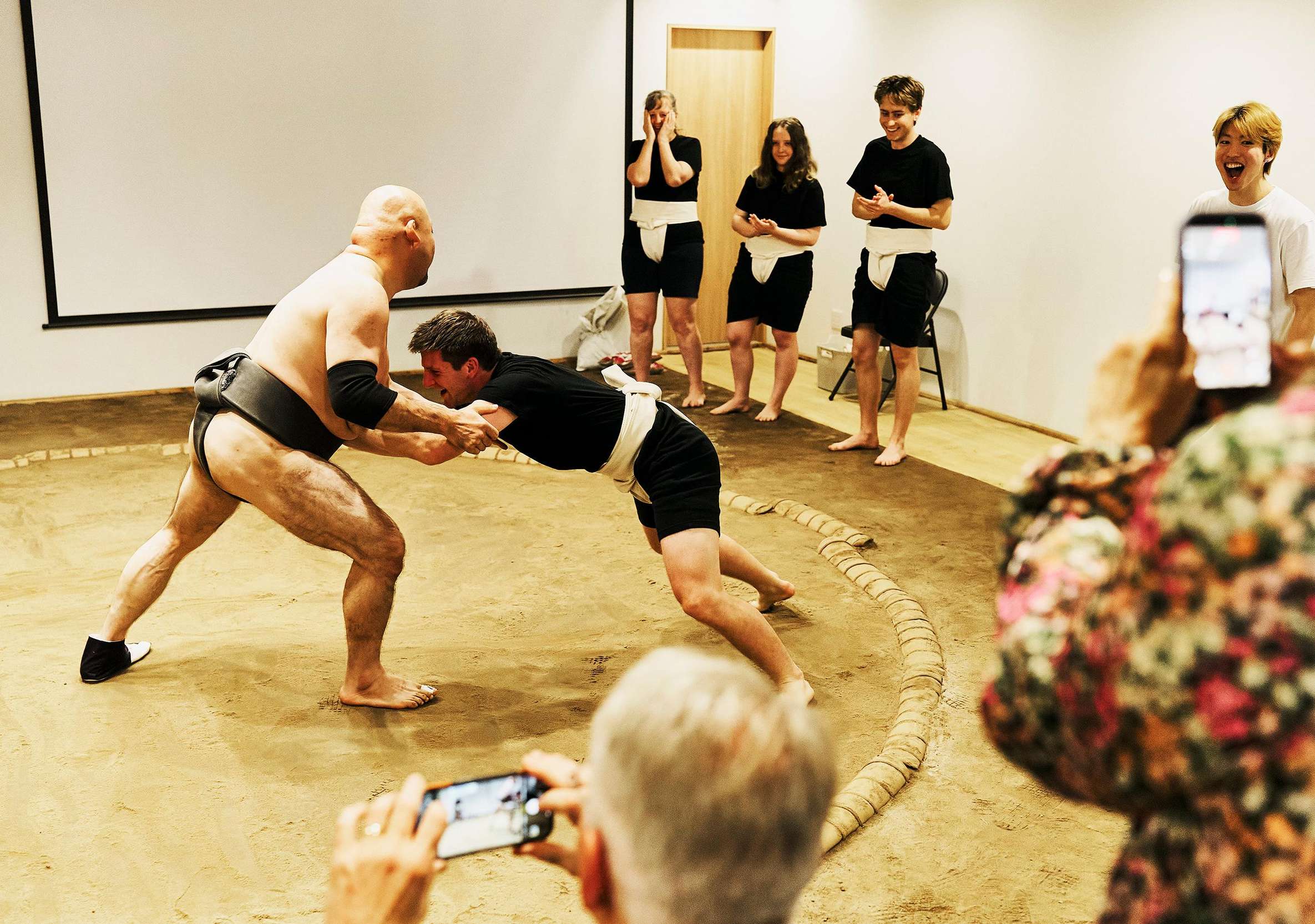
The guaranteed-challenge format is the third way. The Kyoto participative experience promises a ring challenge to everyone who wants one, in an authentic mawashi, seven minutes by subway from Kyoto Station. In Osaka, 1-on-1 bouts with a former rikishi may be assigned by random selection when more people volunteer than the ring allows.
Show with audience challenge
Hands-on training class
Guaranteed-challenge experience
Participation
Lottery-selected, optional
Everyone trains
Guaranteed for all who want it
Effort
Light
Real drills, real sweat
Moderate, your pace
Best for
Families and first-timers
Visitors who want to learn
Anyone set on wrestling
Show with audience challenge
Participation
Lottery-selected, optional
Effort
Light
Best for
Families and first-timers
Hands-on training class
Participation
Everyone trains
Effort
Real drills, real sweat
Best for
Visitors who want to learn
Guaranteed-challenge experience
Participation
Guaranteed for all who want it
Effort
Moderate, your pace
Best for
Anyone set on wrestling
Travelers with a judo or wrestling background pick the movements up quickly, though the session stays tourist-level. Joining in is always your choice; nobody is pulled into the ring.
When do wrestling classes and shows run, and is an evening slot better
Sumo runs across the whole day, and the calendar decides more than habit does.
Tokyo venues open daily with no closed days: the Tokyo Tower sumo club stages four shows a day at 10:30 am, 1:30 pm, 4:30 pm and 7:30 pm, the Shinjuku show starts at 1 pm, 3:30 pm, 6 pm and 8:30 pm, and the Ginza festival runs five sittings from late morning into the evening.
Osaka is less predictable. The Namba hall holds its 5 pm show daily but takes irregular closed days, often midweek, and adds a second late show only on selected dates that cluster around Fridays and weekends. Check the monthly calendar for your exact date before you plan an evening around it.
Is an evening slot better? For dinner-show formats, yes: the meal and the show share the sitting, and the 7:30 pm or 8:30 pm slots fold neatly into a day of sightseeing. Daytime slots suit families with small children and anyone with an early dinner reservation elsewhere.
How busy it gets, month by month
April: 5 out of 5 for how busy it gets.
HighestMar to May, Oct
In betweenJun to Sep, Nov
LowestDec to Feb
Darker: a higher how busy it gets score, out of 5
Tap a month to read it.
Demand peaks in April, May and October, with March close behind. February, December and January are the quiet months, when walk-ins and last-minute bookings are easiest.
Tour for this
Tokyo: Shinjuku Sumo Show & Experience with a Photo4.9★ (9,863) · 1.5 hours · Free cancellation
Outside the busy months, a few days is enough. One traveler booked a Tokyo slot the day before and it worked out fine. Weekend and evening slots are the ones that fill, and in the busiest months you should book weeks ahead.
Osaka needs its own buffer: book at least three to five days ahead, because weekend shows there fill faster than the weekday ones. Kyoto's venues ask for advance booking a few days out, though same-day booking with instant confirmation was possible when checked.
Know the cancellation rules before you commit. Most tours can be cancelled up to 24 hours in advance for a full refund. Cancel on the day itself and there is no refund, though you may be able to move to another slot if one is free.
Can stop the day
Shows follow strict schedules, so late entry may be refused Arrive 15 to 20 minutes before the printed time Same-day cancellation brings no refund Move your booking before the 24-hour mark if plans change Osaka venues take irregular midweek dark days Check the monthly calendar for your date
If you do arrive late, the show cannot be extended. You may join partway through, but you will miss sections of the programme.
Tour for this
Osaka Sumo Show with Front-Row Seating & Wagyu Sukiyaki4.7★ (45) · 2.5 hours · Free cancellation
Getting to the sumo wrestling class venues from where you stay
Tokyo's sumo venues cluster in three easy spots, and none of them is far from where visitors sleep. Ryogoku Station, the home of sumo, sits 13 minutes from Tokyo Station and 22 minutes from Shinjuku on the JR Chuo-Sobu Line.
The Asakusa Sumo Club is a two-minute walk from Tsukuba Express Asakusa Station, and the Shinjuku venues sit in Okubo, about two minutes from Higashi-Shinjuku Station.
How to reach the Tokyo sumo venues from where you stay
From Asakusa hotels the choice widens: a 10-minute taxi, a 13-minute drive, or a 30-minute walk along the river side if the weather is kind. From Shibuya, the train with one change beats the taxi on most days.
In Osaka the Namba hall sits on the 8th floor of a shopping centre in the middle of the sightseeing district, and Kyoto's participative venue is a seven-minute subway ride from Kyoto Station with a one-minute walk from Marutamachi Exit 6. Trains beat taxis for the Osaka show; the venue itself recommends rail access.
Tour for this
Osaka: Sumo Show with Bento or Snack at Sumo Hall Hirakuza4.4★ (553) · 2 hours
The mawashi worry dissolves on arrival: the belt is provided, and it is worn over your own clothes, so there is no changing room moment to dread. Dress as you would for a casual gym class, in comfortable flexible clothing you can move in.
Stiff jeans and restrictive outfits work against you, and you will be on the floor at some point, so wear socks you don't mind being on the floor in.
The packing line is short. A towel, a change of clothes, and about 500 ml of drinking water cover the practical side. Anyone who wears glasses should swap them for contact lenses before the drills, because a bout with glasses on ends badly for the glasses.
Pro tipImportant Comfortable flexible clothing, socks for the floor, a towel, a change of clothes, about 500 ml of water, and no special gear needed
No dress code applies at the show venues, though flexible clothing is recommended since you may be called into a challenge. The Ryogoku experience asks guests to bring a camera; everything else you need is already there.
Tour for this
Mt Fuji Sumo | Photo with Wrestlers, Family & VIP, Yamanaka4.9★ (15) · 50 minutes · Free cancellation
Ring etiquette when you face a wrestler in your sumo wrestling class
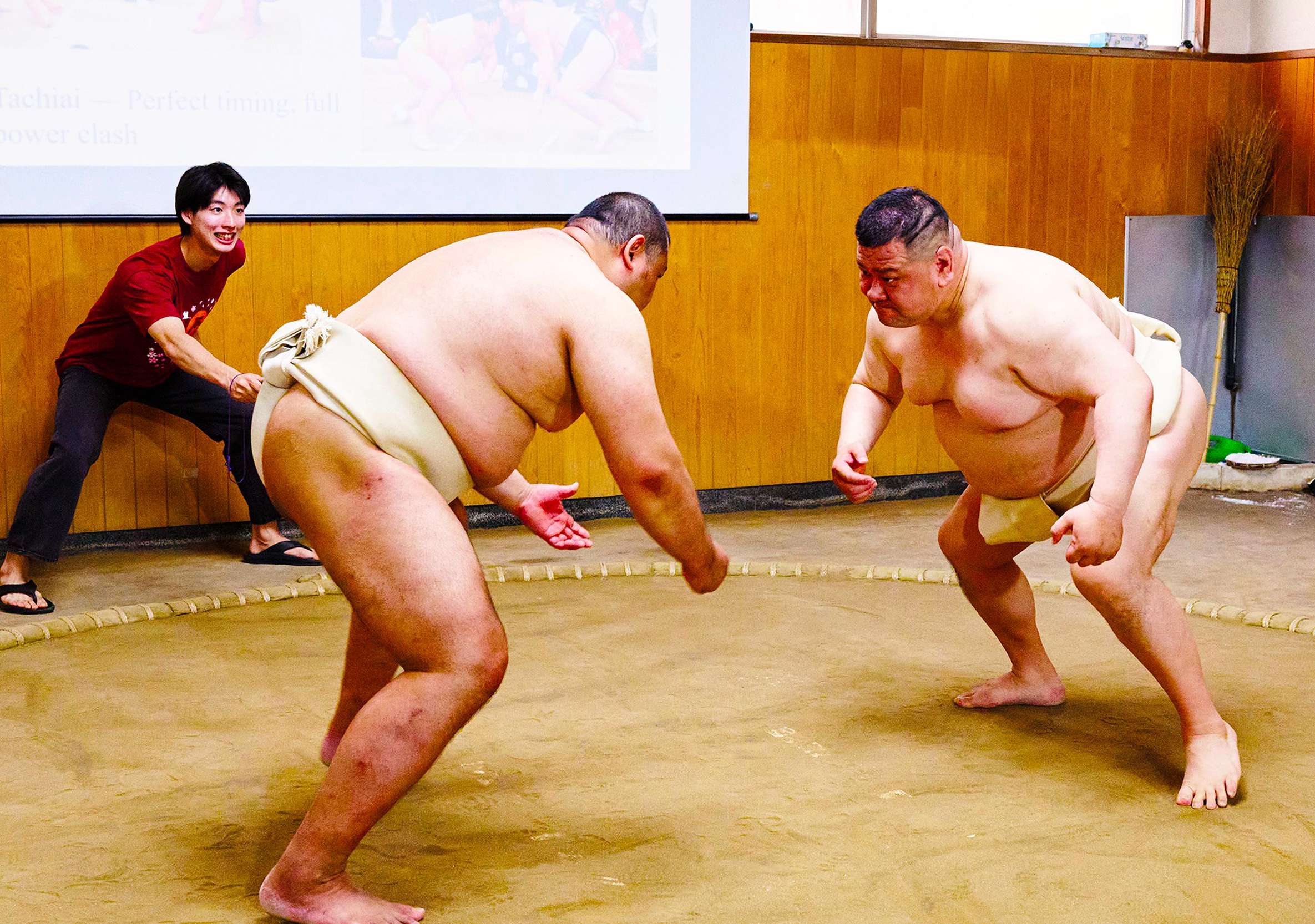
Before anyone charges, the instructor explains the etiquette and the kinjite, the forbidden moves. The bout itself follows a set sequence: bow, perform the chirichozu gesture, place both fists on the ground, begin, and bow again. A bout cannot start until both wrestlers crouch and touch both fists to the clay.
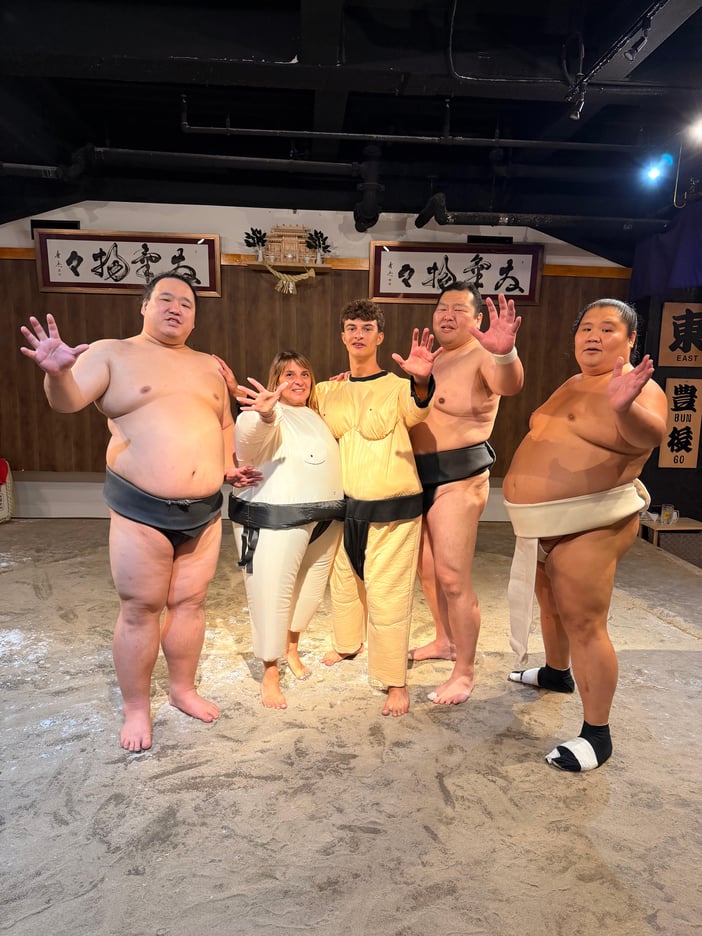
The chirichozu gesture is the part most first-timers have never heard of. It shows the gods and your opponent that you carry no hidden weapons, palms open and turned out. It is a small movement that turns a tourist bout into a ritual, and doing it properly earns a nod from the wrestler opposite.
The forbidden list is short and worth knowing: grabbing the opponent's mawashi from the front, eye-gouging, hair-pulling and punching are all out. Slapping, surprisingly, is allowed.
What nobody tells you
Chirichozu shows the gods and your opponent you carry no hidden weapons
It is the gesture that opens every bout
Slapping is legal, grabbing the front of the mawashi is not
The kinjite list surprises most first-timers
A bout only starts when both crouch and touch both fists to the ground
Wait for the wrestler, never charge first
Taking part in the bout is optional throughout. Watching from a cushion is a perfectly respectable way to spend the session.
Tour for this
Tokyo: Sumo Wrestling Experience with Chanko Nabe & Mochi4.8★ (746) · 1 - 2 hours · Free cancellation
Can kids join wrestling classes, and is it good for families
Families with children around 10 to 12 are a core audience for these shows, and the lively, humorous format keeps children engaged across ages. The age bands decide where you book.
Kyoto is the most open: children may participate from age two, with age four and above recommended, and kids from about five can take the ring challenge. Children twelve or under need a private booking with a supervising adult.
In Tokyo, the Shinjuku and Shibuya shows accept ages 12 and younger alongside adults, and at Shibuya infants sit on laps. At the Ginza show, the hands-on training plan is not suitable for children under 5, and children must be accompanied by a guardian.
In Osaka, Sumo Hall Hirakuza does not admit ages 2 and younger, and some Osaka-area venues let kids under 12 attend free.
A traveler's note
Four of us saw this sumo fight in Kyoto and it was incredible! Warm welcome, attentive staff throughout, an excellent, perfectly prepared meal, and an authentic, memorable atmosphere. Highly recommended!
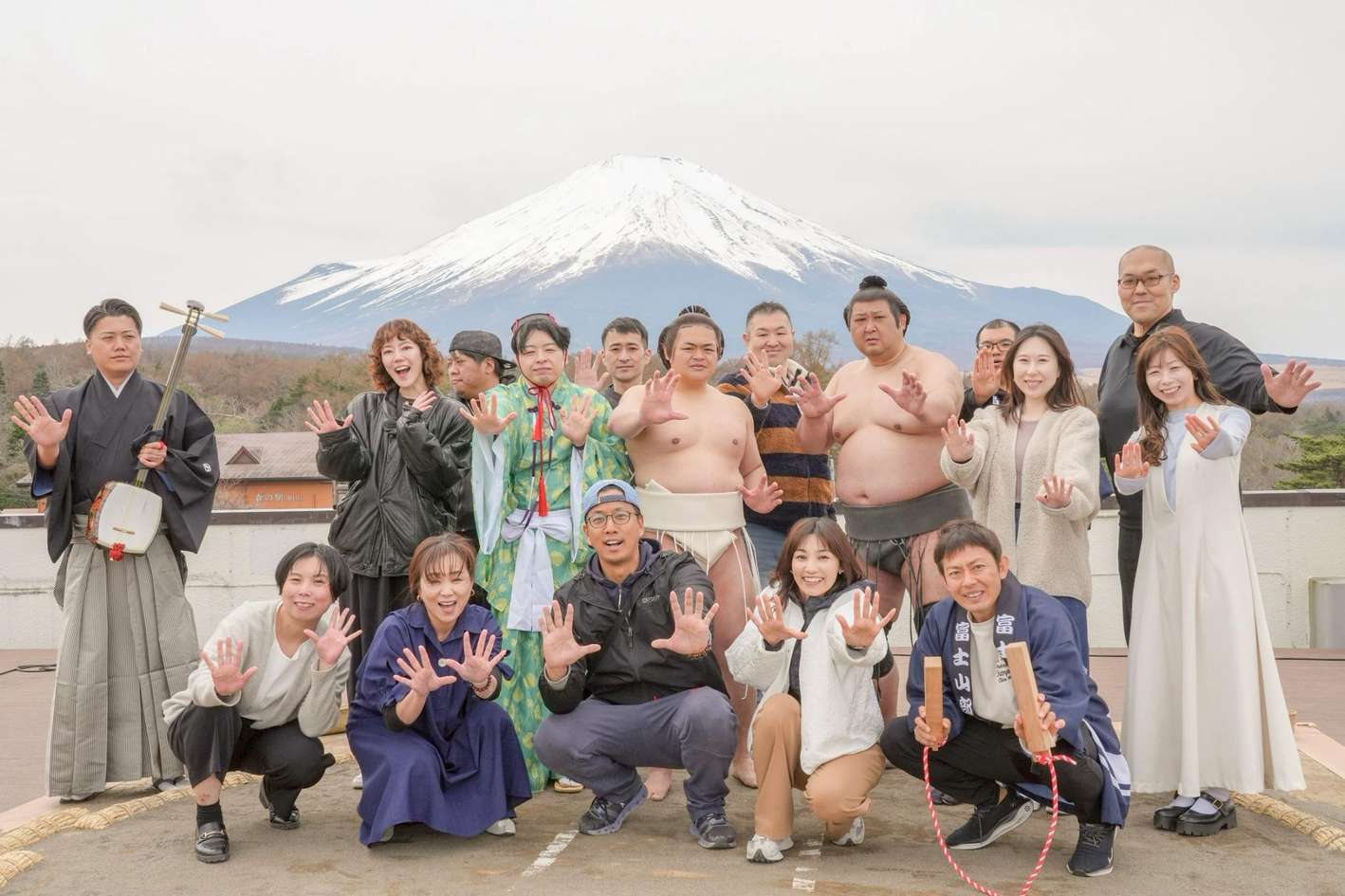
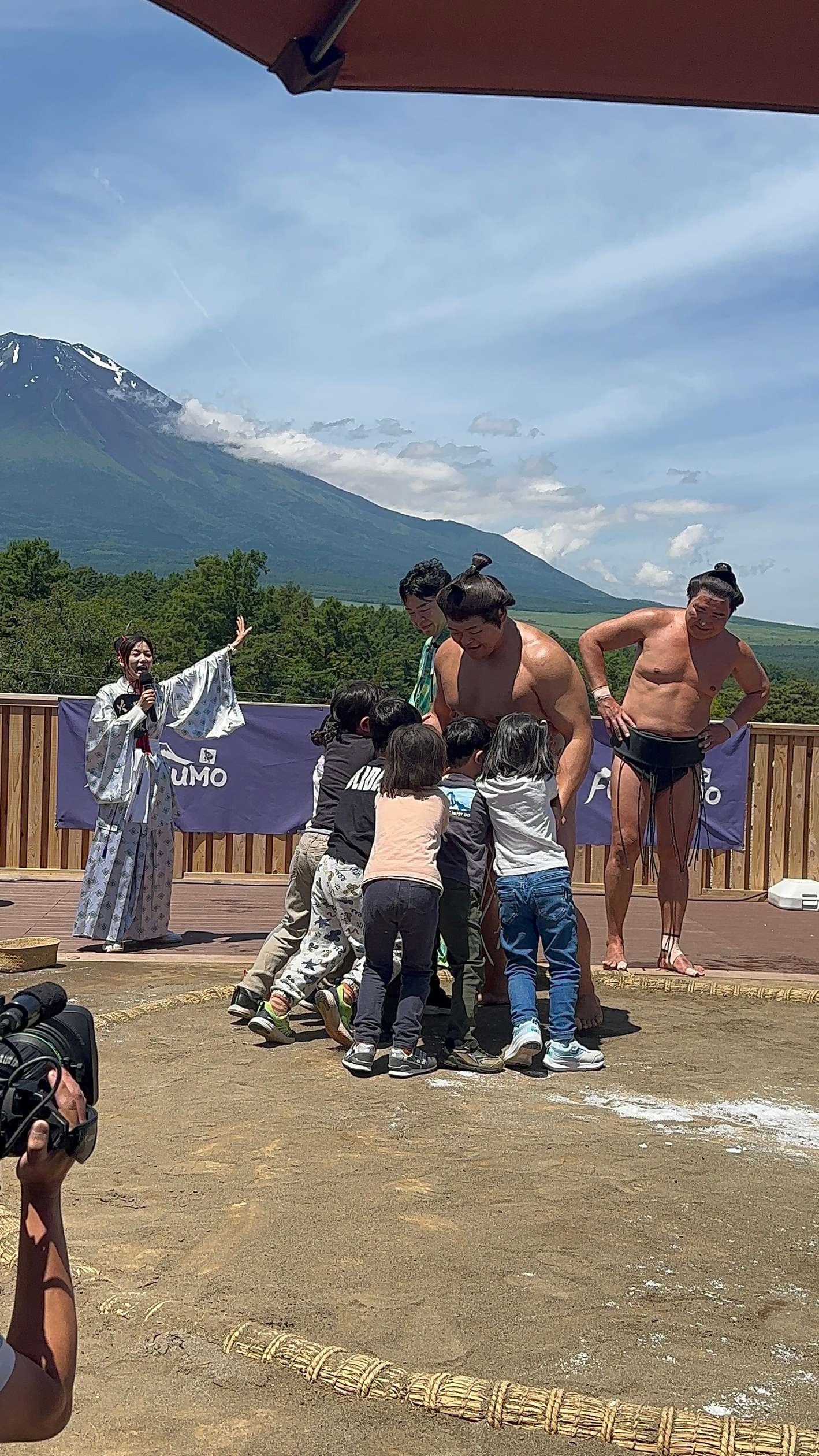
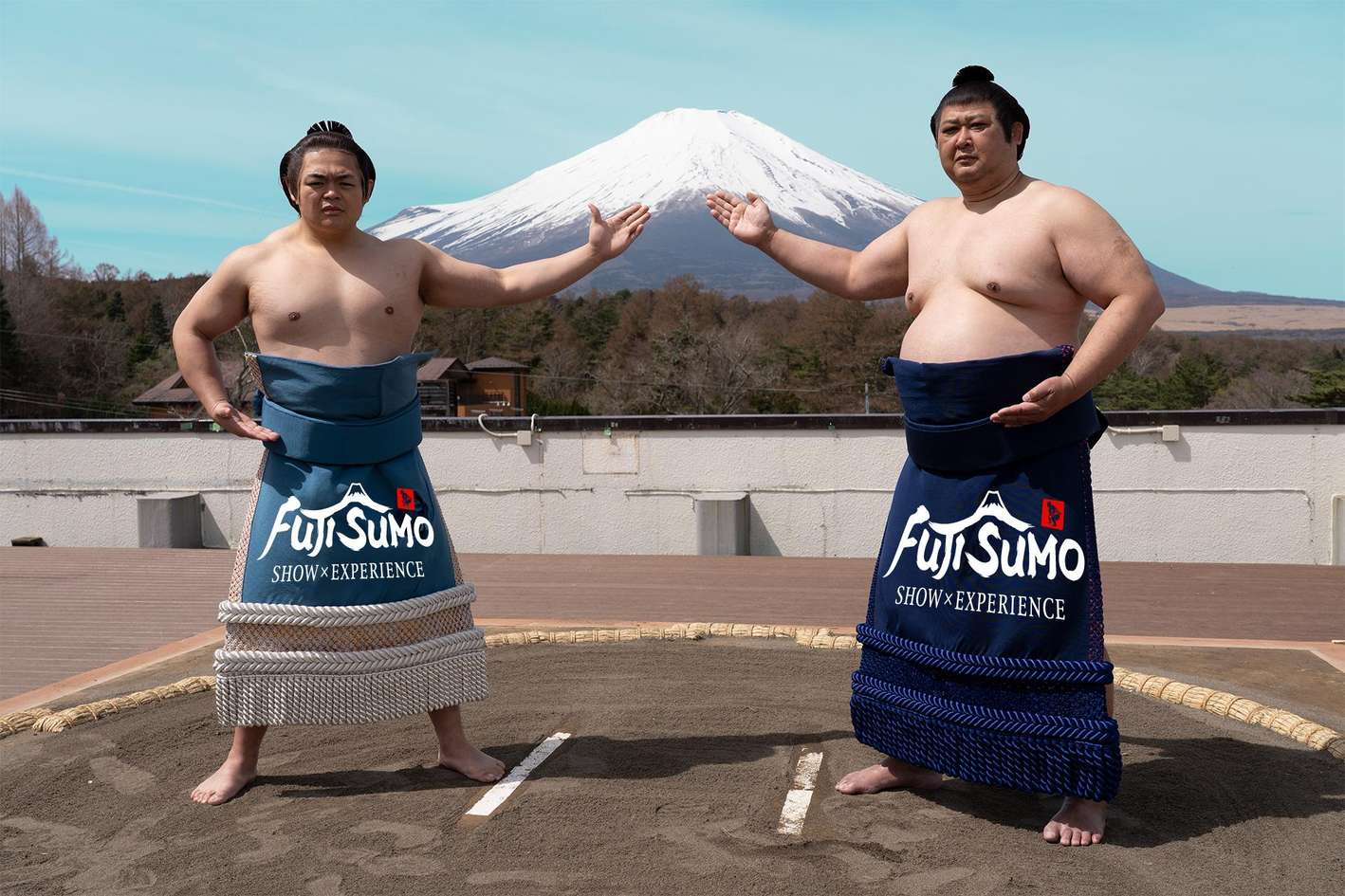
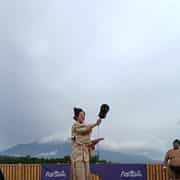
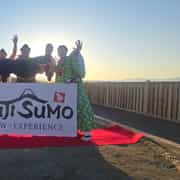
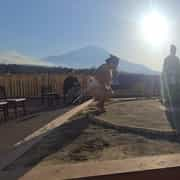
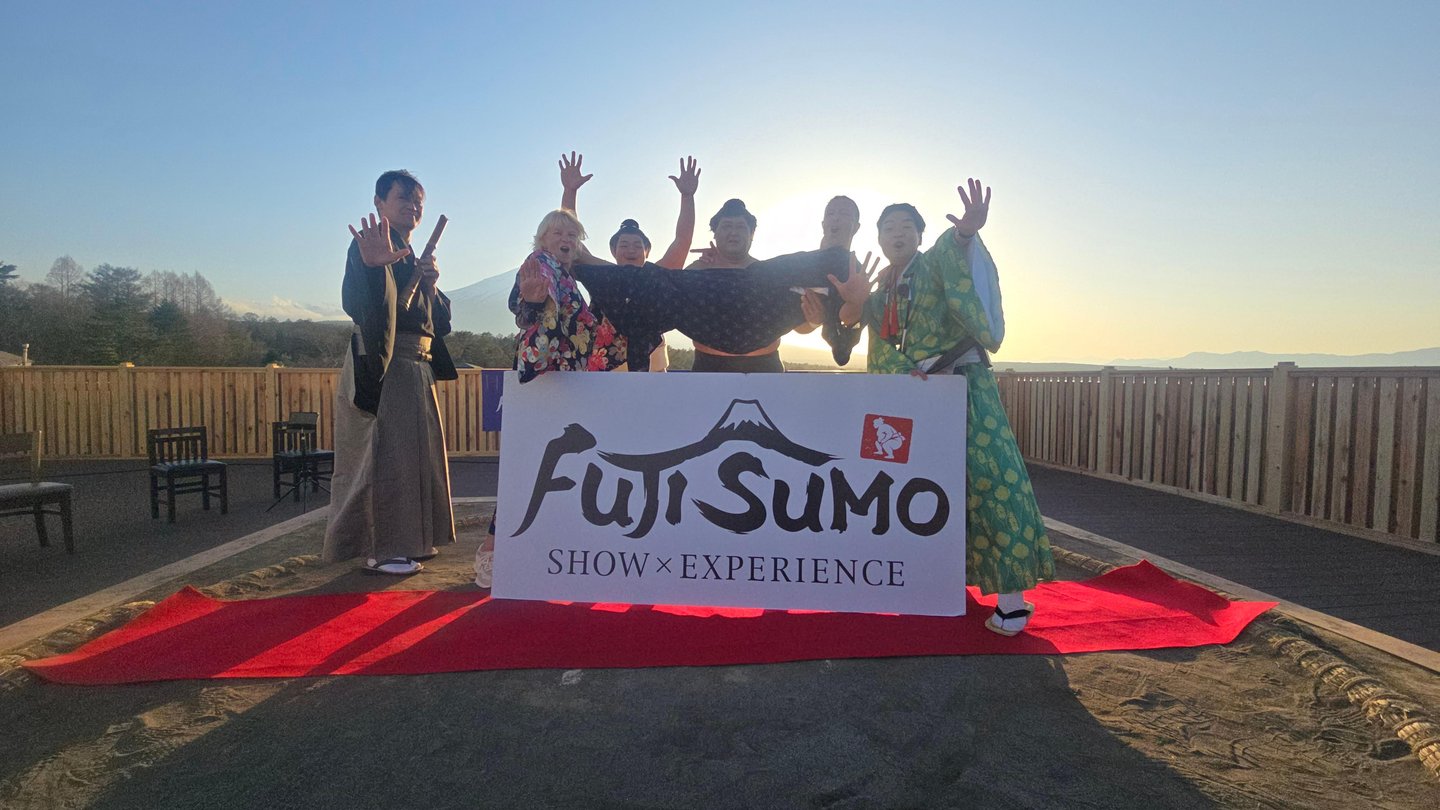
For a family day out with a view, the Mt Fuji Sumo show at Lake Yamanaka runs 50 minutes with VIP seating for multi-generational families of six to eight, an interactive Sumo Challenge and English commentary, with Mt Fuji behind the ring.
Tour for this
Mt Fuji Sumo | Photo with Wrestlers, Family & VIP, Yamanaka4.9★ (14) · 50 minutes · Free cancellation
Health, mobility and safety limits for wrestling classes
Participation is optional at every one of these experiences, and that single fact answers most worries. Guests can watch, or do adapted activities, instead of physical contact, and the programme is designed for complete beginners with no prior knowledge required.
The limits that do exist are per venue. At the Ginza show, the hands-on Plan B is not suitable for children under 5, pregnant guests, or anyone with serious medical conditions, and wheelchair users should contact the staff in advance for assistance.
The Shibuya show is not suitable for wheelchair users, and wheelchair-accessible seating at Tokyo shows is limited and must be requested at the time of reservation.
Declare access needs at booking, not at the door. Prior injuries and mobility affect what a guest should try, and requirements can only be accommodated when the venue knows in advance.
Physical activity carries a small risk of injury, and guests joining ring training or matches accept that at their own discretion. Minor scrapes or bruises can occur. The tourist programme stays light by design; the severe injuries of professional sumo belong to a world these sessions only imitate.
Chanko nabe, the meal that comes with wrestling classes
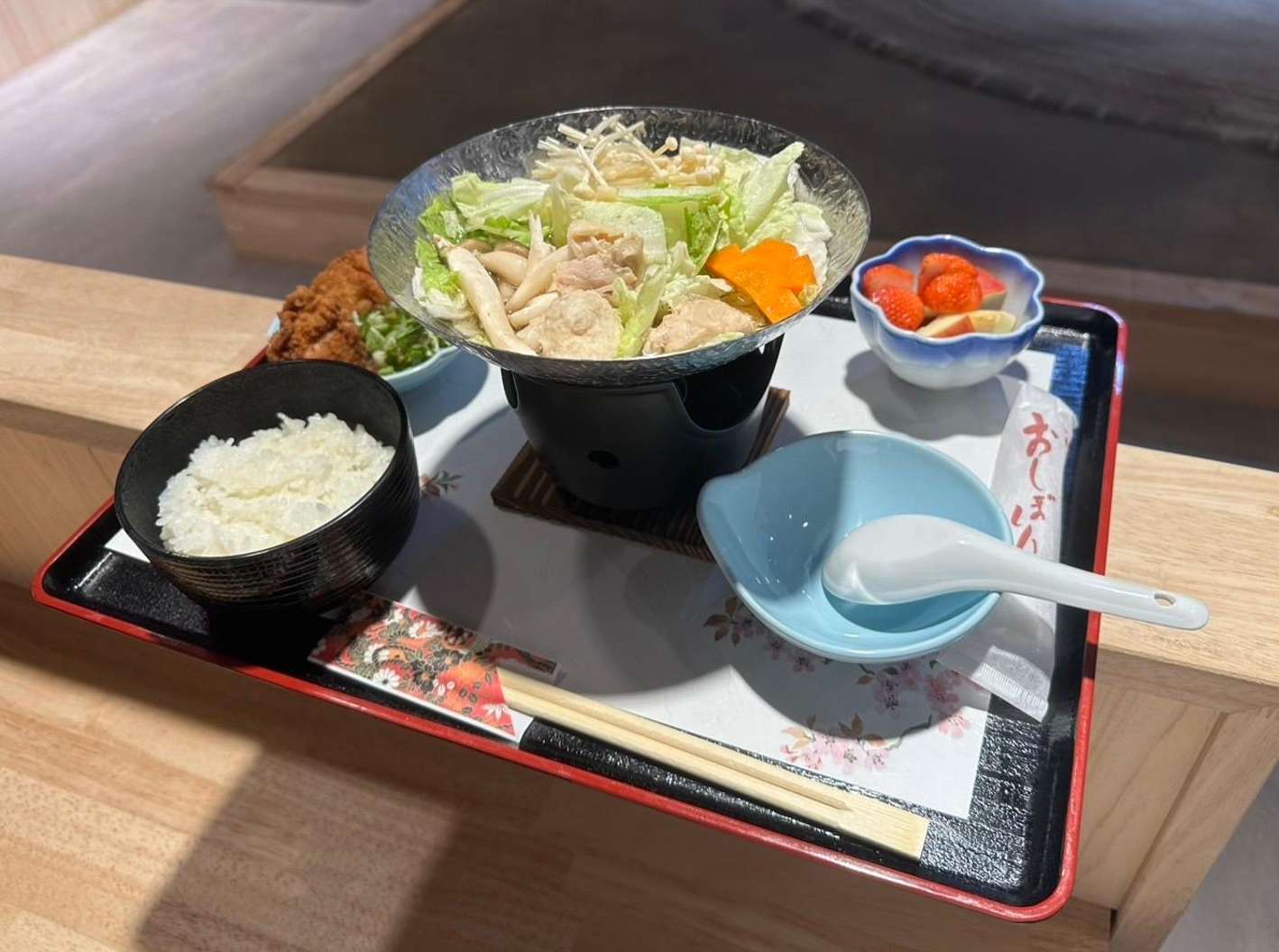
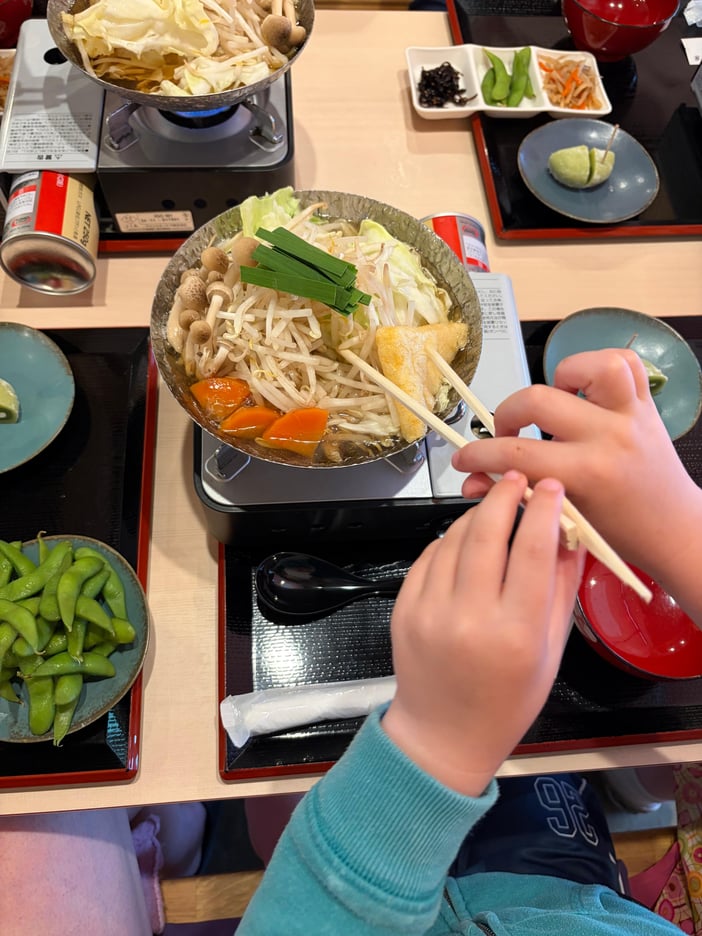
The hot pot on the menu is the wrestlers' own recovery meal. Chanko nabe is simmered with chicken, napa cabbage, carrots, green onions and fried tofu in a dashi or chicken-stock broth, built to feed a stable after training.
It became popular around the end of the Meiji era as a cheap, effective way to build strength.
The customs around it are the good part. It is eaten communally, traditionally by seniority, with senior wrestlers eating first and juniors getting what is left.
And during tournaments, chanko is made only with chicken, because a wrestler should stay on two legs like a chicken; falling onto all fours means losing, so four-legged meat was avoided for luck.
Wrestlers eat it as their first meal after training, because practising on a full stomach makes them sick. At the shows, the Tokyo entertainment format includes all-you-can-eat chicken hot pot, and the Kyoto show pairs all-you-can-eat and all-you-can-drink with its signature chanko-nabe.
Travelers praise the hearty, generous food, and eating it in a sumo neighbourhood is part of the experience.
What else to do near the sumo wrestling class venues
A 90-minute show leaves most of a day, and both cities' venues sit in sightseeing districts, so the hours around it fill on foot.
In Tokyo the shows meet around Ryogoku Station. The Edo-Tokyo Museum is about a three-minute walk away, Ekō-in temple five minutes, and the Sumida Hokusai Museum six.
A stroll of roughly 20 minutes takes you across the river to Sumida Park and the Kaminarimon gate in Asakusa, which pairs neatly with an Asakusa sumo club booking.
In Osaka the Namba hall sits two minutes on foot from Hōzen-ji temple and its narrow stone-paved lane, one of the city's most atmospheric corners, with Ikukunitama Shrine about 13 minutes further. Kyoto's venue, a minute from Marutamachi Exit 6, drops you into the city centre with the imperial palace grounds a short walk north.
The shape of a good day writes itself: museum or temple in the morning, the show with its hot pot in the afternoon or evening, and the walk back through a district you already know. No transport needed between any of it.
A sumo wrestling class is one of the few chances in Japan to do a national sport with your own hands, and the formats split cleanly: lottery-challenge shows for families and first-timers, hands-on training for anyone who wants the drills, and Kyoto's guaranteed ring challenge for visitors set on wrestling.
Book early for April, May and October, arrive 20 minutes early, and wear gym clothes.
Go ifYou want to try sumo yourself, not only watch a tournamentYour trip falls outside a grand tournament month and you still want sumoYou are travelling with children around 10 to 12 who want to join in
Skip ifYou expect genuine competitive sumo from an exhibition showYou are pregnant or have a serious medical condition and want the hands-on Ginza planYou cannot arrive before the printed start time, since late entry may be refused
Quick answers on how to try sumo in Japan, from ring challenges to hands-on training.
What actually happens during a sumo class in Japan?
You put on a mawashi (sumo loincloth), then warm up and stretch with an instructor. The basic drills are shiko (leg stomps), suriashi (sliding footwork) and teppo (striking a wooden pillar), followed by practice bouts and a warm-down. Most sessions close with photos with the wrestlers.
How is a sumo show with an audience challenge different from a hands-on class?
A show is an entertainment performance by retired wrestlers, with demonstrations, exhibition bouts and a challenge where volunteers chosen by lottery enter the ring.
A hands-on class is a training session where you learn techniques yourself. The show suits all ages; the training option is not suitable for young children, pregnant guests or people with health issues.
Can I learn sumo wrestling in Tokyo?
Yes. The Ginza show runs a live performance by retired professional wrestlers, and you can add an optional hands-on sumo training experience with drills like shiko, suriashi and simple exercises. The Ryogoku experience also lets you get on the dohyo and try sumo with the wrestlers.
Is there a sumo show in Osaka where the audience can take part?
Yes. The Osaka Sumo Experience includes a one-round match between retired wrestlers, training routines and a chance to face off against a wrestler, with limited spots. At other Osaka shows, 1-on-1 bouts with a former rikishi may be assigned by random selection, so participation is not guaranteed.
How do I get picked to wrestle the sumo wrestler at a show?
At some Tokyo shows the challenge is limited to six guests per show, selected by lottery. At others, guests who want to challenge are chosen by lottery if demand is high. Joining is always optional, so you can watch instead if you would rather not step in.
Can women take part in sumo experiences?
Yes. Women can join sumo experiences in Tokyo, Osaka and Kyoto, and some venues welcome women onto the dohyo. The rule against women entering the ring applies to professional sumo; tourist experiences are open to everyone.
Is it better to try sumo in Tokyo or Osaka?
Neither city is simply better. In Tokyo you can suit up in a traditional sumo outfit and step into the ring, with the challenge limited to six guests per show by lottery.
In Osaka the experience includes a single bout match, training routines and a chance to face a wrestler. Choose by style, location and how actively you want to take part.
How long does a sumo experience last?
Most run between 1 and 3 hours depending on the format. Shows in Tokyo and Osaka typically run 1.5 to 2 hours, and meals or photo sessions add time. Some visitors report sessions running longer than advertised, so leave slack in your evening plans.
Can children join a sumo class or challenge?
At the Kyoto participative experience, children may take part from age two, with age four and above recommended, and kids from about age five can join the ring challenge. Children twelve or under need a private booking with a supervising adult. The Ginza hands-on training plan is not suitable for children under 5.
How far ahead should I book a participatory sumo show?
Outside peak months, a few days' notice is usually enough, and some travelers have booked a Tokyo slot the day before. Weekend and evening slots fill first, and demand peaks in April, May and October. In those months, book weeks ahead; for Osaka, aim for at least three to five days.
Wrestling classes start in the ring - challenge a rikishi in Kyoto!
Step onto a real dohyo, wear an authentic mawashi and challenge a former top-division wrestler, with a chanko nabe meal and free photos. Cancel up to 24 hours ahead for a full refund.