

Our pickLikely to sell out
1.5 hours
4.8(837)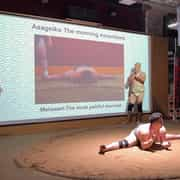

Kyoto: Participative Sumo Experience, Traditional Meal, Pic
Free cancellationSumo showLive MC with English explanations
Need a sumo show in Kyoto today? The closest options on sale are both in Kyoto itself - a participative show where every guest who wants to can wrestle, with a 9:30 pm late slot when the day is already full. Same-day bookings confirm instantly, so check the open slots and lock yours in.
A sumo show in Kyoto today depends on what the two Kyoto tours on sale have open for your date. Neither guarantees a same-day slot, so choose a date, check availability and book ahead: same-day bookings can be confirmed instantly when seats remain.
The closest match is the Participative Sumo Experience with Traditional Meal: former top-division wrestlers, an English-speaking MC, a chankonabe set meal and a guaranteed chance to step into the ring. At the 9:30 pm Late Night Show, a Japanese à la carte menu takes the place of the full dinner.
You want a sumo show in Kyoto that can still fit into your plans, and no tour on this page confirms a seat for the same day.
The one recommended here is the nearest thing on sale: the Kyoto Participative Sumo Experience, an entertainment show run by former top-division wrestlers in a basement venue a minute from Marutamachi Station Exit 6.
It answers the late-evening wish better than anything else here. A 9:30 pm Late Night Show means a full day can still end with sumo, and anyone who wants to can step into the ring with a wrestler, guaranteed rather than drawn by lottery.
One honest gap: the late slot swaps the full set chankonabe dinner for a Japanese à la carte menu, so eat before or after if you take it.
It suits travelers who would rather take part than only watch, and families who want the guaranteed challenge. The one thing to know before booking: seats are reserved for a date, and same-day slots are never certain, so pick your date and book as early as you can.
Green marks the lowest price. Each price says whether it is per person or per group.
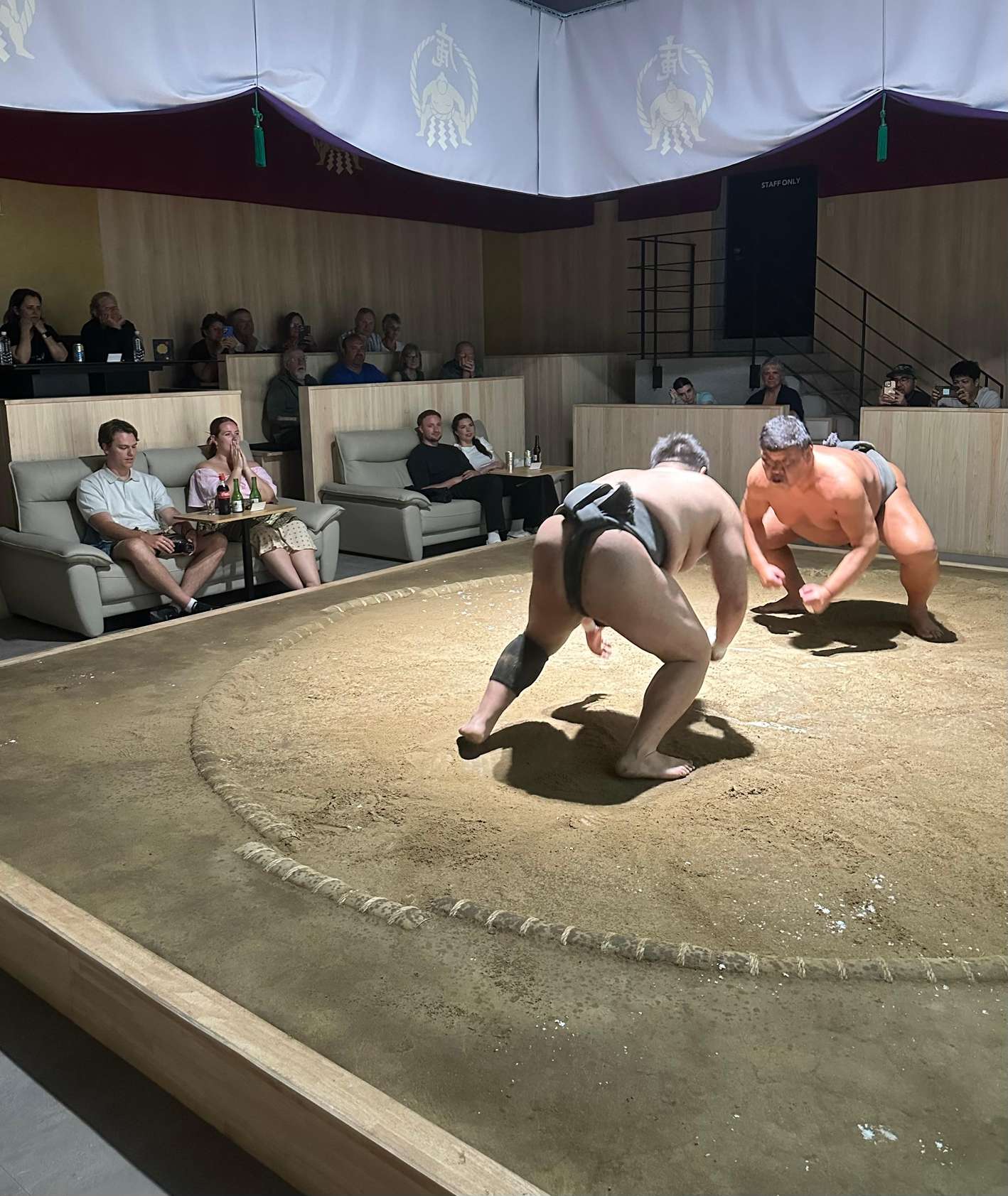
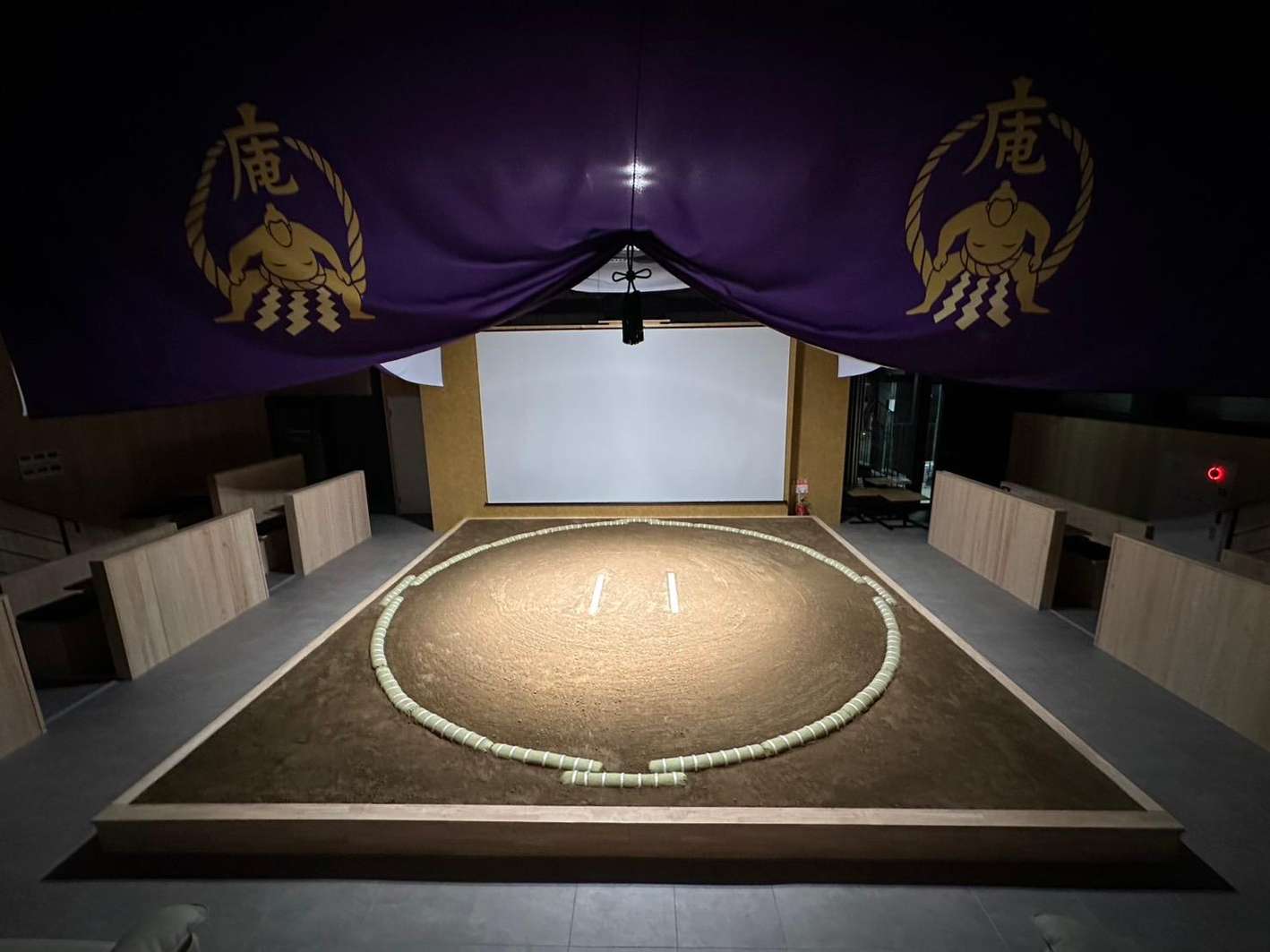
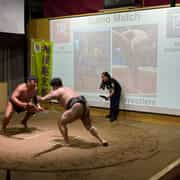
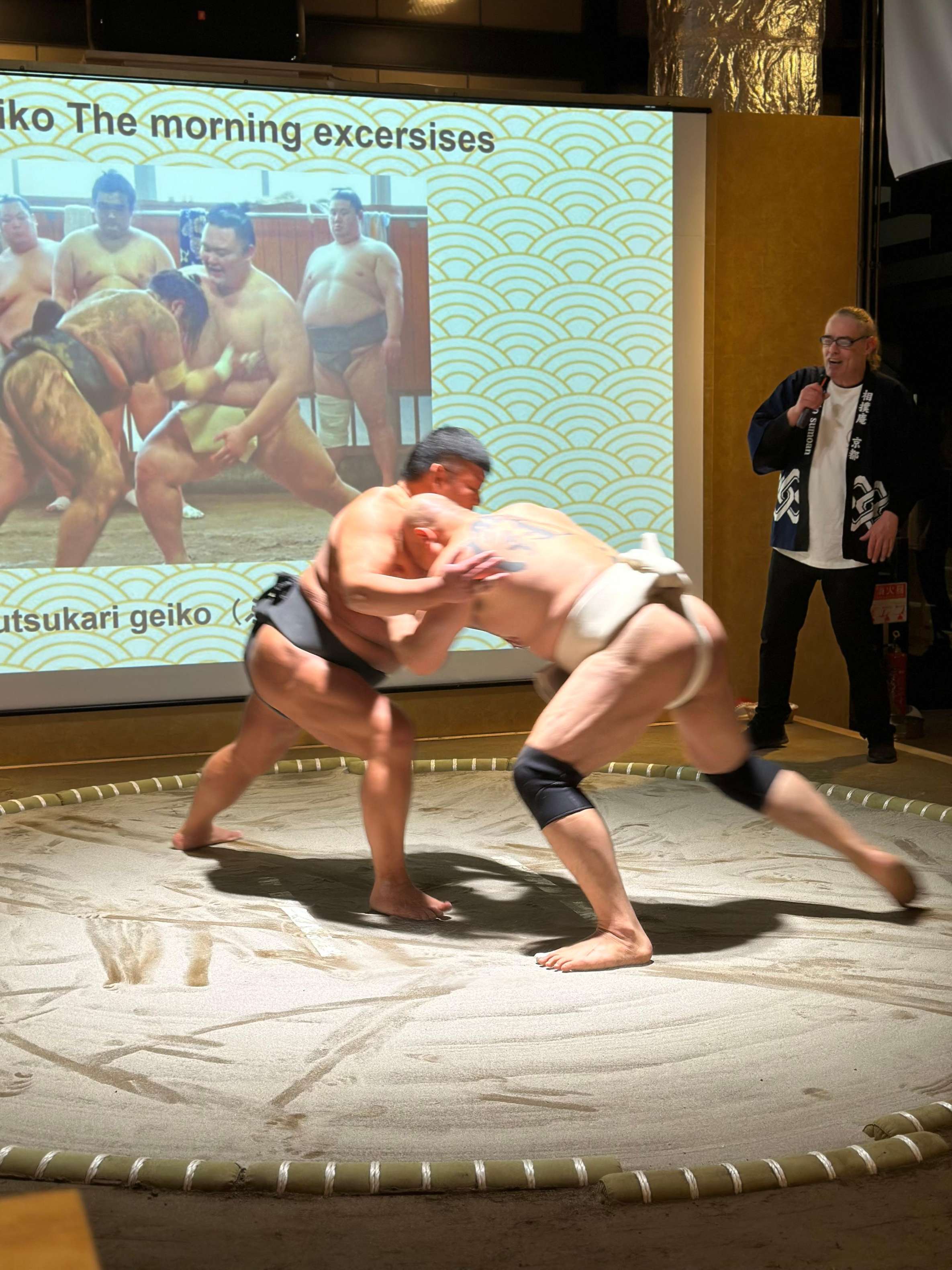
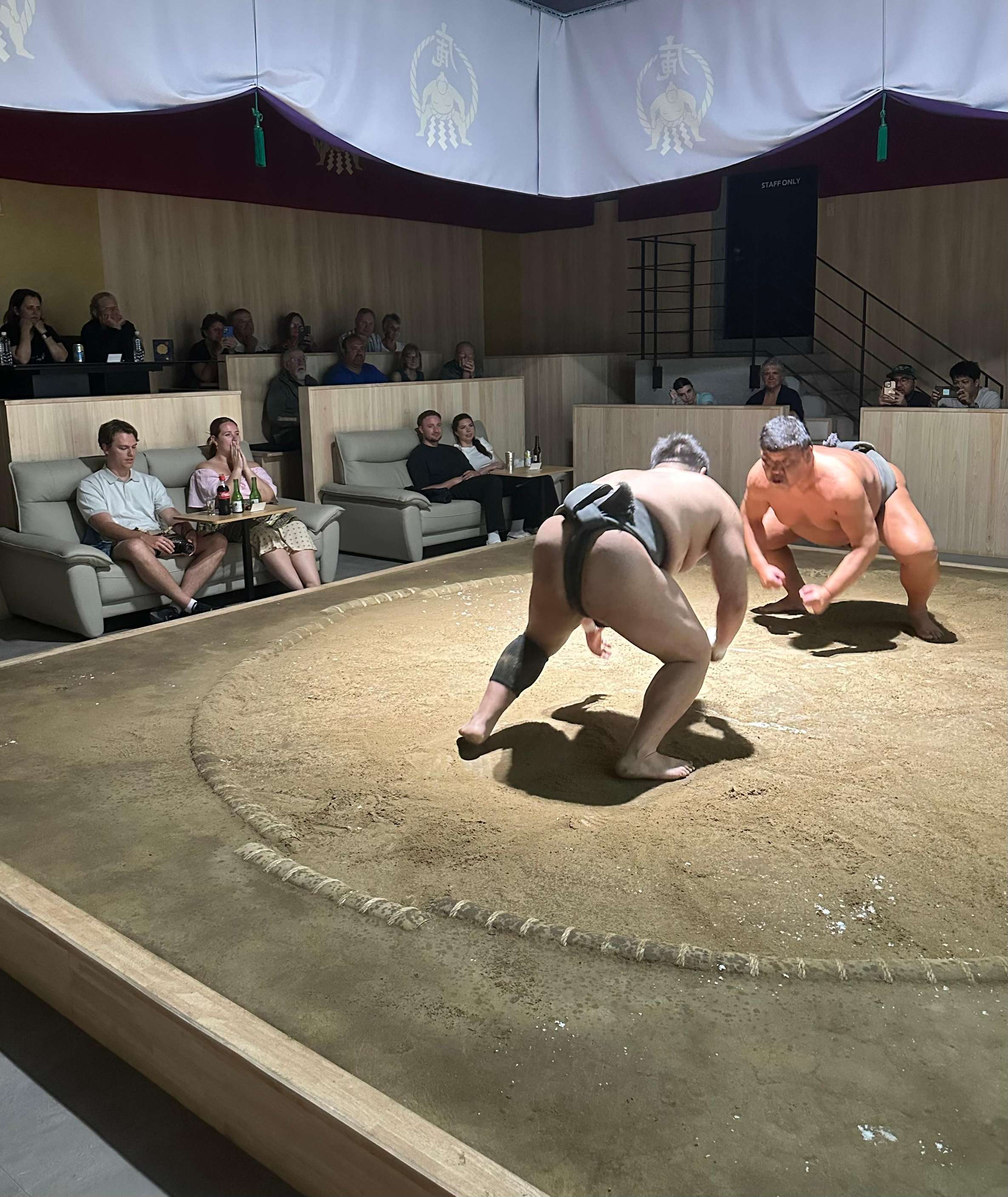
At Sumo An Kyoto, a basement venue one minute from Marutamachi Station Exit 6, retired top-division wrestlers run a 90-minute show with an English-speaking MC. The seats sit so close to the dohyo that you hear the sand scatter, and every guest who wants a bout in the ring gets one.
The evening moves through the salt-purifying ceremony, the wrestling, a chanko nabe set meal and photos with the wrestlers.
The 7 am breakfast plan and the 9:30 pm Late Night Show trade the full program for the time of day: breakfast has no show, and the late night slot serves a Japanese à la carte menu instead of dinner.
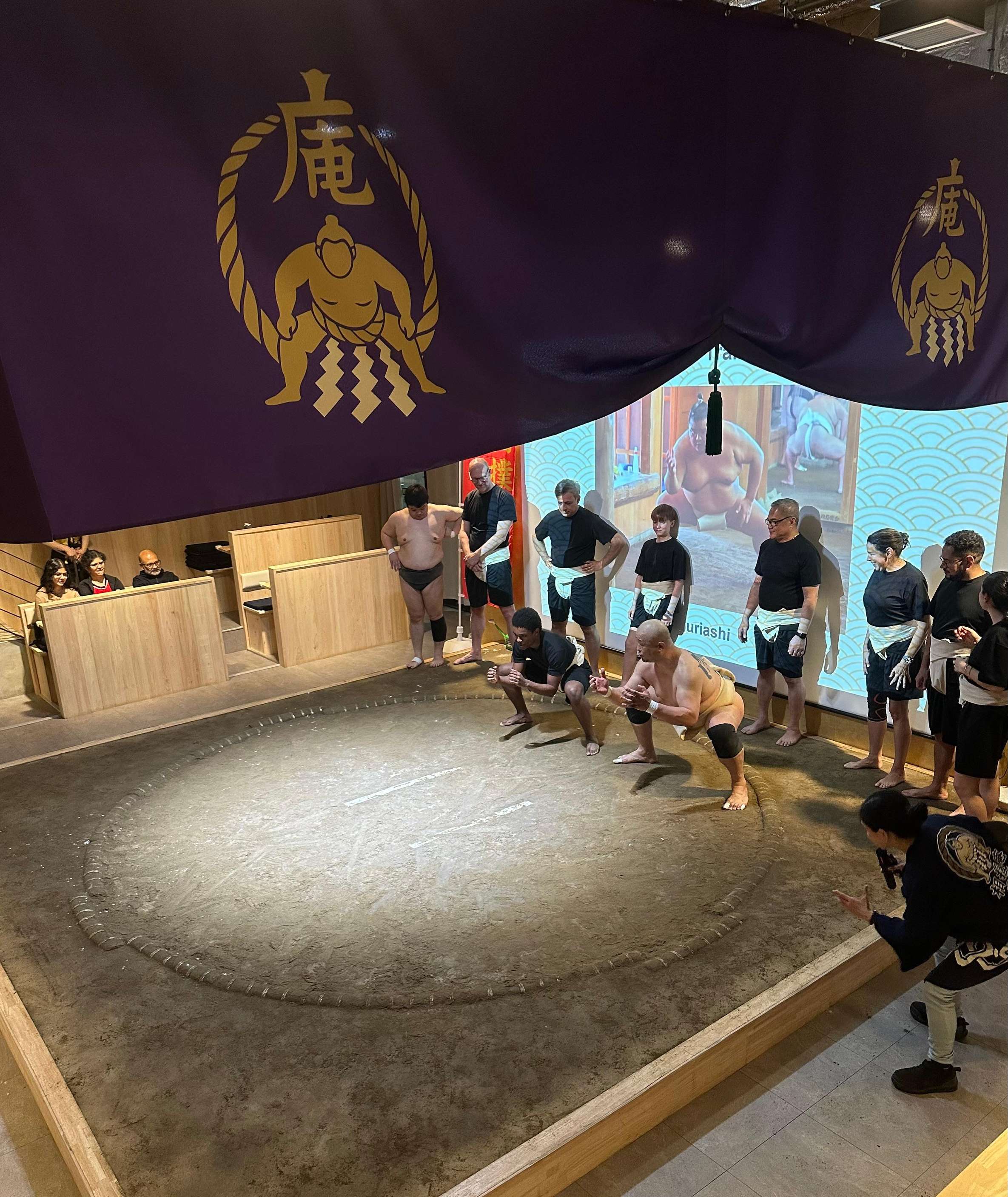
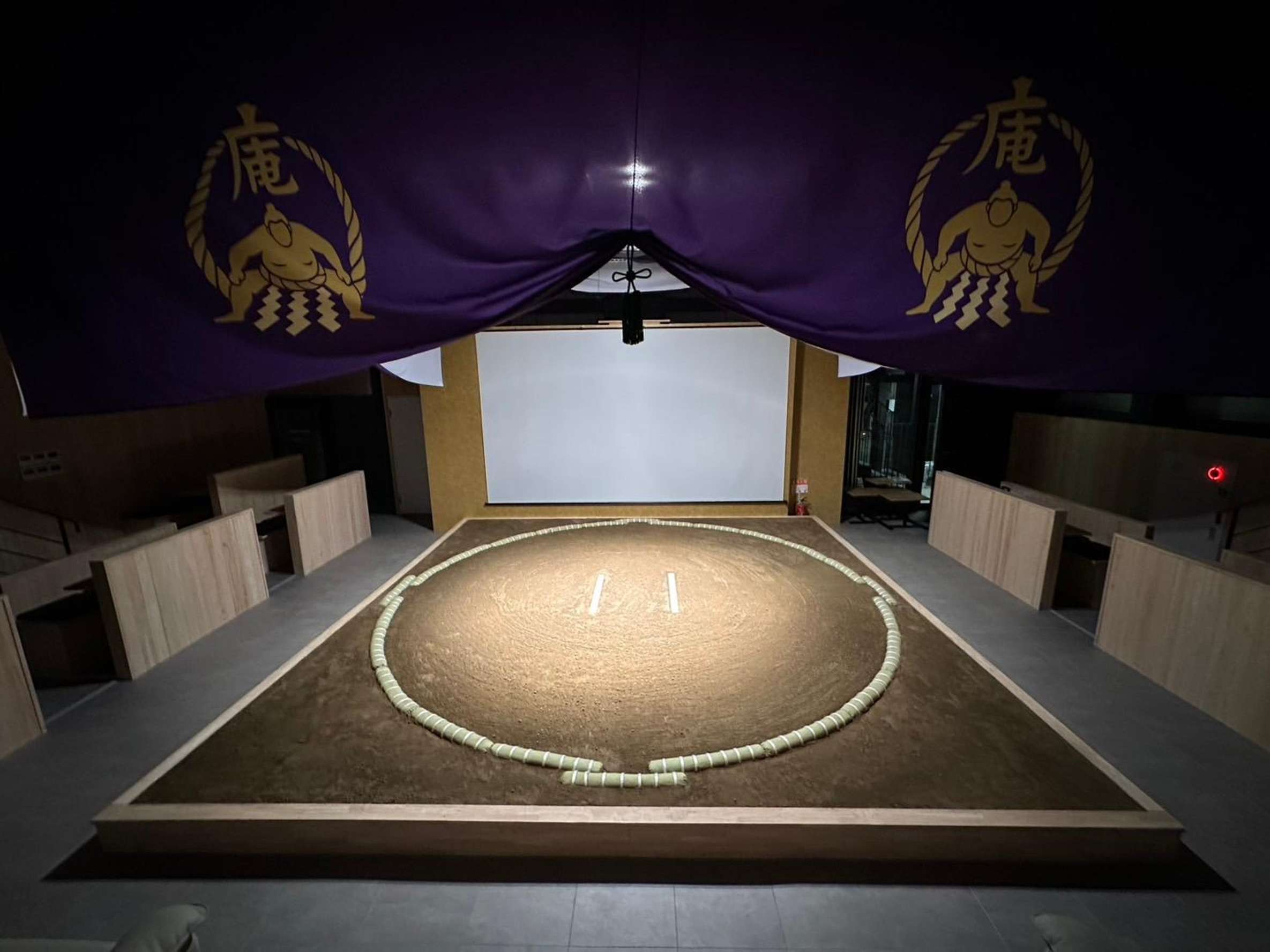
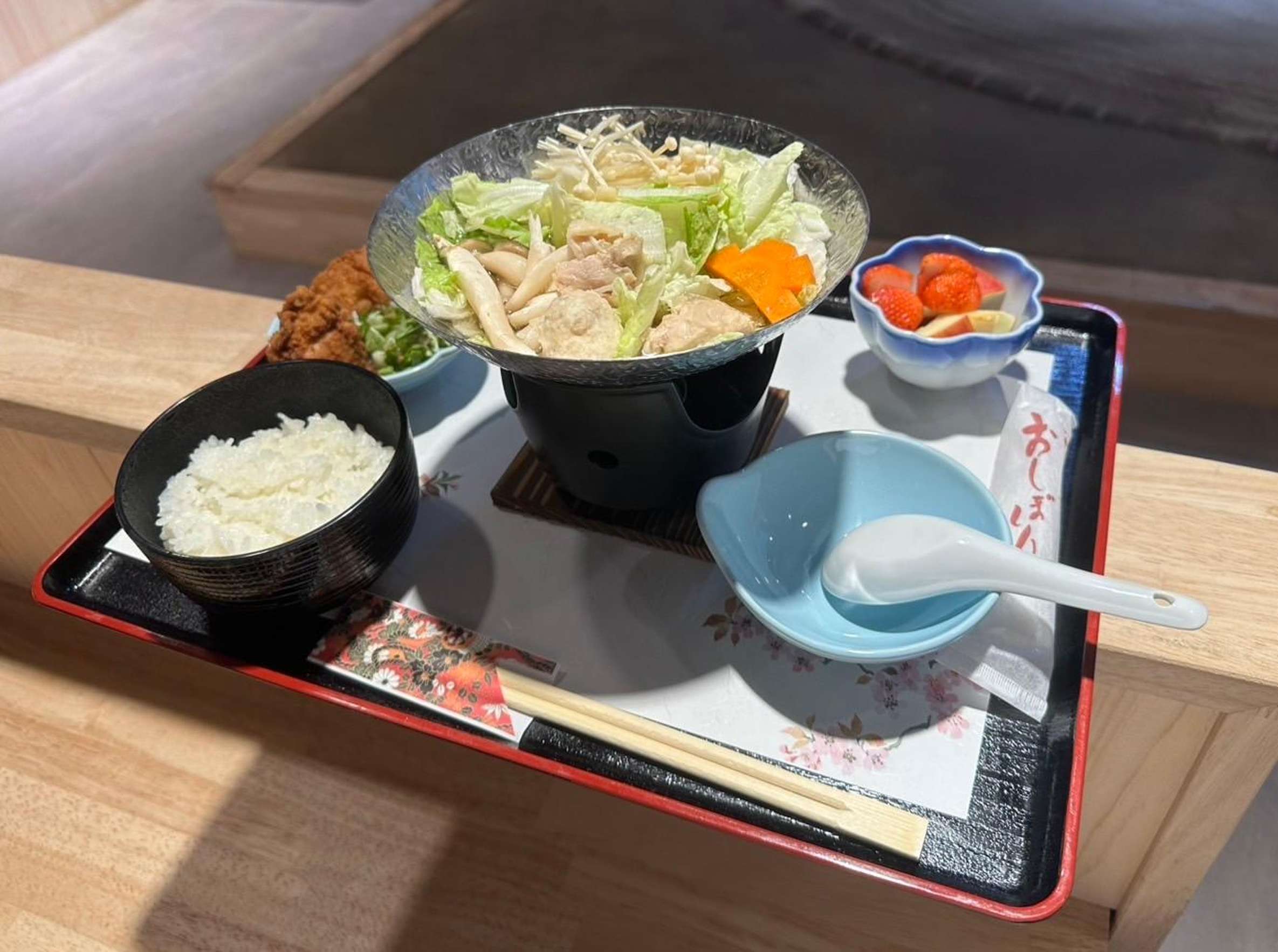
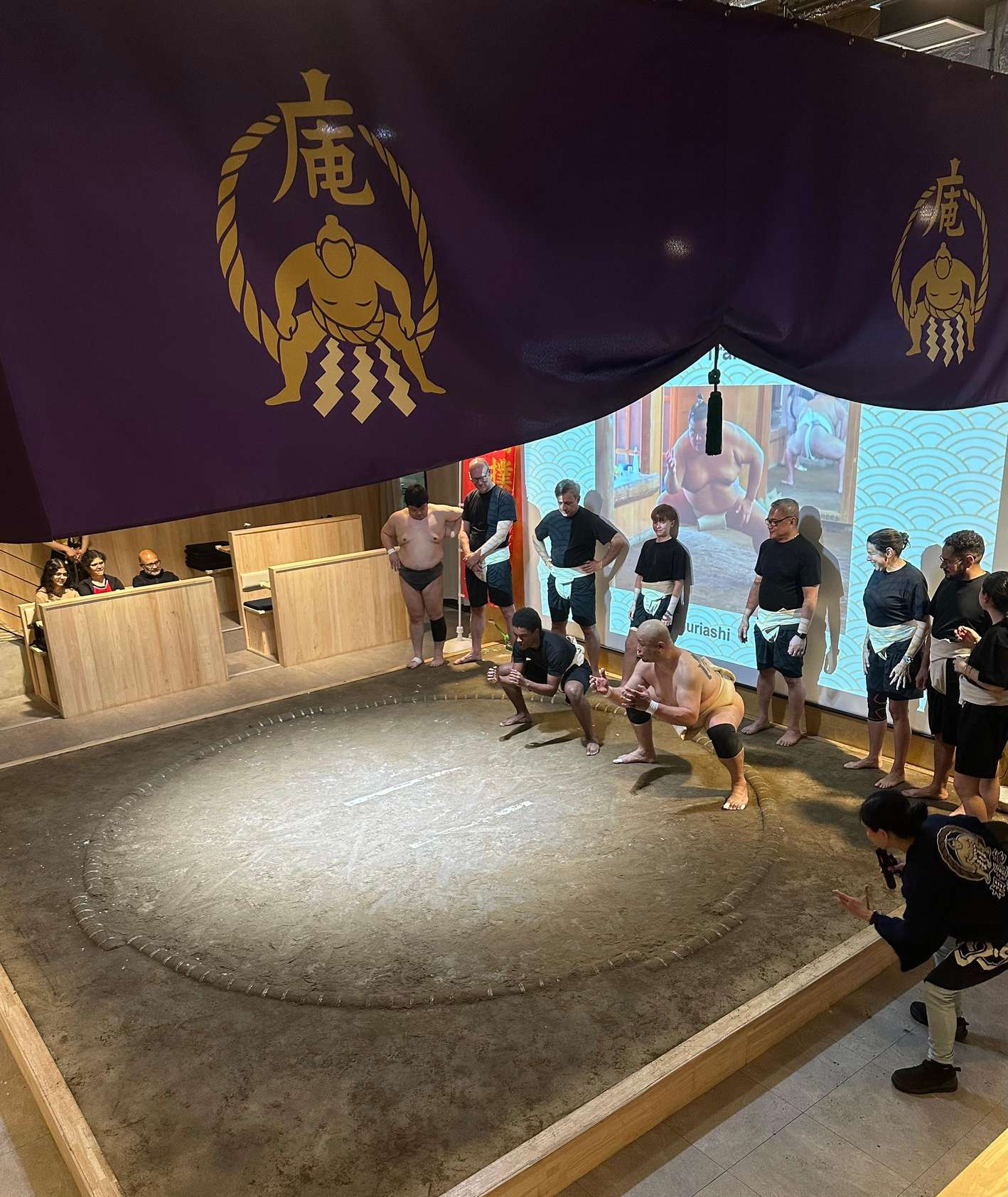
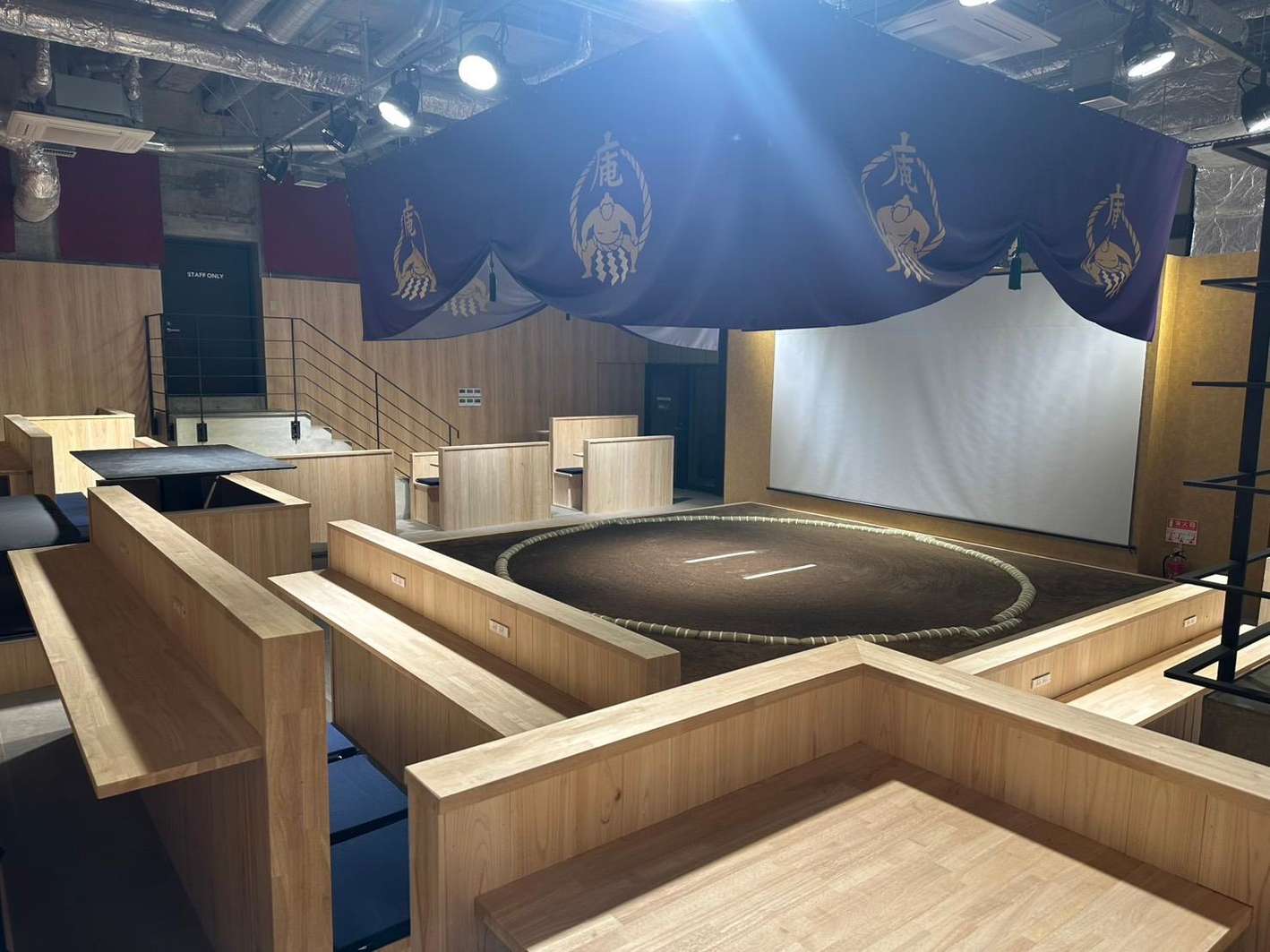
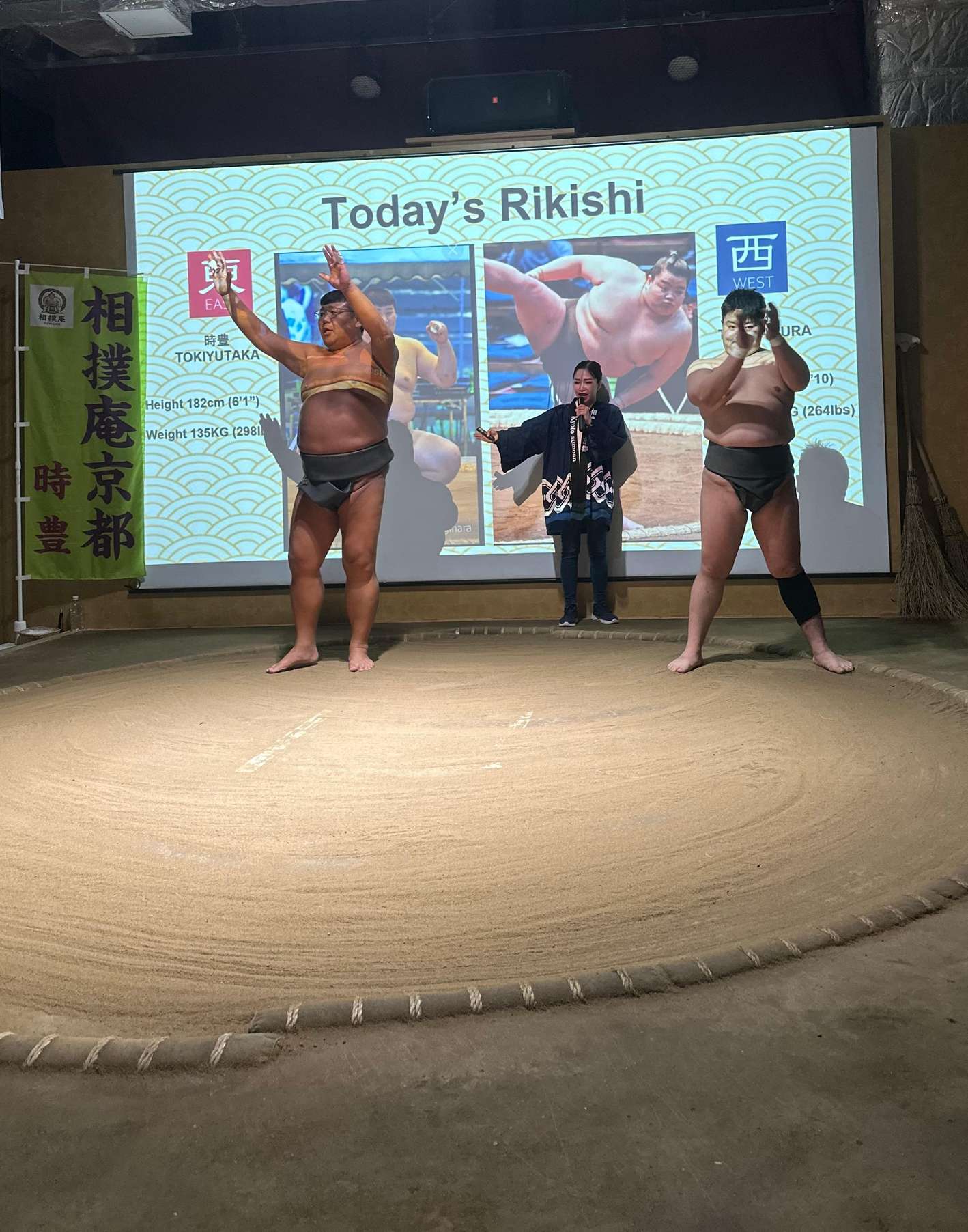
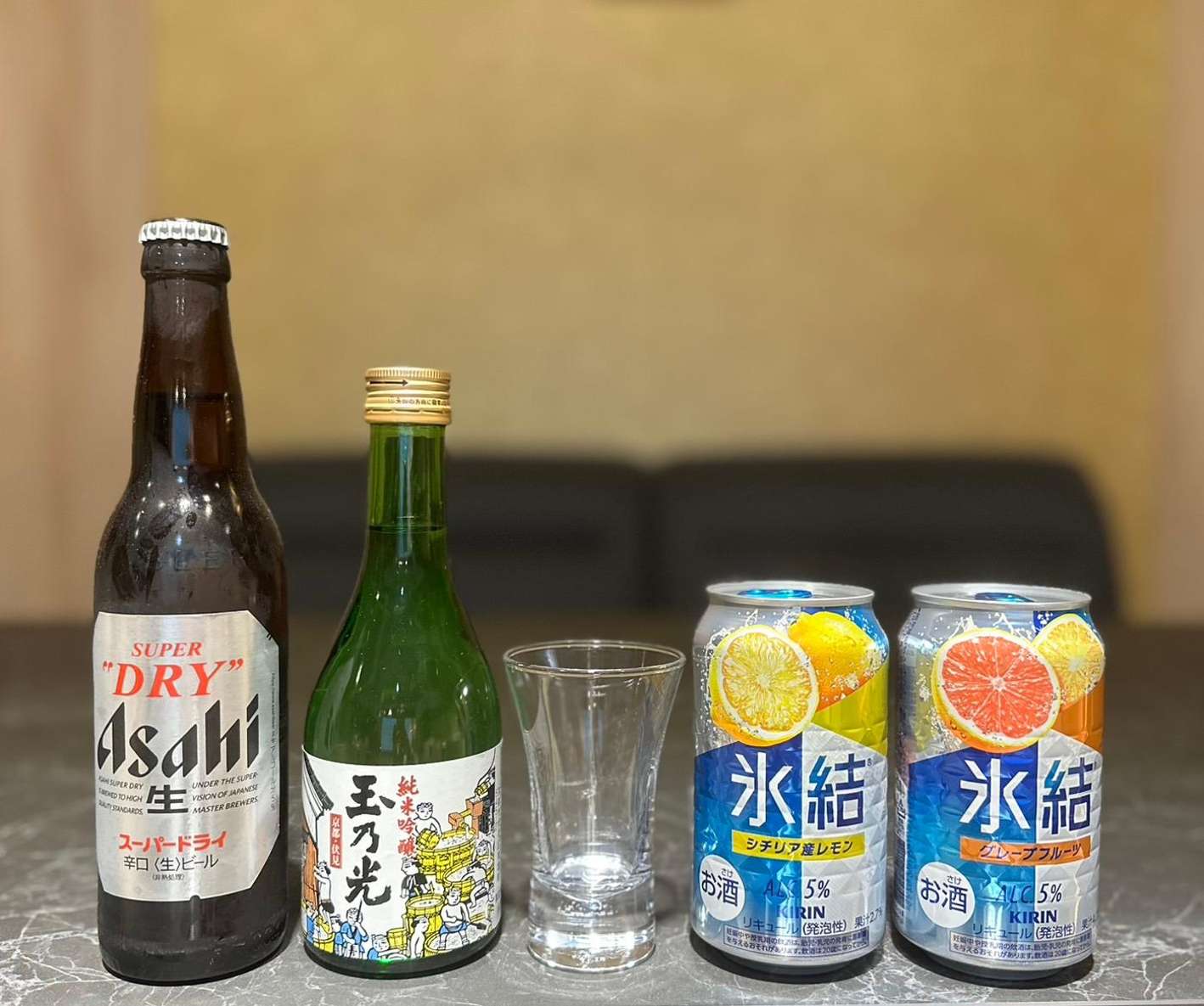
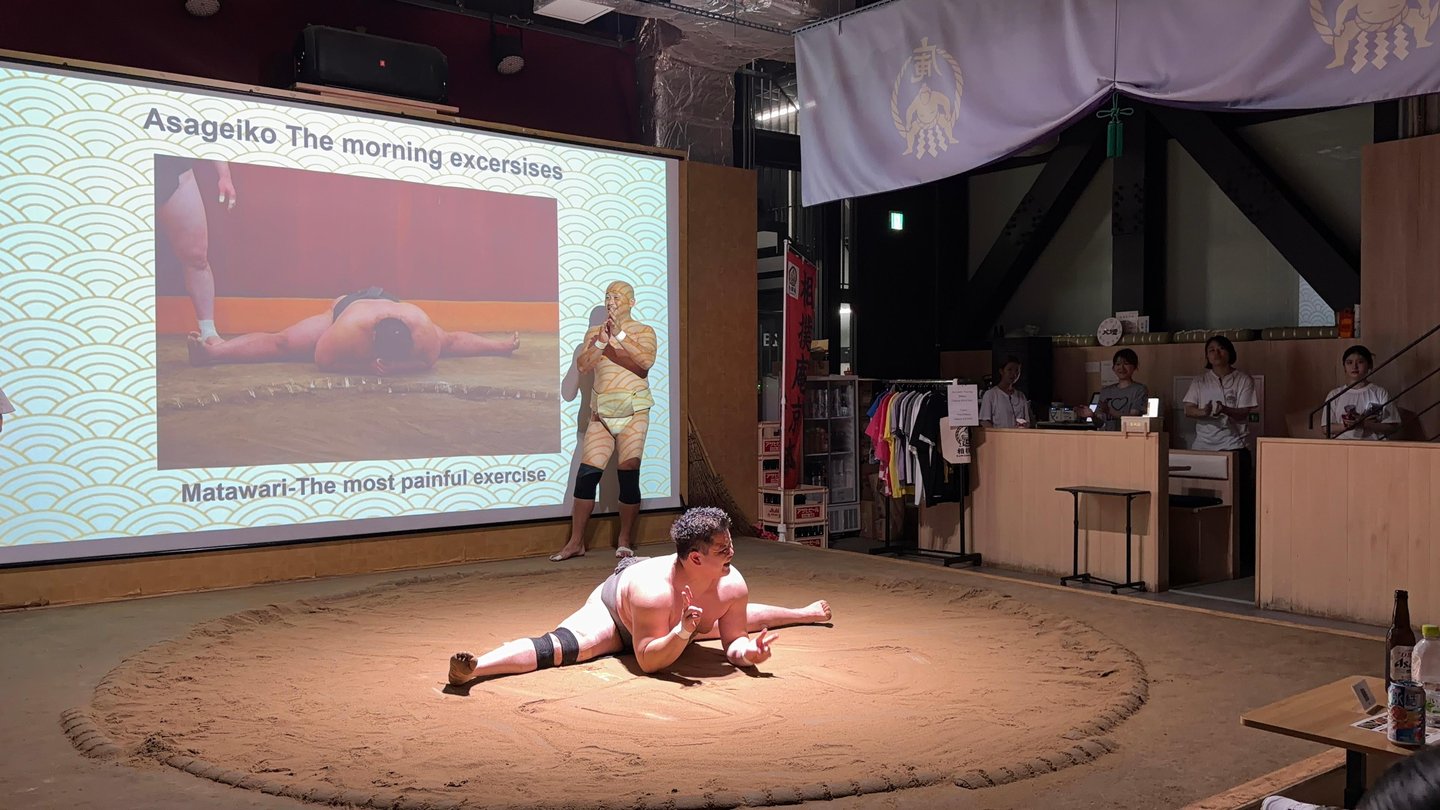
Four of us saw the sumo fight in Kyoto, an incredible experience!
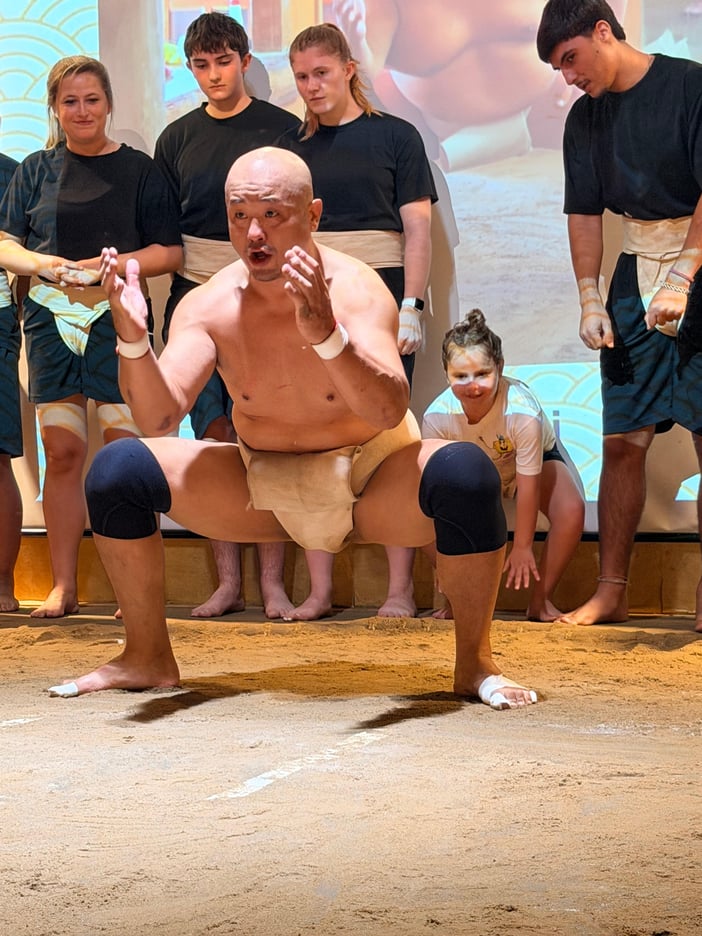
Absolute LEGENDS at this spot! We went in on a rainy Kyoto day with minimal expectations and it was one of the best parts of our trip!
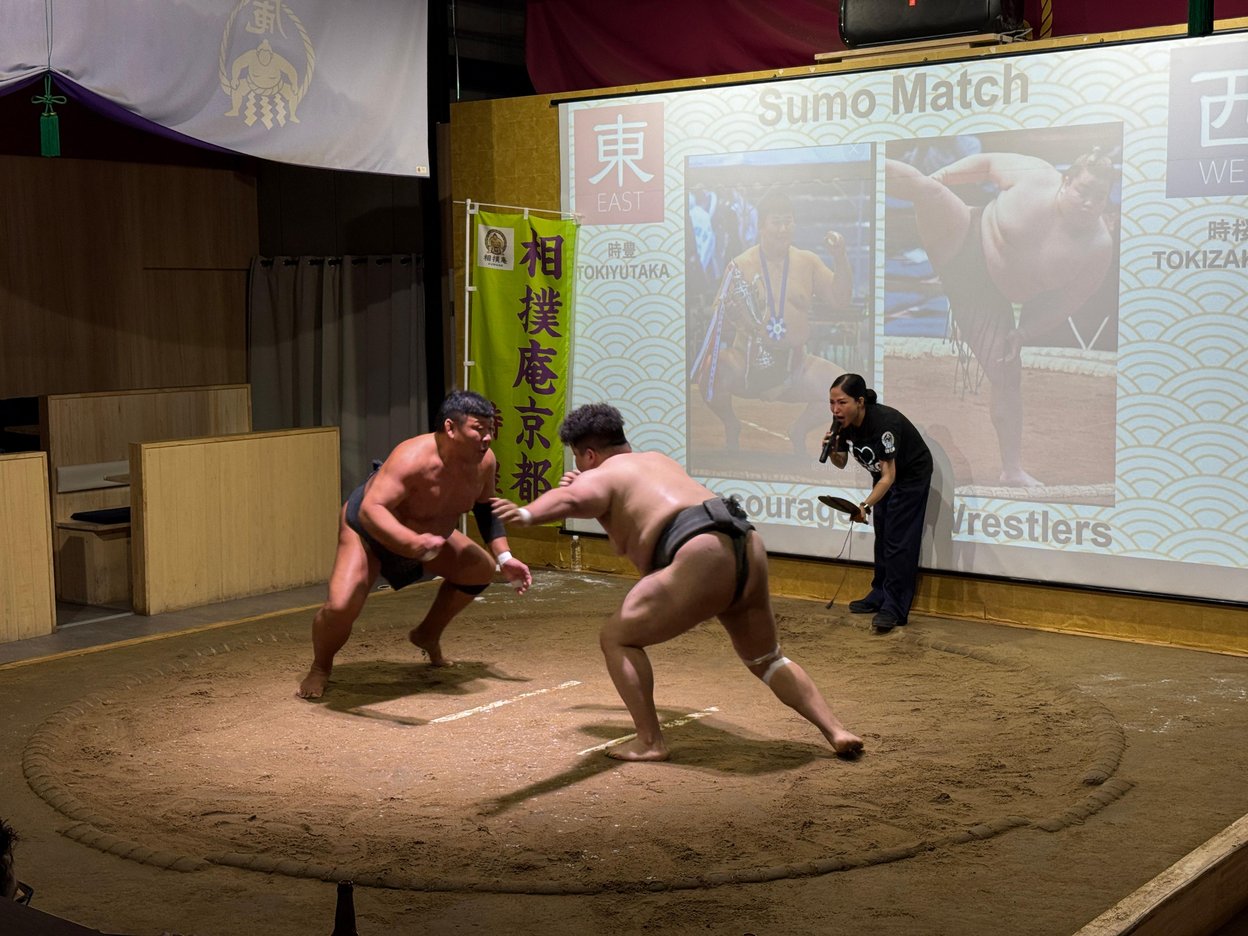
What an amazing experience. The show was entertaining and very amusing. I learnt everything I always wanted to know about sumo wrestling, it's history and traditions.
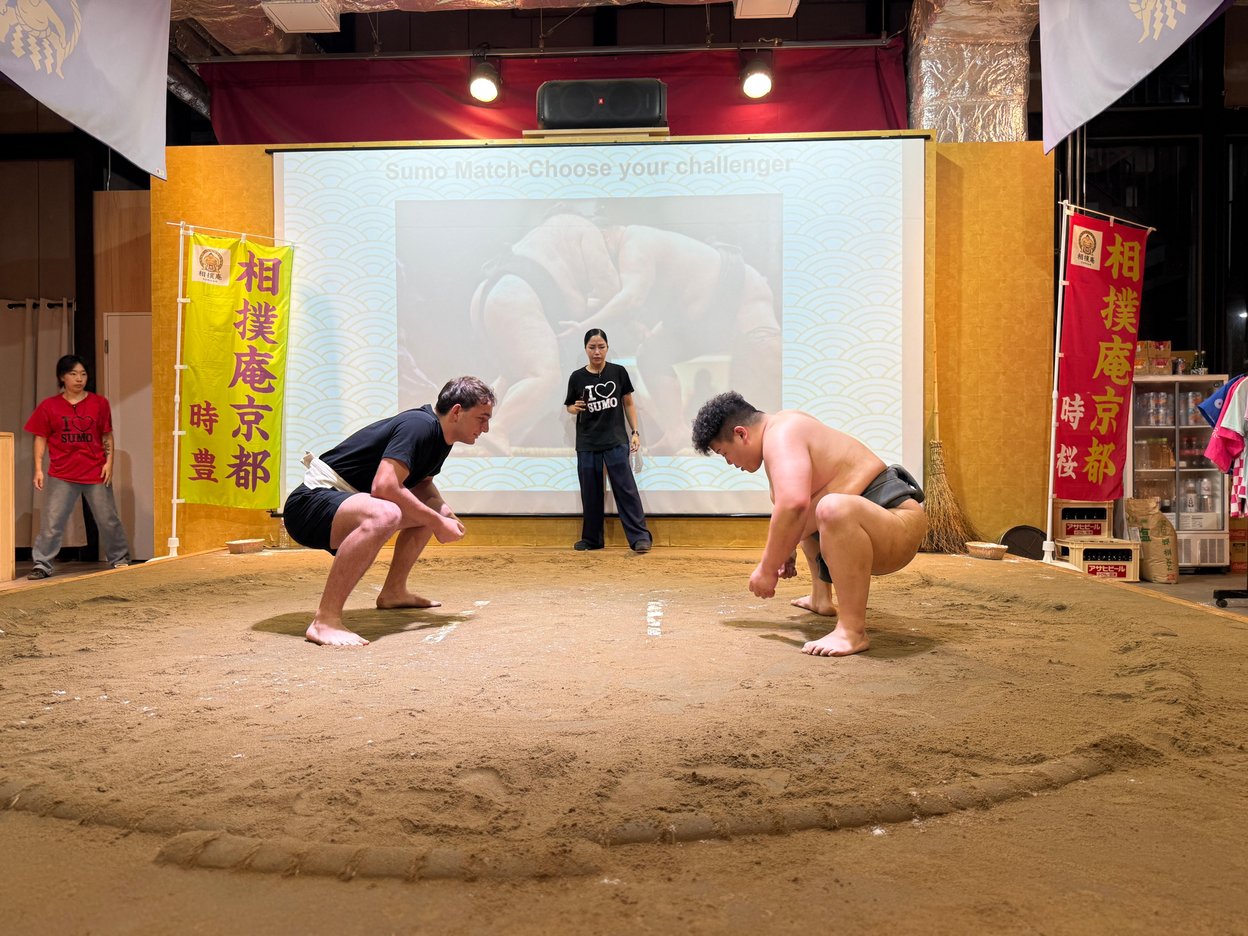
Our expectations were far exceeded, this was truly one of the highlights of our entire Japan trip!
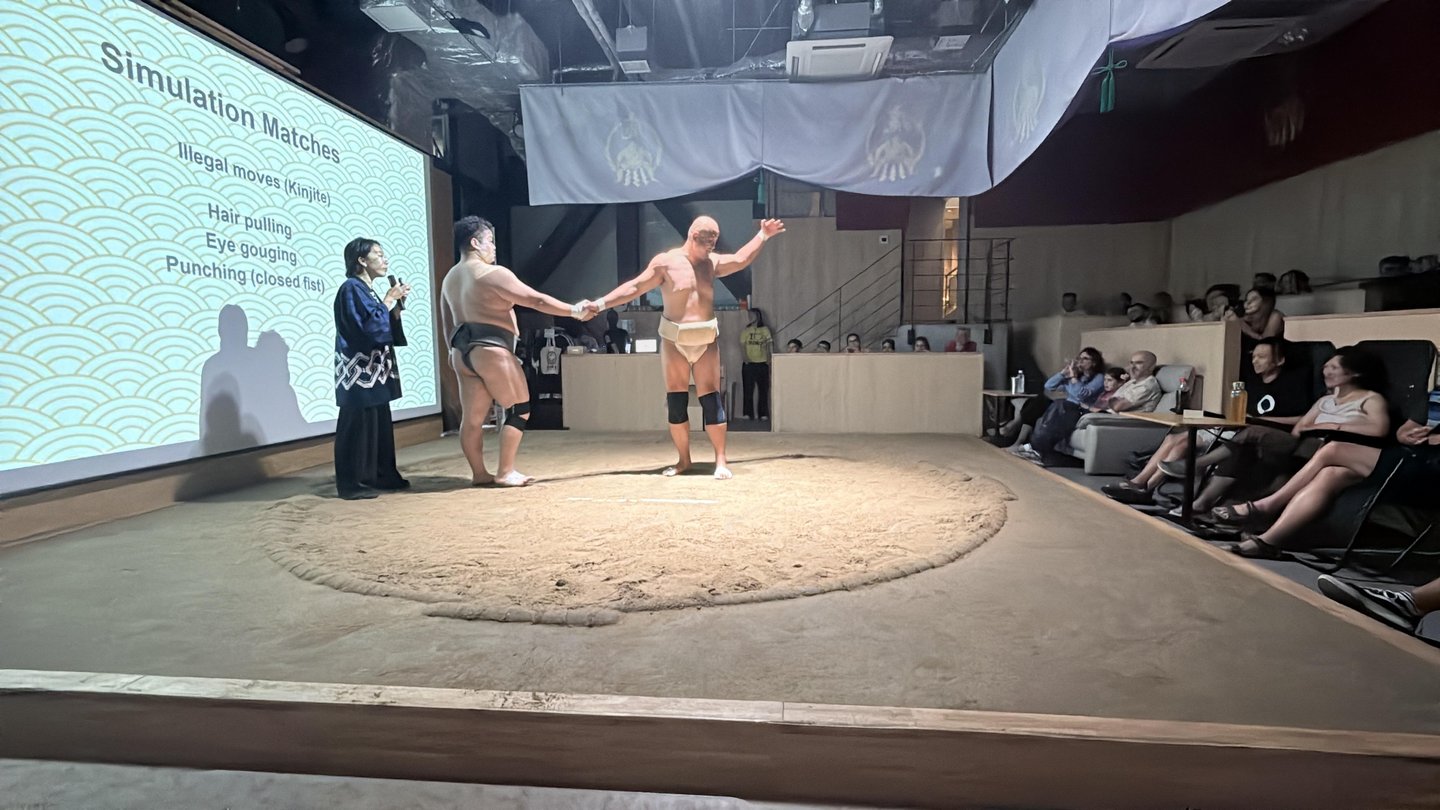
An absolute highlight in Kyoto. We learned so much about tradition, history and sumo rules. Really funny, relaxed atmosphere.
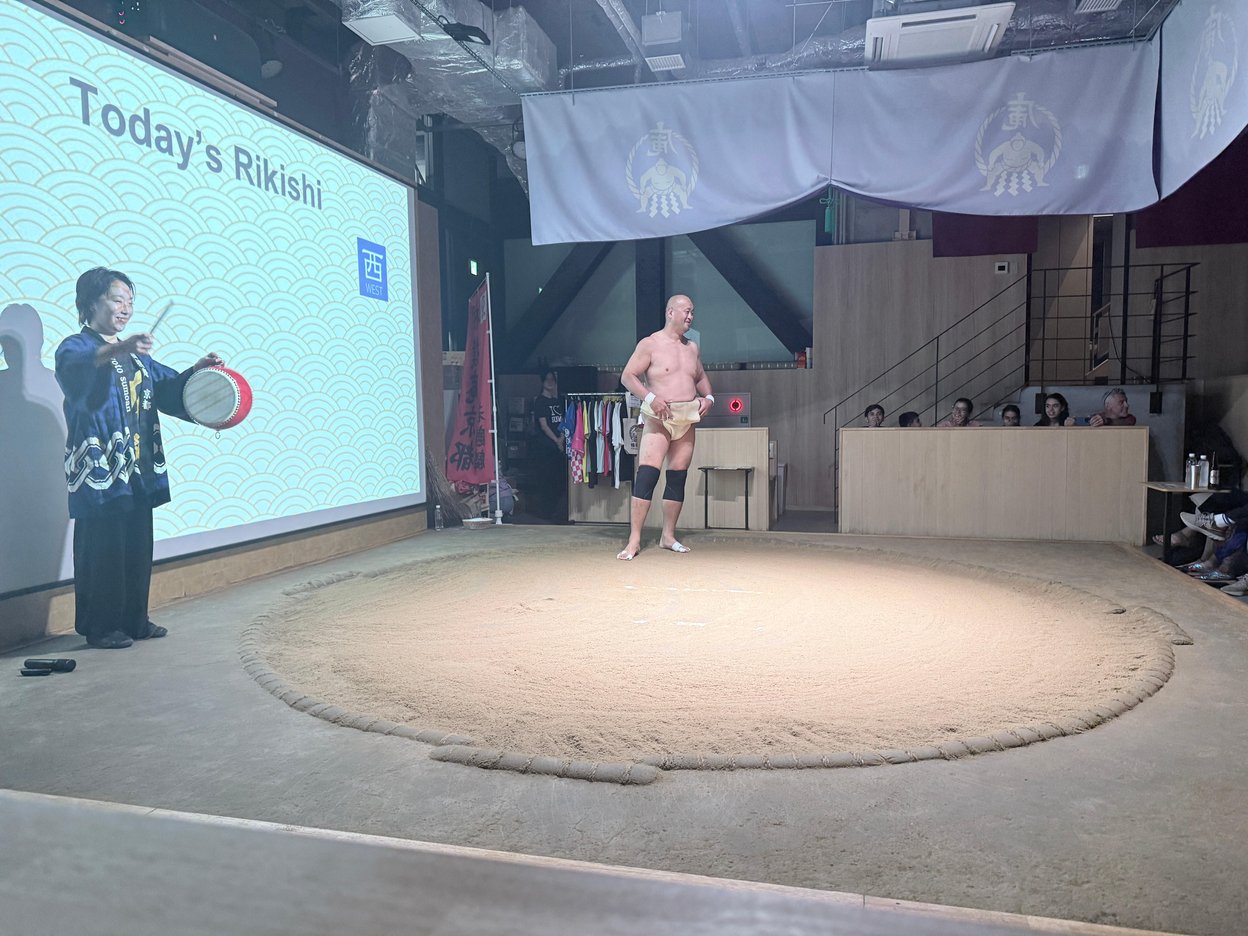
That was SO MUCH FUN!!! I highly recommend this experience! The whole evening was so entertaining and the food was delicious!
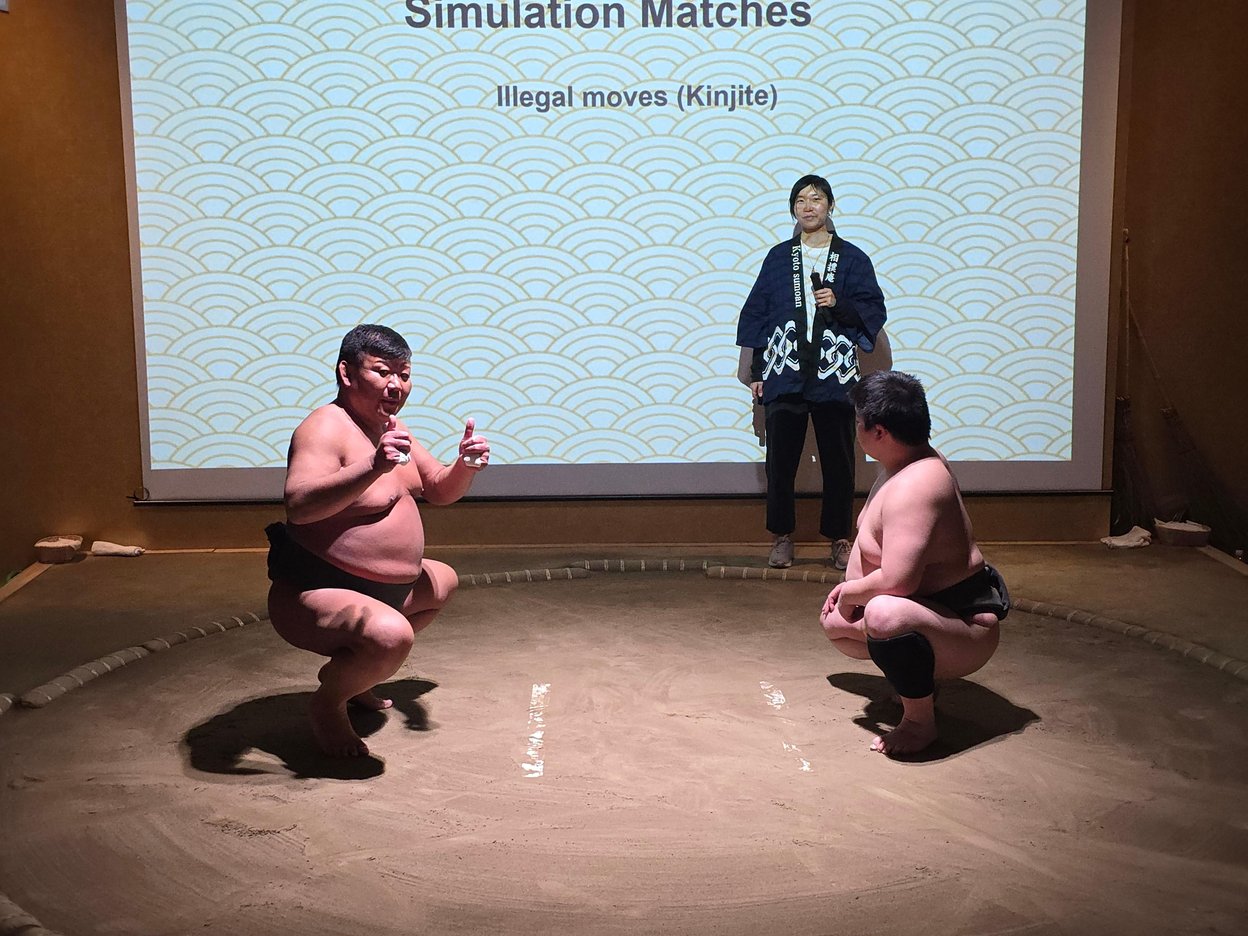
Excellent! So glad we booked this event, we learnt so much, and have found a new appreciation for the sport of Sumo wrestling!
Most reviewers call this the funniest evening of their Kyoto trip and praise the chanko hot pot with it.
Many reviewers had not planned to wrestle and say stepping into the ring was the best part of the night.
Several reviewers wished they had arrived earlier to claim a seat closer to the ring.
Choose today's date first and see what comes back. The participative show runs a 9:30 pm Late Night Show, and meals are served at the noon and 6 pm sessions, with light snacks at 3 pm only.
Common mistakeAssuming any slot includes dinner. The 9:30 pm show has an a la carte menu instead of the full chankonabe set
Compare the two Kyoto shows. The hot pot show with geisha dance has Standard and VIP front-row seats over two hours. The participative show has Late Night, Standard, VIP and family seating over 1.5 hours.
Common mistakeBooking the cheaper slot and expecting the geisha dance. That show belongs to the hot pot venue
Confirmation arrives on your phone as a mobile voucher right after payment. The ticket is valid only for the date and time you selected, and you can cancel up to 24 hours ahead for a full refund.
Common mistakeWaiting past the 24-hour mark to change plans. Inside 24 hours you lose the refund
The hot pot show sits on the 5th floor of the Passaggio building in the Shinkyogoku arcade, a short walk from Gion-Shijo or Hankyu Kyoto-Kawaramachi. The participative show is a minute from Marutamachi Station Exit 6.
Pro tipIf you are already around Shijo or Gion, you need no train at all, the arcade venue is minutes away on foot
Get to the hot pot show at least 20 minutes before it starts so you keep your seat area. Wear shoes that slip off easily, since you take them off for the dohyo experience.
RecommendedKeep drinking until after the ring experience if you want to be challenged, since alcohol can rule you out
The hot pot show runs about two hours across three daily sittings at noon, 3:30 pm and 7 pm. The meal runs alongside the whole performance, so you eat and watch at the same time. Pure wrestling takes up one best-of-three match, with the rest given to the geisha dance, demonstrations and commentary.
The hot pot show includes all-you-can-eat and all-you-can-drink built around chanko-nabe. The participative experience serves an authentic set sumo meal with a first drink on the house. The 9:30 pm Late Night Show is the exception: no dinner, just a Japanese à la carte menu.
Same-day booking is possible when seats remain, and a same-day booking confirms instantly with a mobile voucher. The catch is demand: evening shows often fill up days in advance, and peak seasons call for two to three months of lead time. Check open slots before you plan the rest of your day around it.
Both Kyoto tours let you cancel up to 24 hours in advance for a full refund, which makes an early booking low-risk even if your plans are still loose. Note that a ticket is valid only on the date and time you selected, so a missed slot is a new booking.
Both Kyoto venues ask you to arrive at least 20 minutes before the show starts. Arriving right at showtime risks a rushed seat search, since you also need time to take off your shoes and get settled near the ring.
At the hot pot show, challenger spots are limited and drawn by lottery when many people volunteer, so you may find yourself watching instead of wrestling. The participative experience guarantees a match in the ring for anyone who wants one. Either way, participation stays optional.
The hot pot show is built for adults and children alike, with age bands covering 11 and younger and 12 to 99, but babies under 1 year old cannot attend. At the participative experience, children aged 12 or under need a private booking with a parent or supervising adult.
There is no dress code at either venue, but pick shoes that slip off easily, since you take them off for the dohyo. The venue provides the mawashi belt for the ring, so you bring nothing special. Hold off on alcohol until after your turn, or you may be kept out of the ring.
Photos and videos are welcome at both shows, and the hot pot show adds a free photo session with the wrestlers plus a souvenir gift set. Live streaming and posting the entire show online are not permitted, so keep the clips for after.
Kyoto has no grand tournament, and the two sumo shows on this page run daily sessions of their own. The open question is whether a seat exists for the date you have in mind, and that is what this guide settles.
Arrive at least 20 minutes before the show starts or you risk missing sections of it.
Same-day booking at Kyoto's sumo shows has confirmed instantly when a seat exists, but evening sittings often fill days ahead, so check availability early on the day.
Cancel at least 24 hours ahead for a full refund; within 24 hours there is none.
Both Kyoto shows sold here take bookings by date, and when seats were checked, same-day booking at Kyoto's sumo shows worked with instant confirmation and a mobile voucher.
It is possible only when a seat is free, and the operators themselves advise booking a few days ahead because shows fill up. Checking availability early is what makes the plan work.
Two Kyoto options are on sale here, and they answer the four things an urgent planner is really weighing: staying in the city, a seat for the chosen date, an evening slot and an actual entertainment show.
The Kyoto: Participative Sumo Experience, Traditional Meal, Pic leads this page because it covers the most ground: a 9:30 pm late show, a guaranteed place in the ring for anyone who wants it, and a subway ride of 7 minutes from Kyoto Station.
The Kyoto: Sumo Entertainment Show with Chicken Hot Pot & Geisha is the other half of the answer, a two-hour spectator show with unlimited food and drink. Between them, one of the two usually fits the day you already have.
| Participative Sumo Experience | Hot Pot & Geisha Show | |
|---|---|---|
| Same-day fit | Fixed daily sessions, book for your date | Book for your date and arrive 20 minutes early |
| Evening options | 9:30 pm late show without dinner | Evening show from 7 pm to 9 pm |
| Format | You step into the ring yourself | Spectator show with a geisha dance |
| Meal | Set chankonabe, à la carte only at 9:30 pm | All-you-can-eat and drink chanko hot pot |
If a seat is open, either one turns a spare evening in Kyoto into sumo.
The best part of searching for a sumo show in Kyoto today is that you can stop searching for trains. Kyoto has two bookable sumo venues of its own, so your day does not bend around a ride to another city.
The Kyoto: Sumo Entertainment Show with Chicken Hot Pot & Geisha runs at Kyoto Sumo Club, a sister venue to the popular Asakusa Sumo Club in Tokyo.
It sits on the 5th floor of the building with the Animate store, reached through the elevators near the Montbell shop. Inside, a real dohyo sits at the centre of the restaurant, retired wrestlers wrestle live, and a geisha dance opens the evening before any bout begins.
The fallback is Kyoto Sumoan, the participative experience in a basement venue one minute from Exit 6 of Marutamachi Station, run by former top-division wrestlers. If the hot pot show is sold out, this is your only other in-city option.
One practical note for the hot pot show: if friends or family booked separately, add their name or booking number in the comments and arrive together, so the venue can seat you in the same area.
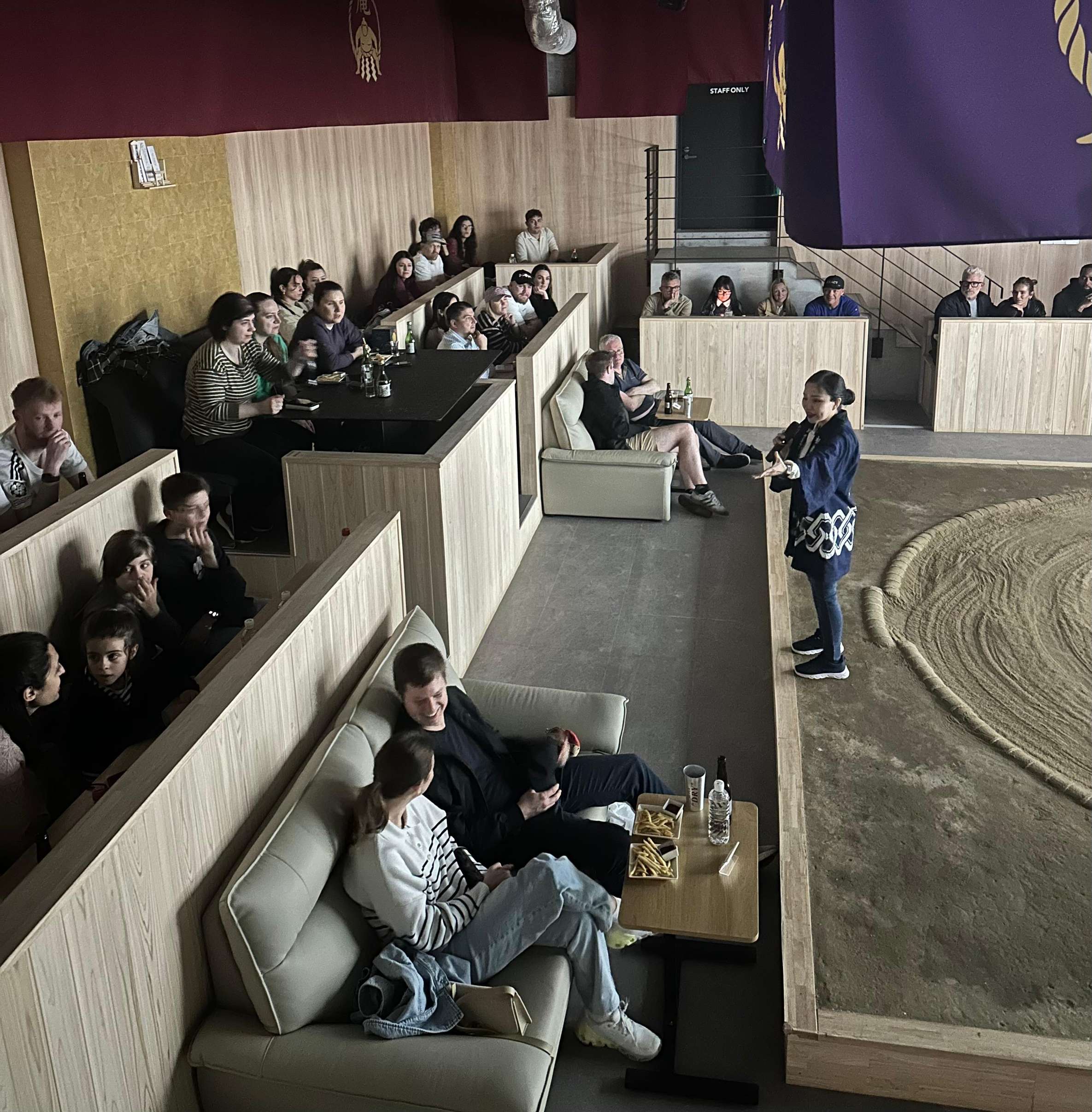
Both Kyoto shows on this page run daily sessions rather than on a tournament calendar, with only occasional irregular holidays. That regularity is what makes a same-day plan realistic.
Size is what limits it: the venues are small and intimate, and travelers who took similar shows report sell-outs weeks in advance. One operator warns that spots are limited and to reserve as soon as possible.
So the practical order is this: pick your date, check whether a seat is free, and book before you build the rest of the day around sumo. Same-day booking confirms instantly when a seat exists, but evening shows often fill days in advance.
April: 5 out of 5 for how busy it gets.
Tap a month to read it.
The busy months shape that chance. In the quiet stretch of February and December a free seat is a fair bet. In April and October, both more than one and a half times an ordinary month, seats go early, so check the morning of your date and keep the other venue as your backup.
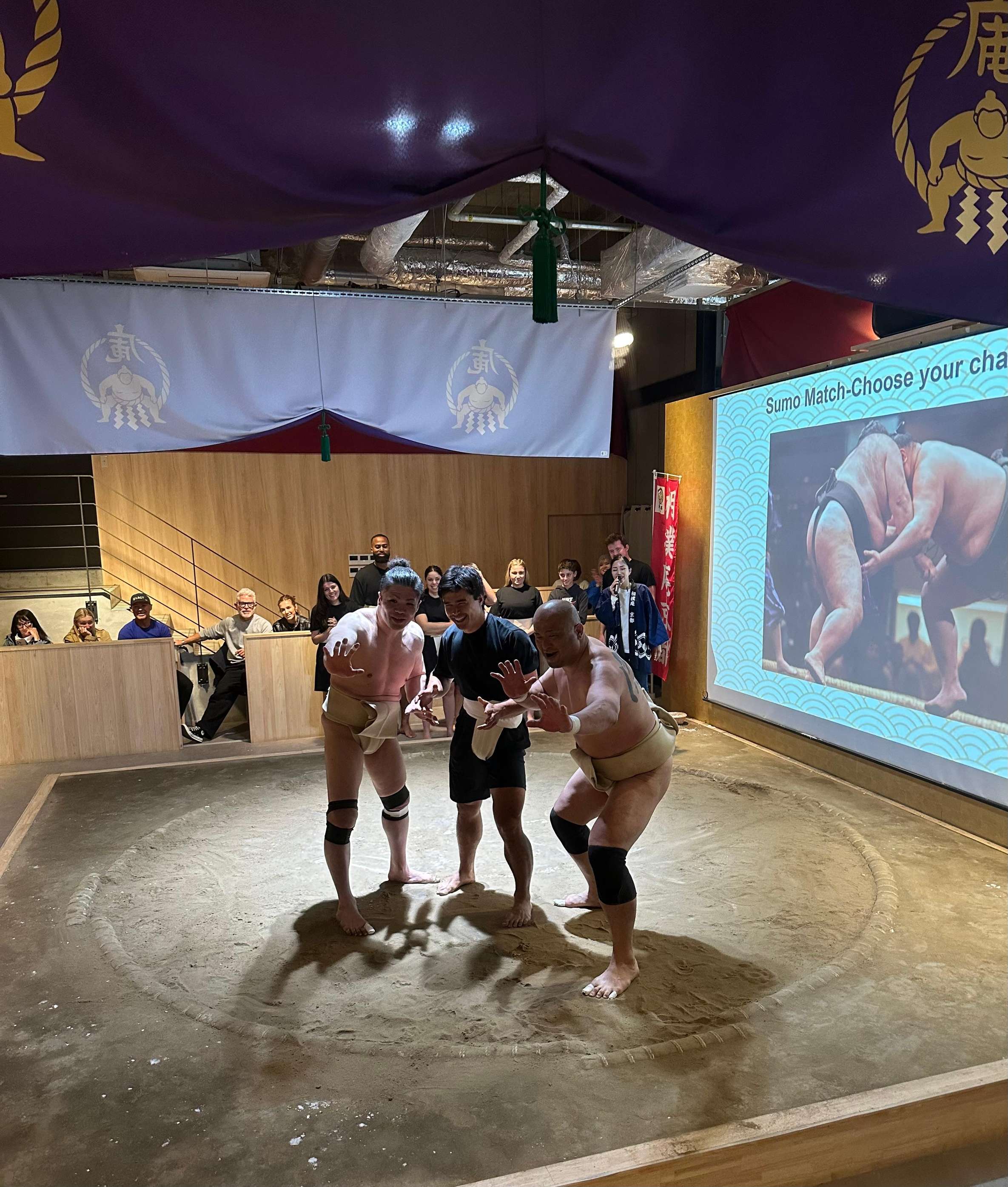
A full day is not the end of it. The Kyoto: Participative Sumo Experience, Traditional Meal, Pic runs a 9:30 pm Late Night Show, the latest sumo slot this page sells, so a day that ran away from you can still end in the ring.
The gap is worth knowing before you book: at the 9:30 pm sitting you get a Japanese à la carte menu only, with the full chankonabe set dinner left off.
Earlier sittings at noon and 6 pm carry the complete meal, and the 3 pm session gets light snacks. Times can vary by date, so the day's schedule is the thing to check.
The first show of the day runs noon to 2 pm with the full chankonabe meal, and Sumoan Kyoto also starts a lunchtime show at noon.
A second show runs 3:30 pm to 5:30 pm at the Shinkyogoku venue, while Sumoan Kyoto's 3 pm show serves a lighter Kyoto-style afternoon tea.
The main evening show runs 7 pm to 9 pm, and Sumoan Kyoto's 6 pm show includes the full chankonabe set meal; travelers often call it a fu…
A late show without dinner starts at 9:30 pm, and a limited 10 pm to 11 pm late-night show runs from March 1 to April 30, 2026.
The times decide which sitting fits your evening. A free late evening points at the 9:30 pm show with à la carte food. Anything from lunchtime onward, and the full-meal sittings at the participative venue or the 7 pm hot pot show give you the whole experience.
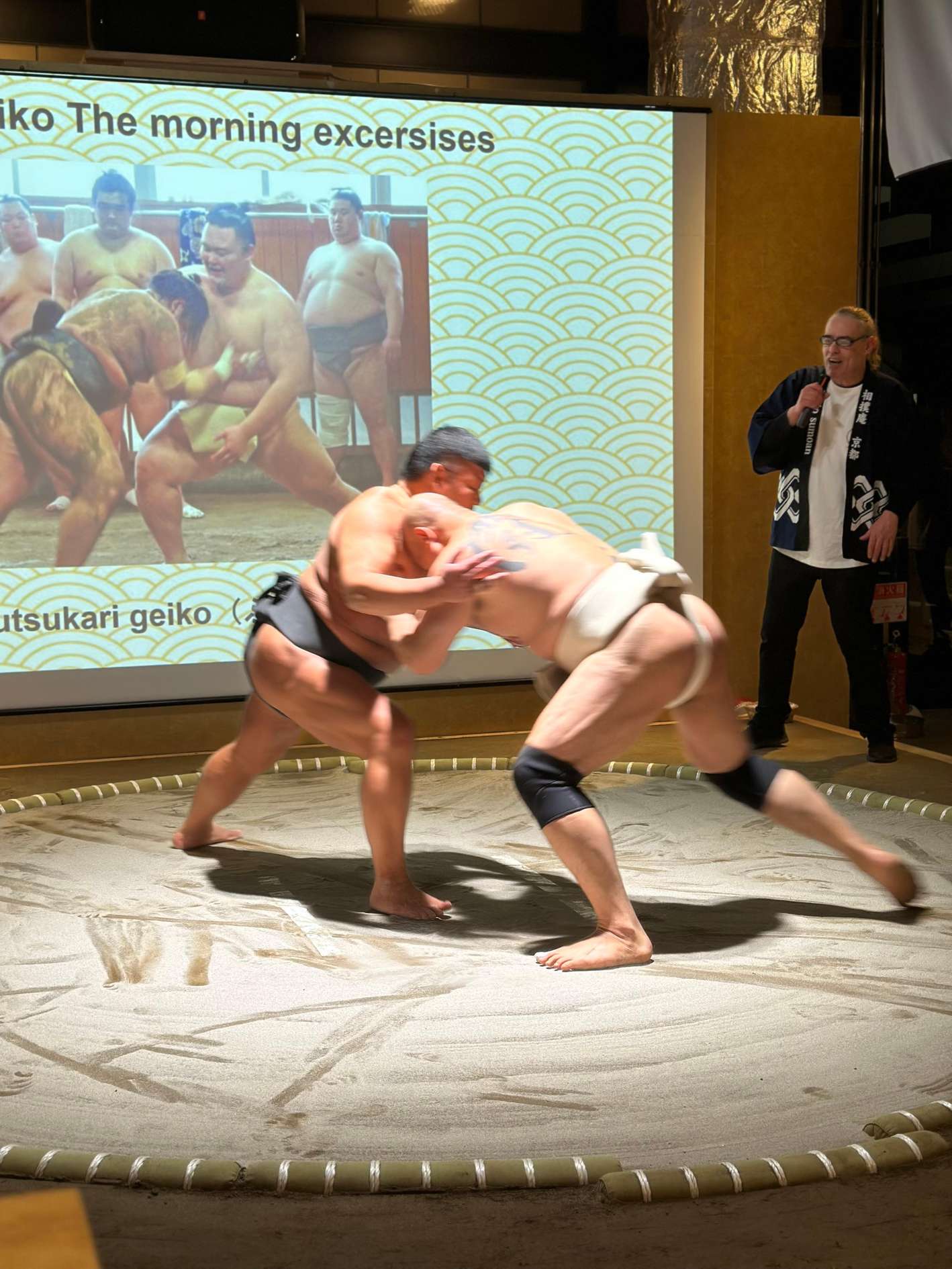
Your core question, am I getting what I searched for, has a clear answer. These are entertainment shows: live bouts between retired professional wrestlers, an English-speaking MC, comedy, demonstrations of the warm-up exercises and techniques, and the chance for a few volunteers to challenge a wrestler.
Both venues state it openly. This is not a formal tournament and not a training session, and the performers are entertainers, which changes the whole atmosphere from the serious silence of real competition.
Two wrong assumptions are worth killing early, and one honest limit is worth stating.
It is light-hearted entertainment performed by retired professionals
The bouts are a best-of-three match plus a ring challenge, woven around dance, demonstrations and commentary
The limit: the hot pot show runs two hours, and the pure wrestling is one best-of-three match. Travelers who wanted more bouts noticed it. Come for the whole evening, food and spectacle together, and the wrestling lands as the peak rather than the entire bill.
What stays with people is the distance. Former rikishi grapple about 10 feet from the audience, close enough to hear the sand scatter on the dohyo and the wrestlers breathing.
From seats that near you can see how a wrestler keeps his balance and works his feet at the ring's edge, and techniques such as matawari, the split, read completely differently at that range.
The evening has its rituals. Before wrestling begins comes Shiomaki, the salt-throwing purification: salt is thrown to purify the ring and ward off injury, a custom sumo keeps from Shinto practice. Then the bouts, then, if you are drawn, the ring.
At the hot pot show, challengers are limited to a few guests per sitting and chosen by lottery when too many volunteer. At the participative experience, a step into the ring is guaranteed for anyone interested, which is a real difference between the two venues.
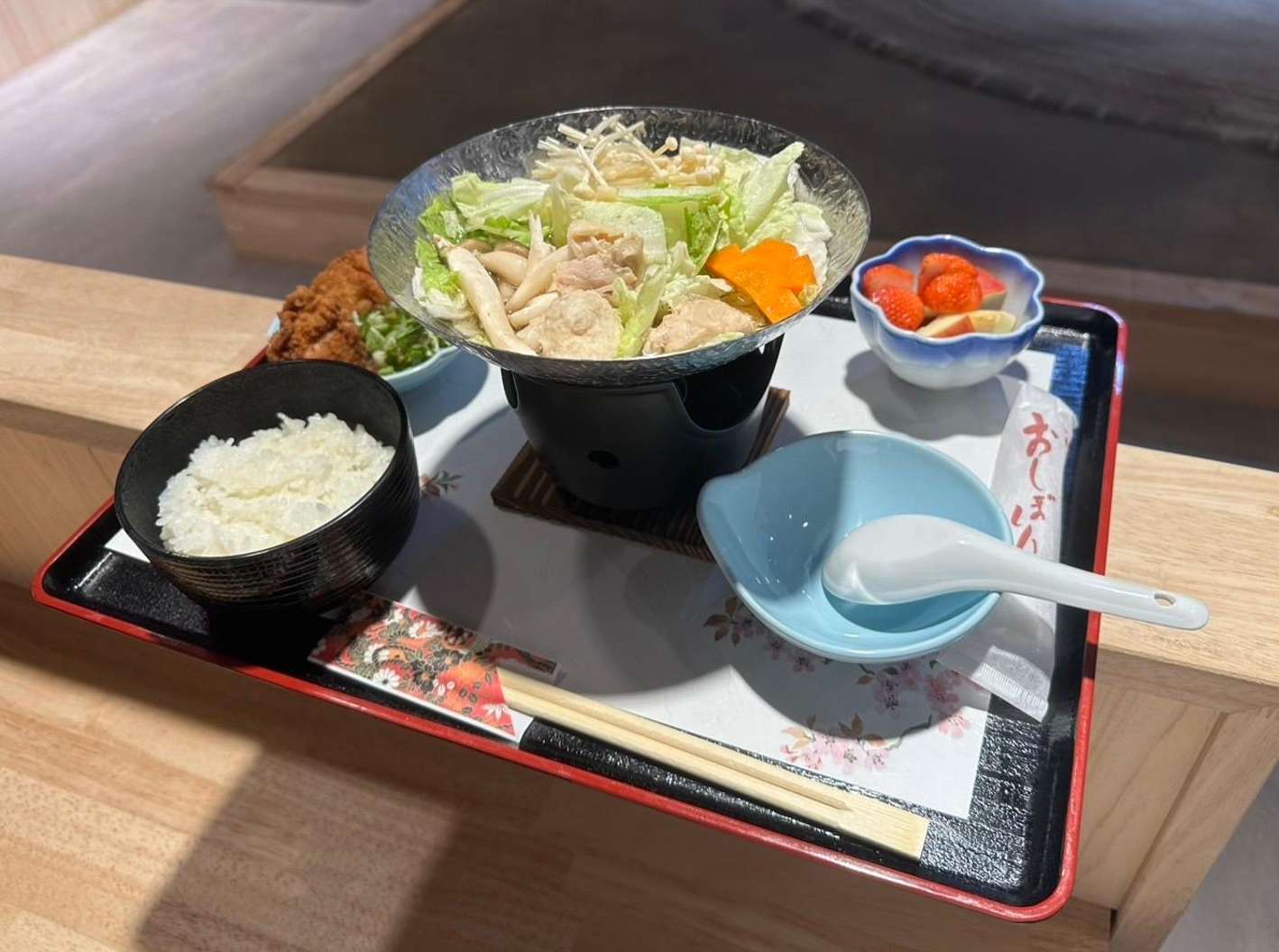
All of it runs alongside chanko nabe, the one-pot chicken stew wrestlers eat to build their bodies, simmering with napa cabbage, carrots and fried tofu. You eat through the show, not after it.
Kyoto has no grand tournament and no active professional stables, so a show is the way to see sumo here on any day of the year. That also means a caution: anything advertising a stable visit in downtown Kyoto is almost certainly a retired exhibition space or promotional pop-up, not real wrestlers at morning practice.
The rest of the local knowledge is smaller but saves evenings.
In cherry blossom season, autumn foliage or Golden Week, three months
Shoes are strictly forbidden on the ring surface, so bare feet need socks if you volunteer
You may not be allowed to take part after drinking
It is not served at the end, so pace yourself
Live-streaming and posting the entire show online are not
At the hot pot show, spots are limited and drawn by lottery; the participative experience guarantees the ring instead
Arrive 20 minutes before the start and dietary requests, vegetarian, vegan or gluten-free, need two days of notice. With those in place, nothing on the night should surprise you.
The journey is the easy part. The hot pot show venue, Kyoto Sumo Club on the 5th floor of the Passaggio building in the Shinkyogoku arcade, sits a few minutes' walk from downtown Gion and Kawaramachi. If you are already around Shijo, no train or taxi is needed at all.
From Kyoto Station it is a straight walk of about 0.3 km. From the Gion side, either a 3-minute hop on the Hankyu line from Kyoto-Kawaramachi Station or an 8-minute walk from Gion-Shijo. There is no parking at the venue, so come on foot.
Both Kyoto venues are indoors: the hot pot show in a covered arcade, the participative experience in a basement store reached by stairs or elevator. Kyoto's rainy season cannot sink the plan, which matters when the day is already tight.
The packing decision is nearly nonexistent. There is no dress code at either Kyoto venue: comfortable clothes you can move in are enough, and they matter most if you plan to step into the ring for the challenge.
The checklist settles it in one glance. In winter, a warm coat for the walk, since nights drop below freezing. From spring through the wettest stretch of the year, a compact umbrella earns its place. High summer wants light, breathable clothes for the indoor show, and the autumn months are the kindest of the year.
The venue provides the authentic sumo mawashi belt for participants, so you bring no gear of your own. One optional touch: a colourful top makes a striking photo if you end up in the ring wearing the belt, and photos are welcome.
The safety net comes from the tours' own terms. Cancel at least 24 hours ahead and you get a full refund. Cancel within 24 hours of the start time and there is no refund, though you may be able to move your booking to another time slot or day if one has space.
Late arrival is the thing that actually wrecks evenings. A sumo show has to follow its time schedule, so it cannot be extended to absorb your delay. You may join partway through, but you will miss sections of the programme, and at some venues the front desk may not accept late entry at all.
| If this happens | What happens then |
|---|---|
| Cancel 24 hours or more ahead | Full refund |
| Cancel within 24 hours of the start | No refund, though a move to another slot or day may be possible if one has space |
| Arrive late | The show cannot be extended; you may join partway through but will miss sections, and late entry may be refused |
Twenty minutes early is the whole answer. Build it into the walk from Kyoto Station or Gion and the schedule holds.
The rest of the day fills itself in, because the Shinkyogoku venue sits minutes from the good parts of central Kyoto. The operator itself suggests spending the day exploring the charming streets and finishing with the sumo show.
Gion, the historic entertainment district, is ideal before the performance: preserved townhouses, teahouses and the Shirakawa Canal by lantern light, with the Shinbashi conservation quarter open around the clock.
Kōdaiji Temple, serene with gardens and seasonal light festivals, opens daily until 5 pm, and Tōfuku-ji Temple, established in 1236 and known for fall foliage, until 4 pm
Everything sits close. Nishiki Tenmangū is a 3-minute walk from the venue, Honnō-ji 6 minutes, the Kyoto International Manga Museum 14. For anything further, Nijō Castle and the Kyoto Imperial Palace sit about 12 minutes by car. A slow afternoon in Gion, then an evening show, is the shape most visits take.
If the search came from Tokyo, the answer is yes, with a cost attached. The fastest Shinkansen, the Nozomi, covers Tokyo Station to Kyoto Station in 2 h 07 min, so the round trip runs roughly 4.5 hours of rail time plus the walks on each end.
The day then has to be built backwards from the train. Day-trippers report a 5 pm hot pot show start, with the sumo beginning about an hour in and running about 40 minutes; the venue's regular evening sitting runs 7 pm to 9 pm, and times can vary by date, so the day's calendar decides.
The last Nozomi leaves Kyoto at 9:24 pm and reaches Tokyo around 11:30 pm, so a same-day return is possible but leaves no slack for a delayed start or a lingering second bowl of chanko.
The honest judgement: it can be done, and travelers do it, but the day belongs to the railway. If Kyoto is more than a checkbox on this trip, staying the night turns the show from a dash into an evening, and leaves the late 9:30 pm slot open as well.
What an amazing experience. The show was entertaining and very amusing. I learnt everything I always wanted to know about sumo wrestling, it's history and traditions.
Same-day sumo in Kyoto is realistic: both shows run daily sessions and instant confirmation has worked. Book for your date, check slots early in the day, and arrive 20 minutes before the start. Free after 9:30 pm, take the participative late show. Otherwise the hot pot and geisha show is the fuller night.
Wrestling the wrestler yourself, guaranteed? The participative experience. Just the show, with dinner included? The hot pot venue.
Quick answers on Kyoto sumo show times, food and booking, so you can pick a date, check a sitting and reserve with confidence.
Yes. Kyoto has two sumo venues you can book. The Kyoto Sumo Club pairs comedic bouts with a geisha dance and all-you-can-eat chicken hot pot, and the participative experience run by former top-division wrestlers puts you in the ring yourself. Both are on sale here, and neither asks you to leave Kyoto.
The two Kyoto venues run daily sessions on their own schedules, with only occasional irregular holidays and no fixed weekly day off. Times can vary by date, so choose your date and check the day's calendar before you book.
The entertainment show holds three sittings: noon to 2 pm, 3:30 to 5:30 pm, and 7 to 9 pm. The participative experience runs a noon show and a 6 pm show with the full chankonabe meal, a 3 pm afternoon tea, and a 9:30 pm Late Night Show.
The participative experience runs a 9:30 pm Late Night Show lasting 1.5 hours. It skips the set dinner, so you get a Japanese à la carte menu instead. The entertainment show's last sitting starts at 7 pm and runs to 9 pm, with the meal served throughout.
Both venues ask you to book in advance, and a few days ahead is wise because evening sittings fill up. When you book close to your date, confirmation comes instantly with a mobile voucher. Arrive at least 20 minutes before your show starts, and cancel up to 24 hours ahead for a full refund.
Both Kyoto shows are entertainment performed by retired professional wrestlers, and neither is a formal tournament or training session. The bouts are genuine demonstrations of skill, with English commentary on sumo history, rules and rituals. For tournament drama, a Grand Tournament in another city is a different trip.
The entertainment show is built for adults and children, with an age band covering 11 and younger alongside adults, though babies under 1 year old cannot attend. The participative experience describes itself as suitable for all ages, and children from about age five can take part in the ring challenge.
The entertainment show includes all-you-can-eat and all-you-can-drink built around chanko-nabe hot pot. The participative experience serves an authentic set sumo meal, with light snacks at its 3 pm sitting; the 9:30 pm show offers a Japanese à la carte menu with no dinner. Vegetarian and vegan meals need two days' notice.
An Osaka show is on sale here: a live sumo experience with retired wrestlers, training demonstrations and an audience challenge, running 1 to 1.5 hours. Kyoto stays the easier pick when you are staying there, since the subway ride from Kyoto Station to the participative venue takes seven minutes.
The entertainment show runs two hours. The wrestling is one best-of-three match between retired professionals plus an optional ring challenge; the rest goes to the geisha dance, morning exercise demonstrations and English commentary. The participative experience runs 1.5 hours, with the meal served alongside the show.

Decided on a sumo show? Sort out the kinds of performance and where they run before you pick a city.

If a Tokyo evening deserves more than bouts alone, start with the shows where the meal and seating carry the night.

Tokyo's live shows in Ginza and Shinjuku can fill a spare evening when Kyoto's dates don't line up.

Osaka venues run shows daily, so a same-day evening there is worth checking if Kyoto is booked out.
For the full Kyoto picture, from venues to what each show includes, this is the guide to read before you book.

Sapporo's show pairs sumo with Japanese food, with sittings at 1:30, 5:00 and 7:30 pm most days.

If a tournament date could anchor your trip, this page maps the six host cities and their viewing options.

Weigh a guided arena day, a practice visit and a show in Tokyo side by side, then pick what fits your hours.

Which shows run in Osaka tonight, and what each one pairs with the bouts, is answered here.

The full Kyoto range of sumo viewing, show venues included, sits on this page for a slower look.

Fukuoka's draw is morning practice at a real stable, possible during the November tournament season.

The Sapporo sumo page sets out the local show and how to confirm it runs on your dates.

Watching, joining in or dressing up: every kind of sumo activity is laid side by side here.

A show with Mt Fuji behind the ring runs at Lake Yamanaka; this page covers what a visit involves.
If trying sumo beats watching it, the class options in Tokyo and Osaka are compared here.

Real morning training at a Tokyo stable, booked with a guide, plus the etiquette that keeps it welcome.

The Shinjuku show builds a dress-up session into its evening if trying on sumo attire is the goal.

A Tokyo masterclass on sumo's 1500-year history, served with chanko nabe lunch, suits readers who want depth.
Both SumoLand venues, Osaka and Tokyo, are identified here so you reach the one you mean.

The Sumo Land Osaka page sorts out the venue's location and what to expect once you arrive.

SumoLand's Ryogoku venue is described here, from its opening pattern to the show held inside.

The full tournament calendar, host cities and ticket windows for the year sit on this page.

Tokyo hosts three tournaments a year at Ryogoku Kokugikan; dates and ticket routes are laid out here.

March is Osaka's tournament month, with the smallest venue and the hardest tickets; plan it here.

Fukuoka's November tournament runs 15 days at Fukuoka Kokusai Center; the venue and schedule are on this page.

Nagoya's July tournament sells out weeks ahead; the ticket route is spelled out on this page.
The Minoh Expo tournament page sets out event details for grand sumo near Osaka.

If a guided tournament day appeals, the city-specific guided viewing options are gathered here.

You get a straight answer on how well the Nagoya tournament tour options match that plan.
Ticketed tournament viewing in Osaka is weighed against the shows on sale, so you pick with facts.

Tokyo tournament tours and Ryogoku arena visits are weighed here against a self-planned day.

Morning training visits across Japan, and the silence they demand of guests, are covered here.

Tokyo stables open to visitors only part of the year; see which guided visits run and when.

Real morning training in Osaka mostly appears around the July tournament; the page says what runs otherwise.

No active stables sit in Kyoto, and this page explains what that means for watching practice there.

Venue details and show options for a sumo hall outing in Tokyo are gathered on one page.

The Ryogoku page covers the venue beside the Kokugikan and the live sumo experience held there.

Sumo at Tokyo Tower comes with a set meal, a lion dance and Oiran dancers; the details are here.

A chanko nabe lunch beside a live show fills a midday slot in Tokyo; match an option to it here.
Sumo-themed dining in Osaka, from restaurants to shows served at your seat, is sorted on this page.

Every way to watch or try sumo in Japan is compared, so you can settle which kind is worth your time.

Tokyo sumo's rules, schedule and match length are answered plainly, so you can plan your day.

The Tokyo sumo museum's hours, and museum options in other cities, are set out for visitors here.

Ryogoku, Tokyo's sumo district, is mapped here with the places that make a visit worth the walk.
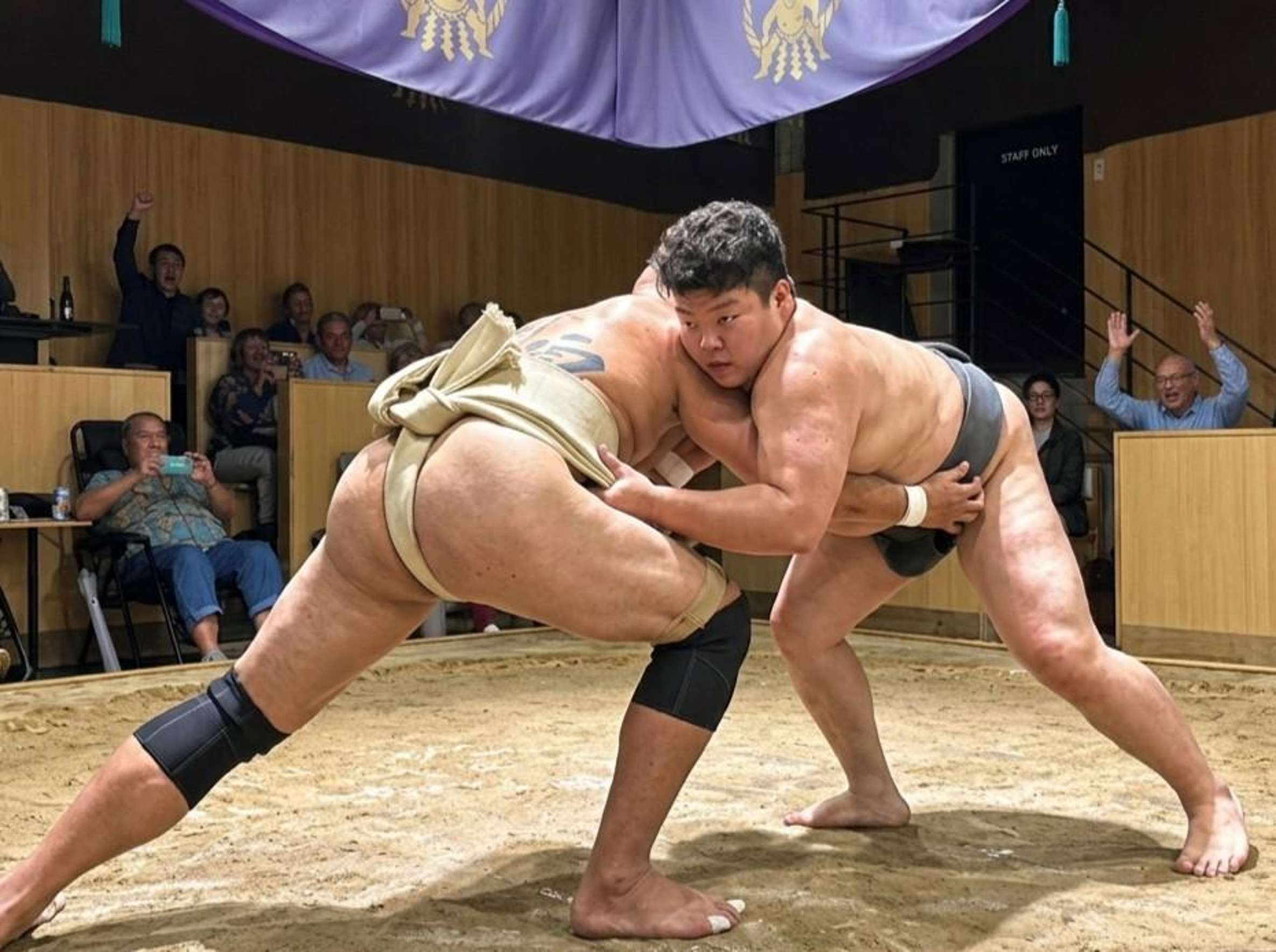
Pick your date for the participative show with chankonabe, step into the ring, and cancel up to 24 hours ahead for a full refund.