- 1
Six tournament windows a year, two weeks each, in odd months: Tokyo in January, May and September, Osaka in March, Nagoya in July, Fukuoka in November.
- 2
General sales open at 10 am Japan time on a set Saturday, with recent tournaments selling out around a month later at the latest; decent seats go within minutes.
- 3
The top division fights from late afternoon, bouts average seven seconds, and the bow-twirling ceremony closes the day.
Grand tournament tour alternatives in traveler reviews
Most reviewers praise the hosts and guides, saying they made the history of sumo clear, funny and easy to follow.
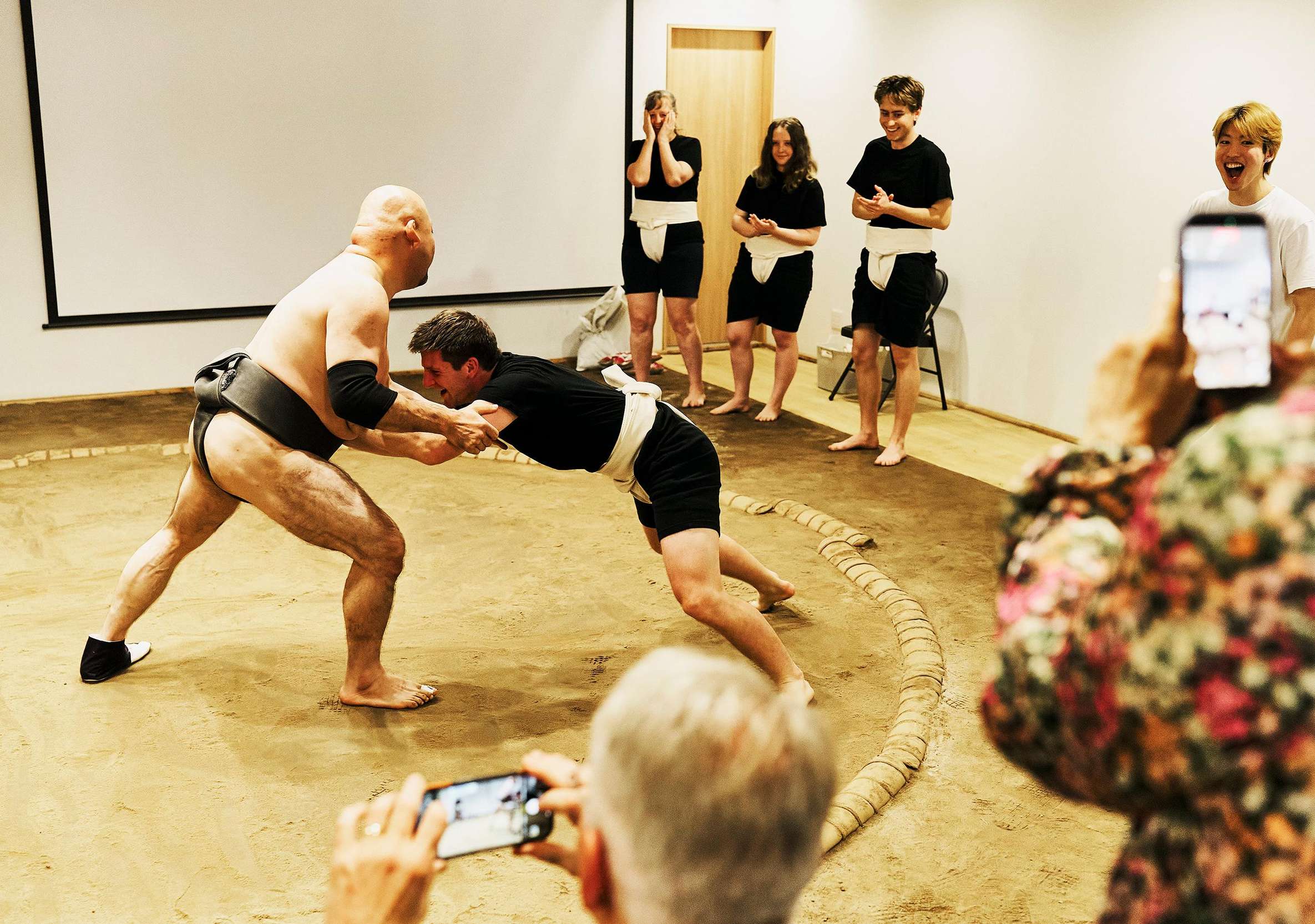
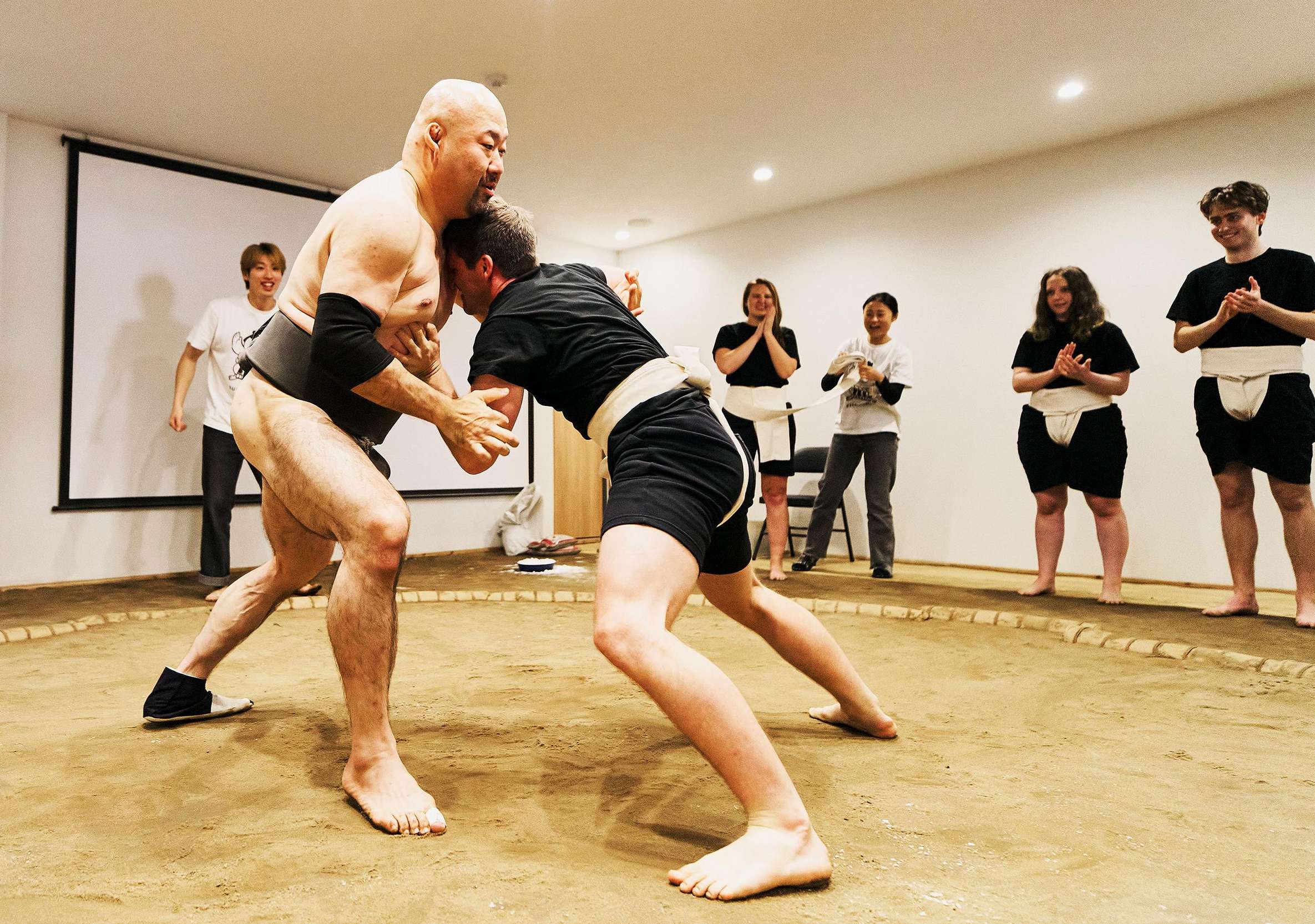
Many reviewers did not expect to wrestle a retired sumo wrestler in the ring and call it the highlight of their trip.
Several families wished they had booked earlier spots in the ring, since the challenge places fill up first.
 ★★★★★
Amazing guide Yuki! We learned sumo history and actually wrestled wrestlers, gear and photos provided. Highly recommend!
A traveler · United States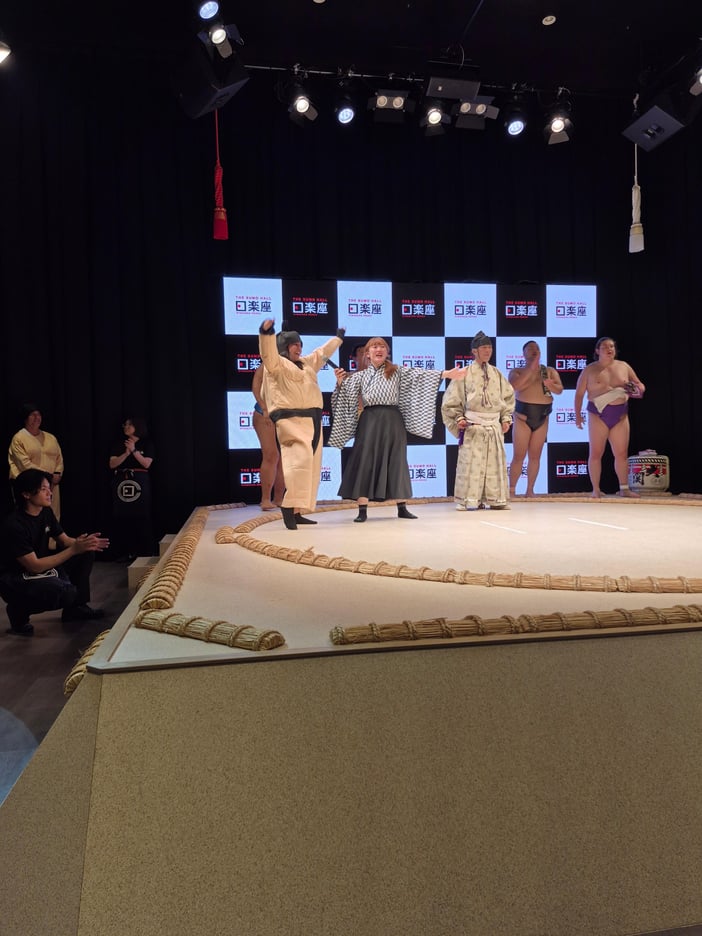 ★★★★★
Our sumo show was fun. I expected a real fight, but the show teaches the rules and is entertaining. Recommend!
Hiromi · Brazil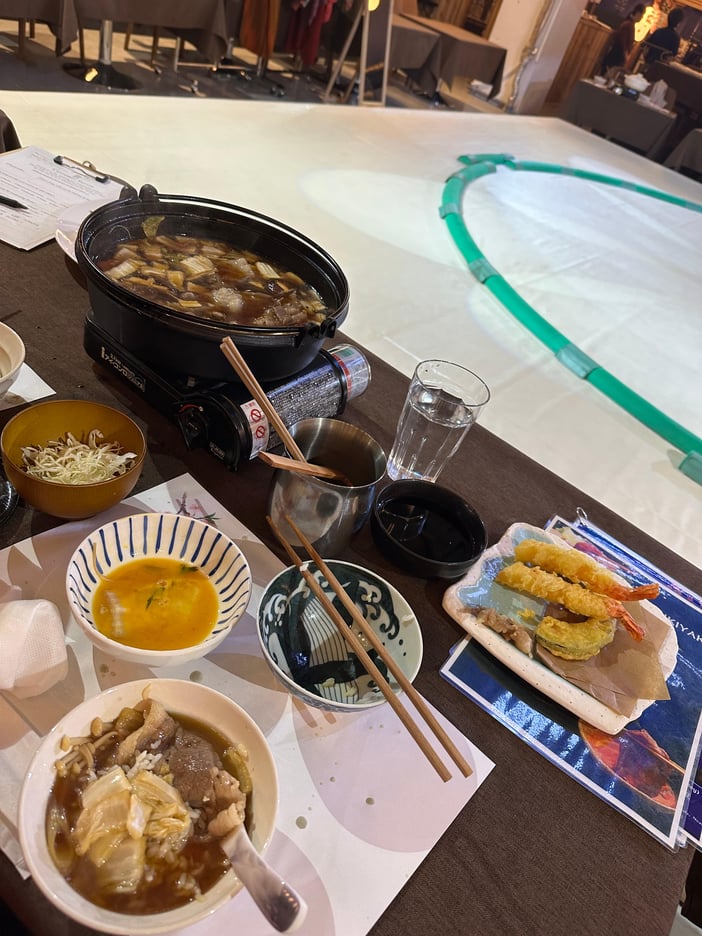 ★★★★★
Loved it all, dinner, videos, and especially the live show. Learned a lot and had fun. A must when visiting Osaka!
Tricia · Guam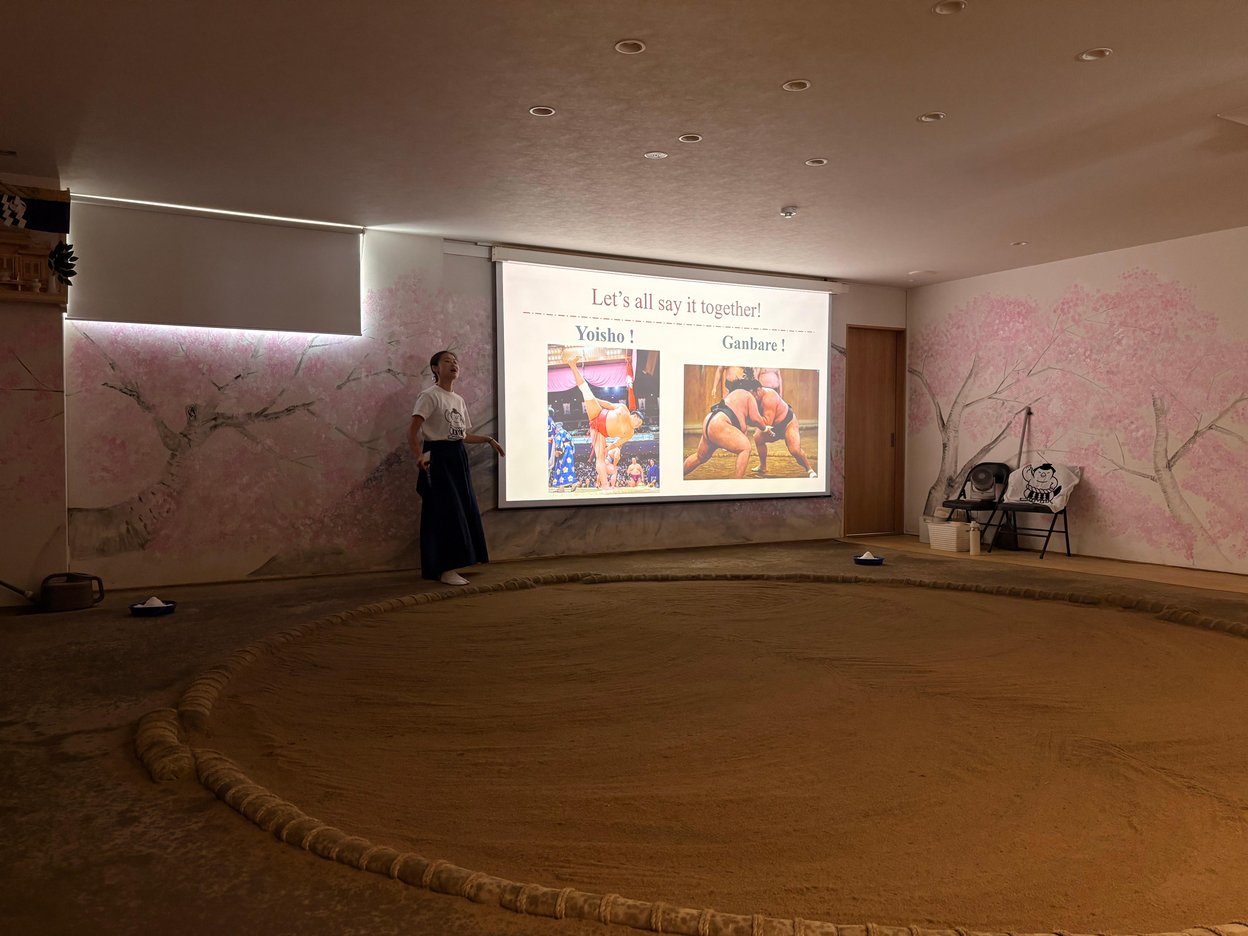 ★★★★★
Entertaining and fun. The explanation of the sport and the wrestlers' lives was really informative.
A traveler · Spain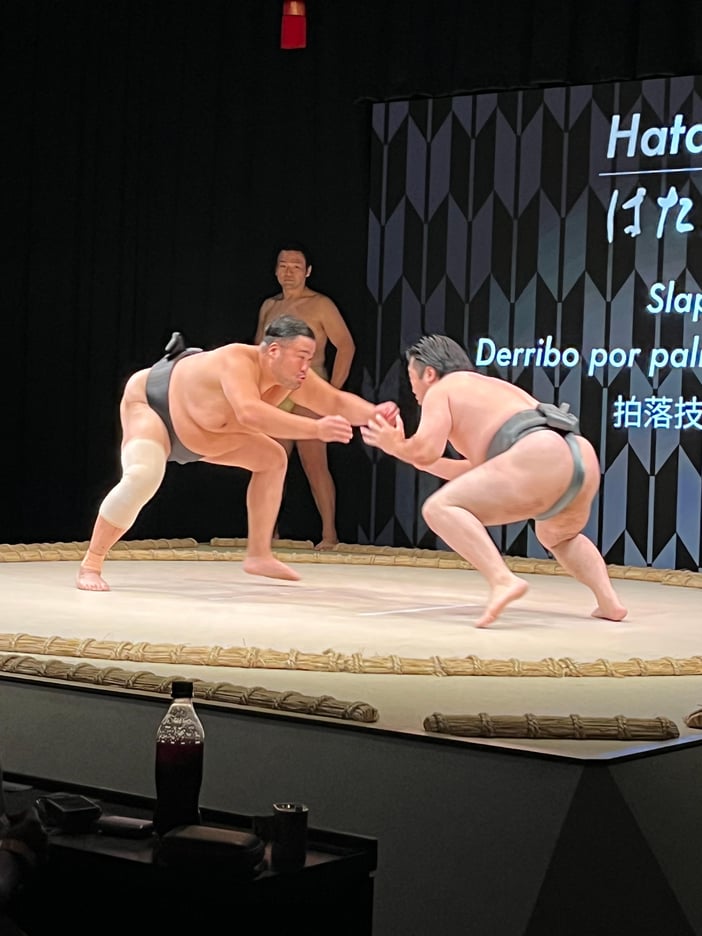 ★★★★★
Great with kids: a show then a sumo lesson, and the best part is when the audience challenges the sumos.
Camille · Belgium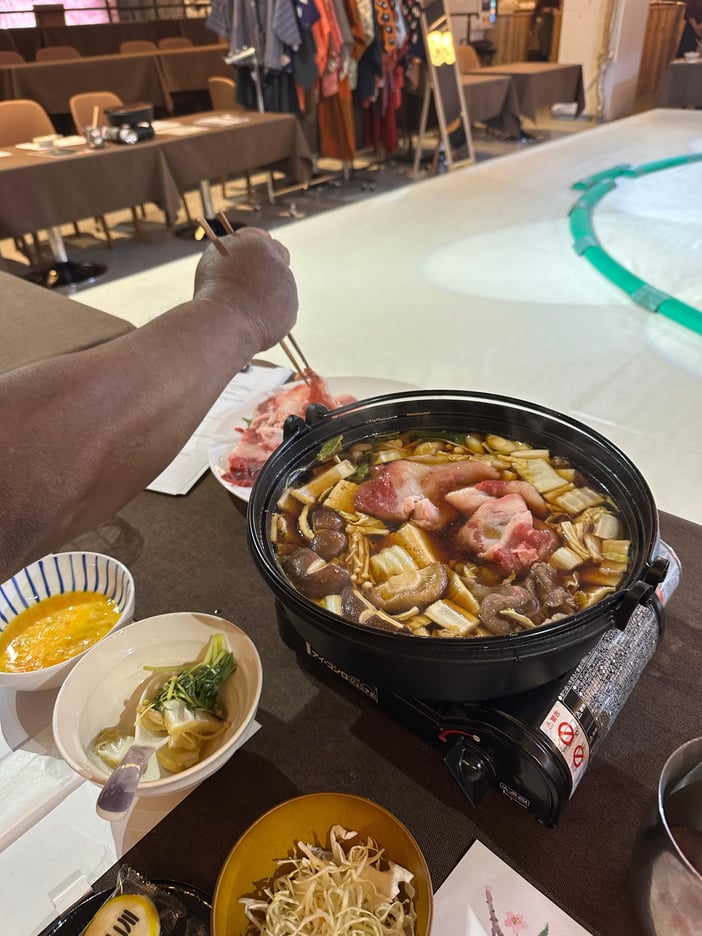 ★★★★★
Such a fun, cute intro to sumo. The funny, adorable wrestlers and helpful staff made it engaging for all ages. Good food too, we'll definitely go again with friends!
Gena · United States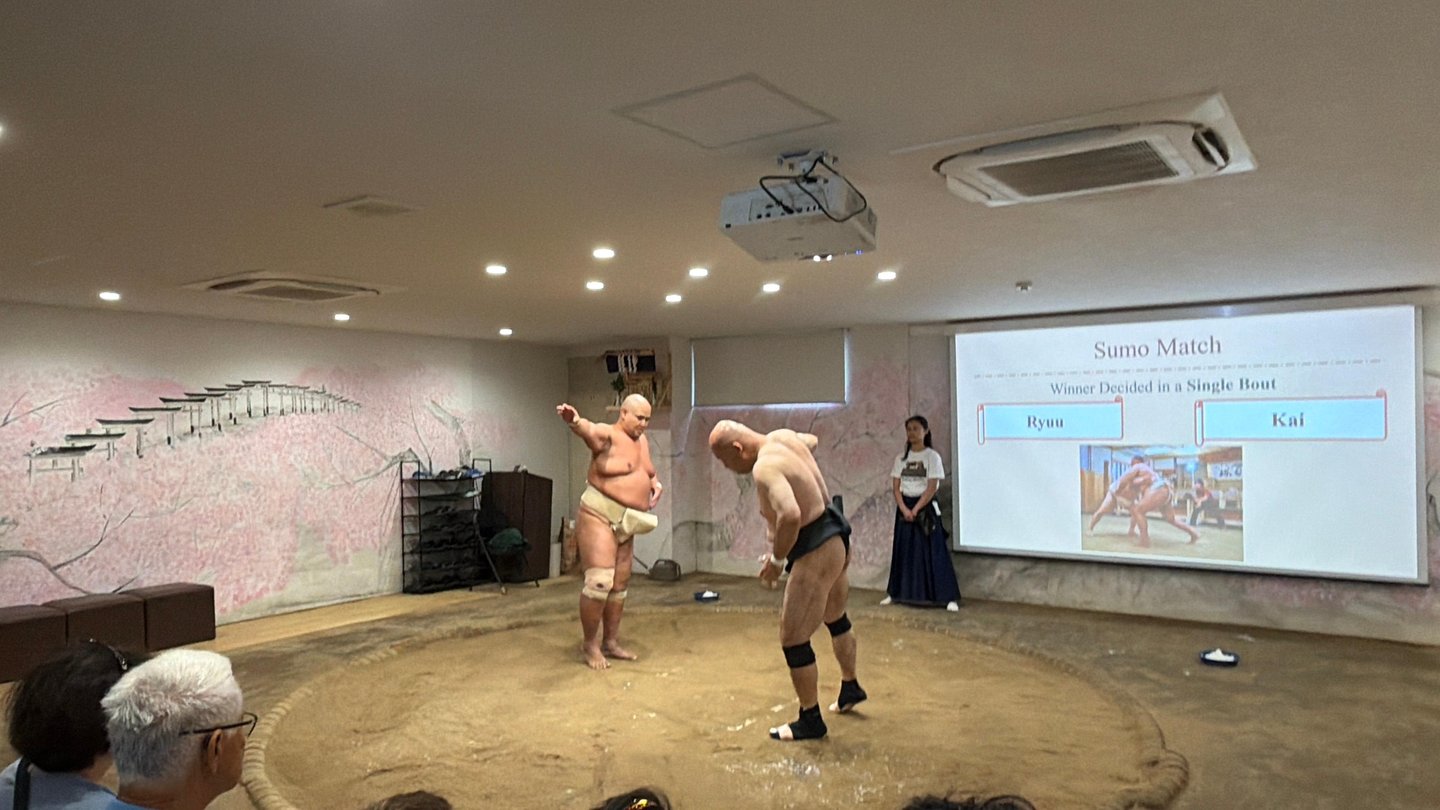 ★★★★★
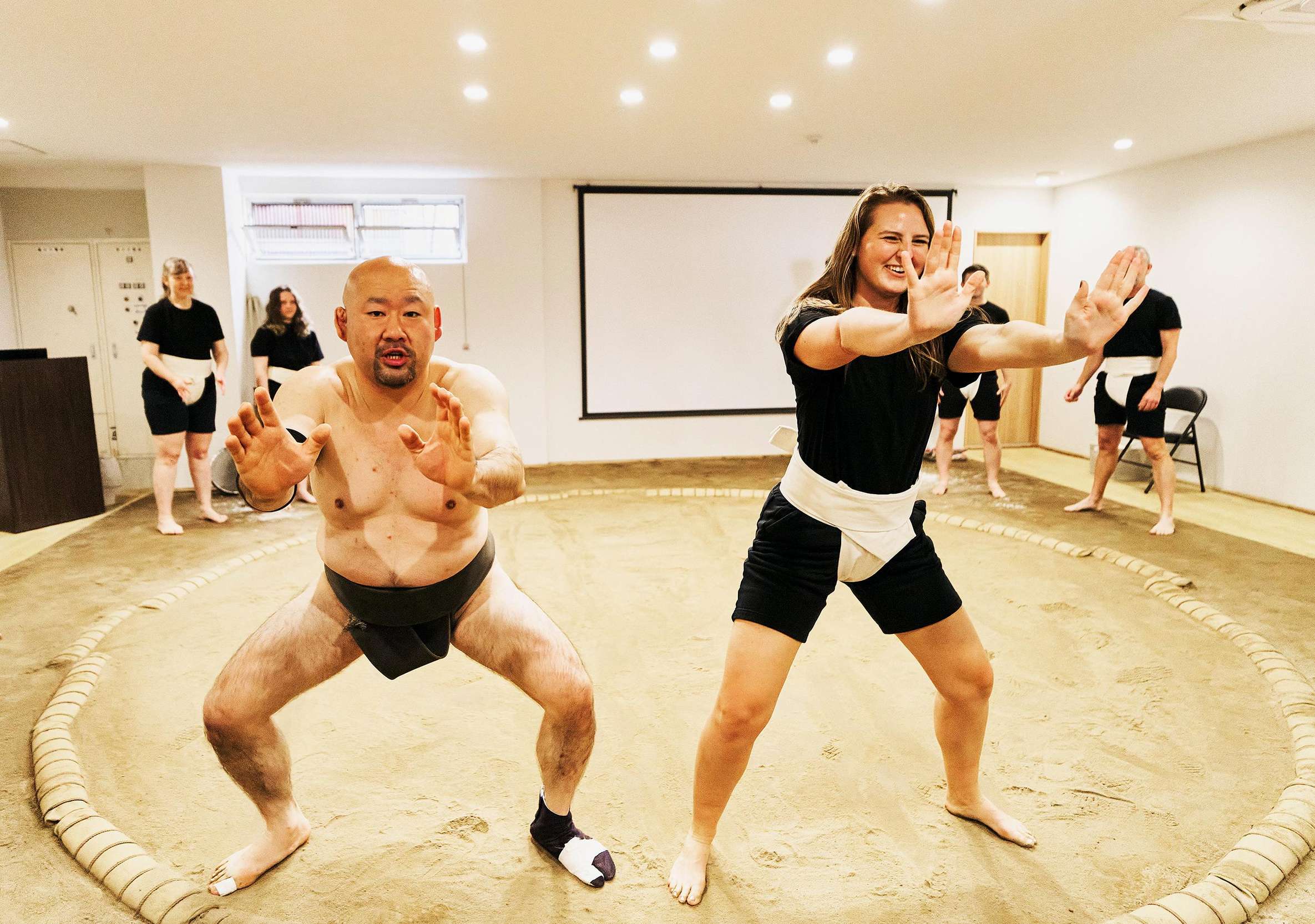
Best time learning sumo techniques and rules! The host was engaging and knowledgeable, fighters Kai and Rui great. Kai spared me in our match. 100% recommend for sumo newbies!
Archie · Japan
What a grand sumo tournament tour is and why it's worth it
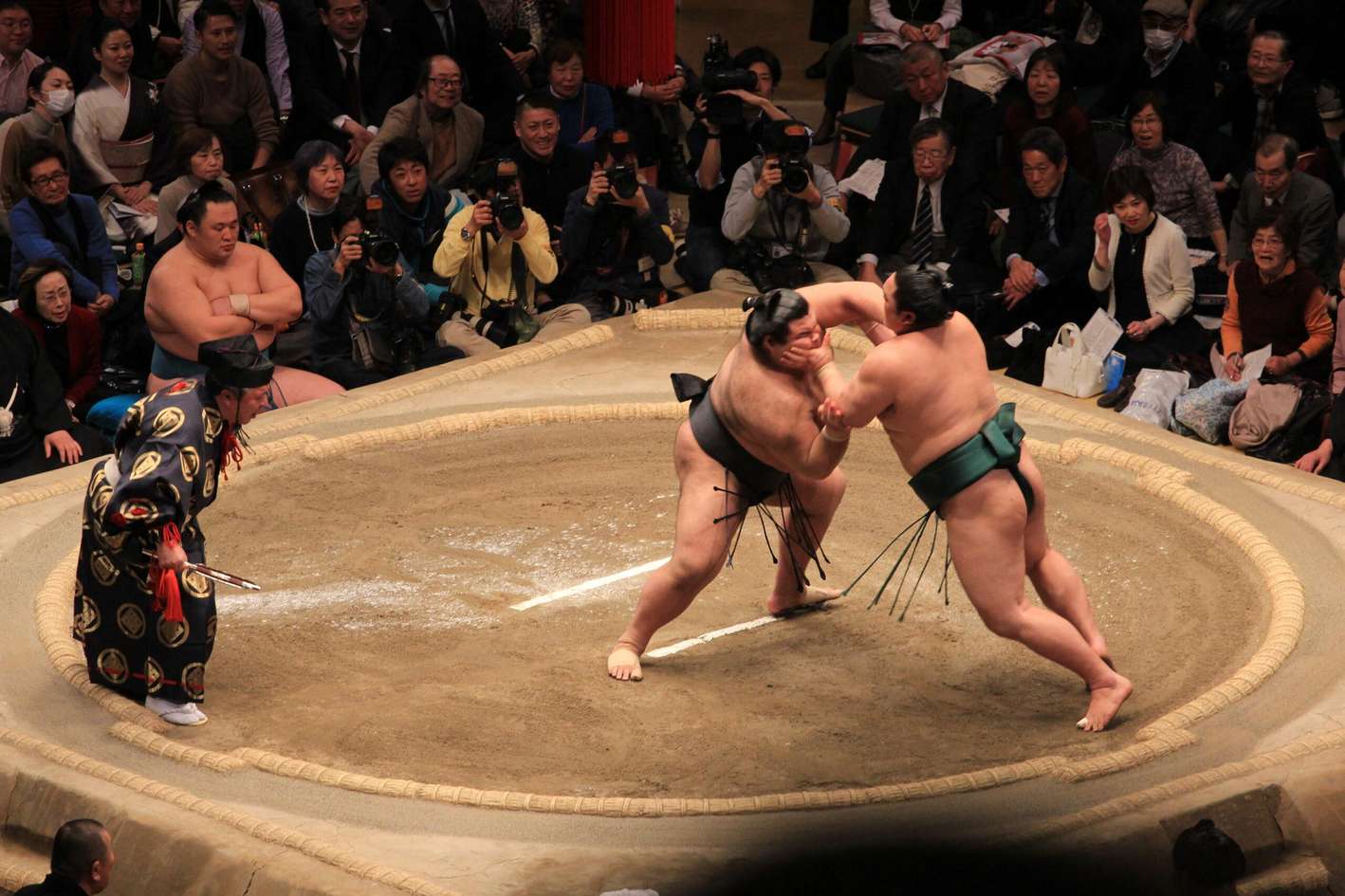
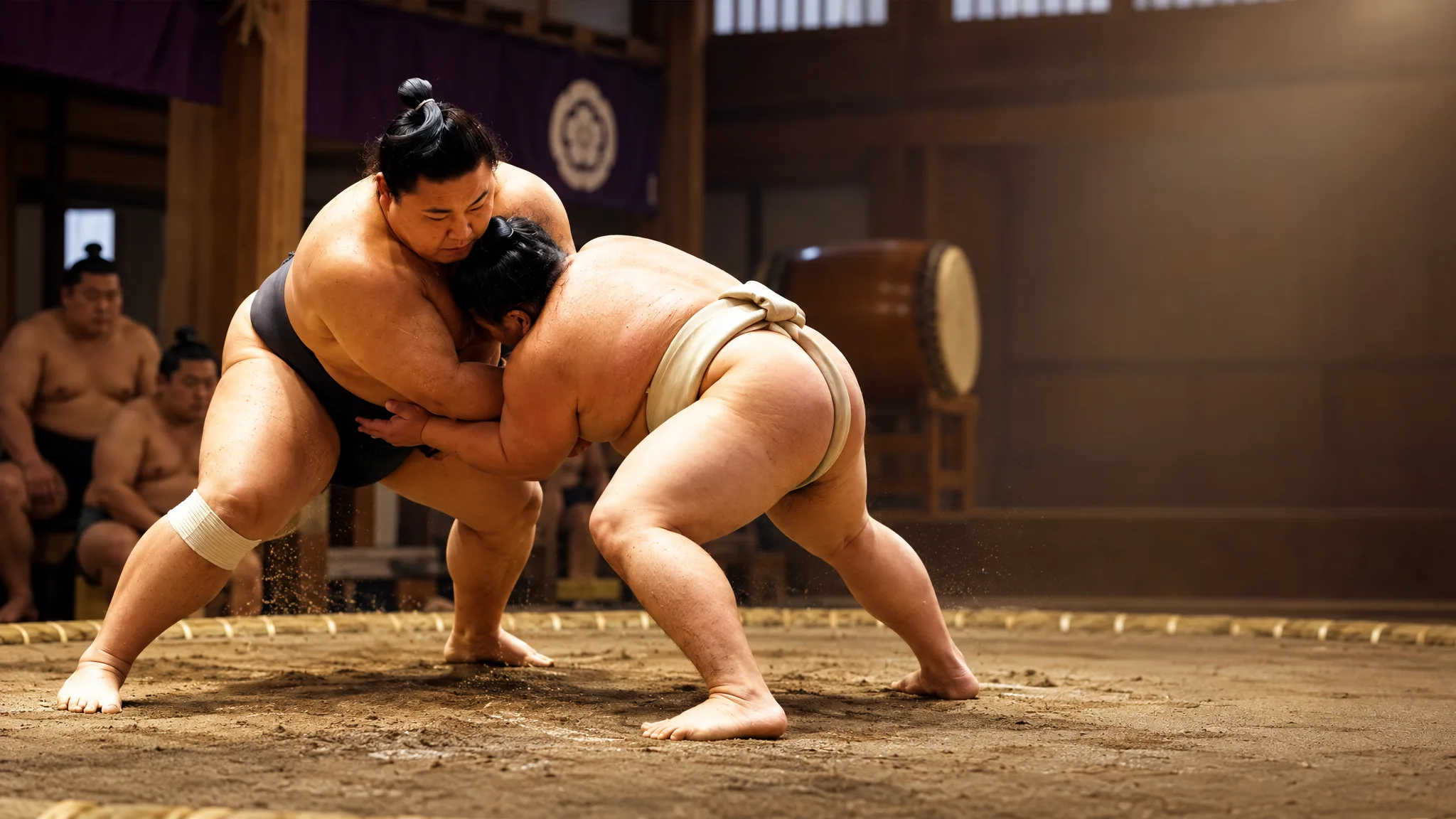
The arena falls strikingly quiet right before the charge. Two heavy men hit the clay with a thud you feel through the floor, the bout is decided in seconds, and the crowd erupts.
At a live tournament the tension builds all afternoon, the crowd yells for its favourites, and after a big upset cushions sail through the air toward the ring.
What surprises first-timers is how completely the day converts people. Even travelers who came along reluctantly, with no interest in sumo at all, call it the highlight of their Japan trip. Bouts that last seconds still land hard when 11,000 people around you hold their breath for each one.
Best time learning sumo techniques and rules! The host was engaging and knowledgeable, fighters Kai and Rui great. Kai spared me in our match. 100% recommend for sumo newbies!
That verdict comes from people who never planned to care. Give the day one slot in a busy itinerary and it usually earns a second one.

Grand tournament sumo or a staged show - the difference before you tour
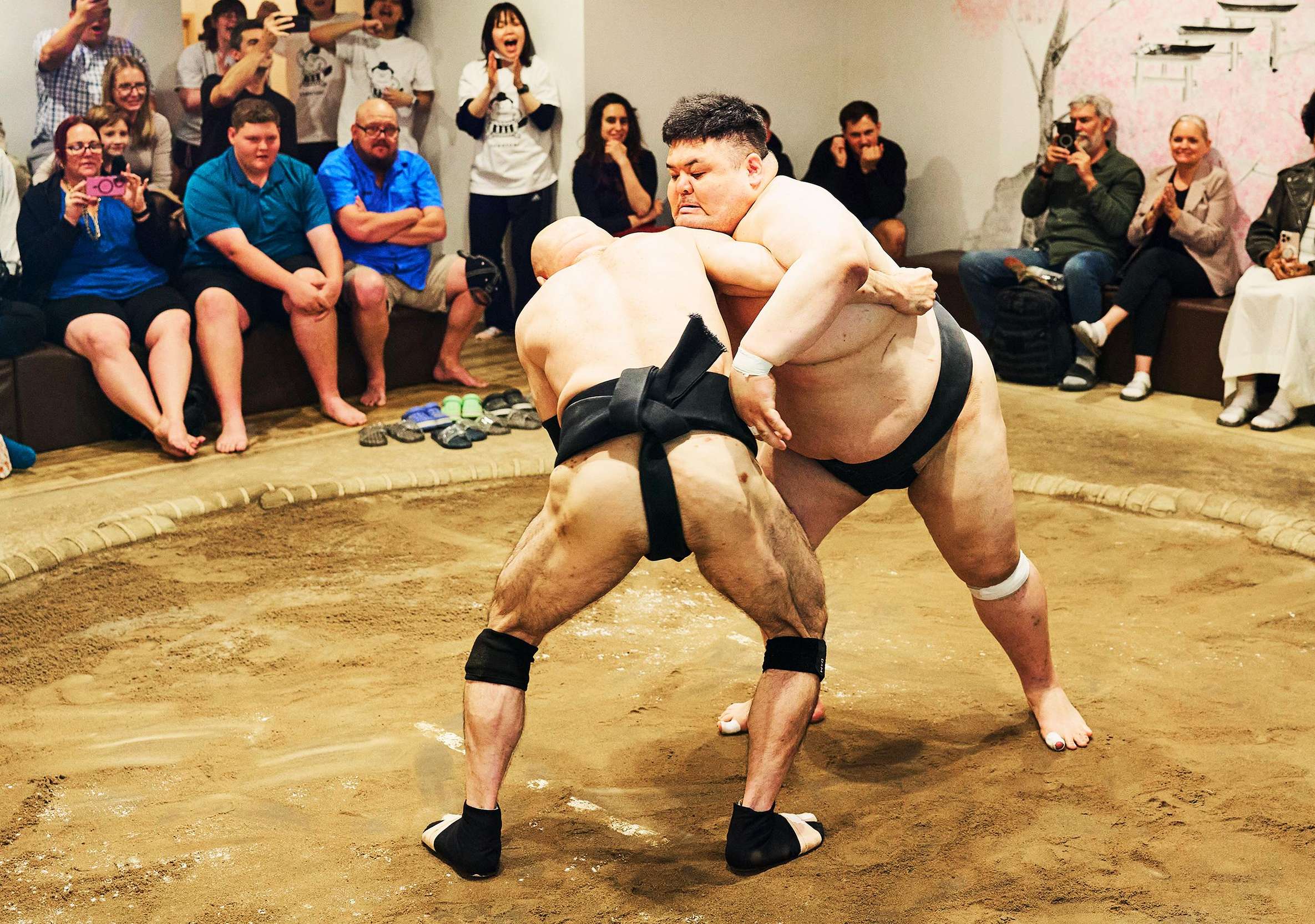
The two experiences share a ring and little else. At a tournament, every result affects a wrestler's career, which is why the arena sits silent before each charge and the crowd roars at the outcome. At a sumo show, the performers are entertainers, often retired wrestlers, and the matches are choreographed performances.
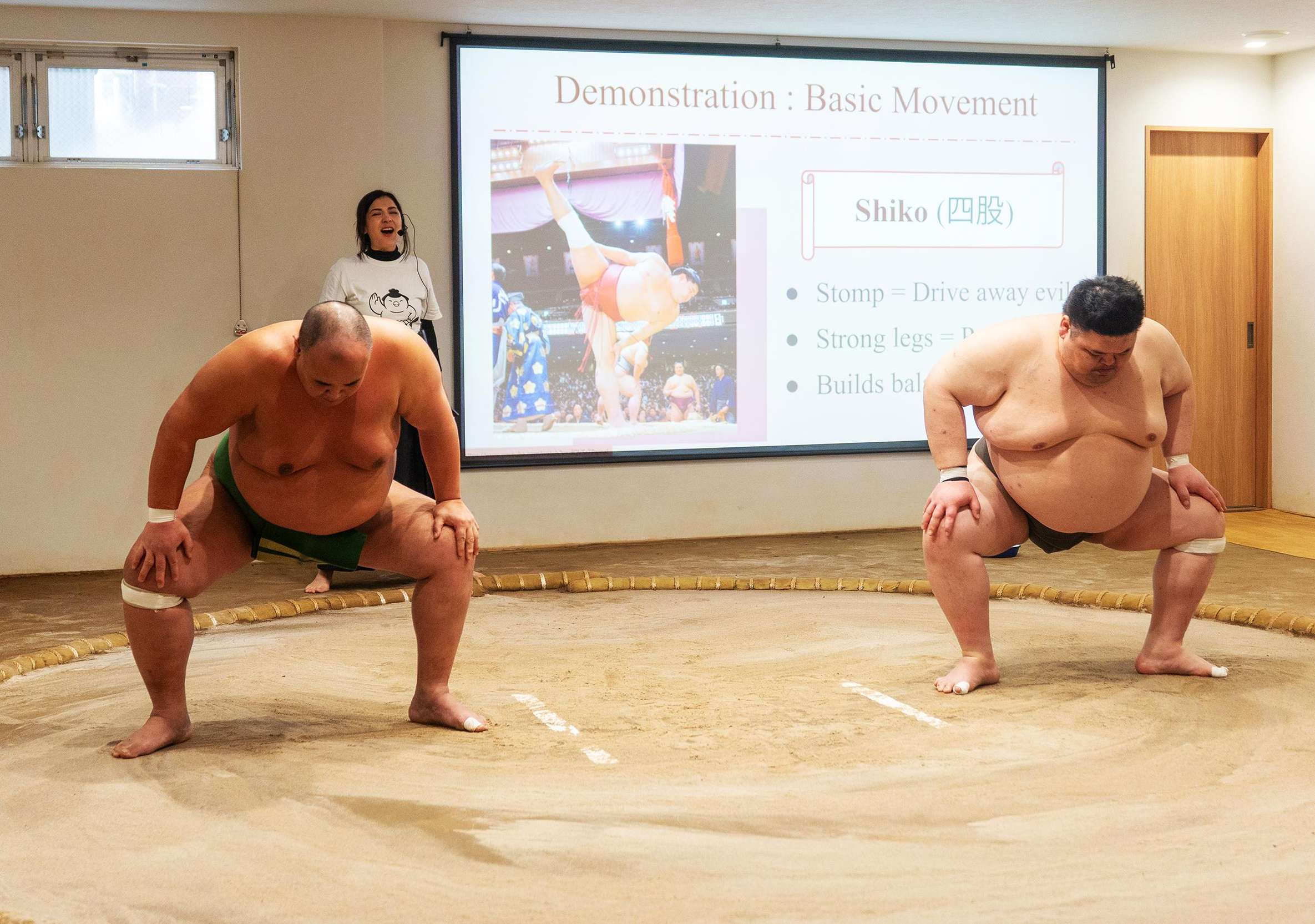
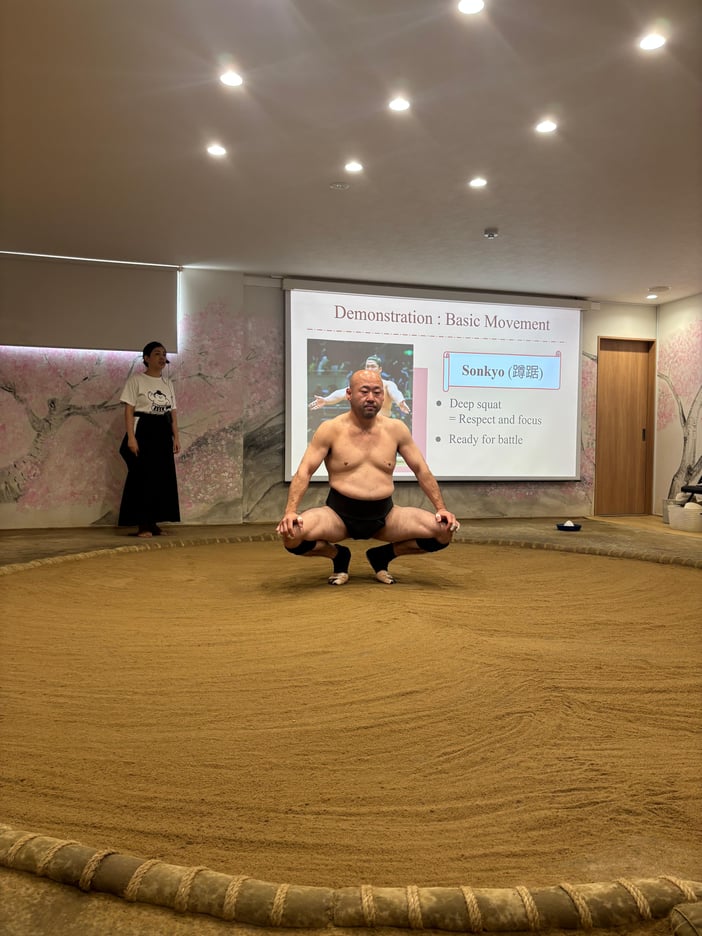
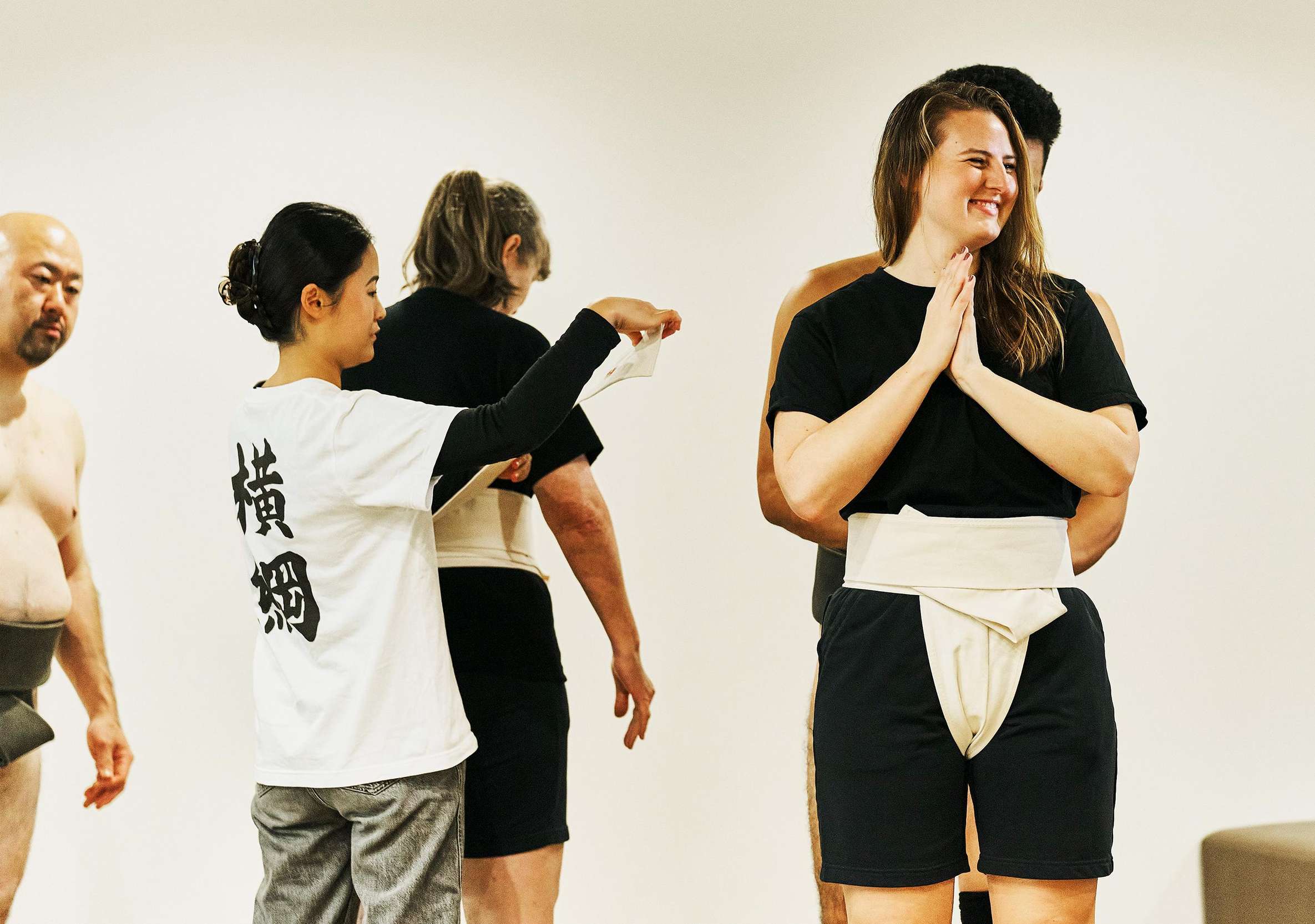
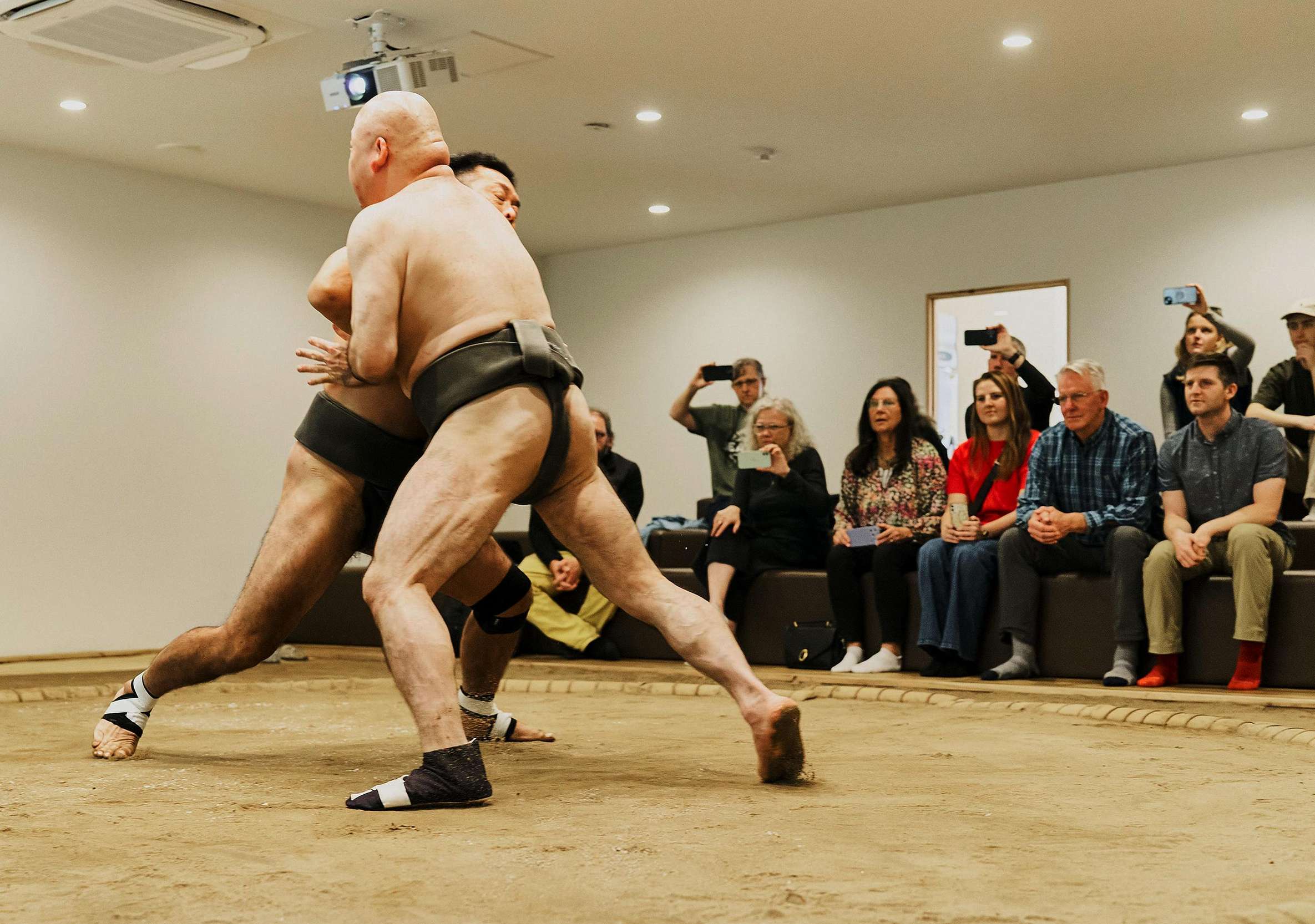
Shows have their own rewards. A show gives you a live demonstration, an English-speaking MC explaining rules and history, a lottery chance to challenge a wrestler, and photos afterwards. The actual wrestling often fills only the last 15 to 30 minutes.
The mistake to avoid is booking a show while expecting genuine competitive sumo. Travelers who walked in wanting tournament stakes came out disappointed, while those who knew what they were buying had a great evening.
Almost every bookable experience is an entertainment show by retired wrestlers
Show bouts are choreographed, and career stakes exist only at tournaments
Ranked professional competition happens in just six two-week windows each year
Name what you are booking before you pay, and the evening works either way.
Guided commentary - having someone explain the sumo you're watching
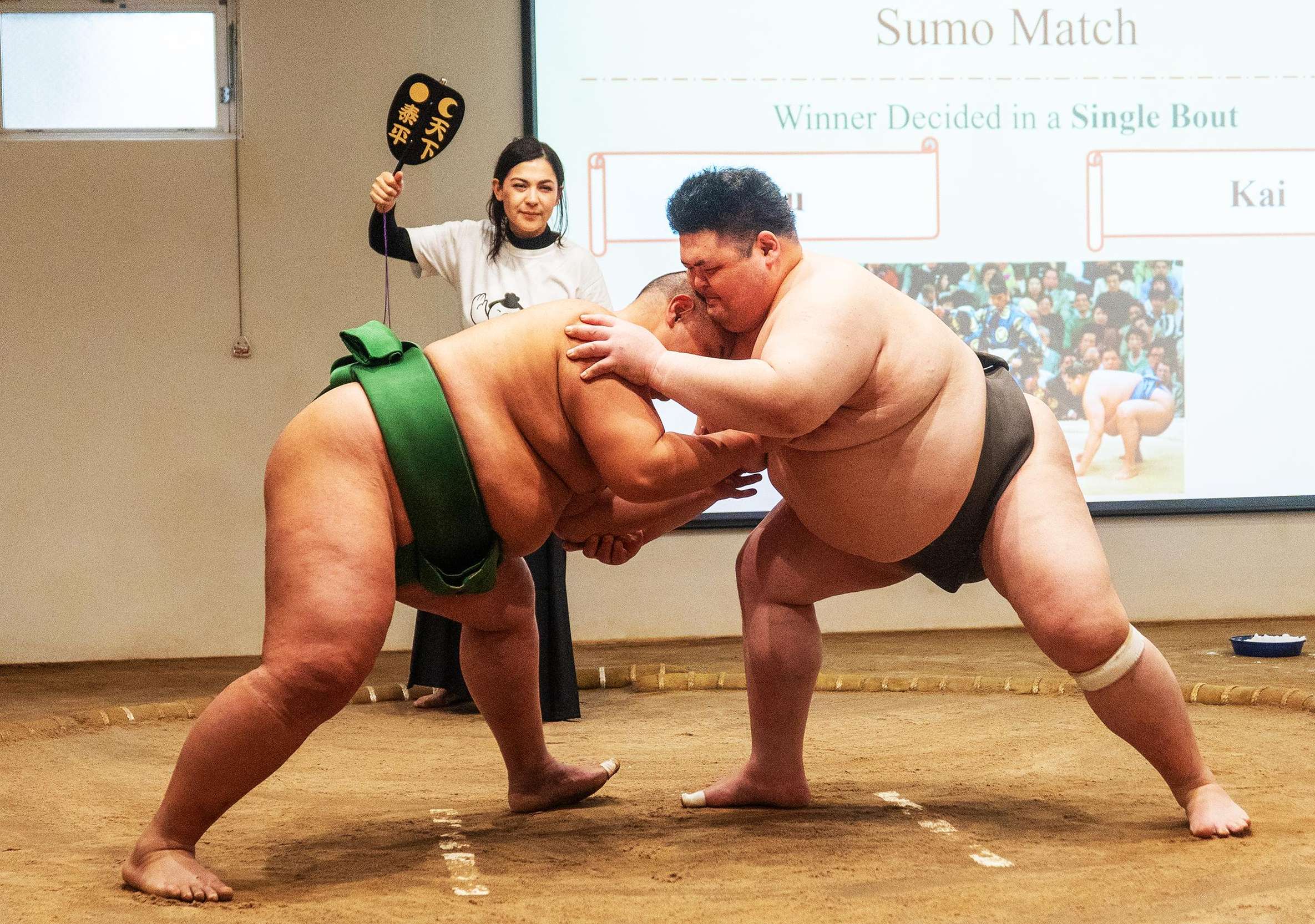
Each bout lasts about seven seconds, and an afternoon of them blurs together without context. A guide who explains the customs, the wrestlers and what each ritual means turns those seconds into a story, and for newcomers the commentary alone is worth the tour.
That is the strongest argument for a guided tournament visit: someone removes the ticket-scramble stress and talks you through the ring. When your trip falls outside the tournament months, book ahead for the same kind of live explanation on the show circuit.
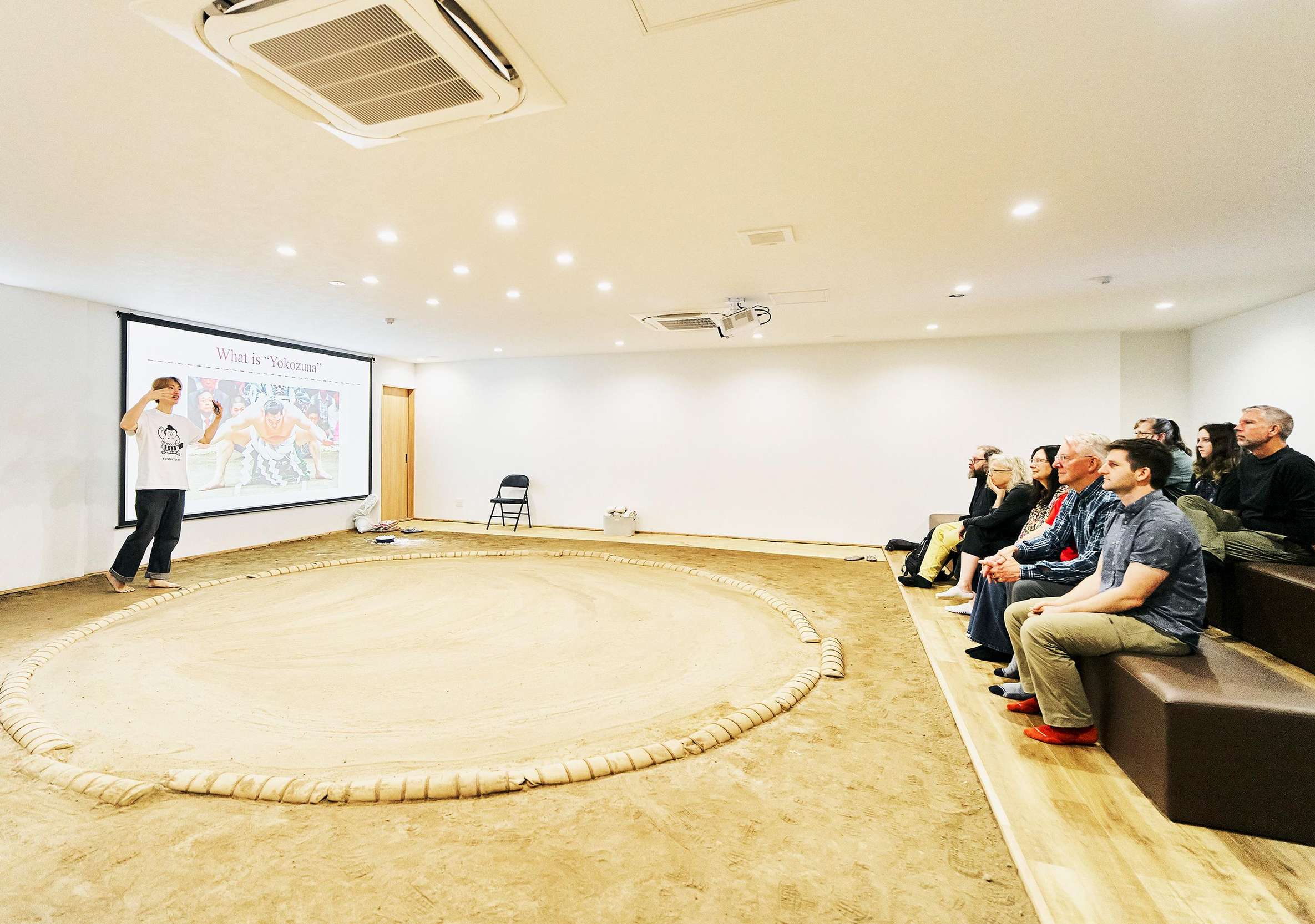
The Osaka: Sumo Experience with Live Show & Audience Challenge is the closest match: an English-speaking MC explains the history, rituals and techniques as retired wrestlers demonstrate training routines and then fight a one-round match. The limit is honest: the commentary covers a staged show, so tournament rivalries and customs stay outside its scope.
How to choose a live sumo experience
| Check | Why it matters | Our pick |
|---|---|---|
| Live commentary in English | Without it, seven-second bouts blur together | The Osaka experience runs with an English-speaking MC throughout |
| Real former professionals | Wrestlers with genuine professional careers behind them | The Osaka show is performed by retired wrestlers in a one-round match |
| Explains a real tournament | A guide on customs and rivalries changes the day | The shows on sale explain show sumo; tournament days need a tournament-month trip |
For the price of an evening, the Osaka show delivers most of what a newcomer asks of a guide.
Tours with a seat included - how guaranteed seating works
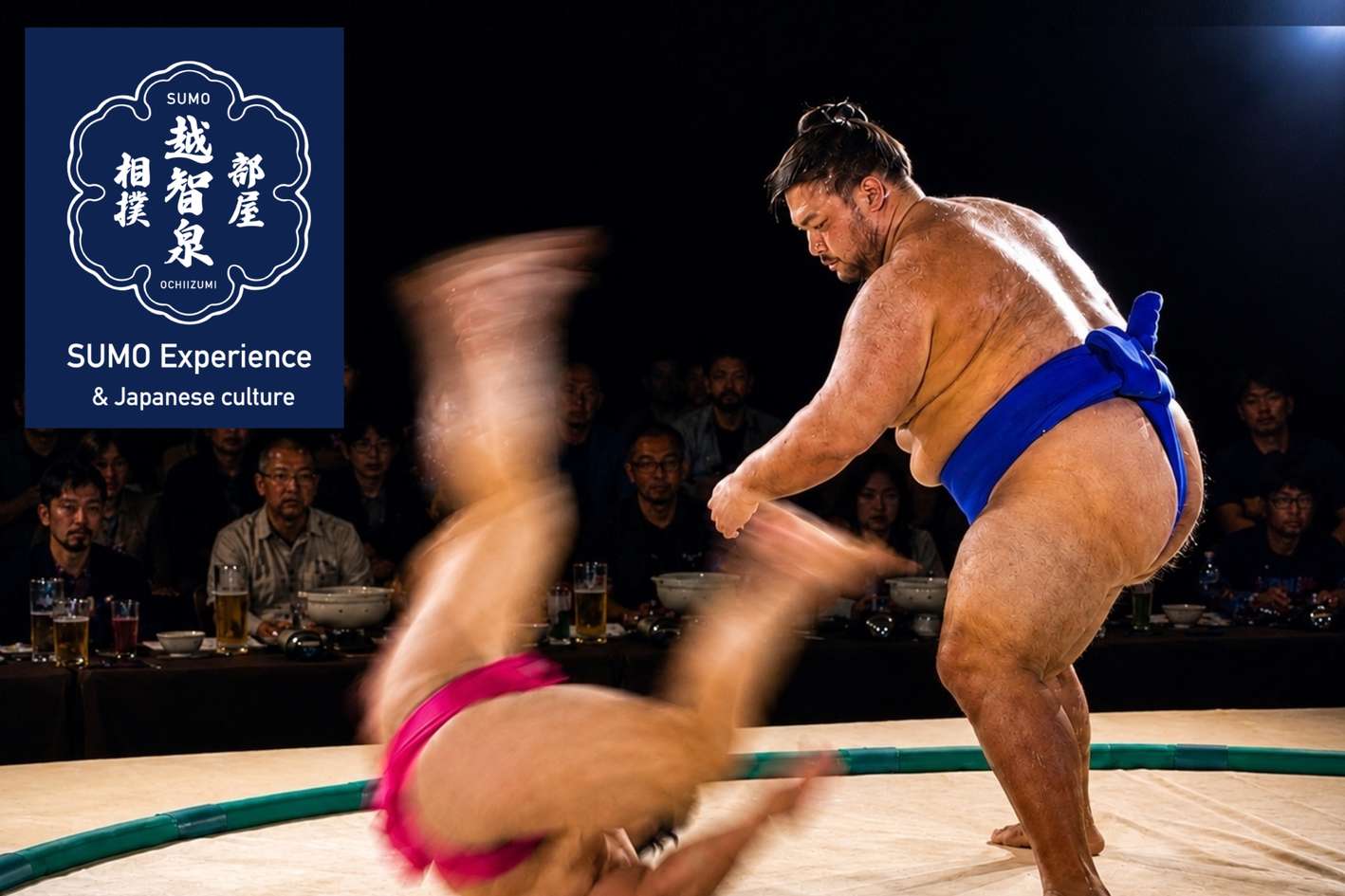
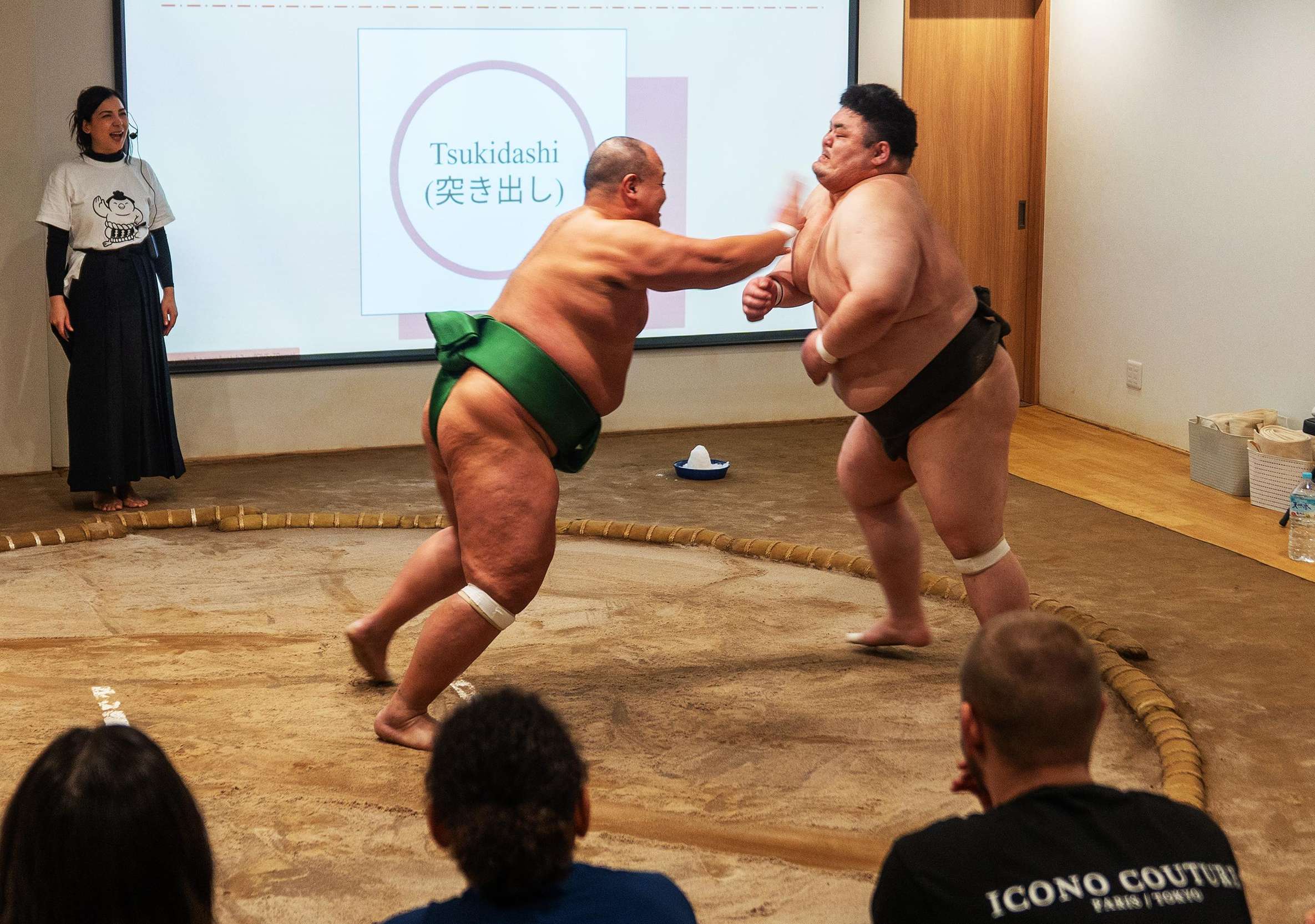
The quiet luxury of any guided sumo outing is walking in with nothing left to arrange. A ticket already in hand means you skip the resale sites, the queue logic and the seat maps, and simply settle in. Several Osaka shows run exactly this way.
The Osaka Sumo Show with Front-Row Seating & Wagyu Sukiyaki takes it furthest: every guest sits in the front row by the ring, with a wagyu sukiyaki dinner before the show and a self-dressing kimono haori try-on thrown in. The live show itself runs about 40 minutes inside a 2.5-hour experience.
One habit makes any of these evenings smooth: arrive 15 to 20 minutes before the printed start time. Osaka shows can begin later than the ticket says and the ending can drift a little too, but arriving at the printed minute risks a rushed search for seats while everyone else is already seated.
A grand tournament by city - fitting sumo into your Japan tour
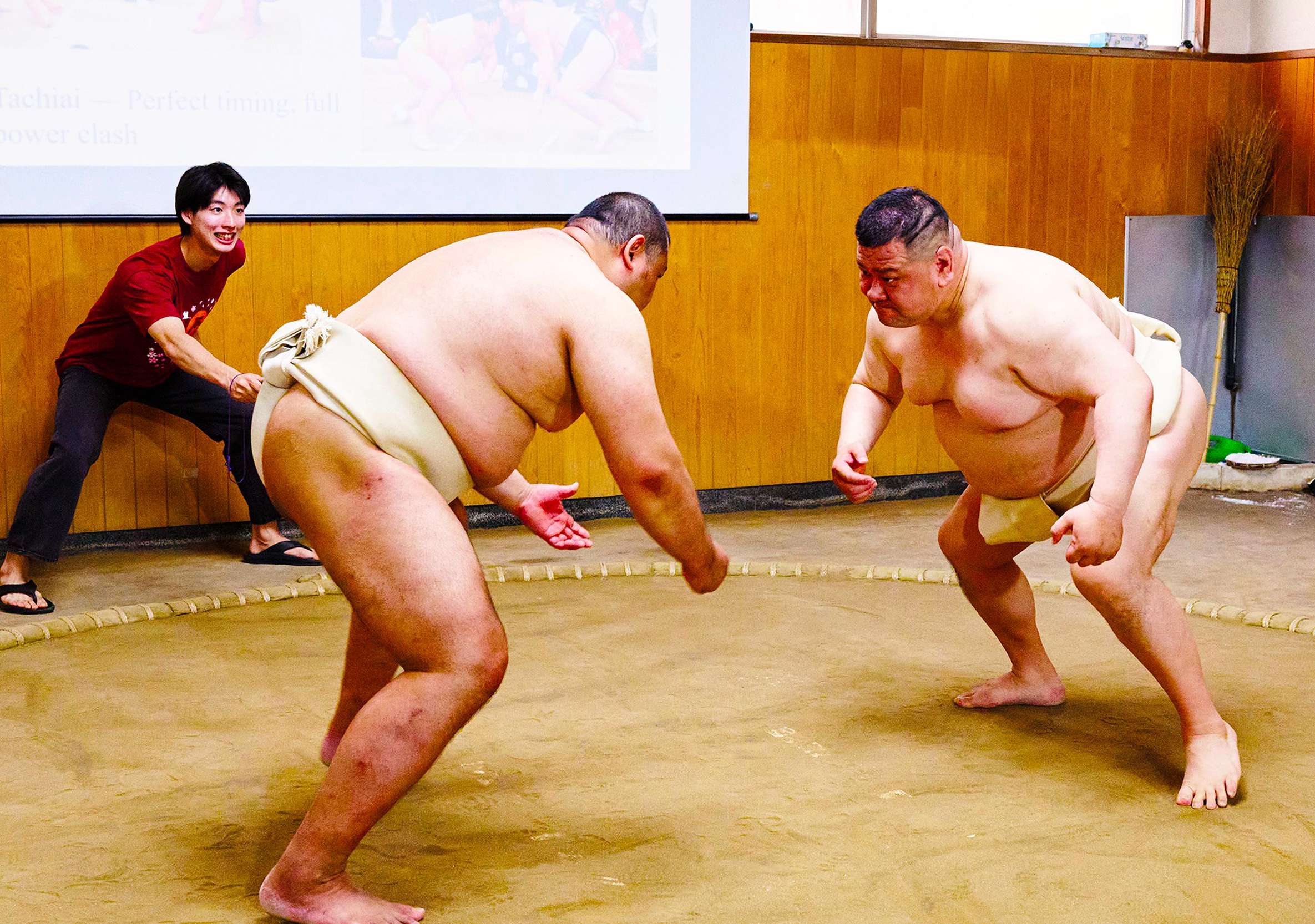
Sumo maps neatly onto four cities. Tokyo hosts three tournaments a year, in January, May and September. Osaka takes March, Nagoya July, Fukuoka November. Anywhere else, and at any other time, the grand tournament is simply not running.
Outside those windows, a city's sumo scene is shows and practice visits. In Osaka, morning practice is largely unavailable away from the tournament run-up, so dinner and entertainment shows dominate the local scene. March is also the hardest tournament to ticket: Osaka's arena is the smallest of the four in a very large city.
For an Osaka evening, the Osaka: Sumo Show with Bento or Snack at Sumo Hall Hirakuza fits the bill: a two-hour show with former professional wrestlers on an elevated stage, a bento or snack bag and a drink included, and a commemorative picture with the wrestlers at the end.
Kyoto runs shows daily too, and Tokyo's circuit runs year-round.
When the grand sumo tournaments run each year
Six tournaments, six odd-numbered months, four cities. Tokyo takes three of them, in January, May and September at the Kokugikan. Osaka follows in March at EDION Arena, Nagoya in July at IG Arena, and Fukuoka closes the year in November at Fukuoka Kokusai Center. Each runs about 15 consecutive days.
The practical consequence is simple: your sumo calendar has roughly six two-week windows a year, and the rest of the year is shows, practice visits and exhibitions. Tour demand peaks just before the Tokyo tournaments, in April and October, when visitors time trips around the May and September basho.
April: 5 out of 5 for how busy it gets.
Tap a month to read it.
January: 5 out of 5 for tournament months. Tokyo hosts the January tournament at the Kokugikan from the 11th to the 25th, and it is one of the quieter months to book the rest of your …
Tap a month to read it.
The demand pattern tells you where the pressure sits: April and October draw the heaviest booking traffic ahead of the Tokyo tournaments, so a spring or autumn trip needs earlier planning than a winter one, and months without a tournament leave the live shows on this page as your sumo plan.
How to get grand sumo tournament tickets before they sell out
Buying on your own is a speed contest. General sales open at 10 am Japan time on a set Saturday, listed for each tournament anywhere from four to eight weeks out, with recent editions sitting at about a month; whatever the exact date, decent seats are gone within minutes of that moment.
The whole 15-day Nagoya tournament sold out within about a week of sales opening in 2026, and the Tokyo and Fukuoka editions sold out on every date.
The official English ticket route works from abroad but has quirks: credit card only, a fee per ticket, and tickets issued only as printouts at Seven-Eleven stores in Japan.
The fallback for a Tokyo tournament day is the queue at the Kokugikan's main entrance around 6 am with cash, one ticket per person in the queue, for a same-day seat far back on the second floor.
Aim for an early weekday if you are booking late: Saturday sessions and the final Sunday, the day that decides the championship, are the first to go.
Getting to Ryogoku Kokugikan - reaching Tokyo's grand sumo tournament arena on your tour
The venue sits practically on top of its own station. Ryogoku Station serves the arena with two lines, the JR Sobu Line and the Toei Oedo Line, and the Sobu exit is a one-minute walk from the West Exit. On a tournament morning the streets around it fill with wrestlers in kimono walking to work.
From central Tokyo it is an easy hop: about 13 minutes from Tokyo Station with one change at Akihabara.
The airports take longer, around 45 minutes from Haneda by monorail and train with two transfers, and well over an hour from Narita by the Sobu rapid line plus one local stop. Taxis work but trains beat them without traffic, too.
Whichever route you choose, build in a margin for the morning: the same-day ticket queue starts around 6 am, and doors open between 8 am and 8:45 am.
A tournament day step by step - what you'll actually see
Doors open at 8 am, and the first thing to know is that almost nobody is there. The lowest-ranked wrestlers fight from about 8:30 in a near-empty arena, and the day builds slowly from there.
Bouts are over in seconds, an average of about seven for the top division, so the sport lives in the ritual around each one.
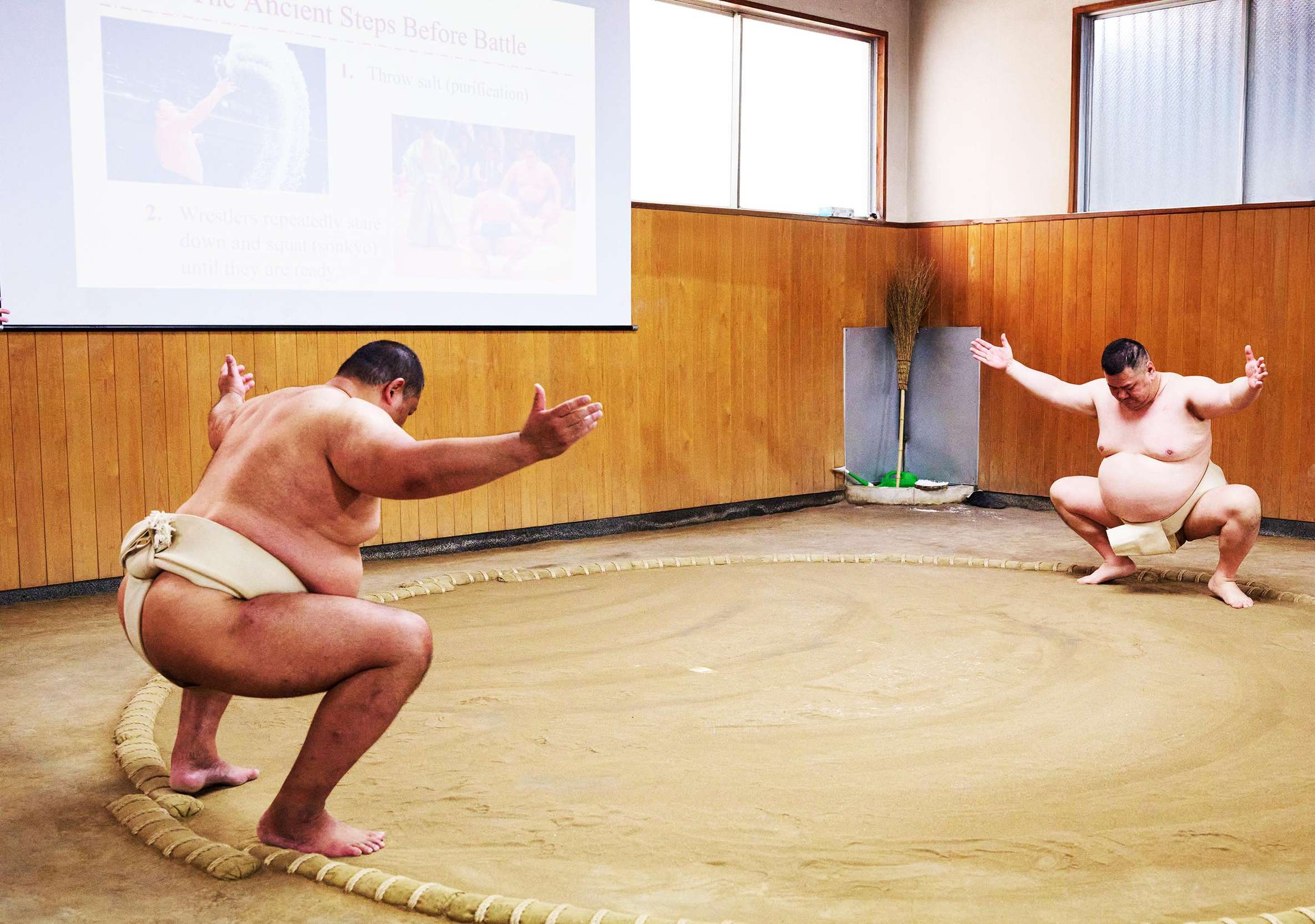
That ritual is the salt. Wrestlers throw handfuls onto the clay to purify the ring, a Shinto custom meant to ward off injury and trouble. Watch the crowd too: the arena goes silent before each charge, which startles most first-time visitors more than the shouting afterwards.
- 18 amDoors open and lower divisions wrestle in a near-empty arena
Lowest-ranked bouts start around 8:30
- 22 pmThe second-tier juryo division takes the ring
The arena starts filling
- 3Late afternoonTop-division makuuchi bouts begin
Roughly a 3:55 to 5:55 window
- 4Just before 6 pmFinal bouts and the Yumitorishiki bow-twirling ceremony
Regulars stay for the ceremony
Leaving before the main event is the classic tourist error, and regulars say it wastes the ticket. The wrestlers you came to see fight last.
Choosing seats at a grand sumo tournament - picking well before you tour
Two seat styles, one decision. Box seats sell as a whole box for four people and you sit on cushions on the floor, close to the ring.
Chair seats sell individually, sit on the upper floor, and come with cushions of their own. For most first-timers, the chair seat is the safe choice: the arena is small enough that even the back rows see the ring clearly.
If a few hours on the floor sounds hard, take the chair. If you travel as a family, the maths can flip: a box works out cheaper for two adults and a child, young children enter free in some seat types, and the tournament day is built for kids.
They shout along with the crowd, and the mid-day break brings comedy and chances for children to dress up in the ring.
One rule applies everywhere: women watch freely from the seats; the tradition forbids anyone from entering the clay ring itself.
What to bring to a grand tournament of sumo, and what if your tour plans change
The packing list is short but strict. Bring the ticket itself, since screenshots of QR tickets won't scan, and cash for the food floors, where wrestler-themed bento and chanko stew sell from late morning.
For comfort on a ten-hour day, a thin cushion and binoculars earn their place in the bag, along with clothes you can sit on the floor in.
Leave at home: bottles and cans, coolers, folding chairs, pets, and any bag bigger than your own seat area. Outside food and drink are not allowed in.
The day is steadier than you'd fear. A single wrestler pulling out does not cancel anything; his opponent wins by default and the next day's pairings are rearranged. Tournaments themselves are rarely cancelled, needing exceptional circumstances such as the 2011 scandal or the 2020 pandemic.
What happens if the day changes
| If this happens | What happens then |
|---|---|
| A wrestler withdraws injured | The bout is a default loss and the next day's bouts are rearranged |
| A tournament hits exceptional circumstances | Full cancellations are rare; the last were 2011 and 2020 |
| A show performer falls ill in Osaka | The venue cancels and refunds admission tickets |
Whatever the venue, a sumo day rarely falls apart on you; plan the cushion and you have planned the risk.
What else to do around Ryogoku's sumo district beyond your grand tournament tour
Ryogoku rewards the hours around your sumo day, two stops from Akihabara on the Sobu Line.
Most visitors walk straight past the small Sumo Museum inside the Kokugikan, which is a shame twice over: it closes in the late afternoon, so it has to be a morning errand, and on tournament days it is reserved for ticket holders.
What nobody tells you
Most visitors walk straight past it
Go before the top-division bouts
Only the museum and souvenir shop open, and on weekdays only
The rest of the district feeds you. Chanko nabe restaurants run by retired wrestlers line the streets around the station, serving the hot-pot dish the wrestlers themselves eat. The Ekō-in Temple, where wrestlers pray before tournaments, and the sumo-themed station itself fill out a morning.
Asakusa, Tokyo Skytree and Akihabara all sit within a short train ride, so the non-tournament hours of a sumo day plan themselves.
What to know before you book a grand sumo tournament tour
Tournament tickets go on sale about a month before each 15-day basho, at 10 am Japan time, and the most popular days can sell out within minutes. The entire 2026 Nagoya tournament was fully booked within about a week of general sales opening. If you want a ticket, buy the moment sales open.
Foreign visitors can buy tickets themselves through the official English ticket service, which takes credit cards only, adds a per-ticket service fee, and issues tickets only as printed slips at Seven-Eleven stores in Japan. Purchased tickets cannot be changed or cancelled.
Floor box seats are sold as a whole box for four people and you sit on cushions. Chair seats on the upper floor are sold individually and are the safe first-timer choice: the arena is small enough that even the farthest back seats give a clear view of the ring.
Doors open between 8:00 and 8:45 am and bouts run until about 6 pm. The arena fills gradually: lower-ranked wrestlers fight from mid-morning, the second division starts around 2 pm, and top-division bouts begin in the late afternoon.
Staying until the close is what guarantees you see the higher-ranked wrestlers, and it ends with the Yumitorishiki bow-twirling ceremony that true fans watch. Many foreign visitors leave early and waste their ticket; plan the whole day around the afternoon and evening.
Each bout is short: most top-division matches end in under 10 seconds, with an average of about 7 seconds. A whole day of bouts adds up slowly, which is why the arena fills through the afternoon rather than at one fixed hour.
You can bring your own food into the arena, and food inside costs about convenience-store prices. Chanko nabe at lunchtime is a good cheap lunch, wrestler-themed bento and yakitori are sold on the first two floors from 11 am, and the banquet hall serves chanko stew until 4:30 pm.
Follow the crowd's lead on when to cheer and when to stay quiet: the arena falls strikingly silent right before each match. Clapping is welcome, flash photography and noisemakers are not, and never throw your cushion, even after a big upset.
Bring your ticket, a small bag, and clothing for the season; the arena is heated in January but warmer in May and September. Bottles, cans, coolers, pets and folding chairs are not allowed, and any bag larger than your own seat area must be checked, as strollers are at the information desk.
The real thing, if the month fits
A grand sumo tournament tour suits travelers who can bend their dates into one of the six tournament months and commit to ticket-sale morning.
Outside those windows, the bookable shows on this page are the closest live sumo you can arrange, and the Osaka experience with audience challenge fits anyone who wants commentary and a turn in the ring.
Serious fans hold out for a tournament or a morning practice visit. Casual visitors and families enjoy a show most.
Grand sumo tournament tour questions, answered
When and where are grand sumo tournaments held?+
Six tournaments run each year: Tokyo hosts in January, May and September, Osaka in March, Nagoya in July and Fukuoka in November. Each lasts 15 days.
How quickly do tournament tickets sell out?+
Sales open about a month before each tournament at 10 am. Japan time, and the busiest days can sell out within minutes. The entire September 2026 Tokyo tournament went in every one of its 15 days.
Can foreigners buy tournament tickets themselves?+
Yes. The official English ticket page sells to overseas buyers by credit card, adds a small fee per ticket and issues tickets only at Seven-Eleven stores in Japan.
Is a sumo show the same as watching a tournament?+
A show is a performance by retired wrestlers, with comedy and audience games, and the bouts are staged. A tournament is real competition, where results shape careers and the crowd builds tension before every bout.
How do seats work at a tournament?+
Box seats sit four people on floor cushions and are sold as a whole box. Chair seats are sold individually and come with cushions, which makes them the comfortable first choice for a first visit.
How long does a tournament day last?+
Doors open around 8 am and the day closes near 6 pm. The top-division bouts run in the late afternoon, so most visitors arrive mid-afternoon for the strongest matches.
What etiquette should a first-time spectator follow?+
Take your cue from the crowd: the arena goes strikingly quiet just before each match. Stay to the end for the bow-twirling ceremony, since leaving early wastes a full-day ticket.
Can you meet or photograph the wrestlers at a tournament?+
You can photograph wrestlers from your seat without flash, and lower-division wrestlers may pose for a photo. Top-division wrestlers rarely stop for pictures, but you can ask for an autograph once their match and interview are done.