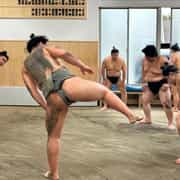
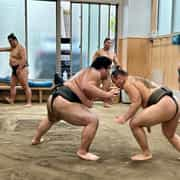
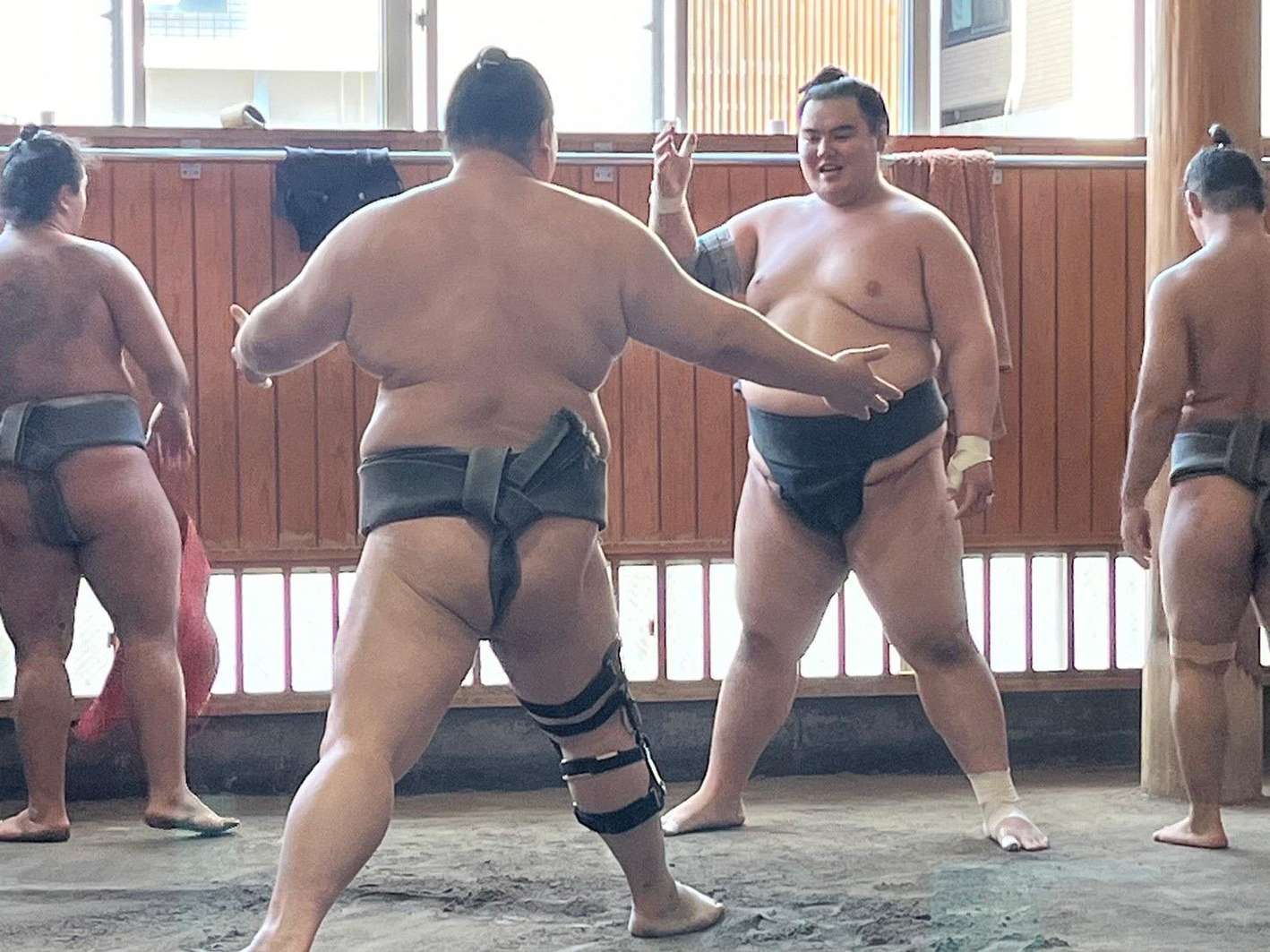
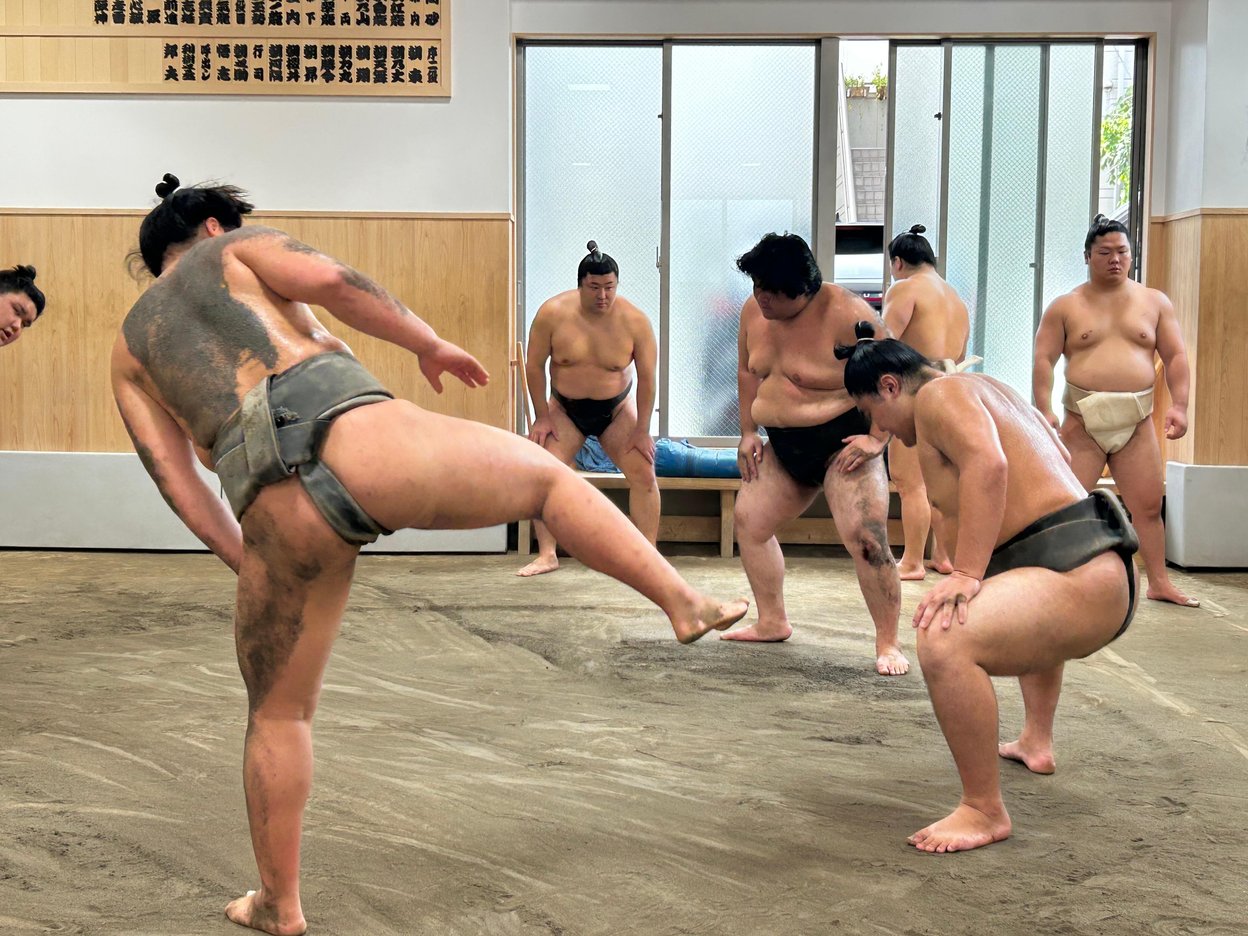
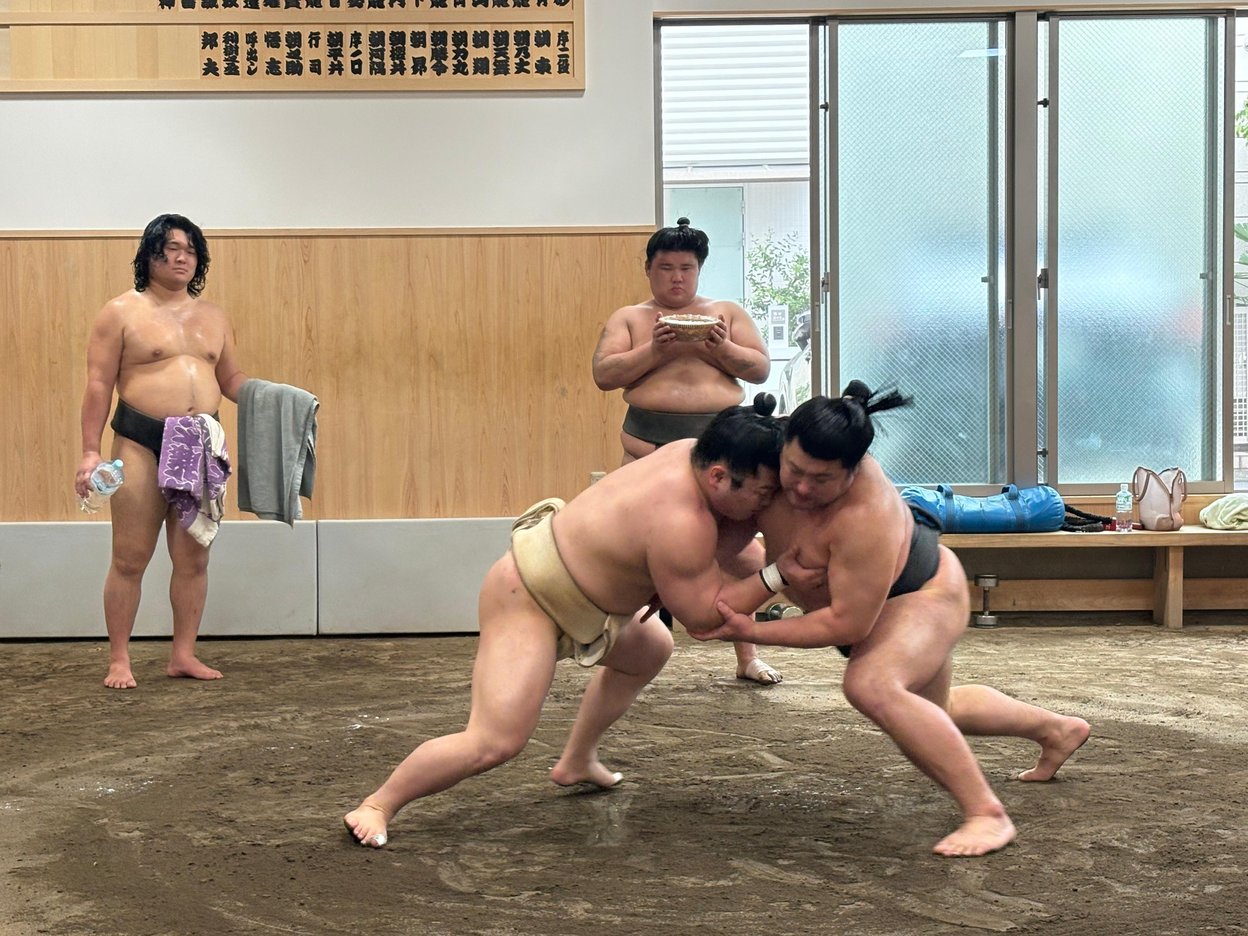
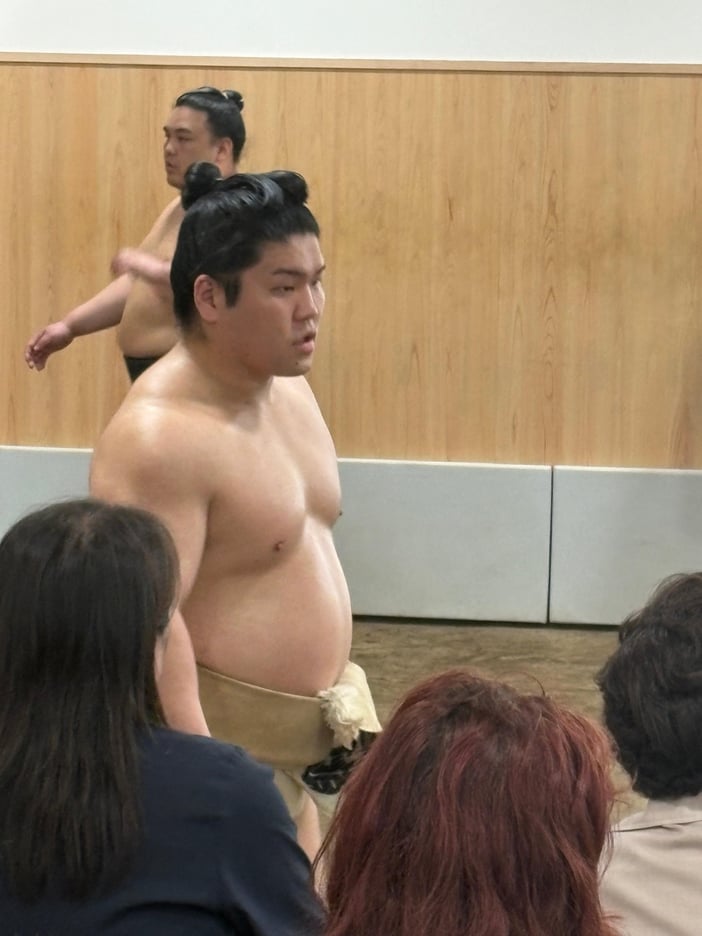
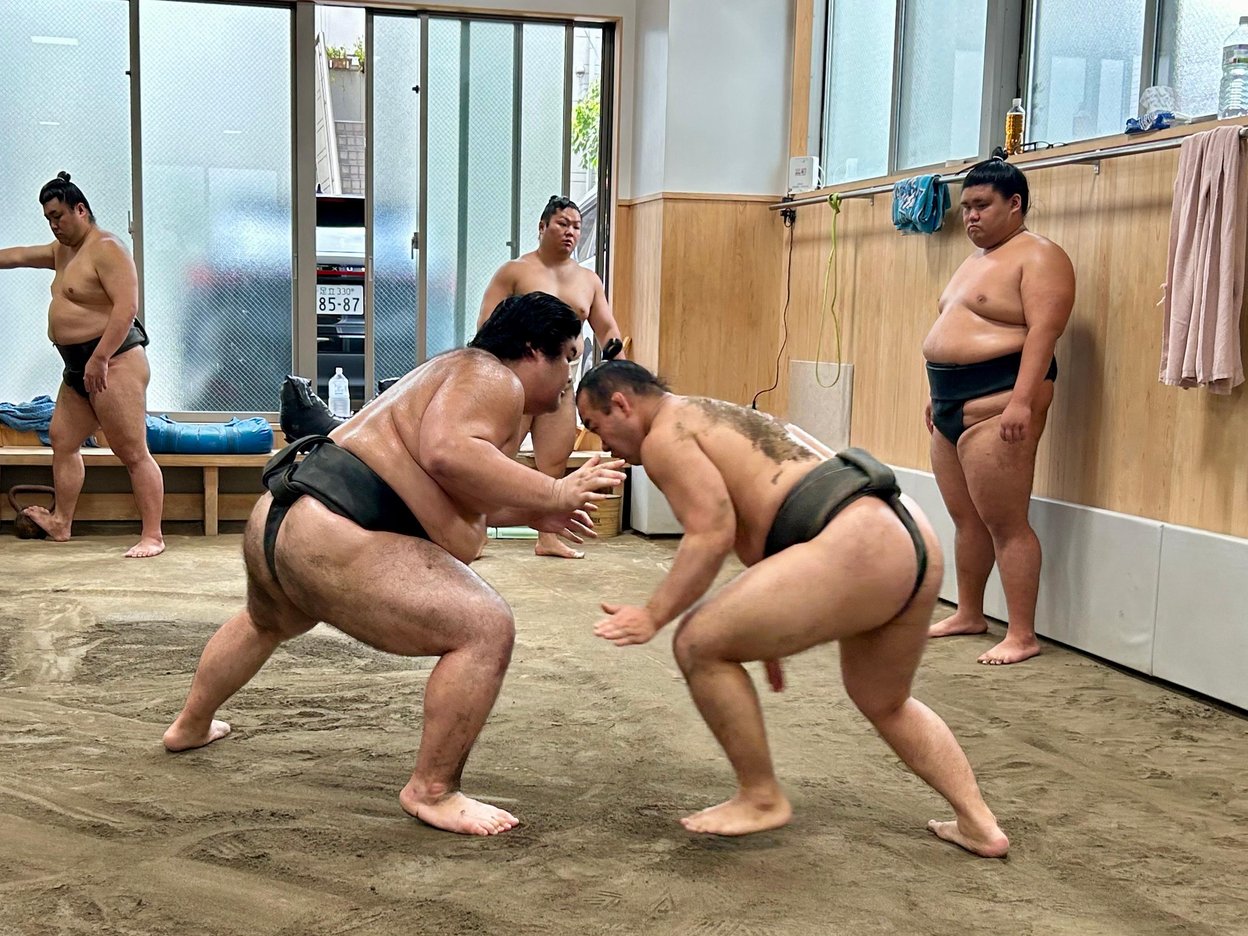
4.8762 travelers watched the shiko drills up close
Sumo Tour in Tokyo How to Visit a Sumo Stable
Book a guided sumo stable visit in Tokyo. Watch real morning practice from beside the ring, with an English-speaking guide who explains the training, and photos with the wrestlers after. Two hours at Ryogoku, done by about 9 am.
"Watching real sumo practice at a stable where wrestlers live and train was amazing. Our guide, a former sumo reporter, shared great facts and stories."
4.8★average rating762traveler reviews100%free cancellation26countries travelers came from
Choosing a sumo tour in Tokyo
Tokyo has two ways to watch real sumo training with a guide, and both run in the morning at a working stable in Ryogoku. The difference is the guide: one is an English-speaking local guide, the other a sumo journalist who can answer anything you ask. Pick by how deep you want to go.
Meeting timeThe guided stable tour meets at 7:45 am at Ryogoku Station, and morning practice at a Tokyo stable runs roughly from 7 am to 10 am.
Booking aheadYou cannot just turn up at a stable; visits are by appointment and places are limited, so book well in advance.
Tournament monthsTokyo stables close to visitors when the wrestlers are away at tournaments in other cities, so whole months can offer no morning practice.
Quiet ruleAt a real stable you must be a silent, still observer, with no talking, no moving and no flash photos during practice.
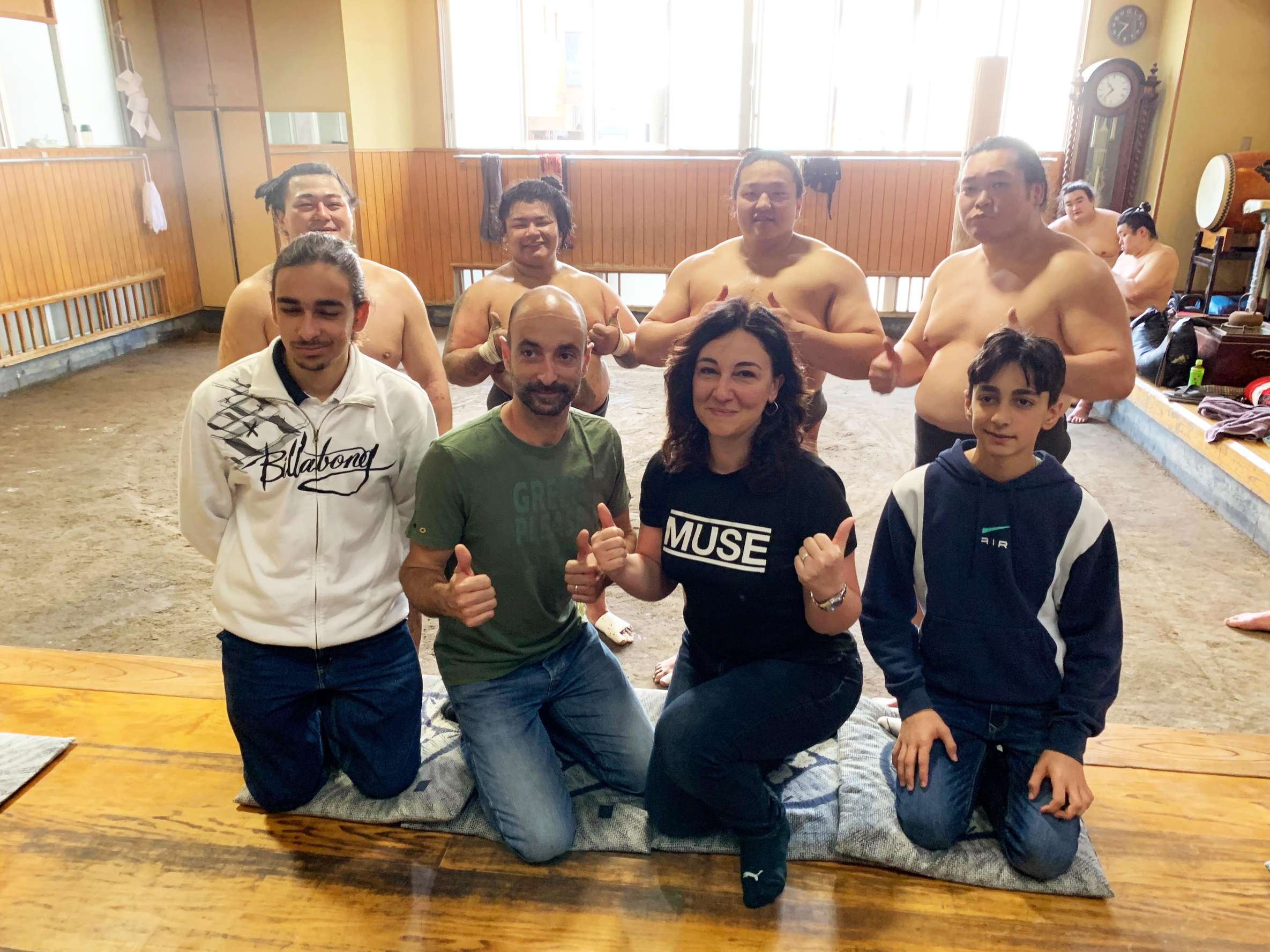
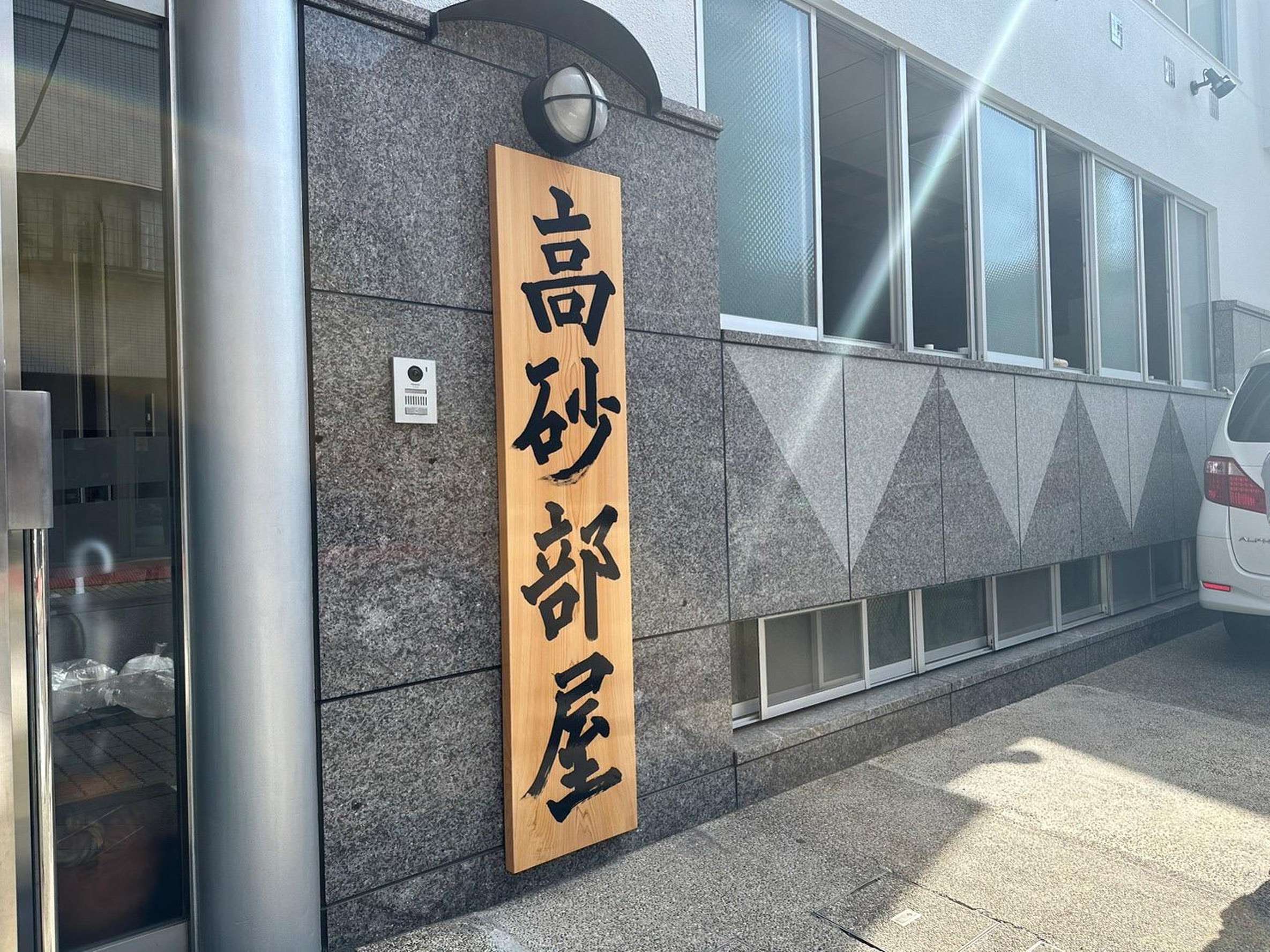
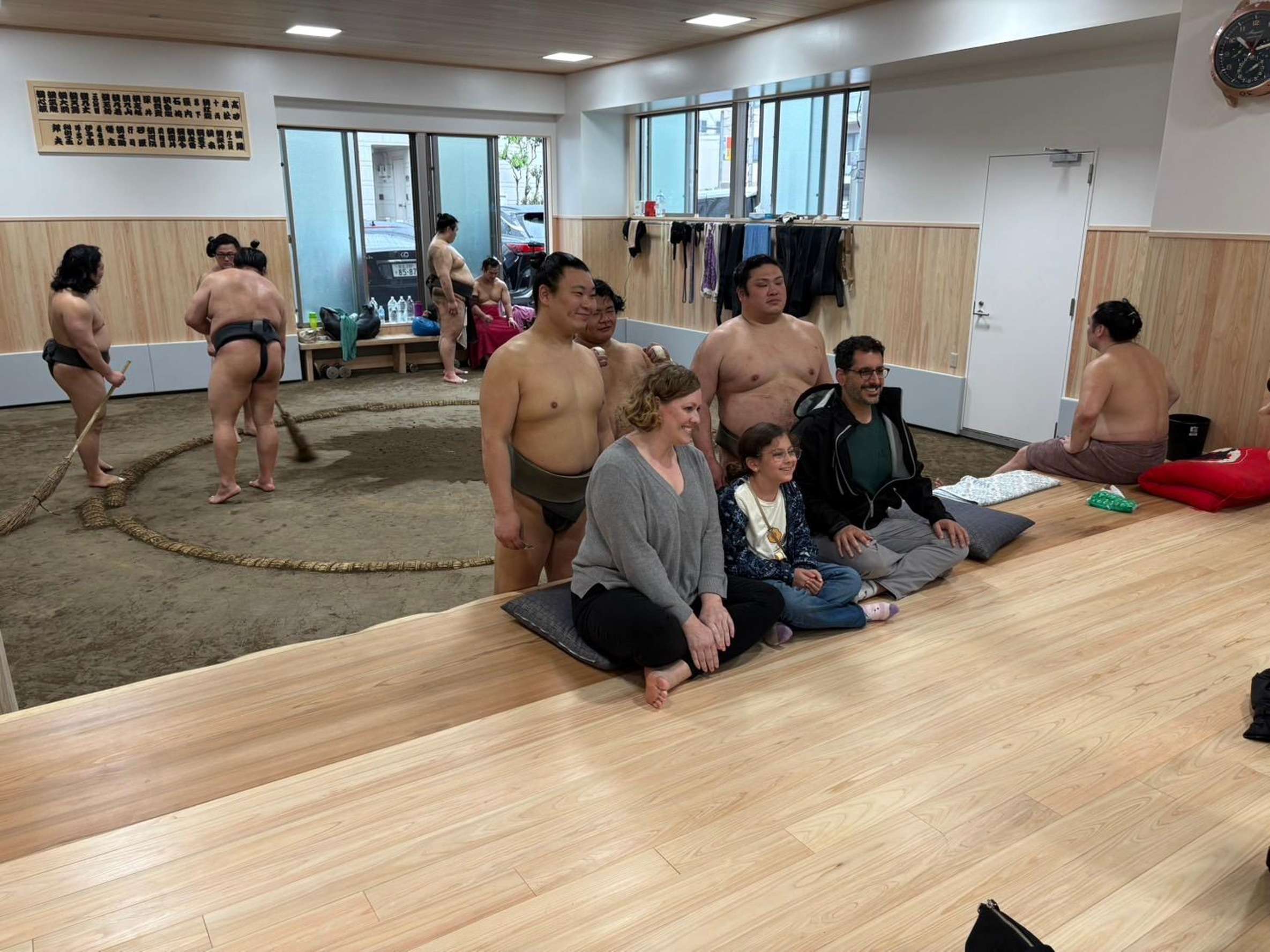
PhotosOn the Takasago-beya visit you can take photos as long as it does not get in the way of the wrestlers' practice, but flash is not allowed.
What to wearWear comfortable clothes, because you will sit on the floor during practice.
ChildrenKids can observe if they do so quietly, and on the two-hour tour they pay the same fee as adults.
Wheelchair accessThe journalist-guided tour is not suitable for wheelchair users because of the stable's traditional setup.
Free alternativeSome stables, like Arashio-beya, let anyone watch practice through a street-facing window from about 7 am, with no booking needed.
importantPractice does not take place when a tournament is on, especially when the tournament is held outside Tokyo, so a booked visit can fall through.
Confirm with the tour operator before booking that practice is running on your dates, and if a session is cancelled on the day, most tours notify you immediately and offer a full refund or an alternate experience.
Sumo tour options in Tokyo
Most popular
2 hours·English, Japanese
4.7(453)
Tokyo: Watch sumo! with English Guide
The classic stable visit: 2 hours at Takasago-beya with an English guide, 90-120 minutes of practice and photos with the wrestlers.
Free cancellationTour guideVisit to the sumo tournament venue
Three hours led by a sumo specialist and national newspaper journalist, rated 4.9, with special permission from the stable and time for your questions.
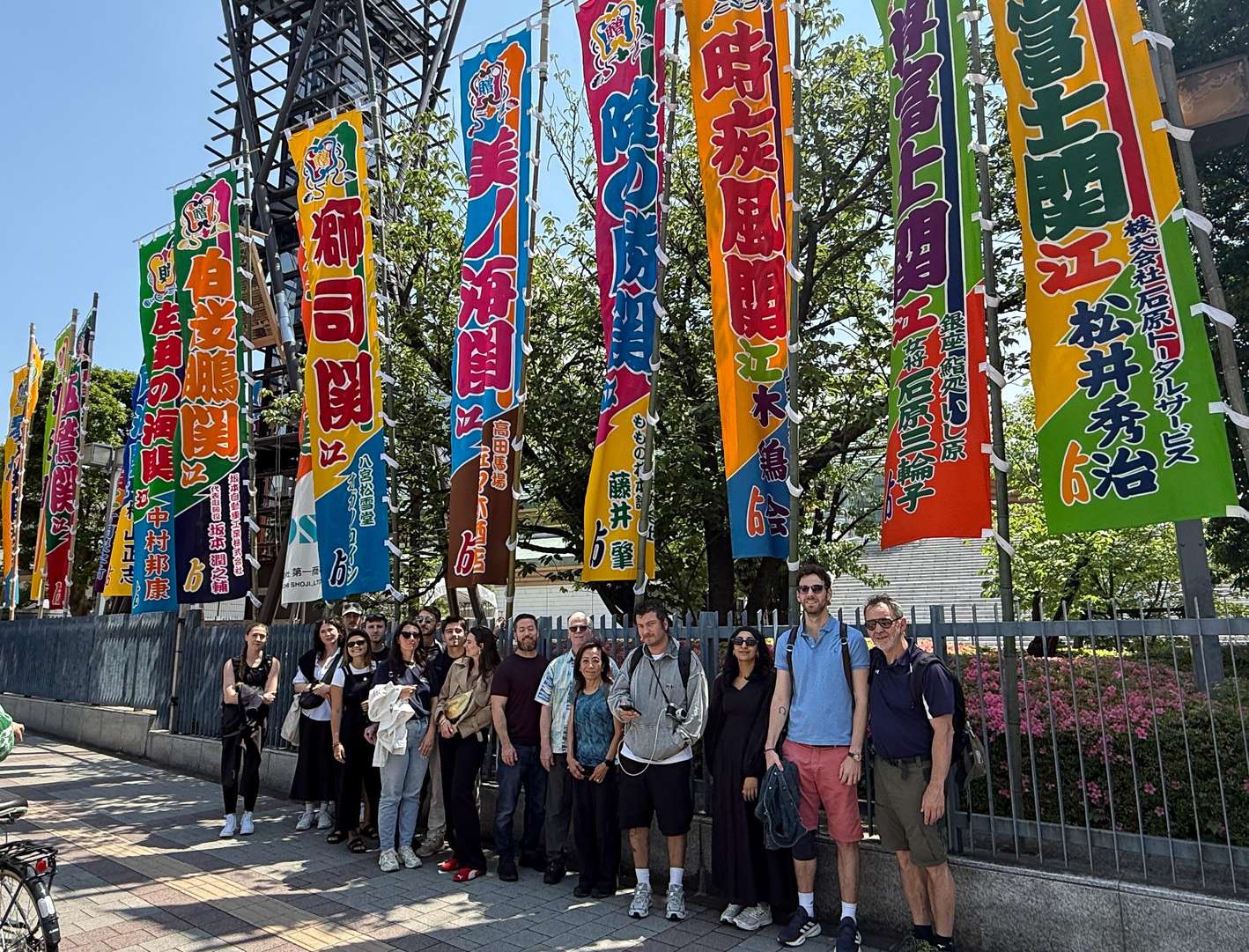
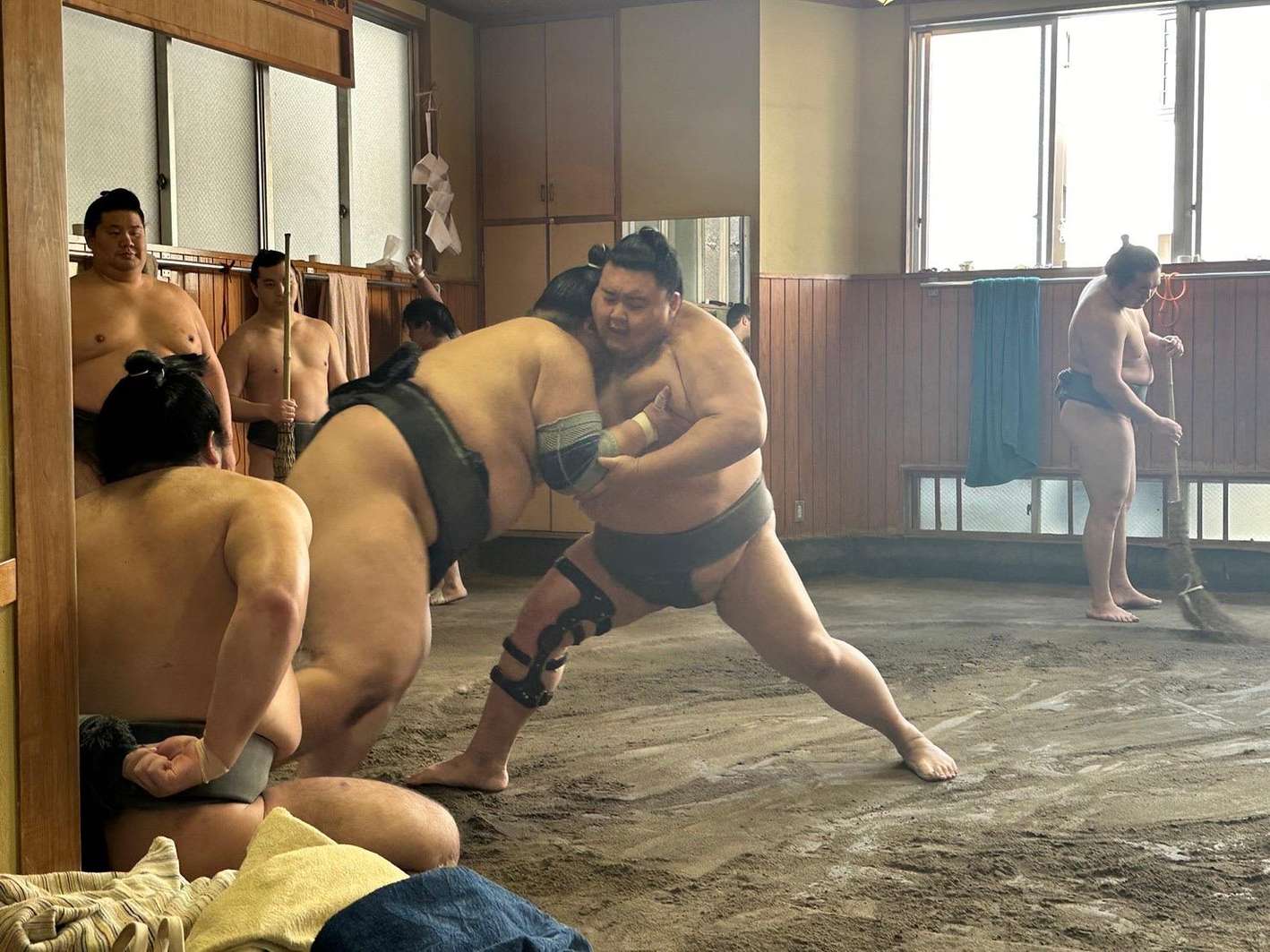
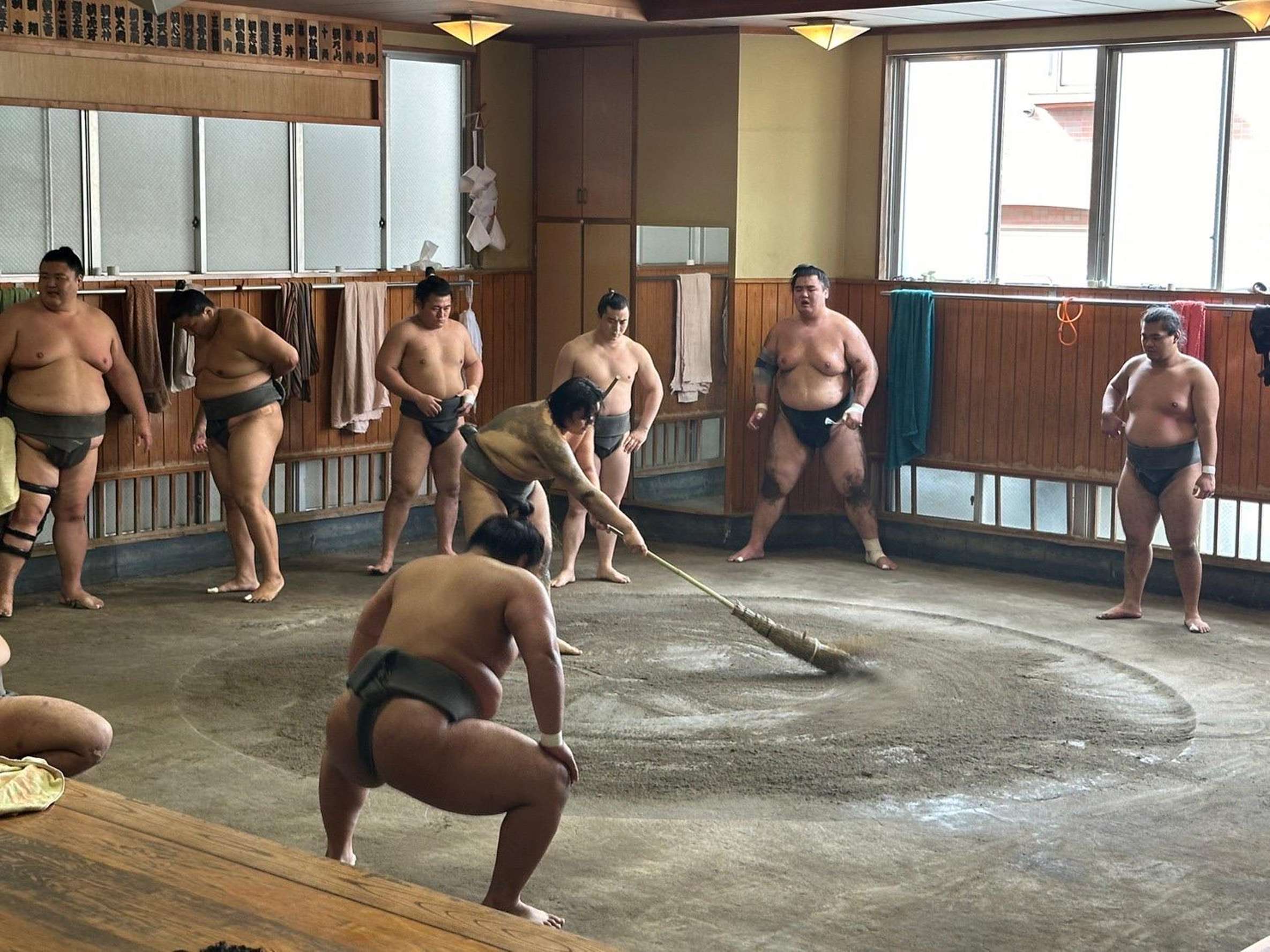
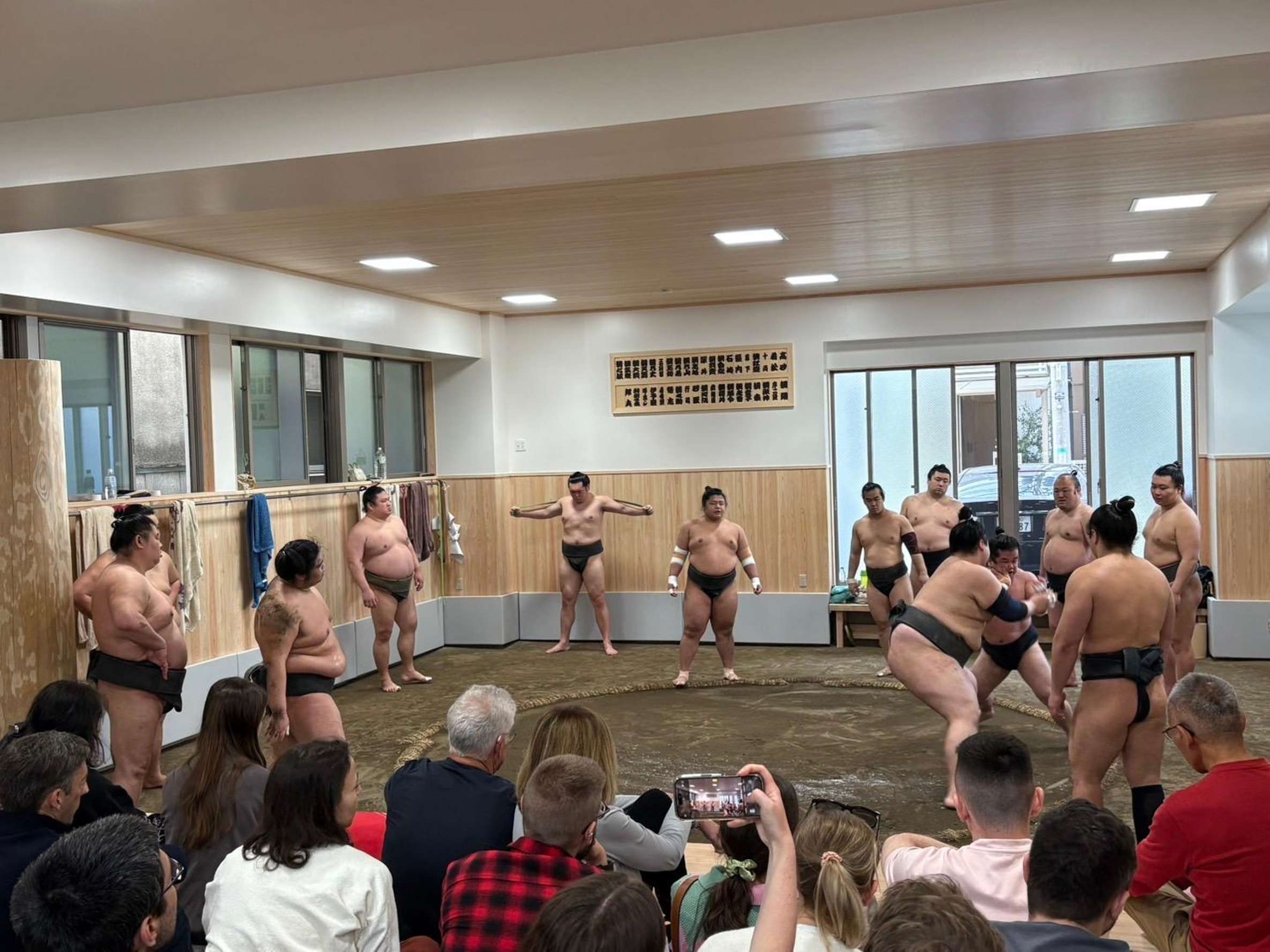
The morning starts at Ryogoku Station, where your guide gathers the group and walks you through the quiet streets to a working sumo stable. Inside, the practice ring sits immediately past the entrance, and you take a place on the floor beside it, close enough to hear the slap of bodies on the clay.
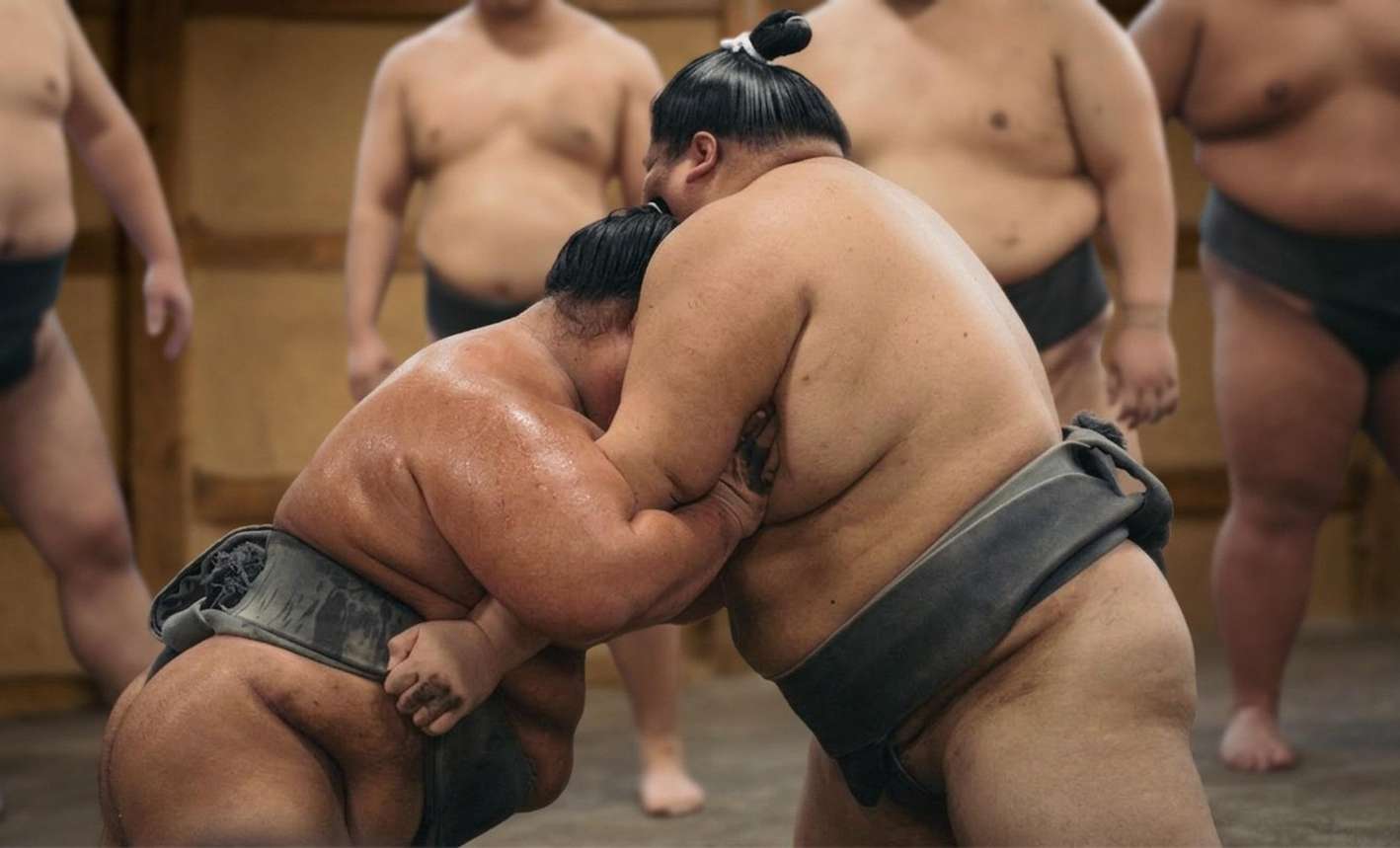
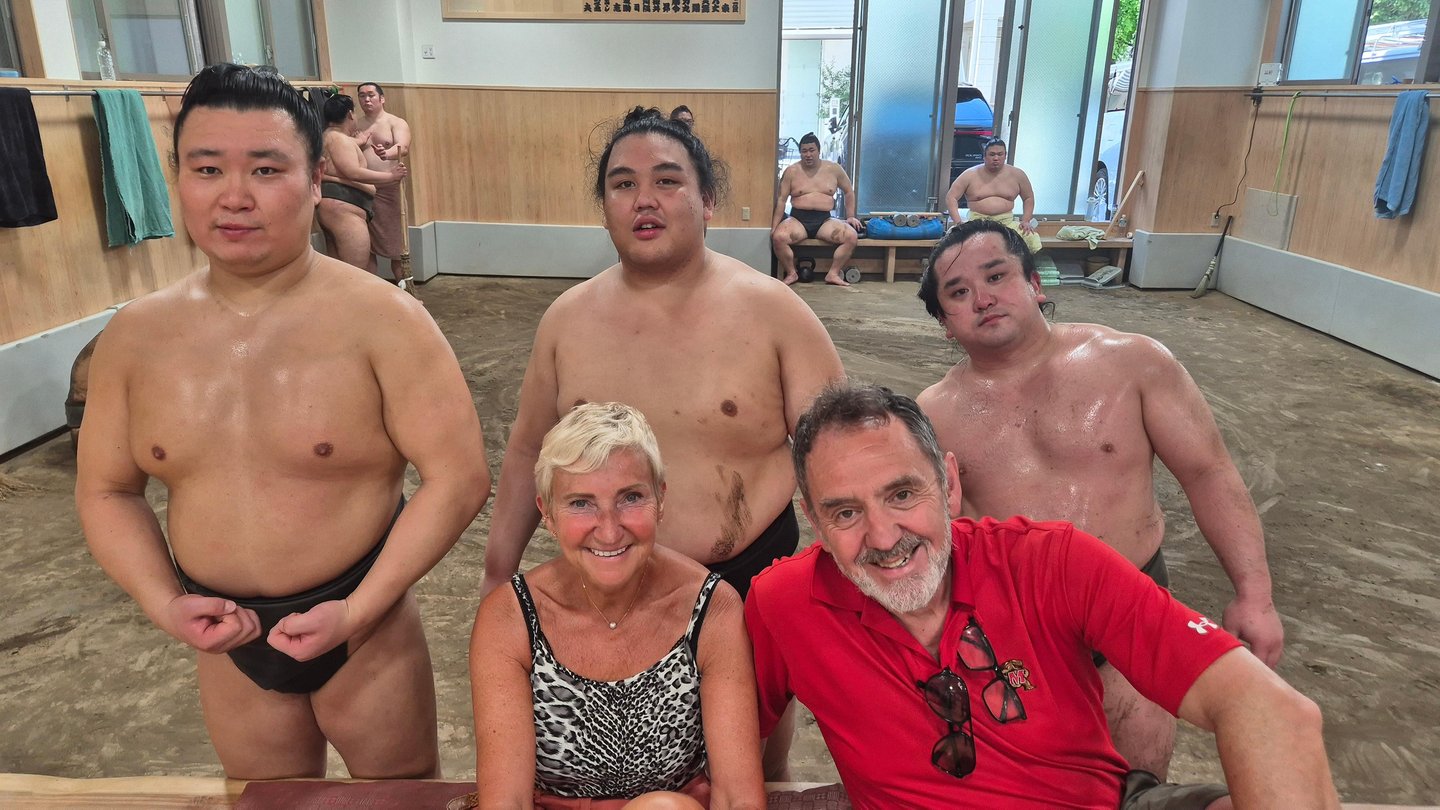
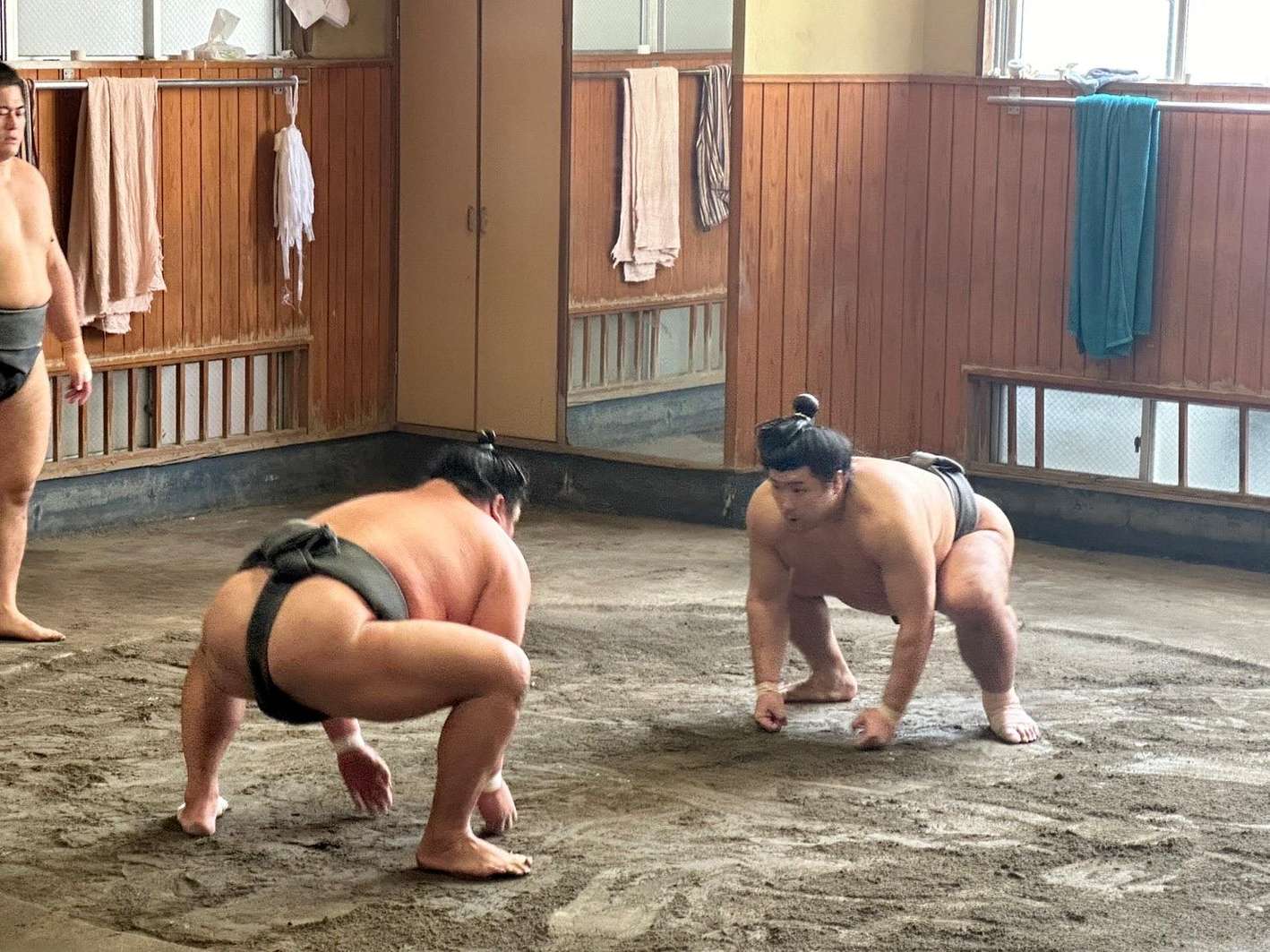
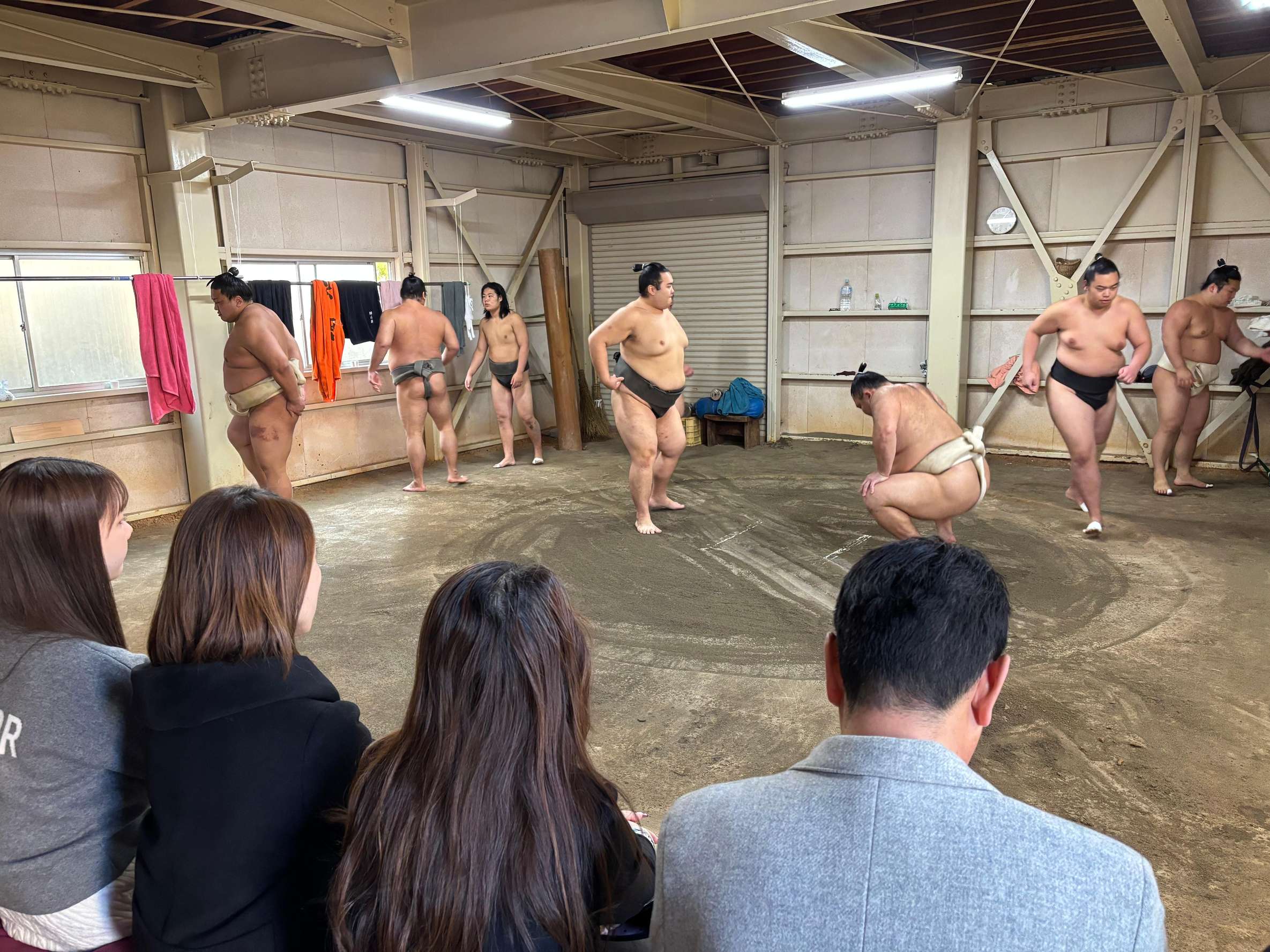
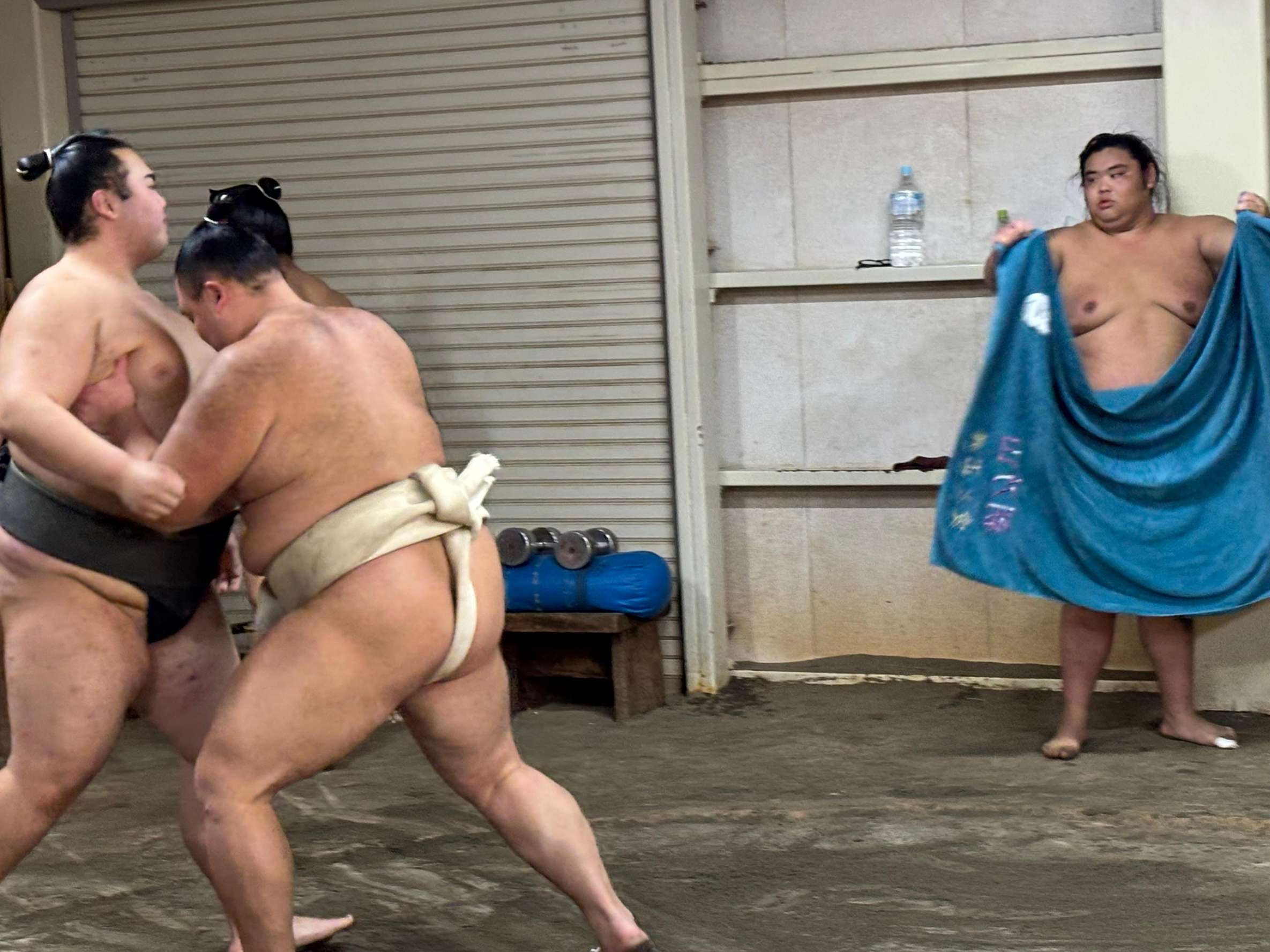
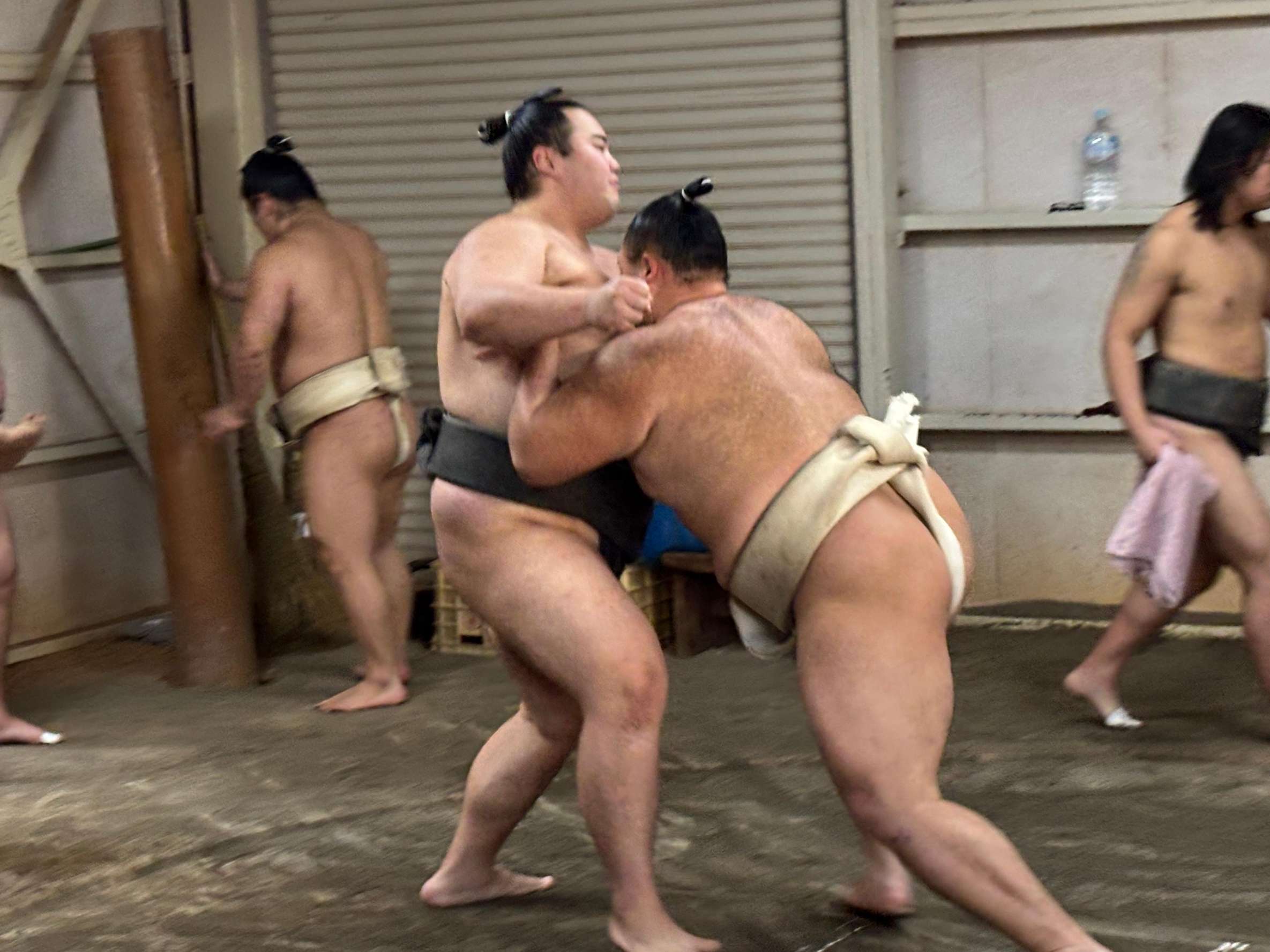
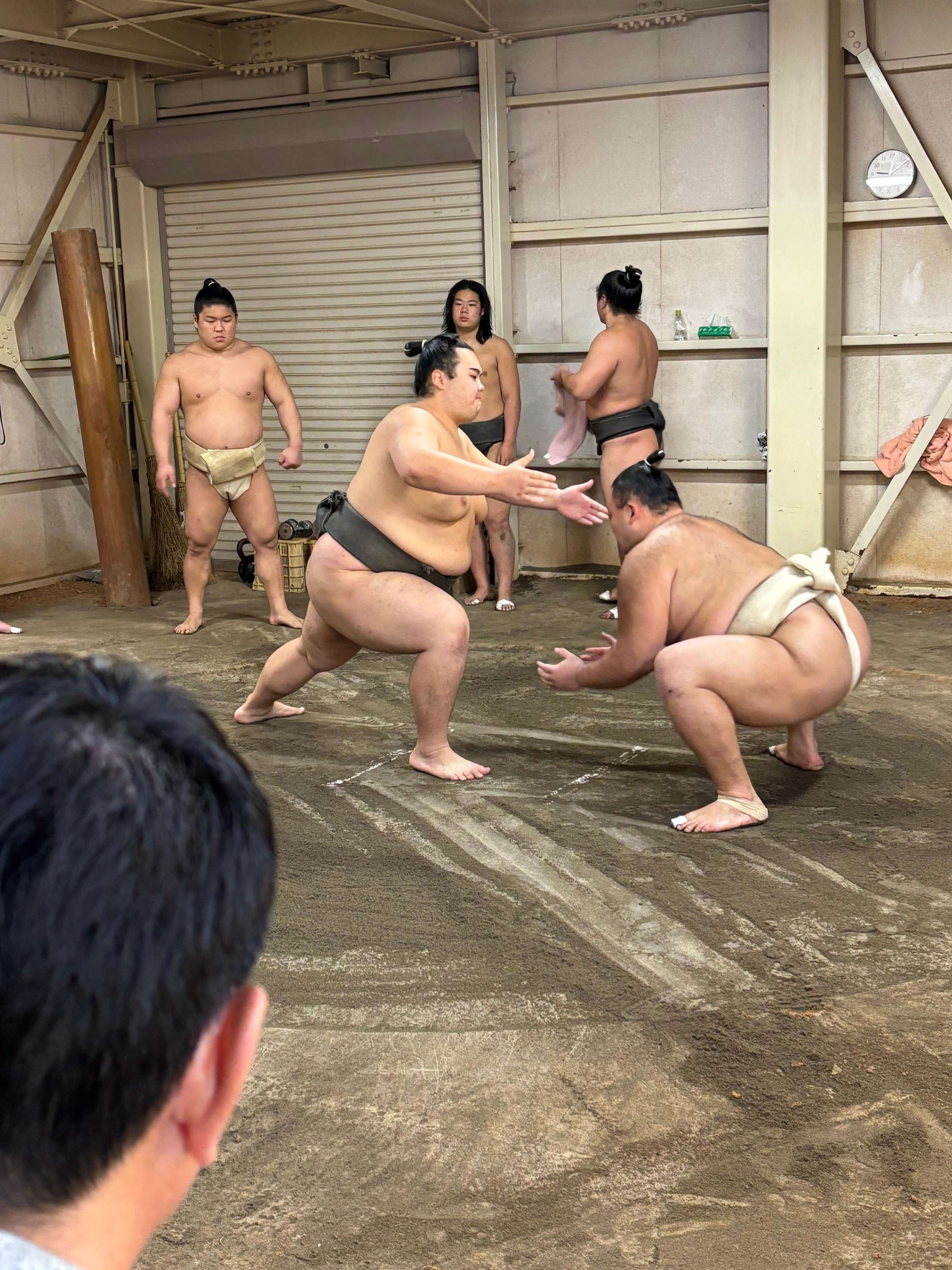
What follows is real training, not a performance. Warm-up drills come first, then roughly an hour of full-intensity sparring between active wrestlers. Your guide whispers explanations as it happens, and photos with the wrestlers are included at the end. Most visits wrap up by about 9 am, leaving the whole day ahead of you.
Meeting point両国駅The meeting point, two stops from Akihabara in Tokyo's sumo district. You check in with your English-speaking guide here before the short walk to the stable.Street View2Takasago-beya Sumo Stable· 90 minA real heya where wrestlers live and train together. Sit on cushions beside the ring and watch 90 to 120 minutes of morning practice, from drills to bouts, with photos afterward.
Choose a date early in your planning. Tokyo stables close to visitors when the wrestlers travel to tournaments in other cities, so whole months can offer no morning practice at all. April, May and September are the hardest months to book.
Pro tipStables often finalise their schedules only about a month beforehand, so a date booked a couple of months out still needs a flexible mindset.
RecommendedNovember, March and July are the quietest months on these tours, so spots are easiest to get.
02
Choose the tour that fits
Two guided options run from Ryogoku. One is a two-hour visit with an English-speaking guide, meeting at 7:45 am at Ryogoku Station and watching practice from 8 am. The other runs three hours and is led by a sumo specialist who works as a national newspaper journalist.
Common mistakeFirst-timers book a tourist sumo show thinking it is stable practice. A real stable visit means silent observation of active wrestlers, and the tour title tells you which is which.
Pro tipIf you want to ask questions about sumo, the journalist-led tour builds that in, with time to talk after practice.
03
Book and confirm
Reserve online and you get confirmation by email with your voucher. Both tours let you cancel up to 24 hours in advance for a full refund, so an early booking carries little risk.
ImportantBook well ahead. The spots on stable visits are few, and travelers who wait until a few days out often find every date already full.
Pro tipSame-day cancellations by the stable are rare but possible, and you would be notified immediately with a full refund or an alternate experience.
04
Plan the morning
Meet at Ryogoku Station at 7:45 am. The guide walks you about ten minutes to the stable, seats you on cushions beside the practice ring, and whispers explanations during the 90 to 120 minutes of training. You are usually done by about 9 am.
RecommendedWear comfortable clothes, because you sit on the floor for the whole session. Leave the stroller and skip breakfast until after, since food is not allowed inside.
Common mistakeBringing a phone out during practice. Phones are not allowed at the two-hour tour, and flash photography is banned on both.
05
On the day
Arrive a few minutes before the meeting time so the group settles in together. Keep quiet through practice and hold your questions for the end, when the guide translates and the wrestlers may chat and take photos with visitors.
Pro tipComing early gets you a spot close to the viewing window, which matters most if children are with you and need to see the ring.
RecommendedAfter practice, pair the visit with the Edo-Tokyo Museum about five minutes away or Ekō-in temple right next door.
What to know before you book a Tokyo sumo stable visit
Can stop the dayGood to knowGood news
01
ChoosingWhat it is, who it suits, when to go
1
Timing
You meet at 7:45 am and watch practice for 90 to 120 minutes, usually finishing by about 9 am. The shorter tour runs two hours in total; the journalist-guided one runs three, with time for questions and a walk afterwards.
02
BookingHow far ahead, and what happens if plans change
2
Cancellation
Both tours can be cancelled up to 24 hours in advance for a full refund. Practice itself can be cancelled on short notice by the stable, in which case you are notified immediately and get a refund or an alternate experience at no extra cost.
Booking aheadCan stop the day
Stable visits run on small groups and sell out, so book about two months ahead rather than waiting for your trip week. In January, May and September, tournament months, Tokyo stables close to visitors and practice viewing largely stops.
03
Before you goPapers, health, what to bring
3
What to wear
You sit on floor cushions for the whole practice, so wear comfortable clothes you can sit in and shoes that slip off easily at the entrance. Thick socks help, and a small cushion is worth bringing if kneeling is hard for you.
Children
Children can come if they can sit quietly for two hours, and they pay the same fee as adults. For families with young children who cannot stay still, a sumo show or a tournament is a far better fit than a real morning practice.
Comfort
Tokyo mornings sit near 0°C from December to February, and stables have no heating, so bring warm layers. The journalist-guided tour is not suitable for wheelchair users because of the stable's traditional setup.
04
On the dayWhere to be, when, and how you get there
1
Meeting point
Both tours start at Ryogoku Station, two stops from Akihabara. The guide walks you the 10 minutes to the stable and seats you beside the practice ring, so you never have to find the door on your own.
05
During the tourWhat is expected of you
2
EtiquetteCan stop the day
A stable is a working training ground, so you watch in silence: no talking, no moving around, no eating or drinking, and phones on silent. Never step on the dirt of the practice ring. Save your questions for the end.
Photos
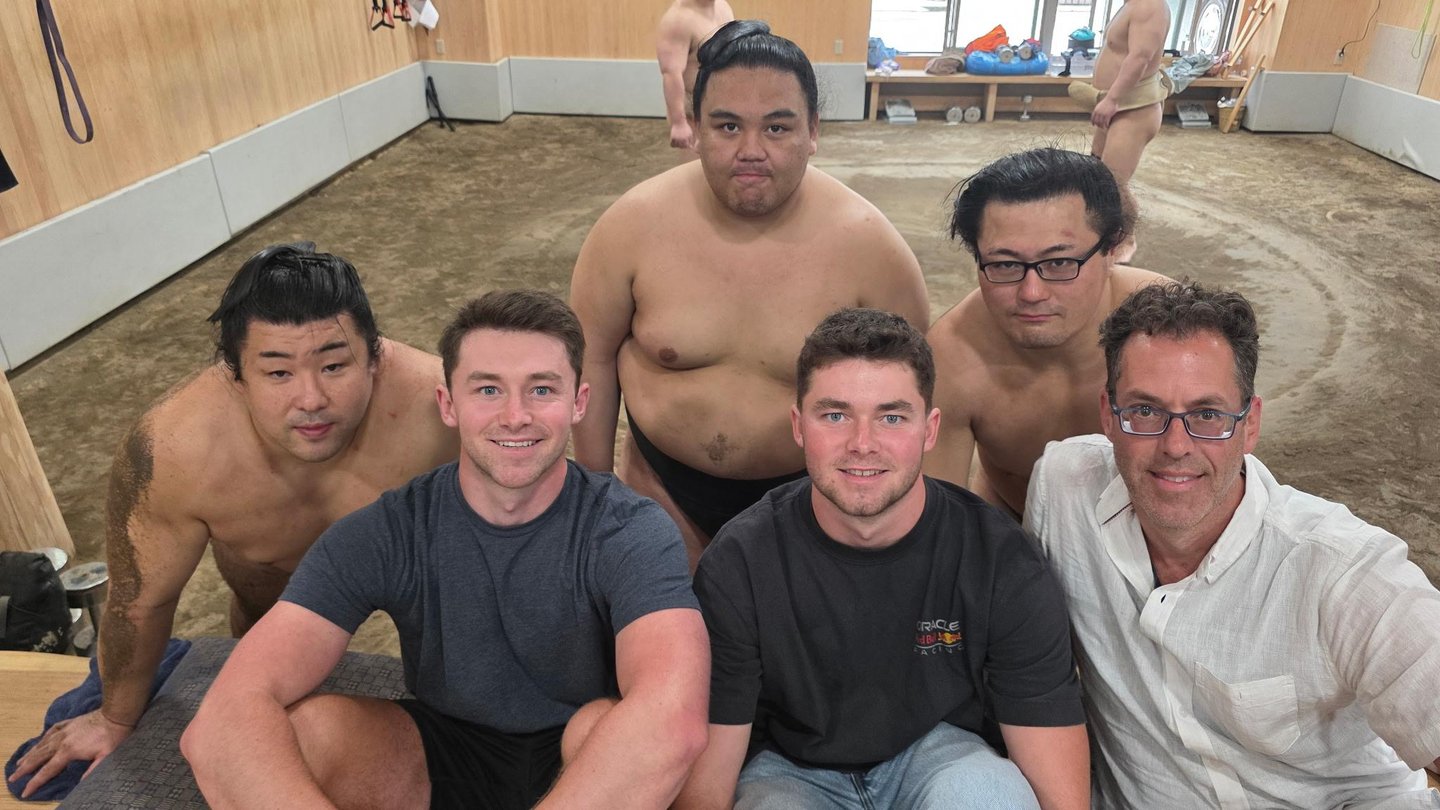
You can take photos as long as it does not get in the way of the wrestlers' practice, but flash is banned. Both tours include photos with the wrestlers afterwards, when the guide can translate and the wrestlers may chat and take selfies.
How to book a sumo tour in Tokyo for real stable practice
A Tokyo stable visit means a 7:45 am start, two silent hours on a cushion and a strict booking calendar. The two guided tours decide how deep you go, and the tournament calendar decides whether you go at all.
Tokyo· 35.70° N, 139.80° E
If you only remember three things
1
Book about two months ahead; stable spots are few and sell out first in April, May and September.
2
Meet at 7:45 am at Ryogoku Station; practice runs from 8 am and you are done by about 9 am.
3
Inside the stable you stay silent, sit still and never use flash; questions wait until the end.
Is Watching morning practice at a stable worth it?
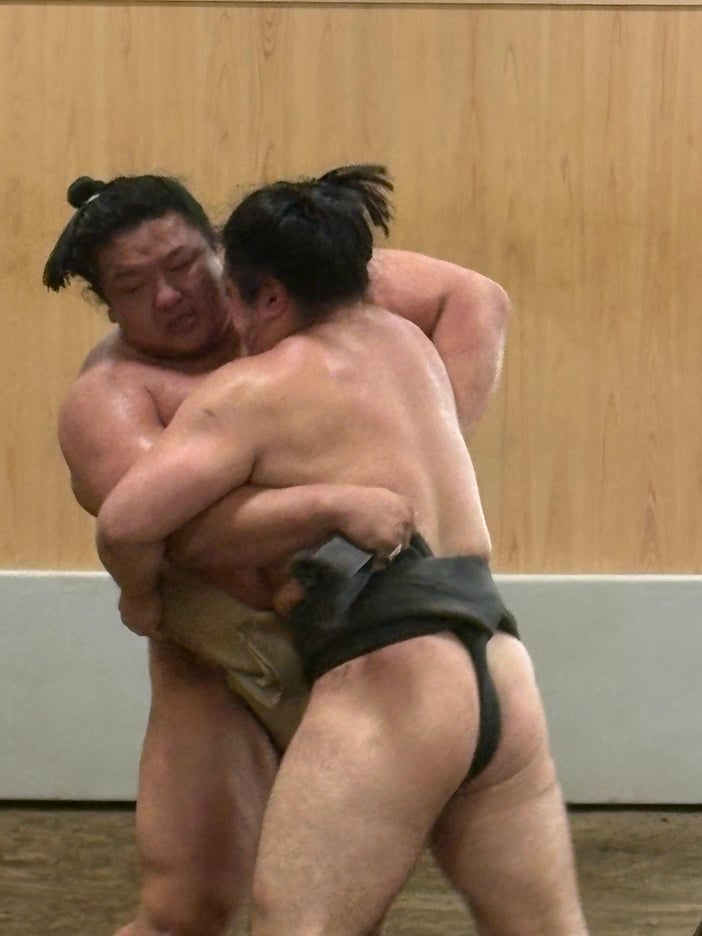
The sound reaches you first: palms slapping clay, feet stamping in unison, a wrestler thrown to the dirt a few metres from where you sit. Nobody claps. Nobody speaks. That silence is the deal you make for the closest look at real sumo you will ever get as a visitor.
Morning practice is the authentic choice for people who want the sport itself. You watch active wrestlers train because their careers depend on it, from warm-up drills to full-intensity bouts.
There is no pageantry, no crowd, no commentary over a microphone. Regulars who love sumo call this the highlight of their trip; casual visitors often get more out of a tournament or a dinner show.
Be honest with yourself about which one you are. A stable is a workplace and a home, and the wrestlers inside are working.
You sit on a floor cushion for up to two hours, you do not talk, you do not move, and in winter there is no heating. Families with toddlers who cannot sit still will have a far better morning at a show.
Myth vs reality
Myth"Authentic sumo experience" means you watch real training
Reality
Many tours with that label are entertainment shows with retired wrestlers, and show wrestlers do not belong to the sumo association
MythA stable visit is like a small sumo show
Reality
A heya is where rikishi live and train, a private workplace, so expect a sparse, silent viewing rather than a performance
MythYou can tell real training by the word authentic on the booking page
Reality
Real wrestlers train seriously because results affect their careers; the atmosphere at a show, where performers entertain, is completely different
If the myths table settles one thing, it is this: check what you are actually booking before you pay. The word authentic on a booking page has sent plenty of travelers to a comedy show with retired wrestlers when what they wanted was a silent room and real sweat.
Tour for this
Tokyo: Sumo Watching with journalist and walks4.9★ (309) · 3 hours · Free cancellation
The morning starts at Ryogoku Station. At 7:45 am your guide gathers the group, walks you ten minutes through the sumo district and seats you on cushions beside the practice ring, which sits just inside the stable entrance. The kitchen is often next door, because feeding wrestlers is part of the day.
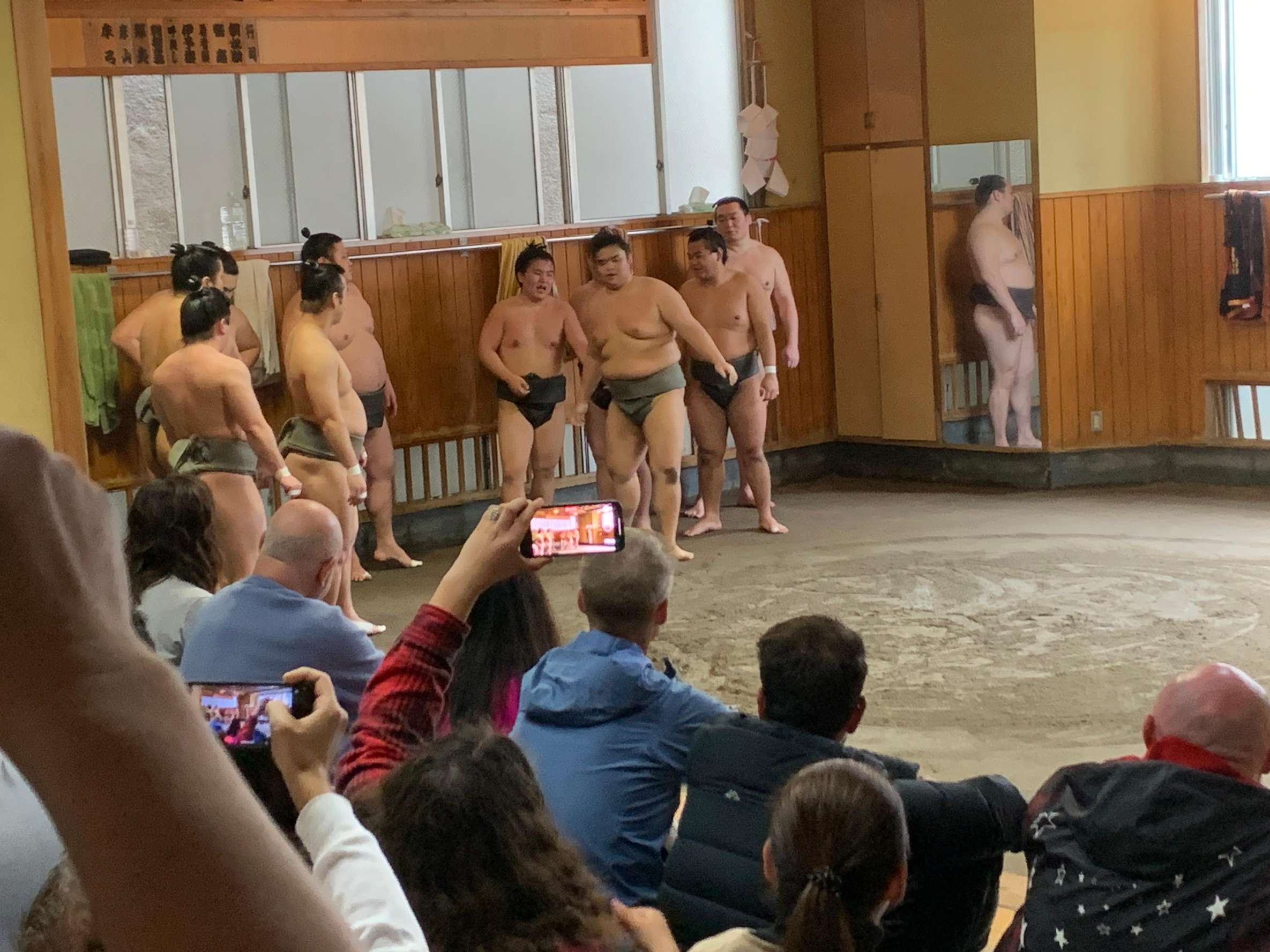
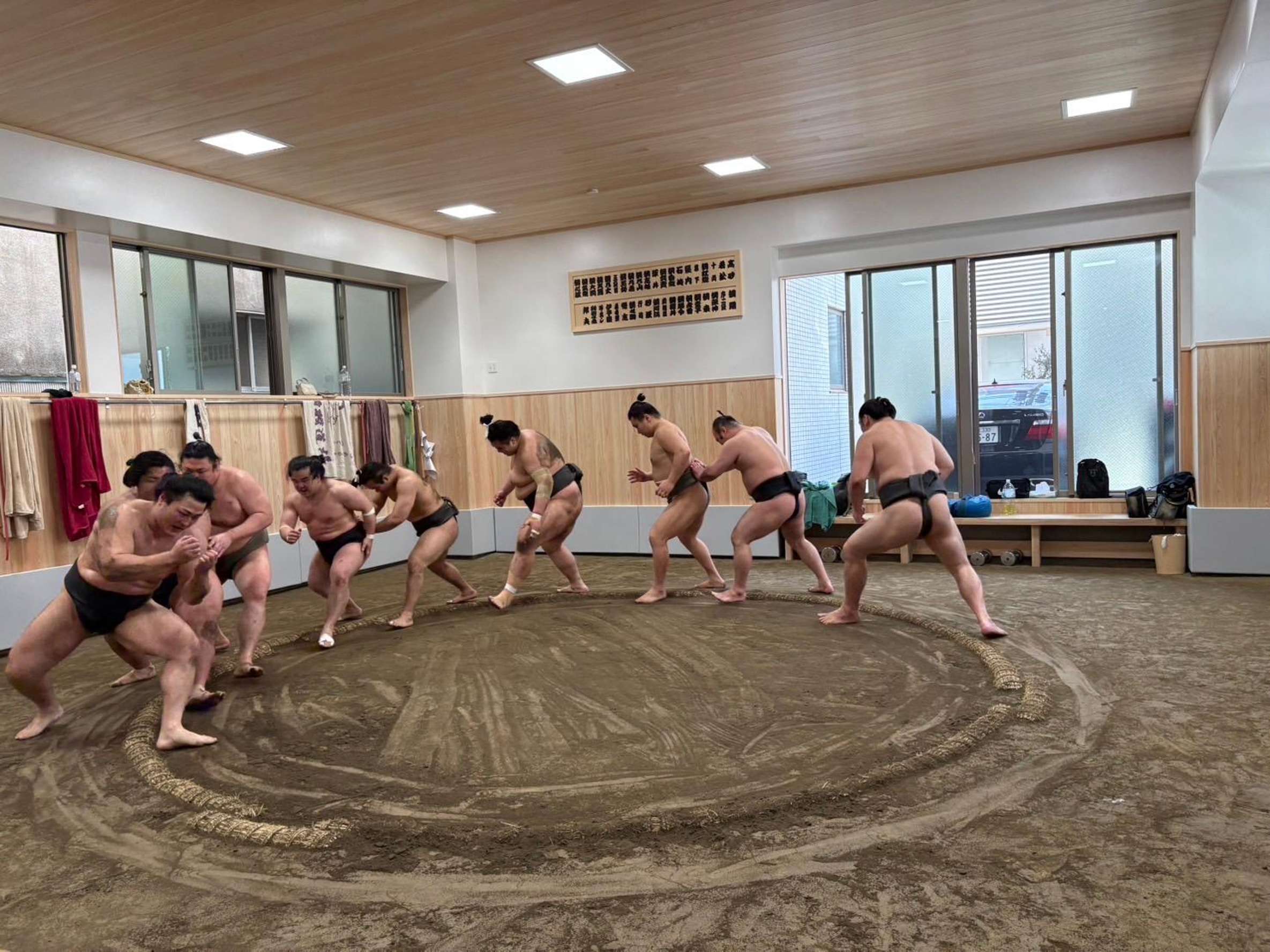
From 8 am you watch 90 to 120 minutes of training. Warm-up drills come first, then roughly an hour of full-intensity sparring as the higher-ranked wrestlers take the ring.
Your guide sits with you and whispers explanations of what is happening; the wrestlers train in reverse rank order, so the session builds as the morning goes on.
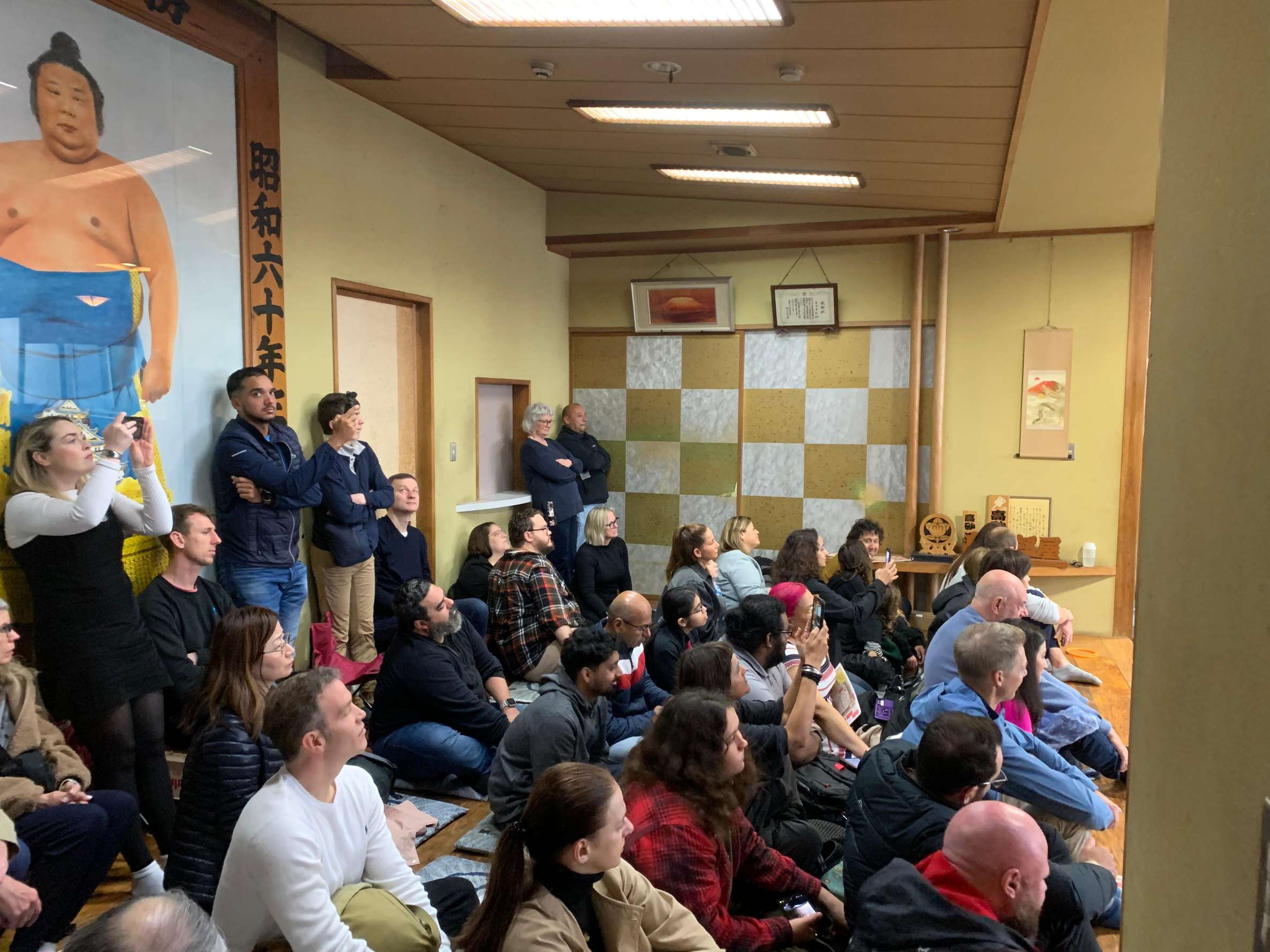
The viewing area is narrow. You may sit as little as 10 to 20 centimetres from the ring, legs tucked so the soles of your feet never face the wrestlers. Small stools exist for anyone who needs one, but most visitors sit cross-legged on the floor the whole time.
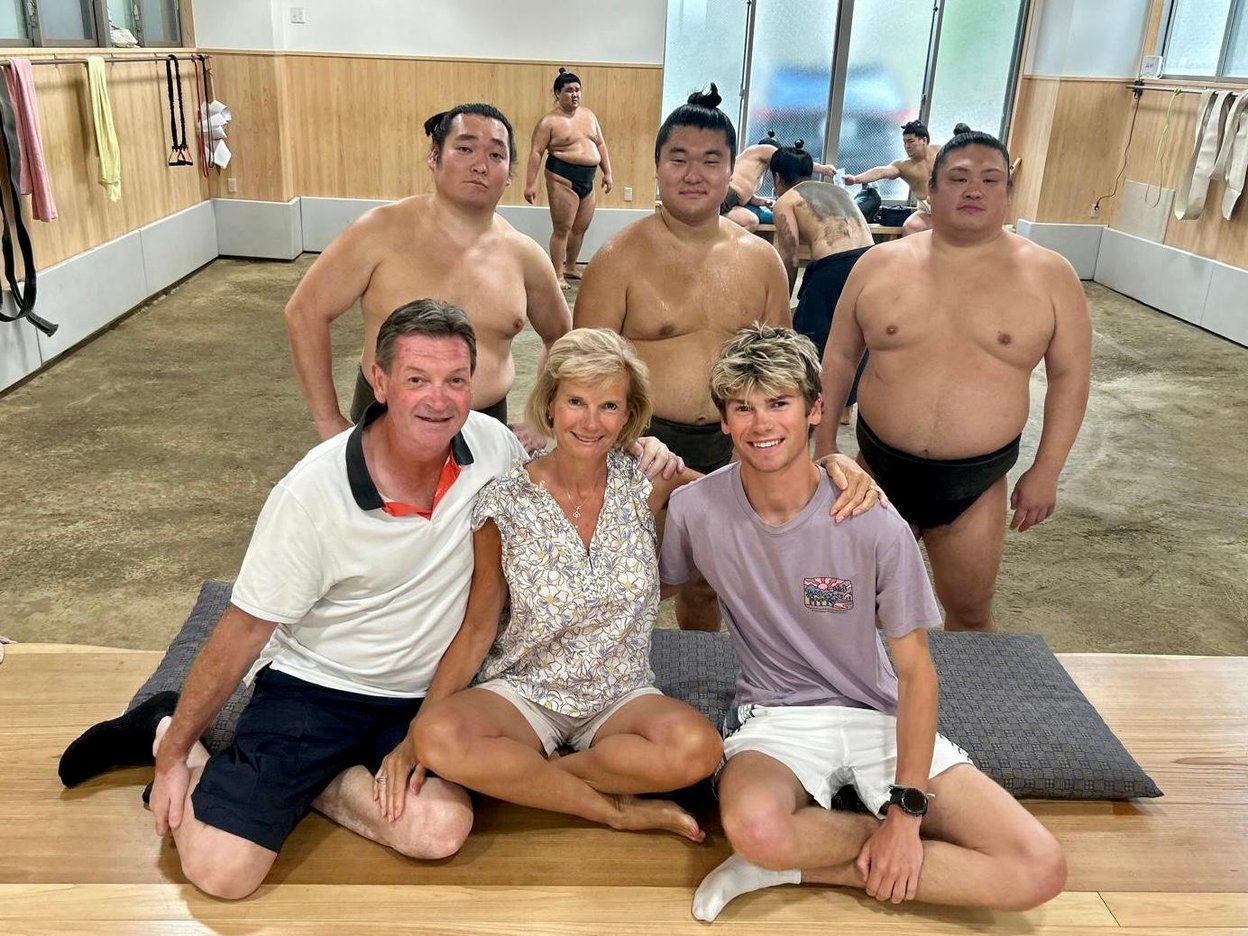
By about 9 am it is over, and this is the part people remember: questions are welcome at the end, the guide translates, and the wrestlers may chat and take photos with visitors. The silence was never coldness; it was just their working hours.
1
7:45 am
Meet your guide at Ryogoku Station
A 10-minute walk to the stable follows
2
8 am
Practice begins
Warm-up drills, then about an hour of full-intensity sparring
3
About 9 am
Practice ends
Questions, translation and photos with the wrestlers
The simplest way in is Tokyo: Watch sumo! with English Guide, a two-hour outing that includes the guide, the stable visit, the morning practice and photos with the wrestlers. It covers the morning exactly as described here.
Tour for this
Tokyo: Watch sumo! with English Guide4.7★ (453) · 2 hours · Free cancellation
A heya is a home first. Wrestlers live there, train there, and the youngest apprentices do chores for their seniors in a hierarchy that runs the whole household.
The stablemaster acts as a father figure, stablemates never fight each other in official tournaments, and the shared life exists so young wrestlers absorb the training and the customs from the same people at the same time.
That is why you cannot just turn up. Visits are by appointment, many stables never open to the public at all, and most require a Japanese speaker to explain the house rules. Around Ryogoku, many stables will let you watch if you reserve by phone in advance, which is easier said than done from overseas.
There is one easy exception. Arashio-beya keeps street-facing windows open, so anyone can watch morning practice from the pavement between about 7 am and a little after 10 am, no booking needed. It is a genuine look at training, just from outside the room.
For everything else, a guided visit is the way in. Tours hold special permission from the stables, and the guide handles the etiquette briefing a Japanese-speaking companion would normally give. That access is exactly what you are paying a guided sumo stable tour in Tokyo for.
Two guided visits cover this ground well, and the choice comes down to how deep you want to go.
Tokyo: Watch sumo! with English Guide is the straightforward morning. Two hours, meeting at Ryogoku Station, a walk to Takasago-beya with your guide, 90 to 120 minutes of practice watched from beside the ring, and photos with the wrestlers included.
The guide walks you in, seats you and whispers explanations as the training unfolds. If you want the stable morning and nothing else, this is it.
Tokyo: Sumo Watching with journalist and walks runs three hours and adds a second layer: your guide is a sumo specialist and national newspaper journalist, the stable access comes through special permission, and you can ask every question you have been saving.
It finishes at Ryogoku Edo NOREN, so the morning ends with a walk and a food hall instead of a platform. You sit on the floor, no flash photography, and babies under one and wheelchair users are not suited to the traditional setup.
Both include a live guide explaining practice as it happens, so nobody hands you printed notes and leaves you to work out the room on your own. During the session the guide may pass written explanation cards instead of speaking, and questions come at the end.
Watch sumo! with English Guide
Sumo Watching with journalist
Length
2 hours
3 hours
Guide
English-speaking tour guide
Sumo specialist and national newspaper journalist
Access
Guided visit to Takasago-beya
Special permission from the stable
Extras
Photos with the wrestlers
Commemorative photos, ends at Ryogoku Edo NOREN
Watch sumo! with English Guide
Length
2 hours
Guide
English-speaking tour guide
Access
Guided visit to Takasago-beya
Extras
Photos with the wrestlers
Sumo Watching with journalist
Length
3 hours
Guide
Sumo specialist and national newspaper journalist
Access
Special permission from the stable
Extras
Commemorative photos, ends at Ryogoku Edo NOREN
Read the table against your own morning: the two-hour tour fits a tight schedule, the journalist-led one suits travelers who want the best sumo stable tour in Tokyo for depth and context.
Tour for this
Tokyo: Sumo Watching with journalist and walks4.9★ (280) · 3 hours · Free cancellation
Guided stable tours run all year, but what you see depends entirely on the tournament calendar. Six Grand Sumo tournaments fill the odd months: January, March, May, July, September and November.
In a Tokyo tournament month the wrestlers are competing, so morning practice closes or shrinks. Keiko tours pause for about ten days before each tournament and throughout it, and when the tournament is held elsewhere the whole stable may travel with the wrestlers.
The fullest sessions come in the even months between basho: February, June to August and October to December.
The sweet spot is the two weeks before a tournament. Official stable guidance says morning practice is at its most serious and intense then, and visitors report extended sessions of two to two and a half hours, one calling it an extended practice day.
If you want the wrestlers at full throttle, aim for late December, April or August.
A normal visit runs about 90 minutes to two hours of watching, with full training from roughly 7:30 or 8 am until 9:30 or 10 am.
The length depends on that day's schedule and how close the next tournament is, so sessions can finish early. Check the stable's published practice calendar before you go, because the schedule is never guaranteed.
Sumo practice and tournaments through the year
April: 5 out of 5 for how busy it gets. Very busy with travelers, and hard pre-tournament training is on show until practice tours wind down.
HighestMar to May, Oct
In betweenJun to Sep, Nov
LowestDec to Feb
Darker: a higher how busy it gets score, out of 5
Tap a month to read it.
February: 5 out of 5 for tournament or practice season. With no tournament, February is one of the best months for full, intense morning practice, and it is also the quietest month on the tours.
HighestFeb, Jun, Oct
In betweenApr, Nov to Dec
LowestJan, Mar, May, Jul, Sep
Darker: a higher tournament or practice season score, out of 5
Tap a month to read it.
The pattern in the calendar is simple: pick an even month for full training, or the fortnight before a basho for the most intense version of it.
Book about two months ahead. That is the average lead time travelers actually use, and one stable-tour operator recommends getting in touch within three months of your date, because stables often finalise their schedules only a month beforehand.
The hardest months to book are April, May and September, when demand runs at roughly one and a half to two and a half times an ordinary month, followed by June and August.
November, March and July are the quietest and easiest. Waiting until the week of your trip is the classic mistake: the small-group spots, sometimes as few as six seats, are gone, and confirmations can take days.
Cancellations cut both ways. You can cancel up to 24 hours in advance for a full refund. The stable can too, though it is rare: a wrestler's injury or a shifted tournament schedule can cancel a session on the same day.
If that happens you are notified immediately and get a full refund or an alternate experience at no extra cost.
Can stop the day
Tokyo stables close to visitors for whole months when wrestlers travel to away tournaments in March, July and November Check your dates against the tournament calendar before you plan anything else around the visit
One habit worth copying from regulars: confirm the day before that practice is actually taking place, especially if your date sits near a tournament.
Ryogoku is an easy hop from almost anywhere central. From Tokyo Station, the JR Sobu Line with a change at Akihabara takes about 13 minutes, and trains run every few minutes.
From Shinjuku the Chuo-Sobu Line goes direct in about 22 minutes. From Ginza, a direct subway toward Asakusabashi takes about 8 minutes, then a short hop to Ryogoku.
Taxis win on door-to-door time without traffic: roughly 15 minutes from Tokyo Station, 14 from Ginza, 30 from Shinjuku. Walking is possible but long, 44 minutes from Tokyo Station and 53 from Ginza, so save your legs for sitting on the floor.
Direct subway toward Asakusabashi, then short hopDirections →
15 minDeparts every 10 min
On foot
Too far to walk
—Not possible
For most visitors the train is the right call. The tour meets at Ryogoku Station at 7:45 am, so aim to be on a train that arrives by 7:35 am and give yourself the walk across the station without rushing. The sumo-themed station decor starts the morning nicely.
Budget half a morning, about 3 to 4 hours from your accommodation and back. The stable visit itself is early: travelers report meeting around 7:25 to 7:45 am, and the watching runs 90 minutes to two hours, sometimes longer before major tournaments.
Most tours then add a guided walk and explanation, a stroll past nearby sumo sights or the museum area, bringing the guided part to roughly two to three hours.
Add travel on top, about 32 minutes from Shinjuku, and you are back at your hotel well before lunch with the whole day still ahead of you.
The early start is the real cost. Morning practice at a Tokyo stable runs roughly from 7 am to 10 am, and there is no later version of it. Set an alarm, eat something light beforehand, and remember no eating or drinking happens inside the stable.
One flexibility works in your favour: you do not have to arrive at the exact posted start time. You can come during the practice window and still watch.
But if you want a spot close to the viewing window, especially with children who need to see, arrive early and settle in before the group fills the cushions.
Pack for two hours on the floor. You remove your shoes at the entrance and sit on zabuton cushions on tatami for the whole practice, so slip-on shoes and thick socks matter more than anything else you wear. Laces and fiddly straps slow everyone down at the door.
Stables ask for modest, comfortable dress, nothing tight or restrictive, since you will be sitting cross-legged or kneeling with your legs tucked. If the floor is hard on your knees or back, bring a small cushion; it makes the practice far easier to watch. Hats and sunglasses come off inside.
Dress for the Tokyo morning, and the season it sits in. December to February mornings sit near 0 to 3 degrees with the occasional snow day, so wear warm layers and a coat you can keep on until you step inside, remembering the stable has no heating.
June to August mornings are already 19 to 25 degrees and humid, so light breathable clothes win.
What to wear and bring to a morning sumo practice
Dec to FebMornings are cold, around 0 to 3°C with occasional snow days, so wear warm layers and a coat you can keep on until you step inside.
Jun to AugMornings are already 19 to 25°C and humid, so light breathable clothes are the most comfortable choice.
Mar to Sep rain layerRain falls on about 12 to 15 days in these months, so a compact umbrella or light rain jacket keeps the walk to the stable dry.
Modest, comfortable clothesStables ask visitors to dress modestly, and you sit on the floor during the practice, so avoid anything tight or restrictive.
Slip-on shoesEveryone removes their shoes at the stable entrance, so laces and fiddly straps slow you down at the door.
Thick socksYou sit on zabuton cushions on tatami for the whole practice, often 75 minutes to two hours, with no chairs.
Small cushion for sittingIf kneeling or sitting on the floor for up to two hours is hard on your knees or back, a small cushion makes the practice much easier to watch.
Phone on silent, no flashStable rules require silent phones and quiet watching, and flash photography is not allowed during the practice.
Your phone goes on silent before you enter, and flash photography is off the table for the whole session. A compact umbrella covers the walk to the stable in the wetter months.
The etiquette - how to watch without disturbing practice
One rule governs everything inside a stable: disturb nothing. No talking, not even a whisper. No moving around. No eating or drinking, no smoking, phones off. Not even camera shutter sounds, which carry further than you would think in a quiet room.
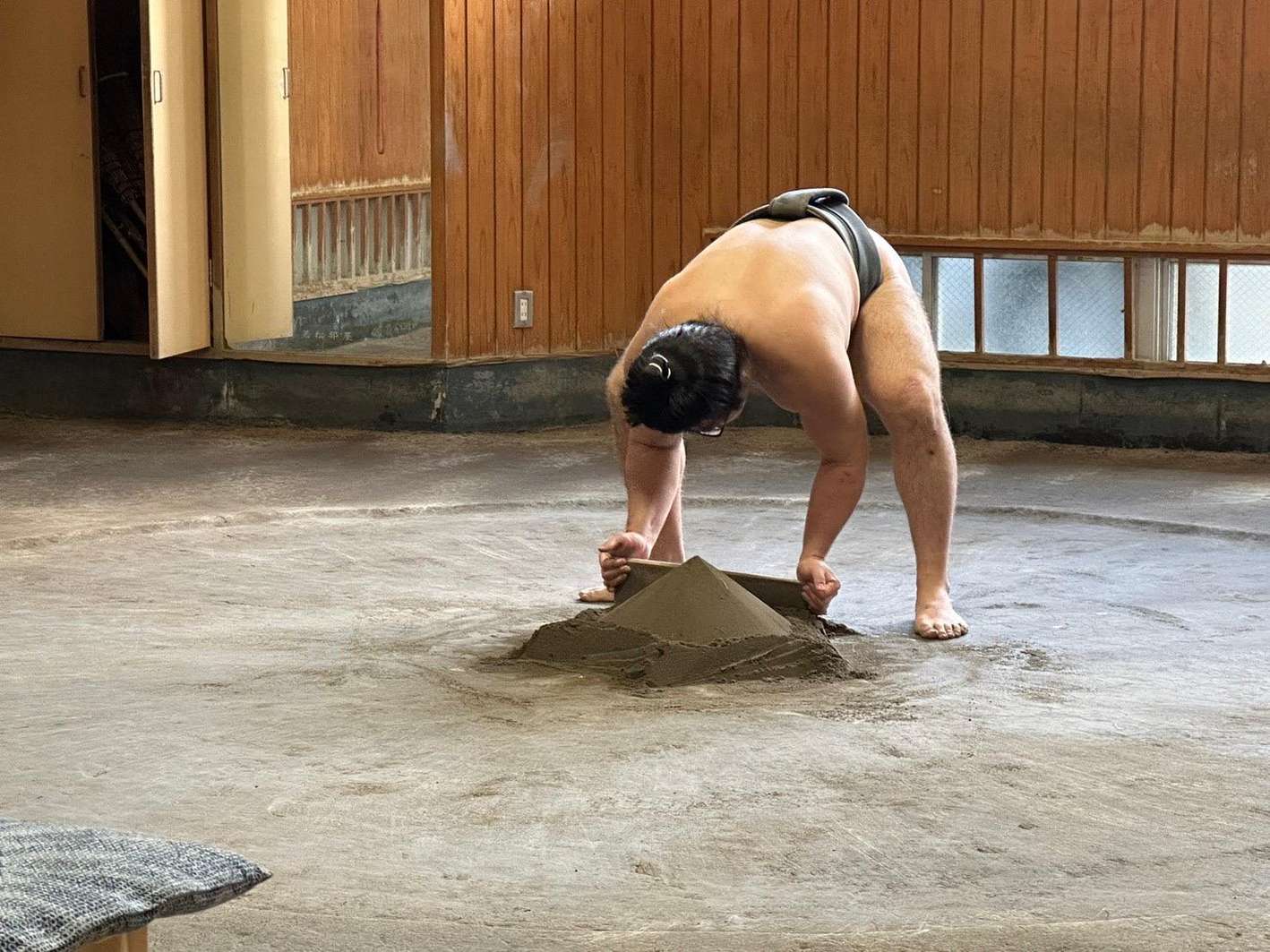
The practice ring is sacred ground. Never step on it or the sandy surface around it, and never stretch your legs toward the ring or show the soles of your feet to the wrestlers. Sit cross-legged, stay seated, and stay until the wrestlers finish; leaving mid-practice is a breach.
Photos are allowed from your own seat, as long as they do not get in the way of the wrestlers' practice. No flash, no tripods, no standing up for a better angle. Save your questions for the end, when the guide can translate and the wrestlers may chat and take selfies with visitors.
What nobody tells you
The ring is sacred ground you never step on
Stepping on the dohyo or the sand around it breaks the one rule that matters most inside a stable
Even camera shutter sounds are too loud
A quiet room carries every noise, so silence your phone and shoot without flash from your seat
You stay until the wrestlers finish
Leaving mid-practice is a breach; the full session is part of the respect you are showing
Questions come at the end, not during
The guide translates afterwards, and that is when wrestlers may chat and take selfies
Outside, the same respect applies. Stables are private workplaces and homes: do not open doors, photograph through windows or wait in narrow streets for wrestlers. If you pass wrestlers in the street, give them space and ask before taking a portrait.
Quiet older children are welcome. On the Tokyo stable-practice tours, children can observe as long as they do so quietly, and the fee is the same as for adults. Families with children should arrive early to secure a window spot at eye level, because a child who cannot see loses interest fast.
The honest test is simple: can your child sit still and silent for up to two hours?
If yes, the morning can be a genuine highlight; travelers describe the wrestlers' power and discipline, and the sounds of practice, as especially striking from nearby. If no, nobody enjoys it, least of all the wrestlers whose training you would interrupt.
For families with young children who cannot stay silent and still, a sumo show or a tournament is a far better fit.
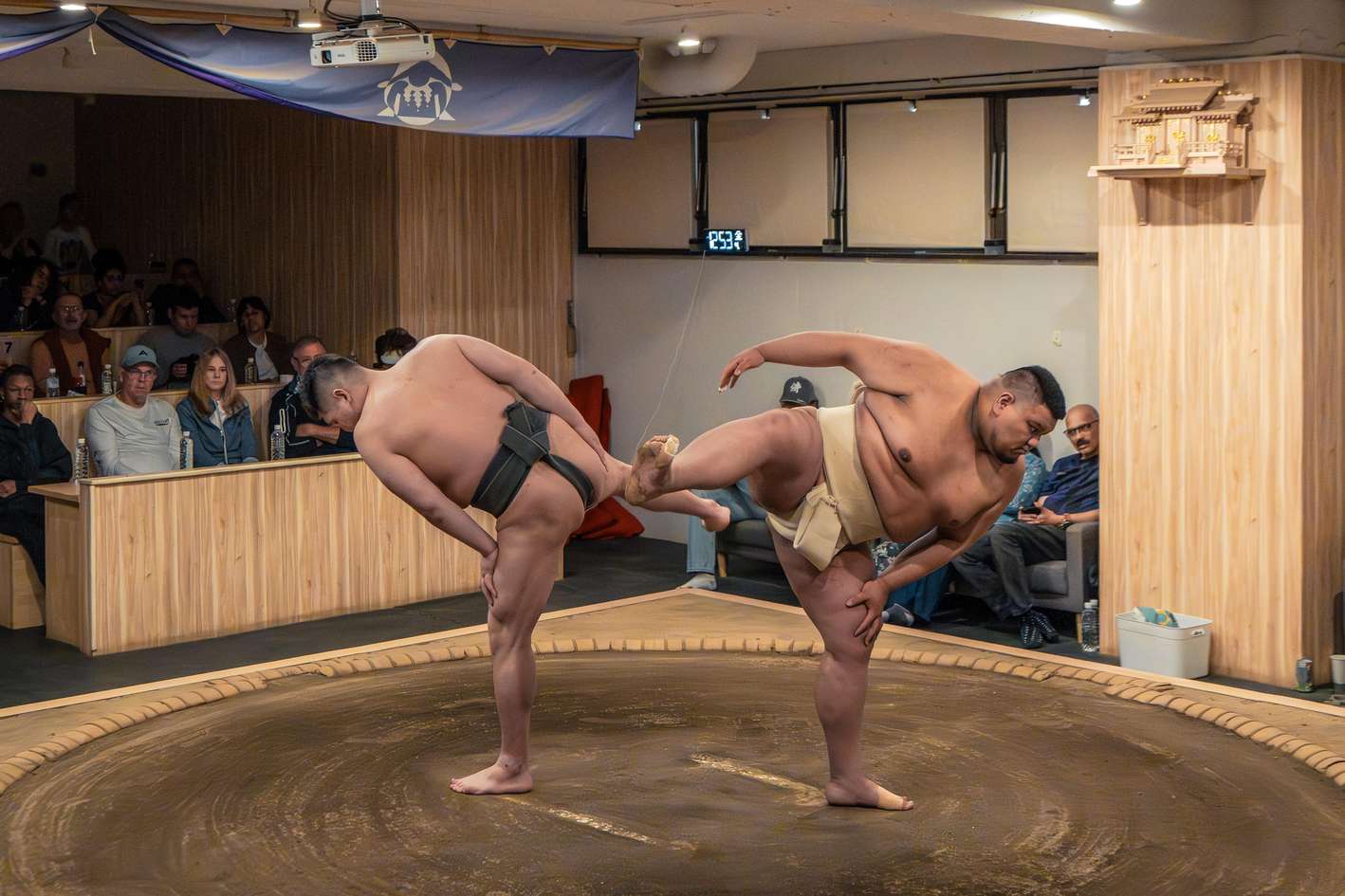
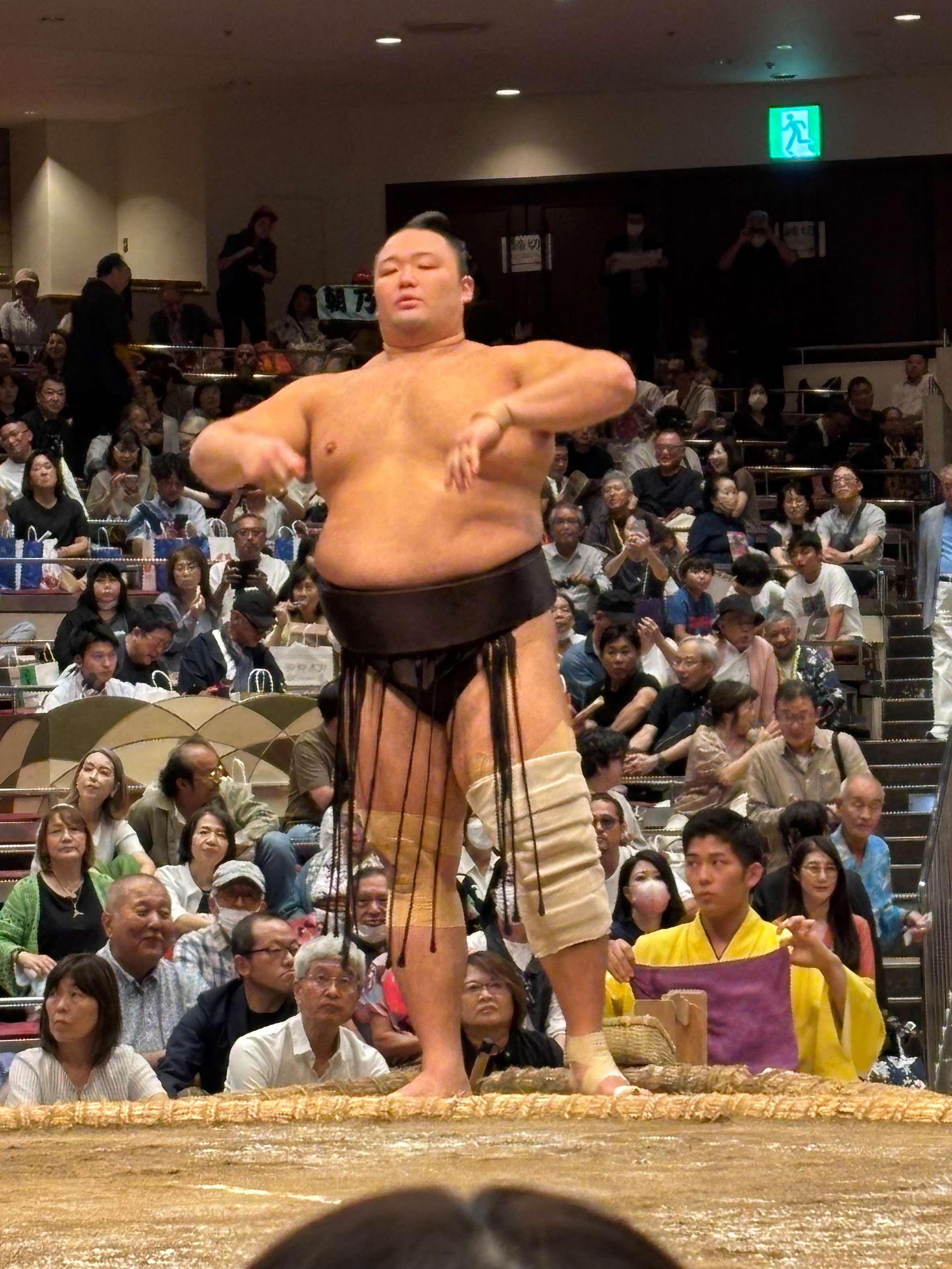
At a tournament kids can shout along with the crowd, and the mid-day break features comedy and chances for children to dress up in the ring. A stable asks for the opposite of all that.
A traveler's note
Fascinating trip to an authentic sumo stable with a former sports journalist guide. The session was unique, intense and entertaining, and he explained the lifestyle and culture afterwards. Highly recommended.
Practice ends by about 9 am, and Ryogoku rewards the early finish. Ekō-in temple sits right next door, the place where wrestlers pray before tournaments, and the Edo-Tokyo Museum is about a 5-minute walk away, with the Sumida Hokusai Museum 6 minutes beyond that.
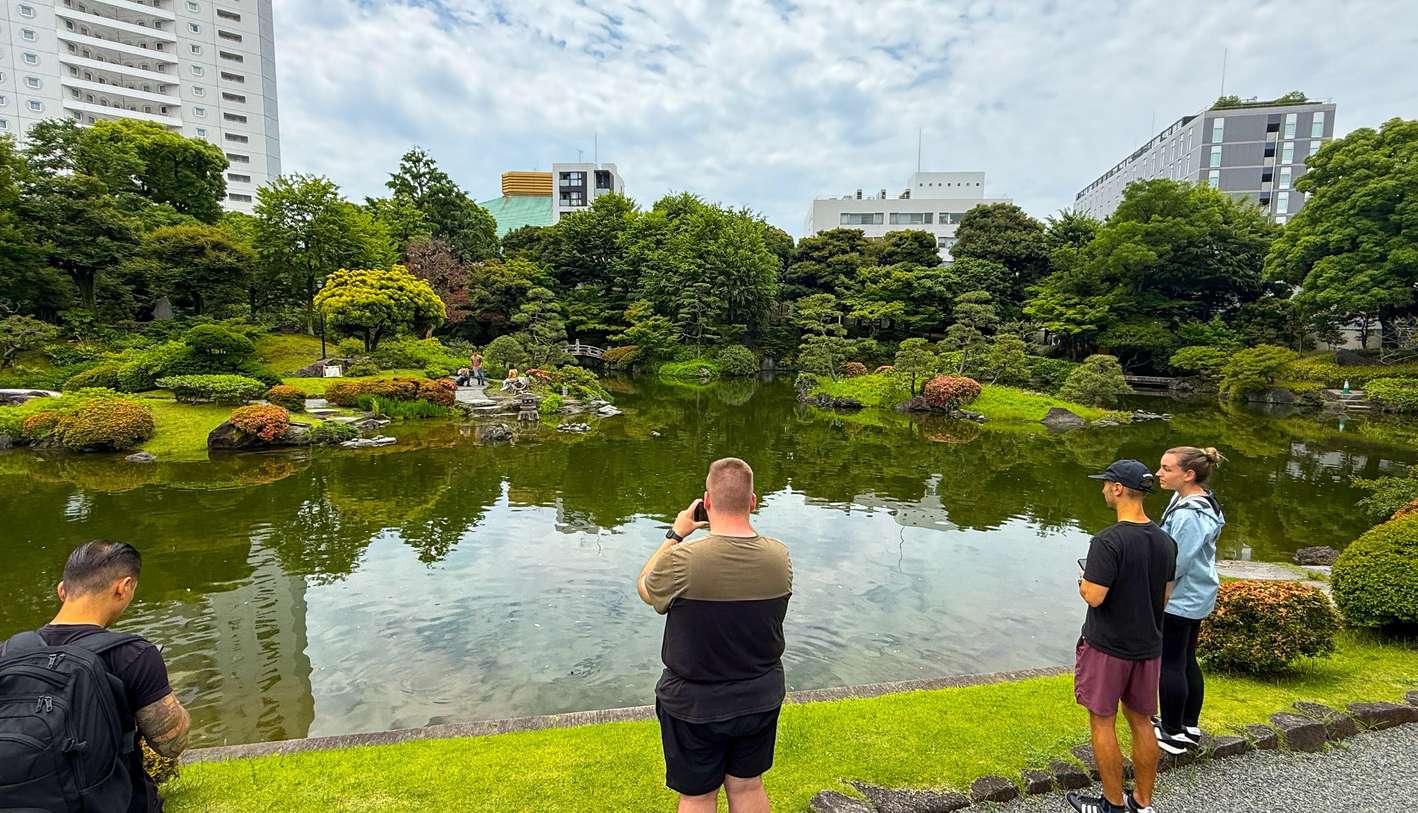
Many tours already add a walk through a nearby park, a sumo souvenir shop and the Sumo Museum inside Ryogoku Kokugikan after practice.
The small Sumo Museum is the sight most visitors miss, along with the sumo-themed train station next door and the chanko nabe restaurants run by retired wrestlers. On non-tournament days the museum opens to walk-ins; on tournament days it is reserved for ticket holders.
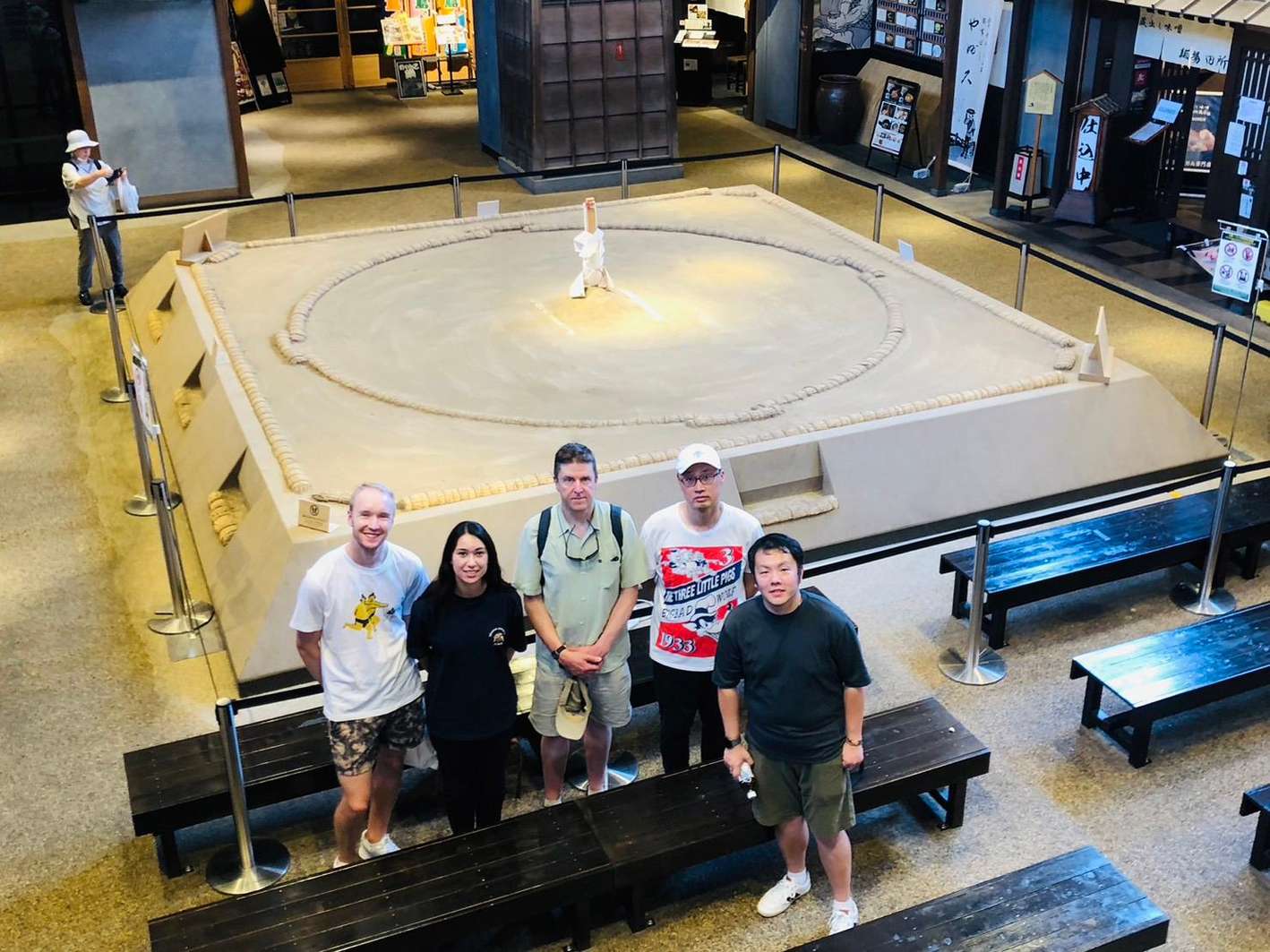
Two nearby names are not worth the detour. The Kokugikan exterior and the replica sumo ring nearby can be seen for free without a tour, and the Fukagawa Edo Museum and Kiyosumi Garden both sit roughly a 20-minute walk away, outside the sumo district entirely.
Worth the walk after your sumo stable visit in Ryogoku
A good closing move is lunch at a chanko nabe restaurant, the hot pot wrestlers eat in quantity, before catching the train two stops back toward Akihabara. The whole district fits comfortably into the morning you have already given it.
For anyone who wants the real sport, a silent morning at a Tokyo stable is the closest you will get, and the two-hour guided visit from Ryogoku delivers it without any of the access problems. Book about two months out, pick an even month or the fortnight before a tournament, and pack for the floor.
Go ifYou want to watch active wrestlers train, not a staged showYou can sit quietly on the floor for up to two hoursYour trip falls in an even month or just before a tournament
Skip ifYou have toddlers who cannot stay silent and stillYou want pageantry, food and audience participation; a show or tournament suits you betterYour dates fall in a tournament month, when stables close or cut practice
Our pick to book
Tokyo: Watch sumo! with English Guide4.7★ (453) · 2 hours · Free cancellation
Quick answers on visiting a Tokyo sumo stable, from meeting times to tournament months.
How do I visit a sumo stable in Tokyo to watch morning practice?
Book a guided visit, which is how most overseas travelers get inside. One tour meets at Ryogoku Station at 7:45 am, walks ten minutes to the Takasago-beya stable, and watches practice from 8 am for 90 to 120 minutes. A few stables, like Arashio-beya, let anyone watch through a street window without a booking.
Can you walk into a Tokyo sumo stable without a booking?
Usually no. A stable is where wrestlers live and train, so visits are by appointment and many stables never open to the public at all. Arashio-beya is the exception: turn up early and you can watch from the street-facing window for free.
When is morning practice at a Tokyo sumo stable, and how long does it last?
Practice runs roughly from 7 am to 10 am, with the serious training between about 7:30 and 9:00. A visit usually gives you 90 minutes to two hours of watching, though the length depends on that day's training and how close the next tournament is.
Which months are best for watching sumo practice in Tokyo?
The even-numbered months between tournaments, especially February, June to August and October to December, bring full, intense sessions. During the Tokyo tournaments in January, May and September, stables close to visitors or cut practice short, and some tours pause entirely.
What happens if the wrestlers end training early or skip practice on my day?
It can happen, since stables are working training grounds and the schedule shifts with tournaments and injuries. Call or confirm the day before that practice is actually taking place, and check the stable's published calendar before you plan the morning around it.
What actually happens during a guided stable visit?
The guide walks you to the stable, seats you on cushions beside the practice ring, and whispers explanations while training runs. You watch warm-up drills first, then about an hour of full-intensity sparring, and you are usually done by around 9 am. Questions wait until the end, when the guide can translate.
How can I tell real stable practice from a staged sumo show?
Look at who is wrestling. Active wrestlers train at a stable because results affect their careers, while tourist shows feature retired wrestlers performing for an audience. Check that a tour includes observing active wrestlers' training before you book it.
Can children watch sumo practice at a Tokyo stable?
Yes, if they can sit quietly and still for the whole session, and they pay the same fee as adults. For families with young children who cannot manage that, a sumo show or a tournament is a far better fit.
Do I need to speak Japanese to visit a sumo stable?
Most stables want visitors accompanied by a Japanese speaker so the house rules get explained, which is exactly why guided visits exist. On an English-language tour the guide handles the stable's rules and translates your questions afterwards.
Is watching morning practice better than going to a sumo show or tournament?
It depends on how deep your interest runs. Regulars say stable practice suits die-hard sumo fans who want a close look at real training, while casual visitors get more out of a tournament or a show with its pageantry and atmosphere.
Meet at Ryogoku Station, walk to the stable with an English-speaking guide, and watch 90 to 120 minutes of morning practice, with free cancellation up to 24 hours ahead.