4.824,642 watchers heard the slaps across the ring
Sumo Wrestling in Tokyo Live Viewing Options
See real sumo wrestlers train in a working stable, with an English guide at your side. Join 438 travelers who sat feet from the practice ring in Ryogoku, then booked a year-round show in Shinjuku, Shibuya or Ginza. Pick your Tokyo sumo viewing and secure your spot today.
"Loved this show! Wrestlers Hiro and Koji were fantastic, and MC John explained sumo's history and techniques so well. We asked questions and even wrestled them. The whole team was super friendly. Highly recommended!"
4.8★average rating24,642traveler reviews100%free cancellation51countries travelers came from
Choosing your sumo wrestling in Tokyo Experience
Two kinds of sumo viewing fill Tokyo: guided morning practice at a working stable, and shows in Shinjuku, Shibuya or Asakusa where retired wrestlers perform. The deciding difference is silence versus fun. Practice means sitting still and quiet for two hours; shows welcome noise, meals and a chance to step into the ring yourself.
TournamentsTokyo hosts grand sumo tournaments only in January, May and September, 15 days each at Ryogoku Kokugikan.
BookingStable practice tours sell out and Tokyo stables close to visitors when wrestlers travel to tournaments in March, July and November, so reserve well ahead.
SilenceAt a real stable you must be a silent, still observer, with no talking, no flash photos and no eating or drinking.
ShowsTokyo sumo shows are staged entertainment by retired wrestlers, not official tournaments, so the bouts are demonstrations rather than contests.
AgesChildren can join the stable tour if they observe quietly, the shows welcome families, and the Asakusa show excludes babies under one.
Wheelchair accessThe Shibuya show and the stable tours are not suitable for wheelchair users, and some venues have stairs.
ArrivalThe Shinjuku show follows a strict schedule, so late entry may not be accepted by the front desk.
Floor seatingAt stable practice you sit on the tatami floor, so wear clothes you can sit in for 90 to 120 minutes.
PhotosPhotography is allowed at the shows and at stable practice, as long as it does not disturb the wrestlers.
sell-outTokyo sumo shows sell out quickly, especially on popular dates and evening slots, and morning practice tours can be cancelled by the stable on the same day if a wrestler is injured or a tournament schedule shifts.
Book your show or practice visit well in advance, and recheck the day before a stable visit, since stables close to visitors when the wrestlers travel to tournaments in March, July and November.
Which sumo wrestling viewing in Tokyo suits you
Deepest background
3 hours·English
4.9(309)
Tokyo: Sumo Watching with journalist and walks
A national newspaper journalist guides this 3-hour visit, with special permission from the stable and time for your questions.
Sumo wrestling in Tokyo - a morning at a real stable
2 stopsabout 1.5 h4 places
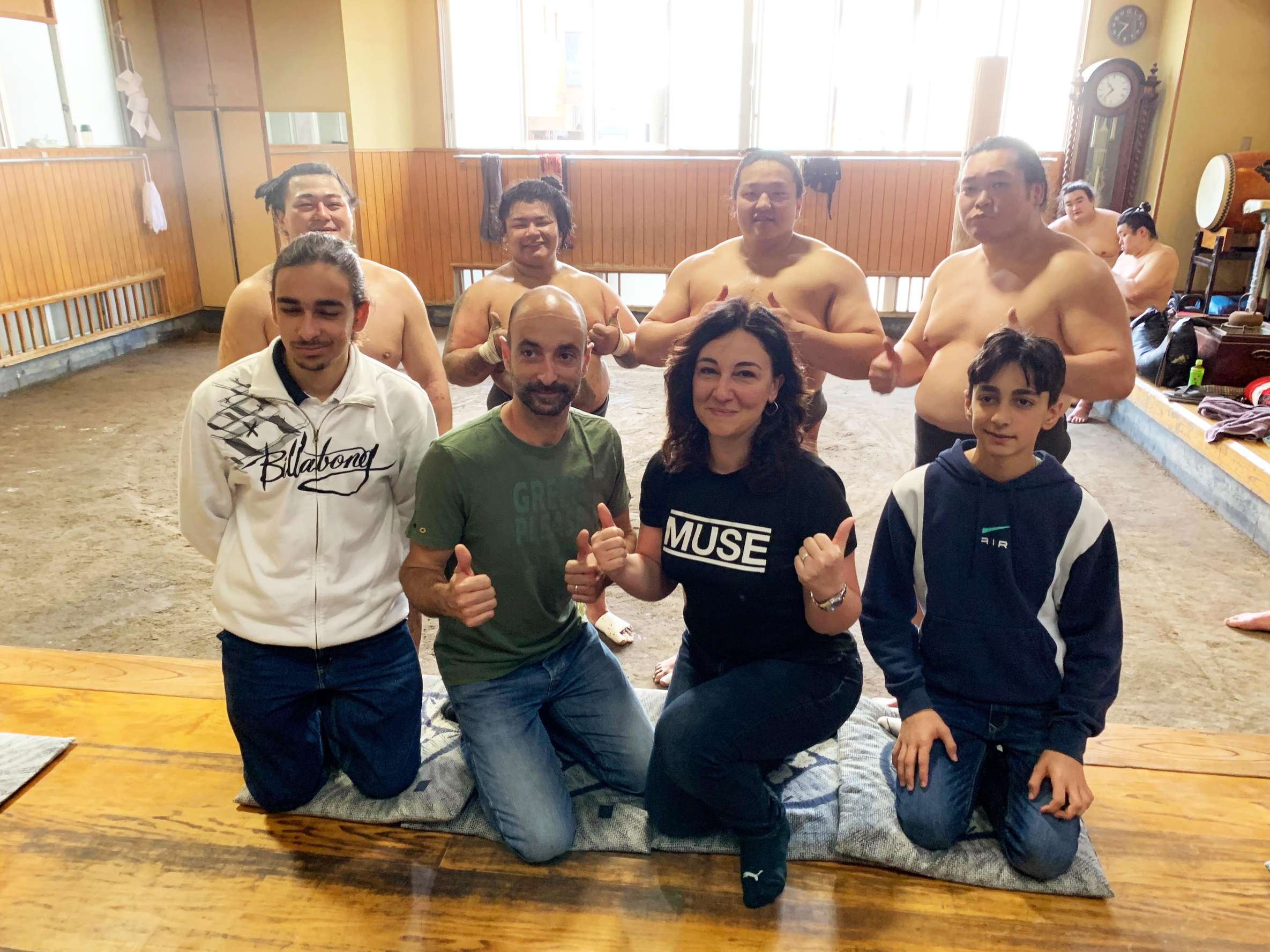
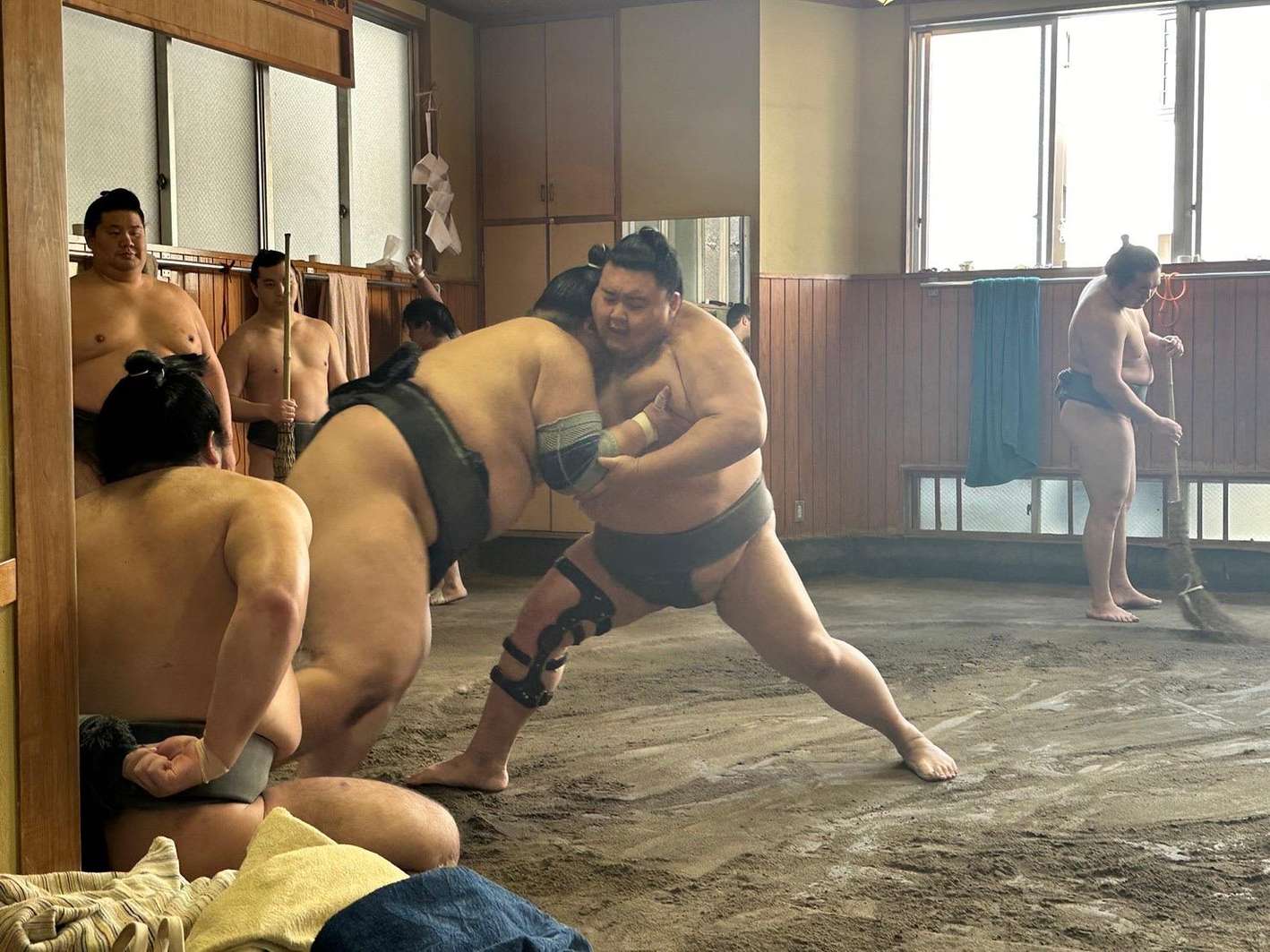
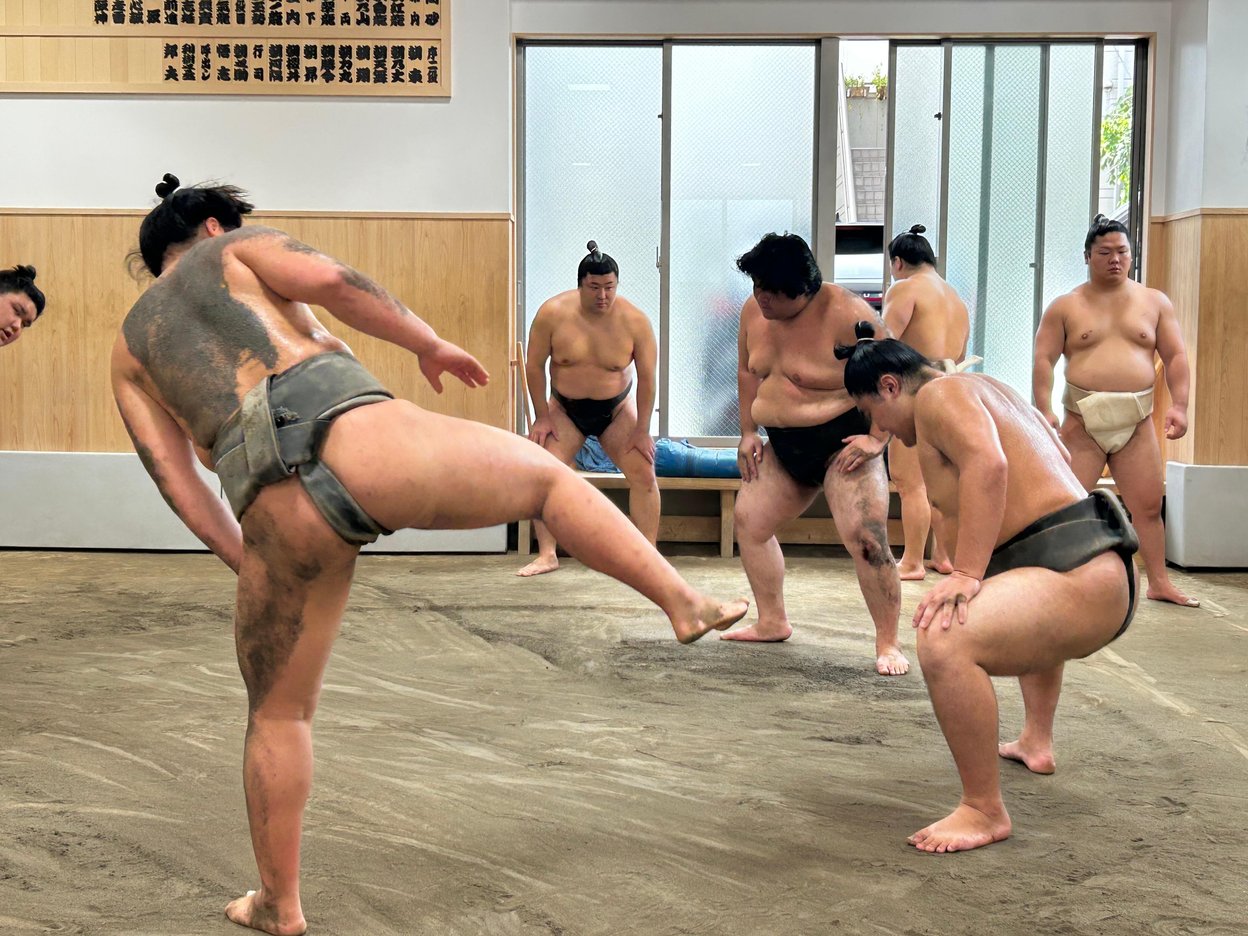
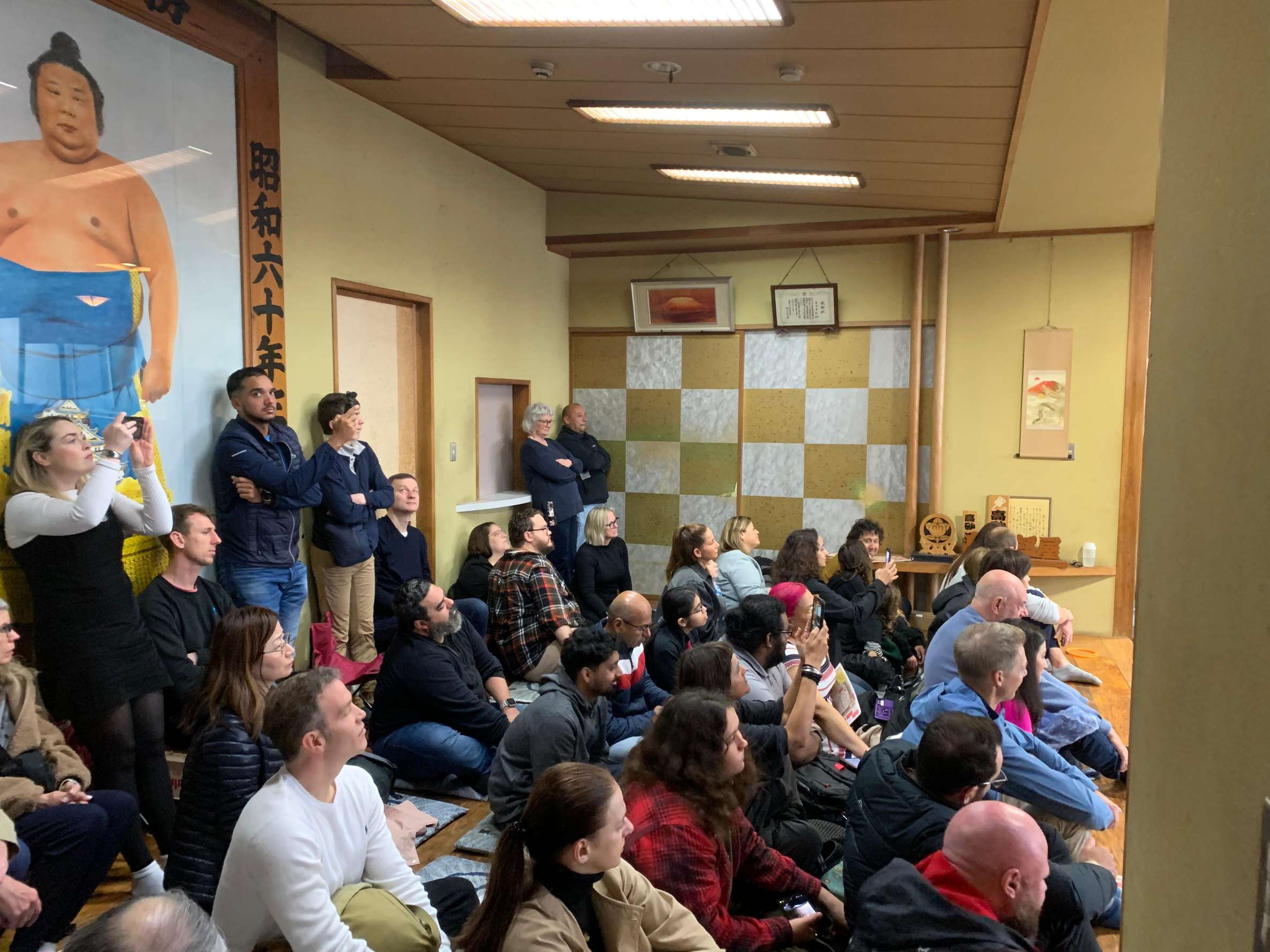
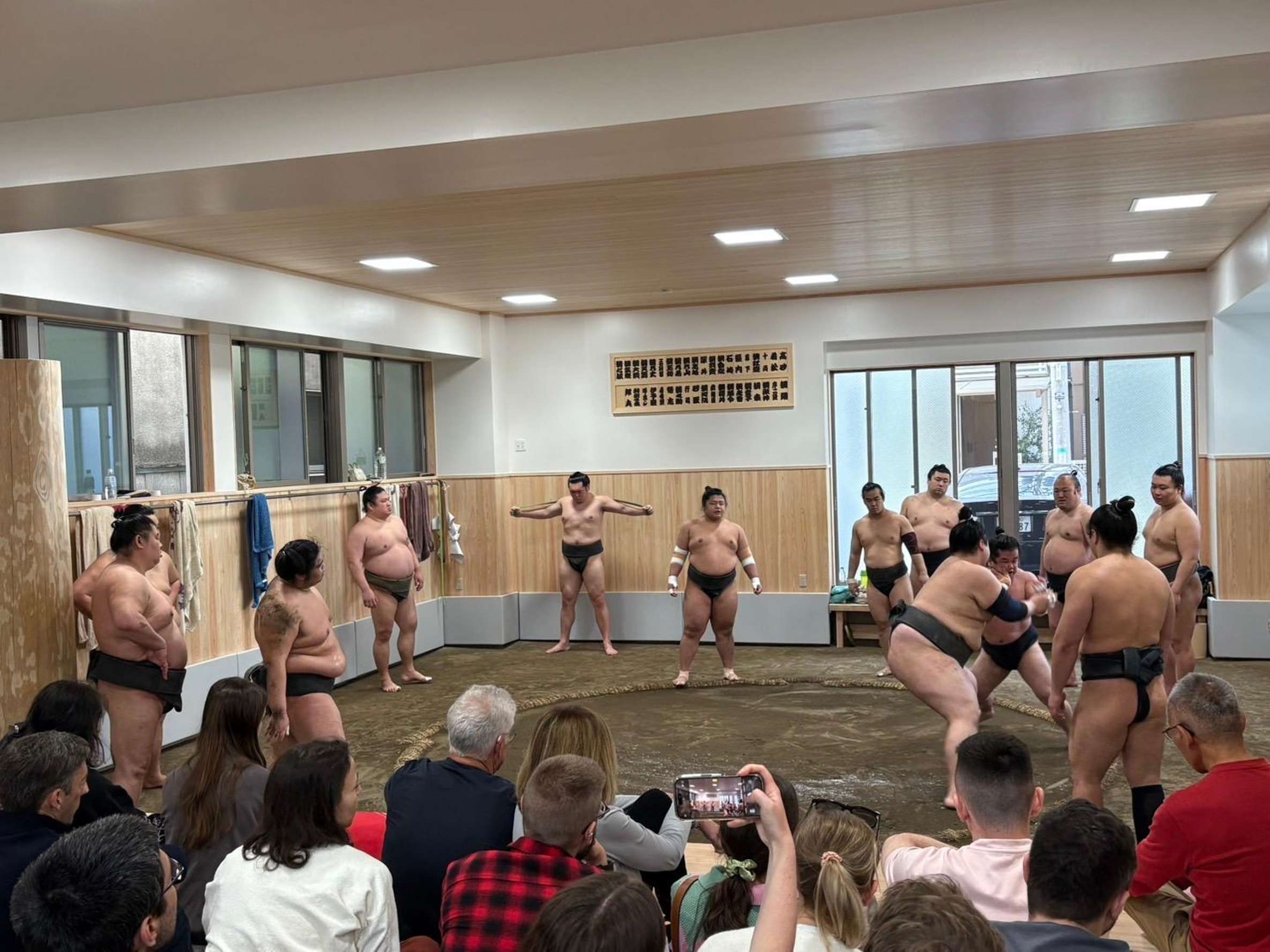
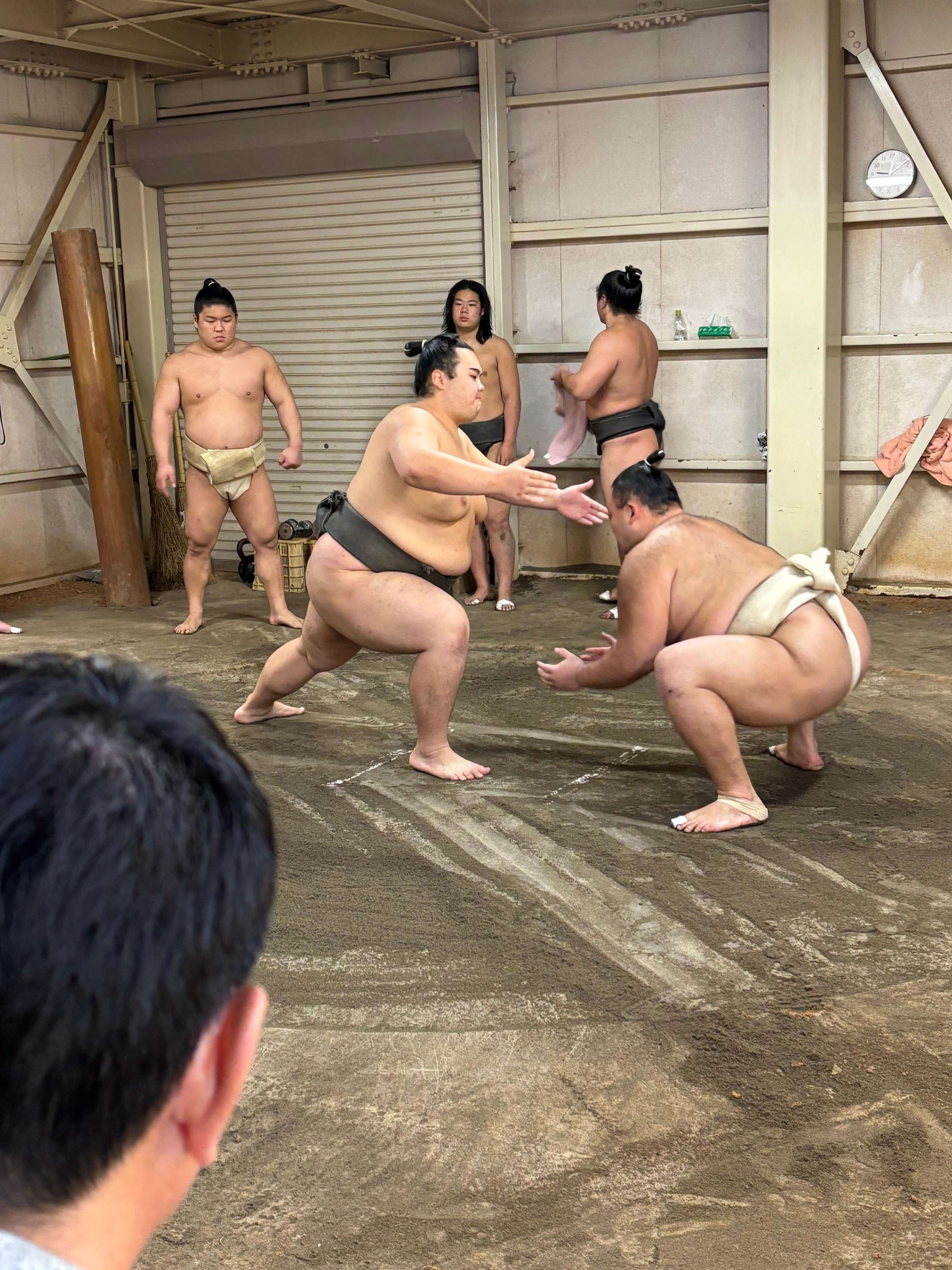
The practice starts at a stable in Ryogoku, Tokyo's sumo district, and you watch it from a few feet away.
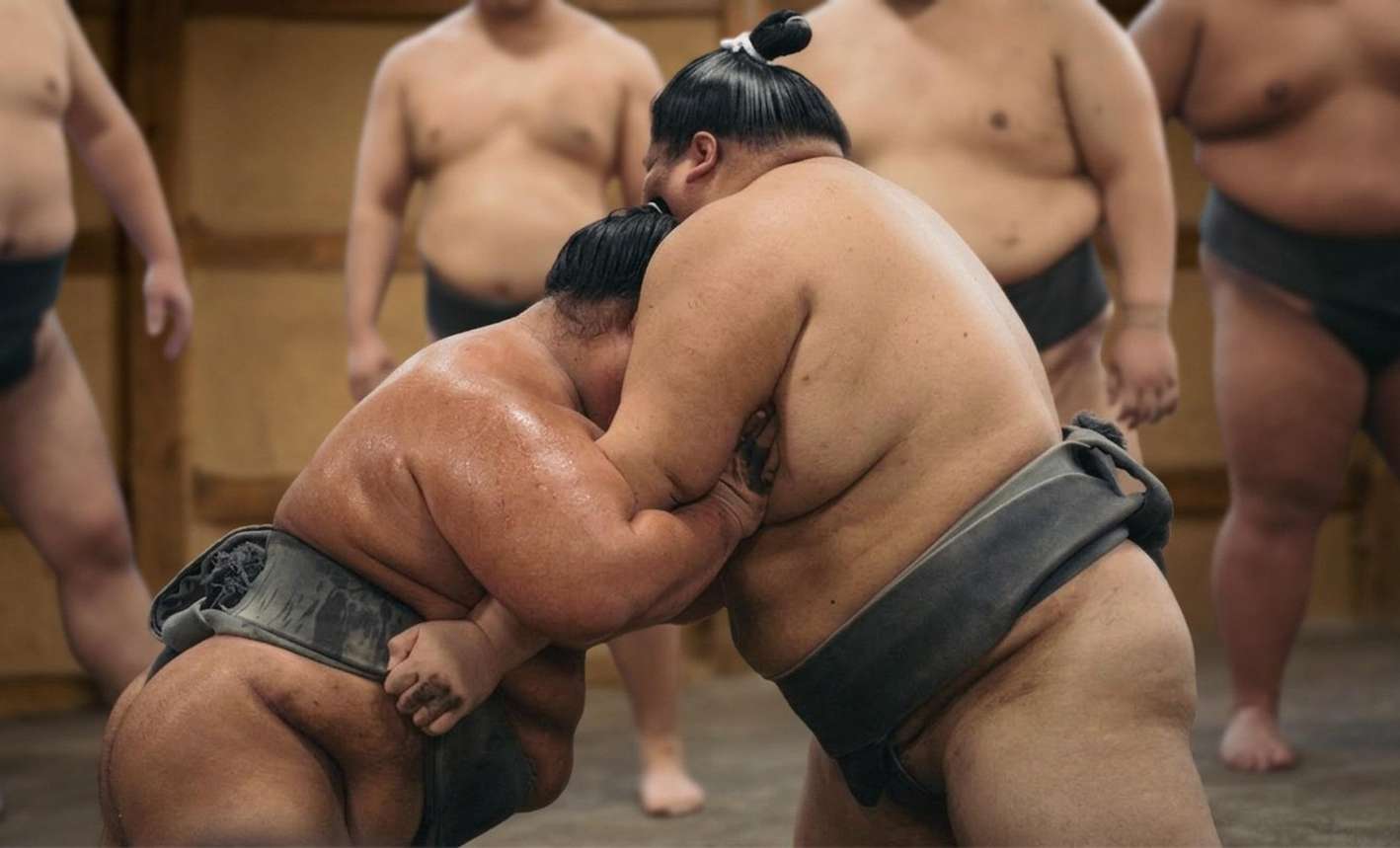
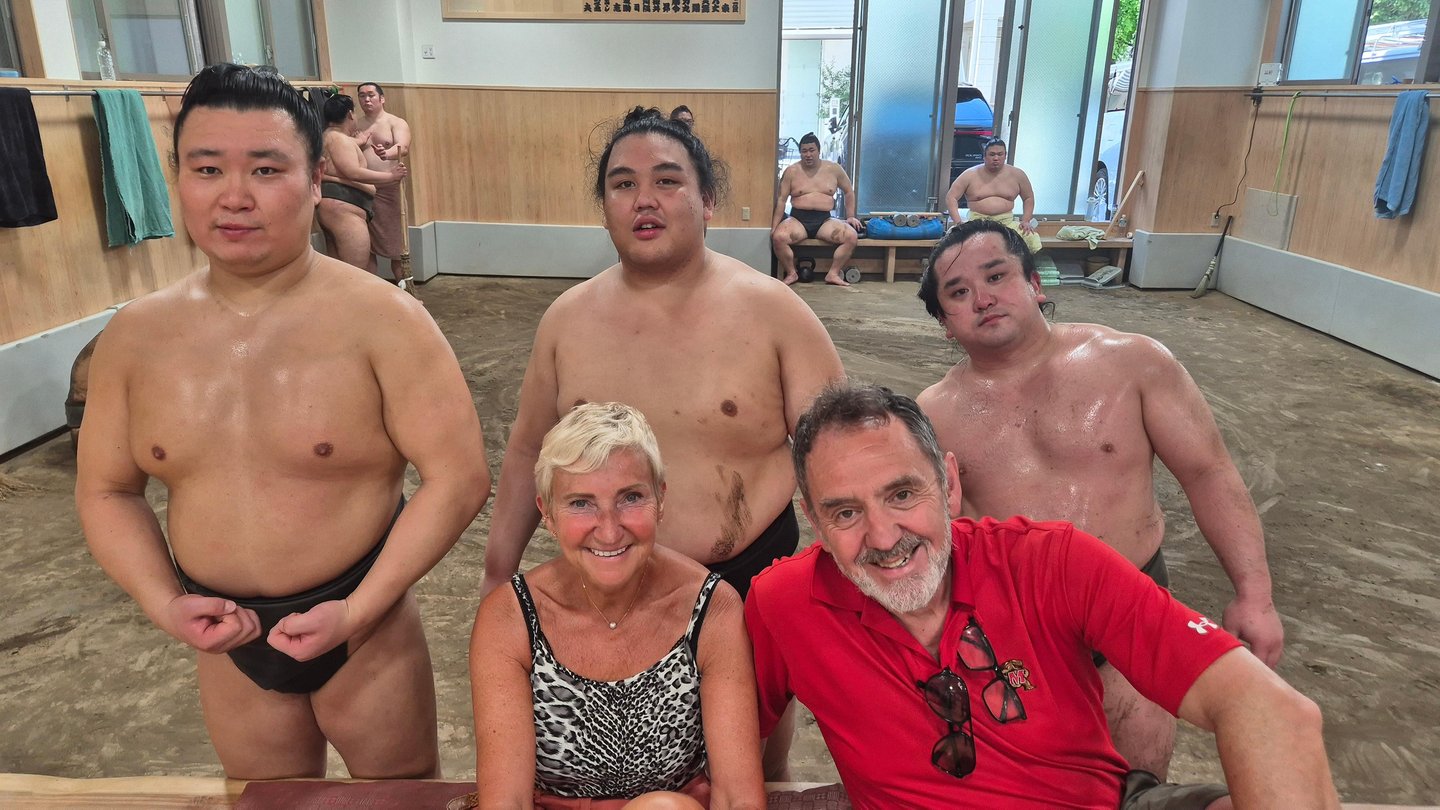
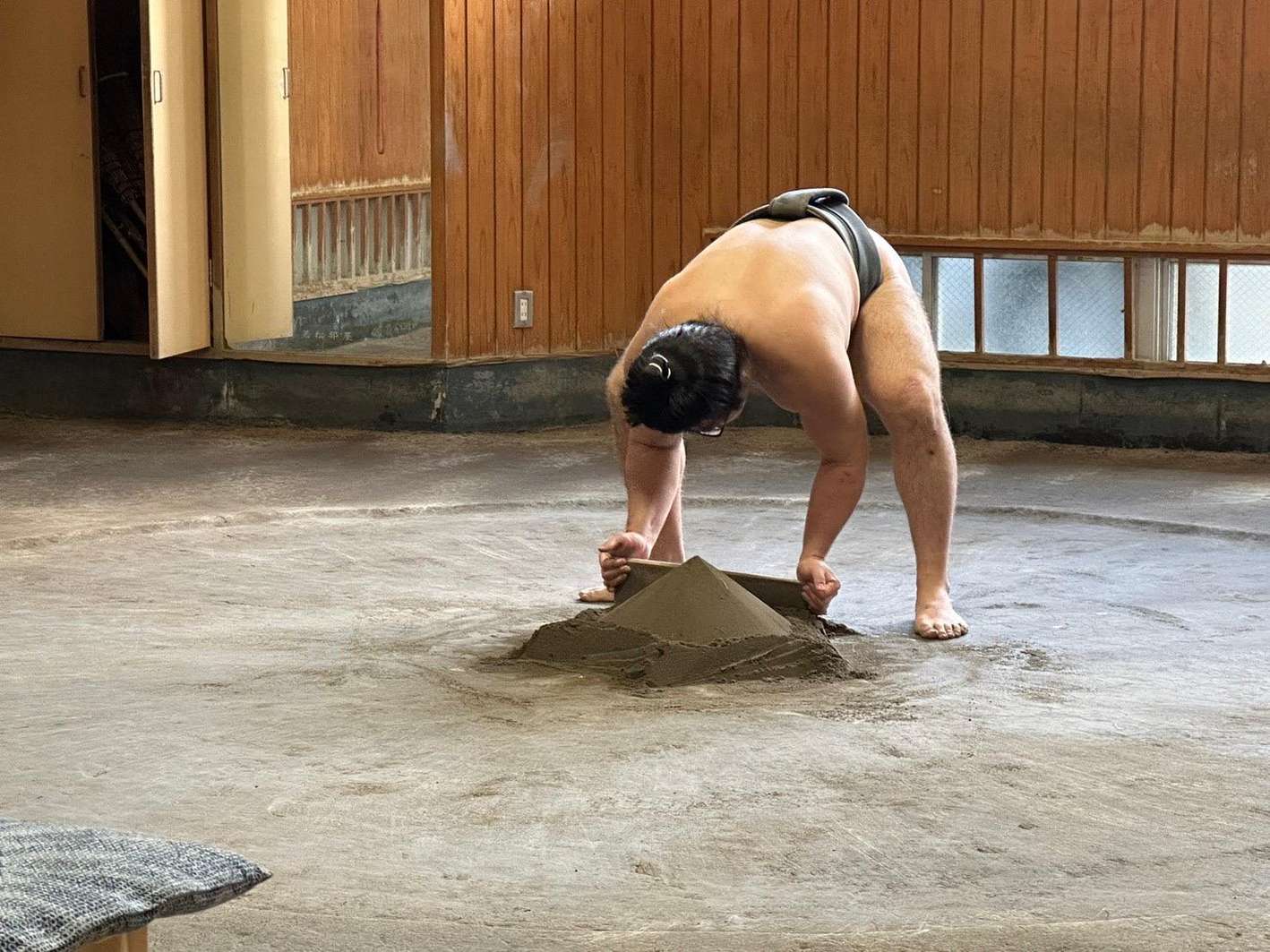
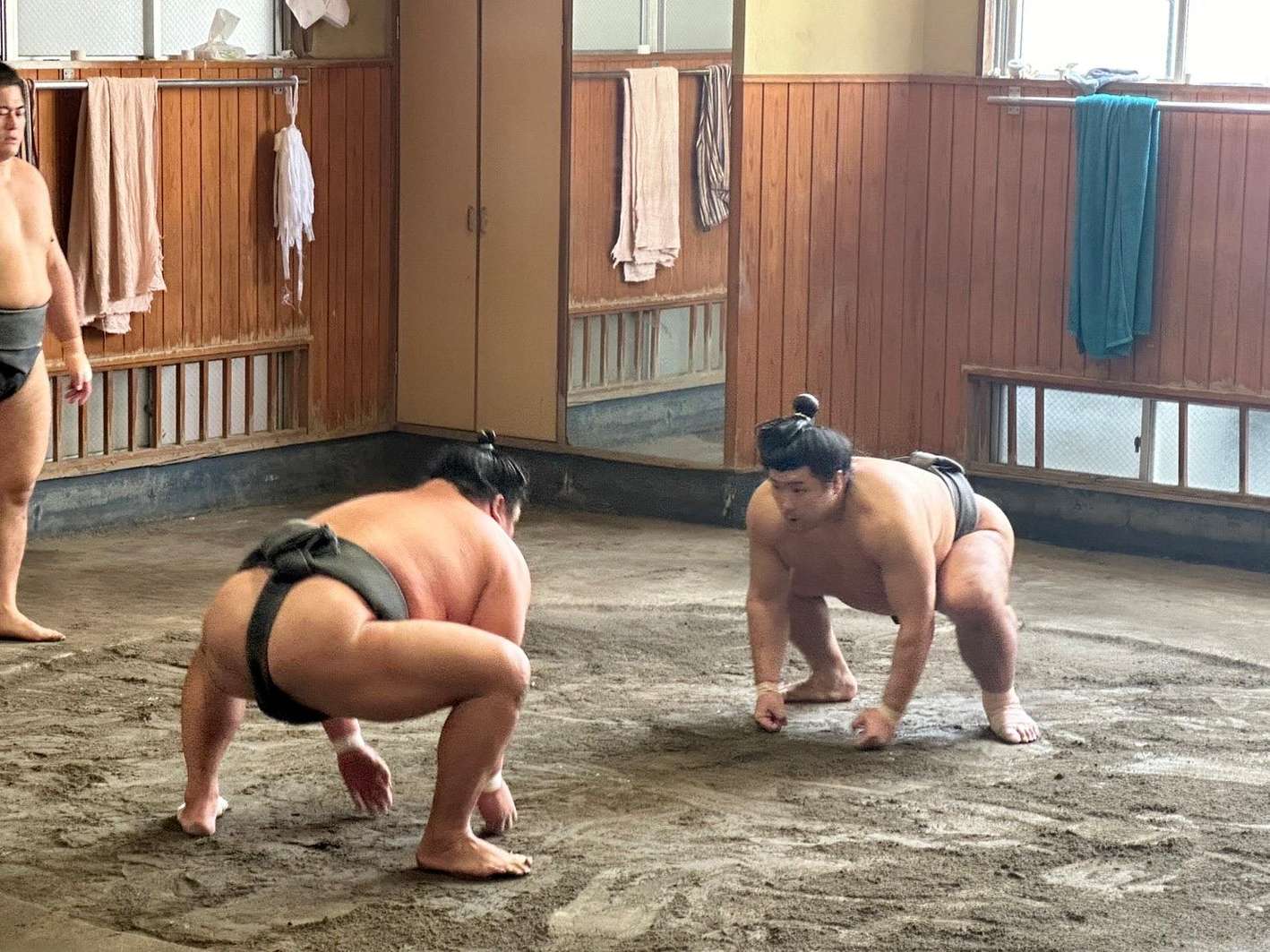
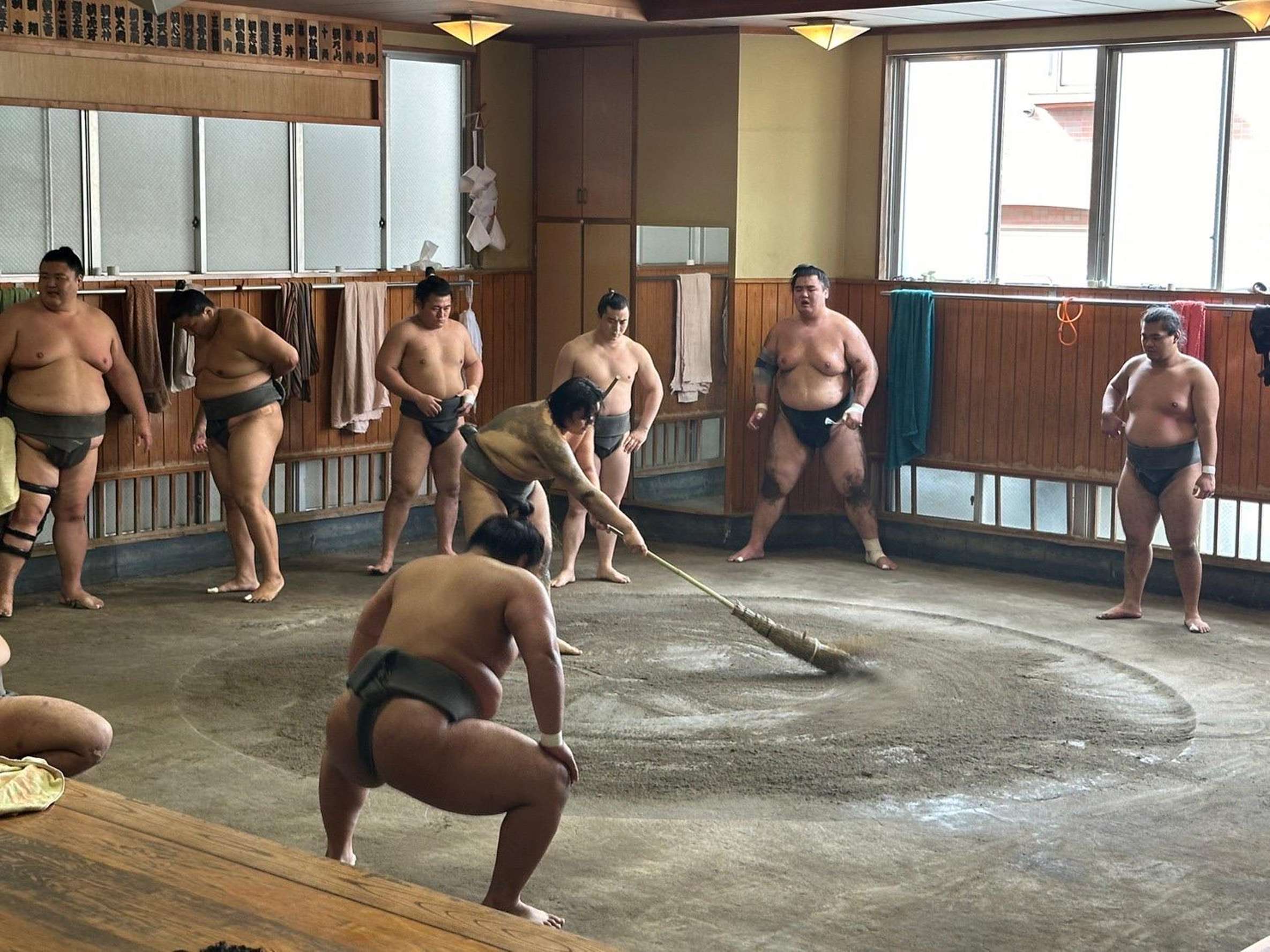
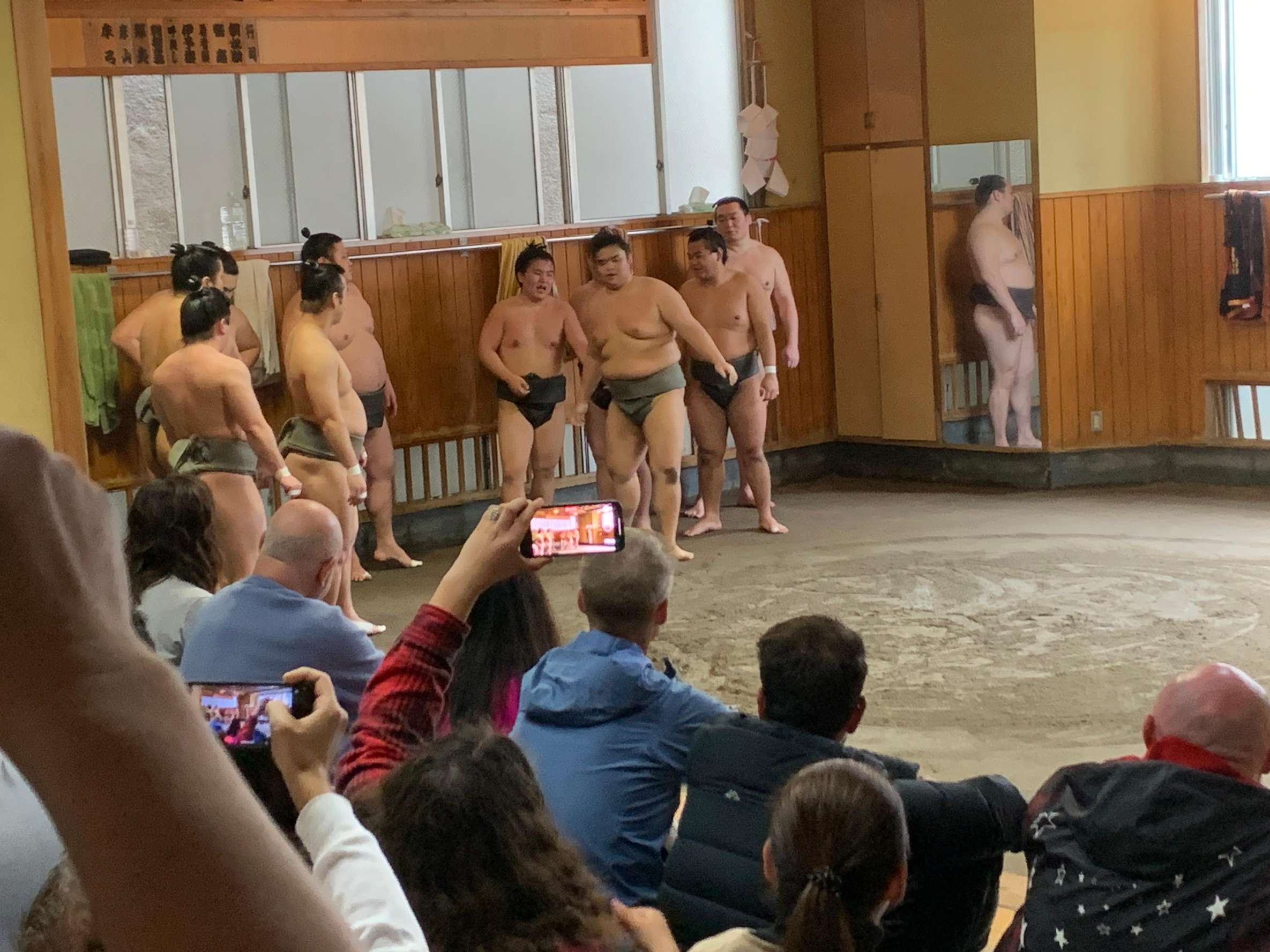
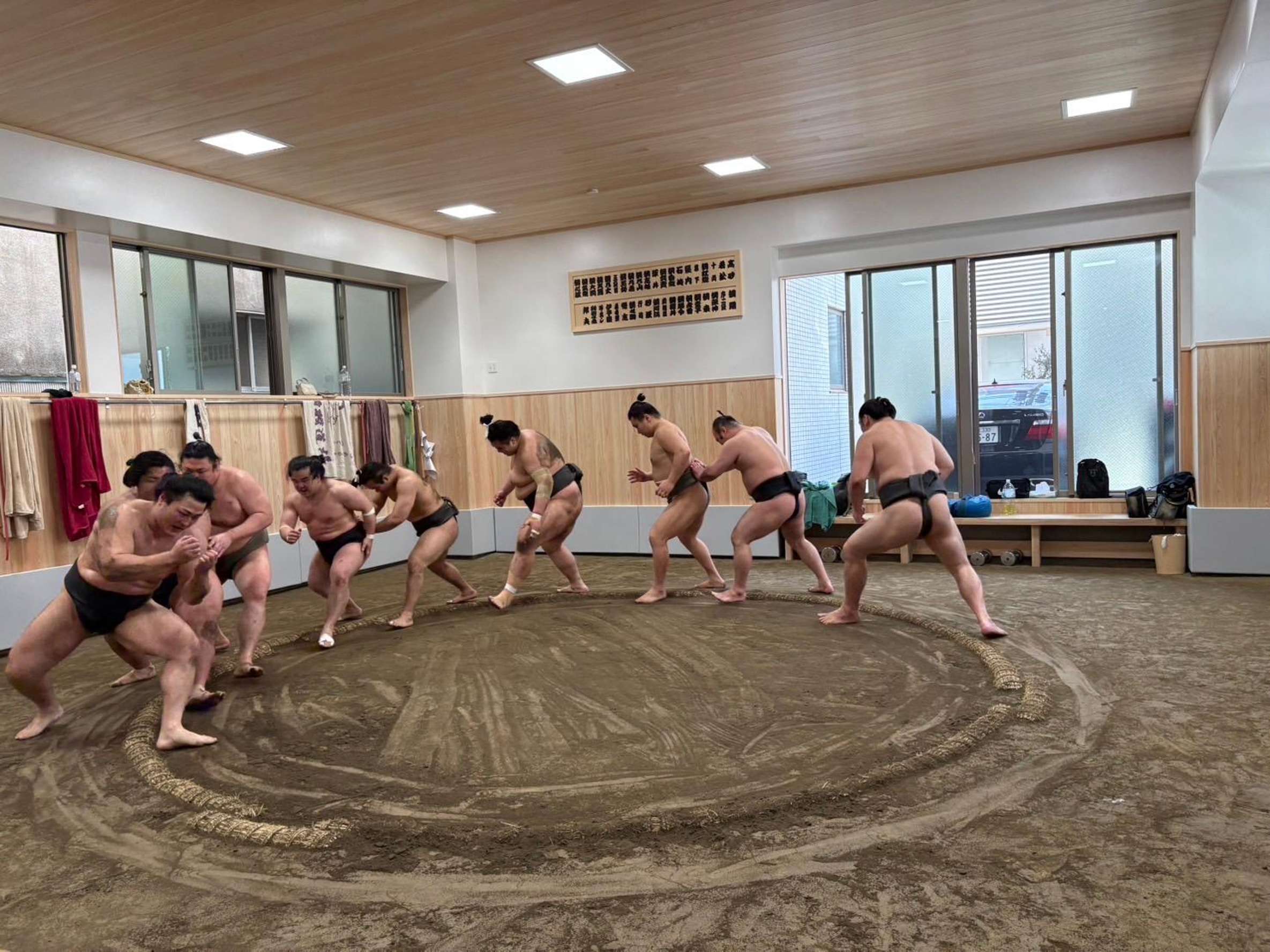
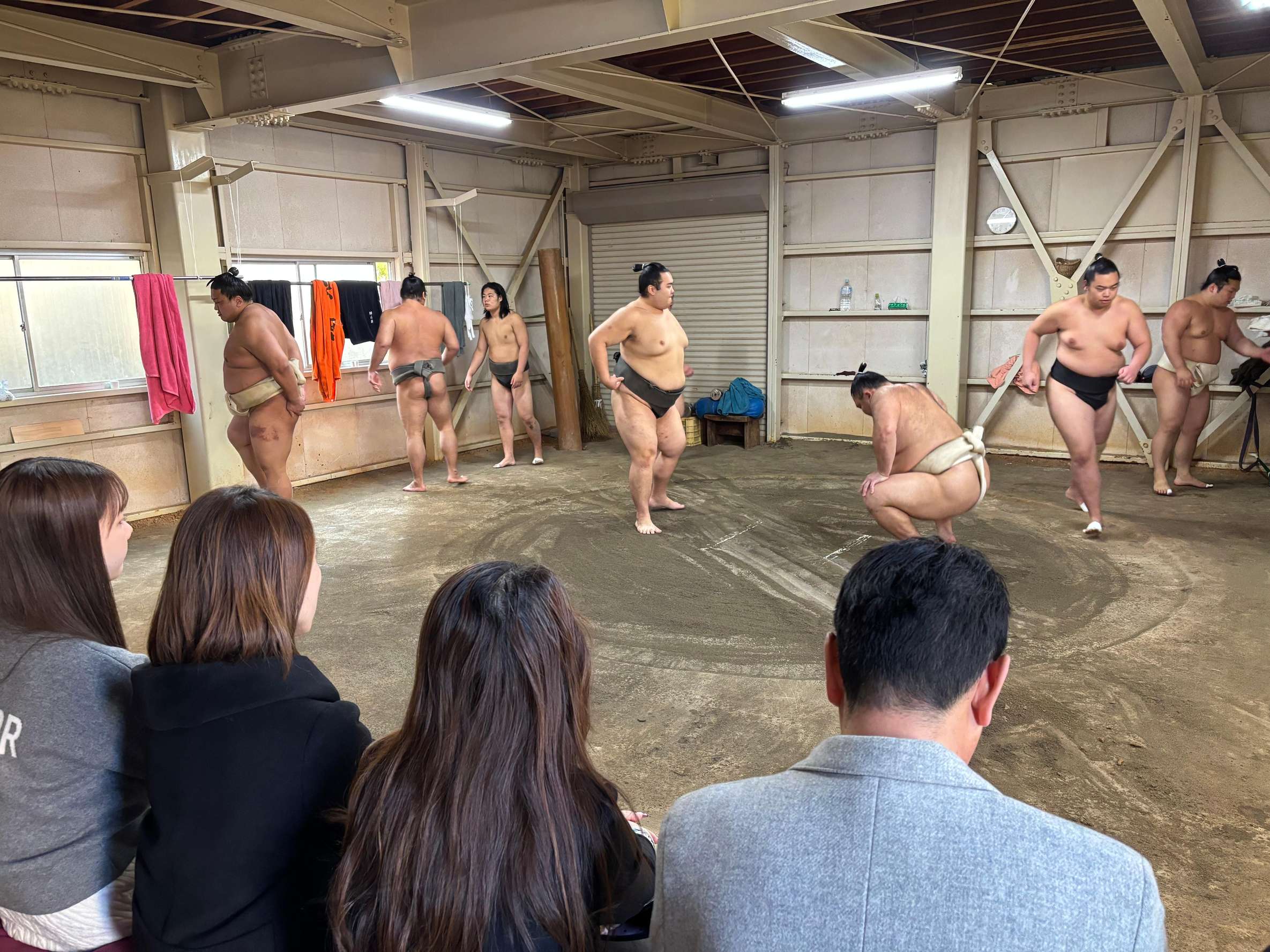
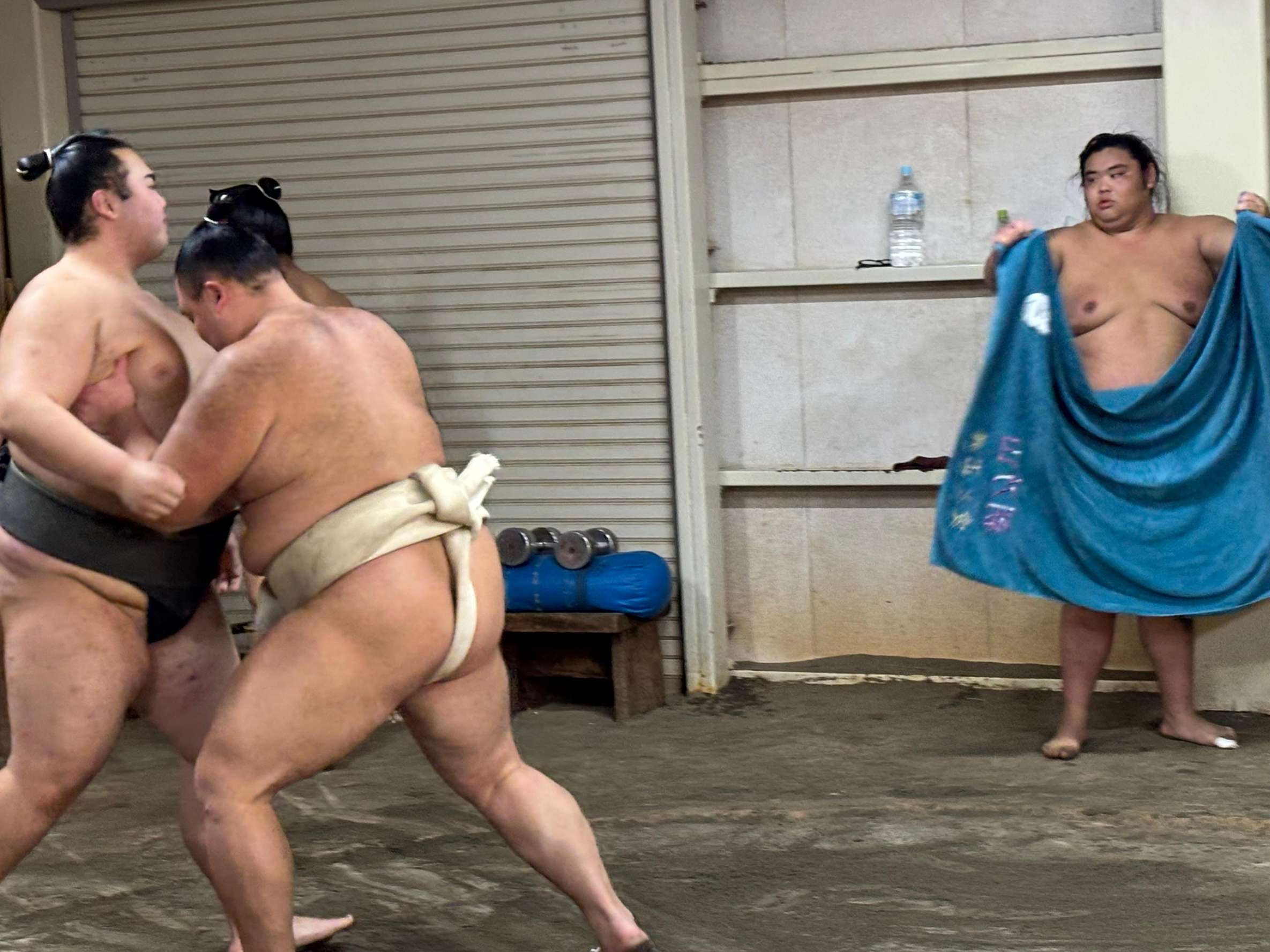
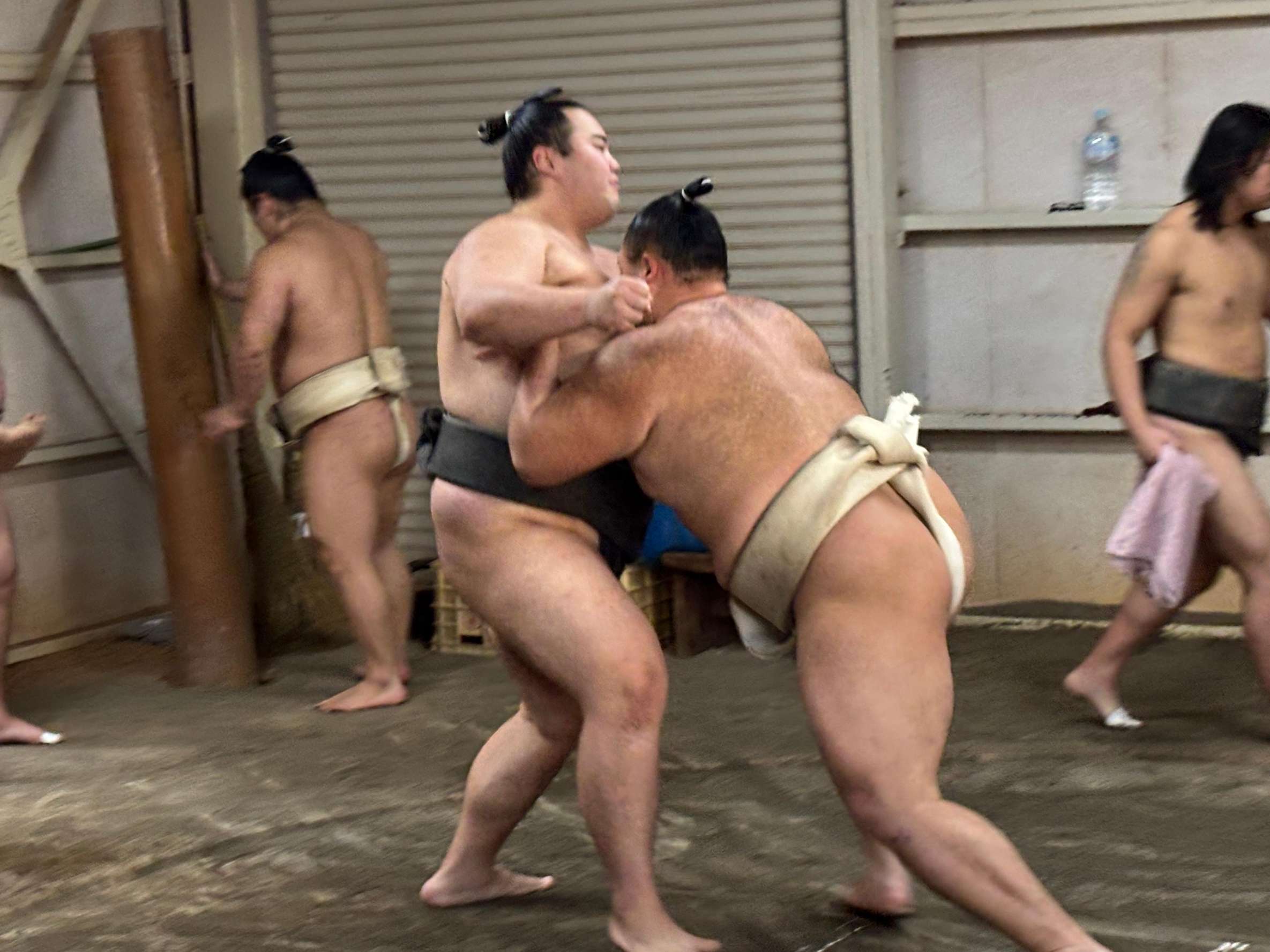
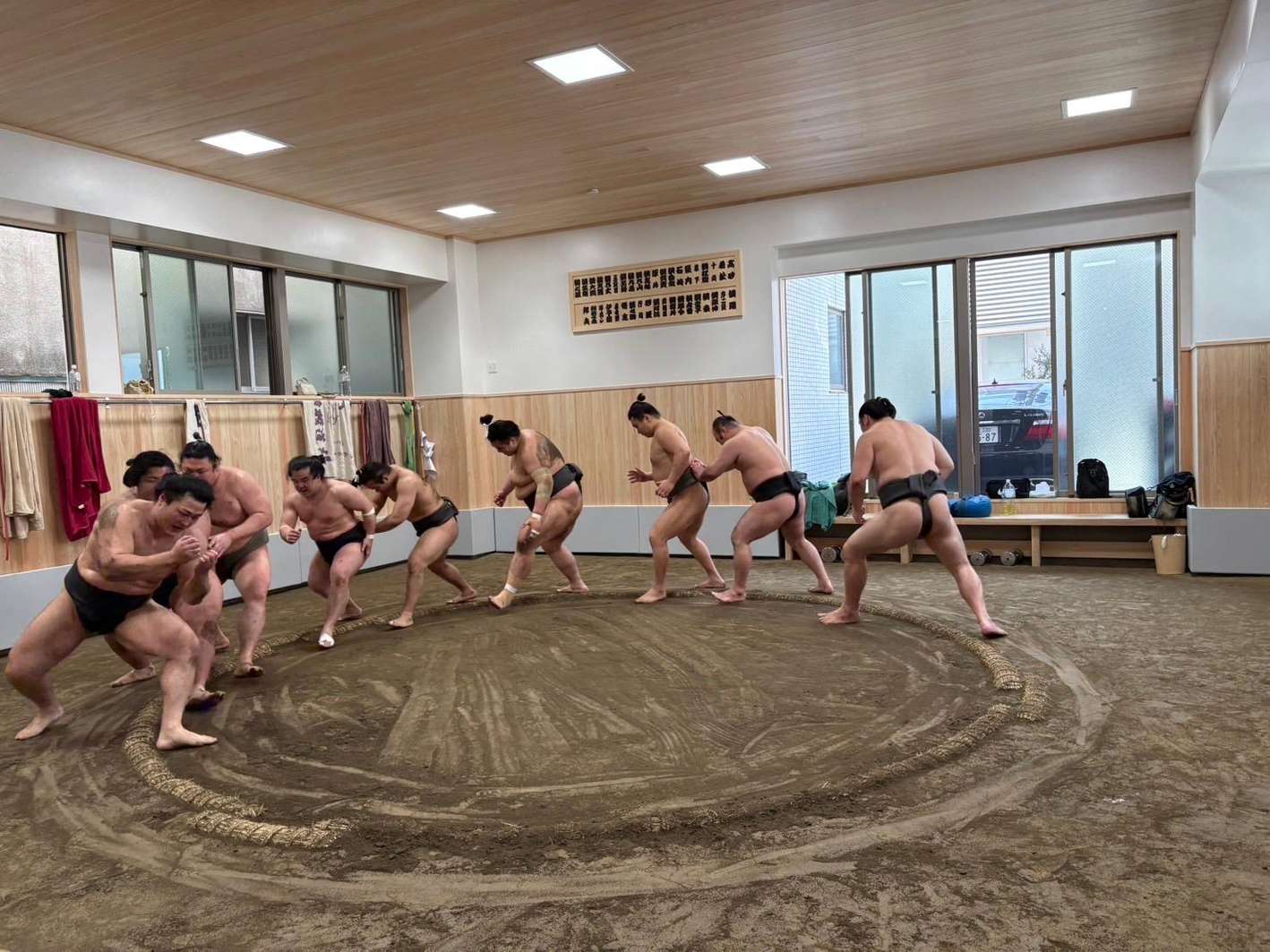
Wrestlers warm up with shiko foot stomps and drills, then spar at full intensity for roughly an hour. They are training for real bouts, so the sounds and power land differently than at a staged show.
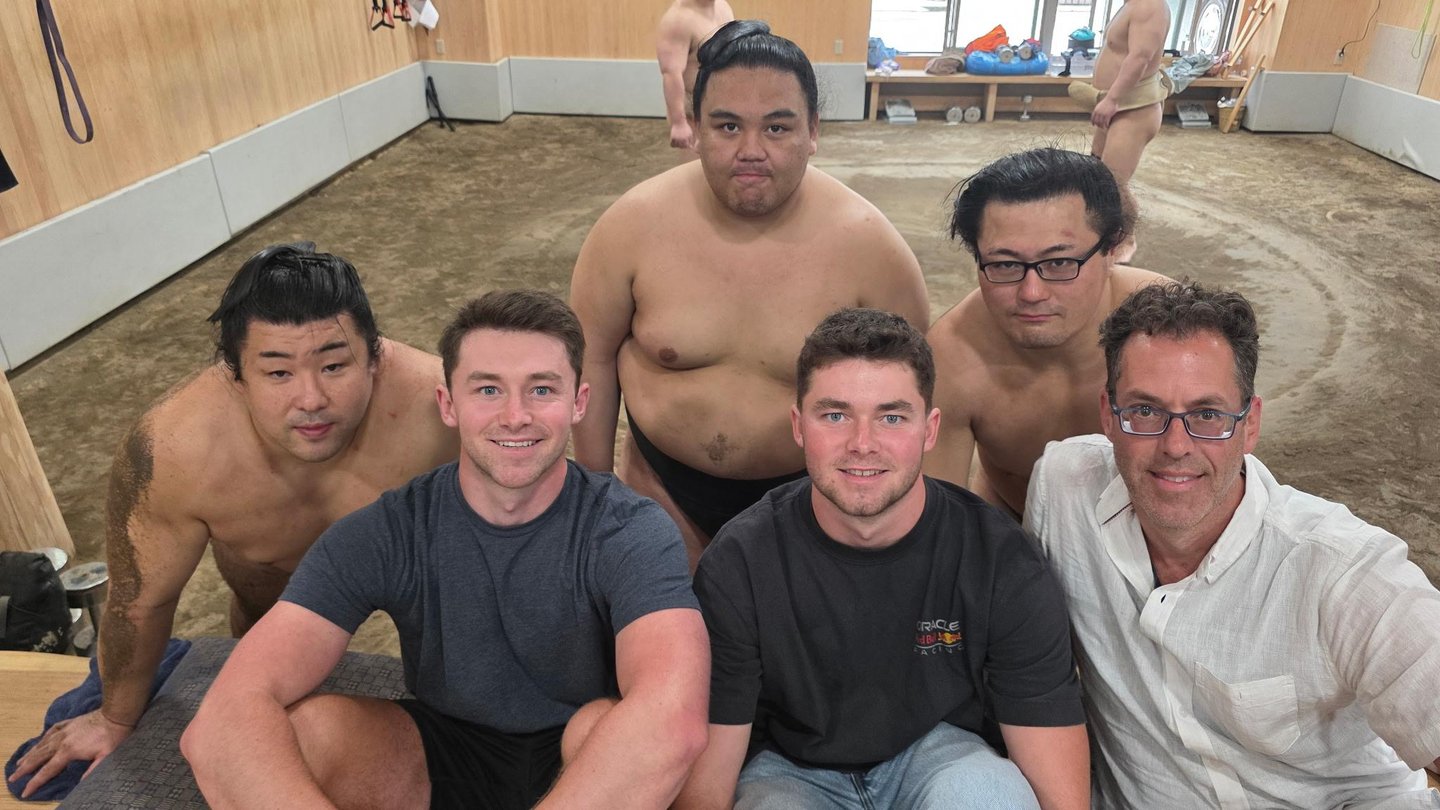
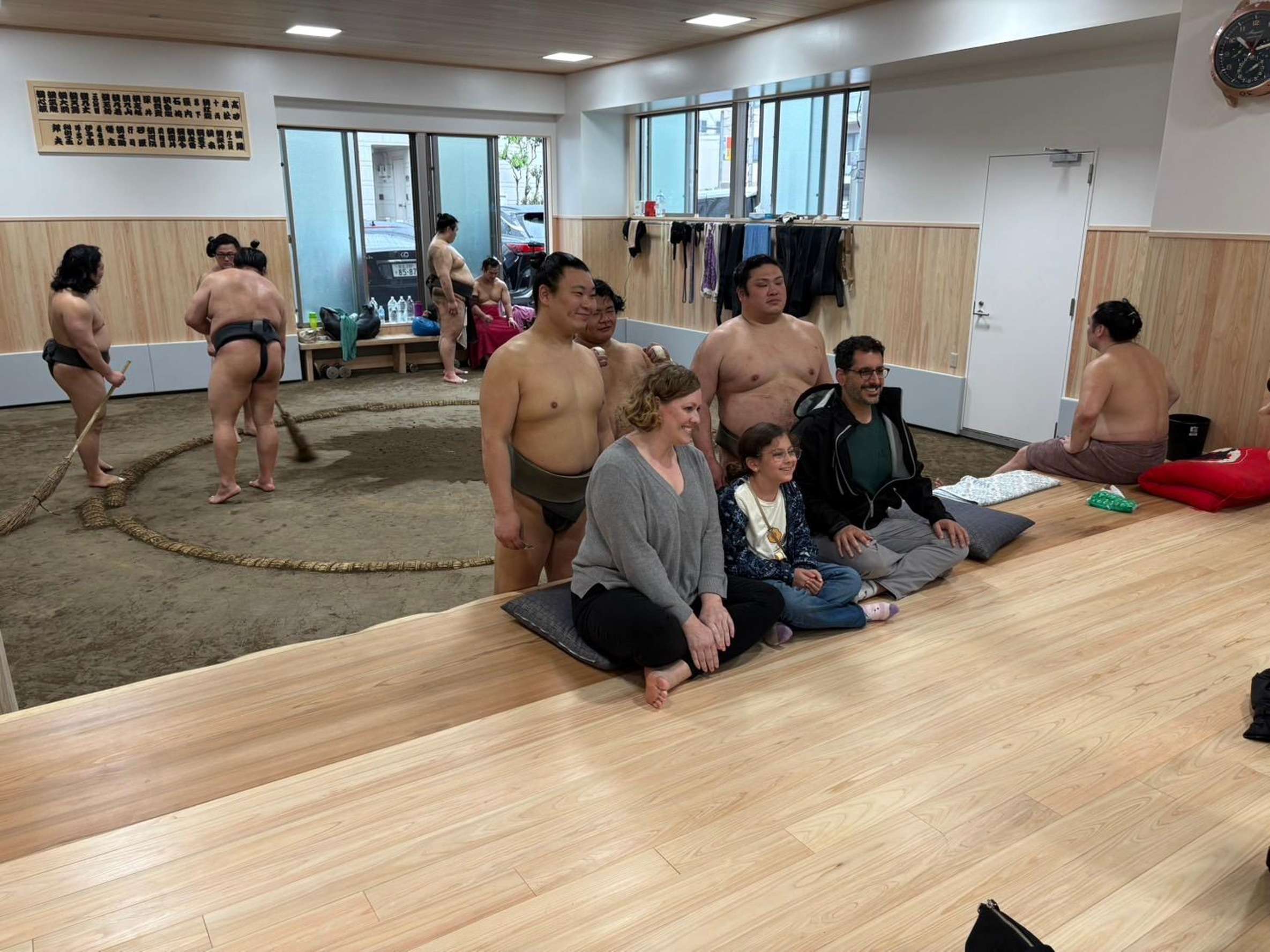
An English-speaking guide brings you there, explains what each drill means during the session, and leaves time afterwards for questions. Photos with the wrestlers are included at the end, as long as nothing gets in the way of their practice.
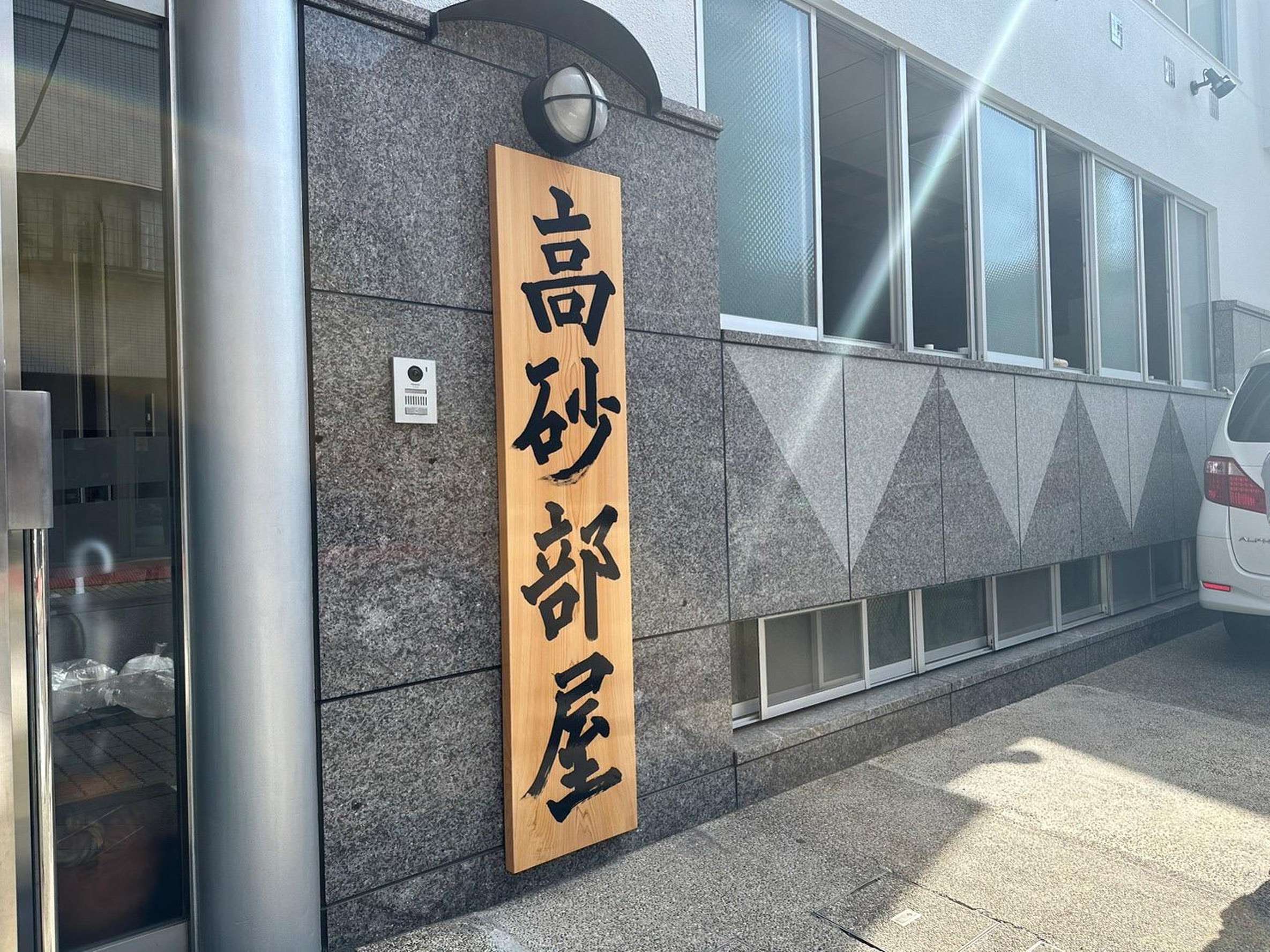
Meeting point両国駅You meet in front of Ryogoku Station, two stops from Akihabara, then the guide walks you to the stable. Check in with your guide and get a briefing on stable rules before entering.Street View2Takasago-beya Sumo Stable· 90 minA real sumo stable where wrestlers live and train. You sit on the floor and watch 90 to 120 minutes of morning practice, from warm-ups to sparring, then take photos with the wrestlers.
Pro tipApril, May and October are the busiest months for sumo tours, so lock in those dates first.
Common mistakeWaiting until the week of your trip to book, when seats may already be gone.
02
Choose the option that fits
Read what each option includes before you click. Some are show only, others add a meal, front-row seating or a longer format, and the differences matter more than the price gap.
Pro tipCheck whether the meal sits at your seating tier, since some sessions serve full meals and others only light snacks.
RecommendedIf you want a seat close to the ring, pick a front-row or VIP option when booking rather than hoping on the day.
03
Pay and wait for confirmation
Complete payment online and you will get a confirmation with your booking details. Most bookings can be cancelled up to 24 hours in advance for a full refund, so an early booking carries little risk.
ImportantCancelling inside 24 hours of the start time brings no refund, though you may be able to move to another slot if one is open.
Pro tipSave the confirmation email offline, since you will show it at the venue entrance.
04
Sort out your meeting point
None of these tours include hotel pickup, so plan your own route. Venues sit a short walk from a station: the Shinjuku show is about two minutes from Higashi-Shinjuku Station, the Shibuya show about one minute from JR Yoyogi Station's East Exit, and the Ginza venue near Ginza-itchome and Yurakucho stations.
Pro tipAim to arrive 15 to 20 minutes early, since arriving right at the ticket time can leave you rushing to find your seat.
Common mistakeTurning up late, because shows follow a strict schedule and late entry may not be accepted at the front desk.
05
Know the day-of details
Bring your confirmation and check the venue's payment rules. Some Tokyo shows are cashless and take major cards, so carry a card even if you plan to spend nothing extra on site.
ImportantIf you want to join the ring challenge, know that spots are limited to a handful of guests per show and chosen by lottery, so there is no way to reserve one.
RecommendedArrive early on weekends, when the room fills and the best seats go first.
What to know before you book sumo wrestling in Tokyo
Can stop the dayGood to knowGood news
01
ChoosingWhat it is, who it suits, when to go
3
Show or practice
You choose between two kinds of wrestling. The entertainment shows are staged performances by retired wrestlers, with comedy, commentary and a lottery challenge, not a real tournament. Stable practice tours put you at a real training session, silent and still, close to the ring.
Included
What comes with a booking varies a lot by tour. Check your booking details for the exact list:
Some shows include all-you-can-eat chanko nabe hot pot, drinks or a full Japanese meal
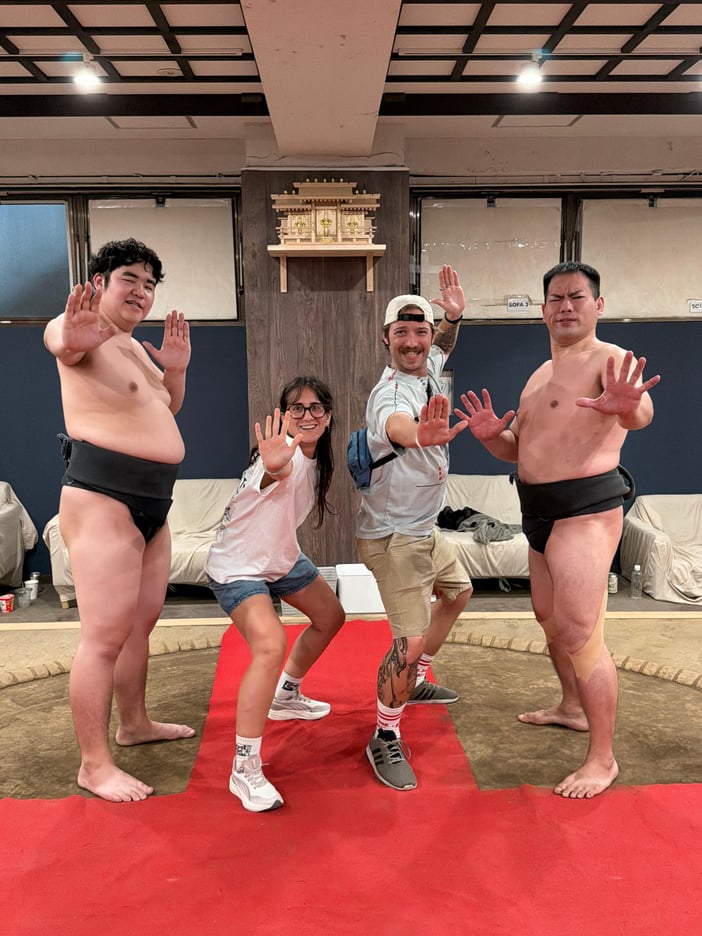
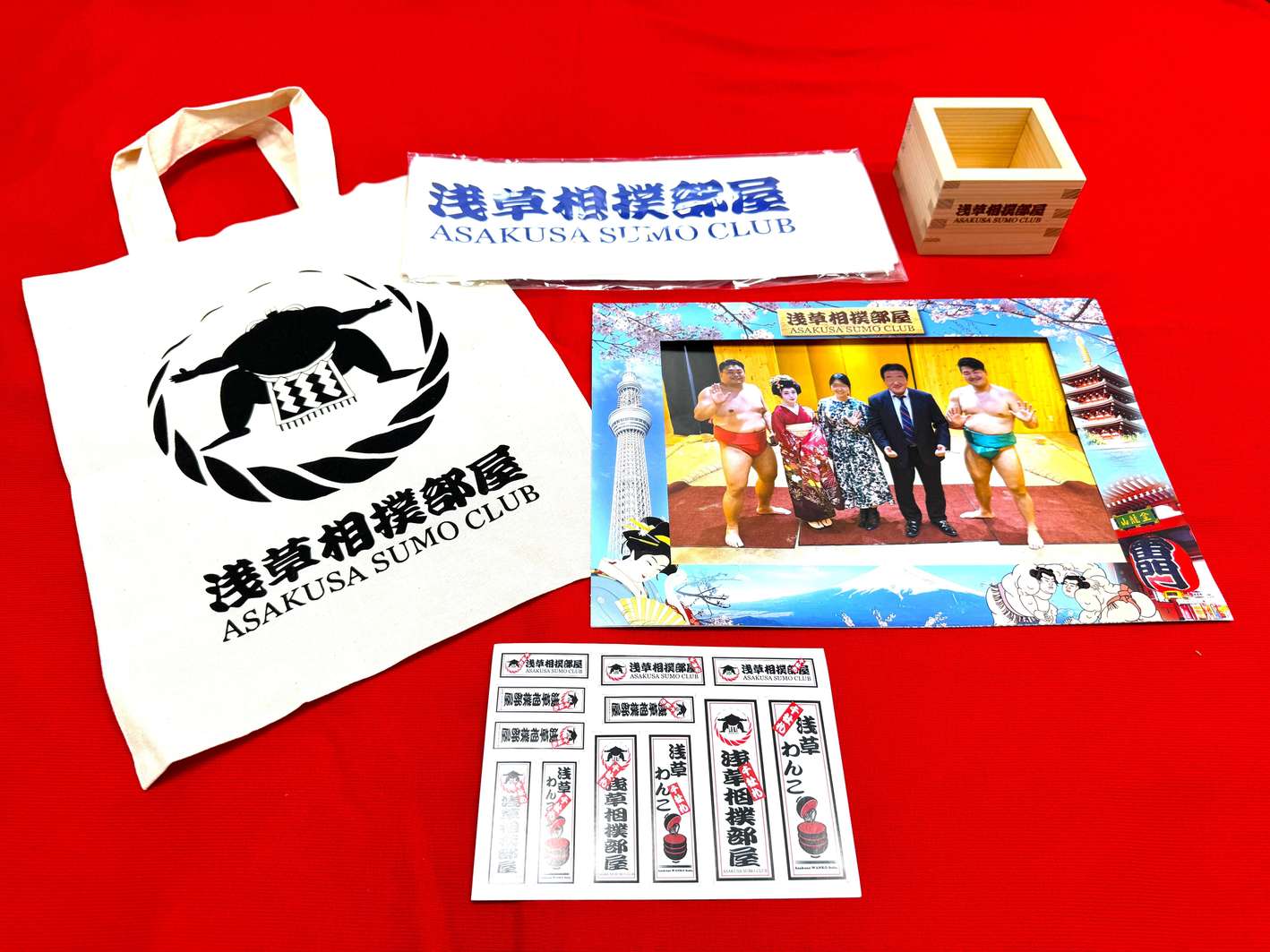
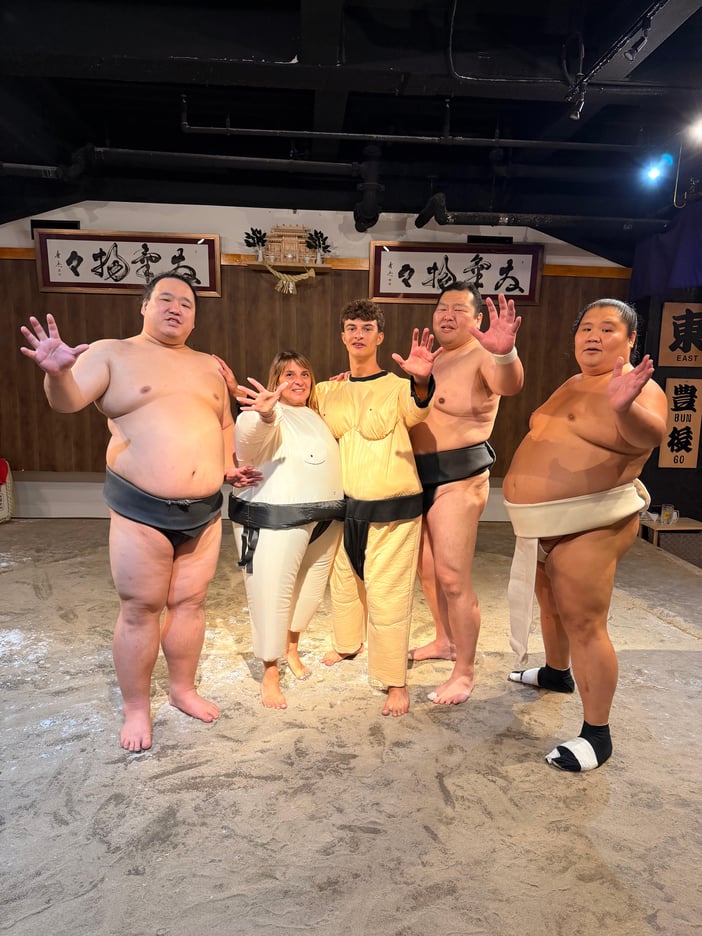
The Shinjuku and Shibuya shows include a welcome drink and pictures with the wrestlers
The Ginza show's hands-on training plan is a separate, optional option
Photos and the meal are usually left out of the stable practice tours
Timing
The stable tours start early: a real practice runs roughly from 7:30 am to 10 am, and you watch for 90 minutes to two hours. Practice pauses during tournaments, including the ones in Osaka, Nagoya and Fukuoka, when the wrestlers leave Tokyo. The shows run at set times, and one venue may not accept late entry.
02
BookingHow far ahead, and what happens if plans change
2
Booking aheadCan stop the day
Stable practice visits fill up, and the stables only set their schedules about a month in advance. Travelers book around two months ahead on average. The shows run year-round but still need a booking, and some venues have limited front-row seats.
Cancellation
Most of these tours can be cancelled up to 24 hours in advance for a full refund. Cancel on the day and you get no refund, though you may be able to move to another time slot if there is space.
03
Before you goPapers, health, what to bring
1
Age and healthCan stop the day
Some formats carry limits. The Ginza show's hands-on plan is not suitable for children under 5, pregnant guests or anyone with a serious medical condition. The Shibuya show and the stable tours are not suitable for wheelchair users, and the Ryogoku show venue has no smoking indoors. Children can join the shows, while quiet teenagers do better on a practice tour.
04
On the dayWhere to be, when, and how you get there
1
Meeting points
None of these tours include hotel pickup. The stable tours meet at or right by Ryogoku Station, two stops from Akihabara, and walk to the stable together. The entertainment shows run in central districts such as Shinjuku, Shibuya, Ginza and Asakusa, so you make your own way there.
05
During the tourWhat is expected of you
2
On-site rules
A stable practice asks for a silent, still observer: no talking, no moving, no flash photos, no eating or drinking, and you sit on the floor without a chair. At the shows you can cheer and clap, but phones stay on silent and flash photography is banned during the bouts.
Photos
Photos with the wrestlers are a common highlight, and several tours include a picture session after the show or practice. Some visits also leave time for a brief chat. Flash is off limits during training and bouts, so keep the camera settings ready for the quiet moments.
Watching sumo wrestling Tokyo - how to see it live
Tokyo gives you three ways to see sumo wrestling live: a show with a ring in the middle of the room, a silent morning at a real stable, and the grand tournament. Here is how each one goes and which fits your trip.
Tokyo· 35.70° N, 139.80° E
If you only remember three things
1
Tournament seats in Tokyo sell out within minutes of going on sale at 10 am, so buy the day they drop.
2
Book a stable practice tour about two months ahead, and expect stables to close in January, May and September.
3
Arrive 15 to 20 minutes before a show, because evening and weekend sessions fill the room fast.
Sumo wrestling Tokyo - three live formats
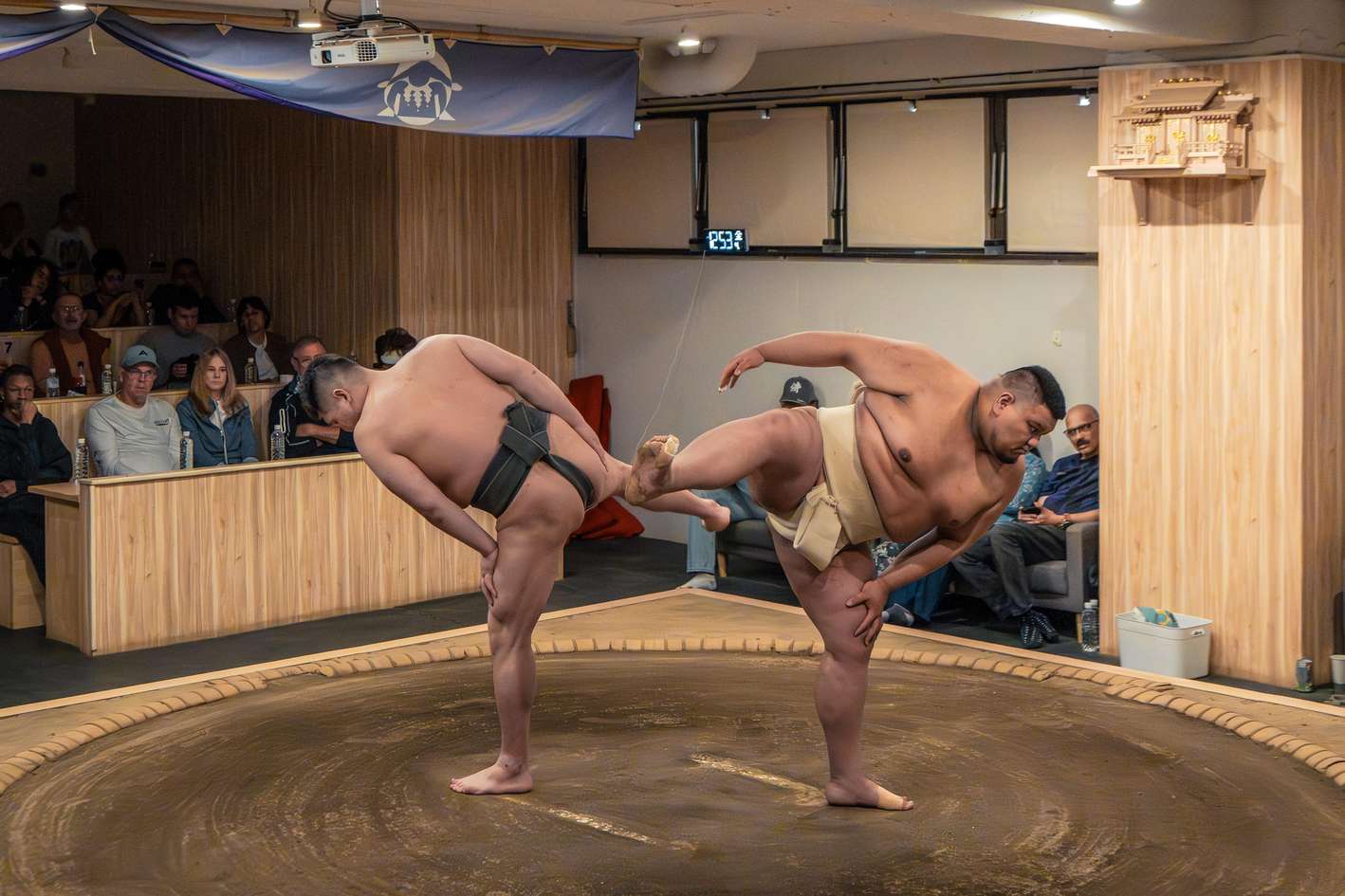
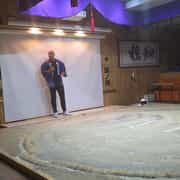
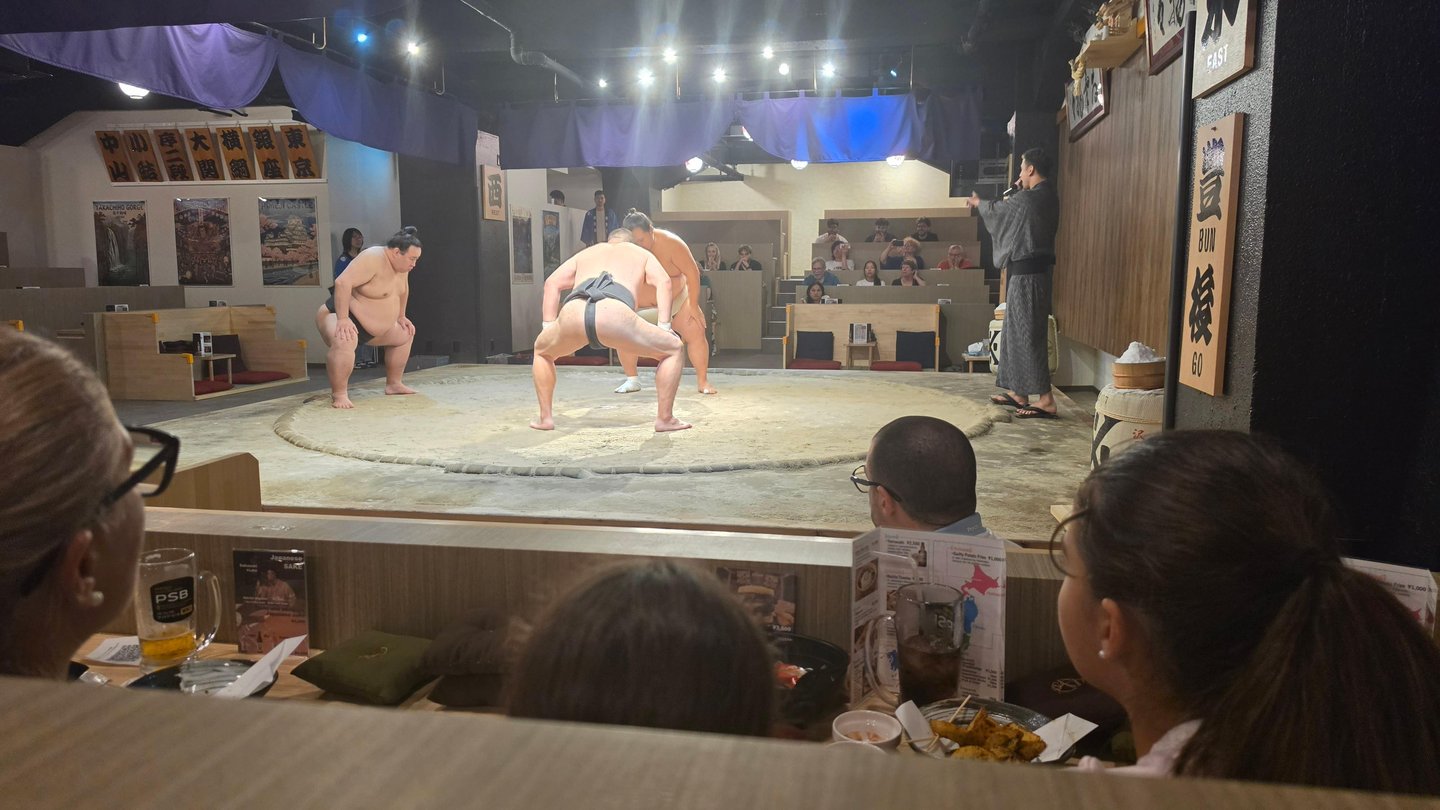
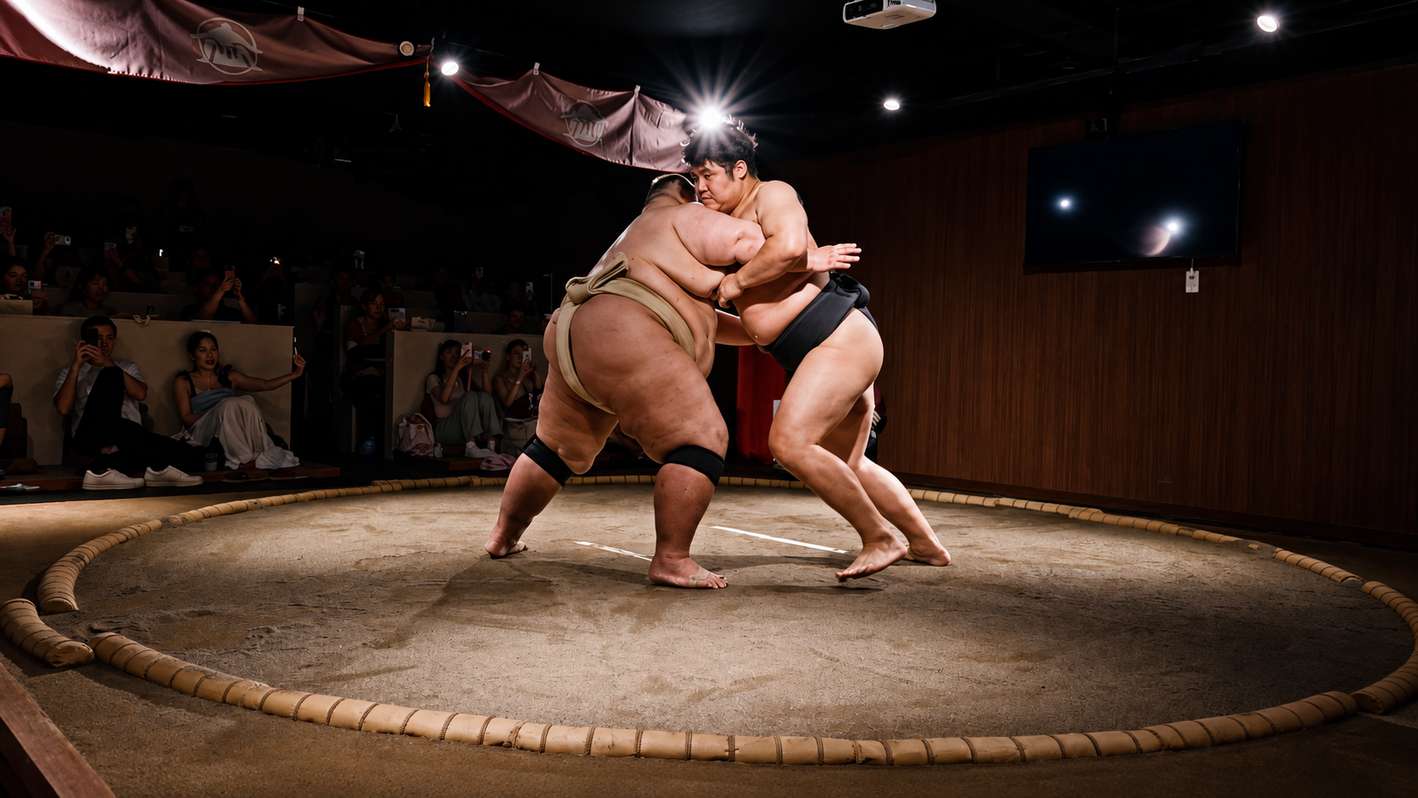
Tokyo stages sumo wrestling live in three formats, and they could not be more different. At an entertainment show, retired professionals wrestle in a ring built in the middle of the room while an English-speaking MC explains the rules and rituals, and a handful of guests get pulled up to try it themselves.
Morning practice happens at a real stable, where wrestlers train for 90 to 120 minutes and you sit on the floor a few feet away, silent and still.
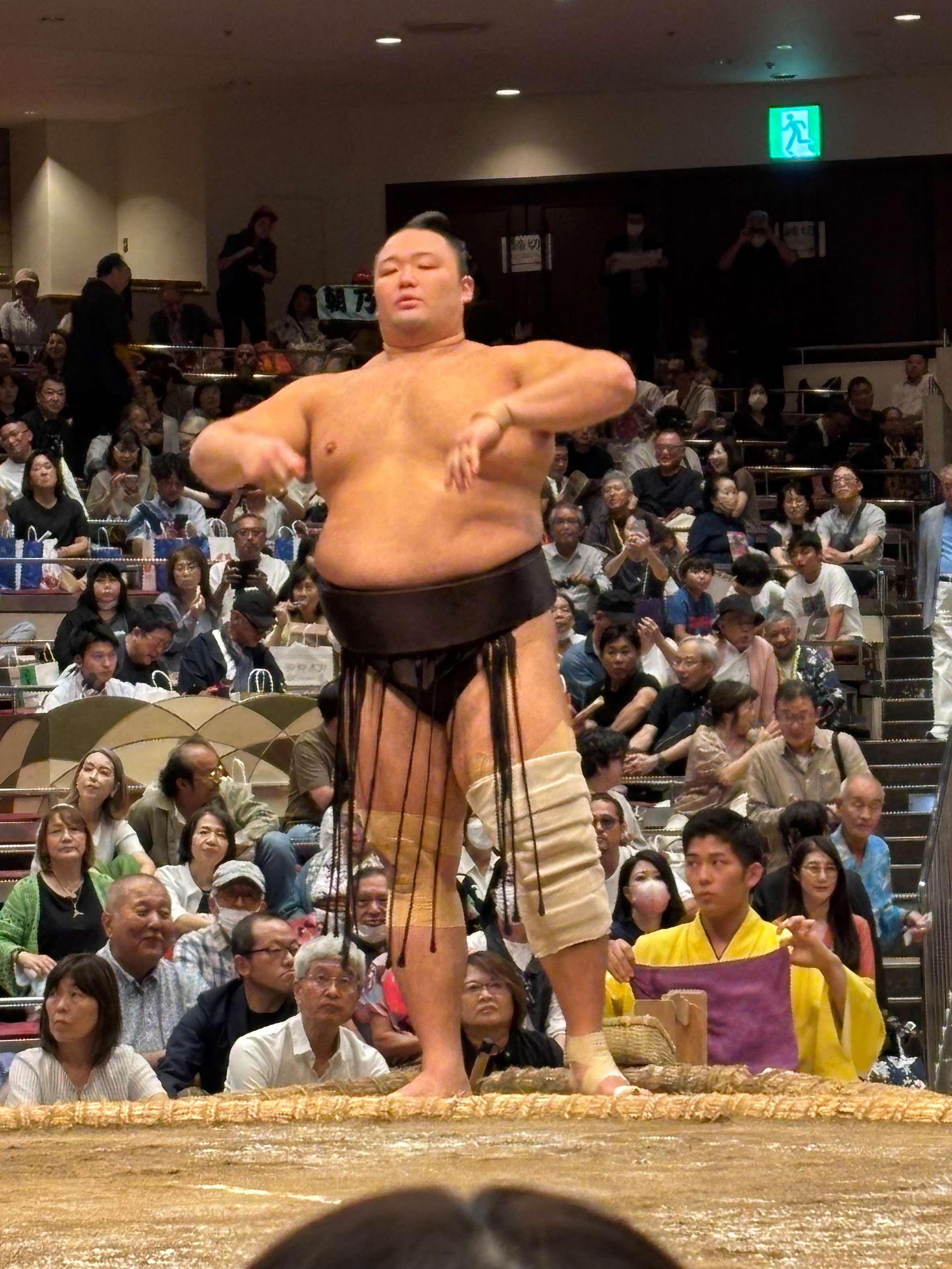
Then there is the grand tournament, held in January, May and September, where the bouts count and the top wrestlers compete.
Which one you choose decides the whole day. Shows run all year and are often bookable close to your date, but the popular evening and weekend sessions sell out, so plan those ahead.
Stable practice runs only in the morning and needs booking about two months ahead. Tournament tickets sell out within minutes of going on sale.
Tour for this
Tokyo: Shinjuku Sumo Show & Experience with a Photo4.9★ (9,863) · 1.5 hours · Free cancellation
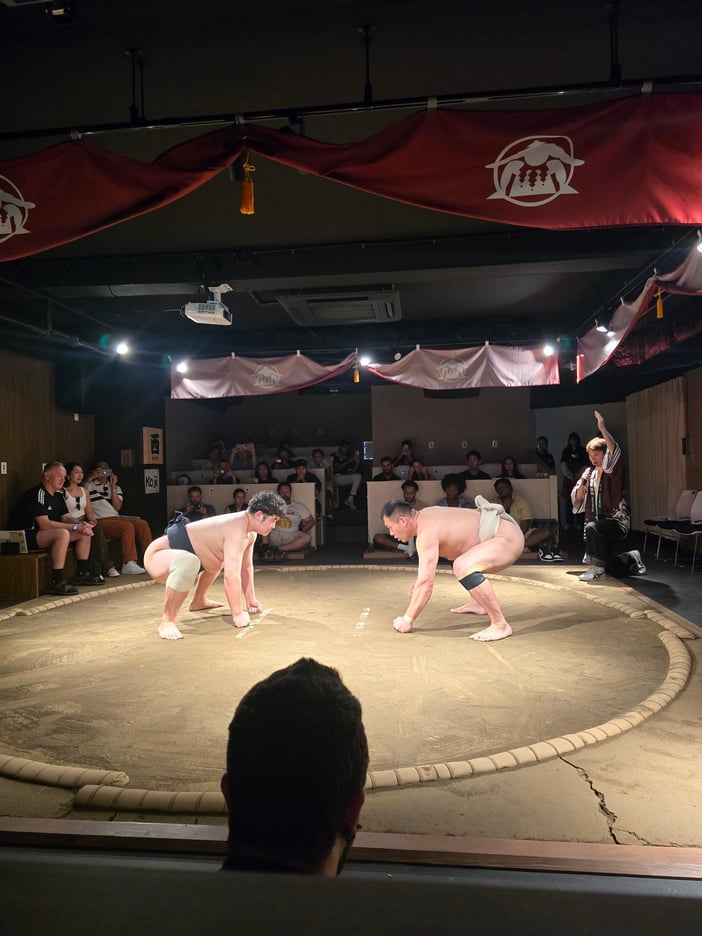
The Shinjuku show runs daily in Kabukicho, with sessions at 1 pm, 3:30 pm, 6 pm and 8:30 pm. Retired professional wrestlers demonstrate real technique in a ring built into the room, and an English-speaking MC explains the rules, rituals and history behind each bout.
The Tokyo: Shinjuku Sumo Show & Experience with Photo runs 1.5 hours and includes a professional demonstration, background on the sport, a bottled water on arrival and pictures with the wrestlers at the end.
Evening slots draw the biggest crowds, and weekend shows fill the room, so arrive early for a good seat. Challenge spots are limited: only a handful of guests per show get to wrestle, and when more people want a place than there are spots, participants are chosen by lottery.
Photos with the wrestlers after the show are a common highlight, and some visits allow a brief chat too.
The two details that shape your evening are below: how the challenge spots are handed out, and how full the room gets.
Challenge spots are limited and decided by lottery, with only a handful of guests per show. Weekend shows fill the room, so arrive early to get a good seat. One operator in Tokyo sells same-day tickets online until 30 minutes before showtime, if seats are available.
The lottery is why front-row seats matter as much as they do: every seat has a clear view, but only a few guests end up in the ring, chosen by lottery. Shows can sell out fast, so decide early if you want to go.
Tour for this
Tokyo: Shibuya Sumo Show with Experience & Photo4.9★ (3,242) · 1.5 hours · Free cancellation
Morning practice starts early. The guided tour meets at 7:45 am at Ryogoku Station and observation begins at 8 am, running 90 to 120 minutes. Training at Tokyo stables runs roughly from 7 am to 10 am, with warm-up drills first and about an hour of full-intensity sparring after.
The format is nothing like a show. A stable, or heya, is a workplace and a home where the wrestlers live and train, so it demands the respect of a workplace.
You take off your shoes at the entrance, sit on the tatami floor without a chair, and watch in silence: no talking, no whispering, no fidgeting, no flash photos, no eating or drinking.
Never step on the dirt practice surface. Stay until the wrestlers finish, and save your questions for the end, when the guide can translate and the wrestlers may chat and take selfies.
An English guide changes what you understand. The guide handles check-in, walks the group to the stable, seats you, and explains moves that would otherwise look repetitive or confusing.
The Tokyo: Watch sumo! with English Guide runs two hours and includes the stable visit, the morning practice and photos with the wrestlers afterwards. One Tokyo stable lets anyone watch practice through a street-facing window without booking, though without the commentary.
RecommendedCome early, ask later: Arrive early to get a window spot close to the ring, especially with children. Save your questions for after practice, when the guide can translate and the wrestlers may chat and take selfies.
Tour for this
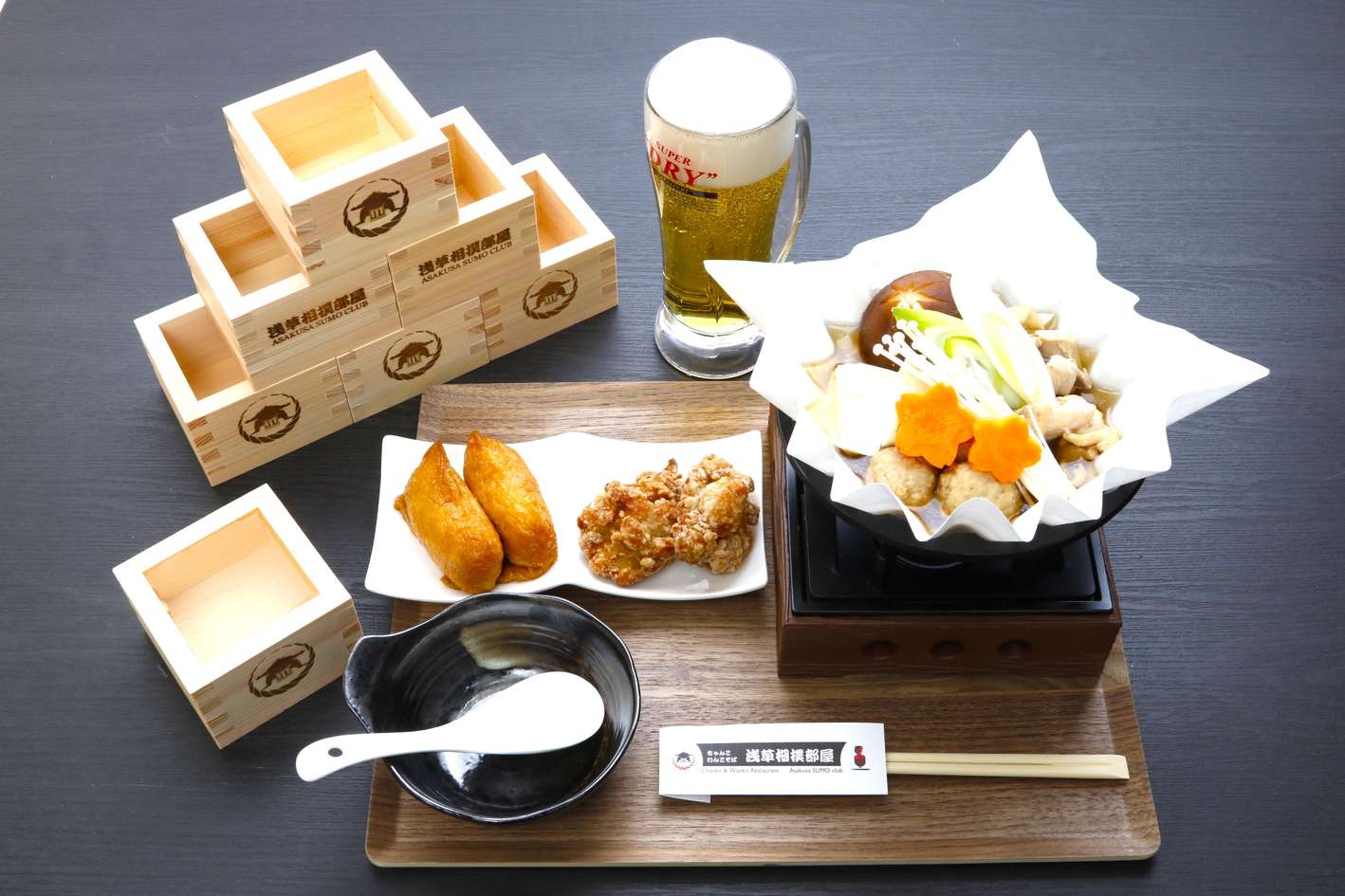
Tokyo: Sumo Entertainment Show with Chicken Hot Pot & Geisha4.8★ (8,711) · 2 hours · Free cancellation
Show, stable or tournament wrestling for your trip
A family with small children wants the show. A couple wants a dinner-and-show evening. A fan who already knows sumo wants the stable or a tournament seat. The formats differ on exactly these points: realness, closeness to the wrestlers, kid-friendliness, language support, and what you eat.
When each kind of sumo viewing runs in Tokyo
April: 5 out of 5 for how busy it gets. The busiest month for sumo tours, with full practice and no tournament.
HighestMar to May, Oct
In betweenJun to Sep
LowestNov to Feb
Darker: a higher how busy it gets score, out of 5
Tap a month to read it.
April: 5 out of 5 for what runs when. No tournament and full practice sessions run, and this is the busiest month on the sumo tours of the year.
HighestFeb, Apr to Jun
In betweenJan, Mar, Jul to Sep
Darker: a higher what runs when score, out of 5
Tap a month to read it.
The calendar matters as much as the format: a show is always on somewhere, a stable visit depends on the tournament schedule, and the tournament waits for you. Here is how the three compare on the points that decide.
Shows are built for everyone.
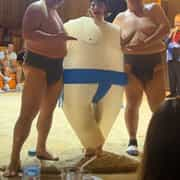
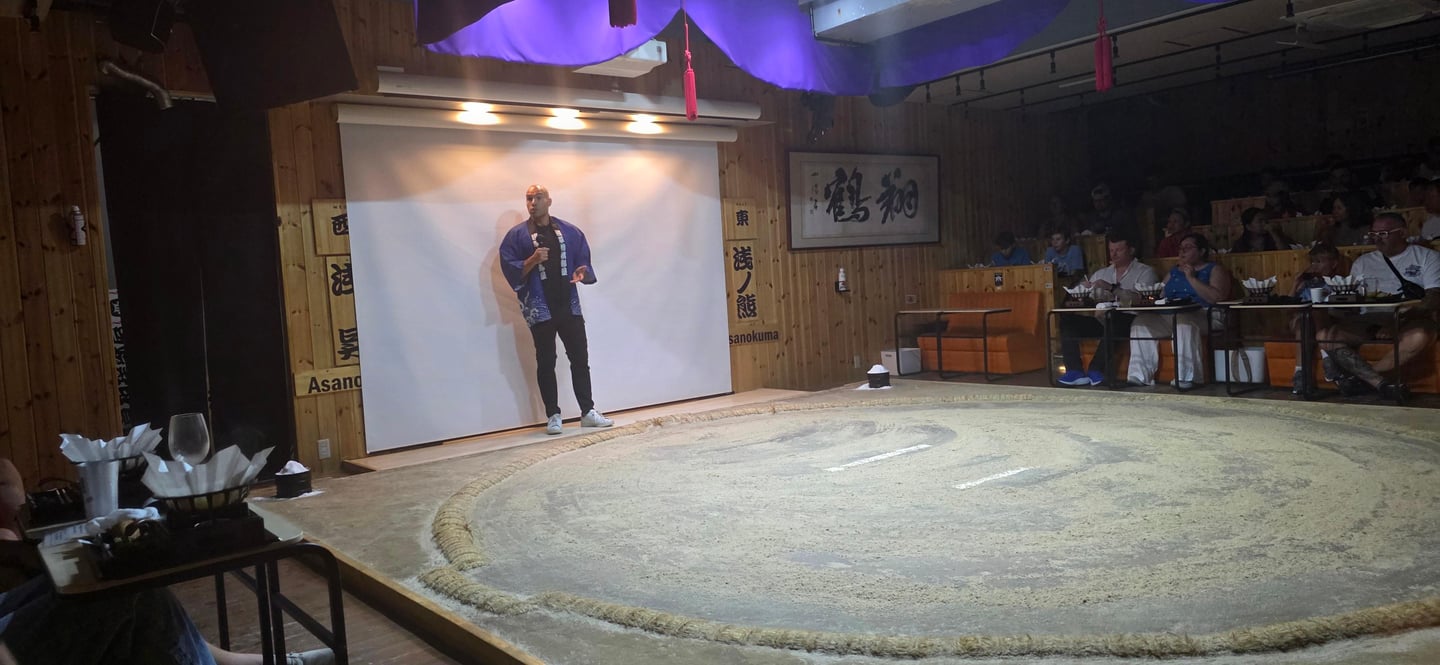
The Tokyo: Sumo Entertainment Show with Chicken Hot Pot & Geisha runs two hours, with live bilingual commentary in English and Japanese, a geisha dance performance, and a chance to step into the ring and challenge a wrestler, limited to a few guests and chosen by lottery when demand is high.
Families with little ones do best with a show and a chanko-nabe meal; one show accepts a child of four. Morning practice suits teenagers who can sit quietly, since young children who cannot stay silent and still are better off at a show or a tournament.
If you have seen sumo elsewhere, treat the show as the version with explanation and participation, and go to the tournament for real competition, because show bouts are exhibitions.
Show, practice or tournament
exhibition bouts by retired wrestlers
real training at a working stable
competitive bouts with rankings at stake
Closeness to the wrestlers
front-row seats right at the ring's edge
a few feet from the ring, on the floor
closest at ringside tamari seats
Kid-friendliness
high, shows are built for adults and children
low, children must stay silent and still
good, kids can shout along with the crowd
Language support
English commentary, often with Japanese
needs an English guide
none, so a guided tour helps
What you eat
chanko hot pot and Japanese dishes at many shows
nothing, and no eating in the stable
cheap chanko nabe at the arena
exhibition bouts by retired wrestlers
Closeness to the wrestlers
front-row seats right at the ring's edge
Kid-friendliness
high, shows are built for adults and children
Language support
English commentary, often with Japanese
What you eat
chanko hot pot and Japanese dishes at many shows
real training at a working stable
Closeness to the wrestlers
a few feet from the ring, on the floor
Kid-friendliness
low, children must stay silent and still
Language support
needs an English guide
What you eat
nothing, and no eating in the stable
competitive bouts with rankings at stake
Closeness to the wrestlers
closest at ringside tamari seats
Kid-friendliness
good, kids can shout along with the crowd
Language support
none, so a guided tour helps
What you eat
cheap chanko nabe at the arena
Read that table against your own trip: the row you weight most, realness or kid-friendliness, usually picks the format for you.
Tour for this
Tokyo Ginza Sumo Show: Live Performance & Photo Experience4.7★ (2,064) · 1.5 hours · Free cancellation
Tokyo hosts the grand sumo tournament three times a year, in January, May and September. Each tournament runs 15 consecutive days, and six tournaments a year rotate between Tokyo, Osaka in March, Nagoya in July and Fukuoka in November.
Tickets are the hard part. They sell out extremely fast, often within minutes of going on sale at 10 am Japan time, and the entire 15-day run can be gone that quickly.
Buy through the Japan Sumo Association's English site or pick tickets up at a 7-Eleven; if you buy from overseas, use a ticket agent.
Regular tournament tickets go on sale about two months in advance, so time your purchase to that window. For same-day tickets during a Tokyo basho, queue at the Ryogoku Kokugikan main entrance around 6 am with cash.
On tournament days the crowd goes quiet as the pre-bout ritual builds, then erupts at the charge and the finish.
Take your cue from the crowd on when to cheer, and stay seated after an upset: throwing seat cushions is tradition, but it is officially prohibited for safety. Move between bouts, take your shoes off in box seats, and carry your trash out with you.
Tour for this
Tokyo: Sumo Watching with journalist and walks4.9★ (309) · 3 hours · Free cancellation
Who can watch and take part at sumo wrestling shows
Anyone can watch. Women are welcome at tournaments, stables and shows; professional sumo forbids women from entering or touching the dohyo, the sacred ring, but watching from the arena seats is fine.
At visitor shows it is different: some venues welcome women and children into the ring for the experience, so a woman can take part in the challenge there.
Hands-on limits vary by venue. At the Ginza show, the hands-on training plan is not suitable for children under 5, pregnant guests, or guests with serious medical conditions, and children must be accompanied by a guardian.
The Shinjuku and Shibuya shows use age bands of 13 to 99 and 12 and younger. Participation is always optional: you can watch, or do adapted activities instead of physical contact, and prior injuries should be mentioned in advance.
Mobility access varies by venue too. The Shibuya show and the Ryogoku experience are not suitable for wheelchair users, and neither are the stable practice tours, because of the traditional setup. At the Ginza show, wheelchair users should contact the staff in advance for assistance.
One Tokyo show has limited wheelchair-accessible seating, which must be requested at the time of reservation. Share any access needs when you book, and check with the tour operator for a rule that could stop the visit.
Tour for this
Tokyo: Watch sumo! with English Guide4.7★ (453) · 2 hours · Free cancellation
Sumo show venues sit in five Tokyo districts, each a short walk from a station. The Shinjuku show runs in Kabukicho, about a 2-minute walk from Higashi-Shinjuku Station on the Fukutoshin and Oedo lines, Exit A1.
From Tokyo Station, take the JR Chuo Line to Shinjuku, about 14 minutes. The Shibuya show is a 1-minute walk from the East Exit of JR Yoyogi Station, one stop from Shibuya.
The Ginza venue is about 1 minute from Ginza-itchome Station and 4 minutes from Ginza Station, and the Tokyo Tower show sits right at the landmark. The stables cluster in Ryogoku.
The table below lays out the fastest ways from the three stations most visitors start at, Tokyo, Shinjuku and Shibuya.
Notice how short the walks are once you leave the train: no venue here needs more than a few minutes on foot from its station, so pick the district that suits the rest of your day and go by train.
The show has no dress code: come in comfortable, flexible clothing you can move in, like what you would wear to a casual gym class, and skip stiff jeans. Wear socks you don't mind being on the floor in.
For the hands-on part, the mawashi, the sumo belt, is provided and worn over your own clothes, so there is no full change. Bring a towel, a change of clothes and about 500 ml of drinking water, and remove glasses or switch to contact lenses before the drills.
At a stable the code is strict. Take off your shoes at the entrance, wear clean socks, and sit cross-legged on the tatami without pointing your feet or the soles toward the ring.
Remove hats and sunglasses, turn your phone off, and no eating, drinking or smoking inside. Photos are allowed, but no flash, no loud shutter sounds, and no standing up or moving around.
At a tournament, follow the crowd: the hall goes quiet as the ritual builds and erupts at the charge. Clapping and calling a wrestler's name are welcome forms of cheering.
Do not throw cushions even after a grand champion loses, use no flash photography, and leave banners and noisemakers behind. At shows, guests invited to try warm-ups or wrestling are free to choose whether to join.
Sumo shows sell out quickly, so book well in advance for popular dates and evening slots; availability can disappear when you try to rebook closer to your trip. The busiest months for tours are April, October and May, while November shows the highest public interest in sumo.
Stable practice visits need a longer lead time. Book about two months ahead: travelers book on average roughly 58 days in advance, and one stable-tour operator recommends getting in touch within 3 months of your date, because stables often finalise their schedules only about a month beforehand.
The hardest months are January, May and September, when stables close their doors to visitors or cut practice short, and one Tokyo stable tour stops running entirely in every odd-numbered tournament month.
Tournament tickets run on a different clock. General sales open at 10 am Japan time, roughly two months before each tournament, and decent seats sell out within minutes.
In Nagoya in 2026, all 15 days were sold out about seven weeks before the first day. Waiting until the week of your trip is a mistake, since stable visits also sell out and confirmations can take days.
Most tours can be cancelled up to 24 hours in advance for a full refund. Cancel on the same day, within 24 hours of the start time, and you get no refund, though you may be able to move the booking to another time slot or day if there is availability.
If the stable cancels, you lose nothing. Training sessions can be cancelled on short notice by the stable, though that is rare, for example if a wrestler is injured or the tournament schedule shifts.
You are notified immediately and receive a full refund or an alternate experience, such as Edo Kiriko glasswork or Shodo calligraphy, at no additional cost.
The three situations that actually decide your day are set out below: a stable cancellation, your own late cancellation, and arriving late to a show.
If the stable cancels training: immediate notification, with a full refund or a free alternate experience. If you cancel within 24 hours: no refund, but possible rebooking to another slot or day. If you arrive late to a show: entry may be refused, or you join partway and miss sections.
Late arrival matters most at the Shinjuku show: it follows a fixed time schedule, so the front desk may not accept late entry, and the show cannot be extended.
You may join partway through but will miss some sections. Because stables can close with very little notice, telephone the stable the day before to confirm that practice is taking place.
Tokyo is not the only stage. Osaka, Kyoto, Fukuoka and even the foot of Mt Fuji run sumo shows, and in several of these cities a show is the only realistic way to see wrestling live.
Osaka hosts the grand tournament in March, the most competitive for tickets because the venue is the smallest in a huge city. Outside the tournament run-up, morning practice in Osaka is largely unavailable, so dinner shows dominate the scene.
Arrive 15 to 20 minutes early, since turning up right at the ticket time risks a rushed seat hunt, and some shows end slightly later than scheduled. One Osaka show does not admit children of 2 and younger.
Kyoto runs two show venues, each with three sessions a day at set times (one at noon, 3 pm and 6 pm, plus a 9:30 pm late show at the other), with a participative challenge that welcomes kids from about age five; children aged twelve or under need a private booking with a parent or supervising adult.
The times can vary by date, so check the day's calendar before booking.
The Mt Fuji show runs outdoors at Lake Yamanaka, 50 minutes long, with Mt Fuji as the backdrop and up to 80 seats per show; April, October and May are the busiest months.
In Sapporo, shows run three times a day at 1:30 pm, 5 pm and 7:30 pm, each about two hours; the venue closes on irregular holidays, and from July to the end of September 2026 it closed for dohyo repair, reopening in October.
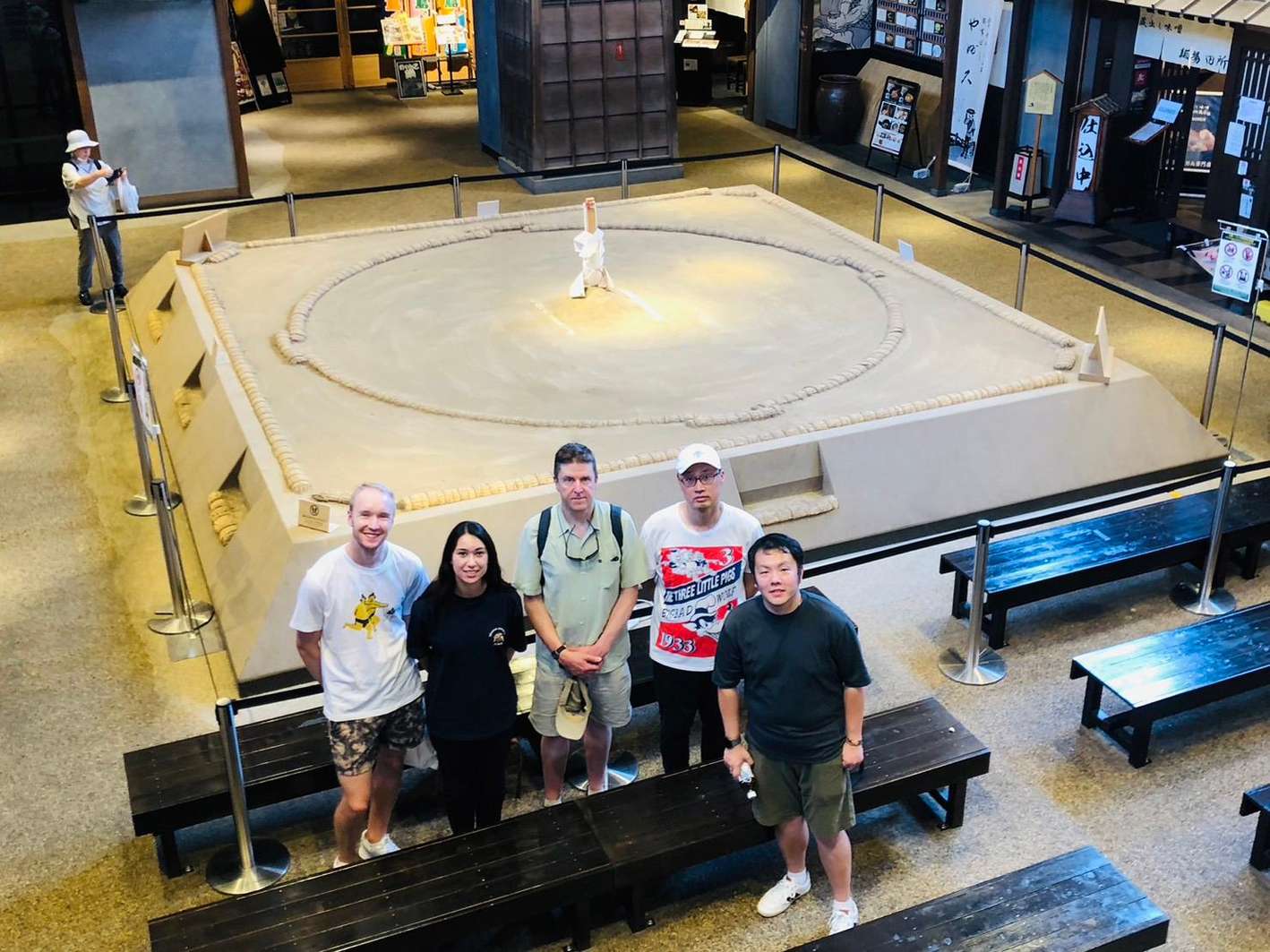
Ryogoku, two stops from Akihabara, is a compact sumo district you can cover on foot before or after a viewing.
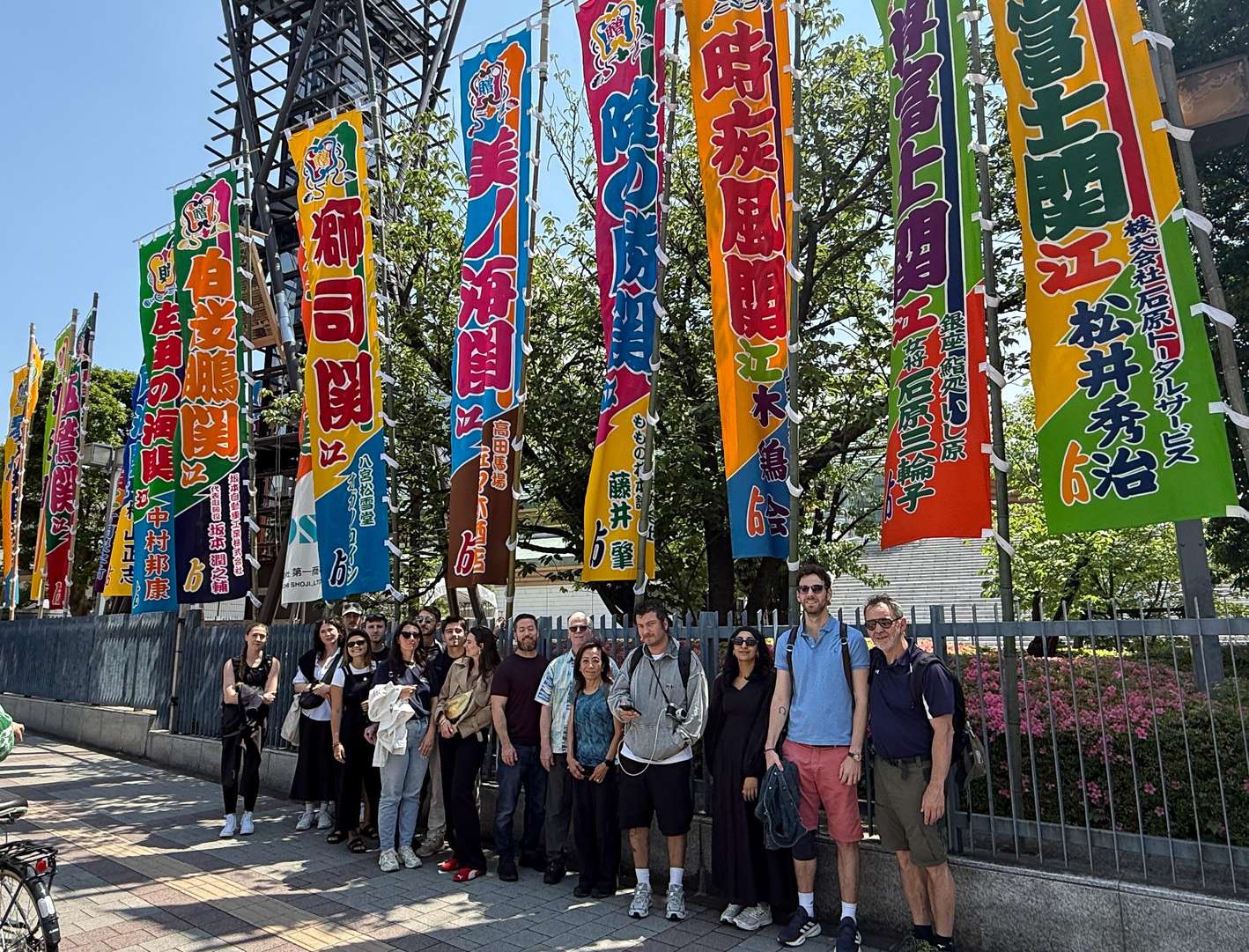
The Kokugikan sits next to Ryogoku Station, and on non-tournament days its free Sumo Museum opens weekdays from 12:30 pm to 4 pm; it closes on weekends and holidays, and during tournaments it is for ticket holders only.
Within a few minutes' walk are Ekō-in Temple, where wrestlers pray before tournaments, and the Edo-Tokyo Museum, closed for renovations until March 30, 2026 and reopening March 31. The Sumida Hokusai Museum, one of Japan's best ukiyo-e museums, is also close by.
Chanko nabe, the hot pot the wrestlers eat, is worth a meal here. A chanko restaurant directly operated by a former sumo wrestler doubles as an izakaya in the evenings, where you might hear stories about the wrestlers.
Meals are often part of the show too, and travelers praise the hearty, generous food, so check your booking details for what is included.
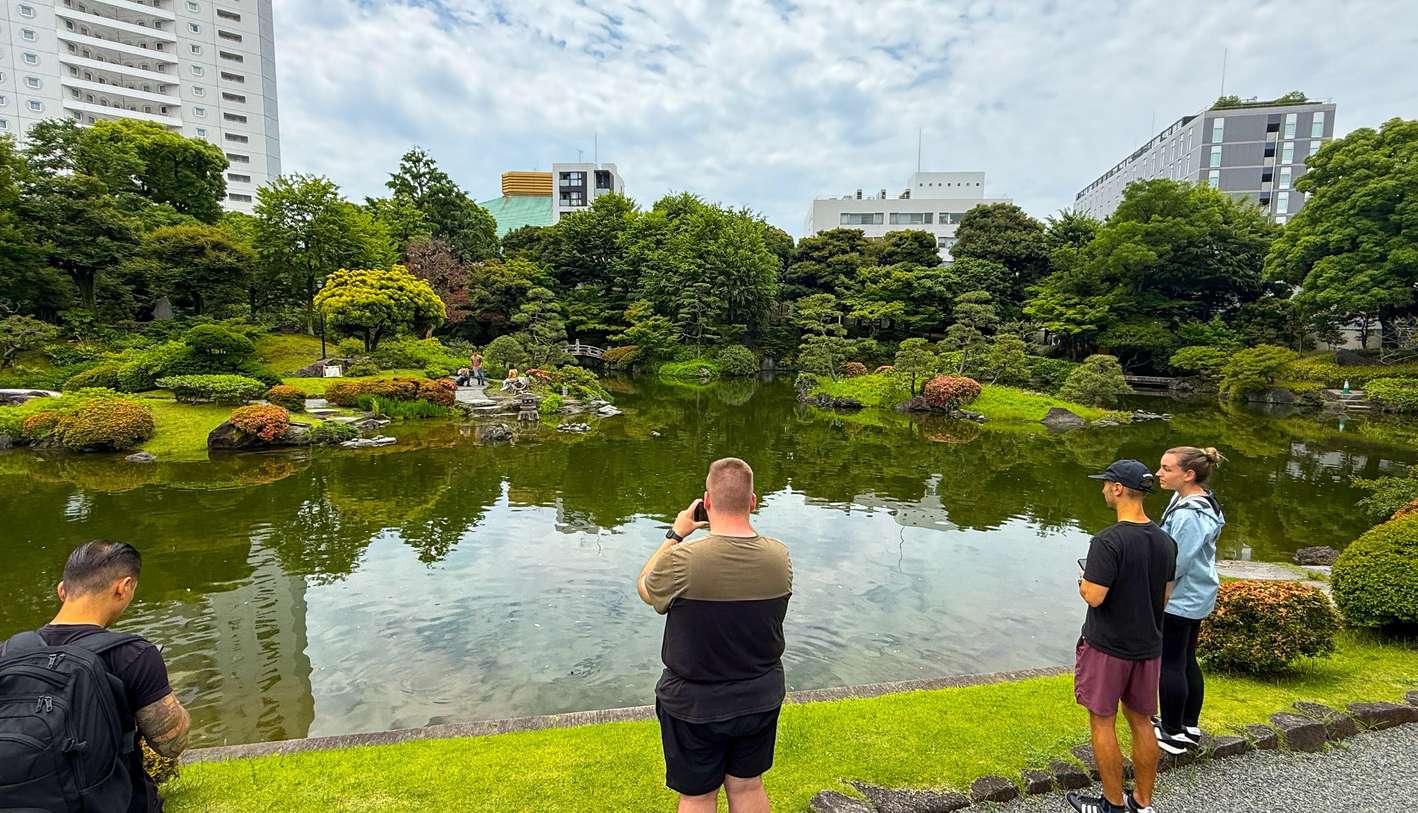
In Shinjuku, the walk from the show venues covers a useful list of stops, from a park at four minutes to a full garden at twenty, laid out below.
A 20-minute walk from the Shinjuku sumo show venues
That list is why the Shinjuku shows pair well with a fuller sightseeing day: you can slot a park, a shrine or a museum either side of the session without planning a second trip.
100% worth the money. Incredibly funny and entertaining. I liked that they taught us some traditional sumo aspects before the show. Definitely recommend to others travelling to Japan :)
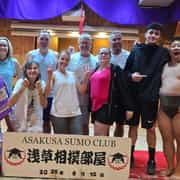
Sumo wrestling in Tokyo works for almost any trip. If you want a ring an arm's length away with dinner, book an evening show and arrive early.
If you want the training that builds the wrestlers, book a stable tour two months out and sit in silence. If your trip hits January, May or September, buy tournament tickets the moment sales open at 10 am.
Go ifYour trip hits January, May or September and you can buy tournament tickets the day sales openYou want sumo without gambling on a tournament seat, an evening show delivers the ring up closeYou travel in April, October or May, book evening show slots and stable tours about two months ahead
Skip ifYou travel in a tournament month and want stable practice, the stables close their doors to visitorsYou cannot sit silent and still for two hours with a young child, skip morning practice at the stableYou arrive late to a Shinjuku show, the front desk may refuse late entry
Our pick to book
Tokyo: Watch sumo! with English Guide4.7★ (453) · 2 hours · Free cancellation
Quick answers to the questions travelers ask before booking a sumo viewing in Tokyo.
Tokyo2026
The ring sits closer than you expect, and the stomps shake the floor. Book your show before the evening slots fill up.
Can you watch real sumo wrestling in Tokyo?
Yes, in three ways. Grand tournaments run at Ryogoku Kokugikan for about 15 days in January, May and September. Guided morning practice tours take you into a working stable, and entertainment shows performed by retired wrestlers run all year in central districts.
When is the grand sumo tournament in Tokyo?
Tokyo hosts three tournaments a year: January 11 to 25, May 10 to 24 and September 13 to 27 in 2026, each running about 15 days. Between tournaments, morning practice and shows keep the calendar full.
Is a Tokyo sumo show a real match?
No. The shows are staged entertainment performed by retired wrestlers, with choreographed bouts, explanations of the rules and rituals, and audience participation. The demonstrations show genuine skill, but nothing competitive is at stake.
Are Tokyo sumo shows explained in English?
Yes. The Shinjuku, Shibuya and Ginza shows have English-speaking hosts, and the Asakusa show adds live commentary in both English and Japanese, so you can follow the rules, rituals and history as the action happens.
Are Tokyo sumo shows suitable for young children?
Shows are designed for adults and children, and kids can stay engaged through the humorous format. At a stable practice, children can only attend if they can sit quietly for the whole session, so a show is the better pick for little ones.
How close do you get to the sumo wrestlers?
Very close. At a stable practice you sit on the floor of the training room just a few feet from the ring. At a show, front-row seats put you at the ring's edge, and a few guests get chosen to challenge a wrestler in the ring.
Can you watch sumo wrestlers train in Tokyo?
Morning practice tours meet near Ryogoku Station and watch training for 90 to 120 minutes from 8 am, from warm-ups and drills to bouts. Practice pauses during tournaments, so check how your dates line up with the sumo calendar.
Where in Tokyo does sumo wrestling take place?
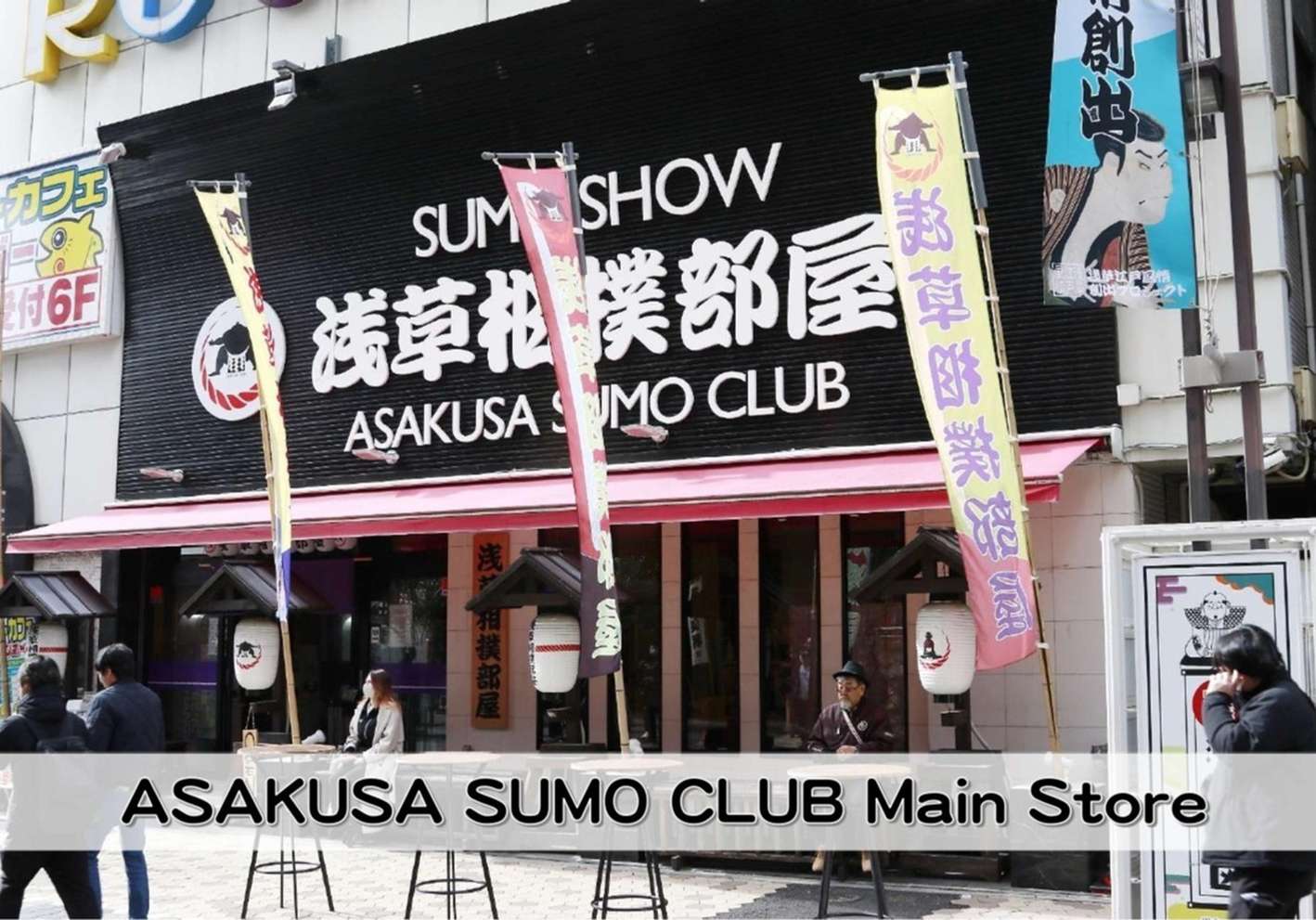
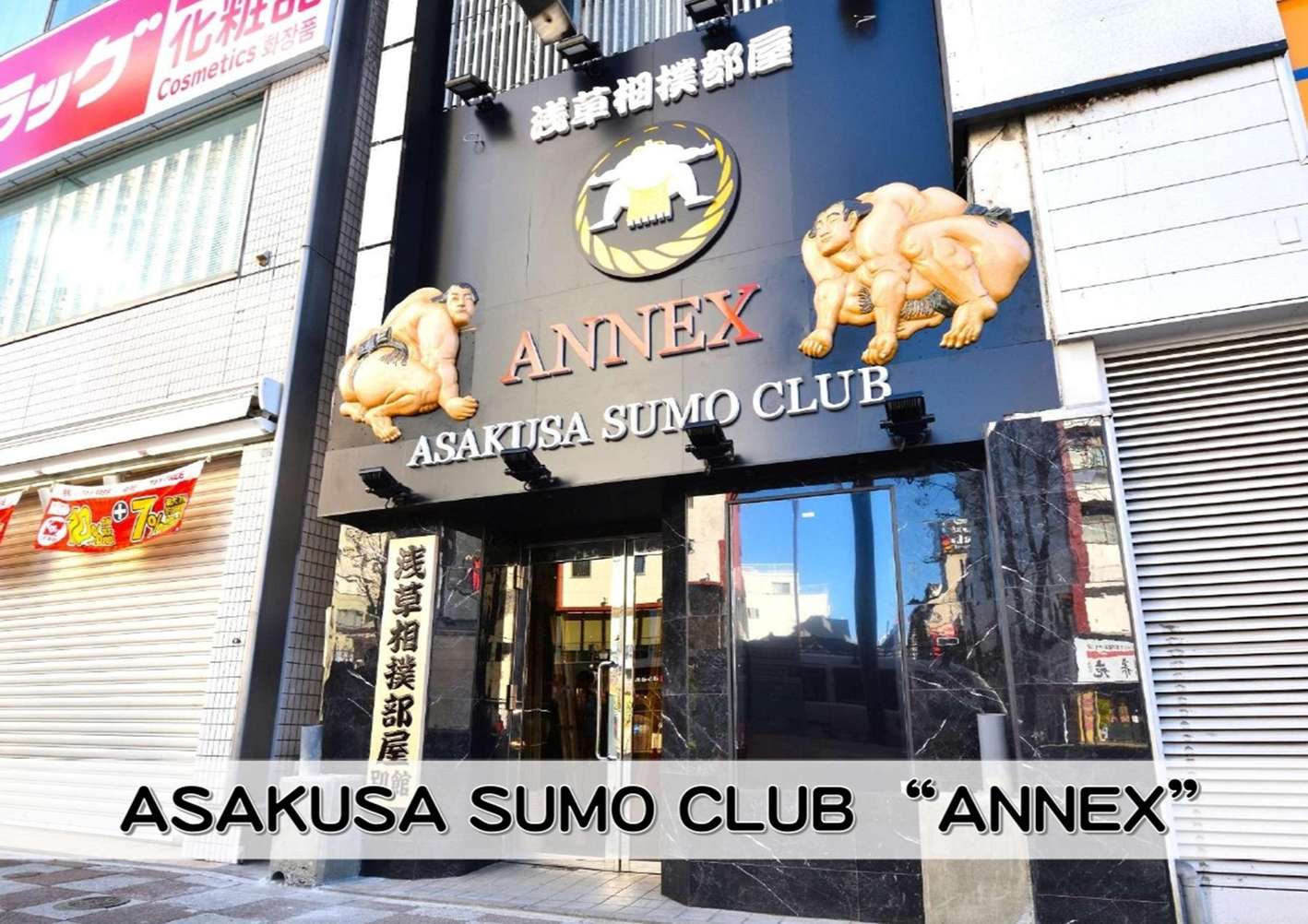
Practice tours start in Ryogoku, the traditional sumo district on the east side, where the Kokugikan arena and its Sumo Museum sit. Shows run in Shinjuku, Shibuya, Ginza, Asakusa and at Tokyo Tower, all easy to fit around a sightseeing day.
How hard are grand sumo tournament tickets to get?
Hard. Decent seats sell out within minutes of going on sale at 10 am, sometimes the entire 15-day tournament. Buy the moment tickets drop, or use a ticket agent or a guided tour as a fallback.